World’s largest iceberg is finally about to disappear 40 years after breaking away from Antarctica
Megaberg twice the size of London could melt away within weeks

Stuti Mishra, Independent, 03 September 2025
A large Antarctic iceberg that calved almost four decades ago is now in its final days, with scientists saying it could vanish within weeks after drifting into warmer seas.
The megaberg, known as A23a, broke off the Filchner Ice Shelf in 1986 and became stuck on the seabed of the Weddell Sea, where it remained grounded for over 30 years.
It set adrift in 2020 and was carried by ocean currents into the “iceberg alley” – the South Atlantic route where most of Antarctica’s giants eventually meet their end.
Earlier this year, A23a still covered nearly 3,100 sq km, making it the world’s largest iceberg, bigger than Long Island and more than twice the size of London.
In recent months, however, enormous sections have splintered away. Satellite images analysed by the EU’s Copernicus programme show it has shrunk to less than half its original size, now measuring about 1,770 sq km.
Some of the breakaway fragments are themselves colossal, including one that is 400 sq km in area, while countless smaller bergs, still large enough to pose hazards to shipping, now litter surrounding waters.
The megaberg is breaking up “fairly dramatically”, Andrew Meijers, a physical oceanographer at the British Antarctic Survey, told AFP……………………………
Despite its size and longevity, researchers said the fate of A23a was inevitable once it left Antarctic waters. Exposed to warmer seas and battered by waves, it started dissolving at speed.
https://www.independent.co.uk/climate-change/news/iceberg-a23a-antarctica-melting-b2819233.html
Trump supports nuclear power as it is ‘more American’ than wind, solar, US official says

By Reuters, September 6, 2025
WASHINGTON, Sept 4 (Reuters) – The Trump administration is more willing to support loan guarantees and tax breaks for nuclear power than for wind and solar because it is “more American” than those forms of energy, the director of the U.S. Energy Dominance Council said on Thursday.
Jarrod Agen said nuclear power is more likely to be made from U.S.-made parts than wind and solar farms, so the administration is more willing to give it financial aid from the U.S. Loan Programs Office and support tax incentives. https://www.reuters.com/business/energy/trump-supports-nuclear-power-it-is-more-american-than-wind-solar-us-official-2025-09-04/
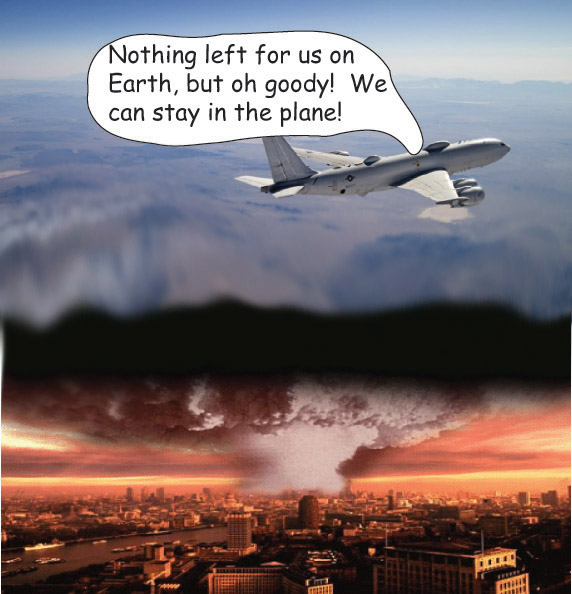
These fools plan to win a nuclear war. Flight tests begin on US Air Force’s new ‘doomsday plane’
Defense News, By Stephen Losey, Sep 5, 2025,
The Air Force and aerospace firm Sierra Nevada Corp. have started flight tests on the service’s next-generation “doomsday plane.”
Flight tests for the E-4C Survivable Airborne Operations Control, or SAOC, are being held at the Aviation Innovation and Technology Center in Dayton, Ohio, the company said in a Wednesday release.
Sierra Nevada, also known as SNC, carried out the SAOC’s first flight on Aug. 7 as part of the program’s engineering and manufacturing development process. Flight and ground testing will continue into 2026, primarily in Dayton, Ohio, and Wichita, Kansas, the company said.
SAOC is meant to serve as an airborne command-and-control center that would be used in the most catastrophic circumstances. In the event of a nuclear war or other widespread calamity that destroys or disrupts most military command centers, the SAOC would allow the president to direct U.S. forces and relay orders from the air.
The Air Force in 2024 awarded SNC a $13 billion contract to build five SAOC aircraft to replace the Air Force’s aging fleet of four E-4B Nightwatch planes. Sierra Nevada is expected to finish the work by July 2036……………………….
The SAOC deal is Sierra Nevada’s largest single contract in its six-decade history, and the company hopes it will lead to more big-ticket opportunities………….https://www.defensenews.com/air/2025/09/04/flight-tests-begin-on-us-air-forces-new-doomsday-plane/?utm_source=sailthru&utm_medium=email&utm_campaign=c4-overmatch
1
UKRAINIAN NEOFASCISM – War Time Developments: Part 1 ‘Azov’ and Part 2 ‘Right Sector’
by Gordonhahn, September 5, 2025
Neo-fascism and ultranationalism may not have been the most powerful element in Ukraine or even among Ukrainian nationalists before the NATO-Russia Ukrainian War, but they are almost certainly so now, and they are becoming increasingly powerful military-politically, culturally, and ideologically.
Ukraine’s neofascists have never been satisfied with the Maidan revolt, despite their pivotal role in overthrowing the previous oligarch-dominated order, which the Maidan revolt only replaced in part. They have always looked tot he future and completion of the ‚nationalist revolution‘, as they call it. A few years ago, Dmitro Yarosh, founder and then leader or “coordinator’ of Ukraine’s neofascist Right Sector (RS) and later advisor to now fired Ukrainian Armed Forces Commander, Gen. Valerii Zaluzhnyi, who is now Kiev’s ambassador to the UK, promised there would be a ‘second phase of the nationalist revolution’ of which the February 2014 Maidan revolt was supposedly but the first.
The second phase is to sweep away the liberal and oligarchic remnants of the pre-Maidan democratic order brought into the Maidan regime, in Yarosh’s view. Yarosh recently repeated his call for the completion of the neofascist revolution on his Facebook page: “As it turned out, during the Dignity Revolution and the Russian-Ukrainian War, Ukrainian nationalists became the main factor in the Ukrainian national-liberation struggle in the 21st century… I am a Ukrainian Nationalist – sounds proud both in Ukraine and across the world. The next power after the War for Independence should be nationalist. Otherwise, we will once again be led down an unbreakable cycle of national humiliation, corruption, degeneracy, moral degradation, economic decline, inferiority and defeat… Therefore, after the War for Independence, the wise, courageous and noble should rule in Ukraine. Glory to the Nation!”
Similar views are held by Ukraine’s many other ultra-nationalist and neo-fascist groups and their leaders, and they have been waiting for the moment to complete their revolution. The catastrophe of the war, its outcome, and consequences are bringing their dream ever closer to reality. These factors alone could assist the neo-fascist’s rise to power, even if only temporarily.
There once was a time when the West acknowledged Ukraine’s neofascist threat to republican rule, even as it helped armed, trained, and equipeed the neofascists‘ cocoons, the siloviki –, i.e. the Ukrainian military, SBU, and HRU. The de facto NATO think tank, the Atlantic Council, at the time noted:
Since the beginning of 2018, C14 and other far-right groups such as the Azov-affiliated National Militia, Right Sector, Karpatska Sich, and others have attacked Roma groups several times, as well as anti-fascist demonstrations, city councilmeetings, an event hosted by Amnesty International, art exhibitions, LGBT events, and environmental activists. On March 8, violent groups launched attacks against International Women’s Day marchers in cities across Ukraine. In only a few of these cases did police do anything to prevent the attacks, and in some they even arrested peaceful demonstrators rather than the actual perpetrators.
“International human rights groups have sounded the alarm. After the March 8 attacks, Amnesty International warned that “Ukraine is sinking into a chaos of uncontrolled violence posed by radical groups and their total impunity. Practically no one in the country can feel safe under these conditions.”[1]
Below I look at the political and cultural role neofascist groups have been playing in Ukraine, particularly since the beginning of the NATO-Russia Ukrainian War. In this Part 1, I begin with the most powerful and influential neofascist structure, Azov. No other neofascist or other fporm of Ukrainian group has seen its power and influence in the state and society be so enhanced over the last decade and certainly since the beginning of the beginning oft he NATO-Russia Ukrsainian War. Indeed, Azov’s leader, Andriy Biletskiy could very well be Ukraine’s next president and become so in the not too distant future.
Part 1: Azov
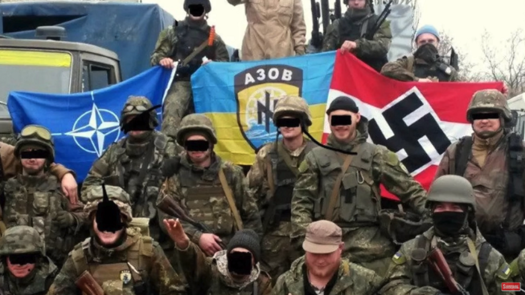
The Azov Battalion emerged from the Nazi-inspired Social-National Assembly (SNA) founded by Andriy Biletskiy, now commander of the Ukrainian army’s 3rd Separate Assault Battalion ‘Azov’. Azov’s rise along with its politics and ideology have much in common with Adolph Hitler’s Waffen SS.[2] Prior to running the SNA, Biletskiy led the equally ultra-nationalist ‘Patriots of Ukraine,’ the military wing of the Ukrainian National Army, self-procliamed successor to the Nazi-allied outfir of the same name during World War II. The ‘Patriots were infamous their beatings of immigrants. In a 2010 interview Biletskiy described his organization as nationalist “storm troopers.[3][4] A year later Biletskiy was in prison, after his organization—already renamed the SNA—had been involved in a series of shootouts and mass brawls.
The SNA’s, Azov’s, and Biletskiy’s ideology is an extremist brand of Ukrainian neofascism melded with international white supremacism. The SNA program emphasizes the concept of “nationocracy,” which was later incorporated into the RS program and propaganda courses. The SNA in power would ban all political parties, organizations, associations and ideological groups, so the ethnic Ukrainian elite holds full power: “Political power is wholly owned by the Ukrainian nation through its most talented, idealistic and altruistic national representatives who are able to ensure proper development of the nation and its competitiveness.” “Supreme power (executive, legislative and judicial) of the Ukrainian state will be in the hands of the head of state, who is personally responsible to the nation’s own blood and property.” Capitalism is to be “dismantled” and democracy is to be “eliminated.” All actions that fail “to comply with obligations to the nation and the state will entail the restriction of civil rights or deprivation of citizenship … The ultimate goal of Ukrainian foreign policy is world domination.”[5]
In 2007, Azov’s ideology is reflected in its leaders statements. Top leader, commander Biletskiy, castigated a government decision to introduce fines for racist remarks, noting: “So why the ‘Negro-love’ on a legislative level? They want to break everyone who has risen to defend themselves, their family, their right to be masters of their own land! They want to destroy the Nation’s biological resistance to everything alien and do to us what happened to Old Europe, where the immigrant hordes are a nightmare for the French, Germans and Belgians, where cities are ‘blackening’ fast and crime and the drug trade are invading even the remotest corners.”[6] Biletskiy has also said: “The historic mission of our nation in this critical moment is to lead the White Races of the world in a final crusade for their survival. A crusade against the Semite-led Untermenschen.”[7] In 2017, Biletskiy gathered his men in order to express Azov’s support for former Bosnian Serb military officer and convicted war criminal, Ratko Mladić, running directly counter to Western policy. Mladic was held responsible by a Western-sponsored war tribunal at the Hague for war crimes during the Yugoslav civil wars in the 1990s, including the Srebrenica massacre. Biletsky declared Mladić a “patriot of Serbia” and refers to the Iinternational Criminal Tribunal for Yugoslavia in the Hague as a “Zionist tribunal.”[8] More recently, in May 2025 Biletskiy claimed that Hungary, Poland, and Romania are waiting for Ukraine’s collapse so they can annex their former territories that became part of Ukraine under Sdtalin in the wake of the USSR’s victory over fascism: “They are not preparing for war. They are preparing to take their own scraps in the event of a global defeat of Ukraine,” he asserted.[9]`
On the basis of Azov, Biletskiy founded the National Corps with an affiliated paramilitary organization ‘National Teams.’ One of the points of Biletskiy’s foreign policy vision and of National Corps’ program is the creation of a union of countries called the ‘Intermarium’, which would include, among others, Ukraine and Poland – an idea also propagated by many Western apologists and supporters of Ukrainian neofascism. However, Poles, as victims of the OUN’s and UPA’s massacres 80 years ago in Volyn and elsewhere, do not shy away from noting Azov’s neofascism. They point out that Azov members eagerly use Nazi symbols, including the „Dirlewanger“ of the 36th SS Grenadier Division, which massacred Poles in Warsaw’s Wola during the Warsaw Uprising.[10] And, as noted above, Biletskiy recently accused Poland, along with Hungary and Rumania, with having designs on Ukrainian territory……………………………………………………………………………………….
The NATO-Russia Ukrainian War is strengthening Azov’s hand in Ukraine’s army, politics, and culture. In the course of the war, the Azov Battalion was incoroprated into the army, becoming the Ukrainian army’s 3rd Separate Assault Brigade, while retaining a brigade in the National Guard (the 12th National Guard Brigade), into which it was originally incorporated. Azov also has another military unit, known as ‚Kraken‘, under the control of Ukrainian Military Intelligence (GRU) and its director, the CIA-trained Kyrylo Budanov. Kraken has been involved in a series of war crimes, including the execution of captured Russian soldiers. This year,the 3rd Assault Brigade ‚Azov‘ was upgraded further to become the Third Army Corps ‚Azov‘.[18]Thousands of new soldiers will be integrated into Azov, and a special training school for sergeants established for it will inevitably indoctrinate recruits with ultra-nationalist ideology. Azov 3rd Assaualt Corps‘ founding ceremony, replete neo-Nazi pagan-like symbolism, was held near Kyiv and attended by Biletskiy and his fellow commanders. Participants offered “The Prayer for Ukraine,” a hymn borrowed from the neofascist, antisemitic OUN, whiuch enthusiastically collaborated with the Hitler’s Nazis in the Holocaust and ethnic cleansing of Poles during World War II.[19] The new commander of Azov’s 3rd Assault Brigade, Yaroslav Levenets, appointed in April-May, recently met Zelensky in an awards ceremony. He allegedly helped to organize the 2017 killing of Denis Voronenkov, a former member of the Russian parliament. As of December 2021, Levenets was still wanted in Ukraine.[20] Aside from the army’s and therefore Azov’s growing role in Ukrainian society as a result of the war, Azov maintains a youth organization called ‘Centuriya’, which networks Azov across Ukrainian society in schools, children’s camps, and sports clubs.
According to Havryshko, Azov benefits from „enormous media presence“ and university support in Ukraine and uses „celebrity journalists and media experts to create a glamorous image of their units.“[21] Indeed, Biletskiy, other leaders and members appear frequently on mainstream television and other media. Ukrainian and foreign media propagate Azov’s units as „true patriots“ and “elite brigades,” respectively, whereas in the West before the war there was significant reporting on Azov‘s and other Ukrainian groups‘ neofascist political orientation and ideology. …………………
With this media and academic network, Azov is able to insinuate neofascism into every knook and cranny of Ukrainian society. For example, it has been at the forefront of a campaign to slander and threaten the life of a leading scholar of historical and contemporary Ukrainian neofascism, Professor Marta Havryshko of Clark University in Massachusetts, running her out oft he country. As a result of the campaign Havryshko was fired from her position in the Kripyakevich Institute for Ukrainian Studies for her research on various aspects of this subject inculding the violence committed by the WW II-era Ukrainian fascist organizations OUN and UPA allied with Nazi Germany, contemporary Ukrainian glorification of Ukraine‘s Waffen-SS division “Galicia”, and her rejection of ultra-nationalist driven history policies. ………………………………………………………………………………………………………………………………………………………….. https://gordonhahn.com/2025/09/05/ukrainian-neofascism-war-time-developments-part-1-azov-and-part-2-right-sector/
Russia is ready to discuss nuclear fuel at Ukraine’s Zaporizhzhia with US – RIA

By Reuters, September 5, 2025, https://www.reuters.com/world/russia-is-ready-discuss-nuclear-fuel-ukraines-zaporizhzhia-with-us-ria-2025-09-05/
VLADIVOSTOK, Russia, Sept 5 (Reuters) – The head of Russia’s State Atomic Energy Corporation Rosatom Alexei Likhachev said on Friday the company was ready to discuss with the U.S.’s Westinghouse the issue of nuclear fuel at Ukraine’s Zaporizhzhia nuclear power plant, RIA news agency reported.
In June, Russia asked the U.N. nuclear watchdog to mediate between Moscow and Washington to resolve the question of what to do with U.S. nuclear fuel stored at the Ukrainian power plant controlled by Russian forces.
Westinghouse and U.S. energy officials had previously raised intellectual property concerns with Russia in connection with the fuel issue, according to Likhachev.
Reporting by Vladimir Soldatkin and Olesya Astakhova; Editing by Christopher Cushing
Euratom: €9.8 billion for nuclear research in the next EU budget
The European Commission has put forward a €9.8 billion budget proposal for the EU’s next nuclear research programme, Euratom, giving a huge boost to fusion research. The next edition of Euratom, starting in 2028, will be almost five times bigger than the current €1.98 billion nuclear research programme. Most of this funding will go towards fusion energy projects, fuelling Europe’s ambition to become the first to develop and commercialise the technology.
A peculiarity of the Euratom programmes is that they are legally required to run for five years, which puts them out of step with the seven-year EU budget cycle. So, it is now usual for each programme to have a two-year extension to keep it in step. The present
proposal sets aside €6.7 billion from 2028 and 2032, with the extension bringing the total to €9.8 billion.
Science Business 4th Sept 25, https://sciencebusiness.net/news/nuclear-fusion/euratom-eu98-billion-nuclear-research-next-eu-budget
Trump Is Renaming the Defense Department the Department of War

President Trump will sign an executive order on Friday renaming the Department of Defense the Department of War, the White House said, fulfilling his pledge to realign the military’s mission by restoring the name the agency held until shortly after World War II……………… (Subscribers only) https://www.nytimes.com/2025/09/04/us/politics/trump-department-of-war-defense.html?campaign_id=190&emc=edit_ufn_20250904&instance_id=161936&nl=from-the-times®i_id=60047519&segment_id=205306&user_id=432fc0d0ad6543e820e2dfcd39f76c35
Anglesey planners to consider relocation of Wylfa building
North Wales Chronicle 4th Sept 2025 , 4th September
ANGLESEY planners are to consider the removal and relocation of a redundant building for the processing of ‘non-active waste’ at the island’s former nuclear power station.
Anglesey County Council will to asses a full application regarding ‘Building 187’ for use as a ‘non-active waste clearance facility’ at the decommissioning Wylfa site.
Plans state: “The relocated facility will allow for a larger, safer and more efficient building as Wylfa moves further into the decommissioning preparations phase.”………
The plans concerns a 0.10 hectare site, and incorporate areas to “store and aid the collection of waste.”…………………………………………………. https://www.northwaleschronicle.co.uk/news/25441505.anglesey-planners-consider-relocation-wylfa-building/
Attacks on nuclear plants are being normalised – and the consequences could be disastrous

Nuclear power plants have become significant pawns in the Russia-Ukraine war
Molly Blackall, Global Affairs Correspondent, iNews 29th Aug 2025
Attacks on and around nuclear sites have become increasingly normalised during the war in Ukraine and the consequences could be disastrous, military watchers have warned.
Russia accused Ukraine this week of launching a drone attack which damaged Kursk nuclear power plant, which sits around 37 miles from the Ukrainian border, on Sunday.
The power plant authorities said that air defences shot down a drone that detonated near by just after midnight.
The incident damaged an auxiliary transformer and caused the plant capacity to drop by 50 per cent, they said.
The incident came on the day that Ukraine marked its 34th anniversary of independence from the Soviet Union.
Ukraine has not commented on the incident, but one Ukrainian military insider told The i Paper that troops had been ordered not to attack the plant during previous operations near by.
Another insider indicated it may have been accidental, saying that drone pilots work seven days a week and that unexpected outcomes sometimes cropped up.
There have long been fears of a nuclear incident as a result of the Russian invasion, with fighting taking place close to two major plants: Kursk and Ukraine’s Zaporizhzhia, which is the largest nuclear plant in Europe.
The International Atomic Energy Agency, the UN’s nuclear watchdog, reported that radiation was at normal levels around the Kursk plant following the attack.
‘Previously shocking acts’ are now normal
Military experts said that fighting in and around nuclear plants was becoming increasingly normalised……………..
Dr Marina Miron, a war studies expert at King’s College London, said that attacks on nuclear plants “may becoming somewhat normalised, which is in itself disconcerting”.
“When it happens the first time everyone is shocked and you see all the headlines. Then the IAEA reports that there was no rise in radiation levels and then things calm down and after an nth time this becomes sort of normal.”
The plants have become significant pawns in the war.
“When Ukraine counter-invaded Russia last year, the idea was to take the Kursk power plant and probably exchange it for Zaporizhzhia power plant, so that they could then say, we’ll trade you; give us that one, and we’ll give you yours back,” Miron said.
Darya Dolzikova, a nuclear expert at the Royal United Services Institute (RUSI) in London, previously warned that military activity around nuclear sites “should not be normalised” but that such attacks may become more common.
“The expected growth of the importance of nuclear power in the global energy mix in the coming decades may increase the likelihood that future armed conflict will see greater targeting of nuclear energy infrastructure,” she said.
As well as causing infrastructural damage to an adversary or sending strong military signals, the “psychological salience” of nuclear sites mean they may be used for “escalatory, deterrent or coercive purposes”.
It may also be a deliberate tactic to release radioactive material to make an area into a no-go zone, but could inadvertently expand to “friendly” areas or escalate the conflict it it seeps into a third country.
Attacks on nuclear sites ‘increasing danger’ of radiological accident
Lukasz Kulesa, director of nuclear policy at RUSI, said that while most nuclear reactors were relatively “well protected against attacks and accidents through their reinforced structures, this is not always the case”.
“Some reactors in Russia, including at the Kursk nuclear power plant, lack such a protective concrete dome, which makes them more vulnerable and dangerous in case of an attack,” he said.
“Artillery or drone attacks and other military activities can also threaten staff and personnel working at the site, and damage or destroy support infrastructure crucial for the functioning of the power plant, such as water supply and power grid connections and generators, or spent nuclear fuel storage sites.
“All such attacks disturb the operations of nuclear power plants and increase the danger, and the most serious ones can cause a direct threat of a radiological incident.”
Kulesa warned that “the fact that previous incidents related to the nuclear security of Zaporizhzhia power plant had not resulted in a nuclear accident should not be a reason for complacency”.
“There remains a danger that international norms with regards to the prohibition of military attacks against nuclear power plants, and the efforts by the IAEA to clarify and strengthen nuclear safety and security norms during armed conflicts would be ignored in other conflicts.”
However, Bollfrass said that these attacks were “unlikely to bring about the next Chernobyl”.
“The most serious damage has been to facilities themselves and their ability to deliver electricity, and the integrity of Ukraine’s energy grid as a whole,” he said.
“Something like a missile hitting stored spent fuel or an operating reactor would create a serious radiological hazard, but neither side has shown any interest in doing so. Most hits on or near nuclear power plants have been inflicted by drones with much less powerful warheads.”
https://inews.co.uk/news/world/attacks-nuclear-plants-normalised-consequences-disastrous-3878805
The world moves on without Trump

For Trump, being ignored may be worse than being opposed. He thrives on conflict, boasting of tough deals and headline-grabbing summits. But as more leaders refuse his calls, sideline him in negotiations, and leave him off the guest list, the reality sets in: the world can get along without him
3 September 2025 Michael Taylor, https://theaimn.net/the-world-moves-on-without-trump/#comment-12111
President Trump entered his second term promising to “make America respected again.” Yet nearly nine months in, the opposite has happened. Far from restoring U.S. influence, his confrontational diplomacy and transactional worldview have pushed the United States to the margins of global affairs. Allies are charting their own course, rivals are filling the vacuum, and Washington – once the indispensable power – is finding itself ignored.
Canada fights back
Canada, historically one of America’s closest partners, has become a frontline example of this new dynamic. Trump reignited a tariff war in early 2025, slapping duties on Canadian steel, timber, and dairy imports. Ottawa wasted little time retaliating with its own tariffs on U.S. agricultural products and manufactured goods. Instead of cowing Canada into submission, Trump’s threats hardened its resolve. Prime Minister Mark Carney openly declared that Canada “will not be bullied,” signaling a rare breakdown in a relationship that for decades symbolised North American unity.
India hangs up the phone
Trump once basked in his self-styled friendship with Prime Minister Narendra Modi, frequently recalling their joint rally in Houston during his first term. Today, that relationship is in tatters. Indian officials confirm that Modi has not returned several of Trump’s calls in recent weeks, a deliberate snub reflecting New Delhi’s frustration with Washington’s unpredictable trade policies and waning reliability as a strategic partner. For Trump, who prizes personal relationships with world leaders, the silence from Modi is a humiliation.
Excluded from history
Perhaps the most symbolic snub came when China marked the 80th anniversary of the end of World War II – and excluded the United States from the guest list. For decades, Washington had been at the heart of such commemorations, both as a wartime victor and as the principal architect of the postwar international order. This time, however, the stage belonged to the world’s three dominant authoritarian leaders – Xi Jinping, Kim Jong Un, and Vladimir Putin – delivering a stark message: America was no longer considered essential. Trump, clearly agitated at being left out by his supposed “friends,” dismissed it all as a “conspiracy.”
Europe moves on
Across the Atlantic, the European Union is steadily disentangling itself from Washington’s orbit. Frustrated by Trump’s climate skepticism and unilateral tariffs, Brussels has accelerated trade and renewable energy partnerships with Asian economies. Even Britain – long America’s closest ally – launched its own Middle East ceasefire initiative without so much as consulting Washington. The “special relationship” now feels like an afterthought.
Asia hedges
In Asia, longtime U.S. allies Japan and South Korea are building closer defense ties with each other and with Australia. The moves reflect deep concern over Trump’s erratic handling of security commitments, especially his repeated threats to withdraw U.S. troops unless allies pay more for their presence. For decades, Washington was the cornerstone of regional stability; now, partners are learning to do without it.
Africa and Latin America assert independence
The African Union recently declined Trump’s request to address its annual summit, citing his history of disparaging remarks about African nations. Instead, EU and Chinese envoys were welcomed. In Latin America, regional powers including Brazil, Mexico, and Argentina are forging trade agreements that deliberately exclude the United States. Where once Washington dominated hemispheric affairs, its neighbors now treat it as just another power to manage.
The cost of isolation
What unites these developments is not simply Trump’s personal unpopularity, but a structural shift in global politics. For decades after World War II, the United States was seen as indispensable – the partner of first resort in security, trade, and diplomacy. Today, countries are discovering that they can move forward without Washington. Trump’s “America First” doctrine, intended to project strength, has instead revealed weakness: allies no longer trust the U.S., and rivals no longer fear it.
Echoes of decline
There are historical echoes here. Britain, once the world’s preeminent power, found itself increasingly sidelined after World War II as its empire collapsed and the U.S. rose. Now America is experiencing a similar moment. The difference is that while Britain yielded to a trusted ally, the U.S. is ceding ground to China and other powers less committed to liberal democracy.
Trump’s personal frustration
For Trump, being ignored may be worse than being opposed. He thrives on conflict, boasting of tough deals and headline-grabbing summits. But as more leaders refuse his calls, sideline him in negotiations, and leave him off the guest list, the reality sets in: the world can get along without him. For a man who equates personal validation with national success, nothing cuts deeper.
Conclusion
The United States remains a powerful nation, with unmatched military strength and vast economic clout. But power unused wisely is power wasted. Under Trump, Washington has squandered goodwill, alienated allies, and emboldened rivals. The result is a geopolitical landscape where America is no longer central. The world is moving on – and Trump, watching from the sidelines, is discovering the true price of isolation.
£154m plan hatched to move UK’s 140-tonne cache of powdered plutonium from nuclear reactor waste at Sellafield.

Britain could finally solve the problem of
what to do with its radioactive waste by converting it into ceramic
pellets, The Telegraph can reveal. Government scientists want to store the
radioactive plutonium, which is a national security risk because it can be
used to make nuclear weapons, in an underground nuclear graveyard. The
UK’s cache of 140 tonnes of powdered plutonium from nuclear reactor waste
is currently under armed guard at Sellafield in Cumbria.
Telegraph 28th Aug 2025 https://www.telegraph.co.uk/news/2025/08/28/britain-solution-radioactive-waste-problem-cumbria/
Satellite images show construction at site linked to Israel’s suspected nuclear weapons programme
Israel does not confirm or deny having atomic weapons
Jon Gambrell, Independent , Wednesday 03 September 2025
Intensified construction work has been seen at a facility central to Israel’s long-suspected atomic weapons programme, according to satellite images analysed by experts. The development at the Shimon Peres Negev Nuclear Research Center near Dimona could signify a new reactor or a facility designed for assembling nuclear arms, though the programme’s inherent secrecy makes precise identification difficult.
This activity is set to reignite questions surrounding Israel’s widely believed status as the Middle East’s only nuclear-armed state. It also risks drawing international criticism, particularly as it follows joint operations in June where Israel and the United States bombed nuclear sites across Iran, including the heavy water reactor at Arak, amid concerns Tehran could pursue atomic weapons.
Seven experts who examined the images all said they believed the construction was related to Israel’s long-suspected nuclear weapons program, given its proximity to the reactor at Dimona, where no civilian power plant exists. However, they split on what the new construction could be.
Three said the location and size of the area under construction and the fact that it appeared to have multiple floors meant the most likely explanation for the work was the construction of a new heavy water reactor. Such reactors can produce plutonium and another material key to nuclear weapons.
The other four acknowledged it could be a heavy water reactor but also suggested the work could be related to a new facility for assembling nuclear weapons. They declined to be definitive given the construction was still in an early stage……………………………………………………………………………………… https://www.independent.co.uk/news/world/middle-east/israel-nuclear-shimon-peres-negev-b2818997.html
Small reactors: cash flow alert for Newcleo, Europe’s largest nuclear start-up.
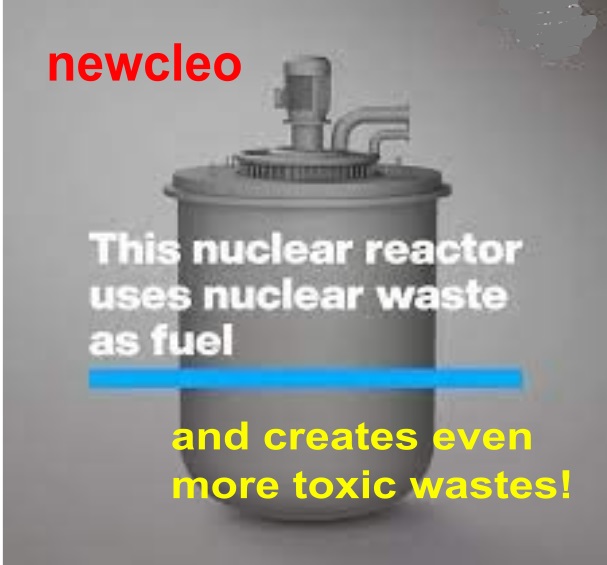
The company, which employs a thousand people, is burning through
too much cash. Its continued existence could be threatened without a new
round of financing.
But both private and public stakeholders remain
cautious. While waiting for fresh money, Newcleo is scaling back. Without a
new capital increase in the next twelve months, the company’s continued
existence is threatened, the Italian press reported in early August. The
articles, notably published in the business daily Il Sole 24 Ore , are
based on the findings of an audit of Newcleo’s 2024 accounts conducted by
KPMG, which La Tribune has seen.
The startup has notably abandoned its
ambitions in the United Kingdom, leading to the elimination of 150
positions. It also intends to reduce its engineering contracts with
external service providers.
La Tribune 29th Aug 2025, https://www.latribune.fr/climat/energie-environnement/petits-reacteurs-alerte-sur-la-tresorerie-de-newcleo-plus-grosse-start-up-europeenne-du-nucleaire-1031500.html
These countries are sinking into the sea. What happens when they disappear forever?

Can these small island nations still be considered states if their land disappears?
Small island nations such as Tuvalu, Kiribati, the
Maldives and Marshall Islands are particularly vulnerable to climate
change. Rising seas, stronger storms, freshwater shortages and damaged
infrastructure all threaten their ability to support life. Some islands
even face the grim possibility of being abandoned or sinking beneath the
ocean. This raises an unprecedented legal question: can these small island
nations still be considered states if their land disappears? The future
status of these nations as “states” matters immensely. Should the worst
happen, their populations will lose their homes and sources of income. They
will also lose their way of life, identity, culture, heritage and
communities.
Independent 29th Aug 2025, https://www.independent.co.uk/climate-change/climate-change-un-maldives-kiribati-islands-states-icj-b2816719.html
Rolls-Royce denies report of IPO ( Initial Public Offering) plans for small nuclear reactor unit
By Reuters, August 31, 2025
Aug 30 (Reuters) – Rolls-Royce Holdings (RR.L), opens new tab on Saturday denied a report it was exploring an initial public offering for its small nuclear reactor unit.
The Financial Times, citing people familiar with the situation, reported on Saturday the company was considering an IPO as well as other funding options. It said talks with investment houses and banks were at an early stage.
“Rolls-Royce SMR is not planning for, or in the process of launching, an initial public offering,” a spokesperson for the unit said in an emailed statement to Reuters.
In June, the Rolls-Royce SMR unit was selected to build Britain’s first Small Modular Reactors as part of its plan to speed up the decarbonisation of the power network from the mid-2030s. The unit, majority-owned by the British engineering firm, plans to build three reactors.
The British government pledged 2.5 billion pounds ($3.4 billion) for the SMR programme over the next four years, aiming to launch one of Europe’s first small-scale nuclear industries…. https://www.reuters.com/business/energy/rolls-royce-denies-report-ipo-plans-small-nuclear-reactor-unit-2025-08-30/
1 This Month





PLEASE OPPOSE HR 8255 AND S.3639 – bills would accelerate satellite deployment, with no environmental review or safeguards – https://ncstd5li.quorum.us/campaign/169331/
To see nuclear-related stories in greater depth and intensity – go to https://nuclearinformation.wordpress.com
-
Archives
- October 2026 (81)
- September 2026 (339)
- August 2026 (330)
- July 2026 (355)
- June 2026 (287)
- May 2026 (306)
- April 2026 (356)
- March 2026 (251)
- February 2026 (267)
- January 2026 (308)
- December 2025 (358)
- November 2025 (359)
-
Categories
- 1
- 1 NUCLEAR ISSUES
- business and costs
- climate change
- culture and arts
- ENERGY
- environment
- health
- history
- indigenous issues
- Legal
- marketing of nuclear
- media
- opposition to nuclear
- PERSONAL STORIES
- politics
- politics international
- Religion and ethics
- safety
- secrets,lies and civil liberties
- spinbuster
- technology
- Uranium
- wastes
- weapons and war
- Women
- 2 WORLD
- ACTION
- AFRICA
- Atrocities
- AUSTRALIA
- Christina's notes
- Christina's themes
- culture and arts
- Events
- Fuk 2022
- Fuk 2023
- Fukushima 2017
- Fukushima 2018
- fukushima 2019
- Fukushima 2020
- Fukushima 2021
- general
- global warming
- Humour (God we need it)
- Nuclear
- RARE EARTHS
- Reference
- resources – print
- Resources -audiovicual
- Weekly Newsletter
- World
- World Nuclear
- YouTube
-
RSS
Entries RSS
Comments RSS

