DOOMSDAY: The Suicide Pact Nobody Voted For

COMMENT. I really do not know what to think about this one.
I am aware that Russia busily does lots of propaganda – which we must read with a sceptical eye. But so does the West.
And I’m sorry to say it -but the idea that the West might supply Ukraine with some sort of covert nuclear weaponry – that’s not such a wayout idea.
Islander Reports, Gerry Nolan, Feb 25, 2026, https://islanderreports.substack.com/p/doomsday-the-suicide-pact-nobody
Russia accuses Ukraine of seeking to acquire nuclear weapon with help from UK and France
Reuters, Wed, February 25, 2026, https://www.reuters.com/world/europe/russia-accuses-ukraine-seeking-acquire-nuclear-weapon-with-help-uk-france-2026-02-24/
DOOMSDAY is the only word that fits — but let’s name the madness with the surgical clarity this moment demands. On the fourth anniversary of a war they have already lost, London and Paris have apparently decided the answer is not negotiation, not dignity, not the elementary statecraft of knowing when you are beaten — but nuclear escalation into the abyss. We are well past the point of any strategy on NATO’s part — there is only one word to describe the insanity, and that word is pathology.
Russia’s SVR names the weapon with the kind of clinical specificity that cannot be dismissed as propaganda: France’s TN75 miniaturized thermonuclear warhead, the crown jewel of the M51 submarine-launched ballistic missile — to be covertly dismembered, smuggled in components, transferred to Kyiv, and cosmetically disguised as a Ukrainian “indigenous development.”
A lie so architecturally transparent it insults every arms inspector, every treaty signatory, every breathing human being who has spent eighty years constructing the fragile scaffolding of nuclear non-proliferation. Kiev on cue calls it an absurd lie. Paris calls it blatant disinformation. London says there is “no truth to this.” And yet not one of them has called an emergency press conference to repudiate. Not one has or will provide anything of material and consequence to clear their name. They have issued banal statements — the diplomatic equivalent of a man caught with his hand in the vault saying he was simply checking the lock.
And here is the question that neither London nor Paris can answer — because no democratic process on earth has ever asked it. No voter in France went to the polls to authorise the covert transfer of thermonuclear warheads to an active war zone. No British citizen marked a ballot for a policy that Russian doctrine formally classifies as a joint act of war against a nuclear power. No electorate in Europe or America — not one — was consulted on the decision to sleepwalk their children to the edge of the nuclear precipice. Power of this magnitude, exercised in this darkness, over consequences this irreversible, was simply taken — pocketed in the corridor of an intelligence briefing, ratified by no one, answerable to nothing.
These are not the moves of men who believe they are winning. These are the desperate, clock-burning sacrifices of players who have already lost the board — and are now reaching across the table to upturn it entirely, praying the chaos spares them the humiliation of checkmate. Four years of weapons, treasure, blood, and Western credibility fed into the Ukrainian furnace — and the front line tells the only truth that matters. The empire of narrative cannot survive contact with artillery mathematics. They know the position is lost. This is what lost looks like when the men responsible have nuclear access and no accountability.
And Germany — Germany, the nation that carries within its civilizational bone marrow the precise and irreversible cost of catastrophic military hubris — said no. Berlin walked. The SVR records it with almost contemptuous brevity: Germany “wisely refused to participate in this dangerous adventure.” Let that land like a sentence from a war crimes tribunal. The country that gave the twentieth century its two defining lessons in what happens when European leaders mistake belligerence for strategy — that country looked at the plan, looked at the men presenting it, and quietly pushed back its chair. The defeated always betray themselves in their final moves. Nothing in the entire arc of this conflict has announced strategic bankruptcy with more devastating eloquence than the moment your most historically scarred, most catastrophe-literate ally looks at your masterstroke and walks out without a word.
Russia’s nuclear posture requires no interpretation, no Kremlinology, no specialist decoder. It is written in language so unambiguous that ignorance is impossible and innocence is forfeit: aggression by a non-nuclear state backed by a nuclear power constitutes a joint attack — on both. Not metaphor. Not negotiating flourish. A published military-legal framework with four years of enforced red lines behind it. A wall of iron. The Federation Council has formally called on London, Paris, the UN Security Council, and the IAEA to investigate. Peskov has confirmed it enters the Geneva room. Medvedev has said what follows in language requiring no translation. They are not bluffing. They have never needed to. And yet here are Starmer and Macron — Dr. Strangelove without the self-awareness, without the dark comedy, without even the saving grace of fictional distance — triggering, knowingly, what their own doctrine names as nuclear war.
Look at the photograph used by Reuters capturing the arrogance and incompetence like so many other photos do. Four incompetent men outside the black door of Number 10 — handshakes, dark suits, the performance of gravity. They do not look like men who know they are already ghosts. That is the most terrifying thing about them — they never do. What we are witnessing in real time, on the precise anniversary of the war’s ignition, is not statecraft. It is not strategy. It is not even desperation with a plan. It is a collective suicide pact authored by a defeated establishment so hollowed out by its own mythology, so physically incapable of absorbing the verdict of the battlefield, that they are still pushing pawns across a board with no squares remaining — too blind to see the checkmate, too arrogant to hear the piece hit the floor.
History will not struggle to name what this was. The tragedy is that there may be no historians left to write it.
Nuclear power station workers ‘failed to ensure safety’ after incident.

Nuclear watchdog said the electrical cabling failing presented a ‘significant potential risk’
Matthew Fulton, STV News, Feb 25th, 2026
Workers at a nuclear station in Ayrshire “failed to ensure safety” after an electrical cabling incident, according to the Office for Nuclear Regulation (ONR).
The ONR issued an improvement notice to EDF Energy following the incident at its Hunterston B site near West Kilbride.
In November, workers failed to ensure that the electrical cabling was “deployed safely” while undertaking work on the cooling water valves in one of the facilities on the site.
The independent nuclear regulator said that although no injuries were sustained, the incident presented a “significant potential risk to worker safety”.
The notice requires EDF Energy to review, revise and implement arrangements to ensure that all 415V portable equipment at Hunterston B is appropriately constructed, maintained, tested and controlled.
ows an incident at Hunterston B .
Feb 25th, 2026 at 10:59
Share this story
Posted in
Last updated Feb 25th, 2026 at 11:02
Workers at a nuclear station in Ayrshire “failed to ensure safety” after an electrical cabling incident, according to the Office for Nuclear Regulation (ONR).
The ONR issued an improvement notice to EDF Energy following the incident at its Hunterston B site near West Kilbride.
In November, workers failed to ensure that the electrical cabling was “deployed safely” while undertaking work on the cooling water valves in one of the facilities on the site.
The independent nuclear regulator said that although no injuries were sustained, the incident presented a “significant potential risk to worker safety”.
The notice requires EDF Energy to review, revise and implement arrangements to ensure that all 415V portable equipment at Hunterston B is appropriately constructed, maintained, tested and controlled.
Ad
The ONR called for EDF to “strengthen its risk assessment processes” and improve arrangements for personnel undertaking electrical work on the site.
Tom Eagleton, ONR’s Head of Safety Regulation, Decommissioning, Fuel and Waste sites, said: “The safety of workers at nuclear licensed sites is a key priority for us. While no one was hurt on this occasion, the potential for serious harm was significant.
“It’s essential that EDF Energy implements the necessary improvements to ensure this cannot happen again.”
The energy firm is required to comply with the notice by March 20……………….. https://news.stv.tv/west-central/hunterston-nuclear-station-workers-failed-to-ensure-safety-after-electrical-cabling-incident
National analysis of cancer mortality and proximity to nuclear power plants in the United States
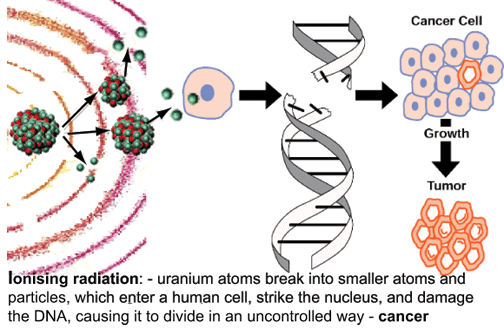
Nature Communications volume 17, Article number: 1560 (2026) , 23 February 2026 [Excellent graphics and tables]
Abstract
Understanding the potential health implications of living near nuclear power plants is important given the renewed interest in nuclear energy as a low-carbon power source. Here we show that U.S. counties located closer to operational nuclear power plants have higher cancer mortality rates than those farther away.
Using nationwide mortality data from 2000-2018, we assess long-term spatial patterns of cancer mortality in relation to proximity to nuclear facilities while accounting for socioeconomic, demographic, behavioral, environmental, and healthcare factors. Cancer mortality is higher across multiple age groups in both males and females, with the strongest associations among older adults, males aged 65–74 and females aged 55–64. While our findings cannot establish causality, they highlight the need for further research into potential exposure pathways, latency effects, and cancer-specific risks, emphasizing the importance of addressing these potentially substantial but overlooked risks to public health.
…………………………………………………………….Nuclear power plants emit radioactive pollutants that can disperse into the surrounding environment, leading to potential human exposure through inhalation, ingestion, and direct contact. These pollutants can be transported through air, water, and soil, contributing to long-term environmental contamination1. Populations residing near nuclear power plants may experience low-level chronic exposure to ionizing radiation via environmental release pathways. While our study does not include dosimetry, ionizing radiation is a well-established carcinogen2,3,4,5,6,7 and thus motivates investigation into proximity-based exposure patterns.
………………………Despite the importance and prevalence of nuclear power plants in the U.S., epidemiologic research regarding their health impacts remains rare. Most U.S. studies have focused on individual plants or limited regions, with only a few national assessments to date – many of which relied on fixed distance cutoffs to classify exposed populations8,9,11,12,19,21,22,23,24,25. These studies often focus on a single facility and its surrounding communities, which restricts their statistical power to detect effects and ability to capture broader exposure patterns. Furthermore, differences in study design, exposure assessment methods, and geographic scope make it difficult to draw generalizable conclusions.
In this work, we assess the association between county-level proximity to nuclear power plants and cancer mortality across the United States from 2000 to 2018. We find that counties located closer to operational nuclear power plants have higher cancer mortality rates, with stronger associations observed among older adults. These associations remain consistent across multiple sensitivity analyses and proximity definitions. The results highlight spatial patterns of cancer risk in relation to nuclear power generation and emphasize the importance of evaluating potential long-term health implications of nuclear energy infrastructure in population-scale studies…………………………………………………………………………………………………………………………………………………………………. https://www.nature.com/articles/s41467-026-69285-4
Sizewell C power to cost almost double today’s prices
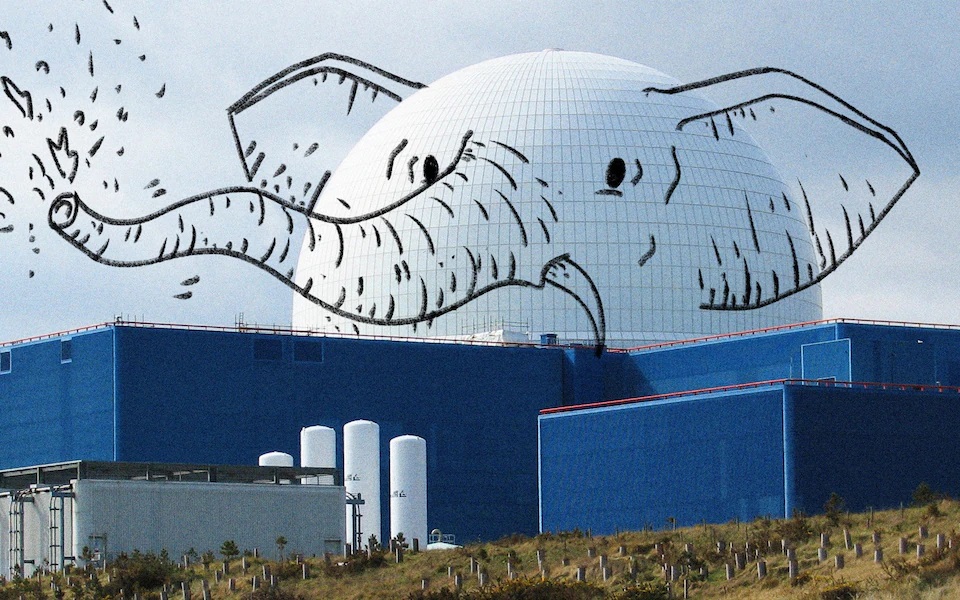
Nuclear plant is an ‘appalling waste of electricity consumers’ and taxpayers’ money’, experts claim
Electricity generated by the Sizewell C nuclear power station will
cost roughly double the normal price of power, according to a new
Government report.
Estimates suggest that the power Sizewell C produces
will cost £120 per megawatt hour (MWh) in today’s prices, compared with the
current wholesale price of about £60 to £70. The extra costs will be added
to energy bills.
The disclosure was made in a review of the business case
for Sizewell C published by the Department for Energy Security and Net
Zero. It is understood to be the first time Sizewell C’s power output has
been costed. It refers to the so-called “strike price”, which is likely
to be awarded to the nuclear power station under the contracts for
difference system. This is where generators get a guaranteed minimum price
for electricity, whatever the market value.
The cost is then covered by a
levy on consumer bills, meaning it effectively acts as an energy subsidy.
Nuclear supporters, including Ed Miliband, the Energy Secretary, have
argued that nuclear power is worth the extra money because it acts as a
secure energy source for decades – potentially a century in the case of
Sizewell C.
However, critics have raised concerns that prices for nuclear
will continue to rise, arguing that early estimates for constructing power
stations are always significant underestimates. They have pointed to
Sizewell C’s predecessor, Hinkley Point C, where original costs of £18bn
have soared to £50bn – a figure announced last week – with start-up delayed
from 2026 to 2031.
The Government report for Sizewell C said estimates
assumed no escalation in costs, which would be a first for UK nuclear
construction projects. The report also warned that consumers were likely to
be charged more than the £120 per MWh rate because the strike price was
calculated net of all the tax, business rates and other payments to the
Government.
Prof Stephen Thomas, the editor-in-chief of Energy Policy, an
academic journal, said: “Sizewell is an appalling waste of electricity
consumers’ and taxpayers’ money. If you want to justify a premium price for
nuclear, you have to estimate the costs of achieving the same factors –
energy security and reliability.
“Of course, nuclear power plants aren’t
always reliable and the most insecure power source is the one that isn’t
built yet. Without the assumptions behind these cost guesses [of £120 per
MWh], they are worthless and far from transparent.” Alison Downes, of
Stop Sizewell C, a local campaign group, said: “Hinkley’s cost has soared
to £50bn with completion dates slipping and five years still to go.
Sizewell C’s costs will rise higher still when it inevitably overruns its
£40bn construction budget.”
Telegraph 25th Feb 2026, https://www.telegraph.co.uk/business/2026/02/25/sizewell-c-power-to-cost-almost-double-todays-prices/
The Innate and Inseparable Ties Between Nuclear Weapons and Energy

Why are these statements significant? Because there is a long track record of attempts by the nuclear industry and advocates for nuclear power to erase or at least camouflage the connection between the technologies used to develop nuclear energy and the capacity to build nuclear weapons.
Understanding these connections between nuclear weapons and nuclear energy helps explain why governments around the world continue to support nuclear power despite the multiple problems associated with nuclear power. On top of huge amounts of funding, ultimately from the public, that is made available to nuclear enterprises, the linkage with nuclear weapons is also used to control information flows and exclude outsiders from policy discussions, thus weakening democracy
M.V. Ramana, February 24, 2026, https://www.counterpunch.org/2026/02/24/the-innate-and-inseparable-ties-between-nuclear-weapons-and-energy/
What do Canada’s retired general Wayne Eyre and Saudi Prince Mohammed Bin Salman share in common? Answer: In their own ways, both have inadvertently warned the public about the deep relationship between nuclear weapons and nuclear energy.
The former’s warning came earlier this month, when the retired general told a conference in Ottawa that when it came to acquiring nuclear weapons, Canada should keep its “options open,” pointing out that Canada had “a good nuclear enterprise” including “the civilian infrastructure” and “the scientists.” Eyre, who served as Canada’s chief of the Defence Staff from 2021 to 2024, argued, “Let’s just have the conditions in place so that if we decide to go that way, we can do it in shorter order than some other countries who have no nuclear enterprise. It’s all about hedging\.” Part of the strategy he recommended was to invest in aerospace and missile technology.
Canadian government officials were quick to state that the country remained opposed to acquiring nuclear weapons, and others pointed out that such acquisition wouldn’t be so simple. But Eyre was pointing to a deep truth—Canada’s nuclear energy program would facilitate the building of nuclear weapons, should the country decide to do so. Indeed, the Globe and Mail, Canada’s leading newspaper, highlighted this fact in its editorial (“The strong civilian nuclear industry could provide a springboard if ever Ottawa chose to go that way”) even as it argued against Canada building nuclear weapons.
This fact is equally applicable to all countries that acquire the technology to generate nuclear power: they would be closer to having the capacity to make nuclear weapons than if they had not built nuclear plants.
The last time this connection was so prominently broadcast was back in March 2018, when Saudi Prince Mohammed bin Salman told CBS News about Saudi Arabia’s equivalent hedging strategy. Earlier, the country had announced that it was interested in deploying nuclear power plants for “peaceful purposes,” but during the interview, MBS pointed to the possibility that Iran might develop a nuclear bomb, and declared that Saudi Arabia “will follow suit as soon as possible.”
Effacement Efforts
Why are these statements significant? Because there is a long track record of attempts by the nuclear industry and advocates for nuclear power to erase or at least camouflage the connection between the technologies used to develop nuclear energy and the capacity to build nuclear weapons. An early example of the attempt to make the two pursuits seem unrelated was President Dwight Eisenhower’s Atoms for Peace program, which the President announced at the United Nations General Assembly in December 1953 with the stated aim of hastening “the day when fear of the atom will begin to disappear from the minds of the people and the governments of the East and West.”
The Atoms for Peace speech came just seven years after the 1946 Report on the International Control of Atomic Energy that explicitly warned that “the development of atomic energy for peaceful purposes and the development of atomic energy for bombs are in much of their course interchangeable and interdependent.” The intervening years witnessed a dramatic shift in the policy of the United States to build a larger and more destructive nuclear arsenal, including hydrogen bombs, and, simultaneously, a growing movement for nuclear disarmament and peace. The US government was also involved in an effort to induce private companies to build nuclear plants, in part to advance military capabilities. Eisenhower’s speech is an attempt to paper over the contradiction between a claimed interest in peace while developing nuclear capabilities.
In subsequent decades, the nuclear industry and its supporters have resorted to simply denying any connection between nuclear power and weapons. For example, Ted Nordhaus, who recently praised Trump’s policies to promote nuclear energy in the Washington Post, exhorted people to “stop confusing nuclear weapons with nuclear power.”
Overlaps
There are five overlaps between nuclear energy and nuclear weapons: technical, historical, geographical, personnel and institutional.
Let us start with the technical. The greatest challenge to developing a nuclear arsenal is obtaining the necessary fissile materials, namely highly enriched uranium or plutonium. These materials are “the key ingredients in nuclear weapons.” Neither is found in nature.
Uranium occurs naturally in two main varieties, called isotopes, the heavier uranium-238 and the lighter uranium-235.The latter is the one that can sustain a chain reaction, which is the basis of both nuclear power plants and nuclear bombs. But the concentration of uranium-235 in nature is usually too low for such a chain reaction to occur. Whether it is to make nuclear weapons or to use as nuclear fuel in most common nuclear power plants, the uranium-235 concentration must be “enriched,” from 0.7 percent to 3 to 5 percent for most nuclear power plants and ideally around 90 percent for nuclear weapons. One technical overlap between the processes used to produce nuclear weapons and generate energy is that the facilities used to produce low-enriched uranium fueling nuclear power plants can be modified to produce weapons-useable highly enriched uranium, a technical detail that is at the heart of the dispute over Iran’s nuclear program.
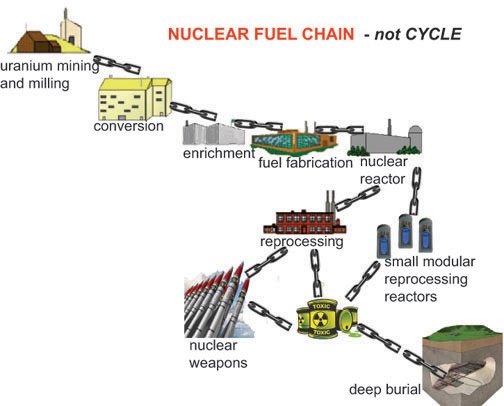
Plutonium, too, is not found in nature but is produced when uranium fuel is irradiated in a nuclear reactor. In order for this plutonium to be used either as nuclear reactor fuel or in nuclear weapons, it must first be separated from uranium and other chemicals in the irradiated fuel through a chemical process called reprocessing.
Historically, many countries built their first nuclear reactors to produce plutonium for use in nuclear weapons. The United States, for example, built reactors in Hanford to produce plutonium, and the first uses for the plutonium thus produced were the nuclear weapon tested in New Mexico in July 1945 and the bomb dropped over Nagasaki.
There are some countries, such as Israel, that only operate nuclear reactors to produce plutonium for nuclear weapons. That is rare. Which points to the geographical connection between nuclear weapons and energy: a significant overlap between the countries that have built nuclear power plants and those that have nuclear weapons. If one looks at the 413 nuclear reactors listed as operational by the International Atomic Energy Agency as of February 2026, 279 of them are in countries with nuclear weapons. If one adds countries that are part of military alliances with nuclear-weapon states, such as members of the NATO alliance, then the overlap is overwhelming.
There is also an overlap in the training needed to have personnel who can design and operate nuclear power plants and who can produce fisile material for nuclear weapons. Examples include Pakistan and Iran, both of which received training for scientists and engineers from the United States.
Munir Ahmed Khan, who was responsible for launching Pakistan’s nuclear weapons program, explained it thus:
“The Pakistani higher education system is so poor, I have no place from which to draw talented scientists and engineers to work in our nuclear establishment. We don’t have [a] training system for the kind of cadre we need. But, if we can get France or somebody else to come and create a broad nuclear infrastructure, and build these plants and these laboratories, I will train hundreds of my people in ways that otherwise they would never be able to be trained. And with that training, and with the blueprints and the other things that we’d get along the way, then we could set up separate plants that would not be under safeguards, that would not be built with direct foreign assistance, but I would now have the people who could do that. If I don’t get the cooperation, I can’t train the people to run a weapons program.”
Finally, there is a deep connection between institutions that oversee nuclear energy and weapons programs, as exemplified in the United States by the Department of Energy (DOE). The National Nuclear Security Administration (NNSA) is a semi-autonomous agency within DOE that is responsible for maintaining the stockpile of nuclear weapons in the United States and for “modernizing” it (namely, to make new weapons). The DOE also promotes nuclear energy through multiple funding mechanisms. There is also a significant overlap between the private corporations involved in building nuclear power plants and servicing the nuclear weapons industry.
Significance
Understanding these connections between nuclear weapons and nuclear energy helps explain why governments around the world continue to support nuclear power despite the multiple problems associated with nuclear power. On top of huge amounts of funding, ultimately from the public, that is made available to nuclear enterprises, the linkage with nuclear weapons is also used to control information flows and exclude outsiders from policy discussions, thus weakening democracy.
The expansion of nuclear energy also thwarts efforts toward a world free of nuclear weapons. It will not be possible to eliminate nuclear weapons without policies and resource-allocation decisions that are grounded in the reality that nuclear energy cannot be separated from nuclear weapons.
M. V. Ramana is the Simons Chair in Disarmament, Global and Human Security at the School of Public Policy and Global Affairs, University of British Columbia and the author of The Power of Promise: Examining Nuclear Energy in India.
Israeli troops fired 900+ rounds at Gaza medics – report

24 Feb, 2026, https://www.rt.com/news/632982-israel-gaza-medics-killing/
Hundreds of rounds were fired at aid workers during a March 2025 massacre at Tal as-Sultan, an independent investigation says
Israeli soldiers fired over 900 rounds at a convoy of clearly marked emergency vehicles in Rafah in 2025, killing 15 Palestinian aid workers, some of them shot at close range, an independent investigation has found.
The attack took place on March 18, 2025 in the Tal as-Sultan area of southern Gaza, where local responders had been dispatched to collect wounded civilians. Fifteen Palestinian aid workers were killed, including medics from the Palestine Red Crescent Society and members of the Civil Defense.
The victims were traveling in five ambulances and one fire truck, all clearly marked and operating with emergency lights, when they came under sustained gunfire, according to a report released on Monday by independent research agency Forensic Architecture and audio investigation group Earshot.
Investigators reconstructed the incident using audio recordings, satellite imagery, video footage, and witness testimony. Some of the victims were reportedly “shot ‘execution-style’ from close range.”
Investigators analyzed footage recovered from the phone of one of the slain paramedics and identified at least 910 gunshots during the attack, with 844 bullets fired over five and a half minutes. “During this time, at least five shooters fired simultaneously, and witness testimonies suggest as many as thirty soldiers were present in the area,” according to the report.
The report said Israeli forces later crushed the vehicles with heavy machinery and tried to bury them along with the bodies. The victims, all wearing identifying uniforms or volunteer vests, were recovered from a mass grave nearby, the researchers said.
One of the two survivors was abducted by Israeli forces, and were held without charge for 37 days at the Israeli Sde Teiman detention facility and released in poor health. He testified that soldiers confiscated and buried his phone. The other was used as a “human tool” at an Israeli military checkpoint near the site, the report added.
The Israel Defense Forces said the area was an active combat zone and that troops believed they were facing security risks. They later claimed that one vehicle may have been linked to Hamas, which was disputed by the survivors and humanitarian organizations. An internal Israeli inquiry launched in April 2025 cited “professional failures” but rejected allegations of deliberate killings or criminal conduct and recommended no criminal action against the units involved.
The UN, Red Cross, and a number of human rights groups condemned the killings.
Hundreds of medical and emergency personnel have been killed or injured since October 2023, when the IDF began its campaign in the enclave in response to a Hamas incursion into Israel that left at least 1,200 people dead and 250 taken hostage. According to the Palestinian Health Ministry, more than 72,000 people have been killed since the war began.
Nuclear waste leaks show the need for focus on renewables
Letter from Tor Justad. Nuclear Waste Leaks show need for focus on
renewables. The NDA says the Dounreay decommissioning programme will
continue until the 2070s during which time some £7.9billion will be spent.
The cost of decommissioning has risen dramatically while the risk of
accidents continues. After the recent leak Dounreay says there may be other
unrevealed hazards waiting to reveal themselves.
The National 21st Feb 2026, https://www.pressreader.com/uk/the-national-scotland/20260221/textview?popupArticleId=281951729285676
EDF pledges new £15bn UK investment as falling energy prices hit profits

The energy firm reported a 12 per cent decrease in nuclear output
Anna Wise, Independent UK, Monday 23 February 2026
French energy giant EDF saw its UK profits decline last year, attributed to a combination of falling energy prices and a significant outage at one of its nuclear power stations.
Despite this setback, the company has announced plans for a substantial £15 billion investment in the country over the next three years.
The energy firm reported a 12 per cent decrease in nuclear output from its five operational power stations during the period.
While its Sizewell B facility in Suffolk and Torness in Scotland performed strongly, the overall output was significantly impacted by an extended outage at the Hartlepool power station.
The Teesside-based station, which began generating power 43 years ago and supplies electricity to approximately two million homes, experienced a prolonged shutdown.
Despite these operational challenges, Hartlepool recently secured a one-year extension to its operational lifespan, now expected to generate electricity until March 2028.
This extended downtime, primarily due to issues affecting one of its two reactor systems, was identified as the main driver for EDF‘s overall decline in nuclear generation last year.
Furthermore, a decline in earnings was also down to the prices it charges for nuclear power being lower than in 2024.
It is understood that average prices were down by approximately 20 per cent.
Energy prices in the UK have been gradually coming down after spiking in the aftermath of Russia’s invasion of Ukraine in 2022.
EDF said that in its UK business, earnings before
interest, tax, depreciation and amortisation (EBITDA) were £1.9 billion for 2025, down about a third from £2.9 billion in 2024……………………………………………………….. https://www.independent.co.uk/news/business/edf-hinkley-point-energy-prices-profits-b2925974.html
‘Making America Unsafe Again’: Alarm Over Environmental Review Exemption for Nuclear Reactors
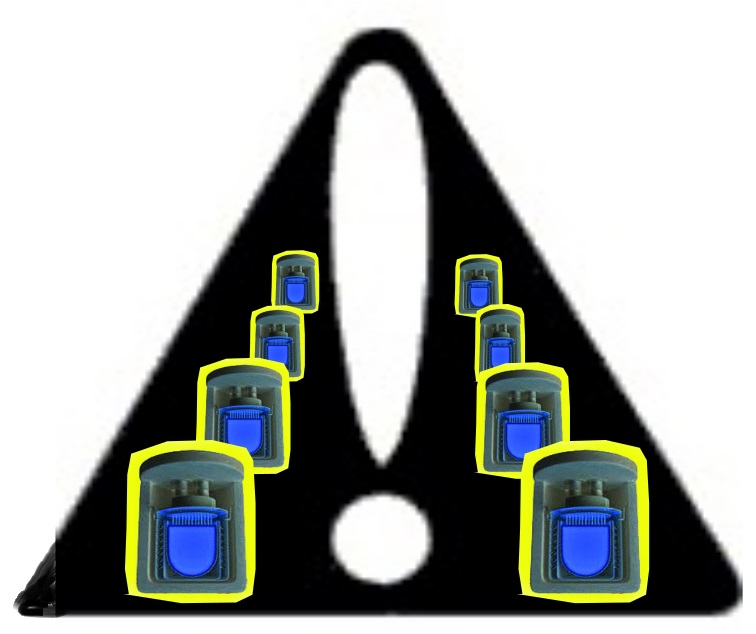
“I think the DOE’s attempts to cut corners on safety, security, and environmental protections are posing a grave risk to public health, safety, and our natural environment,” said one expert.
By Jessica Corbett, February 18, 2026, https://worth.com/trump-nuclear-safety-changes/
ess than a week after NPR revealed that “the Trump administration has overhauled a set of nuclear safety directives and shared them with the companies it is charged with regulating, without making the new rules available to the public,” the U.S. Department of Energy announced Monday that it is allowing firms building experimental nuclear reactors to seek exemptions from legally required environmental reviews.
Citing executive orders signed by President Donald Trump in May, a notice published in the Federal Register states that the DOE “is establishing a categorical exclusion for authorization, siting, construction, operation, reauthorization, and decommissioning of advanced nuclear reactors for inclusion in its National Environmental Policy Act (NEPA) implementing procedures.”
NEPA has long been a target of energy industries and Republican elected officials, including Trump. The exemption policy has been expected since Trump’s May orders—which also launched a DOE pilot program to rapidly build the experimental reactors—and the department said in a statement that even the exempted reactors will face some reviews.
“The U.S. Department of Energy is establishing the potential option to obtain a streamlined approach for advanced nuclear reactors as part of the environmental review performed under NEPA,” the DOE said. “The analysis on each reactor being considered will be informed by previously completed environmental reviews for similar advanced nuclear technologies.”
“The fact is that any nuclear reactor, no matter how small, no matter how safe it looks on paper, is potentially subject to severe accidents.”
However, the DOE announcement alarmed various experts, including Daniel P. Aldrich, director of the Resilience Studies Program at Northeastern University, who wrote on social media: “Making America unsafe again: Trump created an exclusion for new experimental reactors from disclosing how their construction and operation might harm the environment, and from a written, public assessment of the possible consequences of a nuclear accident.”
Foreign policy reporter Laura Rozen described the policy as “terrifying,” while Paul Dorfman, chair of the Nuclear Consulting Group and a scholar at the University of Sussex’s Bennett Institute for Innovation and Policy Acceleration, called it “truly crazy.”
As NPR reported Monday:
Until now, the test reactor designs currently under construction have primarily existed on paper, according to Edwin Lyman, director of nuclear power safety at the Union of Concerned Scientists, a nonprofit environmental advocacy group. He believes the lack of real-world experience with the reactors means that they should be subject to more rigorous safety and environmental reviews before they’re built.
“The fact is that any nuclear reactor, no matter how small, no matter how safe it looks on paper, is potentially subject to severe accidents,” Lyman said.
“I think the DOE’s attempts to cut corners on safety, security, and environmental protections are posing a grave risk to public health, safety, and our natural environment here in the United States,” he added.
Lyman was also among the experts who criticized changes that NPR exposed last week, after senior editor and correspondent Geoff Brumfiel obtained documents detailing updates to “departmental orders, which dictate requirements for almost every aspect of the reactors’ operations—including safety systems, environmental protections, site security, and accident investigations.”
While the DOE said that it shared early versions of the rules with companies, “the reduction of unnecessary regulations will increase innovation in the industry without jeopardizing safety,” and “the department anticipates publicly posting the directives later this year,” Brumfiel noted that the orders he saw weren’t labeled as drafts and had the word “approved” on their cover pages.
In a lengthy statement about last week’s reporting, Lyman said on the Union of Concerned Scientists website that “this deeply troubling development confirms my worst fears about the dire state of nuclear power safety and security oversight under the Trump administration. Such a brazen rewriting of hundreds of crucial safeguards for the public underscores why preservation of the Nuclear Regulatory Commission (NRC) as an independent, transparent nuclear regulator is so critical.”
“The Energy Department has not only taken a sledgehammer to the basic principles that underlie effective nuclear regulation, but it has also done so in the shadows, keeping the public in the dark,” he continued. “These long-standing principles were developed over the course of many decades and consider lessons learned from painful events such as the Chernobyl and Fukushima disasters. This is a massive experiment in the deregulation of novel, untested nuclear facilities that could pose grave threats to public health and safety.”
“These drastic changes may extend beyond the Reactor Pilot Program, which was created by President Trump last year to circumvent the more rigorous licensing rules employed by the NRC,” Lyman warned. “While the DOE created a legally dubious framework to designate these reactors as ‘test’ reactors to bypass the NRC’s statutory authority, these dramatic alterations may further weaken standards used in the broader DOE authorization process and propagate across the entire fleet of commercial nuclear facilities, severely degrading nuclear safety throughout the United States.”
Proximity to nuclear power plants associated with increased cancer mortality

The study found that U.S. counties located closer to nuclear power plants experienced higher cancer mortality rates, even after accounting for socioeconomic, environmental, and health care factors. The researchers estimated that over the course of the study period, roughly 115,000 cancer deaths across the U.S. (or about 6,400 deaths per year) were attributable to proximity to NPPs.
By Maya Brownstein, February 23, 2026, https://hsph.harvard.edu/news/proximity-to-nuclear-power-plants-associated-with-increased-cancer-mortality/
Boston, MA—U.S. counties located closer to operational nuclear power plants (NPPs) have higher rates of cancer mortality than those located farther away, according to a new study led by Harvard T.H. Chan School of Public Health.
The study is the first of the 21st century to analyze proximity to NPPs and cancer mortality across all NPPs and every U.S. county. The researchers emphasized that the findings are not enough to establish causality but do highlight the need for further research into nuclear power’s health impacts.
The study was published Feb. 23, 2026, in Nature Communications.
Numerous studies on the potential link between NPPs and cancer have been conducted around the world, with conflicting results. In the U.S., these studies have been rare and limited in their scope, focused on a single NPP and its surrounding community.
To expand the evidence base, the researchers conducted a national assessment of NPPs and cancer mortality between 2000 and 2018 using “continuous proximity.” They used advanced statistical modeling that captured the cumulative impact of all nearby NPPs, rather than just one. The locations and dates of operation of U.S. NPPs—as well as some nearby in Canada—were obtained from the U.S. Energy Information Administration, and county-level data on cancer mortality was obtained from the Centers for Disease Control and Prevention. The researchers controlled for potential confounders in each county, including educational attainment, median household income, racial composition, average temperature and relative humidity, smoking prevalence, BMI, and proximity to the nearest hospital.
The study found that U.S. counties located closer to nuclear power plants experienced higher cancer mortality rates, even after accounting for socioeconomic, environmental, and health care factors. The researchers estimated that over the course of the study period, roughly 115,000 cancer deaths across the U.S. (or about 6,400 deaths per year) were attributable to proximity to NPPs. The association was strongest among older adults.
“Our study suggests that living near a NPP may carry a measurable cancer risk—one that lessens with distance,” said senior author Petros Koutrakis, Akira Yamaguchi Professor of Environmental Health and Human Habitation. “We recommend that more studies be done that address the issue of NPPs and health impacts, particularly at a time when nuclear power is being promoted as a clean solution to climate change.”
The researchers noted that the results are consistent with the results of a similar study they conducted in Massachusetts, which identified elevated cancer incidence among populations living closer to NPPs.
They also noted some limitations to the study, including that it did not incorporate direct radiation measurements and instead assumed equal impact by all NPPs.
Article information
“National Analysis of Cancer Mortality and Proximity to Nuclear Power Plants in the United States,” Yazan Alwadi, Barrak Alahmad, Carolina L. Zilli Vieira, Philip J. Landrigan, David C. Christiani, Eric Garshick, Marco Kaltofen, Brent Coull, Joel Schwartz, John S. Evans, Petros Koutrakis, Nature Communications, February 23, 2026, doi: 10.1038/s41467-026-69285-4
The Bombs Which Polish the Skulls of the Dead
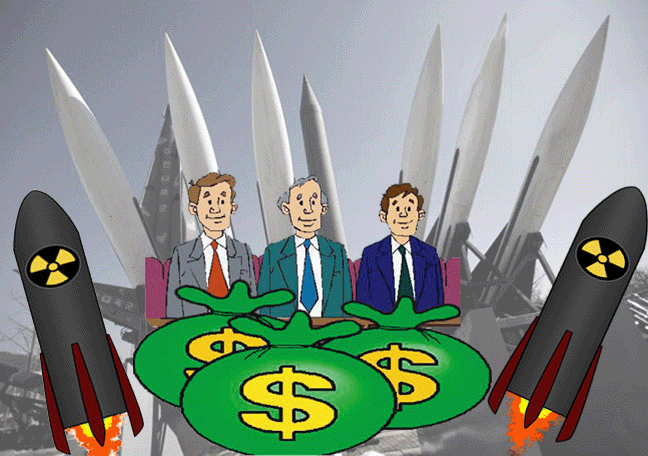
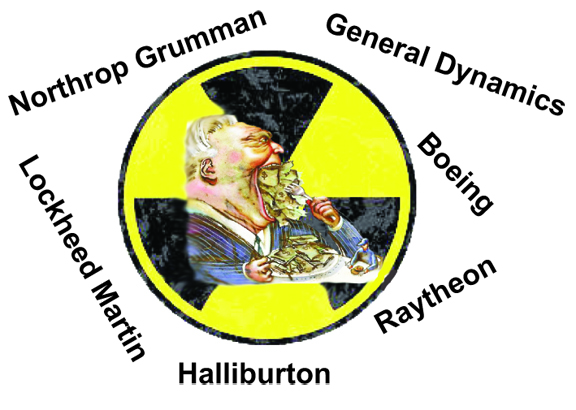
The madness behind these attitudes is fuelled by the enormous profits earned by the arms industry, which seeks to modernise nuclear systems around the counterforce doctrine. A 2025 report by PAX and the International Campaign to Abolish Nuclear Weapons (ICAN) titled At Great Cost: The Companies Building Nuclear Weapons and their Financiers found that, between January 2022 and August 2024, 260 global financial institutions (including pension funds, insurance companies, and asset managers) financed 24 nuclear weapons producers, with investors holding just under $514 billion in shares and bonds and with around $270 billion provided in loans and underwriting.
With New START now expired, the United States’ withdrawal from arms control treaties and its embrace of nuclear ‘warfighting’ doctrines are raising the risk of catastrophic conflict between nuclear powers.
19 February 2026, Tricontinental: Institute for Social Research, https://thetricontinental.org/newsletterissue/start-nuclear-weapons/
On 5 February 2026, the New Strategic Arms Reduction Treaty (New START) expired, ending the last surviving legal constraint on the strategic nuclear arsenals of the United States and the Russian Federation. New START, which was signed in 2010 and entered into force in 2011, should have been replaced by a successor agreement. The treaty limited strategic warheads and delivery vehicles deployed by each side and established a verification regime of inspection, notification, and information exchange. These measures were not cosmetic; they were thin threads that restrained the most destructive machinery ever assembled.
These companies include Airbus, BAE Systems, Bechtel, Boeing, General Dynamics, L3Harris Technologies, Northrop Grumman, and Rolls-Royce. ICAN’s 2025 report Hidden Costs: Nuclear Weapons Spending in 2024 estimates that the nine nuclear-armed states spent $100.2 billion on their nuclear arsenals in 2024, with the private sector earning at least $42.5 billion from nuclear weapons contracts. That sum could have paid the UN’s budget 28 times and fed 345 million people facing the most severe hunger for nearly two years. The nuclear weapons industry is a striking waste of human resources.
Despite the collapse of the bilateral arms control regime, the global nuclear deterrence and eradication system has not vanished. But what remains is irradiated by US domination over the architecture of nuclear policy:
- The Nuclear Non-Proliferation Treaty (NPT, 1970) remains in force even though it reinforces the system of nuclear apartheid (despite Article VI, which asks nuclear-armed countries to pursue disarmament). The expiration of New START deepens the NPT’s crisis of legitimacy and exposes the disarmament promise as perpetually deferred. India, Israel, and Pakistan never signed the NPT; the Democratic People’s Republic of Korea (DPRK) signed it in 1985 but withdrew in 2003.
The expiration of New START did not arrive suddenly. Due to the decade-long breakdown in US-Russia relations, on-site inspections were paused by both sides in March 2020 and never resumed. In February 2023, Russia suspended its participation in New START, and the US responded in kind (Russia has publicly said it intends to continue observing New START’s numerical limits, provided the US does the same). By the time the treaty formally lapsed, its verification spine had already been severed.
We now live in a world where the two largest nuclear powers are unrestrained by any binding treaty limits.
Since 2002, the United States has unilaterally exited one arms control treaty after another, eroding the architecture that helped stabilise deterrence. These treaties include the following:
- The Anti-Ballistic Missile Treaty of 1972 – US withdrawal, June 2002.
- The Intermediate-Range Nuclear Forces Treaty of 1987 – US withdrawal, August 2019.
- The Treaty on Open Skies of 1992 – US withdrawal, November 2020.
- The New START of 2011 – expired, February 2026.
The end of New START unfolds within a broader turn toward nuclear ‘warfighting’ doctrines, including a renewed emphasis on the diabolical idea of counterforce – the outlines of which appear in the 2018 US Nuclear Posture Review (NPR). The idea is simple: to attack an adversary’s nuclear forces and command systems rather than its cities. Such an attack is seen to be more rational and even more humane. In reality, an attack of this kind destabilises all deterrence systems. Counterforce doctrines reward speed, pre-emption, and first-strike advantage, thereby compressing decision-making time. The doctrine creates a use-it-or-lose-it pressure – the fear that you must launch before your forces are destroyed – that makes miscalculation structural, not accidental.
. As warfare technologies advance, this logic is amplified. Highly developed conventional strike systems, missile defences, hypersonic delivery systems, and integrated command-and-control networks (shared systems that link sensors, communications, and decision-making) blur the boundary between nuclear and non-nuclear war. A missile launched with conventional intent may be interpreted as a nuclear strike. Dual-use platforms – systems that can carry conventional or nuclear payloads – undermine signalling clarity by making it difficult to determine whether a launch is conventional or nuclear. Escalation ladders shorten. The margin for error narrows to seconds.
The counterforce doctrine is not merely an abstract debate but has materialised in government budgets and arms procurement contracts. The 2022 US NPR affirmed the modernisation of the nuclear triad: land-based intercontinental ballistic missiles, submarine-launched ballistic missiles, and nuclear-capable strategic bombers. Crucially, the 2022 NPR rejects ‘no first use’ and ‘sole purpose’ policies (‘no first use’ means committing not to use nuclear weapons first; ‘sole purpose’ means limiting their role to deterrence and, if necessary, for responding to nuclear attack). The current policy holds that the US would only consider the use of nuclear weapons, under ‘extreme circumstances’, to defend its vital interests or those of its allies and partners, but it does not foreclose first use, and leaves open a ‘narrow range of contingencies’ in which nuclear weapons may deter attacks with ‘strategic effect’. This posture preserves the option to target adversary military capabilities – including their strategic forces if necessary – without overtly committing to the counterforce doctrine.
The 2023 Congressional Commission on the Strategic Posture of the United States took this further, arguing that US nuclear planning should continue to target what adversaries ‘value most’. In these texts, nuclear weapons are not presented as tragic necessities of modern statecraft but as normal tools that can be used in certain circumstances.
The madness behind these attitudes is fuelled by the enormous profits earned by the arms industry, which seeks to modernise nuclear systems around the counterforce doctrine. A 2025 report by PAX and the International Campaign to Abolish Nuclear Weapons (ICAN) titled At Great Cost: The Companies Building Nuclear Weapons and their Financiers found that, between January 2022 and August 2024, 260 global financial institutions (including pension funds, insurance companies, and asset managers) financed 24 nuclear weapons producers, with investors holding just under $514 billion in shares and bonds and with around $270 billion provided in loans and underwriting.
- The International Atomic Energy Agency (IAEA, 1957) operates a safeguards regime of inspections, material accountancy, and monitoring. The 1997 Additional Protocol to the IAEA extends these capacities, yet this mechanism remains plagued by selective enforcement. The IAEA’s investigations of Iran, for instance, are not shaped by evidence but by the Global North’s hostility to the Iranian government.
- The Nuclear Suppliers Group (NSG, 1975) is an informal export-control regime for sensitive technologies and dual-use materials used in nuclear fuel-cycle and weapons-related programmes. While the purpose of the NSG is to constrain proliferation (reinforced by UN Security Council resolution 1540), it ends up reinforcing technological hierarchies. The nuclear-armed states dominate the informal institutions, exercising their authority while insisting on restraint from others.
Some tattered norms remain outside the full control of the United States, but they are fractured and unable to advance a comprehensive agenda. These include:
- The Treaty on the Prohibition of Nuclear Weapons (2017). This is a legally binding instrument that represents a categorical rejection of nuclear arms. As of late 2025, ninety-nine countries had either ratified or signed the treaty, but none of the world’s nine nuclear-armed states are among them. In Europe, only Austria, the Holy See (Vatican), Ireland, Malta, and San Marino have ratified the treaty. The treaty, which was driven by the International Campaign to Abolish Nuclear Weapons, is largely a Global South initiative.
- Nuclear Weapon Free Zones. Five regions of the world adopted treaties to make their territories free of nuclear weapons. These agreements are the Treaty of Tlatelolco (1967) covering Latin America and the Caribbean, the Treaty of Rarotonga (1985) covering the South Pacific, the Treaty of Bangkok (1995) covering Southeast Asia, the Treaty of Pelindaba (1996) covering Africa, and the Semipalatinsk Treaty (2006) covering Central Asia. These treaties are, in practice, among the most successful achievements in nuclear disarmament.
- The Comprehensive Nuclear-Test Ban Treaty (1996). This treaty has not been able to enter into force because several required states have not ratified it, yet it remains politically significant because it prohibits nuclear test explosions and has helped make nuclear testing internationally taboo. The treaty’s monitoring system functions daily, detecting seismic and atmospheric signals, making tests harder to hide.
The post-New START landscape contains some institutions and norms, but the central restraint on the largest nuclear arsenals has vanished. What we have now are three overlapping crises:
- A crisis of stability. With no transparency and verification on the largest nuclear weapons arsenals there is only suspicion between the major powers.
- A crisis of legitimacy. The countries with the largest arsenals demand obedience to non-proliferation while abandoning their own treaty commitment to disarmament.
- A crisis of conscience. Horrifyingly, nuclear weapons are now being spoken of as being usable, manageable, and necessary – as legitimate options on the battlefield.
A return to an arms control regime is necessary. But we need to consider a broader agenda. Even the best treaties only manage danger but do not eliminate it. The deeper contradiction remains intact: a world in which a few states claim the right to annihilate humanity in the name of security. The demise of New START strips away illusions to reveal a nuclear weapons order that preserves power and does not advance peace.
Libya abandoned its nuclear weapons programme in December 2003. Eight years later, a UN Security Council resolution (no. 1973) imposing an arms embargo and a no-fly zone was used by NATO to justify the military intervention that destroyed the Libyan state. It was logical, therefore, for the DPRK to test a nuclear weapon in 2006 and build a shield against the regime-change ambitions of the US and its East Asian allies. The counterforce doctrine of the US encourages countries to build such a shield, a painful reality in a world marinated in the anxieties provoked by hyper-imperialism.
In 2003, the British playwright Harold Pinter (1930–2008), exasperated by the Global War on Terror, wrote a powerful poem called ‘The Bombs’. I remember hearing Pinter read this poem in London, the cadence powerful, the hope in the ugliness clear. In his memory, here is the poem:
There are no more words to be said
All we have left are the bombs
Which burst out of our head
All that is left are the bombs
Which suck out the last of our blood
All we have left are the bombs
Which polish the skulls of the dead.
The priciest electricity in the world
.

by beyondnuclearinternational, https://beyondnuclearinternational.org/2026/02/23/the-priciest-electricity-in-the-world/
New York governor Kathy Hochul is betting on nuclear power but her numbers simply don’t add up, writes the The Nuclear Skeptic
New York Governor Kathy Hochul’s desire to build 5GW of new nuclear power in order to keep New York’s electric bills affordable and meet future energy demand has one pesky problem: the numbers simply don’t add up. That’s the overarching conclusion of a new report authored by the University of Pennsylvania’s Dr. Joseph Romm, which was presented in New York last week.
Echoing the Trump administration’s desire to revive the nuclear energy industry from its global downturn over the past few decades, Governor Hochul and President Trump appear to be in lock-step in their shared desire to build new nuclear reactors, despite the economic reality that cheaper and faster power alternatives exist and are already being utilized across the globe to meet growing electricity needs.
There are a myriad of possible reasons why both politicians believe new nuclear generation is a viable option moving forward, but it’s clear neither are paying attention to what just happened in Georgia – when two incumbent Republican Public Service Commission (PSC) members were removed from office by voters following massive increases in consumer electric bills. To be fair, neither Hochul nor Trump will be around to face the music if their plans are realized and New York starts the decades-long process to build 5GW worth of the world’s most expensive source of energy.
Keeping the lights on and affordable should be a top priority for any politician in the current economic landscape but there is a clear disconnect between major decisions about our future energy grid being made today and the future ramifications of those decisions both economically and electorally.
New sources of affordable and clean electricity are needed to power data centers, vehicle electrification and other sources of new demand, but it’s unclear how much electricity is truly needed and how fast. According to AI proponents, New York and the U.S. at large are going to need massive amounts of new electric power and fast. For example, New York’s Master Energy Plan anticipates nearly 40GW of new power needed by 2040, therefore doubling New York’s current energy supply in the next 15 years.
Setting aside the (very real) possibility of the AI data center bubble bursting far before 2040, Hochul and Trump are calling for more nuclear generation to meet energy demand predictions and both have cited nuclear’s “affordability” as reason why. Well, as Romm’s recent report concludes, this is pure fantasy.
Romm notes that Georgia’s two new reactors at Plant Vogtle, which went online in 2024 after nearly two decades of construction and delays, resulted in a 25% percent increase in consumer electric bills. The ~2GW from the twin Vogtle reactors cost more than $36 billion, 2.5+ times more than original estimates! But that sudden spike in electric bills is just the tip of the iceberg.
The recent spike doesn’t account for the billions of taxpayer dollars currently subsidizing the plant, the billions in loans from the Department of Energy used to build it, nor does it account for the high cost of servicing debt and ongoing operations into the future which will inevitably require further subsidization – similar to New York’s $33 billion in state subsidies going towards the existing reactors at Ginna, Nine Mile Point, and FitzPatrick accounting for 5.4GW in capacity.
Simply put, Georgia’s two new reactors are the most expensive electricity on the planet and for a myriad of reasons not related to “affordability,” both Trump and Hochul want to recreate that terrible recipe.
But the most disturbing finding in Romm’s report is what was buried in the middle of the NY Master Energy Plan. The plan inexplicably does not include cost or cost overrun figures, instead references a separate analysis used to inform the state’s approach. Hochul’s team, in Trump-like fashion, has decided to ignore its own experts, relying on financial figures included in a separate report by a NYSERDA ‘contractor’ that begins with the unprecedented disclaimer:
“NYSERDA, the State of New York, and the contractor make no warranties or representations, expressed or implied, as to … the usefulness, completeness, or accuracy of any processes, methods, or other information contained, described, disclosed, or referred to in this report. NYSERDA, the State of New York, and the contractor … will assume no liability for any loss, injury, or damage resulting from, or occurring in connection with, the use of information contained, described, disclosed, or referred to in this report.”
To sum it up, the plan to build 5GW of new nuclear generation in New York is based on an economic analysis that might as well be a science fiction novel. The basic assumption of the “contractors’” economic analysis is that the cost to build reactors in New York, notorious for its cheap construction costs, will be cheaper than at Plant Vogtle in Georgia. Did anyone on Hochul’s team ask Plant Vogtle’s construction monitor if this was achievable? Apparently not.
Anyone who claims new nuclear power plants in New York will lower your electric bill is lying. We should ask why? Why is Hochul drinking the nuclear Kool-aid? I don’t believe New York will actually build and operate a new nuclear reactor any time soon, but like the cancelled-after-spending-$9-billion-dollars twin reactors at South Carolina’s VC Summer, or the abandoned-after-spending-$6-billion dollars reactor at Shoreham which Long Islanders are still paying for, there’s a lot of money still on the table. Our money.
Middle-aged women ‘most at risk of cancer’ from nuclear power plants
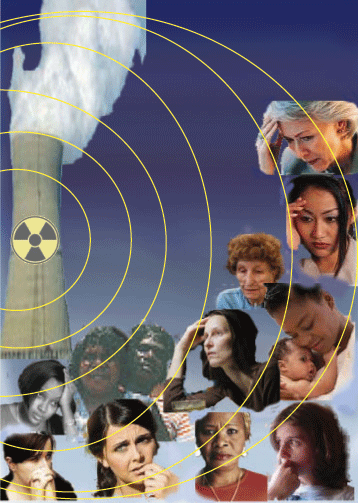
2.1 per cent of cancers in women aged 55-64 attributable to living near a plant, research shows
Sarah Knapton,Telegraph, Science Editor, 23 February 2026
Middle-aged women are the most at risk from living near power plants, a study suggests.
Researchers at Harvard University found that US counties closer to nuclear plants had higher cancer death rates than those farther away, even after accounting for socioeconomic, environmental and health factors.
The team estimated that 2.1 per cent of cancers in women aged 55-64 were “attributable” to living near a plant, the highest of all age groups and genders.
Similarly, 2 per cent of cancers in men aged 65-74 were linked to nuclear plants, the highest age range for males.
Younger people aged 35-44 had the lowest risk, with proximity to nuclear plants accounting for 0.4 per cent of cancers in females and 0.6 per cent in males.
Radiation fears
“Our study suggests that living near a nuclear power plant may carry a measurable cancer risk – one that lessens with distance,” said Dr Petros Koutrakis, the senior author and professor of environmental health and human habitation at Harvard TH Chan School of Public Health.
“We recommend that more studies be done that address the issue of nuclear power plants and health impacts, particularly at a time when nuclear power is being promoted as a clean solution to climate change.”
Last year, Harvard discovered that people living near the Mallinckrodt Chemical Works in Missouri, which processed uranium for the first atomic bomb, had a far higher chance of developing most cancers than those living farther away.
There have been ongoing fears that radiation from power stations can cause cancer, with some evidence showing clusters of leukaemia and non-Hodgkin lymphoma near Sellafield in Cumbria, and Dounreay, on the north coast of Scotland.
The Committee on Medical Aspects of Radiation in the Environment was set up in 1985 to investigate.
Although it confirmed the raised rates, it also found that other nearby villages did not show similar increases as might be expected if the plants were to blame.
Investigators theorised that an influx of workers moving to Seascale and Thurso to work in the nuclear industry might have exposed residents to new infections, causing a rise in childhood cancer rates…………………………………………………………… https://www.telegraph.co.uk/news/2026/02/23/middle-aged-women-most-at-risk-of-cancer-from-nuclear-power/
Rapid UK coastal erosion throws spotlight on £40bn nuclear plant
More than 27 metres of cliff lost over a year in area just 2km from Sizewell C.

Swaths of the eastern UK coastline are eroding faster than expected,
forcing the demolition of homes and putting the spotlight on the risks
surrounding a £40bn nuclear power plant being built at Sizewell.
The coast
around Norfolk and Suffolk is one of the fastest eroding in Europe but the
disintegration has intensified in several parts in recent months including
an area just 2km from the Sizewell C construction site.
More than 27 metres
of cliff at the village of Thorpeness has been lost since December 2024,
compared with an erosion rate of 2 metres a year on average, according to
East Suffolk Council, which said the “sudden and significant pace”
meant safety levels were breached far more quickly than expected. Ten homes
in the upmarket area, including two flats that sold within the last few
years for more than £600,000, have been knocked down since October.
FT 24th Feb 2026,
https://www.ft.com/content/7f093296-41cd-498c-ba81-f3707204eca9
Fuel shortage threatens US nuclear resurgence, warns top supplier.
Centrus Energy says rising demand and ban on Russian imports risks uranium
enrichment ‘supply gap’.
One of the largest suppliers of enriched
uranium fuel to US nuclear power plants has warned of a looming supply
crunch because of fast-rising demand and a ban on Russian imports. Centrus
Energy chief executive Amir Vexler told the FT the company is racing to
build enrichment capacity at its Ohio plant to meet a $2.3bn backlog in
sales of enriched uranium to customers.
But the restart of several US
nuclear plants and upgrading of the reactor fleet to boost electricity
output would put pressure on the handful of western suppliers of enriched
uranium — a critical component in nuclear fuel, he said.
FT 23rd Feb 2026,
https://www.ft.com/content/717ed9ab-d6c0-4d4f-b2c6-386edfa5e71c
1 This Month
Chernobyl: The Lost Tapes – A good documentary on Chernobyl on SBS available On Demand for the next 3 weeks– https://www.sbs.com.au/ondemand/tv-program/chernobyl-the-lost-tapes/2352741955560

of the week–London Campaign for Nuclear Disarmament

Tell the Ukrainian Government to Drop Prosecution of Peace Activist Yurii Sheliazhenko
To see nuclear-related stories in greater depth and intensity – go to https://nuclearinformation.wordpress.com
-
Archives
- April 2026 (114)
- March 2026 (251)
- February 2026 (268)
- January 2026 (308)
- December 2025 (358)
- November 2025 (359)
- October 2025 (376)
- September 2025 (257)
- August 2025 (319)
- July 2025 (230)
- June 2025 (348)
- May 2025 (261)
-
Categories
- 1
- 1 NUCLEAR ISSUES
- business and costs
- climate change
- culture and arts
- ENERGY
- environment
- health
- history
- indigenous issues
- Legal
- marketing of nuclear
- media
- opposition to nuclear
- PERSONAL STORIES
- politics
- politics international
- Religion and ethics
- safety
- secrets,lies and civil liberties
- spinbuster
- technology
- Uranium
- wastes
- weapons and war
- Women
- 2 WORLD
- ACTION
- AFRICA
- Atrocities
- AUSTRALIA
- Christina's notes
- Christina's themes
- culture and arts
- Events
- Fuk 2022
- Fuk 2023
- Fukushima 2017
- Fukushima 2018
- fukushima 2019
- Fukushima 2020
- Fukushima 2021
- general
- global warming
- Humour (God we need it)
- Nuclear
- RARE EARTHS
- Reference
- resources – print
- Resources -audiovicual
- Weekly Newsletter
- World
- World Nuclear
- YouTube
-
RSS
Entries RSS
Comments RSS
 nuclear-news