Exposing the World Nuclear Association’s Bullshit
5 January 2026 Noel Wauchope https://theaimn.net/the-world-nuclear-association-looks-forward-to-a-successful-2026/
From an edited transcript of World Nuclear Association Director General Sama Bilbao y León’s World Nuclear News podcast interview.
“What do you think are the main priorities for the year ahead?“
“I think that for everybody in the global nuclear industry, it is essential that we move from ambition to action, to see real projects deployed, many of them.We also need to see many final investment decisions, and see more countries moving forward with nuclear projects.”

COMMENT: Well, the nuclear industry has certainly been big on ambition. But in 2025, not so much on action. It has been bogged down with financial wrangling over the costs of new projects, such as the UK’s Hinkley Point C, and Sizewell C projects, and of the plethora of small nuclear reactor wannabe.
“Finance continues to be an important piece of the puzzle, and in more and more projects we see private investors understanding how they can contribute. We are seeing this in Poland, we saw this in the UK, and I think that we are going to see this in many other jurisdictions. We will continue to work on the supply chain.” This year we will have our second World Nuclear Supply Chain Conference. We are really pleased that it is going to be held in Manila in the Philippines… Also, we are looking closely at India’s plans.”

“This year we will have our second World Nuclear Supply Chain Conference. We are really pleased that it is going to be held in Manila in the Philippines. The ASEAN region is moving forward with nuclear projects very, very quickly and most of the countries are growing their economies incredibly quickly, which of course translates into enormous energy demand. And many of them – Vietnam, Indonesia, Malaysia, Philippines, Singapore – they are really looking at nuclear as a key piece of the puzzle.”

COMMENT: There’s a fair bit of confusion in the Western world about who’s to pay for the setting up of a few very big nuclear reactors, of thousands of “small’ and “mini” reactors, of the security costs, and the huge decommissioning and waste disposal costs. Even government-run nuclear in Russia finds this a financial burden, while China, still pursuing some new nuclear, is investing massively in solar and wind. No wonder the World Nuclear Association is keen to sell to the “third world.”

“We are seeing the realignment of some of the laws in India, the Atomic Energy Act and also the liability laws, that are going to hopefully incentivise international cooperation, international participation in the Indian market. because India has incredible ambitions for 100 GW of new nuclear by 2047. India has great capabilities itself, but global contributions could also be fabulous for these ambitions. The changes also encourage more involvement from the Indian private sector, which could be really game-changing.”
COMMENT: India’s new law undercuts the operator’s cost of nuclear incidents while allowing foreign suppliers to walk away with no liability. This is in line with moves in the USA to weaken safety regulations.
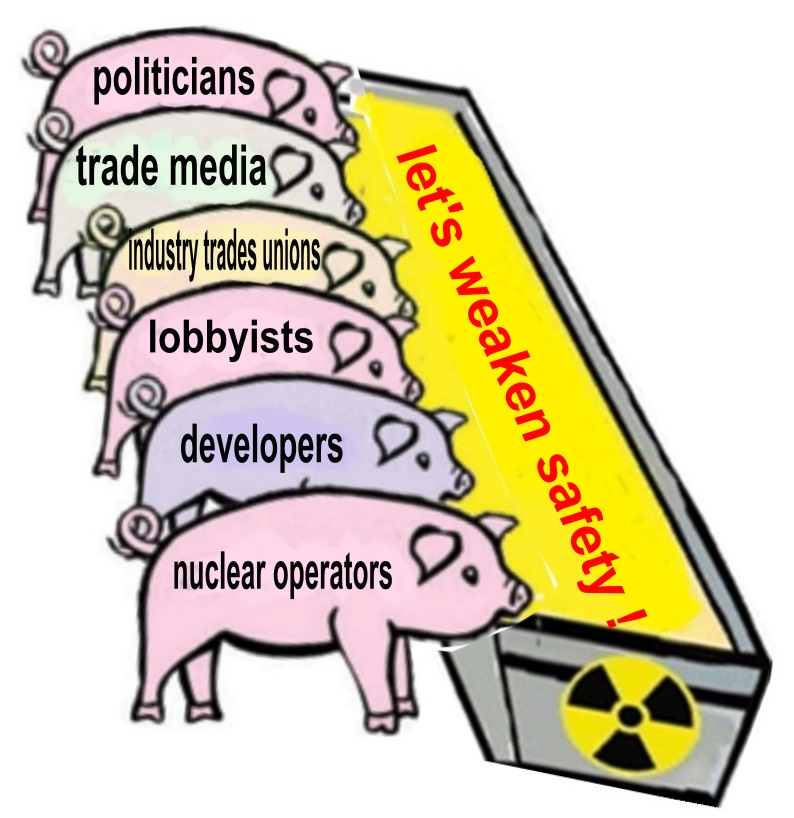
“One of the big issues for the public is nuclear waste.”
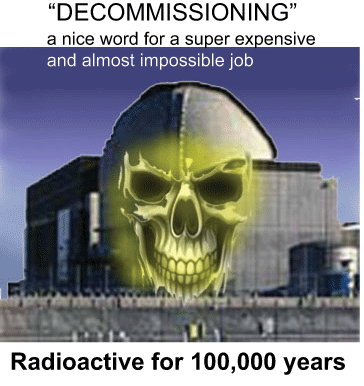
“That is true, but I think that in 2026 we are going to see the entering into operation of the geological repository in Onkalo, Finland. I think this will be a key opportunity to show the world that the questions about what to do with nuclear waste and used nuclear fuel are not a technology problem. It is actually most often a problem of policy, politics, and political will. So I think it is great that Finland is being proactive. I think that Sweden is a minute behind, and then France is also very close by. So I think it will be a key year for that part of the fuel cycle also.
COMMENT: Not that simple. Further delay in Finnish repository licence review. A multi-million dollar dispute rages over Olkiluoto 3 – only lawyers will win. Sweden is building the world’s second nuclear waste storage site amid safety concerns. Sweden’s nuclear waste plan is a 100,000 year gamble. France’s plan to bury accumulated highly radioactive waste at Bure, 250 kilometres east of Paris, remains at an impasse.
April will see the 40th anniversary of the Chernobyl accident
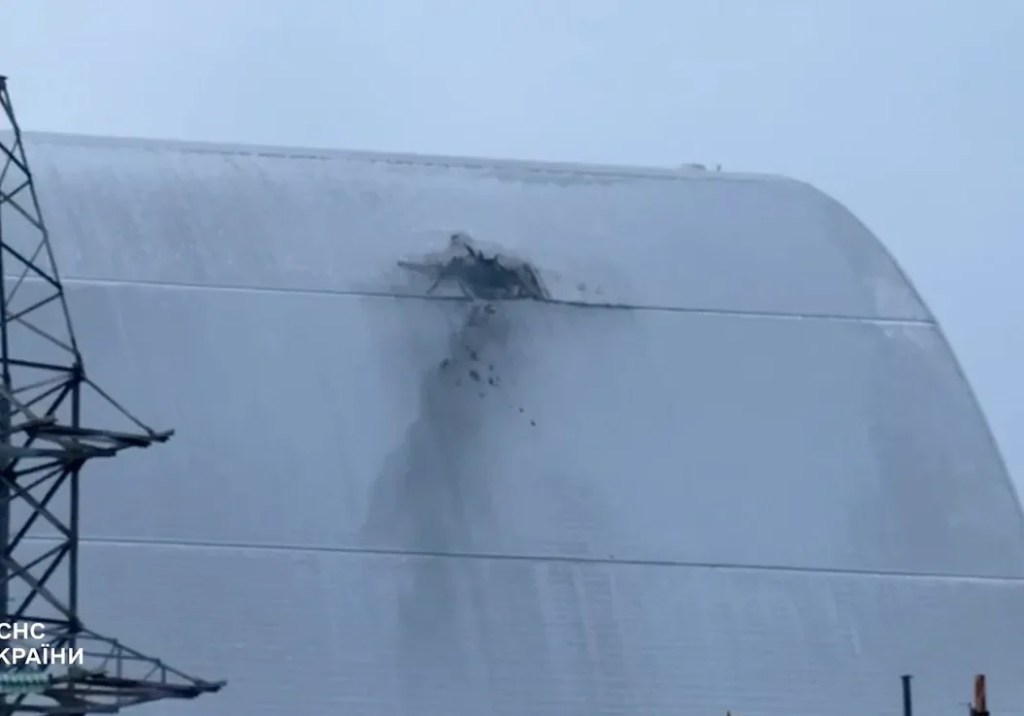
COMMENT Doncha love the way these nuclear hypocrites turn every bad thing into a plus?
Chernobyl’s so good as a lesson. Never mind the fact that the damaged protection dome is spewing radiation out, and they can’t get rid of the toxic melded waste inside .
“It is always good to look back and make sure that we have really learned all the lessons and taken the opportunities for improvement from previous events. 2026 will also be the 15th anniversary of Fukushima. I think that the industry has been very good at reflecting on these events and extracting all the lessons to be learned.”

“I think that the safety culture at a global level continues to be better than ever. I think that international collaboration has always been great in nuclear, but certainly the collaboration that ensued after Chernobyl, and certainly after Fukushima is a testament to how well the nuclear industry is collaborating. “
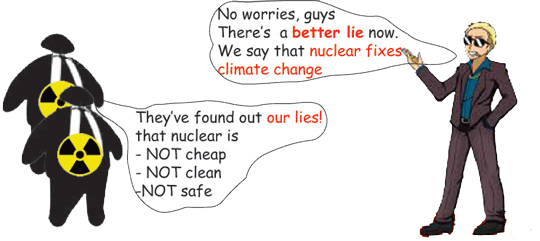
COMMENT. Note that here the WNA boasts that nuclear power helps action on climate change, (but later on, boasts its partnership with with fossil fuel industries)
“but they need to be put in context with the impacts of things like using fossil fuels on human health, on the environment and obviously on climate change. We really need to look at the entire life-cycle of all energy sources and to recognise that there is not one energy source that is a silver bullet for anything. I think that perhaps Fukushima’s anniversary and Chernobyl’s anniversary will be an opportunity for us as a society to become more pragmatic and realistic about the risks and opportunities of all these technologies.”
What do you think are the key planned events for the year?
“We hit the ground running at Davos at the World Economic Forum this year, from 19 January – this is perhaps the second time that nuclear energy is really going to be visible there, so we are excited about that opportunity. Immediately after Davos there is India Energy Week in Goa, which is the second-largest energy conference in the world.”
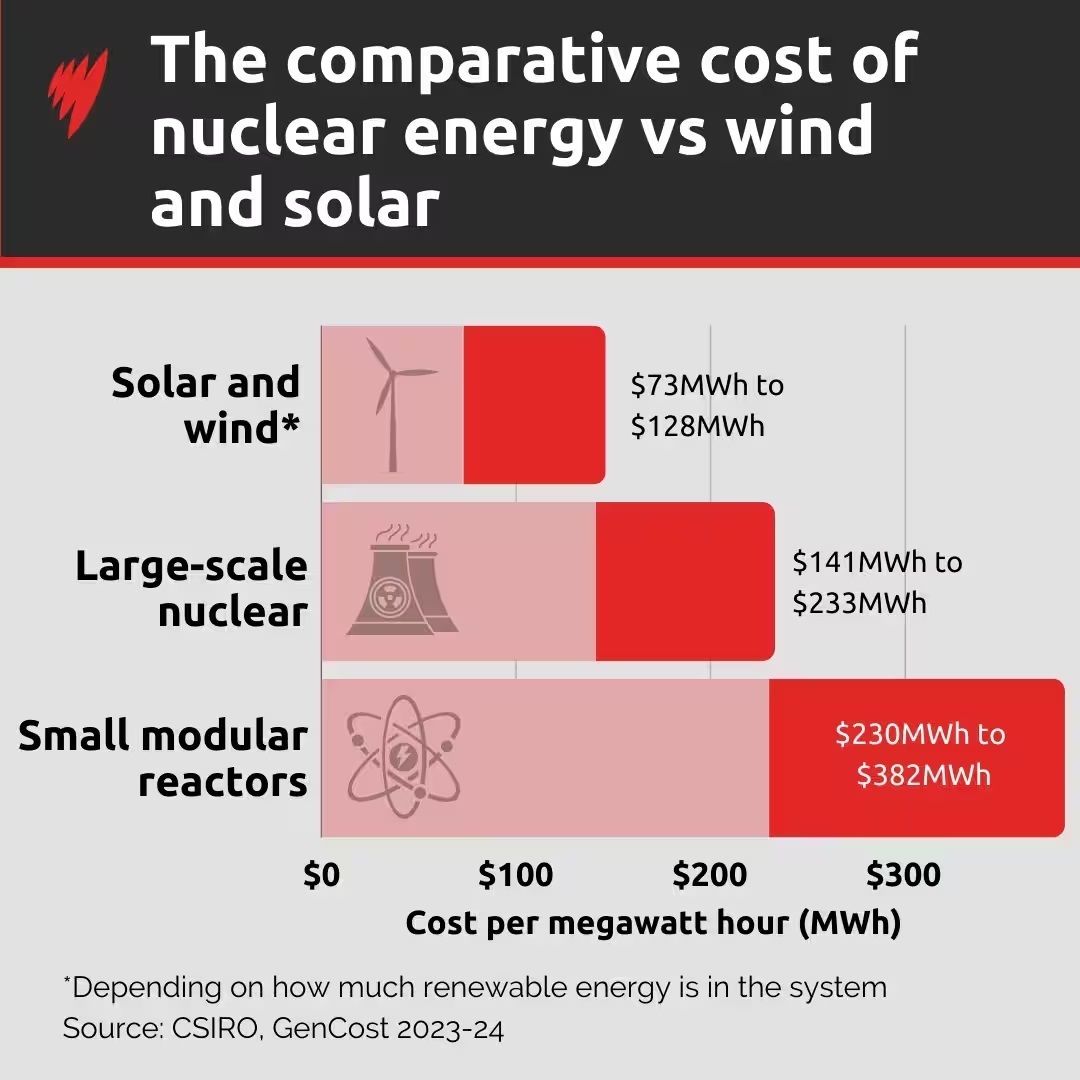
“In March, we will be at CERAWeek in Texas, a very important event where we are bringing together nuclear energy with many of these large energy users, in particular the oil and gas industry, that are really aligning themselves to best understand how nuclear can contribute to their decarbonisation and energising efforts. “
“And then, in April, we will have the World Nuclear Fuel Cycle Conference in Monaco. In May, we will be in Manila at the World Nuclear Supply Chain Conference, and World Nuclear University’s Summer Institute will be in the summer in Lyon in France. And of course we will come back together in September here in London for the World Nuclear Symposium, which will be even bigger and better than the one that we did in 2025. We really wanted to bring the nuclear and finance communities together to answer each other’s questions and demystify nuclear, so financiers recognise that nuclear projects are nothing more, nothing less, than large infrastructure projects. We are now working together with the finance community to put together a nuclear financing guide to pull together best practices and lessons learned to support financiers and nuclear developers going forward. “
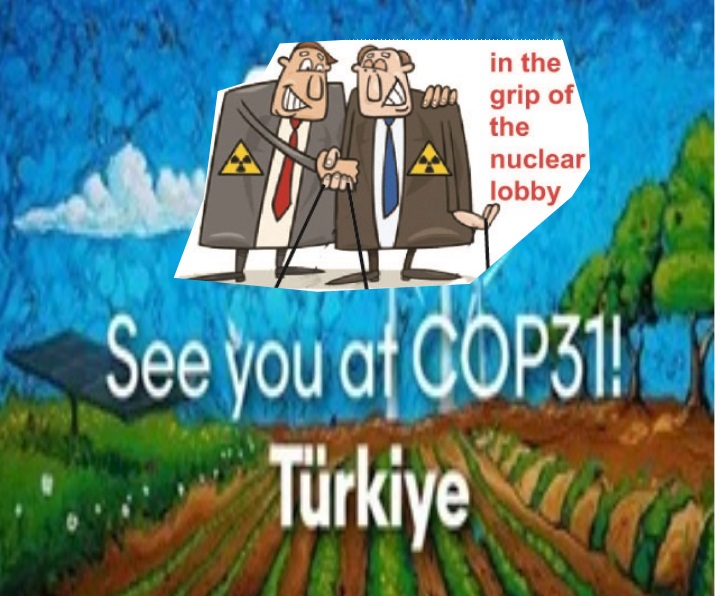
COMMENT. Note that while the nuclear lobby pretends to solve climate change, in reality they’re not only in cahoots with oil and gas lobbies, but they intend to take over global climate action, as they planned for in previous COPs
“Later in the year, there will be Africa Energy Week at the end of September in Cape Town, and Singapore International Energy Week is a great opportunity to bring together all those ASEAN countries. There will also be the World Energy Congress taking place in Saudi Arabia and also COP31 in Turkey. So if people thought that 2025 was crazy, I think it is clear that 2026 is looking like it will be just as busy.”
“So interesting times ahead…
“Definitely. This is the time. We’ve been discussing how the stars are aligning for nuclear energy and I think that we are there. The stars are definitely aligned. This is the moment where we, the global nuclear industry, really need to be proactive and active and make the most of this opportunity. We really need to work together with our governments. We need to work together definitely with the nuclear regulators, with the finance community, with large energy users, and we cannot leave behind civil society. We have seen major improvements in public acceptance and interest in nuclear, but we need to continue to be proactive to engage with civil society, to make sure that no question is left unanswered. ”
COMMENT: A lot of questions not even asked. The mind boggles. Not a mention of the now terrifying possibilities of cheap little drones targeting nuclear reactors, and nuclear waste pools. Not a mention of the fearful progress being made on smaller nuclear “tactical weapons”. Not a mention of the new Highly Enriched nuclear fuels for new generation nuclear reactors – that bring big risks of nuclear weapons proliferation. And of course, in the current energy economics – really no need for new nuclear reactors. (except to provide technical staff, academic “cover” and hidden funding for the nuclear weapons industry).
https://www.world-nuclear-news.org/articles/in-quotes-what-to-watch-out-for-in-2026
“We’re Going to Run the Country:” Preparing an Illegal Occupation in Venezuela
This press conference wasn’t just about Venezuela. It was about whether empire can say the quiet part out loud again, whether it can openly claim the right to govern other nations and expect the world to shrug.
January 3, 2026, By: Michelle Ellner , https://scheerpost.com/2026/01/03/were-going-to-run-the-country-preparing-an-illegal-occupation-in-venezuela/
I listened to the January 3 press conference with a knot in my stomach. As a Venezuelan American with family, memories, and a living connection to the country being spoken about as if it were a possession, what I heard was very clear. And that clarity was chilling.
The president said, plainly, that the United States would “run the country” until a transition it deems “safe” and “judicious.” He spoke about capturing Venezuela’s head of state, about transporting him on a U.S. military vessel, about administering Venezuela temporarily, and about bringing in U.S. oil companies to rebuild the industry. He dismissed concerns about international reaction with a phrase that should alarm everyone: “They understand this is our hemisphere.”
For Venezuelans, those words echo a long, painful history.
Let’s be clear about the claims made. The president is asserting that the U.S. can detain a sitting foreign president and his spouse under U.S. criminal law. That the U.S. can administer another sovereign country without an international mandate. That Venezuela’s political future can be decided from Washington. That control over oil and “rebuilding” is a legitimate byproduct of intervention. That all of this can happen without congressional authorization and without evidence of imminent threat.
We have heard this language before. In Iraq, the United States promised a limited intervention and a temporary administration, only to impose years of occupation, seize control of critical infrastructure, and leave behind devastation and instability. What was framed as stewardship became domination. Venezuela is now being spoken about in disturbingly similar terms. “Temporary Administration” ended up being a permanent disaster.
Under international law, nothing described in that press conference is legal. The UN Charter prohibits the threat or use of force against another state and bars interference in a nation’s political independence. Sanctions designed to coerce political outcomes and cause civilian suffering amount to collective punishment. Declaring the right to “run” another country is the language of occupation, regardless of how many times the word is avoided.
Under U.S. law, the claims are just as disturbing. War powers belong to Congress. There has been no authorization, no declaration, no lawful process that allows an executive to seize a foreign head of state or administer a country. Calling this “law enforcement” does not make it so. Venezuela poses no threat to the United States. It has not attacked the U.S. and has issued no threat that could justify the use of force under U.S. or international law. There is no lawful basis, domestic or international, for what is being asserted.
But beyond law and precedent lies the most important reality: the cost of this aggression is paid by ordinary people in Venezuela. War, sanctions, and military escalation do not fall evenly. They fall hardest on women, children, the elderly, and the poor. They mean shortages of medicine and food, disrupted healthcare systems, rising maternal and infant mortality, and the daily stress of survival in a country forced to live under siege. They also mean preventable deaths, people who die not because of natural disaster or inevitability, but because access to care, electricity, transport, or medicine has been deliberately obstructed. Every escalation compounds existing harm and increases the likelihood of loss of life, civilian deaths that will be written off as collateral, even though they were foreseeable and avoidable.
What makes this even more dangerous is the assumption underlying it all: that Venezuelans will remain passive, compliant, and submissive in the face of humiliation and force. That assumption is wrong. And when it collapses, as it inevitably will, the cost will be measured in unnecessary bloodshed. This is what is erased when a country is discussed as a “transition” or an “administration problem.” Human beings disappear. Lives are reduced to acceptable losses. And the violence that follows is framed as unfortunate rather than the predictable outcome of arrogance and coercion.To hear a U.S. president talk about a country as something to be managed, stabilized, and handed over once it behaves properly, it hurts. It humiliates. And it enrages.
And yes, Venezuela is not politically unified. It isn’t. It never has been. There are deep divisions, about the government, about the economy, about leadership, about the future. There are people who identify as Chavista, people who are fiercely anti-Chavista, people who are exhausted and disengaged, and yes, there are some who are celebrating what they believe might finally bring change.
But political division does not invite invasion.
Latin America has seen this logic before. In Chile, internal political division was used to justify U.S. intervention, framed as a response to “ungovernability,” instability, and threats to regional order, ending not in democracy, but in dictatorship, repression, and decades of trauma.
In fact, many Venezuelans who oppose the government still reject this moment outright. They understand that bombs, sanctions, and “transitions” imposed from abroad do not bring democracy, they destroy the conditions that make it possible.
This moment demands political maturity, not purity tests. You can oppose Maduro and still oppose U.S. aggression. You can want change and still reject foreign control. You can be angry, desperate, or hopeful, and still say no to being governed by another country.
Venezuela is a country where communal councils, worker organizations, neighborhood collectives, and social movements have been forged under pressure. Political education didn’t come from think tanks; it came from survival. Right now, Venezuelans are not hiding. They are closing ranks because they recognize the pattern. They know what it means when foreign leaders start talking about “transitions” and “temporary control.” They know what usually follows. And they are responding the way they always have: by turning fear into collective action.
This press conference wasn’t just about Venezuela. It was about whether empire can say the quiet part out loud again, whether it can openly claim the right to govern other nations and expect the world to shrug.
If this stands, the lesson is brutal and undeniable: sovereignty is conditional, resources are there to be taken by the U.S., and democracy exists only by imperial consent.
As a Venezuelan American, I refuse that lesson.
I refuse the idea that my tax dollars fund the humiliation of my homeland. I refuse the lie that war and coercion are acts of “care” for the Venezuelan people. And I refuse to stay silent while a country I love is spoken about as raw material for U.S. interests, not a society of human beings deserving respect.
Venezuela’s future is not for U.S. officials, corporate boards, or any president who believes the hemisphere is his to command. It belongs to Venezuelans.
Following U.S. coup in Venezuela, the CIA’s former station chief is advertising support for corporate exploitation of the country’s oil
The CIA’s former Venezuela chief of station, Enrique de la Torre, advertised that his lobbying firm, Tower Strategy, is supporting clients “rebuilding the country’s energy sector.”
Jack Poulson, Jan 04, 2026, https://jackpoulson.substack.com/p/following-us-coup-in-venezuela-the?utm_source=post-email-title&publication_id=1269175&post_id=183365776&utm_campaign=email-post-title&isFreemail=true&r=8cf96&triedRedirect=true&utm_medium=email
“We’re going to have our very large United States oil companies, the biggest anywhere in the world, go in and spend billions of dollars and fix the oil infrastructure — the badly broken oil infrastructure — and start making money for the country,” U.S. President Donald Trump declared on Saturday morning. The remarks followed a raid by the U.S. military’s elite commando team, Delta Force, which kidnapped Venezuelan president Nicolás Maduro and his wife, Cilia, using what Trump described as cover of darkness implied to have been provided by a U.S. cyberattack.
“It was dark, the lights of Caracas were largely turned off, due to a certain expertise we have,” Trump stated, before adding that, “It was dark, and it was deadly.” A series of photos from the “deadly” raid was quickly published by the wire service Reuters.
A special operations source was summarized by the investigative journalism outlet The High Side as stating that a “local source network … helped install jammers and other technical equipment on the ground, including beacons for airstrikes.” “The operational preparation of the battlespace was conducted by Task Force Orange, which throughout its history has been known by a host of cover names, including the U.S. Army Office of Military Support, Titan Zeus and the Intelligence Support Activity,” reported The High Side.
“We’re ready to stage a much larger second attack,” continued the U.S. president, before adding that, “we have a much bigger wave that we probably won’t have to do.”
A recent CIA chief of station in Venezuela, Enrique de la Torre, quickly took to the professional networking site LinkedIn to claim that his newly formed lobbying firm with former U.S. Ambassador to Venezuela James B. Story, Tower Strategy, was “already working with clients focused on democratic recovery, restored U.S. engagement, and the serious work of rebuilding the country’s energy sector.”
Tower Strategy has so-far publicly disclosed representing four companies: the controversial treasure-hunting company Odyssey Marine Exploration, the Singapore-based and Tether-affiliated cryptocurrency company Bitdeer, the solar supply chain company T1 Energy, and the international solar power export company UGT Renewables / Sun Africa.
De la Torre spent roughly the first ten months of 2025 working for the lobbying and foreign influence firm Continental Strategy, which is run by Carlos Trujillo, a former U.S. Ambassador to the Organization of American States with close ties to U.S. secretary of state Marco Rubio. The former CIA station chief’s partner at Tower Strategy, Ambassador Story, further launched the consulting firm Global Frontier Advisors alongside former Pentagon artificial intelligence chief Michael S. Groen in late July, with partner David Kol noted in the press release to be the CEO of Zodiac Gold Inc.
Former CIA director Michael R. Pompeo similarly told the media platform Fox & Friends on Monday that the U.S. Government’s seizures of Venezuela-linked oil tankers was the “right course of action” and that, in the event of the overthrow of the Maduro government, “American companies can come in and sell their products — Schlumberger, Halliburton, Chevron — all of our big energy companies can go down to Venezuela and build out an economic capitalist model.”
Trump further declared in his Saturday press conference that, “We’re going to run the country [Venezuela] until such time as we can do a safe, proper and judicious transition,” further stating that the members of his administration standing behind him in the press conference would be designated to lead the country in the short term. Venezuelan president Delcy Rodriguez, who was today sworn in as the new leader of the country following the U.S. kidnapping of President Maduro, was claimed by Trump to have effectively agreed to concede to U.S. demands in a recent conversation with U.S. secretary of state Marco Rubio.
Trump described his government as having “superseded” the longstanding U.S. policy of dominating the politics of the Western Hemisphere, known as the Monroe Doctrine, by “a lot.” “They now call it the Donroe Doctrine,” Trump stated, in reference to the now-popular phrase.
The U.S. Government’s claim to legal legitimacy of the kidnapping and broader coup have centered upon allegations that Maduro and his administration have been engaged in large-scale cocaine trafficking meant to destabilize the United States. A U.S. Drug Enforcement Administration (DEA) jacket was partially visible in the background of a photograph published by Trump on his social media platform Truth Social on Saturday, showing a blindfolded Maduro aboard the U.S. warship Iwo Jima.
Several U.S. State Department-backed media and lobbying organizations helped amplify the impact of unilateral U.S. sanctions over the past several years, effectively providing a form of international legal top cover for the Trump administration’s coup this morning. The most notable were perhaps Transparency International through its Venezuelan branch, the National Endowment for Democracy-backed media platform Connectas, and the CIA-affiliated think-tank Center for Advanced Defense Studies (C4ADS).
Brazilian president Luiz Inacio Lula da Silva condemned the unilateral U.S. kidnapping of Venezuela’s leader as having crossed “an unacceptable line,” while UN Secretary-General Antonio Guterres described the U.S. raid as setting “a dangerous precedent.”
Jan 04, 2026
I stand with the people of Venezuela
This is not strength. It is lawlessness.
The U.S. Constitution is explicit. Congress – not the president – has the power to declare war.
3 January 2026 Roswell, https://theaimn.net/i-stand-with-the-people-of-venezuela/
I never imagined I would be writing these words, but here we are:
I stand with the people of Venezuela.
Not with any particular government or leader, but with a nation that has just been attacked – illegally – by the President of the United States, without the approval of Congress, in clear violation of both American constitutional law and international law.
Yet, true to form, Trump will demand universal acceptance. To trust the instincts of a man who has repeatedly expressed admiration for authoritarians, hostility to international law, and contempt for democratic norms. A man whose foreign policy is indistinguishable from impulse, grievance, and spectacle. A man who treats war as performance and human lives as collateral to political theatre.
The precedent here is terrifying
If the United States – a country that never stops lecturing others about the “rules-based international order” – can simply discard those rules when inconvenient, then they cease to be rules at all. They become weapons, deployed selectively against enemies and ignored for friends.
This is how the post-war order collapses: not with a single catastrophic moment, but through repeated acts of hypocrisy that hollow it out from within.
Let’s be honest about who pays the price.
It will not be Donald Trump, safely insulated from consequences.
Strip away the chest-thumping rhetoric and the familiar justifications, and what remains is uncomfortable in its simplicity: a unilateral act of war, ordered by one man, without democratic consent, against a sovereign country that posed no imminent threat to the United States.
This is not strength. It is lawlessness.
The U.S. Constitution is explicit. Congress – not the president – has the power to declare war. That safeguard exists precisely to prevent impulsive, politically motivated, or self-serving military adventures. When a president bypasses it, he is not defending democracy. He is undermining it.
International law is just as clear. The UN Charter prohibits the use of force against another state except in self-defence or with Security Council authorisation. Venezuela attacked no one. No such authorisation exists. Labeling this as anything but an illegal act of aggression demands willful ignorance.
It will not be the architects of escalation in Washington think tanks.
It will be Venezuelan civilians – people who have already endured years of economic pain, sanctions, and instability – who will now live under the shadow of foreign bombs and regional chaos.
Standing with Venezuela does not require romanticising its politics or ignoring its internal problems. It requires recognising a basic principle that should never be negotiable: no country has the right to attack another simply because it can.
For decades, the United States has insisted that sovereignty matters – except when it doesn’t. That democracy must be respected – except when the outcome is inconvenient. That international law is sacred – except when it restrains American power.
This attack strips away the pretence.
If you believe in peace, you must oppose it.
If you believe in democracy, you must oppose it.
If you believe in international law, you must oppose it.
Silence now is complicity. Hand-wringing later will be meaningless.
The world does not need another “coalition of the willing”, another illegal war sold with vague threats and manufactured urgency. It needs restraint. It needs accountability. It needs leaders who understand that power without law is not leadership – it is empire in decay.
So yes, I stand with the people of Venezuela.
I stand against illegal war.
I stand against presidential authoritarianism masquerading as strength.
I stand against the dangerous idea that some nations are entitled to break the rules simply because they wrote them.
And I stand with the people – everywhere – who will suffer the consequences long after the press conferences end.
History is watching. And it will not be kind to those who cheered this on.
Microsoft wants to resurrect Three Mile Island. It will never happen.
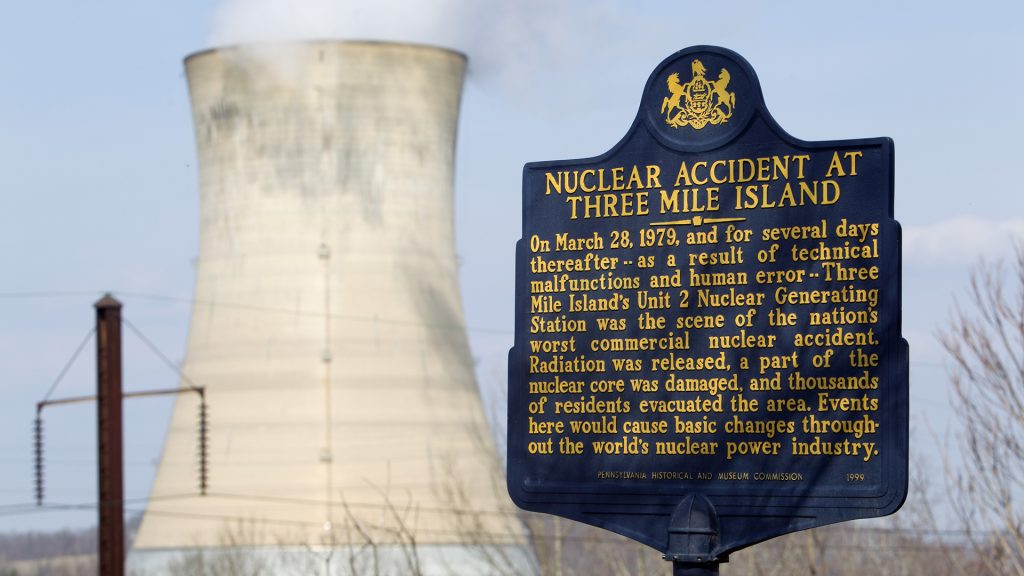
regulatory barriers are just the start. Nuclear reactors can’t be simply switched back on like a light bulb. They’re more like a car left undriven in a garage for too long with old oil, putrid gasoline, rat-chewed wires and a rusty frame — except that nuclear plants are infinitely more complicated than any car.
The Hill. by Neil Chatterjee, opinion contributor – 01/02/26
Microsoft and Constellation Energy have spent the last year trying to resurrect the Three Mile Island Nuclear power plant in Pennsylvania. The plant shut down in 2019 under economic pressure, after a separate part of the facility was decommissioned following a partial meltdown in 1979.
The effort is laudable, especially in light of Microsoft’s rapidly rising demand for [?] clean energy to fuel its artificial intelligence data centers. Unfortunately, it will never work. A fully shut-down nuclear plant has never been restarted in America for good reason: There are too many regulatory, material and logistical hurdles to overcome.
So far, Constellation Energy has painted a rosy picture. It originally stated the plant would be back online by 2028. Then, in early 2025, it revised its estimated opening date to 2027 following various inspections and the restoration of the plant’s water systems.
But traditional nuclear projects have a long history of going over budget and past schedule. A big factor is that the U.S. regulatory environment is not friendly to traditional nuclear power.
As the former head of the Federal Energy Regulatory Commission in the first Trump administration, I have seen firsthand how red tape can choke even the best-intentioned projects under goodwill regulators. Reactors that were permanently shut down must go through an extensive regulatory review process and request special exemptions for both their operations and use of radioactive fuel.
Constellation Energy and Microsoft have some solace in that the Department of Energy offered their project public support. But the Department of Energy isn’t the only player in town.
To ensure safety, Three Mile Island will also have to pass rigorous rounds of inspections, receive environmental approval and get the green light from the likes of the Environmental Protection Agency, the U.S. Nuclear Regulatory Commission, FERC and other state and local offices.
Even under a pro-business, pro-energy, regulation-slashing Trump administration, this is quite a gauntlet — especially because pro-nuclear government officials may nevertheless be hemmed in by existing laws and review processes outside of their control.
If regulatory barriers were the only holdup, perhaps there would be reasons to be more bullish on Three Mile Island. After all, President Trump has offered full support to nuclear energy and is committed to winning the energy-intensive AI race against China, red tape or not.
But regulatory barriers are just the start. Nuclear reactors can’t be simply switched back on like a light bulb. They’re more like a car left undriven in a garage for too long with old oil, putrid gasoline, rat-chewed wires and a rusty frame — except that nuclear plants are infinitely more complicated than any car.
At Three Mile Island, the reactor vessel could be brittle and fatigued. The core rods may need to be refurbished, the steam generators might have corroded, the turbines may break after not being rotated for years. And we know the cooling tower was partially removed as a fire hazard.
Replacing and restoring this equipment and more will not come cheaply. Constellation Energy originally projected it would take $1.6 billion to bring the facility back onto the grid, but that was before it fully cracked open the hood.
Then there are the basic economic realities of traditional reactors. Three Mile Island, Indian Point, Crystal River and others were shut down not because they were unsafe or failed to produce energy, but because maintenance was costly and they couldn’t keep up with the low price of other energy sources like natural gas.
As energy demand rises, those costs may become more comparable. But restarting Three Mile Island is still an expensive bet that will take years or decades of the right economic conditions to pay off.
And all of this does not even count the difficulties with accessing or creating a supply chain for nuclear fuel and long-unused components, integrating with the local electricity grid, hiring and training a highly competent workforce and overcoming the (unjustified) cultural stigma against a power plant that shares a name with the only major nuclear meltdown in American history…………………………… https://thehill.com/opinion/energy-environment/5667831-microsoft-constellation-nuclear-challenges/
Russia-US nuclear pact set to end in 2026 and we won’t see another
After the New START treaty expires in February, there will be no cap on the number of US and Russian nuclear weapons – but some are sceptical about whether the deal actually made the world safer
By Matthew Sparkes, New Scientist, 30 December 2025
In February 2026, for the first time in decades, there will be no active treaty limiting the size of the US and Russian nuclear arsenals. Experts are divided on whether the New START treaty genuinely made the world safer, but there is far more agreement on one thing: a replacement is unlikely.
The US and Russia first agreed to place limits on their nuclear weapons and allow each to inspect the other’s stockpiles with the START I treaty in 1991, and this was succeeded by New START in 2011. In 2021, Joe Biden and Vladimir Putin agreed to extend the treaty by five years. It is now due to expire on 5 February and talks on a replacement have faltered………………….(Subscribers only) https://www.newscientist.com/article/2504635-russia-us-nuclear-pact-set-to-end-in-2026-and-we-wont-see-another/
Israel And Its Supporters Deliberately Foment Hate And Division In Our Society
Caitlin Johnstone, Jan 03, 2026, https://www.caitlinjohnst.one/p/israel-and-its-supporters-deliberately?utm_source=post-email-title&publication_id=82124&post_id=183299564&utm_campaign=email-post-title&isFreemail=true&r=1ise1&triedRedirect=true&utm_medium=email
I’ve noticed a lot of angry comments underneath my posts these past few days which bizarrely mention the words “Islam” and “Muslims” completely out of the blue.
“Why don’t you turn your attention sometimes to the genocidal intent of the radical Muslims, or does that suit your racist narrative?” reads one tweet.
“What can you say about Islamic Jihadists Muslims murdering thousands of Christians in Sudan and other parts of Africa?” reads another.
“The muslims must be irradicated,” reads another.
There are too many examples to quote here, but here’s what’s so funny about all this: I haven’t been saying anything about Islam or Muslims on Twitter — I’ve been tweeting about Israel. Hasbarists just babble about Islam when they can’t defend Israel’s actions.
It is not a coincidence that they’ve been doing this. In September of last year Drop Site News published a leaked polling report that had been commissioned by the Israeli government which found that while Israel’s reputation is crumbling throughout the western world, one way to salvage it would be to foment panic about Muslims.
Drop Site reports the following:
“Israel’s best tactic to combat this, according to the study, is to foment fear of ‘Radical Islam’ and ‘Jihadism,’ which remain high, the research finds. By highlighting Israeli support for women’s rights and gay rights while elevating concerns that Hamas wants to ‘destroy all Jews and spread Jihadism,’ Israeli support rebounded by an average of over 20 points in each country. ‘Especially once the situation in Gaza is resolved, the room for growth in all countries is very significant,’ the report concludes.”
So if you speak critically about Israel online and suddenly find your replies inundated with Zionists shrieking about Islam and Muslims, that’s why. Their research has concluded that convincing westerners to hate Muslims is easier than convincing them to love Israel.
In addition to committing genocide and starting wars and working to stomp out free speech throughout the western world, Israel is also doing everything it can to make our society more racist and hateful. A foreign state is actively fomenting division and discord in western countries, in exactly the way western empire apologists claimed Putin was doing at the height of Russia hysteria. But because it’s a western “ally”, nothing is being done to stop it.
In addition to being evil and disgusting, this tactic is also just sloppy argumentation. Deflection is the lowest form of argument. Even if Islam really was as dangerous as they pretend it is and even if Muslims really did present a threat to our society, pointing this out would not address a single criticism of Israel. Yelling “Muslims bad!” does not magically erase Israel’s abuses or address the grievances of its critics; it just diverts attention to another target and says “Stop looking at Israel’s actions and hate THOSE people instead!”
Mention Israel and you’ll get hasbarists babbling about Islam, but Islam and Israel are not opposites, and the mention of one has no bearing on the other. One is a worldwide religion with nearly two billion adherents, while the other is a genocidal apartheid state. Framing the issue as a conflict between two diametrically opposed parties is a false dichotomy created by propagandists and manipulators.
And that’s exactly the false dichotomy Netanyahu is trying to feed into when he tells Americans that Israel is in an alliance with Christianity against “radical Shiite Islam” and “radical Sunni Islam,” calling it “our common Judeo-Christian civilization’s battle.” He’s working to foment fear of Islam among Americans to boost support for Israel.
All this to manufacture consent for human butchery and apartheid. Israel could improve its support among westerners by simply ending its genocidal atrocities in Gaza and ceasing to try to start a war between the US and Iran, but instead it’s working around the clock to foment racism and division while demanding increased censorship and authoritarianism to stomp out pro-Palestine sentiment throughout western society.
Israel is doing this because it cannot exist in its present iteration as a state without nonstop violence and abuse. Under the political ideology known as Zionism, peace, justice, truth and freedom are simply not an option.
Russia Hands US Evidence That It Says Confirms Ukraine Targeted Putin’s Residence in Drone Attack
Ukraine has denied the Russian allegations that it was trying to hit Putin’s residence
by Dave DeCamp | January 1, 2026 , https://news.antiwar.com/2026/01/01/russia-hands-us-evidence-that-it-says-confirms-ukraine-targeted-putins-residence-in-drone-attack/
A senior Russian military official on Thursday handed over to a US official what he said was evidence that Ukrainian drones targeted Russian President Vladimir Putin’s residence in the Novgorod region.
Ukraine has denied the allegations that it was trying to target Putin’s home, and US officials speaking to US media outlets said the CIA assessed that Ukraine was targeting a military facility in the same region that wasn’t close by. But Russian officials insist they have the evidence that Ukraine was attempting to hit the Russian president’s residence.
A video posted by the Russian Defense Ministry on Thursday shows Igor Kostykov, the chief of the Main Intelligence Directorate of the Russian General Staff, meeting with the US defense attache based in Moscow and handing over what he said was a “navigation unit” from one of the drones downed in the Novgorod region.
“The decryption of the content of the memory of the navigation controller of the drones carried out by specialists of Russia’s special services confirms without question that the target of the attack was the complex of buildings of the Russian president’s residence in the Novgorod region,” Kostykov said.
President Trump was informed about the alleged attack by Putin the day it happened, and initially appeared to believe Russia’s account, saying that he “wasn’t happy about it.” But he later shared a New York Post article on Truth Social that cast doubt on the Russian claim and said Moscow “is the one standing in the way of peace.”
Russian Foreign Minister Sergey Lavrov has said that Moscow won’t quit peace talks with the US over the alleged attack, but said it would alter its negotiating position and vowed a response, saying that targets have already been picked out. “Such reckless actions will not go unanswered,” he said.
After more than 20 years without sailing, a Russian nuclear giant returned to the sea, and the most disturbing detail is not its size
By ECONEWS, January 2, 2026 , https://www.ecoticias.com/en/after-more-than-20-years-without-sailing-a-russian-nuclear-giant-returned-to-the-sea-and-the-most-disturbing-detail-is-not-its-size/25175/
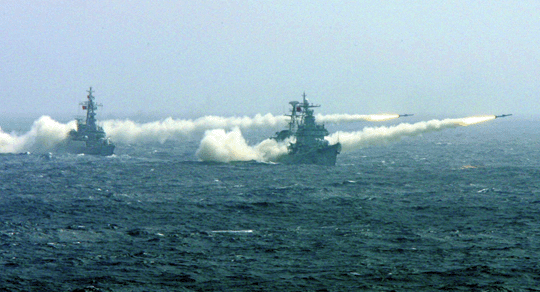
After spending most of the past 28 years tied up in a northern shipyard, the Russian Navy’s nuclear powered cruiser Admiral Nakhimov has finally returned to sea. Defense outlets report that the deeply modernized warship has begun sailing again in the White Sea after its first outings on contractor and factory sea trials.
JSC PO Sevmash chief executive Mikhail A. Budnichenko said the modernized ship has completed the first stage of its factory sea trials, a key step toward full operational service. Budnichenko added that Admiral Nakhimov is already on its third trial cruise and is due back at its base in Severodvinsk on the 25th of the month, with crew and shipyard staff still checking vital systems. For a vessel that could become Russia’s flagship, these careful first outings are drawing close attention far beyond the White Sea.
From frozen pier to fresh wake
Admiral Nakhimov last sailed in 1997 and then sat laid up at Sevmash in northern Russia while Moscow debated its fate and struggled with funding. A modernization contract arrived years later, real work only gathered speed around 2014, and promised return dates slipped again and again as schedules moved from 2018 into the middle of the 2020s.
Factory sea trials are when the shipyard takes a new or refitted warship to sea to check whether engines, steering, electrical systems and basic navigation work as they should. Each run shows how the reactors behave, how the hull handles waves and ice and whether the ship is safe to operate in normal conditions, long before the navy signs off on the ship as ready for combat duty.
What a nuclear cruiser actually is
A nuclear powered cruiser is a very large surface warship that uses onboard reactors instead of fuel oil to drive its engines. In simple terms, that means Admiral Nakhimov can stay at sea for long stretches without refueling, which matters in remote Arctic waters where bases are scarce and the weather punishes support ships.
The cruiser belongs to the Kirov class, a group of Cold War-era giants originally built for the Soviet Navy to threaten NATO carrier groups. Today Admiral Nakhimov is the last survivor of four hulls, since Admiral Ushakov and Admiral Lazarev are being dismantled and stripped of their nuclear fuel, while sister ship Pyotr Velikiy is widely expected to retire instead of getting a similar deep refit because of cost and wear.
A floating magazine with 174 missile cells
The heart of the modernization sits under the deck in the form of vertical launch systems, armored boxes that hold missiles upright until they are fired into the sky. Russian and foreign defense reports indicate that Admiral Nakhimov is being outfitted with around 174 of these launch cells, including 10 universal launch blocks for roughly 80 long-range cruise and anti-ship missiles such as Kalibr and Oniks.
The remaining cells are intended for surface-to-air missiles that shield the ship and nearby vessels from aircraft, drones and incoming weapons, tied into long range Fort M air defense systems and several Pantsyr M close-in mounts that combine guns and missiles.
The original twin 130-millimeter gun has also been replaced by a modern AK 192 M weapon, and taken together these changes mean Admiral Nakhimov is expected to carry more launch cells than many Western and Chinese cruisers or destroyers now at sea.
Why this refit matters now
All of this is happening as Russia’s surface fleet shrinks and its only aircraft carrier, Admiral Kuznetsov, remains stuck in long repairs with an uncertain future. In that context, Admiral Nakhimov looks less like a museum piece and more like a stopgap centerpiece for future Russian task groups, a single ship that can carry long-range strike weapons and strong air defenses while smaller frigates and corvettes handle coastal patrols.
So why does one old ship draw so much attention? For people outside the defense world it can be hard to see why an aging cruiser matters when daily worries focus on bills or the next heat wave.
Yet a vessel packed with modern missiles can change how close foreign navies dare to sail, and for now the completion of the first phase of sea trials after nearly three decades out of service mainly shows that Russia’s long and costly refit is finally delivering a ship it hopes can still matter on the open ocean.
DePetris’ Trump foreign policy accomplishments more dubious than prideful
Walt Zlotow… West Suburban Peace Coalition Glen Ellyn IL 3 Jan 26
In his Chicago Tribune foreign policy commentary ‘The foreign policy moves Donald Trump got right this year’, Daniel DePetris largely ignores reality.
He praises Trump for brokering the November 10 ceasefire agreement in Gaza without mentioning that for nearly 10 months Trump provided Israel with billions in weapons to complete the obliteration of Gaza’s 139 square miles. With over 100,000 dead and the remaining 2,200,000 Palestinians facing death from forced starvation and withdrawal of medicine, the world rightly calls Israeli US policy a genocide. So yes, DePetris is correct to call Trump’s slowing down Israel’s ferocious genocide thru ceasefire “preferable” to its continuance. But pretending Trump is simply a neutral peace broker of the US enabled Israeli genocide is deplorable.
DePetris is also correct to praise Trump for seeking to broker an end to the Russo Ukraine war. But in claiming the biggest obstacle with Trump’s diplomacy is Trump’s “wild inconsistency”, DePetris misses a far greater obstacle: Russia and Ukraine’s diametrically opposed and irreconcilable goals to end the war. That makes Trump’s sincere efforts at peace daunting, if not impossible. At this stage, it is nowhere near an accomplishment.
DePetris whiffs on his third claimed Trump foreign policy accomplishment, the overthrow of the Syrian Bashar Assad regime, replaced by former al-Qaeda terrorist Ahmad al-Sharaa.
DePetris, like Trump, rehabilitates a US enemy dedicated to killing Americans in Iraq in his previous life. Why? Because al-Sharaa deposed the hated Assad whom the US sought to oust since the 2011 Syrian civil war to remove one of Israel’s regional enemies. This had nothing to do with uplifting the Syrian people. Indeed, the billions in weapons America poured into the Syrian civil war was responsible for much of the hundreds of thousands of deaths DePetris attributes solely to Assad. With the secular Assad gone, Syria’s Christians, Alawites, and others not part of al Sharaa’s extremist religious base are suffering horribly. Their fate was never a concern of Trump and his champion DePetris who view the destabilization of Syria as a US win for expanded Israeli Middle East hegemony.
Chicago Tribune’s readers deserve more than a sanitized view of Trump’s machinations in Gaza, Ukraine and Syria. They deserve the truth.
Venezuela declares state of emergency, calls for international solidarity
January 4, 2026, https://gpja.org.nz/2026/01/04/venezuela-declares-state-of-emergency-calls-for-international-solidarity/
Editor’s note: The following is the official communiqué issued by the Bolivarian Republic of Venezuela on January 3, 2026, in response to U.S. military strikes on Caracas and surrounding areas. President Trump announced the operation on social media early Saturday morning, claiming the capture of President Nicolás Maduro. International reactions have been swift, with Russia, Iran, China, Cuba, Colombia, Chile, Mexico, Brazil, and Belarus condemning the strikes. UN special rapporteur Ben Saul called it “illegal aggression” and an “illegal abduction.” Venezuela has requested an emergency UN Security Council meeting.
COMMUNIQUÉ
BOLIVARIAN REPUBLIC OF VENEZUELA
The Bolivarian Republic of Venezuela rejects, condemns, and denounces to the international community the grave military aggression perpetrated by the current government of the United States of America against Venezuelan territory and population in civilian and military localities of the city of Caracas, capital of the Republic, and the states of Miranda, Aragua, and La Guaira.
This act constitutes a flagrant violation of the United Nations Charter, particularly its Articles 1 and 2, which enshrine respect for sovereignty, the legal equality of states, and the prohibition of the use of force. Such aggression threatens international peace and stability, specifically in Latin America and the Caribbean, and gravely endangers the lives of millions of people.
The objective of this attack is none other than to seize Venezuela’s strategic resources, in particular its oil and minerals, attempting to forcibly break the political independence of the nation. They shall not succeed. After more than two hundred years of independence, the people and their legitimate government remain steadfast in defense of sovereignty and the inalienable right to decide their own destiny. The attempt to impose a colonial war to destroy the republican form of government and force a “regime change,” in alliance with the fascist oligarchy, will fail as all previous attempts have.
Since 1811, Venezuela has confronted and defeated empires. When in 1902 foreign powers bombarded our coasts, President Cipriano Castro proclaimed: “The insolent foot of the foreigner has profaned the sacred soil of the Homeland.” Today, with the spirit of Bolívar, Miranda, and our liberators, the Venezuelan people rise once again to defend their independence against imperial aggression.
To the Streets, People
The Bolivarian government calls upon all social and political forces of the country to activate mobilization plans and repudiate this imperialist attack. The people of Venezuela and its Bolivarian National Armed Forces, in perfect popular-military-police fusion, are deployed to guarantee sovereignty and peace.
Simultaneously, Bolivarian Peace Diplomacy will submit the corresponding denunciations before the United Nations Security Council, the Secretary-General of said organization, CELAC, and the NAM, demanding condemnation and accountability from the United States government.
President Nicolás Maduro has directed all national defense plans to be implemented at the appropriate time and under appropriate circumstances, in strict adherence to the provisions of the Constitution of the Bolivarian Republic of Venezuela, the Organic Law on States of Exception, and the Organic Law on National Security.
In this regard, President Nicolás Maduro has signed and ordered the implementation of the Decree declaring a State of External Commotion throughout the national territory, to protect the rights of the population, the full functioning of republican institutions, and to immediately transition to armed struggle. The entire country must activate to defeat this imperialist aggression.
Likewise, he has ordered the immediate deployment of the Command for the Comprehensive Defense of the Nation and the Comprehensive Defense Directional Organs in all states and municipalities of the country.
In strict adherence to Article 51 of the United Nations Charter, Venezuela reserves the right to exercise legitimate defense to protect its people, its territory, and its independence. We call upon the peoples and governments of Latin America, the Caribbean, and the world to mobilize in active solidarity against this imperial aggression.
As Supreme Commander Hugo Chávez Frías stated, “In the face of any circumstance of new difficulties, however great they may be, the response of all patriots… is unity, struggle, battle, and victory.”
Caracas, January 3, 2026
WE’LL CONTROL THE OIL! — TRUMP BOASTS AFTER SECRET RAID AS WASHINGTON POST CHEERS ARREST.
“we went from the world cop to the world bully in less than one year. There is no reason for us to be at war with Venezuela.”
January 3, 2026 , By Joshua Scheer, https://scheerpost.com/2026/01/03/well-control-the-oil-trump-boasts-after-secret-raid-as-washington-post-cheers-arrest/
In a reprehensible editorial, The Washington Post praised the capture of Venezuelan President Nicolás Maduro, calling the U.S.-led operation as “Justice in Venezuela” saying it was “one of the boldest moves by a president in recent years” and a tactical success. According to reports, the mission in Caracas involved airstrikes followed by a Delta Force operation that apprehended Maduro and his wife, who have been extradited to the U.S. to face charges including narcoterrorism, weapons violations, and drug crimes—all with no American casualties. The editorial argued that removing Maduro would weaken the influence of authoritarian allies such as Russia, China, Cuba, and Iran in the region and send a strong message to other dictators.
The piece also noted that the next challenge is ensuring stability and a democratic transition in Venezuela, highlighting opposition leader María Corina Machado and her “Freedom Manifesto” as a potential path forward. At the same time, the editorial acknowledged the uncertainty of outcomes, warning that a power vacuum or a new authoritarian leader could emerge if a clear transition plan is not implemented.
Machado was quoted as saying the opposition is “prepared to take power,” though no specifics regarding a transition plan have been released.
Nobel Peace Prize laureate Machado, who has been in hiding since Maduro’s disputed reelection in July 2024, said in a post on X that opposition candidate Edmundo Gonzalez Urrutia, whom the opposition says won the vote, “must immediately assume his constitutional mandate” as president. and that “Venezuelans, the hour of freedom has arrived.”
Not everyone welcomed the operation. Rep. Jim Himes of Connecticut, a Democratic member of the House Intelligence Committee, criticized the attack and said Secretary of State Marco Rubio had “repeatedly denied to Congress” that the administration intended to “force regime change in Venezuela.” Himes added, “Maduro is an illegitimate ruler, but I have seen no evidence that his presidency poses a threat that would justify military action without Congressional authorization, nor have I heard a strategy for the day after and how we will prevent Venezuela from descending into chaos.”
Others highlight the split between the GOP and the Democrats.
“Nicolás Maduro wasn’t just an illegitimate dictator; he also ran a vast drug‑trafficking operation,” tweeted Sen. Tom Cotton, defending the mission and saying he commends Trump and U.S. forces.
The split was evident at first with Utah Senator Mike Lee. Notably, the Republican initially seemed critical of the action being taken without congressional authorization.
“I look forward to learning what, if anything, might constitutionally justify this action in the absence of a declaration of war or authorization for the use of military force,” Lee posted on X.
However, Lee later followed up, saying he had spoken by phone with Rubio and was now comfortable with the administration’s authority to take action. Because the administration is framing this not as a war but as a police action to arrest a fugitive, Lee said he believes it would be permissible under the president’s current authority. I wonder we have heard that term police action before?
From the Democratic side, the sentiment was nearly unanimous.
“Without authorization from Congress … Trump just launched an unjustified, illegal strike on Venezuela,” Democratic Rep. Jim McGovern wrote on social media, highlighting a lack of legislative approval.
“Second unjustified war in my life time,” Arizona Democratic Sen. Ruben Gallego, on X shortly after 3 a.m. Saturday. “This war is illegal, it’s embarrassing that we went from the world cop to the world bully in less than one year. There is no reason for us to be at war with Venezuela.”
Sen Andy Kim writing on X: “Secretaries Rubio and Hegseth looked every Senator in the eye a few weeks ago and said this wasn’t about regime change. I didn’t trust them then and we see now that they blatantly lied to Congress.”
Others Democrats, including Rep. Yvette Clarke and Rep. Rashida Tlaib, called the operation “unconstitutional,” “un‑American,” and a “direct threat to our democracy,” arguing that the administration bypassed Congress.
The president spoke about a great many things, including taking over the country, which again would fall in line with the concept of the historic police action that took place in Southeast Asia. As Gallego said, this may be the second illegal war in our lifetime; it is certainly not the only two that the United States has been involved in.
As Trump said, he’s not afraid of putting boots on the ground.
Trump had the gall to say today that his administration will make the people of Venezuela “rich, independent, and safe.” But he doesn’t mean most people—the poor and working-class citizens whom the socialist government represents. He means the oligarchs: the wealthy and powerful few. Trump is clearly the leader of the oligarchs, so this isn’t surprising—yet it is still deeply sickening.
Of course, this feels a lot like George W. Bush’s horrific war in Iraq, which was more about the pride of a leader whose father couldn’t topple Saddam Hussein. In this case, it seems driven by Rubio’s long-standing fantasy of a life in Cuba, surrounded by the wealth of oligarchs—something his family could have aspired to. Now, he is helping push a new Monroe Doctrine and supporting the rise of right-wing forces in Latin America.
Regarding oil, many in 2003 foolishly claimed that oil profits would cover the costs of the Iraq War. In the lead-up to the invasion, U.S. officials expressed strong confidence that Iraq could finance its own reconstruction, largely through its vast oil reserves and other national assets. Secretary of Defense Donald Rumsfeld emphasized that American taxpayers would not be the primary source of funding, pointing instead to Iraq’s own resources and potential international contributions. Similarly, Deputy Secretary of Defense Paul Wolfowitz assured Congress that Iraq could fund its recovery “relatively soon,” citing the wealth of the Iraqi people. Kenneth Pollack, a former National Security Council official, dismissed the idea of massive U.S. expenditures as “unimaginable,” suggesting that even tens of billions of dollars in spending would be “highly unlikely.” These statements collectively painted a picture of Iraq as a “very wealthy country,” with officials expressing little doubt that it could largely finance the reconstruction of its own nation.
On the parallels between Iraq and Venezuela, I’ll leave this to former Defense Secretary Donald Rumsfeld, as quoted in Ron Suskind’s book about Paul O’Neill. Advocating “going after Saddam” during the January 30 meeting, Rumsfeld said, according to O’Neill:
“Imagine what the region would look like without Saddam and with a regime that’s aligned with U.S. interests. It would change everything in the region and beyond. It would demonstrate what U.S. policy is all about”
Exactly, Donald—the empire was always the goal. The idea of democracy was just a shield to make us seem less evil than those who came before, especially our original colonial parent the English. But now the veil is off: we are brazenly invading countries and claiming what belongs to them as our own. I’ve written before—may the empire end, hopefully peacefully, though most likely it will not.
However, in another display of both war talk and regime change, the president said he’s not afraid of boots on the ground, since they have already been there. So if the people of Venezuela resist, as they have promised, and your justification for a fugitive is now gone, what will you do? Ironically, this is from The Washington Post, but as a member of Congress once told me, you need to read the paper daily to know what the CIA and the policy establishment think.
About oil, the war, and the current situation. As of now Chevron is currently the only global oil company with access to Venezuela’s vast reserves.
As Bloomberg’s Kevin Crowley noted last month, the company occupies a unique position: it has faced criticism in the U.S. for continuing to operate in the country, while some members of Venezuela’s ruling party view it as a symbol of American imperialism. Chevron has been able to maintain its presence thanks to special licenses that allow it to operate despite U.S. sanctions.
Venezuela once played a central role in global oil markets, supplying the U.S. with large volumes of crude and standing as an oil powerhouse. Today, however, it accounts for less than 1% of global oil supplies—less than fellow OPEC member Libya.
However, don’t expect a rapid recovery in Venezuelan oil production—whether or not the U.S. is heavily involved. History shows that violent regime changes rarely encourage inward investment. Fourteen years after Muammar Qaddafi’s removal, Libya’s oil production remains about 25% below its pre-war level. In Iraq, where the U.S. had a major administrative role after toppling Saddam Hussein, it took 12 years for oil production to return to pre-war levels—and much of the new production came from Chinese companies rather than U.S. firms.
Trump said today that “we will control those Venezuelan oil fields.” Let’s see, sir. It’s not nearly as easy as you think. Based on the history of wars that involve oil.
More notes from the presidents speech
Rubio discussed today why Congress was not informed, claiming that this was not a war but rather a Justice Department arrest, and that the individual in question is a fugitive of American justice.
He described the situation as a “president of action,” saying, “I don’t know how we haven’t figured this out. Marco, we have figured it out. The president is a man of action, and he—and this neocon-aligned regime—need to go. Sadly with The Washington Post pushing its editorial agenda, alternative media is essential, because the mainstream press is controlled by you and your oligarch allies. Of course so is social media and almost everything else, I would hope—but not hold my breath—that the same Democrats who are criticizing today’s events would also ensure we have a free and fair media. Yet many in this Congress supported President Biden when he pushed for the forced sale of TikTok to Larry Ellison, so…
Keep hope alive
CIA, with Trump’s blessing, is using Ukrainians to sabotage Russia’s energy infrastructure and oil tankers – NYT
Iona Cleave, The telegraph, Fri, 02 Jan 2026, https://www.sott.net/article/503791-CIA-with-Trumps-blessing-is-using-Ukrainians-to-sabotage-Russias-energy-infrastructure-and-oil-tankers-NYT
Attacks on oil refineries have cost Moscow $75m a day, according to US intelligence
The CIA secretly taught Ukraine how to target crucial components of Russia’s oil refining infrastructure and its sanction-busting shadow fleet, according to officials.
Despite Washington pulling back its support for Kyiv’s war effort under the Trump administration, it has emerged that US intelligence and military officers continued to find new ways to stifle Vladimir Putin’s war machine.
Since June, the CIA, with Donald Trump’s blessing, has been covertly providing specific intelligence to bolster Ukraine’s aerial offensive against oil refineries inside Russia, according to the officials.
The move came amid Mr Trump’s growing frustration with Putin’s unwillingness to negotiate while Russian forces accelerated attacks on Ukrainian cities.
The US has long shared intelligence with Kyiv that helps with attacks on Russian military targets in occupied parts of Ukraine and provides advanced warning of incoming Russian missiles and drones.
Under persuasion by Ukraine sceptics in the White House, led by JD Vance, the vice-president, and his allies, Mr Trump froze military aid in March and intelligence sharing was suspended as a result.
However, The New York Times, citing officials, said the CIA heavily lobbied for the agency to keep sharing intelligence.
Before summer, the impact of the strikes on Russia’s energy infrastructure – which often hit storage depots or structures easily repaired – had been relatively minimal.
Under a new plan, crafted by the CIA and US military, the campaign was concentrated exclusively on oil refineries, targeting a newly found Achilles heel.
A CIA expert had identified a coupler device that is so difficult to replace that it could lead to a facility remaining shut for weeks.
The strikes became so successful that Russian oil refining was reduced by as much as a fifth on certain days, cutting exports and leading to domestic fuel shortages.
It was costing its economy an estimated $75m (£55m) a day, according to US intelligence.
Comment: That’s certainly one way to make your otherwise useless sanctions work: just start blowing up your opponent’s oil business! Uniquely American…
In response, Mr Trump praised the strikes for the leverage and deniability they gave him as Putin continued to stonewall negotiations, according to the sources.
It was first reported in October that Washington was closely involved in the planning of such strikes, but it wasn’t known that the CIA was responsible for the new focus of the campaign and identifying specific weaknesses in its energy infrastructure.
In late November, Ukraine also began a maritime campaign against Moscow’s shadow fleet, a clandestine network of hundreds of vessels carrying sanctioned oil to keep the Russian economy afloat.
Comment: At least we now know how ‘Ukraine’ struck a Russian oil tanker off West Africa.
Kyiv was using its explosive-laden long-range naval drones to blow holes in the ships, opening a new front in the war to cut off Russia’s largest source of funding and strengthen its negotiating position at US-led peace talks.
According to US and Ukrainian officials, the CIA was authorised to assist Kyiv’s military in these efforts, despite the risk of angering Putin’s regime.
It is not clear exactly when such help was approved by the Trump administration.
The New York Times report, citing hundreds of national security officials, military and intelligence officers and US, Ukrainian and European diplomats, charts the unwinding of the US-Ukrainian alliance over the past year.
The officials argued that as Mr Trump attempted to broker peace, factions in the White House and Pentagon pushed the president and his aides to make inconsistent, and at times, erratic decisions that damaged Kyiv’s war effort.
This included how the newly renamed Department of War, led by Pete Hegseth, repeatedly made unannounced decisions to withhold vital munitions from Ukraine that had already been given under the Biden administration, costing lives at the front.
A critical error, according to the officials and diplomats, was Mr Trump overestimating his rapport with Putin and ability to get him to meaningfully engage in negotiations.
Despite repeatedly touting his ability to secure an end to the war in “24 hours”, the Republican was forced to admit on Sunday his lack of a breakthrough after a year of on-off negotiations.
As he hosted Volodymyr Zelensky at Mar-a-Lago, he was forced to admit “it is not a one-day process deal. This is very complicated stuff”.
The officials also revealed that Mr Trump and his Ukrainian counterpart bonded over a love of Ukrainian women.
Following their disastrous meeting in February, Mr Zelensky returned six months later to win back Mr Trump’s support.
Sitting in the Oval Office, Mr Trump said “Ukrainian women are beautiful”, to which Mr Zelensky replied, “I know, I married one.”
In an odd sequence of events, Mr Trump rang up an old friend who had married a former Miss Ukraine who was then put on the phone to speak to Mr Zelensky.
“It humanised Zelensky with Trump,” an official who was there told the New York Times. “You could feel the room change.” The meeting, in which the Ukrainian leader was on the charm offensive, proved crucial for their relationship moving forward.
The officials also revealed that Mr Trump had approved a back channel being opened with Moscow before his inauguration, despite the fact that doing so before his first term prompted claims of conspiracy and became part of a long-running Russian investigation.
The Saudi crown prince, Mohammed bin Salman, reportedly introduced Mr Trump’s special envoy Steve Witkoff to Kirill Dmitriev, who would later emerge as the lead negotiator in peace talks with the US.
That move reportedly came after Joe Biden rejected a request for a secret letter granting Mr Trump and his team permission to begin talks during the transition, for fear the incoming president would sell out Ukraine in a deal.
Comment: So, apparently ‘an edge on the oil markets’ is more important to ‘the peacemaker’ than actual peace.
How are geological repository projects progressing?

COMMENT. This story is from the nuclear industry’s online publication “World Nuclear News”, so important to recognize that there is a bias throughout. And errors. For example, it erroneously describes the Nuclear Waste Management Organization as a government agency.
By Alex Hunt, World Nuclear News, in Vienna, Sunday, 28 December 2025
A growing number of countries are planning a permanent solution to the issue of radioactive waste by burying it deep underground. Schemes take many years to plan, and many more years to build, but progress is being made.
Setting the scene: Why deep geological repository projects matter
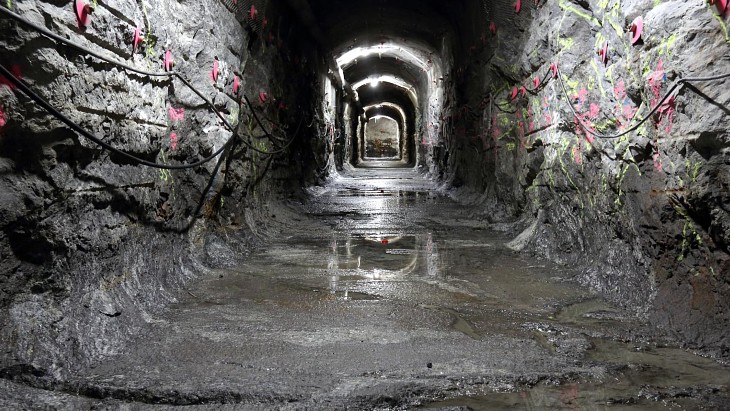
A deep geological repository comprises a network of highly-engineered underground vaults and tunnels built to permanently dispose of higher activity radioactive waste so that no harmful levels of radiation ever reach the surface environment. They need to be located deep enough, and in suitable geological conditions, to ensure they will be safely secured for thousands of centuries.
The disposal of used nuclear fuel and other high-level waste has long been a pressing issue in terms of the perceived sustainability of nuclear energy programmes. For many decades this material has been stored [?]safely in pools or special containers and facilities at surface, or near-surface, locations, often close by nuclear power plants. These are seen as interim storage measures pending a permanent solution.
Hildegarde Vandenhove, Director of the IAEA Division of Radiation Safety, Transport and Waste Safety…………..” developing these facilities is a long and a complex process. It requires rigorous studies and extensive safety demonstrations. These are all first-of-a-kind facilities, and their construction takes time.“
The process of selecting a site, and getting approval for it, takes decades, with Anna Clark, head of the Waste and Environmental Safety Section in the Division of Radiation Transport and Waste Safety at the IAEA, saying that “before operations can begin, there’s a lengthy pre-operational phase with conceptual design, the planning, the surveys, the site investigations, site selection, narrowing down the number of sites, doing detailed characterisation of your preferred site, it’s a long process before you even begin with the licensing of construction. And throughout that period, the safety case evolves and the role of the regulator also evolves, and the regulators have to adapt their expertise and knowledge as they go”.
Canada
Colin Moses, Vice-President, Regulatory Affairs, and Chief Communications Officer at the Canadian Nuclear Safety Commission, outlined the status of the country’s deep geological repository which, he noted, started being discussed in the 1970s. It is being taken forward by the Nuclear Waste Management Organization, a government agency fully funded by the producers of waste with a mandate to determine and find and build and operate a long-term solution for disposal of used fuel in Canada.
Its concept is for a “geosphere which forms a natural barrier of rock to protect the waste from disruptive natural events, water flow and human intrusion”.
The current status is that Wabigoon Lake Ojibway Nation and the Township of Ignace were selected in November 2024 as the host communities for the proposed repository, following a consent-based siting process that had begun some 14 years earlier. Pre-licensing activities, including stakeholder engagement, pre-environmental assessment and technical reviews, have been taking place.
Construction of the facility will only begin once the deep geological repository has successfully completed the federal government’s multi-year regulatory process and the Indigenous-led Regulatory Assessment and Approval Process, a sovereign regulatory process that will be developed and implemented by Wabigoon Lake Ojibway Nation.
The Nuclear Waste Management Organization explored more than 20 different potential locations in Canada looking for local communities to raise their hand and express an interest in potentially hosting the repository, with the last decade spent refining that list down to the one preferred site.
Moses said he was expecting the formal regulatory process to begin this year and “will play out over several years, looking to give an initial decision in 2030. That will allow them to advance construction in 2032, move into operation in 2042 and ultimately to operate that facility for many decades, expecting a current closure date of 2092”.
and ultimately to operate that facility for many decades, expecting a current closure date of 2092″.
“So this is a project that’s playing out over multiple decades and has spent multiple decades getting ready.”
Finland
Progress is furthest advanced with Finland’s Onkalo project. Petteri Tiippana, Director General of the Radiation and Nuclear Safety Authority of Finland (STUK) outlined the concept, which is a repository in crystalline rock with used fuel in copper canisters surrounded by a bentonite buffer at a depth of 400-430 metres.
For Finland, which is currently in the process of commissioning the deep geological repository, the process began in the 1980s with the then government setting a target for operation in the 2020s. Pre-licensing activities started almost immediately, Tiippana said, in terms of research and design and for the concept, with actual licensing steps beginning in the early 2000s with a site selection. A construction licence was issued in 2015.
Currently the encapsulation plant has been commissioned and tested the dummy fuel elements in five canisters and transported them to the underground facility. The next phase will be to “test the underground facility and the final disposal of those five copper cases”. He said that the reviewing of safety documentation is approaching its final stages and the aim is for a decision next year, with operations then starting.
See how Finland’s project will work:
France
France plans to construct the Centre Industriel de Stockage Géologique (Cigéo) repository – an underground system of disposal tunnels – in a natural layer of clay near Bure, to the east of Paris in the Meuse/Haute Marne area. The plan is to dispose of 10,000 cubic metres of high level waste and 75,000 cubic metres of intermediate-level waste.
Jean-Luc Lachaume, Commissioner of the French Authority for Nuclear Safety and Radiation Protection (ASNR), said that, as with other countries, there had been decades of work already on developing the repository, with parliamentary debates about it beginning in the 1980s, before a decision 20 years ago to go ahead with a deep geological repository.
The milestone of the construction licence application being submitted happened in 2023, since when it has been under review. A technical review was completed in June and ASNR issued a favourable opinion on the application earlier this month.
This will be followed by the consultation phase and public inquiry in 2026 and a potential licence granting in 2027 or 2028, with a target first operation of the pilot phase in 2035.
Sweden
A site has been selected at Fosmark, 150 kilometres north of Stockholm. Surface works have been taking place and the application to start underground excavation was submitted in January 2025 and is currently being considered. The concept for Sweden is the repository to be at a depth of 500 metres, in crystalline rock, with copper canisters each surrounded by bentonite clay to keep groundwater away from the canister and to provide a barrier to any potential leakage of radioactive material.
As with all countries, there has been decades of preparation and discussion, with regulatory licensing reviews and court hearings from 2011 to 2018 prior to government approval being issued in 2022……………………………..
Switzerland
Switzerland is in the final stage of the site selection process, which began in 2008, with national and international participation. The plan is for a combined repository for high- low- and Intermediate-level waste, with a general licence application submitted and due to be considered by 2027 with a government decision targeted for 2029.
Marc Kenzelmann, Director General of the Swiss Federal Nuclear Safety Inspectorate, outlined the background to the site selection, noting that Switzerland was a country about 7% the size of Texas, with two thirds of its area covered in mountains, so unusable for a high-level waste repository because the Alps could rise by a kilometre over the next million years, which is “the time frame that we have set for a safe, deep geological repository. So the Alps have an active geology, but what we need is a boring geology”.
This has meant that the location search was focused on the area near to the German border, so “we have involved Germany from the very start of the selection process”. He said that one issue was making sure to take the time and effort to build up stakeholder trust. In their case there have also been some unique differences of public opinion, with “Swiss people generally less concerned than German people” about the issue.
In November 2024 Switzerland’s national radioactive waste disposal cooperative Nagra applied to the Swiss Federal Office of Energy for a general permit for the construction of the planned deep geological repository for radioactive waste at Nördlich Lägern in northern Switzerland, and a used nuclear fuel encapsulation plant at the existing Zwilag interim storage facility in Würenlingen in the canton of Aargau.
According to current planning, the Federal Council will decide on the application in 2029 and Parliament in 2030. A national referendum is expected to take place in 2031.
Once the general authorisation for the repository comes into force, geological studies will be carried out underground in the area of implantation (through the creation of an underground laboratory), with the aim of acquiring more in-depth knowledge with a view to the construction of the repository. The application for a building permit, then later the application for an operating permit, can then be submitted. According to current planning, the repository could come into operation and the first radioactive waste could be stored there from 2050.
The USA
Yucca Mountain has since 1987 been named in the US Nuclear Waste Policy Act as the sole initial repository for disposal of the country’s used nuclear fuel and high-level radioactive wastes. The DOE submitted a construction licence application to the Nuclear Regulatory Commission in 2008, but the Obama Administration subsequently decided to abort the project and there have been various twists and turns since then, with the upshot that it has not been built.
Mike King, Executive Director for Operations at the US Nuclear Regulatory Commission, said the current status of its high-level waste disposal programme is that NRC staff had reviewed the US Department of Energy’s application for a repository at Yucca Mountain and staff completed its Safety Evaluation Report more than a decade ago and concluded it met safety standards “however there were two remaining environmental and programmatic pull points that prevented the final authorisation” and since 2016 funding has been halted and there are no activities taking place on it other than record-keeping, and the licensing process is currently suspended.
The general thrust of the discussion was that there needs to be a clear delineation of responsibilities for the project, with long-term planning and clear public consultation and decision-making processes to ensure there is community trust in the decision making process……………………………………………https://www.world-nuclear-news.org/articles/how-are-geological-repository-projects-progressing
As Israel bans aid orgs in Gaza, notorious mercenary firm seeks “Targeter”
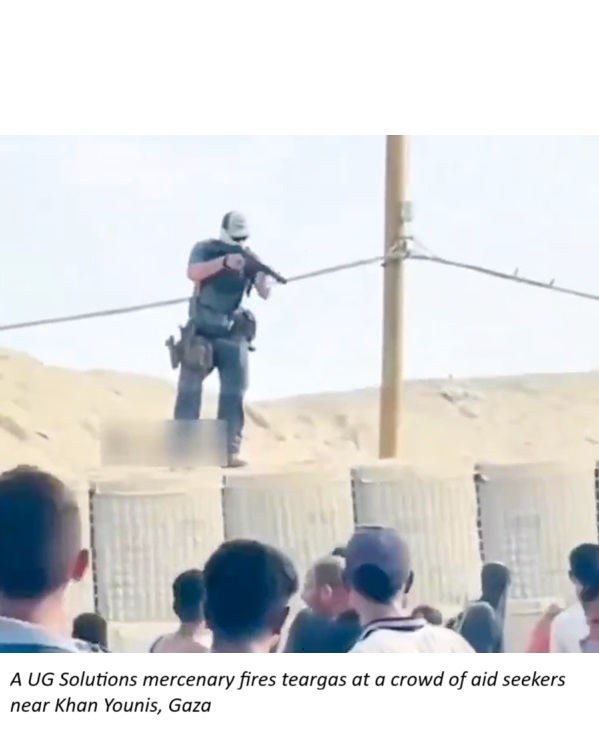
the Israeli government is using the absurdly onerous new registration standards as cover to ban virtually every credible international aid organization from entering Gaza.
Max Blumenthal·December 31, 2025, https://thegrayzone.com/2025/12/31/israel-aid-gaza-mercenary-targeter/
Are Israel and the Trump admin planning to revive the dystopian Gaza Humanitarian Foundation scheme that spawned famine and death under cover of humanitarian aid?
In its bid to continue the genocide in Gaza, Israel has banned 37 international aid organizations from entering the decimated, militarily occupied coastal enclave. This leaves only five humanitarian groups still able to operate inside Gaza.
At the same time, one of the US mercenary firms responsible for securing the notorious Gaza Humanitarian Foundation sites which were present during the worst periods of famine in Gaza, when at least 3000 Palestinian civilians were gunned down while seeking aid, has posted an ad soliciting former special forces soldiers for offensive operations.
UG Solutions, the scandal-stained private mercenary firm, announced this December that it was hiring an “experienced Targeter to support intelligence-driven operations through the identification, development, validation, and maintenance of operational targets.” The targeter will be expected to “Develop, validate, and maintain operational target packages in accordance with approved targeting processes.”
Anthony Aguilar, the retired United States Army Lt. Col and former Green Beret who blew the whistle on UG Solutions’ human rights abuses in Gaza, told me he believes that Israel’s ban on the 37 international aid organizations signals the return of UG Solutions as part of a restructured version of the Israeli-controlled Gaza Humanitarian Foundation scheme.
While it’s unclear where the UG Solutions targeter position will be deployed, if they are being hired for upcoming operations in Gaza, Aguilar says “this shows that the US, though paramilitary contractors, is now going to either directly target, or feed target data to the IDF.”
To set the stage for its blanket ban on international aid organizations, Israel’s intel-tied Ministry of Diaspora Affairs has demanded that all staffers of aid NGOs prove they do not support calls to boycott Israel, that they do not support armed struggle or oppose Israel’s existence as an exclusivist Jewish state, and that they do not “actively advance delegitimization activities against the State of Israel.”
Aid staffers must also demonstrate that they have never questioned the established history of the Holocaust or challenged official Israeli narratives about October 7 – including, presumably, that Palestinians committed “mass rape” or beheaded babies.
Israel has also demanded that Doctors Without Borders provide COGAT occupation administrators with the personal data of its staff and donors, an unprecedented move by a belligerent in a conflict which few, if any, aid groups could ever honor.
It seems obvious that the Israeli government is using the absurdly onerous new registration standards as cover to ban virtually every credible international aid organization from entering Gaza. In doing so, the apartheid entity seemingly seeks to deprive Palestinians living inside the yellow occupation line of sustenance, forcing them to leave Gaza, or to move into one of the high-tech, concentration camp-like “smart cities” mapped out in the dystopian new “Project Sunrise” proposal marketed by Trump cronies Steve Witkoff and Jared Kushner.
And it is there that they would be “secured” by a mercenary outfit like UG Solutions – and targeted if they dared to resist.
Below is a list of all the aid orgs banned by Israel from operating in Gaza:
1. Accion contra el Hambre – Action Against Hunger
2. Action Aid
3. Alianza por la Solidaridad
4. Artsen zonder Grenzen (Medecins Sans Frontieres Nederland)
5. Campaign for the Children of Palestine (CCP Japan)
6. CARE
7. DanChurchAid
8. Danish Refugee Council
9. Handicap International – Humanity and Inclusion
10. Japan International Volunteer center
11. Medecins Du Monde (FRANCE)
12. Medecins du Monde Switzerland
13. Medecins Sans Frontières Belgium
14. Medecins Sans Frontieres France
15. Medicos del Mundo (Spain)
16. Mercy Corps
17. MSF Spain – Doctors Without Borders Spain
18. NORWEGIAN REFUGEE COUNCIL
19. Oxfam Novib
20. Premiere Urgence Internationale
21. Terre des hommes Lausanne
22. The International Rescue Committee (IRC)
23. WeWorld-GVC
24. World Vision International
25. Relief International
26. Fondazione AVSI
27. Movement for Peace – MPDL
28. American Friends Service Committee (AFSC)
29. Medico International
30. PSAS – The Palestine Solidarity Association in Sweden
31. Defense for Children International
32. Medical Aid for Palestinians – UK
33. Caritas Internationalis
34. Caritas Jerusalem
35. Near East council churches
36. OXFAM Quebec
37. War Child holland
1 This Month





PLEASE OPPOSE HR 8255 AND S.3639 – bills would accelerate satellite deployment, with no environmental review or safeguards – https://ncstd5li.quorum.us/campaign/169331/
To see nuclear-related stories in greater depth and intensity – go to https://nuclearinformation.wordpress.com
-
Archives
- October 2026 (29)
- September 2026 (339)
- August 2026 (330)
- July 2026 (355)
- June 2026 (287)
- May 2026 (306)
- April 2026 (356)
- March 2026 (251)
- February 2026 (267)
- January 2026 (308)
- December 2025 (358)
- November 2025 (359)
-
Categories
- 1
- 1 NUCLEAR ISSUES
- business and costs
- climate change
- culture and arts
- ENERGY
- environment
- health
- history
- indigenous issues
- Legal
- marketing of nuclear
- media
- opposition to nuclear
- PERSONAL STORIES
- politics
- politics international
- Religion and ethics
- safety
- secrets,lies and civil liberties
- spinbuster
- technology
- Uranium
- wastes
- weapons and war
- Women
- 2 WORLD
- ACTION
- AFRICA
- Atrocities
- AUSTRALIA
- Christina's notes
- Christina's themes
- culture and arts
- Events
- Fuk 2022
- Fuk 2023
- Fukushima 2017
- Fukushima 2018
- fukushima 2019
- Fukushima 2020
- Fukushima 2021
- general
- global warming
- Humour (God we need it)
- Nuclear
- RARE EARTHS
- Reference
- resources – print
- Resources -audiovicual
- Weekly Newsletter
- World
- World Nuclear
- YouTube
-
RSS
Entries RSS
Comments RSS

