The dangerous new Washington consensus for more nuclear weapons

What are all these nuclear weapons for? What would happen if we used them? Or a fraction of them? How many would die? Would our nation survive? What would be the impact on global climate?
These are topics that are assiduously avoided by nuclear weapons proponents,
“We’re going to go on offense, not just on defense. Maximum lethality, not tepid legality. Violent effect, not politically correct.”
By Joe Cirincione | September 9, 2025
Two former Biden administration defense officials warn of a “Category 5 hurricane of nuclear threats” rapidly approaching. Their solution? Build more nuclear weapons.
The officials, Vipin Narang and Pranay Vaddi, develop their strategy in a July 17 article in Foreign Affairs. From their perches at the Department of Defense and the National Security Council, they helped guide President Joe Biden’s nuclear policies that kept—and even increased—the weapons programs and budgets inherited from the first Trump administration. Now, they say, we need more.
Much more.
Attempting to chart a course for “how to survive the new nuclear age,” they instead repeat the oldest strategic mistake of the nuclear age: seeking security through numbers.
Eighty years ago, before the bombings of Hiroshima and Nagasaki, a team of Manhattan Project scientists led by James Franck and Eugene Rabinowitz (who would later found The Bulletin of the Atomic Scientists) warned that the United States could not rely on its current advantage in atomic weaponry. Nuclear research would not remain an American monopoly for long. Staying ahead in production, they said, also gave a false sense of security: “The accumulation of a larger number of bigger and better atomic bombs… will not make us safe from sudden attack.”
They were ignored. During its first nuclear build-up, the United States sprinted from two atomic weapons in 1945 to 20,000 atomic and thermonuclear weapons by 1960, over twenty times the number of weapons held by the Soviet Union. It didn’t matter. We were ahead but afraid, with false fears of “missile gaps” dominating security debates.
Twenty years later, with the US arsenal at 24,000 warheads and the Soviets with 30,000, Ronald Reagan was swept into office with the backing of the Committee on the Present Danger and their fears that a “window of vulnerability” was opening that would allow the Soviets to launch a deadly first strike unless we vastly increased our forces. Committee members filled top defense posts and began the second nuclear build-up with new weapons and the false promise of missile defense shields. The “launch on warning” policy they adopted on an “interim basis” to protect US ICBMs from Russian attack still haunts us today, argues Princeton professor Frank von Hippel. This policy has contributed to several close calls when missiles were almost mistakenly launched.
Narang and Vaddi channel these past prophets of doom. The authors cite nuclear programs in North Korea, Pakistan, and Iran as justification for increasing the size of the US arsenal, largely ignoring diplomatic efforts that in the past effectively contained some of these programs and prevented others.
They also cite the interest of US allies in Europe and Asia in considering their own national nuclear programs as a proliferation risk that can only be addressed by “more, different, and better nuclear capabilities” and “more advanced missile defense… to intercept small or residual adversary nuclear forces.” They argue that if confronted by nuclear threats in Europe in the near future, “the United States might need to respond with nuclear use, and potentially with a larger nuclear exchange if it is unable to reestablish nuclear deterrence in Europe.”…………………………….
They fully endorse the third nuclear build up now underway, with an estimated cost of $2 trillion and rising. But it is not enough. “Washington needs to deploy not only more warheads but also more systems than originally planned under the modernization program,” they urge.
It is true that China’s force may grow, but as experts at the Federation of American Scientists point out, these projections are based on some questionable assumptions, including that future growth will follow recent growth on a straight line, that all the ICBM silos that we observe will be filled by new missiles, that China will be able to produce enough plutonium for all these new warheads, and that all the new warheads will be operational and deployed—which they currently are not.
Secondly, the authors understate the current US nuclear arsenal, which is more than 3,700 operational warheads, not 1,500. The United States currently has about 1,770 nuclear weapons deployed. (The New START treaty counts only 1,550 because it assumes each US bomber is loaded with only one weapon rather than the 8 to 20 they can carry.)
But that is only the deployed force. Approximately 1,930 nuclear warheads are held in reserve, ready to be deployed if needed. Finally, there are 1,477 retired but still intact warheads awaiting dismantlement—making for a total of more than 5,177 warheads in all, including those deployed, those on reserve, and those which are formally retired but intact. So, even if China does produce 1,500 weapons in ten years, it will still have only one-third the US force.
The real problem with the authors’ analysis, however, is not threat exaggeration or funny numbers. It is the war-fighting doctrine that it openly embraces.
What are all these nuclear weapons for? What would happen if we used them? Or a fraction of them? How many would die? Would our nation survive? What would be the impact on global climate?
These are topics that are assiduously avoided by nuclear weapons proponents, whether they be the corporations that realize large profits from the now $100 billion annual nuclear budget, or by the academics and policy operatives who provide the strategic justification for the indefinite continuation of the nuclear balance of terror.
Thus, the authors say “Congress will need to back an accelerated effort to overhaul the U.S. arsenal with significant funding and give the project urgent priority” because in addition to the standard rational that the United States must maintain a large nuclear arsenal “able to survive a first strike and impose assured destruction on its attacker in retaliation,” they argue the US must have weapons and policies “to meaningfully limit the amount of damage the attacker can inflict on the United States and its allies. To do this, the United States must maintain the capability to destroy as many of the attacker’s nuclear weapons as practicable before or after they are launched.”
This “damage limitation” strategy is key to the argument for larger forces. The authors seem to favor using US nuclear weapons first, to destroy the enemy’s weapons “before” they are launched, as well as believing without evidence that there could be a national missile defense system so effective that it could destroy missiles “after” their launch.
Former dean of the Georgetown University School of Foreign Affairs Robert Gallucci writes in his brief rebuttal to the authors: “One is left to wonder how the pursuit of all the ‘counterforce’ capability required of the second part of the strategy—an extraordinary characterization of the traditional goal of ‘damage limitation’ laid out in past U.S. nuclear posture reviews—can be distinguished from the pursuit of a disarming, preemptive, ‘first strike’ capability.”
Indeed, that is precisely what may be motivating the Chinese increases that the authors claim as the justification for an urgent US build-up. Narang and Vaddi do not discuss the impact on other nations of the massive US investment in offensive and defensive nuclear systems over the past ten years, or its withdrawal form the Anti-Ballistic Missile Treaty in 2002 that began the deterioration of the arms control regime.
From the Chinese perspective, however, the new, more capable and proliferated offensive nuclear weapons (especially those close to their borders) must indeed appear to be first-strike weapons, particularly when combined with a massive proposed national missile defense system erected to intercept any missiles not destroyed by an initial barrage of the United States.
China expert Fiona Cunningham of the University of Pennsylvania believes that it is very possible that “China is reacting to the continued development of some of the U.S. capabilities that could hold its nuclear arsenal at risk.” These include national missile defense, “its development of conventional strike capabilities that might be able to degrade its nuclear forces,” and the “idea that you would try and attack an adversary’s nuclear forces before they end up being launched.”
The Trump administration’s decision to “go on the offense” will further exacerbate these concerns. As the newly renamed Secretary of War, Pete Hegseth, said: “We’re going to go on offense, not just on defense. Maximum lethality, not tepid legality. Violent effect, not politically correct.”
The Chinese increase in forces may indeed be malevolent. But it also looks very similar to what one would do if trying to create exactly the kind of survivable force the authors say the United States must have for a credible deterrent. As Cunningham notes, “We should expect that if adversary capabilities change, then Chinese nuclear forces are going to change in tandem.”
The authors may intend to pave new ground, to develop a strategy for the “new nuclear age,” but they end up mirroring the failed policies of the past. In many ways, their article echoes the 1980 Foreign Policy article by nuclear hawks Colin Gray and Keith Payne, “Victory is Possible.” In support of that era’s nuclear modernization, they argued that “the United States must possess the ability to wage nuclear war rationally.” They, too, thought arms control was unattainable and out-of-date with current threats. They, too, thought “parity or essential equivalence is incompatible with extended deterrence.” They, too, claimed that “war-fighting… is an extension of the American theory of deterrence.”
Gray and Payne said that a war that resulted in 20 million dead Americans could still save 200 million or more. Narang and Vaddi are not as cavalier, but at the core, they are embracing the idea that the ability to fight and win a nuclear war is essential for national security.
The worst news is that they are not alone. Their views may be the dominant views in Washington now, in both parties. Cloaked in ominous strategic rhetoric, ignoring inconvenient truths, and backed by a formidable nuclear weapons lobby and massive budgets, these ideas are the new consensus. Without a vibrant, persistent pushback, these policies will not only prevail in the current Trump administration but in future governments as well. https://thebulletin.org/2025/09/the-dangerous-new-washington-consensus-for-more-nuclear-weapons/
Israel bombed Qatar to assassinate Hamas’s lead ceasefire negotiators
Amid ongoing ceasefire talks, Israel attempted to assassinate the Hamas negotiating team in an airstrike on the Doha office of its lead negotiator, senior Hamas leader Khalil al-Hayya. Hamas officials say the negotiating team survived the attack.
By Qassam Muaddi September 9, 2025 , https://mondoweiss.net/2025/09/israel-bombed-qatar-to-assassinate-hamass-lead-ceasefire-negotiators/
Amid ongoing ceasefire talks, Israel attempted to assassinate the Hamas negotiating team in an airstrike on the Doha office of its lead negotiator, senior Hamas leader Khalil al-Hayya. Hamas officials say the negotiating team survived the attack.
By Qassam Muaddi September 9, 2025
Israel attempted to assassinate top Hamas leaders in Qatar on Tuesday, after large explosions were heard in the capital city of Doha, and smoke columns rose from the building targeted in the attack. A joint statement by the Israeli army and Israel’s internal intelligence agency confirmed that it was targeting Hamas’s senior leadership in a “precise strike.” The statement added that the targeted leaders were “directly responsible” for the October 7 attack and that “measures were taken in order to mitigate harm to civilians.”
Israeli media said that the strike targeted the office of the lead Hamas negotiator in the ongoing ceasefire talks, Khalil al-Hayya, in addition to other members of the negotiating team. Hamas politburo member Suheil al-Hindi told Al Jazeera on Tuesday evening that the negotiating team led by al-Hayya had survived “the cowardly assassination attempt.” Al-Hindi also told the Qatari news network that Hamas “will not raise the white flag.”
Al Jazeera reported that five “lower-ranked members were killed.”
The Israeli strike occurred as the Hamas negotiating team met to discuss the latest ceasefire proposal presented by U.S. President Donald Trump, al-Hindi told Al Jazeera.
The Qatari Foreign Ministry strongly condemned the attack, calling it “criminal” and “cowardly.” The Ministry added that Qatar “will not tolerate” attacks that “threaten the safety of Qatar’s citizens and residents.”
An unnamed White House official told AFP that the U.S. was notified in advance of Israel’s planned attack in Qatar.
The office of Israeli Prime Minister Benjamin Netanyahu said in a statement that the attack was a “wholly independent Israeli operation.”
“Israel initiated it, Israel conducted it, and Israel takes full responsibility,” the statement added.
The Israeli PM and Israeli Defense Minister, Israel Katz, said in a joint statement that they had given the green light to attack the Hamas leadership following a shooting attack in Jerusalem yesterday that left six Israelis dead. Hamas’s armed wing, the Qassam Brigades, had claimed responsibility for the shooting, which was carried out by two Palestinians from the West Bank towns of Qatanna and Qebeibeh.
UN Secretary General Antonio Guterres condemned the Israeli attack on the Qatari capital as a “flagrant violation of sovereignty.”
Targeting negotiators during ceasefire negotiations
The Israeli attack comes after Trump had put forward a proposal for a 60-day ceasefire that would see the release of all Israeli captives in the first 48 hours of the agreement. In exchange, negotiations to permanently end the war on Gaza would commence, with personal guarantees from the U.S. President that Israel would engage in the negotiations “in good faith.”
Trump’s proposal would also see Hamas relinquish control over Gaza and give up its arms. Hamas has repeatedly said that it is willing to relinquish control over the Strip and allow for an independent technocratic government to rule in its stead, but has maintained that disarming remains a “red line” for the group.
A previous ceasefire proposal last August was accepted by Hamas and awaited Israel’s approval, but Israel did not respond before Trump presented his most recent proposal.
The August proposal had included a 60-day ceasefire in which Israeli captives would be released in exchange for the release of 1,700 Palestinian prisoners, the entry of humanitarian aid, and the withdrawal of the Israeli army to specified areas at the edges of the Strip.
Continuous assassinations across the region
Last month, Israel killed 12 top officials in the Yemeni government, including Yemen’s Prime Minister, Ahmad al-Rahawi.
Since October 7, Israel has assassinated several top Hamas leaders in exile across the region, including Hamas’s previous politburo chief Ismail Haniyeh in Tehran, and senior Hamas politburo member Saleh Aruri in Beirut.
Israel has also assassinated several top commanders of the al-Qassam Brigades, including its longtime commander, Muhammad al-Deif. Two weeks ago, Hamas confirmed the death of Deif’s successor, Muhammad Sinwar, the brother of Hamas’s slain Gaza leader Yahya Sinwar, who was killed by accident in October 2024 when he was struck by a tank shell during combat in Rafah.
At the end of August, Israel claimed to have assassinated Abu Obeida, the military spokesperson of the Qassam Brigades, in a strike on a residential building in Gaza City. Hamas has neither confirmed nor denied Abu Obeida’s fate.
Attempt to derail ceasefire negotiations ahead of Gaza City invasion
The attack on Doha comes as Israel continues to advance its offensive against Gaza City, levelling several high-rise buildings housing thousands of refugees, who were forced to leave the towers after receiving evacuation orders from the Israeli army. In recent weeks, the Israeli army’s offensive has flattened entire neighborhoods in eastern Gaza City, including the Shuja’iyya, Sabra, and Zeitoun neighborhoods.
The Israeli army has also dropped leaflets over the city ordering its entire population to evacuate to the overcrowded Mawasi area on the coast of Khan Younis in southern Gaza. The Israeli army says its occupation of the city will last for at least a year.
The Palestinian Civil Defense said that if the invasion of the city proceeds as announced, it expects a daily casualty count of around 300 Palestinians.
US Considers Bombing Venezuela as It Deploys F-35 Fighter Jets to Puerto Rico
ANTIWar.com, by Dave DeCamp | September 7, 2025
The Trump administration is considering multiple options for launching military strikes against alleged drug cartels in Venezuela, including hitting targets that could weaken Venezuelan President Nicolas Maduro, as it is deploying F-35 fighter jets to Puerto Rico, CNN has reported.
US officials told CNN that the US bombing of a boat near Venezuela last week was just the beginning of a much larger effort against drug trafficking that could lead to the ouster of Maduro. US officials claim the pressure on Venezuela and Maduro is about drug trafficking and a response to overdose deaths in the US, but fentanyl doesn’t come from or through Venezuela, and the majority of the cocaine that is transported to the US comes through the Pacific, not the Caribbean……………………
The US deployed F-35s to Puerto Rico after it claimed that two Venezuelan F-16 fighter jets flew over a US Navy vessel. The Department of Defense, now known as the Department of War, said in a press release that the Venezuelan flight was “provocative” despite the fact that the US deployed a large number of naval vessels near Venezuela’s coast…………………….https://news.antiwar.com/2025/09/07/us-considers-bombing-venezuela-as-it-deploys-f-35-fighter-jets-to-puerto-rico/
Academic agrees with NFLA’s position on management of deadly radioactive waste.

NFLA 9th Sept 2025, https://www.nuclearpolicy.info/news/academic-agrees-with-nflas-position-on-management-of-deadly-rad-waste/
Following on from last weeks joint media release with Lakes against the Nuclear Dump (LAND) https://www.nuclearpolicy.info/news/volatile-boiling-geysers-the-latest-on-nuclear-waste-plans/, the UK/Ireland Nuclear Free Local Authorities were delighted to hear that the views of another senior academic chimed with our own policy on the management of high-level radioactive waste.
David K. Smythe, Emeritus Professor and former Chair of Geophysics, University of Glasgow, said he agreed with Professor Stuart Haszeldine about the danger of trying to bury High Level Waste, whether it was conditioned or not: “The waste should be kept on the surface of the earth, and immobilised beyond any possibility of re-use, until a proper long-term solution is found.”
This concept of ongoing active stewardship pending the discovery of future treatment methods, rather than disposal and abandonment in a subterranean repository, accords with the position of the NFLAs and that of the Scottish Government.
Scottish Government Policy is that Higher Activity Radioactive Waste ‘should be managed in the long-term in near-surface facilities where it can be monitored and where there is the capability of retrieving it.’
The NFLAs have a similar long-standing policy on the management of nuclear waste; this comprises a set of clear principles which we are confident have stood the test of time and remain as relevant now as when they were originally agreed in 2004
- The idea that radioactive waste can be ‘disposed’ of be rejected in favour of radioactive waste management.
- Any process or activity that involves new or additional radioactive discharges into the environment be opposed, as this is potentially harmful to the human and natural environment.
- The policy of ‘dilution and dispersion’ of radioactive materials as a component of waste management, which leads to discharges into the estuaries, seas or atmosphere or the diversion of waste to landfill, metal recycling plants and incineration, be rejected in favour of a policy of ‘concentration and containment’, storing the waste safely on-site in isolation from the environment in bespoke facilities.
- The principle of waste minimisation be supported.
- The unnecessary transport of radioactive and other hazardous wastes be opposed.
- Wastes should ideally be managed on-site where produced (or as near as possible to the site) in a facility that allows monitoring and retrieval of the wastes.
Could Australia defend itself?

by Rex Patrick | Sep 7, 2025 , https://michaelwest.com.au/could-australia-defend-itself/
Supporters of the Australian Defence Force being more closely integrated with the US military, and of AUKUS, seem convinced that we need the US to defend ourselves. Former senator and submariner, Rex Patrick, explains why they’re wrong.
While there are clear concerns in the US and Australia with China’s growing military power and how that power might be utilised, no-one reasonably thinks China has aspirations of attacking Australia. But, for defence purposes, we plan for worse-case, and so in assessing whether Australia could defend itself, a Chinese attack is a convenient scenario to explore.
Nuclear attack
It’s estimated China possesses more than 500 operational nuclear warheads, and by 2030, they’ll have over 1,000. Most of those will be aimed at US targets – US air and military bases in Guam and Hawaii, US bases in the territories of America’s allies in north-east Asia – Japan and South Korea; as well as a growing list of strategic facilities and cities in the continental United States itself.
And as China enters an era of nuclear weapon abundance, there’ll be long-range missiles and warheads to spare for US-related targets down under – the signals intelligence facility at Pine Gap near Alice Springs, the submarine communications station near Exmouth, the RAAF base at Darwin and naval facilities at Garden Island south of Perth.
It’s clear that an expanding US military presence in Australia has increased the likelihood of nuclear weapons being directed at us by China.
Our best protection against the risk of nuclear war is a government policy of support for the system of mutual deterrence and effective arms control. In this, the AUKUS program isn’t helpful, as Australia’s past diplomatic engagement on nuclear arms control and non-proliferation has been downgraded. We are trying to persuade other nations that Australia should be permitted to receive weapon-grade plutonium in the reactors of our anticipated US- and UK-sourced submarines.
Conventional conflict and the tyranny of distance
Launching a conventional attack on Australia is a very hard thing to do.
Geography is our great advantage. What historian Geoffrey Blainey called the “tyranny of distance” is a big problem for any country wanting to attack Australia. In World War II, the invasion of Australia was operationally and logistically a bridge too far for the Imperial Japanese Army and Navy. During the Cold War, Australia enjoyed defence on the cheap because there was no direct conventional military threat from the Soviet Union.
We’re a long way from China, surrounded by a ‘moat’ and are further assisted in our defence by an inhospitable vastness between a hostile force landing on our northern shores and our major population centres.
We can also afford to defend ourselves if we sensibly reallocate the $365B cost of eight AUKUS submarines to focus on the defence of Australia first.
Here’s how.
Keeping a watch
An intelligence capacity, focused on areas of primary strategic interest to support an independent defence of Australia, is crucial. This would involve cooperation with other nations (including as part of 5Eyes), defence-focused spying by the Australian Secret Intelligence Service and eavesdropping by the Australian Signals Directorate, covert submarine intelligence missions and intelligence collection by deployed RAN surface ships and RAAF surveillance aircraft.
Open source intelligence should not be discounted.
We also need a highly capable surveillance capability for detecting, identifying and tracking potentially hostile forces moving into our military area of interest.
Australia should invest in satellite surveillance system ($5B, leaving $363B in available funds from cancelling the $368B AUKUS program) to complement our three Over-The-Horizon Radars at Longreach in Queensland, Laverton in WA and at Alice Springs in the NT and double the size of our P-8 Maritime Patrol and Response fleet from 8 to 20 aircraft ($6B, $357B).
We should also invest in deployment of long-range acoustic systems ($1B, $356B), e.g. in places like Christmas Island to detect and identify foreign submarines transiting the Lombok Strait.
We need to ensure we have reliable ships and submarines with well-trained crews deployed in our northern approaches, particularly near the many southern exit points of the Indonesian archipelago.
Defending the moat
Defence of Australia, in the lead-up to conflict, would require sea and air denial.
To do this, we need all relevant defence assets to be capable of launching stand-off anti-shipping missiles, in particular the Naval Strike Missile and Joint Strike Missile, which will be made in a Kongsberg facility being built in Newcastle.
These missiles would be an essential capability in our 20 air-independent propulsion submarines ($30B, $326B), our expanded surface fleet with a further 10 frigates ($10B, $316B), our F-35 Joint Strike Fighters and P-8 Poseidon maritime patrol aircraft.
We also need to boost our airborne capabilities with additional fighter aircraft ($25B, $291B) oriented towards maritime strike, land, and more air-to-air refuelling capacity ($1B, $290B) to support these fighter jets. We also need to enhance our land-based anti-air defences ($1B, $289B).
Closer to shore, we should expand our capability to utilise sea mines. Since World War II, mines have damaged and sunk more vessels than any other means; they are a highly effective asymmetric weapon that the ADF has only recently reintroduced into its inventory, and we should expand our capabilities and capacity in this area. ($1B, $288B).
At the same time, we need to beef up our anti-submarine warfare capabilities to protect our sea lanes, stop foreign submarines passing through choke points in our northern approaches and to protect our new strategic fleet ($20B, $268B), which Prime Minister Albanese promised but has not delivered on, critical for supporting continued economic activity and our defence effort in our northern coastal waters
Protecting defence, economic and population assets
In protecting Australia, we would need to have regard to keeping open our northern, naval and major ports, which would be vulnerable to enemy mines. Australia’s mine countermeasures have atrophied. This would have to be reversed ($5B, $263B).
Turning to ground forces, we need to be able to deal with lodgements on our territory or major raids. We need to be able, assisted by our geography, to oppose any march south, whilst also being able to supply our forces to the north. We need to double our heavy airlift capability with a further large transport aircraft ($4B, $259B).
Lessons from Ukraine are particularly relevant; the rise of drone systems and their effects on force architectures and land warfare, the effects of electronic warfare on the modern battlefield, the challenges of sustaining logistics in a contested environment (mindful of the huge distances involved in supporting Australian forces in the top end) and air defence.
In addition to existing Army programs, Australia must spend money to capitalise on the lessons learned. We need to be investing in drone and anti-drone capabilities ($2B, $257B), indigenous electronic warfare capabilities ($5B, $252B), 12 additional tactical transport aircraft ($2B, $250B), 48 additional utility helicopters ($2B, $248B), unmanned ground logistics vehicles ($2B, $246B) and shoulder fired anti-aircraft missiles ($2B, $244B).
Other priorities
Distance is not a barrier to effective cyber warfare. Australia must ensure our highly electronic and network-connected utilities are not disrupted by conflict. We need to increase investment in our cyber warfare capabilities ($5B, $239B).
We also need to address a huge deficit in our fuel security. ensuring we have a minimum 90 days in-country fuel supplies ($8B, $231B) and that we have a resilient general industry capability and self-sufficiency of critical commodities ($60B, $171B) that can keep the country running during conflict (or a pandemic).
We need to further learn the lessons of our Ukrainian friends and boost the capability and capacity to produce missiles and other munitions here. That includes the full gamut of weapons we use, from small arms to missiles to bombs to torpedoes, and many of the other consumables of war that can quickly run out. An investment in the order $10B is required ($5B, $166B).
Finally, the Government must stop embarking on highly costly and risky defence programs that don’t work out. It should be buying off-the-shelf capabilities, some built here where it makes sense, and enhanced by Australian industry. Industry would need to be configured to properly sustain all of our critical military capabilities onshore.
Yes, we can
With the US becoming more and more unreliable, it’s time for Australia to tilt to independence in defence. No-one can believe we are the US’s most important friend (the PM is still trying to get a meeting with Trump), or that they will stand by us in conflict. Those days have passed.
While China attacking Australia is a remote possibility, we must plan for the worst, an invasion of Australia. The good news is that the tyranny of distance is working in our favour. With determination and reform in Defence procurement, Australia can independently defend itself. We can make ourselves such a hard and difficult target that no one will try it on, or try to coerce us.
The numbers throughout this article show that we can cancel AUKUS and do what’s required, and walk away with over $150B left in consolidated revenue to do more for education, increasing productivity, economic advancement and social support.
Rex Patrick
Rex Patrick is a former Senator for South Australia and, earlier, a submariner in the armed forces. Best known as an anti-corruption and transparency crusader, Rex is also known as the “Transparency Warrior.”
Aid cuts cast long shadow over key Africa climate talks

For many Africans suffering under climate-driven crises such as drought or flooding, adapting to the climate crisis is seen as a top priority writes Nick Ferris from Ethiopia’s capital Addis Ababa. But aid cuts – particularly from Donald
Trump – mean that funding for such programmes is drying up.
Independent 9th Sept 2025, https://www.independent.co.uk/news/world/africa/trump-cuts-aid-climate-africa-b2823143.html
China, Russia urge Europe to halt UN snapback after Iran-IAEA deal
Russia called on Britain, France and Germany on Tuesday to halt their move
to restore United Nations sanctions on Iran after Tehran and the
International Atomic Energy Agency (IAEA) announced an agreement to resume nuclear inspections suspended since June.
Iran International 10th Sept 2025, https://www.iranintl.com/en/202509103977
‘Sizewell C oak tree felling would be devastating’
Campaigners say chopping down century-old oak trees as part of the
Sizewell C nuclear power station build would be “the straw that broke the
horse’s back”. Sizewell C has notified residents in Middleton, Suffolk,
that vegetation on the B1125 at Leiston Road could be cleared between the 6
and 10 October – after permission was granted. But locals fear it will mean
the loss of 10 oaks – each more than 100 years old – to improve the sight
line of the 60mph stretch, which could become part of the Sizewell C Link
Road system. It remains unclear at this stage if all or any of the trees
will be cut down, as project bosses say they will “only ever remove trees
when we absolutely have to”.
BBC 9th Sept 2025, https://www.bbc.co.uk/news/articles/cgknxezy2vno
Communities Push Back against SpaceX in Tamaulipas
Conibio, which partners with federal conservation programs, expects to see the loss of more endangered turtles because of launches from Starbase. “It’s like launching bombs on their habitat,”
A Mexican conservation group says Elon Musk’s rocket launches from South Texas are killing turtles, damaging homes, and littering Tamaulipas beaches with debris.
Pablo De La Rosa, The Border Chronicle, Sep 10, 2025
Three miles south of Starbase, Texas, where SpaceX launches rockets into orbit, the beaches of Tamaulipas begin at the mouth of the Rio Grande. Further south along the water’s edge, generations of families from northern Mexico have spent Sundays on the shores of Playa Bagdad’s recreational area, renting small wooden palapas for shade. Local fishermen live off the seafood they catch nearby in the Gulf of Mexico. They sell their fried fish, spicy shrimp kabobs, and raw oysters to visitors who sunbathe and swim on the beach.
Many Tamaulipecos have grown up with fond memories of Playa Bagdad, and Jesús Elías Ibarra Rodríguez is one of them. Rodríguez is a Matamoros-based veterinarian and the founder and president of Conibio Global A.C., a nonprofit conservation organization based in the state of Tamaulipas.
For several years, residents of Brownsville and other border towns have protested losing access to public beaches and the harm to the environment and communities caused by many SpaceX rocket explosions. In August, several Texas border organizations demanded that the Federal Aviation Administration halt more rocket launches until a complete environmental impact statement is conducted.
A protest movement is also building in neighboring Mexico, Rodríguez said, as the number of launches and tests has increased. “We’ve been here years before SpaceX, working to conserve these precious ecosystems,” he said. “But everything is changing now. The beach is changing. Even people’s homes, old houses going back generations, are getting damaged from the launch vibrations.”
In 2019, SpaceX launched its first rocket prototype from Starbase, called Starhopper. Rodríguez said that during early tests, most noise and debris were contained north of the U.S.-Mexico border. But in recent years, SpaceX “began building rockets of great size, considered the largest rockets ever constructed on the planet.” It was around this time that communities in Tamaulipas began to feel the greater effects from the vibrations of engine tests and rocket launches.
A 2024 study from Brigham Young University found that the rocket launches at Starbase produced sound levels similar to “a rock concert or chainsaw” up to six miles away. The data also showed the blasts were powerful enough to cause structural damage to nearby homes and buildings.
Concerns increased in Mexico as residents in Tamaulipas began to find industrial debris on the beach, some labeled with the names of manufacturers of materials used in the space industry. “They started letting debris fall into Mexican territory,” said Rodríguez. “That was what really worried us, alarmed us, and upset us.” Rodríguez says that his organization has documented debris from SpaceX rocket launches along a 40-kilometer stretch of Tamaulipas beach.
Mexico’s president, Claudia Sheinbaum, said in June that the federal government was looking into a possible lawsuit against SpaceX based on damage sustained in the region from rocket launches. That same month, El País reported that Elon Musk had reached out to the Mexican government in the days after Sheinbaum’s comment for help in recovering any debris found in Tamaulipas that might still belong to the company.
Rodríguez says that Sheinbaum has assigned a local task force that is now present during launches along with Conibio staff and will soon make available a special team of divers to prepare reports on any major debris that is still under Mexican waters.
Rodríguez says that Conibio, which partners with federal conservation programs, expects to see the loss of more endangered turtles because of launches from Starbase. “It’s like launching bombs on their habitat,” said Rodríguez. “You have the sound and vibration of the explosions, and you have tons of millions of little pieces of plastic that are bait for them. And we worry about sea life in general consuming all that.”
Conibio reports that some 900 endangered turtles have died this year because they were trapped in their underground nests by compacted sand from Starbase launch and test vibrations, including from an accidental explosion of a rocket in June that occurred on the ground while it was still attached to its launch arm………………………………………………………………………………………………………………………………………..
While some community members in South Texas have rallied behind the Starbase project in hopes of jobs and economic benefits, that tradeoff does not exist for people in Tamaulipas.
“People here are very unhappy with this,” said Rodríguez. “There are hundreds, even thousands of Mexicans who want to join in, come together, and show that Mexico is united and that we will demand change, that those rockets explode somewhere else.” https://www.theborderchronicle.com/p/communities-push-back-against-spacex?publication_id=373432&post_id=173185930&isFreemail=true&r=3alev&triedRedirect=true&utm_source=substack&utm_medium=email
Spain Announces Arms Embargo on Israel and Other Steps ‘to Stop the Genocide in Gaza’
“This is not self-defense,” Spanish Prime Minister Pedro Sánchez asserted, “it is the extermination of a defenseless people and a violation of every international law.”
Brett Wilkins, Common Dreams, Sep 08, 2025
Spanish Prime Minister Pedro Sánchez on Monday announced a series of nine new measures—including a total arms embargo—aimed at pressuring the government of fugitive Israeli Prime Minister Benjamin Netanyahu “to stop the genocide in Gaza.”
Sánchez, who leads the Spanish Socialist Workers’ Party (PSOE), announced the steps during a speech in which he first acknowledged the historical suffering of the Jewish people, which includes the 1492 ethnic cleansing of Jews from Spain.
“The Jewish people have suffered countless persecutions, deserve to have their own state, and to feel secure,” Sánchez said. “That is why the Spanish government has condemned Hamas’ attacks from day one.”
However, “there is a difference between defending your country and bombing hospitals or starving innocent children,” the prime minister continued. “This is an unjustifiable attack on the civilian population, which the [United Nations] rapporteur has described as genocide.”
“Sixty thousand dead, two million displaced, half of them children,” Sánchez said. “This is not self-defense, it is not even an attack—it is the extermination of a defenseless people and a violation of every international law.”
The nine measures—which must be approved by lawmakers and the Cabinet—include:
- A “legal and permanent prohibition” on the purchase and sale of weapons, ammunition, and military equipment;
- A ban on transit through Spanish ports for all ships carrying fuels destined for Israel’s military;
- Denial of entry into Spanish airspace for all state aircraft carrying military equipment to Israel;
- A ban on entry to Spain for “all persons directly involved in genocide, human rights violations, and war crimes” in Gaza;
- Prohibition of imported products from illegal settlements in the occupied Palestinian territories;
- Limitation of consular services for Spanish citizens residing in illegal Israeli settlements;
- Strengthened support for the Palestinian Authority;
- An additional €10 million in support for the United Nations Relief and Works Agency for Palestine Refugees in the Near East (UNRWA); and
- An increase in overall humanitarian spending for Gaza, to reach €150 million by 2026……………………………………………………………………………….. https://www.commondreams.org/news/spain-arms-embargo-israel
New York Times misstates Palestinian death toll, downplays genocide.

As award-winning investigative journalist Laila Al-Arian writes of The New York Times: “They’ll be remembered for minimizing genocide, normalizing Palestinian death and whitewashing Israel’s atrocities.”
Michael F. Brown Media Watch 5 September 2025, https://electronicintifada.net/blogs/michael-f-brown/new-york-times-misstates-palestinian-death-toll-downplays-genocide
Nearly two years into the Gaza genocide, The New York Times is failing to convey to its readers the enormity of what is happening to Palestinians.
On 30 August (the online publication date), in an article about the Venice International Film Festival and organizing there on behalf of Gaza, the newspaper claimed that 39,000 people in Gaza had been killed as of July.
“In July, the enclave’s health ministry said that more than 39,000 people had been killed, a toll that does not distinguish between civilians and combatants. And this month, a group of global experts said that Gaza City and the surrounding territory were officially suffering from famine.”
But that 39,000 figure is from July of 2024.
In fact, according to the health ministry in Gaza, over 63,000 Palestinians had been killed when The New York Times article was published. The official death toll was updated to more than 64,000 a few days later.
I requested a correction on 2 September after I first read the article. Pro-Israel media-monitoring organizations such as CAMERA and HonestReporting did not appear to be seized by the matter with the latter clearly looking past the error on the number of Palestinians killed.
The New York Timesappended this correction to the article the next day: “An earlier version of this article incorrectly stated the Gaza health ministry’s death toll. The ministry recently put the figure at more than 60,000 people, not over 39,000.”
The correction run on 4 September on the corrections page reads: “An article on Monday about a pro-Palestinian demonstration that took place during the 82nd Venice International Film Festival on Saturday misstated the death toll cited by the Gaza health ministry. The ministry recently put the figure at more than 60,000 people, not over 39,000.”
Even the correction knowingly erases some 3,000 Palestinians killed. The number slain during the Israeli-administered genocide at the time of original publication was over 63,000.
In the chaos of Gaza as institutions are destroyed and people are buried in the rubble, it is worth noting that some estimates of the casualty figures go far higher.
Genocide
The newspaper of record – as opposed toThe Washington Post – also appeared very reluctant to devote much attention to the resolution passed on 31 August by the International Association of Genocide Scholars that declares Israel is carrying out a genocide in Gaza.
Just two paragraphs were devoted to the issue on 1 September by The New York Times.
First, the newspaper noted, “On Monday, the International Association of Genocide Scholars, a leading group of academic experts on the topic, declared that Israel’s policies and actions in Gaza met the legal definition of genocide.”
Then, in a longer sentence, the Israeli foreign ministry was given space to rebut the charge.
“A spokesman for the Israeli foreign ministry denounced the conclusion as ‘an embarrassment to the legal profession,’ adding in a statement that it was ‘entirely based on Hamas’ campaign of lies and the laundering of those lies by others.’”
Historian Assal Rad noted the shortcomings of the reporting by The New York Times, highlighting the absence of headlines or a dedicated story focusing on the fact Israel is committing genocide.
As award-winning investigative journalist Laila Al-Arian writes of The New York Times: “They’ll be remembered for minimizing genocide, normalizing Palestinian death and whitewashing Israel’s atrocities.”
Further bias can be seen in a New York Times article published shortly before publication of this article.
Liam Stack writes that “the war began after the Hamas-led Oct. 7, 2023, terror attack on Israel, in which roughly 1,200 were killed and 250 more taken hostage.”
Stack employs the term “terror attack,” but at no point references Israeli war crimes, crimes against humanity or genocide.
He did not immediately respond to a request for comment from The Electronic Intifada regarding bias at the newspaper.
A killing at sea marks America’s descent into lawless power

The people on board were not given the chance to surrender. No evidence was presented. No rules of engagement were cited. The administration claimed authority to kill on suspicion alone. A vessel in international waters is not a lawful target simply because officials say so.
International law does not permit such action.
The peremptory strike on a speedboat is a warning to all who serve. Remember your oath.
Jon Duffy, September 8, 2025, https://www.defenseone.com/ideas/2025/09/killing-sea-americas-descent-lawless-power/407949/?oref=defense_one_breaking_nl&utm_source=Sailthru&utm_medium=email&utm_campaign=Defense%20One%20Breaking%20News:%209/9%20killing&utm_content=C&utm_term=newsletter_d1_alert
The United States has crossed a dangerous line.
Last week, an American military platform destroyed a small vessel in the Caribbean, killing 11 people the Trump administration claims were drug traffickers. It was not an interception. It was not a boarding with Coast Guard legal authority. It was a strike—ordered from Washington, executed in international waters, and justified with little more than “trust us.” Defense Secretary Pete Hegseth told Fox that officials “knew exactly who was in that boat” and “exactly what they were doing.” He offered no evidence.
This was not a counterdrug operation. It was not law enforcement. It was killing without process. And it was, to all appearances, against the letter and the spirit of the law.
For decades, the U.S. military and Coast Guard have intercepted drug shipments in the Caribbean and Eastern Pacific under a careful legal framework: Coast Guard officers would tactically control Navy ships, invoke law enforcement authority, stop vessels, and detain crews for prosecution. The goal is not execution; it is interdiction within international law.
This week’s strike ripped up that framework. The people on board were not given the chance to surrender. No evidence was presented. No rules of engagement were cited. The administration claimed authority to kill on suspicion alone.
International law does not permit such action. A vessel in international waters is not a lawful target simply because officials say so. Contending that narcotics pose a long-term danger to Americans is at best a weak policy argument, not a legal justification for force. Unless this boat posed an imminent threat of attack—which no one has claimed—blowing it out of the water is not self-defense. It is killing at sea. A government that ignores these distinctions is not fighting cartels. It is discarding the rule of law.
Beyond the gross violations of the law and the Constitution lies an enormous strategic danger. By redefining traffickers as legitimate military targets, the administration has plunged the United States into another war without limits.
Who is the enemy? “Cartels,” we are told. But cartels are not armies. They are networks that span countries and blend with civilians. Declaring war on them is like declaring war on poverty or terrorism—a plunge into an endless campaign that cannot be “won.”
Where is the battlefield? The Caribbean? Venezuela? Central America? Overnight, officials shifted their story about the destroyed vessel’s destination: first, it was “probably headed to Trinidad or some other country in the Caribbean,” then it was among “imminent threats to the United States.” If geography is that malleable, there is no limit to where the next strike may fall.
And what is the objective? To “blow up and get rid of them,” in the words of Secretary of State Marco Rubio. That is not strategy; it is bravado. We have tried it before, in Iraq, Afghanistan, Yemen. Killing “high-value targets” didn’t end the war on terror.
The U.S. is drifting into an undeclared war of assassination across half a hemisphere, led by unaccountable officials who equate explosions with effectiveness.
Even more dangerous is the backdrop: the Supreme Court’s ruling that presidents are immune from prosecution for “official acts.” Experts warned this would give the commander-in-chief license to commit murder. The majority waved those fears away. Now the president has ordered killings in international waters.
Eleven people are dead, not through due process but by fiat. The defense secretary boasts about it on television. And the president will face no consequences.
This is no longer abstract. The law has been rewritten in real time: a president can kill, and there is no recourse. That is not strength. That is authoritarianism.
What does this mean for the principle of civilian control, when those who wield it face no consequence for abuse? What does it mean for our military, when they are ordered to carry out missions that violate the standards they have sworn to uphold?
What happens abroad does not stay abroad. A government that stretches legal authority overseas will not hesitate to do the same at home. The same commander-in-chief who ordered a strike on a boat in international waters has already ordered National Guard troops into American cities over the objections of local leaders. The logic is identical: redefine the threat, erase legal distinctions, and justify force as the first tool. Today it is “traffickers” in the Caribbean. Tomorrow it will be “criminals” in Chicago or “radicals” in Atlanta.
This strike is not only about 11 lives lost at sea. It is about the precedent set when the military is unmoored from law, and when silence from senior leaders normalizes the abuse.
The cost will not be measured in a destroyed boat. It will be measured in the corrosion of law, strategy, and trust. Legally, the U.S. has abandoned the framework that distinguished interdiction from assassination. Constitutionally, presidential immunity has been laid bare: the commander-in-chief of the most destructive military power in history has been placed beyond the reach of law. Strategically, we have entered another endless war against a concept, not an enemy. Internally, the erosion of boundaries abroad feeds the erosion of boundaries at home.
The laws of war, the principles of proportionality, the training drilled into every officer—all run counter to what happened in the Caribbean. Yet silence has prevailed. And silence is acquiescence. Each concession ratifies the misuse of force until it becomes routine. That is how institutions corrode. That is how democracies die.
The strike in the Caribbean is not the action of a strong nation. It is a warning. This is about whether the U.S. military remains an institution of law and principle, or whether it becomes an obedient weapon in the hands of a lawless president.
A republic that allows its leaders to kill without law, to wage war without strategy, and to deploy troops without limit is a republic in deep peril. Congress will not stop it. The courts will not stop it. That leaves those sworn not to a man, but to the Constitution.
The oath is clear: unlawful orders—foreign or domestic—must be disobeyed. To stand silent as the military is misused is not restraint. It is betrayal.
Jon Duffy is a retired Navy captain. His active duty career included command at sea and national security roles. He writes about leadership and democracy.
Israel Bombs Doha, Reportedly Targeting Hamas Negotiators Discussing US Proposal

Israel has been known to sabotage ceasefire deals just as they are reaching completion, effectively prolonging the genocide. Israeli officials have long said that their goal is to take over Gaza, and that they will stop at nothing to achieve this objective.
Israeli Prime Minister Benjamin Netanyahu’s office claimed full responsibility for the strike in a statement on social media.
The strike came as Hamas officials were in Qatar to discuss a ceasefire proposal put forth by the Trump administration.
By Sharon Zhang , Truthout, September 9, 2025
srael struck the capital of Qatar on Tuesday, targeting senior Hamas political officials as they gathered in Doha to discuss the latest ceasefire proposal put forth by the U.S.
Loud explosions were heard in the capital city, with pictures of smoke plumes rising. Israel took responsibility for the strikes, saying that they were targeting Hamas leaders.
“The [Israel Defense Forces] and [Israeli Security Agency] conducted a precise strike targeting the senior leadership of the Hamas terrorist organization,” the military said in a statement. “For years, these members of the Hamas leadership have led the terrorist organization’s operations, are directly responsible for the brutal October 7 massacre, and have been orchestrating and managing the war against the State of Israel.”
Hamas has said that five of its members were killed in the strike, including the Hamas lead negotiator’s son. However, it said the strike failed to kill any of their negotiating team. Israel has already assassinated Hamas leaders in Lebanon and Iran, as well as in Gaza.
Qatar’s interior ministry said that a member of Qatar’s Internal Security Force was also killed at the site, and several others were injured.
The attack comes just as Hamas officials were meeting in Doha to discuss a ceasefire proposal put forth by the U.S. this weekend. A Hamas source told Al Jazeera that the strike specifically targeted the negotiation team.
This is the first known time that Israel has struck Qatar — a key party in the ceasefire negotiations between Israel and Hamas — amid its genocide in Gaza. Just in the past month, Israel has struck at least five Arab countries: Palestine, Yemen, Syria, Lebanon, and Qatar. On Monday, a Gaza-bound aid flotilla was struck by an aerial projectile in a Tunisian port, and activists have pointed the finger at Israel.
Israel has also escalated its siege on Gaza City in recent weeks, and ordered an estimated 1 million Palestinians in Gaza City to evacuate on Tuesday.
The strike comes just after Israeli Foreign Minister Gideon Saar claimed that Israel accepted the U.S. ceasefire proposal. Hamas officials had accepted a separate, similar ceasefire deal put forth by Qatar last month, that Israel never responded to.
Israel has been known to sabotage ceasefire deals just as they are reaching completion, effectively prolonging the genocide. Israeli officials have long said that their goal is to take over Gaza, and that they will stop at nothing to achieve this objective.
Israeli Prime Minister Benjamin Netanyahu’s office claimed full responsibility for the strike in a statement on social media. “Today’s action against the top terrorist chieftains of Hamas was a wholly independent Israeli operation. Israel initiated it, Israel conducted it, and Israel takes full responsibility,” his office said.
However, Qatar is an ally of the U.S., and commentators have said it’s unlikely that the strike would not be done in coordination with the U.S. Qatar hosts the largest military base in the Middle East, the regional headquarters of U.S. Central Command.
White House Press Secretary Karoline Leavitt said that the White House was informed of the strike before it happened, and sought to alert Qatari officials of it. However, Qatari officials denied this account as “completely false.”
“The call that was received from an American official came during the sound of the explosions that resulted from the Israeli attack in Doha,” said Qatar Ministry of Foreign Affairs spokesperson Majed al-Ansari.
Axios’s Barak Ravid, citing a U.S. official, said that Israel only notified the U.S. of the strike right before it happened.
Qatar condemned the strike, saying that it targeted residential buildings where Hamas political officials were staying.
“This criminal assault constitutes a blatant violation of all international laws and norms, and poses a serious threat to the security and safety of Qataris and residents in Qatar,” said al-Ansari. “While the State of Qatar strongly condemns this assault, it confirms that it will not tolerate this reckless Israeli behavior and the ongoing disruption of regional security, nor any act that targets its security and sovereignty.”
The future of Gaza as seen from the White House

the Gaza Strip would be “administered by the United States for at least 10 years while it is transformed into a glittering tourist resort and a center for high-tech manufacturing and technology.”
The future Gaza project, according to its real estate developers (the three professionals Jared Kushner, Donald Trump, and Steve Witkoff), is worthy of Dubai. Many transnational corporations have already joined forces.
by Thierry Meyssan, Voltaire Network | Paris (France) | 3 September 2025, https://www.voltairenet.org/article222723.html
This possible operation is in line with the vision of the “Jacksonians.” In 1830, President Andrew Jackson (1829-1837) enacted the Indian Removal Act. To end the Indian wars, he proposed assigning them reservations rather than continuing to massacre them. The transfer of the Indians was particularly deadly for the Cherokees (the “Trail of Tears” episode), but they accepted this form of peace, while almost all other Indian tribes rejected it. Two centuries later, only the Cherokee tribe has become wealthy and integrated, while all the other tribes have been marginalized. Without a doubt, Jackson’s method succeeded in ending the genocide of the Indians, but at what cost?
Trump’s plan, currently in development, is just as shocking to Palestinians as Jackson’s was to the Cherokee, but it offers a solution where no one else has. Will Palestinians, who have been fighting for generations to assert their rights, be satisfied with this? International law states that no people can be expelled from their own land. The United Nations General Assembly has consistently guaranteed the right of return for those who were forcibly expelled in 1948—UN General Assembly Resolution 194 (December 11, 1948) and UN Security Council Resolution 237 (June 14, 1967). Seven years ago, Palestinian civilians organized the “March of Return.” The Israel Defense Forces (IDF) fired on a peaceful crowd, killing at least 120 people and wounding 4,000. It is obviously illusory to believe that such a people will easily rally to this project.
So the participants at the White House meeting considered paying $23,000 per person to any family willing to go into exile. Contacts have already been made with Libya, Ethiopia, South Sudan, Indonesia, and Somaliland, although none of these states has confirmed this. The Trump team is considering voluntarily relocating a quarter of the Gaza population in this way.
According to the Financial Times, the Tony Blair Institute for Global Change (TIT) and the Boston Consulting Group (BCG) held joint working meetings on the Gaza Riviera project, known as The Gaza Reconstitution, Economic Acceleration and Transformation Trust (GREAT* Trust). It was during these preparatory meetings that the Gaza Humanitarian Foundation (GHF) project was born. During the summer, this Swiss-registered foundation distributed humanitarian aid in Gaza instead of the occupying authority, the United Nations, the International Red Cross, and various humanitarian associations. This certainly bypassed Hamas, but it also led to the IDF killing nearly a thousand civilians who had come to seek food aid. The GHF scandal was unanimously condemned, including by prominent Israeli Jews. In practice, the GHF was created by the Mikveh Yisrael Forum, bringing together Yotam HaCohen, strategic advisor to Benjamin Netanyahu and son of former General Gershon HaCohen, Liran Tankman, a former intelligence officer who switched to high-tech, and Michael Eisenberg, an Israeli-American venture capitalist. Most of the leaders of the Mikveh Yisrael Forum have joined the Coordinator of Government Activities in the Territories (COGAT), Ghassan Alian, convinced that the Netanyahu government is doing nothing to help the people of Gaza and that it is up to the Israelis to take action.
TRIAL International, a Swiss-based NGO, has filed two legal submissions asking the Swiss authorities to investigate the GHF’s compliance with Swiss law and international humanitarian law. The central issue raised by TRIAL International is whether humanitarian organizations can use private military companies. From the outset, GHF’s executive director, former US Marine Jake Wood, resigned. The “Foundation” then enlisted the services of Philip F. Reilly and his company Safe Reach Solutions. However, Reilly is a former soldier in the 7th Special Forces Group, which focused on counter-narcotics missions in Latin America. He became head of the CIA’s paramilitary branch, then known as the Special Activities Division but renamed the Special Activities Center. He was head of the CIA’s Afghan station around 2008 and 2009, as well as head of operations for the agency’s Counterterrorism Mission Center, which led the agency’s highly controversial drone strike program during the War on Terror. He then joined the private sector as senior vice president of special operations for the private military company Constellis, owner of the mercenary company formerly known as Blackwater. Finally, he worked for another private army, Orbis. While it is true that the IDF did not kill the Palestinian civilians who came to look for food, Philip F. Reilly’s men did.
The future Gaza project, according to its real estate developers (the three professionals Jared Kushner, Donald Trump, and Steve Witkoff), is worthy of Dubai. Many transnational corporations have already joined forces.
President Donald Trump, who had rebuffed Benjamin Netanyahu when he came to ask him to annex Gaza, is now preparing to take control of the Palestinian territory. While Tel Aviv is preparing to annex the entire Mandate of Palestine and, on the contrary, Egypt and Jordan are preparing to hand over the keys to the Palestinian Authority, a vast $100 billion real estate operation is being planned
In August 27, President Donald Trump convened a meeting at the White House to gather suggestions for the future of Gaza. In attendance were JD Vance, Vice President; Steve Witkoff, Special Envoy; Marco Rubio, Secretary of State; Jared Kushner, former advisor during the first term; Tony Blair, former British Prime Minister; and Ron Dermer, Israeli Minister of Strategic Affairs.
No statement was released after this consultation. However, according to the Washington Post, the Gaza Strip would be “administered by the United States for at least 10 years while it is transformed into a glittering tourist resort and a center for high-tech manufacturing and technology.” A colossal $100 million would be invested there.
To facilitate the regrouping of Gazans, Benjamin Netanyahu’s revisionist Zionist government has given instructions to create a tent city for 600,000 people in Rafah. They would have food and hospitals, but would not be able to leave.
Bezalel Smotrich, Minister of Finance, said at a conference on Jewish settlement in the occupied West Bank on May 14: “Civilians will be sent south to a humanitarian zone, and from there they will begin to leave in large numbers for third countries.”
The Prime Minister himself finally made the decision on August 13 on i24News in Hebrew. He claimed a “historic and spiritual mission,” assuring that he is ‘very’ attached to the vision of a “Greater Israel.” At 75, he publicly claims to be a follower of his father’s mentor, Vladimir Jabotinsky, the founder of “revisionist Zionism.”
At the same time, on July 23, the Knesset passed a non-binding law by 71 votes to 13, calling on the government to annex the West Bank before new permanent members of the UN Security Council fully recognize the State of Palestine.
In addition, the IDF reports that 618 settler attacks were recorded in the West Bank in 2024, compared to 404 in the first half of 2025.
Republican Mike Johnson, Speaker of the US House of Representatives, has expressed his support for annexation. He visited the Ariel settlement in early August 2025 and said he believed that “Judea and Samaria” belonged to the Jewish people and expressed his support for the extension of Israeli sovereignty over the West Bank. This was the first time that a US figure of this stature had visited Israeli settlements in the West Bank. The Trump administration is currently keeping a cautious distance from this movement, especially as it is focusing all its efforts on strengthening the Abraham Accords with Arab states.
According to a December 2024 survey by the Institute for National Security Studies, 34% of the Israeli public rejects the annexation of Palestinian territories, 21% supports annexing the current settlements, and 21% supports annexing everything.
For their part, Egypt and Jordan, unwilling to believe this, continue to train hundreds of young Palestinians loyal to Fatah to form a 10,000-strong private security force to put the Palestinian Authority in power in Gaza. Meanwhile, Saudi Arabia and France plan to fully recognize the State of Palestine at the UN General Assembly, which is preparing to proclaim its independence.
Main sources :………………………………….
IAEA reports “serious safety risks” at Zaporizhzhia Nuclear Power Plant.
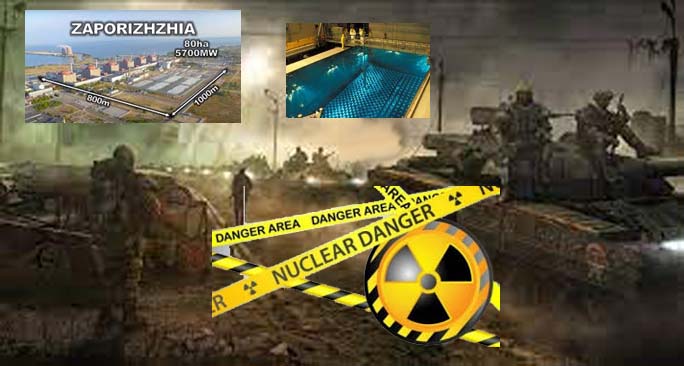
International Atomic Energy Agency (IAEA) Director General Rafael Grossi
has reported that six of the seven power transmission lines of the
Zaporizhzhia Nuclear Power Plant (ZNPP) have been compromised, leaving only
one functioning off-site line, which poses serious safety risks.
Ukrainska Pravada 9th Sept 2025, https://www.pravda.com.ua/eng/news/2025/09/9/7529932/
1 This Month
26 April – Chernobyl: Inside the Meltdown airs on National Geographic on Sunday 26th April from 4pm
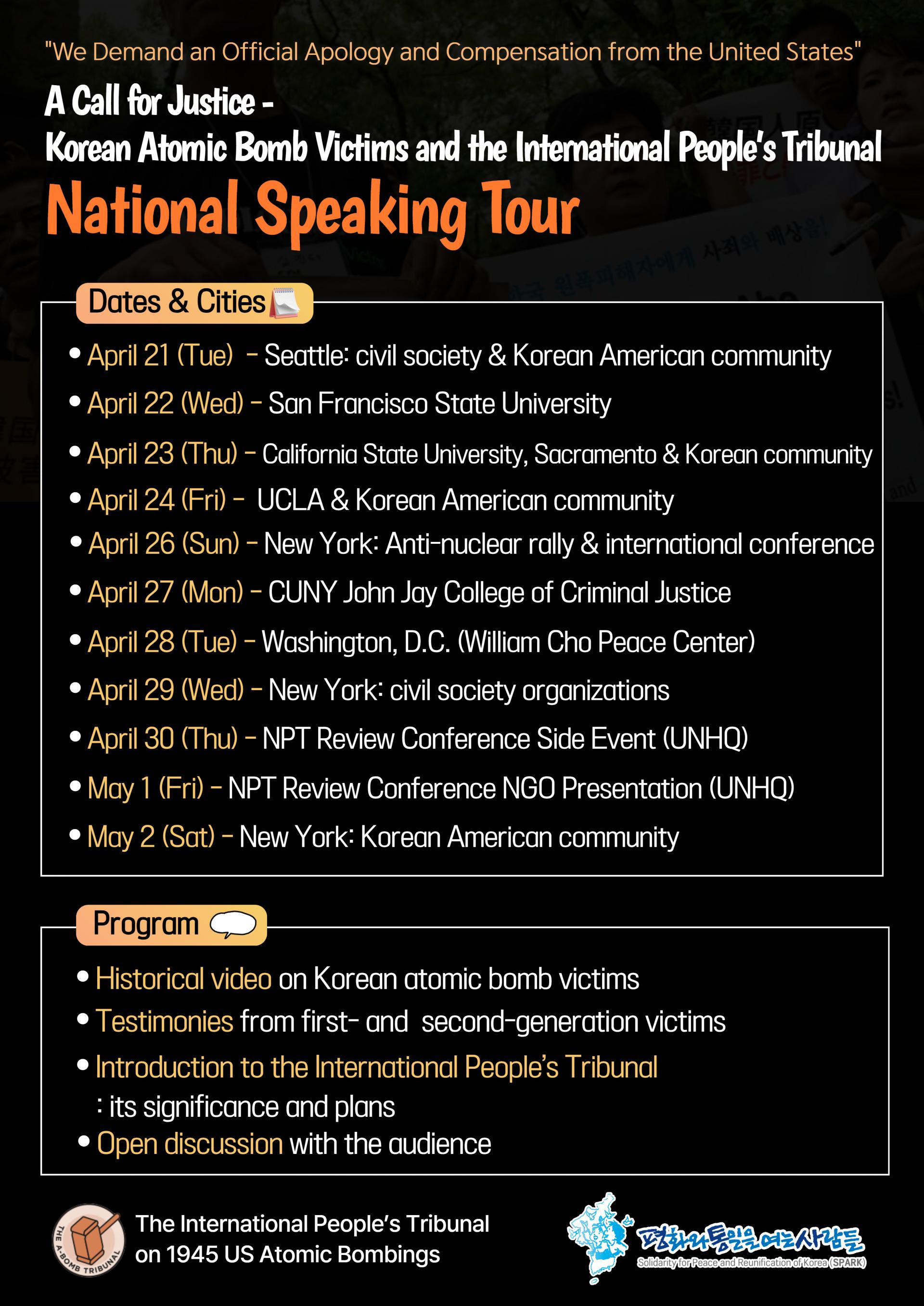

29 April – Nuclear Expert Webinar #1 – Radiation Impacts on Families with Mary Olson and Cindy Folkers
- 12:15 PM MT – 1:45 PM MT
- Location: Virtual – REGISTER TODAY

4 May -West Suburban Peace Coalition to discuss Iran war at May Educational Forum
Monday, May 4, 7:00 – 8:00 PM Central Standard Time
Title: : How Trump’s Narrative Tries to Shape the Reality of the War on Iran.
Contact Walt Zlotow, zlotow@hotmail.com 630 442 3045 for further information
14 May – online event From Bombs to Data Centres: the Face of Nuclear Colonialism

Pine Ridge Uranium is the real threat, not Tehran- Tell Burgum: Stop the Extraction.
Chernobyl: The Lost Tapes – A good documentary on Chernobyl on SBS available On Demand for the next 3 weeks– https://www.sbs.com.au/ondemand/tv-program/chernobyl-the-lost-tapes/2352741955560
To see nuclear-related stories in greater depth and intensity – go to https://nuclearinformation.wordpress.com
-
Archives
- April 2026 (356)
- March 2026 (251)
- February 2026 (268)
- January 2026 (308)
- December 2025 (358)
- November 2025 (359)
- October 2025 (376)
- September 2025 (257)
- August 2025 (319)
- July 2025 (230)
- June 2025 (348)
- May 2025 (261)
-
Categories
- 1
- 1 NUCLEAR ISSUES
- business and costs
- climate change
- culture and arts
- ENERGY
- environment
- health
- history
- indigenous issues
- Legal
- marketing of nuclear
- media
- opposition to nuclear
- PERSONAL STORIES
- politics
- politics international
- Religion and ethics
- safety
- secrets,lies and civil liberties
- spinbuster
- technology
- Uranium
- wastes
- weapons and war
- Women
- 2 WORLD
- ACTION
- AFRICA
- Atrocities
- AUSTRALIA
- Christina's notes
- Christina's themes
- culture and arts
- Events
- Fuk 2022
- Fuk 2023
- Fukushima 2017
- Fukushima 2018
- fukushima 2019
- Fukushima 2020
- Fukushima 2021
- general
- global warming
- Humour (God we need it)
- Nuclear
- RARE EARTHS
- Reference
- resources – print
- Resources -audiovicual
- Weekly Newsletter
- World
- World Nuclear
- YouTube
-
RSS
Entries RSS
Comments RSS
 nuclear-news