Survey finds that U.S. Democrats and Republicans both want to phase out land-based nuclear missiles
|
Democrats And Republicans Agree: Phase Out Land-Based Nuclear Missiles https://www.forbes.com/sites/matthewkorda/2020/08/12/democrats-and-republicans-agree-phase-out-land-based-nuclear-missiles/#74441be7109d Matt Korda I write about the nexus between nuclear weapons, climate change, and injustice. Although Democrats and Republicans increasingly seem worlds apart, when it comes to nuclear weapons issues, they’re actually much closer than one might think.
According to a new report by the Program for Public Consultation at the University of Maryland, 61 percent of Americans–including both Democratic and Republican majorities–are in favor of phasing out the United States’ aging fleet of 400 intercontinental ballistic missiles. This finding is highly noteworthy, as it runs in direct contrast to the Pentagon’s current plan of spending approximately $100 billion to buy a brand-new generation of ICBMs by 2030. The survey, entitled “Common Ground of the American People,” is a compilation of studies conducted over the past five years, collecting data from nearly 86,000 individuals throughout the polling process. It specifically aimed to place the respondents into the shoes of a policymaker: respondents were first given an issue briefing, and were then asked to evaluate arguments for and against various policy proposals, before finally offering their recommendations.
The survey’s unique methodology is highly illuminating, because it allows readers of the report to see which arguments were deemed to be most or least convincing, and by whom. For example, Republicans preferred a proposal to phase out ICBMs while maintaining the same number of deployed warheads, while Democrats preferred a proposal to phase out ICBMs and reduce the arsenal to a lower number of deployed warheads.
The main takeaway though, is that–regardless of how the ICBM phase-out takes place–69 percent of Democrats and 53 percent of Republicans agree that the land-based leg of the nuclear triad should be eliminated entirely.
It makes sense that both Democrats and Republicans would agree on phasing out ICBMs: they are outdated, destabilizing, and very expensive. Intercontinental ballistic missiles are largely relics of the Cold War, when the United States and the Soviet Union alike feared a “bolt-from-the-blue” nuclear attack. At the time, it was believed that both countries having large land-based nuclear arsenals would prevent each other from launching a massive surprise attack. However, in today’s multipolar nuclear environment, the likelihood of such an attack is extremely slim, and so ICBMs no longer hold much strategic value. Given the abundance of more flexible options in the U.S. arsenal, U.S. Strategic Command would certainly turn to nuclear bombers or submarines–not ICBMs–in the event of a low-level nuclear crisis.
Additionally, the inherent vulnerability of the ICBM fleet actually creates a psychological pressure to launch them during a nuclear crisis, before an adversary’s missiles can wipe them out. This is why siloed ICBMs–like those deployed across the United States––are commonly referred to as “use ‘em or lose ‘em” weapons. In the event of a false alarm, accident, or miscalculation, this pressure to “use ‘em” could inadvertently trigger a nuclear war. No other nuclear weapon in the US nuclear arsenal comes with this kind of destabilizing psychological pressure. ……
Perhaps knowing this, the Pentagon argues that ICBMs are necessary as a “hedge” in case technological advances suddenly render the United States’ nuclear-armed submarines vulnerable. However, the 2018 Nuclear Posture Review admits that “When on patrol, [ballistic missile submarines (SSBNs)] are, at present, virtually undetectable, and there are no known, near-term credible threats to the survivability of the SSBN force.” This condition is likely to continue as US submarines get even quieter, thus making these fears seem relatively exaggerated. On top of this, replacing the ICBMs with brand-new missiles would be extremely expensive. The latest estimate for the Ground-Based Strategic Deterrent, as the replacement program is called, totals approximately $100 billion. In reality, these costs are expected to rise, given that the contract will be sole-sourced to Northrop Grumman NOC -0.7% after Boeing BA -2.6% pulled out of the competition last year. The chairman of the House Armed Services Committee has called this development “very troubling,” and the sole-source contract has since triggered a Federal Trade Commission investigation into Boeing’s allegations that Northrop Grumman was engaging in anti-competitive behavior.
Given these underlying programmatic and strategic concerns––in addition to the new survey demonstrating that both Democrats and Republicans want to phase out ICBMs entirely––why is this $100 billion project still moving forward? In the midst of an election, a recession, and a devastating pandemic, it seems like common sense to delay the program at the very least.
However, a robust lobbying effort by weapons contractors has impeded public scrutiny of the program. Northrop Grumman––the only bidder for the ICBM replacement contract––spent more than $162 million on lobbying between 2008 and 2018, with the bulk of the contributions going to members of the “ICBM Caucus”––a coalition of Senators from states where ICBMs are deployed. In 2018, this lobbying effort helped kill an amendment to the National Defense Authorization Act which called for a feasibility study on extending the life of the current ICBM force, rather than rebuilding it from scratch. This has had the effect of suppressing public debate over the future of the ICBMs; without studies like this one, the public is being asked to blindly swallow the pro-ICBM claims of those that would materially benefit from their replacement.
The University of Maryland’s report offers a new tool to push back against the “business” of nuclear policy. The survey suggests that corporate lobbying and “special interests” are alienating the public from their elected representatives, and dividing the two political parties even further. Therefore, treating its respondents as neutral “policymakers” clearly demonstrates that without the presence of moneyed interests, Democrats and Republicans agree on much more than one might think. And in this particular instance it is clear: majorities from both parties want to phase out intercontinental ballistic missiles.
|
|
Arctic permafrost is thawing, as the region experiences unprecedented heat
I study the Arctic. The decision to withdraw from the Paris climate accord is reprehensible – but we can’t give up hope
When you stand facing an exposed edge of permafrost, you can feel it from a distance.
It emanates a cold that tugs on every one of your senses. Permanently bound by ice year after year, the frozen soil is packed with carcasses of woolly mammoths and ancient ferns. They’re unable to decompose at such low temperatures, so they stay preserved in perpetuity – until warmer air thaws their remains and releases the cold that they’ve kept cradled for centuries.
I first experienced that distinct cold in the summer of 2016. I was traveling across Arctic Europe with a team of researchers to study climate change impacts. We were a few hours past the Finnish border in Russia when we stopped to first set foot on the tundra. The ground was soft but solid beneath our feet, covered with mosses and wildflowers that stretched into the distance until abruptly interrupted by a slick, towering wall of thawing permafrost.
As we stood facing the muddy patch of uncovered earth, the sensation of escaping cold felt terrifying.
The northern hemisphere is covered by 9m sq miles of permafrost. This solid ground, and all the organic material it contains, is one of the largest greenhouse gas stores on the planet. Frozen, it poses little threat to the 4 million people that call the Arctic home, or to the 7.8 billion of us that call Earth home. But defrosted by rising temperatures, thawing permafrost poses a planetary risk.
When the organic material begins to decompose, permafrost thaw can destabilize major infrastructure, discharge mercury levels dangerous to human health and release billions of metric tons of carbon. We witnessed small-scale damage in Russia that summer through slumped landscapes and uneven roads. At the time, the larger, more dramatic changes were predicted to unfold over the course of this century.
Four years later, those changes are happening much sooner than scientists predicted. The carbon-laden cold of the Arctic’s permafrost is leaking into Earth’s atmosphere, and we are not ready for the consequences.
In June, the Russian Arctic reached 100.4F, the highest temperature in the Arctic since record-keeping began in 1885. The heat shocked scientists, but was not a unique or unusual event in a climate-changed world. The Arctic is warming at nearly three times the rate of the global average, and June’s single-day high was part of a month-long heatwave. This relentless heat has melted sea ice and made traditional subsistence dangerous for skilled Indigenous hunters. It’s fueled costly wildfires, some of which are so strong they now last from one summer to the next. And it’s sped up permafrost thaw, buckling roads and displacing entire communities.
Watching the heat of 2020 devastate the Arctic, I think back to the fear we experienced while watching that permafrost thaw in 2016, but I also remember feeling hopeful.
Just weeks before our expedition began, 174 countries had signed the Paris agreement on the first day it opened for signatures. Barack Obama and China’s President Xi Jinping released a joint statement of climate commitments for the world’s two largest greenhouse gas emitters. It seemed like every world leader had finally dedicated themselves to climate action. Throughout our trip across the Arctic, my colleagues and I discussed the difficulties of limiting global warming to 1.5 degrees, but, with the momentum of Paris, we agreed that it was still possible to contain a climate catastrophe.
It is much harder to find hope today than it was four years ago – but it’s not impossible.
The Arctic’s skies are blackened with wildfire smoke and we are not even halfway through summer. The Trump administration has reversed 100 environmental rules and stands on the precipice of pulling the US out of the Paris agreement in November 2020.
Things may seem hopeless, but we are not helpless.
Every individual has a skill, a voice, a career to wield as a tool to address climate change. Ultimately, climate action is not powered by the Paris agreement – it’s powered by people. From presidents to protesters, we each have a part to play in limiting the devastation of the climate crisis.
Climate change cannot be stopped. The Arctic’s ice will melt and large swaths of frozen ground will thaw. Climate change is already causing devastating loss of life, destroying irreplaceable cultural heritage and inundating the places we hold dear. With every degree we allow our world to warm, the more we lose. But by demanding climate action from our governments, and demanding climate action from ourselves, we can work today to avert the worst damage and adapt to the impacts we can no longer avoid.
As the Arctic burns, we cannot afford climate silence from anyone. The cost of inaction is too high.
- Dr Victoria Herrmann is the president and managing director of the Arctic Institute
Andreyeva Bay’s damaged spent nuclear fuel to be removed in 2021
|
Damaged spent nuclear fuel to depart Andreyeva Bay next year, say officials https://bellona.org/news/nuclear-issues/2020-08-damaged-spent-nuclear-fuel-to-depart-andreyeva-bay-next-year-say-officials
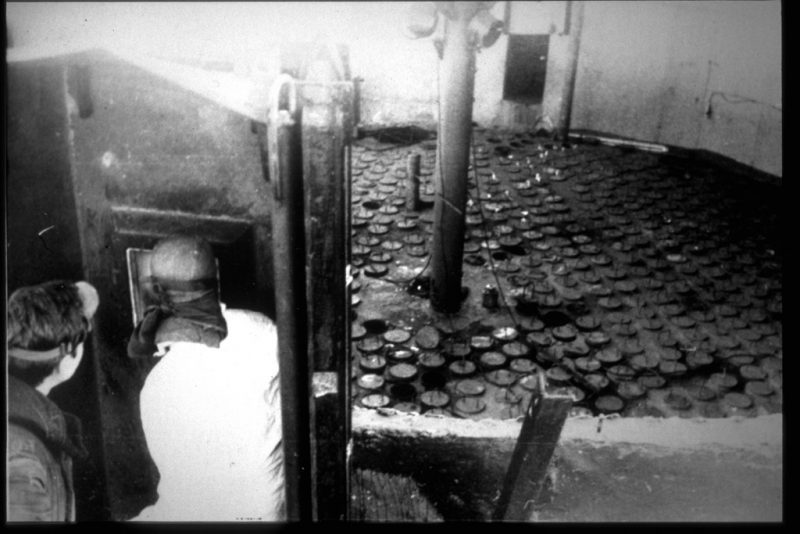
A milestone process to remove damaged spent nuclear fuel at a former Arctic submarine base will commence next year, officials have said, as part of an ongoing process to rid Russia’s Northwest of its radioactive Cold War legacy. August 11, 2020 by Anna Kireeva, translated by Charles Digges A milestone process to remove damaged spent nuclear fuel at a former Arctic submarine base will commence next year, officials have said, as part of an ongoing process to rid Russia’s Northwest of its radioactive Cold War legacy. The base, called Andreyeva Bay, in Russia’s Murmansk Region, has been the subject of an international nuclear cleanup operation that picked up steam 2017. In the years before, Bellona played an instrumental role in guiding the efforts of European governments toward addressing the dangers the site poses to the environment of Northwest Russia and neighboring Scandinavia. Those dangers are considerable. Beginning in the early 1960s and continuing for the next quarter of a century, Andreyeva Bay served as a submarine refueling point for the once-feared Soviet Northern Nuclear Fleet. During the time of its operation, the site accrued 22,000 spent nuclear fuel assemblies, many of them badly damaged. When authorities finally closed it in 1992, they failed to put a plan in place to handle the contamination that was, by then, emerging. The situation was dire. In 1982, the site’s now notorious Building No 5 bean to leak, threatening to dump a toxic stew of plutonium, uranium and other fission products into Litsa Fjord, only 50 kilometers from the Norwegian border on the Barents Sea. Technicians at the base rushed much of that nuclear fuel into temporary containment structures at the site and cemented them in – an arrangement that over time became permanent. Still other fuel at Andreyeva Bay was stored out in the open, unshielded from the harsh arctic elements. The conditions of neglect led many experts to fear that the radioactive morgue might spark an uncontrolled chain reaction and explode. Along with the spent fuel assemblies left behind by some 100 nuclear subs, the base has amassed 17,000 cubic meters of solid radioactive waste and another 1,300 cubic meters of liquid radioactive waste. The cleanup, which is funded in part by the European Bank of Reconstruction and Development, is overseen by Russia’s Northwest Center for Radioactive Waste Management, or SevRao. For the past three years, SevRAO has been sending parcels of spent nuclear fuel to Atomflot, the Murmansk-based nuclear icebreaker port, on a ship specially designed for the purpose. From there, it is loaded onto trains and sent to Mayak, the nuclear fuel reprocessing site in the southern Urals. Valery Eremenko of SevRAO says that the international agreements governing the cleanup operation require that cleanup workers send three trainloads of fuel per year to Mayak. Last year, they managed four, thanks to a financial boost from the northerly Norwegian regions of Tromsø and Finnmark. In 2020, Eremenko expected to send three trainloads of spent nuclear fuel south, two of which have already departed. The fuel itself is packaged in casks called TUK containers, each of which holds several assemblies. Each train carries 14 casks. Some of the fuel, however, is difficult to load into casks because it is damaged. Of all 22,000 assemblies, says Eremenko, some 8,000 of them are defective and have mechanical flaws and distortions. Special technology is required to handle these assemblies. “We currently have the necessary technology and equipment to work with the defective assemblies,” says Eremenko. “They’re waiting in the wings and we’ll start working with them directly next year.” Building No 5 Beginning in the 1960s, a wet storage facility – known now as the notorious Building No 5 – was built at Andreyeva Bay to house spent nuclear fuel assemblies. The interior of the building was divided up into rectangular pools lined with thin layers of steel. Spent nuclear fuel was then packed into cassettes, which could hold from 5 to 7 assemblies each, and these cassettes were then submerged in the pools on special brackets. A protective 4-meter layer of water protected personnel from radiation. In 1982, Building No 5 suffered cracks and radioactive water began spilling from the structure. To prevent widespread radiation contamination, Andreyeva Bay personnel rushed the fuel from the draining pools to temporary storage in other facilities at the base. Over the years, however these precarious facilities – known as 2A, 2B and 3A – became permanent. During the hasty move from Building No 5, fragments of spent fuel broke off the assemblies, and settled at the bottom of the storage pools. Cleanup workers finally succeeded in removing those fragments last November with the help of robotic arms. They were in turn loaded into TUK containers and are waiting to be sent to Mayak. In 2022 or 2023, SevRAO will start work on spent fuel containers that, until 2011, had been stored in the open air, exposed to the elements. These 19 containers are now in a shelter that was built alongside Building No 5, Eremenko says. The government contracts financing the cleanup envision that all spent fuel and radioactive waste at Andreyeva Bay will be removed by 2025 or 2026. “The work is proceeding on schedule,” says Eremenko. “We will safely and stably remove the spent nuclear fuel from tanks [at 2A and 2B] by 2024.” The Andreyeva Bay cleanup has been a long time in the coming. Bellona and the Norwegian government spearheaded efforts to draw funders to the problem as far back as 1995. The EBRD took up the gauntlet, assembling multi-million dollar donations from Sweden, Finland, Belgium, France, Canada, Germany, the Netherlands, Norway, Italy and the United Kingdom. “Bellona Murmansk has always attached great importance to efforts to improve nuclear and radiation safety on the Kola Peninsula,” says Andrei Zolotkov, head of Bellona’s offices in Murmansk. “When I saw with my own eyes the state of Andreeva Bay in 1990, and then more than 25 years later, one can undoubtedly talk about progress. I couldn’t even imagine that things would go at such a good pace. And, of course, one cannot discount the international financial and technical support in the implementation of projects not only in Andreeva Bay, but also in Sayda Bay, Gremikha and the Lepse project.” He added: “There is a hope that, despite various political collisions in the modern world, officials in Murmansk, SevRAO and Rosatom will continue international cooperation, because there is another goal ahead – the lifting of sunken and dumped nuclear hazards in the Arctic Ocean.” |
|
|
Biden Condemns Trump’s Nuclear Plans, (but he himself supports nuclear power)
 Uranium Week: Biden Condemns Trump’s Nuclear Plans, Fn ArenaAug 11 2020 Presidential nominee Joe Biden has reiterated his objection to President Trump’s nuclear energy plan. FN Arena By Mark Woodruff
Presidential nominee Joe Biden used Twitter last week to declare he would create a clean energy economy that will generate “millions of well-paying union jobs ..….without jeopardising the places we hold dear.” Biden was responding to President Trump’s recent plan to mine uranium around the Grand Canyon. To achieve this, the President would need to lift the current 20-year ban on new mining in the area. In a further statement he also reiterated condemnation for President Trump’s nuclear energy plan, released in April this year, which outlined the creation of a US$150m uranium reserve in the coming decade. Last month, according to the Washington Post, Joe Biden unveiled a proposal to transform the nation’s energy industry and significantly reduce the United States’ reliance on fossil fuels and the 15-year timeline for 100% clean electricity standard.
However, unlike some of his Democratic primary opponents, Biden backs nuclear power, according to energyworld.com. https://www.fnarena.com/index.php/2020/08/11/uranium-week-biden-condemns-trumps-nuclear-plans/
|
|

Flooding might have damaged Bort Korea’s nuclear reactor site
|
North Korea nuclear reactor site threatened by recent flooding, U.S. think-tank says https://www.reuters.com/article/us-northkorea-nuclear-floods/north-korea-nuclear-reactor-site-threatened-by-recent-flooding-u-s-think-tank-says-idUSKCN25908S, Josh Smith 12 Aug 20SEOUL (Reuters) – Satellite imagery suggests recent flooding in North Korea may have damaged pump houses connected to the country’s main nuclear facility, a U.S.-based think-tank said on Thursday.
Analysts at 38 North, a website that monitors North Korea, said commercial satellite imagery from August 6-11 showed how vulnerable the Yongbyon Nuclear Scientific Research Center’s nuclear reactor cooling systems are to extreme weather events. The Korean peninsula has been hammered by one of the longest rainy spells in recent history, with floods and landslides causing damage and deaths in both North and South Korea. Located on the bank of the Kuryong River about 100 km (60 miles) north of North Korea’s capital, Pyongyang, Yongbyon is home to nuclear reactors, fuel re-processing plants and uranium enrichment facilities that are thought to be used in the country’s nuclear weapons programme. The five-megawatt reactor – believed to be used to produce weapons-grade plutonium – does not appear to have been operating for some time, and an Experimental Light Water Reactor (ELWR) has not yet come online, but such flooding in the future would likely force a shutdown, the 38 North report said. “Damage to the pumps and piping within the pump houses presents the biggest vulnerability to the reactors,” the report said. “If the reactors were operating, for instance, the inability to cool them would require them to be shut down.” While there was further flooding downstream, it did not appear to reach the Yongbyon facility’s Uranium Enrichment Plant and by August 11 the waters appear to have somewhat receded, 38 North said. South Korea’s Ministry of Defence declined to comment on the report, but said it is always monitoring developments related to North Korea’s nuclear and missile programmes and maintaining close cooperation with the U.S. government. At a summit with U.S. President Donald Trump in Vietnam in 2019, North Korean leader Kim Jong Un offered to dismantle here Yongbyon in exchange for relief from a range of international sanctions imposed over North Korea’s nuclear weapons and ballistic missile programmes. At the time Trump said he rejected that deal because Yongbyon is only one part of the North’s nuclear programme, and was not enough of a concession to warrant loosening so many sanctions. Reporting by Josh Smith. Additional reporting by Hyonhee Shin.; Editing by Lincoln Feast. |
|
Hazards in U.S, government’s plans for more locations for low level nuclear wastes
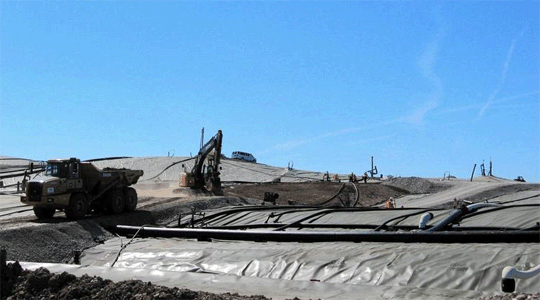
Feds Propose More Sites For Nuke Waste Storage (Not Disposal) Forbes , Ed Hirs 12 Aug 20,
The Nuclear Regulatory Commission (NRC) is proposing that more locations around the country be used to dispose of very low level radioactive waste. This proposal has raised the ire of environmentalists and nuclear waste storage proponents alike…….
Bad actors can make a considerable profit at the expense of public health. As the United Steelworkers union noted in their public comment urging the NRC against the ruling: “[the ruling]…requires workers with little to no training to handle contaminated material leading to a greater probability of mishandling or improper disposal; and the proposed rule lack[s] requirements to monitor surrounding soil and ground water from any exempt waste location to ensure there is no increase of radiological contamination outside of the potential dumping sites.”
Safe disposal does not equal safety when materials remain active for generations. To improve safety landfills need to keep records for generations, and to deal with low-level contamination appropriately. Over time landfills become golf courses, sources of methane for electricity generation, and mines for reclaiming metal. These activities result in exposure to radiation that future generations must be prepared for. This means meticulous record keeping, which is unlikely to be present across multiple changes of ownership and decades of time.
What the NRC proposes is an expansion of opportunities for things to go wrong. In the past this approach has given us names that remain infamous today: think Love Canal. Brio Refinery. Savannah River and DuPont. It gave us the remains of leaded gasoline.
Water supplies are particularly vulnerable. Historically, the dictum of chemists has been “dilution is the solution.” That works for chemicals. It does not work for radiation, which is being generated continuously.
The current system is better than what is being proposed. Expanding the opportunities for things to go wrong is a step backwards. If the proposal is adopted, today’s laxity and profits will become tomorrow’s health problems and remediation expenses. If we care about coming generations we should leave well enough alone. https://www.forbes.com/sites/edhirs/2020/08/11/hazardous-nuclear-waste-storage-its-not-disposal/#2086a6624ad3
Fuel finally removed from Russia’s most radioactive ship
|
Dismantlement of Russia’s most radioactive ship reaches milestone https://bellona.org/news/nuclear-issues/2020-08-dismantlement-of-russias-most-radioactive-ship-reaches-milestone
The Lepse nuclear service ship, long one of the most dangerous Soviet era radiation hazards in Northwest Russia, has finally been emptied of the aged spent nuclear fuel in its holds, marking a major milestone in an international cleanup effort that Bellona helped bring to the fore. August 12, 2020 by Charles Digges The Lepse nuclear service ship, long one of the most dangerous Soviet era radiation hazards in Northwest Russia, has finally been emptied of the aged spent nuclear fuel in its holds, marking a major milestone in an international cleanup effort that Bellona helped bring to the fore. The new developments came in late July, when the European Bank of Reconstruction and Development, which is funding the project, announced that the last of hundreds of spent nuclear fuel assemblies had been removed from the ship’s hull and sent away for reprocessing. The fuel removal effort has been one of the most technically demanding nuclear legacy cleanup operations in modern history, representing decades of preparation and the coordination of numerous international partners in often troubled political circumstances. “This has been a technically complex and challenging task given the uncertainties associated with both the conditions of the old storage facility and spent nuclear fuel,” says Balthasar Lindauer, the EBRD’s director for nuclear safety. “Its successful completion advances nuclear and radiological safety in the region, addressing a serious danger to the people and the environment of the Barents Sea region.” The news also marks another giant step toward cleaning up the Cold War’s naval and civilian nuclear debris in Northwest Russia. Early last month, officials at Andreyeva Bay, near the Norwegian border, announced they were just a year from removing some of that site’s most complex spent nuclear fuel assemblies. The Lepse, which was used to unload spent nuclear fuel from Soviet nuclear icebreakers, spent more than two decades languishing at the Atomflot icebreaker port in Murmansk, just four kilometers from the city’s population of 300,000. Its irradiated holds contained 639 spent nuclear fuel assemblies, many of which were damaged when the vessel refueled the Lenin Icebreaker in 1965 and 1967, and defied removal by conventional means. The boat was finally towed from Atomflot to the Nerpa naval shipyard in September 2012, after more than a decade of strenuous and often tedious negotiations among Bellona, the Russian government and financial institutions – most notably the EBRD – geared toward ensuring its disposal. Now, all the spent fuel assemblies from the Lepse have been transported from Nerpa back to Atomflot, from where they will be sent by rail for reprocessing at the Mayak Production Association, Russia’s nuclear fuel processing center in the Ural Mountains. The vessel and its dangers caught Bellona’s eye in 1994, and the organization mobilized to lobby the European Union to allocated funding for its removal from Murmansk harbor and its safe dismantlement. In 2001, Bellona built a dormitory for Lepse’s cleanup technicians, who had before that lived amid the radiation aboard the ship itself. Bellona’s connection to the Lepse runs even deeper. Andrei Zolotkov, the head of its Murmansk office, once worked in the vessel’s radiation safety service back in 1974. “It was there that I worked with the technological water in the cooling tanks, where radiation levels approached some 1 Curie per kilogram,” says Zolotkov. “These are pretty serious radioactivity levels that spoke to the unsatisfactory condition of [the Lepse’s] spent fuel assemblies.” He adds that it took more than a quarter of a century to fully address those dangerous conditions – and countless discussions and seminars. But Zolotkov now says that “the end of the project has become visible.” The Lepse’s dismantlement has been supported by the Northern Dimension Environmental Partnership of the EBRD, whose Nuclear Window program has drawn together funds to address radioactive relics of the Cold War. Aside from the Lepse and Andreyeva Bay, the EBRD manages the Chernobyl Shelter Fund. Funding for Nuclear the Window program have been contributed by Norway, Belgium, Canada, the United Kingdom, Finland, France, Germany and the Netherlands, as well as by the European Union. |
|
What about Vermont Yankee’s nuclear waste? Or dealing with it?
What about Vermont Yankee’s nuclear waste? Or dealing with it?
High-Level Nuclear Waste (HLNW) is a byproduct of nuclear power plants and is extremely dangerous for thousands of years. The Vermont Yankee Nuclear Power Plant, in Vernon, has been shut down since 2014 and the HLNW it produced over the years of operation has been transferred into stainless steel and concrete dry casks stored onsite. Currently, our federal government has not come up with a permanent site to store HLNW safely over time.
NorthStar, the corporation which now owns Vermont Yankee, wants to transport that waste to a Centralized “Interim” Storage (CIS) site that it owns in Texas. To transport this waste is a dangerous proposition since an accident would likely result in great damage to the environment and the life forms in the surrounding area. We should only move the material once to a permanent repository. Also, if Vermont Yankee’s HLNW is allowed to be transported across the country on our highways, railways and waterways to a temporary open-air storage site, such a precedent would likely result in thousands of shipments across the country as other nuclear plants are shut down during the coming four decades.
Communities in the Southwest are speaking out in opposition to accepting our toxic waste. As members of the Vermont Yankee Decommissioning Alliance (VYDA), we support their concerns and are against the transportation and interim storage of Vermont Yankee’s waste at a CIS. We feel it is safer to keep our waste within our state in monitored, hardened, onsite storage in stainless steel and concrete dry casks while a scientifically-based permanent storage site is located.
For the above reasons, join us in contacting U.S. Rep. Peter Welch and urge him to vote against any bill that would authorize Centralized Interim Storage of High-Level Nuclear waste? https://www.timesargus.com/opinion/commentary/famette-rice-and-the-nuclear-waste/article_436e1a1b-deb3-5b6a-87a9-228cfb16afbc.html
Audrey Famette lives in Montpelier. Nancy Rice lives in Randolph Center.
Southern African Faith Communities oppose extending the life of Koeberg nuclear power plant
 SA faith leaders against extending the life of Koeberg nuclear power plant https://www.iol.co.za/capeargus/news/sa-faith-leaders-against-extending-the-life-of-koeberg-nuclear-power-plant-e02fb49d-8b22-413b-95ef-165d7f31a5e4By Mwangi Githathu , 12 Aug, 20, Cape Town – Campaigners are urging a rethink on extending the life of the Western Cape’s Koeberg nuclear power plant, while the period for public comment on the draft regulations on the long-term operation of nuclear installations closes next Tuesday. Department of Mineral Resources and Energy Minister Gwede Mantashe published the request which is intended to lead to a nuclear programme delivering new installed capacity of 2.5 gigwatts in June. Mantashe said: “The plan also provides for the extension of the life of Koeberg, which is due to be decommissioned in 2024 after 40 years in operation.” Leading the charge against the extension of the plant’s life span is the Southern African Faith Communities’ Environment Institute, Safcei. In a statement, Safcei said: “As South Africa faces another push for nuclear energy when the country is in crisis from the Covid-19 pandemic, faith communities call for no more nuclear energy. “Nuclear power is not climate resilient, cheap, competitive, quick to build and deliver, safe or able to solve our immediate energy needs.” Safcei said lessons need to be learnt from the country’s past experience with nuclear energy, including what it claims were 14 years of research and billions of rands “wasted on small nuclear energy systems known as the Pebble Bed Modular Reactor (PBMR).” “The level of trust in Eskom is at an all-time low. South Africans are tired of load-shedding and annoyed that tax revenue continues to be diverted from essential services to bailout dysfunctional state owned enterprises. What reassurance do we have that a new state-owned nuclear project will be any different?” asked Safcei. Last year Eskom’s attempt to see whether there was a market and potential for the previously abandoned Pebble Bed Modular Reactor (PBMR) PBMR project was dismissed as “unrealistic” by the South African Independent Power Producers’ Association (SAIPPA). SAIPPA general secretary Dave Long said: “I can’t believe it has any real chance to succeed now. It has been overtaken by technology and nobody is that interested in nuclear any more.” |
|
Fort Worth doesn’t need dangerous nuclear waste rolling through on Tarrant rail line
|
Fort Worth doesn’t need dangerous nuclear waste rolling through on Tarrant rail lines https://www.star-telegram.com/opinion/opn-columns-blogs/other-voices/article244891627.html BY PEGGY HENDON AND LINDA HANRATTY
AUGUST 12, 2020The Nuclear Regulatory Commission is considering licensing two different facilities to store the nation’s high-level nuclear waste. One would be at the existing low-level storage facility in Andrews County, Texas. The second, known as the Holtec site, would be between Carlsbad and Hobbs, New Mexico. Why should Tarrant County be concerned? Most of the uranium waste from nuclear power plants is located east of the Mississippi River. Union Pacific Railroad appears to be the most likely carrier of the high-level nuclear waste casks, although any commercial rail lines could be used. Union Pacific tracks run through the middle of the county, just south of downtown Fort Worth and just north of Arlington’s City Hall and library, traversing neighborhoods of all kinds. Fort Worth’s medical district and the TCU and UT-Arlington campuses are within 1.5 miles of the tracks. A second Union Pacific rail line runs north toward Denton from Tower 55, a major railroad intersection just southeast of downtown Fort Worth. A large Union Pacific railyard lies southwest of downtown Tower 55 holds vital national and international significance, connecting freight and passenger travel between the East and West coasts, Southeast, Midwest, Gulf Coast, Mexico, and Canada. More than 100 trains pass through Tower 55 each day. Interim Storage Partners, which operates the Andrews County site, has asked to have 45 days to move low-level waste from Vermont. The rail cars carrying the high-level radioactive waste would sit at the Fort Worth rail yard, across from Colonial Country Club. These nuclear waste cars are readily identifiable, given their huge dumbbell-like shape, size and weight, which makes them a potential target for terrorist attacks. High-level radioactive waste is one of the most dangerous substances on earth, consisting of irradiated fuel rods that have been inside nuclear reactors. Exposure to unshielded nuclear waste is lethal. One railcar would carry more plutonium than was in the bomb dropped on Nagasaki. If the Nuclear Regulatory Commission approves either or both licenses, thousands of rail shipments of deadly, high-level radioactive waste could move through Tarrant County for more than 20 years, risking accidents leaks, and terrorist actions. Transport of massive amounts of high-level waste in thousands of shipments across the country is unprecedented. A 2019 report of the U.S. Nuclear Waste Technical Review Board found that there is a substantial lack of data regarding potential damage of spent nuclear fuel during transport. Many rails are only designed to carry 143 tons per car. The loaded casks for this waste weigh 210 tons or more. It is unclear whether tracks in Tarrant County would handle such weight. And accidents can happen. A cask carrying low-level waste that was headed to Andrews caught fire in the Chicago area in June. A better alternative would be to leave high-level waste at existing nuclear plants until a permanent repository is found to bury cannisters underground. The repository should be owned by the federal government, not a private entity. One radioactive railway accident in Tarrant County could contaminate our region and harm thousands of lives, posing substantial health risks and seriously impacting future economic growth. Resolutions opposing consolidated interim storage of this waste and its transport through heavily populated communities have been passed by Bexar, Dallas, Nueces, El Paso and Midland Counties and the cities of San Antonio, Midland and Denton, as well as the Midland Chamber of Commerce. Tarrant County, along with the cities of Fort Worth and Arlington, should also oppose the transportation of high-level nuclear waste through our communities and advise our federal representatives and the Nuclear Regulatory Commission of our serious concerns. Our lives and economic well-being may depend upon preventive action now. Peggy Hendon is president of the League of Women Voters of Tarrant County. Linda Hanratty is the group’s environmental chairwoman. |
|
Japan’s nuclear fuel imports almost zero in 2019 as industry stagnates
|
Most nuclear plants in Japan remain idle as stricter safety measures were implemented after a massive earthquake and ensuing tsunami crippled the Fukushima No. 1 nuclear complex. The operations of fuel manufacturing plants have also been suspended……. Of the 54 nuclear reactors that were in operation before the Fukushima crisis, currently, only nine have come back online after clearing harsher safety measures. In the wake of the accident, 21 reactors have been flagged for decommissioning in consideration of the hefty cost of refurbishment. All four fuel manufacturing factories are offline as they are undergoing regulatory review under the new safety standards. Kansai Electric Power Co., Shikoku Electric Power Co. and Kyushu Electric Power Co., which operate the nine plants currently back online, said they have enough fuel to run their reactors for the next several years. …….https://www.japantimes.co.jp/news/2020/08/12/business/japan-nuclear-fuel-imports-zero/ |
|

Extreme weather causes emergency shutdown of nuclear plant in Iowa
|
‘Derecho’ storm causes Cargill plant closure, emergency shutdown of nuclear plant in Iowa
The storm caused crop damage and outages throughout the Midwest Star Tribune,
By Mike Hughlett Star Tribune, AUGUST 12, 2020 — A violent storm that tore through Iowa on Monday caused an emergency shutdown at a nuclear power plant near Cedar Rapids.
The storm packing hurricane-force winds tore across the Midwest, compounding troubles for a U.S. farm economy already battered by extreme weather, the U.S.-China trade war and most recently, the disruption caused to labor and consumption by the COVID-19 pandemic. Grain silos were ripped apart, and Minnetonka-based Cargill and Archer Daniels Midland closed crop-processing plants in Cedar Rapids. The Duane Arnold nuclear plant lost its connection to the electricity grid. At about 1 p.m., the plant in Palo, 11 miles northwest of Cedar Rapids, declared an “unusual event” — an indication of a safety threat, according to a report posted Tuesday by the U.S. Nuclear Regulatory Commission (NRC). An unusual event is the lowest of four levels of emergency conditions under NRC regulations. While the Duane Arnold plant is not now producing electricity, it does have power to run its emergency systems. The plant is stable and is using a backup power source at this time,” Duane Arnold’s majority owner and operator, Florida-based NextEra Energy Resources, said in a statement. The storms damaged the plant’s cooling towers, which are used in electricity production to cool steam after it exits the turbine, NextEra said. The cooling towers are not part of the safety systems used to cool the reactor and other critical components……. David Lochbaum, former director of the Union of Concerned Scientists’ nuclear safety project, said that loss of off-site power at nuclear power plants — usually due to storms — happens about four to five times a year in the U.S. Iowa’s 45-year-old Duane Arnold plant, which is a little smaller than Xcel Energy’s nuclear plant in Monticello, is due to shut down later this year………. |
|
Germany urges S.Arabia to comply with nuclear arms control treaty.
Germany urges S.Arabia to comply with nuclear arms control treaty. Western allies concerned over Riyadh’s nuclear goals after reports reveal secret facility for extracting uranium yellowcake https://www.aa.com.tr/en/europe/germany-urges-sarabia-to-comply-with-nuclear-arms-control-treaty-/1939394 Oliver Towfigh Nia |12.08.2020 BERLIN
Germany on Wednesday called on Saudi Arabia “to fully comply” with the Treaty on the Non-Proliferation of Nuclear Weapons (NPT) following a news report about the discovery of a secret nuclear facility in northwestern Saudi Arabia.
“The German government’s critical stance on nuclear power is well known. It is of central importance that Saudi Arabia fully complies with its NPT obligations and that its nuclear program is subject to the international verification standards (‘safeguards’) of the International Atomic Energy Agency (IAEA),” the Foreign Ministry told media representatives via an e-mail.
The NPT is a landmark international treaty whose objective is to prevent the spread of nuclear weapons, to promote cooperation in the peaceful uses of nuclear energy and to further the goal of achieving nuclear disarmament and general and complete disarmament.
With China’s assistance, Saudi Arabia has constructed a facility for the extraction of uranium yellowcake — a potential precursor for a nuclear reactor — in a remote desert location near the small town of Al Ula, the Wall Street Journal newspaper reported last week, citing Western officials with knowledge of the site.
The facility, which has been kept secret, has sparked concern among Riyadh’s Western allies that the kingdom may try to expand its atomic program to keep open its option to build atomic weapons, according to the report.
Revelations of the yellowcake processing facility is expected to further increase concern among Riyadh’s neighbors and its Western allies about Saudi nuclear ambitions, especially after Saudi Crown Prince Mohammed bin Salman vowed in 2018 that “if Iran developed a nuclear bomb, we will follow suit as soon as possible.”
Yellowcake is processed from naturally occurring uranium ore and can be further enriched to create fuel for nuclear power plants and, at very high levels of enrichment, nuclear weapons.
While the Saudi Energy Ministry has “categorically” denied the Wall Street Journal report that the Gulf country has built a uranium ore milling facility, it admitted to contracting with Chinese companies for uranium exploration in Saudi Arabia.
Riyadh triggered major concerns about a likely nuclear arms race in the volatile Gulf region by moving forward with building a research reactor and inviting companies to bid on building two civilian nuclear power reactors without agreeing to oversight and inspection by the IAEA, Vienna-based UN nuclear watchdog, according to the Al Jazeera media network.
A US congressional committee published a report in May 2019, warning the administration of President Donald Trump was allowing US companies to offer Saudi Arabia nuclear technologies without first obtaining non-proliferation guarantees to ensure the know-how would not be used to eventually produce a weapon.
In February 2019, government whistle-blowers had alarmed the US House of Representatives that the Trump administration was evading the Congress to allow future sales of nuclear technology to Saudi Arabia, without non-proliferation safeguards, thus potentially paving the path for an atomic arms race in the Middle East.
Business as usual equals many extra deaths from global warming — Systemic Disorder

Is it already too late to stop global warming? That question is not asked with thoughts of throwing up hands in despair and giving up. Rather, that question must be asked in the context of mitigating future damage to whatever degree might yet be possible. The context here is that the carbon dioxide, methane and […]
via Business as usual equals many extra deaths from global warming — Systemic Disorder
Hiroshima and the normalisation of atrocities

|
Death from the sky: Hiroshima and normalised atrocities https://www.onlineopinion.com.au/view.asp?article=21049
When US President Harry S Truman made the decision to drop the atomic bomb on Hiroshima on August 6, 1945, followed by another on Nagasaki a few days later, he was not acting as an agent untethered from history. In the wheels of his wearied mind lay the battered Marines who, despite being victorious, had received sanguinary lashings at Iwo Jima and Okinawa. A fear grew, and US military sources speculated about, the slaughter that might follow an invasion of the Japanese homeland. They also pondered the future role of the Soviets, and wondered whether there were other means by which Japan’s involvement in the war might be terminated before Moscow got its hands on the battered remains of North East Asia. Much is made about the moral dilemma Truman faced. He knew there was the nastiest of weapons at hand, born from the race to acquire it from Nazi Germany. But on a certain level, it was merely another weapon, one to use, a choice sample in the cabinet of lethal means and measures. By that stage of the war, killing civilians from the air, not to mention land, was banal and common place; enemy populations were to be experimented upon, burned, torched, gassed, shelled and eradicated in the program of total war. By the time Truman made his decision, Japan had become a graveyard of strategic aerial bombing. General Curtis E. LeMay of the US Air Force prided himself on incinerating the enemy, and was encouraged by various study commissions advocating the use of incendiary bombs against Japan’s flammable urban architecture. He was realising the dreams of such figures as the pioneering US aviator and air power enthusiast Billy Mitchell, who fantasised in the 1920s about Japanese cities being “the greatest aerial targets the world has ever seen”. In 1941, US Army chief of staff George Marshall spread the word to journalists that the US would “set the paper cities of Japan on fire”. Civilians would not be spared. Towards the end of the war, daylight precision bombing had fallen out of favour; LeMay preferred the use of Boeing B-29 Superfortresses, heavily laden with firebombs, to do the work. His pride of joy in conflagration was Tokyo. During the six-hour raid over the night of March 9 and 10, 1945, the US Strategic Bombing Survey concluded that 87,793 had perished, with 40,918 injuries. There was little novel in LeMay’s blunt approach. Britain’s Air Force Marshall Arthur “Bomber” Harris fertilised the ground, and the air, for such an idea. He made it his mission to not only kill Germans but kill German civilians with a cool determination. He did so with a workmanlike conviction so disturbing it chilled the blood of many Britons. As he put it, “The cities of Germany, including their working populations, are literally the heart of Germany’s war potential.” It was his intention to, he explained to personnel, “in addition to the horrors of fire … to bring masonry crashing down on top of the Boche, to kill the Boche and to terrify the Boche”. The Teutonic enemy came, not so much in all shades, but one. Saturation bombing, regarded after the Second World War as generally ineffective, a ghastly failure to bring the population to its knees, received its blessing in Bomber Command. This entire process neutered the moral compass of its executioners. Killing civilians had ceased to be a problem of war, one of those afterthoughts which served to sanction mass murder. Britain’s chief of the air staff for a good deal of the war, Charles Portal, called it a “fallacy” that bombing Germany’s cities “was really intended to kill and frighten Germans and that we camouflaged this intention by the pretence that we would destroy industry. Any such idea is completely false. The loss of life, which amounted to some 600,000 killed, was purely incidental.” When 600,000 becomes an incidental matter, we are well on the way to celebrating the charnel houses of indiscriminate war. When the issue of saturation bombing creased the legal minds behind the Nuremberg and Tokyo war crimes trials, an admission had to be made: all sides of the Second World War had made the air a realm of convenience in the killing of humanity, uniformed or not. To win was all that mattered. While the Nuremberg Charter left it open to criminalise German aerial tactics, the International Military Tribunal hedged. As chief of the Luftwaffe, Herman Göring was singled out for air attacks on Poland and other states but the prosecutors refrained from pushing the point, likely reflecting the cold fact, as Matthew Lippmann puts it, “that both Germany and the Allies engaged in similar tactics.” It is true that Germany and Japan gave a good pioneering go at indiscriminate aerial slaughter. But the Allied powers, marshalling never before seen fleets of murderous bombers, perfected the bloody harvest. The war had to be won, and, if needed, over the corpses of the hapless mother, defenceless child and frail grandparent. As the historian Charles S. Maier notes with characteristic sharpness, a tacit consensus prevailed after the Second World War that the ledger of brutality was all stacked on one side. German bombings during the Spanish Civil War, notably of Guernica; Warsaw, Rotterdam, London and Coventry during the world war that followed, were seen as “acts of wanton terror”. The Allied attacks on Italian, German and Japanese urban centres, in proportion and scale far more destructive, were seen as “legitimate military actions”. Distinctions about civilian and non-civilian vanished in the atomic cloud. Hiroshima’s tale is the apotheosis of eliminating distinctions in war. It propagated such dangerous beliefs that nuclear wars might be won, sparing a handful of specialists and breeders in bunkers planning for the new post-apocalyptic dawn. It normalised, even as it constituted a warning, the act of annihilation itself. Prior to the twin incinerations of Hiroshima and Nagasaki, the redoubtable nurse and writer Vera Brittain issued a warning that remains salient to those who wish to resort to waging death from the sky: “If the nations cannot agree, when peace returns, to refrain from the use of the bombing aeroplane as they have refrained from using poison gas, then mankind itself deserves to perish from the epidemic of moral insanity which today afflicts our civilisation.” |
|
|
1 This Month


Tell Congress: Prevent Nuclear Catastrophe in Iran

Tell Congress: Prevent Nuclear Catastrophe in Iran

Read the Public Inquiry Report, the Commissioners’ report, Surrendering Australia: The AUKUS Deception is available to download for free at aukuspublicinquiry.com. Or just watch the replay of the National Press Club Luncheon.
To see nuclear-related stories in greater depth and intensity – go to https://nuclearinformation.wordpress.com
Say No to NASA’s Reckless Nuclear Reactor on the Moon
-
Archives
- November 2026 (284)
- October 2026 (302)
- September 2026 (339)
- August 2026 (330)
- July 2026 (355)
- June 2026 (287)
- May 2026 (306)
- April 2026 (356)
- March 2026 (251)
- February 2026 (267)
- January 2026 (308)
- December 2025 (358)
-
Categories
- 1
- 1 NUCLEAR ISSUES
- business and costs
- climate change
- culture and arts
- ENERGY
- environment
- health
- history
- indigenous issues
- Legal
- marketing of nuclear
- media
- opposition to nuclear
- PERSONAL STORIES
- politics
- politics international
- Religion and ethics
- safety
- secrets,lies and civil liberties
- spinbuster
- technology
- Uranium
- wastes
- weapons and war
- Women
- 2 WORLD
- ACTION
- AFRICA
- Atrocities
- AUSTRALIA
- Christina's notes
- Christina's themes
- culture and arts
- Events
- Fuk 2022
- Fuk 2023
- Fukushima 2017
- Fukushima 2018
- fukushima 2019
- Fukushima 2020
- Fukushima 2021
- general
- global warming
- Humour (God we need it)
- Nuclear
- RARE EARTHS
- Reference
- resources – print
- Resources -audiovicual
- Weekly Newsletter
- World
- World Nuclear
- YouTube
-
RSS
Entries RSS
Comments RSS

