Small nuclear reactor NuScam’s parent company Fluor – shares tumble afterdisclosure of accounting probe
 Fluor Shares Tumble After Disclosure of SEC Accounting Probe, Fluor shares are
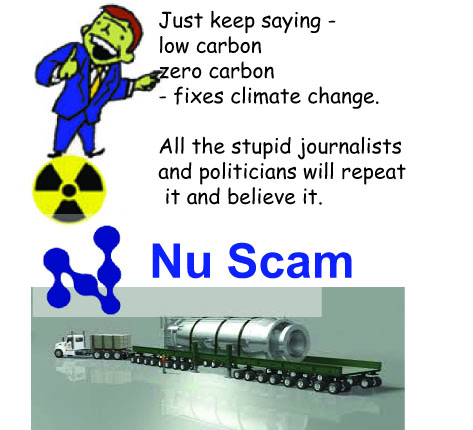 tumbling after the engineering company disclosed an SEC probe into its past accounting and financial reporting. ROB LENIHAN, FEB 18, 2020
Fluor (FLR) – Get Report shares were tumbling after the engineering and construction company said the Securities and Exchange Commission is looking into the company’s past accounting and financial reporting.
The Irving, Texas, company also said in a statement that the SEC has asked for documents and information related to projects for which the Company recorded charges in the second quarter of 2019……. https://www.thestreet.com/investing/stocks/fluor-shares-tumble-after-engineering-company-discloses-sec-probe
Arctic tragedy: the loss of Russian sailors in nuclear submarine accidents
Russia’s ‘slow-motion Chernobyl’ at sea, FUTURE PLANET | OCEANS By Alec Luhn, 2nd September 2020 By tradition, Russians
 always bring an odd number of flowers to a living person and an even number to a grave or memorial. But every other day, 83-year-old Raisa Lappa places three roses or gladiolas by the plaque to her son Sergei in their hometown Rubtsovsk, as if he hadn’t gone down with his submarine during an ill-fated towing operation in the Arctic Ocean in 2003.“I have episodes where I’m not normal, I go crazy, and it seems that he’s alive, so I bring an odd number,” she says. “They should raise the boat, so we mothers could put our sons’ remains in the ground, and I could maybe have a little more peace.”
After 17 years of unfulfilled promises, she may finally get her wish, though not out of any concern for the bones of Captain Sergei Lappa and six of his crew. With a draft decree published in March, President Vladimir Putin set in motion an initiative to lift two Soviet nuclear submarines and four reactor compartments from the silty bottom, reducing the amount of radioactive material in the Arctic Ocean by 90%. First on the list is Lappa’s K-159. ……………..
‘Cursed August’
Sergei Lappa was born in 1962 in Rubtsovsk, a small city in the Altai Mountains near the border with Kazakhstan. Though it was thousands of miles to the nearest ocean, he cultivated an interest in seafaring at a local model shipbuilding club, and after school he was accepted into the higher naval engineering academy in Sevastopol, Crimea. Tall, athletic and a good student, he was assigned to the navy’s most prestigious service: the Northern Submarine Fleet.
With the reactors off, Lappa and his skeleton crew of nine engineers operated the boat by flashlight. As the submarine was towed near Kildin Island at half past midnight, the cables to the bow pontoons broke in heavy seas, and a half-hour later water was discovered trickling into the eighth compartment. But as headquarters struggled with the decision to launch an expensive rescue helicopter, the crew kept trying to keep the submarine afloat. At 02:45am Mikhail Gurov sent one last radio transmission: “We’re flooding, do something!” By the time rescue boats from the tug arrived, the K-159 was on the bottom near Kildin Island. Of the three sailors who made it out, the only survivor was senior lieutenant Maxim Tsibulsky, whose leather jacket had filled with air and kept him afloat.
Yet another nuclear submarine had sunk during the “cursed” month of August, Russian newspapers wrote, but the incident caused little furore compared to the Kursk. The navy promised relatives it would raise the K-159 the next year, then repeatedly delayed the project.
Even after 17 years of scavenging and corrosion, at least the bones of the crew likely remain in the submarine, according to Lynne Bell, a forensic anthropologist at Simon Fraser University. But the families have long since lost hope of recovering them.
“For all the relatives it would bring some relief if their fathers and husbands were buried, not just lying on the bottom in a steel hulk,” Gurov’s son Dmitry says. “It’s just that no one believes this will happen.”
The situation has now changed, however, as Russia’s interest revives in the Arctic and its crumbling Soviet ports and military towns. Since 2013, seven Arctic military bases and two tanker terminals have been built as part of the Northern Sea Route, a shorter route to China that Putin has promised will see 80 million tonnes of traffic by 2025. The K-159 is lying underneath the eastern end of the route………….https://www.bbc.com/future/article/20200901-the-radioactive-risk-of-sunken-nuclear-soviet-submarines
Viruses could be harder to kill after adapting to warm environments
 Viruses could be harder to kill after adapting to warm environments, https://www.eurekalert.org/pub_releases/2020-09/acs-vcb082820.php AMERICAN CHEMICAL SOCIETY 2 Sept 20, Enteroviruses and other pathogenic viruses that make their way into surface waters can be inactivated by heat, sunshine and other microbes, thereby reducing their ability to spread disease. But researchers report in ACS’ Environmental Science & Technology that global warming could cause viruses to evolve, rendering them less susceptible to these and other disinfectants, such as chlorine.
Enteroviruses can cause infections as benign as a cold or as dangerous as polio. Found in feces, they are released into the environment from sewage and other sources. Their subsequent survival depends on their ability to withstand the environmental conditions they encounter. Because globalization and climate change are expected to alter those conditions, Anna Carratalà, Tamar Kohn and colleagues wanted to find out how viruses might adapt to such shifts and how this would affect their disinfection resistance.
The team created four different populations of a human enterovirus by incubating samples in lake water in flasks at 50 F or 86 F, with or without simulated sunlight. The researchers then exposed the viruses to heat, simulated sunlight or microbial “grazing” and found that warm-water-adapted viruses were more resistant to heat inactivation than cold-water-adapted ones. Little or no difference was observed among the four strains in terms of their inactivation when exposed to either more simulated sunlight or other microbes. When transplanted to cool water, warm-water-adapted viruses also remained active longer than the cool-water strains. In addition, they withstood chlorine exposure better. In sum, adaptation to warm conditions decreased viral susceptibility to inactivation, so viruses in the tropics or in regions affected by global warming could become tougher to eliminate by chlorination or heating, the researchers say. They also say that this greater hardiness could increase the length of time heat-adapted viruses would be infectious enough to sicken someone who comes in contact with contaminated water.
3 unplanned shutdowns- Turkey Point nuclear station vulnerable to climate extremes
Critics have pushed Turkey Point and the NRC to take sea rise impacts more seriously, Lyman said.
“We think nuclear plants need to be protected not only against the flood hazards that are reasonably expected today but far into the future, especially plants that have a license renewal like Turkey Point,” he said. “Unfortunately, the NRC today is not interested in increasing regulatory requirements for its current fleet.”
After 3 unplanned shutdowns at Turkey Point nuclear plant, feds launch ‘special inspection’, Miami Herald BY ADRIANA BRASILEIRO AND ALEX HARRIS, SEPTEMBER 01, 2020 After three unplanned nuclear reactor shutdowns over three days this month, federal regulators have launched a “special inspection” at Florida Power & Light’s Turkey Point plant.
In a statement issued Monday, the Nuclear Regulatory Commission said it was inspecting the plant this week to determine why one of the reactors in the two-unit facility “tripped” or shut down three times between Aug. 17 and Aug. 19. Such visits from the federal agency that oversees nuclear power plants aren’t unheard of but are unusual.
The NRC said FPL had supplied different explanations for each event………..
Edwin Lyman, director of nuclear power safety at the Union of Concerned Scientists, called the number of scrams “very unusual,” in a whole year, much less a few days. He said the NRC has a specific set of criteria plants must meet before they need a special investigation.
“These inspections are fairly rare events,” he said. “This could be a sign that they think there is some increase in risk to the public.”
Edwin Lyman, director of nuclear power safety at the Union of Concerned Scientists, called the number of scrams “very unusual,” in a whole year, much less a few days. He said the NRC has a specific set of criteria plants must meet before they need a special investigation.
“These inspections are fairly rare events,” he said. “This could be a sign that they think there is some increase in risk to the public.”………..
Over the past few years FPL has faced criticism and legal challenges over Turkey Point’s aging cooling system, a unique canal network that doesn’t exist anywhere else in the U.S. The problems from the leaking canal water, which created a saltwater plume encroaching into the adjacent freshwater aquifer, have led state and county regulators to cite FPL for polluting the waters in Biscayne Bay.
The plant last year won federal approval to continue to operate through at least 2053 — an unprecedented decision by regulators to extend the operating lifespan of nuclear reactors to 80 years.
The extended approval also brings up concerns of sea level rise and the increased storm surge that comes with it. By the end of this plant’s current license, Miami-Dade is planning for just under two feet of sea-level rise. Turkey Point is planning for between a half foot and a little over a foot by 2050.
Critics have pushed Turkey Point and the NRC to take sea rise impacts more seriously, Lyman said.
“We think nuclear plants need to be protected not only against the flood hazards that are reasonably expected today but far into the future, especially plants that have a license renewal like Turkey Point,” he said. “Unfortunately, the NRC today is not interested in increasing regulatory requirements for its current fleet.” The plant last year won federal approval to continue to operate through at least 2053 — an unprecedented decision by regulators to extend the operating lifespan of nuclear reactors to 80 years.
The extended approval also brings up concerns of sea level rise and the increased storm surge that comes with it. By the end of this plant’s current license, Miami-Dade is planning for just under two feet of sea-level rise. Turkey Point is planning for between a half foot and a little over a foot by 2050.
Critics have pushed Turkey Point and the NRC to take sea rise impacts more seriously, Lyman said.
“We think nuclear plants need to be protected not only against the flood hazards that are reasonably expected today but far into the future, especially plants that have a license renewal like Turkey Point,” he said. “Unfortunately, the NRC today is not interested in increasing regulatory requirements for its current fleet.” https://www.miamiherald.com/news/local/environment/article245384945.html?fbclid=IwAR2h6Kk7IV87lRlc0HWNgR42aIVowxmKXeijJzIwcPyUADkGEUIngnV2xHo
EDF trying to scam UK gvernment to back uneconomic Sizewell C nuclear project
 100% Renewables 1st Sept 2020, EDF are trying to bamboozle ministers to back a scheme that would pay EDF
massive subsidies and premium prices to produce hydrogen that renewable
energy would generate for less than half the cost.
British electricity consumers to fund the proposed Sizewell C plant, on top
of which EDF will also be paid a high guaranteed premium price for all of
their electricity production.
Nuclear corruption in Ohio: HB 6 was never about jobs and communities by keeping nuclear plants open
HB 6 was never about jobs and communities by keeping nuclear plants open. In fact, First Energy Solutions refused to show legislators there was a need for the bailout. Yet, their own numbers posted on the company’s website show subsidies were never needed and, with the subsidy secure, they paid shareholders $800 million! That’s not done by a company in dire straits. Electricity customers should never have been forced to pay for this – especially now when hospitals, households, small businesses, schools and communities are struggling. ...
|
Ohioans should take notice when they hear the word “subsidy” because it refers to your money. That’s why most Ohioans have opposed House Bill 6 – the bailout of power plants owned by First Energy Solutions (now Energy Harbor) that will be tacked onto your electricity bill – from the beginning. And you really have no choice because we all need electricity. HB 6 should have never happened. But because of greed, it was secretly conceived through alleged corruption via the Ohio legislature rather than what should have been settled through a private bankruptcy process. An intimidating monopoly and indicted politician stand accused of perverting the legislative process with some $60 million spent to shift the billion-dollar subsidy from shareholders to Ohioans. That’s why Vistra has vigorously fought against this tainted legislation from the start. First, when HB 6 was before lawmakers and the corruption not yet alleged, we were a member of Ohioans Against Nuke Bailouts. Then, after the legislature passed HB 6 and the governor signed it, we pressed on as a member of Ohioans Against Corporate Bailouts, advocating to let Ohioans vote, as allowed by the state constitution, on whether they’d like their money used to bailout select companies. With the corruption that fueled HB 6 now exposed in a criminal indictment, we continue to fight, demanding the immediate and complete repeal of HB 6 as members of the Coalition to Restore Public Trust. We now know, through the substantial and mounting evidence amassed in the FBI’s investigation, that the real winners of HB 6 were a politician and his cronies, charged with racketeering and bribery, and the Wall Street owners of First Energy and First Energy Solutions. The losers are Ohioans still on the hook today to pay more than a billion dollars – unless Ohio legislators act to immediately repeal HB 6 in its entirety. HB 6 was never about jobs and communities by keeping nuclear plants open. In fact, First Energy Solutions refused to show legislators there was a need for the bailout. Yet, their own numbers posted on the company’s website show subsidies were never needed and, with the subsidy secure, they paid shareholders $800 million! That’s not done by a company in dire straits. Electricity customers should never have been forced to pay for this – especially now when hospitals, households, small businesses, schools and communities are struggling. …….. https://www.cincinnati.com/story/opinion/2020/09/01/opinion-nuclear-bailout-corruption-kills-public-trust-and-competition/3455443001/ |
|

Iran Nuclear Deal Parties ‘United in Resolve’ to Preserve Agreement
 Iran Nuclear Deal Parties ‘United in Resolve’ to Preserve Agreement https://www.voanews.com/middle-east/voa-news-iran/iran-nuclear-deal-parties-united-resolve-preserve-agreement, By VOA News, September 02, 2020 A European Union official leading talks among Iran and a group of five world powers Tuesday said the participants are committed to keeping alive the 2015 nuclear deal that restricted Iran’s nuclear program in exchange for sanctions relief. Helga Schmid tweeted after the meeting in Vienna that “participants are united in resolve to preserve the #IranDeal and find a way to ensure full implementation of the agreement despite current challenges.” “All participants reaffirmed the importance of preserving the agreement recalling that it is a key element of the global nuclear non-proliferation architecture, as endorsed by United Nations Security Council Resolution 2231,” Schmid said in a later statement. The deal came under stress last year when Iran announced would take steps to walk away from its commitments, complaining it was not getting the promised economic relief after the United States imposed fresh sanctions. Those sanctions came after the Trump administration withdrew from the agreement in 2018, arguing it did too little to prevent Iran from developing nuclear weapons while giving the country too much in sanctions relief. Iran has denied it worked to build nuclear arms, and says it is able and prepared to reverse the actions it has taken to back away from the deal. Tehran has surpassed limits on the amount of enriched uranium it can hold at one time as well as the level to which it is allowed to enrich the material and has installed more advanced centrifuges. Representatives from Britain, China, France, Russia and Germany all took part in Tuesday’s talks, the latest in their efforts to salvage the agreement. Speaking with reporters after the meeting, Chinese representative Fu Cong called on Iran to return to full compliance with its requirements, but also said “the economic benefit that is due to Iran needs to be provided.” The U.N. Security Council resolution that enshrined the nuclear agreement includes mechanisms for participants to address non-compliance, and last month the United States sought to reinstate U.N. sanctions based on Iran’s violations of its requirements. The other signatories have rejected the U.S. move, something they reaffirmed at Tuesday’s talks. Schmid’s statement said that because the United States announced it was halting its participation in the nuclear deal and had not participated in any related activities since that time in May 2018, all of the remaining signatories agree it “therefore could not be considered as a participant state,” and thus “cannot initiate the process of reinstating U.N. sanctions.” The United States has argued that because it was an original member of the agreement, it retains the right to seek the snapback sanctions. The representatives at Tuesday’s talks also welcomed Iran’s decision last week to allow the U.N. atomic energy agency to inspect two sites where Iran is suspected of having stored or used undeclared nuclear material in the early 2000s. |
Petition against dumping ‘nuclear mud’ off Cardiff reaches 5k threshold for Senedd debate
|
Petition against dumping ‘nuclear mud’ off Cardiff reaches 5k threshold for Senedd debate https://nation.cymru/news/petition-against-dumping-nuclear-mud-off-cardiff-reaches-5k-threshold-for-senedd-debate/, 2nd September 2020 A petition to stop the dumping of what campaigners are calling ‘nuclear mud’ off the coast of Cardiff has reached its 5,000 signature target.The campaigners are calling for plans to dump mud from the construction of the new Hinkley Point C nuclear power station into the sea off Cardiff Bay to be halted.
Reaching the 5,000 target means the controversial topic will be up for a debate in the Welsh Parliament. Campaign group Geiger Bay are pressing for extensive testing of the sediment following what they say is evidence of plutonium contamination, a claim that Westminster’s Environment Agency (EA) denies. The petition, created by Cian Ciaran of the Super Furry Animals, demands “that a full Environmental Impact Assessment (EIA) is carried out before any further sediment from Hinkley Point nuclear power station can be dumped”. 780,000 tonnes of the sediment from set to be dumped just one mile from Wales’ capital city. Concerned’ Speaking this morning, Welsh National Party leader and Cardiff West Senedd candidate Neil McEvoy MS said, who has been a prominent voice in the campaign, said that “Wales is standing up for itself”. “How can we allow 780,000 tonnes of material dredged from outside a nuclear power station to be dumped in our waters without testing it properly?” he said. “The Labour Government and Natural Resources Wales have a lot to answer for. “The public are concerned about this issue. Environmentalists are outraged. Eminent scientists are on record saying they are seriously concerned. The only people who don’t seem to be bothered about this are the Labour politicians sitting in Cardiff Bay. “This is first and foremost about the safety of our people and of our marine environment. It is also about how Wales is treated as a nation.” |
|
Renewable energy can save the natural world – but if we’re not careful, it will also hurt it
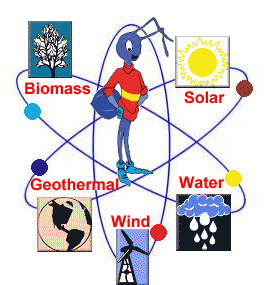 Renewable energy can save the natural world – but if we’re not careful, it will also hurt it https://theconversation.com/renewable-energy-can-save-the-natural-world-but-if-were-not-careful-it-will-also-hurt-it-145166
September 2, 2020 Laura Sonter, Lecturer in Environmental Management, The University of Queensland, James Watson, Professor, The University of Queensland, Richard K Valenta, Director – WH Bryan Mining and Geology Research Centre – The Sustainable Minerals Institute, The University of Queensland
A vast transition from fossil fuels to renewable energy is crucial to slowing climate change. But building solar panels, wind turbines and other renewable energy infrastructure requires mining for materials. If not done responsibly, this may damage species and ecosystems.
In our research, published today, we mapped the world’s potential mining areas and assessed how they overlap with biodiversity conservation sites.
We found renewable energy production will exacerbate the threat mining poses to biodiversity – the world’s variety of animals and plants. It’s fair to assume that in some places, the extraction of renewables minerals may cause more damage to nature than the climate change it averts.
Geoengineering to counter global heating? It’s a risky gamble
|
SHOULD WE BANK ON INNOVATION TO HOLD BACK GLOBAL HEATING? HISTORY SAYS IT’S A RISKY BET, Ensia
Andrew Urevig September 2, 2020 — From research scientists to political organizers, people around the planet are working to thwart a threat whose scale has become increasingly clear: Global heating is spurring a climate crisis of megafires, superstorms and record-setting heat waves that current policies are not enough to address.Many climate activists, driven in part by the youth movements of Gen Z, are joining major scientific bodies in calling for economic and social transformation, while other onlookers are hoping for “moonshot” technology to step in as climate “savior.” How did we end up here? Answers to that vary, but research published earlier this year in the journal Nature Climate Change puts at least some of the blame on a surprising villain: computer modeling–based on wishful thinking. In the paper, Duncan McLaren and Nils Markusson, social scientists with the UK-based Lancaster University’s Lancaster Environment Centre, note that speculative technologies promising big climate benefits down the line have been included again and again in computer models used to inform government policies. That relieves some of the political pressure to cut or sequester greenhouse gases here and now, helping to stall tangible reductions in the near term. But it also spurs scientists creating the next round of models to rely, however unintentionally, on even more hoped-for innovations to make established climate goals appear feasible. We need to “recognise and break this pattern to unleash more effective and just climate policy,” the researchers conclude. …………… In the paper, Duncan McLaren and Nils Markusson, social scientists with the UK-based Lancaster University’s Lancaster Environment Centre, note that speculative technologies promising big climate benefits down the line have been included again and again in computer models used to inform government policies. That relieves some of the political pressure to cut or sequester greenhouse gases here and now, helping to stall tangible reductions in the near term. But it also spurs scientists creating the next round of models to rely, however unintentionally, on even more hoped-for innovations to make established climate goals appear feasible. We need to “recognise and break this pattern to unleash more effective and just climate policy,” the researchers conclude. https://ensia.com/notable/climate-change-models-technology-innovation/ |
|
USA – new plutonium pit production – but no new environmental assessment !

 US officials: No new environmental study for nuclear lab, Spectrum, BY ASSOCIATED PRESS AP, SEP. 02, 2020, ALBUQUERQUE, N.M. (AP) — The National Nuclear Security Administration says it doesn’t need to do an additional environmental review for Los Alamos National Laboratory before it begins producing key components for the nation’s nuclear arsenal because it has enough information.
The National Nuclear Security Administration on Tuesday released its final supplemental analysis of a site-wide environmental impact statement done for the lab more than a decade ago. The agency concluded that no further analysis is required.
Critics have pushed for a new environmental impact statement, saying the previous 2008 analysis didn’t consider a number of effects related to increased production, such as the pressure it puts on infrastructure, roads and the housing market.
“The notion that comprehensive environmental analysis is not needed for this gigantic program is a staggering insult to New Mexicans and an affront to any notion of environmental law and science,” Greg Mello of the Los Alamos Study Group said in a statement.
Lab officials last year detailed plans for $13 billion worth of construction projects over the next decade at the northern New Mexico complex as it prepares for plutonium pit production. About $3 billion of that would be spent on improvements to existing plutonium facilities for the pit work, the Albuquerque Journal reported…….https://spectrumlocalnews.com/nys/buffalo/ap-online/2020/09/02/us-officials-no-new-environmental-study-for-nuclear-lab
Republicans And Democrats Clash Over How To Repeal Nuclear Bailout
|
Republicans And Democrats Clash Over How To Repeal Nuclear Bailout, WOSU By ANDY CHOW 2 Sept 20, •At the Statehouse on Tuesday, both the Ohio House and Senate addressed the potential repeal of the controversial nuclear power plant bailout. As Democrats call for a quick repeal, Republicans moved ahead with a different approach.
House Speaker Bob Cupp (R-Lima) says a special committee will hold hearings on HB6, the law that bails out nuclear power plants, subsidizes coal plants, rolls back renewable energy standards and eliminates efficiency mandates. Cupp says there’s a lot of unwinding the House must do to understand the impacts of a repeal….. Minority Leader Emilia Sykes says Democrats have asked for hearings on repeal bills that haven’t moved – so they’ll take other steps to, in her words, press the issue …. Supporters of HB6 say a repeal would allow the continuation of increased charges customers see for the renewable and energy efficiency standards. Opponents of HB6 say the energy efficiency standards creates a return on investment with savings that counter the initial cost……. Federal investigators charge that HB6 was at the center of a $60 million bribery scheme. A utility believed to be FirstEnergy and its subsidiary is accused of funneling the money into a dark money group controlled by former House Speaker and current Rep. Larry Householder (R-Glenford), in return for passing the bailout. Householder, who faces federal racketeering charges, says he plans on entering a plea of “not guilty.” https://radio.wosu.org/post/republicans-and-democrats-clash-over-how-repeal-nuclear-bailout#stream/0 |
|
Santee Cooper and Westinghouse Electric to sell of equipment at the failed $9 billion VC Summer nuclear site.
|
SANTEE COOPER, WESTINGHOUSE BURY NUCLEAR HATCHET Agree to sell millions of dollars in nuclear equipment, Lexington Chronicle , By Jerry Bellune, JerryBellune@yahoo.com, 2 Sept 20, Squabbling over millions of dollars in nuclear equipment may be temporarily over. This gives the taxpayer-owned utility full ownership of all non-nuclear equipment at the failed $9 billion nuclear site. Santee Cooper reportedly is in debt more than $8 billion, at least half of it from the nuclear failure. |
France’s President Macron joins the global nuclear lobby’s push to export nuclear reactors
 Macron talks nuclear energy and ways to control militias during Iraq visit, The National , Khaled Yacoub Oweis, Sep 2, 2020French PM is the most significant leader to visit Iraq since Prime Minister Mustafa Al Kadhimi came to power in May
During a visit to Baghdad on Wednesday, French President Emmanuel Macron discussed solving Iraq’s massive power shortages with nuclear energy ……. Mr Kadhimi told reporters in Baghdad that he discussed with Mr Macron “a future project” to use nuclear energy to produce electricity and solve decades-long power shortages……..
If realised, the project would place Iraq along with the UAE and Iran as the only Middle East countries with electricity produced by a nuclear reactor. ………. https://www.thenational.ae/world/mena/macron-talks-nuclear-energy-and-ways-to-control-militias-during-iraq-visit-1.1071729
North Korea’s nuclear activity still a ‘serious concern’: UN watchdog
Nuclear activities in North Korea remain a cause for “serious concern,” and the rogue totalitarian state continues to enrich uranium, which could be used in an atomic weapon, the UN’s watchdog said in a recent report.
The activities by the country are in “clear violation of relevant UN Security Council resolutions,” the International Atomic Energy Agency wrote in the report that was released Tuesday.
The report also notes that what was once the heart of the country’s nuclear program, the Yongbyon site, has likely been shut down since 2018 — and that no plutonium has been produced there in the past year.
Still, the information it’s able to get about the program is “declining” because the agency’s been locked out of the hermit nation.
“Knowledge of the DPRK’s nuclear program is limited and, as further nuclear activities take place in the country, this knowledge is declining,” the report states.
1 This Month


Tell Congress: Prevent Nuclear Catastrophe in Iran

Tell Congress: Prevent Nuclear Catastrophe in Iran

Read the Public Inquiry Report, the Commissioners’ report, Surrendering Australia: The AUKUS Deception is available to download for free at aukuspublicinquiry.com. Or just watch the replay of the National Press Club Luncheon.
To see nuclear-related stories in greater depth and intensity – go to https://nuclearinformation.wordpress.com
Say No to NASA’s Reckless Nuclear Reactor on the Moon
-
Archives
- November 2026 (281)
- October 2026 (302)
- September 2026 (339)
- August 2026 (330)
- July 2026 (355)
- June 2026 (287)
- May 2026 (306)
- April 2026 (356)
- March 2026 (251)
- February 2026 (267)
- January 2026 (308)
- December 2025 (358)
-
Categories
- 1
- 1 NUCLEAR ISSUES
- business and costs
- climate change
- culture and arts
- ENERGY
- environment
- health
- history
- indigenous issues
- Legal
- marketing of nuclear
- media
- opposition to nuclear
- PERSONAL STORIES
- politics
- politics international
- Religion and ethics
- safety
- secrets,lies and civil liberties
- spinbuster
- technology
- Uranium
- wastes
- weapons and war
- Women
- 2 WORLD
- ACTION
- AFRICA
- Atrocities
- AUSTRALIA
- Christina's notes
- Christina's themes
- culture and arts
- Events
- Fuk 2022
- Fuk 2023
- Fukushima 2017
- Fukushima 2018
- fukushima 2019
- Fukushima 2020
- Fukushima 2021
- general
- global warming
- Humour (God we need it)
- Nuclear
- RARE EARTHS
- Reference
- resources – print
- Resources -audiovicual
- Weekly Newsletter
- World
- World Nuclear
- YouTube
-
RSS
Entries RSS
Comments RSS

