French nuclear modulation to rise 11% to 35 TWh – Kpler
France’s nuclear power modulation – ramping reactors up and down to meet
demand and optimise fuel usage – will likely increase by 11% to 35 TWh this
year, up from 31.5 TWh in 2025, Kpler power analyst Alessandro Armenia said
on Thursday.
Montel 5th Feb 2026, https://montelnews.com/news/0ce52b4f-c919-4c3a-abdf-1ee5a3b67f5f/french-nuclear-modulation-to-rise-11-to-35-twh-kpler
Iran offers to dilute enriched uranium in exchange for full sanctions relief
By Euronews, 09/02/2026
Iran says it could dilute its 60% uranium stockpile if “all sanctions” end, amid renewed Oman talks and uncertainty over missing nuclear material.
Tehran is prepared to dilute its stockpile of highly enriched uranium if sanctions against Iran are lifted, the head of its atomic energy agency said on Monday following indirect talks with Washington.
Mohammad Eslami, head of the Atomic Energy Organisation of Iran, said the possibility of diluting 60% enriched uranium “depends on whether all sanctions would be lifted in return”, according to the official IRNA news agency.
The statement did not specify whether Eslami was referring to all international sanctions on Iran or only those imposed by the United States.
The offer comes as the whereabouts of more than 400 kilograms of highly enriched uranium Iran possessed before last year’s conflict with Israel and the US remains unknown……………………………………………………………………………………………….
Indirect talks to resume after Oman meeting
Eslami’s statement followed indirect talks between Iranian Foreign Minister Abbas Araghchi and US Middle East envoy Steve Witkoff in Oman last Friday, the first negotiations since the June conflict.
Both sides agreed to continue negotiations. However, Araghchi warned that “the mistrust that has developed is a serious challenge”.
US President Donald Trump has repeatedly called for Iran to accept a total ban on uranium enrichment, a condition unacceptable to Tehran and far less favourable than the 2015 agreement.
Iran maintains it has a right to a civilian nuclear programme under the Nuclear Non-Proliferation Treaty, to which 191 countries are signatories.
Western countries, led by the US, suspect the Islamic Republic is seeking to develop nuclear weapons, a claim Iran has consistently denied. https://www.euronews.com/2026/02/09/iran-offers-to-dilute-enriched-uranium-in-exchange-for-full-sanctions-relief
Nuclear weapons workers vote for strike action
David Gilyeat, South of England, BBC 10th Feb 2026
Workers that build and maintain the UK’s nuclear weapons have voted to strike over a planned restructuring of the organisation.
Prospect said the Atomic Weapons Establishment’s (AWE) staff were being “pushed to the brink by the repeated errors” of its leadership, affecting sites including Aldermaston and Burghfield in Berkshire.
The union said in November 500 jobs were at risk, with another 750 posts recruited for. Last month it said potential redundancies had increased to 800.
The Ministry of Defence (MoD) said it was “disappointed” by the result but was looking for a “constructive resolution”.
Prospect said 95% of staff who voted were in favour of action short of a strike, with 81% in favour of strike action.
The union has warned action could cost AWE millions of pounds at a time when the government has said it will invest £15bn in a new nuclear programme.
“This crucial investment risks being derailed if this restructure continues to cause internal chaos,” Prospect said.
But it said a “failed reorganisation could have much greater consequences for the future of the organisation”.
Prospect also accused AWE of “drip-feeding” information over weeks so full consultation with its scientists and engineers was “impossible”.
The union said the nature and timing of the industrial action would be “announced in due course”……………………….
https://www.bbc.co.uk/news/articles/c743l4rr4g1o
Sizewell C opponents to appeal High Court decision.

Mariam Issimdar, BBC. Suffolk, 8 Feb 26
Opponents of Sizewell C nuclear power station have submitted an appeal against the High Court’s decision to refuse an application for a judicial review of the plant’s flood defences.
Together Against Sizewell C (TASC) launched an action in June on the basis the power station could add extra coastal defences which were not outlined in the original planning application, and they would “disrupt nearby protected areas of wildlife”.
The group appealed for the judicial review, but it was refused by a High Court judge in December.
At the time, Sizewell C said it was pleased the legal claims had been dismissed.
In a statement on Monday, the pressure group said: “TASC is determined to use every avenue open to us to ensure public scrutiny and environmental assessment of the two additional huge sea defences that Sizewell C have committed to install in an extreme sea level rise scenario.”
Development consent for the new plant near Leiston was granted in July 2022 before the government committed £14.2bn towards it last June.
In the approved plans, Sizewell C said the power station would be built on a platform 7m above the current sea level and protected by a “sea defence structure which will be more than 14m above mean sea level”.
Chris Wilson, of TASC, said: “It is a scandal if it is deemed legal that a developer, in this case Sizewell C, is allowed to pick and choose which parts of a project it wants to include in its development consent order application.”
He added that the developer, EDF Energy, knew “as far back as 2015 that two additional huge sea defences would be needed to keep the site and its 3,900 tonnes of spent fuel safe from flooding in an extreme sea level rise scenario, yet chose not to include them in their 2020 planning application – a classic example of ‘salami-slicing’.”
Sizewell C said its “sea defence will be adaptable and could be raised in future if sea level rise turns out to be greater than current predictions”.
TASC claimed the power station wanted to build two more flood barriers, 9m and 10m high, further inland.
Sizewell C previously declined to comment on the extra details of how the flood defences could be changed.
TASC argued there should be a consultation on the defences, and it approached Energy Secretary Ed Miliband, asking him to revoke or change the development consent order.
That was not accepted, so the group opted for a judicial review and argued that Miliband had breached his obligations and duties…………………. https://www.bbc.co.uk/news/articles/c98q5z1jez5o
£700m plan with ‘fish disco’ could save 90% of marine life, says Hinkley Point C study
Scientists find underwater acoustic project to stop fish being sucked into cooling systems could save 44 tonnes a year
Jillian Ambrose , Guardian, 10 Feb 26
Scientists have found that plans that include a “fish disco” to deter migratory marine life from the nearby Hinkley Point C nuclear reactor could help save 90% of fish from the power plant’s water intake pipes – but the measures are set to cost its developer £700m.
EDF Energy, which is building the Hinkley Point C nuclear plant in Somerset, said research it commissioned from scientists at Swansea University had found that using an acoustic deterrent system helped to ward off the “vast majority” of fish it tagged for the experiment.
The part of the costly system that is informally referred to as a “fish disco”, is designed to use more than 300 underwater speakers to emit sound pulses to repel fish from the water intake pipes, which will suck in water from the River Severn to help cool Hinkley’s reactors.
EDF said it expected to spend about £700m on the full solution, or 1.5% of the total cost of building the £46bn project, which would give Britain’s first new nuclear power plant in a generation “more fish protection than any other power station in the world”.
This should help to save about 44 tonnes of fish a year – equivalent to the annual catch of a small fishing vessel. The company declined to speculate on the total cost per fish saved over the 25-year life of the reactor’s subsidy contract.
EDF has argued against the requirement to fit an acoustic deterrent in the past, instead suggesting that it could construct salt marshes to help protect marine life.
Under EDF’s subsidy contract it will earn a set return for the electricity generated by Hinkley, meaning it will need to absorb the extra cost of the fish disco rather than add it on to household bills.
The full system is expected to include special mouths fitted to the intake pipes to slow the water suction and allow fish to escape from as close as 2 metres away, and a fish recovery system which returns fish sucked into the pipes.
The scientists found that only one of its tagged twaite shad fish came within 30 metres of the test intake pipes when the speakers were turned on, compared with the 14 seen in the same area without the system turned on………………………………………….
The results of the research will be submitted for regulatory consideration and approval by the Marine Management Organisation later this year. https://www.theguardian.com/uk-news/2026/feb/10/hinkley-point-c-plan-could-save-fish-being-sucked-into-pipes-study-finds
New Mexico Environment Department Takes Necessary Action on Los Alamos National Laboratory’s Hexavalent Chromium Plume.
Concerned Citizens for Nuclear Safety, 13 Feb 26
On Tuesday, February 11th, the New Mexico Environment Department took bold actions to hold the Department of Energy (DOE) and Los Alamos National Laboratory (LANL) accountable for the release and distribution of hexavalent chromium contamination into the regional drinking water aquifer and onto Pueblo de San Ildefonso lands. The Environment Department released two administrative compliance orders, both with civil penalties, totaling over $15,775,000.00.
This Update focuses on the first Environment Department administrative compliance order, No. 26-01, which revolves around the Environment Department’s consideration of LANL’s application for a discharge permit for the extraction, treatment of the contaminated waters and injection of those waters back into the regional drinking water aquifer and the requirements to take action to protect the regional drinking water supply. https://cloud.env.nm.gov/resources/_translator.php/MjMzYzM5YTExNTJlYjUwNTA0MTQ3ZGQzNl8yMTc2NzU~.pdf
In 2015, LANL submitted an application to the Environment Department for a groundwater discharge permit to investigate the protective interim measures that could be taken to protect the regional drinking water aquifer and to characterize the hexavalent chromium plume to determine the best course of action to clean up the contamination and to stop future contamination. After a public hearing, the Environment Department issued the groundwater discharge permit, DP-1835, to LANL.
The 44-page administrative order details the steps that were taken, the obstacles that were placed in the way, and the back and forth between the parties to address the plumes.
Sixth Trump meeting with his de facto boss…good day to fire him.
Walt Zlotow West Suburban Peace Coalition Glen Ellyn IL , 12 Feb , 26
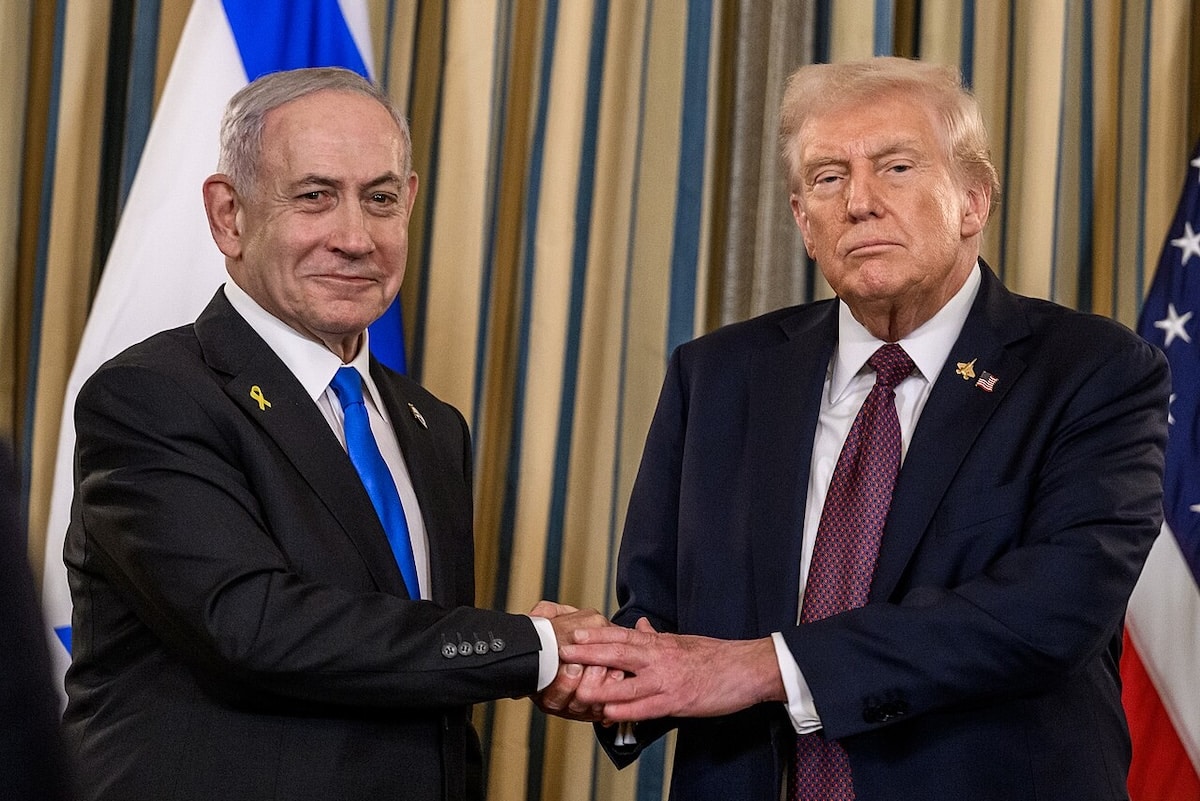
President Trump’s de jure, constitutional boss is We the People. 77 302,580 of us, giving Trump 58% of the Electoral College, hired him November 5, 2024. Trump serves and reports to Us.
But during the past 13 months he’s dismissed his true boss to take orders from Israeli Prime Minister Benjamin Netanyahu. Support the Israeli genocide obliterating Palestinians in Gaza with billions in weapons…check. Conspire with Netanyahu to sucker punch Iran with a sneak attack to decapitate their regime last June…check. Support Israeli provocateurs to infiltrate domestic Iranian protests to overthrow the Iranian regime last December…check.
Netanyahu is furious both his murderous Iranian regime change ventures failed. So he demanded, and of course got, his sixth sit down with Trump scheduled for today. Topic Number One? Iran, and not to make peace with Iran, likely the next and most massive attack that will finally achieve Netanyahu’s cherished dream of a decapitated, degraded Israeli rival for Middle East supremacy.
At Netanyahu’s behest Trump has moved a massive military armada into the region. Pulling back is near impossible when Trump’s boss demands he pull the trigger on senseless war that could blow up the Middle East, indeed possibly the world.
It would take a psychiatrist, maybe a team of psychiatrists, to unravel why Trump allows Netanyahu to be his real boss. It may simply be the near quarter of a billion dollars Netanyahu’s Israel Lobby has provided Trump’s campaign coffers since 2020.
Regardless, someone in the Trump orbit needs to convince Trump who his real boss is. We the People do not want our treasure supporting genocide in Gaza. Nor do we want it used to launch massive war on Iran to please Trump’s de facto boss Benjamin Netanyahu.
Trump needs to usher Netanyahu into the Oval Office today and immediately announce…’You’re fired.’
Is the UK keeping up with the nuclear revival?

Steve Thomas: Since the Starmer government came to power in 2024, it has
made a series of announcements that have placed the UK at the forefront of
the so-called Nuclear Renaissance. The government talks about a “Golden Age
of Nuclear Power” in the country. However, a closer look shows that these
announcements primarily concern what the government hopes to do and what it
hopes to achieve, in the absence of new projects in the pipeline.
Currently, the burden of submitting proposals falls on the private sector.
Regarding current nuclear projects, there is one under construction,
Hinkley Point C; another, Sizewell C, for which an investment decision has
been made and construction could begin in two to three years; and a project
for three Rolls-Royce small modular reactors (SMRs) for the Wylfa site,
where an investment decision is hoped for 2029.
The Hinkley Point C project
for two French European Pressurized Reactors (EPRs, 3.2 GW) is seven years
behind schedule, is 90% over budget, and requires at least six years to
complete. The Sizewell C project is expected to be built along the lines of
the Hinkley design and was supposed to be built approximately two years
after Hinkley, so that the workforce could seamlessly transfer from Hinkley
to Sizewell.
This means it is at least nine years behind schedule. Even if
the government’s estimated completion date is met, Sizewell will not begin
generating power until 2039. The estimated cost of this plant, £40.5
billion (2024 funding), is 70% higher than the actual estimated cost of the
Hinkley Point project at the time of the Final Investment Decision.
This ridicules claims that Sizewell would be cheaper than Hinkley due to the
“expertise” built at Hinkley Point. If it goes ahead, the Wylfa project
will not begin generating power until 2035. If there are no further delays
to these projects, it will be 2040 before the UK’s nuclear capacity returns
to 2015 levels, or approximately 9 GW. In 2022, Boris Johnson’s government
set a target of “up to 24 GW” of new nuclear capacity, in addition to the
Hinkley project, to be achieved by 2050. The “up to” specification left
room for vagueness, and in fact the Starmer government has clearly not
adopted this target.
So why is it so difficult and takes so long to build
nuclear capacity? And has the UK not performed well in this regard?
Research commissioned by the UK government found that, on average,
globally, the construction of a nuclear power plant, from the investment
decision to first start-up, takes 13-17 years. Add to this the time
required to reach the final investment decision. This includes: choosing
the supplier and technology; project assessment by the national safety
regulator; identifying and verifying the suitability of the chosen site;
and defining a financial model to provide the capital, own the plant, and
purchase the energy.
This process is unlikely to take less than five years;
in fact, it could take longer. Therefore, the construction time for a
nuclear project is likely at least 20 years.
Rienergie 12th Feb 2026, https://rienergia.staffettaonline.com/articolo/35901/UK+sta+al+passo+con++la+rinascita+nucleare++++/Steve
US campaign puts case for disposal, not reprocessing, of used nuclear fuel

This article, from the the nuclear lobby’s propaganda voice – World Nuclear News – goes on later to push for nuclear reprocessing, anyway.
Reprocessing or not -it’s really becoming clear that new nuclear, and patched-up old nuclear reactors are not clean, safe, or economically viable.
WNN, 12 February 2026
The Nuclear Scaling Initiative’s Scale What Works campaign says that direct disposal of used nuclear fuel in the US is the “safest, most secure and least expensive pathway for the country” as nuclear energy capacity is expanded.
clear, straightforward direct disposal policies’ (Image: Posiva)
The initiative – which is a collaboration of the Clean Air Task Force, the EFI Foundation and the Nuclear Threat Initiative – aims to “build a new nuclear energy ecosystem that can quickly and economically scale to 50+ gigawatts of safe and secure nuclear energy globally per year by the 2030s”.
The Nuclear Scaling Initiative (NSI) Executive Director Steve Comello said: “Making smart fuel management choices today, that acknowledge that reprocessing technologies today are not economically viable and pose security and waste management risks, can drive grid reliability, innovation, and economic and national security for the United States and beyond.”
NSI, whose global advisory board is chaired by former US Secretary of State John Kerry, says that all forms of energy production produces waste, and says that in nuclear’s case, directly storing and “eventually disposing of intact spent fuel” underground “is a safe, straightforward process that uses existing expertise and infrastructure”.
Countries should learn from the reprocessing experience in the UK, Japan and France, NSI says, adding that its view is that reprocessing used fuel is “costly, complex and time-intensive, increasing energy prices for consumers and diverting resources from readily deployable technologies”.
Former Deputy Secretary of Defense and Under Secretary of Energy John Deutch said: “Reprocessing is not a reasonable option: it threatens security, is not cost-effective and will slow our ability to scale nuclear energy.”
Reprocessing of used fuel from commercial reactors has been prohibited in the USA since 1977, with all used fuel being treated as high-level waste………………………………………………………. https://www.world-nuclear-news.org/articles/us-campaign-puts-case-for-disposal-not-reprocessing-of-used-fuel
‘Green laws hold up nuclear plans — but we can’t say where’

Despite calling for a reduction in planning protections for the landscapes,
the energy department admits it can’t identify any where regulations are
a problem.
The energy department, run by Ed Miliband, has admitted that it
cannot name a single national park where regulations are holding up nuclear
projects, despite a review urging that protections for the landscapes be
reduced.
The recommendation also relied on a blogpost written by a member
of the reviewing panel, it has emerged.
Weakening or scrapping the
protected landscapes duty, which means that councils must further the
conservation aims of parks when making planning decisions, was one of the
calls of the government’s nuclear regulatory task force last year. Sir
Keir Starmer said he “fully accepted” the suggested reforms. However, a
Freedom of Information request has shown that the government holds “no
due diligence or impact assessment” about changing the protected
landscapes duty.
The Department for Energy Security and Net Zero conceded
that it had no list of specific national parks or national landscapes
(formerly AONBs) where a conflict exists between the duty and nuclear
development. The department also said one of the pieces of evidence
underpinning the recommendation was a blogpost written by a lawyer. That
lawyer, Mustafa Latif-Aramesh, also sits on the task force.
In an email to
John Fingleton, the economist who led the review, Latif-Aramesh appeared
unclear what the precise financial cost of the rules was to nuclear
companies. “It’s costing developers millions if not tens of
millions,” he wrote just weeks before the final report was published.
Rose O’Neill, the chief executive of the Campaign for National Parks, a
charity, said:
“This lays bare the fact that the prime minister is
considering scrapping national parks law on a recommendation that’s built
on nothing but hot air. The real shock is that the recommendation is
largely based on a single blog article written by one taskforce member.”
Barry Gardiner, a Labour MP and chair of the all-party parliamentary group
for national parks and national landscapes, said: “Any suggestion that
the government might dilute its duty to protect these landscapes is not
just alarming, it represents a betrayal of Labour’s legacy in
safeguarding our countryside for the public good.”
Chris Hinchcliff, the
Labour MP who only recently had the whip restored after his rebellions on
welfare reform, said: “Our biodiversity is at breaking point. This is the
time for a rescue plan, not more backwards steps that are harmful to
nature, deeply unpopular, bad for our long-term future and will ultimately
put our national security at risk.”
Times 10th Feb 2026, https://www.thetimes.com/uk/environment/article/ed-miliband-national-parks-nuclear-energy-2bcznpkzd
The complex, long-form writers – but is anybody listening?

11 February 2026 Noel Wauchope, https://theaimn.net/the-complex-long-form-writers-but-is-anybody-listening/
I sympathise with readers who have a short attention span. I myself am one of those. And nowadays, well – that’s pretty much everybody.
And yet, people keep writing long, and very long, articles. Are they wasting their time? Who actually reads these articles?
I used to think that long articles were indeed a waste of time. And in a certain sense, I was right. I came from the angle of an antinuclear activist, and for a long time, the “nuclear debate” was run by highly – informed people, who made sure to use the absolutely correct technical language – no weak slips into ordinary talk. The anti-nuclear experts generally showed their opponents that they were right up there with the jargon that only experts understood. So the ordinary peasant, the general public, including many well-educated people, “dazzled by science” couldn’t really understand the long arguments. The result was that most people were intimidated, felt they could not understand it all. which was exactly the situation that the nuclear lobby wanted.
Then along came Dr Helen Caldicott, and mucked it all up. She understood all the technical stuff, and could write about that. But she also used ordinary, understandable language. And worse – heaven forfend – she sometimes was emotional. God, she even described some nuclear propagandists as “wicked”. Personally, I thought that the term was accurate. Anyway, Dr Caldicott copped a lot of flak, including even from the anti-nuclear lobby, with their obsession about being “respectable”. How dare she be so “hysterical”. But then she couldn’t help it, having the disability of being female.
But, Dr Caldicott, with her many books, public speaking, meeting world leaders, even influencing Ronald Reagan, got her message through to people, and the “debate, has never been the same since.
So, I rejoiced at this development, which did help journalists to loosen up, and cover nuclear issues in a more readable and human way. And in shorter articles.
But now the pendulum has swung too far in the direction of being short and easily digestible, especially with the communications monster of social media. It is a sad thing that probably only old people have the time and the inclination to read long articles.
And people are missing out, because often the full story on a subject is really covered only in long articles. I have a collection of these, on a variety of topics, and I had planned to reference a number of them here. Some are very densely written, full of facts, dates, events – and therefore really informative – but still a bit of hard work to read. And some show how very complex a situation can be – how there are two sides, and maybe more than two, to a story.
So, here are examples of very informative ones:
Planet Plastic: How Big Oil and Big Soda kept a global environmental calamity a secret for decades, by Tim Dickinson.
US military action in Iran risks igniting a regional and global nuclear cascade, by Farah N. Jan.
Cumulative effects of radioactivity from Fukushima on the abundance and biodiversity of birds, by Timothy A Mousseau
Securing the nuclear nation, by Kate Brown
Very interesting are the articles which cover something in depth, showing contradictory sides, and how very complex a subject can be:
Some examples-
Betrayed: How Liberals Supported Islamic Revolution in Iran in 1979 and Turned Against the Progressive Shah, by SL Kanthan,
The Long History Of Zionist Proposals To Ethnically Cleanse The Gaza Strip, by Mouin Rabbani.
And these can often be personal articles, about human conditions, character and integrity, leaving politics aside:
The heroes who saved the world from Chernobyl Two, by By Serhii Plokhy – also at The heroes who saved the world from Chernobyl Two.
Elon Musk’s Shadow Rule, by Ronan Farrow. Also at Elon Musk’s Shadow Rule, nuclear-news.
I hope that some people are reading long articles. Well, they must be, because some excellent movie documentaries and TV series often come up, and are derived from the written word. And perhaps many people are thus getting their longform stories in a different form. And perhaps some longform articles have a profound effect, even if it’s only on a relatively few readers.
France slashes renewable energy targets, expands nuclear power with new law
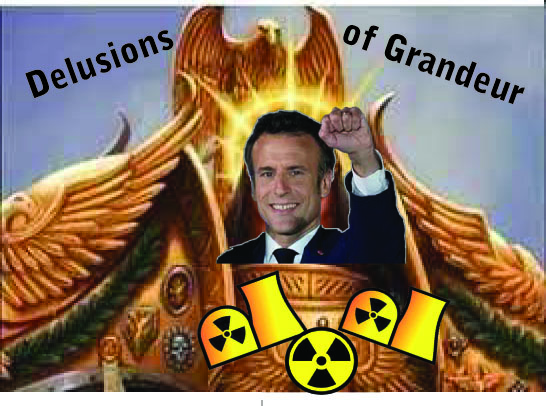
FRANCE 24, 12/02/2026 https://www.france24.com/en/france/20260212-france-slashes-renewable-energy-targets-favour-of-nuclear-power-new-energy-law
France is this week set to pass by decree a new energy law slashing the country’s renewable energy targets and massively expanding nuclear power production. The law change comes as a relief for state-run electricity provider EDF, which had been mandated to close some of its nuclear plants and is struggling to compete with price pressure from European solar and wind power producers.
France set out a new energy law after years of wrangling on Thursday which slashes its wind and solar power targets and drops a mandate for state-run firm EDF to shutter nuclear plants.
“We need to stop our internal family squabbling. We need both nuclear and renewables,” Finance Minister Roland Lescure told reporters.
The law, to be pushed through by decree on Friday after almost three years of bitter disagreement among lawmakers, also reverses a previous legal mandate to shut 14 reactors.
That was a 2017 campaign promise of President Emmanuel Macron, who later changed course, backing nuclear expansion with a plan for at least six new reactors.
The move to pare back renewables should help shield EDF, which operates a fleet of 57 reactors, as power demand grows more slowly than expected over the next decade. The company is struggling to remain competitive as abundant wind and solar in Europe have pushed down power prices and forced reactors to lower output.
The new 10-year framework, known as the PPE, aims for EDF to produce 420 terawatt-hours of power from its existing fleet in 2035, a 5 percent increase.
“Nuclear is the backbone of our electricity system,” said Lescure, adding that a first new reactor should be inaugurated by 2038.
EDF CEO Bernard Fontana welcomed the proposal, saying it would allow the company to advance toward its objectives. The law had triggered fierce debate among lawmakers pitting support for renewable subsidies against financing new nuclear at a time when France is struggling with high debt. The PPE also governs wind and solar tenders, and a decision on the matter is expected to be welcomed by the wind industry, which has struggled amid uncertainty over the plans and delayed tenders.
Still, wind and solar targets were lowered, to 105-135 gigawatts (GW) of installed capacity by 2035 from drafts that had called for 133-163 GW.
“If this PPE is more than two years late on paper, it’s at least a decade behind in its vision of an energy transition,” Greenpeace France said in a statement.
It lowers France’s 2035 target for installed offshore wind capacity to 15 GW from 18 GW the government had submitted for consultation in 2024.
The target for onshore wind capacity drops to 35-40 GW from the 45 GW previously communicated.
Solar capacity will be 55-80 GW by 2035, the report added, down from a previous forecast of 75-100 GW. The law calls for France to consume 60 percent of its own energy from decarbonised electricity by 2030, shifting from 60 percent of energy from fossil fuels currently, and up to 70 percent from decarbonised electricity by 2035.
The new law is unlikely to lead to lower prices for end-users, said Emeric de Vigan, managing director of energy consultancy 42 Advisors, adding this could keep them from switching to electricity from oil and gas-based fuels.
U.S. Tech Park in Israel May Have a Nuclear Power Plant

While President Trump has busted through a lot of international norms, and removed the U.S. from multilateral agreements like climate change, busting the bounds of the Nonproliferation Treaty would set a dangerous precedent that could be followed by similar actions by Russia and China
The fact that Israel has signed an MOU with the U.S. that could potentially involve it acquiring U.S. manufactured SMRs is a signal that if India can do it, so can Israel. Saudi Arabia will not be far behind in asking for the same deal should the Israeli industrial park agreement move forward beyond the MOU stage.
February 7, 2026 by djysrv, https://neutronbytes.com/2026/02/07/u-s-tech-park-in-israel-may-have-a-nuclear-power-plant/
Israel signed an agreement with the U.S. on 01/16/26 to build an industrial park to produce advanced computer chips at a location in the Negev desert that would use a small modular nuclear reactor (SMR) to power the factory and nearby data centers also planned for this location.
Where things stand now, according to Israel news media, Israel and the US have inked an agreement to jointly build and operate a large technological park in Israel. The deal is part of a strategic cooperation agreement on AI signed in Jerusalem last month. (Israel government statement)
One of the surprising details to emerge from the discussions on the agreement relates to the energy infrastructure. The huge power demands of data centers and AI computer systems require a large, reliable 7/24/365 energy solution. As a result, the possibility appears to be kicking around of constructing one or more nuclear power plants, most likely SMRs, at the site.
The MOU, signed by the head of the National AI Directorate, Brig. Gen. (Res.) Erez Eskel, and the U.S. Under Secretary of State for Economic Affairs Jacob Helberg, reveals an ambitious plan to allocate 4,000 acres to the U.S. The park, which will be constructed in the Negev Desert or less likely in the Gaza Strip border area, and which will be called “Fort Foundry One”
Helberg travelled to Israel after signing similar agreements in Doha and Abu Dhabi. He said that Israel was an “anchor partner” in the effort, thanks to its technological ecosystem and its ability to produce “asymmetric results” in relation to its geographical size.
US Under Secretary of State for Economic Affairs, Jacob Helberg said, “With the launch of Pax Silica, the United States and Israel are uniting our innovation ecosystems to ensure the future is shaped by strong and sovereign allies leading in critical technologies like AI and robotics.”
Helberg comes to his role as a former lobbyist for Silicon Valley information technology firms and as a former executive for Google. One of his key interest areas has been addressing the national security risks posed to the U.S. by China. He wrote a book on the subject, The Wires of War: Technology and the Global Struggle for Power, (2021) calling for a stronger U.S. strategy against China’s technological ambition. According to the publisher’s book jacket, Helberg led Google’s global internal product policy efforts to combat disinformation and foreign interference in U.S. domestic affairs.
U.S. Thinks a Contractual Fig Leaf Can Cover the Absence off a 123 Agreement
Israel to date has no experience with civilian nuclear power plants used for electricity generation. The country has reportedly produced an unspecified number of nuclear weapons used as a deterrence factor when dealing with hostile neighbors like Iran. Also, Israel has not signed the Nuclear Nonproliferation Treaty due to policy of strategic ambiguity and its obvious reluctance to reveal the extent of its nuclear arsenal.
The official MOU for the Negev AI data center remains somewhat vague referring to a “high-intensity energy infrastructure” but it clearly is pointing to small modular reactors (50-300 MW). Due to the location in the extremely dry Negev desert, an advanced design, such as an HTGR, which does not require cooling water to operate, is likely to be chosen should the project reach a stage where a reactor design would be selected for this site.
The joint initiative is part of a broad international framework launched by the Trump administration called “Pax Silica“, a coalition of about twelve countries in technology, the aim of which is to secure supply chains of semiconductors and AI. Taiwan did not sign the agreement.
Israel joined the initiative in December 2025, and was the first country to sign a bilateral agreement with the U.S. in this framework. Among the other countries in the coalition are Qatar, the UAE, Australia, Greece, Japan, South Korea, Singapore, and United Kingdom.
The Heavy Lift Associated with Civilian Nuclear Power in Israel
Israel has abundant natural gas supplies to support private wire gas power generation for data centers. It doesn’t need small modular reactors to power them.
The geopolitical heavy lift that would be required for a civilian nuclear power plant in Israel would probably set off a similar request from Saudi Arabia for the same kind of deal.
The Saudi government has been stalled for years in its quest for US nuclear reactors due to its insistence on the right to uranium enrichment as part of a 123 Agreement with the U.S. The Saudi government sees enrichment as a deterrence signal to Iran over its nuclear program. If the U.S. gives a green light to Israel, through some kind of three bank policy pool shot, to build U.S. supplied civlian SMRs, without a 123 Agreement, the Saudis would likely ask for a similar deal.
While President Trump has busted through a lot of international norms, and removed the U.S. from multilateral agreements like climate change, busting the bounds of the Nonproliferation Treaty would set a dangerous precedent that could be followed by similar actions by Russia and China.
This would move the planet into dangerous territory. For this reason, consideration of a U.S. managed nuclear power plant in Israel may be too hot a potato for even Trump to toss over the transom. Bipartisan opposition in the Senate would be almost certain for a civilian nuclear reactor deal with Israel without a 123 agreement.
Israel does not have an agreement with the U.S. under Section 123 of the Atomic Energy act as such a move would require it to declare its nuclear infrastructure. The Israeli government has relied on strategic ambiguity about how many nuclear devices it has as a deterrence measure. The Israeli government is not going to give that up military advantage away to get small modular reactors to power data centers in a white collar industrial park.
Finally, the news release by the Israeli Prime Minister’s office about the U.S. deal may be one of a series of trial balloons the Israeli government has floated over the years about civilian nuclear power so it should be viewed with some skepticism for that point alone.
The U.S. plan apparently is to cover these issues with a contractual fig leaf that depends on a unique model in which the reactor operates under U.S. safety regulation and supervision, despite being located on Israeli territory. It’s a pretty thin leaf.
Watch What We Do Not What We Say
It is not lost on the Saudi and Israel governments that India enjoys a special relationship regarding recent developments that open the door to India for acquisition of civilian U.S. nuclear reactor technologies, without having a 123 Agreement, while these two nations are locked out these opportunities.
Where things get complicated is that the Saudi government has undoubtedly been watching how U.S. nuclear reactor firms are faring with India for some time. Recently, India opened the door to U.S. nuclear reactors by terminating its supplier liability law that acted very effectively as a trade barrier for U.S. firms.
Almost at the same time, the U.S. Department of Energy granted Holtec permission to export its 300 MW SMR to India. The authorization names three Indian companies – Larsen & Tubro (Mumbai), Tata Consulting Engineers (Mumbai) and the Company’s own subsidiary, Holtec Asia (Pune) – as eligible entities with whom Holtec can share necessary technical information to execute its SMR-300 program. Holtec also plans to build a factory in India to manufacture the small reactors. Westinghouse is expected to seek to enter the Indian nuclear market.
What the Saudi government sees is that U.S. policy towards India shows a remarkably different approach to a country which has declared it has a nuclear arsenal, has tested its nuclear weapons, and is not a party to the Nonproliferation Treaty. Further, India does not have a 123 agreement with the U.S. and has no immediate plans to seek one. Israel has likely come to the same point of view.
The fact that Israel has signed an MOU with the U.S. that could potentially involve it acquiring U.S. manufactured SMRs is a signal that if India can do it, so can Israel. Saudi Arabia will not be far behind in asking for the same deal should the Israeli industrial park agreement move forward beyond the MOU stage.
Saudi Plans for AI Data Centers Points to Nuclear Reactor to Power Them
The Saudi government’s ambitious plans and programs to transform the oil rich company into a regional powerhouse for artificial intelligence will require significant investments in electricity generation to power the AI data centers needed to carry out this effort.
According to a report in the New York Times, Saudi Arabia is investing $40 billion to become a dominant player for the use of AI in the Middle East. Data centers to support this program will require enormous amounts of electrical power to support the advanced semiconductors that process AI software, to power the data centers themselves, and to keep them cool in one of the hottest regions on the planet.
It follows that the Saudi government will coordinate its plans for a nuclear new build with its massive investments in AI. It is likely that sooner or later Saudi Arabia’s need to break ground on the first two reactors in anticipation of the need for power for its AI program and related data centers.
It may decide that building commercial nuclear power plants to power its AI program is more important than the geopolitical consideration of having access to nuclear technologies with or without a U.S. 123 Agreement. Given the U.S. course of actions with India, Saudi Arabia may ask for the same kind of deal thus bypassing the entire enrichment policy issue it has with the U.S.
The Saud government has a tender outstanding, which has been on hold for some time, to build two 1,400 MW PWR type reactors. It has also explored options for SMRs for data centers and to power desalination plants to provide potable water for general and industrial uses. A award for the two reactors could be the first order of business the Saudi government will seek to pursue in asking for the same deal the U.S. gave India.
Russia says will act responsibly despite New START nuclear treaty expiry

Both Beijing and Moscow expressed their regret at the lapse of the last Russia-US nuclear arms control treaty.
By News Agencies 5 Feb 2026, https://www.aljazeera.com/news/2026/2/5/russia-says-will-act-responsibly-despite-new-start-nuclear-treaty-expiry
The Kremlin says Russia will continue to be a responsible nuclear power, despite the expiry of the last nuclear arms control treaty between Moscow and Washington, which experts say risks ushering in a new global arms race.
The New START treaty expires on Thursday, marking the end of more than half a century of limits on the United States and Russia’s strategic nuclear weapons.
“Today the day will end, and it [the treaty] will cease to have any effect,” Kremlin spokesperson Dmitry Peskov told reporters on Thursday. Arms control experts had previously said their assumption was that it expired at the end of Wednesday.
Russia had suggested both sides voluntarily extend the terms of the agreement for one year to provide time to discuss a successor treaty, a proposal which it said US President Donald Trump had never formally answered.
“The agreement is coming to an end. We view this negatively and express our regret,” said Peskov, who said the matter had come up in a call between Russian President Vladimir Putin and Chinese President Xi Jinping a day earlier.
“What happens next depends on how events unfold. In any case, the Russian Federation will maintain its responsible and attentive approach to the issue of strategic stability in the field of nuclear weapons and, of course, as always, will be guided first and foremost by its national interests.”
New START, first signed in Prague in 2010 by then presidents Barack Obama and Dmitry Medvedev, limited each side’s nuclear arsenal to 1,550 deployed strategic warheads – a reduction of nearly 30 percent from the previous limit set in 2002.
Deployed weapons or warheads are those in active service and available for rapid use as opposed to those in storage or awaiting dismantlement.
It also allowed each side to conduct on-site inspections of the other’s nuclear arsenal, although these were suspended during the COVID-19 pandemic and have not resumed since.
‘China will not participate in disarmament negotiations’
China’s Ministry of Foreign Affairs joined a growing international chorus expressing regret over the treaty’s expiry.
“China regrets the expiration of the New START treaty, as the treaty is of great significance to maintaining global strategic stability,” Chinese Foreign Ministry spokesperson Lin Jian said on Thursday.
“The international community is generally concerned that the expiration of the treaty will have a negative impact on the international nuclear arms control system and the global nuclear order.”
Trump has said he wants a better deal that will also bring in China. But Beijing refuses to negotiate with the other two countries because it has only a fraction of their warhead numbers – an estimated 600, compared with about 4,000 each for Russia and the US.
Lin reiterated this point, adding that China would not be joining the bilateral arms‑reduction talks.
“China’s nuclear forces are not on the same level as those of the United States and Russia, and China will not participate in disarmament negotiations at this stage,” Lin said.
Russia and the US together control more than 80 percent of the world’s nuclear warheads.
China’s nuclear arsenal, however, is growing faster than any country’s, by about 100 new warheads a year since 2023, according to the Stockholm International Peace Research Institute (SIPRI).
China is estimated to have at least 600 nuclear warheads, SIPRI says – well below the 800 each at which Russia and the US were capped under New START.
The White House said this week that Trump would decide the way forward on nuclear arms control, which he would “clarify on his own timeline”.
A NATO official, speaking on condition of anonymity, called on the US and Russia to act with “responsibility and restraint” to maintain “global security”.
The official added that Russia and China were both ramping up their nuclear capabilities and that NATO “will continue to take steps necessary” to ensure its own defences.
US congressional report explores option of not delivering any Aukus nuclear submarines to Australia.

COMMENT – What a typical USA plan?
They reneg on delivering the “goods” sold, but keep the $368 billion!
the Congressional Research report describes an alternative “military division of labour”, under which the US would not sell any Virginia-class submarines to Australia.
Report offers alternative of the US navy retaining boats and operating them out of Australian bases
Ben Doherty, Guardian, 6 Feb 26
A new United States congressional report openly contemplates not selling any nuclear submarines to Australia – as promised under the Aukus agreement – because America wants to retain control of the submarines for a potential conflict with China over Taiwan.
The report by the US Congressional Research Service, Congress’s policy research arm, posits an alternative “military division of labour” under which the submarines earmarked for sale to Australia are instead retained under US command to be sailed out of Australian bases.
One of the arguments made against the US selling submarines to Australia is that Australia has refused to commit to supporting America in a conflict with China over Taiwan. Boats under US command could be deployed into that conflict.
The report, released on 26 January, cites statements from the Australian defence minister, Richard Marles, and the chief of navy that Australia would make “no promises … that Australia would support the United States” in the event of war with China over Taiwan.
“Selling three to five Virginia-class SSNs [nuclear-powered general-purpose attack submarines] to Australia would thus convert those SSNs from boats that would be available for use in a US-China crisis or conflict into boats that might not be available for use in a US-China crisis or conflict,” the report argues.
“This could weaken rather than strengthen deterrence and warfighting capability in connection with a US-China crisis or conflict.”
Under the existing Aukus “optimal pathway’, Australia will first buy between three and five Virginia-class nuclear-powered conventionally armed submarines, the first in 2032.
Following that, the first of eight Australian-built Aukus submarines, based on a UK design, is slated to be in the water “in the early 2040s”.
But the Congressional Research report describes an alternative “military division of labour”, under which the US would not sell any Virginia-class submarines to Australia.
The boats not sold to Australia “would instead be retained in US Navy service and operated out of Australia” alongside US and UK attack submarines already planned to rotate through Australian bases.
The report speculated Australia could use the money saved to invest on other defence capabilities, even using those capabilities as a subordinate force in support of US missions.
“Australia, instead of using funds to purchase, build, operate, and maintain its own SSNs, would instead invest those funds in other military capabilities – such as … long-range anti-ship missiles, drones, loitering munitions, B-21 long-range bombers … or systems for defending Australia against attack … so as to create an Australian capacity for performing other missions, including non-SSN military missions for both Australia and the United States.”
The report also raises cybersecurity concerns, noting that “hackers linked to China” are “highly active” in attempting to penetrate Australian government and contractors’ computers.
It argues that sharing nuclear submarine technology with another country “would increase the attack surface, meaning the number of potential digital and physical entry points that China, Russia, or some other country could attempt to penetrate to gain access to that technology”.
The debate over whether the US should sell boats to Australia is also grounded in ongoing concern over low rates of shipbuilding in the US: the country’s shipyards are failing to build enough submarines to supply America’s own navy, let alone build boats for Australia.
For the past 15 years, the US Navy has ordered boats at a rate of two a year, but its shipyards have never met that build rate “and since 2022 has been limited to about 1.1 to 1.2 boats per year, resulting in a growing backlog of boats procured but not yet built”.
The US fleet currently has only three-quarters of the submarines it needs (49 boats of a force-level goal of 66). Shipyards need to build Virginia-class submarines at a rate of two a year to meet America’s own needs, and to lift that to 2.33 boats a year in order to be able to supply submarines to Australia.
Legislation passed by the US Congress prohibits the sale of any submarine to Australia if the US needs it for its own fleet. The US commander-in-chief – the president of the day – must certify that America relinquishing a submarine “will not degrade the United States undersea capabilities”.
The report argues that Australia’s strict nuclear non-proliferation laws could also weaken US submarine force projection under the current Aukus plan.
Australian officials have consistently told US counterparts that, in adherence to Australia’s commitments as a non-nuclear weapon state under the Treaty on the Non-Proliferation of Nuclear Weapons, Australia’s attack submarines can only ever be armed with conventional weapons.
“Selling three to five Virginia-class SSNs to Australia would thus convert those SSNs from boats that could in the future be armed with the US nuclear-armed sea-launched cruise missile with an aim of enhancing deterrence,” the report states……………………………………………………………………. https://www.theguardian.com/world/2026/feb/05/not-delivering-any-aukus-nuclear-submarines-to-australia-explored-as-option-in-us-congressional-report
1 This Month




PLEASE OPPOSE HR 8255 AND S.3639 – bills would accelerate satellite deployment, with no environmental review or safeguards – https://ncstd5li.quorum.us/campaign/169331/
To see nuclear-related stories in greater depth and intensity – go to https://nuclearinformation.wordpress.com
-
Archives
- September 2026 (339)
- August 2026 (330)
- July 2026 (355)
- June 2026 (287)
- May 2026 (306)
- April 2026 (356)
- March 2026 (251)
- February 2026 (267)
- January 2026 (308)
- December 2025 (358)
- November 2025 (359)
- October 2025 (375)
-
Categories
- 1
- 1 NUCLEAR ISSUES
- business and costs
- climate change
- culture and arts
- ENERGY
- environment
- health
- history
- indigenous issues
- Legal
- marketing of nuclear
- media
- opposition to nuclear
- PERSONAL STORIES
- politics
- politics international
- Religion and ethics
- safety
- secrets,lies and civil liberties
- spinbuster
- technology
- Uranium
- wastes
- weapons and war
- Women
- 2 WORLD
- ACTION
- AFRICA
- Atrocities
- AUSTRALIA
- Christina's notes
- Christina's themes
- culture and arts
- Events
- Fuk 2022
- Fuk 2023
- Fukushima 2017
- Fukushima 2018
- fukushima 2019
- Fukushima 2020
- Fukushima 2021
- general
- global warming
- Humour (God we need it)
- Nuclear
- RARE EARTHS
- Reference
- resources – print
- Resources -audiovicual
- Weekly Newsletter
- World
- World Nuclear
- YouTube
-
RSS
Entries RSS
Comments RSS

