Nuclear power and the mainstream media – a convenient advertising platform?
 Google headlines on ”nuclear” today, Noel Wauchope 5 October 20, Google headlines give you some idea on what the media are saying about nuclear issues. If you look up Google News right now ( 6 pm AEST 5 October 20) – you get a total of 93 headlines.
I went through these 93 articles, and found that 54 of them were clearly nuclear promotion articles. 19 were anti nuclear, or critical of nuclear technology, and 20 were neutral – in the sense that they reported events and facts, without opinion or comment.
The media reflects society, in that they separate issues about nuclear weapons, from issues about nuclear power. It looks as if nuclear weapons get a bad press. That’s OK.
But when it comes to nuclear power, it’s a different story: by and large, it looks as if the mainstream media is happy to function pretty much as an advertising platform for the nuclear industry.
In the 54 articles approving of, or supporting nuclear power , these were the themes:
The dominant theme in 20 articles was ‘New nuclear”- especially small nuclear reactors, depicted as essential to combat climate change -clean, sustainable, future depends on them, should be subsidised. Sometimes portrayed as in tandem with renewable energy, or transitional to renewable energy, sometimes subtly or clearly disparaging renewable energy.
Another theme was nuclear fusion, with 9 enthusiastic articles.
6 countries were described in positive terms as going ahead with nuclear power. Other pro nuclear articles claimed – that it’s necessary for the economy and jobs, that ionising radiation is not really dangerous. Claim about ”diamond batteries” from nuclear wastes. Positive stories about fixing corrosion in nuclear reactors, and about robots solving nuclear waste problems. One article enthused about the benefits of nuclear power for women.There were a couple of articles positive about nuclear weapons – had a style of boasting about their development for the countries concerned .
For anti-nuclear articles, well, themes of nuclear disarmament were prominent. Four articles were about costs, 2 articles about Fukushima, 2 criticising small nuclear reactors, Articles warned on Saudi Arabia getting nuclear power, on China’s development. One article refuted the ”diamond battery”plan for nuclear wastes.
The safety of the world requires a nuclear-free planet
 power: A gargantuan threat, Independent Australia By Karl Grossman | 4 October 2020, At the start of 2020, Bulletin of the Atomic Scientists moved its Doomsday Clock to 100 seconds to midnight — the closest to midnight, doomsday, since the clock started in 1947.
There are two gargantuan threats — the climate crisis and nuclear weapons/nuclear power.
The only realistic way to secure a future for the world without nuclear war is for the entire planet to become a nuclear-free zone — no nuclear weapons, no nuclear power. A nuclear-free Earth.
How did India get an atomic bomb in 1974? Canada supplied a reactor and the U.S. Atomic Energy Commission provided heavy water for it under the U.S. so-called “Atoms for Peace” program. From the reactor, India got the plutonium for its first nuclear weapon.
Any nation with a nuclear facility can use plutonium produced in it to construct nuclear arms.
Nuclear technology continues to spread around the world — a recent headline: ‘Trump Administration Spearheads International Push for Nuclear Power.’ Russia, despite Chernobyl, is pushing hard at selling nuclear plants.
Can the atomic genie be put back in the bottle? Anything people have done other people can undo. And the prospect of massive loss of life from nuclear destruction is the best of reasons.
There is a precedent: the outlawing of poison gas after World War I when its terrible impacts were tragically demonstrated, killing 90,000. The Geneva Protocol of 1925 and the Chemicals Weapons Convention of 1933 outlawed chemical warfare and to a large degree the prohibition has held.
There are major regions of the Earth – all of Africa and South America, the South Pacific and others – that are Nuclear-Weapon-Free Zones based on the United Nations provision for such zones.
But if we are truly to have a world free of the horrific threat of nuclear arms, the goal needs to be more. A world free of the other side of the nuclear coin – nuclear power –is also necessary.
Radical? Yes, but consider the even more radical alternative: a world where many nations will be able to have nuclear weapons because they have nuclear technology. And the world continuing to try using carrots and sticks to try to stop nuclear proliferation — juggling on the road to nuclear catastrophe…………
It took decades of struggle to make the place where I live – Long Island, New York – nuclear-free. The Shoreham Nuclear Power Plant was stopped and the six to ten more the Long Island Lighting Company wanted to build, prevented. The two reactors at Brookhaven National Laboratory leaking radioactive tritium into its underground water table have been shut down.
On this 50th anniversary of Earth Day, let us strive for the goals of defeating global warming and having all the Earth nuclear-free. These are existential threats that must be overcome.
A version of this article was given as a presentation at the Long Island Earth Day 2020 Program on 21 September.
Karl Grossman is a full professor of journalism at the State University of New York. He is also an award-winning investigative reporter. Click here to go to Karl’s website. https://independentaustralia.net/environment/environment-display/nuclear-power-a-gargantuan-threat,14372
Debunking myths about saving the natural world
 An Explorer Debunks 5 Myths About Saving The Earth, National Geographic ecologist Enric Sala explains why protecting the planet is not a selfless act. Huffington Post , By Amanda Schupak 4 Oct 2o, ”…………. Sala picked apart five common misapprehensions about conservation for HuffPost. The following are his responses to each myth, edited for length and clarity. Myth No. 1: Conservation is an altruistic, bleeding-heart pursuit.Sala says: It’s a myth that conserving our life-support system is a luxury. Come on. Everybody’s so worried about the financial markets and the economy, but there is no economy without people. And there are no people without the natural world, because everything we need to survive — the oxygen we breathe, the food we eat, the clean water we drink — it’s produced by the work of other species. We cannot replicate any of the goods and services that nature gives us for free. Myth No. 2: Conservation costs too much money.Sala says: Actually, the lack of conservation costs more money. One example: the COVID-19 pandemic. Every single person on the planet has been affected by this. What is the cost of the pandemic? The International Monetary Fund estimated $9 trillion. Other estimates run as high as $15.8 trillion. How much would it have cost to prevent this pandemic? Well, let’s look at the source of the epidemic: wildlife trade. In previous pandemics, it was also wildlife trade — moving species around the world like commodities — but also the destruction of their natural habitat. HIV, Ebola, SARS and many other infectious diseases have come from animals. So, how much would it have cost to prevent the destruction of these places? We released an economic report this year that estimated that, on average, protecting what the science is telling us is the very minimum, which is 30% of the planet (land and sea), would cost $140 billion per year. Is this a lot of money? Well, let’s compare it with a couple of things. One is how much money governments spend today to subsidize activities that actually destroy nature, like burning fossil fuels and industrial agriculture: hundreds of billions to trillions of dollars per year. So what it would cost to protect a third of our life-support system is only a fraction of what the governments of the world spend now to destroy it. This $140 billion is less than what the world spends today on video games. So to people who say, “Well, can we afford it?” I would say that is the most disingenuous argument in the world. The question should be, “How can we afford not to?” Myth No. 3: Ending deforestation is at odds with meeting humanity’s needs.Sala says: We have let ourselves be hijacked by industries that monopolize the use of our land for just a single commodity, at the expense of all the other benefits that society gets if that land is not degraded. ……….. Myth No. 4: We cannot protect more of the ocean because we need to fish more.Sala says: Today only 7% of the ocean is protected, and science is telling us that we need at least 30%. So why don’t we have more of the ocean protected? Because there is a conflict with fishing. We hear from the industrial fishing lobby that we need to fish more because we need to feed more people, but now we’re going to do it sustainably. Well, we reached peak fishing in the mid-’90s ― that was the maximum catch of wild fish and it’s been declining since. Eighty-two percent of fish stocks are overfished, meaning we’re taking them out of water faster than they can reproduce. However, if we get at least 30% of the ocean protected [from fishing], the ocean actually would give us a net gain in fishing catch. In these areas where you don’t kill the fish, they take a longer time to die. They grow larger, they have more sex, they produce many more babies. So this helps to replenish the areas around these reserves. We protect the right 30% of the ocean, [then] actually fishing less, with less effort, we will catch more fish. So what’s not to like here? Myth No. 5: Humans are separate from nature.Sala says: We need to shift from our view of humans as masters of the universe and that everything is centered around us. We are one species living among millions of species of plants and animals and a trillion different types of microbes. And even though, ironically, the fate of all these species is in our hands, without them there will be no us, either. …… https://www.huffingtonpost.com.au/entry/explorer-debunks-myths-saving-earth_n_5f74de08c5b66377b27c92cc?ri18n=true |
|
Coastal flooding will disproportionately impact 31 million people globally
Coastal flooding will disproportionately impact 31 million people globally
Indiana University researchers analyzed these geographic regions, which include cities like New Orleans, Bangkok, and Shanghai, using a new global dataset to determine how many people live on river deltas, how many are vulnerable to a 100-year storm surge event, and the ability of the deltas to naturally mitigate impacts of climate change.
Climate change responsible for record sea temperature levels, says study
Climate change responsible for record sea temperature levels, says study
Global warming is driving an unprecedented rise in sea temperatures including in the Mediterranean, according to a major new report published by the peer-reviewed Journal of Operational Oceanography
Severe floods in Italy and France
A storm which moved overnight across southeastern France, and then northern Italy caused major flooding on both sides of the border, damaging homes, destroying bridges, blocking roads and isolating communities………
Unrelenting rainfall overnight hit levels not seen since 1958 in northern Italy’s Piedmont region, where 630mm (24.8 inches) of rain fell in 24 hours, according to the Italian civil protection agency.
Two brothers were swept away by floodwaters while they were tending animals near the French border. One brother managed to grab onto a tree and was saved, while authorities were searching on the French side for the other brother.
Flooding in France
On the other side of the border, in southeastern France, almost a year’s average rainfall fell in less than 12 hours in the mountainous area surrounding the city of Nice.
Local firefighters said at least eight people were missing, including two firefighters whose vehicle was swept away by water when the road collapsed during a rescue operation. Several dozen people were evacuated from their homes overnight, firefighters said.
The storm, dubbed Alex, ravaged several villages around the city of Nice on the French Riviera. Nice Mayor Christian Estrosi called it the most severe flooding disaster in the area for more than a century after flying over the worst-hit area by helicopter.
“The roads and about 100 houses were swept away or partially destroyed,” he told French news channel BFM……. https://www.aljazeera.com/news/2020/10/3/one-killed-25-missing-in-severe-floods-in-italy-and-france
State of New Mexico strngly objects to licensing og Holtec’s nuclear waste dump project

|
New Mexico objects to license for nuclear fuel storage plan, KRQE 23 Sept 20,
ALBUQUERQUE, N.M. (AP) — The state of New Mexico is strongly objecting to federal nuclear regulators’ preliminary recommendation that a license be granted to build a multibillion-dollar storage facility for spent nuclear fuel from commercial power plants around the U.S. State officials, in a letter submitted Tuesday to the Nuclear Regulatory Commission, said the site is geologically unsuitable and technical analysis has been inadequate so far. They also say regulators have failed to consider environmental justice concerns and have therefore fallen short of requirements spelled out by federal environmental laws. The letter also reiterates the state’s concerns that the storage facility would become a permanent dumping ground for the spent fuel, as the federal government has no permanent plan for dealing with the waste that has been piling up at nuclear power plants. The officials pointed to a legacy of contamination in New Mexico that includes uranium mining and milling and decades of nuclear research and bomb-making at national laboratories, saying minority and low-income populations already have suffered disproportionate health and environmental effects as a result. Given the concerns, state officials wrote that a draft environmental review of the project “fails to demonstrate that residents of New Mexico, including vulnerable populations, will be adequately protected from exposure to the radioactive and toxic contaminants that could be released to air and water by the proposed action.” A group of Democratic state lawmakers also raised concerns, sending separate comments to the commission that pointed to resolutions passed by a number of cities and counties in New Mexico and Texas that are opposed to building the facility…… The deadline to comment on draft environmental review was Tuesday. A study on the project’s impact on human safety is pending and will require another round of public comment. New Jersey-based Holtec is seeking a 40-year license to build what it has described as a state-of-the-art complex near Carlsbad. The first phase calls for storing up to 8,680 metric tons of uranium, which would be packed into 500 canisters. Future expansion could make room for as many as 10,000 canisters of spent nuclear fuel…….. ew Mexico officials blasted numerous elements of the proposal in the comments submitted this week. Among other concerns, the state said that without robust surety and warrant proposals, decommissioning and reclamation of the facility could end up being the state’s responsibility if Holtec should experience financial challenges or unplanned setbacks. Another company also is seeking a license for a similar facility that would be located across the state line in West Texas…… https://www.krqe.com/news/politics-government/new-mexico-objects-to-license-for-nuclear-fuel-storage-plan/ |
|
Ohio’s nuclear bailout law caused dissent and trouble for renewables industries
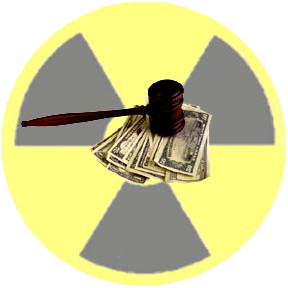
 Revival of renewables sought in debate over nuclear bailout, imaohio.com, By Jim Provance – The (Toledo) Blade, 4 Oct 20, COLUMBUS — EDP Renewables North America, the world’s fourth-largest wind developer, invested more than $700 million into projects in Paulding and Hardin counties when Ohio first rolled out the red carpet.
But more recent signals from the state — including last year’s passage of the $1 billion bailout of two nuclear plants — have convinced the company to look elsewhere for its future investments.
“HB 6 created a false dichotomy — that Ohio must sacrifice a clean-energy future at the expense of its energy past,” Erin Bowser, EDP’s director of project management, on Wednesday told a House of Representatives select committee now considering repealing House Bill 6.
“But rather than pit technologies against each other, we encourage the state to leverage the strengths of each and maximize the contributions that can come from various energy sectors,” she said.
Most of the effects of the law at the heart of a $60 million Statehouse bribery scandal are set to take effect Jan. 1. The law generally creates or expands consumer-fueled subsidies for legacy nuclear and coal-fired power plants in Ohio and offsets those costs by rolling back and eliminating existing surcharges designed to create markets for renewable sources like wind and solar and reduce energy consumption overall.
House Bill 6 — and stricter property-line setback requirements separately enacted several years ago — have rolled up that red carpet first extended in 2008, Bowser said.
The House Select Committee on Energy Policy and Oversight, chaired by state Rep. Jim Hoops, R-Napoleon, whose district includes Putnam County, is considering two bills — separately introduced by Republicans and Democrats — that would outright repeal House Bill 6.
But the committee is also considering whether to replace the law, which has many moving parts that go well beyond the $1 billion, seven-year bailout of the Davis-Besse nuclear power plant near Oak Harbor and its sister Perry plant east of Cleveland.
The law also contains expanded customer subsidies through 2030 for two 1950s-era, coal-fired power plants in southern Ohio and across the border in Indiana that are owned by a consortium of utilities. American Electric Power holds the biggest share.
It also holds $20 million a year for five specific utility-scale solar projects in Hardin County and southern Ohio
The latter provision has caused a split within the Utility Scale Solar Energy Coalition of Ohio, an 18-member trade association for developers, manufacturers, and industry leaders.
“Some of our members benefited from the solar language in current law while others took a loss with the reduction in (the renewable power mandates),” said Jason Rafield, the group’s executive director. “Our members would support a return to the previous (renewable standards) because it’s good for the industry.”
But the projects that have received or been promised a piece of the $20 million solar pie under House Bill 6 don’t want to see that disappear.
Former Ohio House Speaker Larry Householder, R-Glenford, and four of his allies face federal racketeering charges for allegedly using a non-profit corporation to launder some $60 million in “dark money” from FirstEnergy Corp. and related entities.
The money was used to help elect state representatives loyal to Householder, who then helped to elect him speaker in 2019. The new speaker then used his power to push through the law that would provide $150 million a year to support the two nuclear plants owned by a former FirstEnergy subsidiary now called Energy Harbor.
Once it became law, the funding scheme allegedly continued to fight successfully an effort to ask voters to repeal the law on this fall’s ballot. All of the defendants have been accused of diverting some of the money for their personal use……… https://www.limaohio.com/news/430030/revival-of-renewables-sought-in-debate-over-nuclear-bailout
”Peaceful” nuclear powerr for nuclear weaponry in space
 US military eyes nuclear thermal rocket for missions in Earth-moon space, Space.com, By Mike Wall 1 Oct 20,
DARPA awarded a $14 million task order to help make it happen. The U.S. military aims to get a nuclear thermal rocket up and running, to boost its ability to monitor the goings-on in Earth-moon space.
The Defense Advanced Research Projects Agency (DARPA) just awarded a $14 million task order to Gryphon Technologies, a company in Washington, D.C., that provides engineering and technical solutions to national security organizations.
The money will support DARPA’s Demonstration Rocket for Agile Cislunar Operations (DRACO) program, whose main goal is to demonstrate a nuclear thermal propulsion (NTP) system in Earth orbit. ……. https://www.space.com/darpa-nuclear-thermal-rocket-for-moon-contract
Chris Hedges: The Cost of Resistance — Rise Up Times

“The governing elites, when truly threatened, turn the rule of law into farce. Dissent becomes treason. They use the state mechanisms of control – intelligence agencies, police, courts, black propaganda and a compliant press that acts as their echo chamber, along with the jails and prisons, not only to marginalize and isolate rebels, but to psychologically and physically destroy them.”
Chris Hedges: The Cost of Resistance — Rise Up Times
October 4 Energy News — geoharvey

Opinion: ¶ “Trump’s Policies Indicate Love For Toxic And Deadly Pollution, Not Electric Vehicles” • When Trump claimed in the recent debate that “I think I’m all for electric cars, I’ve given big incentives for electric cars, but what they’ve done in California is just crazy,” I cracked up. Then I cried. That’s our president. […]
October 4 Energy News — geoharvey
Trump with Covid-19 – a potential power vacuum. E-6B Mercury nuclear war command posts in flight on each coast
Covid 19 coronavirus: Why ‘doomsday’ nuclear planes have taken to the skies in the US, https://www.nzherald.co.nz/world/news/article.cfm?c_id=2&objectid=12369993 By: Jamie Seidel, 2 Oct 20, America’s doomsday planes are in the air following news that the nation’s commander-in-chief, President Donald Trump, has Covid-19.
 Two US Navy E-6B Mercury nuclear war command posts were observed in flight Friday, one on each coast of the United States. They were initiating the “Take Charge and Move Out” (TACAMO) defence protocol – essentially dispersing the command and communications facilities needed to control the US nuclear arsenal.
These aircraft are activated by the Pentagon when it is deemed necessary to communicate with the US Navy’s secretive nuclear missile submarines, stealth bombers and missile silos.
The move underscores the potential severity of the situation.
The President of the United States is also the commander-in-chief of the nation’s armed forces, including its nuclear forces. The incapacitation of whoever holds this position could be seen as an opportunity by potential belligerents.
Covid-19, which has so far killed 200,000 US citizens, is particularly deadly among older sufferers. President Trump is 74 years old.
It was announced this morning that he is already experiencing “mild symptoms”.
The two E-6Bs appeared on flight tracking systems 30 minutes before Trump announced his condition.
It’s no accident the aircraft were seen.
Military aircraft and ships usually fly with their radio identification transponders turned off in order to avoid being tracked and identified.
 Doomsday Planes
Based on Boeing 707 airliner airframes, the E-6B aircraft have been built to be particularly resistant to electronic warfare and the electromagnetic-pulse generated by nuclear bursts.
About 16 of the aircraft were delivered from 1986. The fleet underwent a major upgrade in 2006.
Their job is to get into the air in the time of crisis. But an unknown number is also maintained aloft at any one time.
In the event of war, their job is to relay commands from the president and defense secretary directly to the deterrent nuclear force. The heart of this force are the Ohio-class nuclear ballistic-missile submarines hiding deep in the world’s oceans. Their immense payloads of nuclear missiles constantly threaten the prospect of a devastating retaliatory blow.
I would expect them to pop up if he tests positive,” US open-source intelligence hobbyist Tim Hogan tweeted with flight tracking maps identifying the flights.
“It’s the plane that has the ability to order the killing of everyone on earth if someone attacks the US with nukes in a first strike. It can talk to our missile subs under water even if DC is gone.”
Talking to submarines deep underwater is no easy task.
Very Low Frequency (VLF) radio can reach about 20m beneath the ocean’s surface. But its transmission speed is very slow and require large, high powered emitters for broadcast. In order to operate this equipment, the E-6B must unspool a kilometres-long wire to act as an aerial.
Command and Control
The US Constitution deals with the prospect of a president who is physically or mentally unable to discharge his duties. The role “shall devolve on the vice president”, it states.
What it doesn’t make clear is how the judgement to “devolve” should be made, or by whom.
The 25th Amendment, enacted in 1967, is supposed to provide a framework for this decision. But it was not initiated in 1981 when President Ronald Reagan was shot. For 10 days Reagan lay near death. But his key powers were not transferred to Vice President George H. W. Bush.
This has raised further questions about how presidential powers would be divested in an emergency. The 25th Amendment calls for a signed statement from the serving President, or if “the vice president and a majority of either the principal officers of the executive departments or of such other body as Congress may by law provide” a similar statement.
The resulting power vacuum, especially in the role of US Commander-in-Chief, potentially poses a strategic risk in times of international – and internal – crisis.
Good living standards for the world can be attained with reduced energy use

Decent living for all does not have to cost the Earth https://www.sciencedaily.com/releases/2020/10/201001113557.htm
- October 1, 2020, University of Leeds
- Summary:
- A new study reveals that decent living standards could be provided to the entire global population of 10 billion that is expected to be reached by 2050, for less than 40% of today’s global energy. This is roughly 25% of that forecast by the International Energy Agency if current trends continue. This level of global energy consumption is roughly the same as that during the 1960s, when the population was only three billion.
-
Global energy consumption in 2050 could be reduced to the levels of the 1960s and still provide a decent standard of living for a population three times larger, according to a new study.
The study led by the University of Leeds has estimated the energy resource needed for everyone to be provided decent living standards in 2050 — meaning all their basic human needs such as shelter, mobility, food and hygiene are met, while also having access to modern, high quality healthcare, education and information technology.
The findings, published in in the journal Global Environmental Change, reveal that decent living standards could be provided to the entire global population of 10 billion that is expected to be reached by 2050, for less than 40% of today’s global energy. This is roughly 25% of that forecast by the International Energy Agency if current trends continue.
- This level of global energy consumption is roughly the same as that during the 1960s, when the population was only three billion.
The authors emphasise that achieving this would require sweeping changes in current consumption, widespread deployment of advanced technologies, and the elimination of mass global inequalities.
However, not only do the findings show that the energy required to provide a decent living could likely be met entirely by clean sources, but it also offers a firm rebuttal to reactive claims that reducing global consumption to sustainable levels requires an end to modern comforts and a ‘return to the dark ages’.
The authors’ tongue in cheek response to the critique that sweeping energy reform would require us all to become ‘cave dwellers’ was: “Yes, perhaps, but these are rather luxurious caves with highly-efficient facilities for cooking, storing food and washing clothes; comfortable temperatures maintained throughout the year, computer networks — among other things — not to mention the larger caves providing universal healthcare and education to all 5-19 year olds.”
- The study calculated minimum final energy requirements, both direct and indirect, to provide decent living standards. Final energy is that delivered to the consumer’s door, for example, heating, electricity or the petrol that goes into a car, rather than the energy embedded in fuels themselves — much of which is lost at power stations in the case of fossil fuels.
The team built a final energy-model, which builds upon a list of basic material needs that underpin human well-being previously developed by Narasimha Rao and Jihoon Min.
The study compared current final energy consumption across 119 countries to the estimates of final energy needed for decent living and found the vast majority of countries are living in significant surplus. In countries that are today’s highest per-capita consumers, energy cuts of nearly 95% are possible while still providing decent living standards to all.
- Study lead author Dr Joel Millward-Hopkins from the School of Earth and Environment at Leeds said: “Currently, only 17% of global final energy consumption is from non-fossil fuel sources. But that is nearly 50% of what we estimate is needed to provide a decent standard of living for all in 2050.”
“Overall, our study is consistent with the long-standing arguments that the technological solutions already exist to support reducing energy consumption to a sustainable level. What we add is that the material sacrifices needed to for these reductions are far smaller than many popular narratives imply.”
Study co-author Professor Julia Steinberger leader of the Living Well Within Limits project at the University Leeds and professor at the Université de Lausanne in Switzerland said: “While government official are levelling charges that environmental activists ‘threaten our way of life’ it is worth re-examining what that way of life should entail. There has been a tendency to simplify the idea of a good life into the notion that more is better.
“It is clearly within our grasp to provide a decent life for everyone while still protecting our climate and ecosystems.”
-
Study co-author Professor Narasimha Rao from Yale University said: “This study also confirms our earlier findings at a global scale that eradicating poverty is not an impediment to climate stabilization, rather it’s the pursuit of unmitigated affluence across the world.”
Study co-author Yannick Oswald, PhD researcher at the School of Earth and Environment at Leeds said: “To avoid ecological collapse, it is clear that drastic and challenging societal transformations must occur at all levels, from the individual to institutional, and from supply through to demand.”
The climate crisis is heating up nights faster than days in many parts of the world
 Global heating warming up ‘nights faster than days’
Effect seen across much of world will have profound consequences, warn scientists . https://www.theguardian.com/environment/2020/oct/01/global-heating-warming-up-nights-faster-than-days Damian Carrington Environment editor @dpcarrington, Thu 1 Oct 2020 09. The climate crisis is heating up nights faster than days in many parts of the world, according to the first worldwide assessment of how global heating is differently affecting days and nights.
The findings have “profound consequences” for wildlife and their ability to adapt to the climate emergency, the researchers said, and for the ability of people to cool off at night during dangerous heatwaves.
The scientists compared the rises in daytime and night-time temperatures over the 35 years up to 2017. Global heating is increasing both, but they found that over more than half of the world’s land there was a difference of at least 0.25C between the day and night rises.
In two-thirds of those places, nights were warming faster than the days, Continue reading
It’s important to bust the pro-nuclear spin
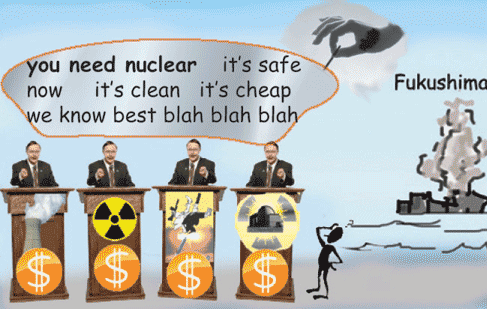
It’s important to bust the pro-nuclear spin, Millennium Alliance for Humanity and the Biosphere (MAHB), Noel Wauchope | October 1, 2020 ”……………. cutting through the spin, where do we start? The reason that I start with the nuclear industry is that it is utterly symbolic of the lies, the deceptions, that prop up the polluting industries that are ruining the natural world on which we depend.
It is the most dangerous arena of industry lying because its proponents have very successfully put across the idea that only the ”experts” those with technical knowledge of nuclear physics, can have a valid opinion. I think that’s why journalists world-wide are content to simply regurgitate industry handouts as ”news” – often as an excited recitation of a sequence of technical procedures, with detailed technical illustrations. The only bit that is easily understood is the bit where they’ll say that nuclear power is “zero-carbon” “essential to combat climate change”. But is that bit true?
Any doubt about nuclear power fixing climate change is not explored, because, after all, the society at large, including the journalists, do not understand nuclear physics. They might know a bit about history, ecology, biology, radiation effects, sociology, economics, indigenous rights, conflict resolution, – but hey, that’s all soft stuff and doesn’t matter.
The lying began with the very conception of the nuclear monster. First, the idea that it’s OK for war attacks to focus on massacring civilians – this reached its greatest acceptance with the atomic bombing of Hiroshima and Nagasaki. Then came that first big factual lie, that this bombing was necessary to end the war. This comfortable belief has been refuted by many recent studies that indicate that the real motive was to intimidate the Russians and that Japan was already set to surrender, anyway. The persecution of Wilfred Burchett, and the suppression of his reporting, set off the deception that the effects of ionizing radiation are not all that bad, really.
The next lie, again a very comforting belief, is that this new horror could be turned into something really good – nuclear reactors, safe, cheap, electricity – a peaceful purpose.
It was never safe. You just ignore the cancers among the uranium mining communities, and nuclear workers. You ignore the many radiological and nuclear accidents and messes, even the big ones – Chalk River, Rocky Flats, Windscale, Soviet ice-breaker Lenin, Mayak, Three Mile Island, Chernobyl, Tomsk, Hanford, Fukushima. The risk of terrorism, using nuclear materials, is ever-present.
It was never cheap. You just ignore the costs of the health and environmental damage due to uranium mining, and to the many accidents. The insurance industry understands this, which is why laws like the Price Anderson Act are there, to make sure that the tax-payer cops the costs of nuclear accidents. You just don’t count the costs of disposing of the virtually eternal radioactive wastes, including dead reactors, and the necessary security involved.
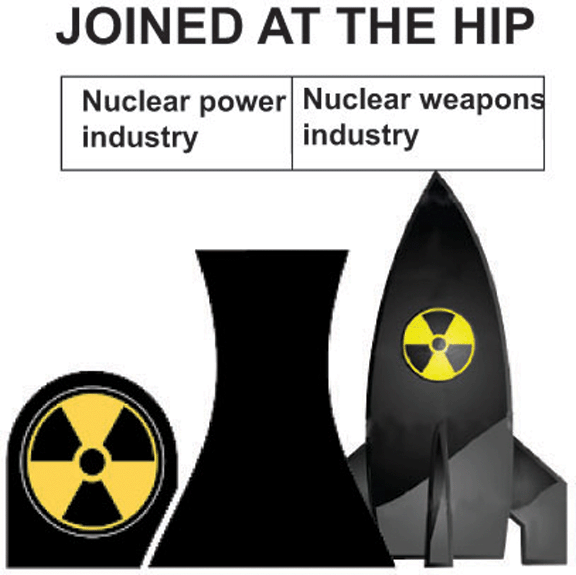
It was never peaceful. The prime purpose of nuclear reactors was to produce that novel element – plutonium, for nuclear weapons. Every country that now has nuclear weapons began that process by getting “peaceful” nuclear power. We must wonder why Gulf states like Saudi Arabia, with abundant oil and sunshine resources, are so keen to get nuclear power. Today, the nuclear industry no longer makes the pretense that there is no connection between commercial and military reactors. and indeed, calls for government subsidy because of its role in national security. It is particularly worrying that the media enthuses over space research, while the USA and other nuclear nations are planning for nuclear-powered weapons in space.
When it comes to global heating, it’s a terrible shame that the media keeps on buying the nuclear deception about this. Even if nuclear power were ”zero-carbon” – there would have to be thousands of reactors, (millions of small ones) operating very quickly, to have any effect. But global heating is happening too fast for that. “Zero carbon” is also nonsense when you consider the whole nuclear fuel chain – those many operations that go on from uranium mining through to the building and operation of nuclear waste dumps.
Nuclear medicine is becoming somewhat of a fig leaf on the industry. It still has its role. But, non-nuclear technologies – cyclotrons are coming into operation, and produce the medical radioisotopes far more conveniently, and near hospitals, close to the point of use.
The nuclear lobby’s most questionable deception, which was shown in its glossy propaganda film “Pandora’s Promise”, is that the world needs endless energy use, for the world’s expanding human population. Indeed, we learn that nuclear is needed to set up colonies on Mars when we’ve mucked up this planet.
Not that the nuclear lobby is the only one advocating endless energy use. Some renewable energy advocates have this same idea. It’s an idea tied to our mistaken culture of growth.
During this period of pandemic economic paralysis, and despite all the suffering, many people have the chance to reflect on the world’s rather perilous situation. Many citizen scientists, citizen journalists, are asking the necessary questions. We need to be aware, to bust through, the vested interests, the jargon, the lies, that keep us hooked to the growth paradigm. There is no better spin bubble to bust than the nuclear one. https://mahb.stanford.edu/blog/its-important-to-bust-the-pro-nuclear-spin/
1 This Month

Tell Congress: Prevent Nuclear Catastrophe in Iran

Tell Congress: Prevent Nuclear Catastrophe in Iran

Read the Public Inquiry Report, the Commissioners’ report, Surrendering Australia: The AUKUS Deception is available to download for free at aukuspublicinquiry.com. Or just watch the replay of the National Press Club Luncheon.


Shut down the radiation-damaged Heysham nuclear reactors now
To see nuclear-related stories in greater depth and intensity – go to https://nuclearinformation.wordpress.com

Say No to NASA’s Reckless Nuclear Reactor on the Moon
Say No to NASA’s Reckless Nuclear Reactor on the Moon
-
Archives
- November 2026 (269)
- October 2026 (302)
- September 2026 (339)
- August 2026 (330)
- July 2026 (355)
- June 2026 (287)
- May 2026 (306)
- April 2026 (356)
- March 2026 (251)
- February 2026 (267)
- January 2026 (308)
- December 2025 (358)
-
Categories
- 1
- 1 NUCLEAR ISSUES
- business and costs
- climate change
- culture and arts
- ENERGY
- environment
- health
- history
- indigenous issues
- Legal
- marketing of nuclear
- media
- opposition to nuclear
- PERSONAL STORIES
- politics
- politics international
- Religion and ethics
- safety
- secrets,lies and civil liberties
- spinbuster
- technology
- Uranium
- wastes
- weapons and war
- Women
- 2 WORLD
- ACTION
- AFRICA
- Atrocities
- AUSTRALIA
- Christina's notes
- Christina's themes
- culture and arts
- Events
- Fuk 2022
- Fuk 2023
- Fukushima 2017
- Fukushima 2018
- fukushima 2019
- Fukushima 2020
- Fukushima 2021
- general
- global warming
- Humour (God we need it)
- Nuclear
- RARE EARTHS
- Reference
- resources – print
- Resources -audiovicual
- Weekly Newsletter
- World
- World Nuclear
- YouTube
-
RSS
Entries RSS
Comments RSS

