Japan’s government is appealing the landmark ruling about its responsibility for Fukushima nuclear accident
Landmark Court Ruling In Japan Holds Government Accountable For 2011 Nuclear Meltdown https://www.npr.org/2020/10/15/924150284/landmark-court-ruling-in-japan-holds-government-accountable-for-2011-nuclear-mel
 Heard on All Things Considered, ANTHONY KUHN, 15 Oct 20, Japan’s government is appealing a landmark court ruling that holds it responsible for failing to prevent the worst nuclear accident in the country’s history and orders it to pay damages to victims. AILSA CHANG, HOST: The Japanese government and a nuclear power plant operator have appealed a landmark court ruling. The ruling holds them responsible for the country’s worst ever nuclear accident. The 2011 Fukushima meltdown was triggered by a huge earthquake and tsunami. But as NPR’s Anthony Kuhn reports from Seoul, plaintiffs are concerned that justice is being delayed once again. (CHEERING) ANTHONY KUHN, BYLINE: Cheering broke out outside the high court in the city of Sendai, about 60 miles north of the crippled Fukushima nuclear plant last month. To many people’s surprise, the court’s ruling held the central government and the Tokyo Electric Power Company – or TEPCO, which runs the plant – equally responsible for the accident. Plaintiffs argued that scientists had warned the government in 2002 that a major tsunami could hit the area. The court said in its scathing verdict that the government failed to take action. TAKASHI NAKAJIMA: (Speaking Japanese).KUHN: “The government, despite its position as regulator, just let TEPCO do as it pleased and let it put off safety measures. It was gross negligence, and it was an attitude unbefitting a regulatory agency.” That was Takashi Nakajima paraphrasing the court’s verdict. He’s a leader among the nearly 3,600 plaintiffs in the case. The Sendai court ordered the government and TEPCO to pay them $9.6 million in compensation, double what a lower court had ruled three years ago. Many people in Nakajima’s community near Fukushima fled their homes. He says he filed the lawsuit basically just to say, give me back my former life. NAKAJIMA: (Speaking Japanese). KUHN: “Imagine how you would feel,” he says, “if suddenly you get into a situation where you can never go back to your hometown because there’s a risk of radiation.” Nakajima runs a supermarket, but he says that fears about radiation in waters near Fukushima make it impossible to sell the local fish in which he used to take such pride. NAKAJIMA: (Speaking Japanese). KUHN: “The fishermen eat them because they’ve been eating them for a long time,” he says, “and they’re tasty. But their sons and daughters-in-law tell them that their grandchildren should not eat them. This is a situation which divides many families.” Judges in the Sendai verdict appear to have been especially sympathetic to such hardships. Eri Osaka, a law professor at Toyo University in Tokyo, explains. ERI OSAKA: (Through translator) The Sendai High Court judges actually visited the area at issue in the trial before the decision was made. It’s very unusual that judges truly understand what hardships the victims are experiencing. KUHN: Some plaintiffs in similar lawsuits have not been as fortunate as Nakajima and have lost. Professor Masafumi Yokemoto, a professor of environmental policy at Osaka City University, says the Sendai verdict could change that. MASAFUMI YOKEMOTO: (Speaking Japanese). KUHN: “This is the first time a decision recognizing the government’s full responsibility has been made at the high court level,” he says, “although it was partly recognized by a lower court. It’s very significant, and it’ll clearly influence future decisions.” That’s why many observers were not surprised when the government and TEPCO appealed the verdict on Tuesday. Plaintiff Takashi Nakajima hopes that the Sendai court ruling will eventually pave the way for the shutdown of all dangerous nuclear power plants in Japan. But whether or not the ruling stands will now be up to Japan’s Supreme Court to decide. Anthony Kuhn, NPR News, Seoul. |
|
Japan’s government planning to dump into the sea, the radioactive water from Fukushima No. 1 nuclear reactor
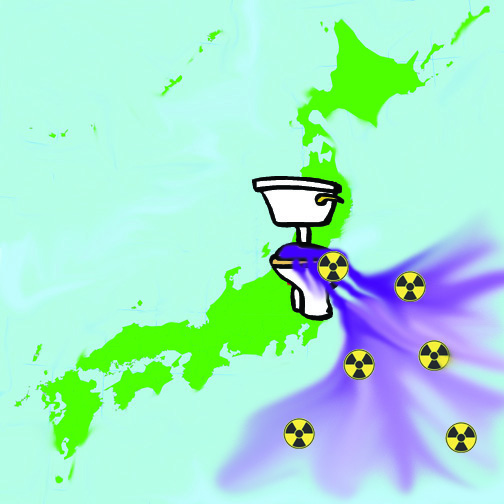 Fukushima No. 1 nuclear plant wastewater looks headed for ocean, THE ASAHI SHIMBUN, October 16, 2020 The government is moving toward the controversial disposal method for contaminated water at the crippled Fukushima No. 1 nuclear power plant of dumping it into the ocean.
Fishermen have fiercely opposed this disposal method at the plant, which experienced a triple meltdown in March 2011 following a magnitude-9.0 earthquake and tsunami, over fears of resulting negative publicity hurting their industry.
The central government is likely to hold a meeting of relevant Cabinet ministers before the end of October to make a formal decision on the dumping, sources said.
Before being dumped into the ocean, the stored water would be processed a second time and diluted with seawater to lower levels of radioactive materials below legally established standards.
It is expected to take about two years to prepare for the dumping process.
Water contaminated with radioactive materials continues to be produced at the Fukushima No. 1 plant at a daily rate of about 140 tons. Water used to cool melted spent nuclear fuel mixes in with groundwater that leaks into the reactor building.
Tokyo Electric Power Co., the operator of the plant, treats the contaminated water using equipment called advanced liquid processing systems, or ALPS, before storing the water in tanks on the plant grounds.
But about 1.2 million tons of processed water is being stored in tanks and TEPCO has estimated that tank capacity will be reached by the summer of 2022 even under the current plan to build more tanks.
Because about two years is needed to construct the necessary equipment to dispose of the contaminated water and to pass screening by the Nuclear Regulation Authority, a decision on disposal of the water was expected by this summer.
A subcommittee of experts set up by the economy ministry compiled a proposal in February that said the two realistic alternatives were to dump the water into the ocean or release it into the atmosphere. The panel added that dumping the water into the ocean was the method that could be implemented with certainty.
Since April, the government has conducted seven hearings involving local government officials, farming and fisheries organizations and business groups on the issue……… http://www.asahi.com/ajw/articles/13831640
On climate: instead of denial or despair, there’s determined resolve
 ATLANTIC PLANET Scylla and Charybdis, Beyond climate denial and despair, The Atlantic, LAWRENCE
 WESCHLER 16 Oct 20 ”……………………..There is only one truly serious political problem facing all of us today, and that is climate change. Judging whether or not the human prospect on our planet is worth saving is the fundamental question confronting Americans in particular these coming weeks. Everything else—the fate of the Affordable Care Act, especially in the context of a rampaging pandemic; whether identity politics ought to supersede class solidarity; whether immigration controls should be tightened or loosened; even what to do about that Supreme Court vacancy—comes afterward………..
But it is possible, and urgent, to imagine a third possibility in lieu of Denial and Despair, a path forging clean between them: the course of Determined Resolve.
It’s worth remembering, for example, that the entire Manhattan Project in its Los Alamos incarnation, from soup to nuts—from the erection of those barracks and the ingathering of those scientists through the dropping of the first atomic bomb in Hiroshima, as hideous as that outcome proved—took less than three years. And if the prospect of climate disaster indeed calls us to what William James once cast as “the moral equivalent of war,” what would it be like if a president (or, for the time being, just a candidate for the presidency) promised to exercise his considerable authority by bringing together the finest minds in the country (not just scientists but educators and social workers and writers and artists and thinkers and managers as well) to brainstorm better battery technologies; quantum improvements in solar, tidal, and wind technologies and disbursements; desalinization; carbon-capture technologies; meat replacements; massive reforestation; resilient coastline and floodplain projects; ….—all on a virtually wartime footing, worthy of the urgencies and streamlined exigencies involved?……..
And as for all those other campaign issues, almost all of them can be subsumed within the wider climate debate, or at least viewed in ways that render the climate component crucial. Black lives matter, to be sure, but that’s all the more reason to foreground environmental-justice initiatives. This current pandemic may well turn out to be just the first of many more occasioned by mankind’s relentless encroachment on nature. If you think tidal migrations are politically destabilizing now, just wait until the migrations necessitated by the rising seas caused by polar melts or the narrowing zones of habitability caused by droughts, their attendant firestorms, and the ensuing wars for arable land really begin to kick in. …….. https://www.theatlantic.com/science/archive/2020/10/lawrence-weschler-beyond-climate-denial-and-despair/616698/
Dangerous radiation levels from fracking
I have raised this concern in several letters to the Guardian over the past seven years. Indeed, seven years ago this month, Public Health England said in a review of potential risks that “there is … the potential for radon gas to be present in natural gas extracted from UK shale”.
Eight years ago, Dr Marvin Resnikoff, of Radioactive Waste Management Associates, estimated that radon levels from the Marcellus gas field in the eastern US were up to 70 times the average, and suggested that the radiation from some shale gas deposits was as much as 30 times as high as natural background levels.
Hence, there is undoubtedly a risk of radon gas being pumped into citizens’ homes as part of the shale gas stream. Unless the gas is stored for up to a month to allow the radon’s radioactivity to naturally reduce, this is potentially very dangerous.
Dr David Lowry
Senior international research fellow, Institute for Resource and Security Studies
Divisive nuclear waste programme in South Bruce, Ontario
|
Proposed 1,500-acre site mapped out for Canadian nuclear waste storage in South Bruce, Ont. Scott Miller CTV News London Videographer @ScottMillerCTV October 15, 2020 TEESWATER, ONT. — We now know exactly where a proposed underground facility to house Canada’s nuclear waste will be, if it comes to fruition.
The Nuclear Waste Management Organization (NWMO) has secured all of the 1,500 acres of farmland they will need to permanently store over five million used nuclear fuel bundles that once powered Canada’s nuclear plants……… Securing all the land they need, means the NWMO can start borehole drilling in the spring, to ensure the geology of the region can support the underground project that is being designed to house the radioactive waste, forever. Similar work is underway in Ignace, the other Northern Ontario community still in the running to host the controversial project. To address community concerns, the NWMO says they’re committing to a program to compensate landowners if property values fall because of the project, if it’s built in South Bruce…….. The project has divided the small, rural community of roughly 6,000 residents. ……… The NWMO plans to pick South Bruce or Ignace to house Canada’s high level nuclear waste by 2023. https://london.ctvnews.ca/proposed-1-500-acre-site-mapped-out-for-canadian-nuclear-waste-storage-in-south-bruce-ont-1.5146504 |
|
|
Bankrupt Mallinckrodt company faces large liabilities in radioactive trash cleanup
 Bankrupt Mallinckrodt may still be expected to help shoulder nuclear cleanup costs, St Louis Post
 Dispatch, Bryce Gray, 17 Oct 20
- ST. LOUIS — Two sets of nuclear waste complaints against Mallinckrodt have been thrown into question in a two-week span, while the company restructures in bankruptcy court.
Facing a wave of lawsuits and a $1.6 billion settlement stemming from its role in the national opioid crisis, the company with deep St. Louis roots filed for protection from creditors on Monday.
While industry analysts have focused on Mallinckrodt’s future as a drugmaker, the company also faces potential liabilities for work a predecessor company, St. Louis-based Mallinckrodt Chemical Works, performed decades ago, when it processed uranium for the U.S. government. Radioactive waste left over from Mallinckrodt’s uranium production is buried today in the West Lake Landfill Superfund site in Bridgeton and also along sections of Coldwater Creek, which runs from St. Ann to the Missouri River.
On Sept. 30, a two-year-old lawsuit aimed at getting Mallinckrodt to help shoulder the looming $205 million cleanup at West Lake was dismissed, but appears to be in mediation. Lawyers involved with the case warn that, despite the dismissal, the matters at hand remain unresolved and under discussion. ……
The dispute arose in 2018, when — after decades of inaction — a plan to soon excavate the bulk of West Lake’s radioactivity was finally announced. In the months that followed, Republic Services — the waste hauling company whose subsidiary, Bridgeton Landfill LLC, is the legal owner of the Superfund site — initiated a chain of legal actions against Mallinckrodt and other entities in an apparent strategy to spread out the nine-figure cost of the site’s long-awaited cleanup.
Allegations in the ensuing lawsuits focused on the histories of Mallinckrodt and other parties that Republic said belong at “the table,” regarding work at West Lake.
Mallinckrodt was the first to be roped into the litigation. During the development of the atomic bomb in World War II, the company “purified and provided all of the uranium oxide used by the Manhattan Project,” according to its website. Some of the radioactive waste from the company’s St. Louis operations eventually made it to West Lake Landfill, where it was illegally dumped in the 1970s…….….
West Lake’s cleanup is not the only matter involving radioactive waste that could affect Mallinckrodt.
For almost a decade, the company has confronted personal injury lawsuits alleging that residents of surrounding communities have faced cancers and other health issues caused by the legacy of radioactive contamination along Coldwater Creek, after waste from Mallinckrodt was stored and buried at an upstream site near the airport.
Some of the cases — which originated in 2012 — have already been settled, and lawyers said in a hearing Wednesday that settlements that were verbally approved would not likely be affected by Mallinckrodt’s bankruptcy case. Outstanding cases will likely be stayed while bankruptcy proceedings take place, though it’s not clear what may happen next.
Back at West Lake, cleanup costs are currently set to be divided among Republic and two other parties deemed liable at the site: the U.S. Department of Energy and Exelon, the Chicago energy company that formerly owned the uranium processor, Cotter Corp., through a subsidiary….. https://www.stltoday.com/business/local/bankrupt-mallinckrodt-may-still-be-expected-to-help-shoulder-nuclear-cleanup-costs/article_dc7643f9-fc32-53e4-9a98-d1bcafdcdcc8.html
‘Fracking’ with its environmental harms, now acceptable to U.S. Democrats, to help win the election?
 Press Worries About a Fracking Ban’s ‘Risk’ to Democrats—Not Fracking’s Threat to Planet, Fair,
“I will repeat, and the American people know, that Joe Biden will not ban fracking. That is a fact,” Harris said.
Harris emphasized that Biden “believes” in science; claimed that he “understands that the West Coast of our country is burning” and “sees what is happening on the Gulf states, which are being battered by storms”; and that he has “seen and talked with the farmers in Iowa, whose entire crops have been destroyed because of floods.”
One can —only wonder whether Biden or Harris truly “believe” in science when they pretend a fracking ban and a host of other strong climate measures are not urgent necessities required immediately. In 2018, the UN’s Intergovernmental Panel on Climate Change announced that carbon pollution needed to be cut by 45% by 2030 in order to keep the planet below the critical 1.5°C warming threshold to prevent irreversible planetary devastation (Guardian, 10/8/18). As time goes on, more reports inform us that pollution and the climate crisis are actually even worse than we thought (e.g., Vox, 8/12/20; New York Times, 10/23/19, 12/4/19).
Yet whenever there are discussions about enacting a national fracking ban, corporate media seem to prioritize the supposed short-term potential “risks” to Democrats’ electoral prospects, or potential economic downturns, over the long-term prospects for human civilization’s survival.
When there was discussion of Sen. Bernie Sanders and Rep. Alexandria Ocasio-Cortez’s bill for a nationwide fracking ban earlier this year, the New York Times’ “In Crucial Pennsylvania, Democrats Worry a Fracking Ban Could Sink Them” (1/27/20) cited a few state Democratic politicians claiming that any presidential candidate who supports a national fracking ban would risk losing Pennsylvania in the general election. The Times trivialized the issue by reducing it to a “political bet,” with the highest stakes being the mere loss of a Democratic presidency, as opposed to dooming humanity to climate apartheid (FAIR.org, 7/30/19) and ultimately losing human life as we know it
to natural disasters (FAIR.org, 6/11/19, 9/5/19, 1/3/20, 9/18/20). The Times’ Lisa Friedman and Shane Goldmacher wrote:
A pledge to ban all hydraulic fracturing, better known as fracking, could jeopardize any presidential candidate’s chances of winning this most critical of battleground states — and thus the presidency itself… In some ways, the fracking ban is indicative of the entire political bet undergirding the candidacies of Mr. Sanders and Ms. Warren that the 2020 campaign will not be won by appeals to the narrow interests of traditional swing voters but through the mass mobilization of an energized electorate.
NPR’s “Proposals to Ban Fracking Could Hurt Democrats in Key States” (2/11/20) likewise made dubious pronouncements on the opinions of swing-state voters the focal point of the story, as opposed to what actions are required to resolve the climate crisis:
Climate change is a top issue in the Democratic presidential primaries and some candidates have taken relatively aggressive policy stands, including vows to ban hydraulic fracturing. But some Democrats worry that could push moderate voters in key swing states to reelect President Trump next November… In a swing state like Pennsylvania, a major gas producer, fracking and energy are key issues. Even a small segment of voters swayed one way or another could change the election.
After the primaries, it’s clear that corporate media believe it’s their duty to function as Biden’s de facto campaign manager by explaining to voters what Biden’s position on a fracking ban actually is, as well as advising Biden to reject a fracking ban because, they claim, that would be an electoral disaster. Soon after the debate, Quartz (10/8/20) explained that Biden and Harris don’t support a fracking ban, because it “tempts political suicide in swing states like Pennsylvania and Ohio where fossil fuels still rule.” Why an electoral disaster ought to be prioritized over civilizational disaster is never explained. …….
Environmental activist Bill McKibben (New Yorker, 10/9/19) pointed out that US claims to have reduced carbon emissions during the past 20 years have mainly been accomplished by replacing coal-fired power plants with natural gas-fired power plants. While burning gas produces less carbon dioxide than coal, carbon dioxide isn’t the only greenhouse gas. The second most important contributor is methane, which can warm the planet more than 80 times as much as the same amount of carbon dioxide over a 20-year period.
“Fracking,” more formally known as “hydraulic fracturing,” is a method of extracting natural gas (as well as oil) from the ground with a horizontal drilling process that pumps water, sand and chemicals into the ground to fracture rocks that release fossil fuels. And in the process of fracking, lots of methane leaks out at every stage. The US strategy of reducing carbon emissions without reducing the total amount of greenhouse gases emitted is a form of literal gaslighting that encourages other countries to do the same.
The New York Times (11/8/19, 12/16/19) has published a series of excellent investigative reports that used infrared video gear and satellite measurements to capture the invisible methane emissions at “super emitter” fracking sites, where large-scale methane leaks are responsible for a disproportionately high share of methane emissions. The Times (6/21/18, 2/19/20) has also reported on findings showing that the US oil and gas industry is responsible for a much larger proportion of methane emissions than the US government previously thought, with oil and gas production in general being more responsible for soaring methane levels than natural sources, like the ocean bed and mud volcanoes. ……
FAIR (10/16/19) has pointed out how corporate media cheerleading of the “Shale Revolution” helped lead the US to become the world’s largest oil and gas producer during the Obama years; when they bemoaned the loss of fossil fuel emissions during the Covid pandemic (FAIR.org, 4/29/20), corporate journalists seemed more concerned with the profits of advertisers than with the survival of human civilization. Running excuses for presidential candidates in the pocket of the fossil fuel industry is only more evidence of the same.
Environmental and labor activists, economists and scientists have for years discussed the need for a full employment program based on green jobs to serve as a just transition for workers who would be displaced by a fracking ban; there is no reason for a fracking ban to be “political suicide” unless corporate journalists are determined to equate that with the death of the fossil fuel industry. https://fair.org/home/press-worries-about-a-fracking-bans-risk-to-democrats-not-frackings-threat-to-planet/
Nuclear waste – a danger for countless generations to come
 The World’s Growing Nuclear Waste Dilemma, Oil Price, By Haley Zaremba – Oct 15, 2020,
”……….Just last month, the World Nuclear Industry Status Report showed the shocking statistic that nuclear is now the most expensive form of power generation in the world, with the sole exception of gas peaking plants.
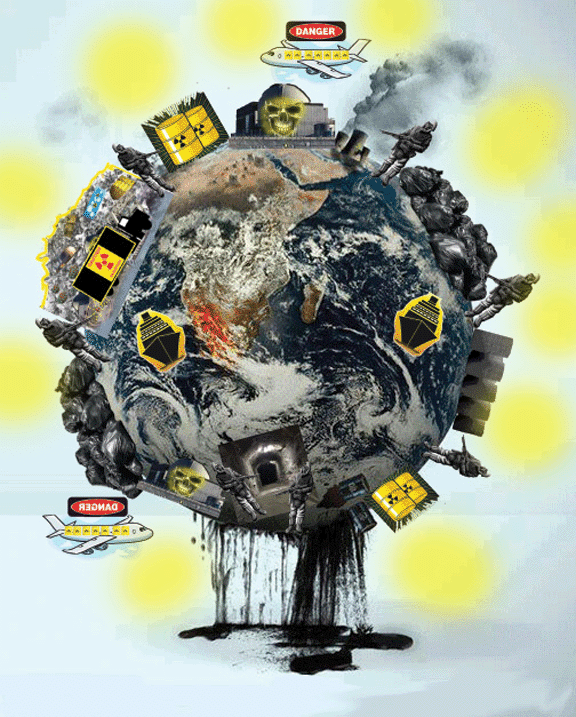
And then there’s the issue of nuclear waste, and it’s not a minor one. Around the world, radioactive waste is piling up, and managing it is a huge expense, not to mention a public health risk of massive proportions if not handled appropriately. Spent nuclear fuel is so hazardous because the waste, in particular uranium and plutonium, is highly radioactive with a half-life that will outlast all of us.
Recently, different nuclear-powered countries around the world have been pursuing “final disposal sites” for their nuclear waste. This process consists of converting this radioactive waste into a kind of glass via a process known as vitrification. This glass will then be stored inside of stainless steel vessels that will be kept in a pool to maintain a cool temperature until they are finally transferred to their final resting place deep underground, where they will remain undisturbed until their amount of radioactivity has decreased to a level that they can be handled safely–a period of time anywhere from 1,000 to 100,000 years. …….
controversy in Japan is directly related to that nation’s particular history to be sure, but it is part of a global problem. Nuclear waste is not just a hazard for ourselves, but for countless generations to come, and we cannot afford to be cavalier with its management. Finding a place for the spent nuclear fuel that has already been created by generations past and that yet to be produced cannot be rushed or thrust upon those who do not want it but have no power to refuse it. Final disposal sites are certainly a step forward but Japan shows us that they’re also, ultimately, a flawed solution. https://oilprice.com/Alternative-Energy/Nuclear-Power/The-Worlds-Growing-Nuclear-Waste-Dilemma.amp.html?fbclid=IwAR0JRIxFnP5MRLyuvJwNwXU8KV39E7ZHA9qeNzRbF-6dr3KQzysGQidJsU4
Japan’s government ignores U.N. nuclear ban treaty, puts out feeble anti-nuclear weapons resolution
Japan submits anti-nuclear resolution with no mention of ban pact, https://www.japantimes.co.jp/news/2020/10/16/national/japan-un-nuke-resolution-ban-pact/ NEW YORK – Japan submitted an anti-nuclear resolution to a panel at the United Nations on Thursday, but the text made no direct reference to a U.N.-adopted nuclear ban treaty likely to go into effect early next year.
Opting not to mention the Treaty on the Prohibition of Nuclear Weapons, which is expected to cross the needed threshold of ratification soon and take effect 90 days later, apparently reflects Japan’s ties with the United States, its key security ally which opposes the pact and provides security assurances to Japan under its so-called nuclear umbrella.
Tokyo’s stance on the matter appears to have remained unaltered after the first change to the country’s leadership in nearly eight years, with Prime Minister Yoshihide Suga replacing former Prime Minister Shinzo Abe last month.
As the only country in the world to have suffered atomic bombings, Japan has submitted an anti-nuclear resolution to the United Nations every year since 1994. But versions of the annual resolution submitted since the nuclear ban pact was adopted in 2017 make no mention of it.
So far, 47 countries and regions have completed ratification procedures for the nuclear ban treaty, with a total of 50 ratifications needed for it to take effect.
Japan opposed the nuclear ban pact along with the five permanent members of the U.N. Security Council, which are all nuclear powers.
The nation’s latest resolution preserves phrasing from last year about the devastating humanitarian impacts of nuclear weapons, which was worded less strongly than previous versions that until 2018 expressed deep concern on the matter.
Japan’s resolution is likely to pass the U.N. General Assembly’s First Committee on disarmament issues by early November before being adopted at the General Assembly by the end of the year.
Elimination of nuclear weapons is vital to the “survival of life on this planet”
Secretary-General António Guterres told delegates gathered to commemorate the International Day for the Total Elimination of Nuclear Weapons, it was the only way “to completely eliminate nuclear risk.”
And although nuclear disarmament has been a UN priority since its founding 75 years ago, he reminded the plenary meeting that “the world continues to live in the shadow of nuclear catastrophe”.
For security’s sake
Progress towards the total elimination of nuclear weapons has “stalled and is at risk of backsliding”, the UN chief warned.
Against the backdrop of growing distrust and tension between Nuclear Weapon States (NWS) – and programmes that modernize arsenals for faster, stealthier and more accurate weapons, with costs Mr. Guterres called “simply staggering” – he said, pointedly, that the only treaty restricting the size of the world’s largest nuclear arsenals is set to expire early next year – threatening a return to “unconstrained strategic competition”.
“For the sake of all of our security, the world must return to a common path towards nuclear disarmament”, he underscored, adding that it is “imperative” for Russia and the United States to extend, “without delay”, the new Strategic Arms Reduction Treaty (START) for the maximum duration of five years.
Among other things, START calls for halving the number of strategic nuclear missile launchers and establishing a new inspection and verification regime within seven years from the date the treaty enters into force.
The Secretary-General upheld that NWS “have a responsibility to lead”, including by honouring their existing commitments and taking steps to reduce nuclear risks.
“Especially in today’s tense international security environment, with rising friction between major powers, such steps are more necessary than ever”, he spelled out.
n conclusion, the Secretary-General advocated for “a strengthened, inclusive and renewed multilateralism built on trust” with human security at its centre, to “guide us to our shared goal of a world free of nuclear weapons”.
Stop wasting time
Meanwhile, Volkan Bozkir, President of the 75th session of the General Assembly, noted that amidst rising global tensions, the disarmament architecture is “under significant strain”.
“Parties have withdrawn from nuclear-related agreements and others are set to expire”, he elaborated, adding that “some Member States have threatened to restart nuclear testing”.
Mr. Bozkir stressed the need to return to “the common goal” of a nuclear-weapons free world weapons and flagged the cornerstone Treaty on the Non-Proliferation of Nuclear Weapons (NPT) and Secretary-General’s Agenda for Disarmament, as the right tools to achieve it.
Noting that this year marks the 50th anniversary of the NPT, the Assembly president urged its States’ Parties to use the postponed 2020 NPT Review Conference next year, to renew their commitments and discuss “practical steps in nuclear disarmament”.
“Nuclear disarmament must remain a priority to all of us”, he underscored. “We cannot afford to waste any more time”.
Policy of no uranium enrichment, no reprocessing, essential for Middle East to prevent nuclear arms proliferation
 To Prevent Proliferation, Stop Enrichment and Reprocessing in the Middle EastThere is a risk of a nuclear cascade across the region. The United States can stop it by enforcing the gold standard of nonproliferation. Foreign Policy, BY VICTOR GILINSKY, HENRY SOKOLSKI, OCTOBER 15, 2020,
If Washington is serious about blocking the further spread of nuclear weapons in the Middle East, it must apply a firm rule: no spent reactor fuel reprocessing or uranium enrichment—by anyone in the region. Uranium enrichment allows production of bomb-grade uranium, and spent fuel reprocessing extracts plutonium, the other important nuclear explosive.
Washington insiders, including nuclear lobbyists and nuclear enthusiasts within the Trump administration, oppose such a restriction. The nuclear power industry is still dangling deals before receptive Middle Eastern rulers, notably the Saudi crown prince, Mohammed bin Salman, and pressing Congress to allow accommodative “agreements for cooperation” with Middle Eastern countries to make the deals more attractive. Although the United Arab Emirates accepted the gold standard—obligating it to forgo enriching or reprocessing—Saudi Arabia, with more on its mind than the generation of electricity, detests this condition. Middle East experts claim it is offensive to Riyadh’s pride, and Washington should therefore take a softer approach.
Washington will soon face other decisions: U.S. agreements for civilian nuclear cooperation are coming up for renewal with Egypt and Morocco in 2021, and with Turkey in 2023. The nuclear industry will try to keep Congress from imposing strict rules—industry seldom has to worry about the executive branch, as both Democratic and Republican administrations traditionally support U.S. nuclear exports—but it is vital to maintain the of the gold standard for all three.
Ideally, it should be U.S. policy to eliminate fuel facilities that can produce nuclear explosives from Morocco to Iran. This would have to include Israel. It would not affect Israel’s existing nuclear arsenal but would cap it and point the way for its security to depend less on nuclear weapons.
Enforcing the gold standard for the region would signal a serious effort to end the spread of nuclear weapons there as opposed to the standing policy of minimizing proliferation—in effect, acquiescing to it so long as it proceeds at a slow pace. In past Middle East agreements (with the exception of the one with the UAE), the United States controlled reprocessing and enrichment, but only of U.S.-origin nuclear materials. That’s not good enough. Washington must insist on a ban covering nuclear materials from any source……
Westinghouse, which is often put in this category, hasn’t been U.S.-owned for 20 years. Its last two nuclear construction projects drove it into bankruptcy and almost bankrupted its Japanese owners. A Canadian firm, Brookfield Asset Management, bought what remained of it.
In fact, nuclear power is no longer a pathbreaking technology that defines a country’s scientific status, nor is it commercially competitive. For example, large light-water reactors will never be built again in the United States—they’re simply too expensive. Small reactors have some advantages, but they will likely be even more expensive per unit of energy. The Middle East’s energy future lies in investments in renewables, natural gas, and the integration of pipelines and electric grids. That should be part of Washington’s message.
The main U.S. objective, however, should be to make the Middle East’s security consistent with the Nuclear Non-Proliferation Treaty. Earlier this month, Egypt’s Foreign Minister Sameh Shoukry called for a nuclear weapon-free zone in the Middle East to help bolster the treaty.
Our proposal for a no-enrichment and no-reprocessing zone for all countries in the area may be more feasible, and if achieved, have more lasting significance—it would preclude the possibility of non-nuclear states making nuclear weapons and would thereby undercut the argument for any state in the region to possess such weapons to defend itself. https://foreignpolicy.com/2020/10/15/to-prevent-proliferation-stop-enrichment-and-reprocessing-in-the-middle-east/
Putin suggests extending the START nuclear weapons control treaty for another year
 Russia’s Vladimir Putin proposes yearlong extension of New START nuclear treaty with U.S. “It would be extremely sad if the treaty ceases to exist without being replaced by another fundamental document of the kind,” Putin said. Oct. 17, 2020, NBC News, By The Associated Press, MOSCOW — Russian President Vladimir Putin on Friday made a strong call to save the last existing nuclear arms control pact between his country and the United States, proposing to extend it at least for one year.Putin’s statement comes amid conflicting signals from Russian and U.S. diplomats about the fate of the New START treaty that is set to expire in February unless Moscow and Washington agree on its extension.
Speaking at a meeting of his Security Council, Putin said that “it would be extremely sad if the treaty ceases to exist without being replaced by another fundamental document of the kind.”
“All those years, the New START has worked, playing its fundamental role of limiting and containing an arms race,” he noted.
The New START treaty was signed in 2010 by U.S. President Barack Obama and Russian President Dmitry Medvedev. The pact limits each country to no more than 1,550 deployed nuclear warheads and 700 deployed missiles and bombers, and envisages sweeping on-site inspections to verify compliance.
After both Moscow and Washington withdrew from the 1987 Intermediate-range Nuclear Forces Treaty last year, New START is the only nuclear arms control deal between the two countries still standing.
Russia previously offered its extension for five years without any conditions, while the U.S. administration pushed for a new arms control agreement that would also include China. Moscow has described that idea as unfeasible, pointing at Beijing’s refusal to negotiate any deal that would reduce its much-smaller nuclear arsenal.
Putin on Friday proposed to “extend the existing treaty without any conditions for at least one year” to allow for “substantive talks,” instructing Russian Foreign Minister Sergey Lavrov to get a quick U.S. answer to the offer. He emphasized that Russia is ready to discuss the new weapons it deployed in future arms talks with the United States.
Earlier this week, Lavrov voiced skepticism about reaching a deal on New START, noting that Russia can’t accept the conditions put forward by the United States for its extension.
Lavrov specified that Russia can’t agree to the U.S. proposal to limit battlefield nuclear weapons alongside nuclear warheads that arm strategic missiles and bombers until the U.S. agrees to withdraw its tactical nuclear weapons from Europe.
He also noted that Moscow wouldn’t accept the U.S. demand to have intrusive verification measures like those that existed in the 1990s when inspectors were positioned at missile factories……… https://www.nbcnews.com/news/world/russia-s-vladimir-putin-proposes-yearlong-extension-new-start-nuclear-n1243741
In Scotland, UK’s old nuclear submarines are left to rot
 The nuclear graveyard just five miles from Edinburgh, where Cold War submarines are left to ‘rot’There has been repeated criticism of the fact seven contaminated nuclear subs have been laid up at Rosyth dockyard since the 1980s. Edinburgh Live, By
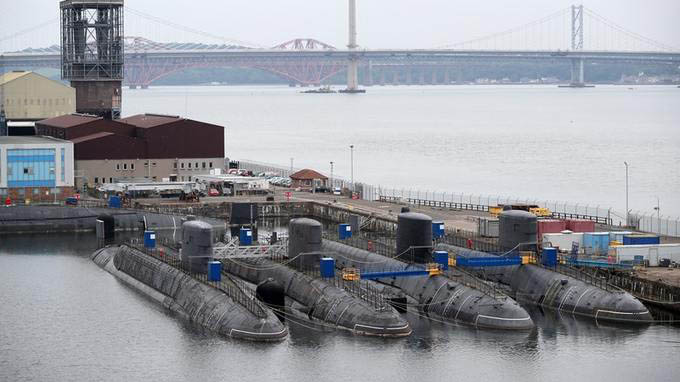
A recent viral tweet has brought fresh attention to a decades-old controversy in Edinburgh’s back yard: namely, a hulking fleet of decommissioned, but still radioactive, Cold War nuclear submarines. The seven defunct submarines – Dreadnought, Churchill, Swiftsure, Revenge, Resolution, Repulse and Renown – have been laid up since the 1980s, stored at Rosyth in Fife while arrangements are made to safely dispose of them.
All of the subs have had their toxic fuel removed, but parts of the vessels, including the reactor compartments, are still contaminated with radiation.
Seven of the submarines have been in storage for longer than they were in service with the Royal Navy.
A lack of money and a lack of suitable disposal sites are amongst the issues causing lengthy delays to the disposal process. In 2016 the Ministry of Defence admitted it could take until 2040 to completely dispose of the retired fleet.
This week, an Edinburgh Twitter user took to the social media platform to complain about the fact the historic submarines were still in the Forth, saying they had been ‘dumped’ to ‘rust’ in the dockyard. The tweet has since been shared over 800 times………
The MoD has said it will dispose of the fleet “as soon as practically possible”.
According to an article on Scottish investigative journalism site The Ferret, in the 1980s the UK government tried to hatch a secret plan to dump the radioactive hulks of the problematic and hard-to-dispose of subs in the sea off north west Scotland, documents released by the National Archives reveal.
The Ferret say that a survey for the Ministry of Defence (MoD) in 1989 identified six sites for “seabed storage” of defunct naval submarines near the islands of Skye, Mull and Barra for up to 60 years – and probably longer.
According to one MoD official the aim was “to remove submarines from public view”. Another hoped that “everyone will forget about these submarines and that they will be allowed to quietly rot away indefinitely.”
The 1989 sea-dumping plan was dropped in the end, but the continuing presence of these ancient nuclear behemoths in the Forth makes it very clear that the MoD’s problem of what to do with the Cold War relics isn’t going away any time soon. https://www.edinburghlive.co.uk/news/edinburgh-news/nuclear-graveyard-just-five-miles-19118105
October 16 Energy News — geoharvey

Opinion: ¶ “The Hydrogen Boom Will Provide A $200 Billion Boost To Wind And Solar Energy” • The renewable energy sector has lately been sizzling with very bullish projections, and a few bearish ones, coming from Wall Street. However, one corner of the market has really been hogging the limelight, and that is the hydrogen […]
October 16 Energy News — geoharvey
Massive Asian Renewable Energy Hub grows to 26GW of wind and solar — RenewEconomy

First stage of the massive Asian Renewable Energy Hub a step closer after securing state environmental approvals from WA government, and could grow to 26GW. The post Massive Asian Renewable Energy Hub grows to 26GW of wind and solar appeared first on RenewEconomy.
Massive Asian Renewable Energy Hub grows to 26GW of wind and solar — RenewEconomy
1 This Month

Tell Congress: Prevent Nuclear Catastrophe in Iran

Tell Congress: Prevent Nuclear Catastrophe in Iran

Read the Public Inquiry Report, the Commissioners’ report, Surrendering Australia: The AUKUS Deception is available to download for free at aukuspublicinquiry.com. Or just watch the replay of the National Press Club Luncheon.


Shut down the radiation-damaged Heysham nuclear reactors now
To see nuclear-related stories in greater depth and intensity – go to https://nuclearinformation.wordpress.com

Say No to NASA’s Reckless Nuclear Reactor on the Moon
Say No to NASA’s Reckless Nuclear Reactor on the Moon
-
Archives
- November 2026 (269)
- October 2026 (302)
- September 2026 (339)
- August 2026 (330)
- July 2026 (355)
- June 2026 (287)
- May 2026 (306)
- April 2026 (356)
- March 2026 (251)
- February 2026 (267)
- January 2026 (308)
- December 2025 (358)
-
Categories
- 1
- 1 NUCLEAR ISSUES
- business and costs
- climate change
- culture and arts
- ENERGY
- environment
- health
- history
- indigenous issues
- Legal
- marketing of nuclear
- media
- opposition to nuclear
- PERSONAL STORIES
- politics
- politics international
- Religion and ethics
- safety
- secrets,lies and civil liberties
- spinbuster
- technology
- Uranium
- wastes
- weapons and war
- Women
- 2 WORLD
- ACTION
- AFRICA
- Atrocities
- AUSTRALIA
- Christina's notes
- Christina's themes
- culture and arts
- Events
- Fuk 2022
- Fuk 2023
- Fukushima 2017
- Fukushima 2018
- fukushima 2019
- Fukushima 2020
- Fukushima 2021
- general
- global warming
- Humour (God we need it)
- Nuclear
- RARE EARTHS
- Reference
- resources – print
- Resources -audiovicual
- Weekly Newsletter
- World
- World Nuclear
- YouTube
-
RSS
Entries RSS
Comments RSS

