Keeping the Election Safe — limitless life

FacebookTwitterPinterestRedditShare How to Stop Trump from Stealing the Election Trump is likely to claim that mail-in ballots, made necessary by the pandemic, are rife with “fraud like you’ve never seen,” as he alleged during his debate with Joe Biden – although it’s been shown that Americans are more likely to be struck by lightning than […]
Keeping the Election Safe — limitless life
Nuclear weapons – always inhumane and unacceptable, now illegal — IPPNW peace and health blog

On October 24, Honduras became the 50th nation to ratify the UN Treaty on the Prohibition of Nuclear Weapons (TPNW). By crossing the 50 ratification threshold, this means that in 90 days, on 22 January 2021, the treaty will enter into legal force and become international law, binding on the states that have already ratified it, and all those which subsequently ratify the treaty.
Nuclear weapons – always inhumane and unacceptable, now illegal — IPPNW peace and health blog
UN Treaty on the Prohibition of Nuclear Weapons reaches the required 50 ratifications to become law

Historic milestone: UN Treaty on the Prohibition of Nuclear Weapons reaches 50 ratifications needed for entry into force https://www.icanw.org/historic_milestone_un_treaty_on_the_prohibition_of_nuclear_weapons_reaches_50_ratifications_needed_for_entry_into_force 25 Oct 20,
On October 24, 2020, the UN Treaty on the Prohibition of Nuclear Weapons reached the required 50 states parties for its entry into force, after Honduras ratified just one day after Jamaica and Nauru submitted their ratifications. In 90 days, the treaty will enter into force, cementing a categorical ban on nuclear weapons, 75 years after their first use.
This is a historic milestone for this landmark treaty. Prior to the TPNW’s adoption, nuclear weapons were the only weapons of mass destruction not banned under international law, despite their catastrophic humanitarian consequences. Now, with the treaty’s entry into force, we can call nuclear weapons what they are: prohibited weapons of mass destruction, just like chemical weapons and biological weapons.
ICAN’s Executive Director Beatrice Fihn welcomed the historic moment. “This is a new chapter for nuclear disarmament. Decades of activism have achieved what many said was impossible: nuclear weapons are banned,” she said.
Setsuko Thurlow, survivor of the atomic bombing of Hiroshima, said “I have committed my life to the abolition of nuclear weapons. I have nothing but gratitude for all who have worked for the success of our treaty.” As a long-time and iconic ICAN activist who has spent decades sharing the story of the horrors she faced to raise awareness on the humanitarian consequences of nuclear weapons this moment held particular significance: “This is the first time in international law that we have been so recognized. We share this recognition with other hibakusha across the world, those who have suffered radioactive harm from nuclear testing, from uranium mining, from secret experimentation.” Survivors of atomic use and testing all over the world have joined Setsuko in celebrating this milestone.
The three latest states to ratify were proud to be part of such a historic moment. All 50 states have shown true leadership to achieve a world without nuclear weapons, all while facing unprecedented levels of pressure from the nuclear armed states not to do so. A recent letter, obtained by AP only days before the ceremony, demonstrates that the Trump administration has been directly pressuring states that have ratified the treaty to withdraw from it and abstain from encouraging others to join it, in direct contradiction to their obligations under the treaty. Beatrice Fihn said: “Real leadership has been shown by the countries that have joined this historical instrument to bring it to full legal effect. Desperate attempts to weaken these leaders’ commitment to nuclear disarmament demonstrate only the fear of nuclear armed states of the change this treaty will bring.”
This is just the beginning. Once the treaty is in force, all states parties will need to implement all of their positive obligations under the treaty and abide by its prohibitions. States that haven’t joined the treaty will feel its power too – we can expect companies to stop producing nuclear weapons and financial institutions to stop investing in nuclear weapon producing companies.
How do we know? Because we have nearly 600 partner organisations in over 100 countries committed to advancing this treaty and the norm against nuclear weapons. People, companies, universities and governments everywhere will know this weapon has been prohibited and that now is the moment for them to stand on the right side of history.
Trump’s USA is pushing NuScale’s small nuclear reactors for South Africa.

The US nuclear company with an eye on South Africa just got a R23 billion boost, courtesy of Donald Trump, https://www.businessinsider.co.za/nuscale-nuclear-which-has-plans-for-sa-gets-a-big-us-subsidy-to-test-its-design-2020-10 Phillip de Wet , Business Insider SA Oct 22, 2020,
- American nuclear energy company NuScale has been citing Cape Town as an example of an ideal customer for its still-theoretical generators.
- It has now received in-principle financial support from the American government to build a nuclear power station in South Africa.
 NuScale’s pathfinder project for its new technology, in Idaho, just got a promise of an infusion of US government cash worth some R23 billion.
- While South Africa abandoned plans to create next-generation PBMR systems, the administration of Donald Trump has pushed small-scale nuclear development.
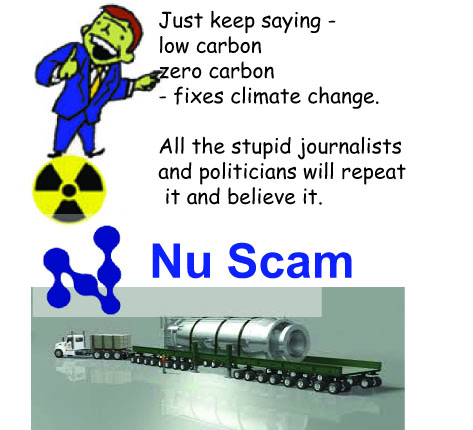
NuScale, a company with roots in US-funded research, this week received assurances that the American government will provide up to $1.4 billion (around R23 billion) in subsidies for a 12-module reactor it hopes to start building in Idaho by 2025.
The project is a commercial one, with municipal buyers lined up for the electricity, but the cash from the US department of energy is intended to bring the cost of that electricity down to $55 per MWh on a levelised cost of energy (LCOE) basis, making the project at least vaguely competitive with other forms of power generation.
Without the subsidies, the supposedly once-off cost of building a first-of-its kind power station would make the NuScale project commercially unviable, its planned customers say.
Just how once-off such costs are, and how much money the US government ends up actually spending on the project, will be closely watched in South Africa
Last week the US International Development Finance Corporation (DFC) announced it had signed a letter of intent to support NuScale “to develop 2,500 MW of nuclear energy in South Africa”.
NuScale has cited Cape Town as a purely theoretical customer for a 12-module version of its nuclear energy system, saying that such an installation could desalinate enough water to keep the entire city going.
But the 2,500MW number cited by the DFC suggests its South African ambitions are substantial. That is the full generating capability the South African government now envisages adding to the national grid from nuclear stations – but the government plan calls for a mixture of the conventional pressurised water reactors (PWRs) such as Russia’s Rosatom sells, and the type of small modular reactors (SMRs) NuScale is developing.
By seeking development finance for the full 2,500MW, NuScale appears to be signalling a plan to bid for the whole thing, rather than seeking to build only part of a new set of nuclear generators in SA alongside companies from China or elsewhere.
That matches the aggressive posture of the US government under the administration of Donald Trump. The DFC letter of intent is the first time the organisation has supported any nuclear project; a ban on its involvement in nuclear energy was lifted on the recommendation of a working group formed by the White House.
The state funding for the NuScale project in the US, meanwhile, comes after consistent and determined efforts under Trump’s presidency to “revitalise” nuclear energy in America, both in production and through research and development on next-generation systems.
South Africa, though determined to buy new nuclear power stations, has not had a similar political appetite to invest in research. In 2010 it mothballed work on the pebble bed modular reactor, a project launched in the late 1990s to create a safe, small, modular reactor system for both domestic use and sale abroad.
Russia once thought it had a done deal to build new nuclear reactors in South Africa. Half a decade later, thanks to its sheer political weight, China seems to be a serious contender for the job. Both France and South Korea have, at various points, been in the running too.
But as of this week, an American company with no track record of actually building commerical nuclear reactors yet is lining up the kind of money from the US government that could make its plans for South Africa viable – replacing a dream of home-grown next-generation nuclear with an imported version.
As of this year there are still vague plans to revive the project, in one form or another, but even if those were to succeed, the pace of development would have to be improbably fast for it to have any place in South Africa’s current round of explorations.
The Atlantic raised the big question. In a crisis, do Americans want Trump’s finger on the nuclear button?
 The Atlantic’s endorsement of Joe Biden raises a sobering point all Americans should consider. Daily Kos, Dartagnan Community, Friday October 23, 2020 “………. —The Atlantic reminds us that the person in charge of this country’s nuclear arsenal matters.
In most matters related to the governance and defense of the United States, the president is constrained by competing branches of government and by an intricate web of laws and customs. Only in one crucial area does the president resemble, in the words of the former missile officer and scholar Bruce Blair, an absolute monarch—his control of nuclear weapons. Richard Nixon, who was president when Major Hering asked his question, was reported to have told members of Congress at a White House dinner party, “I could leave this room and in 25 minutes, 70 million people would be dead.” This was an alarming but accurate statement.
Donald Trump and Joe Biden on climate change

 Independent 23rd Oct 2020 It has been around 20 years since a lengthy discussion on climate change featured in a presidential debate during which time a monumental shift has happened in how America views the crisis.
Two-thirds of Americans think that the US government should do more on climate change and moderator Kristen Welker asked both Donald Trump and Joe Biden how they would step up
on the issue during the final presidential debate on Thursday, with millions of Americans already taking to the polls ahead of election day on 3 November.
Calling it an “existential crisis”, Mr Biden sounded the alarm for the world to address global warming, as Mr Trump took credit for pulling the US out of the 2015 Paris Climate Accord, the international agreement aimed at doing precisely that. Mr Trump said his focus was saving
American jobs, while taking credit for some of the “cleanest air and water the nation has seen in generations” — partly down to regulations passed in the Obama era.
Independent 23rd Oct 2020, President Trump, who has repeatedly called climate change a “hoax”, said he planned for a “trillion trees” before touting America’s “clean air”, “clean water” and lower carbon emissions (all of which are, at best, misleading, as The Independent has reported).
The president then pivoted to an attack on clean energy, taking particular issue with windmills. “He thinks wind causes cancer. Windmills,” Mr Biden noted. “I know more about wind than you do,” Mr Trump replied, before going on to say windmills are extremely expensive, “kill all the birds” and “the fumes coming up, if you’re a believer in carbon emission … for these massive windmills is more than anything we’re talking about with natural gas which is very clean”.
Climate change a big threat to nuclear reactors – as water supplies at risk
 Climate change poses big water risks for nuclear, fossil-fueled plants, S and P Global, Esther Whieldon Taylor Kuykendall, 23 Oct 20,
But electric utilities’ overall exposure to power plant water stress risks could diminish as they pursue decarbonization strategies and replace water-dependent plants with wind and solar generation that require little to no water. Some companies are also implementing water management and related investment strategies to reduce their exposure. ……..
According to projections from the World Resources Institute’s Aqueduct Water Risk Atlas, water stress — when humanity’s competition for water exceeds the rate at which nature can replenish its stocks — could grow materially by 2030 in the drought-prone Western U.S., as well as the upper Midwest and portions of the Northeast and Florida, due to climate change.
About 61.8% of existing fossil-fueled and nuclear power plants in the Lower 48, or a combined 535 GW of operating capacity, is in areas that could face medium-high to extremely high water stress in 2030, based on an analysis of Market Intelligence’s power plant data paired with the Aqueduct water stress projections.
Moreover, 68.6% of the Lower 48’s natural gas-fired fleet, 73.3% of its oil-fueled fleet, 61.0% of its nuclear fleet, and 44.6% of its coal-fired fleet are in areas expected to face medium-high to extremely-high water stress that year.
“As we’re seeing snowpack decline — a natural mountainous reservoir of water — and as we’re getting lower amounts of total precipitation and available water in the U.S. West, this is going to be a really serious issue for the power sector,” said Betsy Otto, director of the Global Water Program at the World Resource Institute, or WRI. Moreover, scientists have said the West is entering a megadrought that could last more than 20 years.
Otto also noted that several other U.S. regions not normally thought of as facing water supply issues are already experiencing chronic water challenges that, if left unchecked, could become a problem if extended droughts, heatwaves, and other major extreme weather events should occur.
A number of utilities use WRI’s Aqueduct tool to assess their water risks in their annual reports to the CDP, formerly known as the Carbon Disclosure Project, and other organizations. But those reports typically focus on the WRI’s current water stress models and not the tool’s future climate projections.
WRI’s current water stress models show a number of regions that are facing water stress will be in the same situation, or worse, at the end of the decade.
Along those lines, Moody’s Investors Service in August reported that about 48 GW of nuclear capacity across the U.S. face elevated exposure to combined heat and water stress, including plants owned by Exelon Corp., Vistra Corp., Entergy Corp., and the Arizona Public Service Co.
In hot water
A plant’s location is not the only factor that will determine its vulnerability to water stress. A plant’s water source, cooling technology and the temperature of the water when it is withdrawn are also key factors, according to scientific reports. The Market Intelligence analysis using the WRI tool does not account for those three factors.
In addition, rising ambient air and water temperatures can also create operational and legal issues for plants. Because plants primarily use water to cool their systems, “if that water is hot or warmer to start with, that’s not so good. That makes the power plant less efficient” and it also means the plant risks violating federal restrictions on how hot water can be when it is discharged, said Auroop Ganguly, director of the Northeastern University College of Engineering Sustainability and Data Sciences Laboratory.
Ganguly co-authored a study that found that by the 2030s, climate-induced water stress in the form of increased water temperatures and limited freshwater supplies will hurt the power production of thermoelectric plants in the South, Southwest, West and West North Central regions of the U.S. According to the 2017 study, U.S. nuclear and fossil-fueled plants at that time used about 161 billion gallons per day, or 45% of the nation’s daily freshwater usage, 90% of which was for cooling.
The technologies used by a power plant can also make a big difference in how much water it needs. Dry-cooling technology uses very little water but is costlier and less efficient than alternatives. And while once-through cooling systems withdraw more water than recirculating systems, once-through cooling returns nearly all of the water to the source while recirculating systems consume more water due to evaporation………. https://www.spglobal.com/marketintelligence/en/news-insights/blog/street-talk-episode-69-banks-left-with-pockets-full-of-cash-and-few-places-to-go
Fossil fuels are ”very clean” – Donald Trump
Guardian 23rd Oct 2020, In Donald Trump’s world – laid bare during Thursday night’s finalpresidential debate with his Democratic rival Joe Biden in Nashville – fossil fuels are “very clean”, the US has the best air and water despite his administration’s extensive regulatory rollbacks, and thecountry can fix climate change by planting trees.
not exist. Humanity has just eight years to figure out how to get climate change under control before the future starts to look drastically worse – multiple-degree temperature increases, global sea-level rise, and increasingly disastrous wildfires, hurricanes, floods and droughts. Doing so will mean that unless there is a technological miracle, humans will at some point have to stop burning oil, gas and coal.https://www.theguardian.com/us-news/2020/oct/23/joe-biden-transition-from-oil-industry-rowing-back
Another city leaves small nuclear reactor project – unanimous vote by Murray City Council, Utah
 Murray City votes to withdraw from nuclear power project, Salt Lake Tribune, By Taylor Stevens– 23 Oct 20, The Murray City Council voted unanimously this week to back out of a first-of-its-kind nuclear power project that has the support of a number of Utah municipalities.
It’s the fourth Utah city to exit the small modular nuclear reactor pursuit over the last few months amid pressure from opponents who have raised concerns about environmental and financial risks of the proposed 12-module plant, which would be located at Idaho National Laboratory in Idaho Falls and produce a total 720 megawatts of electricity.
During the city’s Tuesday council meeting, Murray Power Manager Blaine Haacke outlined several advantages of the project, including the potential that it could fill the energy gap that will be left when the Hunter Power Plant in Castle Dale goes offline in the coming years.
He told the council that he expects UAMPS will carry the project forward without Murray. But he said the association’s members will meet during the first week of November to make a final decision, after they find out how many cities have exited.
Delayed freezing of Arctic sea due to continued freakish warm weather

|
Alarm as Arctic sea ice not yet freezing at latest date on record
Delayed freeze in Laptev Sea could have knock-on effects across polar region, scientists say, Guardian, jonathan Watts Global environment editor @jonathanwatts, Thu 22 Oct 2020 For the first time since records began, the main nursery of Arctic sea ice in Siberia has yet to start freezing in late October. The delayed annual freeze in the Laptev Sea has been caused by freakishly protracted warmth in northern Russia and the intrusion of Atlantic waters, say climate scientists who warn of possible knock-on effects across the polar region. Ocean temperatures in the area recently climbed to more than 5C above average, following a record breaking heatwave and the unusually early decline of last winter’s sea ice. The trapped heat takes a long time to dissipate into the atmosphere, even at this time of the year when the sun creeps above the horizon for little more than an hour or two each day. Graphs of sea-ice extent in the Laptev Sea, which usually show a healthy seasonal pulse, appear to have flat-lined. As a result, there is a record amount of open sea in the Arctic. “The lack of freeze-up so far this fall is unprecedented in the Siberian Arctic region,” said Zachary Labe, a postdoctoral researcher at Colorado State University. He says this is in line with the expected impact of human-driven climate change. 2020 is another year that is consistent with a rapidly changing Arctic. Without a systematic reduction in greenhouse gases, the likelihood of our first ‘ice-free’ summer will continue to increase by the mid-21st century,’ he wrote in an email to the Guardian. This year’s Siberian heatwave was made at least 600 times more likely by industrial and agricultural emissions, according to an earlier study. The warmer air temperature is not the only factor slowing the formation of ice. Climate change is also pushing more balmy Atlantic currents into the Arctic and breaking up the usual stratification between warm deep waters and the cool surface. This also makes it difficult for ice to form……… https://www.theguardian.com/world/2020/oct/22/alarm-as-arctic-sea-ice-not-yet-freezing-at-latest-date-on-record?CMP=twt_a-environment_b-gdneco&fbclid=IwAR1qZzerjnAanadMi942h7N8XdCf6Drz_-UIO5mECgAzvXqgiIYjuh6BETc |
|
Not only Fukushima – UK nuclear reactors also empty radioactive water into the sea
 Ian Fairlie’s Blog 22nd Oct 2020, Concerns over proposed tritium discharges from Fukushima – why no apparent concern about the larger tritium releases from Hunterston B and Torness? Recent newspaper reports have expressed concern about the apparent decision by the Japanese Government and TEPCO to discharge large volumes of radioactive tritiated water from the stricken Fukukshima nuclear power station in Japan into the Pacific Ocean. I have expressed concern myself about this proposed decision -see here. Instead I recommend that TEPCO and the Japanese Government should build more storage tanks to allow for the decay of the radioactive tritium. Some readers have commented that all nuclear power stations world-wide discharge tritium into the sea (sometimes via rivers) and into the atmosphere. This is true and TEPCO used this fact to try to justify its proposed dumping of tritium into the sea.
My reply as that two wrongs do not make a right: it is in fact quite worrying that all nuclear facilities routinely dump large volumes of tritium into the sea and the air. This applies to all UK nuclear power stations as well – including Hunterston B and Torness in Scotland. Recent reports have expressed concern about the restarts of the ancient dilapidated reactors at Hunterston B which are well past their sell-by dates.
These fears largely centre on the risks of a nuclear accident at these oldunsafe reactors. But shouldn’t we also be concerned about their tritium discharges? In 2018, annual tritium releases to the sea from Hunterston B were 148 terabecquerels (TBq) and the even more dangerous tritium emissions to the atmosphere totalled 0.96 TBq.
The situation is similar at all other UK nuclear power stations. For example, at Torness, the tritium discharges in 2018 were 295 TBq into the sea and 1.32 TBq into the air. In most cases, these annual amounts are larger than the annual amounts being proposed to
be released at Fukushima. So shouldn’t we be equally be concerned at these releases, as we are at the Japanese ones? |
|
Largest wildfires in Colorado’s history
|
Colorado is fighting its largest wildfire in history. Other massive blazes are close behind.Three of the four largest fires in Colorado history have ignited since July. Vox , By Umair Irfan Oct 22, 2020 The Cameron Peak Fire near Rocky Mountain National Park has become the largest wildfire in Colorado history, growing to almost 207,000 acres this week. The fire was 55 percent contained as of Wednesday afternoon.
It was quickly joined this week by the East Troublesome Fire to its southwest. Over a period of 24 hours, the East Troublesome Fire grew six times in size to more than 125,000 acres as of Thursday. The blaze, which is burning at an elevation of 9,000 feet and across both sides of the continental divide, forced Rocky Mountain National Park to close. It’s now the fourth-largest fire in Colorado history. ……………
What’s fueling Colorado’s fires this yearIt’s an increasingly familiar story. Like the epic wildfires this year across California, Oregon, and Washington, the wildfires in Colorado arose amid a year of extreme heat and dryness. Heat waves baked the state this summer and persisted into the fall. The high temperatures increased the evaporation of moisture from vegetation, leaving plants dry and ready to burn. There was also less rainfall. Over the past month, precipitation was less than 10 percent of what is typical. “By the end of September, nearly 100% of the state was experiencing some level of drought, up from 51% since the beginning of the calendar year,” according to the Colorado Climate Center’s Monthly State of the Climate report. The state is on track to have its second-driest year on record……….
r, humans have been making fire risks worse. That’s in part due to climate change, which is changing weather patterns and driving some of the aridity in Colorado’s forests. “Our 2020 wildfire season is showing us that climate change is here and now in Colorado,” said Jennifer Balch, director of the Earth Lab and an associate professor of geography at the University of Colorado Boulder, in an email. “Warming is setting the stage for a lot of burning across an extended fire season.”…………. https://www.vox.com/2020/10/19/21522994/cameron-peak-calwood-colorado-wildfire-fire-record-east-troublesome-lefthand-canyon
|
|
Australia has nuclear waste problems
 Japan plans to dump a million tonnes of radioactive water into the Pacific. But Australia has nuclear waste problems, too The Conversation,October 23, 2020 Tilman Ruff. Associate Professor, Education and Learning Unit, Nossal Institute for Global Health, School of Population and Global Health, University of Melbourne, Margaret Beavis, Tutor Principles of Clinical Practice Melbourne Medical School .
Nuclear waste storage in Australia
This is what happens at our national nuclear facility at Lucas Heights in Sydney. The vast majority of Australia’s nuclear waste is stored on-site in a dedicated facility, managed by those with the best expertise, and monitored 24/7 by the Australian Federal Police.
But the Australian government plans to change this. It wants to transport and temporarily store nuclear waste at a facility at Kimba, in regional South Australia, for an indeterminate period. We believe the Kimba plan involves unnecessary multiple handling, and shifts the nuclear waste problem onto future generations.
The proposed storage facilities in Kimba are less safe than disposal, and this plan is well below world’s best practice.
The infrastructure, staff and expertise to manage and monitor radioactive materials in Lucas Heights were developed over decades, with all the resources and emergency services of Australia’s largest city. These capacities cannot be quickly or easily replicated in the remote rural location of Kimba. What’s more, transporting the waste raises the risk of theft and accident.
And in recent months, the CEO of regulator ARPANSA told a senate inquiry there is capacity to store nuclear waste at Lucas Heights for several more decades. This means there’s ample time to properly plan final disposal of the waste.
The legislation before the Senate will deny interested parties the right to judicial review. The plan also disregards unanimous opposition by Barngarla Traditional Owners.
The Conversation contacted Resources Minister Keith Pitt who insisted the Kimba site will consolidate waste from more than 100 places into a “safe, purpose-built, state-of-the-art facility”. He said a separate, permanent disposal facility will be established for intermediate level waste in a few decades’ time.
Pitt said the government continues to seek involvement of Traditional Owners. He also said the Kimba community voted in favour of the plan. However, the voting process was criticised on a number of grounds, including that it excluded landowners living relatively close to the site, and entirely excluded Barngarla people.
Kicking the can down the road
Both Australia and Japan should look to nations such as Finland, which deals with nuclear waste more responsibly and has studied potential sites for decades. It plans to spend 3.5 billion euros (A$5.8 billion) on a deep geological disposal site.https://theconversation.com/japan-plans-to-dump-a-million-tonnes-of-radioactive-water-into-the-pacific-but-australia-has-nuclear-waste-problems-too-148337
USA Nuclear Regulatory Commission to effectively deregulate massive amounts of radioactive wastes
PEER 21st Oct 2020, The Nuclear Regulatory Commission is finalizing a year-long drive to functionally deregulate disposal of massive amounts of radioactive waste.
NRC’s plan would allow commercial nuclear reactors to dump virtually all their radioactive waste, except spent fuel, in local garbage landfills, which are designed for household trash not rad-waste, according to commentsfiled today by Public Employees for Environmental Responsibility (PEER).
https://www.peer.org/deregulation-rad-waste-disposal-plows-ahead/
Tell the Nuclear Regulatory Commission and Your Senators: NO nuclear waste in your local landfill
|
Tell the Nuclear Regulatory Commission and Your Senators: NO nuclear waste in your local landfill, NIRS 23 Oct 20, The US Nuclear Regulatory Commission (NRC) is trying to slip a big one past us: They want to do away with the need for nuclear licenses to dump nuclear power waste. In other words, there would be no more regulatory controls over Very Long-Lasting Waste (VLLW).The NRC wants to let nuclear waste go to your local landfill if the landfill operator wants it—without telling you. They would be glad to send it to hazardous waste sites not fit for nuclear waste as well, making those dumps even more hazardous. It could end up in recycling, reuse or other waste streams, too.
As the nearly 100 nuclear power reactors close in the decade to come, their owners want to save money by dumping thousands of tons of radioactive garbage–concrete, metal, soil, asphalt, equipment, pumps, pipes, plastics and more–by pretending it is not radioactive. Don’t let them get away with it. Tell the NRC and your senators you say NO to VLLW and deregulation of nuclear waste…….. https://www.nirs.org/vllw-action-oct2020/?fbclid=IwAR2xNl_8iIBRvQOGNQf9crO9Uv5QgIEsH0Bp_D3FACpmlybRSjiF1QiZhyg |
|
1 This Month

Tell Congress: Prevent Nuclear Catastrophe in Iran

Tell Congress: Prevent Nuclear Catastrophe in Iran

Read the Public Inquiry Report, the Commissioners’ report, Surrendering Australia: The AUKUS Deception is available to download for free at aukuspublicinquiry.com. Or just watch the replay of the National Press Club Luncheon.


Shut down the radiation-damaged Heysham nuclear reactors now
To see nuclear-related stories in greater depth and intensity – go to https://nuclearinformation.wordpress.com

Say No to NASA’s Reckless Nuclear Reactor on the Moon
Say No to NASA’s Reckless Nuclear Reactor on the Moon
-
Archives
- November 2026 (269)
- October 2026 (302)
- September 2026 (339)
- August 2026 (330)
- July 2026 (355)
- June 2026 (287)
- May 2026 (306)
- April 2026 (356)
- March 2026 (251)
- February 2026 (267)
- January 2026 (308)
- December 2025 (358)
-
Categories
- 1
- 1 NUCLEAR ISSUES
- business and costs
- climate change
- culture and arts
- ENERGY
- environment
- health
- history
- indigenous issues
- Legal
- marketing of nuclear
- media
- opposition to nuclear
- PERSONAL STORIES
- politics
- politics international
- Religion and ethics
- safety
- secrets,lies and civil liberties
- spinbuster
- technology
- Uranium
- wastes
- weapons and war
- Women
- 2 WORLD
- ACTION
- AFRICA
- Atrocities
- AUSTRALIA
- Christina's notes
- Christina's themes
- culture and arts
- Events
- Fuk 2022
- Fuk 2023
- Fukushima 2017
- Fukushima 2018
- fukushima 2019
- Fukushima 2020
- Fukushima 2021
- general
- global warming
- Humour (God we need it)
- Nuclear
- RARE EARTHS
- Reference
- resources – print
- Resources -audiovicual
- Weekly Newsletter
- World
- World Nuclear
- YouTube
-
RSS
Entries RSS
Comments RSS

