Surge in fires in Brazil’s Amazon

|
Fires in Brazil’s Amazon rainforest jump in October, By Jake Spring, BRASILIA (Reuters) 1 Nov 20, – Fires in Brazil’s Amazon rainforest surged in October and the number of blazes is up 25% in the first 10 months of 2020, compared to a year ago, data from government space research agency Inpe showed on Sunday.
October recorded 17,326 hot spots in the world’s largest rainforest, more than double the number of fires detected in the same month last year. Destruction of the forest has soared since right-wing President Jair Bolsonaro took office in 2019. The president says he wishes to develop the region to lift it out of poverty, while environmental advocates say his policies embolden illegal loggers, miners and ranchers. The number of fires so far this year remains at a decade high. In only the first 10 months of the year, 2020 has surpassed the total number of fires for full-year 2019, when the destruction spurred international criticism that Brazil was not doing enough to protect the forest……. Fires in Brazil’s Pantanal, the world’s largest wetlands, also increased in October compared to a year ago, according to Inpe. The Pantanal, home to many rare species including the world’s densest population of jaguars, has recorded the most fires this year since records began in 1998. For the year through Oct. 25, 28% of the wetland has burned, according to the Federal University of Rio de Janeiro, an area nearly the size of Denmark…… https://www.reuters.com/article/us-brazil-environment/fires-in-brazils-amazon-rainforest-jump-in-october-idUSKBN27H1J1 |
|
Documentary history from the perspective of radiation victims.
 Documentary explores history of radiation through victims, http://www.asahi.com/ajw/articles/13850920, By MASATO TAINAKA/ Staff Writer, November 1, 2020 Paris-based filmmaker Kenichi Watanabe completed a documentary on nuclear radiation in time for the 10th anniversary of the Fukushima nuclear plant accident in March.
The film, titled “Notre ami l’atome–Un siecle de radioactivite” (Our friend the atom–A century of radioactivity), traces the history of radioactive exposure, spanning more than a century, from the discovery of radioactivity through today.
It is told from the perspective of radiation victims.
“Focusing on radioactivity, I want to reconstruct the idea that ‘nuclear energy and atomic weapons are inseparable,’” Watanabe, 69, said.
The film is set for theatrical release in spring 2021. It made its broadcast debut this summer in Europe and was shown at select venues across Japan in October.
The documentary features interviews with an ex-soldier who observed a nuclear test during the Cold War in the U.S. Nevada desert, and a former fishing boat crew member from Kochi Prefecture who was exposed to fallout when the United States conducted a nuclear test at Bikini Atoll in the Pacific.
It also includes interviews with soldiers allegedly exposed to radiation during Operation Tomodachi, a disaster relief effort conducted off the coast of the Tohoku region by the U.S. armed forces after the accident at the Fukushima No. 1 nuclear power plant, and a person who underwent thyroid surgery after that nuclear disaster.
The title is a reference to “Our Friend the Atom,” a Disney film produced to promote the benefits of atomic power in the 1950s during the administration of President Dwight D. Eisenhower, who called for the “peaceful use of atomic energy.”
At the time, an anti-nuclear movement was gaining momentum in Japan after the tuna fishing boat Daigo Fukuryu Maru and other vessels were contaminated by fallout from the U.S. thermonuclear weapon test at Bikini Atoll in 1954. The Diet, meanwhile, passed the country’s first-ever budget proposal for nuclear energy.
“It was imperative for Japan, which suffered atomic bombings in Hiroshima and Nagasaki and whose Constitution contains the war-renouncing Article 9, to come up with an ‘atomic dualism’ to introduce nuclear energy, saying that ‘its peaceful use is good and military use is bad,’” Watanabe said.
Watanabe was born in 1951. He started his career working at Iwanami Productions Inc. in Japan before moving to Paris to produce documentaries for European TV companies.
U.S. Senate unanimously passes resolution supporting nuclear weapons workers made ill by radiation
 Senate Unanimously Passes Udall, Heinrich Resolution Honoring Nation’s Nuclear Weapons Workers, Declares National Day of Remembrance Daily Post by Carol A. Clark November 1, 2020, WASHINGTON D.C. – U.S. Senators Tom Udall (D-N.M.) and Martin Heinrich (D-N.M.) announced Thursday that the Senate unanimously passed a bipartisan resolution to designate Oct. 30, 2020, as National Day of Remembrance for workers who helped develop and support the nation’s nuclear weapons program…….. “Today, we honor the thousands of miners, millers, maintenance workers, scientists, support staff, and families in New Mexico and across the country whose sacrifice has too often gone unrecognized,” Udall said. “During the Cold War, thousands of New Mexicans made tremendous sacrifices to build the country’s first nuclear weapons and mine the uranium to protect our national defense. Many of these brave Americans have been left out of programs Congress has designated to care for and compensate nuclear workers including the Radiation Exposure Compensation Act program and the Energy Employees Occupational Illness Compensation Program. While we can never take away the years of pain and suffering these families have endured as a result of their service, we can take action to make them whole. We will never stop fighting to expand these laws until those affected by this nation’s nuclear weapons activities are fairly compensated.”
……… I also recognize the many atomic workers who are coping with serious health problems due to their exposure to hazardous and radioactive material. I will never stop fighting for the justice and compensation that these atomic workers deserve for their service to our nation.”
Tens of thousands of Americans have worked in the nuclear weapons programs since World War II at the Department of Energy’s (DOE) Los Alamos and Sandia National Labs in New Mexico. Many of these workers became sick due to exposure from toxic or radioactive materials before proper workplace protections and scientific understanding were established. Congress has since enacted the Energy Employees Occupational Illness Compensation Program Act (EEOICPA) in October 2000. This resolution additionally provides compensation to those who were exposed in uranium mines and mills during the Cold War, some of whom are covered separately by the Radiation Exposure Compensation Act (RECA). Udall and Heinrich have long pushed to expand the RECA law to compensate not only the workers affected, but those suffering from the effects of radiation during the Cold War by these nuclear weapons facilities. https://ladailypost.com/senate-unanimously-passes-udall-heinrich-resolution-honoring-nations-nuclear-weapons-workers-declares-national-day-of-remembrance/
|
|
Compensation claims recognised – workers made ill by working at Fukushima’s wrecked nuclear plant
 Compensation claims related to Fukushima nuclear plant work total 269, https://japantoday.com/category/national/compensation-claims-related-to-fukushima-plant-work-total-269
The workers’ compensation claims that have been recognized by labor authorities include six cases of workers who developed cancer or leukemia due to radiation exposure, and four others who suffered from overwork-related illnesses, according to the Ministry of Health, Labor and Welfare officials.
Decommissioning of the Fukushima plant is still under way nearly 10 years after the massive earthquake and tsunami that devastated northeastern Japan triggered meltdowns at the Fukushima Daiichi nuclear plant. To this day, about 4,000 people still work on site every day, with many at risk of radiation exposure.
The compensation claims that have been approved refer to the period since the March 2011 nuclear accident through Oct 1 this year.
According to the plant operator, Tokyo Electric Power Company Holdings Inc, three people died between fiscal 2011 and 2019.
One worker, who wished to remain anonymous, told Kyodo News the pressure of working at a nuclear power plant as opposed to a normal working site is “incomparable.”
“I have to deal with so much anxiety and stress as I could never know what may happen inside a nuclear power plant,” said the man from Iwaki, Fukushima Prefecture.
According to the worker, he wears two protective layers of clothing and tapes them together so there is no space between them, and also puts on a raincoat.
“I sweat a lot even in winter and I drink a lot of water,” he said, adding that several of his colleagues suffered from heat stroke or heat exhaustion while working at the plant.
TEPCO said a total of 98 people suffered from heat-related illnesses between fiscal 2011 and 2019, having had to wear masks and protective gear made of less permeable materials under the sweltering summer heat.
At the site of the Fukushima Daiichi plant, 313 accidents have occurred in the same period of time, including several fatal cases between 2014 and 2015 in which workers fell into a tank, TEPCO said.
Acknowledging that many accidents had occurred, a TEPCO official said, “We will continue to work with our contractors to prevent such incidents from happening.”
The most consequential election — IPPNW peace and health blog
There has never been an election – or probably any single national event – of greater global moment than the impending US election. This could hardly be more evident than from the perspective of planetary health. If Trump is returned to the White House for another four years and the Republican Party retains control of the US Senate, the prospects for reducing the growing danger of nuclear war appears bleak; and the decisive turn towards a low carbon future within the narrow time window needed to have any chance of keeping global temperature rise below 2°C will also be very much more difficult, if not impossible, to achieve. Always the most active of the nine nuclear-armed states in seeking to oppose and undermine the Treaty on the Prohibition of Nuclear Weapons, the administration has recently taken the extraordinary step of admonishing governments that have signed and ratified the treaty to withdraw from it. At the same time, the administration has made explicit nuclear threats in violation of the UN Charter; escalated further astronomical military spending, including spending on new nuclear weapons systems, forecast to reach up to US$2 trillion over the next 30 years. Current US spending on new nuclear warheads is at an all-time record level.
The most consequential election — IPPNW peace and health blog
Why Trump Can’t Afford to Lose — limitless life

A Reporter at Large November 9, 2020 Issue Why Trump Can’t Afford to Lose The President has survived one impeachment, twenty-six accusations of sexual misconduct, and an estimated four thousand lawsuits. That run of good luck may well end, perhaps brutally, if Joe Biden wins. By Jane Mayer November 1, 2020 Few people have evaded consequences […]
Why Trump Can’t Afford to Lose — limitless life
Expert guidance for the next President to head off a nuclear catastrophe
 5 Steps for the Next President to Head Off a Nuclear Catastrophe

To the horror of experts, 30 years after the Cold War, the global risk from nuclear weapons is actually getting worse. Here’s how a new administration can turn that around. Politico, By EDMUND G. BROWN JR. , REP. RO KHANNA and WILLIAM J. PERRY, 10/30/2020
Edmund G. Brown Jr. is the former governor of California and executive chair of the Bulletin of the Atomic Scientists.
Rep. Ro Khanna (D-Calif.) represents Silicon Valley in the House of Representatives.
William J. Perry was the 19th United States Secretary of Defense.
As fires rage across the West and the coronavirus continues its deadly march, President Donald Trump tweets and fulminates but refuses to take charge. He denies climate change; on the pandemic, he leaves to the states his clear responsibility to protect the people of America.
Tragically, his incompetence extends beyond Covid-19 and climate change to another existential danger, rarely debated in Washington or covered by the media: the chance of a nuclear blunder.
The Cold War may have ended in 1989, but the United States and Russia together still possess more than 12,000 nuclear weapons, 90 percent of the world’s arsenal, nearly 2,000 of which are programmed to launch in minutes at the command of either countries’ president. The risk of a real nuclear catastrophe is not a bugbear from a past decade. It is a current threat, and becoming more serious because of Trump’s policies—and because the public has largely stopped paying attention.
How can we change course? That starts with the election of a new president, one who will have the courage to restore nuclear sanity. This is precisely what President Ronald Reagan did when he joined Mikhail Gorbachev in 1985, declaring that “a nuclear war can never be won and must never be fought.”
Third, the next president should immediately extend the New START Treaty with Russia and begin follow-on negotiations to reduce deployed strategic nuclear forces by one-third, something Obama himself had planned to do.
The next president should reflect deeply on our existential predicament and chart a new and wiser path for America. https://www.politico.com/news/magazine/2020/10/30/5-steps-for-the-next-president-to-head-off-a-nuclear-catastrophe-433695
Financial red flags warn against Utah’s NuScale small nuclear reactor project

|
Is nuclear power Utah’s future? Red flags suggest holding off https://www-deseret-com.cdn.ampproject.org/c/s/www.deseret.com/platform/amp/opinion/2020/10/27/21535010/guest-opinion-nuclear-power-plant-idaho-utah-uamps-nuscale-red-flags?fbclid=IwAR13pzEW_7Bl0BQVlj8jN5UUIcoX9Mi_BZbgQq-22TBtjnJLSeSov8rZER, By M.V. Ramana, – on October 27, 2020 UAMPS has promised electricity at $55 per megawatt hour (MWh), down from the $65 it promised two years ago. One might imagine that the lower price is due to declining costs, but according to UAMPS, the project’s estimated costs have gone up, not down. In its 2018 Budget & Plan of Finance, UAMPS approved a construction cost of approximately $4.2 billion. This year, the UAMPS Amended Budget & Plan of Finance mentions a figure of approximately $6.1 billion. If the construction costs are going up, then why did the cost of electricity come down from $65/MWh to $55/MWh? The question arises because UAMPS and NuScale have not been transparent with the methodology used to develop figures like $55/MWh. The lack of transparency means the public does not know what assumptions are being made, let alone whether those assumptions are realistic. We do know that Pacificorp and Idaho Power have concluded that electricity from NuScale reactors would cost $94-$121/MWh. The UAMPS project also bears other red flags, and seems headed for failure. Less than 25% subscriptions. Based on public testimony, the UAMPS project has subscribers for less than 25% of the total power, leaving 75% of the output unclaimed. Communities continue to withdraw, citing the increasing costs, uncertain technology and the lack of subscribers. Several of the communities that withdrew were among the project’s largest subscribers. Project delays continue. NuScale initially claimed it could deliver the first working nuclear reactor in 2015. Now, the first UAMPS reactors aren’t scheduled to come online until 2029-2030, roughly 15 years later than originally expected — provided there are no further delays. NuScale’s experience is consistent with an independent study that showed that 175 of the 180 nuclear power projects examined took on average 64% longer than projected (and had final costs that exceeded the initial budget by an average of 117%). Unpredictable taxpayer subsidies. UAMPS and NuScale expect taxpayers to cover 25% of the project’s costs over the next nine years. Contrary to NuScale/UAMPS’ assurances about the recent U.S. Department of Energy $1.4 billion “funding vehicle,” there is no way to guarantee these funds. As the on-again, off-again Yucca Mountain project illustrates, federal funding for nuclear projects can be fickle and subject to withdrawal at any time. In the long history of failed U.S. nuclear projects, the public is almost never given an honest, transparent assessment of the likelihood of expensive overruns, lengthy scheduling delays and possible project collapse. The problems already apparent in the UAMPS project fit squarely into this history of failure. Some UAMPS members — Logan, Lehi, Kaysville and Murray, among them — seem to have realized that the risk of such failure is high enough and have pulled out of the project, cutting their losses. By the end of this week, roughly 30 Utah cities and towns will have a similar decision to make. They can either decide to continue the gamble and be tied to a contract that could leave them with millions of dollars of public debt. Or they could follow the lead of Logan, Lehi, Kaysville and Murray and vote to withdraw from this financially risky nuclear project. The sad irony is that even in the highly unlikely event of NuScale delivering on its promises, the $55/MWh figure is well above the current cost of procuring electricity for UAMPS itself, which has averaged around $29/MWh in the last two years. The $55/MWh would also far exceed the cost of renewables, which are continuing to decline in prices. Thus, a long term contract for $55/MWh is a recipe for excessive electricity costs for decades. I do think that UAMPS can achieve one of the stated goals of NuScale project promoters, namely invest in low-carbon sources of energy. But the way to do that is to pursue currently available solar, wind, energy storage (batteries) and energy efficiency. That is cheaper, safer, cleaner and more reliable than going deeper into the NuScale dead-end. Professor M.V. Ramana is the Simons Chair in Disarmament, Global and Human Security and Director of the Liu Institute for Global Issues at the School of Public Policy and Global Affairs at the University of British Columbia in Vancouver, Canada. Dr. Ramana is a member of the International Panel on Fissile Materials, the International Nuclear Risk Assessment Group and the team that produces the annual World Nuclear Industry Status Report. |
|
Another city bites the dust in regard to Utah’s NuScam small nuclear reactors plan
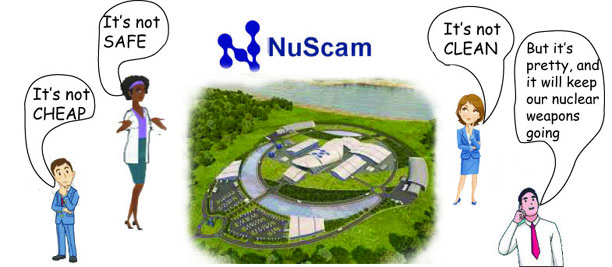
Seven Utah cities have now bailed out of an Idaho nuclear power project, Salt Lake Tribune, By Taylor Stevens-30 Oct 20,
Three more Utah cities voted this week not to move forward with a first-of-its kind nuclear power project that proponents have pitched as the future of clean energy but that opponents have lined up against over concerns about financial risk.
Beaver, Bountiful and Heber are the latest municipalities to exit the small modular nuclear reactor pursuit, following in the footsteps of Murray, Kaysville, Lehi and Logan, which also backed out in recent weeks. ………
The Heber Light and Power Board, which voted 5-1 to get out of the project, and the Bountiful City Council, which unanimously made the decision to back out, both did so this week largely over concerns about the subscription rate of the nuclear energy pursuit.
“There’s enough things wrong with this project that it made it really scary,” said Bart Miller, Heber Light and Power’s chief financial officer. “We’re just a bunch of little utilities in the state of Utah trying to do a $6 billion nuclear power plant.”………
Bountiful City Councilman Richard Higginson said the leaders there had similar concerns, and felt too many of the development and construction costs were falling to a small number of municipalities…….
Costs have been one of the main concerns for several of the cities that have backed out over the last few weeks, as the project’s projected price tag has ballooned significantly, from $4.5 billion a few years ago to around $6 billion now. Opponents have also raised concerns about time and cost overruns, safety considerations and an uncertain regulatory environment.
The Utah Taxpayers Association has been among the critics of the project, arguing that municipal power companies should not act as a “seed investor” for the new technology, a responsibility it’s argued should lie with the private sector.
Environmental groups, such as the Healthy Environment Alliance of Utah, have also raised concerns about the radioactive waste that would be generated by the project.
Cities participating in the Carbon Free Power Project through the Utah Associated Municipal Power Systems — a consortium of municipally owned power systems in Utah and several other Western states that has partnered with NuScale Power to study and create the nuclear technology — have until Saturday to decide whether to stay in the project or back out. https://www.sltrib.com/news/politics/2020/10/29/seven-utah-cities-have/
Urgency to protect nature, or up to 850,000 animal viruses could be caught by humans

UN report says up to 850,000 animal viruses could be caught by humans, unless we protect nature, The Conversation Katie Woolaston, Lawyer, Queensland University of Technology, Judith Lorraine Fisher, Adjunct Professor University of Western Australia, Institute of Agriculture
October 30, 2020 Human damage to biodiversity is leading us into a pandemic era. The virus that causes COVID-19, for example, is linked to similar viruses in bats, which may have been passed to humans via pangolins or another species.Environmental destruction such as land clearing, deforestation, climate change, intense agriculture and the wildlife trade is putting humans into closer contact with wildlife. Animals carry microbes that can be transferred to people during these encounters.
A major report released today says up to 850,000 undiscovered viruses which could be transferred to humans are thought to exist in mammal and avian hosts.
The report, by The United Nations’ Intergovernmental Science-Policy Platform on Biodiversity and Ecosystem Services (IPBES), says to avoid future pandemics, humans must urgently transform our relationship with the environment.
Humans costs are mounting
The report is the result of a week-long virtual workshop in July this year, attended by leading experts. It says a review of scientific evidence shows:
The report says, on average, five new diseases are transferred from animals to humans every year – all with pandemic potential. In the past century, these have included:
- the Ebola virus (from fruit bats),
- AIDS (from chimpazees)
- Lyme disease (from ticks)
- the Hendra virus (which first erupted at a Brisbane racing stable in 1994).
Finally, Australia is one of few countries without a national centre for disease control and pandemics.
But there are good reasons for hope. It’s within Australia’s means to build an organisation focused on a OneHealth approach. Australia is one of the most biologically diverse countries on the planet and Australians are willing to protect it. Further, many investors believe proper environmental policy will aid Australia’s economic recovery.
Finally, we have countless passionate experts and traditional owners willing to do the hard work around policy design and implementation.
As this new report demonstrates, we know the origins of pandemics, and this gives us the power to prevent them…… https://theconversation.com/un-report-says-up-to-850-000-animal-viruses-could-be-caught-by-humans-unless-we-protect-nature-148911
Strong feeling in UK public that the Covid recovery must be a green recovery, too
 Centre for Science & Policy 12th Oct 2020, According to Professor Rebecca Willis, the findings from the UK Climate Assembly suggest that the general public feels strongly that covid recovery must be aligned with net zero goals, both in terms of a green economic stimulus and in terms of not giving government money to big polluters. She also noted that the pandemic has create an opportunity space, in which people are more open to lifestyle changes – including those that might be more environmentally friendly.
http://www.csap.cam.ac.uk/news/article-understanding-challenges-green-recovery/
A Joe Biden administration would re-examine the U.S. nuclear strategy and arsenal.
 Biden White House Seen Revamping Strategy for Nuclear Weapons
Rep. Adam Smith (D-Wash.), who’s questioned and criticized the need to boost the nuclear arsenal, said Thursday he’s “quite confident,” a new administration would reassess plans. Boosting and overhauling nuclear weapons has been an issue that has split—sometimes acrimoniously—Democrats and Republicans on the Armed Services panel. Current plans call for modernizing the capacity to deliver nuclear weapons via land-based missile systems, nuclear submarines, and strategic bombers—the “nuclear triad.” The Congressional Budget Office estimates such an effort could cost as much as $1.2 trillion through 2046 for development, purchasing and long-term support. If a triad is necessary for that deterrence, I can see that argument; I am skeptical about it,” Smith said at an event hosted by the Center for a New American Security. The intercontinental ballistic missile (ICBM) fleet “right now, is driven as much about politics as it is by policy and necessity,” Smith added. Few DetailsWhile not offering details, Democratic presidential nominee Biden has indicated that he would place smaller emphasis on the role that nuclear weapons would play in a defense strategy. Biden’s campaign website says he believes the “sole purpose” of the U.S. nuclear arsenal is for deterrence or, if necessary, for retaliation against an atomic attack…….. https://about.bgov.com/news/biden-white-house-seen-revamping-strategy-for-nuclear-weapons/ |
|
Russia’s nuclear doctrine – both Russia an USA benefit from nuclear weapons control agreements
A Closer Look At Russia’s Nuclear Doctrine, https://www.globalzero.org/updates/a-closer-look-at-russias-nuclear-doctrine/ June 4, 2020 Emma Claire Foley On June 1, Russia released a document detailing its nuclear doctrine. Though the 7-page document is much shorter than U.S. Nuclear Posture Reviews, it plays a similar role as a publicly available statement of the situations under which a country would use its nuclear weapons.
In some ways, this release is unprecedented. Though Russia has released information about its nuclear posture before, this is the longest and most comprehensive public statement of that posture to date. A similar document, signed in 2010, was classified.
Until now, much of what is publicly known about Russia’s nuclear doctrine was drawn from its 2014 Military Doctrine. The new document draws heavily from the sections of the 2014 document that dealt with nuclear weapons, but sheds new light on some issues, particularly having to do with Russia’s weapons developed after its withdrawal from New START.
The document confirms Russia’s adherence to a launch-on-warning posture, as discussed by President Putin in 2018. That means Russia would launch a nuclear strike once it received information that another country had launched missiles at Russia, leaving open the possibility that a technical failure or mistaken intelligence could lead to an unintended first strike.
It also leaves open a broad range of situations in which Russia could respond to an attack with nuclear weapons, including “critical state or military facilities of the Russian Federation, the failure of which will lead to the disruption of the retaliatory action of nuclear forces,” an attack with a nuclear weapon or other weapon of mass destruction, or a conventional attack that threatens “the existence of the state.” Though this largely corresponds with what experts had gathered from previous statements, it leaves open to interpretation the definition of “critical state or military facilities.”
The document’s release must be viewed in context. It articulates a launch-on-warning posture as part of a larger defensive role for nuclear weapons, yet history has shown that nuclear “false alarms” that might compel Russia to launch an inadvertent first-strike are not only possible—they’re relatively common. A global No-First-Use agreement, accompanied by changes to nuclear force structure so that nuclear weapons are not kept ready to launch at a moment’s notice, would eliminate this very real risk.
In recent months, Russia has repeatedly, explicitly conveyed its willingness to extend the New Strategic Arms Reduction Treaty (New START), which expires in 2021 and would leave the world without key limits on the two largest nuclear arsenals. These overtures seem to have fallen on deaf ears in the Trump administration, which has expressed its intention to replace the treaty with a trilateral agreement with China despite China’s persistent rejections of the idea. In light of U.S. withdrawals from the Intermediate-Range Nuclear Forces (INF) Treaty and the Open Skies Treaty, the prospects for a New START renewal look dim.
Despite the lack of U.S. participation in international arms control efforts, however, it’s clear that the rest of the world sees the value in maintaining these hard-won agreements. Other signatories have worked hard to maintain the Iran Deal’s frameworks, even after the U.S. withdrew and in the face of its ongoing attempts to start a conflict with Iran. The Trump administration’s knee-jerk rejection to any international agreement reveals a fundamental inability to understand that an international agreement could be in the interest of all of its signatories.
Russia’s step to increase transparency while remaining clear about its faith in its nuclear deterrent, on the other hand, may be another acknowledgment that both countries stand to win from a return to arms control. The only way to make sure that nuclear weapons are never used is to eliminate them. But extending New START maintains progress made by earlier generations and leaves the door open for more ambitious negotiations in the future. It’s a key next step toward making sure nuclear weapons are never used again.
A Joe Biden victory could push Scott Morrison – and the world – on climate change
 A Joe Biden victory could push Scott Morrison – and the world – on climate change, Guardian Katharine Murphy 30 Oct 20, International action on emissions reduction will get a huge shot in the arm if the US election goes to the Democratic leader.
I’m a deeply superstitious person, so I can barely bring myself to utter the words “if Joe Biden wins the American presidency next week”, but for the purposes of where we are going this weekend, I need to utter those words, because that’s our starting point for unpacking a few things.
If Biden wins, obviously that’s the end of Trumpism, which would be a boon on so many fronts. So, so many fronts. The compendium of boon would span many volumes, and we haven’t got all weekend, so let’s just hone in on one critical issue that impacts Australia, and that’s climate change.
If we take the former vice-president at his word (and if you want a recent interview that dives right in, have a look here), a Biden victory would be a massive shot in the arm for international action on emissions reduction.
If we take the former vice-president at his word (and if you want a recent interview that dives right in, have a look here), a Biden victory would be a massive shot in the arm for international action on emissions reduction……………
Without wanting to ruin anyone’s weekend, we have to track back to America to find our final cause for pessimism – and that it, of course, the re-election of Donald Trump next Wednesday Australian time.
If Trump returns to the White House, the prognosis is simple. The planet loses. https://www.theguardian.com/australia-news/2020/oct/31/a-joe-biden-victory-could-push-scott-morrison-and-the-world-on-climate-change
UK government’s economic recovery plan funds fossil fuels £3.8bn, but renewables only £121m
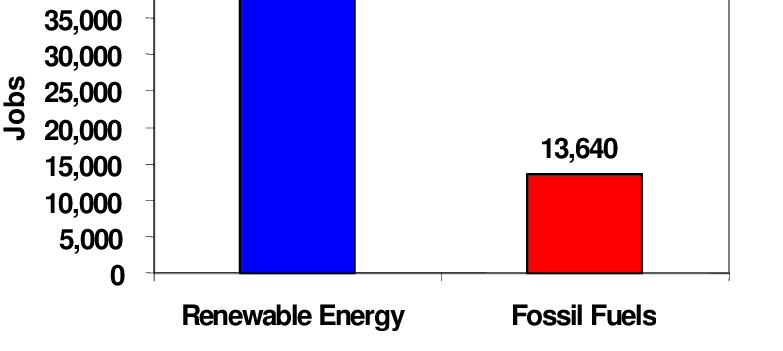
Edie 29th Oct 2020, The UK Government has earmarked £3.8bn of stimulus funding for legacy fossil fuel and nuclear generation, compared to just £121m for renewables, a damning new report has claimed. Published by global technology company Wärtsilä’s energy arm, the analysis concludes that the UK Government’s short-term plans for helping the energy sector recover from the financial impacts of Covid-19 are not aligned with the 2050 net-zero target or the interim carbon budgets.
storage capacity would be scaled up dramatically.
1 This Month

Tell Congress: Prevent Nuclear Catastrophe in Iran

Tell Congress: Prevent Nuclear Catastrophe in Iran

Read the Public Inquiry Report, the Commissioners’ report, Surrendering Australia: The AUKUS Deception is available to download for free at aukuspublicinquiry.com. Or just watch the replay of the National Press Club Luncheon.


Shut down the radiation-damaged Heysham nuclear reactors now
To see nuclear-related stories in greater depth and intensity – go to https://nuclearinformation.wordpress.com

Say No to NASA’s Reckless Nuclear Reactor on the Moon
Say No to NASA’s Reckless Nuclear Reactor on the Moon
-
Archives
- November 2026 (269)
- October 2026 (302)
- September 2026 (339)
- August 2026 (330)
- July 2026 (355)
- June 2026 (287)
- May 2026 (306)
- April 2026 (356)
- March 2026 (251)
- February 2026 (267)
- January 2026 (308)
- December 2025 (358)
-
Categories
- 1
- 1 NUCLEAR ISSUES
- business and costs
- climate change
- culture and arts
- ENERGY
- environment
- health
- history
- indigenous issues
- Legal
- marketing of nuclear
- media
- opposition to nuclear
- PERSONAL STORIES
- politics
- politics international
- Religion and ethics
- safety
- secrets,lies and civil liberties
- spinbuster
- technology
- Uranium
- wastes
- weapons and war
- Women
- 2 WORLD
- ACTION
- AFRICA
- Atrocities
- AUSTRALIA
- Christina's notes
- Christina's themes
- culture and arts
- Events
- Fuk 2022
- Fuk 2023
- Fukushima 2017
- Fukushima 2018
- fukushima 2019
- Fukushima 2020
- Fukushima 2021
- general
- global warming
- Humour (God we need it)
- Nuclear
- RARE EARTHS
- Reference
- resources – print
- Resources -audiovicual
- Weekly Newsletter
- World
- World Nuclear
- YouTube
-
RSS
Entries RSS
Comments RSS

