Nuclear power ridiculously expensive and uncompetitive – the market has spoken
 “nuclear is ridiculously expensive and uncompetitive”. So, nothing really needs to happen for renewable energy investment to grow. The reality is that the market has said “no” to nuclear and “yes” to renewables.
The Reality Is that the Market Has Said “No” to Nuclear and “Yes” to Renewables, RIAC, Paul Dorfman PhD, Honorary Senior Research Associate at the UCL Energy Institute University College London; Chair of the Nuclear Consulting Group; Member of the Irish Govt. Environment Protection Agency Radiation Protection Advisory Committee, and Tatyana Kanunnikova– 27 Dec 20,
“………. As for nuclear energy, can it be used to help mitigate climate change? What are the problems associated with nuclear energy?
 With mounting public concern and policy recognition over the speed and pace of the low carbon energy transition needed to mitigate climate change, nuclear power has been reframed as a response to the threat of global warming. However, at the heart of the question of nuclear power, there are differing views on how to apply foresight, precaution, and responsibility in the context of the poor economics of nuclear, the possibility of accidents, the consequences of those accidents, and indeed whether there exists a place for nuclear at all within the swiftly expanding renewable evolution.
When one considers nuclear, it is absolutely important to consider its life cycle in terms of carbon emissions. A study by Prof Benjamin Sovacool looked at 103 different studies and concluded that the average value for nuclear in terms of life cycle emissions was about 66 grams of carbon dioxide for every kilowatt-hour produced. This compares to about 9 grams per kilowatt-hour for wind and 32 grams per kilowatt-hour for solar. This puts nuclear as the third-highest carbon emitter after coal-fired plants and natural gas.
So, in terms of carbon emissions, nuclear is lower than fossil fuel but produces significantly more carbon dioxide in terms of its life 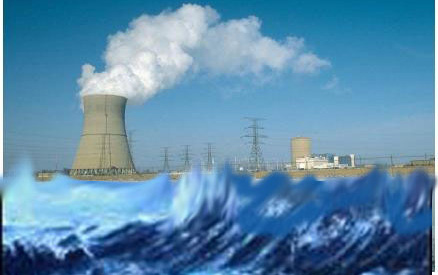 cycle than renewable power. And perhaps more importantly, with ramping predictions for sea level rise and climate disturbance, nuclear will be an important risk, since climate change will impact coastal nuclear plants earlier and harder than is currently expected. Proposed new reactors, together with radioactive waste stores, including spent fuel located on the coasts, will be vulnerable to sea level rise, flooding, and storm surge. These coastal sites will need considerable investment just to protect them against sea level rise, and in the medium term, they will even be subject to abandonment or relocation.
Adapting coastal nuclear power to climate change will entail significantly increased expense for construction, operation, waste storage, and decommissioning. Inland nuclear power plants will do no better. This is because they must be cooled by significant amounts of water and they have to shut down if that cooling water is either too warm or the river flow is reduced. These are two factors that will  absolutely happen with increased climate change. We are seeing this already in France where their reactors stationed by rivers, reliant on river water for cooling, have both diminished river flow and increased water temperatures in the summertime. That implies that there will be a significant inland nuclear station nuclear power shutdown in the future.
The other problem is one of economics, since nuclear is so hugely expensive. Carrying on constructing and prolonging the life of current nuclear plants is enormously costly. New construction is eye-wateringly expensive, which means that if we continue to build nuclear plants, we have much less resource, money, to put into the real solution to climate change, which is renewable power, demand-side management, and storage.
What are the advantages of solar and wind power?
A recent report by Standard and Poor, the key market analyst, found that renewable energy technology global investment has been running at about 350 billion dollars per year for the last few years. But for nuclear, it fell to about 17 billion for last year.
Standard and Poor say that they see “little economic rationale for new nuclear build in the US or Western Europe owing to massive cost escalations and renewables cost-competitiveness, which should lead to a material decline in nuclear generation”. Similarly, Lazard—the world’s leading financial advisory and asset management firm—has just compared the cost of new nuclear, which runs at about $119 to $192 per megawatt-hour, compared to $32 to $42 for utility-scale solar and between $20 and $54 for onshore wind per megawatt-hour. So there is a huge cost difference between nuclear and renewable technologies. Lazard go on to say that the unsubsidized, levelized cost of energy of large-scale wind and solar are at a fraction of the cost of new nuclear or even coal generators, even if the very great cost of nuclear decommissioning and ongoing maintenance is excluded.
Bloomberg New Energy Finance agrees with Lazard’s analysis. The key disadvantage to nuclear power is that it is just too expensive. For renewables, the cost is far lower and continues to fall, which is why what we see is the majority of new nuclear only being constructed with the support of vast state and public subsidy. So, given the reality that funding is limited, we need to make a choice between very expensive nuclear and very inexpensive renewables.
What hinders investments in renewable energy?
In fact, all of the markets are putting all of the money into renewable energy and none of the markets are putting their money into nuclear. There is no market investment in new nuclear. All the investment is going into renewable energy, as I have just discussed. The only problem is, of course, is that if governments via state subsidy put enormous amounts of the low carbon energy budgets into nuclear, they will have less money to invest properly in real low carbon energy technologies such as renewables, storage, and demand-side management.
What initiatives could help promote investments in renewable energy?
I do not think renewable energy needs pushing. The cost of renewables is a fraction of the cost of new nuclear. As Mr. Tanaka, a former director of the International Energy Agency and a former long-standing nuclear advocate, says, “nuclear is ridiculously expensive and uncompetitive”. So, nothing really needs to happen for renewable energy investment to grow. The reality is that the market has said “no” to nuclear and “yes” to renewables……………..
In the journey to manage the decline of fossil fuels, not all low carbon technologies are equal. The reality is that nuclear is far less benign, far more expensive, and far more carbon-intensive than other renewable options. Nuclear will struggle to compete with the technological, economic, and security advantages of the coming renewable evolution. In bidding goodbye to fossil fuels, we should also say goodbye to nuclear. And given the ramping costs and risks that cling to this, essentially late 20th-century technology, it is not before time.
Interviewed by Tatyana Kanunnikova. https://russiancouncil.ru/en/analytics-and-comments/interview/the-reality-is-that-the-market-has-said-no-to-nuclear-and-yes-to-renewables/
Russia’s nuclear-powered ice-breaker in trouble
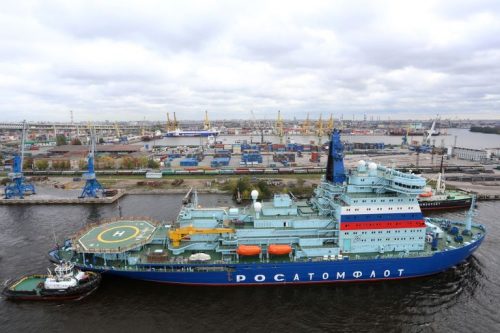 Strategy Page 25th Dec 2020 , The world’s only nuclear-powered non-military ships are operated by Russia. These include five nuclear powered icebreakers and one cargo ship,nthe Sevmorput.
oldest Russian nuclear-powered ship, the Sevmorput was stranded off thewest coast of Africa as emergency repairs are undertaken so it can continuenits trip to Antarctica where it will deliver 5,000 tons of supplies and construction materials for a new Russian research base in Antarctica.
https://www.strategypage.com/htmw/htseamo/articles/20201225.aspx
Moscow Times 16th Dec 2020, A Russian nuclear-powered cargo ship bound for Antarctica has been forced to turn back after sustaining damage, and will bypass Europe before undergoing repairs, state nuclear agency Rosatom said Wednesday. Green activists have expressed concern that the vessel will be sailing past several European countries on its way home during the winter storm season.
Storage of Chernobyl nuclear waste – in reality unsafe for 1000s of years

Tsunami-crippled Tokyo Electric Power Co. (TEPCO)’s Fukushima Daiichi nuclear power plant No.4 (R) and No.3 reactor buildings are seen in Fukushima prefecture February 28, 2012. Members of the foreign media were allowed into the plant on Tuesday ahead of the first anniversary of the March 11, 2011 tsunami and earthquake which triggered the world’s worst nuclear crisis since Chernobyl. REUTERS/Kimimasa Mayama/Pool (JAPAN – Tags: DISASTER ENVIRONMENT ENERGY) – RTR2YKOE
Paul Waldon Fight to Stop a Nuclear Waste Dump in South Australia, 28 Dec 20,
No acknowledgment, no compensation, for a British nuclear test hero
Nuclear veteran who died alone is buried with honour by pals days after he was refused medal
A Cold War hero, who believed he was rendered infertile by radiation experiments, got the send-off he deserved, Mirror UK By Susie Boniface, 27 DEC 2020
Ken Miller’s death went almost unnoticed, but his funeral was conducted with the pomp and ceremony due a war hero, Ken had died alone and childless, aged 82, after taking part in three radiation experiments which he believed left him infertile. He had hoped for at least a medal to acknowledge his service. But just days before he died the government refused, saying men like him had faced no risks.
But after the Mirror publicised his story, his fellow veterans pulled out all the stops to honour him at a humanist ceremony on Christmas Eve.
Ken’s coffin, draped in the flag of the British Nuclear Test Veterans Association, was carried into the crematorium by six ex-military pallbearers to the theme tune from A Bridge Too Far, a film that exemplifies the courage of servicemen and the madness of their generals.
The chapel at Morriston Crematorium in Swansea had expected no mourners, and planned a brief ceremony attended only by local officials.
Instead, the seats were as packed as they could be under pandemic rules for social distancing after Ken’s fellow veterans rallied to give him a proper send-off.
The service heard Billie Holiday’s version of Blue Moon, which was released in 1952, the year of Britain’s first nuclear test. And as the Gerry & The Pacemakers classic You’ll Never Walk Alone was played, the standard of the Soldiers, Sailors and Airmen’s Families Association was dipped over Ken’s coffin.
Then a veteran played a poignant Last Post on the bugle and, after a two minutes’ silence, the Reveille………
Ken was one of 22,000 men, many on National Service, who were ordered to take part in Britain’s Cold War bomb tests. Fewer than 1,500 are still alive, and one of them dies, on average, every week.
Born in Oxford, Ken ran away to join the navy and was a junior rating on HMS Warrior when he was ordered to watch three atomic explosions as part of Operation Grapple, at Malden Island in the South Pacific, in 1957.
The biggest, at 720 kilotons, was 35 times more powerful than the blast which levelled the Japanese city of Nagasaki at the end of the Second World War. It was still ruled a failure by scientists, who went on to detonate much larger H-bombs the following year.
Fellow nuke vet David Taunt, 78, of Swindon, began talking to Ken on the phone during the first lockdown as a BNTVA project to help its members.
He said: “He was one of the guys who stood on the deck with his back to it and then turned round and watched the mushroom cloud rise. He said the ship they were on sailed a lot closer to the blast zone than they should have done. And of course, like all the sailors, he used distilled seawater to drink and wash in.”………
on their regular talks, he discussed memories of the nuclear tests with David, who never met him in person and was unable to attend the funeral in Wales because of travel restrictions.
David said: “I was at Operation Dominic in 1961, when the Americans used British troops to help test close to 30 nuclear bombs at Christmas Island………
David was able to get compensation from the US government due to his cancer, because that nation agrees that service at their tests was the most likely cause. But the UK still refuses payouts or any other recognition, and fights every bid for a small war pension.
He said: “Ken would have been quite happy with a medal. It would be confirmation something happened. He appreciated what the BNTVA and the Mirror were doing for us.”
The medal decision is to be reviewed in the New Year, and 10 Tory MPs, including former ministers and influential backbenchers, have written to Boris Johnson demanding he personally intervene. https://www.mirror.co.uk/news/uk-news/nuclear-veteran-who-died-alone-23226173
Delay in removal of melted nuclear fuel from Fukushima No 1 Power plant, because of the pandemic
|
Pandemic delays melted nuclear fuel removal at Fukushima http://www.asahi.com/ajw/articles/14059716, By YU KOTSUBO/ Staff Writer, December 25, 2020 The government and operator of the Fukushima No. 1 nuclear power plant announced they had abandoned plans to start removing melted nuclear fuel and other contaminated debris from the stricken facility within 2021, citing delayed development in Britain of a robotic arm crucial for the purpose.They explained that the novel coronavirus pandemic was chiefly to blame for the delay.
The government and Tokyo Electric Power Co. had planned to start the hazardous task in 2021 but said Dec. 24 that is no longer feasible. In December 2011, nine months after the triple meltdown triggered by the March earthquake and tsunami disaster, the two parties set a goal of starting to retrieve the melted fuel “within 10 years” so reactor decommissioning could start. Since then, they have had to downsize the scale of debris that can be realistically be retrieved, mainly because the technology does not exist to accomplish such dangerous work. The No. 2 reactor, along with the No. 1 and No. 3 reactors, went into meltdown after tsunami generated by the 2011 Great East Japan Earthquake knocked out cooling systems at the plant. Debris retrieval constitutes the biggest obstacles to deciding how reactor decommissioning will progress in the years ahead. The debris is emitting extremely high levels of radiation, making it difficult to access the site even with robots. Little is known about the state of the debris or its composition. The government and TEPCO revised the timetable last December with the aim of retrieving a few grams of debris on an experimental basis in 2021 from the No. 2 reactor. The No. 2 reactor was chosen because the state of the containment housing is better understood than for the other reactors. Japan approached Britain to develop a special robotic arm because it has more experience in this field. But the work has experienced significant delays because of the COVID-19 pandemic. Trial tests for the robotic arm are planned to be held in Japan next spring or later with retrieval work postponed to 2022 or later. However, many questions remain about the reactor decommissioning of the Fukushima No. 1 nuclear power plant as a whole due to a number of factors such as wrecked equipment at the site. For example, initial projections to complete the removal of used nuclear fuel from a fuel pool were delayed for 10 years. However, the government and TEPCO are sticking to their schedule to complete reactor decommissioning between 2041 and 2051. With regard to debris retrieval, this is to be done on a “step-by-step” basis. The two parties on Dec. 24 also announced they will postpone the start of probing the interior of the No.1 reactor’s containment vessel from the second half of fiscal 2020 to fiscal 2021. They have been working to secure a route that will allow robotic equipment to explore the interior but experienced huge hurdles because their current method caused radioactive substances to spread. The accumulated debris in the three reactors is estimated to total about 880 tons. Tentative plans call for increasing the amount of debris to be retrieved gradually after a few grams are collected with a metallic brush attached to the top of the robotic arm and analyzed. |
|
Ohio lawmakers make no attempt to stop the corruptly set up nuclear power bailout
|
Ohio lawmakers ended their 2020 legislative session late Tuesday without repealing or replacing House Bill 6. The scandal-tainted bill will provide a $1 billion dollar bailout for two Ohio nuclear power plants. Customers across Ohio were to begin paying a monthly fee starting in January to subsidize the plants. A judge in Columbus gave the legislature a temporary reprieve Monday by issuing a preliminary injunction to stop fees from being collected. In July, the former speaker of the Ohio House Larry Householder and four others are facing federal charges in a bribery scheme to get the bill pass. Governor Mike DeWine says it up to the Ohio House and Senate to get something done.
“The legislature is a separate branch of government. They are working their will. We will see what they send me. I have made it clear that my preferences is total repeal and replace. Because I think when we look behind the curtain and saw how this bill became law it looks unseemly and was unseemly and this kind of stinks up the whole room,” says Gov. Mike DeWine. “And so we are better off starting over again.”
A new company acquired the nuclear plants and other first energy assets in February in a bankruptcy court deal.
|
|

Russia marketing small nuclear reactors to the Arctic , (who cares about the toxic wastes?)

Rosatom to build small-scale land-based Arctic nuclear plant by 2028
Rosatom said it has reached an agreement with the government of the Republic of Sakha (Yakutia) setting out parameters for pricing energy that will be produced by the nuclear plant, which is expected to be completed by 2028……….
“I am convinced that a small-scale nuclear power plant will give a qualitative impetus to the development of the Arctic regions of Yakutia, stimulate the development of industry in Ust-Yansky ulus and improve the living standards of local residents,” said in a statement Head of the Sakha Republic Aysen Nikolayev.
The nuclear plant is expected to operate for 60 years but the press release did not specify how Rosatom plans to deal with the nuclear waste produced by it.
Rosatom officials said the small-scale nuclear plant is based on a proven technology that has already been tested in Arctic conditions.
RITM-200 reactors are already being used on the recently commissioned Arktika nuclear-powered icebreaker and six other 22220 design heavy Russian icebreakers that are being built, Rosatom officials said…….
“The implementation of this project strengthens the leading position of Rosatom in the world market of small nuclear power plants.”…….
Rosatom is also actively marketing the technology for export overseas, Likhachev said. https://thebarentsobserver.com/en/nuclear-safety/2020/12/rosatom-build-small-scale-land-based-arctic-nuclear-plant-2028
Russian Army Chief Warns of Nuclear Risks in Cyber Hacks, Space
 Russian Army Chief Warns of Nuclear Risks in Cyber Hacks, Space https://www.bloombergquint.com/politics/russia-general-warns-cyber-attacks-pose-nuclear-risks-tass-says Stepan Kravchenko December 25 2020, (Bloomberg) — The extension of military confrontation into the cyber sphere and space raises the risks of incidents involving nuclear weapons, Russia’s top general warned Thursday, highlighting concerns about growing tensions.
Read more at: https://www.bloombergquint.com/politics/russia-general-warns-cyber-attacks-pose-nuclear-risks-tass-says
Copyright © BloombergQuint
Joe Biden administration might consider cutting nuclear weapons spending

 Biden to Review U.S. Nuclear-Weapons Programs, With Eye Toward Cuts
President-elect promised to reduce ‘excessive’ spending on nuclear arsenal and shrink its role in strategy, but critics say updates are overdue, WSJ, By Michael R. Gordon, Dec. 24, 2020 WASHINGTON—The incoming Biden administration is planning a review of the nation’s $1.2 trillion nuclear-modernization program with an eye toward trimming funding for nuclear weapons and reducing their role in Pentagon strategy
President-elect Joe Biden promised during the campaign to reduce the U.S.’s “excessive expenditure” on nuclear arms and criticized President Trump’s decision to develop new sea-based weapons, including a submarine-launched cruise missile.
The new administration is also likely to review the Pentagon’s decision to develop a new land-based intercontinental ballistic missile, which is estimated to cost more than $100 billion when its warhead is included, some former officials said.
“We have to modernize our deterrent,” said one former official. “But we cannot spend the amount of money that is currently being allocated.”
The expectation that Mr. Biden will take a fresh look at the modernization programs has spurred a debate over the future of the U.S. nuclear deterrent……. (subscribers only) https://www.wsj.com/articles/biden-to-review-u-s-nuclear-weapons-programs-with-eye-toward-cuts-11608805800
U.S. Dept of Energy pouring $millions into new nuclear gimmicks
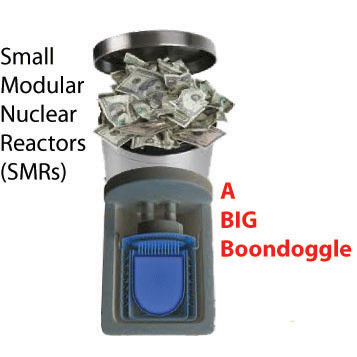 DOE selects advanced reactor concepts for funding https://www.world-nuclear-news.org/Articles/DOE-selects-advanced-reactor-concepts-for-funding, 23 December 2020
DOE expects to invest about USD600 million over the next seven years in ARDP, which aims to help domestic private industry demonstrate advanced nuclear reactors in the USA.
The department issued an ARDP funding opportunity announcement in May this year, which included the ARC-20 awards, the Advanced Reactor Demonstration awards, and the Risk Reduction for Future Demonstration awards. For the ARC-20 projects, DOE expects to invest a total of about USD56 million over four years with its industry partners providing at least 20% in matching funds. The goal of the ARC-20 programme is to assist the progression of advanced reactor designs in their earliest phases.
DOE yesterday announced the selection of three US-based teams to receive ARC-20 funding. These are:
- Inherently Safe Advanced SMR for American Nuclear Leadership. Advanced Reactor Concepts will deliver a conceptual design of a seismically isolated advanced sodium-cooled reactor facility that builds upon the initial pre-conceptual design of a 100 MWe reactor facility. The total award value over three-and-a-half years is USD34.4 million, with the DOE’s share being USD27.5 million.
- Fast Modular Reactor Conceptual Design. General Atomics will develop a fast modular reactor conceptual design with verifications of key metrics in fuel, safety and operational performance. The design will be for a 50 MWe fast modular reactor. Total award value over three years is USD31.1 million (DOE share is USD24.8 million).
- Horizontal Compact High Temperature Gas Reactor. Massachusetts Institute of Technology will mature the Modular Integrated Gas-Cooled High-Temperature Reactor (MIGHTR) concept from a pre-conceptual stage to a conceptual stage to support commercialisation. The total award value over three years is USD4.9 million (DOE cost share is USD3.9 million)………..
On 16 December, DOE selected five teams to receive USD30 million in initial funding for risk reduction projects under its ARDP programme. All five of the selected designs have the potential to compete globally once deployed, DOE said. The five projects are: the BWXT Advanced Nuclear Reactor; Westinghouse’s eVinci Microreactor; Kairos Power’s Hermes Reduced-Scale Test Reactor; the Holtec SMR-160 light-water small modular reactor; and the Molten Chloride Reactor Experiment, a project led by Southern Company Services Inc.
Two projects led by TerraPower and X-energy were selected in October to receive USD160 million in initial funding for under the DOE’s Demonstration projects pathway to develop and construct two advanced nuclear reactors that can be operational within seven years……https://www.world-nuclear-news.org/Articles/DOE-selects-advanced-reactor-concepts-for-funding
UK’s quest for nuclear fusion.
|
he science of nuclear fusion was proven in the early 1930s, after fusion of hydrogen isotopes was achieved in a laboratory. And we see fusion in action every day. The stars, including our Sun, are giant self-sustaining fusion reactors. ……..
Unlike nuclear fission, which breaks heavy atoms apart, nuclear fusion compresses light atoms together. This means there is far less harmful waste created by fusion. Neutron bombardment causes a fusion plant to become slightly radioactive, however these radioactive products are short-lived. Fusion therefore offers the tantalising potential for near-limitless, climate-friendly energy production that doesn’t come with a shadow of radioactive waste. Test reactors, such as the Joint European Torus (Jet) at Culham in England, have proved fusion is possible, albeit for short periods of time. The challenge is turning these experimental reactors into an ongoing process that is commercially viable. For this, it would need to generate more power than is needed to keep the fusion reaction going.
For decades, we have been promised that commercial fusion power plants will exist within 30 years. As far back as 1955, the physicist Homi J Bhabha claimed we would have fusion power within two decades. This claim, and many others since, have repeatedly failed to be achieved. The promise is eternal, but fusion always seems that same distance away………. https://www.bbc.com/future/article/20201214-the-uks-quest-for-affordable-fusion-by-2040
|
|

U.S. Congress approves nuclear energy funding for Financial Year 2021

|
Congress approves nuclear energy funding for FY2021, WNN, 23 December 2020The US Congress voted to approve appropriations for fiscal year 2021 that includes USD1.5 billion for the Department of Energy’s Office of Nuclear Energy. The appropriations also include USD150 million to initiate the uranium reserve programme to address challenges to the production of domestic uranium…….
The total appropriation for the Department of Energy (DOE) is USD42.04 billion, which is USD3.45 billion above the FY2020-enacted level and USD6.31 billion above the budget request. This includes USD1.5 billion allocated for nuclear energy research, development and demonstration activities, including USD280 million for the Advanced Reactors Demonstration Program, which was announced in May. The appropriation also includes USD27.5 million for DOE expenses necessary for nuclear waste disposal activities to carry out the purposes of the Nuclear Waste Policy Act of 1982, including interim storage activities. Of this, USD7.5 million will come from the Nuclear Waste Fund. Congress’ approval of the FY2021 appropriations was welcomed by the Nuclear Energy Institute. …………… https://www.world-nuclear-news.org/Articles/Congress-approves-nuclear-energy-funding-for-FY202 |
|
Marketing nuclear technology to Slovakia
 Mochovce new-build project receives loan boost, WNN, 24 December 2020
Italy’s Enel has announced that its subsidiary Enel Produzione and the Czech company Energetický a Průmyslový Holding (EPH) have agreed to a provide additional loans for the completion of Mochovce 3 and 4 in the Slovak Republic, and altered the terms for EPH to eventually buy out Enel’s stake in Slovenské elektrárne. They and EP Slovakia BV have signed a new agreement that modifies some of the terms and conditions of the 2015 contract concerning the sale of the stake held by Enel Produzione in the Slovak utility…….
Construction on the two Mochovce units was restarted in 2008 and aimed at having both units in operation by 2013, at a total cost of EUR2.8 billion. This was increased at the start of this month to about EUR6.2 billion. Fuel loading at unit 3 is expected by April 2021 and at unit 4 in 2023. ………. https://www.world-nuclear-news.org/Articles/Mochovce-new-build-project-receives-loan-boost
Economic crisis forces North Korea to put new nuclear parade facilities on ice.
Kim Jong Un forced to put new nuclear parade facilities on ice. Satellite images show economic crisis is delaying North Korean leader’s vanity projects, Edward White in Seoul, DECEMBER 24 2020 “…….”…….The delays are the latest indications of the financial crisis unfolding in the secretive state, where the economy has been buffeted by sanctions, pandemic-linked border closures and damage from extreme flooding and typhoons this year. Rapid construction previously observed at Wonsan, as well as a new hospital in Pyongyang and facilities at a training ground for the regime’s theatrical nuclear weapons parades continue to “lose steam”, according to analysis of images published on Wednesday by 38 North, a programme run by the Stimson Center, a US think-tank. ……. https://www.ft.com/content/68dd3c40-5add-4ce7-979c-63cbb945aa58
Russia keenly marketing nuclear technology to Bolivia
|
Rosatom may put stages I, II of nuclear center in Bolivia into operation in 2021, TASS, 25 Dec 20, On March 6, 2016, Russia and Bolivia concluded an inter-governmental agreement on cooperation in the peaceful use of nuclear energy and construction of a nuclear research center in El Alto MOSCOW, December 25. /TASS/. The Rosatom State Nuclear Energy Corporation is continuing the construction of the Center for Nuclear Research and Technologies in Bolivia, despite the difficult political situation in that country. Next year the company plans to commission the first and second stages of the facility, Head of Rosatom Alexey Likhachev said on Friday.”Despite two revolutions, work continues in Bolivia. Next year we will start commissioning facilities of the first and second stages of the Center for Nuclear Research and Technologies,” he said…….. Nuclear project in BoliviaOn March 6, 2016, Russia and Bolivia concluded an inter-governmental agreement on cooperation in the peaceful use of nuclear energy and construction of a nuclear research center in El Alto, at an altitude of 4,100 meters above sea level. The Bolivian government-funded $300-million project will be implemented jointly with Russia’s nuclear power corporation Rosatom………. https://tass.com/economy/1239807 |
|
1 This Month

Tell Congress: Prevent Nuclear Catastrophe in Iran

Tell Congress: Prevent Nuclear Catastrophe in Iran

Read the Public Inquiry Report, the Commissioners’ report, Surrendering Australia: The AUKUS Deception is available to download for free at aukuspublicinquiry.com. Or just watch the replay of the National Press Club Luncheon.


Shut down the radiation-damaged Heysham nuclear reactors now
To see nuclear-related stories in greater depth and intensity – go to https://nuclearinformation.wordpress.com

Say No to NASA’s Reckless Nuclear Reactor on the Moon
Say No to NASA’s Reckless Nuclear Reactor on the Moon
-
Archives
- November 2026 (269)
- October 2026 (302)
- September 2026 (339)
- August 2026 (330)
- July 2026 (355)
- June 2026 (287)
- May 2026 (306)
- April 2026 (356)
- March 2026 (251)
- February 2026 (267)
- January 2026 (308)
- December 2025 (358)
-
Categories
- 1
- 1 NUCLEAR ISSUES
- business and costs
- climate change
- culture and arts
- ENERGY
- environment
- health
- history
- indigenous issues
- Legal
- marketing of nuclear
- media
- opposition to nuclear
- PERSONAL STORIES
- politics
- politics international
- Religion and ethics
- safety
- secrets,lies and civil liberties
- spinbuster
- technology
- Uranium
- wastes
- weapons and war
- Women
- 2 WORLD
- ACTION
- AFRICA
- Atrocities
- AUSTRALIA
- Christina's notes
- Christina's themes
- culture and arts
- Events
- Fuk 2022
- Fuk 2023
- Fukushima 2017
- Fukushima 2018
- fukushima 2019
- Fukushima 2020
- Fukushima 2021
- general
- global warming
- Humour (God we need it)
- Nuclear
- RARE EARTHS
- Reference
- resources – print
- Resources -audiovicual
- Weekly Newsletter
- World
- World Nuclear
- YouTube
-
RSS
Entries RSS
Comments RSS

