U.S. rioters did get close to Mike Pence and his ‘nuclear football’

How Close Did the Capitol Rioters Get to the Nuclear “Football”?
The video of Mike Pence shown during the impeachment revealed something startling about the nuclear chain of command. Slate, BY FRED KAPLAN, FEB 11, 2021 Among the many startling videos shown at Wednesday’s impeachment trial documenting the Jan. 6 insurrection at the Capitol, there was one clip that was so brief, subtle, and beside the immediate point that the House managers didn’t highlight it—but it was nevertheless hugely enlightening.
It revealed that, like the president, the vice president is routinely escorted by a military aide who carries a satchel containing the codes that allow him to launch a nuclear attack.The pertinent clip shows Vice President Mike Pence and his family being rushed out of the Capitol to escape the rioters, who, it turns out, were determined to kill him for certifying the Electoral College votes and thus betraying Donald Trump. Following Pence was an Air Force officer carrying two bags, one of which looked a lot like the nuclear satchel, also known as the Football or the Black Bag…………..
During some administrations, a military aide with a Football accompanied the vice president only on out-of-town trips. But a former White House official told me that a military aide with a satchel was always close to Joe Biden when he was Barack Obama’s vice president. Presumably (though nobody has told me this), a military aide carries a satchel close to Kamala Harris too……………
As for the prospect of a rogue veep, there’s probably nothing to worry about. It’s worth noting what’s in the satchel. Contrary to popular culture, there is no “button” to push, nor is there an indented surface that matches the president’s (or vice president’s) palm. What’s actually in the satchel—which is said to weigh 45 pounds—is a card (sometimes called the “biscuit”) citing phone numbers to call and a passcode that authenticates the identity of the caller, some encrypted communication gear to make the call, and a book describing all of the preapproved nuclear attack options and how the president would go about ordering each one. This book used to be a rather heavy tome called the SIOP Execution Handbook (the SIOP, standing for Single Integrated Operational Plan, is the nuclear war plan) or, at various times, the Gold Book or the Black Book. When Carter first leafed through the book, he told the officers who supplied it, “I’m pretty smart, and I don’t understand any of this.” So the operations division of the Pentagon’s Joint Staff condensed the complicated book into a stack of laminated cards (“like a menu at Wendy’s,” as one officer described them) inscribed in very clear language.
To launch a nuclear attack, the president (or the vice president) would transmit the coded message to a one-star general and his staff in the National Military Command Center, located on the Pentagon’s ground floor, who would in turn pass the order on to the missile and bomber crews, who would launch the attack. That’s it. There is no red button, but there are also no other officials involved in the chain of command. (Other officials are supposed to consult and confer, but they don’t have the ultimate say.)
If the vice president ordered an attack (something that the officer carrying the Football would have to allow), the officers in the Pentagon would know whether the authentication code belonged to the president or the vice president. They would also know whether the president was still alive and in command. If he was, they would know that the vice president’s order was not legitimate.
What about the mob? What could they do, had they grabbed the Football? First, it’s very unlikely that they could have grabbed it. The Secret Service agents around Pence would almost certainly meet any such attempt with deadly force. There would have been a dozen or more dead rioters scattered on the bloodied floor near the staircase where Pence, his family, and his entourage had gathered. If the mob’s survivors kept mauling and overpowering Pence and the others, they might not have thought to grab the Football, which is locked in a metal case tucked inside an ordinary-looking satchel. Even if they had grabbed the satchel, bashed the lock, and opened the case, they wouldn’t have known what to do with the stuff inside. Had they figured it out, the officers in the Pentagon would have known the signals were coming from an unauthorized source.
Could the mob have taken the Football and sold it to the Russians or some other adversary? It would be worth millions of dollars. Despite the militias’ self-image as “patriots,” it’s not out of would be worth millions of dollars. Despite the militias’ self-image as “patriots,” it’s not out of the question. According to a U.S. District Court affidavit, Riley June Williams, the Pennsylvania woman accused of breaching the Capitol and stealing Pelosi’s laptop on Jan. 6, intended to give the computer “to a friend in Russia, who then planned to sell the device to SVR, Russia’s foreign intelligence service.”……….
The nuclear bomb may be out of mind for many people in the post–Cold War era, but it is never out of sight—and its loaded trigger is constantly a mere few steps away from the one person with sole authority to destroy the planet. https://slate.com/news-and-politics/2021/02/nuclear-football-vice-president-pence.html
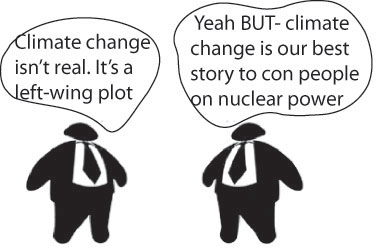
Busting the propaganda that the nuclear industry wants to reduce carbon emissions
Big money, nuclear subsidies, and systemic corruption, Bulletin of the Atomic Scientists, By Cassandra Jeffery, M. V. Ramana | February 12, 2021 ”………..Material interests and policy interests.
The most common argument used by these companies and those who support nuclear subsidies is the need to fight climate change. There are two problems with this argument.
First, it is based on the false idea that nuclear power, if shut down, will necessarily be replaced by fossil fuel plants. A June 2016 decision by Pacific Gas and Electric (PG&E) demonstrates the invalidity of this assumption. PG&E will close the last two nuclear power plants in California (the Diablo Canyon units) by 2024 and 2025, replacing the lost electrical capacity “with a cost-effective, greenhouse gas free portfolio of energy efficiency, renewables and energy storage.” This move to renewables is more cost-effective today than it was in 2016 because of declining costs of renewables and energy storage. As Matthew McKinzie of the Natural Resources Defense Council argued at that time, the decision “shows that given sufficient time to prepare, retiring nuclear capacity can transition smoothly to a mix of energy efficiency measures; clean, renewable resources; and energy storage without any role for fossil fuels – an outcome that can be optimal for the environment, the market, and the reliability of the electric grid.” At a larger scale, Germany has shown that it is possible to retire nuclear plants and reduce emissions at the same time.
The second problem is the assumption that corporations owning nuclear plants are primarily interested in rapidly reducing emissions. Many utilities have large fossil fuel investments— investments that suggest a shutdown won’t be happening anytime soon. This suggestion seems especially true with natural gas plants. Although utilities often describe natural gas as clean (for example, Exelon describes its fleet as powered by “clean burning natural gas”), the climate implications of continued natural gas use are substantial. Exelon, the company with the most nuclear plants in the country, also owns and operates, along with its subsidiaries, 11 oil-fired power plants, five dual-fuel (natural gas and oil-powered) power stations, and 10 natural gas-based power plants throughout North America. In addition to its four nuclear power plants, Dominion owns 17 power plants fueled by natural gas and 14 power plants fueled by coal or oil. The company’s estimate of carbon dioxide emissions from its power plants is around 40 million metric tons in 2018, roughly the same level as in 2012. Likewise, PSEG owns just two nuclear power plants, but the company owns or has a stake in 10 fossil fuel generating plants with one more natural gas powered plant under construction.
With such large stakes in fossil fuel-based power plants, it is clear that these utilities are not about to switch immediately to renewables—or even to nuclear power—and give up on years and years of future profits that they and their shareholders are hoping for. In all of the states that offered nuclear subsidies, and elsewhere, the utilities have tried to hold back the deployment of renewables in more or less obvious ways. US utilities are not alone. Studies show that electric utilities around the world have “hindered the transition of the global electricity sector towards renewables, which has to date mostly relied on non-utility actors (such as independent power producers) for expanding the use of renewables.”
Rather than adapting to the necessity of building up renewables, these utilities resort to tactics that have been used in the past to justify nuclear power plant construction. As former Nuclear Regulatory Commission member Peter Bradford listed at the beginning of the so-called nuclear renaissance, these include “subsidy, tax breaks, licensing shortcuts, guaranteed purchases with risks borne by customers, political muscle, ballyhoo, and pointing to other countries (once the Soviet Union, now China) to indicate that the US is ‘falling behind.’”…. https://thebulletin.org/2021/02/big-money-nuclear-subsidies-and-systemic-corruption/
Los Alamos National Laboratory not alert to the increasing danger of wildfires
 Audit raises concerns about wildfire risks at U.S. nuclear lab https://www.pbs.org/newshour/science/audit-raises-concerns-about-wildfire-risks-at-u-s-nuclear-labScience Feb 10, 2021 By — Susan Montoya Bryan, Associated Press
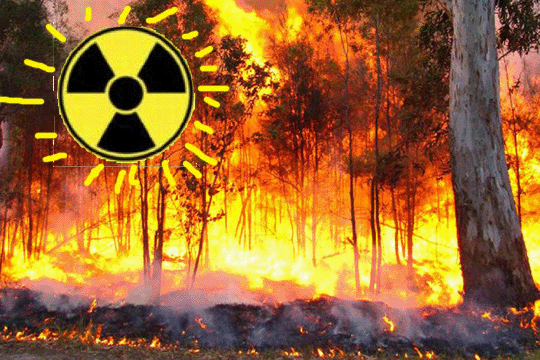
ALBUQUERQUE, N.M. (AP) — One of the nation’s premier nuclear laboratories isn’t taking the necessary precautions to guard against wildfires, according to an audit by the U.S. Energy Department’s inspector general.
The report comes as wildfire risks intensify across the drought-stricken U.S. West. Climatologists and environmentalists have been warning about worsening conditions across the region, particularly in New Mexico, which is home to Los Alamos National Laboratory and where summer rains failed to materialize last year and winter precipitation has been spotty at best.
The birthplace of the atomic bomb, Los Alamos has experienced hundreds of millions of dollars in losses and damage from major wildfires over the last two decades. That includes a blaze in 2000 that forced the lab to close for about two weeks, ruined scientific projects, destroyed a portion of the town and threatened tens of thousands of barrels of radioactive waste stored on lab property.
Watchdog groups say the federal government needs to take note of the latest findings and conduct a comprehensive review before the lab ramps up production of key plutonium parts used in the nation’s nuclear arsenal.
“The threat and risks of wildfire to the lab and northern New Mexico will continue to increase because of climate warming, drought and expanded nuclear weapons production,” said Jay Coghlan, director of the group Nuclear Watch New Mexico.
The audit released this month found that cutting back vegetation along power lines and other measures to reduce the risk of catastrophic fires were not always done, increasing the potential for another devastating fire like the Cerro Grande Fire in 2000.
Federal auditors said not all fire roads were maintained to ensure safe passage for firefighters and equipment responding to blazes on lab property.
The audit also cited federal policy that requires a comprehensive, risk-based approach to wildfire management — something the inspector general’s office said had not been developed by the contractor that manages the lab for the U.S. government. It also pointed to a lack of oversight by Energy Department field staff.
“Without documenting planning and preparedness activities, there was no assurance that all prevention and mitigation options were considered and that the site was fully prepared for wildland fire events,” the audit says.
The report included photos that depicted overgrown areas. In Los Alamos Canyon, for example, specialists indicated there were about 400 to 500 trees per acre. Auditors said the ideal number should be 40 to 50 trees per acre.
Lab spokesman Peter Alden Hyde said that since the audit was conducted in late 2018 and early 2019, the lab has adopted “an aggressive approach” to wildfire management on its 39-square-mile (101-square-kilometer) campus. That has included thinning vegetation along access routes, improving fire roads and recently removing thousands of trees downed by wind storms.
“We continue to review our wildfire and forest health plans and have already implemented most of the recommendations the Department of Energy offered to improve our efforts to protect the public, the environment and the laboratory,” he said.
It was not immediately clear how many acres were thinned during the last year or whether the lab had any major projects planned for 2021.
The merging of the economic and the political power of big nuclear corporations
 Big money, nuclear subsidies, and systemic corruption, Bulletin of the Atomic Scientists, By Cassandra Jeffery, M. V. Ramana | February 12, 2021, ”………… the long-term impact of legislation that favors nuclear energy firms involves the great economic and political power that these large utilities possess. To better understand the basis of the economic power of these corporations, we analyzed financial data from electric utilities listed on the New York Stock Exchange (NYSE) between 1970 and 2019 on the standard Compustat database.
The first trend that is evident is one of increasing market concentration. From the 1970s through to the mid-1990s, there were roughly 80 to 85 companies listed in this sector on the NYSE. By 2000, that number had dropped to 56. The reason was a series of mergers and acquisitions through which large companies absorbed smaller companies. For example, Commonweath Edison became part of Unicom in 1994. Unicom and the Philadelphia Electric Company merged in 2000 to form Exelon. Similar mergers and acquisitions have continued, and by 2019 there were only 36 utility companies operating in the United States.
Measured through their market capitalization values, these 36 corporations are not equal. By and large, the corporations with the largest market cap values are the ones that own nuclear plants. Exelon is a good example, owning 17 of the 94 nuclear units that are operating in the United States as of November 2020. In 2019, Exelon’s average market capitalization was $44.3 billion. But Exelon is by no means the largest utility. Nextera Energy ($118 billion), Dominion ($69 billion), Duke ($67 billion), and American Electric ($47 billion) dominate the industry in terms of market capitalization. All of these five companies had a higher market capitalization in 2019 than the largest utility that did not own nuclear plants: Sempra Energy ($44.1 bn).
Over the last six years, when there have been no mergers or acquisitions among these companies, 11 out of the 14 companies that own nuclear assets have consistently held market capitalization values well above the median (based on 36 companies in all). Two of the remaining three hover near the median value, sometimes higher, sometimes lower. (The one remaining utility, El Paso, was recently bought out by JP Morgan, and will no longer be a publicly traded company.) On the whole, companies with nuclear plants have recorded larger market capitalization values than the median of 22 utilities that don’t own nuclear assets.
The legislative means used to take money away from electricity consumers and bail out economically failing nuclear plants owned by these large corporations helps further their market power, as illustrated by Dominion’s value rising from $49.5 billion in 2018 to $69.4 billion in 2019. While it is well known that wealthy corporations have a lot of political power, it seems from these examples that the converse might also be true: The political power enjoyed by these large corporations is at the root of their economic power. Indeed, as political economists Jonathan Nitzan and Shimshon Bichler have argued at length, the standard economic concept of capital symbolizes “organized power writ large,” challenging the conventional division between politics and economics. The various bills passed in state legislatures offer a political assurance to investors that revenues for these utilities are assured for the foreseeable future, which naturally translates into higher stock prices and market capitalizations.………https://thebulletin.org/2021/02/big-money-nuclear-subsidies-and-systemic-corruption/
Mike Pence’s ‘nuclear football’ was potentially at risk during Capitol riot
|
Mike Pence’s ‘nuclear football’ was potentially at risk during Capitol riot https://www.theguardian.com/us-news/2021/feb/12/mike-pence-nuclear-football-capitol-riot Footage from 6 January shows mob was within 30 metres of Pence and air force officer carrying briefcase with nuclear codes Julian Borger in Washington, Sat 13 Feb 2021
The dramatic footage of the 6 January insurrection shows the mob was within 30 metres of Mike Pence, when he made his escape. But there was a chilling detail that even the House prosecutors missed. With the then vice-president on that terrifying day, was an air force officer carrying the “football”, a large black briefcase carrying nuclear launch codes.
The codes in the vice-president’s football are not activated unless the president is dead or incapacitated. But the implications of it falling into the hands of rioters are still chilling. “If the mob had seized Pence’s nuclear football, they may not have been able to order an actual launch but the public may not have known that,” Tom Collina, director of policy at the Ploughshares Fund disarmament advocacy group, said. “Parading the nuclear button around would have caused widespread panic and chaos as authorities scrambled to respond.” The secret service bodyguards around Pence would most likely have defended the suitcase with deadly force, but if the pro-Trump mob had managed to seize it, they would have come away, not just with the codes used to identify the vice-president and authenticate his orders, but also the encrypted communications equipment used to make the call to the National Military Command Center in the Pentagon. Most damaging of all, they would have all the nuclear attack options instantly available around the clock to the US commander-in-chief. That list of options used to be in a weighty handbook, but according to Fred Kaplan, author of The Bomb: Presidents, Generals, and the Secret History of Nuclear War, it has been condensed over the decades into a series of laminated cards, “like a menu at Wendy’s”, as one officer put it to Kaplan. Not only would disclosure of that menu represent one of the worst security breaches imaginable, the encrypted communication equipment would tell an adversary a lot of how the US would respond to a major attack. “They could glean all sorts of information about its structure and technology so it’s very significant,” said Hans Kristensen, director of the nuclear information project at the Federation of American Scientists. Nuclear experts have questioned whether this cold war relic that provides such an obvious target for adversaries and terrorists, is still necessary. But the Trump era has also shone a bright light on the question of whether one individual should continue to have sole authority to launch the US nuclear arsenal. Collina, co-author of The Button, a book on the presidency and nuclear weapons, said: “Of course the even bigger danger was that Trump had his own football that could have been used to end civilization as we know it.” In other words, perhaps the only thing scarier than the football being surrounded by a mob is the thought of Trump being alone with it. |
|
|
‘Ecocide’ proposal aiming to make environmental destruction an international crime

‘Ecocide’ proposal aiming to make environmental destruction an international crime
By Anthony Funnell for Future Tense– 13 Feb 21, A group of leading international law experts has defined a new super-crime.They’re calling it “ecocide”.
They plan to submit a draft of their new law to the governing body of the International Criminal Court, in the hope that the ICC will adopt it for future prosecutions.
If successful, ecocide will become the court’s fifth jurisdictional responsibility, alongside genocide, crimes against humanity, war crimes and crimes of aggression.
The group behind the proposal, Stop Ecocide, argues that climate change knows no borders and the destruction of local ecosystems can have huge global consequences.
“In this day and age, it’s no longer possible to say that one is destroying large swathes of nature without realising what one is doing,” Stop Ecocide’s Jojo Mehta says.
She, and the expert panel she’s assembled, want governments, companies and individuals to be brought to account for the environmental destruction they knowingly allow.
And that sense of knowing is important, she says, because most destruction occurs not by accident, but in support of commercial gains.
A growing momentum
Prominent environmental activist Greta Thunberg is onboard, as is the French President, Emmanuel Macron, who’s raised the possibility of incorporating the concept of ecocide into domestic French law.
Though not an official member of the Stop Ecocide movement, he’s also leant his weight to the idea of charging the ICC with oversight of international prosecutions.
President Macron’s involvement began in 2019, when large swathes of the Amazon caught fire under suspicious circumstances. Macron personally accused the Brazilian government of not doing enough to protect the forests from destruction.
Brazil’s populist leader, Jair Bolsonaro — a self-proclaimed climate change denier — initially ridiculed the idea of an ecological emergency and refused to accept international assistance.
“This is an issue that concerns the entire world,” President Macron responded.
“We have a real ecocide that is developing everywhere in the Amazon, not only in Brazil.”
Pope Francis has also spoken of what he calls the “sins of ecology”, explicitly describing his understanding of ecocide as:
“The massive contamination of air, land and water resources, the large-scale destruction of flora and fauna, and any action capable of producing an ecological disaster or destroying an ecosystem.”
The pros and cons
Queens University Law lecturer, Rachel Killean, says the concept of ecocide dates back to the Vietnam War and debates over the American military’s use of the Agent Orange defoliant.
It also briefly gained attention during early discussions on the role and function of the International Criminal Court.
So, Dr Killean says, it makes historical sense to adapt the ICC’s brief, rather than establish a new environmental court.
She says International Law experts such as University College London’s Philippe Sands, former ICC judges and climate change experts are talking about it as “something that is possible and tangible.”
Ms Mehta says the ICC is the only global mechanism that directly accesses the criminal justice systems in all of its member states.
“So, effectively if you make something a crime there, any member state that ratifies that crime must then include it in their own domestic legislation within a year.”
This means it’s likely the most efficient way to make a rule that stays similar across international borders.
“That’s very important with ecosystem destruction because the biggest perpetrators are big transnational companies which operate in many jurisdictions,” Ms Mehta says.
But, Dr Killean warns, despite renewed interest in the ecocide concept there are big hurdles to overcome, the first being sufficient political will………….. https://www.abc.net.au/news/2021-02-13/will-ecocide-become-an-international-crime/13136912
Even a pro nuclear enthusiast admits that Small Nuclear Reactors cause toxic radioactive wastes
 13 Feb 21 I was quite fascinated to note a paragraph in a long nuclear propaganda article, (by Stikeman Elliott, in Mondaq) yesterday, in which this, hitherto rather hidden problem, gets a mention.
Of course, this pro nuclear writer is not really worried all that much about the actual problem.
Oh no – his concern is about the public’s perception of it – that public perception might hamper the develoment of the nuclear lobby’s newest gimmick. Can’t have that!
”…….efforts need to be made to address the perceived risks so as to establish confidence in the ability of SMRs to operate safely while proving to be a viable source of low-carbon energy.
While SMRs produce less nuclear waste than traditional reactors, the issue of radioactive waste still exists. Nuclear waste needs to be safely stored and transported to secure facilities. SMRs have often been proposed as a solution for electricity generation in remote areas, but this proves problematic from a waste perspective as any nuclear waste would need to be transported over long distances. There is currently no permanent nuclear waste storage site in Canada……”
Koeberg Nuclear Power Station containment buildings damaged by prolonged exposure to sea air
 Koeberg Nuclear Power Station containment buildings suffer damage, ESI Africa, Feb 12, 2021 A recently released Eskom document has revealed that 40 years of exposure to sea air at Koeberg Nuclear Power Station has damaged the concrete of the containment buildings, according to Koeberg Alert Alliance.
At one stage the concrete containment dome was found to have cracked around the entire 110-meter circumference, states the Koeberg Alert Alliance.
“The containment buildings are the outer shells of the reactor buildings, built as pressure vessels to withstand the pressure if the reactors inside them ever malfunction and therefore prevent harmful radiation being leaked into the environment,” says DR, a member of Koeberg Alert Alliance and a retired analytical chemist.
“Where the chloride salts have entered, they have caused corrosion of the reinforcing steel bars, resulting in spalling and delamination of the concrete – it is even more alarming than I thought,” he says. Spalling results from water entering concrete which forces the surface to peel, pop out, or flake off. ……..
According to the Koeberg Alert Alliance, the provided 31-page report which refers to repairs done up until 2018, has eleven pages entirely blacked out and various other sections, photos and tables redacted with the reason given as “sensitive technical information”.
“The interesting parts are clearly those that have been redacted,” says University of Johannesburg Physics Professor, Hartmut Winkler. “The first big redact is titled History/Background and presumably describes past failures and recent damage that Koeberg Alert Alliance’s PAIA was interrogating. Why should the ‘History’ be sensitive due to technical information when the less redacted sections are full of technical details.
“The most puzzling redact to me are the references which are supposed to be publicly available documents, so why are they all being hidden? Do they expose some entities that Eskom does not want anyone to know have been involved with Koeberg and why? I would also query why the financial information would be redacted. Surely the public has a right to know how much money certain components cost, and what Eskom paid for them?” says Winkler.
This is a developing story, ESI Africa will do a follow up to give Eskom an opportunity to respond to the claims. https://www.esi-africa.com/industry-sectors/generation/koeberg-nuclear-power-station-containment-buildings-suffer-damage/
Expert panel reports that North Korea is relying on cyberattacks to fund nuclear weapons.
|
North Korea relying on cyberattacks to fund nuclear weapons: experts https://coingeek.com/north-korea-relying-on-cyberattacks-to-fund-nuclear-weapons-experts/ Ed Drake-12 Feb 21,
North Korea has relied on cyberattacks to fund an upgrade to its nuclear weapons and ballistic missiles arsenal, with help with materials and technology from other rogue states such as Iran, according to findings by experts examining the impact of sanctions on the country. A panel of experts at the United Nations, tasked with monitoring the impact and enforcement of sanctions against the country, reported their findings to members of the Security Council this week, suggesting that a “total theft of virtual assets from 2019 to November 2020…valued at approximately $316.4 million.” North Korea is subject to international sanctions designed to prevent the funding of its nuclear and ballistic weapons programs. The UN findings show the role cybercrime has played in funding the illegal development of weapons in North Korea, as well as the risks posed to digital currency users holding their money on cryptocurrency exchanges.
|
|
UK’s Freedom of Information law revealed Israel nuclear link, but now FOI is under threat
|
From duck houses to nuclear weapons: what we know because of Freedom of Information law, Open Democracy, Over the past 20 years, the ‘right to know’ legislation has helped expose many abuses of power, but now it’s under threat, Adam Bychawski11 February 2021 ”………. Since the act passed, politicians have repeatedly threatened to limit its powers. Recently, we revealed that an ‘Orwellian’ Cabinet Office unit has been coordinating Freedom of Information (FOI) responses across government departments, and screening journalists’ requests in ways that experts say could be breaking the law. The unit has blocked the release of files about the contaminated blood scandal that claimed the lives of thousands across Britain and information about high-rise buildings that have potentially lethal aluminium cladding. It’s not just journalists and rights campaigners who should be worried – the public should be too. Many of the biggest abuses of power have come to light only because of Freedom of Information requests. Here are just a few examples of what Freedom of Information requests have revealed over the years…………. Britain’s role in Israel’s nuclear weapons program……While the West has for decades been attempting to rein in Iran’s nuclear ambitions, another Middle Eastern state is believed to have quietly built a covert nuclear bomb. Israel has long had a policy of neither confirming nor denying the existence of its nuclear programme. Despite this, it is thought to have established a clandestine arsenal on par with India and Pakistan. How did Israel achieve this with a minimum of international outcry? Freedom of Information disclosures from the 1960s revealed that Britain was among many countries that secretly made hundreds of shipments of nuclear materials to Israel. The documents showed that the nuclear industry played a key role in securing the transfer of the materials, despite warnings by British intelligence that it might be used to make a bomb. ……… A pandemic might seem like an unusual time to plan a “radical shake-up” of the NHS, but a freedom of information request by openDemocracy revealed that is exactly what the government has been preparing. The disclosure showed that Munira Mirza, the controversial head of Boris Johnson’s policy unit, has been apportioned to oversee the plan. Mirza, who previously worked for Johnson during his time as mayor of London, has no background or policy experience in health. The government initially declined to confirm reforms, it took a freedom of information request to confirm they are happening. In February, a leaked document revealed plans to give the government substantially more control over the NHS, prompting concerns from health works about the timing of the changes. Who’s behind a hardline Brexit pressure group?………The public has a right to know who is trying to influence government policy, so Ministers should not prevent this information from being released because it may be politically awkward,” said Transparency International’s research manager, Steve Goodrich. https://www.opendemocracy.net/en/freedom-of-information/duck-houses-nuclear-weapons-what-we-know-because-freedom-information-law/ |
|
European Parliament calls for a halt to Belarus nuclear plant in Ostrovets
|
MEPs call for suspension of the launch of the Belarus nuclear plant in Ostrovets, European Parliament News, 12 Feb 21, MEPs voice serious concerns over the safety of the Ostrovets nuclear plant in Belarus and demand that its commercial launch be suspended.
In a resolution adopted with 642 votes to 29, with 21 abstentions, Parliament criticises the hasty commissioning of the Ostrovets nuclear plant and the continued lack of transparency and official communication regarding the frequent emergency shutdowns of the reactor and equipment failure. Despite outstanding safety concerns, the plant started to generate electricity on 3 November 2020 without fully implementing recommendations made in the 2018 EU peer review and by the International Atomic Energy Agency (IAEA), MEPs say, expressing their discontent with the rush to start commercial operation of the plant in March 2021. MEPs voice serious concerns over the safety of the Ostrovets nuclear plant in Belarus and demand that its commercial launch be suspended. In a resolution adopted with 642 votes to 29, with 21 abstentions, Parliament criticises the hasty commissioning of the Ostrovets nuclear plant and the continued lack of transparency and official communication regarding the frequent emergency shutdowns of the reactor and equipment failure. Despite outstanding safety concerns, the plant started to generate electricity on 3 November 2020 without fully implementing recommendations made in the 2018 EU peer review and by the International Atomic Energy Agency (IAEA), MEPs say, expressing their discontent with the rush to start commercial operation of the plant in March 2021……..https://www.europarl.europa.eu/news/en/press-room/20210204IPR97126/meps-call-for-suspension-of-the-launch-of-the-belarus-nuclear-plant-in-ostrovets |
|
Iran warned by France, Germany, UK, over uranium metal production
France, Germany, UK warn Iran over uranium metal production, Iran is undermining the chance for renewed diplomacy to fully realise the 2015 nuclear deal objectives, the trio says. https://www.aljazeera.com/news/2021/2/12/france-germany-uk-slam-iran-for-uranium-metal-production
The United Nations’ nuclear watchdog said earlier this week that Iran had followed through on its plan to make uranium metal, after Tehran had alarmed Western nations with its intent to produce the material with which the core of nuclear weapons can be made.
There have been hopes that the 2015 nuclear deal between Iran and world powers could be revived through new talks under the administration of United States President Joe Biden, after his predecessor Donald Trump walked out of the deal in 2018.
The European trio, who are signatories to the deal formally known as the Joint Comprehensive Plan of Action (JCPOA), said in a joint statement on Friday that Iran’s move to produce uranium metal was a violation of the accord that endangers the chance to fully realise the deal, which aims to reduce international sanctions on Iran in exchange for limits to its nuclear programme
“We strongly urge Iran to halt these activities without delay and not to take any new non-compliant steps on its nuclear programme. In escalating its non-compliance, Iran is undermining the opportunity for renewed diplomacy to fully realise the objectives of the JCPOA,” said the European trio in a statement.
The IAEA report
The International Atomic Energy Agency (IAEA), the UN nuclear watchdog, said on Wednesday Iran has started producing uranium metal, in a fresh breach of the limits laid out in the 2015 deal……..it will require the most delicate diplomacy to move forward, with the White House insisting Iran must move to full compliance before the US can return to the deal, but Tehran wanting no preconditions.
Iranian President Hassan Rouhani on Thursday said he was disappointed with the Biden administration over the lack of progress to date.
“We have still not seen any goodwill from the new government,” Rouhani told state television.

Not mentioned? Nuclear fusion is hugely expensive, and this quest has produced much toxic waste

|
Radiation Free Lakeland 11th Feb 2021, The local News and Star and other press have reported uncritically that ….“The Moorside Clean Energy Hub came out on top in the mini
competition. Cumbria LEP will now work with Copeland Borough Council in a bid to bring the cutting edge technology to Copeland. If successful, a prototype of the fusion reactor, which Professor Stephen Hawking has called “the key to the future” could be housed at Moorside; along with the Small Modular Reactors that are already in the works. This is right at the cutting edge of green energy” said deputy chairman of Copeland Borough Council David Moore.” What NuSpeak is this! Nuclear is not clean and
Fusion is Expensive as in off the richter scale ..it uses huge energy, needs tritium etc ..doesnt work (as in produce net energy) despite decades of funding and produces waste even tho they claim it doesnt. There was a telling article framed as a Brexit story in the Financial Times but the big reveal was that Fusion research reactors (RESEARCH reactors!) have produced enormous amounts of nuclear waste.https://mariannewildart.wordpress.com/2021/02/11/fusion-profligate-nuclear-waste-and-tritium-tainted-nightmare-for-cumbria-and-lancashire-no-thanks/ |
|
New types of computer malaware target nuclear facilities
|
Military, Nuclear Entities Under Target By Novel Android Malware, Threat Post, Lindsey O’Donnell, February 11, 2021 The two malware families have sophisticated capabilities to exfiltrate SMS messages, WhatsApp messaging content and geolocation.
Researchers have uncovered two novel Android surveillanceware families being used by an advanced persistent threat (APT) group to target military, nuclear and election entities in Pakistan and Kashmir. The two malware families, which researchers call “Hornbill” and “SunBird,” have sophisticated capabilities to exfiltrate SMS messages, encrypted messaging app content and geolocation, as well as other types of sensitive information. Researchers first saw Hornbill as early as May 2018, with newer samples of the malware emerging on December 2020. They said the first Sunbird sample dates back to 2017 and was last seen active on December 2019. “Hornbill and SunBird have both similarities and differences in the way they operate on an infected device,” said Apurva Kumar, staff security intelligence engineer, and Kristin Del Rosso, senior security intelligence researcher, with Lookout, on Thursday. “While SunBird features remote access trojan (RAT) functionality – a malware that can execute commands on an infected device as directed by an attacker – Hornbill is a discreet surveillance tool used to extract a selected set of data of interest to its operator.” Malware Attack Targeting Military, Nuclear, Election EntitiesThe malware strains were seen in attacks targeting personnel linked to Pakistan’s military and various nuclear authorities, and Indian election officials in Kashmir. Kashmiris are a Dardic ethnic group native to the disputed Kashmir Valley (and a previous target for other Android malware threat actors). While the exact number of victims is not known across all campaigns for SunBird and Hornbill, at least 156 victims were identified in a single campaign for Sunbird in 2019 and included phone numbers from India, Pakistan, and Kazakhstan,” Kumar told Threatpost. “According to the publicly exposed exfiltrated data we were able to find, individuals in at least 14 different countries were targeted ……… SunBird has been disguised as applications such as security services (including a fictional “Google Security Framework”), apps tied to specific locations (like “Kashmir News”) or activities (“including “Falconry Connect” or “Mania Soccer”). Researchers said the majority of these applications appear to target Muslim individuals. Meanwhile, Hornbill applications impersonate various chat (such as Fruit Chat, Cucu Chat and Kako Chat) and system applications. “Considering many of these malware samples are trojanized – as in they contain complete user functionality – social engineering may also play a part in convincing targets to install the malware,” said Kumar and Del Rosso. “No use of exploits was observed directly by Lookout researchers.” Malware Cybersecurity Surveillance CapabilitiesBoth malware families have a wide range of data exfiltration capabilities. They are able to collect call logs, contacts, device metadata (such as phone numbers, models, manufacturers and Android operating system version), geolocation, images stored on external storage and WhatsApp voice notes. In addition, both families can request device administrator privileges, take screenshots of whatever victims are currently viewing on their devices, take photos with the device camera, record environment and call audio and scrape WhatsApp message and contacts and WhatsApp notifications (via the Android accessibility service feature). SunBird has a more extensive set of malicious functionalities than Hornbill, with the ability to upload all data at regular intervals to its C2 servers. For instance, SunBird can also collect a list of installed applications on the victims’ devices, browser history, calendar information, WhatsApp Audio files, documents, databases and images and more. And, it can run arbitrary commands as root or download attacker-specified content from FTP shares. “In contrast, Hornbill is more of a passive reconnaissance tool than SunBird,” said Kumar and Del Rosso. “Not only does it target a limited set of data, the malware only uploads data when it initially runs and not at regular intervals like SunBird. After that, it only uploads changes in data to keep mobile data and battery usage low.”…….. State-Sponsored APT Behind The CyberattackThe malware families have been linked “with high confidence” to the APT Confucius. This APT has been on the cybercrime scene since 2013 as a state-sponsored, pro-India actor. The APT has previously targeted victims in Pakistan and South Asia. “We are confident SunBird and Hornbill are two tools used by the same actor, perhaps for different surveillance purposes,” said Kumar and Del Rosso.https://threatpost.com/military-nuclear-entities-under-target-by-novel-android-malware/163830/ |
|
|
As UK govt desperate to promote nuclear industry, it’s even more desperate to solve nuclear waste dilemma

in north-west England asked to consider hosting sites to bury radioactive material. In recent weeks the UK government has invited residents from two communities in north-west England to a “virtual exhibition” to gauge their views on whether they would be prepared to solve one of the biggest environmental challenges facing the country: what to do with more than half a century’s worth of toxic nuclear waste.
campaigned against the facility last time.
there [yet] a functioning deep geological repository for spent nuclear fuel,” said Dr Paul Dorfman of University College London’s Energy Institute.
strategy in place,” said Corkhill.
https://www.ft.com/content/2321bfae-839a-468f-b933-d699b6ff6864
1 This Month

Tell Congress: Prevent Nuclear Catastrophe in Iran

Tell Congress: Prevent Nuclear Catastrophe in Iran

Read the Public Inquiry Report, the Commissioners’ report, Surrendering Australia: The AUKUS Deception is available to download for free at aukuspublicinquiry.com. Or just watch the replay of the National Press Club Luncheon.


Shut down the radiation-damaged Heysham nuclear reactors now
To see nuclear-related stories in greater depth and intensity – go to https://nuclearinformation.wordpress.com

Say No to NASA’s Reckless Nuclear Reactor on the Moon
Say No to NASA’s Reckless Nuclear Reactor on the Moon
-
Archives
- November 2026 (255)
- October 2026 (302)
- September 2026 (339)
- August 2026 (330)
- July 2026 (355)
- June 2026 (287)
- May 2026 (306)
- April 2026 (356)
- March 2026 (251)
- February 2026 (267)
- January 2026 (308)
- December 2025 (358)
-
Categories
- 1
- 1 NUCLEAR ISSUES
- business and costs
- climate change
- culture and arts
- ENERGY
- environment
- health
- history
- indigenous issues
- Legal
- marketing of nuclear
- media
- opposition to nuclear
- PERSONAL STORIES
- politics
- politics international
- Religion and ethics
- safety
- secrets,lies and civil liberties
- spinbuster
- technology
- Uranium
- wastes
- weapons and war
- Women
- 2 WORLD
- ACTION
- AFRICA
- Atrocities
- AUSTRALIA
- Christina's notes
- Christina's themes
- culture and arts
- Events
- Fuk 2022
- Fuk 2023
- Fukushima 2017
- Fukushima 2018
- fukushima 2019
- Fukushima 2020
- Fukushima 2021
- general
- global warming
- Humour (God we need it)
- Nuclear
- RARE EARTHS
- Reference
- resources – print
- Resources -audiovicual
- Weekly Newsletter
- World
- World Nuclear
- YouTube
-
RSS
Entries RSS
Comments RSS

