French Prime Minister visiting Algeria. The question of radioactive dust from nuclear tests will be on the agenda.
*Algeria – French Nuclear Testing**
French atomic tests in Algeria: so much brings the wind. The wind regularly
blows radioactive particles from the Sahara over Europe, a memory of the
atomic tests carried out in Algeria in the 1960s. Will the responsibility
of Paris be on the menu of Jean Castex’s visit to Algiers this weekend.
end?
Liberation 7th April 2021
On April 10 and 11, French Prime Minister Jean Castex will travel to
Algiers, accompanied by eight ministers – including the ministers of
foreign affairs and the armed forces to participate in the 5th session of
the France-Algeria High Level Intergovernmental Committee (CIHN). The
question of the health and environmental consequences of the 17 nuclear
tests carried out by France in the Sahara between 1960 and 1966, as well as
that of nuclear and non-nuclear waste left by France, will be on the menu
of discussions.
ICAN France 7th April 2021
http://icanfrance.org/alerte-presse-les-consequences-des-essais-nucleaires-francais-en-algerie/
Like the other nuclear powers, China wants to put a dirty great radioactive waste dump on indigenous land.
China’s $422m underground lab will probe massive national nuclear waste dump in remote Gansu, Global Construction Review,
9 April 2021 | By GCR Staff
China will spend $422m building an underground laboratory to find a way of storing high-level radioactive waste from the country’s growing fleet of nuclear power plants deep underground.
If successful, a repository that could store a hundred years worth of strontium-90, cesium-137 and plutonium-239 istopes will be built.
Building just the lab itself will be a feat. Wang Ju, vice-president of the Beijing Research Institute of Uranium Geology, told the China Daily newspaper that it would be sited in granite 560m below ground in the Beishan region of Gansu province, in China’s remote northwest . …………..
The offices and laboratories on the surface will have a floor area of 2.4ha within a 247ha site, however the underground complex will require the excavation of 514,200 cubic metres, along with 13.4km of tunnels. At present work is under way on supporting infrastructure, such as paved roads.
The lab, which was listed as a major scientific project in the 13th Five-Year Plan (2016-20), will take seven years to build. If its research proves successful, a long-term underground repository for high-level waste will be added nearby by 2050…….. https://www.globalconstructionreview.com/news/chinas-422m-underground-lab-will-probe-massive-nat/
Texas lawmakers want to ban dangerous radioactive waste.
Texas lawmakers want to ban dangerous radioactive waste.
Texas lawmakers want to ban dangerous radioactive waste. The proposal would give a nuclear waste company a big financial break.
A bill advancing in the House seeks to ban spent nuclear fuel, one of the most dangerous types of radioactive waste, from coming to Texas.
TEXAS TRIBUNE, BY ERIN DOUGLAS APRIL 8, 2021 As a nuclear waste company’s plan to store the most dangerous type of radioactive waste in West Texas moves forward at the federal level, state lawmakers are aiming to ban the materials from entering the state.
Environmental and consumer advocates for years have decried a proposal to build a 332-acre site in West Texas near the New Mexico border to store the riskiest type of nuclear waste: spent fuel rods from nuclear power plants, which can remain dangerously radioactive for hundreds of thousands of years.
A bill advancing in the House, filed by Rep. Brooks Landgraf, R-Odessa, whose district includes Andrews County — where the proposed facility would be located — seeks to stop the plan by banning that type of radioactive waste from being disposed of or stored in Texas.
But House Bill 2692 would also give that same company a big break on state fees it pays for its existing disposal facility for lower-risk radioactive waste.
“This bill bans high-level waste altogether,” Landgraf said during a committee hearing in March, “and focuses on making low-level waste the safest and best, most competitive and most efficient facility it can be.”
Waste Control Specialists has been disposing of the nation’s low-level nuclear waste, including tools, building materials and protective clothing exposed to radioactivity, for a decade in Andrews County. The company is currently pursuing, with a partner, a federal Nuclear Regulatory Commission license to store spent nuclear fuel on a site adjacent to its existing facility.
Waste Control Specialists and Interim Storage Partners — a joint venture between WCS and Orano USA, a subsidiary of one of the world’s biggest nuclear power companies — declined to comment on the proposed bill through a spokesperson.
Interim Storage Partners applied for the license in 2016. Scientists agree that spent nuclear fuel, which is currently stored at nuclear power plants, should be stored deep underground, but the U.S. still hasn’t located a suitable site. The Interim Storage Partners plan proposes storing it in above-ground casks until a permanent location is found. It expects federal regulators to make a decision sometime this year.
The plan faces stiff opposition from Gov. Greg Abbott, some oil companies that operate in the region and environmentalists over concerns about the risk of groundwater contamination and transportation accidents. Abbott wrote to federal regulators last year asking them to deny the license application, stating that the proposal presents a “greater radiological risk than Texas is prepared to allow.”………
The facility currently accepts Class A, B and C radioactive waste, which typically includes a wide range of contaminated items such as radioactive gloves, shoe covers and medical tubes. Some environmental and consumer advocates asked Landgraf to also include a ban on “greater than Class C” waste in his bill as well — it falls into what nuclear waste experts call a gray area between the lower-level categories and spent nuclear fuel. That type of waste is currently banned by the Texas Commission on Environmental Quality, but the Nuclear Regulatory Commission may soon consider regulations that would allow WCS to accept that waste.
Landgraf said he chose not to include a ban on that type of waste in the bill because it is technically not considered “high level” by the federal government, although it is currently treated that way for disposal purposes. Nuclear waste experts have told the Tribune that this category can be wide ranging, both in terms of danger and the time it will remain radioactive………….https://www.texastribune.org/2021/04/08/nuclear-waste-texas-ban/
Pickering Nuclear plant at risk of ‘Fukushima-type accident,
Nuclear plant at risk of ‘Fukushima-type accident,’ Ontario group says, National Observer,
By Charles Mandel | News, Energy | April 8th 2021 Citing the potential for a repeat of the 2011 Fukushima nuclear meltdown, the Ontario Clean Air Alliance wants an interim moratorium on the Pickering Nuclear Generating Station’s (PNGS) operation.
The aging plant is slated for closure in 2024, and the alliance says a moratorium should be imposed until the operators can prove to the public that it poses no risk to public safety. Ontario Power Generation (OPG) operates the plant, which consists of eight CANDU reactors— a type of reactor that uses deuterium oxide, or heavy water, as a moderator and coolant and natural (not enriched) uranium as a fuel. Two of the plant’s reactors have already been permanently shuttered because of their age.
OPG has been lobbying Ontario’s provincial government to keep the plant open until 2025. Currently, it is slated to remain operating until 2024, at which point decommissioning would begin. The OPG gained its last licence renewal for the plant in 2018.
The clean air alliance made its demand March 30 in a letter addressed to Rumina Velshi, president of the Canadian Nuclear Safety Commission (CNSC).
However, Marc Leblanc, CNSC commission secretary, said in a release in early April that an interim moratorium is not under consideration. “The commission sees no basis on which it might reconsider its licensing decision to authorize the operation of the PNGS.”
The CNSC did not return National Observer’s phone calls.
Fears of ‘Fukushima-type accident’
OPG says the plant’s exemplary safety record is proof there is no cause for concern.
However, a number of experts told National Observer the Pickering plant is well past its prime and shouldn’t be allowed to continue operations.
Jack Gibbons, president of the Ontario Clean Air Alliance, cited the plant’s aging pressure tubes as one reason the plant should be shuttered.
“It turns out that OPG does not have the data to show that Pickering’s pressure tubes are still safe for service. If the pressure tubes aren’t fit for service they could potentially rupture or break, and in the worst case scenario there could be a Fukushima-type accident,” Gibbons said.
The clean air alliance notes PNGS has at least twice as many people living within 30 kilometres as any other nuclear station on the continent. A 2018 study the alliance commissioned from Ian Fairlie, an independent consultant on radioactivity in the environment, cites dire consequences should a meltdown occur at PNGS.
It says a Fukushima-level accident at PNGS could cause approximately 26,000 cancers, require the evacuation of more than 150,000 homes and more than 650,000 people, and trigger a $125-billion loss in the value of single-family homes in the Greater Toronto Area.
Aging pressure tubes ‘a prime concern’
The pressure tubes in question are about 10 centimetres in diameter and some six metres long. Each pressure tube in a reactor holds 12 uranium bundles, which are the basis for the nuclear reaction that produces heat and provides the energy. The tubes — there are approximately 400 of them in a reactor — also carry the coolant. But like any aging part, the tubes could fail.
Gordon Edwards, president of the non-profit Canadian Coalition for Nuclear Responsibility, says OPG is “running these plants like no other CANDU reactor in the world.”
He explains that every other CANDU reactor that reaches a certain age is scheduled for refurbishment or re-tubing, which is a replacement of the pressure tubes and feeder pipes that go into the reactor’s core and cool the fuel.
Over their lifespan, the tubes are subjected to great heat, pressure and radiation from the fissioning uranium atoms. Over time, the stress to the tubes can cause them to become brittle and develop blisters that potentially become the site for an elongated crack or a serious rupture.
“Cooling the fuel is essential in nuclear power. If you don’t cool the fuel even after shutdown, you can have a meltdown. That’s what happened at Fukushima. I’m not saying every loss of coolant will lead to a meltdown, but that’s the precipitating cause that could lead to a meltdown. So therefore the integrity of the piping is a prime concern,” Edwards said.
While the Pickering plant must inspect the tubes as a condition of its operating licence, Edwards notes it only tests a fraction of the tubes, fewer than 10 per cent. Nor are the tubes uniform. One might have signs of degradation while the one next to it might be fine. According to Edwards, that makes the sampling less than reassuring.
Frank Greening is a research scientist who worked for OPG for 23 years. During that period, he estimates he spent half the time researching pressure tubes.
Greening says the benchmark for operating performance for CANDU reactors is roughly 30 years at 80 per cent capacity. Pickering reached that benchmark around 2015, but since then the OPG has “kept pushing the envelope, and the limiting factor is the pressure tubes’ fitness for service.”
According to Greening, “every time you turn around, they try and squeeze a little bit more juice out of the lemon. This is a way to keep the nuclear industry gainfully employed, and stretching the lifetime of these reactors as far as they can. I think they’ve gone too far.”……… https://www.nationalobserver.com/2021/04/07/news/ontario-nuclear-plant-risk-fukushima-accident-clean-air-alliance
Holocaust Remembrance 2021, Never Forget: the Knowledge of what the Nazis did cannot be Unlearned, it is a Warning to Us and those Who Follow — The Inglorius Padre Steve’s World

Friends of Padre Steve’s World, Yesterday was Holocaust Remembrance Day in the United States. It takes place on the anniversary of the Warsaw Ghetto Uprising. In 2019 had the honor of speaking about not forgetting the Holocaust at Norfolk’s Temple Israel. When I look at the Holocaust and the men who managed and executed the […]
Holocaust Remembrance 2021, Never Forget: the Knowledge of what the Nazis did cannot be Unlearned, it is a Warning to Us and those Who Follow — The Inglorius Padre Steve’s World
April 9 Energy News — geoharvey

Opinion: ¶ “Yes, Industrial Waste Disasters Are More Likely From Climate Change” • The threat of a catastrophic failure in Piney Point, Florida, sending a 20-foot wall of industrial wastewater over homes and businesses illustrates the danger of our reliance on industrial waste ponds. The risk they pose is greater because of climate change. [CleanTechnica] […]
April 9 Energy News — geoharvey
Japanese government continues Japan’s ”Nuclear Village” generous grants to keep ageing nuclear reactors going.

Lucrative grants offered to keep aging nuclear reactors running, http://www.asahi.com/ajw/articles/14326422
THE ASAHI SHIMBUN
April 7, 2021 The central government is offering billions of yen in new grants to Fukui Prefecture to allow a nuclear plant operator to run its aging reactors beyond their operational life span of 40 years.
Fukui is not the only prefecture in Japan that hosts old reactors, and the grants could create momentum toward the restarts of these units.
“As for an expansion of grants, up to 2.5 billion yen ($22.6 million) will be provided per nuclear plant to a prefecture preparing to respond to the extension of the 40-year life of reactors,” the Ministry of Economy, Trade and Industry said in a document presented to the Fukui prefectural government on April 6.
The ministry’s offer is expected to become a key point of discussions as Fukui Prefecture and the prefectural assembly begin to weigh whether they should approve of the restart of three reactors in question there.
Fukui Governor Tatsuji Sugimoto hailed the central government’s offer, calling it “a step forward.”
He had urged the prefectural assembly to discuss the restart issue in February, but the assembly put off the debate, citing a lack of measures to revitalize the local economy.
Osaka-based Kansai Electric Power Co. is pushing to reactivate the three reactors in Fukui Prefecture–the No. 1 and 2 reactors at the Takahama nuclear plant in Takahama and the No. 3 reactor at the Mihama nuclear plant in Mihama.
The Nuclear Regulation Authority has given its one-time permission to operate those reactors for 20 more years beyond their 40-year life spans.
If the local governments approve the restarts, Fukui Prefecture would receive a combined 5 billion yen under the new grant setup.
The town halls of Takahama and Mihama have already given the greenlight to the restarts. The remaining hurdle is whether the governor and the prefectural assembly will approve them.
The maximum 2.5 billion yen will be made available over a period of five years, according to the industry ministry’s Agency for Natural Resources and Energy.
The offer of the funds came in response to the Fukui prefectural government’s request for additional grants concerning the reactors as a measure to stimulate the local economy.
The prefectural government is expected to discuss how to distribute the grants with Takahama and Mihama.
Other prefectures hosting old reactors operated by companies seeking the 20-year extension will be eligible for the new grants.
The only other facility that has gained the NRA’s permission to operate beyond 40 years is the Tokai No. 2 nuclear plant in Ibaraki Prefecture.
Five other reactors in Japan have been in service for more than 35 years.
The decommissioning process has started for other aging reactors because their operators decided that upgrades and additional safeguard measures required to bring them back online would be too expensive.
(This article was written by Kenji Oda and Takayuki Sato.)
As the Climate Crisis Grows, a Movement Gathers to Make ‘Ecocide’ an International Crime Against the Environment
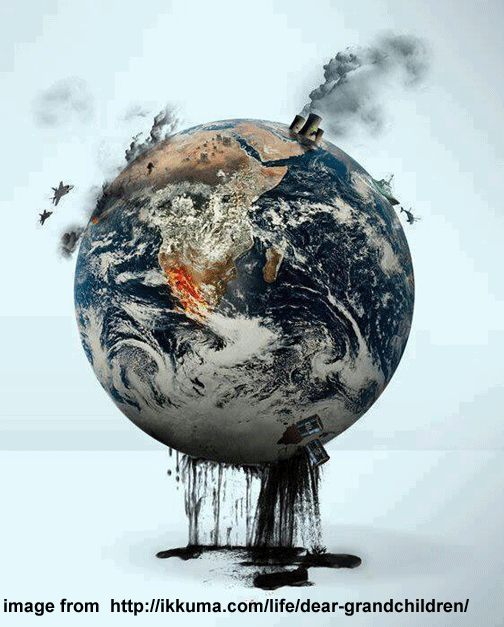
As the Climate Crisis Grows, a Movement Gathers to Make ‘Ecocide’ an International Crime Against the Environment InsideClimateNews, 7 Apr 21, International lawyers, environmentalists and a growing number of world leaders say “ecocide”—widespread destruction of the environment—would serve as a “moral red line” for the planet.By Nicholas Kusnetz, Katie Surma and Yuliya TalmazanApril 7, 2021 The Fifth Crime: First in a continuing series with NBC News about the campaign to make “ecocide” an international crime.
In 1948, after Nazi Germany exterminated millions of Jews and other minorities during World War II, the United Nations adopted a convention establishing a new crime so heinous it demanded collective action. Genocide, the nations declared, was “condemned by the civilized world” and justified intervention in the affairs of sovereign states.
Now, a small but growing number of world leaders including Pope Francis and French President Emmanuel Macron have begun citing an offense they say poses a similar threat to humanity and remains beyond the reach of existing legal conventions: ecocide, or widespread destruction of the environment.
The Pope describes ecocide as “the massive contamination of air, land and water,” or “any action capable of producing an ecological disaster,” and has proposed making it a sin for Catholics.
The Pontiff has also endorsed a campaign by environmental activists and legal scholars to make ecocide the fifth crime before the International Criminal Court in The Hague as a legal deterrent to the kinds of far-reaching environmental damage that are driving mass extinction, ecological collapse and climate change. The monumental step, which faces a long road of global debate, would mean political leaders and corporate executives could face charges and imprisonment for “ecocidal” acts.
To make their case, advocates point to the Amazon, where fires raged out of control in 2019, and where the rainforest may now be so degraded it is spewing more climate-warming gases than it draws in. At the poles, human activity is thawing a frozen Arctic and destabilizing the ice sheets of Greenland and Antarctica.
Across the globe, climate change is disrupting the reliable seasonal rhythms that have sustained human life for millenia, while hurricanes, floods and other climate-driven disasters have forced more than 10 million people from their homes in the last six months. Fossil fuel pollution has killed 9 million people annually in recent years, according to a study in Environmental Research, more than tuberculosis, malaria and AIDS combined.
One in four mammals are threatened with extinction. For amphibians, it’s four in 10.
Damage to nature has become so extensive and widespread around the world that many environmentalists speak of ecocide to describe numerous environmentally devastated hot spots:
- Chernobyl, the Ukrainian nuclear plant that exploded in 1986 and left the now-deserted area dangerously radioactive;
- The tar sands of northern Canada, where toxic waste pits and strip mines have replaced 400 square miles of boreal forest and boglands;
- The Gulf of Mexico, site of the Deepwater Horizon disaster that killed 11 people, spilled at least 168 million gallons of crude oil into the ocean over 87 days and killed countless marine mammals, sea turtles, fish and migratory birds;
- The Amazon, where rapid deforestation encouraged by Brazilian President Jair Bolsonaro prompted Joe Biden, during his presidential campaign, to propose a $20 billion rescue plan and threaten the Brazilian leader with economic sanctions.
The campaign to criminalize ecocide is now moving from the fringe of advocacy into global diplomacy, pushed by a growing recognition among advocates and many political leaders that climate change and environmental causes are tied inherently to human rights and social justice.
The effort remains a long shot and is at least years from fruition, international and environmental law experts say. Advocates will have to navigate political tensions over whether national governments or the international community have ultimate control over natural resources. And they’ll likely face opposition from countries with high carbon emissions and deep ties to industrial development. …………………
Into the Mainstream
While the campaign for an ecocide law could take years—if it is successful at all—advocates say the effort could bear fruit much sooner: The ecocide campaign has thrust the concept into public discussion.
Mehta doesn’t expect the campaign to catch fire in the United States, but after four years of President Donald Trump, she’s heartened by the arrival of John Kerry, Biden’s special climate envoy. “We don’t expect the U.S. to join the ICC any time soon, but that said, the conversation around ecocide itself, we don’t see any reason why it can’t start happening in the U.S.,” she said.
The State Department released a statement saying that the U.S. “regularly engages with other countries” on “the importance of preventing environmental destruction during armed conflict,” but added, “We do not comment on the details of our communications with foreign governments.”
Mehta’s campaign is also part of a wider effort by activists who have been looking to the courts to force more aggressive action on climate change.
As of July 1, 2020, at least 1,550 climate change cases have been filed in 38 countries, according to a U.N. report.
In the landmark Urgenda case, a Dutch court ruled in 2015 that the government had acted negligently by failing to take aggressive enough action to limit its greenhouse gas emissions. The decision, upheld by the Supreme Court of the Netherlands in 2019, ordered the government to hit specific emissions reductions targets and sparked a series of similar lawsuits in other countries………….. https://insideclimatenews.org/news/07042021/climate-crisis-ecocide-vanuatu-the-fifth-crime/
Japan’s Prime Minister getting ready to release Fukushima waste water into the Pacific ocean?
Reuters 6th April 2021, Japanese Prime Minister Yoshihide Suga will hold a ministerial meeting as early as next week to start discussions on the release of contaminated Fukushima Dai-ichi Nuclear Power Plant water into the ocean, broadcaster FNN said on Tuesday.
Suga is also expected to meet with the head of the national federation of fisheries cooperatives as early as Wednesday to discuss the potential release of the water. The water, which is treated but contains traces of tritium, was used to cool the reactors in the aftermath of the Fukushima Dai-ichi Power Plant’s nuclear disaster in 2011 and is now stored within the grounds of the power plant.
Opposition to uranium and rare earths mining – party wins Greenland election
Left-wing party opposed to rare earth mining project wins Greenland election, A left-wing environmentalist party opposed to a controversial mining project won a clear victory in Greenland’s parliamentary election, according to results released Wednesday. https://www.france24.com/en/europe/20210407-left-wing-party-opposed-to-rare-earth-mining-project-wins-greenland-election 7 Apr 21,
With 36.6 percent of the vote, Inuit Ataqatigiit (IA) was ahead of Siumut, a social democratic party that has dominated politics in the Danish territory since it gained autonomy in 1979.
“Thank you to the people who trusted us to work with the people in the centre for the next four years,” IA leader Mute Egede said on KNR public television after the results were announced.
IA, which was previously in opposition, is expected to grab 12 out of the 31 seats in the Inatsisartut, the local parliament, up from eight currently.
But without an absolute majority, the most likely scenario is that IA joins forces with smaller parties to form a coalition. Siumut, which headed the outgoing government, was partly weakened by internal struggles. It gained 29.4 percent of the vote, still two percentage points higher than its results in the 2018 election.
The dividing line between the two parties was whether to authorise a controversial giant rare earth and uranium mining project, which is currently the subject of public hearings.
The Kuannersuit deposit, in the island’s south, is considered one of the world’s richest in uranium and rare earth minerals — a group of 17 metals used as components in everything from smartphones to electric cars and weapons.
IA has called for a moratorium on uranium mining, which would effectively put a halt to the project.
Divisions over Kuannersuit originally triggered the snap election in the territory after one of the smaller parties left the ruling Siumut coalition.
Opponents say the project, led by the Chinese-owned Australian group Greenland Minerals, has too many environmental risks, including radioactive waste.
Egede told KNR he would immediately start discussions to “explore different forms of cooperation” before forming a coalition government.
The 34-year-old, who has been a member of the Inatsisartut since 2015, took over the reins of the left-green party a little over two years ago.
Nuclear waste director: Proposed New Mexico nuclear waste storage facility is illegal,
Nuclear waste director: Proposed New Mexico nuclear waste storage facility is illegal, https://www.thecentersquare.com/new_mexico/nuclear-waste-director-proposed-new-mexico-nuclear-waste-storage-facility-is-illegal/article_5c2497f2-9716-11eb-a1c7-f34c8873c0ba.html (The Center Square) 7 Apr 21, – Safety and economic concerns over a proposed nuclear waste storage facility near Carlsbad have prompted the state of New Mexico to sue the U.S. Nuclear Regulatory Commission (NRC).
To be built by Holtec in southeast New Mexico, the facility would be an above-ground complex for storing spent fuel from commercial nuclear power plants.
The state’s lawsuit is built on legal concerns.
Holtec has stated the federal government is going to fund the facility, but according to federal law, utilities are responsible for storage, said Don Hancock, director of the Southwest Research and Information Center’s Nuclear Waste Program.
The state argues consistently throughout the complaint that this whole facility is illegal because the federal law doesn’t authorize the Nuclear Regulatory Commission to authorize this kind of consolidated facility,” he told The Center Square.
Hancock added that the state’s entire list of complaints is 47 pages long.
“The federal government has said in law that this spent fuel, this irradiated fuel from nuclear power plants, is highly toxic and highly dangerous, and its permanent disposal requires it to be disposed deep underground in stable geologic formations, so that’s the law,” he said. “This facility is none of that.”
Holtec and NRC attempted to circumvent that issue by terming the storage facility as temporary, however, the state pointed out that Holtec and NRC can’t provide a timeframe for when it would be moved and have admitted they don’t have any plans for where it would go, said Hancock.
These legal concerns only compound the economic issues raised.
The facility would be built in the middle of the biggest oil and gas production areas in the state and poses a significant threat to operations.
“In the best of all circumstances it would be disruptive and, the worst of all circumstances, it would close down a multi-million dollar industry,” Hancock said.
Disruption would be caused by global perceptions that New Mexico oil producers are OK with having an illegal nuclear storage facility nearby that could leak into the supply of oil, Hancock said. The worst-case scenario is a leak that leaves New Mexico’s oil supply radioactively contaminated and causes billions of dollars in economic damage.
“If there was a leak or an accident and the nation and the world heard there was a major nuclear accident in the middle of the oil and gas production field of New Mexico or Texas, what do you think people are going to think about that?” he asked.
After failed attempts to get the NRC to consider their concerns, the state turned to the courts to make their voice heard, said Hancock.
“The state feels ignored,” he said.
75 years after nuclear testing in the Pacific began, the fallout continues to wreak havoc

| 75 years after nuclear testing in the Pacific began, the fallout continues to wreak havoc https://theconversation.com/75-years-after-nuclear-testing-in-the-pacific-began-the-fallout-continues-to-wreak-havoc-158208?fbclid=IwAR3q9QJvy507ds2kD0ibOvkD6ZzxFqgGjfHsGrwqJUVMNpujOu8sAeLVPtY April 6, 2021 Patricia A. O’Brien Patricia A. O’Brien is a Friend of The Conversation.Historian, Visiting Fellow in the School of History, Australian National University and Adjunct Professor in the Asian Studies Program, Georgetown University, This year marks 75 years since the United States launched its immense atomic testing program in the Pacific. The historical fallout from tests carried out over 12 years in the Marshall Islands, then a UN Trust Territory governed by the US, have framed seven decades of US relations with the Pacific nation.Due to the dramatic effects of climate change, the legacies of this history are shaping the present in myriad ways. This history has Australian dimensions too, though decades of diplomatic distance between Australia and the Marshall Islands have hidden an entangled atomic past. In 1946, the Marshall Islands seemed very close for many Australians. They feared the imminent launch of the US’s atomic testing program on Bikini Atoll might split the earth in two, catastrophically change the earth’s climate, or produce earthquakes and deadly tidal waves. A map accompanying one report noted Sydney was only 3,100 miles from ground zero. Residents as far away as Perth were warned if their houses shook on July 1, “it may be the atom bomb test”. Australia was “included in the tests” as a site for recording blast effects and monitoring for atom bombs detonated anywhere in the world by hostile nations. This Australian site served to keep enemies in check and achieve one of the Pacific testing program’s objectives: to deter future war. The other justification was the advancement of science. The earth did not split in two after the initial test (unless you were Marshallese) so they continued; 66 others followed over the next 12 years. But the insidious and multiple harms to people and place, regularly covered up or denied publicly, became increasingly hard to hide. Radiation poisoning, birth defects, leukaemia, thyroid and other cancers became prevalent in exposed Marshallese, at least four islands were “partially or completely vapourised”, the exposed Marshallese “became subjects of a medical research program” and atomic refugees. (Bikinians were allowed to return to their atoll for a decade before the US government removed them again when it was realised a careless error falsely claimed radiation levels were safe in 1968.) In late 1947, the US moved its operations to Eniwetok Atoll, a decision, it was argued, to ensure additional safety. Eniwetok was more isolated and winds were less likely to carry radioactive particles to populated areas. Australian reports noted this site was only 3,200 miles from Sydney. Troubling reports of radioactive clouds as far away as the French Alps and the known shocking health effects appeared. Dissenting voices were initially muted due to the steep escalation of the Cold War and Soviet atomic weapon tests beginning in 1949. Opinion in Australia split along political lines. Conservative Cold War warriors, chief among them Robert Menzies who became prime minister again in 1949, kept Australia in lockstep with the US, and downplayed the ill-effects of testing. Left-wing elements in Australia continued to draw attention to the “horrors” it unleashed. The atomic question came home in 1952, when the first of 12 British atomic tests began on the Montebello Islands, off Western Australia. Australia’s involvement in atomic testing expanded again in 1954, when it began supplying South Australian-mined uranium to the US and UK’s joint defence purchasing authority, the Combined Development Agency. Australia’s economic stake in the atomic age from 1954 collided with the galvanisation of global public opinion against US testing in Eniwetok. The massive “Castle Bravo” hydrogen bomb test in March exposed Marshall Islanders and a Japanese fishing crew on The Lucky Dragon to catastrophic radiation levels “equal to that received by Japanese people less than two miles from ground zero” in the 1945 Hiroshima and Nagasaki atomic blasts. Graphic details of the fishermen’s suffering and deaths and a Marshallese petition to the United Nations followed. When a UN resolution to halt US testing was voted on in July, Australia voted for its continuation. But the tide of public opinion was turning against testing. The events of 1954 dispelled the notion atomic waste was safe and could be contained. The problem of radioactive fish travelling into Australian waters highlighted these new dangers, which spurred increasing world wide protests until the US finally ceased testing in the Marshalls in 1958. In the 1970s, US atomic waste was concentrated under the Runit Island dome, part of Enewetak Atoll (about 3,200 miles from Sydney). Recent alarming descriptions of how precarious and dangerous this structure is due to age, sea water inundation and storm damage exacerbated by climate change were contested in a 2020 Trump-era report. The Biden administration’s current renegotiation of the Compact of Free Association with the Republic of the Marshall Islands, and its prioritisation of action on climate change, will put Runit Island high on the agenda. There is an opportunity for historical redress for the US that is even more urgent given the upsurge in discrimination against US-based Pacific Islander communities devastated by the COVID-19 pandemic. Some are peoples displaced by the tests. Australia is also embarking on a new level of engagement with the Marshall Islands: it is due to open its first embassy in the capital Majuro in 2021.It should be remembered this bilateral relationship has an atomic history too. Australia supported the US testing program, assisted with data collection and voted in the UN for its continuation when Marshallese pleaded for it to be stopped. It is also likely Australian-sourced atomic waste lies within Runit Island, cementing Australia in this history. |
4,000 Fukushima waste bags contain unidentified radioactive materials

Mainichi 6th April 2021, Of the 85,000 containers holding radioactive waste placed in the radiation-controlled area of the Fukushima Daiichi nuclear power plant, the contents of about 4,000 have not been identified, operator Tokyo ElectricPower Company Holdings Inc. (TEPCO) announced on April 5. According to TEPCO, it began listing the contents of the containers after the meltdown in 2011, but about 4,000 of them remain unidentified. The company says it will formulate a survey plan and proceed to determine what they hold.
https://mainichi.jp/english/articles/20210406/p2a/00m/0na/002000c
Putin amassing, testing, huge military arsenal in the Arctic
Daily Mail 5th April 2021, Satellite images appearing to show Russia beefing up its military presence
in the Arctic have emerged just days after three of Moscow’s nuclear ballistic missile submarines smashed through the polar region in a show of strength. The images show the Russian military has been rebuilding and expanding numerous facilities across the Arctic in recent years.
From
revamping runways to deploying additional surveillance and air defence assets, the satellite images reveal a continuous effort to expand Moscow’s capabilities in the polar region.
Bitcoin mining to consume more electricity than whole of Australia by 2024 — RenewEconomy

Researchers warn bitcoin mining could undermine efforts to reach global climate targets, with electricity consumption expected to surpass that of Australia. The post Bitcoin mining to consume more electricity than whole of Australia by 2024 appeared first on RenewEconomy.
Bitcoin mining to consume more electricity than whole of Australia by 2024 — RenewEconomy
The amount of electricity consumed by bitcoin mining operations will surge over the next three years, consuming more power than entire countries, including that of Australia, new research has predicted.
In a new research paper published in the journal Nature Communications, researchers from the Chinese Academy of Sciences and Tsinghua University have projected that on current trends, bitcoin mining electricity consumption will more than double from its current levels, peaking in 2024.
At that time, the researchers say, the total electricity consumption of Bitcoin miners will reach as high as 297 terawatt-hours annually if no measures are undertaken to curb energy use or emissions. This will be more than the annual electricity consumption of the whole of Australia, which currently stands at around 265 terawatt-hours per year.
The surge in electricity consumption will see bitcoin rank as the equivalent of the 12th largest electricity consumer amongst all countries, higher than the likes of major European economies, including Italy and Spain.
The researchers say that without stricter regulatory controls, the growing energy demand of Bitcoin and cryptocurrencies more broadly could undermine global sustainability efforts.
Using a simulated carbon emissions model, the research led by researchers Dabo Guan and Shouyang Wang estimates that Bitcoin mining will be responsible for 130 million tonnes of carbon emissions – higher than the emissions of countries like Qatar and the Czech Republic.
The operation of cryptocurrencies like bitcoin requires substantial computational power to process transactions and to maintain a transaction ledger.
Computers dedicated to processing these transactions are awarded in return for their computational power by being issued units of the cryptocurrency.
The offer of potentially lucrative cryptocurrency units in return for computing resources has sparked a surge in investment in dedicated ‘mining’ equipment, which has sent energy consumption surging with it.
This has particularly been the case in China, where access to cheaper supplies of electricity and ready access to the necessary computer equipment has made bitcoin mining a profitable venture.
It is estimated that around 70 per cent of bitcoin miners are located in China.
But the researchers said that the operations are already causing electricity demand throughout China to increase, with bitcoin mining ranking in the top 10 among China’s 182 prefecture-level cities, as well as amongst 42 major industrial sectors in China.
Bitcoin is already responsible for approximately 5.4 per cent of China’s electricity emissions.
The researchers warned that the bitcoin mining operations could undermine China’s efforts to meet its targets under the Paris Agreement.
“The Paris Agreement is a worldwide agreement committed to limit the increase of global average temperature,” the research paper says.
Under the Paris Agreement, China is devoted to cut down 60 per cent of the carbon emission per GDP by 2030 based on that of 2005. However, according to the simulation results of the [blockchain carbon emission] model, we find that the carbon emission pattern of Bitcoin blockchain will become a potential barrier against the emission reduction target of China.”
As Ketan Joshi reported for RenewEconomy, the quest to supply Bitcoin mining operations with cheap sources of power have seen operators turn to fossil fuel generators for their supplies of electricity.
The researchers suggest that an ‘individualised’ approach that encourages miners to shift away from regions predominantly powered by coal and into regions that can act as a source of zero emissions electricity.
he paper warns that the imposition of carbon prices or taxes may only work to shift miners to other countries with lower energy costs, potentially seeing them continue to use supplies of fossil fuel electricity.
The researchers say miners should be moved into regions with higher proportions of renewable energy supplies, such as hydroelectricity, and supporting operations to take advantage of surplus electricity supplies.
While this ‘site regulation’ approach modelled by the researchers showed electricity demand growing even higher, potentially reaching 320 terawatt-hours by 2025, however, emissions will be substantially lower.
“Among all the intended policies, Site Regulation shows the best effectiveness, reducing the peak carbon emission per GDP of the Bitcoin industry to 6 kg per USD. Overall, the carbon emission per GDP of the Bitcoin industry far exceeds the average industrial carbon intensity of China, which indicates that Bitcoin blockchain operation is a highly carbon-intense industry,” the paper says
1 This Month
Tell Congress: Prevent Nuclear Catastrophe in Iran

Tell Congress: Prevent Nuclear Catastrophe in Iran

Read the Public Inquiry Report, the Commissioners’ report, Surrendering Australia: The AUKUS Deception is available to download for free at aukuspublicinquiry.com. Or just watch the replay of the National Press Club Luncheon.


Shut down the radiation-damaged Heysham nuclear reactors now
To see nuclear-related stories in greater depth and intensity – go to https://nuclearinformation.wordpress.com

Say No to NASA’s Reckless Nuclear Reactor on the Moon
Say No to NASA’s Reckless Nuclear Reactor on the Moon
-
Archives
- November 2026 (255)
- October 2026 (302)
- September 2026 (339)
- August 2026 (330)
- July 2026 (355)
- June 2026 (287)
- May 2026 (306)
- April 2026 (356)
- March 2026 (251)
- February 2026 (267)
- January 2026 (308)
- December 2025 (358)
-
Categories
- 1
- 1 NUCLEAR ISSUES
- business and costs
- climate change
- culture and arts
- ENERGY
- environment
- health
- history
- indigenous issues
- Legal
- marketing of nuclear
- media
- opposition to nuclear
- PERSONAL STORIES
- politics
- politics international
- Religion and ethics
- safety
- secrets,lies and civil liberties
- spinbuster
- technology
- Uranium
- wastes
- weapons and war
- Women
- 2 WORLD
- ACTION
- AFRICA
- Atrocities
- AUSTRALIA
- Christina's notes
- Christina's themes
- culture and arts
- Events
- Fuk 2022
- Fuk 2023
- Fukushima 2017
- Fukushima 2018
- fukushima 2019
- Fukushima 2020
- Fukushima 2021
- general
- global warming
- Humour (God we need it)
- Nuclear
- RARE EARTHS
- Reference
- resources – print
- Resources -audiovicual
- Weekly Newsletter
- World
- World Nuclear
- YouTube
-
RSS
Entries RSS
Comments RSS

