South Korea aims to fight, at International Tribunal, Japan’s plan to empty Fukushima water into Paific Ocean
S Korea aims to fight Japan’s Fukushima decision at tribunal, https://www.aljazeera.com/news/2021/4/14/s-korea-aims-to-fight-japans-fukushima-decision-at-tribunal, 15 Apr S Korea
Moon Jae-in asks officials to look at ways to refer Japan’s Fukushima decision to the International Tribunal for the Law of the Sea.
South Korean President Moon Jae-in has ordered officials to explore petitioning an international court over Japan’s decision to release water from its Fukushima nuclear plant, his spokesman said, amid protests by fisheries and environmental groups.
Moon said officials should look into ways to refer Japan’s move to the International Tribunal for the Law of the Sea, including filing for an injunction, spokesman Kang Min-seok told a briefing.
Japan unveiled plans on Tuesday to release more than 1 million tonnes of contaminated water into the sea from the plant, which was crippled by a 2011 earthquake and tsunami, starting in about two years after filtering it to remove harmful isotopes.South Korea protested strongly against the decision, summoning Koichi Aiboshi, Tokyo’s ambassador in Seoul, and convening an intra-agency emergency meeting to craft its response.
Moon also expressed concerns about the decision as Aiboshi presented his credentials, having arrived in South Korea in February for the ambassador’s post.“I cannot but say that there are many concerns here about the decision as a country that is geologically closest and shares the sea with Japan,” Moon said, asking Aiboshi to convey such worries to Tokyo, according to Kang.An aerial view shows the storage tanks for treated water at the tsunami-crippled Fukushima Daiichi nuclear power plant in Okuma town, Fukushima prefecture, Japan February 13, 2021 [Kyodo via Reuters]South Korea’s foreign ministry issued a statement saying it had raised similar concerns with the United States after the Department of State said Japan’s decision was “transparent” and in line with global safety standards.
The ministry also said it shared “strong regret and serious concerns” about the water’s planned release at a video conference on Wednesday with Chinese officials on maritime issues.
A series of protests against the move by politicians, local officials, fishermen and environmental activists took place in South Korea on Wednesday, including in front of the Japanese embassy in Seoul and consulates in the port city of Busan and on Jeju island.
A coalition of 25 fisheries organisations staged a rally and delivered a written protest to the embassy, urging Tokyo to revoke the decision and Seoul to ban imports from Japanese fisheries.
“Our industry is on course to suffer annihilating damage, just with people’s concerns about a possible radioactive contamination of marine products,” it said in a statement.
The progressive minor opposition Justice Party and some 30 anti-nuclear and environmental groups called Japan’s move “nuclear terrorism,” and said they sent the Japanese embassy a list of signatures of more than 64,000 people opposed to the move collected from 86 countries since February.
Regulator’s stop to restarting Kashiwazaki-Kariwa plant a blow to nuclear company Tepco.
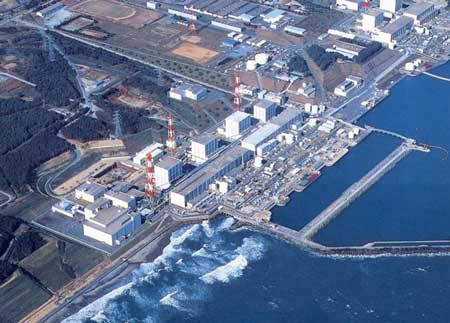
Japan Times 14th April 2021, Japan’s nuclear regulator decided Wednesday to effectively ban Tokyo Electric Power Company Holdings Inc. from restarting its largest nuclear plant due to serious safety flaws, dealing a blow to the utility’s efforts to turn its business around following the 2011 Fukushima nuclear disaster.
The Nuclear Regulation Authority formally decided to bar Tepco from transporting nuclear fuel stored at the Kashiwazaki-Kariwa plant in Niigata Prefecture or loading it into reactors. The company has seen restarting the seven-reactor Kashiwazaki-Kariwa complex, once one of the world’s largest nuclear plants by output, as a main pillar of its
business restructuring plan.
The plant was found to have been vulnerable to unauthorized entry at 15 locations since March last year because of
defective intruder detection systems and backups, according to the NRA. It is the first time the regulator has issued a corrective order for a commercial nuclear reactor.
https://www.japantimes.co.jp/news/2021/04/14/national/tepco-nuclear-plant-restart-ban/
Fukushima: How the ocean became a dumping ground for radioactive waste

Fukushima: How the ocean became a dumping ground for radioactive waste, https://www.dw.com/en/fukushima-how-the-ocean-became-a-dumping-ground-for-radioactive-waste/a-52710277
The nuclear disaster at Fukushima sent an unprecedented amount of radiation into the Pacific. But, before then, atomic bomb tests and radioactive waste were contaminating the sea — the effects are still being felt today.
Almost 1.2 million liters (320,000 gallons) of radioactive water from the Fukushima nuclear power plant is to be released into the ocean. That’s on the recommendation of the government’s advisory panel some nine years after the nuclear disaster on Japan’s east coast. The contaminated water has since been used to cool the destroyed reactor blocks to prevent further nuclear meltdowns. It is currently being stored in large tanks, but those are expected to be full by 2022.
Exactly how the water should be dealt with has become highly controversial in Japan, not least because the nuclear disaster caused extreme contamination off the coast of Fukushima. At the time, radioactive water flowed “directly into the sea, in quantities we have never seen before in the marine world,” Sabine Charmasson from the French Institute for Radiological Protection and Nuclear Safety (IRSN) tells DW.
Radiation levels in the sea off Fukushima were millions of times higher than the government’s limit of 100 becquerels. And still today, radioactive substances can be detected off the coast of Japan and in other parts of the Pacific. They’ve even been measured in very small quantities off the US west coast in concentrations “well below the harmful levels set by the World Health Organization,” according to Vincent Rossi, an oceanographer at France’s Mediterranean Institute of Oceanography (MIO).
But that doesn’t mean there’s no risk, says Horst Hamm of the Nuclear Free Future Foundation. “A single becquerel that gets into our body is enough to damage a cell that will eventually become a cancer cell,” he says.
A study from the European Parliament reached a similar conclusion. The research found that “even the smallest possible dose, a photon passing through a cell nucleus, carries a cancer risk. Although this risk is extremely small, it is still a risk.”
And that risk is growing. Radioactive pollution in the ocean has been increasing globally — and not just since the disaster at Fukushima.
Atomic bomb tests
In 1946, the US became the first country to test an atomic bomb in a marine area, in the Pacific Bikini Atoll. Over the next few decades, more than 250 further nuclear weapons tests were carried out on the high seas. Most of them (193) were conducted by France in French Polynesia, and by the US (42), primarily in the Marshall Islands and the Central Pacific.
But the ocean wasn’t just being used as a training ground for nuclear war. Until the early 1990s, it was also a gigantic dump for radioactive waste from nuclear power plants.
From 1946 to 1993, more than 200,000 tons of waste, some of it highly radioactive, was dumped in the world’s oceans, mainly in metal drums, according to the International Atomic Energy Agency (IAEA). Several nuclear submarines, including nuclear ammunition, were also sunk during this time.
Is the ocean a perfect storage site?
The lion’s share of dumped nuclear waste came from Britain and the Soviet Union, figures from the IAEA show. By 1991, the US had dropped more than 90,000 barrels and at least 190,000 cubic meters of radioactive waste in the North Atlantic and Pacific. Other countries including Belgium, France, Switzerland and the Netherlands also disposed of tons of radioactive waste in the North Atlantic in the 1960s, 70s and 80s.
“Under the motto, ‘out of sight, out of mind,’ the dumping of nuclear waste was the easiest way to get rid of it,” says Horst Hamm.
To this day, around 90% of the radiation from discarded barrels comes from those in the North Atlantic, most of which lie north of Russia or off the coast of Western Europe.
“The barrels are everywhere,” says ecologist Yannick Rousselet of Greenpeace France. He was present in 2000 when the environmental organization used submarines to dive for dumped drums a few hundred meters off the coast of northern France, at a depth of 60 meters (196 feet).
“We were surprised how close they were to the coast,” Rousselet says. “They are rusty and leaking, with the radiation clearly elevated.”
Nuclear waste barrels dumped in the sea decades ago, a common practice in the Channel between France and England in the 1960s, are now rusty and are leaking radioactive substances
Germany also implicated
In 1967, Germany also dumped 480 barrels off the coast of Portugal, according to the IAEA. Responding to a 2012 request for information from the Greens about the condition of those barrels, the German government wrote: “The barrels were not designed to ensure the permanent containment of radionuclides on the sea floor. Therefore, it must be assumed that they are at least partially no longer intact.”
Germany and France don’t want to salvage the barrels. And even Greenpeace activist Yannick Rousselet says he sees “no safe way to lift the rusted barrels” to the surface. That means nuclear waste will likely continue to contaminate the ocean floor for decades to come.
For Horst Hamm, the long-term consequences are clear. The radiation will be “absorbed by the marine animals surrounding it. They will eventually end up caught in fishing nets, and come back to our plates,” he says.
In its 2012 response to the Greens, however, the German government described the risk to humans from contaminated fish as “negligible.”
Rousselet sees things differently: “The entire area along the coast is contaminated by radiation — not just in the sea, in the grass, in the sand, you can measure it everywhere.”
Radioactive dumping ground
The main reason behind the radiation along the northern French coastline isn’t the underwater barrels, but rather the nuclear fuel reprocessing plant at La Hague. It is located directly on the coast and “legally discharges 33 million liters of radioactive liquid into the sea each year,” says Rousselet. He thinks it’s scandalous.
In recent years, La Hague has also been the scene of several incidents involving increased radioactivity levels.
The dumping of nuclear waste in drums was banned in 1993 by the London Convention on the Prevention of Marine Pollution. But discharging liquid contaminated with radiation into the ocean is still permitted internationally.
Spike in cancer rates
According to a study by the European Parliament, statistics show cancer rates are significantly higher in the region surrounding La Hague. Cancer rates are also high near the nuclear processing plant in Sellafield in northern England. A study from 2014 concluded that the total amount of radioactivity discharged into the sea from the Sellafield plant over the years is equivalent to the amount released by the nuclear meltdown at Fukushima.
The report say a link to health effects “cannot be ruled out” even if there is no clear evidence to date of a link between illness and radioactive discharges from nuclear facilities.
“The exact effects of radioactive radiation are extremely difficult to measure and prove. We only know that it has an impact,” says Rousselet, adding that it’s crucial to walk away from everything that causes radioactive waste.
Dumping more waste at Fukushima
In Fukushima, the operating company of the Tokyo Electric Power Company nuclear plant claims that before the cooling water is discharged into the sea as planned, all 62 radioactive elements will be filtered down to safe levels — except for the isotope tritium. The advisory panel in Tokyo considers discharging the cooling water into the sea to be “safer” than other alternatives, such as evaporating the water.
Just how harmful tritium is to humans is a source of controversy. According to the plant operator, the concentration of tritium in the collection tanks is sometimes much higher than that of conventional cooling water from nuclear power stations.
“The local fishermen and residents cannot accept the discharge of water,” Takami Morita of the National Research Institute of Fisheries Science said in a press release. While fish pollution levels are below the harmful limit, demand for fish from the region has dropped to one-fifth of what it was before the disaster.
Releasing the cooling water into the sea “is a good method because of the diluting properties of the water,” Sabine Charmasson of the IRSN says. “There aren’t any real problems on the security side, but it’s difficult, because there are also social implications. It might be an appropriate method, but it’s never easy to release radioactive substances into the environment.”
In a press release, Greenpeace said: “There is no justification for additional, deliberate radioactive pollution of the marine environment or atmosphere.”
Fukushima” is not over: Japanese NGOs raise concern over the ongoing nuclear disaster
Fukushima” is not over: Japanese NGOs raise concern over the ongoing nuclear disaster, Friends of the Earth Japan, Pacific Asia Resource Center (PARC), 14 Apr 21,
On the 10th anniversary of one of the worst nuclear accidents at Fukushima Daiichi Nuclear Power Station, and amid the controversial decision of the Japanese government to dump “treated” radioactive water into the ocean, Japanese NGOs Friends of the Earth Japan and Pacific Asia Resource Center (PARC) co-produced a documentary film Fukushima 10 Years Later: Voices from the continuing nuclear disaster. The film sheds light on the ongoing suffering of victims of the accident and poses critical questions about the Japanese government’s poor responses to the accident.
While then-Prime Minister Abe vainly declared to the world that “the situation in Fukushima is completely under control”, nuclear decays are continuing inside the molten fuel rods, and the exploded plants are still emitting radioactive particles to this day. In the meanwhile, evacuees are torn apart in limbo, with grim hopes of returning to their homeland, continued fear of radioactive fallout, and a dire socio-economic situation. Fisherfolk, who overcame the initial fear of ocean contamination, are forced to relive the experience each time TEPCO and the Japanese government repeatedly choose to release contaminated water into the ocean.
This happens all under the propaganda that Fukushima is pressing ahead with “Fukkou (Recovery)”.
This video aims to highlight the current situation of the victims of the man-made disaster, and challenge the government propaganda of Fukushima’s Recovery.
Fukushima 10 Years Later: Voices from the continuing nuclear disaster
Produced by Friends of the Earth Japan and Pacific Asia Resource Center
Supervised by HOSOKAWA Komei (Citizens’ Commission on Nuclear Energy)
Directed by MATSUMOTO Hikaru (Friends of the Earth Japan)
Running time: 43 min.
The English subtitled version of the film is now available on Vimeo on Demand and will cost USD 5.75 to rent and USD 47.50 to purchase.
https://vimeo.com/ondemand/fukushima10years
For further information on the film, please contact OKUMURA Yuto, Pacific Asia Resource Center.
E-mail: video@parc-jp.org
Yuto Okumura,Pacific Asia Resource Center (PARC)
South Africa’s history of ”state capture” by the nuclear industry
The battle for 2050 energy dominance: Nuclear industry makes its pitch Mail and Guardian, 14 Apr 21, Moscow The nuclear industry believes it should be able to account for more than 50% of South Africa’s vacant 24 gigawatts of power left behind by the demise of coal in a net-zero 2050 scenario. This was one of the outcomes of a government communications’ panel discussion on alternative future energy sources for South Africa hosted on Wednesday.”’
……………….before returning to instruct the then energy minister, Tina Joemat-Pettersson, to sign a deal with the Russians on the sidelines of the general conference of the International Atomic Energy Agency in Vienna, Austria.At the same time, Russia’s state-owned nuclear agency, Rosatom, released a statement that it had clinched a deal with South Africa. A legal battle ensued and in 2017, the Western Cape high court ruled that the secret tabling of the intergovernmental agreements with Russia, the US and Korean were unconstitutional and unlawful, and that they be set aside.
A legal battle ensued and in 2017, the Western Cape high court ruled that the secret tabling of the intergovernmental agreements with Russia, the US and Korean were unconstitutional and unlawful, and that they be set aside……….
In 2019 a report by the Carnegie Endowment for International Peace said that Russian engagement with South Africa during the Zuma era was deep rooted and relied on a web of relationships at the highest levels of both governments.
This included the promotion of multibillion-dollar projects involving state-owned companies particularly in the energy sector, and the leveraging of Cold War-era ties forged during South Africa’s period of national liberation.
The researchers linked the significance of the secret deal to a larger problem of state capture.
According to authors Andrew S Weiss and Eugene Rumer: “As early as the autumn of 2011, Zuma told then finance minister Pravin Gordhan that he wanted to award the entire construction deal to Russia. He brushed aside Gordhan’s insistence on following established procedures for state procurement, according to Gordhan’s written testimony to the state capture commission.
“Gordhan warned Zuma that failing to follow the established procedures could land the president in trouble similar to the fallout over the earlier arms-sales scandal that had nearly ended his political career,” the report noted……….
During the presidency of Thabo Mbeki, Eskom explored possibly expanding the Koeberg nuclear power facility but decided in 2008 that the project was unaffordable.
Unrelenting dishonest propaganda leading us to war against China
Not sleepwalking but marching with eyes wide open to war. Independent Australia, By William Briggs | 13 April 2021 While the USA moves towards war, anti-China rhetoric grows on a daily basis and the idea of war is being sold as the “right” thing, writes Dr William Briggs.
A LIE told often enough can become accepted, but it can never be the truth. China has been declared a threat to all that we hold dear, but it is just not so. China, for all its faults, is not a threat and nor is it practising genocide!
The Uyghur genocide claim gets bigger as each day dawns. Peter Hartcher, in The Age on the 10 April, writes of this genocide and of ‘the evil genius of the system of genocide with Chinese characteristics.’ The “genius” according to Hartcher is that the Chinese are allowing the Uyghurs to live. What a clever and cunning genocide that is!
The plight of the Uyghurs is but the latest lurid episode in a sustained and enormously successful push to demonise China in the eyes of the world. The motivations behind this are simple enough. China’s economic star is rising and America’s best days are behind it.
The world is certainly on the edge of a precipice. There is a broad acceptance, despite an embarrassing lack of evidence, that China is an enemy and, as an enemy, a threat. Nobody is ever eager for war, but people have often enough been persuaded that war is an acceptable option. This is particularly so when an existential threat exists, or in this case, is manufactured. The potential for war, justifications for it and warnings of how it might almost “accidentally” become a reality have come to dominate thought……..
If the USA goes to war with China, it will not be by chance. It has been meticulously planned, costed, budgeted for and the weapons, including “low-yield” nuclear weapons, have been manufactured and deployed by the USA. The world should be aghast at such blatant preparations, but it is not. Those who would take us to war need first to convince us that we have no option, that we are protecting freedom, that we are standing for justice and that a threat exists that the enemy is engaging in genocide.
In the space of just a decade, the people have come to accept this. China has gone from economic saviour of the world to arch enemy. Governments begin the process but could not be expected to convince the people alone. Television and print media: editorials, opinion pieces from leading journalists and international editors, columnists and experts, have all played a decisive role.
A recent poll by the Lowy Institute showed that in 2018, 52 per cent of Australians believed that China would act responsibly in the world. Two very short years later and that figure had dropped to just 23 per cent! The polls are then used by the same anti-China crusaders to prove that a problem exists. They are happy to ignore the effect that a daily barrage of anti-China campaigning can do and how it can shift people’s views…….
The most recent reporting of the treatment of the Uyghurs is that the Chinese are engaged in a campaign of genocide. Genocide was practised in Nazi Germany, in Kampuchea, in Rwanda, in Armenia, in Australia, but to suggest that the Chinese behaviour towards the Uyghurs, while quite possibly repressive, even reprehensible, is genocidal is ludicrous.
There has been discrimination and persecution. Life, for the Uyghurs, has never been easy. However, the West paid little or no attention to these people until about the time that the USA began to talk of “containing” China. It was, for the USA, a fortuitous discovery.
The Chinese, at the end of the 20th Century, waged a campaign against Islamist separatist groups that had become active within the Uyghur population. Violence met violence and conditions worsened for the Uyghurs. None of this concerned Washington. What happened to make things change so dramatically? The Chinese, in all likelihood, did step up repressions but the USA have manipulated events to suit a specific propaganda purpose.
Uyghur stories become more and more horrifying. The Western media was once content to rail against the existence of “re-education” camps. Then it was reports of campaigns of mass rape and then mass sterilisation programs. This morphed into claims of social genocide. Reports of forced labour emerged and evolved into stories of slave labour. The term “social” genocide came into use but has now been shortened to genocide.
This ramping up of rhetoric has one real purpose. China must, at every turn, be shown to be a malignant force. The editorialists, international editors, columnists and journalists have become a willing and shameless weapon in this campaign. If it all ends in war it will not be a chance thing. The world will not be “sleepwalking”.
Nobody wants war but we are being prepared for it. https://independentaustralia.net/politics/politics-display/not-sleepwalking-but-marching-with-eyes-wide-open-to-war,14982#.YHZ_2MRzAdY.twitter
Ratepayer advocate calls on New Jersey Supreme Court to reverse decision allowing subsidy to nuclear power
Nuclear subsidy gets new challenge, NJ Spotlight TOM JOHNSON, ENERGY/ENVIRONMENT WRITER | APRIL 14, 2021 | ENERGY & ENVIRONMENT, NJ ratepayer advocate asks Supreme Court to consider decision on $300 million subsidy. Regulators are poised to add more,
New Jersey Rate Counsel Director Stefanie Brand is asking the New Jersey Supreme Court to reverse last month’s appellate court decision upholding the award of hundreds of millions in ratepayer subsidies to the state’s nuclear power plants.
In a notice of a petition for certification, the Division of Rate Counsel argued the lower court erred when it upheld the New Jersey Board of Public Utilities’ decision in 2019 to approve $300 million in new surcharges on customers’ gas and electric bills. Without the subsidies, Public Service Enterprise Group, whose subsidiary operates three nuclear units in South Jersey, has threatened to close the plants because they are no longer profitable.
If the high court decides to review the case, it could result in the justices taking up the case at roughly the same time as the BPU, which is scheduled to decide whether the plants — Hope Creek, Salem I and Salem II — qualify for additional subsidies from ratepayers for another three years. The BPU is expected to rule on those applications on April 27. The first subsidy added about $70 a year to what residential customers pay for electricity……… https://www.njspotlight.com/2021/04/nj-rate-counsel-director-stefanie-brand-seeks-supreme-court-reversal-300-million-nuclear-subsidy-pseg/
South Africa’s mismanagement of nuclear waste
Part one | The slow violence of SA’s nuclear waste,
Part one of this four-part story considers the imminent danger involved in storing used radioactive materials, a dilemma growing at a rate of more than 32 tonnes a year. New Frame , By: Neil Overy, 8 Mar 21
Where will South Africa permanently and safely store the radioactive nuclear waste produced by the Koeberg nuclear power station in Cape Town? This critical question remains worryingly unanswered, despite the government’s intention to create even more high-level waste by extending the life of Koeberg 20 years past its original decommissioning date, and by building an additional 2 500MW of new nuclear power in South Africa.
The South African story of what to do with this high-level waste is one characterised by endless broken promises, gross mismanagement, ineptitude and pie-in-the-sky “solutions”. This catalogue of failures means there is now so much high-level waste stored at Koeberg that Eskom is having to build a transient interim storage facility (TISF) at the site, just 25km from Cape Town. That this site is both “transient” and “interim” perfectly illustrates that Eskom, or any other operator of nuclear power plants for that matter, has no long-term answer to the question of what to do with high-level nuclear waste.
Three categories of radioactive waste are produced by nuclear power stations – low-level waste, intermediate-level waste and high-level waste.
Continue readingCatastrophic sea level rise predicted

| Guardian 13th April 2021, The climate emergency is bigger than many experts, elected officials, and activists realize. Humanity’s greenhouse gas emissions have overheated the Earth’s atmosphere, unleashing punishing heat waves, hurricanes, and other extreme weather – that much is widely understood. The larger problem is that the overheated atmosphere has in turn overheated the oceans, assuring a catastrophic amount of future sea level rise. As oceans heat up the water rises in part because warm water expands but also because the warmer waters have initiated major melt of polar ice sheets. As a result, average sea levels around the world are now all but certain to rise by at least 20 to 30 feet. That’s enough to put large parts of many coastal cities, home to hundreds of millions of people, under water. The key questions are how soon this sea level rise will happen and whether humans can cool the atmosphere and oceans quickly enough to prevent part of this. If seas rise 20 feet over the next 2,000 years, our children and their descendants may find ways to adapt. But if seas rise 20 feet or more over the next 100 to 200 years — which is our current trajectory – the outlook is grim. In that scenario, there could be two feet of sea level rise by 2040, three feet by 2050, and much more to come. https://www.theguardian.com/environment/commentisfree/2021/apr/13/sea-level-rise-climate-emergency-harold-wanless |
Secrecy over new conditional coal mine licence applications for Cumbria – no public scrutiny.
Keep Cumbrian Coal in the Hole 13th April 2021, Nuclear safety group Radiation Free Lakeland have asked for and been refused sight of the new conditional coal mine licence applications from
West Cumbria Mining to the Coal Authority. The controversial Irish Sea coal
mine developers had originally been granted conditional exploration
licences eight years ago over the heads of Cumbria County Council and the
public, with no public scrutiny at all.
These have now lapsed and the
developers have applied for new licences. Radiation Free Lakeland have
asked for sight of the licence applications from West Cumbria Mining. The
Coal Authority have refused sight of the licence applications based on two
clauses in the Freedom of Information Act 2000: Section 43(2) Commercial
Interests and Section 44(1)(a) Prohibition by Enactment. Campaigners say
that there is no justification offered by the Coal Authority for the
protection of the developers at the expense of public scrutiny into the new
licence applications.
COAL AUTHORITY REFUSE RIGHT TO SEE LICENCE TO DRILL UNDER IRISH SEA
US cannot afford a world war with Russia — THE WEICHERT REPORT

Brandon J. Weichert’s newest op-ed at The Asia Times shows how bad the US policy toward Russia and Eastern Ukraine really is.
US cannot afford a world war with Russia — THE WEICHERT REPORT
Israel appears to confirm it carried out cyberattack on Iran nuclear facility
Shutdown happened hours after Natanz reactor’s new centrifuges were started, Guardian, Martin Chulov Middle East correspondentMon 12 Apr 2021, Israel appeared to confirm claims that it was behind a cyber-attack on Iran’s main nuclear facility on Sunday, which Tehran’s nuclear energy chief described as an act of terrorism that warranted a response against its perpetrators.
The apparent attack took place hours after officials at the Natanz reactor restarted spinning advanced centrifuges that could speed up the production of enriched uranium, in what had been billed as a pivotal moment in the country’s nuclear programme.
As Iranian authorities scrambled to deal with a large-scale blackout at Natanz, which the country’s Atomic Energy Agency acknowledged had damaged the electricity grid at the site, the Israeli defence chief, Aviv Kochavi, said the country’s “operations in the Middle East are not hidden from the eyes of the enemy”.
Israel imposed no censorship restrictions on coverage as it had often done after similar previous incidents and the apparent attack was widely covered by Israeli media. Public radio took the unusual step of claiming that the Mossad intelligence agency had played a central role.
Israeli Prime Minister Benjamin Netanyahu said later Sunday that “the struggle against Iran and its proxies and the Iranian armament efforts is a huge mission”…..
The unexplained shutdown is thought to be the latest in a series of exchanges between the two arch-enemies, who have fought an extensive and escalating shadow war across the Middle East over more than decade, centred on Iran’s nuclear programme and its involvement in matters beyond its borders.
Clashes have more recently been fought in the open, with strikes against shipping, the killing of Iran’s chief nuclear scientist, hundreds of airstrikes against Iranian proxies in Syria, and even a mysterious oil spill in northern Israel, which officials there have claimed was environmental sabotage.
Natanz has remained a focal point of Israeli fears, with an explosion damaging a centrifuge assembly plant last July, and a combined CIA and the Mossad cyber-attack using a computer virus called Stuxnet in 2010 that caused widespread disruption and delayed Iran’s nuclear programme for several years.
Iran’s nuclear chief, Ali Akbar Salehi, urged the international community and the International Atomic Energy Agency (IAEA) to take action against the perpetrators of the attack. He confirmed that a “terrorist attack” had damaged the electricity grid of the Natanz site. The IAEA said it was aware of the reports but declined to comment further…………
Western officials believe Israel has become increasingly brazen in its attempts to disrupt the Iranian programme, pointing to the killing of the country’s leading nuclear scientist, Mohsen Fakhrizadeh, last November, who was shot dead along with his bodyguards on a rural highway. Iran claims that artificial intelligence was used to identify Fakhrizadeh, who was gunned down by a remotely operated automatic weapon. The small lorry carrying the weapon then exploded…………… https://www.theguardian.com/world/2021/apr/11/israel-appears-confirm-cyberattack-iran-nuclear-facility
A quick return to the Iran nuclear deal is needed to avoid a real nuclear crisis.
Why a quick return to the Iran nuclear deal is needed to avoid a real nuclear crisis, Bulletin of the Atomic Scientists By Seyed Hossein Mousavian | April 11, 2021 Ambassador Seyed Hossein Mousavian is a Middle East Security and Nuclear Policy Specialist at Princeton University and a former chief of Iran’s National Security Foreign Relations Committee. His book, A Middle East Free of Weapons of Mass Destruction, was published in May 2020 by Routledge. His latest book, A New Structure for Security, Peace, and Cooperation in the Persian Gulf, was published in December 2020 by Rowman & Littlefield Publishers. About 80 days after President Biden’s inauguration, Iran and the world powers held the first round of nuclear talks in Vienna aimed at reviving the Iran nuclear deal known as the Joint Comprehensive Plan of Action, or JCPOA. Diplomats involved in the talks agreed on Friday that initial steps in two working groups designed to bring both the United States and Iran back into compliance with JCPOA were positive and would continue next week.
Still, the Biden administration will need to maneuver around multiple political obstacles if it is to rejoin the nuclear deal in a timely fashion. And if the United States does not quickly rejoin, there is a real possibility that the talks will collapse, that Iran will proceed with its uranium-enrichment program, and that a dangerous crisis will needlessly be created………………
about three months after taking office, the Biden administration still has not rejoined the deal. There appear to be three principal obstacles to a quick US re-entry:
First, the administration is divided. According to Foreign Policy magazine, the Biden administration’s negotiator with Iran, Robert Malley, and Deputy National Security Advisor Jonathan Finer are in favor of rejoining, but Secretary of State Blinken and National Security Advisor Jake Sullivan favor a harder line.
Second, the powerful pro-Israel lobby has joined in pressing the Biden administration not to rejoin the JCPOA.
Third, congressional Democrats are divided. In two separate letters to Blinken, bipartisan groups of about 160 members of the House have called for continued pressure on Iran. The chair of the Senate Foreign Relations Committee, Sen. Bob Menendez of New Jersey, opposes revival of the JCPOA in its current form. In a statement, Republican Sen. James Inhofe of Oklahoma warned, “As a reminder: Members of Congress rejected the JCPOA on a bipartisan basis in 2015. If you (Biden) repeat history next week by restoring that failed agreement, we will work to reject it once again.”
For the United States to return to the JCPOA as it was, the Biden administration would have to engage in rigorous work, lifting about 1,600 sanctions and punitive designations that the Trump administration imposed on Iran after then-President Trump pulled out of the deal in 2018. The Biden administration has already warned that it will not lift every single economic sanction that former President Donald Trump imposed. Therefore, although Washington and Tehran say they want “compliance for compliance” deal to revive the JCPOA, a big question remains: Can Biden deliver full US compliance?
I have been involved in Iran nuclear talks for about two decades. Based on my experience and understanding of the current political situations in Teheran and Washington, absent a quick decision by Biden to rejoin the JCPOA, the agreement will totally collapse, and serious nuclear talks will not take place again until Iran gains new leverage by ramping its nuclear program back up to pre-JCPOA levels—or perhaps even beyond.
A new confrontation and the possibility of a new crisis. Historically, US pressure tactics have backfired, pushing Iran ever closer to nuclear-weapon acquisition………..
Now we have a new confrontation. On December 2, in retaliation for the Trump administration’s reimposition of sanctions, Iran’s hardline Parliament passed legislation requiring that Iran’s Atomic Energy Organization begin enriching uranium to 20 percent of the U-235 isotope, the internationally- designated boundary above which uranium becomes weapon-usable.
The Parliament also withdrew Iran from the IAEA’s Additional Protocol, which allows IAEA inspections at sites such that where Iran produces gas centrifuges for uranium enrichment. If the United States continues to refuse to rejoin the JCPOA and lift its sanctions on Iran, the legislation required Iran to begin to operate advanced centrifuges, to develop the capability to convert uranium into metal form, such as would be used in a nuclear weapon, by this month, and to greatly increase the number of Iran’s operating centrifuges. The legislation also dictates that Iran’s 40-megawatt Arak heavy-water reactor be brought into operation within one year.
So far, the Biden administration’s response has been unfortunate. Secretary of State Blinken has said that there will be no American concessions until Iran returns to full compliance with the JCPOA, and, on March 11, 2021, National Security Advisor Jake Sullivan and his Israeli counterpart, Meir Ben-Shabbat, expressed their common determination to confront Iran.
It therefore now appears in the absence of US return to the JCPOA, Iran will produce enough enriched uranium within the next three to six months to put itself in a position to be able to break out and quickly to enrich enough 90 percent-enriched uranium for a bomb. Iran’s Supreme Leader, Ayatollah Ali Khamenei, has frequently reiterated that producing and stockpiling nuclear weapons is absolutely forbidden in Iran according to the rules of Islam. But he has also stated that Iran will never yield to US pressure over its nuclear activities and might enrich uranium up to 60 percent. This last level appears to be a reference to Iran’s previous expressed interest in developing a nuclear reactor similar to US naval reactors that powering ships.
If Iran continues on this path, it seems likely that the United States and Israel will respond by intensifying the strategies they have followed since 2005: sanctions, sabotage of Iran’s nuclear facilities, and perhaps even assassinations of more Iranian nuclear scientists.
Based on the experience of the past four decades, Iran will be able to resist these confrontational policies and carry through to a breakout position. In response, after the inauguration of Iran’s new and probably hardline president in August 2021, the US policy will have to shift from a policy of no breakout to one of no nuclear bomb. At that point, to resolve the crisis peacefully, new nuclear talks would be required, and the US would have to make enough concessions to convince Iran not to pursue a nuclear bomb.
It would be far better to avoid such a dangerous crisis by returning to President Biden’s original plan for the US to quickly rejoin the JCPOA and raze the sanctions that President Trump imposed in exchange for Iran coming back into full compliance with the agreement. Then, the two countries could begin to negotiate on the other issues that divide them. https://thebulletin.org/2021/04/why-a-quick-return-to-the-iran-nuclear-deal-is-needed-to-avoid-a-real-nuclear-crisis/?utm_source=Newsletter&utm_medium=Email&utm_campaign=MondayNewsletter04122021&utm_content=NuclearRisk_IranDealQuickReturn_04112021
The US Energy Department’s renewed promotion of plutonium-fueled reactors.

Plutonium programs in East Asia and Idaho will challenge the Biden administration, Bulletin of the Atomic Scientists, By Frank N. von Hippel | April 12, 2021 ”’…………. The US Energy Department’s renewed promotion of plutonium-fueled reactors. The US plutonium breeder reactor development program was ended by Congress in 1983. A decade later, the Clinton Administration shut down the Idaho National Laboratory’s Experimental Breeder Reactor II for lack of mission. At the time, I was working in the White House and supported that decision.

The nuclear-energy divisions at the Energy Department’s Argonne and Idaho National Laboratories refused to give up, however. They continued to produce articles promoting sodium-cooled reactors and laboratory studies on “pyroprocessing,” a small-scale technology used to separate plutonium from the fuel of the Experimental Breeder Reactor II .
During the Trump administration, this low-level effort broke out. With the Energy Department’s Office of Nuclear Energy headed by a former Idaho National Lab staffer and help from Idaho’s two Senators, the Energy Department and Congress were persuaded to approve the first steps toward construction at the Idaho National Laboratory of a larger version of the decommissioned Experimental Breeder Reactor II.
The new reactor, misleadingly labeled the “Versatile Test Reactor,” would be built by Bechtel with design support by GE-Hitachi and Bill Gates’ Terrapower. The Energy Department awarded contracts to the Battelle Energy Alliance and to university nuclear-engineering departments in Indiana, Massachusetts, Michigan, and Oregon to develop proposals for how to use the Versatile Test Reactor.

The current estimated cost of the Versatile Test Reactor is $2.6-5.8 billion, and it is to be fueled with plutonium. The Idaho National Laboratory’s hope is to convince Congress to commit to funding its construction in 2021.
The Energy Department also committed $80 million to co-fund the construction of a 345-megawatt-electric (MWe) “Natrium” (Latin for sodium) demonstration liquid-sodium-cooled power reactor proposed by GE-Hitachi and Terrapower which it hopes Congress would increase to $1.6 billion. It also committed $25 million each to Advanced Reactor Concepts and General Atomics to design small sodium-cooled reactors. And it has subsidized Oklo, a $25-million startup company financed by the Koch family, to construct a 1.5 MWe “microreactor” on the Idaho National Laboratory’s site to demonstrate an extravagantly costly power source for remote regions.
In all these reactors, the chain reaction would be sustained by fast neutrons unlike the slow neutrons that sustain the chain reactions in water-cooled reactors. The Energy Department’s Office of Nuclear Energy has justified the need for the Versatile Test Reactor by the fast-neutron reactors whose construction it is supporting. In this way, it has “bootstraping” the Versatile Test Reactor by creating a need for it that would not otherwise exist.
This program also is undermining US nonproliferation policy..………..https://thebulletin.org/2021/04/plutonium-programs-in-east-asia-and-idaho-will-challenge-the-biden-administration/?utm_source=Newsletter&utm_medium=Email&utm_campaign=MondayNewsletter04122021&utm_content=NuclearRisk_EastAsia_04122021
Nuclear reprocessing shut down due to high cost, safety problems, (but still useful to produce weapons grade plutonium)

Plutonium programs in East Asia and Idaho will challenge the Biden administration, Bulletin of the Atomic Scientists, By Frank N. von Hippel | April 12, 2021, ”……………. [In the1980s the USA intervened to stop nuclear reprocessing being developed in several nations] The “invisible hand” of the market helped too. In the words of Admiral Rickover, the “father” of the US nuclear navy, after trying a sodium-cooled reactor in a submarine, he found them to be:
“expensive to build, complex to operate, susceptible to prolonged shutdown as a result of even minor malfunctions, and difficult and time-consuming to repair.”
For these reasons, breeder reactors proved to be unable to compete economically with simpler water-cooled reactors fueled “once-through” by low-enriched uranium with the plutonium left unseparated in the spent fuel.
Furthermore, as more low-cost uranium was found and global nuclear power capacity plateaued after the Chernobyl accident, the problem that breeder reactors were supposed to solve—scarcity of the chain-reacting uranium-235 that makes up only 0.7 percent of natural uranium—retreated beyond any realistic planning horizon.
The United States abandoned its Clinch River Breeder Reactor project in 1983; because of safety concerns, Germany abandoned its completed-but-never-operated SNR-300 in 1991; the United Kingdom shut down its Prototype Fast Reactor in 1994; France shut down its Superphénix in 1998; and Japan shut down its Monju in 2017.
Today, after the industrialized world spent about $100 billion trying to commercialize them, only two sodium-cooled power reactor prototypes are operating, both in Russia. However, Russia’s nuclear conglomerate, Rosatom, recently decided to postpone construction of another because it was not expected to be economically competitive with a water-cooled reactor.
A half century after the first nuclear explosion that its breeder reactor program facilitated, India labors on with the completion of its long-delayed, over-budget Prototype Fast Breeder Reactor. Also, China has launched construction of two prototype breeder reactors. All three of these reactors may be dual purpose, however. In addition to producing electric power, they could produce weapon-grade plutonium for the national weapon programs.
Despite the commercial failure of breeder reactors, France, India, Japan, Russia, and the United Kingdom persisted with the separation of civilian plutonium. The United Kingdom will shut down its program this year but China is building a “demonstration” reprocessing plant. Also, South Korea’s nuclear establishment has been lobbying the United States for the same right to reprocess as Japan. The reprocessing programs in China, India, and Russia are in support of their breeder programs, but France is using the plutonium it separates in mixed-oxide fuel for its water-cooled reactors, and Japan is following France’s example. This reduces their requirements for low-enriched uranium fuel by about 10 percent, but the mixed-oxide fuel costs about ten times more than the low-enriched uranium fuel it replaces.
The motivations for plutonium “recycle” in France and Japan are therefore not economic. Their nuclear establishments argue that reprocessing reduces the radioactive waste problem, but these arguments have been rejected by their waste-management experts.
The separation of plutonium by civilian reprocessing has far exceeded plutonium use in breeder and light-water reactor fuel with the result being a global stockpile of over 300 tons of civilian but weapon-usable plutonium (Figure 1 on original). By the International Atomic Energy Agency’s (IAEA) metric, this is enough for almost 40,000 Nagasaki bombs.
This separated plutonium is currently stored relatively securely, but the half-life of its main isotope, Pu-239, is 24,000 years—much longer than the half-lives of governments. The collapse of the Soviet Union in 1991 stimulated a major US effort to help Russia secure its plutonium so that it would not end up on the black market.
Before discussing US policy toward the civilian plutonium programs creating mutual pananoia in East Asia, it is important to understand the complications created for US nonproliferation policy by the renewed interest in plutonium fuel within the US Energy Department…………………….https://thebulletin.org/2021/04/plutonium-programs-in-east-asia-and-idaho-will-challenge-the-biden-administration/?utm_source=Newsletter&utm_medium=Email&utm_campaign=MondayNewsletter04122021&utm_content=NuclearRisk_EastAsia_04122021
1 This Month
Tell Congress: Prevent Nuclear Catastrophe in Iran

Tell Congress: Prevent Nuclear Catastrophe in Iran

Read the Public Inquiry Report, the Commissioners’ report, Surrendering Australia: The AUKUS Deception is available to download for free at aukuspublicinquiry.com. Or just watch the replay of the National Press Club Luncheon.


Shut down the radiation-damaged Heysham nuclear reactors now
To see nuclear-related stories in greater depth and intensity – go to https://nuclearinformation.wordpress.com

Say No to NASA’s Reckless Nuclear Reactor on the Moon
Say No to NASA’s Reckless Nuclear Reactor on the Moon
-
Archives
- November 2026 (255)
- October 2026 (302)
- September 2026 (339)
- August 2026 (330)
- July 2026 (355)
- June 2026 (287)
- May 2026 (306)
- April 2026 (356)
- March 2026 (251)
- February 2026 (267)
- January 2026 (308)
- December 2025 (358)
-
Categories
- 1
- 1 NUCLEAR ISSUES
- business and costs
- climate change
- culture and arts
- ENERGY
- environment
- health
- history
- indigenous issues
- Legal
- marketing of nuclear
- media
- opposition to nuclear
- PERSONAL STORIES
- politics
- politics international
- Religion and ethics
- safety
- secrets,lies and civil liberties
- spinbuster
- technology
- Uranium
- wastes
- weapons and war
- Women
- 2 WORLD
- ACTION
- AFRICA
- Atrocities
- AUSTRALIA
- Christina's notes
- Christina's themes
- culture and arts
- Events
- Fuk 2022
- Fuk 2023
- Fukushima 2017
- Fukushima 2018
- fukushima 2019
- Fukushima 2020
- Fukushima 2021
- general
- global warming
- Humour (God we need it)
- Nuclear
- RARE EARTHS
- Reference
- resources – print
- Resources -audiovicual
- Weekly Newsletter
- World
- World Nuclear
- YouTube
-
RSS
Entries RSS
Comments RSS

