Sellafield recruitment opens for Authorised Firearms Officers

The CNC has opened AFO recruitment at Sellafield as part of a rolling programme to sustain armed protection at one of the UK’s most sensitive nuclear sites.
The Civil Nuclear Constabulary (CNC) has opened recruitment for Authorised Firearms Officers (AFO) at Sellafield as part of a rolling national programme to sustain continuous armed protection at one of the UK’s most sensitive nuclear sites.
The CNC provides 24/7 armed policing to protect civil nuclear sites, materials and facilities across England and Scotland. Maintaining that capability requires ongoing recruitment and training to ensure operational resilience and a deterrent to those who would threaten critical national infrastructure………
Civil Nuclear Constabulary 3rd March 2026,
https://www.gov.uk/government/news/sellafield-recruitment-opens-for-authorised-firearms-officers
Iran Is Morally Superior To The United States

| Caitlin Johnstone, Mar 4 |
| Iran is better than the United States. The United States is worse than Iran. This is true not because Iran is especially good, but because the United States is especially evil. .Iran isn’t blanketing a major metropolis with military explosives, killing over a thousand people including hundreds of children. The United States is doing this with its partner in crime Israel. Iran isn’t continuously bombing and invading countries around the world, toppling governments, circling the globe with hundreds of military bases, targeting civilian populations with siege warfare and brandishing nuclear weapons at its enemies in the name of securing planetary domination. Only the United States is. The US empire is the single most murderous and tyrannical power structure on earth, by an extremely massive margin. No one else comes anywhere remotely close. Not Iran. Not anybody. Every government in the world is morally superior to the most evil government, and the most evil government is the United States. Whenever I say this I get US empire apologists going “We’re only the ones fighting the wars and dropping the bombs because we happen to be the ones with the power to do so!” But that’s false. The US isn’t the world’s most vicious government because it happens to be the most powerful, it’s the most powerful government because it’s the most vicious. It’s the power structure which was willing to do whatever it takes to rule the world, no matter how profoundly evil. Genocides. Starvation sanctions. Nuclear brinkmanship. Imperialist extraction. The deliberate creation of failed states and humanitarian catastrophes. Policies designed to keep entire regions in a continuous state of division and strife. The United States and the globe-spanning empire structured around it have inflicted depravities upon our species which cry out to the heavens for vengeance. If you could truly comprehend the scale of the suffering it has created over the years, even for a second, you would never stop screaming. Another objection I’ll encounter when I make these observations is “Well, I’d rather live in the US than Iran!” And it says so much about the western worldview that people think this is an argument. Sure it’s probably nicer to live in the United States than Iran, especially now, and certainly ever since the US has been deliberately strangling the Iranian economy with the explicitly stated goal of making its citizenry so miserable they wage a civil war against their government. But it’s so revealing that westerners see someone saying Iran is better than the United States and think it’s a statement about where they personally would prefer to live, because it shows how completely invisible US warmongering is in their worldview. Washington’s acts of mass military slaughter simply do not count as immoral or abusive behavior in their eyes, because they are being inflicted on foreigners overseas. So they automatically assume the comparison is asking which country would make your feelings feel nicer to live in as an individual. The fact that the US government happens to export the majority of its abusiveness to other countries outside its own borders doesn’t make it any less murderous and tyrannical, it just means the people bearing the brunt of its savagery happen to live in other places. Their lives don’t matter any less than American lives, and only a warped, American supremacist worldview would feel otherwise. The US government is quantifiably morally inferior to the Iranian government. It is quantifiably more tyrannical, more murderous, more destructive, and more megalomaniacal. It is the very last power structure on earth that should have any say in who leads Iran and how the Iranians ought to conduct their affairs. It is not morally qualified to be making those decisions. |
Going Native in the Trump Jungle: How it became Legal to Attack Iran

3 March 2026 Dr Binoy Kampmark , https://theaimn.net/going-native-in-the-trump-jungle-how-it-became-legal-to-attack-iran/
The allies of the United States have gone native, feral even, in the jungle of international relations planted by President Donald J. Trump. While we keep hearing about how awful Russia’s war against Ukraine is, with its shattering of international law and its dismissiveness of the provisions of the United Nations Charter, the Israeli-US attack on Iran has been given the seal of approval by America’s client states and supporters. Countries such as the UK, France, Germany, Australia and Canada, for instance, were clear in endorsing a UN General Assembly resolution on February 24 supporting Ukraine in the face of Russia’s violation of Article 2(4) of the UN Charter. The provision explicitly “prohibits the threat or use of force,” calling on Member states “to respect the sovereignty, territorial integrity and political independence of other States.” Nothing of the sort has been seen regarding the illegal assault on Iran that began on February 28
Most pitiful in the repudiation of the Charter by US allies are the stances of the supposed “middle powers”, a term as flattering as middle management. These middling types – Australia and Canada stand out here – have been keen to wish themselves into abject irrelevance on the issue of international law. This is despite calls from the Canadian Prime Minister Mark Carney that like-minded powers should club together to rectify the collapse of the rules-based international order so cherished under the Pax Americana. At his speech delivered at the World Economic Forum’s Annual Meeting in Davos, Carney extolled the ideas of being principled and pragmatic which would include valuing “sovereignty, territorial integrity, the prohibition of the use of force, except when consistent with the UN Charter.” Nothing of this was evident in the joint February 28 statement from Carney and his Foreign Affairs Minister Anita Anand: “Canada supports the United States acting to prevent Iran from obtaining a nuclear weapon, and to prevent its regime from further threatening international peace and security.”
All craven positions taken by states have slight differences, and the Australian one can be measured by the position that not taking part in the strikes does not mean having to consider their legal nature. “Obviously,” said Australian Foreign Minister Penny Wong on March 1, “Australia did not participate in these strikes.” But it supported “action to prevent Iran from obtaining a nuclear weapon and to prevent Iran from continuing to threaten international peace and security.”
The United Kingdom has gone one better by becoming entirely revisionist. In a March 1 statement, the government of Sir Keir Starmer revealed why the UK would be committing to the conflict against Tehran. This was not about Iran being pre-emptively and unlawfully attacked in the first place but Iran daring to defend itself by attacking regional powers hosting US military bases and personnel. Britain would therefore be mounting, at the insistence of Washington, a “defensive action” by targeting “missile facilities in Iran which were involved in launching strikes on regional allies.” It would also act “in the collective self-defence of regional allies who have requested support.” Any propaganda minister in the annals of history would have been proud of that fatuous formulation.
The propaganda of justification focuses on positions that, were they to become a template, could be applied to any number of regimes in the world. Do they crush and violate the human rights of their subjects, restrict lawful assembly, and fire on protestors? Are they theocracies, or governed by martial law, or traditional police states? Do they destabilise their region with needless meddling, posing “imminent” threats? Along the way, forget the limits on the use of force as stated in the UN Charter: that the territorial integrity of all states should be respected, and that any permission for the use of force should take place via the UN Security Council or be undertaken in cases of self-defence.
With sheer abandon, then, we can justify bumping off the leaders, the commanders, and the top officials – but be selective which theocracies, autocratic thugs and shifty types we want to keep company with. And the one to be selective here is Trump, who has personalised international relations with such dramatic effect as to terrify his allies into complicity and obedience. To condemn the actions against Iran as illegal could lead to frosty dismissal, the imposition of crushing sanctions or tariffs, exclusion from intelligence sharing, the shutting off from cooperative ventures. Be good to Donald, or he will bite. Best be bad to everybody he dislikes.
Important in the apologias for attacking Iran has been the anecdotal gauging of attitudes from the Iranian diaspora to be found in Canada, the US, Australia and Europe. Celebratory gestures of flag waving and ghoulish revelling in the death of Iran’s supreme leader Ayatollah Ali Khamenei, albeit understandable, have also been used to rationalise the war. The Iranian security apparatus had been brutal in putting down protests by brave citizens. We can forget what follows: greater instability and fractiousness within the borders of that state. The creation of more regional problems. The potential for even greater fanaticism and resolve.
In terms of immediate international consequences, protests against the killing of Khamanei in other Islamic states have taken place, in some cases with brutal results. In Pakistan, security forces have used lethal force, leaving 10 dead in Karachi, eight in Skardu and two in Islamabad. Yet little mention in the corridors of Western power is made about these fallen, presumably because they were not the right or relevant sort.
Both the US-led invasion of Iraq in 2003 and the NATO-led attacks on Libya in 2011 offer disturbing lessons, none of which interest the ahistorical outlaws of the Trump Jungle. The crime of international aggression against Iraq demonstrated the importance of lies and inflated threats – in that case deployable Weapons of Mass Destruction that were never found – along with the dismal failure of occupation and nation building. The Libyan example is seminal given the current aerial nature of the Israeli-US campaign against Iran.
In Libya, a NATO-led coalition intervened in the civil war ostensibly to protect civilians against the security forces of the dictator Muammar Gaddafi. “When crisis erupted in Libya,” remarked Sir John Sawers, former Chief of the British Secret Intelligence Service, in February 2015, “we didn’t feel it right to sit by as Gaddafi crushed decent Libyans demanding an end to dictatorship.” But Britain and its partners “didn’t want to get embroiled in Libya’s problems by sending in ground forces.”
Initially framed as an operation to protect civilians, the air campaign became one of support for anti-government militias, leading to Gaddafi’s overthrow and lynch-mob murder. The country duly fractured between rival fundamentalist groups and remains divided to this day. It also became a safe-haven for al-Qaeda and Islamic State forces to conduct operations against the country’s neighbours. “Libya,” recalled Sawers, “had no institutions. Who or what would take over? The answer? Those with the weapons. Result? Growing chaos, exploited by fanatics.” The lessons for the Israeli-US campaign are all too startlingly relevant.
The grotesque cowardice of various representatives, including the clueless fawning by Secretary General of NATO Mark Rutte, the unpardonable conduct of the European Commission’s top diplomats Ursula von der Leyen and Kaja Kallas, and most of the EU governments, has also revealed their feral conversion to a doctrine of force that does away with softening diplomacy and the tenets of international law. It’s almost an embarrassment to read the EU statement on avoiding escalation when the powers escalating the matter were Israel and the US while still insisting that diplomacy would have a role. The Iranians were engaged in diplomacy and were reassured that more talks would follow. This was a charade, a confidence trick that will impair the credibility of the West, or Global North, in terms of its conduct of relations when it comes to addressing threats, actual or perceived. All is permissible in the Trump Jungle.
Japan Eyes Pacific Island for Nuclear Waste Disposal Site
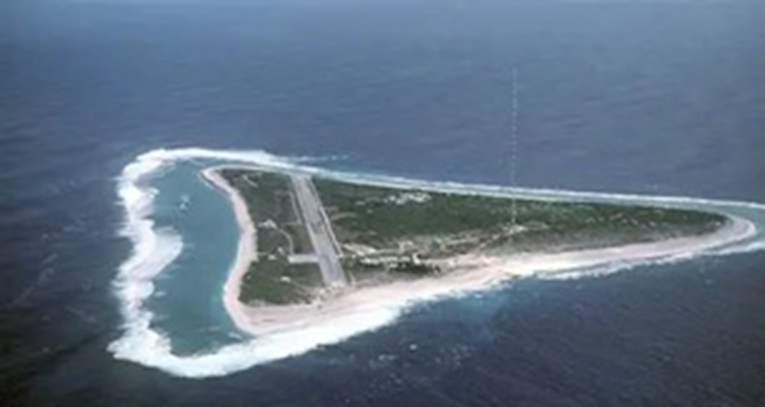
Tokyo, March 3 (Jiji Press)
https://jen.jiji.com/jc/eng?g=eco&k=2026030300561
–The Japanese government is considering Minamitorishima, a remote Tokyo island in the Pacific, as a possible site for the final disposal of highly radioactive waste from nuclear power plants, it was learned Tuesday.
At a press conference on the day, industry minister Ryosei Akazawa said that the government will submit a request for a related literature survey to the Tokyo village of Ogasawara, where the island is located, as early as later in the day.
“Minamitorishima is considered to be an area with favorable conditions (for a nuclear waste disposal site),” Akazawa said.
Similar surveys have so far been conducted in the town of Suttsu and the village of Kamoenai, both in the northernmost prefecture of Hokkaido, and the southwestern town of Genkai, Saga Prefecture.
Iran says Natanz nuclear site hit in US-Israeli strikes
Iran’s sprawling nuclear facility at Natanz was struck during U.S. and Israeli military operations against the Islamic Republic, Iran’s ambassador to the U.N. nuclear watchdog said on Monday.
Again they attacked Iran’s peaceful, safeguarded nuclear facilities yesterday,” Reza Najafi told reporters at a meeting of the International Atomic Energy Agency’s 35-nation board of governors. Asked by Reuters which facilities were hit, he replied: “Natanz.”
Reuters 2nd March 2026, https://www.reuters.com/world/china/iran-says-natanz-nuclear-site-hit-us-israeli-strikes-2026-03-02/
Beyond Nuclear condemns attack on Iran

February 28, 2026,
https://beyondnuclear.org/beyond-nuclear-condemns-attack-on-iran/
Beyond Nuclear strongly condemns the attacks against Iran by two nuclear-armed countries, the United States and Israel, when a diplomatic solution to Iran’s nuclear program was already within reach.
“These renewed attacks on Iran come at a time when negotiations were already underway to secure a new nuclear verification agreement with Iran,” said Linda Pentz Gunter, the international specialist at Beyond Nuclear. “This illegal attack by the US and Israel is dangerous and provocative and risks leading to a wider war, potentially involving the use of nuclear weapons. Such an outcome would be catastrophic not only for the region but for the world.”
Iran is a signatory to the nuclear Non-Proliferation Treaty (NPT) that allows for the development of a civil but not military nuclear program and has consistently denied it has any plans to develop nuclear weapons.
Prior to the attacks by the US and Israel against Iran’s nuclear facilities last June (pictured), the International Atomic Energy had said there was no evidence to suggest Iran was making nuclear weapons.
The premise for the attacks appears to be President Trump’s personal dissatisfaction with current negotiations over Iran’s nuclear program. But in 2018, President Trump destroyed a perfectly workable nuclear agreement with Iran known as the Joint Comprehensive Plan of Action, that subjected Iran to verification and inspections to be sure it did not develop nuclear weapons.
Uranium enriched to 5% U-235 is considered for civil use. Above 90% is viewed as weapons grade. Currently, Iran is believed to be enriching uranium to 60% or possibly 80%, considered “weapons usable” but not suitable for the production of nuclear missiles.
“Instead of continuing with the diplomatic efforts already underway to negotiate a new nuclear agreement with Iran, the Trump administration has chosen the reckless and unnecessary path of military aggression, a decision that will cost countless innocent lives and billions of US tax dollars,” Pentz Gunter said.
Although also a signatory to the NPT, the US has failed to abide by Article VI of the treaty, which calls for nuclear armed nations to reduce and eventually eliminate their arsenals. The US is instead “modernizing” its nuclear weapons — code for expansion and enhancement — at a cost of $946 billion over the next ten years.
Israel has refused to admit that it has nuclear weapons, but is estimated to possess at least 80 warheads and potentially as many as 200.
Macron plans to deploy nuclear weapons to Britain
French president announces dramatic increase in arsenal and says allies could host its aircraft.
Henry Samuel in Paris. James Crisp, 02 March 2026
French nuclear-armed jets could be stationed in Britain and other allied European countries after Emmanuel Macron unveiled a dramatic expansion of France’s deterrence doctrine…
The French president also used the symbolic
setting of Île Longue, the country’s Atlantic nuclear fortress in
Brittany, to announce the first increase in its nuclear warhead stockpile
since the 1990s.
Telegraph 2nd March 2026,
https://www.telegraph.co.uk/news/2026/03/02/macron-plan-nuclear-weapons-britain/
France to increase its number of nuclear warheads, Macron says – as it happened

French president says deterrent needs to be ‘strengthened’ in recognition of new challenges
Jakub Krupa, 3 Mar 26,
https://www.theguardian.com/world/live/2026/mar/02/eu-response-middle-east-conflict-evacuate-citizens-europe-live-latest-news
- French president Emmanuel Macron has said France would increase the number of nuclear warheads and allow for temporary deployment of its nuclear-armed aircraft to allied countries for exercises as part of its new nuclear strategy seeking to “Europeanise” its deterrence programme (15:29, 15:50).
- In a major speech at the nuclear submarines Navy base of Île Longue, Macron said Belgium, Denmark, Germany, Greece, Sweden, the Netherlands, Poland, and the United Kingdom are expected to be involved in the programme, with London and Berlin playing particularly important roles (15:47, 16:00).
- Several EU leaders confirmed their plans to engage with France on the details of the programme (16:44, 16:51, 17:04).
- The president repeated his warnings that Europe needed to urgently step up its defence posture to respond to new, emerging threats and disintegration of rules on the use of nuclear weapons
As Trump Bombs Iran, We Need to Reckon With the American War Machine
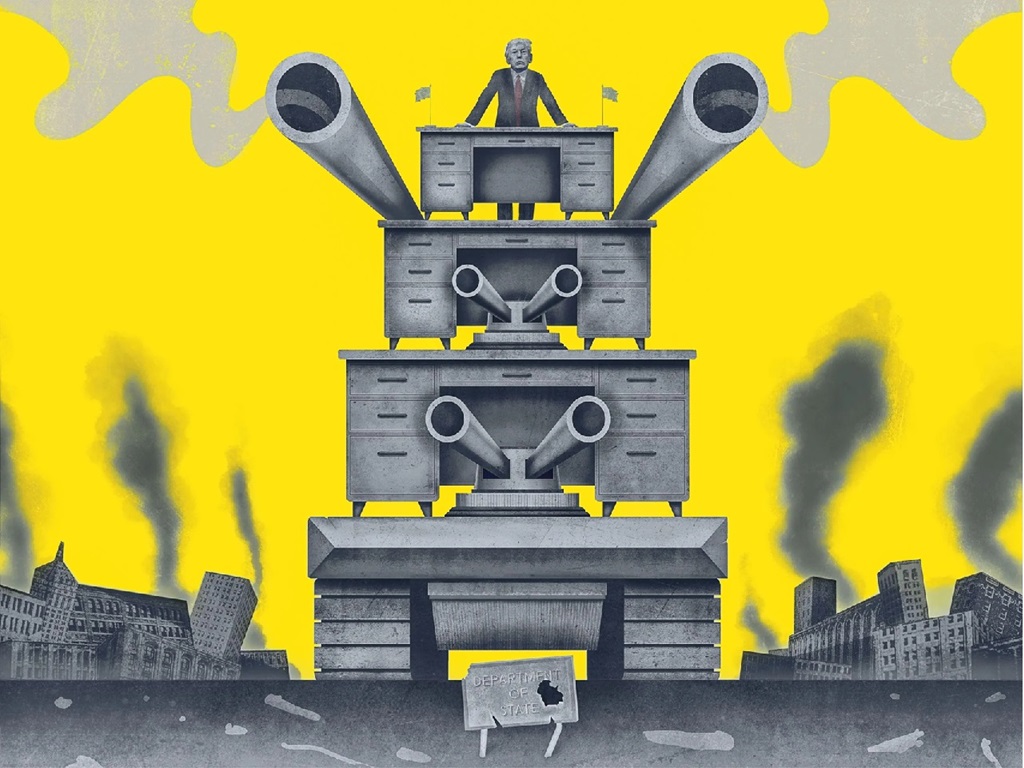
We cannot afford to slip into despair. We must push back against militarism everywhere, at every turn. By Negin Owliaei , Truthout, February 28, 2026, https://truthout.org/articles/as-trump-bombs-iran-we-need-to-reckon-with-the-american-war-machine/?utm_source=Truthout&utm_campaign=4670da1a6d-EMAIL_CAMPAIGN_2026_03_01_07_35&utm_medium=email&utm_term=0_bbb541a1db-4670da1a6d-650192793
As news broke that the United States and Israel had launched war on Iran, two posts kept showing up over and over on my social media feeds. One was from the Israeli military’s official account, which stated an oft-repeated phrase: “Israel has the right to defend itself.”
The other was a video from the Iranian city of Minab, where the first reports of casualties were emerging. The joint U.S.-Israeli attack had hit a girls’ elementary school; the death toll kept ticking higher and higher. At the time of publication, Iranian authorities said 108 people, mostly schoolchildren, had been killed in the strike, with many more injured.
Plenty has been written, in Truthout and elsewhere, about the totally incoherent justifications for this war, the illegality of it, the potential for regional disaster, the joke it has made of the very idea of diplomacy. All of this was and continues to be true, and all of it is important to raise. But more than anything, we in the U.S. need to reckon with the fact that so much of our state wealth, capacity, and technology goes toward burying children in rubble.
Last year, when Israel and the U.S. launched the strikes that would be prelude to this attack, I wrote that the two countries were “shedding even the pretense and facade of the principles of a rules-based international order that has already worked in their favor.” In the wake of those strikes, once the immediate violence ceased, we largely heard crickets from U.S. lawmakers. This, despite the fact that those strikes, like these, were illegal under U.S. and international law. We cannot let this continued lack of accountability stand. If we do, what will happen next?
Over the years, U.S. and Israeli leaders have become increasingly vocal about their hopes for “greater Israel” — the boundless expansion of an apartheid state. Before the start of the current assault on Iran, former Israeli Prime Minister Naftali Bennett, a favorite in the country’s upcoming elections, accused Turkey of being the hub of a threatening axis “similar to the Iranian one.” This war is not about Iran’s nuclear program. It is not a war to free Iranians from a repressive regime. This is a war to preserve U.S. power and hegemony across the entire region.
It is also not accurate to say that Israel is dragging the U.S. into a war against its choosing. Reporting has shown that these two nuclear powers were in lockstep in their planning of this attack. In order to stop this violence, we need to really contend with how it started. The U.S. is hardly a victim here.
This state of affairs is intolerable. I am disgusted to know that my tax dollars are being spent to bomb my ancestral homeland. I was sickened to wake up to messages from family members telling me that the city where they live was under attack from the country where I live. I’m terrified now that Iran’s government has cut internet access yet again, leaving us disconnected from our loved ones. No fear, of course, can compare to the terror of being on the receiving end of missiles or guns, whether they are wielded by a foreign power or your own government; Iranians have been killed by both in horrifying numbers over the last year. But for those of us in the diaspora, the fact that it has now become routine to check in on family and friends living through untold violence does not make it any less traumatic.
Despite the abject horror of this moment, we cannot afford to slip into despair. There is still space for things to get much worse, but, more importantly, there is still so much left that we must protect. No one can predict what will happen over the coming days and weeks, but we know they are likely to be filled with more violence and uncertainty. We need to use every single tool at our disposal to chip away at the war-making systems inflicting this horror, which are so thoroughly embedded in the heart of the United States.
We can start, of course, by demanding that Congress immediately pass a war powers resolution to put an end to this destructive assault. Beyond that we can lift up the call being made by groups like Defending Rights & Dissent for Congress to impeach not only Donald Trump but every single member of his cabinet who had a hand in making this unjust and illegal war possible.
But we shouldn’t stop there. Our elected officials need to publicly explain why they hemmed and hawed over a war powers resolution before these attacks occurred, despite an obvious military buildup.
We must demand that every member of Congress who has voted to increase our military budget to nearly a trillion dollars account for their choices. We must push those members who have personal investments in the military machine — to the tune of tens of millions of dollars — even further. They need to explain their conflicts of interest, and why they continue to profit off this death and destruction. Lawmakers who take money from groups like AIPAC that are relishing in this war especially need to answer for their votes.
It’s also imperative to not view this war in a silo, but instead see it as part of the same violent, hegemonic project that has been conducting genocide and spreading violence across Palestine, Lebanon, Yemen, Syria, and beyond. We must hold elected officials accountable for failing to uphold U.S. and international law by continuing to support the transfer of weapons to Israel as it commits genocide against Palestinians. We must make it politically toxic for those lawmakers not to support legislation like the Block the Bombs Act, which aims to stop such transfers.
We also can’t expect elected officials to do more just because we ask them to. We need to build power. We must support grassroots movements like the Boycott, Divestment, and Sanctions movement that seek to make war, apartheid, and genocide too costly to wage. We must back campaigns like Taxpayers Against Genocide that are searching for legal avenues to keep federal funds from being used to violate human rights.
We can wage campaigns against death-dealing corporations and make sure that war-profiteering is exposed and subjected to public outrage. The No Tech for Apartheid movement has long been organizing to push Silicon Valley to stop supplying the Israeli military with computing power, and has already found some success. The Israeli military’s use of artificial intelligence (AI) in Gaza has received a great deal of reporting; now that OpenAI has announced a deal to allow the Pentagon to use its models in their classified networks, the fight against AI has taken on renewed urgency. Campaigns across the country against data centers are now also a crucial nexus of resistance against militarism.
So too are campaigns for immigrant rights and against deportations. In the wake of the U.S. strikes against Iran last June, the Trump administration rounded up Iranian immigrants for deportation. Those deportations continued into this year, even as the Iranian government staged a brutal crackdown on protesters. As we prepare for war to rage across the region, we can demand the U.S. and Europe open their borders to people fleeing violence and despair. We can continue to show the links between the occupation of cities by federal immigration agents here at home and imperial wars waged abroad. The enemies of democracy here are also the enemies of democracy abroad.
Some of these demands may seem futile under this murderous president, backed by an obedient Congress, and with a Supreme Court that has offered comparatively little restraint. But this unaccountable bureaucracy makes it all the more essential that we build grassroots power to issue these demands and force those in power to heed them.
Polling shows that this war is unpopular. Trump may be an authoritarian, but he is not entirely invulnerable, nor are the elected officials who have given him pass after pass. We cannot let him believe for a second longer that he can get away with something this wildly illegal or recklessly dangerous without accountability. And we cannot let the leaders who follow him believe that they, too, can unleash such violence without consequences. After all, would we be here if there were any real repercussions for the 2003 invasion of Iraq, or the continuing genocide in Palestine? We need true accountability for these crimes. And the only way to get it is to wage a struggle against militarism every day — not only in moments of crisis, but whenever and wherever it rears its ugly head.
Trump’s unprovoked attack on Iran risks terror, turmoil and the spread of nuclear weapons
Israel and America have attacked Iran without provocation – the consequences will be dire, as World Affairs Editor Sam Kiley reports
NewsBreak, 2 Mar 26
Citizens in countries across the Middle East have been told to take cover from Iranian airstrikes in retaliation for an unprovoked attack on Iran by America and Israel.
But the shockwaves from blasts as US-made Israeli jets and American pilots unleash their bombs against Iran’s regime – and a nuclear weapons programme that Donald Trump said had already been “obliterated” in the past – will be felt from London to Bangkok.
The strikes – described by President Trump as a “major combat operation” – reaffirm a new age. A rogue order led by the US president that many nations around the world run by authoritarian thugs will relish. They will also look to many Muslims and non-Muslims as an attack on Islam itself.
After killing upwards of 80,000 people in Gaza, flattening the enclave, Israel has continued with land grabs on what small patches of territory remain to Palestinians on the West Bank. The strikes on Iran – as with the war on Gaza – will lead to a violent backlash. It will lead to terrorism………………………………………………….. https://www.newsbreak.com/the-independent-517119/4516372678118-trump-s-unprovoked-attack-on-iran-risks-terror-turmoil-and-the-spread-of-nuclear-weapons
NewsReal: Historic Miscalculation? US & Israel ‘Decapitate Iranian Regime’, Yet Iran is Striking Back HARD
Sott.net. Mon, 02 Mar 2026 , https://www.sott.net/article/504928-NewsReal-Historic-Miscalculation-US-Israel-Decapitate-Iranian-Regime-Yet-Iran-is-Striking-Back-HARD
And so it begins. This time it isn’t ‘kayfabe’ and ‘negotiated strikes and counter-strikes’. The ‘peace president’, when announcing joint US-Israeli strikes against Iran on 28 February, said it would just take a few days, and gloated that he ‘took out the regime’ by targeting top Iranian leadership, including Ayatollah Khamenei. But Iran’s swift and massive response – bombing 11 countries housing US and Israeli military bases and installations, including a British base in Cyprus, EU territory – now has Trump saying the war will ‘last for weeks’…
What did they think was going to happen, that Iranians would ‘rise up and take power from their oppressors’? The Americans appear to have truly believed their own propaganda. In reality, Iranians are defiantly rallying in support of their country, and government, while Muslims across the region are preparing to potentially join the fray and do as Iran has always sought: remove all American military forces from the Persian Gulf, if not the Middle East as a whole.
It’s too early for predicting such an end-game, but in the meantime, it appears that, in the absence of Iranian popular support for US and Israeli ‘regime intervention’, the strategy could switch to attacking the people of Iran and the country’s infrastructure, ‘punishment’ for not ‘capitulating’.
Nuclear power falls below half its historic peak share of global electricity generation.
Jim Green, 3 Mar 26
The International Atomic Energy Agency reports that nuclear power’s share of global electricity generation has fallen to 8.7%. [1]
That is less than half its historic peak of 17.5% in 1996. [2]
The International Energy Agency projects the share of renewables to rise from 32 percent in 2024 to 43 percent by 2030. [3]
Renewables have doubled then tripled nuclear generation over the past decade and by the end of this decade renewables will out-generate nuclear by at least a factor of 5.
[1] p.23, https://www-pub.iaea.org/MTCD/Publications/PDF/p15942-25-02880E_RDS-1-45_web.pdf
[2] https://www.worldnuclearreport.org/World-Nuclear-Industry-Status-Report-2025-HTML-version
[3] https://www.iea.org/reports/renewables-2025/renewable-electricity
Could a huge data centre revitalise Ayrshire – or ruin it?
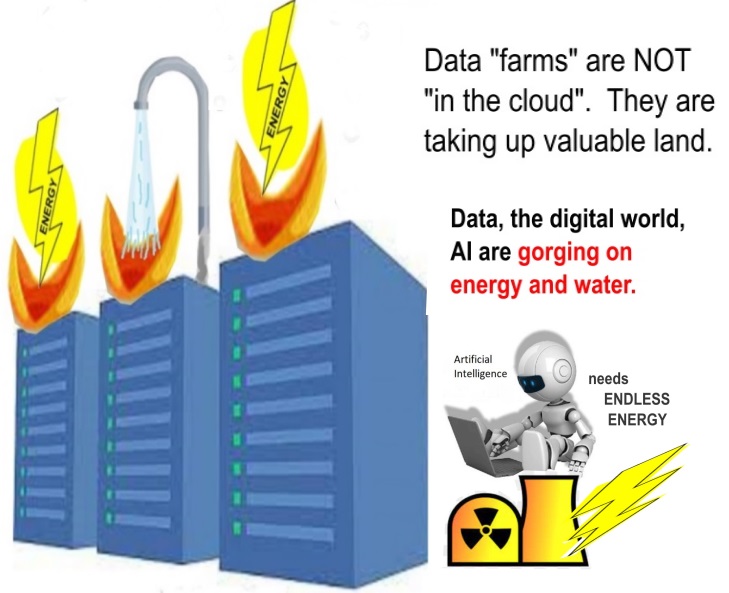
Jonathan Geddes,BBC Glasgow and West reporter, 1 Mar 26
It is currently a large, unassuming patch of farmland in East Ayrshire – but within years it could be one of the largest artificial intelligence data centres on Earth.
About 100 hectares (250 acres) of land near HMP Kilmarnock has been earmarked for a technology hub by energy firm ILI Group.
ILI says the development would be similar in size to the prison, while the “vast majority” of the land would be set aside for “biodiversity and landscaping”.
Supporters talk of it revitalising the region, bringing new jobs and investment that would be ploughed back into the community. But the plans have met strong opposition from locals concerned about the impact on the wider area.
Some of those opposed have contacted BBC Your Voice, and say the firm has not provided concrete details about a building that would dominate Hurlford for decades to come.
In recent years, a string of applications for data centres have been made across Scotland. The group Action to Protect Rural Scotland estimate 17 are at various stages of the planning process.
It comes during a worldwide rush to develop data centres. Estimates in 2025 suggested about $3tn (£2.2tn) will be spent on data centres that support AI between now and 2029.
That surge has been accompanied by growing concern about the knock-on effects of the facilities, especially the large amounts of energy and water they consume……………….
For some Hurlford residents though, the announcement of the facility – called Rufus – prompted questions, and a lot of them.
Lisa Beacham became aware of the proposal – which ILI stress is still at a very early stage – shortly after the initial announcement.
A student from Hurlford, she then went down a rabbit hole looking at the amount of water that would be needed for coolant, the process which stops the computer chips there from overheating.
“The site proposal is that it would be powered at 540MW, which would require millions of litres of water a day,” she said.
“Water is a global commodity and we are currently facing global water bankruptcy, according to the UN. Yet we’ll have a site that is using up a huge amount, and due to residue [from the centre] the water used there cannot easily be recirculated.”
Last year the BBC told of people who lived near a data centre in Georgia in the USA who were struggling with an excessive build-up of sediment in water supplies………………………….
Alex De Vries, who runs the Digiconomist blog and website, said he estimated a 540MW facility “could result in almost 6bn litres of annual fresh water consumption” to generate the power needed.
He told BBC Scotland News: “The relatively cooler climate in Scotland isn’t going to do much to mitigate this.”…………………………………..
Cheryl Rowland, an admin assistant at a construction company, who lives in Hurlford, is sceptical.
Speaking at the consultation event, she said: “They are talking about something that will be here for 40 or 50 years.
“Would they arrange education upskilling, to bring local people through and help them grow into jobs here, or will the jobs all be people coming into the area?”……………………
Rowland says it is a worry such a large site will be built by a company who will not be there long term.
https://www.bbc.co.uk/news/articles/c2d1ny161yyo
This Illegal US-Israeli Attack on Iran Is Also an Assault on the United Nations
As Henry Kissinger famously said, “It may be dangerous to be America’s enemy, but to be its friend is fatal.” We can add that to host US military bases and CIA operations is to turn your country into a vassal state.
The international order that Franklin and Eleanor Roosevelt helped to build after the catastrophe of WWII was founded on a simple and profound idea – that law and respect, not force, should govern relations among states. That idea is now being destroyed by the very nation that did most to promote it in founding the UN. The irony is bitter beyond measure.
Let us be clear about what the United States and Israel are pursuing. The US objective is not the security of the American people. The objective is global hegemony. The attempt is to destroy the UN and the international rule of law—an attempt that will fail.
Jeffrey D. SachsSybil Fares, Mar 02, 2026, Common Dreams, https://www.commondreams.org/opinion/united-nations-israel-us-attack-iran
On February 16, 2026, one of us (Jeffrey Sachs) sent a letter to the UN Security Council warning that the United States was on the verge of tearing up the United Nations Charter. That warning has now come to pass. The United States and Israel have launched an unprovoked war against Iran in flagrant violation of Article 2(4) of the Charter, without authorization from the Security Council, and without any legitimate claim of self-defense under Article 51. They are trying to kill the UN Charter and the international rule of law, but they will fail.
At the Security Council on February 28, 2026, the US and its allies directed their condemnation not at the American and Israeli aggression, but at Iran. One US ally after the next condemned Iran for its retaliatory attacks yet absurdly failed to condemn the illegal and unprovoked US-Israeli attack on Iran. This performance by these countries was disgraceful and turned reality completely upside down.
The truth is that the devastation of the war will not directly affect the so-called West: their children will not suffer traumas or death, and their countries will not be set ablaze. The victims of this attack are the people of the Middle East. They are the expendable ones who suffer from Western arrogance, abuse of power, and addiction to war.
We close with two observations. First, the United States will not achieve global hegemony or kill the UN. The world is too large, too diverse, and too determined to resist domination by any single power, much less one with 4 percent of the world’s population. The world outside of the US and the countries it occupies want the UN to live and thrive. The US attempt will surely fail, but it may cause immense suffering before it does.
Second, if Israel continues its addiction to war and occupation, it too will not survive. That addiction represents a mix of theocracy and post-traumatic stress. Part of Israel believes that it is the biblical kingdom of the 5th century BC. The other part lives in the traumatic memory of the Holocaust, and so is determined to kill any perceived adversary rather than learn to live together with it in peace. The Israeli Ambassador’s twisted defense of Israel’s brazen attack on Iran, as usual, cited the Bible and Auschwitz as the two justifications. These are Israel’s two perennial references, but not the real world of today.
The joint US-Israeli attacks were described by Trump as necessary because Iran “rejected every opportunity to renounce their nuclear ambitions, and we can’t take it anymore.” This is of course a flat lie. As the letter of February 16 recounted, Iran agreed a decade ago to a nuclear deal, the Joint Comprehensive Plan of Action (JCPOA) that was adopted by the UN Security Council in Resolution 2231. It was Trump who ripped up the agreement in 2018. In June 2025, Israel bombed Iran in the midst of US-Iran negotiations. This time too, the Israel-US war plans were set weeks ago when Netanyahu met with Trump, and the negotiations underway between the US and Iran were a charade. This seems to be the new modus operandi of the US: start negotiations and then aim to murder the counterparts.
It is easy to understand why the US allies behave in the embarrassing and self-abasing way they did at the UN Security Council. In addition to the United States, eight of the other fourteen Council members host US military bases or grant the US military access to local bases: Bahrain, Colombia, Denmark, France, Greece, Latvia, Panama, and the United Kingdom. These countries are not fully sovereign. They are partially governed by the US. The US military bases house CIA operations, and the host countries constantly look over their shoulder to try to avoid US subversion in their own countries.
As Henry Kissinger famously said, “It may be dangerous to be America’s enemy, but to be its friend is fatal.” We can add that to host US military bases and CIA operations is to turn your country into a vassal state.
As an absurd but telling example, the Danish ambassador parroted every US talking point, pointing her finger at Iran for its aggression as if Iran had not been attacked by the US and Israel. She completely forgot that such humiliating vassalage to the US will not play well for Denmark if the US occupies Greenland.
The truthful voices at the Security Council came from the countries not occupied by the United States. Russia explained correctly that the so-called West (that is, the countries occupied by the US) is engaged in victim-blaming when it points its finger at Iran. China reminded the Council that the crisis began with the US and Israeli attacks on Iran, not with Iran’s retaliation. Somalia’s ambassador, speaking on behalf of several African member states, truthfully portrayed the source of this recent escalation. The UN Representative of the League of Arab States spoke brilliantly about the root cause of Israel’s mad aggression: the denial of rights to Palestinian people, and Israel’s use of mass murder and regional war to prevent the emergence of a State of Palestine.
When Iran retaliates against US military bases in the Gulf, it is exercising its inherent right of self-defense under Article 51 of the Charter. We must remember that the US and Israel are openly and repeatedly assassinating Iran’s leaders, with the aim of overthrowing its government. When states murder a foreign head of state and attempt to destroy the government, the target of those threats is entitled under international law to defend itself.
The US-Israeli bombing murdered not only Iran’s Supreme Leader and several top government officials, but also more than 140 young girls in their school in Minab. These young children are the victims of a horrific war crime. The countries today that gave a pass to the United States and Israel for these killings—notably Denmark, France, Latvia, the United Kingdom, and of course the US —are also complicit in this war crime.
This UN Security Council emergency meeting will likely be remembered as the day the United Nations ceased to function from its headquarters on American soil. An international organization dedicated to the peaceful settlement of disputes cannot credibly operate from a country that wages illegal wars, threatens member states with annihilation, and treats UN Security Council resolutions as disposable instruments of convenience. For the UN to survive, and we need it to survive, it will need several homes around the world—in Brazil, China, India, South Africa, and others—honoring the true multipolarity of our world.
Let us be clear about what the United States and Israel are pursuing. The US objective is not the security of the American people. The objective is global hegemony. The attempt is to destroy the UN and the international rule of law—an attempt that will fail. Israel’s objective is to establish a Greater Israel, destroy the Palestinian people, and assert its hegemony over hundreds of millions of Arabs across the Middle East (from the Nile to the Euphrates, as US Ambassador Mike Huckabee recently asserted).
The United States’ delusional efforts at global hegemony are proceeding region by region. The US has recently claimed, in a wholly twisted supposed revival of the Monroe Doctrine, that it controls the Western Hemisphere and can dictate how Latin American countries conduct their economic and political affairs. The US kidnapped the sitting Venezuelan president to prove the point, and it now threatens to overthrow the Cuban government as well.
Today’s war against Iran aims to prove that the US similarly owns the Middle East. The war is part of a 30-year campaign, initiated by the Clean Break doctrine, to overthrow all governments that oppose US and Israeli hegemony in the region. Those joint Israel-US wars have included the genocide in Gaza, the occupation of the West Bank and the decades of wars and regime-change operations in Iran, Iraq, Lebanon, Libya, Somalia, Sudan, Syria, and Yemen.
One part of the US global plan is to commandeer the world’s oil exports and to weaken China and Russia in the process. The US seizure of Venezuela was designed to ensure American control of that country’s oil exports, especially to control the flow of oil to China. US sanctions on Russia aim to prevent Russian oil from reaching India and China. Now the US aims to stop the flow of Iran’s oil to China. More broadly, the US aims to control the entire Gulf region plus Iran to maintain its imperial dominance.
The international order that Franklin and Eleanor Roosevelt helped to build after the catastrophe of WWII was founded on a simple and profound idea – that law and respect, not force, should govern relations among states. That idea is now being destroyed by the very nation that did most to promote it in founding the UN. The irony is bitter beyond measure..
A state that depends on permanent war, permanent occupation and slaughter of the Palestinians, and the indefinite subjugation of millions of people has no viable future, and the policies that the United States is now pursuing on Israel’s behalf will accelerate rather than prevent that outcome.
The two-state solution, which the Council has endorsed repeatedly, offers Israel a path to peace. Tragically Israel rejects that. The result, eventually, will be the end of Israel itself in its current form, especially as the US population is rapidly turning against Israel’s violent theocracy and towards the cause of Palestine. Perhaps there will be one democratic state for both Arabs and Jews living in peace, together, with an end of apartheid rule.
These are harsh truths, but emergencies demand honesty. The UN is being murdered by Israel and the United States. The Security Council must rouse itself from their military occupation by the US, and remember that they are the stewards of the UN Charter’s promise to maintain international peace and security.
Year 4: The Timeline That Tells the Tale
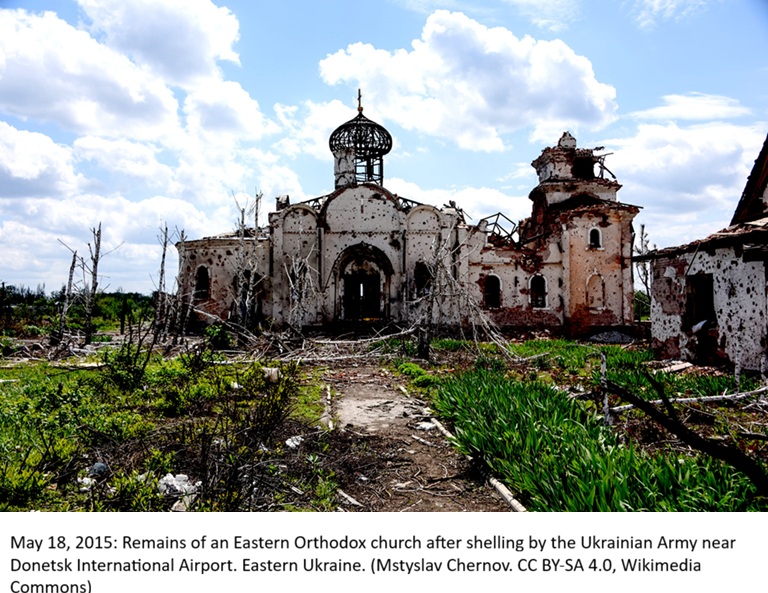
Without historical context, which is buried by corporate media, it’s impossible to understand the war in Ukraine. Historians will tell the story, but journalists are cut short for trying to tell it now.
By Joe Lauria, Consortium News, February 24, 2026
The way to prevent the Ukraine war from being understood is to suppress its history.
A cartoon version has the conflict beginning on Feb. 24, 2022 when Vladimir Putin woke up that morning and decided to invade Ukraine.
There was no other cause, according to this version, other than unprovoked, Russian aggression against an innocent country.
Please use this short, historical guide to share with people who still flip through the funny pages trying to figure out what’s going on in Ukraine.
The mainstream account is like opening a novel in the middle of the book to read a random chapter as though it’s the beginning of the story.
Thirty years from now historians will write about the context of the Ukraine war: the coup, the attack on Donbass, NATO expansion, and the rejection of the Minsk Accords and Russian treaty proposals without being called Putin puppets.
It will be the same way historians today write of the Versailles Treaty as a cause of Nazism and WWII, without being called Nazi-sympathizers.
Providing context is taboo while the war continues in Ukraine, as it would have been during WWII. Context is paramount in journalism.
But journalists have to get with the program of war propaganda while a war goes on. Journalists are clearly not afforded the same liberties as historians. Long after the war, historians are free to sift through the facts.
THE UKRAINE TIMELINE
World War II— Ukrainian national fascists, led by Stepan Bandera, at first allied with the German Nazis, massacre more than a hundred thousands Jews and Poles.
1950s to 1990 – C.I.A. brought Ukrainian fascists to the U.S. and worked with them to undermine the Soviet Union in Ukraine, running sabotage and propaganda operations. Ukrainian fascist leader Mykola Lebed was taken to New York where he worked with the C.I.A. through at least the 1960s and was still useful to the C.I.A. until 1991, the year of Ukraine’s independence. The evidence is in a U.S. government report starting from page 82. Ukraine has thus been a staging ground for the U.S. to weaken and threaten Moscow for nearly 80 years.
November 1990: A year after the fall of the Berlin Wall, the Charter of Paris for a New Europe (also known as the Paris Charter) is adopted by the U.S., Europe and the Soviet Union. The charter is based on the Helsinki Accords and is updated in the 1999 Charter for European Security. These documents are the foundation of the Organization for Security and Co-operation in Europe. The OSCE charter says no country or bloc can preserve its own security at another country’s expense.
Dec. 25, 1991: Soviet Union collapses. Wall Street and Washington carpetbaggers move in during ensuing decade to asset-strip the country of formerly state-owned properties, enrich themselves, help give rise to oligarchs, and impoverish the Russian, Ukrainian and other former Soviet peoples.
1990s: U.S. reneges on promise to last Soviet leader Gorbachev not to expand NATO to Eastern Europe in exchange for a unified Germany. George Kennan, the leading U.S. government expert on the U.S.S.R., opposes expansion. Sen. Joe Biden, who supports NATO enlargement, predicts Russia will react hostilely to it.
1997 :: The only thing that could provoke a “vigorous and hostile” Russian response would be needless NATO Expansion Far East right till the border of Russia – Sen. Joe Biden pic.twitter.com/hRW47hLL5y
— Rishi Bagree (@rishibagree) June 17, 2022
1997: Zbigniew Brzezinski, former U.S. national security adviser, in his 1997 book, The Grand Chessboard: American Primacy and Its Geostrategic Imperatives, writes:
“Ukraine, a new and important space on the Eurasian chessboard, is a geopolitical pivot because its very existence as an independent country helps to transform Russia. Without Ukraine, Russia ceases to be a Eurasian empire. Russia without Ukraine can still strive for imperial status, but it would then become a predominantly Asian imperial state.”
New Year’s Eve 1999: After eight years of U.S. and Wall Street dominance, Vladimir Putin becomes president of Russia. Bill Clinton rebuffs him in 2000 when he asks to join NATO.
Putin begins closing the door on Western interlopers, restoring Russian sovereignty, ultimately angering Washington and Wall Street. This process does not occur in Ukraine, which remains subject to Western exploitation and impoverishment of Ukrainian people.
Feb. 10, 2007: Putin gives his Munich Security Conference speech in which he condemns U.S. aggressive unilateralism, including its illegal 2003 invasion of Iraq and its NATO expansion eastward.
He said: “We have the right to ask: against whom is this [NATO] expansion intended? And what happened to the assurances our western partners made after the dissolution of the Warsaw Pact? Where are those declarations today? No one even remembers them.”
Putin speaks three years after the Baltic States, former Soviet republics bordering on Russia, joined the Western Alliance. The West humiliates Putin and Russia by ignoring its legitimate concerns. A year after his speech, NATO says Ukraine and Georgia will become members. Four other former Warsaw Pact states join in 2009.
2004-5: Orange Revolution. Election results are overturned giving the presidency in a run-off to U.S.-aligned Viktor Yuschenko over Viktor Yanukovich. Yuschenko makes fascist leader Bandera a “hero of Ukraine.”
April 3, 2008: At a NATO conference in Bucharest, a summit declaration “welcomes Ukraine’s and Georgia’s Euro-Atlantic aspirations for membership in NATO. We agreed today that these countries will become members of NATO”. Russia harshly objects. William Burns, then U.S. ambassador to Russia, and presently C.I.A. director, warns in a cable to Washington, revealed by WikiLeaks, that,
“Foreign Minister Lavrov and other senior officials have reiterated strong opposition, stressing that Russia would view further eastward expansion as a potential military threat. NATO enlargement, particularly to Ukraine, remains ‘an emotional and neuralgic’ issue for Russia, but strategic policy considerations also underlie strong opposition to NATO membership for Ukraine and Georgia. In Ukraine, these include fears that the issue could potentially split the country in two, leading to violence or even, some claim, civil war, which would force Russia to decide whether to intervene. … Lavrov stressed that Russia had to view continued eastward expansion of NATO, particularly to Ukraine and Georgia, as a potential military threat.”
A crisis in Georgia erupts four months later leading to a brief war with Russia, which the European Union blames on provocation from Georgia.
November 2009: Russia seeks new security arrangement in Europe. Moscow releases a draft of a proposal for a new European security architecture that the Kremlin says should replace outdated institutions such as NATO and the Organization for Security and Cooperation in Europe (OSCE).
The text, posted on the Kremlin’s website on Nov. 29, comes more than a year after President Dmitry Medvedev first formally raised the issue. Speaking in Berlin in June 2008, Medvedev said the new pact was necessary to finally update Cold War-era arrangements.
“I’m convinced that Europe’s problems won’t be solved until its unity is established, an organic wholeness of all its integral parts, including Russia,” Medvedev said.
2010: Viktor Yanukovich is elected president of Ukraine in a free and fair election, according to the OSCE.
2013: Yanukovich chooses an economic package from Russia rather than an association agreement with the EU. This threatens Western exploiters in Ukraine and Ukrainian comprador political leaders and oligarchs.
February 2014: Yanukovich is overthrown in a violent, U.S.-backed coup (presaged by the Nuland-Pyatt intercept), with Ukrainian fascist groups, like Right Sector, playing a lead role. Ukrainian fascists parade through cities in torch-lit parades with portraits of Bandera.
March 16, 2014: In a rejection of the coup and the unconstitutional installation of an anti-Russian government in Kiev, Crimeans vote by 97 percent to join Russia in a referendum with 89 percent turn out. The Wagner private military organization is created to support Crimea. Virtually no shots are fired and no one was killed in what Western media wrongly portrays as a “Russian invasion of Crimea.”
April 12, 2014: Coup government in Kiev launches war against anti-coup, pro-democracy separatists in Donbass. Openly neo-Nazi Azov Battalion plays a key role in the fighting for Kiev. Wagner forces arrive to support Donbass militias. U.S. again exaggerates this as a Russian “invasion” of Ukraine. “You just don’t in the 21st century behave in 19th century fashion by invading another country on completely trumped up pre-text,” says U.S. Secretary of State John Kerry, who voted as a senator in favor of the U.S. invasion of Iraq in 2003 on a completely trumped up pre-text.
May 2, 2014: Dozens of ethnic Russian protestors are burnt alive in a building in Odessa by neo-Nazi thugs. Eight days later, Luhansk and Donetsk declare independence and vote to leave Ukraine.
Sept. 5, 2014: First Minsk agreement is signed in Minsk, Belarus by Russia, Ukraine, the OSCE, and the leaders of the breakaway Donbass republics, with mediation by Germany and France in a Normandy Format. It fails to resolve the conflict.
Feb. 12, 2015: Minsk II is signed in Belarus, which would end the fighting and grant the republics autonomy while they remain part of Ukraine. The accord was unanimously endorsed by the U.N. Security Council on Feb. 15. In December 2022 former German Chancellor Angela Merkel admits West never had intention of pushing for Minsk implementation and essentially used it as a ruse to give time for NATO to arm and train the Ukraine armed forces.
2016: The hoax known as Russiagate grips the Democratic Party and its allied media in the United States, in which it is falsely alleged that Russia interfered in the 2016 U.S. presidential election to get Donald Trump elected. The phony scandal serves to further demonize Russia in the U.S. and raise tensions between the nuclear-armed powers, conditioning the public for war against Russia.
May 12, 2016: U.S. activates missile system in Romania, angering Russia. U.S. claims it is purely defensive, but Moscow says the system could also be used offensively and would cut the time to deliver a strike on the Russian capital to within 10 to 12 minutes.
June 6, 2016: Symbolically on the anniversary of the Normandy invasion, NATO launches aggressive exercises against Russia. It begins war games with 31,000 troops near Russia’s borders, the largest exercise in Eastern Europe since the Cold War ended. For the first time in 75 years, German troops retrace the steps of the Nazi invasion of the Soviet Union across Poland.
German Foreign Minister Frank Walter-Steinmeier objects. “What we shouldn’t do now is inflame the situation further through saber-rattling and warmongering,” Steinmeier stunningly tells Bild am Sontag newspaper. “Whoever believes that a symbolic tank parade on the alliance’s eastern border will bring security is mistaken.”
Instead Steinmeier calls for dialogue with Moscow. “We are well-advised to not create pretexts to renew an old confrontation,” he warns, adding it would be “fatal to search only for military solutions and a policy of deterrence.”
December 2021: Russia offers draft treaty proposals to the United States and NATO proposing a new security architecture in Europe, reviving the failed Russian attempt to do so in 2009. The treaties propose the removal of the Romanian missile system and the withdrawal of NATO troop deployments from Eastern Europe. Russia says there will be a “technical-military” response if there are not serious negotiations on the treaties. The U.S. and NATO reject them essentially out of hand.
February 2022: Russia begins its military intervention into Donbass in the still ongoing Ukrainian civil war after first recognizing the independence of Luhansk and Donetsk.
Before the intervention, OSCE maps show a significant uptick of shelling from Ukraine into the separatist republics, where more than 10,000 people have been killed since 2014.
March-April 2022: Russia and Ukraine agree on a framework agreement that would end the war, including Ukraine pledging not to join NATO. The U.S. and U.K. object. Prime Minister Boris Johnson flies to Kiev to tell Ukrainian President Volodymyr Zelensky to stop negotiating with Russia. The war continues with Russia seizing much of the Donbass.
March 26, 2022: Biden admits in a speech in Warsaw that the U.S. is seeking through its proxy war against Russia to overthrow the Putin government. Earlier in March he overruled his secretary of state on establishing a no-fly zone against Russian aircraft in Ukraine. Biden opposed the no-fly zone, he said at the time, because “that’s called World War III, okay? Let’s get it straight here, guys. We will not fight the third world war in Ukraine.”
September 2022: Donbass republics vote to join Russian Federation, as well as two other regions: Kherson and Zaporizhzhia.
May 2023: Ukraine begins counter-offensive to try to take back territory controlled by Russia. As seen in leaked documents earlier in the year, U.S. intelligence concludes the offensive will fail before it begins.
June 2023: A 36-hour rebellion by the Wagner group fails, when its leader Yevegny Prigoshzin takes a deal to go into exile in Belarus. The Wagner private army, which was funded and armed by the Russian Ministry of Defense, is absorbed into the Russian army. The Ukrainian offensive ends in failure at the end of November.
September 2024: Biden deferred to the realists in the Pentagon to oppose long-range British Storm Shadow missiles from being fired by Ukraine deep into Russia out of fear it would also lead to a direct NATO-Russia military confrontation with all that that entails.
Putin warned at the time that because British soldiers on the ground in Ukraine would actually launch the British missiles into Russia with U.S. geostrategic support, it “will mean that NATO countries — the United States and European countries — are at war with Russia. And if this is the case, then, bearing in mind the change in the essence of the conflict, we will make appropriate decisions in response to the threats that will be posed to us.”
November 2024: After he was driven from the race and his party lost the White House, a lame duck Biden suddenly switched gears, allowing not only British, but also U.S. long-range ATACMS missiles to be fired into Russia. It’s not clear that the White House ever informed the Pentagon in advance in a move that risked the very World War III that Biden had previously sought to avoid.
February 2025: The first direct contact between senior leadership of the United States and Russia in more than three years takes place, with a phone call between the countries’ presidents, and a meeting of foreign ministers in Saudi Arabia. They agree to begin negotiations to end the war.
August 15, 2025: Donald Trump and Vladimir Putin meet in Anchorage, Alaska for the first face-to-face meeting between U.S. and Russian leaders in more than four years. The Russians left believing Trump had thoroughly understood their position against a ceasefire and instead their desire to reach a comprehensive solution to the war that addressed the “root causes” and Russian security concerns, which have been outlined in this timeline. A series of follow-up diplomatic meetings have failed to advance that goal and the conflict continues to be decided on the battlefield with Russian gains as well as an increase in missiles being fired into each nations territory.
This timeline clearly shows an aggressive Western intent towards Russia, and how the tragedy could have been avoided if NATO would not allow Ukraine to join; if the Minsk accords had been implemented; and if the U.S. and NATO negotiated a new security arrangement in Europe, taking Russian security concerns into account.
Joe Lauria is editor-in-chief of Consortium News and a former U.N. correspondent for The Wall Street Journal, Boston Globe, and numerous other newspapers, including The Montreal Gazette and The Star of Johannesburg. He was an investigative reporter for the Sunday Times of London, a financial reporter for Bloomberg News and began his professional work as a 19-year old stringer for The New York Times. He is the author of two books, A Political Odyssey, with Sen. Mike Gravel, foreword by Daniel Ellsberg; and How I Lost By Hillary Clinton, foreword by Julian Assange. He can be reached at joelauria@consortiumnews.com and followed on Twitter @unjoe
1 This Month




PLEASE OPPOSE HR 8255 AND S.3639 – bills would accelerate satellite deployment, with no environmental review or safeguards – https://ncstd5li.quorum.us/campaign/169331/
To see nuclear-related stories in greater depth and intensity – go to https://nuclearinformation.wordpress.com
-
Archives
- September 2026 (339)
- August 2026 (330)
- July 2026 (355)
- June 2026 (287)
- May 2026 (306)
- April 2026 (356)
- March 2026 (251)
- February 2026 (267)
- January 2026 (308)
- December 2025 (358)
- November 2025 (359)
- October 2025 (375)
-
Categories
- 1
- 1 NUCLEAR ISSUES
- business and costs
- climate change
- culture and arts
- ENERGY
- environment
- health
- history
- indigenous issues
- Legal
- marketing of nuclear
- media
- opposition to nuclear
- PERSONAL STORIES
- politics
- politics international
- Religion and ethics
- safety
- secrets,lies and civil liberties
- spinbuster
- technology
- Uranium
- wastes
- weapons and war
- Women
- 2 WORLD
- ACTION
- AFRICA
- Atrocities
- AUSTRALIA
- Christina's notes
- Christina's themes
- culture and arts
- Events
- Fuk 2022
- Fuk 2023
- Fukushima 2017
- Fukushima 2018
- fukushima 2019
- Fukushima 2020
- Fukushima 2021
- general
- global warming
- Humour (God we need it)
- Nuclear
- RARE EARTHS
- Reference
- resources – print
- Resources -audiovicual
- Weekly Newsletter
- World
- World Nuclear
- YouTube
-
RSS
Entries RSS
Comments RSS

