Does Uzbekistan really need a nuclear power plant?
Analysis: Does Uzbekistan really need a nuclear power plant? Uzbekistan’s
planned nuclear reactors raise serious concerns about critical wetland
sites, safety, financing and transboundary relations.
Third Pole 27th April 2021
Governor of Fukui Prefecture to approve restart of aging nuclear reactors, but local community is opposed.
Governor to approve restart of 40-plus-year-old nuclear reactors in Japan first
April 28, 2021 (Mainichi Japan) FUKUI — The governor of central Japan’s Fukui Prefecture announced on April 28 his intention to approve the reactivation of 40-plus-year-old nuclear reactors following an online meeting with the economy minister. If the move goes ahead, it would be the first time in Japan for such aging reactors to be restarted.
Fukui Gov. Tatsuji Sugimoto spoke with Economy, Trade and Industry Minister Hiroshi Kajiyama online on April 27 and confirmed the central government’s nuclear power policy, including plans to reboot the No. 3 reactor at Kansai Electric Power Co.’s Mihama Nuclear Power Station in the prefectural town of Mihama and the No. 1 and 2 reactors at the Takahama station in the prefectural town of Takahama — both of which are over 40 years old since they were put online.
Following the March 2011 disaster at the Fukushima Daiichi Nuclear Power Station, Japan decided to set the operating period of a nuclear rector at 40 years as a general rule. That period can be extended for up to 20 years as a one-time only exception if the Nuclear Regulation Authority approves…….
As a rule, consensus from host municipalities and prefectures is needed to restart a reactor. The Mihama and Takahama municipal governments, as well as their respective town assemblies have already agreed to restart the aging reactors. The Fukui prefectural nuclear safety commission tasked with checking the safety of nuclear plants has compiled a report on the assessment of Kansai Electric’s safety measures and submitted it to Gov. Sugimoto on April 22………..
The prefectural government had indicated that, as a condition for approving the restart of aging reactors, Kansai Electric present candidate locations outside Fukui Prefecture for interim storage sites for spent nuclear fuel. In February this year, Gov. Sugimoto expressed his appreciation over the utility’s proposal to secure a location “by the end of 2023,” including the shared use of a storage site in the Aomori Prefecture city of Mutsu in northern Japan.
The governor then practically shelved resolving the issue of interim storage sites and requested that the prefectural assembly debate the potential restart of the aging reactors. The central government had presented additional aid programs on April 6, including the provision of up to 2.5 billion yen (about $23 million) per nuclear station which is older than 40 years — in the cases of Mihama and Takahama stations, the subsidy will total 5 billion yen (roughly $46 million). With this, Fukui Prefecture entered the final stage of building local consensus for rebooting the idled reactors.
Meanwhile, local residents have voiced concerns over the safety of long-running reactors and evacuation routes in the event of an accident, among other issues……..
Kansai Electric will begin full-fledged preparations as soon as local consensus is built. However, as the construction of a specialized anti-terrorism facility, which became mandatory to reboot reactors under the new safety regulations, has been delayed, the timing of actually restarting the reactors remains undecided.
The Japan Atomic Power Co.’s Tokai No. 2 Power Station in the Ibaraki Prefecture village of Tokai in east Japan, which is also more than 40 years old, has been given the green light by the national government for an extension, but the utility has not been able to get consensus from the local community.
(Japanese original by Riki Iwama, Fukui Bureau) https://mainichi.jp/english/articles/20210428/p2a/00m/0na/022000c
We must continue to expose and refute the lies of nuclear industry
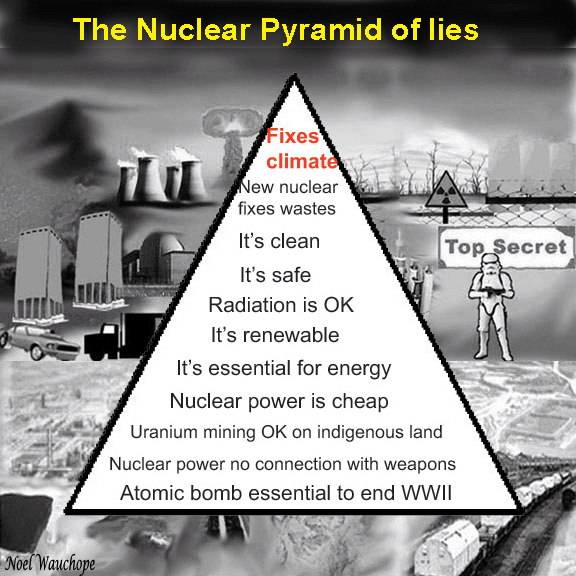
NEC 27th April 2021, Nuclear power has relied on fanciful tales since having been put to work –
fanciful tales that have already been exposed as unrealistic, as incorrect
prognoses, as brazen presumptuousness, as fatal self-overestimation. Lies,
one could call them.
There were high expectations, indeed promises, of a
form of energy generation that would be too cheap to be measured at all –
too cheap to meter. The opposite has happened, the costs are constantly
increasing.
In addition, the contribution to global energy supply has
remained more than negligible.
Dealing with its waste remains the
responsibility of the next generations, what a prime example of mendacity!
And the allegedly negligible residual risk, i.e. the statistically low
probability of occurrence of a Maximum Credible Accident – has been
unmasked as lethal misjudgment since Chernobyl & Fukushima.
And yet the lying continues. We must not stop dismantling the atomic lies, breaking
them down into individual parts – so that their complex functioning is
disturbed, or at best destroyed! Conference 29th April.
Not to be forgotten – the 1957 nuclear explosion in Mayak centre, Russia, that continues to poison the region.

Reporterre 26th April 2021, While the Chernobyl nuclear disaster occurred thirty-five years ago,
another explosion, which occurred in Russia in 1957 in the Mayak military
nuclear center, continues to poison the region. A look back at this
disaster kept secret for more than twenty years.
https://reporterre.net/Trente-ans-avant-Tchernobyl-la-catastrophe-nucleaire-de-Kychtym
City of Geneva calls for the closure of French nuclear station in Bugey
Boursorama 27th April 2021, Nuclear: the city of Geneva calls for the closure of the French power plant
in Bugey. Located about 70 kilometers as the crow flies from Geneva, it is
accused by the cantonal and municipal authorities of Geneva of causing
serious danger to the population because of its obsolescence.
Nuclear safeguards changed, new regulations to fit in with Brexit
Reuters Practical Law 26th April 2021 , Nuclear safeguards regulations amended to take into account Amending
Protocol to UK-Japan nuclear agreement: Brexit SI. The Nuclear Safeguards
(Fissionable Material and Relevant International Agreements) (EU Exit)
(Amendment) Regulations 2021 (SI 2021/492) came into force on 22 April
2021.
UK govt wants sovereign wealth funds to invest in nuclear power, -calling it ”green”, but there are doubts that nuclear projects will go ahead.

FT 28th April 2021, UK woos sovereign wealth funds over green investments. The UK is in talks
with some of the world’s biggest sovereign wealth and pension funds about
investing in British green energy projects. UK minister Gerry Grimstone
told the Financial Times that he has had discussions with investors
including Temasek and GIC, the Singaporean sovereign wealth funds, as well
as Australian and Canadian public pension schemes.
But Grimstone, former chair of Standard Life Aberdeen, also acknowledged there were questions
about whether one of the UK’s largest planned inward investments — a
nuclear power station proposed by Chinese state group CGN — would
proceed.
Grimstone said the government wanted to secure investments in
British low-emissions projects, ranging from factories to make batteries
for electric cars to offshore wind farms and carbon capture and storage.
China’s CGN has been blacklisted by the US amid increasing tension
between Beijing and western governments and Grimstone said the company’s
planned nuclear power station at Bradwell in Essex would depend on several
factors. “As ever with these things, the question will be as to whether
it’s to our mutual advantage and whether there’s sufficient
safeguards,” he added. “If you read the energy white paper before
Christmas it’s by no means certain that this country is going to be
building large nuclear power stations. “
https://www.ft.com/content/f2352470-2bef-4b15-bae8-fb9e002212d0
Chernobyl disaster and the U.N. response – a global matter

‘Disasters know no borders’ says Guterres, 35 years on from Chernobyl nuclear accident, https://news.un.org/en/story/2021/04/1090602In his message for Chernobyl International Remembrance Day on Monday, the UN chief reminded that “disasters know no borders”.
A 20-second shut down of the Chernobyl nuclear power plant on 26 April 1986, created a surge that led to a chemical explosion, which released nearly 520 dangerous radionuclides into the atmosphere. As a result, large parts of the former Soviet Union were contaminated; territory which now lies within the borders of Belarus, Ukraine and Russia, according to the UN.
Marking the 35th anniversary of the accident, Secretary-General António Guterres said that together, “we can work to prevent and contain [disasters]… support all those in need, and build a strong recovery”
Never forget
As one of the most serious nuclear accidents in history, nearly 8.4 million people in the three countries were exposed to radiation, according to the UN.
Some 350,000 were forced to leave their homes in severely contaminated areas, which left a deeply traumatic and lasting impact on their lives: “Their suffering must not be forgotten”, said the top UN official.
He also pointed to the anniversary as an occasion to recognize the recovery efforts led by the three governments as well as the work of “scientists who sifted through the evidence” to provide important analysis that has informed emergency planning and reduced risks.
A legacy of assistance
While the Organization had helped the people in the areas surrounding Chernobyl at the onset, four years after the accident the Soviet Government acknowledged the need for international assistance.
That same year, 1990, the General Assembly adopted a resolution calling for “international cooperation to address and mitigate the consequences at the Chernobyl nuclear power plant”. This began the UN’s participation in the recovery effort.
And in 2019, a new safety casing over the old shelter was completed and given to the Government of Ukraine. It was achieved with €2.2 billion in donations from over 45 nations.
The UN said the milestone one of the largest ever seen projects in terms of international cooperation in the field of nuclear safety.
Working for ‘the common good’
UN country teams – working with civil society, international partners and donors – first supported emergency and humanitarian aid, then recovery and finally social and economic development, Mr. Guterres noted, adding that “our joint efforts have enjoyed some success”.
He cited that the number of small and medium-sized businesses operating in areas directly affected by the disaster has risen from 2,000 in 2002 to 37,000 today.
And thousands of residents, community leaders and doctors have been trained on health risks and promoting healthy lifestyles.
The Chernobyl disaster was contained by governments working with academics, civil society and others, “for the common good”, the UN chief said.
“It holds important lessons for today’s efforts to respond to the COVID-19 pandemic”, he concluded.
Nuclear fallout from the Cold War might be killing our bees

Nuclear fallout from the Cold War might be killing our bees, The Takeout, 26 Apr 21 It’s no secret that humankind has been a massive dick to bees, even though they’re responsible for the pollination and survival of 80% of the world’s plants and are directly linked to more than one third of the world’s food supply…………
we’ve been killing billions of them every year with pesticides, chemicals, and god knows what else. Over the past few decades, the world’s bee population has been decreasing thanks to a phenomenon called colony collapse disorder;; fingers have been pointed at the aforementioned pesticides, malnutrition, starvation, and a whole slew of other things, but science still does not have a definitive answer as to what is killing the bees. Now, according to a study published last month in the scientific journal Nature Communications, there’s another potential culprit in the mix: Cesium-137.
What is Cesium-137, you ask? Well, it’s an isotope produced when radioactive elements like uranium and plutonium become bombarded by neutrons, which split apart their unstable atoms and releases an absolute ungodly amount of energy. In other words: it’s a radioactive byproduct of atomic bombs. Though the atomic bomb has only been used as a weapon twice, during the Cold War more than 2,000 were detonated in military technology tests around the world. Though most of these tests were conducted in New Mexico and Russia, lots of that sweet, radioactive cesium-137 got into the stratosphere where it was blown eastward, ended up in rain clouds, then came pouring down on the east coast of the U.S., where it was greedily sucked up by plants, which transformed it into nectar. Since nectar makes up 100% of bees’ food supply, they’ve been feasting on cesium-137 for decades and have been passing trace amounts into their honey. Of the 122 honey samples gathered from hives up and down the East Coast, cesium-137 was found in 68 of them.
Before you run frantically into the kitchen to grab all your honey and bury it deep underground, Jim Kaste, an associate professor at the College of William & Mary and one of the study’s co-authors, said in a statement that the levels of cesium-137 he’s found in honey are not high enough for humans to start freaking out about. Bees, however, should totally be freaking out, and they have every right to.
“What we see today is a small fraction of the radiation that was present during the 1960s and 1970s,” said Keste. “And we can’t say for sure if cesium-137 has anything to do with bee colony collapse or the decline of population.” https://thetakeout.com/radioactive-honey-bees-cesium-137-atomic-bomb-colony-co-1846749211
No future for new nuclear

‘the claim that any nuclear reactor system can “burn” or “consume” nuclear waste is a misleading oversimplification. Reactors can actually use only a fraction of spent nuclear fuel as new fuel, and separating that fraction increases the risks of nuclear proliferation and terrorism.’
mini-PWR designs, like NuScale’s Small Modular Reactor. – the UCS is none too keen on SMRs, as witness its earlier report on them –it says ‘small isn’t always beautiful’. A more recent review of SMRs by Prof. M.V. Ravana, from the University of British Columbia, looking more at the economics, came to similar conclusions: ‘Pursuing SMRs will only worsen the problem of poor economics that has plagued nuclear power and make it harder for nuclear power to compete with renewable sources of electricity.’

No future for new nuclear— https://renewextraweekly.blogspot.com/2021/04/no-future-for-new-nuclear.htmlAn arguably definitive study 25 Apr 21, of new advanced non-water cooled nuclear options, including molten salt reactors and liquid sodium cooled fast reactors, from the US Union of Concerned Scientists, concludes that none can be ready for at least a decade, more like two, and there are none that meet safety, security, sustainability criteria, apart possibly from once-through breed and burn reactors. If we want nuclear it says it would more sensible just to upgrade the standard, more familiar, water cooled reactors.
It sets the scene by noting that, in the United States, so-called Light Water Reactors (PWRs and BWRs) have dominated, these using ordinary water to cool their hot, highly radioactive cores, as opposed to reactors like the Canadian CANDU that use ‘heavy water’, with a double neutron hydrogen isotope, as a moderator. Support for LWRs has continued, despite some economic problems, which have bedevilled expansion in the US and elsewhere: ‘new nuclear plants have proven prohibitively expensive and slow to build, discouraging private investment and contributing to public skepticism’.
Continue readingThyroid cancer increased 20-fold in Fukushima children

IPPNW 26th April 2021, Dr Alex Rosen: Thyroid cancer increased 20-fold in Fukushima children. In 2011, people in Japan were exposed to radioactive fallout in many places. Some still live in irradiated regions where they are confronted with increased amounts of radiation every day: radioactive hot spots on the roadside, in rice fields or in sandboxes, contaminated fungi or algae, irradiated groundwater and recontamination from forest fires or floods.
One of the most dreaded long-term effects of radioactive exposure is the development of cancers through mutation of the DNA. Thyroid cancer in children is certainly not the most dangerous, but it is the easiest to detect form of radiation-related cancer. On the one hand, the latency periods until the development of a cancerous ulcer are relatively short,only a few years; on the other hand, thyroid cancer in children is anextremely rare disease, so that even a slight increase can be statistically significant. In 2011, the pressure on the Japanese authorities to investigate the development of thyroid cancer in children and adolescents in Fukushima was correspondingly great.
https://www.ippnw.de/atomenergie/gesundheit/artikel/de/schilddruesenkrebs-bei-fukushima-kind.html
The health effects of Chernobyl nuclear disaster as far away as Scotland

SCND 23rd April 2021. Ian Fairlie: April 26, 2021 marks the 35th anniversary of the world’s largest nuclear disaster at Chernobyl. Several days later, clouds containing the radioactive caesium-137 released by the reactor passed over Scotland about 1,400 miles or 2,500 kilometres away.
Although we got off lightly in comparison to nearer neighbors, rain brought radioactivity to the ground contaminating parts of southern and central Scotland. Understandings of the impact of radioactivity on human health are constantly being revised but scientists generally agree that any additional radiation over natural levels in the environment can have negative effects particularly on women and children. Even here, it is likely that some cancers will have been caused by Chernobyl.
https://www.banthebomb.org/index.php/news/2138-chernobyl-at-35
France tested 41 nuclear weapons in the Pacific, and grossly underestimated the radioactive fallout
Science 11th March 2021, From 1966 to 1974, France blew up 41 nuclear weapons in above-ground tests
in French Polynesia, the collection of 118 islands and atolls that is part of France. The French government has long contended that the testing was done safely.
But a new analysis of hundreds of documents declassified in 2013 suggests the tests exposed 90% of the 125,000 people living in French Polynesia to radioactive fallout—roughly 10 times as many people as theFrench government has estimated.
Be aware – Nuclear Thermal Propulsion (NTP) for space rockets has everything to do with the mkilitary, and funding for weapons makers
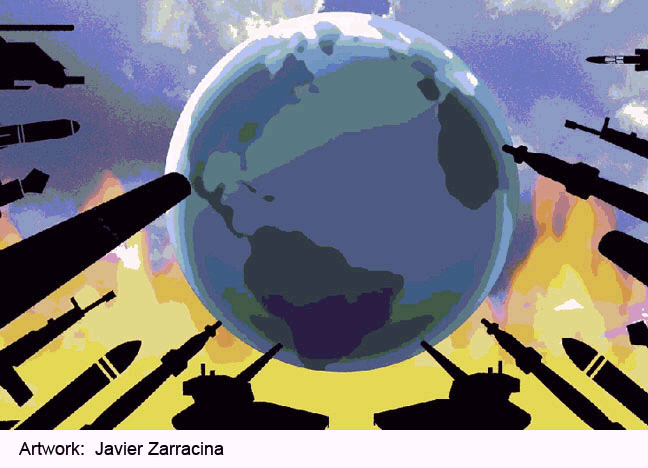
US Military Seeks Nuclear Space Flight Test by 2025, VOA 26 Apr 21,
The U.S. military has chosen three companies to develop nuclear thermal propulsion, or NTP systems to be tested in space by 2025. The goal is to test the space travel technology in cislunar space – the area between Earth and the moon.
What is NTP? What is NTP?
The U.S. Department of Energy describes on its website how an NTP system works. It needs a radioactive material such as uranium and another element, such as hydrogen, in liquid form. The liquid propellant is pumped through a reactor core. This causes uranium atoms to break apart inside the core and release heat. The heat turns the propellant into gas, which expands through an opening to produce thrust.
The contracts to produce a flight demonstration of NTP technology were awarded by the military’s Defense Advanced Research Projects Agency, or DARPA. The winning contractors were General Atomics, Blue Origin and Lockheed Martin. DARPA did not announce how much the contracts were worth.
In a recent announcement about the project, DARPA said the area of space, or “space domain,” will be very important to business, scientific discovery and national defense. Establishing “space domain awareness in cislunar space…will require a leap-ahead in propulsion technology,” the agency said……..
NTP and NASA
The U.S. space agency NASA has long been interested in nuclear propulsion systems to power its spacecraft of the future. But the technology has not yet been demonstrated…….. https://learningenglish.voanews.com/a/us-military-seeks-nuclear-space-flight-test-by-2025/5864011.html
1 This Month
Tell Congress: Prevent Nuclear Catastrophe in Iran

Tell Congress: Prevent Nuclear Catastrophe in Iran

Read the Public Inquiry Report, the Commissioners’ report, Surrendering Australia: The AUKUS Deception is available to download for free at aukuspublicinquiry.com. Or just watch the replay of the National Press Club Luncheon.


Shut down the radiation-damaged Heysham nuclear reactors now
To see nuclear-related stories in greater depth and intensity – go to https://nuclearinformation.wordpress.com

Say No to NASA’s Reckless Nuclear Reactor on the Moon
Say No to NASA’s Reckless Nuclear Reactor on the Moon
-
Archives
- November 2026 (255)
- October 2026 (302)
- September 2026 (339)
- August 2026 (330)
- July 2026 (355)
- June 2026 (287)
- May 2026 (306)
- April 2026 (356)
- March 2026 (251)
- February 2026 (267)
- January 2026 (308)
- December 2025 (358)
-
Categories
- 1
- 1 NUCLEAR ISSUES
- business and costs
- climate change
- culture and arts
- ENERGY
- environment
- health
- history
- indigenous issues
- Legal
- marketing of nuclear
- media
- opposition to nuclear
- PERSONAL STORIES
- politics
- politics international
- Religion and ethics
- safety
- secrets,lies and civil liberties
- spinbuster
- technology
- Uranium
- wastes
- weapons and war
- Women
- 2 WORLD
- ACTION
- AFRICA
- Atrocities
- AUSTRALIA
- Christina's notes
- Christina's themes
- culture and arts
- Events
- Fuk 2022
- Fuk 2023
- Fukushima 2017
- Fukushima 2018
- fukushima 2019
- Fukushima 2020
- Fukushima 2021
- general
- global warming
- Humour (God we need it)
- Nuclear
- RARE EARTHS
- Reference
- resources – print
- Resources -audiovicual
- Weekly Newsletter
- World
- World Nuclear
- YouTube
-
RSS
Entries RSS
Comments RSS

