Canada’s push for small nuclear reactors effectively stops real action on climate change.
Small Modular Nuclear Reactors Are Mostly Bad Policy, “………So Who Is Advocating For SMRs & Why? Clean Technica, ByMichael Barnard, 3 May 21,
At present we see SMR earmarked funds in both Canadian and US federal budgets, $150 million in Canada and 10 times as much in the US, mostly for research and development with the exception of over a billion to NuScale to, in theory, build something. In Canada, four provinces — Alberta, Ontario, New Brunswick and Saskatchewan — have joined forces in an SMR consortium. Bill Gates’ Terrapower has received another $80 million, as has X-Energy from the US DOE.
The failure conditions of small modular reactors are obvious. The lack of a significant market is obvious. The lack of ability to create a clear winner is obvious. The security costs are obvious. The lack of vertical scaling to thermal efficiency is obvious. The security risks and associated costs are obvious. The liability insurance cap implications are obvious. So why is all of this money and energy being thrown at SMRs? There are two major reasons, and only one of them is at all tenable.
Let’s start with the worst one. The Canadian provinces which are focused on SMRs are claiming that they are doing this as a major part of their climate change solutions. They are all conservative governments. Only one of those provinces has a nuclear fleet, although New Brunswick has one old, expensive, and due-to-retire reactor, as well as a track record of throwing money away on bad energy ideas, like Joi Scientific’s hydrogen perpetual motion machines. One of the provinces, Ontario, has been actively hostile to renewable energy, with the current administration cutting up 758 renewables contracts and legislating a lack of recourse as a very early act after election.
So why are they doing this? Because it allows them to defer governmental climate action while giving the appearance of climate action. They can pander to their least intelligent and wise supporters by asserting that renewables aren’t fit for purpose, while also not doing anything about the real problem because SMRs don’t exist in a modern, deployable, operable form yet.
The other major reason gets back to renewables as well. 15 years ago it was an arguable position to hold that renewables were too expensive, would cause grid reliability issues and that nuclear in large amounts was necessary. That’s been disproven by both 15 years of failures of nuclear deployments, but more importantly plummeting costs and proven grid reliability with renewable generation. Now almost every serious analyst agrees that renewables can economically deliver 80% of required grid energy, but there is still debate from credible analysts about the remaining 20%.
Mark Z. Jacobson and his Stanford team are at the center of this debate. Since the late 2000s, they’ve been publishing regular studies of increasing scope and sophistication on the thesis of 100% renewables by 2050. The 2015 publication saw a lot of pushback. At the time, my assessment of the fundamental disagreement was that the people who published a criticism of it thought the last 20% would be too expensive, and that both nuclear and carbon capture and sequestration would be necessary and scaled components.
Personally, I’ve done various aspects of the math, looked at grid reliability and transformation data from around the world, and looked at ancillary services requirements, and I think Jacobson and team are right. Further, that since we all agree that renewables are fit for purpose for 80% of the problem we should deploy them as rapidly as possible.
However, it’s very reasonable to make a side bet or two to ensure coverage of that last 20%. I don’t mind research dollars spent on SMRs, which is all most of the SMR expenditures amount to, outside of the Nu Scale bailout (which is added to the Ohio $1.3 billion bailout, which is added to the annual $1.7 billion overt federal subsidy, which is added to the annual hidden $4 billion security subsidy which is added to the $70 billion unfunded cleanup subsidy, which is added to the uncosted and unfunded taxpayer liability). Spending a few tens of millions of dollars in rich countries to ensure that we have that last 20% bridged is reasonable.
But the people asserting that SMRs are the primary or only answer to energy generation either don’t know what they are talking about, are actively dissembling or are intentionally delaying climate action. https://cleantechnica.com/2021/05/03/small-modular-nuclear-reactors-are-mostly-bad-policy/
Iran nuclear talks in Vienna make headway, as USA shows plans for removing sanctions

Independent 3rd May 2021, For months, the United States was humming and hawing about how and on what
terms it would return to the nuclear deal with Iran, as doubts were percolating in world capitals about whether the administration of Joe Biden even wanted to revive the deal.
But during indirect talks between Iran and the US over the last couple weeks in Vienna, Washington startled just about
everyone involved when it suddenly presented plans detailing how it would remove sanctions on Iran if it were to roll back its nuclear programme for both countries to back come into compliance with the Joint Comprehensive
Plan of Action (JCPOA).
https://www.independent.co.uk/news/world/iran-us-nuclear-deal-headway-vienna-b1840992.html
How Chernobyl’s radioactive dust blanketed Europe in 1986

Radiation high over Europe after Chernobyl disaster – archive, 1986
3 May 1986: Mainland Europe experiences higher than normal radiation, with Poland, East Germany and Sweden bearing the brunt of contamination Michael SimmonsFrom the Guardian archive Mon 3 May 2021 By dusk last night, every country in mainland Europe had experienced higher than normal radiation as a result of the Chernobyl disaster. Only the Iberian peninsula was still clear, as governments in East and West, having recovered from the initial panic, started to count the medium-term costs.
Changes in wind direction from the epicentre at Kiev created fresh uncertainties throughout the day. The consensus among meteorologists was that the south-east wind which had done its worst earlier in the week in parts of Poland and Scandinavia was now veering towards due east, affecting Greece, Yugoslavia, and south-west Germany.
France reported “a minor increase” in atmospheric radioactivity, while Holland reported yesterday that, for the first time since the disaster, radiation levels were markedly higher than normal. In that country, government plans to air details of a proposed shift to nuclear power in the 1990s were shelved indefinitely.
The brunt of the contamination continued to be borne by the countries closest to the disaster area – notably Poland and East Germany – as well as Sweden, which has been seeking to take remedial measures since the beginning of the week.
The Swedish authorities ordered farmers to keep their cattle indoors – possibly for some weeks – and said people should not drink rainwater or eat wild vegetables or mushrooms. One fear in Stockholm is that the wind could veer back towards Sweden early next week……..
The brunt of the contamination continued to be borne by the countries closest to the disaster area – notably Poland and East Germany – as well as Sweden, which has been seeking to take remedial measures since the beginning of the week.
The Swedish authorities ordered farmers to keep their cattle indoors – possibly for some weeks – and said people should not drink rainwater or eat wild vegetables or mushrooms. One fear in Stockholm is that the wind could veer back towards Sweden early next week…….
Italy yesterday prohibited the sale of salad greens and barred a variety of imports from northern Europe. The Health Minister, Mr Costante Degan signed an order that forbade vendors from selling fresh leafy vegetables. https://www.theguardian.com/environment/2021/may/03/radiation-high-over-europe-after-chernobyl-disaster-1986
Misguided funding for small nuclear reactors

Small Modular Nuclear Reactors Are Mostly Bad Policy, Clean Technica By Michael Barnard 3 May 21,
People asserting that SMRs are the primary or only answer to energy generation either don’t know what they are talking about, are actively dissembling or are intentionally delaying climate action.
Like hydrogen, small modular nuclear reactors have been seeing a resurgence of interest lately. Much of that is driven by governmental policies and investments focusing on the technology. Much of it comes from the nuclear industry. And inevitably, some comes from entrepreneurs attempting to build a technology that they hope will take off in a major way, making them and their investors a lot of money.
Most Of The Attention & Funding Is Misguided At Best, & Actively Hostile To Climate Action At Worst
First, let’s explore briefly the world of small modular nuclear reactors (SMNR) or small and medium reactors (SMR). The most common acronym is SMR, but you’ll see both.
As it says on the box, they are nuclear generation devices, specifically fission nuclear. That means they use radioactively decaying fissile materials, fuels, to heat a liquid which creates steam which drives steam turbines to generate electricity. Technically, they are like a coal generation plant, but with the heat provided by the decay of uranium instead of the burning of long-buried plant matter.
There are a handful of differences between them and traditional nuclear generation reactors. The biggest one is that they are smaller, hence the ‘small’ and ‘medium’ in the names. They range from 0.068 MW to 500 MW in capacity, with the International Atomic Energy Association using small for up to 300 MW and medium for up to 700 MW.
Despite the buzz, this is not new technology. The first nuclear generation plant was a Russian 5 MW device that went live in 1954. Hundreds of small reactors have been built for nuclear powered vessels and as neutron sources. This is well trodden ground. Most of the innovations being touted were considered initially decades ago.
In the seven decades since the first SMR was commissioned, 57 different designs and concepts have been designed, developed and, rarely, built. Most of the ones which are built are doing what nuclear reactors do, getting older without new ones being built to replace them.
The Russian models are far-north icebreaker power plants being considered for land-based deployment in remote northern towns, with the Siberian one at end of life. The Indian ones are 14 small CANDU variants in operation, most decades old now. The Chinese one is coming up to end of its 40-year life span as well.
The Argentinean model has been in construction on and off for over a decade with work stoppages, political grandstanding, and monetary problems. It may never see the light of day.
The Chinese HTR-PM, under construction for the past decade, is the only one with remotely new technology. If commissioned, it is expected to be the first Gen IV reactor in operation.
And to be clear, this isn’t a technology, it’s many technologies. Across the decades, 57 variants of 18 types have been put forward. None of the types can be considered to be dominant.
Claims About SMRs Don’t Withstand Advocates for SMRs typically make some subset of the following claims:
They are saferThey can be manufactured in scaled, centralized manufacturing facilities so they will be cheaperThey can provide clean power for remote facilities or communitiesThey can be deployed onto decommissioned coal generation brownfield sitesThey can be built faster.
Safety concerns aren’t why nuclear is failing in the marketplace, economics are why nuclear is failing in the marketplace…….. . https://cleantechnica.com/2021/05/03/small-modular-nuclear-reactors-are-mostly-bad-policy/
Russia’s Rosatom launches the nuclear lobby’s propaganda push for ”climate change credibility” – ”Atoms For Humanity”
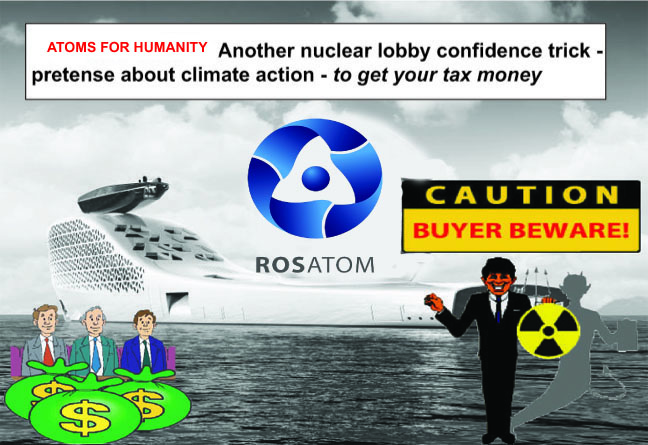
Thousands Join Launch Of Rosatom’s Atoms For Humanity Nuclear Awareness Campaign, By India Education Diary Bureau Admin May 3, 2021 Moscow: On April 30, over 3200 people from some 40 countries watched Rosatom’s Atoms for Humanity new nuclear awareness campaign launch event. The project is aimed at demonstrating the importance of nuclear technologies in achieving the UN Sustainable Goals through human-centered stories.
The project launch event Why Humanity Needs Nuclear brought together Polina Lion, Chief Sustainability Officer at Rosatom, Sama Bilbao y León, Director General of the World Nuclear Association, Dr. Maher Aziz, member of the World Energy Council, Ben Heard, founder of the Bright New World and Sergio Orlandi and Head of Central Engineering and Plant Directorate at ITER. Heroes of Atoms for Humanity joined the event to share their experiences participating in the campaign.
The [?] esteemed speakers discussed social, economic and environmental benefits of nuclear technologies and their invaluable contribution to solving the most urgent challenges of today and tomorrow.
Israel’s ‘shadow war’ and plans to scupper Iran’s nuclear deal
Israel’s ‘shadow war’ and plans to scupper Iran’s nuclear deal
Hawkish elements in Israel will continue to play a leading role moving forward on Tehran’s nuclear programme, analysts say. Aljazeera, Thomas O Falk, 3 May 2021
US President Joe Biden is pushing to reinstate Iran’s nuclear deal and weeks of talks in Austria appear to be bearing fruit.
Israel, however, continues to see its security jeopardised by a potentially nuclear Iran and is trying to thwart negotiations any way possible.
The Mossad spy agency chief Yossi Cohen – a close confidant of Prime Minister Benjamin Netanyahu – met Biden on Friday and, according to one media report, pressed the US president not to sign back on to the nuclear accord unless “improvements” were made.
An unnamed senior Israeli official is quoted as saying Biden responded that the United States “is not close” to returning to the Iran deal, Axios reported.
Israel’s opposition to the nuclear agreement seems to go beyond words, however, with Iran accusing it of assassinating its top nuclear scientist and sabotaging its main nuclear facility Natanz in a series of attacks. Israel has neither confirmed nor denied its involvement.
Benny Gantz, Israel’s defence minister, said in March his country has drawn up plans to strike Iranian targets if Tehran continues its nuclear escalation.
Simon Mabon, a professor of international politics at Lancaster University, told Al Jazeera that within Israel, and particularly in the government, hawkish elements will continue to play a leading role moving forward on Tehran’s nuclear programme.
“Those supporting Netanyahu’s view of the Iranian regime are steadfast in their view that the Islamic Republic cannot be deterred through conventional forms of deterrence and a military strike is needed,” said Mabon.
‘Considerable damage’
Yaniv Voller, senior lecturer in Middle East politics at the University of Kent, said Israel’s efforts against Iran’s nuclear programme – often described as “the shadow war” – are likely to continue given the positive events in Vienna after Tehran’s recent negotiations with world powers on the nuclear accord.
However, Voller said a hot war remains unlikely despite Israel’s best efforts.
“I do not think the shadow war will turn into a full-blown conflict between Israel and Iran. A greater risk is a local conflict between Israel and Iran’s proxies in the region, particularly Hezbollah,” Voller told Al Jazeera.
“This could be reminiscent of summer 2006, but with the potential to being even more devastating. Neither side has an interest in escalating the situation but, naturally, conflicts sometimes do spiral.”
He argued that, as the latest incidents have shown, Israel’s option to target the programme effectively is much broader than a mere preemptive attack.
“In any case, some of the actions that have been related to Israel and the US have already caused considerable damage to the Iranian nuclear programme, so a preemptive strike is not necessarily the only viable option to delay the Iranian nuclear programme.”…………. https://www.aljazeera.com/news/2021/5/3/israels-shadow-war-and-plans-to-scupper-irans-nuclear-deal
Steady growth of USA’s nuclear radioactive trash ( they prefer to call it ”spent fuel inventory”)

U.S. spent nuclear fuel inventory steadily increased from 2013 through 2017 https://www.eia.gov/todayinenergy/detail.php?id=47796 Principal contributor: Katherine Antonio, 3 May 21, The volume of spent nuclear fuel produced by nuclear power plants in the United States has steadily increased during the past few decades. The volume of spent nuclear fuel at the end of 2017 was 13.5% metric tons more than at the end of June 2013, according to newly released data from EIA’s Nuclear Fuel Data Survey. The survey data contain information on the quantity and characteristics of spent nuclear fuel at the time when a reactor discharges it.
The Nuclear Fuel Data Survey shows that between 1968 and 2017, more than 276,000 bundles of spent fuel rods (fuel rod assemblies), which contained a little less than 80,000 metric tons of uranium, were stored in the United States. The inventory of spent fuel assemblies has grown by about 13.2% from mid-2013 to the end of 2017.
The nuclear fuel used in nuclear reactors requires concentrated uranium (known as enriched uranium), which is further processed to create nuclear fuel. The enriched uranium is encased in fuel rods that go in a reactor’s fuel assembly to generate electric power. Each fuel assembly is typically used for a cycle of 18 to 24 months.
The discharged spent nuclear fuel rods are stored in one of two ways. The first approach stores spent fuel rods in pools of water that cool them and provide additional shielding from radiation. The pools of water resemble swimming pools. The second approach stores pre-cooled spent fuel rods in a container filled with inert gas. Each container is surrounded by steel, concrete, or other material to provide a stronger shield from radiation. In the United States, nearly all spent nuclear fuel is currently stored onsite at commercial nuclear power plants. A very small amount of spent nuclear fuel, less than 1%, is stored at offsite facilities.
We collect data on spent nuclear fuel from 119 commercial reactors in 33 U.S. states. The oldest reactor, now permanently shut down, is the Dresden 1, which started operating in Illinois in 1959. The newest reactor started operating in Tennessee in 2016. More than 17,500 metric tons of the cumulative spent nuclear fuel by uranium mass in the United States is stored in two states, Illinois and Pennsylvania. New York, North Carolina, and South Carolina have the next highest volumes of spent nuclear fuel in storage at more than 4,000 metric tons of uranium in each state.
We administer the Nuclear Fuel Data Survey for the U.S. Department of Energy’s Office of Standard Contract Management. You can learn more about nuclear energy in the United States on our website.
Nuclear anxiety in Luxembourg – expanding their emergency evacuation plan
Lorraine Actu 30th April 2021, Luxembourg. Evacuation, prohibited zone … Here is the emergency plan in
the event of a nuclear disaster in Cattenom. In the Grand Duchy, concern about nuclear power is growing. So much so that the Minister of the Interior of Luxembourg had to explain the emergency plan in the event of a nuclear disaster.
Britain is now undermining the Nuclear Non Proliferation Treaty (NPT)
ICAN (accessed) 3rd May 2021, Five Ways the UK is Undermining the NPT. The NPT has played an unparalleled
role in curtailing the nuclear arms race and it continues to play a role in keeping the world safe. It is at the centre of international efforts to stop the spread of nuclear weapons, to create a nuclear weapon free world,and to enable access to the peaceful use of nuclear energy.”
But the UK has now taken steps which dangerously undermine this crucial treaty. In its Integrated Review of Security, Defence, Development and Foreign Policy, the UK government announced that it will increase the maximum size of its
nuclear arsenal and reduce the information it provides about it.
Having consistently committed itself over the past decade to reducing its stockpile to a maximum of 180 warheads by the mid 2020s, the UK has now raised this limit to 260, an increase of over 40%. At the same time, the UK will no longer release operational stockpile, deployed warhead or deployed missile numbers.
https://www.icanw.org/five_ways_the_uk_is_undermining_the_npt
Serious concerns about China’s role in Hinkley Point nuclear power station
Independent 3rd May 2021. Chinese investors have amassed nearly £134bn of assets in key UK industries ranging from energy companies and transport hubs to breweries and schools. Nearly 200 British companies are either controlled by groups or individuals based in China and Hong Kong or count them as minority shareholders, according to an analysis of business data. The list of investments drawn up by the Sunday Times includes Hinkley Point C nuclear power station, Heathrow Airport, Northumbrian Water, pub retailer Greene King and Superdrug.
Serious concerns have been raised about the security implications of China’s investment in UK assets, most notably in relation to Hinkley Point nuclear power station which is owned by French energy firm EDF. In 2016 Theresa May’s government briefly put the project on hold before attaching new conditions to the £18bn deal. Nick Timothy, one of
the Ms May’s chief advisers, had warned that China “could use their role to build weaknesses into computer systems which will allow them to shut down Britain’s energy production at will”. China General Nuclear Power holds a 33.5 per cent stake in the plant, which is owned by the French state-owned energy firm EDF.
The fateful choice: nuclear arms race or nuclear weapons-free world — IPPNW peace and health blog
Like arms races of the past, the reviving nuclear arms race places the world in immense danger, for when nations engage in military conflict, they are inclined to use the most powerful weapons they have available. How long will it be before a nuclear-armed, aggressive government—or merely one threatened with military defeat or humiliation—resorts to nuclear war?
The fateful choice: nuclear arms race or nuclear weapons-free world — IPPNW peace and health blog
Nuclear News – to 3 May
Nuclear issues seem to be on the back burner, in Australia, and pretty much everywhere else. South East Asia is the exception, with countries worrying about Japan’s plan to release the Fukushima nuclear waste water into the Pacific Ocean. Still, I’ve found far too much nuclear news this week, for what is supposed to be a short newsletter. Perhaps that’s an indication that anxieties about the nuclear industry are simmering away,below the surface, and behind the media trivia.
At least the pandemic is getting the media attention that is so desperately required. The world is in the midst of its worst coronavirus crisis so far.
The one great lesson of the pandemic is surely that global issues should trump national greediness, and call for global cooperation.. Tackling climate change too requires global policies.
A bit of good news – Countries step up to supply oxygen and medicine to India. Pakistanis express solidarity with India over its COVID crisis, pledges supplies and medical aid.
ICAN addresses Mount Isa City Council after nuclear appeal pledge .
UK in secret talks with Australia and others, about mining rare earths.
INTERNATIONAL
We must continue to expose and refute the lies of nuclear industry.
Paul Beckwith on the failure of universities to address real world problems https://www.youtube.com/watch?v=m-orLuh7lj0
The huge carbon footprint and massive energy use of online activities and of Bitcoin.
For climate action, renewables clearly beat nuclear power.
Chernobyl disaster and the U.N. response – a global matter.
Nuclear fallout from the Cold War might be killing our bees.
Growing aggressive behaviour by nuclear proponents – is nuclear facing obsolescence?
INDIA. In India’s pandemic nightmare, India and Pakistan need to invest in health, not nuclear weapons.
JAPAN. Thyroid cancer increased 20-fold in Fukushima children. Radioactive leakage from nuclear waste containers near Fukushima Daiichi nuclear plant. Even with water release to the Pacific, Fukushima nuclear plant needs more storage tanks.
Governor of Fukui Prefecture to approve restart of aging nuclear reactors, but local community is opposed.
SOUTH KOREA. South Korean fishermen protest against the dumping of Fukushima wastewater into the Pacific Ocean.
USA.
- When USA attacks a foreign state, the media calls it ”Defense”. https://www.youtube.com/watch?v=QYRoXCdkmAY Like Trump, Biden administration to ramp up nuclear bomb-making. Mobile nuclear reactors? Scathing report slams ‘disturbing’ military program. Sen. Angus King: Cybersecurity a major concern in U.S. nuclear command-and-control system.
- Following Biden climate summit, USA govt keen to promote amd export Small Nuclear Reactors, Nuclear Thermal Propulsion (NTP) for space rockets has everything to do with the military, and funding for weapons makers. The purpose of USA space research is clearly military – they don’t even pretend any more. Elon Musk’s expensive and dangerous space delusion.
- Poor prospects for small nuclear reactors (SMRs) as a cure for climate change. No future for new nuclear. Subsidies for New Jersey’s nuclear power stations. Do the New Jersey nuclear power plants really need a handout?
- Feds: Underground nuclear waste tank at Hanford Nuclear Reservation may be leaking. Texas legislators must reject proposal to lower human health and safety measures at nuclear waste dump.
- Whistleblower can’t sue U.S.Dept of Labor, because it has ‘sovereign immunity’.
MARSHALL ISLANDS. The US Should Apologize to the Marshall Islands for Nuclear Tests.
UKRAINE. University of Sheffield researchers do detailed study of radioactive materials inside the wrecked Chernobyl nuclear reactor. On 35th anniversary of Chornobyl disaster, Ukraine opens new nuclear waste site. Chernobyl nuclear disaster: ‘Three-day evacuation lasted 35 years’. Corrosive corruption continues in Ukraine’s nuclear industry.
RUSSIA. Soviet Documents Reveal Cover-Ups At Chernobyl Nuclear Plant Before 1986 Disaster.
UZBEKISTAN. Does Uzbekistan really need a nuclear power plant?
EUROPE. France and Russia portray nuclear hydrogen as ”green’‘- arousing anger of several European nations. The dangers of extending the operating lives of old nuclear reactors.
FINLAND. Delays, increased costs and geopolitical uncertainties throw doubt on construction of nuclear power station in Finland.
CZECH REPUBLIC. Czech Republic’s nuclear plan hangs on hope for European Commission to call nuclear ”green”.
UK
- Extinction Rebellion climate activists block Faslane nuclear base. Most Scots feel unsafe about having nuclear weapons base on the Clyde. Bangor City Council supports the U.N. Treaty on the Prohibition of Nuclear Weapons, as do over 400 other jurisdictions.
- The health effects of Chernobyl nuclear disaster as far away as Scotland. 35 years after Chernobyl disaster, nuclear power industry is struggling and is not part of climate change solution.
- UK’s £41 billion nuclear submarine project beset by delays, safety problems, cost overruns.
- UK anti-nuclear groups plan to stand candidates for elections, opposing Bradwell new nuclear station. China’s big stake in UK’s new nuclear projects. UK govt wants sovereign wealth funds to invest in nuclear power, -calling it ”green”, but there are doubts that nuclear projects will go ahead. Many hurdles to jump before Bradwell nuclear station starts construction. Meanwhile renewables race ahead. Sizewell C nuclear plant could kill 500m fish.
- Top Trump Cronies: Nuclear Waste and the UK’s First Deep Coal Mine in 30 years.
- Nuclear safeguards changed, new regulations to fit in with Brexit.
- Call for debate and scrutiny of proposed nuclear fusion power plant.
PACIFIC ISLANDS. ‘If it’s safe, dump it in Tokyo’ – Pacific Islanders don’t want Fukushima waste water. France tested 41 nuclear weapons in the Pacific, and grossly underestimated the radioactive fallout.
SOUTH AFRICA. Cabinet appoints critic as member of nuclear regulator board.
CANADA. Canadian government rejects Nuclear Weapons Ban Treaty, but majority of Canadians support it.
IRAN. Iran’s foreign minister criticises influence of Revolutionary Guards and speaks of nuclear deal in leaked audio.
SWITZERLAND. City of Geneva calls for the closure of French nuclear station in Bugey.
RUSSIA. Not to be forgotten – the 1957 nuclear explosion in Mayak centre, Russia, that continues to poison the region.
FRANCE. High level of radioactivity near France’s uranium processing factory.
NEW ZEALAND. New Zealand nuclear veterans want apology and compensation from the government.
MALAYSIA. Malaysia needs to speak out on Japan releasing nuclear waste into the sea .
AUSTRALIA. Australian government plan for a nuclear waste dump tears apart the small rural community of Kimba. ‘‘Low Level” radioactive trash to be removed to USA from posh Sydney suburb, while govt plans to send Higher Level nuclear waste to Kimba, rural South Australia
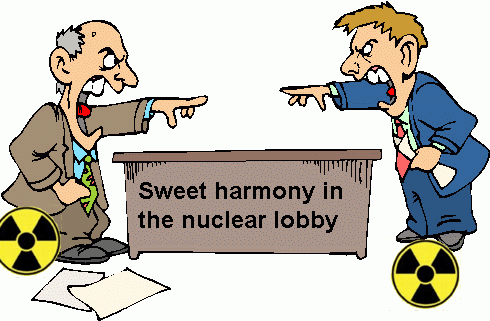
Growing aggressive behaviour by nuclear proponents – is nuclear facing obsolescence?
Nuclear Engineering International 29th April 2021, Extract from Letter Andy Stirling, Science Policy Research Unit, University of Sussex.
It is reasonable to give particular scrutiny both to the style and content of a commentary by Jeremy Gordon published on an article issued last year in the peer-reviewed journal Nature Energy. This is sadly especially so, because what we see as Jeremy Gordon’s aggressive tone and superficial arguments display behaviour that is sadly growing among nuclear proponents.
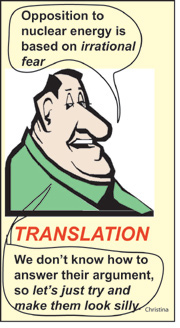
These are worrying signs of a wider malaise in current nuclear debates. It is a growing problem in nuclear advocacy that those holding contrasting informed and measured views – or who simply question the comparative merits of nuclear power – are so often smeared as ‘anti-nuclear’.
It is hysterical to brand someone raising evidence of a problem with something, as being somehow intrinsically ‘anti’ that thing. Yet on nuclear, this is a norm. Even to raise questions about relative pros and cons of nuclear versus renewable based strategies is treated by Gordon as if inherently biased.
Gordon criticises us for not analysing coal, oil or gas. Our purpose is to examine associations between carbon emissions and the uptake of two families of technologies that are variously claimed as “zero carbon”: nuclear and renewables. We are ourselves clear in urging further more specific work addressing finer details and wider dimensions
But it is not unreasonable that this pioneering study focuses specifically on technologies for which zero carbon
claims are actually made. Whatever ‘side’ one is on, it is striking that as the relative position of nuclear power deteriorates, the invective grows more intense. But perhaps all may agree (on any side), that spurious caricatures and personal attacks undermine themselves?
No technology is entitled to immunity either from criticism or obsolescence. Whether nuclear power faces this latter fate is unsure. But if (like many earlier technologies) its time has come, then this past quintessential icon of scientific prowess should not bring down with it the reasoned policy discourse that forms the lifeblood of democracy itself.
The huge carbon footprint and massive energy use of online activities and of Bitcoin

This is a most timely article. Why is the world not noticing this? Elon Musk and other billionaire Bitcoin fans are also fans of space travel – another energy-gobbling thing. They are fans of nuclear energy. The thing that nuclear energy fans have in common with space travel fans and Bitcoin fans is their religious fervour for endless growth and endless energy use.
Unfortunately our entire culture, the Western consumer culture, has swept the world with a mindless belief in ever more stuff, ever more digital use, with no awareness of the energy used. So we tink that our billions of trivial tweets are up ”in the cloud”, – not even realising that they are in dirty great steel data buildings that use massive amounts of energy just to keep cool, This ever- expanding energy and resource gobbling is going to kill us, – and Bitcoin is just one glaring, sorry example of this.
Truth or fiction: Is mining bitcoin a ticking time bomb for the climate? Rehabilitating Earth By Jennifer Sizeland 2 May 21
While many of us may consider the carbon footprint of buying a physical item like a jumper or a toaster, it is truly mind boggling to think about the environmental impact of time spent online. This may be why the huge carbon footprints of cryptocurrencies like bitcoin are going largely under the radar for many of us, including investors and climate activists.
Yet the real-world cost of bitcoin cannot be underestimated. A University of Cambridge study found that the network burns through 121 terawatt-hours per year, putting it into a category of a top-30 country in terms of electricity usage. In fact, the carbon cost was largely ignored altogether until 2017 when prices surged and the general population started to take more notice. Aside from the significant carbon footprint of bitcoin, it’s important to understand what bitcoin is and why it’s so popular.
Decoding Cryptocurrencies
Bitcoin is created by mining a 64-digit hexadecimal number (known as a ‘hash’) that is less than or equal to the target hash that the miner is looking for. The miner gets paid in crypto tokens for all the currency they make. The act of solving these computational equations on the bitcoin network makes the payment network trustworthy. It proves the worth of the bitcoin and verifies it at the same time so that it can’t be spent twice. Essentially, an online log makes records of the transactions made and once approved, they’re added to a block on the chain, hence the phrase ‘blockchain’.
What makes it all the more confusing is that not only is cryptocurrency fairly new to the general population, but the way it is created is shrouded in secrecy due to its niche status. This makes it much harder for miners to be held accountable for their intensive carbon usage, in a time when every company needs to consider their impact on the planet.
The secrecy is also what excites investors about bitcoin since it isn’t tied to a certain location or institution and it’s completely decentralised – unlike a bank. Investors trust bitcoin as inflation is controlled algorithmically by cutting the reward rate periodically, rendering the rate of new bitcoin supplies as unalterable by design. The issue remains that there is no government or organisation to hold them to account for their carbon footprint. A footprint which is intrinsically tied to its value as the demand for it increases, using more and more energy. With every market jump, the cost to the planet is greater.
The price of one bitcoin is $57,383 at the time of writing, which takes the market cap value above that of Facebook and Tesla. The wider cryptocurrency market that includes dogecoin, ethereum and litecoin has reached an estimated $1.4 trillion and counting.
From a financial perspective, miners want cheap servers to increase their profit margins which is why much of the bitcoin activity is done in China. As the industry is unregulated there is no reason why activity wouldn’t surge in the place where it costs the least to do it. Currently, China does not have a cost-effective renewable energy supply so two thirds of the grid is fuelled by dirty coal power stations.

Another problematic caveat to the bitcoin story is the amount of so-called green companies and investors that are buying into it. Some of them are not disclosing this element of their portfolio due to the immense carbon footprint but those that are publicly traded have no choice. Perhaps one of the most high-profile companies to reap the rewards from bitcoin is Elon Musk’s Tesla, who have made $1 billion in 10 weeks from their investment. It remains to be seen whether these businesses are doing their due diligence regarding the origins of their bitcoin and if it is mined from a sustainable source. While this may give Tesla more money to invest in green infrastructure, it’s hard to say whether this is the more ethical way to do so……….
One important lesson we can take from this is that it demonstrates how the digital world has a very real impact on planet Earth. Whether we’re buying cryptocurrency or simply scrolling the internet, we are impacting the planet in one way or another. https://rehabilitatingearth.com/2021/05/02/truth-or-fiction-is-mining-bitcoin-a-ticking-time-bomb-for-the-climate/
Paul Beckwith on the failure of universities to address real world problems
1 May 21, I have often wondered how humanity, in our present day and age, can be facing total and utter catastrophe from abrupt climate system change, and still have the vast multitudes of citizens, governments, and nations not even want to recognize the grave dangers that we face. These are not long term risks, in fact we face the imminent complete loss of Arctic Sea Ice, enormous outbursts of methane gas, mass extinctions of our plants and animals, and global food shortages leading to deadly widespread famine within a decade. How is this possible? How can society be so stupid? Why am I cursed to recognize the imminent and complete collapse of our society?
Having been within the university system and academia for many years, I have been constantly puzzled as to why there is no sense of societal danger and risk of near term collapse. The Ivory Towers of Academia have been completely oblivious to the existential crisis, and has done absolutely nothing to educate the public to these risks. The university is essentially a knowledge-factory to push forward the boundaries of knowledge in a vast array of independently siloed fields, while it has completely lacked the wisdom to recognize let alone address the real world problems that are right in front of our face. As a result, with zero wisdom from our esteemed institutes of learning, our society is teetering on the brink of complete and utter collapse from abrupt climate system change. The best paper that I have read on this failure of our university system to address real world and imminent global problems was published two weeks ago and is called “How Universities Have Betrayed Reason and Humanity – And What’s to Be Done About It” by Nicolas Maxwell.
1 This Month
Tell Congress: Prevent Nuclear Catastrophe in Iran

Tell Congress: Prevent Nuclear Catastrophe in Iran

Read the Public Inquiry Report, the Commissioners’ report, Surrendering Australia: The AUKUS Deception is available to download for free at aukuspublicinquiry.com. Or just watch the replay of the National Press Club Luncheon.


Shut down the radiation-damaged Heysham nuclear reactors now
To see nuclear-related stories in greater depth and intensity – go to https://nuclearinformation.wordpress.com

Say No to NASA’s Reckless Nuclear Reactor on the Moon
Say No to NASA’s Reckless Nuclear Reactor on the Moon
-
Archives
- November 2026 (255)
- October 2026 (302)
- September 2026 (339)
- August 2026 (330)
- July 2026 (355)
- June 2026 (287)
- May 2026 (306)
- April 2026 (356)
- March 2026 (251)
- February 2026 (267)
- January 2026 (308)
- December 2025 (358)
-
Categories
- 1
- 1 NUCLEAR ISSUES
- business and costs
- climate change
- culture and arts
- ENERGY
- environment
- health
- history
- indigenous issues
- Legal
- marketing of nuclear
- media
- opposition to nuclear
- PERSONAL STORIES
- politics
- politics international
- Religion and ethics
- safety
- secrets,lies and civil liberties
- spinbuster
- technology
- Uranium
- wastes
- weapons and war
- Women
- 2 WORLD
- ACTION
- AFRICA
- Atrocities
- AUSTRALIA
- Christina's notes
- Christina's themes
- culture and arts
- Events
- Fuk 2022
- Fuk 2023
- Fukushima 2017
- Fukushima 2018
- fukushima 2019
- Fukushima 2020
- Fukushima 2021
- general
- global warming
- Humour (God we need it)
- Nuclear
- RARE EARTHS
- Reference
- resources – print
- Resources -audiovicual
- Weekly Newsletter
- World
- World Nuclear
- YouTube
-
RSS
Entries RSS
Comments RSS

