Fukushima’s ”nuclear recovery Olympics” has gone even more wrong, as spectators banned.

Fukushima to ban Olympic spectators as Covid cases rise,
U-turn deals blow to Japan’s hopes of using Games to showcase recovery from 2011 tsunami, Guardian, 10 Jul 21,
, The Fukushima prefecture of Japan will bar spectators from the Olympic events it hosts this summer owing to rising Covid-19 infections, its governor said on Saturday, reversing a position announced two days earlier by organisers.
The decision deals another blow to Japan’s hopes of using the Olympics to showcase its recovery from a devastating earthquake and tsunami that hit the northern coast in 2011, destroying a nuclear power station in Fukushima in the worst nuclear accident since Chernobyl.
Organisers had said on Thursday there would be no spectators in the host city, Tokyo, as a resurgent coronavirus forced the prime minister, Yoshihide Suga, to declare a state of emergency in the capital that will run throughout the Games, which were already postponed by a year due to the pandemic……..
Fukushima’s move comes a day after the Australian Olympic Committee president, John Coates, expressed optimism about audiences in Fukushima. Japan take on Australia in a softball game that will be the first competition of the Olympics on 21 July, two days before the opening ceremony.
………. Organisers said there was no change to plans for limited crowds in Miyagi, Shizuoka and Ibaraki prefectures. https://www.theguardian.com/sport/2021/jul/10/fukushima-to-ban-olympic-spectators-as-covid-cases-rise
Mobile phones/cellphones – the health danger from electromagnetic radiation
Ed. note. We know that ionising radiation from nuclear activities causes cancer and other health ill-effects. But we should also be aware of non-ionising radiation, and its effects on health – electromagnetic radiation as emitted by mobile pnones.

Since then, he said, research has shown significant adverse biologic and health effects — including brain cancer — associated with the use of cellphones and other wireless devices. And now, he said, with the fifth generation of cellular technology, known as 5G, there is an even bigger reason for concern.

Moskowitz: Cellphone radiation is harmful, but few want to believe it. Berkely News, Anne Brice, Berkeley News| JULY 1, 2021 For more than a decade, Joel Moskowitz, a researcher in the School of Public Health at UC Berkeley and director of Berkeley’s Center for Family and Community Health, has been on a quest to prove that radiation from cellphones is unsafe. But, he said, most people don’t want to hear it.
“People are addicted to their smartphones,” said Moskowitz. “We use them for everything now, and, in many ways, we need them to function in our daily lives. I think the idea that they’re potentially harming our health is too much for some people.”
Since cellphones first came onto the market in 1983, they have gone from clunky devices with bad reception to today’s sleek, multifunction smartphones. And although cellphones are now used by nearly all American adults, considerable research suggests that long-term use poses health risks from the radiation they emit, said Moskowitz.
“Cellphones, cell towers and other wireless devices are regulated by most governments,” said Moskowitz. “Our government, however, stopped funding research on the health effects of radiofrequency radiation in the 1990s.”
Since then, he said, research has shown significant adverse biologic and health effects — including brain cancer — associated with the use of cellphones and other wireless devices. And now, he said, with the fifth generation of cellular technology, known as 5G, there is an even bigger reason for concern.
Berkeley News spoke with Moskowitz about the health risks of cellphone radiation, why the topic is so controversial and what we can expect with the rollout of 5G.
Berkeley News: I think we should address upfront is how controversial this research is. Some scientists have said that these findings are without basis and that there isn’t enough evidence that cellphone radiation is harmful to our health. How do you respond to that?
Joel Moskowitz: Well, first of all, few scientists in this country can speak knowledgeably about the health effects of wireless technology. So, I’m not surprised that people are skeptical, but that doesn’t mean the findings aren’t valid.
A big reason there isn’t more research about the health risks of radiofrequency radiation exposure is because the U.S. government stopped funding this research in the 1990s, with the exception of a $30 million rodent study published in 2018 by the National Institute of Environmental Health Sciences’ National Toxicology Program, which found “clear evidence” of carcinogenicity from cellphone radiation.
In 1996, the Federal Communications Commission, or FCC, adopted exposure guidelines that limited the intensity of exposure to radiofrequency radiation. These guidelines were designed to prevent significant heating of tissue from short-term exposure to radiofrequency radiation, not to protect us from the effects of long-term exposure to low levels of modulated, or pulsed, radiofrequency radiation, which is produced by cellphones, cordless phones and other wireless devices, including Wi-Fi. Yet, the preponderance of research published since 1990 finds adverse biologic and health effects from long-term exposure to radiofrequency radiation, including DNA damage.
More than 250 scientists, who have published over 2,000 papers and letters in professional journals on the biologic and health effects of non-ionizing electromagnetic fields produced by wireless devices, including cellphones, have signed the International EMF Scientist Appeal, which calls for health warnings and stronger exposure limits. So, there are many scientists who agree that this radiation is harmful to our health.
Our 2009 review, published in the Journal of Clinical Oncology, found that heavy cellphone use was associated with increased brain cancer incidence, especially in studies that used higher quality methods and studies that had no telecommunications industry funding.
Last year, we updated our review, published in the International Journal of Environmental Research and Public Health, based on a meta-analysis of 46 case-control studies — twice as many studies as we used for our 2009 review — and obtained similar findings Our main takeaway from the current review is that approximately 1,000 hours of lifetime cellphone use, or about 17 minutes per day over a 10-year period, is associated with a statistically significant 60% increase in brain cancer.
Why did the government stop funding this kind of research?
The telecommunications industry has almost complete control of the FCC, according to Captured Agency, a monograph written by journalist Norm Alster during his 2014-15 fellowship at Harvard University’s Center for Ethics. There’s a revolving door between the membership of the FCC and high-level people within the telecom industry that’s been going on for a couple of decades now.
The industry spends about $100 million a year lobbying Congress. The CTIA, which is the major telecom lobbying group, spends $12.5 million per year on 70 lobbyists. According to one of their spokespersons, lobbyists meet roughly 500 times a year with the FCC to lobby on various issues. The industry as a whole spends $132 million a year on lobbying and provides $18 million in political contributions to members of Congress and others at the federal level.
……… there are strong parallels between what the telecom industry has done and what the tobacco industry has done, in terms of marketing and controlling messaging to the public. ……… For safety tips on how to reduce exposure to wireless radiation from the California Department of Public Health and other organizations, Moskowitz recommends readers visit his website, saferemr.com, Physicians for Safe Technology and the Environmental Health Trust. https://news.berkeley.edu/2021/07/01/health-risks-of-cell-phone-radiation/#:~:text=Moskowitz%3A%20Cellphone%20radiation%20is%20harmful%2C%20but%20few%20want%20to%20believe%20it,-By%20Anne%20Brice&text=For%20more%20than%20a%20decade,radiation%20from%20cellphones%20is%20unsafe.
EPA Withdraws Disastrous Trump-Era Radioactive Roads Approval
If dispersed, the material would present an unreasonable public health threat stemming from the appreciable quantities of radium-226, uranium, uranium-238, uranium-234, thorium-230, radon-222, lead-210, polonium-210, chromium, arsenic, lead, cadmium, fluoride, zinc, antimony and copper phosphogypsum contains.
EPA Withdraws Disastrous Trump-Era Radioactive Roads Approval
Use of Phosphogypsum in Roads Poses Risk of Cancer, Genetic Damage https://biologicaldiversity.org/w/news/press-releases/epa-withdraws-disastrous-trump-era-radioactive-roads-approval-2021-07-02/
ST. PETERSBURG, Fla.— The Biden administration announced it is withdrawing approval given by the Trump administration to use phosphogypsum in construction. The retracted approval had allowed the use of toxic, radioactive waste in constructing roads in parts of the United States prone to sinkholes and erosion.
“Allowing phosphogypsum in roads was a boneheaded, short-sighted favor to the industry,” said Jaclyn Lopez, Florida director at the Center for Biological Diversity. “While the withdrawal cites technical deficiencies in the applicant’s petition, this action is consistent with 30 years of science showing that phosphogypsum poses a substantial risk to humans and the environment.”
In December 2020 environmental, public health and union groups, represented by Earthjustice, sued the Environmental Protection Agency for approving phosphogypsum use in roads. The groups also petitioned the agency to reconsider its approval.
Phosphogypsum is the radioactive waste of fertilizer production. Phosphate ore, mined largely in Florida, is transported to fertilizer plants for processing by chemically digesting the ore in sulfuric acid. For every ton of phosphoric acid produced, the fertilizer industry creates five tons of radioactive phosphogypsum waste.
Since 1989 the EPA has required phosphogypsum to be stored in mountainous piles called “stacks,” and limited the amount of radon gas that can be emitted from the stacks. If dispersed, the material would present an unreasonable public health threat stemming from the appreciable quantities of radium-226, uranium, uranium-238, uranium-234, thorium-230, radon-222, lead-210, polonium-210, chromium, arsenic, lead, cadmium, fluoride, zinc, antimony and copper phosphogypsum contains.
In approving phosphogypsum use in roads, the agency ignored its own expert consultant, who found numerous scenarios that would expose the public — particularly road-construction workers — to a cancer risk the agency considers to be unacceptably dangerous.
The approval would have permitted phosphogypsum to be used in roads within 200 miles of phosphogypsum storage stacks, most of which are in Florida. It would have affected hundreds of protected plants and animals and their critical habitat.
“Phosphate companies should not be allowed to carelessly spread their waste around by mixing it into roads,” said Glenn Compton, chair at ManaSota-88.
“It is the height irresponsibility for any industry to needlessly expose the public and the environment to otherwise avoidable radiation and hazardous waste.”
Florida has 1 billion tons of radioactive phosphogypsum in 25 stacks, including the Piney Point and New Wales gypstacks. The disastrous Piney Point phosphogypsum stack recently discharged more than 200 million gallons of wastewater into Tampa Bay, where there is now a red tide bloom.
The Florida Department of Environmental Protection has drafted a permit approving an expansion of the New Wales stack by 230 acres.
The fertilizer industry adds approximately 30 million tons of phosphogypsum waste each year. The majority of the stacks are in Florida, but they can also be found in Arkansas, Idaho, Illinois, Iowa, Louisiana, Mississippi, Missouri, North Carolina, Texas, Utah and Wyoming.
“This is great news at a time when we could all use some,” said Brooks Armstrong, president at People for Protecting Peace River. “We will continue in our effort to make known the dangers of phosphogypsum and its continued production.”
This proposal to utilize radioactive materials in roads throughout Gulf communities was just another insult to folks already overburdened with pollution,” said Matt Rota, senior policy director of Healthy Gulf. “We are glad to see this decision to not use radioactive phosphogypsum in local roads and hope that this is a step toward systematically addressing the myriad impacts of phosphate mining and production in the Gulf States.”
“The EPA recognizes that at minimum the prior administration erred in its approval by not following its own rules regarding required information, and that there is no implicit sequencing toward approval based on an applicant’s request,” said Craig Diamond, vice chair of the Sierra Club Florida chapter executive committee. “Further, the EPA affirmed it has authority to pre-approve only select applications of phosphogypsum and road construction is not among those. The Sierra Club is grateful that the federal agency charged with protecting the environment and our health is once again taking the job seriously.”
The danger of Japan’s increasing stockpile of plutonium
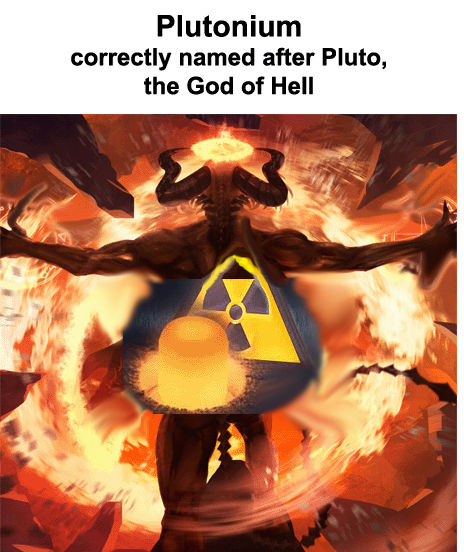
Japan’s plutonium stockpile climbs to 46.1 tons in 2020, first rise in 3 years, July 10, 2021 (Mainichi Japan) TOKYO — Japan was in possession of a total of some 46.1 metric tons of plutonium at home and abroad as of the end of 2020, the Cabinet Office reported to the Japan Atomic Energy Commission (JAEC) on July 9. The amount represents an increase of about 0.6 tons from the previous year.
The JAEC had stated that the country would reduce its plutonium stockpile under guidelines revised in July 2018, and the amount in its possession had been on a downward trend since then. The reported increase was the first in three years.
Plutonium is extracted from spent nuclear fuel generated at nuclear plants, for the purpose of recycling. However, the international community has expressed concerns over Japan’s large plutonium stockpile, saying it could be converted into nuclear weapons.
According to the Cabinet Office report, the latest increase in the nation’s plutonium stockpile was due to the addition of roughly 0.6 tons that had been stored in Britain after being extracted from nuclear fuel but which had not been included in the stockpile due to delayed procedures. As the extraction of plutonium in Britain and France has been completed, Japan has no more unrecorded stockpiles, according to the report.
Plutonium is mixed with uranium to produce mixed oxide (MOX) fuel for use at nuclear power plants. However, none of the nuclear plants in Japan used MOX fuel in 2020. As a result, the domestic stockpile remained at the same level as the previous year, at roughly 8.9 tons.
If the nuclear fuel reprocessing plant operated by Japan Nuclear Fuel Ltd. in the village of Rokkasho, Aomori Prefecture, goes into full operation in fiscal 2023, Japan’s plutonium stockpile will increase. However, only 0.6 tons of plutonium is expected to be extracted from spent fuel at the plant in fiscal 2023………….https://mainichi.jp/english/articles/20210710/p2a/00m/0na/018000c
Green party makes gains in East Suffolk Council by-election – area that includes planned Sizewell nuclear station
The Green Party has taken one of two seats up for grabs in the Aldeburgh and Leiston ward in Thursday’s East Suffolk Council by-election – and came within two votes of winning the other.
Tom Daly is the first Green councillor elected in the area which includes much of the site of the proposed new Sizewell C power station. He will be joined on the council by Conservative Russ Rainger – who was a county councillor for the area before standing down in May.
The second Green candidate, Matt Oakley, came only two votes behind Mr Rainger. Suffolk Coastal Green Party chairman Julian Cusak said on Facebook: “Great result for the Green Party last night.
Aldeburgh and Leiston now has its first Green councillor on East Suffolk Council.
East Anglian Daily Times 9th July 2021
UK households to foot the bill for new Sizewell nuclear plant, long before it ever starts to generate electricity.
Sizewell**
According to a recent report in the FT, the UK government has drawn up new
legislation to underpin a financing plan for the new Sizewell C nuclear
site in Suffolk. This will involve thousands of UK households paying more
for their energy bills in order to finance the new site even before it
starts to generate electricity. It’s estimated that the Sizewell C site,
which has been proposed by EDF, will cost £20bn to build. Previously,
Prime Minister Boris Johnson has said that he would like the government to
reach a final investment decision on “at least one” new nuclear power
station before the next general election.
Tech Radar 10th July 2021
https://www.techradar.com/news/rising-energy-bills-will-fund-nuclear-power-plants
Oil Price 10th July 2021
Nuclear injustice in New Mexico must end.
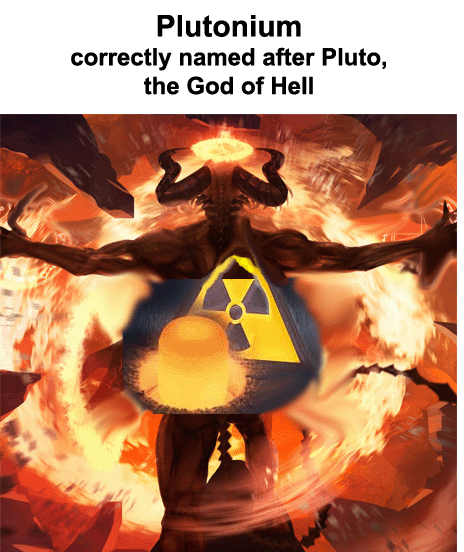
The half-life of plutonium-239 is 24,100 years, but the WIPP safety assessment period is limited to 10,000 years.
Nuclear injustice in NM must end https://www.abqjournal.com/2408088/nuclear-injustice-in-nm-must-end-ex-proposed-storage-sites-for-snf-could-create-dangers-far-greater-than-those-posed-by-wipp.html BY DENNIS MCQUILLAN 11 July 21,
New Mexico residents have long endured disproportionately high health and environmental risks from nuclear energy and weapons programs. It is time for the federal government to protect citizens of the state with the greatest possible level of safeguards.
Instead of performing critical site-suitability analyses for the Waste Isolation Pilot Plant (WIPP) and for two proposed spent nuclear fuel (SNF) “storage” sites near WIPP, federal agencies attempted to validate their predetermined conclusions that these sites were safe. The agencies either disregarded or rewrote siting criteria to accommodate their decisions to approve these sites.
WIPP is intended to provide deep geologic isolation of nuclear waste from the biosphere and, indeed, waste is buried 2,150 feet underground in 250-million-year-old salt beds. The following WIPP safety deficiencies, however, need resolution:
The half-life of plutonium-239 is 24,100 years, but the WIPP safety assessment period is limited to 10,000 years.
• For years, the federal government asserted that petroleum resources were minimal to nonexistent below WIPP. But, today, WIPP is surrounded by oil and gas operations in the most prolific oil patch in the United States. The risk that oil drilling may penetrate the repository, or that liquids injected during fracking, advanced recovery and produced water disposal may migrate into WIPP salt beds, must be reevaluated.
Risks from an artesian brine aquifer, deep-seated salt dissolution and from highly pressurized brine pockets that underlie the WIPP salt beds are not fully assessed.
The geochemical mobility of plutonium and uranium, and possible interactions with carbon dioxide generated by waste decomposition and with geologic brine, needs further analysis.
Additional prevention is needed for such human errors as the 2014 accident where plutonium contaminated nitrate salt packed with organic kitty litter generated heat, burst a waste drum, contaminated 21 workers, and released americium and plutonium into the atmosphere.
WIPP is certified to accept only national defense waste. The federal government, after spending decades and millions of dollars, failed to establish a permanent disposal site for spent nuclear fuel from commercial reactors. SNF is highly radioactive and toxic due to fission byproducts created during power generation.\
The federal government now proposes to license two commercial facilities near WIPP, one in New Mexico and one in Texas, for the “storage” of SNF for up to 120 years. Unlike the deep geologic isolation at WIPP, the proposed SNF storage facilities are less than 100 feet deep, in young alluvium, and in a region with shallow groundwater, as well as concerns about ground subsidence and sinkholes. These two sites are geologically unsuitable even for SNF “storage” and it is possible that decades of “storage” could morph into permanent disposal. Excavating SNF that has deteriorated underground for 120 years is a lurid scenario. Or will future engineers build a Chernobyl-style sarcophagus with the hope that it isolates the waste for 24,000 years?
The proposed “storage” sites for SNF could create dangers far greater than those posed by WIPP. Agricultural and petroleum industry organizations expressed concerns that the SNF facilities could damage their livelihoods. Attorney General Balderas sued the federal government to stop these ill-conceived and dangerous proposals to store SNF.
The legacy of nuclear injustice in New Mexico must end. The federal government must:
• Resolve WIPP safety deficiencies
• Disallow the reckless “storage” of spent nuclear fuel
• Establish one or more permanent repositories for SNF that provide geologic isolation
July 10 Energy News — geoharvey

Opinion: ¶ “How The American South Is Paying The Price For Europe’s ‘Green Energy’” • In 2009, the EU pledged to curb greenhouse gas emissions, urging its member states to shift from fossil fuels to renewables. It classified biomass as a renewable energy source, on par with wind and solar. This incentivized burning a lot […]
July 10 Energy News — geoharvey
Bach, Go Back: Radicalization of the opposition against Olympic priorities — limitless life

Dear President Thomas Bach, As you may know, at present, many Japanese in southern Japan have been forced to abandon their homes in order to save their lives in the face of unprecedented rainfall. The current pandemic is like this unprecedented rainfall with the exception that all Japanese are exposed to the possibility of becoming ill or even […]
Bach, Go Back: Radicalization of the opposition against Olympic priorities — limitless life
U.S. nuclear lobby wants to sell advanced nuclear technology to China, on the spurious claims of ”safety” and ”advancing climate action”
Nuclear Advocates Urge Biden, Congress To Reverse Trump Policy, Open China To U.S. Nuclear, Forbes, Dipka Bhambhani 9 July 21

A growing chorus of nuclear energy stakeholders is asking the Biden administration and Congress to reverse course and open up the Chinese market to U.S. nuclear energy companies in the name of safety and climate change.
At issue: a pair of Senate and House bills—S. 1260, the Endless Frontiers Act, and H.R. 3524, Ensuring American Global Leadership and Engagement Act—both of which effectively end bilateral cooperation with China on civil nuclear projects.
China’s unique policy allows it to share nuclear technology between its civil and military sector
A growing chorus of nuclear energy stakeholders is asking the Biden administration and Congress to reverse course and open up the Chinese market to U.S. nuclear energy companies in the name of safety and climate change.
President Biden is continuing former President Trump’s 2018 nuclear energy policy restricting U.S. nuclear energy companies from exporting to, or developing nuclear energy technology with, China.
Some say restricting American nuclear energy companies from the Chinese market threatens global nuclear energy safety, undermines global climate change efforts to reduce emissions worldwide, and reflects an incongruent trade policy.
Meanwhile Congress is preparing to codify that Trump policy.
In a memo obtained by Forbes, the Nuclear Energy Institute (NEI) told stakeholders, “Growing anti-China sentiment in Congress has put U.S.-China nuclear cooperation in increasing jeopardy. Cutting off cooperation is of great concern to the entire U.S. nuclear industry because of the potential harm to global nuclear safety cooperation and the U.S. supply base.”
NEI predominately represents U.S. nuclear power plant owners and operators but its membership also includes reactor developers and other companies across the supply chain, universities, research labs, law firms, labor unions and international electric utilities.
At issue: a pair of Senate and House bills—S. 1260, the Endless Frontiers Act, and H.R. 3524, Ensuring American Global Leadership and Engagement Act—both of which effectively end bilateral cooperation with China on civil nuclear projects.
The House Foreign Affairs Committee could advance H.R. 3524 as early as this month, which could include more restrictive measures in the form of amendments.
At stake: a global nuclear construction marketplace expected to be $5 trillion by 2050.
ANS represents more than 10,000 professionals in nuclear science and technology.
Piercy said locking U.S. companies out of the Chinese market threatens operational safety of nuclear power plants in China and those built by China around the world. And it reduces U.S. influence.
“We want to make sure that we have the ability to influence international safety norms and understand what is happening in global markets,” Piercy told Forbes.
The global Nuclear Nonproliferation Treaty already allows the U.S. nuclear energy industry to work freely to share its technology. Though China’s unique policy allows it to share nuclear technology between its civil and military sector, there is a way to protect U.S. commercial interests, Piercy said.
“Can we conduct commerce without giving away the U.S. crown jewels in this area?” Piercy said. “The answer is yes. We do not have to pick up our ball and go home because we’re afraid that we’re going to get taken.”
Intellectual property protection, keeping U.S. technology from being copied unfairly, are all possible while working in and with China, he said.
According to a recent Forbes article on nuclear energy, 96 nuclear reactors have been connected to the grid in 13 countries over the past 20 years. Of these, 45 were constructed in China.
The U.S. has an opportunity “to steer the way the global renaissance unfolds,” Piercy said. “It’s going to happen, whether the U.S. participates in it or not.”
According to the U.S.-China Business Council, a nonprofit nonpartisan group that represents 200 companies that do business with China, sales of nuclear energy technology have totaled about $170 million before 2018, a number they said was “not significant,” when then-President Trump restricted newer U.S. nuclear technology from export. Technology export is now limited to replacement parts for older reactors. But China needs smaller reactors that can float or power ships, the group said.
For new technology export, American companies could request a waiver from the U.S. Commerce Department, but there is a presumption of denial, so no U.S. nuclear energy companies, including Bill Gates’ TerraPower, were allowed into the Chinese market.

TerraPower, which had announced in 2017 it would build a test reactor south of Beijing with China National Nuclear Corp. (CNNC), had to pivot once Trump announced his policy.
Sources close to the deal say Gates was furious and petitioned DOE. There was some consolation for the company.
Forbes reported in December that the U.S. Department of Energy awarded TerraPower $80 million to build advanced reactors that could be used in the U.S. and overseas.
Trump’s then Assistant Secretary for Nuclear Energy, Dr. Rita Baranwal, also awarded TerraPower and GE-Hitachi $80 million to demonstrate their unique Natrium reactors, sodium-cooled fast reactors, in Wyoming in a partnership with PacifiCorp, in lieu of its deal with Beijing’s CNNC.
The funding came from DOE’s $230 million Advanced Reactor Demonstration Program which Baranwal launched last Fall………………….
Biden is continuing to allow the U.S. International Development Finance Corporation to grant loans for nuclear power projects abroad, another Trump administration policy to expand the use of U.S. nuclear technology in the developing world.
And that declaration that climate change is a matter of national security invites the Defense Department, the intelligence community, and others into the conversation, said Retired Rear Admiral Michael Hewitt, CEO of Allied Nuclear and its parent IP3.
“It opens up the aperture to the conversation of nuclear power through the lens of climate change and national security that was missing before,” Hewitt said.
Allied Nuclear is a U.S.-based global nuclear energy adviser, a start-up that helps foreign governments procure nuclear technology from American and commercially driven international companies, tailors financing and helps countries start nuclear energy programs……..
Biden’s Energy Secretary Jennifer Granholm told NEI in June at its Nuclear Energy Assembly that nuclear energy must be used to meet U.S. climate goals. She asked the President for $1.85 billion in his Fiscal 2022 budget for nuclear energy, a 23% increase over the previous year.
While Granholm told World Nuclear News that nuclear is essential for the U.S. to reduce carbon emissions 52% by the end of 2030, she fell short of addressing how U.S. nuclear technology could help the rest of the world do so……………..
Not everyone is in agreement on how open China should be to U.S. companies……… https://www.forbes.com/sites/dipkabhambhani/2021/07/09/nuclear-advocates-urge-biden-congress-to-reverse-trump-policy-open-china-to-us-nuclear/?sh=370a04c02bc4,
Nuclear Energy Will Not Be the Solution to Climate Change – not enough time, even if it were effective.
Nuclear Energy Will Not Be the Solution to Climate Change
There Is Not Enough Time for Nuclear Innovation to Save the Planet https://www.foreignaffairs.com/articles/2021-07-08/nuclear-energy-will-not-be-solution-climate-change?fbclid=IwAR1LI64yKHqz72O4z7eQXrSiZF64Bsmkm3tZhkiJHZQkB5M_J3H5Mhx9CqA By Allison Macfarlane, July 8, 2021
For all these reasons, nuclear energy cannot be a near- or perhaps even medium-term silver bullet for climate change. Given how many economic, technical, and logistical hurdles stand in the way of building safer, more efficient, and cost-competitive reactors, nuclear energy will not be able to replace other forms of power generation quickly enough to achieve the levels of emission reduction necessary to prevent the worst effects of climate change.
The world is almost out of time with respect to decarbonizing the energy sector. Doing so, experts agree, is essential to forestalling some of the most alarming consequences of climate change, including rising sea levels, droughts, fires, extreme weather events, ocean acidification, and the like. These threats have helped generate fresh interest in the potential for nuclear power—and, more specifically, innovative nuclear reactor designs—to allow people to rely less on carbon-spewing electricity sources such as coal, natural gas, and oil. In recent years, advanced nuclear designs have been the focus of intensive interest and support from both private investors such as Bill Gates—who founded TerraPower, a nuclear reactor design company, in 2006—and national governments, including that of the United States.Advocates hope that this renewed focus on nuclear energy will yield technological progress and lower costs.
But when it comes to averting the imminent effects of climate change, even the cutting edge of nuclear technology will prove to be too little, too late. Put simply, given the economic trends in existing plants and those under construction, nuclear power cannot positively impact climate change in the next ten years or more. Given the long lead times to develop engineered, full-scale prototypes of new advanced designs and the time required to build a manufacturing base and a customer base to make nuclear power more economically competitive, it is unlikely that nuclear power will begin to significantly reduce our carbon energy footprint even in 20 years—in the United States and globally. No country has developed this technology to a point where it can and will be widely and successfully deployed.

STRUGGLING FOR VIABILITY
Nuclear power currently provides the United States with about 20 percent of its electricity, but the industry has struggled for decades to remain economically viable. When New York’s Indian Point power plant shut down its last nuclear reactor on April 30 this year, it was the 12th such closure since 2013. At least seven more U.S. reactors are slated to close by 2025.

An October 2020 analysis by Lazard showed that in the United States, capital costs for nuclear power are higher than for almost any other energy-generating technology.
There are multiple efforts underway to make nuclear reactors more efficient and, ultimately, more competitive with other forms of energy production that can cut down on carbon emissions. Each of these designs faces its own set of logistical and regulatory hurdles, however.
The power reactors currently in operation or under construction in the United States, France, Japan, and a number of other countries are all variations on the light-water reactor, a plant that is powered by low-enriched uranium fuel and cooled and “moderated” by water. (“Moderation” reduces the energy of neutrons released in a fission reaction to improve the likelihood of causing further fission in uranium fuel.) Canada operates reactors that use slightly enriched uranium fuel and are cooled and moderated by heavy water, which contains deuterium, a type of hydrogen isotope. The United Kingdom operates a single light-water reactor, as well as some gas-cooled reactors. These types of reactors are all large, capable of generating between 600 and 1,200 megawatts of electricity.
New reactor makers propose to make reactors smaller and to use different types of fuels, coolants, and moderators. One of these new designs, the NuScale reactor—a small, light-water reactor that is capable of generating 77 megawatts of electricity and emphasizes passive safety features—is in the midst of the U.S. Nuclear Regulatory Commission’s licensing process. The first customer for the NuScale design is Utah Associated Municipal Power Systems, which has plans to begin operating a plant in Idaho by 2027. The U.S. Department of Energy has backed this project with a $1.355 billion award.
NuScale has shown that it is possible for vendors of innovative new reactor designs to engage in the licensing process. The Nuclear Regulatory Commission, whose approval of new designs carries considerable weight in other countries, is working on a new regulation to license some of the more exotic designs.

NuScale is further along in the approval process than other, more unconventional reactor designs, such as the sodium-cooled fast reactor. This is the holy grail of nuclear power—a design that creates more fuel than it uses. Eight countries have built multiple versions of this type of reactor over the last six decades at a cost of over $100 billion, but none have proven reliable enough to produce electricity competitively.
Nonetheless, the Department of Energy has decided on this design for its Versatile Test Reactor, to be constructed at the Idaho National Laboratory in conjunction with GE Hitachi and TerraPower. The Versatile Test Reactor, estimated to cost between $3 billion and $6 billion, is slated to start testing fuels by 2026.
Other startup vendors are also considering two other designs. The first is for molten salt reactors, only a few of which have ever operated. These use either fluoride or chloride salts, often mixed with lithium or beryllium. More promising are high-temperature gas reactors that use helium as a coolant and graphite, rather than water, as a moderator. The United States built and operated two of these power reactors between the 1960s and the 1980s. China, Germany, and Japan have all built and operated test versions of high-temperature gas reactors.
Another major challenge is that these new reactors must also use new fuels, which must be licensed as well as produced, managed during use, and stored and disposed of when spent. Some new reactor designs depend on the use of fuels that require higher enrichments of uranium—material that the United States currently has little capability to produce. The higher enriched fuels have set off concerns about nuclear weapons proliferation and would require international safeguards.
Even if these tricky fueling problems could be solved, unconventional reactor designs also face formidable construction challenges. Many of the new advanced designs rely on the availability of adequate sites and efficient construction to achieve profitability. But the nuclear industry has been plagued by long construction times and cost overruns. Since the 1979 Three Mile Island accident, the construction time to build most reactors in the United States has surpassed 10 years. Meanwhile, costs have skyrocketed. The Vogtle plant in Georgia is the only new build of reactors in the United States. The plant’s two reactors were initially priced at $14 billion and expected to start in 2016 and 2017 after five years of construction. Instead, construction is still ongoing and the plants may not start until 2022 at a final cost of $25 billion.
And the recent new build experience in Europe is similar: the French EPR reactor design has experienced multiple delays and large cost overruns in both France and Finland. These megaprojects face challenges in program management and quality control and regulatory issues that result in lengthy delays.
The United States is hardly an outlier in this regard. Nuclear reactors worldwide are aging and, for the most part, are not being replaced as they are shut down. In 2019, for instance, six reactors started operations and 13 units were shut down. The average age of the world’s 408 operating reactors in 2020 was 31 years, with 81 of them over the age of 41 years.
NO SILVER BULLET
For all these reasons, nuclear energy cannot be a near- or perhaps even medium-term silver bullet for climate change. Given how many economic, technical, and logistical hurdles stand in the way of building safer, more efficient, and cost-competitive reactors, nuclear energy will not be able to replace other forms of power generation quickly enough to achieve the levels of emission reduction necessary to prevent the worst effects of climate change.
Innovations in reactor designs and nuclear fuels are still worthy of significant research and government support. Despite its limitations, nuclear power still has some potential to reduce carbon emissions—and that is a good thing. But rather than placing unfounded faith in the ability of nuclear power to save the planet, we need to focus on the real threat: the changing climate. And we need strong government support of noncarbon-emitting energy technologies that are ready to be deployed today, not ten or 20 years from now, because we have run out of time. We cannot wait a minute longer.
The nuclear rort in Georgia. Consumers may end up paying for billions of dollars in cost overruns on the Plant Vogtle nuclear expansion.
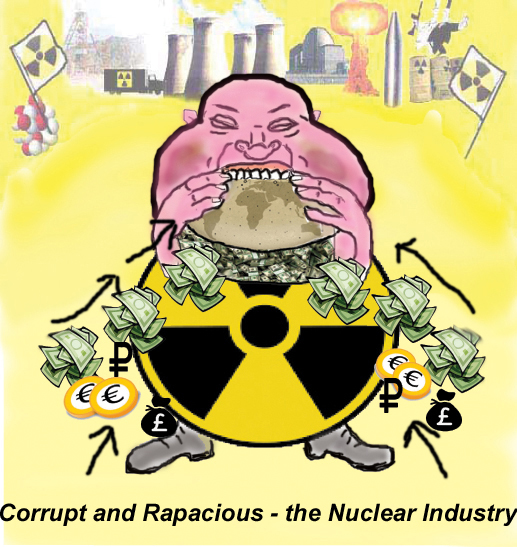
Nuclear cost overrun could mean billions in extra Georgia Power profit, By Matt Kempner, The Atlanta Journal-Constitution, 9 July 21, The more utility spends, the more it can earn; consumers pay price.
Consumers may end up paying for billions of dollars in cost overruns on the Plant Vogtle nuclearexpansion.
But for Georgia Power and its parent Southern Co., the extra costs could represent a huge financial windfall: billions of dollars in extra profit.
That’s because the electric utility’s profit from the sprawling project is tied largely to how much it spends, not whether it stays within budget.
The tab for 2.6 million Georgia Power customers — and the profit for Southern and its shareholders — could start becoming clearer this fall, when elected state regulators hold hearings to determine how much of Vogtle’s initial construction expenses can be added to electric bills for the first time.
By state law, Georgia Power can charge its customers for reimbursement of “prudent and reasonable” capital costs, such as from building a new plant, and for profit set as a percentage of those expenses. The higher the allowed costs, the greater the profit.
The Georgia Public Service Commission, which regulates the electric monopoly, could rule that many of Vogtle’s cost overruns weren’t prudent or reasonable, sharply limiting increases in consumer bills and reducing Georgia Power’s total profits.
But so far there are no indications that will happen, at least not in the long term.
Stock analysts, bond-rating agencies and the company’s own executives cite the risk, but they also often praise regulators’ “constructive” relationship with Georgia Power. In late 2019, the PSC agreed to let Georgia Power collect one of the highest rates of return among its peers around the nation.
“Their decisions, for lack of a better term, have been protective of or supported investments of Georgia Power,” saidJeff Cassella, a senior credit officer for bond-rating firm Moody’s Investors Service. He said he’s seen no indication the PSC will deny Vogtle costs.
Vogtle basics
Project: Build two new nuclear reactors near two existing reactors at Plant Vogtle south of Augusta, near the South Carolina line.
Owners: Georgia Power (45.7%), Oglethorpe Power (30%, represents electric membership cooperatives), the Municipal Electric Authority of Georgia (22.7%, represents city utilities), Dalton Utilities (1.6%).
Benefits: Expected to provide a reliable, stable power supply for at least 60 years….
Downsides: Beyond concerns such as toxic nuclear waste, the all-in-cost of the new electricity is projected to be higher than that from competing forms of electricity generation, according to state staffers.
Costs: Georgia Power’s portion of the total project cost was slated to be $6.1 billion. So far, it’s increased to $11.1 billion.
How Georgia Power’s portion of the project will be paid for: The company’s customers are already paying a fee in monthly bills for a portion of Vogtle financing costs and company profits on the project. It’s estimated that average residential Georgia Power customer will have paid over $850 in such fees before the project is completed. Then their bills are expected to rise higher to cover all “prudent” and “reasonable” construction costs and company profits that rise with those costs.
Who decides what costs are prudent and reasonable: The five elected members of the Georgia Public Service Commission, which regulates Georgia Power, a territorial monopoly that is part of Southern Company.
Had Georgia Power met its original budget and schedule, it would have made $7.4 billion in profits on the project, according to testimony of state independent monitors and PSC staff. But because costs have soared by billions of dollars, those profits could rise to $12.6 billion over the decades-long life of the two new reactors under construction, they testified in 2017.
Costs at Vogtle have continued to climb since 2017. As a result, profits could rise higher, too……………..
Vogtle’s expansion, meanwhile, has been riddled with problems and delays since the PSC approved the project in 2009. The company negotiated a contractor deal with Westinghouse to insulate the utility and customers from some of the worst of the possible overruns, but that was negated after Westinghouse filed for bankruptcy protection.
Georgia Power’s share of the initial estimated total project cost, $6.1 billion, has ballooned to $11.1 billion at the latest estimate.
The reactors were supposed to go into operation in 2016 and 2017, but the timetable has been repeatedly extended. Now, Georgia Power predicts the first unit will be finished in the first quarter of next year. A monitor for the state, though, says the earliest would be the summer of 2022, followed by the second reactor a year later, at best. And he cautioned that constructioncosts for Georgia Power and its partners could rise another $2 billion…………
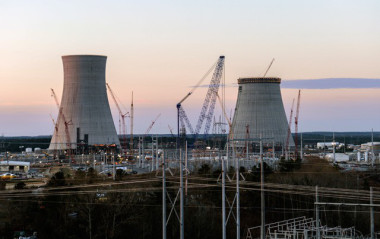
Vogtle was set up for streamlined U.S. regulatory approvals, billions of dollars in federal loan guarantees and dibs on hundreds of millions of dollars in federal tax credits. Georgia’s legislators and then-Gov. Sonny Perdue allowed the company to collect financing costs and some profits years before any electricity was produced.
As a result, the average Georgia Power residential customer will have paid $854toward the project before it goes into operation. That doesn’t include the actual costs of construction, which keep growing.
Echols, the PSC’s vice chairman, said in an email that the enactment of short-term profit reductions shows the regulator is holding the company accountable and “sends a painful and embarrassing message to Georgia Power.”
Those cuts essentially last until the first new reactor goes into operation. Then profit rates can rise back up for what could be decades to come, dwarfing the initial penalties………
Georgia isn’t alone in allowing regulated utilities to potentially profit on project overruns. A number of other states in the Southeast operate under a similar framework, according to the National Association of Regulatory Utility Commissioners………. https://www.ajc.com/news/business/nuclear-cost-overrun-could-mean-billions-in-extra-georgia-power-profit/YIA3T3YHZRHI5A7GCZHREIXCPE/
In the USA State of Ohio, pro nuclear legislation is helped along by misinformation on renewable energy

How misinformation propped up Ohio lawmakers’ latest attack on renewables
Unsupported and misleading statements were the “means to the end” for a bill to cripple new solar and wind energy in Ohio, critics say. by Kathiann M. Kowalski July 7, 2021
False and unsubstantiated claims about renewable energy have flourished for years, but critics say different forms of misinformation played a big role in Ohio lawmakers’ latest move to stifle the growth of wind and solar energy.
“Misinformation is the means to the end,” said Trish Demeter, chief of staff for the Ohio Environmental Council Action Fund. “Misinformation, bad information, misconstrued information, partial information: All of those are tactics that are supporting the goal, which is to block and kill renewable energy from being built in Ohio.”
Senate Bill 52 would let counties keep out new solar and wind farms from all or part of their territories, holding those projects to a higher standard than fossil fuel infrastructure.
Continue readingAustralian Members of Parliament from right and left parties call on US President Biden to drop charges against Julian Assange,
Australian MPs call on US President Biden to drop charges against Assange, https://www.smh.com.au/politics/federal/australian-mps-call-on-us-president-biden-to-drop-charges-against-assange-20210629-p585a1.html By Rob Harris, June 30, 2021 Former security analyst turned federal Labor MP Peter Khalil has joined a group of Australian politicians directly lobbying the United States to drop an appeal over a British court’s ruling against the extradition of the WikiLeaks co-founder Julian Assange.
In a video message to US President Joe Biden released on Wednesday evening Australian time, 11 federal MPs from across the political spectrum have also appealed to Washington to drop its espionage charges against the Australian citizen and for the British government to allow him to return home.
Before entering politics Mr Khalil, the member for the Victorian seat of Wills, was director of National Security Policy of the Coalition Provisional Authority in Iraq. As a national security adviser to former prime minister Kevin Rudd, he was personally named in diplomatic cables sent to Washington by the US Embassy, which were later released by Wikileaks.
While he has previously criticised Mr Assange’s actions in helping obtain and leak classified information on the wars in Afghanistan and Iraq, Mr Khalil said the case was “not just about one individual”.
“In an era where rising authoritarian regimes are denying and attacking freedom of the press, such as the shut down of Hong Kong’s Apple Daily by the Chinese Community Party, it is more important than ever that when it comes to condemning the denial of press freedom the rhetoric of liberal democracies is actually matched with substantive actions to protect the right of journalists and the media to do their work freely to hold governments to account,” Mr Khalil said.
He said while the Obama administration had clearly chosen not to indict Mr Assange because it would set a damming precedent against journalistic practice and behaviour, the Trump administration aggressively pursued the case.
“Therein lies the problem. These charges are so broad-based that if successful they would go well beyond this individual case – they would impact investigative journalism and open up prosecutions of countless media doing this journalism, they would have a chilling effect on all journalists reporting on national security and foreign affairs matters,” he said.
The 49-year-old Mr Assange has been in Belmarsh Prison since April 2019 trying to avoid extradition to the US to face charges on multiple counts of conspiring with and directing others, from 2009 to 2019, to illegally obtain and release US secrets.
In doing so he aided and abetted hacking, illegally exposed confidential US sources to danger and used the information to damage the US, according to the charges. If convicted on all counts he faces a prison sentence of up to 175 years.
In 2012 Mr Assange sought asylum at the Ecuadorean embassy to avoid extradition to Sweden on a rape allegation that he denied. An investigation into the 2010 rape allegation has since been dropped by Swedish prosecutors.
He was awarded a Walkley award, Australian journalism’s highest honour, in 2011 for a “most outstanding contribution to journalism” for his “brave, determined and independent stand for freedom of speech and transparency”.
In March this year Nationals MP George Christensen, Independent Andrew Wilkie and Labor’s Julian Hill personally met with the US embassy’s charge d’affaires, Michael Goldman, arguing that Mr Assange should be allowed to return home.
A 24-member parliamentary group established to support Mr Assange’s bid to return home contains members from all major parties, including now Deputy Prime Minister Barnaby Joyce.
Prime Minister Scott Morrison said in January Mr Assange would be allowed to return to Australia if all charges were dropped. He said consular support had consistently been offered to Mr Assange, but made clear the government were “not parties to those set of proceedings”.
.
France’s government helps settle the debts of bankrupt nuclear company AREVA (which is now resuscitated as ORANO)
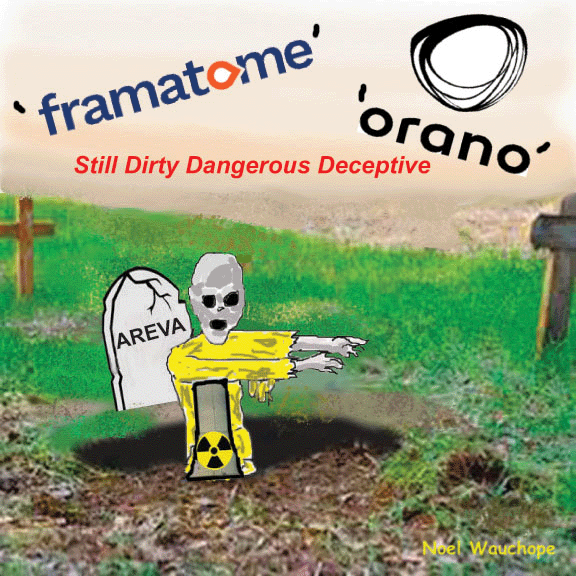
French state helps Areva settle Finnish EPR liabilities. To settle a new additional cost of 600 million euros, the State will buy back from the company, for 994.1 million euros, part of the shares it holds in the capital of Orano, the group responsible for managing the fuel cycle.
Le Monde 8th July 2021
1 This Month
Tell Congress: Prevent Nuclear Catastrophe in Iran

Tell Congress: Prevent Nuclear Catastrophe in Iran

Read the Public Inquiry Report, the Commissioners’ report, Surrendering Australia: The AUKUS Deception is available to download for free at aukuspublicinquiry.com. Or just watch the replay of the National Press Club Luncheon.


Shut down the radiation-damaged Heysham nuclear reactors now
To see nuclear-related stories in greater depth and intensity – go to https://nuclearinformation.wordpress.com

Say No to NASA’s Reckless Nuclear Reactor on the Moon
Say No to NASA’s Reckless Nuclear Reactor on the Moon
-
Archives
- November 2026 (246)
- October 2026 (302)
- September 2026 (339)
- August 2026 (330)
- July 2026 (355)
- June 2026 (287)
- May 2026 (306)
- April 2026 (356)
- March 2026 (251)
- February 2026 (267)
- January 2026 (308)
- December 2025 (358)
-
Categories
- 1
- 1 NUCLEAR ISSUES
- business and costs
- climate change
- culture and arts
- ENERGY
- environment
- health
- history
- indigenous issues
- Legal
- marketing of nuclear
- media
- opposition to nuclear
- PERSONAL STORIES
- politics
- politics international
- Religion and ethics
- safety
- secrets,lies and civil liberties
- spinbuster
- technology
- Uranium
- wastes
- weapons and war
- Women
- 2 WORLD
- ACTION
- AFRICA
- Atrocities
- AUSTRALIA
- Christina's notes
- Christina's themes
- culture and arts
- Events
- Fuk 2022
- Fuk 2023
- Fukushima 2017
- Fukushima 2018
- fukushima 2019
- Fukushima 2020
- Fukushima 2021
- general
- global warming
- Humour (God we need it)
- Nuclear
- RARE EARTHS
- Reference
- resources – print
- Resources -audiovicual
- Weekly Newsletter
- World
- World Nuclear
- YouTube
-
RSS
Entries RSS
Comments RSS

