Jailing of a British Blogger Should Worry Journalists on Both Sides of the Atlantic
AUGUST 10, 2021Jailing of a British Blogger Should Worry Journalists on Both Sides of the Atlantic, FAIR. ARI PAUL IN A Conversation with C-SPAN‘s Brian Lamb (11/7/83) in 1983, then-Nation columnist Christopher Hitchens explained the United Kingdom’s Official Secrets Act, which, he said, says that “anything the government defines as a secret is a secret…. You can define something that is well-known by everybody as a secret under that law.” It gives the government a legal mallet to employ against investigative journalists probing national security.Lamb asked Hitchens, a British expatriate living in Washington, DC, if American journalists were freer than the ones in his home country. “Infinitely,” Hitchens replied, noting that Americans “have a constitution” that protects the freedom of the press.
Americans are accustomed to thinking that Britain is the European nation most like the United States, and with its robust market of salacious tabloid newspapers and saucy pop culture, Americans think of it as a free society. But Hitchens, like many British journalists, constantly challenged this myth. And the current imprisonment of blogger Craig Murray is a reminder of that gap.
‘Chilling effect on reporting’
Murray is a Scottish former diplomat who is vocal about his support for Scottish independence. He is also an outspoken advocate for WikiLeaks founder Julian Assange (New York Times, 1/4/21). According to the Scotsman (8/1/21), however, Murray “was judged to have been in contempt of court over blogs he wrote during the trial of former First Minister Alex Salmond”
Murray’s] posts contained details which, if pieced together, could lead readers to identify women who made allegations against Mr. Salmond, who was acquitted of all 13 charges, including sexual assault and attempted rape in March last year.An official at Reporters Without Borders said that a “prison sentence on charges related to his blogging is disproportionate and highly concerning,” adding that “journalistic activity should not lead to prison sentences anywhere,” because “imprisonment in connection with any journalistic activity should only ever be a measure of absolute last resort—if at all.”
Scottish PEN (Twitter, 7/30/21) said that Murray “is the first person to be imprisoned in Scotland for media contempt for over 70 years,” and the organization feared the “ruling will have a chilling effect on reporting and free expression.”But the New York Times hasn’t reported on Murray’s jailing, nor has AP. A search for his case at NPR and the Wall Street Journal yielded no results.
Why is this not big news? Belarus arresting a journalist who was flying outside the country (NPR, 5/25/21) was major news in the US press. The New York Times (12/28/20) made a big deal about the Chinese government clamping down on citizen journalists who challenged the government’s narrative about Covid-19. And NPR (2/4/21) reported on a Russian journalist who was briefly imprisoned for publicizing an anti-government protest on Twitter. It should be at least as alarming to American media that a key US ally would use jail as a weapon against any journalist…………..
History gives anyone concerned about the free press a right to be worried, as there are other examples of how the British press is censored to protect the powerful. The voice of Sinn Fein leader Gerry Adams was once banned from BBC broadcasts (BBC, 4/5/05). The BBC cited “legal reasons” for not naming one of the soldiers on trial for the Bloody Sunday massacre in Northern Ireland (BBC, 7/14/21). The Guardian (8/20/13) was forced to destroy leaked documents from Edward Snowden because of “a threat of legal action by the [British] government that could have stopped reporting on the extent of American and British government surveillance revealed by the documents.”………….
An attack on all journalists
Laura Poitras, co-founder of the Intercept and one of the principal journalists involved in the Snowden leaks, said in the New York Times (12/21/20) that the prosecution of Assange is an attack on all journalists, and that use of the Espionage Act, which forbids the leaking of classified materials, could be used against the journalists who receive that information. She said:
I have experienced the chilling effect of the Espionage Act. When I was in contact with Mr. Snowden, then an anonymous whistleblower, I spoke to one of the best First Amendment lawyers in the country. His response was unnerving. He read the Espionage Act out loud, and said it had never been used against a journalist, but there is always a first time. He added that I would be a good candidate, because I am a documentary filmmaker without the backing of a news organization.
As a British blogger, Murray is simply not protected by the First Amendment, and at first glance it would seem improbable that he would face this predicament if he was working in the United States. But given the aforementioned instances of the state going after leakers, the censorious trends in the Anglophone media are reasons for concern. US media should pay more attention. https://fair.org/home/jailing-of-a-british-blogger-should-worry-journalists-on-both-sides-of-the-atlantic/
Urgency of the IPCC climate report makes it clear that new nuclear is not the answer
The urgency of the IPCC report highlights the need to prioritise renewables and decentralised energy, and move away from new nuclear, says NFLA
Like many organisations, the UK and Ireland Nuclear Free Local Authorities (NFLA) reads the new report of the Intergovernmental Panel on Climate Change with a sense of alarm, but also new motivation to highlight the urgency to reduce carbon emissions across the board.
The IPCC report published yesterday says there are no scenarios where a 1.5 degrees Celsius increase in temperature in the world will now not be avoided, meaning some of the negative challenges of climate change will take place. This is now largely and almost entirely due to the actions of humanity in neglecting to reduce carbon emissions over previous decades, and not moving away from fossil fuels sooner.
In its analysis of the IPCC report, BBC Environment Correspondent Matt McGrath notes (1):
- Climate change is widespread, rapid and intensifying due to human actions (and inaction in preventing it).
- Extreme heat events, like that taking place presently across southern Europe, North America and northern Russia, will become more frequent.
- The 1.5C global temperature increase limit is now on ‘life support’. Keeping temperatures under this level was a key 2050 target, but the IPCC suggests the world will hit it possibly as early as 2030. The IPCC has previously said there are great advantages of staying under the 1.5C limit compared to a 2C temperature increase. To do that, it argued carbon emissions would need to be cut in half by 2030 and net zero emissions reached by 2050. Otherwise, the limit would be reached between 2030 and 2052.
- Under all likely scenarios, global sea levels will rise. The IPCC report shows that under current scenarios, the seas could rise above the likely range, going up to 2m by the end of this century and up to 5m by 2150. While these are unlikely figures, they cannot be ruled out under a very high greenhouse gas emissions scenario.
- There will be an increase in extreme rainfall, creating the types of serious flooding recently seen in the likes of Germany, Belgium and the Netherlands.
The core message of the IPCC report is the huge urgency in getting carbon emissions down as quickly as possible. For example, it notes the need to reduce methane emissions from oil, gas, agriculture and rice cultivation should be a core priority for all governments……………
For NFLA as well, the urgency of this report should now preclude the obsession from the UK Government to deliver new nuclear. It is in this decade when large carbon reduction is required, whilst any new nuclear development will be unlikely to be making any great impression until the 2030s at the very earliest. The billions being suggested to either bail out Hinkley Point C or back Sizewell C, or fund Rolls Royce’s ‘small’ modular nuclear reactor programme, would now be far better directed towards the cheaper, cleaner and more easily realisable renewable and energy efficiency programmes.
The IPCC report tells all of us to get real. NFLA agree. Our reports on best practice in delivering local decentralised energy solutions in carbon reduction show a positive way forward. (2) Our reports showing the heavy costs and technical challenges of new nuclear, as well as of the huge decommissioning and radioactive waste management costs of our existing nuclear legacy, emphasise as well that nuclear is not part of the solution to deliver a net zero response by 2050. (3) It is high time for radical change, and most Councils are ready for it – now it needs central government to respond to this highly alarming IPCC report………..
It is also clear to me and the NFLA that new nuclear is not the answer to this urgent emergency – it takes too long, costs too much and the existing nuclear legacy needs to be dealt with, not creating more radioactive waste that we still do not know what to do with. ,,,,NFLA UK & Ireland Steering Committee Chair Councillor David Blackburn ………… https://www.nuclearpolicy.info/news/urgency-ipcc-report-highlights-need-prioritise-renewables-and-decentralised-energy-move-away-from-new-nuclear/
Sink or swim: Can island states survive the climate crisis? — Observ@tório de Relações Internacionais – UFOP

© UNICEF/Vlad SokhinWith most of its land only a few feet above sea level, Kiribati is seeing growing damage from storms and flooding. Small island nations across the world are bearing the brunt of the climate crisis, and their problems have been accentuated by the COVID-19 pandemic, which has severely affected their economies, and their […]
Sink or swim: Can island states survive the climate crisis? — Observ@tório de Relações Internacionais – UFOP
August 11 Energy News — geoharvey

Opinion: ¶ “Frightening New Climate Report Also Holds The Seeds Of Hope” • The latest report that just arrived from the IPCC isn’t pretty. But in a year defined by searing heat waves, torrential floods, and raging fires, it is encouraging that the same report that is so frightening also suggests a strategy to alleviate […]
August 11 Energy News — geoharvey
Setsuko Thurlow Rose honors the legacy of a Hiroshima survivor and abolition campaigner — IPPNW peace and health blog

The Setsuko Thurlow rose In the year that the Treaty on the Prohibition of Nuclear Weapons enters in force, a new variety of rose will be planted in Spain. The Setsuko Thurlow Rose, a rose of hope, will be planted on the International Day for the Total Elimination of Nuclear Weapons, September 26, 2021, in […]
Setsuko Thurlow Rose honors the legacy of a Hiroshima survivor and abolition campaigner — IPPNW peace and health blog
NO SUPPORT for NUCLEAR in the new report from Intergovernmental Panel on Climate Change (IPPC).

10 Aug 21, The report is comprehensive on the present and future impacts of global heating, and on what needs to be done. But nuclear power as a method for action is not included.
Indeed, nuclear power is barely mentioned, and when it is, its negative effects on climate and environment are mentioned.
Page 236 line 39 – “Radioactive fallout from atmospheric nuclear weapons testing (1940s–1950s) and urban smog (1950s– 1960s) first provoked widespread attention to anthropogenic aerosols and ozone in the troposphere”
Page 261 – reference to nuclear war and volcanic eruptions
Page 309 – another reference to impacts of nuclear weapons
Page 971 – line 23 – reference to a nuclear holocaust – in reference to future uncertainties
Page 1380 – line 33 discussion on 14C released from nuclear weapons uptake into the ocean
Page 3161 – line 15 – 17 “Thermal and nuclear electricity plants may be challenged when using warmer river waters for cooling or when mixing waste waters back into waterways without causing ecosystem impacts (Kopytko and Perkins, 2011; van Vliet et al., 2016; Tobin et al., 2018)
Why the nuclear lobby spruiks about climate change (when they really couldn’t care less) – theme for August 2021
It’s a breathtaking hypocrisy, in this month when we remember Hiroshima and Nagasaki – but the real purpose for new ”advanced”nuclear technology is simply support for nuclear weapons. ”Small nuclear reactors” have no hope of affecting global heating – quite the reverse – as they take funding and human energy away from genuine solutions.
Why does the nuclear lobby bang on about climate change?
Simply in order to get tax breaks and other financial incentives that go with being accepted as ”green” and ”sustainable”

This is why the nuclear industry, IAEA, and all the associated bodies and governments are bent on convincing everybody that the goal of nuclear power is to fight climate change.
The journalists buy their arguments, because those arguments are cleverly dressed up in technicaljargon – avoiding discussion of matters that journalists might understand better, (such as the costs, waste disposal problems, environmental and health impacts)
The essential connection with nuclear weapons is obscured, making everybody involved feel better.
UN pledges full support to Nagasaki voices fuelling ‘powerful global movement’ against nuclear arms

UN pledges full support to Nagasaki voices fuelling ‘powerful global movement’ against nuclear arms. https://news.un.org/en/story/2021/08/1097372 9 Aug 21, António Guterres has reaffirmed the full support of the United Nations to amplifying the powerful testimony of the survivors of the atomic bomb that was dropped on the Japanese city of Nagasaki, 76 years ago, which has helped build a “powerful global movement against nuclear arms”.
In his message to the Nagasaki Peace Memorial on the 9 August anniversary, the UN Secretary-General said he continued to be humbled by the “selfless acts of the hibakusha, the name given to those who survived and continue to bear witness.
“Your courage in the face of immense human tragedy, is a beacon of hope for humanity”, he said in his address, delivered on his behalf at the ceremony by the UN High Representative for Disarmament Affairs, Izumi Nakamitsu.
“I reaffirm the full support of the United Nations to ensuring that your voices are heard by the world’s people, and especially by younger generations.”
Out of the ashes
The UN chief told the people of the city that was devastated in 1945, just days after the first bomb was dropped by the United States on Hiroshima during the final days of World War Two, that they had built a “cultural metropolis” out of the ashes.
“Your dynamic city exemplifies modernity and progress, while you work diligently to prevent devastation from ever befalling another city”, he said, warning however that the prospect of another nuclear weapon being used, were as dangerous now, as any time since the height of the Cold War between the US and former USSR.
“States are racing to create more powerful weapons, and broadening the potential scenarios for their use. Warlike rhetoric is turned up to maximum volume, while dialogue is on mute”, said the Secretary-General.
Grounds for hope
But two developments this year provide grounds for hope, in the form of the reaffirmation from the US and Russia, “that a nuclear war cannot be won and must never be fought”, together with a commitment to engage in arms control talks.
Secondly, said Mr. Guterres in his message, the Treaty on the Prohibition of Nuclear Weapons has now come into force, representing “the legitimate fears of many States, about the existential danger posed by nuclear weapons.”
And for the parties to the Nuclear Non-Proliferation Treaty, the UN chief said they all parties now need to reinforce “the norm against nuclear weapons” at the upcoming Tenth Review Conference, and take real steps towards elimination.
It is incumbent on all Member States of the UN, “to seek the abolition of the most deadly weapons ever made”, said Mr. Guterres, and together, we must prevent the tragedy of Nagasaki’s nuclear destruction, “from ever occurring again.”
“Clear and loud alarm bell”: IPCC puts pressure on leaders to act on climate — RenewEconomy

“If this report makes you feel angry, sad and afraid, that is because it is angering, saddening and frightening.” The post “Clear and loud alarm bell”: IPCC puts pressure on leaders to act on climate appeared first on RenewEconomy.
“Clear and loud alarm bell”: IPCC puts pressure on leaders to act on climate — RenewEconomy
Elon Musk to take part in a project to place advertising in space?

Elon Musk slammed as SpaceX to launch satellite displaying billboard ads in space
ELON MUSK has come under fire from the scientific community after it has emerged a company wants SpaceX to launch a satellite broadcasting billboard ads from space. Express UK By SEBASTIAN KETTLEY, Aug 9, 2021
Background color
The South African billionaire, who does not shy away from controversy, has a lot going on his plate right now. SpaceX is busy assembling and testing the Mars rocket Starship, Starlink is slowly expanding its mega-constellation Internet-beaming satellites and Tesla has recently rolled out the Model S Plaid. A new report has now revealed SpaceX is partnering with a Canadian startup to launch the world’s first space-based ad satellite.
According to Samuel Reid, CEO and co-founder of Geometric Energy Corporation (GEC), the company will pay SpaceX to launch an advertisement satellite into low-Earth orbit (LEO).
This satellite, called CubeSat, will boast a large screen full of purchasable pixels on one side where advertisers will bid to have their logos and products displayed.
Mr Reid told Insider: “There might be companies which want to depict their logo… or might end up being a bit more personal artistic.

“Maybe Coca-Cola and Pepsi will fight over their logo and reclaim over each other.
SpaceX will not play a direct role in the mission but rather act as the launch provider at some point in early 2022, using one of the company’s iconic Falcon 9 rockets.
Once in orbit, the CubeSat will use a selfie stick to broadcast its stream back to Earth via Twitch or YouTube.
Luckily, this means giant billboards are not about to fill up the night skies with advertising.
But the news has sparked an outcry on social media, with scientists and spaceflight enthusiasts alike criticising the move.
Comedy writer James Felton took to Twitter to vent his disapproval
He said: “Going to be difficult to pretend we’re not living in a sci-fi dystopian apocalypse when we take a moment to look up from the raging wildfires engulfing the planet to see the words Drink Pepsi.”
Game programmer and reporter Matthew Chapman said: “No. I draw the line here.
“Congress needs to ban Space Billboards before they become a thing.
“Already SpaceX satellites are creating a minefield of pollution in low-Earth orbit.”
And science writer Amy Shira Teitel said: “Coke vs Pepsi in space? What’s a little more horrendous light pollution between mega-advertising behemoths?
“Hoping this never, ever happens…”
To advertise on the pixel billboard, customers will have to pay using cryptocurrency tokens.
These will include digital tokens like ethereum, though GEC plans to accept dogecoin in the future.
Advertisers will get to select each individual pixel they want and fill them out with a colour of their choice.
Once they fill out enough pixels, a discernable image will emerge on the screen.
Mr Reid said: “I’m trying to achieve something that can democratize access to space and allow for decentralized participation………… https://www.express.co.uk/news/science/1474414/elon-musk-slammed-spacex-launch-satellite-billboard-ads-in-space-scn
Canada’s political leaders oblivious to the dangers in making plutonium accessible?
Our political leaders seem oblivious to the dangers to the entire planet that could result from widespread access to plutonium. If Canada can access plutonium, so can any other country. If many countries have access to plutonium, the possession of nuclear weapons must be regarded as a real possibility. In a nuclear-armed world, any conflict anywhere can turn into a nuclear war. The stakes could not be greater
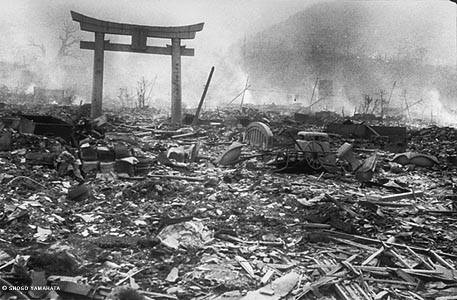
Plutonium: from Nagasaki to New Brunswick, https://nbmediacoop.org/2021/08/09/plutonium-from-nagasaki-to-new-brunswick/ by Gordon Edwards, August 9, 2021 Today, August 9, is the 76th anniversary of the US military’s atomic bombing of the City of Nagasaki in Japan. The nuclear explosive used was plutonium.
The destructive power of plutonium was first revealed on July 16, 1945, when a multicoloured mushroom cloud bloomed over the American desert – the first atomic explosion, top-secret, and much more powerful than expected. Robert Oppenheimer, the man in charge, was awestruck and thought of the words from the Bhagavad-Gita: “I am become Death, the Destroyer of Worlds.”
Three weeks and three days later, on August 9, 1945, the City of Nagasaki was destroyed with a single plutonium bomb.

Plutonium is named for Pluto, god of the dead. It is the primary nuclear explosive in the world’s nuclear arsenals. Even the largest nuclear warheads, based on nuclear fusion, require a plutonium “trigger” mechanism. Access to plutonium is key to the construction of such thermonuclear weapons. Removing the plutonium from nuclear warheads renders them impotent.
Plutonium is not found in nature but is created inside every nuclear power reactor,
including the one at Point Lepreau on the Bay of Fundy. Plutonium is a human-made derivative of uranium. A metallic element heavier than uranium, it is created inside the nuclear fuel along with hundreds of lighter, fiercely radioactive by-products – the fragments of uranium atoms that have been split.
The countries that have nuclear weapons – the five permanent members of the UN Security Council (US, UK, France, Russia and China) as well as India, Pakistan, Israel, and North Korea – have all learned how to separate plutonium from used nuclear fuel for use in weapons. This is done by dissolving the solid fuel assemblies in a hot, highly radioactive chemical bath from which the plutonium is extracted using basic scientific procedures. Any technology for extracting plutonium from used fuel is called reprocessing.
Nuclear advocates have long dreamed of using plutonium as a reactor fuel, thereby increasing the options for new reactor designs and magnifying the longevity of the nuclear age. The problem is, once plutonium has been extracted, it can be used either for weapons or for fuel at the discretion of the country possessing it. Policing methods can be circumvented. As Edward Teller has observed: “There is no such thing as a foolproof system because the fool is always greater than the proof.”
That’s how India exploded its first atomic bomb in 1974, by using plutonium created in a Canadian research reactor given as a gift to India and a reprocessing plant provided by the US. Both the reactor and the reprocessing plant had been designated as “peaceful” facilities intended for non-military use. India declared that the bomb it had detonated was a “Peaceful Nuclear Explosive.”
After the Indian blast, it was quickly determined that several other clients of Canadian technology – South Korea, Argentina, Taiwan, and Pakistan – were also in a position to develop a plutonium-based bomb program. Swift and decisive international action forestalled those threats. In particular, South Korea and Taiwan were discouraged by their US ally from pursuing reprocessing.
Shaken by these shocking developments, in 1977 US President Jimmy Carter – the only head of state ever trained as a nuclear engineer – banned the civilian extraction of plutonium in America and tried to have reprocessing banned worldwide, because of the danger that this nuclear bomb material could fall into the hands of criminals, terrorists, or militaristic regimes bent on building their own nuclear explosive devices. As one White House adviser remarked, “We might wake up and find Washington DC gone, and not even know who did it.”

Japan is the only country without nuclear weapons that extracts plutonium from used nuclear fuel, much to the dismay of its neighbours. South Korea is not allowed to do so, despite repeated efforts by South Korea to obtain permission from the US to use a type of reprocessing technology called “pyroprocessing.” Pyroprocessing is currently undergoing experimental tests at a US nuclear laboratory in Idaho.
Now, New Brunswick has been enticed to take the plutonium plunge. The company Moltex Energy, recently established in Saint John from the UK, wants to use plutonium as a nuclear fuel in a type of reactor that is not yet fully conceptualized. The plutonium would be extracted from the thousands of solid irradiated nuclear fuel bundles currently stored at NB Power’s Point Lepreau reactor using a version of the pyroprocessing technology that South Korea has so far been denied.
On a site right beside the Bay of Fundy, the highly radioactive metallic fuel bundles would be dissolved in molten salt at a temperature of several hundred degrees. A strong electrical current would be used to strip the plutonium metal and a few other elements (less than one percent of the mass) out of the dissolved fuel.
After the government of Canada gave $50.5 million to support the Moltex project in March this year, nine retired US government advisors – all of them experts in preventing the proliferation of nuclear weapons – wrote to Prime Minister Justin Trudeau in May, urging him to authorize an independent review of the international implications of the proposed New Brunswick plutonium scheme.
These nine experts, who have worked under six different US presidents, both Republican and Democrat, are deeply concerned that Canada’s support for reprocessing and the civilian use of plutonium could seriously undermine delicate and precarious global non-proliferation efforts that have been underway for many decades.
No reply from the Canadian government has so far been received, although Trudeau’s office acknowledged receipt of the letter and said that the matter has been entrusted to Foreign Affairs Minister Marc Garneau and Natural Resources Minister Seamus O’Regan.
Without any word from these two ministers, Moltex posted a response to the US experts’ letter on their corporate web site, disputing some of the claims made in the letter to Trudeau. In particular, Moltex claims that their proposed technology is not usable for nuclear weapons purposes because the plutonium is not pure, but mixed with other contaminants that cannot easily be removed.
The Moltex response has prompted another letter to Trudeau from the US non-proliferation experts, correcting this and several other misleading comments from Moltex and reiterating their call for a fully independent expert review of the non-proliferation aspects of the Moltex proposal.
Our political leaders seem oblivious to the dangers to the entire planet that could result from widespread access to plutonium. If Canada can access plutonium, so can any other country. If many countries have access to plutonium, the possession of nuclear weapons must be regarded as a real possibility. In a nuclear-armed world, any conflict anywhere can turn into a nuclear war. The stakes could not be greater.
Citizens of New Brunswick and all Canadians who realize the importance of this issue can write to our Prime Minister in support of a non-proliferation review of the Moltex proposal, and raise this matter with candidates and at the door during the next federal election campaign. We can all raise awareness of the legacy of Nagasaki and do our best to ensure that New Brunswick is not implicated by going ahead with the Moltex plutonium extraction scheme.
Dr. Gordon Edwards, President of the Canadian Coalition for Nuclear Responsibility, is based in Montreal.
Nagasaki remembers the atomic bomb, Olympic officials refuse to allow a minute’s silence.

Nagasaki nuclear attack remembered https://www.taipeitimes.com/News/world/archives/2021/08/10/2003762363
ATOMIC BOMB ANNIVERSARY: Small turnout due to COVID-19 did not lessen the observance, also marking the first year of a mostly symbolic nuclear ban treaty
The Japanese city of Nagasaki yesterday commemorated the 76th anniversary of the detonation of a US atomic bomb over the city, with the mayor calling for the global community to build on a new nuclear ban treaty.
Nagasaki was hit by an atomic inferno that killed 74,000 people, three days after the nuclear bomb that hit Hiroshima.
The twin attacks brought forth the nuclear age and gave Japan the bleak distinction of being the only country to be struck by foreign atomic weapons.
Survivors and a handful of foreign dignitaries offered a silent prayer at 11:02am local time, the exact time the second — and last — nuclear weapon used in wartime was dropped. For a second year, the number of people attending was much smaller due to COVID-19 restrictions. The ceremony is the first since an international treaty banning nuclear weapons came into force last year.
“World leaders must commit to nuclear arms reductions and build trust through dialogue, and civil society must push them in this direction,” Nagasaki Mayor Tomihisa Taue said.
The treaty has not been signed by countries with nuclear arsenals, but activists believe it will have a gradual deterrent effect.
Japan has not signed it either, saying the accord carries no weight without being accepted by nuclear-armed states.
The country is also in a delicate position, as it is under the US nuclear umbrella, with US forces responsible for its defence.
As the only country that has suffered atomic bombings during the war, it is our unchanging mission to steadily advance the efforts of the international community, step by step, towards realization of a world free of nuclear weapons,” Japanese Prime Minister Yoshihide Suga said at the ceremony.
On Friday, Japan marked 76 years since the US dropped an atomic bomb on Hiroshima, killing around 140,000 people.
Barack Obama in 2016 became the first sitting US president to visit Hiroshima, but Washington has never acceded to demands for an apology for the bombings.
International Olympic Committee president Thomas Bach traveled to Hiroshima in July, before the start of the Tokyo Games, to mark the start of an Olympic truce — a tradition that calls for a halt to global conflict to allow the safe passage of athletes.
However, city officials were disappointed after the IOC refused a request to stage a minute of silence at the Games to mark Friday’s anniversary.
Rising seas and melting glaciers: these changes are now irreversible, but we have to act to slow them down — RenewEconomy

The underlying message remains the same. The longer we wait, the more devastating the consequences. The post Rising seas and melting glaciers: these changes are now irreversible, but we have to act to slow them down appeared first on RenewEconomy.
Rising seas and melting glaciers: these changes are now irreversible, but we have to act to slow them down — RenewEconomy
This is the most sobering report card yet on climate change and Earth’s future. What you need to know — RenewEconomy

Climate change is now affecting every continent, region and ocean on Earth, and every facet of the weather. Here are the key takeaway’s from the latest IPCC climate report. The post This is the most sobering report card yet on climate change and Earth’s future. What you need to know appeared first on RenewEconomy.
This is the most sobering report card yet on climate change and Earth’s future. What you need to know — RenewEconomy
French nuclear company EDF is postponing its decision on whether or not to go ahead with the Sizewell nuclear project in Britain
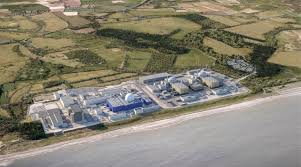
EDF delays final decision on Sizewell C. French energy giant now expects to leave it as late as 2023 before deciding whether to proceed with Suffolk nuclear power project. The timeline for EDF to decide whether to go ahead with the £20bn Sizewell C power station has slipped amid a lengthy planning approval process that is playing out as funding negotiations with ministers continue.
The French power giant now expects to make a final investment decision on the Suffolk plant at the end of 2022 or in 2023, compared to its previous expectations of mid-2022. EDF is in negotiations with the Government about a funding deal for Sizewell C and will also need external investors. Legislation is likely to be brought forward to allow developers to recoup costs during construction from household energy bills.
However, talks have been overshadowed in recent weeks by reports that ministers are seeking ways to block CGN from Sizewell and future UK nuclear projects. CGN has a 20pc development stake in Sizewell with an option to participate in the construction phase.
Telegraph 8th Aug 2021
https://www.telegraph.co.uk/business/2021/08/08/edf-delays-final-decision-sizewell-c/
1 This Month
Tell Congress: Prevent Nuclear Catastrophe in Iran

Tell Congress: Prevent Nuclear Catastrophe in Iran

Read the Public Inquiry Report, the Commissioners’ report, Surrendering Australia: The AUKUS Deception is available to download for free at aukuspublicinquiry.com. Or just watch the replay of the National Press Club Luncheon.


Shut down the radiation-damaged Heysham nuclear reactors now
To see nuclear-related stories in greater depth and intensity – go to https://nuclearinformation.wordpress.com

Say No to NASA’s Reckless Nuclear Reactor on the Moon
Say No to NASA’s Reckless Nuclear Reactor on the Moon
-
Archives
- November 2026 (246)
- October 2026 (302)
- September 2026 (339)
- August 2026 (330)
- July 2026 (355)
- June 2026 (287)
- May 2026 (306)
- April 2026 (356)
- March 2026 (251)
- February 2026 (267)
- January 2026 (308)
- December 2025 (358)
-
Categories
- 1
- 1 NUCLEAR ISSUES
- business and costs
- climate change
- culture and arts
- ENERGY
- environment
- health
- history
- indigenous issues
- Legal
- marketing of nuclear
- media
- opposition to nuclear
- PERSONAL STORIES
- politics
- politics international
- Religion and ethics
- safety
- secrets,lies and civil liberties
- spinbuster
- technology
- Uranium
- wastes
- weapons and war
- Women
- 2 WORLD
- ACTION
- AFRICA
- Atrocities
- AUSTRALIA
- Christina's notes
- Christina's themes
- culture and arts
- Events
- Fuk 2022
- Fuk 2023
- Fukushima 2017
- Fukushima 2018
- fukushima 2019
- Fukushima 2020
- Fukushima 2021
- general
- global warming
- Humour (God we need it)
- Nuclear
- RARE EARTHS
- Reference
- resources – print
- Resources -audiovicual
- Weekly Newsletter
- World
- World Nuclear
- YouTube
-
RSS
Entries RSS
Comments RSS

