Cosmic radiation will probably prevent growing crops on Mars
Greenhouses Probably Won’t Work for Growing Crops on Mars Because of Cosmic Radiation https://scitechdaily.com/greenhouses-probably-wont-work-for-growing-crops-on-mars-because-of-cosmic-radiation/
By ANDY TOMASWICK, UNIVERSE TODAY SEPTEMBER 4, 2021 MARS is a lifeless wasteland for more than one reason. Not only are the temperatures and lack of water difficult for life to deal with, the lack of a magnetic field means radiation constantly pummels the surface. If humans ever plan to spend prolonged periods of time on the red planet, they’ll need to support an additional type of life – crops. However, it appears that even greenhouses on the surface won’t do enough to protect their plants from the deadly radiation of the Martian surface, at least according to a new paper published by researchers at Wageningen University and the Delft University of Technology.
Ideally, agriculture on the Maritan surface would consist of greenhouse domes and allow what limited sunlight hits the planet to make it through to the crops they house directly. However, current technology greenhouse glass is incapable of blocking the deadly gamma radiation that constantly irradiates Mars. Those gamma radiation levels, which are about 17 times higher on Mars than on Earth, are enough to affect crops grown in greenhouses on the surface significantly.
The researchers ran an experiment where they planted garden cress and rye and measured the crop output of a group irradiated with Martian levels of gamma radiation with those grown in a “normal” environment with only Earth-level radiation. The crops in the irradiated group ended up as dwarves, with brown leaves, and resulted in a significantly decreased harvest after 28 days of growth.
To mimic the gamma radiation environment, Nyncke Tack, an undergraduate researcher who performed much of the work for the project, used 5 separate cobalt-60 radiation sources. These were scattered evenly overhead of the test crops to create a “radiation plane” similar to the ever-present radiation field on Mars.
Other confounding factors, including adding beta and alpha radiation, could also contribute to crop deterioration, though solid objects more easily stop those types of radiation. The research team, who was not surprised by their findings, suggests building underground farms where the planet’s regolith blocks most if not all of that radiation. This would have the obvious disadvantage of losing access to sunlight, but would have the added benefit of being a much more controllable environment, with LEDs and temperature control filling in for environmental conditions on the surface.
To prove their theory, the team is next commandeering a Cold War-era bunker in the Netherlands to see if their same irradiation experiments affect crops grown inside if the irradiation is coming from outside. While not a direct analog for Martian regolith, it’s a novel approach to understanding how humans might eventually farm the sky.
Chinon nuclear site again leaks coolants that turn into powerful greenhouse gases.
The Chinon nuclear site (Center – Val de Loire) declared in August 2021 to have exceeded the annual authorized limit for coolant leaks. 100 kilos in 1 year is the quantity of refrigerants that each EDF nuclear power plant has
the right to allow to evaporate in nature. Because at normal pressure, these liquids turn into powerful greenhouse gases.
This is equivalent to several thousand kilos of CO2 released into the atmosphere each year by EDF nuclear facilities, which have very high cooling needs. The manufacturer does not brag about it, but this limit is regularly exceeded.
Sortir du nucleaire 31st Aug 2021
Highway safety concerns as DOE plans expanding nuclear waste transports to the Waste Isolation Pilot Plant (WIPP)
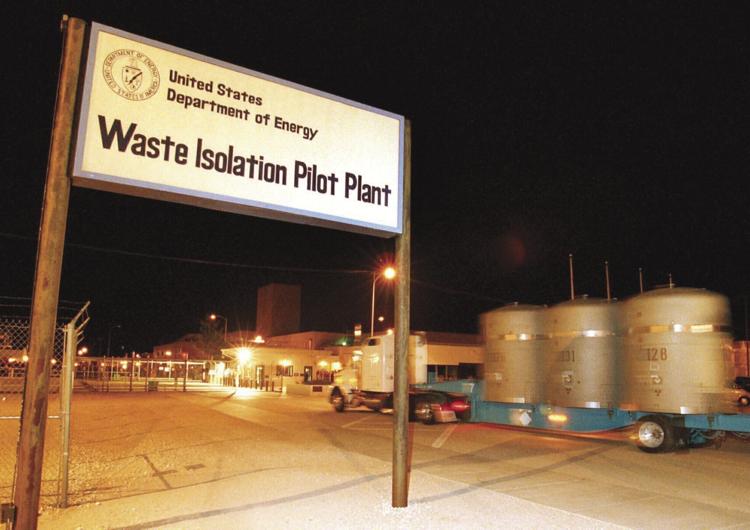
More nuclear waste may be heading to WIPP on US 285 Albuquerque Journal , BY ISABELLA ALVES / JOURNAL NORTH, SATURDAY, SEPTEMBER 4TH, 2021
Spanning the length of the state, U.S. Highway 285 is a major thoroughfare for truck transports and other traffic. This busy highway, nicknamed “Death Highway” due to the number of fatal accidents on it, may get busier.
Concerned citizens in Santa Fe County recently called out the U.S. Department of Energy’s Waste Isolation Pilot Plant for expanding its mission in a permit renewal application to include more nuclear waste being shipped along the 285 corridor.
Part of Highway 285 goes along the southern edge of the city of Santa Fe, and local activists are calling on local and federal leaders to halt this increase in nuclear waste transportation.
The permit application is requesting to add two nuclear waste storage panels to WIPP that would increase the waste volume in these areas. The permit renewal was filed July 30 and, if granted, wouldn’t increase the volume capacity of nuclear waste set by Congress in the Land Withdrawal Act for the plant.
“NMED is in litigation with the DOE for its failure to clean up legacy waste at Los Alamos National Laboratory. A successful resolution of the lawsuit is increased shipments of legacy waste from Los Alamos to WIPP,” James Kennedy, state Environment Department Cabinet secretary, said via email.
“The DOE and Nuclear Waste Partnership continuing to accept out-of-state waste streams or any new waste streams in lieu of cleaning up and shipping legacy waste from Los Alamos to WIPP is completely unacceptable,” he added.
At a recent Santa Fe County Town Hall, activist Cindy Weehler of 285 ALL said the U.S. Department of Energy made it clear that it’s going to expand its nuclear waste program, she said. She said she’s concerned about the new type of radioactive waste that would be traveling through the county, which would be diluted plutonium, instead of contaminated items.
This is consistent with a notice of intent published by the department in December 2020.
The Department of Energy’s (DOE) goal is to complete its missions safely and efficiently, including the continued reduction in the amount of transuranic waste at LANL and creating a safer environment for the surrounding communities,” a U.S. Department of Energy spokesperson said via email. “DOE notifies state authorities weeks in advance of all shipments to WIPP, which are done in strict accordance with federal rules and regulations and state law.”
On average, there are about seven waste shipments a week that travel to WIPP through Santa Fe County from the Los Alamos National Laboratory and the Idaho National Laboratory. In the coming months, pending any pandemic impacts, this number is expected to increase to 10 to 12 shipments per week.
“They have chosen a very unsafe way to deal with the surplus plutonium problem,” Weehler said. “It’s unsafe to our neighborhoods and I think, if people are going to be put at risk, like we are with this new mission, they deserve to know about it.”
Don Hancock, nuclear waste program director at the Southwest Research and Information Center, said the original type of waste being disposed of at WIPP were plutonium-contaminated items, such as gloves and other equipment that came into contact with the radioactive material.
Now, the plant is expected to dispose of the diluted plutonium, which is much more potent than contaminated material — and poses a greater safety risk. Hancock said they expect “a lot” of shipments to the plant and it’s hard to drill down an exact number.
This expansion is going to affect more than just Santa Fe County, it will impact people statewide, Weehler said. She said safety issues, such as preparing emergency responses for a nuclear waste spill if there’s an accident along the highway, will be left up to the local municipalities.
For Santa Fe County, this emergency response falls to its emergency management director who, Communications Coordinator Carmelina Hart said, has a background in these types of responses.
In the event of an emergency, the County’s role would be the initial evaluation, perimeter control and activation of all our state and federal partners who specialize in these responses,” Hart said in an email. “The County maintains relationships with the other agencies in the realm of emergency management. We have participated in full-scale exercises with the Department of Energy and local public safety teams.”
She said the county is reimbursed $15,000 annually by the Department of Energy’s WIPP program for emergency response preparations the county must maintain. The county also is working to identify additional training and equipment needs should nuclear waste transportation changes occur.
Santa Fe County Commissioner Hank Hughes said he has lived in Santa Fe before there was a WIPP project and has shared citizens’ concerns about nuclear waste transportation for many years. He said expanding WIPP’s mission might mean more nuclear waste traveling through Santa Fe County.
He said the county is as equipped as it can be to handle an accident. Since the transportation is considered classified information, local governments aren’t notified when nuclear waste is headed their way.
I think the concern is, while it’s very unlikely that there would be any leak of radioactive material — even if there was an accident — just increasing the number of trucks going through Santa Fe County raises that possibility,” Hughes said.
Since nuclear waste is handled on a federal level, it’s mostly out of the commission’s hands, he said. All the county can really do is make sure it’s prepared for an accident, and help its constituents express their concerns to the federal delegation.
And these worries haven’t gone unnoticed.
Maria Hurtado, spokeswoman for U.S. Rep. Teresa Leger Fernández, D-N.M., said the office has received a handful of constituent calls regarding the nuclear waste transportation…………. https://www.abqjournal.com/2426206/more-nuclear-waste-may-be-heading-to-wipp-on-us-285.htmladvertisement
Over 200kg uranium theft in India poses threats of nuclear terrorism.
Over 200kg uranium theft in India poses threats of nuclear terrorism, The News, 5 Sept 21, I SLAMABAD: The theft of over 200 kilograms of nuclear material during last two decades in India poses serious threats of nuclear terrorism, necessitating the global powers’ role to raise safety standards in the country.
The countries in the region including China and Pakistan have repeatedly called for strengthening regulations following repeated incidents of theft of nuclear material in India. Such incidents raised concerns about India emerged as a potential hotspot in illegal trade of nuclear technology and materials vital for a malicious nuclear supply chain for state and non-state actors.
According a timeline issued by The South Asia Strategic Stability Institute (SASSI), 18 nuclear material’s theft and lost incidents were reported in India from 1994 to 2021 involving over 200kg nuclear material.
The Indian authorities recovered 2.5kg uranium in 1994; 111kg in 1998, also involving an opposition leader; 59.1kg in 2000; 200 grams in 2001; 225 grams in 2003; 4kg in 2008; 5kg in 2009; 9kg in 2016; 1kg in 2018 and 13.75kg in 2021 in multiple incidents.
According to a research paper jointly issued by SASSI President Dr Maria Sultan and now Human Rights Minister Dr Shireen Mazari, the reports of Indian involvement in the theft of nuclear fissile material dates back to the early 1970s, the magnitude of the threat increased manifold in the 1980s and 1990s.
In the late 1980s, the CIA had concluded that India was trying to develop a sophisticated Hydrogen bomb. In 1994, on a tip-off, a shipment of beryllium was caught in Vilnius, worth $24 million. “The material could fall into the hands of extremists and terrorists in India with disastrous consequences. The out-of-control material could also be a cause of concern due to the proliferation reasons. It is also the responsibility of global organisations and India’s partners to raise the standard of nuclear safety and security in the country and investigate shortcomings for maintaining tight controls on nuclear and radioactive materials,” said Sarman Ali, an Islamabad-based defence analyst.
Pakistan had repeatedly called for thorough investigation of such incidents and measures for strengthening the security of nuclear materials to prevent their diversion.
Foreign Office spokesperson said in a recent statement that such incidents were a matter of deep concern as they point to lax controls, poor regulatory and enforcement mechanisms, as well as possible existence of a black market for nuclear materials inside India………….. https://www.thenews.com.pk/print/888297-over-200kg-uranium-theft-in-india-poses-threats-of-nuclear-terrorism
Downwinders Look to Renew and Expand Radiation Exposure Compensation Act
Downwinders Look to Renew and Expand Radiation Exposure Compensation Act, Sierra Nevada Ally, By Brian Bahouth -September 4, 2021
Audio: a conversation with downwinder Mary Dickson Between 1951 and 1992, U.S. scientists and engineers conducted 928 nuclear blasts at the Nevada Test Site (NTS), a roughly 1,400 square-mile federal reservation located 65 miles north of Las Vegas. Eight hundred and twenty eight were underground tests and 100 atmospheric tests in which the atomic weapons were exploded at or above ground level, which releases highly radioactive material high into the atmosphere.
In total, at various locations around the globe, the Atomic Energy Commission and later the Department of Energy, conducted 1,054 atomic weapons tests.
Fallout from these many bombs circled the planet. If a person is in close proximity to a nuclear blast, the symptoms of acute radiation sickness are obvious, but outside the blast area, human senses do not apprehend radioactivity that can lodge in the fat of milk or meat and can linger for decades in the environment.
The health effects of nuclear testing on those directly downwind of the events in eastern Nevada, Utah and Arizona became evident with cancer clusters and and other related illnesses. Many ranchers lost livestock.
After years of lawsuits and wrangling, the Radiation Exposure Compensation Act (RECA) became law in 1990 and provides one-time benefit payments to “persons who may have developed cancer or other specified diseases after being exposed to radiation from atomic weapons testing or uranium mining, milling, or transporting.”
The U.S. Department of Justice administers RECA and has distributed over $2.4 billion in benefits to more than 37,000 claimants since its inception in 1990, but the RECA program is scheduled to sunset in 2022.
Geographically, RECA covers people living in a total of 22 counties with some in eastern Nevada, Utah, and Arizona. But research shows that parts of Idaho and Montana saw radioactivity impacts on par with Nevada, Utah and Arizona. Many places in North America realized toxic levels of radiation. Fallout from the tests travelled around the globe.
U.S. Senator from Idaho, Mike Crapo has been a long-time advocate for downwinders. In a recent newsletter to constituents, he said he’s working on bi-partisan legislation that would renew and expand the dimensions of RECA to include many more states.
Work is in progress with stakeholders to determine the best path forward to reintroduce the Radiation Exposure Compensation Act Amendments, which expands coverage of the Radiation Exposure Compensation Act (RECA) to include victims in Idaho among states impacted by exposure to fallout from nuclear weapons testing.”………….
“The more I started researching and the more I started following that story, the more I thought, ‘my government did this to me,’” Mary Dickson said. “I’m a casualty of the Cold War.
“My sister, at the time, was ill with an autoimmune disease, and she and I started making a list of all the people in our childhood neighborhood who had cancer or tumors. It didn’t take long before, in a four or five block area, we had about 54 people on that list …
“And we just thought, ‘OK, yeah, something happened to us. Something happened to us, something happened …”……… https://www.sierranevadaally.org/2021/09/04/downwinders-look-to-renew-and-expand-radiation-exposure-compensation-act/
Radiation could restrict crewed Mars missions to less than four years
Radiation could restrict crewed Mars missions to less than four years, New Atlas By David Szondy, September 04, 2021 An international team of scientists has calculated that a crewed mission to Mars should only last a maximum of four years if the astronauts’ health isn’t to be endangered by prolonged exposure to cosmic radiation.Planning a crewed mission to Mars would be one of the most daunting challenges of any exploration attempt ever made by humanity. Every aspect of such a multi-year adventure would have complex impacts on every other factor, producing a constant tug of war as scientists and engineers seek compromises to fulfill mission requirements.
As well as things like engine type, crew numbers, diet, and a thousand other things, planning also needs to take into account the ever-present hazard of radiation. Once outside of the protective envelope of the Earth’s atmosphere and its magnetic field, the astronauts would be at the mercy of cosmic rays from the Sun and the larger galaxy, so the question is, how to minimize such a threat?………………….
a mission that lasted longer than four years would expose the crew to dangerous levels of radiation before returning to Earth, which puts an upper limit on mission time.
One reason for this limit is the nature of the radiation hazard. The worst danger would be from GCRs because they are so energetic that when the researchers used models of human organs and set them behind different shields, the shielding material itself becomes a problem.
There are many different ways to shield an astronaut, including heavy metal plates, tanks of water, or slabs of low-density polymers. The problem is that a shield heavy enough to provide direct protection not only causes weight issues for the spacecraft, the shield can also give off secondary radiation as the cosmic rays split the atoms in the shield…………https://newatlas.com/space/radiation-could-limit-crewed-mars-missions-four-years/
An EDF employee contaminated in the Cruas-Meysse nuclear power plant.
An EDF employee contaminated in the Cruas-Meysse nuclear power plant. The
Nuclear Safety Authority classified the incident at level 2 (out of 7) on
the INES severity scale. This type of incident is quite rare, only a few
cases occur each year.
Le Monde 4th Sept 2021
UK government scared that Scotland’s Nicola Sturgeon will use COP25 to further SCotland’s independence
No 10 has been plotting how to cut Nicola Sturgeon out of Cop26 to prevent
the first minister stealing the limelight, The Independent can reveal.
Advisers at No 10 and the Cabinet Office have been trying to work out how
to prevent this autumn’s landmark Glasgow summit from becoming an
“advert” for Scottish independence.
Independent 4th Sept 2021
https://www.independent.co.uk/news/uk/politics/cop26-scotland-independence-indyref2-b1902613.html
The End In Afghanistan: A Misbegotten Campaign Without a Strategy — The Inglorius Padre Steve’s World

Friends of Padre Steve’s World, I have resisted writing or commenting much on the final defeat of the United States on Afghanistan’s Street Without Joy. It has been a disaster 20 years in the making, 40 if you include the initial U.S. support to the Mujahideen resisting the Soviet invasion and intervention in Afghanistan. Please […]
The End In Afghanistan: A Misbegotten Campaign Without a Strategy — The Inglorius Padre Steve’s World
September 5 Energy News — geoharvey

Opinion: ¶ “The Truth New York City Cannot Avoid” • Four days after it hit New Orleans, at least 13 New Yorkers died when Hurricane Ida’s remnants hit the Big Apple, more than 1,300 miles away. So far, New York City has more fatalities reported than all of Louisiana. Climate change is scrambling all our […]
September 5 Energy News — geoharvey
Friends of the Earth and Sierra Club saw it coming – corruption is killing the nuclear industry

Public interest intervenors were prescient in their early assessments of the project. Friends of the Earth, which intervened before the Public Service Commission against the project in August 2008, noted SCANA’s disregard for energy efficiency and alternative forms of energy. That organization predicted that the project’s fate would be what the US Attorney’s Office affirmed in the August 18, 2021 indictment: “from the outset, the Project was characterized by cost overruns and significant delays.” Likewise, toward the end of the project in June 2017, just after Westinghouse declared bankruptcy, Friends of the Earth and the Sierra Club filed a formal complaint detailing why the project must be canceled. As money hemorrhaged, the owners made that earth-shaking decision a month later. And the mighty crash still reverberates.
With pursuit of large light-water reactors in the United States all but dead, the nuclear industry is now endlessly touting an array of “small modular reactors” and a dizzying menu of so-called “advanced reactors,” all of which exist only on paper. It’s unclear if there’s a path forward for this nuclear renaissance redux, and if there is, whether taxpayers will be put on the hook for financing some of it.
US attorney details illegal acts in construction projects, sealing the fate of the “nuclear renaissance” https://thebulletin.org/2021/08/us-attorney-details-illegal-acts-at-construction-projects-sealing-the-fate-of-the-nuclear-renaissance/By Tom Clements | August 31, 2021
The ill-fated construction of new nuclear reactors in South Carolina—one of two such troubled Westinghouse reactor construction projects in the United States—was abruptly terminated on July 31, 2017, but the effort to determine legal accountability for the project’s colossal failure is only now hitting its stride.
The South Carolina legislature conducted hearings about the project’s collapse. But it has fallen to the United States Attorney for South Carolina to outline internal decisions that led to project abandonment—via court filings, plea agreements, and indictments. These filings are proving to be the best documentation so far of criminal behavior related to projects that were part of a much-hyped “nuclear renaissance” that began in the early-2000s but has since petered out in the United States.
On August 18, 2021, a second Westinghouse official was charged in a federal grand jury indictment filed with the court in Columbia, South Carolina. The charges outline “the scheme” to cover up key details about the problem-plagued project to construct two 1,100 megawatt (MW) Westinghouse AP1000 light-water reactors at the VC Summer site north of Columbia.
The project was initiated in May 2008 and gained final approval in February 2009.
According to the 18-page indictment, former Senior Vice President of New Plants and Major Projects Jeffrey Benjamin “had first-line responsibility for Westinghouse’s nuclear reactors worldwide.” He was charged, according to a news release, “with sixteen felony counts including conspiracy, wire fraud, securities fraud, and causing a publicly-traded company to keep a false record.” On August 30, the US attorney’s office announced that Benjamin would be arraigned on August 31.
The indictment reveals important new information about how Benjamin and Westinghouse conspired to hide crucial information about reactor completion dates from the owners, the publicly held utility SCANA, now defunct, and its junior partner, the state-owned South Carolina Public Service Authority (known as Santee Cooper). It states that the defendant made “false and misleading statements” and “knowingly devised a scheme” to continue the project based on misrepresentations via Westinghouse to the owners, state regulators, the Securities and Exchange Commission, investors, and ratepayers. Nervous SCANA officials played along with the inept cover-up efforts and passed on false and inaccurate information to regulators.
Continue readingHurricane Ida Forces Two Nuclear Plants in Louisiana to Shut Down or Reduce Power
Hurricane Ida Forces Two Nuclear Plants in Louisiana to Shut Down or Reduce Power https://obrag.org/2021/09/hurricane-ida-forces-two-nuclear-plants-in-louisiana-to-shut-down-or-reduce-power/
by MICHAEL STEINBERG on SEPTEMBER 3, 2021 · Nuclear Shutdown News August 2021
By Michael Steinberg / Black Rain Press
Nuclear Shutdown News chronicles the decline and fall of the nuclear industry, and highlights the efforts of those working to create a nuclear free world.
On August 29, 2021, 16 years to the day when Hurricane Katrina devastated New Orleans and environs, Hurricane Ida made landfall twice as a Category 4 storm. Its 150 mph winds raced through the Crescent City, and up cancer alley, by Baton Rouge, an area replete with petrochemical facilities whose surrounding African American populations have high rates of serious health care problems in the best of times.
Almost all of the Gulf coast’s offshore refineries were forced to shut down and a million or more lost electrical power, including all of New Orleans.
Complicating this catastrophe was the loss of two nuclear plants, both upriver from New Orleans and owned by Entergy Corporation. According to an 8-30 report by S &P Global, Entergy shut down its Waterford nuke plant on 8-29 “after off-site electrical power was lost because of Hurricane Ida.”
According to the Nuclear Regulatory Commission, the plant was disconnected from the electrical grid that day “per procedures as storm winds elevated.”
The following day, the River Bend nuclear plant, 25 miles north of New Orleans, “reduced power to 35% of capacity.” The unit reduced power at the request of the Midcontinent Independent System Operator, Entergy’s Mike Bowling said.
“The action was to preserve the integrity of the grid in the wake of Hurrican Ida” Bowling added.
At this point, when the lights will come on is anybody’s guess.
Nuclear Disarmament: What the World can Learn from Africa
Although nuclear disarmament is a global aspiration, Africa teaches that influence on the global stage is best achieved through regional unity. The creation of multiple nuclear-weapons-free zones across the world will send a powerful message to nuclear-armed states who are currently not directly accountable to the conditions of the Ban Treaty. Other current nuclear-weapons-free zones include Central Asia, Latin America and the Caribbean, the South Pacific, and South-East Asia.
Africa: Nuclear Disarmament: What the World can Learn from Africa https://allafrica.com/stories/202109030801.html, By Isabel Bosman, 3 Sept 21,
On 22 January 2021, the UN Treaty on the Prohibition of Nuclear Weapons (the Ban Treaty) entered into force. Under the Ban Treaty, states are prohibited from ‘developing, testing, producing, manufacturing, acquiring, possessing, or stockpiling nuclear weapons or other nuclear explosive devices’. The Ban Treaty is a culmination of decades-long global campaign efforts to end the development of nuclear weapons. But while its entry into force is widely celebrated, the real work is only just beginning.
The world’s nuclear-armed states oppose the Treaty, and uncertainty about the direction of nuclear programmes in Iran and North Korea adds to the tension. Until such time as a nuclear-armed state decides to join the Ban Treaty, it is up to the world’s non-nuclear-armed states to continue leading disarmament campaigns. Having experienced the destructive power of nuclear weapons testing first-hand in the 1960s, African states are some of the oldest and most outspoken supporters of global nuclear disarmament and non-proliferation. Africa’s commitment to nuclear disarmament holds two important lessons: Firstly, a world free of nuclear weapons begins at home. And secondly, if at first you do not succeed, shift the narrative.
African states are able to influence international opinion on nuclear disarmament partly because they have established a strong regime of disarmament and non-proliferation. The continent’s commitment to nuclear disarmament dates to 1964 and the adoption of the ‘Declaration on the Denuclearisation of Africa’ by the Organisation of African Unity, now the African Union (AU). At present, this commitment is best embodied by the African Nuclear-Weapon-Free Zone Treaty (1996), also known as the Pelindaba Treaty. States party to the Pelindaba Treaty are prohibited from ‘conducting research on, developing, manufacturing, stockpiling, acquiring, possessing, or having control over any nuclear explosive device’. States are also not allowed to receive assistance to research or develop nuclear weapons.
The 12th anniversary of the Pelindaba Treaty’s entering into force was marked on 15 July 2021 (after being opened for signature 25 years ago). During an online event to commemorate this, Messaoud Baaliouamer, Executive Secretary of the African Commission on Nuclear Energy (AFCONE), the implementing body of the Pelindaba Treaty, described it as ‘an important step towards the strengthening of the non-proliferation regime, the promotion of cooperation in the peaceful use of nuclear energy, complete disarmament, and the enhancement of regional peace and security’.
To date, the Pelindaba Treaty has been signed by 52 AU member states and ratified by 42. This uptake makes Africa the largest Nuclear-Weapon-Free Zone in the world. Beatrice Fihn, Executive Director of the International Campaign to Abolish Nuclear Weapons (ICAN), remarked at the same event that the Pelindaba Treaty is ‘testimony’ to Africa’s role as global leader on nuclear disarmament. High levels of commitment to the nuclear weapons ban on a continental level also meant that African states were able to play ‘a leading role in the negotiation, adoption, and promotion’ of the Ban Treaty.
African states’ determined approach was instrumental in ultimately creating the necessary momentum. Fihn noted that African countries have ‘repeatedly challenged the narrative advanced by nuclear-armed states’. The justification traditionally given by nuclear-armed states for possessing nuclear weapons is deterrence of conflict and ensuring ‘inter-State security’. This narrative is gradually being replaced by a humanitarian justification for banning nuclear weapons, which values human security over state security. This narrative has been growing in popularity and attention to the humanitarian impact of nuclear weapons ‘has been more sustained than any other recent initiative to encourage renewed activity on nuclear disarmament’, according to Elizabeth Minor, a researcher at UK NGO Article 36.
The 1945 bombings of Hiroshima and Nagasaki have not been forgotten. However, more than 75 years after the world witnessed the devastating effects of the atomic bomb, there are still over 13,000 nuclear weapons in existence. These are dispersed among the world’s nine nuclear weapons states: China, the USA, the UK, Russia, Israel, France, North Korea, India and Pakistan.
By setting an example through its legal instruments, and continuously promoting the humanitarian narrative, Africa can play an important role in realising a global nuclear weapons ban. African states can strengthen this position by also becoming party to the Ban Treaty. Considering the similarities between the Pelindaba Treaty and the Ban Treaty, signature and ratification should come easily. To date however, the Ban Treaty has been signed by 29 African states but only 9 have ratified it. The continent will be able to make a bigger impact by adopting the Ban Treaty at the same levels seen in the Pelindaba Treaty. This will re-affirm Africa’s commitment to disarmament and non-proliferation. More importantly, it will cement the continent’s reputation as not only a a regional example, but an international example of commitment to nuclear disarmament.
Although nuclear disarmament is a global aspiration, Africa teaches that influence on the global stage is best achieved through regional unity. The creation of multiple nuclear-weapons-free zones across the world will send a powerful message to nuclear-armed states who are currently not directly accountable to the conditions of the Ban Treaty. Other current nuclear-weapons-free zones include Central Asia, Latin America and the Caribbean, the South Pacific, and South-East Asia.
The world’s non-nuclear-armed states stand to gain the most from following Africa’s example. By ascribing to the humanitarian narrative to nuclear disarmament, non-nuclear-weapons states are able to exert moral pressure on nuclear-armed states – a position with significant weight in a debate in which these states were previously at a disadvantage due to the prevailing narrative. Reluctance to dismantle and the threat of expanding nuclear arsenals are but some of the challenges in the path to nuclear disarmament. But with the Ban Treaty now part of international law, nuclear policy will be affected by it whether states are party to it or not.only a regional example, but an international example of commitment to nuclear disarmament. But with the Ban Treaty now part of international law, nuclear policy will be affected by it whether states are party to it or not.
We can reduce the nuclear danger, contacting politicians, joining Back from the Brink

Danger of nuclear war increasing https://www.heraldtimesonline.com/story/opinion/letters/2021/09/03/letter-danger-nuclear-war-increasing/5574644001/ Margaret Squires, Bloomington
Danger of nuclear war is rising. International tensions are growing, and Congress plans to spend billions to “modernize” our nuclear arsenal, including paying for weapons that will increase the chance of nuclear war–so-called “usable nukes” and vulnerable land-based missiles.
A nuclear exchange, begun by war, accident or cyber attack, would be devastating. Even a “small” nuclear war, using 3% of world nuclear arsenals, would kill over a quarter of the world’s population as clouds of debris block sunlight from food crops. War between the United States and Russia could extinguish life on Earth.
We can reduce our danger. We can contact Members of Congress and also support “Back from the Brink,” a national grassroots campaign working toward abolition of nuclear weapons and basic changes in U.S. nuclear weapons policy, such as seeking an agreement among nuclear powers to eliminate their nuclear arsenals, taking our weapons off hair-trigger alert and canceling the plan to “modernize” our nuclear arsenal.
Over 50 municipalities, four states, dozens of faith groups and many other organizations have passed resolutions endorsing this campaign. Such resolutions helped the Nuclear Freeze Movement of the 1980s to succeed. We can build strength to turn the tide of nuclear danger.
New Nuclear: What’s At Stake For Wildlife? – Webinar October 7.
New nuclear power plants will cause irreparable loss to biodiversity and harm and destroy wild places and the creatures who live there. Existing nuclear power plants, uranium mines and proposed and actual radioactive
waste sites do similar damage. Wildlife protection helped defeat the proposed new nuclear power plant in Wales. Can the same tactic work to stop other new reactor projects and nuclear waste dumps that threaten similar damage? And are renewables any less harmful? We’ll be asking these questions and more at our webinar– New Nuclear: What’s At Stake For Wildlife?
Join us on Thursday, October 7, 7pm-8:30pm UK time, 2pm-3:30pm US Eastern time. Our guests include Craig Bennett, CEO of The Wildlife Trusts; Juliet Davenport, founder of Good Energy; Jonathon Porritt, former directorof Friends of the Earth UK, and Diana Quick, actor and Stop Sizewell activist.
The discussion will be moderated by Beyond Nuclear’s Linda Pentz Gunter followed by questions from the audience. The event is co-hosted by Beyond Nuclear, Greater Manchester & District CND, Nuclear Free Local Authorities and Chernobyl Children’s Project UK. Register at the link below.
https://us02web.zoom.us/webinar/register/WN_xYfWjvQbREyRK_Y-H0nBow
1 This Month
Tell Congress: Prevent Nuclear Catastrophe in Iran

Tell Congress: Prevent Nuclear Catastrophe in Iran

Read the Public Inquiry Report, the Commissioners’ report, Surrendering Australia: The AUKUS Deception is available to download for free at aukuspublicinquiry.com. Or just watch the replay of the National Press Club Luncheon.


Shut down the radiation-damaged Heysham nuclear reactors now
To see nuclear-related stories in greater depth and intensity – go to https://nuclearinformation.wordpress.com

Say No to NASA’s Reckless Nuclear Reactor on the Moon
Say No to NASA’s Reckless Nuclear Reactor on the Moon
-
Archives
- November 2026 (246)
- October 2026 (302)
- September 2026 (339)
- August 2026 (330)
- July 2026 (355)
- June 2026 (287)
- May 2026 (306)
- April 2026 (356)
- March 2026 (251)
- February 2026 (267)
- January 2026 (308)
- December 2025 (358)
-
Categories
- 1
- 1 NUCLEAR ISSUES
- business and costs
- climate change
- culture and arts
- ENERGY
- environment
- health
- history
- indigenous issues
- Legal
- marketing of nuclear
- media
- opposition to nuclear
- PERSONAL STORIES
- politics
- politics international
- Religion and ethics
- safety
- secrets,lies and civil liberties
- spinbuster
- technology
- Uranium
- wastes
- weapons and war
- Women
- 2 WORLD
- ACTION
- AFRICA
- Atrocities
- AUSTRALIA
- Christina's notes
- Christina's themes
- culture and arts
- Events
- Fuk 2022
- Fuk 2023
- Fukushima 2017
- Fukushima 2018
- fukushima 2019
- Fukushima 2020
- Fukushima 2021
- general
- global warming
- Humour (God we need it)
- Nuclear
- RARE EARTHS
- Reference
- resources – print
- Resources -audiovicual
- Weekly Newsletter
- World
- World Nuclear
- YouTube
-
RSS
Entries RSS
Comments RSS

