Time to find more realistic options than complete, verifiable, and irreversible dismantling of the North Korean nuclear program
Lessons From North Korea: Once You Go Nuclear, You Don’t Go Back, algemeiner, by Alon Levkowitz ,4 Oct 21, The Biden administration has accepted the fact that CVID — the complete, verifiable, and irreversible dismantling of the North Korean nuclear program — will not occur under the Kim Jong-un administration. The time has come to find other realistic options.
In a 2021 survey by the Korea Institute for National Unification on South Korean attitudes toward North Korea, a majority of South Koreans expressed the belief that North Korea will never give up its nuclear weapons. Does this mean the concept of CVID is no longer relevant? Are the South Korean people more realistic than leaders who assert that the North Korean regime will give up its nuclear weapons if it gets sufficient security assurances and economic benefits?
The Singapore Summit of June 12, 2018, between Donald Trump and Kim Jong-un created euphoria on the US side that Kim had made the strategic decision to give up his nuclear weapons in exchange for a lifting of sanctions and subsequent improvement in the North Korean economy.
This euphoria was based on a misunderstanding between Washington and Pyongyang that was revealed a few months later at the Hanoi Summit on February 27-28, 2019. Did President Trump fail to convince Kim to give up North Korea’s nuclear program? Was it realistic to expect him to give up his leverage for economic benefits? One can argue that Kim was never willing to fully dismantle the North Korean nuclear weapon program, but only to give up those parts of the tactical nuclear program that would be required to lift the sanctions without giving up strategic nuclear capabilities……..
The ongoing sanctions on North Korea have not led to any change in Kim’s nuclear and missile policy. Washington needs to understand that as long as Kim Jong-un is in power, the CVID is a declarative policy without any essence, because Kim will not give up the nuclear and missile card. He might be willing to give up some tactical elements to ease the sanctions, but he will never agree to CVID.
Dr. Alon Levkowitz, a research associate at the Begin-Sadat Center for Strategic Studies, is an expert on East Asian security, the Korean Peninsula, and Asian international organizations. https://www.algemeiner.com/2021/10/04/lessons-from-north-korea-once-you-go-nuclear-you-dont-go-back/
Surprise surprise. USA Justice Dept drops charges against Michael Flynn.

In surprise move, US Justice Department drops case against Michael Flynn, SMH, 8 May 20, Washington: The Justice Department says it is dropping the criminal case against President Donald Trump’s first national security adviser, Michael Flynn, abandoning a prosecution that became a rallying cry for the President and his supporters in attacking the FBI’s Trump-Russia investigation.
The move is a stunning reversal for one of the signature cases brought by special counsel Robert Mueller. It comes even though prosecutors for the past three years have maintained that Flynn lied to the FBI in a January 2017 interview about his conversations with the Russian ambassador.
Flynn himself admitted as much, pleading guilty before asking to withdraw the plea, and became a key cooperator for Mueller as the special counsel investigated ties between Russia and the 2016 Trump campaign.
In court documents being filed on Thursday, the Justice Department said it is dropping the case “after a considered review of all the facts and circumstances of this case, including newly discovered and disclosed information.” The documents were obtained by The Associated Press………
Flynn pleaded guilty that December, among the first of the President’s aides to admit guilt in Mueller’s investigation. He acknowledged that he lied about his conversations with Kislyak, in which he encouraged Russia not to retaliate against the US for sanctions imposed by the Obama administration over election interference.
He provided such extensive cooperation that prosecutors said he was entitled to a sentence of probation instead of prison…… https://www.smh.com.au/world/north-america/in-surprise-move-us-justice-department-drops-case-against-michael-flynn-20200508-p54qzu.html
The plot thickens, as Michael Flynn’s shady nuclear deals are exposed.
 Michael Flynn’s involvement in a plan to build nuclear reactors in the Middle East is looking even shadier https://www.vox.com/2017/12/6/16743476/michael-flynn-russia-sanctions
According to a whistleblower, a Flynn business associate bragged that Flynn would end sanctions on Russia to clear the way for this project.
That’s the explosive, but unverified, allegation of a whistleblower cooperating with House Democrats probing the myriad scandals surrounding Flynn, who pleaded guilty earlier this month to lying to the FBI about his contacts with a senior Russian diplomat.
The allegation has been made public by Rep. Elijah Cummings (D-MD), the top Democrat on the House Oversight Committee — who is demanding that his Republican counterpart on the committee investigate Flynn and others involved in the matter more aggressively.
The project in question — promoted by a group of former senior US military officers, and often described as a “Marshall Plan” of sorts — would involve US companies working with Russian companies to build and operate nuclear plants in the Middle East, and export spent fuel from those plants.
In June 2015, Flynn flew to Egypt and Israel to “gauge attitudes” on the proposal, Newsweek’s Jeff Stein has reported. And one of the companies involved in the project covered his travel expenses and wrote him a check for $25,000 for the trip, though it’s not clear if Flynn cashed the check.
But reports over the last few months have suggested that Flynn continued to promote the project after the election, and even after he had been sworn in as national security adviser.
One businessman involved in the project — Alex Copson of ACU Strategic Partners — even dubbed it the “Trump/Putin M.E. [Middle East] Marshall Plan,” according to an email obtained by Reuters.
Now, new allegations are coming from a whistleblower who says he met Copson at a Washington, DC, event on Inauguration Day — and that Copson had some very interesting things to say about the project.
Michael Flynn’s business partner allegedly said this project was a pretext for expanding the US military presence in the Middle East
According to the whistleblower, Copson flat-out said the following things:
- That he “just got” a text message from Flynn saying the nuclear plant project was “good to go,” and that his business colleagues should “put things in place”
- That Flynn was making sure sanctions on Russia would be “ripped up,” which would let the project go forward
- That this was the “best day” of his life, and that the project would “make a lot of very wealthy people”
- That the project would also provide a pretext for expanding a US military presence in the Middle East (the pretext of defending the nuclear plants)
- That citizens of Middle Eastern countries would be better off “when we recolonize the Middle East”
The whistleblower said that Copson quickly displayed what he claimed to be a text message from Flynn that appeared to have been sent during Trump’s inauguration speech. But the whistleblower says he or she could not read the actual message. Still, he or she claims to have been disturbed enough by the interaction to have documented it at the time.
Perhaps most intriguingly of all, Cummings writes that he told Special Counsel Robert Mueller’s team about all this some time ago — and that they asked him to delay publicly revealing this information “until they completed certain investigation steps.”
Cummings added: “They have now informed us that they have done so.”
Michael Flynn, Trump’s first National Security Advisor hid $200k in payments for Middle East nuclear power plan before joining White House
Michael Flynn hid $200k in payments for Middle East nuclear power plan before joining White House https://www.salon.com/2021/10/04/michael-flynn-hid-200k-in-payments-for-middle-east-nuclear-power-plan-before-joining_partner/
Trump’s first National Security Advisor did not disclose fees from consulting work in the Middle East
By TRAVIS GETTYS OCTOBER 4, 2021 MICHAEL FLYNN RECEIVED $200,000 IN UNDISCLOSED PAYMENTS FOR CONSULTING WORK IN THE MIDDLE EAST BEFORE JOINING DONALD TRUMP’S ADMINISTRATION.
The retired U.S. Army general was paid for his work in 2014 and 2015 on a plan to build 40 nuclear power plants in the Middle East,
Flynn briefly served as Trump’s first national security adviser before he resigned in disgrace for lying to FBI agents about his communications with then-Russian ambassador Sergey Kislyak and his undisclosed work for the Turkish government.
Robert Mueller’s prosecutors filed charges against Flynn, who pleaded guilty to making false statements to the FBI, but Trump pardoned him in November.
The newly revealed payments to Flynn came from a U.S. firm connected to the project, ACU Strategic Partners, although his relationship to the project had been reported in 2017. ACU Strategic Partners, although his relationship to the project had been reported in 2017.
Two U.S. House committees investigated Flynn’s involvement in the project, which he had not disclosed before joining the White House, after Newsweek reported he had been repaid between $10,000-$15,000 for travel expenses.
An audit of a Dutch company that specializes in transport revealed the $200,000 payment to Flynn.
Advocate for a safer world challenges Midland to not give up and to act now
Midland event focuses on impact of nuclear weapons in our world
Advocate for a safer world challenges Midland to not give up and to act now
Kathy McCreedy, Nonviolent Peaceforce Midland ChapterOct. 4, 2021
Asha Asokan, Rotarian, Nonviolent Peaceforce member, and director of NuclearBan.US, recently came to Midland to both educate and challenge attendees to think about the presence and impact of nuclear weapons in our world. The presentation was sponsored by Midland Rotary and Nonviolent Peaceforce Midland Chapter (NPMC).
The International Campaign to Abolish Nuclear Weapons (ICAN) is a coalition of non-governmental organizations promoting adherence to and implementation of the United Nations nuclear weapon ban treaty. They are focused on mobilizing civil society around the world to support the objective of prohibiting and eliminating nuclear weapons. The 2017 Nobel Peace Prize was presented to ICAN to draw attention to the catastrophic humanitarian consequences of any use of nuclear weapons and ICAN’s ground-breaking efforts to achieve a treaty-based prohibition of such weapons………
At that 2017 ceremony, a survivor of the atomic bombing in Hiroshima 75 years ago, Setsuko Thurlow, spoke these words:
To every president and prime minister of every nation of the world, I beseech you: Join this treaty; forever eradicate the threat of nuclear annihilation. When I was a 13-year-old girl, trapped in the smoldering rubble, I kept pushing. I kept moving toward the light. And I survived. Our light now is the ban treaty. To all in this hall and all listening around the world, I repeat those words that I heard called to me in the ruins of Hiroshima: “Don’t give up! Keep pushing! See the light? Crawl towards it.
Asha Asokan, an advocate for a safer world, brought to Midland a similar challenge, “Don’t give up. Act now!” Her challenges to the engaged audience included:
1. Reach out to your elected U.S. representative to have him or her sign the ICAN Pledge, which can be signed by an individual legislator. Also, state and city legislators or other leaders can be approached to sign the ICAN Pledge.
2. Ask your representative to sign on to US House Bill 2850 — Nuclear Weapons Abolition and Economic and Energy Conversion Act of 2021 (which is also known as the Norton Bill). Only 11 members in the House have signed on to the Bill at this time. (U.S. Rep. John Moolenaar, R-Midland, has not.)
3. Become knowledgeable about U.S. and other countries’ positions on nuclear weapons. Resources include www.icanw.org/how_is_your_country_doing and www.icanw.org/united_states.
CNMI House slams Japan’s plan to dump nuclear waste into Pacific
CNMI House slams Japan’s plan to dump nuclear waste into Pacific, https://www.rnz.co.nz/international/pacific-news/452916/cnmi-house-slams-japan-s-plan-to-dump-nuclear-waste-into-pacificThe CNMI House of Representatives has a introduced a joint resolution that condemns Japan’s plan to dump treated nuclear waste from the destroyed Fukushima nuclear plant into the Pacific Ocean.
Introduced by Representaive Sheila Babauta, the joint resolution opposes any other government’s actions related to nuclear testing, storage, and waste disposal in the Pacific and reaffirm everyone’s fundamental right to a safe and healthy living environment.
The resolution states that the Pacific Ocean is a resource and home for many in the Commonwealth, broader Oceania, and many in Japan who rely on it to provide food, economic subsistence, a means of travel, and so many other aspects of life that can be easily threatened by human activities such as pollution and nuclear exercises.
Japan announced in April a plan to start dumping in two years into the Pacific more than a million tons of treated but still radioactive wastewater from the Fukushima nuclear plant, which was destroyed in the 2011 Tohoku earthquake and tsunami.
Babauta, who chairs the House’s Natural Resources Committee, said the people of Oceania have throughout history been disproportionately impacted by foreign powers’ nuclear activities within the Pacific region.
In 1979, Japan also proposed a plan to dump about 10,000 drums of nuclear waste in the Pacific.
Babauta said UN Special Rapporteurs released a statement expressing deep disappointment in Japan’s latest decision, saying “the release of one million tons of contaminated water into the marine environment imposes considerable risks to the full enjoyment of human rights of concerned populations in and beyond the borders of Japan.”
Saving Us: A Climate Scientist’s Case for Hope and Healing in a Divided World.

Climate scientist Professor Katharine Hayhoe gives on average 100 talks to
people around the world every year, according to her own calculations. At
the end of her (mostly virtual) engagements, she is always asked the same
question: what gives you hope? “I could be speaking to students at
Cambridge or a senior citizens home, it’s always right there at the top
of people’s minds,” she tells The Independent. “We’re desperate for
hope. If you go to any mainstream media outlet, the headlines are
depressing, scary, anxious, infuriating and enraging.
Humans can’t keep
that up long term.” In the face of news about stronger hurricanes,
melting ice sheets and thawing permafrost, the Canadian-born scientist has
“made a practice of hope”. S
She searches and shares stories about
floating solar farms in China and river-fired power in remote Arctic
villages. She spends time talking at rallies and events calling for greater
action on the climate crisis.
Hope runs as a central theme throughout her
new book: Saving Us: A Climate Scientist’s Case for Hope and Healing in a
Divided World. The book explores the politicisation of the climate crisis
from the US to the UK, increasing levels of climate anxiety among ordinary
people and what she views to be the solution finding hope and starting
conversations.
Independent 3rd Oct 2021
https://www.independent.co.uk/climate-change/news/climate-scientist-hope-katharine-hayhoe-b1928983.html
Boris Johnson promoting nuclear power as clean, green, renewable.

Boris Johnson will this week announce that all of Britain’s electricity will come from renewable sources by 2035 as he seeks to reduce the country’s dependence on gas and other fossil fuels, The Times has been
told. The prime minister will use his conference speech to commit his party to plans to hugely increase investment in renewable and nuclear energy as Britain faces a crisis caused by a surge in the cost of gas.
He is expected to argue that taking all electricity from green sources would be a significant step towards the government’s ambition to hit net zero emissions by 2050, and reduce exposure to fluctuations in gas prices. Thenew target will require significant growth not only in offshore wind generation but also in nuclear capacity to provide a “baseload” of electricity to cope with variable supply and demand. It will mean a minimum quadrupling of offshore wind from the present level over the coming decade.
Johnson is also expected to commit to the construction of at least two large-scale nuclear power plants. Britain’s seven existing nuclear plants provide about 17 per cent of the country’s electricity needs but this
will fall by almost half by 2024. Further plants are due to close between then and 2030. So far only one nuclear power station, at Hinkley Point in Somerset, is under construction. However, ministers are looking to give the go-ahead for up to two more plants, with a funding announcement for at least one being expected in this month’s comprehensive spending review,the conclusions of which are due to be given in the autumn budget on October 27.
Times 4th Oct 2021
https://www.thetimes.co.uk/article/all-britains-electricity-to-be-green-by-2035-ns76tl7vm
October 4 Energy News — geoharvey

Opinion: ¶ “How Many Solar Panels Could Power The World?” • The YouTube channel “Corridor Crew” has shared an awesome video demonstrating just how many solar panels it would take to power the world. “How many solar panels could power the world? 23 billion solar panels. That is how many we will need.” [CleanTechnica] Solar […]
October 4 Energy News — geoharvey
Nuclear news – week to 4th October
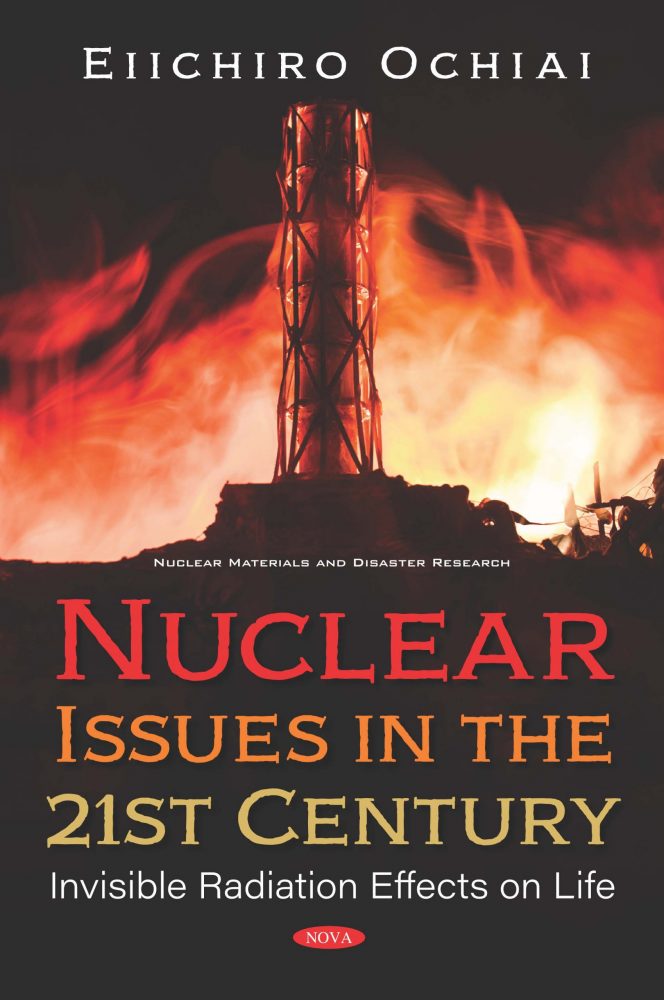
This month, my websites are focussing on ionising radiation. Not that this is a topic in the news media. Far from it. Yet it is strange that the world media is preoccupied with tiny invisible viruses that quickly can bring about illness and death, yet ignores tiny invisible radioactive particles that slowly can bring about illness and death.
Well, the global nuclear lobby has done a darn good job in convincing the world that low level nuclear nuclear radiation is OK, perhaps indeed good for you. Now they’re gearing up for an even bigger push about nuclear being good for the climate.
World Nuclear Industry Status Report 2021. Global nuclear agencies get together to launch the big propaganda show ”Group of Vienna” ahead of COP26.
Climate solutions must be assessed on cost and speed of operation – nuclear fails on both, while reduced demand is a winner. The most important factor in the nuclear-power debate: Cost.
Nuclear for climate? – DON’T MENTION RADIATION!
Greta Thunberg mocks world leaders’ words at Youth4Climate.
No, a nuclear-powered superyacht won’t save the world.
Unknowns about Australia’s proposed nuclear submarines, especially weapons proliferation risks.
ARCTIC. Russian and American nuclear wastes in the Arctic may release radiation as global heating melts the ice.
NORWAY. Norway paid to help Russian nuclear submarine waste clean-up – but now – new submarines!
JAPAN. Japan’s independent English language newsletter, analysing nuclear issues, is struggling to survive.
CANADA. Ontario’s Unfunded Nuclear Decommissioning Liability is in the $18-$27 Billion CAD Range.
USA. Why USA needs a fundamental reappraisal of nuclear weapons policy. An added small nuclear reactor would just increase the burden of radioactive trash at Columbia Generating Station. Elon Musk , world’s richest man, pays no tax, likes nuclear power. Entergy faces federal fine for violations at its nuclear power plant near St. Francisville
UK.
- UK’s nuclear tax – who is going to pay for Sizewell C nuclear station?
- Are small nuclear reactors really the answer to UK’s green energy crisis? Fake ”green” investment fund – a front for the nuclear industry – pushes small nuclear reactors.
- Nuclear test veteran joins the fight against a nuclear waste facility at former gas terminal in Theddlethorpe. Two Cumbria sites earmarked for nuclear waste disposal.
- Reducing energy use is the major way to cut greenhouse emissions, not slow, outdated, and dirty nuclear power.
FRANCE. High rates of cancer and deaths among former nuclear workers at Ile-Longue nuclear submarine base. With its reprocessing plant in La Hague, Two French nuclear workers affected by contaminated water. France has the highest radioactive discharges at sea in Europe. French company EDF getting anxious and urgent about UK getting funding for Sizewell C nuclear project.
HUNGARY. Hungary’s nuclear watchdog withholds permits for two new reactors.
NORTH KOREA. China supports North Korea’s call to revise sanctions, return to nuclear talks.
RUSSIA. The sunken nuclear submarines: Russia’s ‘slow-motion Chernobyl’ at sea. Russia confirms that ”Nuclear is Green”- (George Orwell would be fascinated.)
IRAN. Iran calls on US to unfreeze $10 billion before returning to nuclear talks.
AUSTRALIA. Ionising radiation – the forgotten health disaster. AUKUS and nuclear submarines. Australia’s nuclear submarine deal a distraction from climate action? Australia the sucker for cash-strapped U.S, and U.K submarine companies General Dynamics and BAE Systems. Australia’s nuclear submarines – a grand announcement leading to a grand shambles.
Climate solutions must be assessed on cost and speed of operation – nuclear fails on both, while reduced demand is a winner.

Renewables displace 3–13 times more fossil-fueled generation per dollar than nuclear
“Low-carbon” misses the point — Beyond Nuclear International
https://wordpress.com/read/feeds/72759838/posts/3585195410 3 Oct 21
The view that climate protection requires expanding nuclear power has a basic flaw in its prevailing framing: it rarely if ever relates climate-effectiveness to cost or to speed—even though stopping climate change requires scaling the fastest and cheapest solutions. By focusing on carbon but only peripherally mentioning cost and speed, and by not relating these three variables, this approach misframes what climate solutions must do.
The climate argument for using nuclear power assumes that since nuclear power generation directly releases no CO2, it can be an effective climate solution. It can’t, because new (or even existing) nuclear generation costs more per kWh than carbon-free competitors—efficient use and renewable power—and thus displaces less carbon per dollar (or, by separate analysis, per year): less not by a small margin but by about an order of magnitude (factor of roughly ten). As I noted in an unpublished 17 Aug letter to The New York Times:
…[The Times’s 14 August] editorial twice extols “wind, solar and nuclear power” as if all three had equal climate benefits. They don’t. New electricity costs 3–8 (says merchant bank Lazard) or 5–13 (says Bloomberg New Energy Finance) times less from unsubsidized wind and solar than from nuclear power. Renewables thus displace 3–13 times more fossil-fueled generation per dollar than nuclear, and far sooner. Efficiency is even cheaper, beating most existing reactors’ operating costs. Competing or comparing all options…saves more carbon.
Thus nuclear power not only isn’t a silver bullet, but, by using it, we shoot ourselves in the foot, thereby shrinking and slowing climate protection compared with choosing the fastest, cheapest tools. It is essential to look at nuclear power’s climate performance compared to its or its competitors’ cost and speed. That comparison is at the core of answering the question about whether to include nuclear power in climate mitigation.
The “pro” discussion is also almost invariably focused entirely on the supply-side. Yet the International Energy Agency notes that, in 2010–2016, three-fourths of the world’s decarbonization came from energy savings. IEA also says renewables in 2010–20 decarbonized the world five times as much as nuclear growth did, but when the “pros” compare nuclear only with renewables, they are leaving out the cheapest half (or more) of the solution space—using energy more efficiently.
For example, the US in 2020 used 60% less energy per dollar of GDP than in 1975, and during that period, cumulative savings were 27 times the cumulative increase in supply from nuclear plus renewables. Looking forward, RMI’s Reinventing Fire (2011) rigorously showed how to quadruple the efficiency of using US electricity by 2050, at historically reasonable speed, and at an average cost one-tenth the cost of buying electricity today. That study’s findings have nicely tracked the decade of market evolution since, while the efficiency potential has considerably increased.
These views are explained and documented in my March 30, 2021 Energy & Environmental Study Institute 20-minute brief to Congressional members and staff. Its slides and narrative, plus a data-rich Appendix, can be found here. The content is also reflected in an earlier and more popular article in Forbes. The underlying technical analysis—including the timing of renewable substitution after a nuclear shutdown—is on pp 228–256 of the World Nuclear Industry Status Report 2019, consistent with emerging examples from California and New York.
A common myth often repeated is that renewables use far more land than nuclear power. This is corrected in my technical paper — Renewable Energy’s ‘Footprint’ Myth. Solar land-use is actually comparable to, or somewhat less than, nuclear’s if you properly include the nuclear fuel cycle, not just the power plant it supports.
Windpower’s land use in turn is 1–2+ orders of magnitude smaller than solar’s. A recent Bloomberg report, though it provides a more nuanced treatment, surprisingly botched this comparison, having been misled by a report from a Koch-funded “think tank” whose dodgy provenance Bloomberg may not have realized and did not mention.
The “pro” discussion is further confused by muddled mentions of batteries and hydrogen—just two of ten proven carbon-free resources for balancing largely or wholly renewable grids. Widely cited studies purporting to show that largely or wholly renewable power supply is impossible or at best very costly generally omit most or all of the other eight options. My recent article, Twelve energy and climate myths, dispels the common misconceptions implicit in this point of view, and should also help to dispel a common mischaracterization of what happened in Germany and Japan. Two slides from my EESI brief tell that story from the official data:
If the question of whether or not there is a nuclear “option” for stopping climate change continues to be debated (as it was in Spencer Bokat-Lindell’s August 26, 2021 column in the New York Times), then it must frame this correct and important question in a way that actually addresses it, by comparing both demand- and supply-side options in cost, speed, and hence climate-effectiveness.
And if this debate includes the question of using new sizes or types of reactors to answer the climate challenge, it won’t have a happy answer. This is both for the basic economic reasons summarized in slide 18 of my EESI brief, and because such reactors can’t scale significantly until at least the late 2030s, and by then the US power sector should already have been fully decarbonized.
Physicist Amory B. Lovins is Adjunct Professor of Civil and Environmental Engineering, and Scholar, Precourt Institute for Energy, Stanford University.
Are small nuclear reactors really the answer to UK’s green energy crisis?

the falling cost of wind and solar power, coupled with new technology to store energy off the grid for times when it is needed, made nuclear largely redundant.
“It’s too expensive, takes too long to develop, and we can’t afford to wait for it”
| Are small nuclear reactors really the answer to our green energy crisis? Small nuclear reactors are hailed as an answer to our energy crisis, but Jon Yeomans finds problems remain with the untested technology. Trawsfynydd’s fortunes could be about to change. It has been proposed as a possible site for a new type of nuclear reactor to be built by a consortium led by Rolls-Royce. Small modular reactors (SMRs) offer the promise of a new fleet of power stations that could be produced in a factory, loaded on to lorries and then trucked around the country for installation on decommissioned nuclear sites. The government believes these so-called “mini-nukes” will form a key part of its “green recovery” and is close to approving £215 million in funding to speed their development. The hope is that they could reduce the cost of nuclear power dramatically and help the UK to hit its target of net-zero emissions by 2050. But nothing is ever simple with nuclear. Can this dream become reality? With large-scale nuclear projects under a cloud, the government has warmed to the idea of smaller, nimbler technology, such as the SMRs proposed by Rolls-Royce. The Derby-based company is better known for producing aircraft engines, but since the 1960s it has also been responsible for the reactors on Britain’s nuclear submarines. These pressurised water reactors (PWRs) will form the basis of the SMRs it proposes to build in the UK. The big selling point of SMRs is that they can be made on a production line, reducing the huge costs of a project such as Hinkley. Rolls claims they solve “the conundrum of how to create affordable energy, and more of it, with a lower carbon footprint”. It says the scheme could generate £52 billion of “economic benefit” by 2050. The company’s SMRs will have a price tag of about £2 billion each, once the initial costs of building the factory are out of the way. It is thought Rolls would need to make 16 before the programme could pay its way, with financial support from the government required for at least the first four units. The SMRs would have a capacity of 470MW — enough to power one million homes. Critics of SMRs note there are few, if any, operating anywhere in the world. The American company Westinghouse is developing a lead-cooled reactor with 450MW capacity which won £10 million in UK government funding last year. NuScale, based in Oregon, is working on SMRs with an output of 77MW. But its first plant will not be operational until 2027. If the government gives the green light, Rolls will spend the next four years seeking approval from regulators while simultaneously building the first of a projected three factories in the UK. Company sources suggested the factories themselves could be a “levelling up” opportunity, bringing high-skilled jobs to the regions. It would take another four years for the first reactor to roll off the production line, pushing their start date into the next decade. Stephen Thomas, professor of energy policy at Greenwich University, said the falling cost of wind and solar power, coupled with new technology to store energy off the grid for times when it is needed, made nuclear largely redundant. “It’s too expensive, takes too long to develop, and we can’t afford to wait for it,” he said. A report by National Grid ESO (Electricity System Operator) this year envisaged at least two pathways to net zero by 2050 that did not rely on a large increase in nuclear. Instead, the gap in output would be made up by more renewable energy; more energy storage, in the form of batteries; and changing consumer behaviour to lower energy demand. Times 3rd Oct 2021 https://www.thetimes.co.uk/article/are-small-nuclear-reactors-really-the-answer-to-our-green-energy-crisis-pm9mrmtqg |
An added small nuclear reactor would just increase the burden of radioactive trash at Columbia Generating Station

“A new nuclear reactor and its inevitable waste would further perpetuate the burden of cleanup,”
Oregon group claims new nuclear reactor plan poses threat to Tri-Cities, Columbia River https://www.union-bulletin.com/news/northwest/oregon-group-claims-new-nuclear-reactor-plan-poses-threat-to-tri-cities-columbia-river/article_66e8ffd6-23d7-11ec-be7c-fbf4fdf0cc75.html Annette Cary The Tri-City Herald, 3 Oct 21,
RICHLAND — An Oregon environmental group is objecting to Energy Northwest’s plan to place a small modular power reactor on its leased land on the Hanford nuclear reservation near the Columbia River just north of Richland.
Earlier this year Energy Northwest, which operates the Columbia Generating Station nuclear power plant near Richland, announced plans with X-energy and Grant County PUD to add a small modular reactor near its current, full-size commercial nuclear power reactor.
Columbia Riverkeeper says in a new report that it is concerned about the used radioactive fuel the proposed new reactor would generate.
The United States now lacks a deep geological repository for used commercial nuclear power plant fuel, after work stopped to develop the repository at Yucca Mountain, Nev.
The used fuel for the Columbia Generating Station, the Northwest’s only commercial nuclear power reactor, is stored in 19-feet-tall concrete and steel storage cylinders on a reinforced concrete pad near the reactor until the nation has a repository.
The small nuclear reactor planned by Energy Northwest is a high temperature gas-cooled Xe-100 reactor, which could be the nation’s first operating advanced nuclear reactor. The 80-megawatt reactor could be operating in 2028.
The project, with modular reactors added, could be scaled up to a 320-megawatt reactor.
Columbia Generating Station has the capability to produce 1,207 megawatts of electricity.
Columbia Riverkeeper says the Xe-100 reactor would generate more used fuel than the conventional large reactor per the power output of each.
It also is concerned about siting the plant on Energy Northwest’s leased land at the Department of Energy’s Hanford nuclear reservation in Eastern Washington, which was developed for wartime weapons production rather than commercial power production.
The 580-square-foot DOE nuclear reservation was used to produce two-thirds of the nation’s plutonium from World War II through the Cold War.
Now about $2.5 billion is being spent annually to clean up radioactive and chemical contamination left from the project.
DOE is focused now on 56 million gallons of radioactive and chemical waste in underground tanks after chemical processes were used to separate small quantities of plutonium from irradiated uranium fuel.
Used fuel from commercial nuclear power reactors remains in a solid form rather than being chemically processed.
“Adding more nuclear infrastructure — a small modular nuclear reactor — at Hanford without any long-term plan for the radioactive waste should be a nonstarter,” said Lauren Goldberg, legal director with Columbia Riverkeeper.
The waste from a small modular reactor would burden future generations, said Miya Burke, the lead author of Columbia Riverkeeper’s new report “Q&A: Nuclear Energy Development Threatens the Columbia River.”
“A new nuclear reactor and its inevitable waste would further perpetuate the burden of cleanup,” she said.
The report quotes the Confederated Tribes of the Umatilla Indian Reservation, which have treaty rights at Hanford, as opposing new nuclear missions on the Hanford site.
The Umatillas say no expansion of nuclear energy production should be developed without permission obtained through the tribes with government-to-government consultation.
Energy Northwest responded to Columbia Riverkeepers concerns, saying that it has always supported open discussions on advanced nuclear and small modular reactors.
But it has questions of the validity of some of the claims in the new report and the data supporting them.
Among issues raised in the report was the safety and cost of the proposed new small modular reactor, which remains under development.
X-energy says its proposed reactor design is based on “safe, secure, clean and affordable technology.” The Department of Energy awarded it $80 million to develop and demonstrate its first commercial small modular reactor.
“Over the past year we have engaged many groups and stakeholders — from environmental organizations and tribes to elected officials and local communities — to understand their concerns and receive their input,” Energy Northwest said in a statement. “Energy Northwest and our partners hope to have the same opportunity with the authors of this report.”
French company EDF getting anxious and urgent about UK getting funding for Sizewell C nuclear project.
EDF chief urges UK to clarify future of nuclear power station
French group wants ‘urgent” decision by British government on whether China’s CGN has a role, Ft.com Nathalie Thomas in Edinburgh and Jim Pickard in London, 3 Oct 21,
EDF has warned that it is now “urgent” for the UK government to decide on the future of the £20bn Sizewell C nuclear power station, including whether China’s CGN should remain involved in the project.
Simone Rossi, head of the French utility’s UK arm, is hoping to take a final investment decision by the end of 2022 on the nuclear plant earmarked for Suffolk on England’s east coast, which would generate enough electricity for 6m homes but is strongly opposed by environmental groups.
Before EDF could commit to building the plant, Rossi said it needed UK ministers to settle matters such as which partners were involved and legislation on the preferred funding model.
……………all but one of Britain’s current fleet of nuclear power stations will close by the end of the decade. The first new nuclear plant in a generation, Hinkley Point C in Somerset, which is being built by EDF, will not start electricity production until 2026, while questions remain over the future of several other proposed sites.
EDF is keen for a swift government decision on Sizewell so it can transfer workers from Hinkley. Sizewell will use the same reactor design as Hinkley. State-owned CGN holds a 20 per cent stake in Sizewell, and has an option to participate in the construction. EDF holds the remaining 80 per cent. Rossi said CGN’s continued participation in the project was “a matter for the UK government to decide”.
. EDF has warned that it is now “urgent” for the UK government to decide on the future of the £20bn Sizewell C nuclear power station, including whether China’s CGN should remain involved in the project. Simone Rossi, head of the French utility’s UK arm, is hoping to take a final investment decision by the end of 2022 on the nuclear plant earmarked for Suffolk on England’s east coast, which would generate enough electricity for 6m homes but is strongly opposed by environmental groups.
Before EDF could commit to building the plant, Rossi said it needed UK ministers to settle matters such as which partners were involved and legislation on the preferred funding model. “I think really the time is now for all those decisions to coalesce together and say right: ‘Do we want to do it or not?’ And if we want to do it how are we going to do it?” Rossi told the Financial Times. “This is all now urgent.”
………. while questions remain over the future of several other proposed sites. EDF is keen for a swift government decision on Sizewell so it can transfer workers from Hinkley. Sizewell will use the same reactor design as Hinkley. State-owned CGN holds a 20 per cent stake in Sizewell, and has an option to participate in the construction. EDF holds the remaining 80 per cent. Rossi said CGN’s continued participation in the project was “a matter for the UK government to decide”. The Financial Times reported in July that ministers were examining ways to remove CGN from UK nuclear projects following a deterioration in relations between London and Beijing over issues including the clampdown on dissent in Hong Kong. UK officials are considering plans for the government to take on CGN’s 20 per cent stake in Sizewell and either sell the shareholding on to institutional investors or float it on the stock market. ……… https://www.ft.com/content/7c3a4e77-9889-43b4-a7fa-1bbb5b6bd985
Iran calls on US to unfreeze $10 billion before returning to nuclear talks
Iran calls on US to unfreeze $10 billion before returning to nuclear talks
If the U.S. is serious about rejoining the 2015 nuclear accord, “then a serious indication is needed,” says Iran’s foreign minister.
BY DEAN SHMUEL ELMAS AND JNS STAFF (OCTOBER 3, 2021 / ISRAEL HAYOM) Iranian Foreign Minister Hossein Amir-Abdollahain said on Saturday that the Islamic Republic had requested that the United States unfreeze “at least” $10 billion in frozen Iranian funds to prove it was serious about rejoining the 2015 Joint Comprehensive Plan of Action……. https://www.jns.org/iran-calls-on-us-to-unfreeze-10-billion-before-returning-to-nuclear-talks/
1 This Month
Tell Congress: Prevent Nuclear Catastrophe in Iran

Tell Congress: Prevent Nuclear Catastrophe in Iran

Read the Public Inquiry Report, the Commissioners’ report, Surrendering Australia: The AUKUS Deception is available to download for free at aukuspublicinquiry.com. Or just watch the replay of the National Press Club Luncheon.


Shut down the radiation-damaged Heysham nuclear reactors now
To see nuclear-related stories in greater depth and intensity – go to https://nuclearinformation.wordpress.com

Say No to NASA’s Reckless Nuclear Reactor on the Moon
Say No to NASA’s Reckless Nuclear Reactor on the Moon
-
Archives
- November 2026 (238)
- October 2026 (302)
- September 2026 (339)
- August 2026 (330)
- July 2026 (355)
- June 2026 (287)
- May 2026 (306)
- April 2026 (356)
- March 2026 (251)
- February 2026 (267)
- January 2026 (308)
- December 2025 (358)
-
Categories
- 1
- 1 NUCLEAR ISSUES
- business and costs
- climate change
- culture and arts
- ENERGY
- environment
- health
- history
- indigenous issues
- Legal
- marketing of nuclear
- media
- opposition to nuclear
- PERSONAL STORIES
- politics
- politics international
- Religion and ethics
- safety
- secrets,lies and civil liberties
- spinbuster
- technology
- Uranium
- wastes
- weapons and war
- Women
- 2 WORLD
- ACTION
- AFRICA
- Atrocities
- AUSTRALIA
- Christina's notes
- Christina's themes
- culture and arts
- Events
- Fuk 2022
- Fuk 2023
- Fukushima 2017
- Fukushima 2018
- fukushima 2019
- Fukushima 2020
- Fukushima 2021
- general
- global warming
- Humour (God we need it)
- Nuclear
- RARE EARTHS
- Reference
- resources – print
- Resources -audiovicual
- Weekly Newsletter
- World
- World Nuclear
- YouTube
-
RSS
Entries RSS
Comments RSS

