UK’s Nuclear Energy Finance Bill Committee hears problems about funding of new nuclear projects, that will be too late to affect climate change.
nuClear News No 126 December 21, . New Nuclear Energy Developments In Safe Energy Journal No.92 and nuClear News No.135 we reported on a debate in the House of Commons on the Second Reading of the Nuclear Energy Finance Bill, which took place on 3rd November. (1) Since then, there have been several meetings of the Nuclear Energy Finance Bill Committee, including one session which took evidence from Doug Parr of Greenpeace, Mycle Schneider of the World Nuclear Industry Status Report and Professor Steve Thomas. (2)

The SNP’s Energy Spokesperson at Westminster, Alan Brown, asked Mycle Schneider about the argument that the UK needs baseload power and can’t meet its net zero targets without nuclear power. Mycle pointed out that we are in a climate emergency, so we need reductions in carbon emissions as quickly as possible. For every pound we spend we need to see large and fast results. It’s clear that there are other options beside nuclear which are more climate effective. The cost of renewables is cheaper and nuclear is five times slower. Possible investments in nuclear which might deliver after 2030 are much too slow.
Regarding the need for baseload electricity, the National Grid’s scenarios say nothing about the need for reliable baseload. Only one out of their three scenarios needs Sizewell C. Nuclear is not flexible. If the wind isn’t blowing nuclear doesn’t help. What is required is batteries and demand-side responses to compensate for intermittency.
Analysis of the French nuclear fleet shows that nuclear power is not a reliable source providing power 24/7. For 2019 – the year before Covid – when EDF starts an outage for maintenance and refuelling it has lost control entirely over the date and time it is able to restart its reactors. There were over 40 cases of revised times and dates. EDF was not even able to make reliable predictions 24 hours before the reactors were due to restart.
Labour’s Alan Whitehead asked Mycle Schneider about the experience of the United States using the Regulated Asset Base (RAB) funding model for two plants in South Carolina which were abandoned recently. Should there be measures in any Bill which make sure any nuclear plant is finished to avoid consumers being dumped with the cost of a plant that wasn’t finished. Construction of VC Summer started in 2013 and it was supposed to come on-line in 2017. By 2017 the cost estimate had increased by 75%. In July 2017 construction was abandoned. This was one of the consequences of the fact that Westinghouse filed for bankruptcy. The affair has cost consumers billions.

Steve Thomas said what marked out the VC Summer project and a similar project in Georgia from other US projects was that they allowed the recovery of costs from consumers before completion of the reactors. The Summer experience shows very clearly the folly of using the RAB model. We would have to be careful with any legislation which prevents nuclear plants under construction being abandoned. Dungeness B took 24 years from the start of construction to commercial operation, and over its 32 years of operation its availability was well below 50%. It should have been abandoned before it was completed.
Matthew Pennycook said there is a lack of clarity around the Chinese company, CGN’s investment in Sizewell C and how that interacts with the intentions of this Bill. He asked what is in the 2016 Strategic Investment Agreement and what provisions there are in that agreement that would allow the Government to remove CGN. And related to that there was £1.7 billion in the budget to enable a final investment decision for a large scale nuclear project. Is that money to buyout the CGN stake?

Steve Thomas said in the 2016 Agreement CGN agreed to take up to 20% of the Sizewell C project up to the Final Investment Decision (FID). They have an option to take 20% of the construction and operation of the plant if it goes ahead. EDF and CGN have spent about half a billion pounds so far, It may take another £0.5 billion at the most to get to FID. So £1.7bn seems too much. In terms of how you get CGN out of Sizewell C it probably depends on what happens to Bradwell B. The Chinese really want to get the endorsement of UK nuclear regulators for it HPR1000 reactor. If they are not going to be allowed to build Bradwell B, they are unlikely to be interested in putting money into Sizewell C.
Steve Thomas told MPs there is a lot of missing detail in the RAB proposals. One of the biggest elements is how much the surcharge will be during the construction. The Government has said it will be a maximum of about £10 per year per consumer. That would yield £6bn. In the context of a project that will cost £24-40bn, plus financing costs, £^bn is not much of a game changer.
PMQs On 24th November, during Prime Minister’s Questions Matthew Pennycook asked: “The Government’s integrated review has concluded that the Chinese state poses a systemic challenge to our national security, and the Prime Minister has made it clear that when it comes to China, we must remain vigilant about our critical national infrastructure. Can he therefore confirm unequivocally today that plans for China General Nuclear to own and operate its own plant at Bradwell in Essex have been abandoned, and explain to the House precisely how and when his Government intend to remove CGN’s interest from the Sizewell C nuclear project?”
Boris Johnson replied that “…we do not want to see undue influence by potentially adversarial countries in our critical national infrastructure. That is why we have taken the decisions that we have. On Bradwell, there will be more information forthcoming – What I do not want to do is pitchfork away wantonly all Chinese investment in this country, or minimise the importance to this country of having a trading relationship with China.” (3)
The Times pointed to the National Security and Investment Bill, going through parliament at present, which will allow the government to “screen” and potentially block sensitive foreign investments, and concluded that China will be cut out of future involvement in developing new nuclear power stations, but this is still not entirely clear. (4)
Mr Pennycook later responded to the PMs answer via Twitter: “We need certainty on the future of China’s involvement in UK nuclear power and clarity about how and when the Government intends to remove China’s state-controlled nuclear energy company from involvement in any future UK project.”
Subsequently the team behind Bradwell B said China’s nuclear group remains committed to the project. (5) https://www.no2nuclearpower.org.uk/wp/wp-content/uploads/2021/12/nuClearNewsNo136.pd
European Union passes sustainable taxonomy law, but postpones decision about nuclear power.

“The commission must deliver a science-based taxonomy regulation that excludes fossil gas, nuclear, and factory farming. Otherwise, the credibility of the taxonomy is ruined.”
EU green taxonomy becomes law, gas and nuclear postponed, Institutional investors have signalled they want a taxonomy that is based on science – not political compromise. euobserver, By WESTER VAN GAAL 11 Dec 21,
BRUSSELS, The first two chapters of the sustainable taxonomy, the EU’s ambitious labelling system for green investment, were passed on Thursday (9 December).
Until midnight on Wednesday, EU member states had time to reject this first set of rules – the so-called ‘first delegated act’.
But despite opposition from a group of countries, the proposal passed and will come into force on 1 January 2022. It will describe the sustainable criteria for renewable energy, car manufacturing, shipping, forestry and bioenergy and more, and include a “technology-neutral” benchmark at 100 grams of CO2 per kilowatt-hour for any investments in energy production.
The criteria for the list has mainly been compiled by the Sustainable Finance Platform, a group of 57 NGOs, scientific and financial experts, making the first part of taxonomy “science-based”…..
The European Commission will now likely unveil the second delegated act on 22 December.
This will describe how nuclear and gas will be labelled under the taxonomy. But the process has become highly-politicised over the last months.
Second act
In a meeting of member states on 29 November the project nearly faltered.
An EU diplomat, speaking anonymously, explained to EUobserver that a French-led group of 13 member states tried to block the first list “out of principle” – because the commission had not agreed to include nuclear and gas in the green taxonomy.
France and Finland pushed for nuclear to be “fully part of the taxonomy.” Ten other mainly eastern European countries want gas included. Sweden joined the group because the new rules endanger its forestry sector.
The group tried to gain a supermajority of 15 to force the commission’s hand but fell short. Germany and Italy abstained, but did not respond to requests for explanation made by EUobserver.
The commission will now decide how to label nuclear and gas before the end of the year, and it is not yet clear how the issue will pan out…………..
Whatever the commission will decide, only a supermajority in the council – 15 member states – or a parliamentary majority can block the second delegated act. Both are unlikely.
What next?
Institutional investors have already signalled they want a taxonomy based on science, not political compromise.
This will “harm the objective-scientific, transparent character of the taxonomy and increases the risk of ‘greenwashing’. Europe promised the world climate leadership, it is time to show it,” a group of banks wrote this week.
Sebastien Godinot, a senior economist at WWF and member of the EU’s Sustainable Finance Platform, said the commission must not give in to blackmail and bullying.
“The commission must deliver a science-based taxonomy regulation that excludes fossil gas, nuclear, and factory farming. Otherwise, the credibility of the taxonomy is ruined.”
But the commission may have no choice but to compromise between the gas and nuclear-supporting member states on one side, and countries opposing these on the other – while also being mindful that investors and experts from its Sustainable Finance Platform will reject a system containing contradictory political concessions. https://euobserver.com/climate/153776
Appeal to UK’s Supreme Court will just lengthen Julian Assange’s legal torment
Edward Fitzgerald QC, for Assange, previously told the High Court that Australia had not indicated whether it would accept Assange, who “will most likely be dead before it can have any purchase, if it ever could”……..
Assange lawyers eye UK Supreme Court, The North West Star.Jess Glass and Tom Pilgrim, PA
11 Dec 21, Julian Assange’s lawyers intend to take his case to the Supreme Court, his fiancee says, after the High Court allowed the WikiLeaks founder’s extradition to the United States.
Assange, 50, is wanted in the US over an alleged conspiracy to obtain and disclose classified information following WikiLeaks’ publication of hundreds of thousands of leaked documents relating to the Afghanistan and Iraq wars
US authorities brought a High Court challenge against a January ruling by then-district judge Vanessa Baraitser that Assange should not be sent to the US, in which she cited a real and “oppressive” risk of suicide.
After a two-day hearing in October, the Lord Chief Justice Lord Burnett, sitting with Lord Justice Holroyde, ruled in favour of the US on Friday………..
The judges ordered that the case must return to Westminster Magistrates’ Court for a district judge to formally send it to UK Home Secretary Priti Patel.
Assange’s fiancee Stella Moris called the ruling “dangerous and misguided” and said his lawyers intended to seek an appeal at the Supreme Court……..
The legal wrangling will go to the Supreme Court, the United Kingdom’s final court of appeal.
“It is highly disturbing that a UK court has overturned a decision not to extradite Julian Assange, accepting vague assurances by the United States government,” Assange’s lawyer Barry Pollack said.
“Mr Assange will seek review of this decision by the UK Supreme Court.”
Supporters of Assange gathered outside of the court after the ruling, chanting “free Julian Assange” and “no extradition”.
They tied hundreds of yellow ribbons to the court’s gates and held up placards saying “journalism is not a crime”.
If Assange’s lawyers do take his case to the Supreme Court, justices will first decide whether to hear the case before any appeal is heard.
During October’s hearing, James Lewis QC for the US said that the “binding” diplomatic assurances made were a “solemn matter” and “are not dished out like Smarties”.
The assurances included that Assange would not be held in a so-called “ADX” maximum security prison in Colorado or submitted to special administrative measures (SAMs) and that he could be transferred to Australia to serve his sentence if convicted.
But lawyers representing Assange had argued that the assurances over the WikiLeaks founder’s potential treatment were “meaningless” and “vague”.
Edward Fitzgerald QC, for Assange, previously told the High Court that Australia had not indicated whether it would accept Assange, who “will most likely be dead before it can have any purchase, if it ever could”……..
The United Nations’ special rapporteur on torture Nils Melzer sharply criticised the verdict.
“This is a shortcoming for the British judiciary,” Melzer told the DPA news agency on Friday.
“You can think what you want about Assange but he is not in a condition to be extradited,” he said, referring to a “politically motivated verdict”.
with reporting from Reuters and DPA https://www.northweststar.com.au/story/7547237/assange-lawyers-eye-uk-supreme-court/?cs=13136
Russia Angered by Senator Roger Wicker’s Nuclear Strike Remarks on Ukraine
Russia Angered by Senator Roger Wicker’s Nuclear Strike Remarks on Ukraine, NewsWeek, BY BRENDAN COLE ON 12/9/21 Russia has condemned GOP Senator Roger Wicker for suggesting that the U.S. should consider launching a nuclear strike to defend Ukraine.
The Russian embassy in Washington also hinted that Wicker was championing businesses in his home state of Mississippi when he called for U.S. military intervention over Moscow’s buildup of troops close to the Ukrainian border.
Wicker provoked the stern Russian response after telling Fox News host Neil Cavuto: “I would not rule out American troops on the ground. We don’t rule out first-use nuclear action.”……
The statement added that “long-term security guarantees” between the U.S. and Russia required “a demonstration of readiness to compromise. It is unlikely that Roger Wicker’s ill-considered statements will help us get out of the current acute phase of Russian-American relations.”……….. https://www.newsweek.com/russia-nuclear-ukraine-roger-wicker-embassy-irresponsible-putin-biden-summit-1657634
Options for the future of the US intercontinental ballistic missile (ICBM) programme -the Carnegie Endowment fo International Peace.
The Pentagon has asked a Washington thinktank to draw up a report on the
future of the US intercontinental ballistic missile (ICBM) programme and
deliver it before the end of January. The Carnegie Endowment for
International Peace (CEIP) will present options based on three rounds of
virtual consultations, which began on Tuesday, between Pentagon officials,
nuclear weapons experts and arms control advocates.
Guardian 9th Dec 2021
How the military-industrial complex has captured Australia’s top strategic advisory body

AUSTRALIA CAPTURED – How the military-industrial complex has captured Australia’s top strategic advisory body, MICHELLE FAHY, DECLASSIFIED AUSTRALIA 9 DECEMBER 2021
The Australian Strategic Policy Institute has veered away from its founding vision of providing an array of independent diverse views, to now promote an aggressive militaristic solution to the heightened tensions in Australia’s region.
The Australian Strategic Policy Institute (ASPI) in Canberra is the government’s primary source of outside-government advice, research and analysis on military and strategic affairs. Since its establishment in mid-2001, it has veered away from its founding vision.
There is a jarring disconnect between the lofty goals of independence expressed in ASPI’s charter, and the infiltration of ASPI by tentacles of the military-industrial complex. This has been barely mentioned in Australia’s mainstream media.
A Declassified Australia investigation has uncovered a casebook example of ‘state-capture’, with the development of deep connections between ASPI, and the world’s largest and most powerful military weapons manufacturers.
Australia is a significant participant in the global arms trade at present. Its $270-billion decade-long spending spree upgrading weapons and war machines is large by international standards, and Australia is increasingly becoming an arms seller too. As Australia moves militarily ever closer to the US, even defence insiders say the defence industry is ‘awash with money’.
The wars in Iraq, Afghanistan, Syria and Yemen have made the world’s biggest weapons manufacturers richer, larger, and more influential. At the lesser-known end of the spectrum, the Yemen war is notable for its extensive human rights abuses and war crimes: it has created the world’s largest humanitarian crisis. Despite pleas from the UN, the arms still flow and the war continues. The weaponry for this war has been supplied by the world’s top arms manufacturers, including Lockheed Martin, BAE Systems, Boeing, and missile-maker Raytheon.
ASPI and the Weapons Lobby
The Australian subsidiaries of these and other global weapon-makers have been regular ASPI sponsors for years. Some of them have successfully used the back door to gain access to ASPI’s top table, its governing council. ASPI council members have included former senior military officers, defence ministers, and federal MPs who are also on arms and cyber company boards. It has also included former and current arms industry executives. The challenge to ASPI’s independence is large and real.
ASPI’s founding charter, since it was established in 2001 by then prime minister John Howard with bipartisan support from Labor leader Kim Beazley, declares it must ‘operate independently of Government and of the Defence Organisation’.
Further, it states that ‘the perception, as well as the reality, of that independence would need to be carefully maintained’. Thus, from the outset, the government was acknowledging how such an important think tank would be vulnerable to capture by vested interests, both ideological and commercial………..
Our investigation shows that the ASPI council has numerous members who represent or have close links to the military-industrial complex. Of the 11 non-executive directors on ASPI’s governing council, five sit on the boards or advisory boards of weapons or cybersecurity corporations, while numerous past council members have had similar connections.
The current council includes former Howard defence minister Robert Hill. He’s on the supervisory board of German weapon-maker Rheinmetall’s Australian subsidiary, which is supplying Defence’s $5 billion of Boxer combat reconnaissance vehicles, and will soon also produce and export ammunition for the US Joint Strike Fighter program. Hill is also chair of Viva Energy Group, a major supplier of fuel to the Australian Defence Force (ADF)…………………….
Declassified Australia put questions to ASPI and the current council members. Dr Nelson declined to comment. No other council member responded by deadline. ASPI replied saying it manages conflict of interest matters in line with other Australian proprietary limited companies, and that ‘Council members will recuse themselves from discussions which may give rise to the perception of a conflict of interest matter’.
ASPI has a history of council members with interests in the defence industry. Jim McDowell was chief executive of BAE Systems in Australia for a decade, and then ran BAE in Saudi Arabia, where the Saudi military has since used BAE arms in the catastrophic war in Yemen. Returning to Australia, he was engaged by Liberal defence industry minister Christopher Pyne, and Defence, on numerous sensitive defence projects while also on ASPI’s Council. BAE Systems is in the running to provide Australia’s planned nuclear-powered submarines under the AUKUS pact.
Former Labor senator Stephen Loosley’s Council membership, including seven years as chair, coincided with board roles at French arms multinational Thales Australia, manufacturer of the Austeyr, the service rifle for all the Australian military, as well as armoured vehicles, submarine sonars and munitions. The Thales group has been accused of selling weapons to the Indonesian military who are running a war in West Papua against the independence movement.
Former Labor defence minister Kim Beazley was an ASPI distinguished fellow for two years in 2016-2018. For the majority of that time he was on the board of Lockheed Martin Australia while writing regularly for ASPI, without ASPI disclosing his board position at Lockheed.
………..ASPI’s independence is drawn into question not just by its board appointees but also by some research fellows. One recent example is the former director of cyber, intelligence and security at BAE Systems Applied Intelligence, Rajiv Shah, who cowrote a report on collaboration within the intelligence community that was sponsored by BAE Systems. Shah is now an ASPI fellow and a consultant to government and industry. ASPI does not disclose either in the report nor in his website bio Shah’s previous employment with BAE Systems, one of the world’s top 10 arms companies. Dr Shah did not respond to questions.
Declassified Australia does not imply any illegality by any past or present ASPI council members, fellows, or staff. The issue is the deep involvement of people associated with global weapons manufacturers, and the potential for, and perception of, conflicts with ASPI’s charter of independence.
The Reshaping of ASPI
At its foundation, the ASPI Council was instructed by the government to ensure its independence. As set down by the defence minister, it is required not only to be ‘politically non-partisan’ but also, most crucially, to ‘reflect the priority given to both the perception and substance of the Institute’s independence’.
The Howard government had envisaged that ASPI would do this by maintaining a ‘very small’ permanent staff while relying mostly on short-term contracts, secondments and similar arrangements for its research work. It would not publish views in its own name but would provide a forum for the views of a wide variety of outside experts.
20 years on, ASPI has morphed into a very different organisation.
A decision by Labor prime minister Kevin Rudd to make Stephen Loosley the ASPI Council chair in 2009, while Loosley was on the Thales Australia board, tested perceptions of independence. Then, in 2012, the Gillard Labor government appointed the current executive director directly from the senior position of Deputy Secretary of Strategy in the Defence Department. In the late 90s, Peter Jennings had been chief of staff to Liberal defence minister Ian McLachlan when the Howard Government first mooted the idea of creating ASPI.
Under this new leadership, ASPI set about expanding. Staff numbers have quadrupled in nine years from 14 to 60, plus there are now 29 research fellows and nine interns.
ASPI receives its core funding via a grant from the Defence Department. In 2018, the Morrison government approved a $20 million grant to cover five years’ of ASPI operations. In May 2021, this grant was increased by $5 million to cover two years of operations of a new Washington DC office.
Since 2012, ASPI has vigorously pursued additional funding. Within two years, annual income from commissioned research jumped from $37,000 to $1.1 million, and sponsorships were up 235% to $746,000. ASPI’s own-sourced revenue has continued to grow dramatically. In 2011-12, ASPI received less than $500,000 above its base funding, by 2020-21 it had exploded to $6.7 million.
The single largest source of ASPI’s funding in 2020-21, beyond its core funding, was from the US Government’s Departments of Defense and State ($1.58m), followed by additional funding from Defence ($1.44m) and other federal government agencies ($1.18m). The NSW and Northern Territory governments provided $445,000. In the private sector, the largest source was social media, tech and cybersecurity companies ($737,362), with Facebook ($269,574), Amazon ($100,000) and Microsoft ($89,500) being the largest. From the arms industry, ASPI received $316,636, with more than two-thirds of that coming from two of Australia’s largest defence contractors, Thales ($130,000) and BAE Systems ($90,000).
In 2019-20, Twitter gave ASPI $147,319 for its cyber research. Significantly, Twitter last week announced a partnership with ASPI said to be dealing with misinformation from the Chinese communist party that was seeking to counter evidence of human rights abuses in Xinjiang. As a result of ASPI’s research, thousands of “state-linked accounts” were shut down by Twitter.
While the cash from the arms industry may not appear substantial, as we have seen, the arms industry wields its major influence via its representatives finding their way on to seats at the top table.
The substantial extra funding from the US government, Defence and other Australian government departments, as well as corporate interests, provides a real challenge to ASPI’s responsibility to remain independent. It raises serious questions about undue influence, including foreign influence, at ASPI.
ASPI responded to our questions about protecting the perception of its independence by saying it retains ‘complete editorial independence on the material we choose to research’. It said it would not accept funding from parties attempting to constrain its editorial independence.
But just what does the US government get in return for its $1.57 million funding of ASPI, beyond its research projects on human rights violations, disinformation, and cybersecurity in China?
And what might BAE Systems get for its $90,000 grant to ASPI, other than a new report on the need for a ‘collaborative and agile’ intelligence community?
And what about Thales Australia, in return for its $130,000 grant to ASPI, beyond just being lead sponsor of the 2020 ASPI Conference?
The answer for them all, is ‘influence’.
ASPI’s role in advising the Australian government on defence strategy and procurements and cybersecurity would better serve the Australian people if it was to return to its original charter of researching and publishing a diversity of views from a position of uncompromised independence.
MICHELLE FAHY is an independent writer and researcher, specialising in the examination of connections between the weapons industry and government, and has written in various independent publications. She is on twitter @FahyMichelle, and on Substack at undueinfluence.substack.com https://declassifiedaus.org/2021/12/09/australia-captured/?fbclid=IwAR0_MMo3hIrY7uDHK4d2l5M-nxdsGBFyA_6Xtim8jxjotqPkMXmFheeGNWM
Industrial action set to ”cripple” the effective running of UK’s nuclear submarine base.
SPECIALIST staff are to escalate industrial action in a dispute which a
union has said is expected to “cripple” the effective running of UK’s
nuclear submarine base on the Clyde. Unite Scotland has confirmed that its
pay dispute with the ABL Alliance at the Royal Naval Armaments Depot (RNAD)
Coulport is to escalate with around 70 workers set to take strike action
from next week.
Herald 9th Dec 2021
UK government will ”prove the potential”of advanced nuclear reactors with its Advanced Modular Reactor Research, Development and Demonstration Programme.
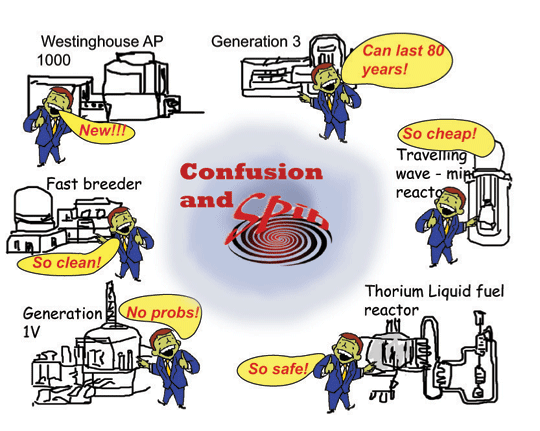
nuClear NewsNo 136 Dec 21, Advanced Reactors , Energy minister Greg Hands told the Nuclear2021 conference organised by the Nuclear Industry Association that the UK will build a high-temperature gas reactor (HTGR) as the centrepiece of its Advanced Modular Reactor Research, Development & Demonstration Programme.
The goal of the research programme is to “prove the potential” of advanced reactors and have a demonstration unit in operation “by the early 2030s, at the latest”. The key focus would be to produce high temperature heat which could be used for hydrogen production, to supply industrial processes and potentially district heating as well as electricity generation.
Several other reactor concepts could have been selected. The emerging category of ‘advanced’ reactors includes the lead-cooled fast reactor, molten salt reactor, supercritical water-cooled reactor, sodium-cooled fast reactor and very-high-temperature gas reactor in addition to hightemperature gas reactors.
Paul Howarth, CEO of the National Nuclear Laboratory (NNL), called it “a further signal of the resurgence of nuclear.” He added, “With the opportunity HTGRs bring to deliver high temperature heat, hydrogen and synthetic fuels, the potential of this technology to help decarbonise our industries and energy grid is significant.” He noted that NNL is “actively working on the fuel, graphite and high temperature materials required for HTGRs.”
The Advanced Modular Reactor Research, Development & Demonstration Programme counts on £170 million of government funding from a £385 million package intended to accelerate development of highly flexible nuclear technologies. (1)
In July the Government sought views on its preference to explore the potential of High Temperature Gas Reactors (HTGRs) for the Advanced Modular Reactor Research Development & Demonstration (AMR RD&D) Programme. It says the call found no significant, additional evidence to materially change the outcome of the Government’s underpinning analysis. As a result, the Programme will focus on High Temperature Gas Reactors with the ambition for this to lead to a HTGR demonstration by the early 2030s at the latest. In parallel, government continues to support the development of all AMRs as part of wider policy on advanced nuclear activities. This includes: opening the Generic Design Assessment (GDA) process to advanced nuclear technologies and developing a siting approach for further nuclear developments. (2) https://www.no2nuclearpower.org.uk/wp/wp-content/uploads/2021/12/nuClearNewsNo136.pdf
Opposition to small nuclear reactor project for Oyster Creek
Small Nuclear Reactor Might Be Built At Oyster Creek, Jersey Shore Online, 10 Dec,
”……………….Janet Tauro, who serves as New Jersey Board Chair of Clean Water Action, told The Southern Ocean Times that her organization was not in favor of the idea. “The last thing we need is another nuclear reactor at a site that has millions of gallons of waste material still in their fuel pool.”
She expressed concerns of where Oyster Creek’s current nuclear waste would end up, noting that Holtec’s application to the Nuclear Regulatory Commission for a consolidated interim storage facility that would be based in New Mexico has not been approved and is facing resistance by residents and officials of that state.
“Nothing is happening any time soon – if at all – and we don’t want to saddle other people with other state’s nuclear waste.” She noted spent nuclear fuel rods on site at Oyster Creek must be removed from their storage casks every 20 years and put into new containers.
“This is a bad idea. Ocean County shouldn’t be a test case for unproven technology. Oyster Creek is the first nuclear power plant that Holtec has decommissioned. It is needless to expose Ocean County to that risk. Spent fuel rods should be nowhere near another nuclear reactor,” she added.
Bradwell nuclear project would become vulnerable to sea level rise
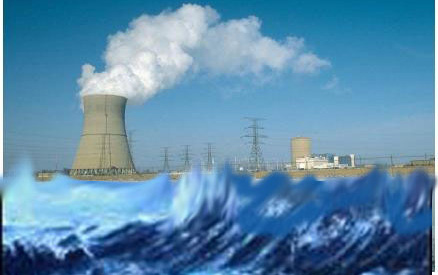
BANNG refutes recent statement by BRB that Bradwell B would be Essex’s
biggest contribution to reduced carbon emissions. Low lying land at
Bradwell would become vulnerable to sea level rise. And Bradwell B would be
unlikely to start operating before the middle of next decade – far too
late to make an appreciable contribution to a net zero 2050. In fact it
would have a negative impact on renewable energy and flexibility.
Maylands Mayl 10th Dec 2021
UK’s failure to reduce energy demand – the most important measure to address climate change.

No2NuclearPower No. 136 December 21 Overtly and comprehensively ignoring demand side management . In nuClear News No.135 we asked if UK electricity demand is really going to double. While many other countries are spending billions on energy efficiency measures and proactively aiming to reduce energy and electricity consumption, the UK seems to be giving up on the old ‘fabric first’ idea and putting all its eggs into the nuclear and electricity supply basket. On transport there seems to be far too much focus on electric vehicles rather than public transport and active travel. With a nuclear tax on consumers’ bills in prospect and a large percentage of the population dependent on non-car travel options, the Government’s climate policies threaten to exacerbate inequalities rather than promote ‘climate justice’.
Unlike the UK, Denmark has a policy to reduce total energy demand by 50% by 2050. (1) And, Germany is not projecting a doubling of electricity demand either, in fact gross electricity generation is projected fall by 2050. Energy efficiency is the main mechanism, but also less waste in the system, more flexibility in storage and grids, integration of the heat sector. These all come together to work towards less (or certainly no more) electricity use whilst switching to renewables. In 2010, the Federal Environment Agency wrote that in the households, industrial as well as trade, commerce and services sectors “a reduction of final energy consumption by 58%, from 1639.4 TWh in 2005 to 774.2 TWh in 2050” is expected. Electricity consumption by these sectors decreases by 19%, from 492.9 TWh in 2005 to 396.7 TWh in 2050. Electricity demand experiences a lower reduction rate than final energy consumption due to the switch from fossil fuels to electricity. Total electricity consumption is expected to fall from 564 TWh in 2005 to 506 TWh. (2)
The National Audit Office (NAO) published a damning report on the Green Homes Grant debacle. It has seldom issued a more excoriating report. The scheme was originally supposed to make 600,000 homes more energy efficient. It may just have reached 47,500. It was meant to create somewhere between 100,000 and 140,000 jobs, but may have only sustained 5,600 people in employment. It was supposed to last 18 months. It was ignominiously abandoned over a weekend, after just 6 months. The NAO reckon “the rushed delivery and implementation of the scheme has significantly reduced the benefits that might have been achieved, caused frustration for homeowners and installers, and had limited impact on job creation for the longer term.” ……………….. https://www.no2nuclearpower.org.uk/wp/wp-content/uploads/2021/12/nuClearNewsNo136.pdf
100% renewables possible for USA – study demonstrates
A study led by Stanford University professor Mark Jacobson has
demonstrated that the US energy system running on wind, water and solar,
coupled with storage, not only avoids blackouts but lowers energy
requirements and consumer costs while creating millions of jobs, improving
health, and freeing up land. The Jacobson-led study conducted with
colleagues from Stanford University analysed grid stability under multiple
scenarios in which wind, water, and solar energy resources powered 100% of
all energy needs in the United States. The study, published in the journal
Renewable Energy, demonstrates a blackout-free energy system under ideal
circumstances, and a much reduced risk of blackouts in extreme weather
events compared to the current fossil fuel-led energy systems.
Renew Economy 10th Dec 2021
Iran nuclear talks pulled back from the brink as Tehran shifts stance
 |

Iran nuclear talks pulled back from brink as Tehran shifts stance, Cautious optimism as Tehran revises its position after pressure from Russia and China Guardian, Patrick Wintour Diplomatic editor, Fri 10 Dec 2021 Efforts to revive the Iran nuclear deal have been hauled back from the brink of collapse as Tehran revised its stance after pressure from Russia and China and clear warnings that the EU and the US were preparing to walk away.
The cautiously optimistic assessment came at the start of the seventh round of talks on the future of the nuclear deal in Vienna. It follows what was seen as a disastrous set of talks last week in which the US and the EU claimed Iran had walked back on compromises reached in previous rounds.
The Russian ambassador to the talks, Mikhail Ulyanov, said: “We managed to eliminate a number of misunderstandings that created some tension. Everyone confirmed their commitment to productive work [to restore the nuclear agreement].”
Nevertheless, Joe Biden warned that the United States was preparing “additional measures” against Iran, amid lingering fears that the talks could still fail………….. https://www.theguardian.com/world/2021/dec/09/iran-nuclear-deal-pulled-back-from-brink-of-collapse-as-talks-resume-in-vienna
China Wants to Join Southeast Asia’s Nuclear-Free Zone

A greater factor in China’s calculus is the AUKUS alliance among the U.S., U.K. and Australia. Under the security partnership announced in September, the U.S. and U.K. agreed to equip Australia with a fleet of nuclear-powered submarines to counter China’s influence in the Indo-Pacific. China wants to even the score. In a phone call with counterparts from Malaysia and Brunei that same month, Chinese Foreign Minister Wang Yi skewered AUKUS as anathema to the Bangkok Treaty. “The United States and Britain chose not to participate in the SEANWFZ [Southeast Asia Nuclear Weapon-Free-Zone] Treaty,” Wang reminded his peers. “Instead, they have transferred military nuclear technology to the region under various pretexts and also provided the region with highly enriched uranium materials, running counter to the efforts made by ASEAN countries to build a nuclear-free zone.”
China Wants to Join Southeast Asia’s Nuclear-Free Zone. Why Now? LawfareBy Ryan A. Musto Thursday, December 9, 2021 China is ready to rock with the Treaty of Bangkok.
In a rare appearance at the special online summit for the Association of Southeast Asian Nations (ASEAN) on Nov. 22, China’s President Xi Jinping announced that China is prepared to sign the protocol of a 1995 agreement that establishes Southeast Asia as a nuclear-weapon-free zone. Under the agreement, known as the Bangkok Treaty, 10 regional states renounce the right to nuclear weapons in any form within the ASEAN zone. If it joins the treaty, China would agree not to use or threaten the use of nuclear weapons within the zone or against its members. It would make China the first nuclear-weapon state to adhere.
China’s support for the treaty is no surprise. To strengthen its enduring “no-first-use” policy to never initiate nuclear conflict, China routinely has asserted (most recently in a 2019 white paper) that it “is always committed to … not using or threatening to use nuclear weapons against non-nuclear-weapon-states or nuclear-weapon-free zones unconditionally.” For the Bangkok Treaty, ASEAN and China agreed in 2011 to a secret memorandum of understanding that preserves China’s territorial claims in the South China Sea, removing the greatest hurdle to Beijing’s commitment. China was ready to sign the protocol and memorandum in 2012 but deferred once the other eligible “P-5” nuclear-weapon states under the Non-Proliferation Treaty—France, Russia, the United Kingdom and the U.S.—refused to join. Now, Xi wants to legally bind China to the treaty “as early as possible.” But what’s the rush?
Adherence to the Bangkok Treaty would burnish China’s image amid its rapid expansion in nuclear capabilities…………
A greater factor in China’s calculus is the AUKUS alliance among the U.S., U.K. and Australia. Under the security partnership announced in September, the U.S. and U.K. agreed to equip Australia with a fleet of nuclear-powered submarines to counter China’s influence in the Indo-Pacific. China is furious and wants to even the score. In a phone call with counterparts from Malaysia and Brunei that same month, Chinese Foreign Minister Wang Yi skewered AUKUS as anathema to the Bangkok Treaty. “The United States and Britain chose not to participate in the SEANWFZ [Southeast Asia Nuclear Weapon-Free-Zone] Treaty,” Wang reminded his peers. “Instead, they have transferred military nuclear technology to the region under various pretexts and also provided the region with highly enriched uranium materials, running counter to the efforts made by ASEAN countries to build a nuclear-free zone.”……….. https://www.lawfareblog.com/china-wants-join-southeast-asias-nuclear-free-zone-why-now
To suck up to the American government, Australia’s government leaders agreed to buy nuclear submarines, with no Parliementary discussion.

And as for the process, involving a sudden announcement to the Australian public, it is extraordinary that this momentous decision could be made without parliamentary or public scrutiny.
Australia bows down to America for nuclear submarines, Independent AustraliaBy Lee Duffield | 10 December 2021, As tensions between the U.S. and China grow, Australia’s nuclear submarine program has become less to do with our defence and more about placating the American Government, writes Dr Lee Duffield.
DEFENCE INDUSTRY MINISTER Melissa Price, on 9 November, declared the country’s nuclear-powered submarines would be built in South Australia.
How would this be done? Constructing the ships around imported reactors? It added into the brewing of questions and arguments since the sudden announcement of the nuclear plan and immediate cancellation of the French contract for conventional submarines on 16 September.
Trying to make sense of it all, several analysts, mostly through the Lowy Institute publication, The Interpreter, and at think-tanks to the Left and Right, have produced these main points:
- that American policy towards China is the main factor in this mix;
- that Australian sovereignty stands to be diminished, even if its security might be helped; and
- that the insult to France and its consequences, while not the main game, remains important — especially as it affects the standing of the Australian Government.
Sam Roggeveen, Director of the Lowy Institute’s International Security Program, contributed two articles, seeing the China-USA contest as the heart of it, with Australia now brought in more as a great power client, less as itself.
Roggeveen wrote:
‘The defence deal is a clear escalation and indication that Washington views Beijing as an adversary. It also has thrust Australia into a central role in America’s rivalry with China.’
U.S. reacts — Australia goes, too
The deal in question is the full package of the new tripartite defence arrangement, AUKUS (Australia, the United Kingdom, the United States), with Australia obtaining probably eight nuclear submarines at the centre of it.
As Roggeveen explains:
‘…the scale of this agreement and the close strategic and operational links it implies will create expectations from Washington. Australia cannot have this capability while assuming that it does not come with heightened expectations that Australia will take America’s side in any dispute with China.’
And as for the process, involving a sudden announcement to the Australian public, it is extraordinary that this momentous decision could be made without parliamentary or public scrutiny.
Allan Behm, Director of International and Security Affairs at the Australia Institute, gave a similar reading, seeing the decision to build long-range nuclear submarines for Australia as an American game, little to do with the defence of Australia:
The aim is to make possible an Australian contribution to U.S. battle plans against China which that country will view as profoundly threatening with implications also for war planning by Russia, North Korea and other nuclear-armed states.
Even leaving aside the fiscal profligacy and defence opportunity costs for Australia of the literal blank cheque issued by the Morrison Government, the nuclear submarine decision takes Australia into the heart of naval warfighting in East Asia and Southeast Asia.
“Step up to the bully”
Some steps to the right of Behm at the Australia Institute is Rowan Callick writing for the Centre for Independent Studies, a neoliberal and anti-communist lobby, in the current debate articulating much of the confrontationist thinking on how to deal with Beijing. …………
For the U.S., AUKUS is a win. It exemplifies the importance Washington attaches to deepening cooperation with key allies and strengthening their military capabilities to assist in deterring the security challenges posed by China in the region.
A very hard and costly undertaking
Great difficulty running a nuclear submarine program is foreshadowed for a country with no nuclear industry, where the navy for several years was unable to provide specialist crews for each of its Collins class submarines — rotating them ship-to-ship as vessels took turns in maintenance. There is also the long lead time proposed for getting the nuclear boats into service, starting with 18 months reserved for more discussion, for official thinking to get clarified on such questions.
Oriana Skylar Mastro and Zack Cooper have talked about many critics already raising ‘valid concerns’:
Critics of AUKUS… worry that 18 months is a long time to wait for clarity on the plan, and 18 years would be too long to wait for submarines. Nuclear-powered submarines will prove difficult and expensive for Australia to master and could create non-proliferation concerns. Washington, Canberra and London will have to mend ties with Paris as well as concerned friends in Southeast Asia, especially Jakarta. Others have argued that the deal ties Australia too closely to the United States or creates unnecessary tensions with China (although we would dispute these last two assertions)…………
In the vanguard of concerns about the French connection, Richard Ogier saw further risks to Australia’s options as a sovereign state, and considered that:
‘In Europe, and not only in France, the image of Australia has suffered a direct hit. Australia may be a staunch U.S. ally, but under certain circumstances, was prepared to go beyond the old ANZUS alliance. Australians may be warm and welcoming, is the message sent, but watch for the kick when your back is turned.’
A full version of this article has been published in subtropic.com.au. Dr Lee Duffield is a former ABC foreign correspondent, political journalist and academic. https://independentaustralia.net/politics/politics-display/australia-bows-down-to-america-for-nuclear-submarines,15832
1 This Month
Tell Congress: Prevent Nuclear Catastrophe in Iran

Tell Congress: Prevent Nuclear Catastrophe in Iran

Read the Public Inquiry Report, the Commissioners’ report, Surrendering Australia: The AUKUS Deception is available to download for free at aukuspublicinquiry.com. Or just watch the replay of the National Press Club Luncheon.


Shut down the radiation-damaged Heysham nuclear reactors now
To see nuclear-related stories in greater depth and intensity – go to https://nuclearinformation.wordpress.com

Say No to NASA’s Reckless Nuclear Reactor on the Moon
Say No to NASA’s Reckless Nuclear Reactor on the Moon
-
Archives
- November 2026 (238)
- October 2026 (302)
- September 2026 (339)
- August 2026 (330)
- July 2026 (355)
- June 2026 (287)
- May 2026 (306)
- April 2026 (356)
- March 2026 (251)
- February 2026 (267)
- January 2026 (308)
- December 2025 (358)
-
Categories
- 1
- 1 NUCLEAR ISSUES
- business and costs
- climate change
- culture and arts
- ENERGY
- environment
- health
- history
- indigenous issues
- Legal
- marketing of nuclear
- media
- opposition to nuclear
- PERSONAL STORIES
- politics
- politics international
- Religion and ethics
- safety
- secrets,lies and civil liberties
- spinbuster
- technology
- Uranium
- wastes
- weapons and war
- Women
- 2 WORLD
- ACTION
- AFRICA
- Atrocities
- AUSTRALIA
- Christina's notes
- Christina's themes
- culture and arts
- Events
- Fuk 2022
- Fuk 2023
- Fukushima 2017
- Fukushima 2018
- fukushima 2019
- Fukushima 2020
- Fukushima 2021
- general
- global warming
- Humour (God we need it)
- Nuclear
- RARE EARTHS
- Reference
- resources – print
- Resources -audiovicual
- Weekly Newsletter
- World
- World Nuclear
- YouTube
-
RSS
Entries RSS
Comments RSS

