Lake animals near Chernobyl have mutations

Lake animals near Chernobyl have mutations https://beyondnuclear.org/lake-animals-near-chernobyl-have-mutations/ February 4, 2022
Animals in lakes close to the Chernobyl nuclear reactor have more genetic mutations than those from further away – giving new insight into the effect of radiation on wild species, researchers at the University of Stirling have found, writes Brendan Montague in The Ecologist.
DNA analysis of freshwater crustaceans, called Daphnia (pictured on original), revealed greater genetic diversity in lake populations that experienced the highest radiation dose rates following the accident in 1986.
Radiation is the primary cause of these genetic mutations, according to Dr Stuart Auld, who led the research.
Dr Auld, of Stirling’s faculty of natural sciences, said: “Chernobyl is a natural experiment in evolution, because the rate of genetic mutation is higher, and all evolutionary change is fuelled by mutations.
“Normally you have to wait for generations to see the effect of the environment on mutations, and most mutant animals are pretty damaged so don’t live long.
“By sequencing non-coding DNA – bits of genetic code that don’t actually affect the form or function of the organism – we were able to uncover these mutations.”
Dr Jessica Goodman collected the crustaceans using a kayak and net from lakes at varying distances from Chernobyl as part of her PhD. She flew the samples back to the lab at Stirling, where Dr Auld’s team isolated and analysed the DNA.
The research was assisted by June Brand at the University of Stirling and Gennady Laptev from the Ukrainian Hydrometeorological Institute in Kiev. It was funded by the Natural Environment Research Council.
The paper Radiation-mediated supply of genetic variation outweighs the effects of selection and drift in Chernobyl Daphnia populations is published in the Journal of Evolutionary Biology.
Indigenous support for Tularosa Basin Downwinders Consortium
“Fix your damn mistakes before you ask us to risk anymore,” Pino said
recently during an interview from his home in Albuquerque. “The money
that we get from the nuclear industry is a pittance to what we pay out in
medical bills and suffering.”
As he learned more about the blast and the
impacts of the nuclear industry on his native community, about five years
ago Pino joined with the Tularosa Basin Downwinders Consortium, an activist
group in New Mexico that promotes awareness for those affected by nuclear
activities and exposure to radiation.
Pino and the Downwinders join a
diverse group of interests across New Mexico who’ve put aside their
differences to oppose Holtec International’s plan to send nuclear waste
stranded at nuclear power plants across the country to a 1,000-acre site in
the New Mexico desert halfway between Carlsbad and Hobbs.
Carlsbad Current Argus 5th Feb 2022
UK close to opening coal mine under Marine Conservation Zone just 5 miles from Sellafield nuclear facility!
The Coal Mine planning inspector Stephen Normington will, any day now, be
making his recommendation to government (the same government who have
appointed the coal boss as nuclear dump advisor). Then the final decision
will be with Secretary of State Michael Gove on whether or not to open a
new coal mine under the Marine Conservation Zone off St Bees and just five
miles from Sellafield. Concerns, aside from climate, raised by Keep
Cumbrian Coal in the Hole since 2017, regarding seismic, nuclear and marine
impacts have been well and truly ‘talked over’ despite our vehement
campaigning.
Keep Cumbrian Coal in the Hole 5th Feb 2022
As Ukraine Crisis Raises Specter of Nuclear War, Veterans Call for Disarmament and Peace.
As Ukraine Crisis Raises Specter of Nuclear War, Veterans Call for Disarmament and Peace, https://www.laprogressive.com/veterans-call-for-disarmament/ Gerry Condon, 5 Feb 22, The US/NATO showdown with Russia over Ukraine is a stark reminder of how close the world is to a possible nuclear war. The one-sided reporting in the U.S. media, with little historical context, is what we see whenever the U.S. is getting ready to go to war. The lack of any meaningful opposition in Congress, even from supposed progressive Democrats, is alarming. Are there no adults in the room?
Is President Biden a captive of the neocons and their patrons in the weapons-of-mass-destruction industry? Is the tail wagging the dog? No wonder the Bulletin of Atomic Scientists is maintaining its Doomsday Clock at only 100 seconds from midnight.
We can hope that quiet diplomacy taking place in the background will overshadow the stubborn public refusal to acknowledge Russia’s understandable security concerns. Can you imagine the U.S. response if Russia was positioning missile systems and troops in Canada or Mexico?
Given that the U.S. and Russia possess the lion’s share of nuclear weapons – over 6,000 each – the world will breathe a collective sigh of relief if war is avoided. But how long before the next crisis? Is the world really safer with nuclear “deterrence” (aka “mutually assured destruction”)?
The Pentagon is currently putting its finishing touches on the Biden Administration’s Nuclear Posture Review. Rumors are that it will not reflect President Biden’s stated goal of reducing the role of nuclear weapons in U.S. security defense strategy. It will not call for the U.S. to adopt a policy of No First Use of nuclear weapons. It will not call for the U.S. to sign the UN Treaty on the Prohibition of Nuclear Weapons. It will not call on the U.S. to adhere to its obligations under the 1970 Nuclear Nonproliferation Treaty, which require it to negotiate in good faith to reduce and eventual eliminate all nuclear weapons.
Veterans For Peace has therefore stepped up to provide its own Nuclear Posture Review, one that abandons the policy of full spectrum dominance and replaces it with full spectrum cooperation.
“Veterans are all too familiar with the horrible costs of war,” says retired Marine Corps Major Ken Mayers, who serves on the Board of Veterans For Peace. “It is appropriate that military veterans are standing up for nuclear disarmament and peace.”
The Veterans For Peace document reviews the U.S. posture toward each of the nuclear-armed states, plus Iran, which has no nuclear weapons. The veterans call on the U.S. to take immediate steps to reduce the risk of accidental nuclear war, such as implementing a No First Use policy and taking nuclear missiles off hair trigger alert. It calls on the U.S. to sign the UN Treaty on the Prohibition of Nuclear Weapons.
“If the United States takes the first steps toward eliminating nuclear weapons, other nuclear-armed states will follow,” says Ken Mayers of Veterans For Peace. “This is the kind of leadership that the people of the world want to see today.”
The Veterans For Peace Nuclear Posture Review contains sixteen specific proposals for reducing the risk of nuclear war and building momentum for nuclear disarmament. Veterans For Peace is sending it to President Biden, to Vice President Kamala Harris, and to every Member of Congress.
The current crisis over Ukraine demonstrates what a dangerously unstable world we are living in today. The elimination of nuclear weapons must go hand-in-hand with non-intervention in the internal affairs of other nations, as called for in the UN Charter. If we prioritize mutual respect among all peoples, we can survive the current crisis and avoid a future war that could literally destroy human civilization.
US Grants Sanctions Relief To Iran,Inches Closer To Nuclear Deal Renewal
US Grants Sanctions Relief To Iran,Inches Closer To Nuclear Deal Renewal, Kashmir Observer
Agencies | February 5, 2022 Washington- The Biden administration has restored a sanctions waiver to Iran, a senior State Department official said on Friday, as indirect talks between the United States and Iran on returning to the 2015 nuclear agreement entered the final stretch.
The waiver, which was rescinded by the Trump administration in May 2020, had allowed Russian, Chinese and European companies to carry out non-proliferation work at Iranian nuclear sites.
The waiver was needed to allow for technical discussions that were key to the talks about return to the deal formally known as the Joint Comprehensive Plan of Action (JCPOA), a State Department official said………….. https://kashmirobserver.net/2022/02/05/us-grants-sanctions-relief-to-iraninches-closer-to-nuclear-deal-renewal/
In New Mexico, two Bills to block the storage of high level nuclear waste

Efforts by New Mexico lawmakers to block the storage of high-level nuclear
waste in the state built momentum this week as two bills in the House and
Senate advanced in legislative committees.
Senate Bill 54 and House Bill
127 contain identical language that would prohibit State agencies from
issuing permits for high-level nuclear waste storage facilities, introduced
in direct opposition to the project proposed by Holtec International in
southeast New Mexico near Carlsbad and Hobbs. The Holtec project would see
about 100,000 metric tons of spent nuclear fuel rods from generator sites
across the U.S. shipped via rail to the location on about 1,000 acres in a
remote area by the Eddy-Lea county line.
Carlsbad Current-Argus 5th Feb 2022
BBC Inside Science Nuclear Waste Podcast Kicks Off With a Big Fat Lie – Fact Check!?

BBC Inside Science Nuclear Waste Podcast Kicks Off With a Big Fat Lie – Fact Check!? https://www.lakesagainstnucleardump.com/post/bbc-inside-science-nuclear-waste-podcast-kicks-off-with-a-big-fat-lie-fact-check
Listen to BBC Inside Science Here Reporting from the BBC which holds the newly “green” nuclear industry to account has been in short supply and this was no exception despite the promising headline.
Listen to BBC Inside Science Here Reporting from the BBC which holds the newly “green” nuclear industry to account has been in short supply and this was no exception despite the promising headline. The podcast kicked off with some big fat lies about nuclear being low carbon (radioactive carbon it produces in spades) and stating that “Sizewell C will produce 7% of the UKs energy needs.” “Inside Science” is the arbiter of truth for many people including Cumbrian politicians who have repeated these lies. Sizewell C would only produce 2% of the UKs energy needs – an amount that could easily be saved by insulating houses. What the podcast presenter should have said was that Sizewell C may produce up to 7% of the UK’s ELECTRICITY – rather different from ENERGY and a big fat lie that the nuclear industry likes to promote.
Professor Claire Corkhill did reveal some home- truths about nuclear such as reprocessing produces a net result of more hazardous waste and that low level waste does not equate to low hazard “it is still hazardous.” When the interviewer asked Professor Corkhill if digging a big hole for nuclear waste was expensive the reply was that ‘its the right thing to do and it means that future generations won’t have the expense.’ This is the mantra that the Committee on Radioactive Waste Management like to promote as a truism. It is the wrong thing to do and denies future generations the ability to protect themselves from nuclear waste. Professor Corkhill was appointed to the Committee on Radioactive Waste Management ( CoRWM) in January 2020. Mark Kirkbride the CEO of West Cumbria Mining was appointed to CoRWM in November 2019 and has been putting together costings for the digging of a big hole or two. The total cost of decommissioning is around £132 Billion and counting. The eyewatering amounts of money are the very least of the bottomless Bill that this and future generations will be picking up from the nuclear experiment in any event.
Movie on assassination of nuclear scientist Dariush Rezainejad premieres at FajrCulture
Movie on assassination of nuclear scientist Dariush Rezainejad premieres at Fajr Culture. Tehran Times, February 6, 2022 TEHRAN – “Henas”, a drama about the assassination of nuclear scientist Dariush Rezainejad, premiered at the 40th Fajr Film Festival on Saturday.
35-year-old Rezainejad was shot dead by Mossad gunmen before the eyes of his wife and little girl in front of his house in Tehran in July, 2011. The movie portrays the terrorist attack through the eyes of his wife.
We never intended to make a spy drama,” director Hossein Darabi said in a press conference after the premiere of the film.
“Due to the fact that the subject is a matter of great security sensitivity, we wanted to portray the feelings of the wife in that situation,” he added.
He noted that the story of the film has been written based on Rezainejad’s life story and has its roots in reality.
“There is no point in the film in conflict with reality,” said Rezainejad’s widow, Shoreh Pirani, who was in attendance at the screening and press conference………………………. https://www.tehrantimes.com/news/469877/Movie-on-assassination-of-nuclear-scientist-Dariush-Rezainejad
Nuclear waste host communities exploited – by blackmail, ”noble sacrifice” and greed
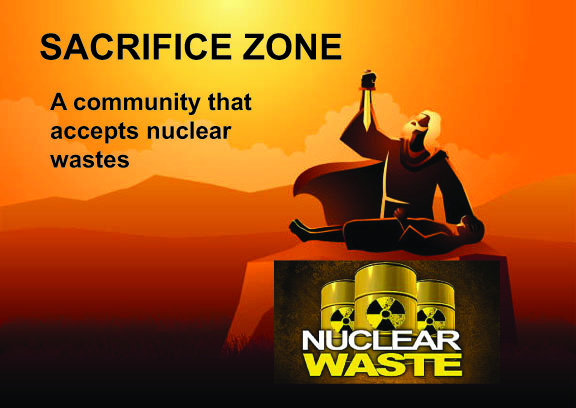
Governments prefer a distant disadvantaged, impoverished, preferably indigenous community to host nuclear wastes. Governments then promise the health, education etc services that they should be providing anyway.
Then there’s the noble goal of ”sarifice” – providing a benefit to the nation.
Then there’s greed, as selected local dignitaries and businesses get attractive bribes to promote the dump plan to the community.

Eventually, the community becomes dependent on the nuclear industry, – which happens also in other situations, such as in nuclear energy and nuclear weapons plants.
Even the right-wing Cato Institute wants USA to deal with Ukraine crisis by diplomacy, not weaponry

Washington has also mentioned steps to “enhance deterrence” on the continent, which could entail the forward deployment of additional U.S. nuclear weapons.
As Clouds Gather in Eastern Europe, Nuclear Diplomacy is More Important Than Ever
More must be done to keep tensions over Ukraine from deepening nuclear instability. Defense One BY ERIC GOMEZ, 4 Feb 22, DIRECTOR, DEFENSE POLICY STUDIES, CATO INSTITUTE
The risk that a Russian invasion of Ukraine by conventional forces could lead to the use of nuclear weapons appears relatively low, but their shadow is never completely absent from a crisis involving nuclear-armed states. Moreover, this crisis—no matter how it ends—seems likely to lead toward more strategic instability, not less. As preoccupied as U.S. diplomats must be with the threat of imminent conventional invasion, they must also work urgently to launch confidence-building measures that might prevent a nuclear war
The recent back-and-forth between Washington and Moscow has been free of explicit nuclear threats, but there has been some nuclear signaling. As Russia massed forces near Ukraine in December, its foreign ministry released two proposed treaties, one for NATO and one for the United States. The draft of the NATO treaty included an article prohibiting the deployment of missiles previously outlawed by the Intermediate-range Nuclear Forces Treaty. The draft of the U.S. treaty had more explicit references to nuclear weapons, including pledges to not deploy them outside national territory and to not train personnel from non-nuclear countries in their use—a reference to NATO nuclear-sharing arrangements
Washington’s response to the buildup has centered on sanctions and deploying conventional military forces to NATO allies in eastern Europe. But it has also mentioned steps to “enhance deterrence” on the continent, which could entail the forward deployment of additional U.S. nuclear weapons. And while the Biden administration has said that it will not send U.S. troops to defend Ukraine, which helps reduce the likelihood of a NATO-Russia conflict, it has also signaled that it will send more forces to eastern Europe if Russia attacks Ukraine.
For its part, Moscow has warned that it will respond if NATO expands its troop presence in eastern Europe. Among its options are moving nuclear weapons closer to western Europe. Such moves could lead NATO to add even more forces to deter an attack on member countries, thus setting off a spiral of actions and counter-actions with no clear way to break the cycle.
Ultimately, this spiral is likely to put more nuclear forces in closer proximity, inherently decreasing stability and increasing the risk of accidental war. It may also prompt more calls to expand the U.S. nuclear arsenal, which in turn could make it harder for Washington and Moscow to reach new agreements on nuclear arms control…………………Another potential reassurance measure would be negotiating mutual limitations on the deployment of missiles previously outlawed by the INF Treaty. Russia has already signaled such limitations in its December demands, and the United States reportedly responded positively to the idea of mutual limitations
he faint but darkening nuclear shadow over the Ukraine crisis means that these kinds of ideas and discussions are no diplomatic side show. They are crucial to warding off instability of an even more potentially devastating type.
Decommissioning is just the beginning of the huge nuclear legacy problem

Nuclear power concerns outlast decommissioning, Great Lakes Echo, By Cameryn Cass 4 Feb 22,
Editor’s note: This is part of a package of two articles and a podcast about nuclear power in Michigan.
As Michigan and other states gradually move away from coal and other brown energy sources, there’s growing interest in carbon-free alternatives, including nuclear energy,
As Michigan and other states gradually move away from coal and other brown energy sources, there’s growing interest in carbon-free alternatives, including nuclear energy, which some advocates call a “clean alternative” that now fuels 30% of Michigan’s total electricity.
One nuclear plant in the state, Big Rock Point in Charlevoix closed in 1997 and has been fully decommissioned. In the spring of 2022, the Palisades Nuclear Plant in Southwest Michigan’s Van Buren County will close because of a “business decision.”
Michigan also has the Fermi Nuclear Power Plant in Newport, near Monroe, and the Donald C. Cook Nuclear Power Plant in Berrien County’s Bridgman, according to the Department of Environment, Great Lakes and Energy.
With Palisades and other plants in the Great Lakes region scheduled to shut down in the coming decades, more people are considering the long-term impacts of this energy source.
After decommissioning, radioactive waste remains on-site, said Susan Chiblow, an Indigenous environmental scholar in Ontario.
The waste stays in the environment for trillions of years, so calling nuclear power clean is propaganda, she said.
In short, risks don’t disappear when a plant is decommissioned, a process that can take up to 60 years, said Edwin Lyman, the nuclear safety project director at the Union of Concerned Scientists, a nonprofit science advocacy organization based in Massachusetts.
Although closed plants no longer have to worry about accidents post shut-down, their operators remain responsible for managing the radiated materials and spent nuclear waste, Lyman said.
He said waste now stored on-site is vulnerable to security threats and climate disasters.
For five years, the waste is kept in large swimming pool-like structures where it’s mixed with water to keep it cool. Then, it’s transferred to dry casks, he said.
The U.S. Department of Energy is technically responsible for removing the waste, but it has nowhere to bring it, Lyman said.
“It’s going to be a long-term storage problem for any nuclear plant that’s shut down,” Lyman said……………………………
Thirteen states have banned construction of new nuclear plants.
In the Great Lakes region, Minnesota adopted its ban in 1994. ……
Because the Great Lakes account for one-fifth of the world’s freshwater, Chiblow and other environmentalists are especially interested in protecting it……….c
Nuclear Free Local Authorities (NFLA) demands deadly plutonium stockpile be placed ‘out of use’

The Nuclear Free Local Authorities (NFLA) of the UK and Ireland has called for Britain’s deadly Plutonium stockpile to be placed ‘out of use’, for an early end to reprocessing, and for greater accountability and more transparency about the long-term management of radioactive materials arising from decommissioning operations at the UK’s former nuclear power plants.
The Nuclear Decommissioning Authority (NDA) is the agency charged with making safe and cleaning closed civil nuclear plants. It has just published a draft Business Plan for 2022-5 and invited comments.
In its response, the NFLA also expressed its disappointment that reprocessing at Sellafield did not end in 2020 as was originally promised and that there isstill no clear end date.
The NFLA also wants to see a comprehensive inventory of all radioactive materials created for each site, including those arising from decommissioning operations, and for local authorities to be consulted over arrangements for their transport and management.
NFLA 3rd Feb 2022
The European Commission declares nuclear power to be green, but the devil is in the detail.
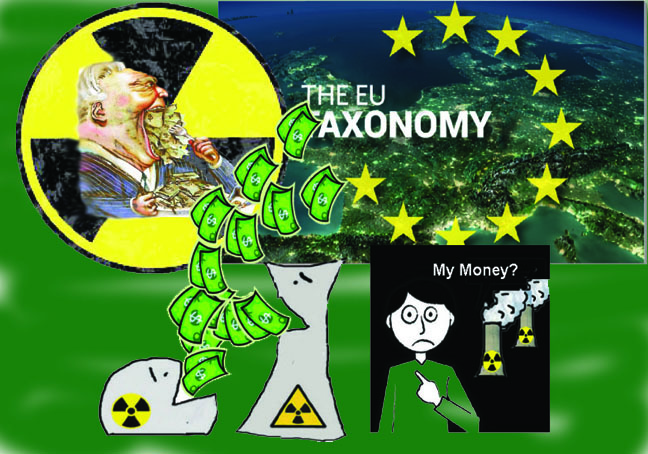
Nuclear plants would be deemed green if the sites can manage to safely dispose of radioactive waste. So far, worldwide, no permanent disposal site, has gone into operation though.
no investor would be interested in nuclear or gas if the EU “invested political capital” in getting member states to substantially expand their renewable energy production.
European Commission declares nuclear and gas to be green, DW 4 Feb 22,
The European Commission has labeled nuclear and gas as sustainable. Critics are calling the step “greenwashing” and say it could threaten the bloc’s bid to become climate-neutral by 2050.
European Commission chief Ursula von der Leyen cannot repeat often enough how close stepping up climate action is to her heart.
She described the European Green Deal as “Europe’s man on the moon moment.” She has called climate neutrality “our European destiny.” And she solemnly proclaimed that no effort will be spared for Europe to become the world’s first continent with net-zero emissions.
But as often, the devil is in the detail.
The big question is how exactly the European Union intends to achieve its goals.
One measure being put into place is a so-called taxonomy, “a classification system, establishing a list of environmentally sustainable economic activities,” according to the European Commission.
This taxonomy could be described as the EU’s green investment rulebook, intended to serve the goal of allowing the continent to become climate neutral by 2050.Can gas and nuclear be green?
Critics say the objective of climate neutrality could be under threat, as the European Commission, the EU’s executive arm, decided to give nuclear energy and natural gas a green label under this taxonomy.
Nuclear power plants would be deemed green if the sites can manage to safely dispose of radioactive waste. So far, worldwide, no permanent disposal site, has gone into operation though.
At a news conference in Brussels, Mairead McGuinness, the EU commissioner responsible for financial services, said her institution was not guilty of “greenwashing,” as gas and nuclear were labeled as “transitional” energy sources in the taxonomy. “Our credibility is still strong,” McGuinness added.
Environmental organizations most certainly see this critically, saying the proposal could jeopardize the EU’s aim to reach climate neutrality by 2050. The Climate Action Network Europe wrote that the EU Commission “sacrifices the scientific integrity of the taxonomy on the altar of fossil gas and nuclear lobbies” and failed to “reorient financial flows towards genuinely climate-positive investments.”
And it’s not just climate activists: Also a group of experts advising the EU on the matter had announced how they are worried about “the environmental impacts that may result,” for example the consequences of a nuclear accident. Building new nuclear plants would also take too long to contribute to the 2050 neutrality goals, they believe.
The proposal was preceded by a heated debate among EU countries. While some consider nuclear to be a good bridging technology, others are strongly opposed, and prefer gas instead.
Germany pro-gas, France pro-nuclear
France, which derives about 70 percent of its electricity from nuclear plants, is — unsurprisingly — heading up the pro-nuclear fraction. It is supported by a group of EU states including Poland, Hungary, the Czech Republic, Bulgaria, Slovakia and Finland.
Especially France wants to invest in new nuclear power plants, particularly in new generation, so-called small modular reactors.
……………Denmark, Austria and Luxembourg share this [Germany’s] view, highlighting the controversial point of where to safely store highly radioactive nuclear waste.
In a letter to the European Commission, Germany’s current governing coalition has clearly said that gas is needed as an interim energy source until enough renewables are available.
To avoid a clash with its EU neighbor France, German Chancellor Olaf Scholz downplayed the importance of the taxonomy at an EU leaders’ meeting last year, saying the debate was “completely overrated.”
Georg Zachmann, a senior fellow at the Brussels-based Bruegel think tank, has been following the EU’s energy and climate policy for years. He said that, in the end, he was relatively sure no decision would be taken in Brussels to prevent France, for example, from investing in and building new nuclear reactors.
The Commission is keen to have the taxonomy viewed as the “gold standard” for guiding private investment toward measures that help fight climate change.
But in Zachmann’s view, no investor would be interested in nuclear or gas if the EU “invested political capital” in getting member states to substantially expand their renewable energy production.
“We know that onshore wind and solar power are not very costly in most European countries,” he pointed out.
What happens next?
The European Commission’s taxonomy proposal will now be reviewed by the 27 EU member states and by the European Parliament.
As the EU’s executive opted for a delegated act, a type of fast-track legislative procedure, only a total of 20 EU countries, or a majority of EU lawmakers at the European Parliament, would be able to reject it.
While EU states are not likely to turn down the taxonomy, a win in the European Parliament is not yet certain. Parliamentarians from across the political spectrum have expressed anger over the inclusion of fossil gas and nuclear power in the EU taxonomy.
Green lawmaker Rasmus Andresen said he was “disappointed” by the proposal, adding that the Green parliamentary fraction would fight hard to gather a majority against the taxonomy.
German Social Democrat Joachim Schuster told DW he thought it possible that the European Parliament could vote against the act.
And even if lawmakers were to support it, there is another threat looming: Austria and Luxembourg have already threatened to sue the European Commission over the taxonomy rules. https://www.dw.com/en/european-commission-declares-nuclear-and-gas-to-be-green/a-60614990
Bill To Ban Spent Nuclear Fuel Storage In New Mexico Passes House Committee

“It’s inconceivable why New Mexico has to be the dumping ground for the nation’s ill-advised investment in nuclear energy and nuclear weapons,” said Paul Gibson, co-founder of Retake Our Democracy. “The risk to our community is far greater than the benefit.”
Although the site is termed temporary, Holtec is seeking a 40-year license to operate there, which opponents say would make it permanent.
By SCOTT WYLAND, The Santa Fe New Mexican, 4 Feb 22, A bill clearly aimed at blocking Holtec International from building an underground storage site for spent nuclear fuel in southeastern New Mexico is moving forward.
The House Energy, Environment and Natural Resources Committee voted 5-4 to advance a bill that would ban the storage or disposal of spent nuclear fuel in the state — and would essentially kill Holtec’s plans to build a repository for this high-level radioactive waste in the Carlsbad area.
It now will go to the House Judiciary Committee.
A key point in the debate was whether the state has the authority to stop the federal government from approving what’s described as an interim storage site to keep the material until a permanent place is created.
Some lawmakers and regulators who back House Bill 127 say although the state can’t interfere with how the commission regulates the waste, it can block storage sites that could cause adverse environmental impacts.
The bill’s opponents argue the state still would be preempting the Nuclear Regulatory Commission’s authority in managing commercial nuclear waste. That simply is not allowed, no matter what criteria the state uses, they said.
But Sen. Jeff Steinborn, D-Las Cruces, who strongly supports the bill, said the state is well within its rights to say no to nuclear disposal sites that could contaminate vital resources, such as groundwater, and pose risks to communities when the waste is transported by rail across the country.
“Does New Mexico have the authority to do this? Yes, we do,” Steinborn said. “The Nuclear Regulatory Commission absolutely has primacy over regulating spent fuel. But what we’re talking here is the siting of this material, and our concerns on multiple grounds.”
Still, Rep. Larry Scott, R-Hobbs, contends the federal government’s power to regulate radioactive material overrides any state authority, including on environmental matters.
“I’m looking at your legislation, which seems to completely contradict that,” Scott said.
Last year, the state sued the federal government, contending the commission hadn’t done enough to ensure Holtec’s proposed site wouldn’t harm the environment, communities or the oil and gas industry in one of the nation’s richest fossil fuel regions.
Although the site is termed temporary, Holtec is seeking a 40-year license to operate there, which opponents say would make it permanent.
State Deputy Environment Secretary Rebecca Roose said no permanent disposal site has been established, so the waste has nowhere else to go.
“It’s more likely to stay there — the inertia will be to keep it there as opposed to move it someplace else permanent,” Roose said, “if and when a permanent facility is identified.”…………………
The bill’s proponents say it’s necessary to prevent a massive amount of high-level radioactive waste from coming to New Mexico and disproportionately affecting poor and minority communities.
“It’s inconceivable why New Mexico has to be the dumping ground for the nation’s ill-advised investment in nuclear energy and nuclear weapons,” said Paul Gibson, co-founder of Retake Our Democracy. “The risk to our community is far greater than the benefit.” https://ladailypost.com/bill-to-ban-spent-nuclear-fuel-storage-in-new-mexico-passes-house-committee/
‘Nuclear is neither green nor sustainable” – Austria to sue European Commission if it approves nuclear power for financial incentives

Austria’s chancellor responded to the news by saying “nuclear power is neither green nor sustainable”. “I cannot understand the decision of the EU,” Karl Nehammer said. He said he would back his environment minister, Leonore Gewessler, in pursuing legal action at the European Court of Justice if the plans go ahead.
“This decision is wrong,” Ms Gewessler said. “The EU Commission today agreed its greenwashing programme for nuclear energy and [the fossil fuel] natural gas.” Luxembourg has also said it will
join in legal action. The EU has set itself a goal of becoming climate neutral by 2050 and the Commission argues that to get there, a great deal of private investment is needed. Its proposals are meant to guide
investors.
BBC 3rd Feb 2022
https://www.bbc.co.uk/news/world-europe-60229199
1 This Month
Tell Congress: Prevent Nuclear Catastrophe in Iran

Tell Congress: Prevent Nuclear Catastrophe in Iran

Read the Public Inquiry Report, the Commissioners’ report, Surrendering Australia: The AUKUS Deception is available to download for free at aukuspublicinquiry.com. Or just watch the replay of the National Press Club Luncheon.


Shut down the radiation-damaged Heysham nuclear reactors now
To see nuclear-related stories in greater depth and intensity – go to https://nuclearinformation.wordpress.com

Say No to NASA’s Reckless Nuclear Reactor on the Moon
Say No to NASA’s Reckless Nuclear Reactor on the Moon
-
Archives
- November 2026 (238)
- October 2026 (302)
- September 2026 (339)
- August 2026 (330)
- July 2026 (355)
- June 2026 (287)
- May 2026 (306)
- April 2026 (356)
- March 2026 (251)
- February 2026 (267)
- January 2026 (308)
- December 2025 (358)
-
Categories
- 1
- 1 NUCLEAR ISSUES
- business and costs
- climate change
- culture and arts
- ENERGY
- environment
- health
- history
- indigenous issues
- Legal
- marketing of nuclear
- media
- opposition to nuclear
- PERSONAL STORIES
- politics
- politics international
- Religion and ethics
- safety
- secrets,lies and civil liberties
- spinbuster
- technology
- Uranium
- wastes
- weapons and war
- Women
- 2 WORLD
- ACTION
- AFRICA
- Atrocities
- AUSTRALIA
- Christina's notes
- Christina's themes
- culture and arts
- Events
- Fuk 2022
- Fuk 2023
- Fukushima 2017
- Fukushima 2018
- fukushima 2019
- Fukushima 2020
- Fukushima 2021
- general
- global warming
- Humour (God we need it)
- Nuclear
- RARE EARTHS
- Reference
- resources – print
- Resources -audiovicual
- Weekly Newsletter
- World
- World Nuclear
- YouTube
-
RSS
Entries RSS
Comments RSS

