Growing resistance to EU proposal to label gas and nuclear as ”sustainable” energy
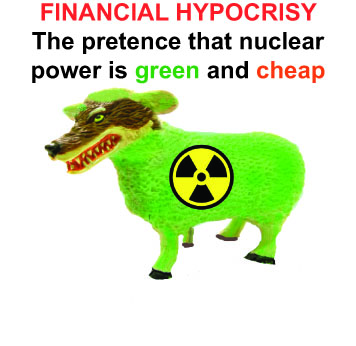
| Resistance has been growing to an EU proposal to label gas and nuclear energy as sustainable investments, officials said this week. The European Commission last month proposed including both in the EU’s sustainable finance taxonomy, a system for labelling climate-friendly investments. The proposal split opinion among the European Parliament and EU countries, which disagree on the fuels’ green credentials and could also still reject it. Two groups of lawmakers – the Greens and the Socialists and Democrats – confirmed that they would file a motion to reject the rules. German Green lawmaker Michael Bloss had confirmed the Greens’ objection earlier in the week. “Nuclear power and fossil gas are not ‘sustainable’, far too dangerous and not a bridge technology,” he said in a tweet. The move is the opening salvo in a months-long process of negotiations, which would culminate in Parliament voting by July on the potential motions to reject the gas and nuclear proposal. Emerging Risks 1st April 2022 https://emergingrisks.co.uk/resistance-grows-to-eu-nuclear-and-gas-taxonomy/ |
Wide reporting on Russian soldiers affected by radiation, leaving Chernobyl
| The UN atomic watchdog is investigating Ukrainian claims that Russian soldiers occupying Chernobyl nuclear power station left after receiving high doses of radiation. The International Atomic Energy Agency (IAEA) said it could not confirm the claims by Ukrainian state power company Energoatom and was seeking an independent assessment. Energoatom said the Russians dug trenches in the forest inside the exclusion zone at the site of the world’s worst nuclear disaster, and that the troops “panicked at the first sign of illness” which “showed up very quickly” and began preparing to leave. The Ukrainian deputy prime minister, Iryna Vereshchuk, also made the claim that Russian troops who dug trenches in the forest were exposed to radiation, but it has not been independently verified. Some reports have suggested the soldiers are being sent to a special medical facility in Belarus after driving tanks through the “dead zone” around the nuclear plant, kicking up radioactive dust. Guardian 1st April 2022https://www.theguardian.com/world/2022/apr/01/russians-fled-chernobyl-with-radiation-sickness-says-ukraine-as-iaea-investigates |
Russian forces that occupied the Chernobyl nuclear power station after
invading Ukraine have left the defunct plant, and suggested radiation
concerns had driven them away. Chernobyl is back under Ukraine control
after Russians forces formally give up the nuclear site.
The Ukrainian
state nuclear company said on Thursday most of the Russian forces that
occupied the Chernobyl nuclear power station after invading Ukraine have
left the defunct plant, and suggested radiation concerns had driven them
away.
Energoatom said it had also confirmed information that Russian troops
had built fortifications including trenches in the so-called Red Forest –
the most radioactively contaminated part of the zone around Chernobyl. As a
result of concerns about radiation, “almost a riot began to brew among the
soldiers,” it said in the statement, suggesting this was the reason for
their unexpected departure.
Mirror 31st March 2022
https://www.mirror.co.uk/news/world-news/breaking-chernobyl-back-under-ukraine-26606690
Energoatom also said reports were confirmed that the Russians dug trenches
in the Red Forest, the 10-square-kilometer (nearly four-square-mile) area
surrounding the Chernobyl plant within the Exclusion Zone, and received
“significant doses of radiation.” The Russian troops “panicked at the first
sign of illness,” which “showed up very quickly,” and began to prepare to
leave, the operator said. The claim couldn’t be independently verified.
Daily Mail 31st March 2022
Energoatom said the pullout at Chernobyl came after soldiers received
“significant doses” of radiation from digging trenches in the forest in the
exclusion zone around the closed plant, although there was no independent
confirmation of that.
Independent 1st April 2022
Biden’s Reckless Words Underscore the Dangers of the U.S.’s Use of Ukraine As a Proxy War
The U.S. is, by definition, waging a proxy war against Russia, using Ukrainians as their instrument, with the goal of not ending the war but prolonging it.
UK officials similarly told him that “the U.K.’s No. 1 option is for the conflict to be extended and thereby bleed Putin.”
As grave of a threat as deliberate war is, unintended escalation from miscommunication and misperception can be as bad. Biden is the perfect vessel for such risks. Glenn Greenwald, 28 Mar 22,
The central question for Americans from the start of the war in Ukraine was what role, if any, should the U.S. government play in that war? A necessarily related question: if the U.S. is going to involve itself in this war, what objectives should drive that involvement?
Prior to the U.S.’s jumping directly into this war, those questions were never meaningfully considered. Instead, the emotions deliberately stoked by the relentless media attention to the horrors of this war — horrors which, contrary to the West’s media propaganda, are common to all wars, including its own — left little to no space for public discussion of those questions. The only acceptable modes of expression in U.S. discourse were to pronounce that the Russian invasion was unjustified, and, using parlance which the 2011 version of Chris Hayes correctly dismissed as adolescent, that Putin is a “bad guy.” Those denunciation rituals, no matter how cathartic and applause-inducing, supplied no useful information about what actions the U.S. should or should not take when it came to this increasingly dangerous conflict.
That was the purpose of so severely restricting discourse to those simple moral claims: to allow policymakers in Washington free rein to do whatever they wanted in the name of stopping Putin without being questioned. Indeed, as so often happens when war breaks out, anyone questioning U.S. political leaders instantly had their patriotism and loyalty impugned (unless one was complaining that the U.S. should become more involved in the conflict than it already was, a form of pro-war “dissent” that is always permissible in American discourse).
With these discourse rules firmly implanted, those who attempted to invoke former President Obama’s own arguments about a conflict between Russia and Ukraine — namely, that “Ukraine is a core Russian interest but not an American one” and therefore the U.S. should not risk confrontation with Moscow over it — were widely maligned as Kremlin assets if not agents. Others who urged the U.S. to try to avert war through diplomacy — by, for instance, formally vowing that NATO membership would not be offered to Ukraine and that Kyiv would remain neutral in the new Cold War pursued by the West with Moscow — faced the same set of accusations about their loyalty and patriotism.
Most taboo of all was any discussion of the heavy involvement of the U.S. in Ukraine beginning in 2014 up to the invasion: from micro-managing Ukrainian politics, to arming its military, to placing military advisers and intelligence officers on the ground to train its soldiers how to fight (something Biden announced he was considering last November) — all of which amounted to a form of de facto NATO expansion without the formal membership.
And that leaves to the side the still-unanswered yet supremely repressed question of what Undersecretary of State Victoria Nuland referred to as the Ukrainians’ “biological research facilities” so dangerous and beyond current Russian bio-research capabilities that she gravely feared they would “fall into Russian hands.”
As a result of the media’s embracing of moral righteousness in lieu of debating these crucial geopolitical questions, the U.S. government has consistently and aggressively escalated its participation in this war with barely any questioning let alone opposition. U.S. officials are boastfully leading the effort to collapse the Russian economy. Along with its NATO allies, the U.S. has flooded Ukraine with billions of dollars of sophisticated weaponry, with at least some of those arms ending up in the hands of actual neo-Nazi battalions integrated into the Ukrainian government and military.
It is providing surveillance technology in the form of drones and its own intelligence to enable Ukrainian targeting of Russian forces. President Biden threatened Russia with a response “in kind” if Russia were to use chemical weapons. Meanwhile, reports The New York Times, “C.I.A. officers are helping to ensure that crates of weapons are delivered into the hands of vetted Ukrainian military units.”
The U.S. is, by definition, waging a proxy war against Russia, using Ukrainians as their instrument, with the goal of not ending the war but prolonging it. So obvious is this fact about U.S. objectives that even The New York Times last Sunday explicitly reported that the the Biden administration “seeks to help Ukraine lock Russia in a quagmire” (albeit with care not to escalate into a nuclear exchange). Indeed, even “some American officials assert that as a matter of international law, the provision of weaponry and intelligence to the Ukrainian Army has made the United States a cobelligerent,” though this is “an argument that some legal experts dispute.” Surveying all this evidence as well as discussions with his own U.S. and British sources, Niall Ferguson, writing in Bloomberg, proclaimed: “I conclude that the U.S. intends to keep this war going.” UK officials similarly told him that “the U.K.’s No. 1 option is for the conflict to be extended and thereby bleed Putin.”
In sum, the Biden administration is doing exactly that which former President Obama warned in 2016 should never be done: risking war between the world’s two largest nuclear powers over Ukraine. Yet if any pathology defines the last five years of U.S. mainstream discourse, it is that any claim that undercuts the interests of U.S. liberal elites — no matter how true — is dismissed as “Russian disinformation.”
As we witnessed most vividly in the run-up to the 2020 election — when that label was unquestioningly yet falsely applied by the union of the CIA, corporate media and Big Tech to the laptop archive revealing Joe Biden’s political and financial activities in Ukraine and China — any facts which establishment power centers want to demonize or suppress are reflexively labelled “Russian disinformation.” Hence, the DNC propaganda arm Media Matters now lists as “pro-Russian propaganda” the indisputable fact that the U.S. is not defending Ukraine but rather exploiting and sacrificing it to fight a proxy war with Moscow. The more true a claim is, the more likely it is to receive this designation in U.S. establishment discourse.
That there are few if any risks graver or more reckless than a direct U.S./Russia military confrontation should be too obvious to require explanation……………………………..
Speaking to U.S. troops in Poland on Friday, a visibly exhausted and rambling President Biden — after extensive travel, time-zone hopping, protracted meetings and speeches — appeared to tell U.S. troops that they were on their way to see first-hand the resistance of Ukrainians, meaning they were headed into Ukraine:
It seems clear that this was not some planned decision to have the U.S. president casually announce his intention to send U.S. troops to fight Russians in Ukraine. This was, instead, an old man, more tired, unpredictable and incoherent than usual due to intense overseas travel, accidentally mumbling out various phrases that could be and almost certainly were highly alarming to Moscow and other countries.
………………………. “Major nuclear actors are on the cusp of a new arms race, one that will be very expensive and will increase the likelihood of accidents and misperceptions.”
That Biden’s “gaffe” about U.S. troops headed into Ukraine could generate exactly this sort of “misperception” seems self-evident. So do the grave dangers from Biden’s sudden yet emphatic declaration on Saturday that Putin “cannot remain in power” — the classic language of declared U.S. policy of regime change:
That clear declaration of regime change as the U.S. goal for Putin was quickly walked back by Biden’s aides, who absurdly claimed he only meant that Putin cannot remain in power in Ukraine and other parts of Eastern Europe, not that he can no longer govern Russia. But this episode marked at least the third time in the past couple weeks that White House officials had to walk back Biden’s comments, following his clear decree that U.S. troops would soon be back in Ukraine and his prior warning that the U.S. would use chemical weapons against Russia if they used them first.
That Biden seems to be stumbling and bumbling rather than following scripted recklessness seems likely in some of these cases but not all. The White House’s vehement denial, in the wake of Biden’s speech, that regime change in Russia is its goal was contradicted by Ferguson’s reporting in Bloomberg last week:
Reading this carefully, I conclude that the U.S. intends to keep this war going….I have evidence from other sources to corroborate this. “The only end game now,” a senior administration official was heard to say at a private event earlier this month, “is the end of Putin regime”…..I gather that senior British figures are talking in similar terms. There is a belief that “the U.K.’s No. 1 option is for the conflict to be extended and thereby bleed Putin.” Again and again, I hear such language. It helps explain, among other things, the lack of any diplomatic effort by the U.S. to secure a cease-fire. It also explains the readiness of President Joe Biden to call Putin a war criminal………………………….
How does growing U.S. involvement in this war benefit the people of the United States, particularly as they were already — before this war — weighed down by the dual burdens of pandemic-based economic depravations and rapidly escalating inflation?
These are precisely the questions that a healthy nation discusses and examines before jumping head-first into a major war. But these were precisely the questions declared to be unpatriotic, proof of one’s status as a traitor or pro-Russia propagandist, as the hallmark of being pro-Putin. These are the standard tactics used to squash dissent or questioning when war breaks out. That neocons, who perfected these smear tactics, are back in the saddle as discourse and policy leaders — due to their six-year project of ingratiating themselves back into American liberalism with performative anti-Trump agitprop — makes it inevitable that such sleazy attacks will prevail………… https://greenwald.substack.com/p/bidens-reckless-words-underscore?s=r&fbclid=IwAR3OXdwN5Y7GJq3e250Wc5OdDbPqwlIP0cUtvaLYtp096YeJOJa8w4whkXY
Low-lying Dungeness threatened by climate change – sea level rise.
Dungeness could find itself underwater within 30 years, threatening both a
tourist hotspot and a vital conservation area. Dungeness and its nature
reserve are low-lying, which means that they are particularly vulnerable to
climate change and rising sea levels.
Climate Central is an organisation
dedicated to researching the impact of global warming. The organisation
uses UN-approved data to predict which areas of the world could be most
threatened by rising sea levels, with variables concerning pollution levels
and extreme weather events. Here’s an example of one of Climate
Central’s maps, [on original] showing what Dungeness could look like in 2050 should
global warming continue at its current rate. The red parts show areas
beneath the tide level.
Time Out 30th March 2022
https://www.timeout.com/news/dungeness-could-be-underwater-by-2050-033022
Sizewell new nuclear will not solve the government’s energy problems, but will punish the poorest.
| Nick Butler: Spending £4bn on a new nuclear station at Sizewell will not solve the government’s energy problems. Instead of sensible short-term measures to help those facing energy poverty, the government is focusing on a technology with a track record of failure. In the face of surging energy prices and the prospect of more problems as Europe turns off Russian gas supplies, the UK government is struggling to find a coherent energy policy. The latest move, a £4bn investment in the proposed new nuclear station at Sizewell, is both a mistake and an irrelevance. Private investors who are being asked to stump up the majority of the £20bn total cost should politely decline the offer. The current energy challenge—driven first by the surging post-Covid economy around the world, and now by fears of a fight for supplies as Europe reduces its use of Russian gas by two-thirds by 2023—is not the fault of the British government. The UK is not dependent on Russian supplies, which account for less than 5 per cent of British consumption. We do, however, import half our gas, and are therefore vulnerable to whatever happens on the world market. The government is responsible for the response to a crisis which will raise retail bills in April, and again in the autumn. The burden of these sudden increases will hit the poorest hardest, adding to cost of living pressures already evident. The Bank of England talks of inflation of 8 per cent by the end of the year. Many commentators think 10 per cent is more likely. The answer to the challenge has to begin with welfare support for those who cannot cope. A temporary removal of some of the taxes on energy supply, including VAT, would also offer some relief. The £2bn being given to the developers of Sizewell would have made a material difference to those facing energy poverty. The choice of EDF’s European Pressurised Reactor (EPR) technology is the worst from any perspective. In the face of an energy crisis and soaring bills, the government needs solutions which are practical and affordable. There is no way of insulating the UK from developments in the world market. The poorest can and should be protected but the rest of us will undoubtedly have to pay more. What matters now is that the short-, medium- and longer-term solutions to limit that exposure are deliverable and affordable. Sizewell is neither. Prospect 30th March 2022 https://www.prospectmagazine.co.uk/science-and-technology/spending-4bn-on-a-new-nuclear-station-at-sizewell-will-not-solve-the-governments-energy-problems |
Russian troops pull out out of Chernobyl after suffering ”acute radiation sickness”
Russian troops have pulled out of Chernobyl and handed control back to
Ukrainian authorities after soldiers suffered acute radiation sickness from
digging trenches in contaminated soil. Energoatom, Ukraine’s state
nuclear energy company, said that soldiers had received “significant
doses of radiation” after they constructed trench fortifications in the
Red Forest, a highly toxic area surrounding the defunct plant.
Times 1st April 2022
https://www.thetimes.co.uk/article/sick-russian-soldiers-seen-fleeing-chernobyl-ztcwvgzwg
Urgent need to bring about new arms control agreements
The last remaining U.S.-Russian arms reduction agreement, the New Strategic Arms Reduction Treaty, expires in 2026. Without commonsense arms control guardrails, the dangers of unconstrained global nuclear arms racing will only grow.
New Approaches Needed to Prevent Nuclear Catastrophe, Arms Control Association, April 2022
By Daryl G. Kimball ”……………………. Instead of reverting to destabilizing Cold War-era behaviors, leaders and concerned citizens in the United States, Europe, and elsewhere need to embrace new thinking and strategies about nuclear weapons and disarmament that move the world from the shadow of nuclear catastrophe.
Putin and other Russian officials have made implied nuclear threats and put their strategic nuclear forces on a heightened state of readiness to ward off a direct U.S. or NATO military intervention in Ukraine. It is not a new or uniquely Russian idea. U.S. officials also claim that U.S. strategic nuclear forces create “maneuver space” to “project conventional military power.”…………..
Biden wisely has not matched Putin’s nuclear taunts, but the risk of escalation is real. A close encounter between NATO and Russian warplanes, which could result if NATO imposed a no-fly zone in Ukraine, could lead to a wider conflict. Because Russian and U.S. military strategies reserve the option to use nuclear weapons first against non-nuclear threats, fighting could quickly go nuclear.
Russian nuclear doctrine states that nuclear weapons can be used in response to an attack with weapons of mass destruction or if a conventional war threatens the “very existence of the state.” Right now, these conditions do not exist. But if the Kremlin believes a serious attack is underway, it might use short-range, tactical nuclear weapons to tip the military balance in its favor.
Unfortunately, U.S. President Joe Biden’s new Nuclear Posture Review states that the “fundamental role” of the U.S. arsenal will be to deter nuclear attacks while still leaving open the option for nuclear first use in “extreme circumstances” to counter conventional, biological, chemical, and possibly cyberattacks.
There is no plausible military scenario, and no legally justifiable basis for threatening or using nuclear weapons first, if at all. Once nuclear weapons are used between nuclear-armed states, there is no guarantee it will not lead to an all-out nuclear exchange.
New thinking is needed. The adoption of policies prohibiting the first use of nuclear weapons would increase stability. But even that would not eliminate the dangers of nuclear deterrence strategies and arsenals, which depend on maintaining the credible threat of prompt retaliation in response to a nuclear attack.
U.S. and European citizens need to mobilize and press their leaders to pursue even bolder initiatives to steer the nuclear possessor states away from nuclear confrontation and arms racing.
For example, UN General Assembly members, particularly those who negotiated the 2017 Treaty on the Prohibition of Nuclear Weapons, should consider a “uniting for peace” resolution in response to the immediate threat of nuclear use. Such resolutions have been used in rare cases when the UN Security Council, lacking unanimity among its five permanent, nuclear-armed members, fails to act to maintain international peace and security.
Such a resolution could build on the March 2 vote in the General Assembly condemning Russia’s invasion and Putin’s decision to increase the readiness of his nuclear forces and would recall the assembly’s declaration of November 1961 that said that “any state using nuclear…weapons is to be considered as violating the Charter of the UN, as acting contrary to the laws of humanity and as committing a crime against mankind and civilization.”
An updated resolution could declare that the use or threat of use of nuclear weapons is contrary to international law and mandate negotiations on legally binding security guarantees against unprovoked attacks from states possessing nuclear weapons.
The resolution could mandate that any state that initiates a nuclear attack shall be stripped of its voting privileges at the United Nations and recommend collective measures to restore the peace under Chapter VII of the UN Charter. Such an initiative would reinforce the nuclear weapons taboo at a critical juncture.
Responsible states must also come together on a meaningful disarmament plan at the nuclear Nonproliferation Treaty (NPT) review conference in August. Although Putin’s war has derailed U.S.-Russian talks for now on further cuts in their bloated strategic arsenals and new agreements to limit short- and intermediate-range nuclear weapons systems, they are still bound by their disarmament obligations under Article VI of the NPT.
The last remaining U.S.-Russian arms reduction agreement, the New Strategic Arms Reduction Treaty, expires in 2026. Without commonsense arms control guardrails, the dangers of unconstrained global nuclear arms racing will only grow.
Putin’s war on Ukraine is a sobering reminder that outdated nuclear deterrence policies create unacceptable risks. The only way to eliminate the danger is to reinforce the norm against nuclear use and pursue more sustainable path toward their elimination. https://www.armscontrol.org/act/2022-04/focus/new-approaches-needed-prevent-nuclear-catastrophe#.YkUg4ImybtQ.twitter
Greenpeace activists storm French nuclear plant
Greenpeace activists break into the construction site of the Flamanville
EPR nuclear reactor to protest against pro-nuclear candidates in the French
presidential elections.
Launched at the end of 2007, the Normandy project
is 11 years overdue and its cost has risen to 12.7 billion euros according
to EDF, compared with the 3.3 billion announced in 2006. Greenpeace France
has called for an independent assessment of the viability of EPR nuclear
reactors.
Euronews 31st March 2022
https://www.euronews.com/2022/03/31/greenpeace-activists-storm-french-nuclear-power-plant
Nuclear Free Local Authorities highlight the threat to Britain’s nuclear reactors, of rising sea levels and coastal erosion
| Talks are to be held next week by Nuclear Free Local Authorities to highlight threat of rising sea levels and coastal erosion to Britain’s nuclear plants, including those either side of Felixstowe at Sizewell and Bradwell. In March 2011, the Japanese nuclear power plant at Fukushima was inundated by a tsunami, with flood waters rendering the plant’s cooling systems inoperative, leading to three nuclear meltdowns, three hydrogen explosions and a release of radiation from reactors 1, 2, and 3. The impact is still being felt to this day. Now the Nuclear Free Local Authorities (NFLA) is holding a special webinar examining the possible impact of rising sea levels and coastal erosion on Britain’s coastal nuclear facilities. Felixstowe Nub News 31st March 2022 https://felixstowe.nub.news/n/felixstowe-flood-threat-to-nuclear-plants-at-sizewell-and-bradwell-to-be-discussed |
Boris Johnson’s fixation on nuclear power is not justified by the facts, as Britain’s electricity demand continues to fall.

| Letter Andrew Warren, Chairman, British Energy Efficiency Federation: In declaring that Boris Johnson’s fixation on nuclear is a threat to British energy supply, Simon Nixon (Mar 31) draws attention to the fallacious belief by the Department for Business (if not at the National Grid) that demand for electricity is expected to expand enormously, apparently even double, over future years. Strangely enough, precisely the same justification was used in 2006, when the Labour government first committed itself (as Nixon observes) to a “family” of further nuclear power stations. Based on the official forecasts issued in 2006, we should by now be consuming at least 15 per cent more electricity than we were then. But we are not. In fact UK electricity consumption has gone down by more than 15 per cent since 2006. In other words, all that “expectation of demand growth” used then to justify new nukes was grossly exaggerated, by well over 30 per cent. In the interim, no new nuclear power stations have been added to the system. It hasn’t collapsed, and is far less carbon intensive. Surely, we should not be fooled again by the same spurious rhetoric about endless consumption growth? In that immortal phrase of the 1970s: “Save it. You know it makes sense.” Times 1st April 2022https://www.thetimes.co.uk/article/times-letters-lessons-of-the-shropshire-maternity-scandal-7vs5xwfw3 |
UK government’s nuclear dream likely to fade away, as private investors resist that risky call

Private investors are yet to be convinced that the returns from nuclear
power are sufficiently attractive to plow billions of pounds into a new
fleet of reactors that is being pushed by the U.K. government.
Unclear policy, competition from renewables and concerns about how attractive the
financial returns will be all make the investment case for nuclear less
compelling, according to people involved in the discussions.
That could be a major stumbling block for the government as it seeks to enlist private
capital to help fund projects like Electricite de France SA’s Sizewell C
plant.
Financial Post 29th March 2022
Nuclear on the ”frontline of climate change” – and not in a good way!
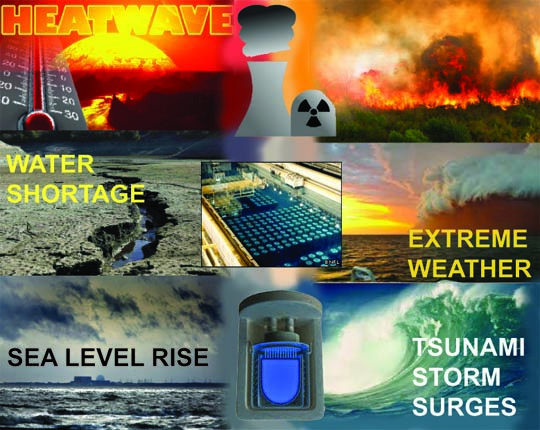
Paul Dorfman, writing in The Conversation, 1 Apr 22, Not everyone is convinced that nuclear power is a reliable tool in the effort to slow global warming and shore up energy supplies. Paul Dorfman is an honorary senior research associate at UCL’s Energy Institute. He argues that “nuclear energy is, quite literally, on the frontline of climate change – and not in a good way”.
“Nuclear power is often credited with offering energy security in an increasingly turbulent world, but climate change will rewrite these old certainties,” Dorfman says.
“Nuclear power plants must draw from large sources of water to cool their reactors, hence why they’re often built near the sea,” Dorfman highlights. “Two in five nuclear plants operate on the coast and at least 100 have been built just a few metres above sea level.”
In a world made increasingly turbulent by climate change, that’s a problem, Dorfman argues.
“A recent US Army War College report also states that nuclear power facilities are at high risk of temporary or permanent closure due to climate threats – with 60% of US nuclear capacity at risk from future sea-level rise, severe storms, and cooling water shortages.”……………….
Scrutiny on Switzerland’s nuclear power industry- it gets uranium from Russia
Use of Russian uranium for Swiss nuclear power under scrutiny, Russia’s state-owned nuclear firm Rosatom helps fuel two nuclear power plants in Switzerland. That commercial link is now under scrutiny as the Western world puts financial pressure on Russia to stop its aggression against Ukraine. Swiss Info March 31, 2022
Swiss electricity company Axpo purchases fuel from Rosatom to operate the Beznau and Leibstadt nuclear power plants in canton Aargau.
In a statement published on Thursday, the environmental NGO Greenpeace urged the authorities of seven Swiss cantons – which own Axpo – to stop buying uranium from Rosatom.
This commercial relationship, the NGO argued, helps to finance Russia’s war effort in Ukraine. Competitor company Alpiq, which runs the Gösgen nuclear site, stopped sourcing from Russia in 2016.
………………………………….. Of Switzerland’s four nuclear reactors, only Gösgen, operated by the company Alpiq, does not buy Russian uranium. Alpiq said this decision was taken in 2016 due to considerations about environmental compatibility and supply chain transparency………..
By paying for Russian uranium – Switzerland could also indirectly help finance Russia’s military apparatus. SRF points that Rosatom is the manufacturer of Russia’s warheads and now controls the operation of various Ukrainian nuclear power plants, such as at Zaporizhia, seized after fighting on March 4. https://www.swissinfo.ch/eng/use-of-russian-uranium-for-swiss-nuclear-power-under-scrutiny/47479722
Australia’s Parliament has little control over military matters, and Prime Ministers kow tow to USA and the White Anglosphere to go to war

Australia is an “active, eager participant in the US-led order” and restricting the Australian parliament’s control over the military has been “… a decision taken by the Australian government — at a bipartisan level — and implemented by senior policy planners.
Meanwhile the Australian parliament has “deliberately restricted its own powers on intelligence matters”
,Australia has ”reaffirmed its whiteness in its commitment to expansion of the “Five Eyes” intelligence sharing arrangements between the US, Britain, Canada, Australia and New Zealand and, of course, to the controversial 2021 AUKUS nuclear submarine deal, which was nurtured in great secrecy”
White and might is right: the secrets which push us into other people’s wars, https://www.michaelwest.com.au/the-dirty-secret-that-pushes-australia-into-other-peoples-wars/ By Zacharias Szumer|April 2, 2022 Is playing deputy to America’s sheriff the reason Australian war powers remain unreformed? It’s clear that our politicians remain muddled on this critical issue, writes Zacharias Szumer.
For decades, minor parties in Australia have introduced bills seeking to give parliament greater control over military deployments. In the debates and inquiries that have followed, a wide range of objections have been raised.
We are told that, as military deployments are often made on the basis of confidential information, this information cannot be publicly disclosed to the parliament. Another common objection is that parliamentary decision-making would reduce the flexibility and speed needed to carry out military operations safely and effectively.
Most of the opposition to war powers reform, received as part of Michael West Media’s ongoing survey of politicians, follows similar lines. You can see myriad responses here.
However, some experts think there might be another reason — one that Australian pollies may be uncomfortable acknowledging.
Kowtowing to empires
Clinton Fernandes, professor of international and political studies at the University of NSW and former Australian army intelligence officer, contends that the bipartisan reluctance to infringe upon this executive prerogative should be understood within Australia’s ”sub-imperial” geopolitical strategy.
In basic terms, Australia has sought to integrate itself into the global strategy of great powers — firstly the British and, from 1942 onwards, the United States. In a 2020 article, Fernandes argues that this sub-imperial strategy has meant the “effective exclusion of the legislative and judicial branches of government from Australia’s national-security policy”.
Fernandes does not believe that Australian politicians and policy officials have been forced against their will into this position. Rather, he argues that Australia is an “active, eager participant in the US-led order” and restricting the Australian parliament’s control over the military has been “… a decision taken by the Australian government — at a bipartisan level — and implemented by senior policy planners.
“Australian strategic planners understand that this means a reduction in sovereignty, but they accept it because it achieves a higher objective — upholding US imperial power.”
In addition to limiting parliament’s control over military deployments, Fernandes argues that Australia’s position as a “sub-imperial power” also limits parliamentary oversight of intelligence gathering. In the US, “intelligence committees and judiciary committees in the Senate and House of Representatives are regularly briefed about all authorised intelligence-collection programs, and relevant members of Congress receive detailed briefings prior to each re-authorisation,” Fernandes says.
Five Eyes and whiteness
Meanwhile the Australian parliament has “deliberately restricted its own powers on intelligence matters” through measures such as the Intelligence Services Act 2001 which ‘prevents the Parliamentary Joint Committee on Intelligence and Security from ‘reviewing the intelligence gathering and assessment priorities’ or ‘reviewing particular operations that have been, are being or are proposed to be undertaken’ by ASIS, ASIO and the other intelligence agencies, and likewise ‘the sources of information, other operational assistance or operational methods’ available to the agencies”.
Dr Greg Lockhart, an historian and Vietnam War veteran, supports Fernandes’ argument, but stresses the importance of seeing Australia’s sub-imperial strategy through the lens of a wider “cultural self-deception” around racial anxieties. “Fear of the ‘yellow peril’ meant that our Anzac expeditionary strategic reflex was from its inception race-based,” he says. ‘It was also primarily defensive; it depended on “great and powerful” white friends for protection in our region; it has always depended on being in the Anglosphere”.
Dr Lockhart argues that, although the overtly racist rhetoric of the White Australia policy is largely a thing of the past, “our strategic culture is still inseparable from the Anglosphere, from wherein we have never needed to reassess its whiteness”.
Recently, he says, Australia has ”reaffirmed its whiteness in its commitment to expansion of the “Five Eyes” intelligence sharing arrangements between the US, Britain, Canada, Australia and New Zealand and, of course, to the controversial 2021 AUKUS nuclear submarine deal, which was nurtured in great secrecy”.
“And with secrecy comes deception. Sounding like a US proxy in the Pacific while asserting Australian ‘sovereignty’, Scott Morrison’s government “announces it is in ‘lockstep’ with “our allies”, while trumpeting the threat of China’s communism, territorial expansion, abuse of human rights, or its implied role as the origin of Covid 19 — anything but the anxiety about Chinese numbers, ethnic difference, and independent power that has shadowed Australian history since the 1800s – and that now determines the security culture’s mindless dependence on the US.’’
Seen in this wider cultural context, Lockhart believes that “the Constitution was never going to impose legislative or judicial restraints on the autocratic war powers of the sub-imperial state. Since the First World War in 1914, almost every Anzac expedition has been a British or American imperial one. The exceptions are the Pacific campaign in 1942-1945 and Timor in 1999-2000. And in all those imperial campaigns the decision for war has been made undemocratically by the prime minister acting in secret conclave with only a handful of advisers”.
Parliamentary war powers
Fernandes and Lockhart aren’t alone in suggesting that there’s a relationship between strategic objectives and parliamentary control, or lack thereof, over the military. In their encyclopaedic 2010 study of war powers around the world, scholars Wolfgang Wagner, Dirk Peters and Cosima Glahn noted that several Central and Eastern European states — Bulgaria, the Czech Republic, Hungary and Slovakia — abolished parliamentary approval for war in the process of joining the US-led North Atlantic Treaty Organisation (NATO).
The authors argue that ‘’NATO accession apparently amplified the trade-off between creating legitimacy through procedures of ex ante parliamentary control and gaining efficiency through lean, executive-centred decision-making. From NATO’s perspective, having the governments of some member state tied by domestic parliamentary veto power must seem highly unattractive.’’
However, many of the more powerful NATO countries have far more wide-ranging parliamentary war powers than Australia or the aforementioned junior NATO partners. Although contested, the US War Powers Resolution significantly limits the President’s freedom to order military action without congressional authorisation.
For almost two decades in Germany, all major military deployments have been put to parliament for a vote. In the UK too, a parliamentary convention of seeking approval for military deployments in the House of Commons has also evolved over the past two decades.
Coastal communities across the world already feeling the impacts of climate change.
Coastal communities across the world are already feeling the disastrous
impacts of climate change through variations in extreme sea levels. These
variations reflect the combined effect of sea-level rise and changes in
storm surge activity.
Understanding the relative importance of these two
factors in altering the likelihood of extreme events is crucial to the
success of coastal adaptation measures. Existing analyses of tide gauge
records agree that sea-level rise has been a considerable driver of trends
in sea-level extremes since at least 1960.
However, the contribution from
changes in storminess remains unclear, owing to the difficulty of inferring
this contribution from sparse data and the consequent inconclusive results
that have accumulated in the literature. Here we analyse tide gauge
observations using spatial Bayesian methods to show that, contrary to
current thought, trends in surge extremes and sea-level rise both made
comparable contributions to the overall change in extreme sea levels in
Europe since 1960.
We determine that the trend pattern of surge extremes
reflects the contributions from a dominant north–south dipole associated
with internal climate variability and a single-sign positive pattern
related to anthropogenic forcing. Our results demonstrate that both
external and internal influences can considerably affect the likelihood of
surge extremes over periods as long as 60 years, suggesting that the
current coastal planning practice of assuming stationary surge extremes
might be inadequate.
Nature 30th March 2022
1 This Month
Tell Congress: Prevent Nuclear Catastrophe in Iran

Tell Congress: Prevent Nuclear Catastrophe in Iran

Read the Public Inquiry Report, the Commissioners’ report, Surrendering Australia: The AUKUS Deception is available to download for free at aukuspublicinquiry.com. Or just watch the replay of the National Press Club Luncheon.


Shut down the radiation-damaged Heysham nuclear reactors now
To see nuclear-related stories in greater depth and intensity – go to https://nuclearinformation.wordpress.com

Say No to NASA’s Reckless Nuclear Reactor on the Moon
Say No to NASA’s Reckless Nuclear Reactor on the Moon
-
Archives
- November 2026 (224)
- October 2026 (302)
- September 2026 (339)
- August 2026 (330)
- July 2026 (355)
- June 2026 (287)
- May 2026 (306)
- April 2026 (356)
- March 2026 (251)
- February 2026 (267)
- January 2026 (308)
- December 2025 (358)
-
Categories
- 1
- 1 NUCLEAR ISSUES
- business and costs
- climate change
- culture and arts
- ENERGY
- environment
- health
- history
- indigenous issues
- Legal
- marketing of nuclear
- media
- opposition to nuclear
- PERSONAL STORIES
- politics
- politics international
- Religion and ethics
- safety
- secrets,lies and civil liberties
- spinbuster
- technology
- Uranium
- wastes
- weapons and war
- Women
- 2 WORLD
- ACTION
- AFRICA
- Atrocities
- AUSTRALIA
- Christina's notes
- Christina's themes
- culture and arts
- Events
- Fuk 2022
- Fuk 2023
- Fukushima 2017
- Fukushima 2018
- fukushima 2019
- Fukushima 2020
- Fukushima 2021
- general
- global warming
- Humour (God we need it)
- Nuclear
- RARE EARTHS
- Reference
- resources – print
- Resources -audiovicual
- Weekly Newsletter
- World
- World Nuclear
- YouTube
-
RSS
Entries RSS
Comments RSS

