UK government got its energy strategy so wrong
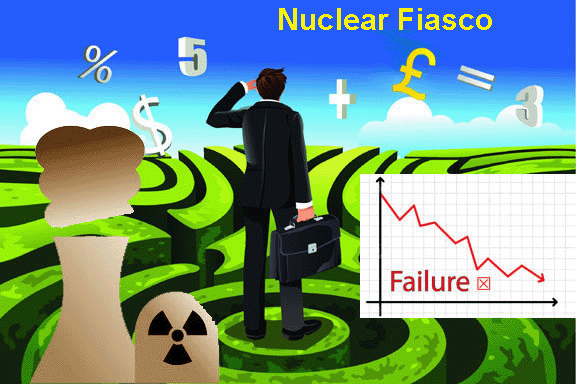
‘Major misjudgment’: how the Tories got their energy strategy so wrong. Analysis: betting big on nuclear, hydrogen, oil and gas while passing over energy saving measures, Johnson’s plan is a huge missed
opportunity.
Government industrial strategies are often derided as attempts to pick winners. The UK’s Conservative government has taken a different approach with its new energy strategy. In terms of dealing with the energybill and climate crises, it’s picking losers.
Nuclear power is the only major energy technology that has increased in cost in the last decade and
routinely suffers from massive time and budget overruns. Even Kwarteng acknowledges that France’s large nuclear fleet “cost a fortune”. The gamble Johnson is making, with taxpayers’ money, is that nuclear power is a more reliable wager to secure clean future power than renewables and fast-developing energy storage technologies. It’s a long shot.
Renewables and storage will develop much faster and get much cheaper due to the rapid learning that comes with small-scale technologies, unlike colossal projects
like nuclear.
Guardian 6th April 2022
Expert warning that UK’s nuclear plans mean that there won’t be room for all the new radioactive wastes.

 | |||
| to me |
Nuclear power plant plans could mean UK might run out of room for radioactive waste, says expert
https://inews.co.uk/news/nuclear-power-plant-plans-uk-could-run-out-room-radioactive-waste-1563015?ito=facebook_share_article-top&fbclid=IwAR2IxsDYG9O8oNJoXYfiKRKF18v2H-zI_l2NqC3VMWj5O8bGLZGYRMLQtss Current policy only allows for disposal of radioactive waste from 16GW of new nuclear capacity, far short of government’s new ambitions
By Madeleine Cuff, 8 Apr 22, Environment Reporter The UK could run out of room to store radioactive waste if the government presses ahead with plans to build eight new nuclear power stations across the country, a nuclear waste expert has warned.
Ministers today set out plans to accelerate the development of new nuclear power stations to bolster the UK’s energy security and push the country to net zero.
The long-awaited energy security strategy set out plans for trebling the UK’s nuclear generation, with up to 24GW of nuclear capacity planned for 2050.
But one of the country’s leading nuclear waste experts has told i the UK could “run out of room” to store the waste produced by so many plants.
Officials have spent the last 50 years hunting for a permanent way to dispose of radioactive waste produced by the UK’s fleet of nuclear plants.
In 2019 fresh search was launched to find a community willing to host the radioactive waste, which would be buried hundreds of metres below the Earth’s surface.
“The policy at the moment is that it can take all of the legacy waste – everything we have generated in the last 70 years, plus up to 16GW of new nuclear build,” said Professor Claire Corkhill, an expert in nuclear waste at the University of Sheffield.
But if the UK builds 24GW of new nuclear it could run into a storage problem, she warns. “My worry is that if we go to 24GW of nuclear energy then we might run out of room to store the radioactive waste,” she said. “We’ve jumped the gun a little bit in saying that we are going to have this much new nuclear energy without thinking really about whether we have got anywhere suitable to put the waste.”
She said it the government could look for a second storage site, but finding one could take decades.
US Officials Admit They’re Literally Just Lying To The Public About Russia

Former MI6 chief John Sawers told The Atlantic Council think tank in February that the Biden administration’s “intelligence” releases were based more on a general vibe than actual intelligence, and were designed to manipulate rather than to inform.
Just as the smear campaign against Julian Assange trained mainstream liberals to defend the right of their government to keep dark secrets from them, we may now be looking at the stage of narrative control advancement where mainstream liberals are trained to defend the right of their government to lie to them.
https://caitlinjohnstone.substack.com/p/us-officials-admit-theyre-literally?s=w— Caitlin Johnstone, Apr 7, 22, NBC News has a new report out citing multiple anonymous US officials, humorously titled “In a break with the past, U.S. is using intel to fight an info war with Russia, even when the intel isn’t rock solid“.
The officials say the Biden administration has been rapidly pushing out “intelligence” about Russia’s plans in Ukraine that is “low-confidence” or “based more on analysis than hard evidence”, or even just plain false, in order to fight an information war against Putin.
The report says that toward this end the US government has deliberately circulated false or poorly evidenced claims about impending chemical weapons attacks, about Russian plans to orchestrate a false flag attack in the Donbass to justify an invasion, about Putin’s advisors misinforming him, and about Russia seeking arms supplies from China.
Excerpt, emphasis mine:
It was an attention-grabbing assertion that made headlines around the world: U.S. officials said they had indications suggesting Russia might be preparing to use chemical agents in Ukraine.
President Joe Biden later said it publicly. But three U.S. officials told NBC News this week there is no evidence Russia has brought any chemical weapons near Ukraine. They said the U.S. released the information to deter Russia from using the banned munitions.
It’s one of a string of examples of the Biden administration’s breaking with recent precedent by deploying declassified intelligence as part of an information war against Russia. The administration has done so even when the intelligence wasn’t rock solid, officials said, to keep Russian President Vladimir Putin off balance.
So they lied. They may hold that they lied for a noble reason, but they lied. They knowingly circulated information they had no reason to believe was true, and that lie was amplified by all the most influential media outlets in the western world.
Another example of the Biden administration releasing a false narrative as part of its “information war”:
Likewise, a charge that Russia had turned to China for potential military help lacked hard evidence, a European official and two U.S. officials said.
The U.S. officials said there are no indications China is considering providing weapons to Russia. The Biden administration put that out as a warning to China not to do so, they said.
On the empire’s claim last week that Putin is being misled by his advisors because they are afraid of telling him the truth, NBC reports that this assessment “wasn’t conclusive — based more on analysis than hard evidence.”
I’d actually made fun of this ridiculous CIA press release when it was uncritically published disguised as a breaking news report by The New York Times:
Continue readingU.S., NATO push Asia-Pacific bloc against Russia, China, with Ukraine as pretext

On Tuesday, the US, the UK and Australia announced they would cooperate to develop hypersonic weapons under the framework of the new AUKUS alliance, a move that analysts said is to build a NATO replica in the Asia-Pacific to serve US hegemony.
US, NATO seek united front with Asia-Pacific allies to isolate Russia, pressure China over Ukraine crisis
Global Times, By Liu Xin and Xu Yelu, 8 Apr 22, South Korean and Japanese foreign ministers were invited to join the high-profile NATO session on Thursday for the first time as NATO seeks to gain cooperation from Asia to isolate Russia and pressure China over the Ukraine crisis. But analysts said the US is coercing more countries to choose sides in the crisis and using it as an opportunity to help NATO’s global expansion.
South Korean and Japanese foreign ministers were invited to join the high-profile NATO session on Thursday for the first time as NATO seeks to gain cooperation from Asia to isolate Russia and pressure China over the Ukraine crisis. But analysts said the US is coercing more countries to choose sides in the crisis and using it as an opportunity to help NATO’s global expansion.
The NATO Foreign Ministers meeting in Brussels agreed to sustain and further strengthen support for Ukraine, and step up cooperation with partners, given the global implications of Russia’s action in Ukraine, according to a statement released after the meeting on Thursday.
The ministers also agreed that NATO’s next Strategic Concept, which will be finalized at the Madrid Summit in June, must take account of NATO’s future relations with Russia, and “China’s growing influence” on allied security, it said.
NATO will increase its cooperation with Asia-Pacific partners in areas like cyber, new technologies, disinformation, maritime security, climate change, and resilience, according to the statement.
South Korean Foreign Minister Chung Eui-yong was in Brussels to attend a meeting of the North Atlantic Treaty Organization (NATO) foreign ministers on Thursday. He was the first South Korean foreign minister to join a high-profile NATO session, Yonhap News reported. Aside from South Korea, three countries – Japan, Australia and New Zealand – also attended the NATO session. Nikkei Asia reported this was the first time a Japanese minister attended such a meeting.
By inviting the four Asia-Pacific countries, NATO and the US wanted to draw more countries to form a united front against Russia over the latter’s conflict with Ukraine, and such a move will also help NATO’s global expansion, especially to Asia, as the US has always sought to build a more effective framework to contain China in the Asia-Pacific region, Li Kaisheng, a research fellow and deputy director at the Institute of International Relations of the Shanghai Academy of Social Sciences, told the Global Times.
As important US allies in Asia, South Korea and Japan have always wanted to play a bigger role in regional and international affairs and they may work more closely with the US as it is coordinating NATO with Asia-Pacific alliances, including the Quad mechanism of the US, Japan, India and Australia, and AUKUS of the US, the UK and Australia, Li said, noting that South Korea may also lean to the US after President-elect Yoon Suk-yeol takes office in May.
Yoon, who emphasized further promoting the South Korea-US alliance on security, was elected as the country’s next president in March. With the US cajoling its allies into joining a united front in bashing China, Yoon will be tested on whether he will keep his country’s relations with China free from the influence of its alliance with the US, analysts said.
Nikkei Asia said on Wednesday that NATO is looking to deepen its cooperation with Asia-Pacific countries to “discourage China from backing Russia in the war in Ukraine” and the bloc worries that Chinese financial and military assistance could drag out the conflict.
China has refuted disinformation spread by the US and some Western media, which claimed that China was considering supplying Russia with weapons to support its operation in Ukraine.
So-called remarks on discouraging China from supporting Russia are excuses. The US and NATO are using the conflict for their own strategic purposes, exploiting the crisis to revive NATO’s influence and turning it into a “battle” between so-called “democracy” and “autocracy,” Yang Xiyu, a senior research fellow at the China Institute of International Studies, told the Global Times.
Yang said that since the beginning of this century, the US has used NATO to shift its global strategic focus and alliance system to the east. From the Iraq war to the Afghan and Syria wars, we have witnessed NATO’s more frequent military operations outside NATO and more NATO members’ presence in the South and East China Sea and the Asia-Pacific region. The strategic purpose for the NATO meeting is to start its global expansion.
On Tuesday, the US, the UK and Australia announced they would cooperate to develop hypersonic weapons under the framework of the new AUKUS alliance, a move that analysts said is to build a NATO replica in the Asia-Pacific to serve US hegemony.
By gathering NATO and US allies in the Asia-Pacific together at the NATO meeting, NATO will become a platform for the US to lead its global allies and realize its expansion from Europe to the Asia-Pacific, analysts said, noting that NATO’s expansion is the root of the current conflict between Russia and Ukraine, but the bloc never reflects on its problems and is still working to expand.
According to media reports, Finland is considering joining NATO. In response, Chinese Foreign Ministry spokesperson Zhao Lijian said at Thursday’s press briefing that China’s position on NATO’s eastward expansion is very clear. NATO is a product of the Cold War and should have become history long ago. “We advise relevant countries to exercise caution in developing relations with NATO.” Zhao said.
Yang warned that while the US is coordinating allies to contain China and Russia and spread confrontations globally, China should work harder to unite more countries to oppose the Cold War mentality and deepen cooperation with countries with shared interests, including South Korea and Japan.
As a product of the Cold War, NATO represents confrontations and targets certain countries. Its global expansion brings polarization and clashes. Its expansion in the Asia-Pacific region will surely target China, undermine the regional security environment and bring turbulence, Li said, urging regional countries to have a clear understanding of the disastrous results.
Radioactive Waste Incineration including Intermediate Level Nuclear Wastes 3.9 miles from Preston City Centre? — RADIATION FREE LAKELAND

The following is a letter sent to Preston CIty Council today: “Dear Preston City Council, We are very concerned to see nuclear industry press statements concerning a new radioactive waste incineration plant for the “Clean Energy Technology Park” at Station Rd, Lea Town, Preston PR4 0XJ. The industry reports state that “the facility will expand […]
Radioactive Waste Incineration including Intermediate Level Nuclear Wastes 3.9 miles from Preston City Centre? — RADIATION FREE LAKELAND
Who speaks for the world? — IPPNW peace and health blog
Russia’s brutal war upon the nation of Ukraine should remind us that, for thousands of years, great powers have used their military might to launch military assaults upon smaller, weaker societies. Since World War II alone, these acts of aggression have included France’s colonial wars in Indochina and Algeria, Britain’s military intervention in the Middle […]
Who speaks for the world? — IPPNW peace and health blog
FAST TRACK TO ARMAGEDDON — Declassified Australia

Despite Australia’s headlong rush to splash cash on new advanced military weapons, there is some confusion apparent within the highest levels of the Defence Department as to the real strategic effect of the development and use of hypersonic missiles.
The use of hypersonic missiles trashes conventional reluctance to be the first to start a war as it removes the perceived threat of retaliation.
Hypersonic missiles will allow for a pre-emptive war if the nation possessing them thinks an enemy state is moving towards conflict. The Mutually Assured Destruction, or MAD, window for avoiding war is slamming shut.
Australia’s hypersonic missile development, rather than promoting peace in the region, is helping ignite an arms race and increasing the chance of conflict. Hypersonic missiles being developed in Australia are aircraft-launched highly-maneuverable high-speed precision cruise missiles, capable of delivering a conventional, and potentially a nuclear payload. PETER CRONAU, 8 APRIL 2022 Australia is already a long way down the track in developing nuclear-capable hypersonic weapons with the US and UK, despite a new announcement this week by the Australia-UK-USA ‘AUKUS’ military pact.
FAST TRACK TO ARMAGEDDON — Declassified Australia
AUKUS member nations this week, in an update to their much-reported pact of 2021, announced $1-billion for guided missile development in Australia, and stated: ‘We…committed today to commence new trilateral cooperation on hypersonics and counter-hypersonics’.
Last November Declassified Australia first reported on the work being done with the US and UK on the development of hypersonic missiles in Australia for the Australian Defence Force, in a story on the expanding military and intelligence links between the AUKUS trio of nations.
Some of the largest arms manufacturers in the world have been working in Australia in developing hypersonic missile prototypes under the Southern Cross Integrated Flight Research Experiment, or SCIFiRE.

The SCIFiRE project was signed in 2020 by world’s largest weapons-maker and manufacturer of the RAAF’s F-35, Lockheed Martin, along with Boeing Defence Systems, manufacturer of the RAAF’s F/A-18 Hornets. These private companies reap the benefits of the publicly-funded HIFiRE scramjet engine technology of 2007 designed by a team at the University of Queensland.
The SCIFiRE hypersonic missile is a high-speed highly-maneuverable plane-launched precision cruise missile that gives a fighter or bomber aircraft a virtually unstoppable anti-shipping capability from over 400 km distance – and much further when used from planes launched off carriers or airbases. They could be nuclear-capable, but at present will be conventionally armed.
The hypersonic missile is light and fast, and will seriously outperform the Tomahawk cruise missiles already on order for the RAAF. The SCIFiRE doesn’t need a bomber to launch and will be carried by RAAF fighter aircraft such as the F/A-18F Super Hornet jetfighter, the new F-35A Lightning II air-combat stealth fighter, as well as the P-8A Poseidon maritime surveillance aircraft. They will be perfect for supporting a US war in the South China Sea.
The US has been testing its domestically-produced HARC hypersonic ramjet weapons and, though troubled by a string of failures, has reportedly tested the Lockheed Martin prototype last month. The new Australian SCIFiRE hypersonic missiles offers better prospects for delivery and are expected to enter service in 5-8 years, ready to join in the plunge over the precipice of a predicted 2030 US war with China
Not to be outdone, Britain’s BAE Systems since 2021 has been developing in Australia a hypersonic weapons system titled Project Javelin. The project involves a hypersonic long-range attack missile named ‘Javelin Strike’, and also, sensibly, defensive counter-measures to protect against high speed weapons named ‘Javelin Shield’. The project is running in parallel with the SCIFiRE missile, in developing a so-called ‘sovereign capability’ for the construction of the weapons in Australia.
Of even greater concern internationally is the potential development of nuclear-armed drone satellites, able to fire multitudes of hypersonic nuclear missiles upon any part of the globe. The US has for a decade been working on a highly secret X-37B Boeing space drone project capable of carrying satellites, as well as nuclear payloads. Now Boeing is presently building the Phantom Express, a hypersonic Experimental Spaceplane XS-1, able to carry payloads with ‘military and commercial applications’.
Such madness may not be too remote from Australia. A Brisbane-based aerospace engineering start-up company Hypersonix Launch Systems, working with the public-funded University of Southern Queensland, has last month received federal government funds for development of its DART CMP Airframe, the world’s first ‘reusable’ hypersonic drone.
Hypersonix is building the airframe of the hypersonic drone, capable of speeds up to 15,000 km/hr, supported by US companies Boeing, and Kratos Defence Security Solutions, which are both separately developing hypersonic drones with military applications.
‘New age’ hypersonic missiles and drones are not the only airborne weapons cooperation occurring between nations of the AUKUS pact. RAAF’s Woomera Test Range in South Australia has been the site of BAE Systems long-delayed development work on its Taranis supersonic stealth bomber drone.
The Defence Department is very serious about arming Australia with hypersonic missiles. In 2020 Defence allocated $9.3-billion for high-speed long-range strike and missile defence including for hypersonic development, test and evaluation. This is part of the eye-watering $270-billion spend on defence capability over the decade under the Force Structure Plan 2020, a part of Australia’s legitimate defence needs, as well as support to military actions of the US empire.
The use of two hypersonic missiles by Russia against Ukraine military targets in March seemed to take the US by surprise. The US Defence Secretary, Lloyd Austin, publicly downplayed the development, saying he did ‘not see it as a gamechanger.’
But have no doubt, the sphincters of the US Joint Chiefs of Staff and European military leaders tightened several notches as they realised the Russians had just used in battle a missile for which they have no present defence. Instantly, US military bases, like those in Germany or the NSA satellite surveillance post at Menwith Hill in the UK, were undefendable.
The Russian Kinzal ‘Dagger’ hypersonic air-to-surface missile reportedly has a range of 2,000 kms and can reach speeds of 12,000 km/hr. The missiles were fired from Mig-31 fighters outside of Ukraine airspace hitting one target in the far west of Ukraine near the border with Poland, a NATO member. As well as destroying the Ukraine military arms depot and fuel storage, the ‘Dagger’ missiles also destroyed the West’s sense of invulnerability.
Russian President Putin said development of the hypersonic missiles was permitted following the US decision in 2002 to abandon the 1972 Anti-Ballistic Missile Treaty, a bilateral agreement between the Soviet Union and US. China also has developed hypersonic weapons after first testing its Wu-14 missile in 2014.
The need for international controls and a return to adherence to the abandoned mutual containment system by all countries has suddenly become very apparent.
Despite Australia’s headlong rush to splash cash on new advanced military weapons, there is some confusion apparent within the highest levels of the Defence Department as to the real strategic effect of the development and use of hypersonic missiles.
A statement by the Australian Defence Minister at the time, Linda Reynolds, when speaking about hypersonic weapons for Australia illustrates the confusion: ‘Investing in capabilities that deter actions against Australia also benefits our region, our allies and our security partners.’
The utilisation of hypersonic missile technology has been described as ‘disruptive capability’ – and disruptive it surely is. Far short of ‘deterring’ other nations, as the minister suggests, hypersonic weapons may increase uncertainty and hence the likelihood of conflict. They are already contributing to a regional arms race with Japan, South Korea, North Korea, Taiwan, USA and China all presently expanding missile development.
The use of hypersonic missiles trashes conventional reluctance to be the first to start a war as it removes the perceived threat of retaliation. Hypersonic missiles which can travel as fast as eight-times the speed of sound, greatly reduce the chance of the targeted nation retaliating, as the warning time reduces dramatically. The first warning now might be the sounds of missile explosions.
At present an uneasy peace between nuclear nations exists, with the belief an enemy would not start a war due to the likely retaliation that would follow any first attack launch. The hypersonic capability allows nations to launch with a much reduced fear of interception or retaliation.
Hypersonic missiles will allow for a pre-emptive war if the nation possessing them thinks an enemy state is moving towards conflict. The Mutually Assured Destruction, or MAD, window for avoiding war is slamming shut.
“We remain committed to peace and stability in the region,’ said the Defence Minister. These words indicate a view far from a reality of the increased risk of hypersonic-propelled destructive conflict and a newly-energised regional arms race.
PETER CRONAU is co-founder of DECLASSIFIED AUSTRALIA, and is a multi-award winning investigative journalist, writer, and film-maker. He is co-editor of the recent book A Secret Australia – Revealed by the WikiLeaks Exposés.
U.S. nuclear electricity generation continues to decline as more reactors retire

U.S. nuclear electricity generation continues to decline as more reactors retire, U.S.Energy Information Asministration Principal contributor: Mark Morey, 8 Apr 22, In 2021, for the second consecutive year, U.S. nuclear electricity generation declined. Output from U.S. nuclear power plants totaled 778 million megawatthours in 2021, or 1.5% less than the previous year. Nuclear’s share of U.S. electricity generation across all sectors in 2021 was similar to its average share in the previous decade: 19%.
Six nuclear generating units with a total capacity of 4,736 megawatts (MW) have retired since the end of 2017. Three more reactors with a combined 3,009 MW of capacity are scheduled to retire in the coming years: Michigan’s Palisades is scheduled to retire later this year, and California’s Diablo Canyon is slated to retire one generating unit in 2024 and one in 2025. We compile announced retirement dates and new plants’ intended online dates in our Preliminary Monthly Electric Generator Inventory.
……………………………………. Financial pressures from competitive wholesale power markets remain the primary cause of nuclear power plant retirements. Four units at two sites in Illinois had announced their intention to retire but then reversed that decision after the Illinois state legislature provided financial incentives to support the nuclear units’ continued operation
The Bipartisan Infrastructure Law, which was enacted in November 2021, includes the allocation of $6 billion to prevent the premature retirement of existing nuclear power plants. The funding will be made available to nuclear power plants that might otherwise retire and that are certified by the Nuclear Regulatory Commission as safe to continue operations.,……….. https://www.eia.gov/todayinenergy/detail.php?id=51978
Nuclear industry is giving high-risk small modular reactors the hard sell
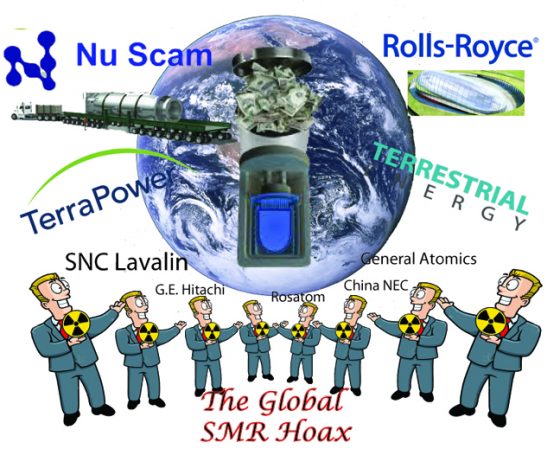
Nuclear industry is giving high-risk small modular reactors the hard sell, https://www.thenational.scot/business/20053562.nuclear-industry-giving-high-risk-small-modular-reactors-hard-sell/ Gordon Murray, 8 Apr 22,
ABBI Garton-Crosbie’s article (Scottish Government not consulted on Boris Johnson’s energy plan, Apr 7) highlights the differences in energy policy between Westminster and Holyrood and in particular the proposed adoption of small modular reactors (SMRs).
Together with match-funding, more than £450 million has been earmarked for new nuclear also includes SMRs. The UK Government also wants to build more large nuclear plants such as Sizewell C, and to this end it announced funding of £1.7 billion in the October budget of 2021.
The SMR programme promises lower energy production costs but there is no hard evidence to support this claim, as the economics of such light-water reactors (by definition less than 300MW) have not been proven. We are told incessantly that each SMR is more affordable than their larger brothers of GW scale. At less than one tenth of the output of Hinkley Point C, who could have supposed otherwise!
The nuclear industry has a long track record of extravagant claims in this regard, reflected in long delays, enormous budget overruns and ultimately, the all-important strike price (the guaranteed price received by the generator).
The UK SMR reactor is first-of-a-kind, ergo, small size does not equate to small strike price.
The National Nuclear Laboratory has speculated an SMR strike price that might exceed £80/MWh. This value mirrors cost modelling that shows SMRs are not significantly cheaper in terms of capital cost per power output generated than current gigawatt-scale reactors. To put this into perspective, this is twice the price of electricity generated by offshore wind and around three times that of onshore wind and solar. As with Hinkley, nuclear subsidies will be necessary to sustain this price in addition to the subsidies that will be necessary due to the price caps on decommissioning and management of nuclear waste costs.
The government hopes that the smaller capital costs of an SMR compared to GW scale reactors will attract more investors and obviate the need for public subsidies in the form of the regulated asset base (RAB) model of funding for Sizewell C. There is, however, no guarantee of success. The smart money is with renewables, where the returns are higher with smaller risks. Still, it very possible that RAB or a variant thereof – son of RAB – could be used to subsidise, if not fully, the construction costs, overruns and cancellations. We, the taxpayer, bear the risks.
Economies of scale are of paramount importance in making the economic case for SMRs. This means large numbers of these power plants spread all over the country, resulting in heightened safety concerns over the increased proliferation of nuclear materials and terrorist attack that can involve drones.
It is also being proposed that SMRs be used to decarbonise domestic and industrial heating systems. This means locating them close to population centres. Expect local bribes, er, incentives.
Claims that we will be cuddling up to our local SMR before this decade is out are also misplaced. The regulatory process has hardly begun: site licensing, generic design assessment, supply chain engagement, front-end engineering development, manufacture, installation and commissioning. The window of time to mitigate catastrophic climate change is now very small.
Diverting hundreds of millions of pounds in SMR development costs away from tried and tested low-carbon generators that can be brought on-line in a fraction of the time and at much lower cost to the consumer is not the correct course of action.
The problem with long-term waste disposal will also be exacerbated. At present it is stored at nuclear power stations and at Sellafield, whose management costs at present are £2bn annually and increasing.
Beware. The hard sell is under way. Tin hats on, dear citizens.
UK’s new energy strategy will accelerate the development of nuclear power generation despite Treasury opposition
| As expected, the Strategy will detail plans to accelerate the development of nuclear power generation. It will target 24GW of installed capacity by 2050, meaning that nuclear will provide 25% of the UK’s electricity demands by mid-century. The Government has stated that it will support the delivery of up to eight large plants this decade, including Wylfa, Hinkley Point C and Sizewell C. It will also support small modular reactors (SMRs). It has been reported that Johnson has pushed hard for these targets on nuclear, despite opposition from the Treasury. Edie 6th April 2022 https://www.edie.net/energy-security-strategy-uk-targets-95-low-carbon-electricity-mix-by-2030-but-will-increase-oil-and-gas-production/ |
Nuclear costs will swamp UK Labour’s green energy plans
Dave Toke: It is now clear from Labour’s stance in the House of Commons,
that nuclear power comes before everything else.
Indeed, aside from Keir Starmer’s emphasis on ‘nuclear first’ attacks on the Government in
the House of Commons, Labour’s allegedly massive green energy spending
strategy seems likely to be swallowed up almost entirely by its pledge to
rush to embrace the Sizewell C development.
The Treasury knows full well that to get Sizewell C going reasonably quickly, the Government will have
to commit to a potential bill of £30 billion or more in public spending.
This must come, either or both, from hard-pressed energy consumers by
adding to their bills, or directly from Treasury coffers. The Department of
Business, Energy and Industrial Strategy’s spending plans are closely
controlled by the Treasury, and the commitment to Sizewell C will swamp the
budget and reduce Labour’s ability to spend on things like insulation and
heat pumps to a trickle.
Chartist 6th April 2022
People Against Wylfa B (PAWB) to protest against plan for nuclear reactor on Anglesey island

An anti-nuclear campaign group are to protest outside the office of Ynys
Môn’s MPs over plans to build a new nuclear power plant on the island.
The UK Government this morning confirmed its intention to push ahead with a
nuclear project at the Wylfa site on the island of Anglesey. People Against
Wylfa B (PAWB) said that the UK’s energy needs could be met with
renewable energy and that ministerial claims that nuclear was necessary to
support weather-dependent renewables was “simply not true”.
Ynys Môn’s MP who has described herself as an ‘Atomic Kitten’ has been a
persistent advocate of a new nuclear plant on Anglesey.
A spokesperson for PAWB, Neil Crumpton, however said that the Prime Minister should not be
“gung ho” about nuclear power. “It is a complex and radio-toxic
technology,” he said. “The UK should be showing the world how wind and
solar energy, when backed-up by hydrogen-fired power stations, would
provide reliable electricity to consumers no matter what the weather or
season. Nuclear baseload is not needed.
Nation Cymru 7th April 2022
Rosatom, Russia’s nuclear corporation, exports nuclear fuel to Finland and others – has not been sanctioned by USA and Europe
Rosatom, which is the world’s biggest exporter of nuclear reactors and maintains a near-monopoly over the fuel they use to generate electricity, hasn’t been sanctioned by the U.S. and Europe.
it’ll be “three to four years” before Russian fuel currently being used in Finland needs to be swapped out in full for new assemblies.
Europe’s other energy problem: relying on Russian nuclear fuel https://www.mining.com/web/europes-other-energy-problem-relying-on-russian-nuclear-fuel/ Bloomberg News | April 7, 2022 A day before Russia invaded Ukraine, it sent four highly-trained armed guards across the border on a special mission to deliver fuel to an aging nuclear power facility.

Reactors based on Soviet designs generate power across the former Cold War bloc, accounting for more than half of all electricity in Ukraine and around two-fifths in a swath of territory arching from Finland to Bulgaria. So the fuel shipment was routine enough — until President Vladimir Putin ordered his army to war.
Russia and Ukraine agree the small security detachment arrived by train on Feb. 23 and was present as technicians unloaded a new batch of fuel rods at the Rivne Nuclear Power Plant 340 kilometers (210 miles) west of Kyiv. They differ wildly over what happened to the so-called Atomspetstrans guards as fighting began.
Ukraine told the International Atomic Energy Agency last week that they were disarmed and subsequently refused to return home. The Kremlin accused Kyiv of taking the four employees of state-owned Rosatom hostage. The IAEA is assessing the situation as it prepares to return monitors to Ukraine.
The incident was just one nuclear flashpoint of a war that’s being fought amid a fleet of operating reactors as well as the entombed site of the world’s worst atomic accident at Chernobyl.
But it also highlights another looming energy challenge for leaders on Moscow’s European periphery even as the continent moves to bar more Russian fossil fuels: how to cut their reliance on nuclear trade with a heavily-sanctioned Russia that many in the region want to further isolate.
“Countries are taking it a lot more seriously because of the situation,” top U.S. nuclear official Bonnie Jenkins said in an interview last month. “They are aware of their dependence.”
Rosatom, which is the world’s biggest exporter of nuclear reactors and maintains a near-monopoly over the fuel they use to generate electricity, hasn’t been sanctioned by the U.S. and Europe.
Non-proliferation experts have warned that doing so could boomerang back by coaxing more countries to enter fuel markets. U.S. officials said last month sanctions would have to be carefully calibrated to avoid damaging allied economies, as well as other U.S. diplomatic efforts, like the nuclear negotiations with Iran. Those talks foresee continued supply of fuel to the Persian Gulf country’s Russia-built reactor.
For Moscow, atomic exports remain a key geopolitical lever, and it’s using state financing to expand Rosatom’s reach with new units in China, India, Iran and Turkey, none of which have enforced war-penalties so far imposed on Russia.
Nuclear fuel differs from commodities like gas or coal because it requires precision-engineered assemblies that conform to licensing requirements set by safety regulators. Trying to cut ties prematurely with Russia could imperil electricity supplies for almost 100 million Europeans in countries that rely on nuclear plants as their biggest source of clean energy.
Jenkins, 61, the U.S. State Department’s under-secretary for arms control and international security, cautioned the switch could take years.
Still, said Liisa Heikinheimo, deputy director general for energy at Finland’s Economy Ministry, “it’s a fact that an alternative supplier is needed. It’s about to be a problem that’s soon reality.”
Finland, where Fortum Oyj operates two Soviet-built VVER reactors 90 kilometers east of Helsinki, has tried to find alternatives to Russia. It contracted British Nuclear Fuel Ltd., now owned by Westinghouse Electric Co., in the 1990s but ultimately stuck with Rosatom’s competitive prices.
More recently, the U.S. Department of Energy and Ukraine worked with Westinghouse to dislodge Rosatom fuel from 15 operating reactors, which still supply more than half the country’s electricity after six weeks of war wrought billions of dollars in damages to infrastructure.
Fuel made by Westinghouse, owned by private-equity investors at Brookfield Business Partners LP, now generates power at six Ukrainian units, with engineers needing until mid-decade to supply the rest.
“Westinghouse started in Ukraine because of the government-to-government agreement with the U.S.,” said Jose Emeterio Gutierrez, the Spanish nuclear engineer who formerly led the company’s decade-long effort to compete with Rosatom. But nuclear-fuel market peculiarities, along with a Soviet technological legacy, makes diversification difficult, he said.
Few nations possess the vast infrastructure needed to convert and enrich uranium ore into metal, which then has to be engineered into ceramic pellets and inserted into zirconium fuel rods with a safety tolerance measured in millimeters. A catalog of international regulations ensures that material isn’t diverted for weapons.
Rising demand for stable energy supplies, along with the European Union’s green label on nuclear power, could help to speed up the process.
Slovakia, with four Russian-built units, pitched a fuel consortium last month to share costs. The U.S. is also involved, pledging last week to help the Czech Republic diversify fuel for its six Russian-designed reactors.
But moving away from Rosatom will require time, said Heikinheimo, who figures it’ll be “three to four years” before Russian fuel currently being used in Finland needs to be swapped out in full for new assemblies.
(By Jonathan Tirone, Kati Pohjanpalo and Jesper Starn, with assistance from Thomas Hall)
World leaders must look to peaceful solutions, not more weapons
|
Nuclear powers are on a deadly path to more conflict, Frank Jackson
Former co-chair, World Disarmament Campaign 8 Apr 22
Frank Jackson says world leaders must look to peaceful solutions, not more weapon, Truly, the human race has a death wish. The Bulletin of the Atomic Scientists’ Doomsday Clock has been set at 100 seconds to midnight – the latest it has ever been – for the past two years. Yet even more expenditure is planned on the means of death and destruction (Aukus pact extended to development of hypersonic weapons, 5 April).
In January, the five primary nuclear weapon powers, the US, Russia, France, China and the UK, made a joint statement, echoing the original declaration by Reagan and Gorbachev in 1985, that “a nuclear war cannot be won and must never be fought”. Just months later, the response to the carnage in Ukraine, and the threat to use nuclear weapons, is not to draw back from the precipice, but to accelerate the drive to the cliff edge.When are the (mis)leaders of the world going to recognise that the only answer to the many existential threats that face us is cooperation at all levels to find peaceful solutions to potential, and actual, conflicts?
Nuclear bunkers are not what they used to be, with earth-penetrating weapons on the rise
Chinese tests show nuclear bunkers are not what they used to be, with earth-penetrating weapons on the rise, Stephen Chen in Beijing, SCMP , 8 Apr 22,
Current engineering standards ‘severely underestimated the actual impact’ of a nuclear blast targeting underground defence facilities, according to paperMajor nuclear powers have a growing interest in small-yield bunker busters because they produce little or no radioactive fallout to pollute the landscape.
.……. In the past, shelters buried several hundred metres deep were rated nuclear-proof but the Chinese test facility shows that a tunnel more than 2km (1.24 miles) under the surface could be destroyed, according to the researchers.In one test, the simulated tunnel almost crumbled after taking hits the effective equivalent of five consecutive strikes by earth-penetrating nuclear weapons, an outcome that would have once been considered impossible………………. https://www.scmp.com/news/china/military/article/3173478/chinese-tests-show-nuclear-bunkers-are-not-what-they-used-be?module=perpetual_scroll_0&pgtype=article&campaign=3173478
1 This Month
Tell Congress: Prevent Nuclear Catastrophe in Iran

Tell Congress: Prevent Nuclear Catastrophe in Iran

Read the Public Inquiry Report, the Commissioners’ report, Surrendering Australia: The AUKUS Deception is available to download for free at aukuspublicinquiry.com. Or just watch the replay of the National Press Club Luncheon.


Shut down the radiation-damaged Heysham nuclear reactors now
To see nuclear-related stories in greater depth and intensity – go to https://nuclearinformation.wordpress.com

Say No to NASA’s Reckless Nuclear Reactor on the Moon
Say No to NASA’s Reckless Nuclear Reactor on the Moon
-
Archives
- November 2026 (224)
- October 2026 (302)
- September 2026 (339)
- August 2026 (330)
- July 2026 (355)
- June 2026 (287)
- May 2026 (306)
- April 2026 (356)
- March 2026 (251)
- February 2026 (267)
- January 2026 (308)
- December 2025 (358)
-
Categories
- 1
- 1 NUCLEAR ISSUES
- business and costs
- climate change
- culture and arts
- ENERGY
- environment
- health
- history
- indigenous issues
- Legal
- marketing of nuclear
- media
- opposition to nuclear
- PERSONAL STORIES
- politics
- politics international
- Religion and ethics
- safety
- secrets,lies and civil liberties
- spinbuster
- technology
- Uranium
- wastes
- weapons and war
- Women
- 2 WORLD
- ACTION
- AFRICA
- Atrocities
- AUSTRALIA
- Christina's notes
- Christina's themes
- culture and arts
- Events
- Fuk 2022
- Fuk 2023
- Fukushima 2017
- Fukushima 2018
- fukushima 2019
- Fukushima 2020
- Fukushima 2021
- general
- global warming
- Humour (God we need it)
- Nuclear
- RARE EARTHS
- Reference
- resources – print
- Resources -audiovicual
- Weekly Newsletter
- World
- World Nuclear
- YouTube
-
RSS
Entries RSS
Comments RSS

