San Onofre’s not the only nuclear worry – there are “nuclear materials events” — lost or stolen radioactive material, radiation overexposures, leaks, and more.
Worried about nuclear waste at San Onofre? Other danger lurks
GAO sounds alarms about dirty bombs fashioned from small amounts of medical, industrial material Experts in protective gear prepare to sweep the University of Washington Research and Training Building after the accidental release of radioactive cesium-137 in 2019. (U.S. Government Accountability Office)
By TERI SFORZA | tsforza@scng.com | Orange County Register: April 11, 2022
In one doomsday scenario, rocket attacks on the nuclear waste stored at San Onofre Nuclear Generating Station send plumes of dangerous radiation skyward.
Critics in Southern California spend a lot of time worrying about the safety of the 3.6 million pounds of spent fuel entombed on the bluff above the blue Pacific — but the U.S. Government Accountability Office fixes its gaze on more mundane, and perhaps more terrifying, scenarios involving much smaller amounts of nuclear material routinely used by businesses, hospitals, universities and the like.
“The risks of an attack using a dirty bomb — a weapon that combines a conventional explosive, like dynamite, with radioactive material — are increasing and the costs could be devastating,” said the GAO in a snapshot released Tuesday, April 5.
“For example, weaknesses in Nuclear Regulatory Commission licensing for radioactive materials make it too easy for bad actors to obtain them, and NRC’s security requirements don’t account for the potentially devastating effects of a dirty bomb, such as billions of dollars in cleanup costs and deaths from chaotic evacuations.”
More than 2,000 “nuclear materials events” — including lost or stolen radioactive material, radiation overexposures, leaks of radioactive material and more — were reported by the NRC between 2010 and 2019, the GAO found.
In April 2019, an Arizona technician was arrested after stealing three radioactive devices from his workplace. According to a court filing, the technician intended to release the radioactive materials at a shopping mall, but was stopped before he could do any harm.
An accident at the University of Washington in 2019, involving a small amount of material, required clean-up and other costs of $150 million for one building alone, the GAO said.
In 2016, the GAO created a fake company to get a license for radioactive materials. GAO altered the license “and used it to obtain commitments to acquire a dangerous quantity of material.”
“The number of incidents of thefts, lost shipments, and careless mishandling are outrageously large,” said Edwin Lyman, director of nuclear power safety for the Union of Concerned Scientists, a nonprofit NRC watchdog
Even though very few of these lead to significant radiological consequences to the public, the NRC’s lax requirements fall short of best practices.”
Common stuff
Radioactive material is used in many medical and industrial settings in Southern California and throughout the nation. Small amounts help create images of organs, so doctors can find, identify and track tumors. Radioactive materials are used to kill cancer cells, shrink tumors and alleviate pain.
But security is an increasingly acute issue, the GAO said.
In 2018, the GAO reported that officials at U.S. airports had not verified the legitimacy of all licenses for imported radioactive materials.
“GAO has repeatedly found potential security weaknesses at medical and industrial locations storing such materials in the U.S.,” it said in one of many reports on the issue over the past several years.
“For example, in 2014, GAO reported that an individual had been given unescorted access to high-risk radioactive materials, even though he had two convictions for terroristic threat. Furthermore, small quantities of radioactive materials located within the same facility are not subject to enhanced security requirements that the total amount would be required to meet.”……………………………
Lyman, of the Union of Concerned Scientists, acknowledged that the NRC has taken some action to address the most egregious problems the GAO has identified over the years, but has not gone as far as many want.
“I do support the effort for better tracking and security of radioactive sources,” Lyman said………………….https://www.ocregister.com/2022/04/11/worried-about-nuclear-waste-at-san-onofre-other-danger-lurks/
Today: Should the responsibility for nuclear pollution stop at a nation’s border?
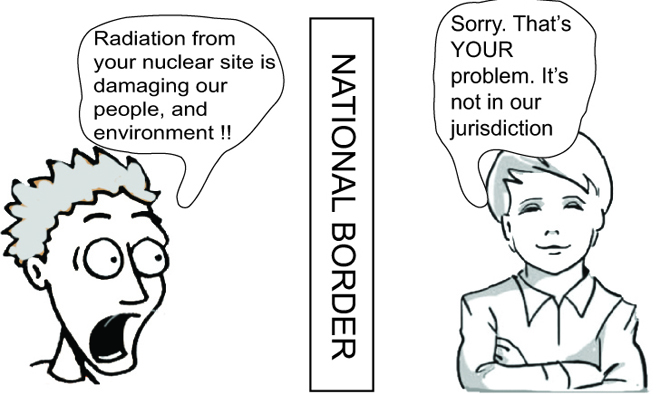
I was prompted to think about this question, as I read this morning about Denmark deciding to buy two million iodine tablets to protect people in the event of a nuclear accident in a nearby country.
I mean – Denmark doesn’t have any nuclear reactors.
Denmark has neighbouring countries that do have nuclear reactors, Sweden and Germany. And there are nuclear-powerd ships travelling in Danish waters.
Ukraine has nuclear reactors over 900 km from Denmark. And we’re all rather worried about them. A nuclear catastrophe there would pollute a large swathe of Europe, – as we already learned, with the nuclear accident in Chernobyl in 1986.
So – Denmark’s government worries about Ukraine, and maybe should be worried about a number of nuclear-reactor countries, much closer ones.
In the nuclear csatastrophe world – that we are all desperately hoping to avoid – ”national sovereignty ‘ suddenly doesn’t seem to mean much.
Denmark prepares nuclear emergency plan
April 12 2022 – https://www.canberratimes.com.au/story/7696087/denmark-prepares-nuclear-emergency-plan/
Denmark’s Health Agency, concerned by the war in Ukraine, will buy two million iodine tablets to protect people in the event of a nuclear accident close to the Nordic country.
Iodine is considered a way of protecting the body against conditions such as thyroid cancer in case of radioactive exposure, and worries about nuclear incidents in Ukraine have prompted stockpiling across Europe.
“The developments of COVID-19 over the past two years has shown us that it is important to be prepared. The war in Ukraine has shown us that the world is unpredictable,” the agency said in a news release on Monday.
Denmark is more than 900 kilometres from the nearest nuclear plants in Ukraine, according to the health agency, and there is currently no concrete risk to Denmark, Health Minister Magnus Heunicke said in an emailed comment.
The stock of iodine would be used in the event of an accident at a nuclear power plant in the vicinity of Denmark, which has no nuclear plants but is close to some in Sweden and Germany, or onboard nuclear-powered vessels in Danish waters.
A stock of two million tablets would cover risk groups including children and young people up to 18 years of age, pregnant and breastfeeding women and emergency personnel up to the age of 40, according to the agency’s estimates.
Hanford report reveals problem with nuclear waste solution
Hanford report reveals problem with nuclear waste solution
An internal federal document says the preparation for turning nuclear waste into glass logs will produce toxic vapors. Crosscut, by John Stang, April 11, 2022 Fourteen years behind its original deadline, the Hanford Nuclear Reservation is scheduled to begin turning radioactive wastes into benign glass in 2023.
However, an internal federal document said the preparatory process for this work will produce toxic vapors from a substance called acetonitrile, which would be unsafe for workers and people and animals that live nearby.
In fact, that complication has not been studied, said the U.S. Department of Energy report dated Aug. 27, 2021.
On March 2, 2022, the Washington State Department of Ecology sent a message to the U.S. Department of Energy, asking for answers on this issue. That came after the state agency received a March 1 letter on the matter from the Seattle-based watchdog organization Hanford Challenge, which obtained the internal document.
As of Friday, the state has not received a reply from the DOE. And DOE’s Hanford headquarters declined to provide anyone to discuss the matter with Crosscut. A spokesperson wrote in an email that the issue has been resolved, but did not provide any details.
In emails, the DOE and major contractor Washington River Protection Services, which designed the glassification equipment, both said the public can ask questions about this matter at a May 10 public hearing related to permits for acetonitrile-related equipment at the glassification plant. But neither the federal government nor its contractor would elaborate on the internal memo that raised concerns about acetonitrile, which will be used to re-treat the nuclear waste before it is turned into glass logs.
Written public comment is being accepted through June 4.
Acetonitrile, which exists in liquid and vapor forms, is easily ignited by heat, sparks or flames. When ignited, it gives off hydrogen cyanide fumes and potentially flammable vapors. Short-term effects from exposure can range from eye, nose and lung irritation to heart irregularities and death. Long-term, exposure could enlarge the thyroid gland and damage the liver, lungs, kidneys and the central nervous system.
The Hanford Nuclear Reservation was created in late 1942 to create plutonium for America’s atomic bombs in World War II and the Cold War. Producing plutonium required nuclear reactors and massive radioactive chemical extraction plants. The worst of the radioactive wastes from those facilities ended up as liquids, sludge and gunk in 177 leak-prone underground tanks on the 586-square-mile complex along the Columbia River in Benton County in south-central Washington. These tanks hold 56 million gallons of waste on what is arguably the most radioactively and chemically contaminated spot in the Western Hemisphere. The site’s overall cleanup began in 1989.
Hanford’s longtime master plan has been to convert those wastes into benign glass. Originally, glassification was supposed to begin in 2009 and completed by 2021 at a cost of $4 billion. Numerous budget, technical and engineering problems have bumped the price to $17 billion, with glassification to begin in late 2023 and end by 2069.
The first glassification facility is scheduled to start its work glassifying the least radioactive wastes in late 2023. Dubbed the “direct-feed low-activity-waste” plant, or DFLAW. It will glassify the least radioactive and least complex of the tank wastes following some preprocessing of the material. That pretreatment and acetonitrile are the subject of the 2021 memo.
While Washington River Protection Solutions did computer-model testing on the possibility of a liquid acetonitrile leak during the pre-treatment process, it did not calculate for the possibility of acetonitrile vapors, according to the internal DOE memo…………………………. https://crosscut.com/environment/2022/04/hanford-report-reveals-problem-nuclear-waste-solution
World’s stockpile of usable nuclear weapons is increasing, warns Nuclear Weapons Ban Monitor
World’s stockpile of usable nuclear weapons is increasing, warns watchdog https://www.business-standard.com/article/international/world-s-stockpile-of-usable-nuclear-weapons-is-increasing-warns-watchdog-122041100517_1.html 11 Apr 22,
The Nuclear Weapons Ban Monitor has found no evidence, however, that any of the nuclear-armed states currently have the will to purposefully pursue nuclear disarmament Ajai Shukla
The number of nuclear warheads in usable stockpiles is rising, warns the Norwegian nuclear watchdog, Nuclear Weapons Ban Monitor.
According to the well-respected organisation, the world’s nine nuclear-armed states had a combined arsenal of 12,705 nuclear warheads at the beginning of 2022.
Of these, an estimated 9,440 warheads – with a collective yield equivalent to approximately 138,000 Hiroshima-bombs – constituted “usable stockpiles”, available for use by the nuclear armed states on their missiles, aircraft, submarines and ships.
In addition, an estimated 3,265 retired, older warheads were awaiting dismantlement in Russia, the United Kingdom, and the United States.
The United States’ usable stockpile increased slightly in 2019 but declined again in 2020 and 2021, while France’s and Israel’s stockpiles have remained constant.
The total number of nuclear warheads in the world continued to decrease slightly in 2021, but only because the US and Russia dismantle a small number of their retired, older nuclear warheads every year. However, there been no parallel and continued gradual reduction of the number of nuclear warheads that are available for use.
“Around 2007 the pace of reductions in global usable stockpiles slowed to a trickle. In fact, the number of nuclear warheads in global usable stockpiles has even started to increase again since its lowest point in 2017, when it was at 9,227 warheads,” said Matt Korda of the Federation of American Scientists, one of the contributors to the Nuclear Weapons Ban Monitor.
Dismantlement of retired, Cold-War-era nuclear weapons will soon cease to be a course of action to reduce the global nuclear inventory. No further progress in nuclear disarmament will then be in sight, unless nuclear-armed states can agree that their current usable stockpiles are not indispensable.
The Nuclear Weapons Ban Monitor has found no evidence, however, that any of the nuclear-armed states currently have the will to purposefully pursue nuclear disarmament, or to develop plans for its realisation.
The states with conduct that is not compatible with the TPNW are first and foremost the nine nuclear-armed states and the 32 so-called umbrella states (most of which are European). All of the umbrella states engaged in conduct in 2021 that was not compatible with the TPNW’s prohibition on assistance and encouragement of prohibited activities.
These 32 states aid and abet nuclear-armed states’ retention of nuclear weapons in several ways, including by participating in nuclear strike exercises and nuclear planning; provision of logistical and technical support; endorsement of nuclear-weapons doctrines, policies and statements; and with development, production, and maintenance of key components for nuclear weapons.
The Nuclear Weapons Ban Monitor also concludes that there was increasing engagement in 2021 with the Treaty on the Prohibition of Nuclear Weapons (TPNW), which entered into force in 2021 and which is seen as a vehicle for resistance to the permanence of nuclear weapons in world politics.
The Nuclear Weapons Ban Monitor tracks progress towards a world without nuclear weapons, highlights activities that hamper such progress, and analyses the key challenges to nuclear disarmament.
The Nuclear Weapons Ban Monitor also evaluates the extent to which all states — regardless of whether they have consented to be bound by the TPNW — act in accordance with the Treaty or not. It found that the conduct in 2021 of a total of 153 states (equating to almost 78% of the global total) was fully compatible with the Treaty.
The Nuclear Weapons Ban Monitor also continues to list Iran and Saudi Arabia as states of concern, in relation to the TPNW’s prohibition on developing and producing nuclear weapons. They do not possess nuclear weapons, but both have latent nuclear breakout capabilities.
Sizewell nuclear project: planning process drags on: thousands of objectors, yet tax-payer funding already promised!
Letter: Your article (PM to put nuclear power at heart of UK’s energy
strategy, 6 April) refers to Sizewell C as one of the major projects that
has “already been through some form of planning”. The planning process
is still going on, and thousands of interested parties have objected.
Six months of Planning Inspectorate meetings exposed the mistakes of trying to
build two gigantic reactors in the middle of an area of outstanding natural
beauty and site of special scientific interest, pushed against the Minsmere
nature reserve, on an eroding coastline, and with no available water for
construction or operation, among other problems.
This hasn’t stopped Kwasi Kwarteng promising millions in taxpayer funding for Sizewell C when
the planning process has not been completed and while he refuses to meet
the community to hear alternative views.
Guardian 10th April 2022
After disrupting Europe, NATO aims to destabilize Asia, whole world: Chinese Foreign Ministry — Anti-bellum
Xinhua News AgencyApril 11, 2022 NATO urged to stop spreading provocative remarks against China: spokesperson NATO should immediately stop spreading disinformation and provocative remarks targeting China, and abandon the confrontational approach of drawing ideological lines, a Chinese Foreign Ministry spokesperson said Monday, adding that China has lodged solemn representations with NATO for many times. Spokesperson […]
After disrupting Europe, NATO aims to destabilize Asia, whole world: Chinese Foreign Ministry — Anti-bellum
Resilience: NATO offers grants to spy on, stifle dissent — Anti-bellum
The Department of Homeland Security and its host of loyal “NGOs” like the SPLC, ADL, etc. now couple “anti-government” advocates with hate groups. Anyone who criticizes NATO is ipso facto an anti-government, hate group-affiliated malign actor and so forth. Also see: U. S. House swears loyalty to NATO as bulwark against Russia, China, domestic “proponents […]
Resilience: NATO offers grants to spy on, stifle dissent — Anti-bellum
Finland to buy as many as 2,000 drones, boost military ahead of joining NATO — Anti-bellum
Yle NewsApril 11, 2022 Finnish military to procure surveillance drones valued at €14m The Finnish Defence Forces have plans to acquire between 1,000 to 2,000 unmanned aerial vehicles over a period of two years. The Finnish Defence Forces (FDF) announced on Monday it is seeking suitable suppliers of unmanned aerial systems (UAS), also referred to […]
Finland to buy as many as 2,000 drones, boost military ahead of joining NATO — Anti-bellum
Nuclear news – week to 12 April

Some bits of good news . Why the latest UN climate report is positive news . New research shows planting trees and shrubs brings woodland birds back to farms, from superb fairy wrens to spotted pardalotes . Climate change: greener lifestyles linked to greater happiness – in both rich and poor countries. Annual bird count in UK gardens raises hopes for greenfinch .
Pandemic. It’s not as if the coronavirus has gone away – new sub-variants etc…
Climate. It’s not as if global heating has gone away.
Nuclear. While the Ukraine warseems to consume nearly all the news, there is a swamping of UK nuclear news at present. The mainstream media can be depended on for its usual regurgitation of handouts from the nuclear lobby, masquerading as news. All the same, there’s a surprising flow of information, even from conservative sources, warning that Boris Johnson”s nuclear energy dream looks like turning into a nightmare – useless against climate change, increasing the toxic waste problem, of dubious safety. and – shock horror – unaffordable.
The choices: fight to the last Ukrainian, or choose Macron’s dialogue path. In the midst of war in Ukraine, U.S. and NATO must de-escalate. Questions Abound About Bucha Massacre.
Pundits Who Advocate Hot War With Russia Are Enemies Of Humanity. World leaders must look to peaceful solutions, not more weapons. Who speaks for the world? — IPPNW peace and health blogl Ukraine is ground zero for the expansion of the U.S.-Russia proxy war, (and the war industry is jubilant). Nuclear missiles, bombs market to surge 73% by 2030, report says, industry worried that international treaties ”might hamper growth”. ‘Most Dangerous Point in Human History’ Looming, Warns Noam Chomsky.
NATO is punishing China U.S., NATO push Asia-Pacific bloc against Russia, China, with Ukraine as pretext.
Shortening the kill chain: nuclear-capable U.S. B-52s integrate with NATO Eastern flank states
Protecting the environment to reduce the risk of another pandemic
IPCC ‘s dire warning on climate change is being ignored, amid war and economic turmoil. IPCC new report coming, on limiting global heating. World on ‘fast track to climate disaster’, says UN secretary general – video
We can still avert climate catastrophe – but there is barely time.
Almost everyone now breathing polluted air, warns WHO
ANTARCTICA. New research links Antarctic ice loss to greenhouse gas emissions,
UKRAINE. Ending Ukraine’s suffering. The decision to negotiate this is up to Ukraine, not the USA. Ukraine planning to resume control of Chernobyl nuclear site, as Russians withdraw.
Ukraine: Russian troops took Radioactive ‘souvenirs’ from Chernobyl, says agency Russian soldiers in Chernobyl ‘picked up radioactive material with barehands’ and contaminated inside of plant. Over 70 Russian soldiers suffering from radiation exposure at Chernobyl nuclear site.
Greenpeace maps Ukraine’s nuclear power risks. Zaporizhzhia is a wake-up call demonstrating the vulnerability of nuclear plants to deliberate acts of war. Why Ukraine’s Nuclear Waste Is A Major Threat: https://www.youtube.com/watch?v=r88prlEbtmg&t=33s
Weapons, weapons and more weapons: Ukrainian FM welcomed at NATO headquarters
JAPAN. Japan to match Germany’s NATO military spending level, develop first external strike ability since WWII . In Japan, no return to nuclear power any time soon, despite loud voices wanting this,
ITALY. ]NATO military involvement in Ukraine will lead to world war: Italian FM
UK.
- Boris goes all out for UK nuclear. UK government’s energy strategy relying on massive nuclear expansion will fail credibility test. UK government got its energy strategy so wrong. In the UK’s energy plan, the nation has been sold a dud. UK’s new energy strategy will accelerate the development of nuclear power generation . despite Treasury opposition.
- Incompetence of Britain’s leaders, on energy policy. Scotland’s First Minister Nicola Sturgeon has hit back at the UK Government’s plans for new nuclear power plants. UK Government should ‘impose’ energy projects on devolved nations says Conservative editor. British government launches a new government body – Great British Nuclear. Britain’s ‘‘underwhelming” energy plan – ‘Great British Nuclear, with no policies on saving energy, nor energy efficiency,
- Expensive nuclear power push ignores chance to cut costs of UK’s electricity system. Nuclear costs will swamp UK Labour’s green energy plans.
- Does EDF really need even more subsidies for Sizewell C nuclear project?
- Elon Musk joins the frenzy for small nuclear reactors in Wales, despite local opposition to nuclear development. Nuclear industry is giving high-risk small modular reactors the hard sell.
- People Against Wylfa B (PAWB) to protest against plan for nuclear reactor on Anglesey island.
- The Windscale nuclear accident 1957, and still not cleaned up. – a warning from history. Cracks found in Torness nuclear power station.
- Expert warning that UK’s nuclear plans mean that there won’t be room for all the new radioactive wastes. UK government incoherent and inconsistent on energy crisis, and has no solution to the accumulating nuclear wastes. Radioactive Waste Incineration including Intermediate Level Nuclear Wastes 3.9 miles from Preston City Centre?
- Nuclear Free Local Authorities back international challenge to UK nuclear weapons policies in UN Human Rights Council
- Nuclear safety incidents in UK, as inspection numbers fall.
- ” Renewable Energy Foundation (REF)” strongly linked to anti-wind power lobby.
RUSSIA. Would Putin use tactical nuclear weapons in Ukraine? Kremlin condemns Polish comments on readiness to host nuclear weapons. Rosatom, Russia’s nuclear corporation, exports nuclear fuel to Finland and others – has not been sanctioned by USA and Europe.
MARSHALL ISLANDS. The U.S. Must Take Responsibility for Nuclear Fallout in the Marshall Islands.
USA.
- Is the USA , while not directly involved in the war, giving direct instructions to Ukrainian forces?
U.S. provides Ukraine thousands of missiles, drones; intelligence for war in Donbass - U. S. House swears loyalty to NATO as bulwark against Russia, China, domestic “proponents of illiberalism”
- U.S. government high on the narcotic of ”Defense” spending – the war corporations love it !.
- US Officials Admit They’re Literally Just Lying To The Public About Russia. The US Bubble of Pretend- our complacent acceptance of preposterous propaganda about Ukraine.
- A $50 billion (bottomless?) pit? Four public interest groups demand review of production of nuclear weapons ”pits”
- Negligence uncovered at Diablo Canyon Nuclear Station.
- What to do with closed Massachusetts nuclear plant’s wastewater?.
- U.S. nuclear electricity generation continues to decline as more reactors retire.
- Workers evacuated from area of USA’s Waste Isolation Pilot Plant nuclear waste repository after ‘abnormal event‘ .
EUROPE. The European Commission Platform on Sustainable Finance concludes that nuclear and gas power are not green.
FRANCE. Emmanuel Macron Gets Nuclear Energy All Wrong. In France, the nuclear waste keeps piling up: new reactors will add to the dilemma. Macron under Putin’s thumb as Russia could CRIPPLE France’s nuclear industry, as it controls uranium supply.
INDIA. India’s Inadvertent Missile Launch Underscores the Risk of Accidental Nuclear Warfare.
CHINA. China Is Accelerating Its Nuclear Buildup Over Rising Fears of U.S. Conflict. Nuclear bunkers are not what they used to be, with earth-penetrating weapons on the rise.
FINLAND. Nuclear waste management: Is Finland’s Onkalo facility safe?
POLAND Poland: Ruling party chief invites nuclear weapons, more U.S. troops
IRAN. Iran blames US for halt to nuclear talks. Iran MPs Set Conditions for Reviving 2015 Nuclear Deal amid Stalled Talks.Iran wants U.S. to show goodwill by lifting some sanctions prior to nuclear deal
SINGAPORE. Singapore’s nuclear power development is far away, relying on unproven reactor designs
GERMANY Chancellor Olaf Scholz reiterated Germany’s determination to close down all nuclear power stations
NORTH KOREA. The forgotten nuclear threat of North Korea.
PORTUGAL. European Commission takes Portugal to Court to guarantee citizens’ protection from ionising radiation-exposure
SOUTH KOREA. SouthKorea’s president-elect wants U.S. nuclear bombers, submarines to return,
ARGENTINA. Argentina wants China to fully fund $8.3 bln nuclear plant.
UZBEKISTAN. Uzbekistan: Nuclear deal with Russia still on the table despite sanctions. Ukraine War Has Upset Uzbekistan’s Nuclear Plans.
SWITZERLAND. Switzerland plans to bury spent nuclear fuel deep underground in clay.
AUSTRALIA. FAST TRACK TO ARMAGEDDON — Declassified Australia. AUKUS hypersonic announcement will ‘escalate global tensions’, warns CND
In the midst of war in Ukraine, U.S. and NATO must de-escalate

https://www.nj.com/opinion/2022/04/in-the-midst-of-war-in-ukraine-us-and-nato-must-de-escalate-l-opinion.html Apr. 09, 2022 By Star-Ledger Guest Columnist
Robert Moore
Since invading Ukraine on Feb. 24, President Putin has put Russian nuclear forces on high alert and issued warnings to other nations that if they interfere with the Russian invasion they risk “consequences such as they have never seen in their history.” The Russians also elevated the nuclear risk by saying that Russia has a “right” to use nuclear weapons in the Ukraine conflict in response to conventional weapon threats or an “existential threat” to Russia.
What makes Russia’s threat especially dangerous is that it has been made in the context of ongoing warfare. Even if this threat were meant solely to intimidate, the fog of war sharply increases the chances of nuclear war through inadvertent escalation, miscalculation or accident.
It is therefore imperative that the U.S. and NATO de-escalate NOW to prevent the war in Ukraine from escalating into a nuclear war. I advocate for two near-term steps toward that end.
First, the U.S., France and the United Kingdom should publicly issue No First Use of Nuclear Weapons pledges. This multilateral declaration would make clear that the policy and nuclear weapon posture of the nuclear weapon nations within NATO is to never initiate the use of nuclear weapons. The only time such doomsday weapons would be used by them is if they were under nuclear attack.
This has the potential to dramatically transform the current escalatory dynamic. Instead of nuclear saber-rattling, the three nuclear nations in NATO would join the only other nuclear power that has a No First Use policy, China, in eschewing initiating the use of nuclear weapons.
Second, NATO should stop deploying nuclear weapons in NATO countries that aren’t nuclear weapon states. Currently, there are an estimated 100 nuclear weapons at U.S. Air Force Bases in five non-nuclear NATO countries. These are superfluous to the thousands deployed by the U.S., France and the U.K.
For the medium term, the U.S. should re-enter the Iran Nuclear Agreement that President Trump withdrew from in 2018. As a result of that withdrawal, Iran is very close to having enough nuclear weapon-grade material to assemble a nuclear bomb. Negotiations are reportedly very near the finish line.
Other Nuclear Arms Control Treaties the U.S. could re-enter include the ABM Treaty George W. Bush withdrew from and the Intermediate Nuclear Forces (INF) Treaty, which Trump also withdrew the U.S. from — that was the first-ever nuclear reduction treaty in 1987 and banned an entire class of nuclear weapons. The U.S. could also take leadership for a follow-up to the New START Nuclear Reduction Treaty to seek deeper reductions.
Ultimately, the U.S. needs to take leadership to move forward on the groundbreaking work of the UN’s Nuclear Ban Treaty, supported by a large majority of UN members. Moving toward the global abolition of nuclear weapons is the only sure way to guarantee that the world’s people won’t face the risk of extinction.
I’ve been a leader in the U.S. anti-nuclear weapons movement for 44 years. When I began, our goal was to reverse the rapidly escalating nuclear arms race. The active engagement of millions in the U.S. and across the world resulted in a reversal and an over 80% reduction in global nuclear arsenals.
If enough citizens again engage in sustained anti-nuclear activism, we can make the world safe from the danger of nuclear weapons use, now in Ukraine, and for all future generations.
The Rev. Robert Moore is executive director of the Princeton-based Coalition for Peace Action.
Emmanuel Macron Gets Nuclear Energy All Wrong

The price of nuclear generation today is inordinate: a rip-off in terms of value, to put it bluntly. Indeed, while safety concerns drive up the cost of nuclear plant insurance, the price of renewables is predicted to sink further, by as much as 50 percent or more by 2030. ……No nuclear reactors anywhere are built without enormous government support, and France will be no different: The bill for the French taxpayers will start at $57 billion, according to the New York Times.
The single greatest barrier to the so-called nuclear renaissance is nuclear power itself and its inability to deliver affordable power on time and on budget.
Nuclear power won’t help France meet its climate goals on budget or on time.
https://foreignpolicy.com/2022/03/22/macron-france-nuclear-energy-climate-renewables/ By Paul Hockenos, a Berlin-based journalist. 22 Mar 22, At year’s end, Germany will shutter its last three nuclear plants; Belgium will follow suit by 2025. France, on the other hand, is committed to remaining Europe’s last stronghold of nuclear energy. At the center of French President Emmanuel Macron’s re-election platform is his plan to construct as many as 14 new-generation reactors and a fleet of smaller nuclear plants, supposedly to bolster the country’s climate protection strategy.
France’s bet on nuclear energy, however, is an egregious miscalculation that will severely inhibit its decarbonization efforts. At a critical juncture in the battle against climate change, diverting any finances and losing time with nuclear power, which has been in decline worldwide for decades, will only set back the country’s climate efforts, perhaps dooming its chances to go carbon neutral by 2050. Indeed, this Hail Mary pass, taken out of desperation as France has fallen woefully behind on its climate targets, will most probably come to naught anyway as the era of nuclear power wanes further no matter France’s declarations.
The simple explanation: Fully fledged renewables are faster, cheaper, and lower risk than nuclear power.
Despite the flurry of media hype around new nuclear energy and loose talk of a “nuclear renaissance,” in recent years, the arguments against nuclear power have grown demonstrably stronger.
Critics’ original concern with nuclear power, namely its safety, remains levelheaded and paramount. The two most catastrophic meltdowns—namely in 1986 at Ukraine’s Chernobyl nuclear power plant and in 2011 at Japan’s Fukushima site—are well known and had horrific repercussions that haunt those regions today. But these mega disasters are only the blockbusters.
According to the International Atomic Energy Agency, there have been 33 serious incidents at nuclear power stations worldwide since 1952—two in France, and six of them in the United States. Currently, a fifth of France’s geriatric nuclear generation is shut down because of safety issues—the older reactors get, the higher the risk of an accident—exacerbating an acute energy crunch there. So much for the 24/7 reliability of nuclear power.

And then there’s the now 80-year-old conundrum of how and where to dispose of radioactive waste. To date, no secure repositories are in operation anywhere in the world for the spent fuel, which remains toxic for hundreds of thousands of years. Experts estimate that more than 250,000 metric tons of radioactive waste—over 14,000 metric tons in France and 90,000 metric tons in the United States—is currently in temporary storage near nuclear power plants and military production facilities worldwide.
In France and elsewhere, there’s broad agreement that for security and health reasons, highly radioactive material can’t simply be lodged interminably at interim sites. But France’s wish to one day entomb its toxic refuse 500 meters below the Earth’s surface and 186 miles east of Paris is still on hold as locals refuse to accept the presence of a long-term nuclear repository near their homes. The story is the same just about everywhere: No one wants to raise families near a nuclear waste dump.
But these days, there are other arguments against nuclear energy that are arguably even more averse to a nuclear revival than the issues of safety and nuclear waste.
Nuclear power plants have actually pulled off one of the most remarkable feats of recent technological history: Where virtually all other technologies have gotten cheaper over time as they have developed and matured, nuclear power has actually become more expensive. Indeed, it has grown dauntingly costly compared with renewables: at least four times as costly as utility-scale solar and onshore wind power. While the cost of solar and wind energy generation, as well as battery storage, plummets by the year—in 2020 alone, onshore wind costs declined by 13 percent and those of utility-scale solar photovoltaics by 7 percent—the bill for new nuclear sites climbs upward.
The price of nuclear generation today is inordinate: a rip-off in terms of value, to put it bluntly. Indeed, while safety concerns drive up the cost of nuclear plant insurance, the price of renewables is predicted to sink further, by as much as 50 percent or more by 2030. This price trend is one reason why in 2020 total investment in new renewable electricity surpassed $300 billion, 17 times global investment in nuclear power, according to the World Nuclear Industry Status Report. No nuclear reactors anywhere are built without enormous government support, and France will be no different: The bill for the French taxpayers will start at $57 billion, according to the New York Times.
This yawning price differential means renewables generate many more times the electricity per dollar invested than does nuclear—and thus decreases emissions by a greater factor.
The single greatest barrier to the so-called nuclear renaissance is nuclear power itself and its inability to deliver affordable power on time and on budget. If Europe’s current headline nuclear projects are a measure—marred for decades now by massive cost overruns and protracted delays—France’s hopes to have its first new reactor up and running by 2035 are illusory. In Flamanville in northwest France, the French energy firm EDF is struggling to finish a reactor that is a full decade behind schedule and now roughly four times above cost projections. The Olkiluoto 3 reactors in Finland, also many times over budget, have been delayed again and again since the early 2000s.
Indeed, not one reactor conceived since 2000 in the European Union has generated even a kilowatt of energy. The Olkiluoto 3 plant may begin commercial activities this year. As for the new, smaller, presumably cheaper nuclear reactors envisioned by billionaire Bill Gates among others, not one is in operation anywhere in the world.
In a widely circulated Jan. 25 letter penned by four former top nuclear energy regulators in France, the United States, Germany, and the United Kingdom, the authors excoriated the viability of relying on nuclear energy to beat climate change: Nuclear energy, they argue, “is just not part of any feasible strategy that could counter climate change. To make a relevant contribution to global power generation, up to more than ten thousand new reactors would be required, depending on reactor design.”
The fact is that nuclear power is simply too cumbersome to really play a meaningful role in tackling climate change—in France or elsewhere. We don’t have that kind of time. Indeed, there is no way countries can meet their 2030 decarbonization goals agreed to at the Paris Agreement by embarking now on nuclear power programs.
In stark contrast, renewable energy is a sprinter: Farms can be licensed, financed, and deployed much faster because they’re smaller, less capital intensive, more quickly approved, and easier to build. Depending on the country, vast utility-scale solar fields and onshore wind farms can materialize in just a handful of years. Last year, China brought to life about 50 gigawatts of solar capacity—that’s as much electricity generation as 10 nuclear reactors. Even the average nine-year schedule of offshore wind parks is still much, much shorter than nuclear’s erratic, extended timelines.
In Europe and elsewhere, building out nuclear power will greatly hamper the effort to curb climate change, not help it. “The more urgent climate change is, the more we must invest judiciously, not indiscriminately,” writes sustainability expert Amory Lovins, “to buy cheap, fast, sure options instead of costly, slow, speculative ones.”
In the end, the evidence speaks conclusively for ramping down fossil fuels and nuclear energy as fast as possible while embarking on an all-out expansion of sustainable renewables: wind, solar, biomass, geothermal, hydroelectric, and tidal/wave energy. Modern gas works will back up this clean energy model until green hydrogen can take over. Ever better energy storage, smart grids, energy conservation, and digital management will make this model of the future work.
Germany and Belgium—like Austria, Italy, and nine other EU countries—are looking the facts straight in the eye. By swearing off nuclear energy and fossil fuels at the same time, these countries will have the best chance at making a net-zero energy system functional by 2050, at the latest. https://foreignpolicy.com/2022/03/22/macron-france-nuclear-energy-climate-renewables/
Paul Hockenos is a Berlin-based journalist. His recent book is Berlin Calling: A Story of Anarchy, Music, the Wall and the Birth of the New Berlin (The New Press).
Why Ukraine’s Nuclear Waste Is A Major Threat:
Why Ukraine’s Nuclear Waste Is A Major Threat: Nuclear plants in Ukraine
aren’t at risk for a Chernobyl-style meltdown, but destabilizing the kind
of waste stored at Chernobyl and Ukraine’s four other nuclear plants
could create a widespread environmental disaster.
Business Insider 9th April 2022
A $50 billion (bottomless?) pit? Four public interest groups demand review of production of nuclear weapons ”pits”

DOE’s and NNSA’s pit production plan would involve extensive processing, handling, and transportation of extremely hazardous and radioactive materials, and presents a real and imminent harm to the plaintiffs and to the frontline communities around the production sites.
The government estimates that the cleanup will take until about 2060, Kelley said. “And at Site 300, some contamination will remain there in perpetuity—parts of Site 300 are essentially a sacrifice.” Such contamination is present at all U.S. nuclear weapons sites, “and at some of the big production sites, the contamination is even worse.”
Nuclear weapons monitors demand environmental review of new bomb production plans https://wordpress.com/read/feeds/72759838/posts/3943195911 By Marilyn Bechtel. 10 Apr 22,
Four public interest groups monitoring the nation’s nuclear weapons development sites are demanding the Department of Energy and the National Nuclear Security Agency conduct a thorough environmental review of their plans to produce large quantities of a new type of nuclear bomb core, or plutonium pit, at sites in New Mexico and South Carolina.
The organizations, Tri-Valley Communities Against a Radioactive Environment, Savannah River Site Watch, Nuclear Watch New Mexico, and Gullah/Geechee Sea Island Coalition, filed suit in late June 2021 to compel the agencies to conduct the review as required under the National Environmental Policy Act. They are now fighting an effort by DOE and NNSA to dismiss the suit over the plaintiffs’ alleged lack of standing. The groups are represented by the nonprofit South Carolina Environmental Law Project.
In 2018, during the Trump administration, the federal government called for producing at least 80 of the newly designed pits per year by 2030.
The public interest groups launched their suit after repeated efforts starting in 2019 to assure that DOE and NNSA would carry out their obligations to issue a thorough nationwide programmatic environmental impact statement, or PEIS, to produce the new plutonium pits at the Los Alamos National Laboratory in New Mexico and the Savannah River Site in South Carolina.
The organizations said that in correspondence with NNSA in March, the agency stated that it did not plan to review pit production, relying instead on a decade-old PEIS and a separate review limited to the Savannah River Site.
Although more will be known when the Biden administration completes the Nuclear Posture Review now underway, the administration’s request for $43.2 billion in fiscal 2022 to maintain and modernize the U.S. nuclear arsenal, and individual items to expand U.S. capabilities including pit production, very much follows the Trump administration’s spending patterns. The proposed nuclear weapons spending comes to nearly 6 percent of the $753 billion the current administration is asking for national defense, itself a total marginally higher than under Trump.
Continue readingMacron under Putin’s thumb as Russia could CRIPPLE France’s nuclear industry, as it controls uranium supply.

Macron under Putin’s thumb as Russia could CRIPPLE France’s nuclear
industry. The recent reports of atrocities committed by Russian forces in
Bucha have finally pushed the EU into considering a ban on Russian fossil
fuels.
Oil and gas exports make up a large portion of Russia’s economy
and EU is heavily dependent on gas supplies from Moscow, making up 40
percent of its imports. The EU imported a staggering €48.5billion
(£38billion) of crude oil in 2021, and €22.5billion (£19billion) of
petroleum oils other than crude.
But even as EU leaders meet to discuss an immediate ban on Russian coal, experts have warned that aside from fossil fuels, Russia could also manipulate the EU’s energy through its control
of the global uranium supplies.
Speaking to Express.co.uk, Dr Paul Dorfman,
an associate fellow at the University of Sussex’s Science Policy Research
Unit (SPRU) and chair of the Nuclear Consulting Group said: “In terms of
energy security, Russian controlled uranium – basically reactors run on
uranium, includes both Russia and corporations in Kazakhstan, which are
Russian controlled.
Express 9th April 2022
1 This Month
Tell Congress: Prevent Nuclear Catastrophe in Iran

Tell Congress: Prevent Nuclear Catastrophe in Iran

Read the Public Inquiry Report, the Commissioners’ report, Surrendering Australia: The AUKUS Deception is available to download for free at aukuspublicinquiry.com. Or just watch the replay of the National Press Club Luncheon.


Shut down the radiation-damaged Heysham nuclear reactors now
To see nuclear-related stories in greater depth and intensity – go to https://nuclearinformation.wordpress.com

Say No to NASA’s Reckless Nuclear Reactor on the Moon
Say No to NASA’s Reckless Nuclear Reactor on the Moon
-
Archives
- November 2026 (224)
- October 2026 (302)
- September 2026 (339)
- August 2026 (330)
- July 2026 (355)
- June 2026 (287)
- May 2026 (306)
- April 2026 (356)
- March 2026 (251)
- February 2026 (267)
- January 2026 (308)
- December 2025 (358)
-
Categories
- 1
- 1 NUCLEAR ISSUES
- business and costs
- climate change
- culture and arts
- ENERGY
- environment
- health
- history
- indigenous issues
- Legal
- marketing of nuclear
- media
- opposition to nuclear
- PERSONAL STORIES
- politics
- politics international
- Religion and ethics
- safety
- secrets,lies and civil liberties
- spinbuster
- technology
- Uranium
- wastes
- weapons and war
- Women
- 2 WORLD
- ACTION
- AFRICA
- Atrocities
- AUSTRALIA
- Christina's notes
- Christina's themes
- culture and arts
- Events
- Fuk 2022
- Fuk 2023
- Fukushima 2017
- Fukushima 2018
- fukushima 2019
- Fukushima 2020
- Fukushima 2021
- general
- global warming
- Humour (God we need it)
- Nuclear
- RARE EARTHS
- Reference
- resources – print
- Resources -audiovicual
- Weekly Newsletter
- World
- World Nuclear
- YouTube
-
RSS
Entries RSS
Comments RSS

