French presidential election – Macron and LePen have differing pro-nuclear policies – but in both cases, very costly.
 | |||
French presidential election: Future of nuclear power and EDF down to voters, Euractiv By Nelly Moussu | EURACTIV.fr | translated by Anne-Sophie Gayet, 13 Apr 2022
Both Emmanuel Macron and Marine Le Pen, the candidates that qualified for the second round of the French presidential election, support the revival of nuclear energy. However, they differ in their ambitions, strategies and modus operandi. EURACTIV France reports.
EDF, the French multinational electric utility company, is looking to diversify its energy sources – in particular, focusing its core business on nuclear power. This progress has so far been hampered, however, by a number of difficulties that have challenged the energy giant’s finances: the shutdown of reactors for maintenance and the obligation to lower its prices, as mandated by the state.
With Macron and Le Pen’s pro-nuclear energy programmes, the company is likely to face increased financial pressure, presented with high investment costs for maintenance and the building of reactors.
Two pro-nuclear politicians
Presenting his electoral programme in Belfort on February 10, Macron outlined his plan to build six new nuclear reactors of the EPR 2 type, examine eight other projects, and extend existing plants. “I am asking EDF to study the conditions of extension beyond 50 years, in conjunction with the nuclear safety authority”, Macron said.
An “inter-ministerial programme directorate dedicated to new nuclear power” would be set up to “ensure the management, coordinate administrative procedures, and ensure that the costs and deadlines of the projects are respected”, he continued.
Macron also announced a new regulation for nuclear electricity, replacing the Regulated Access to Historic Nuclear Electricity (Accès Régulé à l’Electricité Nucléaire Historique, ARENH). This system, which allows all energy suppliers to purchase electricity from EDF under conditions set by the State, will expire in 2025.
………. Le Pen has broad nuclear ambitions too. In her plan, named ‘Marie Curie’, the candidate announced that she wanted to extend the life of existing power plants to 60 years, reopen the Fessenheim plant (which was closed in 2020), build five pairs of EPRs by 2031 and five pairs of EPR 2s by 2036.
However, these forecasts are not necessarily credible, said Nicolas Goldberg, an energy expert at Terra Nova. In a note published by the Terra Nova think tank on Monday (April 11), he emphasised that Le Pen’s announcements “are contradictory to what the nuclear industry advocates: according to independent audits carried out on behalf of the State, deciding today on a nuclear revival would mean that at best a first pair of EPRs could be available between 2035 and 2037 […]. It should also be remembered that the industry itself has expressed some doubts about its ability to build more than 14 EPRs by 2050.”
Towards a nationalisation of EDF?
To implement their nuclear projects, Macron and Le Pen would rely on EDF, 84% of which is currently owned by the state.
………………..“The state will take its responsibilities to secure EDF’s financial situation and its financing capacity in the short and medium-term, as much as to allow it to pursue its strategy of profitable development within the framework of the energy transition”, Macron announced in February during his speech in Belfort.
Some have interpreted this statement as an open door to nationalisation. “Emmanuel Macron knows very well that in order to have a cheap nuclear power, public funding is required”, Goldberg said. By nationalising, EDF’s borrowing rates would not be the same; nor would the sharing of risks……………..
“For Emmanuel Macron, I feel that it is complicated,” Goldberg said. “There is, at the same time, the will to keep an integrated group, to give public financing for nuclear power, and to remain in the European markets”. Nationalisation is uncertain on Macron’s side, and it could be only partial.
Nationalisation is less of an uncertainty for Le Pen, Goldberg said. “It’s a nationalisation no matter what it costs,” the expert says. However, the candidate has not given any details on this issue in her programme. Contacted by EURACTIV on this for more details, her campaign team did not respond…….. https://www.euractiv.com/section/energy/news/french-presidential-election-future-of-nuclear-power-and-edf-down-to-voters/
UK to get ”special weapons”storage sites for USA nuclear weapons, – making a pre-emptive strike easier.

Daryl Kimball, the executive director of the Arms Control Association, said the upgrade of the UK storage facilities is “an early sign that the US and Nato are preparing to engage in a protracted and maybe heightened standoff with Putin’s Russia”.
UK military vaults upgraded to store new US nuclear weapons https://www.theguardian.com/world/2022/apr/12/uk-military-vaults-upgraded-to-store-new-us-nuclear-weapons
A US 2023 budget request shows the UK is one of several European countries where investment is under way at ‘special weapons’ storage sites Julian Borger in Washington and Dan Sabbagh, Wed 13 Apr 2022
Military bunkers in the UK are being upgraded so they can be used to store US nuclear weapons again after 14 years of standing empty, according to US defence budget documents.
In the Biden administration’s 2023 defence budget request, the UK was added to the list of countries where infrastructure investment is under way at “special weapons” storage sites, alongside Belgium, Germany, Italy, the Netherlands and Turkey – all countries where the US stores an estimated 100 B61 nuclear bombs.
Hans Kristensen, the director of the nuclear information project at the Federation of American Scientists (FAS), who first reported on the budget item, said he believed the British site being upgraded is the US airbase at RAF Lakenheath, 100 km north-east of London.
The US withdrew its B61 munitions from Lakenheath in 2008, marking the end of more than half a century of maintaining a US nuclear stockpile in the UK. At the time of the withdrawal, the gravity bombs were widely seen as militarily obsolete and hopes were higher for further disarmament by the nuclear weapons powers.
That optimism has since been dashed, against the backdrop of Vladimir Putin’s invasion of Ukraine, his regime’s nuclear threats against Nato, and extensive nuclear weapon modernisation programmes pursued by both the US and Russia. As part of the US plan, the B61 has been given a new lease of life with a guidance system, the B61-12 variant, due to go into full production in May.
The 2023 budget request says that Nato “is wrapping up a 13-year, $384m infrastructure investment program at storage sites in Belgium, Germany, Italy, the Netherlands, the UK, and Turkey to upgrade security measures, communication systems, and facilities”.
In the 1990s, RAF Lakenheath had 33 underground storage vaults, where 110 B61 bombs were stored, according to the FAS. Since their withdrawal the vaults have been mothballed. Kristensen said he believes the vaults are now being upgraded so the new B61-12 bombs can be stored there, if needed.
The Biden administration has been careful not to make any moves that might be seen as escalatory in the nuclear arena in response to Putin’s announcement he would put Russia’s nuclear forces on higher alert a few days after his invasion of Ukraine. The US has cancelled scheduled tests of its intercontinental ballistic missiles, for example.
For the same reason, Kristensen said he doubted the Biden administration is planning to increase the US nuclear stockpile in Europe. When the new B61-12 bombs are delivered, expected next year, they will replace older models already there. Instead, he thought the Lakenheath upgrade is intended to provided more flexibility to move the nuclear weapons around Europe.
“One of the things they have talked about is protecting the deterrent against Russia’s improved cruise missiles capabilities,” Kristensen said. “So they could be trying to beef up the readiness of more sites without them necessarily receiving nukes, so that they have the options to move things around in a contingency if they need to.”
Britain has become keen to take a more assertive role when it comes to its own nuclear deterrent, and last year announced it would increase its own stockpile of Trident nuclear warheads by 40% to 260, the first such increase since the end of the cold war. Whitehall sources say the UK has “a clearer appreciation” of its role as a nuclear weapons state in a renewed era of state competition with Russia and China.
The UK Ministry of Defence did not comment on the upgrade mentioned in the US budget. One British official said: “We won’t provide anything on this as it relates to the storage of nuclear weapons.” But the news comes just four months after the arrival in Lakenheath of the first of a new generation of nuclear-capable US combat aircraft, the F-35A Lightning II, the first such deployment in Europe.
Daryl Kimball, the executive director of the Arms Control Association, said the upgrade of the UK storage facilities is “an early sign that the US and Nato are preparing to engage in a protracted and maybe heightened standoff with Putin’s Russia”.
“The administration should provide some clarity about the military necessity and goals of possibly bringing nuclear weapons back to the UK,” Kimball added.
The developments in Europe are part of a broader retreat from arms control. The Biden administration’s nuclear posture review, which has been sent to Congress but not yet declassified, is reported not to contain the changes the president pledged during his campaign.
In 2020, he said he would formally declare the sole purpose of nuclear weapons to be deterrence of a nuclear attack against the United States or its allies. But the review leaves open the option of using nuclear arms to respond to non-nuclear threats as well.
The nuclear disarmament group CND said the “quiet announcement” by the US amounted to more militarisation at a time of growing risk and would add to the risks faced by the British public. Kate Hudson, the general secretary of CND, said she feared it could lead to US warheads being redeployed in the UK. “Nuclear weapons don’t make us safe – they make us a target,” she added.
Nuclear energy should not be part of the global solution to climate change
Nuclear energy should not be part of the global solution to climate change, April 12, 2022 . By Amory B. Lovins, A recent opinion piece in Utility Dive touting the merits of nuclear power favors a “technology-inclusive approach” over reliance “solely” on desirable-but-inadequate renewables. This framing avoids comparing technologies by claiming all are needed, and even makes comparisons sound unjustly discriminatory by echoing social-inclusion language. It condenses the exuberantly diverse renewable portfolio to “just one technology.” It also omits the biggest, cheapest resource — energy efficiency. Yet the piece evades nuclear power’s actual status, economics, prospects and operational role.
Nuclear power’s one-tenth share of global electricity is stagnant and slipping. In 2020, nuclear power added 0.4 GW more capacity than it retired — 782 times less than renewables’ 278 GW, equivalent to about 232 times less added annual output. In 2021, its capacity dropped for the seventh year in the past 13. The global fleet averages 32 years old, so retirements are outpacing additions. Nuclear culture, skills, vendors and prospects are shriveling — mostly due to bad economics. Sun and wind are now the cheapest bulk source for at least 91% of world electricity, says Bloomberg New Energy Finance (BNEF), so they’re winning about 10–20 times more investment.
Claims of “competitive” foreign nuclear plants are cited to a 2016 report that was convincingly debunked—even by the opinion piece’s own author. In fact, BNEF finds the cheapest reactors, in China, cost at least twice as much per kWh as the Chinese wind and solar that outgenerate them 2:1, so China’s 2020 renewable investments at least matched the previous 12 years’ cumulative nuclear investment decisions…………
Competing climate solutions
In over 24,000 actual market projects, new unsubsidized renewables make electricity 5–13 times cheaper than nuclear newbuild according to BNEF; merchant bank Lazard analysis finds 3–8 times. Per dollar, renewables therefore provide 3–13 times more kWh and can displace 3–13 times more fossil-fueled generation. Still-cheaper efficiency is even more climate-effective…………………… https://www.utilitydive.com/news/nuclear-energy-should-not-be-part-of-the-global-solution-to-climate-change/620392/
Able Archer: The NATO exercise that almost went nuclear
Able Archer: The NATO exercise that almost went nuclear.
Able Archer was a 1983 NATO military exercise that nearly triggered war with the Soviet Union
Able Archer was an annual NATO military exercise that involved thousands of military personnel and equipment. The goal of the exercise was to simulate an escalation in a conflict between NATO countries and the USSR, culminating in a co-ordinated nuclear attack.
Live Science, By Callum McKelvie , 13 Apr 22,
In 1983, the annual exercise almost triggered the outbreak of war between NATO and the Soviet Union, when miscommunication led the Soviet government to believe the West was in fact mounting an invasion.
Able Archer, was an annual NATO exercise and the culmination the culmination of the Autumn Forger maneuvers that involved 100,000 personnel, some 16,000 of which were flown in from the United States according to The Atomic Heritage Foundation. The exercise was designed to end with a simulated nuclear strike following a theoretical Warsaw Pact invasion of Western Europe.
Although the Soviet Union was aware that the annual event was due to take place, in 1983 Able Archer differed in many ways from previous exercises.
First, there were large periods of radio silence, as well as encrypted messages among the NATO forces.
Second, the imaginary forces were moved to high alert and there were even reports of fake missiles being taxied out of hangers with dummy warheads.
Finally, senior officials were involved with even President Ronald Reagan himself scheduled to participate, although in reality he dropped out, according to the BBC. In the buildup to the 1983 Able Archer exercise the Warsaw Pact countries had become increasingly paranoid about the potential of a U.S. nuclear attack.
In 1981 Ronald Reagan became the 40th President of the United States and quickly proved himself aggressive in his approach towards the USSR. In March 1983, just a few short months before Able Archer, Reagan referred to the Soviet Union as an “evil empire”, according to Voices of Democracy and announced his intent to build the “Star Wars” space-based anti-missile program, according to the Atomic Heritage Foundation.
That same year, the U.S. deployed Pershing II Nuclear Missiles at their bases in West Germany, able to reach a Soviet target in less than 10 minutes, according to Missile Threat.
As a result of the this threat and the fear of a nuclear strike, the KGB created Project RYaN, which stood for “Raketno-Yadernoe Napadenie” — translated meaning “Nuclear Missile Attack” — according to the Wilson Center.
“The Soviet Intelligence community was still traumatized by its failure to anticipate the German attack in 1941 and was determined not to be taken by surprise again,” Colonel Robert E Hamilton wrote in his article “Able Archer At 35: Lessons from the 1983 War Scare“.
As well as using traditional intelligence methods, including human agents, RYaN also utilized computers in a bid to monitor indicators from both NATO and the United States that a nuclear attack was imminent.
On Sept. 26, the Soviet Early Warning Satellite System registered a warning that five American minuteman missiles were on their way to Russian soil, according to Stanford University. The warning was revealed to be a false alarm.
“1983 was a supremely dangerous year in which a series of events seriously raised the temperature between East and West,” historian Taylor Downing told All About History Magazine “Most obvious here was the shooting down of a Korean civilian airliner, flight KAL 007, by a Soviet fighter plane after it had strayed off course by about 350 miles and ended up crossing Soviet airspace above a sensitive military area.
“Reagan could not believe this was a case of mistaken identity, a tragic accident that caused the death of 269 innocent people, ” Downing continued. “He called the Soviet Union “a terrorist state” that showed no regard for human life. I argue that at this point the Cold War nearly went hot as some in Washington demanded a military retaliation against the Soviet Union.”
As tensions between the two sides began to rise, so did the danger of a possible nuclear conflict. According to the strategy of Mutually Assured Destruction, if this occurred then both sides would annihilate each other.
“When situations are this tense it is always possible that one side will misinterpret what the other side is doing,” Downing said. “In the end, the safety of all nuclear systems is reliant upon the human factor — it is a politician or military leader who finally has to respond to threats perceived or real and press the nuclear button. So, no matter how sophisticated the failsafe systems are, it is down to a person to make the final decision — and all humans are fallible.”
When the Able Archer exercise began on Nov. 7, 1983, the Soviet response was unprecedented………………………………………….
In 1990 the President’s Foreign Advisory Board crafted a top secret report entitled “The Soviet War Scare” which makes clear the threat posed by Able Archer, stating that the US “may have inadvertently placed our relations with the Soviet Union on a hair trigger.”……………. https://www.livescience.com/able-archer
Former U.S. Secretary of Defense Gates says it’s most unlikely that Russia would use chemical weapons in Ukraine
Gates says chances of Russia using chemical or nuclear weapons ‘pretty low’, The Hill, 13 Apr 22
………………………………….. Gates said there are also no military reasons for Putin to use targeted nuclear weapons in Ukraine.
“Again, what’s the military value of it? It’s really more of a terror weapon, at this point and the consequences of crossing that threshold are, I think, pretty consequential,” he said, also noting the geographical risk of such weapons.
“The winds there blow from the west. So radiation from the use of a tactical nuclear weapons in eastern Ukraine is going to end up in Russia,” Gates said……… https://thehill.com/policy/international/3266833-gates-says-chances-of-russia-using-chemical-or-nuclear-weapons-pretty-low/
U.S. foreign policy, corporate news on Ukraine and elsewhere is steeped in racism
Nonstop Corporate News on Ukraine Is Fueling Support for Unchecked US Militarism,
Henry A. Giroux, Truthout, 13 Apr 22 ”…………………………………….
U.S. foreign policy is soaked in blood; torture; the violations of civil rights; abductions; kidnappings; targeted assassinations; illegal black holes; the scorched bodies of members of a wedding party in Yemen killed by a drone attack; and hundreds of women, children and old men brutally murdered by U.S. soldiers in the Vietnam village of My Lai.
In a war culture, memory fades, violence is elevated to its most visible and mediating force, and logic is refigured to feed a totalitarian sensibility. Under such circumstances, as London School of Economics Professor Mary Kaldor has argued, we live at a time in which the relationship between politics and violence is changing. She states: “Rather than politics being pursued through violent means, violence becomes politics. It is not conflict that leads to war but war itself that creates conflict.”
Behind this disproportionate response by the international community and its media platforms lies the ghosts of colonialism and the merging of culture and the undercurrents of white supremacy. For example, the general indifference to comparable acts of war and unspeakable violence can be in part explained by the fact that the Ukrainian victims appearing on the mass media are white Europeans. What is not shown are “Black people being refused at border crossings in favor of white Ukrainians, leaving them stuck at borders for days in brutal conditions [or] Black people being pushed off trains.” The mainstream media celebrate Poland’s welcoming of Ukrainian refugees but are silent about the Polish government boasting about building walls and “creating a ‘fortress’ to keep out refugees from Syria and Afghanistan.”
The war in Ukraine makes clear that racism is not deterred by global boundaries. Empathy in this war only runs skin deep. It is easy for white people in the media to sympathize with people who look just like them. This was made clear when CBS News Senior Correspondent Charlie D’Agata, reporting on the war, stated that it was hard to watch the violence waged against Ukrainians because Ukraine “isn’t a place, with all due respect, like Iraq or Afghanistan, that has seen conflict raging for decades. This is a relatively civilized, relatively European [country] … one where you wouldn’t expect that, or hope that it’s going to happen.” In this case, “civilized,” is code for white. D’Agata simply echoed the obvious normalization of racism as is clear in a number of comments that appeared in the mainstream press. The Guardian offered a summary of just a few, which include the following:
The BBC interviewed a former deputy prosecutor general of Ukraine, who told the network: ‘It’s very emotional for me because I see European people with blue eyes and blond hair … being killed every day.’ Rather than question or challenge the comment, the BBC host flatly replied, ‘I understand and respect the emotion.’ On France’s BFM TV, journalist Phillipe Corbé stated this about Ukraine: ‘We’re not talking here about Syrians fleeing the bombing of the Syrian regime backed by Putin. We’re talking about Europeans leaving in cars that look like ours to save their lives…. And writing in the Telegraph, Daniel Hannan explained: ‘They seem so like us. That is what makes it so shocking. Ukraine is a European country. Its people watch Netflix and have Instagram accounts, vote in free elections and read uncensored newspapers. War is no longer something visited upon impoverished and remote populations.’
There is more here than a slip of the tongue; there is also the repressed history of white supremacy. As City University of New York Professor Moustafa Bayoumi writing in The Guardian observes, all of these comments point to a deeply ingrained and “pernicious racism that permeates today’s war coverage and seeps into its fabric like a stain that won’t go away. The implication is clear: war is a natural state for people of color, while white people naturally gravitate toward peace.”
Clearly, in the age of Western colonialism, a larger public is taught to take for granted that justice should weigh largely in favor of people whose skin color is the same as those who have the power to define whose lives count and whose do not. These comments are also emblematic of the propaganda machines that have resurfaced with the scourge of racism on their hands, indifferent to the legacy of racism with which they are complicit……………… https://truthout.org/articles/nonstop-corporate-news-on-ukraine-is-fueling-support-for-unchecked-us-militarism/?eType=EmailBlastContent&eId=77fff940-46b2-4233-a46f-c6b8512452b6
Rolls Royce shares dive as JP Morgan warns that small nuclear reactors will not be profitable

The new markets business of Rolls-Royce, focusing on electrical power for
small aircraft and taxpayer-backed small modular nuclear reactors, could be
lossmaking into the 2030s, a broker has warned, pushing the engineering
group’s share price lower.
Rolls-Royce announced changes to its reporting
structure at its full-year results in February, including the creation of
its new markets unit, which is pursuing opportunities from the transition
to net zero.
In an equity research note to clients yesterday, JP Morgan
Cazenove said the venture “offers good long-term sales potential but
there is no guarantee of good profits”. Rolls-Royce secured £490 million
of funding last year, including about £50 million provided by the company
and £210 million from the government, to help to support investment in the
design of the small modular reactors (SMRs). JP Morgan said demand could
“grow strongly as countries seek to cut emissions and increase ‘energy
security’.
But SMRs need to compete with other energy sources and we see
a high risk of the first SMRs being well over budget.”
Times 13th April 2022
Rolls-Royce dives as JP Morgan casts doubt on its plans for mini nuclear
power stations and electric planes.
This is Money 12th April 2022
Japanese groups voice growing opposition, organize rallies over govt’s nuclear-contaminated water dumping plan decided one year before
Japanese groups voice growing opposition, organize rallies over govt’s nuclear-contaminated water dumping plan decided one year before
By Zhang Hui, Xing Xiaojing and Zhang Changyue, Global Times, Apr 13, 2022 Several Japanese groups voiced growing opposition and organized rallies on Wednesday against Japan’s plan to release contaminated wastewater from the Fukushima nuclear plant into the sea, marking one year after Japan’s decision.
The Japanese government turned a deaf ear to waves of opposition from Japan and surrounding countries including China and South Korea, as it aims to move ahead with the plan, Chinese experts said, noting that international society should request the International Court of Justice (ICJ) to issue an advisory opinion on the illegality of the planned release and collect scientific evidence such as nuclear-related data.
For the Middle East, the introduction of nuclear reactors poses dangers at every turn
Should Middle East climate change be tackled with nuclear energy?……. for Middle East nations there are dangers at every turn. Aljzaeera, By Sanam Mahoozi, 12 Apr 2022, If history is any indication, nuclear accidents can happen and when they do, they have deadly outcomes for humans as well as for the environment. Chernobyl and Fukushima are still paying the price for the nuclear mishaps that exposed them to radioactive material.
……………… For most countries in the Middle East, fossil fuels play a dominant role and replacing them with cleaner sources is crucial.
But some experts say transitioning to nuclear energy represents an even higher risk.
‘Risks must be considered’
As Ghena Alhanaee, a researcher in the field of civil and environmental engineering, told Al Jazeera, “there are many layers of implications if an incident were to occur in the Gulf, given the uniqueness of the region”.
Most of the countries in the region fund their economies almost exclusively through oil and gas revenues, and any disruption to these trading activities by a nuclear accident would lead to calamitous financial losses.
About half of the world’s desalination capacity is found in the region. Studies show that Gulf countries such as the United Arab Emirates (UAE), Qatar and Kuwait get more than 90 percent of their drinking water from desalination, a process that removes salt from the seawater.
“So if you get any nuclear accident in that environment you can start to say goodbye to Gulf desalination plants,” Paul Dorfman, associate fellow at the University of Sussex and chair of the Nuclear Consulting Group, told Al Jazeera.
Simply put, a nuclear incident could endanger the security of energy, water and food sectors in the region.
“All such risks must be considered by the nations sharing this very unique natural treasure,” said Kaveh Madani of United Nations University, the former deputy head of Iran’s environment department.
When it comes to nuclear power generation, “the appealing side of it is clear, as is the side that could be harmful to the health and environment of its surroundings”, Madani said.
The nuclear industry in the Gulf region is expanding, with the International Atomic Energy Agency (IAEA) currently helping some countries develop their nuclear programmes. The kingdom of Saudi Arabia is one of them.
As it stands, there are only two active nuclear power facilities in the region: the Bushehr nuclear power plant in Iran, and the Barakah nuclear power plant in the UAE. Bushehr has one operational reactor and another one under construction, and Barakah has two operational reactors with two more on the way.
Nuclear energy development in the Middle East is still in its early stages, but the number of plants is expected to increase given Saudi Arabia’s plans to take forward its own capabilities.
………….. the risks may indeed outweigh the benefits if something were to go wrong with any of the facilities.
“There is this paradox about nuclear; one never knows whether it would help you or damage you,” Dorfman pointed out.
………….. Extreme weather can also damage nuclear facilities and result in radiation footprints that last thousands of years. The European heatwaves that either shut down or slowed down the nuclear reactors in France and Germany in 2003 and 2019 are evidence of this possibility.
The region is rife with rivalries between countries, also making nuclear power dangerous.
“They can use one nuclear power programme to build up the infrastructure to at least send a signal that they could eventually develop the capability for nuclear weapons, so there are strategic reasons to want to move in that direction,” Gregory Jaczko, former chairman of the US Nuclear Regulatory Commission, told Al Jazeera.
When faced with the prospect of going nuclear for whatever reason, countries around the Gulf “need to always think about the unthinkable and should have a chronic unease because this technology, by its nature, is a safety-critical technology and its accident is characterised as low-probability, high consequence,” said Najmedin Meshkati, civil environmental engineering professor specialising in nuclear safety at the University of Southern California.
“If something goes wrong,” said Meshkati, “these consequences will have a punishing impact for the workers, for the company, for the country, and for the entire region.” https://www.aljazeera.com/news/2022/4/12/should-middle-east-climate-change-be-tackled-with-nuclear-energy
Oregon regulators have doubts about Natrium nuclear schedule for Kemmerer

Oregon regulators question nuclear schedule for Kemmerer
Public utility officials in Oregon say they support PacifiCorp’s plan to add the Natrium plant to its power fleet, but declined to formally recognize it as a viable project this early.
by Dustin BleizefferApril 13, 2022 TerraPower’s Natrium nuclear power plant in Kemmerer might help Oregon accomplish its climate action plan by helping to replace coal power, but state regulators, concerned by the project’s unprecedented timeline, aren’t yet willing to bet on it. TerraPower’s Natrium nuclear power plant in Kemmerer might help Oregon accomplish its climate action plan by helping to replace coal power, but state regulators, concerned by the project’s unprecedented timeline, aren’t yet willing to bet on it.
The Oregon Public Utility Commission in March declined to formally acknowledge PacifiCorp’s plans for Natrium to be a part of its future electrical generation portfolio.
“This project is just so early that we don’t really feel like we can give it that kind of weight,” Oregon PUC Commissioner Mark Thompson said. “That’s not because PacifiCorp has done something wrong. I just think it’s just not knowable. It’s so early on.”
The commission approved the balance of PacifiCorp’s “integrated resource plan” for how it will meet future power needs for its Oregon customers. Commissioners said they remain open to including Natrium in future filings from PacifiCorp.
Why it matters
Natrium skeptics have noted that crucial federal funding for the project is tied to meeting aggressive deadlines. The commission’s decision appears to be the first instance of a regulatory body acting on similar concerns.
PacifiCorp, which operates as Rocky Mountain Power in Wyoming, is a regulated utility providing electrical power to customers in six western states, including Oregon. State public utility authorities must approve plans for new electrical generation facilities before a utility is allowed to tap ratepayers to cover the cost………….
“PacifiCorp and TerraPower understand that PacifiCorp will only move forward if the Natrium demonstration project brings value to our customers,” PacifiCorp spokeswoman Tiffany Erickson said. https://wyofile.com/oregon-regulators-question-nuclear-schedule-for-kemmerer/
South African Anti-nuclear activist taking Energy Minister to court for firing him
Anti-nuclear activist taking Gwede Mantashe to court for firing him
Fin 24, Lameez Omarjee, 13 Apr 22
- Anti-nuclear activist Peter Becker has launched a legal challenge against Energy Minister Gwede Mantashe.
- The minister had axed Becker from the board of the National Nuclear Regulator over an alleged conflict of interest.
Becker is the spokesperson of Koeberg Alert Alliance, a civil society group concerned with the safety of nuclear activity……………….. https://www.news24.com/fin24/economy/anti-nuclear-activist-taking-gwede-mantashe-to-court-for-firing-him-20220413
Anti- Bradwell B campaigners slam Government’s boost for nuclear – ”never likely to see the light of day!”
Bradwell B campaigners slam Government’s boost for nuclear, Maldon Standard BY JESSICA DAY-PARKERTRAINEE REPORTER, CAMPAIGNERS against a new nuclear power station in the Dengie say the Government’s big boost for new nuclear is “unachievable, delusionary and irrelevant”.
The Government launched its British Energy Security Strategy which signifies a significant acceleration of nuclear energy, as well as renewables.
It sets out plans to boost nuclear power to three times its present capacity to produce 25 per cent of the UK’s electricity by the middle of the century.
Prime Minister Boris Johnson said the strategy will reduce dependence on power sources “exposed to volatile international prices” and increase energy self-sufficiency with cheaper bills.
However, Prof Andy Blowers, Blackwater Against New Nuclear Group’s (BANNG) chair, said: “This policy of nuclear expansion should be dismissed as unachievable, delusionary and irrelevant.
“And there is little prospect of Bradwell being among the sites where new nuclear power stations are likely to be built.”
BANNG argues nuclear power does not provide the answer to energy security for a number of reasons…………………
Prof Blowers added: “Despite the hype, the new nuclear boost is unlikely to get off the ground.
“And, Bradwell B or any other nuclear project is never likely to see the light of day on a wholly unsuitable site. The local communities have made their voices heard and helped to see off the Chinese developer. They are hardly likely to welcome a successor.” https://www.maldonandburnhamstandard.co.uk/news/20064213.bradwell-b-campaigners-slam-governments-boost-nuclear/
France working out how to save debt-laden nuclear company EDF
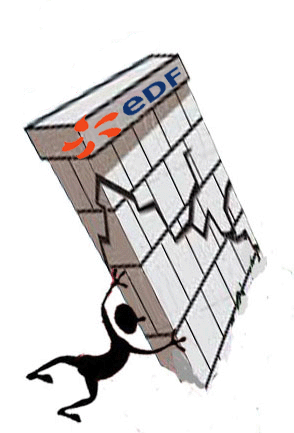
France is considering restructuring plans for debt-laden power firm EDF
(EDF.PA) that include full nationalisation followed by the sale of its
renewables business to focus on nuclear energy, BFM Business reported,
citing unidentified sources.
The website said the government was working
with investment bank Goldman Sachs on several restructuring scenarios. The
sale of the renewables business could fetch 15 billion euros ($16 billion),
it cited unidentified bankers as saying, adding that could help finance the
building of six next-generation EPR nuclear reactors.
Reuters 13th April 2022
Nuclear Free Local Authorities deplore UK govt’s super-costly new nuclear energy strategy, and its rejection of energy conservation measures
THE NUCLEAR FREE LOCAL AUTHORITIES organisation (NFLA) says it is
“incredulous” that Prime Minister Boris Johnson and the UK Government
remains wedded to a new Energy Security Strategy that will rely in large
part upon the development of 24 GW of new nuclear generation capacity to
power Britain.
A plan involving mass investment in renewables and a
reduction in electricity demand through retrofitting the nation’s homes
with insulation would have been far cheaper and quicker to deliver, it
says.
In response to the government’s commitment to build the equivalent
of eight new large nuclear power stations by 2050, NFLA National Chair,
Councillor David Blackburn, said: “It defies common sense that the
current government is turning to a technology that is too slow to install,
too costly to build, remains risky to operate and vulnerable to military
and terrorist attack, and leaves a toxic legacy of radioactive waste that
has to be safely stored for 100,000 years.”
Ekklesia 13th April 2022
April 13 Energy News — geoharvey

Opinion: ¶ “Nuclear Energy Should Not Be Part Of The Global Solution To Climate Change” • Nuclear culture, skills, vendors, and prospects are shriveling, mostly due to bad economics. Sun and wind are now the cheapest bulk source for at least 91% of world electricity, says Bloomberg New Energy Finance, so they’re winning about 10–20 […]
April 13 Energy News — geoharvey
1 This Month
Tell Congress: Prevent Nuclear Catastrophe in Iran

Tell Congress: Prevent Nuclear Catastrophe in Iran

Read the Public Inquiry Report, the Commissioners’ report, Surrendering Australia: The AUKUS Deception is available to download for free at aukuspublicinquiry.com. Or just watch the replay of the National Press Club Luncheon.


Shut down the radiation-damaged Heysham nuclear reactors now
To see nuclear-related stories in greater depth and intensity – go to https://nuclearinformation.wordpress.com

Say No to NASA’s Reckless Nuclear Reactor on the Moon
Say No to NASA’s Reckless Nuclear Reactor on the Moon
-
Archives
- November 2026 (224)
- October 2026 (302)
- September 2026 (339)
- August 2026 (330)
- July 2026 (355)
- June 2026 (287)
- May 2026 (306)
- April 2026 (356)
- March 2026 (251)
- February 2026 (267)
- January 2026 (308)
- December 2025 (358)
-
Categories
- 1
- 1 NUCLEAR ISSUES
- business and costs
- climate change
- culture and arts
- ENERGY
- environment
- health
- history
- indigenous issues
- Legal
- marketing of nuclear
- media
- opposition to nuclear
- PERSONAL STORIES
- politics
- politics international
- Religion and ethics
- safety
- secrets,lies and civil liberties
- spinbuster
- technology
- Uranium
- wastes
- weapons and war
- Women
- 2 WORLD
- ACTION
- AFRICA
- Atrocities
- AUSTRALIA
- Christina's notes
- Christina's themes
- culture and arts
- Events
- Fuk 2022
- Fuk 2023
- Fukushima 2017
- Fukushima 2018
- fukushima 2019
- Fukushima 2020
- Fukushima 2021
- general
- global warming
- Humour (God we need it)
- Nuclear
- RARE EARTHS
- Reference
- resources – print
- Resources -audiovicual
- Weekly Newsletter
- World
- World Nuclear
- YouTube
-
RSS
Entries RSS
Comments RSS

