Cancer Patients Seek Damages from Fukushima Nuclear Plant
Claims Journal , By Mari Yamaguchi | May 27, 2022 TOKYO (AP) — A Tokyo court began hearings Thursday in a lawsuit seeking nearly $5 million in damages for six people who were children in Fukushima at the time of its 2011 nuclear power plant disaster and later developed thyroid cancer.
The plaintiffs are suing the operator of the nuclear plant, saying radiation released in the accident caused their illnesses.
It is the first group lawsuit filed by Fukushima residents over health problems allegedly linked to the disaster, their lawyers say.
One plaintiff, identified only as a woman in her 20s, testified from behind a screen that she had to give up plans to attend university because of repeated operations and treatments.
“Because of the treatments, I could not attend university, or continue my studies for my future job, or go to a concert. I had to give up everything,” she said. “I want to regain my healthy body, but that’s impossible no matter how hard I wish.”
She and the five other plaintiffs are seeking a total of 616 million yen ($4.9 million) in damages from Tokyo Electric Power Company Holdings for allegedly causing their cancers.
On March 11, 2011, a magnitude 9.0 earthquake and massive tsunami destroyed the Fukushima plant’s cooling systems, causing three reactor cores to melt and release large amounts of radiation. Critics say the plant operator should have known that a large tsunami was possible at the site.
The plaintiffs, who were 6 to 16 years old at the time of the accident and lived in different parts of Fukushima, were diagnosed with thyroid cancer between 2012 and 2018, their lawyers said……………..
The Fukushima prefectural government tested 380,000 residents aged 18 or younger at the time of the accident for thyroid cancer. About 300 were diagnosed with cancer or suspected cancer.
That occurrence rate, about 77 per 100,000, is significantly higher than the usual 1-2 per million and can only be linked to radiation from the accident, the plaintiffs’ lawyers said.
………… Three other plaintiffs who attended the hearing were also behind a partition to protect their privacy because of criticism on social media accusing them of fabricating their illnesses and hurting the image of Fukushima, the lawyers said.
Ido said many people with health problems feel intimidated to speak out in Fukushima and that he hopes the lawsuit will prove a correlation between radiation and the plaintiffs’ cancers “so that we can have a society in which people can talk freely about their difficulties.”…………… https://www.claimsjournal.com/news/international/2022/05/27/310693.htm
Australia’s new Labor government urged to act to prevent Julian Assange extradition

https://www.thesaturdaypaper.com.au/news/politics/2022/05/28/labor-urged-act-prevent-julian-assange-extradition#mtr, 28 May 22, The legal case against Julian Assange is a game of luck and whim. Any day now, the British home secretary, Priti Patel, is expected to rubber stamp his extradition to the United States. What will happen to him there is uncertain.
The Westminster Magistrates’ Court formally approved his extradition on April 20 and Patel has until May 31 to announce whether it will happen. If convicted of espionage in the US, Assange could be sentenced to 175 years in prison. His legal team argue he would likely kill himself.
There is one glimmer of hope for the WikiLeaks founder, however, bound up in last weekend’s Australian election result. The victory of Anthony Albanese, a supporter of the journalist, has reignited calls to halt the extradition.
Albanese has said that while he didn’t sympathise with Assange for some of his actions, he could not see any purpose to keeping him in jail.“Assange’s appeal is like a game of extradition snakes and ladders. He managed to take his argument about US prison conditions all the way to the door of the Supreme Court, but they rejected it, so he slid back down to the magistrates’ court where he started.”
“The prime minister, Mr Albanese, has previously said ‘enough is enough’. [Then shadow] Attorney-General Mark Dreyfus issued a statement last year confirming that Labor wanted the matter ‘brought to an end’,” says lawyer and human rights activist Kellie Tranter, who is a former WikiLeaks Party senate candidate. “So it remains to be seen whether such statements will result in the new government requesting that the US drop the case.”
She was “cautiously optimistic” about the case of Assange, who faces 17 charges under the US Espionage Act relating to the publication of classified documents and information related to US war crimes.
“It is helpful that the Greens – who have been calling for the Australian government to take action in the Assange case for some time – may hold the balance of power in the senate,” Tranter added.
Earlier this week, Albanese travelled to Japan for a meeting of the Quad leaders – from India, Japan, the US and Australia – to deliver a message about Australia’s policy changes.
Supporters including Tranter had urged the Department of Foreign Affairs and Trade (DFAT) and the Department of the Prime Minister and Cabinet to include the whistleblower on the agenda, and not just as a sideline issue.
The meeting was the “ideal opportunity” for Albanese to speak with US President Joe Biden and British Prime Minister Boris Johnson to request that Assange be allowed to come home, said Greg Barns SC, an adviser to the Australian Assange campaign.
A spokesperson for the Department of the Prime Minister and Cabinet said they were unable to provide comment on Quad agenda items. Comment was being sought from DFAT.
Stella Assange, who married the WikiLeaks founder in Belmarsh prison this year and is the mother of their two children, told The Saturday Paper the case had become political. She insisted the government had a duty to protect its citizens.
“By failing to act, it’s not just negligent; it shows that whoever is in office that isn’t acting is not fit for office,” the human rights lawyer said. “This can end today if the Australian government decides to do something about it.”
Every human rights organisation in the world had said the extradition of the Townsville-born computer hacker, editor and publisher should be stopped, she said. The latest to speak out is the Council of Europe.
Earlier this month, then Foreign Affairs minister Marise Payne and her Labor shadow, Penny Wong, claimed Australia couldn’t intervene, as the matter was before the courts.
But former British Labour Party leader Jeremy Corbyn, speaking to The Saturday Paper, rubbished the claim. The MP pleaded to Australia to “speak up for your own”.
“Whilst in Britain there are – for good reason – constraints about raising [it] in parliament because it’s a sub judice matter, that does not apply in Australia,” Corbyn said.
“There is no legal case in Australia. So there’s nothing to stop every Australian politician speaking up with Julian Assange, and I think they should. Please do, because it will help the freedom for journalists everywhere.”
Barns said there was “plenty of political support” for Albanese to ensure the whistleblower does not face an effective death penalty in the US. He pointed out that the Bring Julian Assange Home Parliamentary Group had 30 members from every party before the election. This is expected to increase, Assange’s brother, Gabriel Shipton, said.
“Ultimately I don’t think Albo wants to become another Australian prime minister who is complicit in Julian’s persecution and more broadly the Western descent into barbarity that has been taking place ever since the Iraq invasion,” he said. “Whether he has the power to resist that is up to us.”
A spokesperson for DFAT said the government had “consistently raised the situation of Mr Assange with the United States and the United Kingdom”. The spokesperson said the government “conveyed our expectations that Mr Assange is entitled to due process, humane and fair treatment, access to proper medical and other care, and access to his legal team”. However, “The extradition case regarding Julian Assange is between the United States and the United Kingdom; Australia is not a party to this case.”
US–Australian relations are one of many matters that will test Albanese’s leadership. According to Tranter, freedom of information requests show “that consecutive governments have long held the view that the Assange case has strategic implications for the alliance”. She says this is why no Australian government had spoken out in support of his human rights or provided diplomatic assistance to him.
“Mr Albanese should take a stand consistent with his stated ethos of protecting the persecuted and not forsake any Australian citizen to personal abuse for political purposes,” Tranter said.
As he awaits his fate, Assange is incarcerated in London’s maximum security Belmarsh prison. He was taken there after seven years in the Ecuador embassy in London, where he sought asylum to prevent extradition to Sweden over now-abandoned sexual assault charges.
“Assange’s appeal is like a game of extradition snakes and ladders,” says Nick Vamos, the former head of extradition at Britain’s Crown Prosecution Service. “He managed to take his argument about US prison conditions all the way to the door of the Supreme Court, but they rejected it, so he slid back down to the magistrates’ court where he started.”
Assange “can’t climb that particular ladder again”, Vamos says. “But he can still appeal on the other grounds that he lost originally, so there are likely to be a few more ups and downs before this process is finally over.”
The partner and head of business crime at London firm Peters & Peters said the attempts to persuade Home Secretary Patel not to order the extradition would not be successful – “not in a million years”.
Vamos says that if there is another appeal in Britain it could take another six months to be heard. If it is denied, another avenue is the European Court of Human Rights, in Strasbourg, France, which could issue an order directing Britain not to extradite Assange until its case is heard.
Jennifer Robinson, part of Assange’s legal team, has confirmed this is a path being considered.
“This case is too important from a free speech point of view, but also from a humanitarian point of view,” she said.
“We know what the medical evidence is about Julian’s mental health, and that he will find a way to commit suicide if he’s extradited.”
In all, Vamos says, these appeals could take another two years. But once Assange’s extradition has been signed off, he says, US Marshals are free to fly to Britain to arrest Assange: “It will normally happen within a couple of weeks of Patel making the order.”
At an EU Free Assange rally in Brussels, on April 23, Assange’s wife wiped away tears as she spoke to the crowd. The event was aimed at targeting European leaders, with speeches by politicians from various countries. “In the end this will end up in Europe,” Stella Assange said. “Europe can free Julian. Europe must free Julian.”
She recalled that 15 years into his 27-year imprisonment, people thought Nelson Mandela would never be liberated. “But he was, because decent people in that case came out and they shouted for his freedom, even if they were the only person in the square to shout,” she said.
“The fact is, it takes a few decent people to show the way and what we stand for, because we create the reality around us.”
Activists were defending “not just decency and the memory” of all the tens of thousands of victims of the Iraq and Afghan war, caught up in the crimes that WikiLeaks exposed; they were also standing up for the right to a free future.
“What has been done to Julian is a crime,” Stella Assange said. “The law is being abused in order to keep him incarcerated, year after year, for doing the right thing … When will it end? Will it end?”
No credibility in the way that the Ukraine war is being reported – says Colonel Richard Black (ret)

Video: Col. Richard Black — U.S. Leading World to Nuclear War, The International Schiller Institute, 27 May 22, Mike Billington with Executive Intelligence Review interviews Col. Richard Black (ret.).
”…………………………..BILLINGTON: Many flag grade officers certainly understand the consequences that you just described in a rather hair-raising way. Why is it that, while there are some generals speaking out in Italy, in France, in Germany, warning that we are pursuing a course that could lead to nuclear war, why are there not such voices from flag grade officers—retired, perhaps—saying what you’re saying here today?
BLACK: You know, there’s been a tremendous deterioration in the quality of flag officers………. we now have “yes men.” These are not people whose principal devotion is to the United States and its people. Their principal devotion is to their careers and their ability to network with other military officers upon retirement. There’s a very strong network that can place military generals into think tanks, where they promote war, into organizations like Raytheon and Northrop Grumman, and all of these defense operations, where they can get on boards and things like that. So there’s quite a personal price that you pay for saying, “Hey, stop. War is not in the interests of the American people.” If we had a better quality of individual, we would have people with the courage who would say, “I don’t care what it costs me personally.” But it is very difficult to get into the senior ranks, if you are an individual guided by principle, and patriotism, and devotion to the people of this nation. That’s just not how it works. And at some point, we need a President who will go in and shake the tree, and bring a lot of these people falling down from it, because they’re dangerous. They’re very dangerous to America.
………………. Just like I asked what’s keeping the generals from speaking out, why, and what will it take, to get Americans to recognize that we can and must sit down with Russians, and with Chinese, and with all other nations and establish a true, just world based on the dignity of man and the right to development and security?
………. at this point, the media have been so totally censored and so biased that the American people really don’t have a perception of the need for anything of that sort. It’s going to be difficult.
………… The idea that somehow we have this enormously just cause, it doesn’t strike a great deal of the world that it is just, and much of the world does not accept the latest propaganda about war crimes: this thing about Bucha. That’s probably the most prominent of all the war crimes discussions.
And what was Bucha? There was a film taken of a vehicle driving down the road in Bucha, which had been recaptured from the Russians. And every hundred feet or so there was some person with his hands, zip tied behind his back, and he’d been killed. It was not announced until four days after the Ukrainians had retaken Bucha.
Now, we knew almost nothing about it. We actually didn’t even have proof that people had been killed. But assuming they had, we didn’t know where they had been killed. We did not know who they were. We did not know who killed them. We did not know why they were killed. No one could provide an adequate motive for the Russians to have killed them. The Russians held Bucha for a month. If they were going to kill them, why didn’t they kill them during that month? And if you’re going to slaughter a bunch of people, wouldn’t they all be in one place and wouldn’t you gun them all down there? Why would they be distributed along a roadside, a mile along the way? It makes no sense!
What we do know is that four days after the mayor of Bucha joyously announced that the city was liberated, four days after the Ukrainian army had moved in, and their special propaganda arm of the Ukrainian military were there, all of a sudden there were these dead people on the road. How come they weren’t there when the Russians were there? How come they only appeared after the Russians were gone?
If I were looking at it as simply a standard criminal case, and I was talking to Criminal Investigation Division or the FBI, or military police or something, I’d say, “OK, the first thing, let’s take a look at the Ukrainians.” My guess would be, and you start with a hunch when you’re investigating a crime—my hunch is that the Ukrainians killed off these people after they moved in, and after they looked around, and said, “OK, who was friendly towards the Russian troops while the Russians were here? We’re going to execute them.” That would be my guess. Because I don’t see any motive for the Russians to have just killed a few people on their way out of town.
And nobody questions this, because the corporate media are so monolithic. We know for a fact, from the mouth of the head of a Ukrainian hospital, the guy who ran the hospital, he boasted that he had given strict orders to all of his doctors, that when wounded Russian POWs, when casualties were brought in, they were to be castrated. Now, this is a horrific war crime, admitted from the mouth of the hospital administrator, and the Ukrainian government said, “we’ll kind of look into that,” Like it’s no big thing. I can’t think of a more horrific, horrific war crime, ever. Where did you hear about it, on ABC and MSNBC and CNN and FOX News? Not a whisper. And yet the proof is undeniable. We had another clip where there was a POW gathering point, where the Ukrainians would bring POWs to a central point for processing—and this is about a seven-minute video—and the Ukrainian soldiers simply gunned them all down.
And they had probably 30 of these wounded Russian soldiers lying on the ground, some of them clearly dying from their wounds. Some of them, they put plastic bags over their heads. Now, these are these are guys who are laying there, sometimes fatally wounded with their hands zip-tied behind their backs, and they’ve got plastic bags over their heads, making it difficult to breathe. And because they can’t raise their hands, they can’t take the bags off, so that they can breathe. At the end of the video, the Ukrainians bring in a van, and there are three unwounded Russian POWs. Without the slightest thought or hesitation, as the three come off, and their hands are bound behind their backs, they gunned down two of them, right on camera and they fall over. And the third one gets on his knees, and begs that they won’t hurt him. And then they gun him down! These are crimes. And these were not refuted by the Ukrainian government. But you’d never even know that they occurred! So far, I will tell you that the only proven—I’m not saying that there aren’t war crimes happening on both sides. I’m just telling you, that the only ones where I have seen, fairly irrefutable proof of war crimes, have been on the Ukrainian side.
Now, often you hear it said, well, the Russians have destroyed this or destroyed that. Well, I’ve got to tell you, you go back to the wars that we fought when we invaded Iraq, the “Shock and Awe,” we destroyed virtually everything in Iraq, everything of significance. We bombed military and civilian targets without much discrimination. The coalition flew 100,000 sorties in 42 days. You compare that to the Russians, who have only flown 8,000 sorties in about the same period of time. 100,000 American sorties versus 8,000, in about the same time. I think the Russians have tended to be more selective. Whereas we went out — the philosophy of Shock and Awe is that you destroy everything that is needed to sustain human life and for a city to function. You knock out the water supply, the electrical supply, the heat, the oil, the gasoline; so that you knock out all of the major bridges. And then you just continue to destroy everything.
So it’s really ironic. And keep in mind, Iraq is a relatively small country. Ukraine is a huge country. 100,000 sorties in 42 days, 8,000 sorties in about the same time. A tremendous difference in violence between what we did in Iraq, and what they have done in Ukraine. So there’s simply no credibility when you actually get down to the facts and you look at the way that the war has been conducted…………… https://schillerinstitute.com/blog/2022/04/26/video-col-richard-black-u-s-leading-world-to-nuclear-war/
Why nuclear power can’t solve climate crisis – in fact makes it worse.
Mark Jacobson, energy scientist and professor from Stanford University,
gives a brilliant synopsis of the reasons why nuclear power can’t help
solve the climate crisis and even makes the problem worse.
Mark Jacobson 24th May 2022
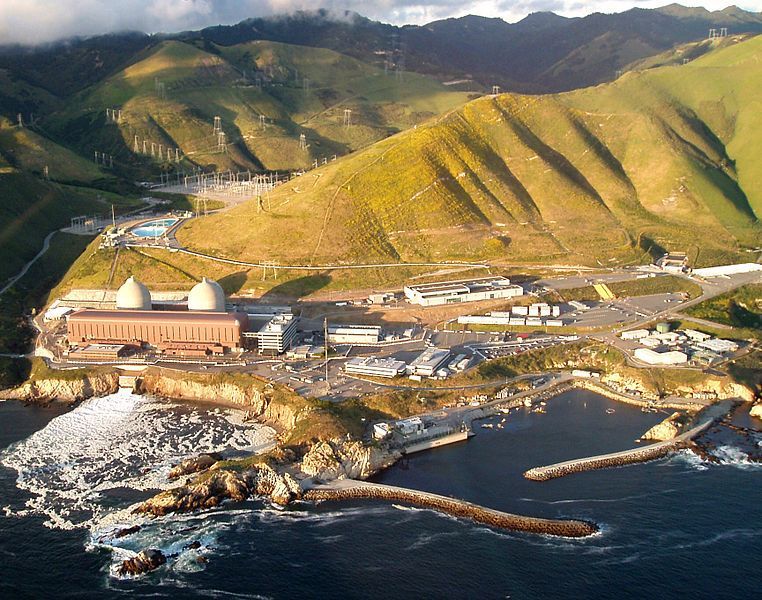
Michigan’s dead old nuke is Diablo’s early warning
 | |||
|
https://www.downwithtyranny.com/post/michigan-s-dead-old-nuke-is-diablo-s-early-warning-by Harvey Wasserman, 27 May 22,
Michigan’s Palisades nuke has just shut early for the same reason California’s two reactors at Diablo Canyon must now go down– immediate safety concerns at a badly deteriorated reactor. Safe energy activists fought for decades to close Palisades. Opened in 1971, it was costly, wasteful and grew increasingly dangerous as it inevitably decayed. Finally scheduled to close on May 31, Entergy– one of America’s biggest nuke operators– stunned the world by taking it down on May 20, reducing the US reactor fleet from 93 to 92.
Cause for shut-down was a defect in the plant’s vital control rod mechanism. The alarm bells were global. Simply put: with 11 days left on the clock, the deeply entrenched Entergy Corporation was worried enough about its most bitterly contended reactor’s rotted internals to pull the plug early.
With a 51-year-old reactor now in the graveyard, what else are they not telling us? And what have they admitted about the rest of the nation’s reactor fleet, which averages 39 years of age?
Such safety concerns are equally vital at Diablo Canyon, whose two reactors opened in the mid 1980s. The Nuclear Regulatory Commission’s own senior resident inspector, Dr. Michael Peck, has warned that Diablo’s twin nukes might not survive seismic shocks from the dozen-plus fault lines surrounding the site. The San Andreas is just 45 miles away; the shock that destroyed the four reactors at Fukushima was twice that distance. That quake may itself have set Fukushima I melting even before it was ever hit by a tsunami.
The energy industry and its shoot-from-the-hip supporters have long assured the world its uninsured reactors at Diablo must be safe because it’s regulated by the NRC. But Dr. Peck worked in his official capacity on a daily basis at the Diablo site for five years, and knew its dangers as well as anyone.
EDF Nuclear Failures Undermine Europe’s Push to Exit Russian Gas
- France may need to import power from its neighbors this winter
That may drive up regional demand for gas to feed power plants - Bloomberg, By Rachel Morison and Francois De Beaupuy, 27 May 2022, Electricite de France SA’s nuclear failures are sending ripples through European energy markets, threatening to undermine the continent’s plan to turn its back on Russian gas.
- Europe’s biggest producer of atomic energy, which usually exports cheap power during the winter, may be forced to import this year after cutting its output forecast a third time. A fleet hobbled by faults is not just a problem for France but for countries such as neighboring Germany, which may have to burn more gas to keep the lights on despite pledging to cut its reliance on Moscow.
We have a French problem which is taking place at the wrong time, given the geopolitical situation,” said Nicolas Leclerc, co-founder of Paris-based energy consultant Omnegy. “The whole European equilibrium may be threatened.”…………. (subscribers only) https://www.bloomberg.com/news/articles/2022-05-27/edf-nuclear-failures-undermine-europe-s-push-to-exit-russian-gas
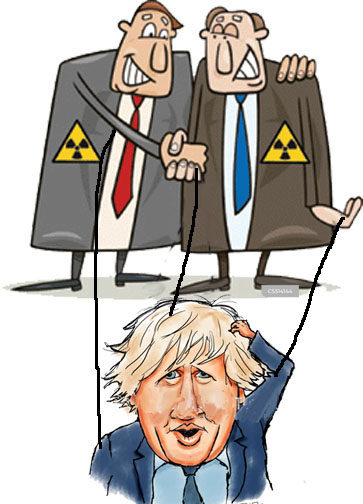
Boris Johnson promised ”1 nuclear reactor a year for 8 years” – one by 2040 if he’s lucky!
With the weather changing dramatically across the world, will politicians
finally take the climate crisis seriously? With a concerted effort, there
could still be time. But time is the critical thing. And on the campaign
trail in “red wall” seats before the May elections, the prime minister,
Boris Johnson, repeatedly promised building nuclear reactors “one a year
for eight years”.
Last week at the Conservative conference in Wales he
was at it again – this time promising one on Anglesey and another at
Trawsfynydd in Mid Wales.
Anyone who knows a little about nuclear reactors
(current designs 10 years late and £10bn over budget) or about the prime
minister’s other mega-projects – bridges across the Thames and Irish
Sea, and an airport in the Thames estuary – is confident that this
won’t happen.
A protest via my MP brought a measured response from Greg
Hands, the minister responsible for energy policy. He said provided
reactors were value for money and technically sound, the government’s
target for nuclear projects was to give one a final investment decision
this parliament, and two in the next – so maybe three building starts by
2030. On current trends that means one reactor possibly ready by 2040 and
two others much later. Far too late to heal the climate.
Guardian 27th May 2022
Where will Europe store its radioactive waste?
Euronews, By Tim Gallagher with Reuters 27/05/2022 –
A row is brewing in the Balkans as tensions mount over plans for a nuclear waste storage facility.
Croatia’s plan to store radioactive waste near its border with Bosnia is facing mounting opposition from its neighbour due to concerns the plant could have potentially devastating health and environmental impacts.
The site near the River Una, a Danube tributary, was chosen in 2018. In a bid to halt the plan, Bosnia responded by declaring their land closest to the location a nature reserve.
This scheme gained little ground and as the grand opening draws closer, Bosnians are growing increasingly concerned about the possible consequences on their pristine rivers and organic farming industry, not to mention public health.
“We fear the main impact of this devastating proposal will be on people’s lives and on the environment,” says Mario Crnkovic, an ecologist in the town of Novi Grad on the Bosnian side of the border, about one kilometre from the earmarked site.
Croatia has dismissed the concerns, but critics note that the government has yet to publish any health or environmental risk assessment of the proposal.
The area is prone to flooding and subject to regular seismic activity. It’s also still being cleared of landmines left over from the Balkan wars in the 1990s.
Diplomatic incidents over nuclear waste
The Balkans row is not the only diplomatic incident to happen over nuclear waste disposal in recent years.
In 2020 the Belgian government announced they had received recommendations for seven sites for underground disposal of nuclear waste, but didn’t specify where they were.
It wasn’t long before suspicions were aroused in Luxembourg, with the Luxembourgian environment minister, Carole Dieschbourg, stating they would be in the area of Namur, Dinant and Stavelot, close to their border with Belgium.
“That is right on our doorstep,” the minister announced, as she raised potential dangers to locals and accused the Belgian government of contravening the Espoo convention which regulates trans-border environmental impact reporting……………..
Where will nuclear waste be stored in the future?
Russian soldiers taking Chernobyl Nuclear plant by force during their invasion of Ukraine brought the dangers of unsafe nuclear waste to the forefront of the public imagination.
Most operational-storage facilities for nuclear waste are at surface level, with the UK, France, and Spain all making use of these short-term solutions.
However, the consensus for the future is that nuclear waste is best stored in a geological disposal facility (GDF) deep beneath our feet. Here in a space 700 – 1000 metres underground, spent reactors will be safely treated and sealed into rock structures with cement, leaving them to decay over hundreds of thousands of years.
Previous mooted suggestions of sending waste to space or burying it beneath the ocean floor have been abandoned, but there is an ongoing issue of how to warn future generations of the dangers of waste sites.
With no guarantee that today’s languages will be spoken or current iconography will be recognisable in thousands of years, it’s a risk that still-dangerous toxic waste could be accidentally opened up by curious archaeologists of the future.
In the 1980s the US government assembled the Human Interface Taskforce to work out how to prevent such a disastrous occurrence. One of their recommendations was to create fake myths and legends to ward off the curious.
Do communities want GDFs?
This toxic issue doesn’t just cause problems along borders, but often sees locals hotly contest proposals for GDFs near their communities by their own governments.
In the UK the country’s first GDF (which will store the 20th century waste currently stored in Sellafield, Cumbria) has been marketed as a big infrastructure project which will bring jobs and prosperity, leading to a bidding war between several different remote locations.
However, residents are not so keen on the idea of playing host to a poisonous repository, with retirees in the Lincolnshire village of Theddlethorpe proving particularly vocal.
Meanwhile in the sleepy French village of Bure, clashes between protestors and police over a GDF deep inside the clay soil of the region have led to much concern over potential nuclear leakage……………. https://www.euronews.com/green/2022/05/27/croatia-s-plans-for-radioactive-waste-worry-neighbouring-bosnia
Finland: Fennovoima withdraws from its new nuclear reactor application.
FENNOVOIMA on Tuesday announced it has withdrawn its application for a
building permit for a nuclear power plant in Pyhäjoki, Ostrobothnia,
delivering what many believe was the final blow to the controversial
project. The Finnish energy company reported earlier this month that it has
terminated the supplier contract for the plant with Raos Project, a Finnish
subsidiary of Russia’s Rosatom.
Helsinki Times 26th May 2022
Hiroshima man’s anime sheds light on Fukushima nuclear project
THE ASAHI SHIMBUN 27 May 22, Hiroshima resident Hidenobu Fukumoto was astonished when he learned there was once a plan to build a nuclear power plant in his hometown, the first city devastated by a nuclear bomb.
He discovered the shocking news by chance while visiting Fukushima Prefecture, which suffered its own nuclear disaster in 2011, as a “kamishibai” picture card show artist.
“I was stunned,” said Fukumoto, who has produced about 170 kamishibai titles based on the accounts of residents affected by the disaster. “I decided to face up to the new fact about Hiroshima I discovered during my visits to Fukushima.”Hiroshima resident Hidenobu Fukumoto was astonished when he learned there was once a plan to build a nuclear power plant in his hometown, the first city devastated by a nuclear bomb.
He discovered the shocking news by chance while visiting Fukushima Prefecture, which suffered its own nuclear disaster in 2011, as a “kamishibai” picture card show artist.
“I was stunned,” said Fukumoto, who has produced about 170 kamishibai titles based on the accounts of residents affected by the disaster. “I decided to face up to the new fact about Hiroshima I discovered during my visits to Fukushima.”
The anime, titled “Fukushima Genpatsu Hajimari Monogatari: Toge” (The prologue to the Fukushima nuclear power plant: Mountain pass), portrays a man in his 60s who was born in 1949 in Okuma, a town in Fukushima Prefecture that co-hosts the now-stricken plant.
When Japan’s economy begins booming following the period of postwar poverty, the protagonist enters a university in Tokyo and enjoys his college life.
The story illustrates the major events leading up to the construction of the nuclear plant in Fukushima Prefecture at a time when people in Japan were suddenly blessed with material wealth.
Another scene shows young people in Fukushima leaving their hometown to seek jobs, while long-term residents are split over whether the prefecture should host a nuclear plant.
When the protagonist eventually returns home in Okuma and sees a massive nuclear plant standing in the town, he is left speechless.
The anime then fast-forwards to 2011, when the Great East Japan Earthquake and tsunami triggered the triple meltdown at the plant.
“The move to promote atomic power prevailed globally under the pretext of the peaceful use of nuclear energy, overshadowing even the destruction of Hiroshima brought on by the atomic bomb,” the protagonist said while living as an evacuee at the end of the story. “Ordinary people like us could do nothing about it.”………………………………………….
STORY HITS HOME
Fukumoto’s kamishibai project has struck a chord with many Fukushima residents who experienced the nuclear disaster…………………………………
Kinue Ishii, 70, who also performs kamishibai with Oka as a member of a storytelling group, said people can think deeply about the nuclear accident by learning why the nuclear plant was built in Fukushima.
“I want people to imagine themselves becoming victims of a nuclear accident by watching this anime,” Ishii said.
Hisai Yashima, 56, another member of the storytelling group, said she hopes the anime will help raise awareness of what led to the construction of the nuclear plant because people from outside Fukushima often ask her why the prefecture approved the plan.
The package of an anime DVD and a 16-page, A4-size picture book costs 2,000 yen ($16). For more details, visit the production committee’s website: https://matimonogatari.iinaa.net) (Japanese only).
(This article was compiled from reports by Miki Morimoto and Yusuke Noda.) https://www.asahi.com/ajw/articles/14604129
Book Review: A Timely History of Nuclear Catastrophes

In “Atoms and Ashes,” Serhii Plokhy offers a harrowing account of the world’s six major accidents and their aftershocks.
Top: Three Mile Island photographed in 1999, 20 years after the Unit 2 reactor failed.
RUSSIA’S INVASION OF Ukraine not only reminded the world of all the usual horrors of modern warfare, but also stirred the long-slumbering spectre of nuclear catastrophe, both in the form of nuclear war à la “Dr. Strangelove” and of civilian disaster à la Chernobyl. When Russian forces occupied the Chernobyl nuclear plant and held its workers hostage, some worried about a new nuclear disaster in the making if the plant was damaged or if decommissioning operations were severely disrupted. Other nuclear plants in Ukraine, including the Zaporizhzhia nuclear power station — the largest nuclear power plant in Europe, with six reactors — were threatened by invading forces. The dangers were severe enough that the International Atomic Energy Agency sent safety staff and continues to monitor the unfolding situation to ensure that things don’t get out of control.
At the moment, Ukraine’s nuclear plants seem to be safe, but fear and anxiety persist. As Serhii Plokhy details in “Atoms and Ashes: A Global History of Nuclear Disasters,” the memories of past catastrophes continue to haunt the idea of nuclear power, including any plans or hopes for a nuclear power renaissance in a world of worsening climate change.
Each of the book’s six chapters focuses on an individual nuclear accident, some famous, others more obscure, including relevant background information and historical context. ……………………………… https://undark.org/2022/05/27/book-review-a-timely-history-of-nuclear-catastrophes/
Another university infiltrated by the nuclear industry – University of Derby and Rolls Royce

| Rolls-Royce Submarines announced plans recently to open a new academy dedicated to nuclear training within the city. The academy forms part of their Rolls-Royce Submarines’ plans to boost nuclear capability in the UK and create a pipeline for nurturing talent. In partnership with the University of Derby, the site will create 200 new apprenticeships every year for at least the next 10 years. The academy is set to open in September 2022. The Council’s iHub – managed by Connect Derby – will become the home of the new academy, taking centre-stage at the manufacturing-focused innovation and technology site, Infinity Park. Derby City Council 26th May 2022 https://www.derby.gov.uk/news/2022/may/ihub-rolls-royce-nuclear-skills-academy/ |
France is offering 6 new nuclear reactors to India, even though India’s nukes are not within the IAEA safety regulatory framework.
AMAZINGLY, despite the fact that at a time when India’s eight nuclear
reactors already remain out of the IAEA safety regulatory framework,
Electrrice de France (EDF) has offered India to get six evolutionary
pressurised water nuclear reactors (EPRs) from France. While looking into
the evolution of the Indian nuclear program, one gets a clear picture that
since Pokhran-1-11 1974 , 1998, New Delhi has been unduly favoured by the
foreign powers to enhance its soft power and hard power nuclear assets.
Pakistan Observer 26th May 2022
Foreign powers’ role behind India’s nuclear programme? | By Syed Qamar Afzal Rizvi
For the first time in history, nuclear sites have been caught up in the middle of warfare

With Russia’s invasion of Ukraine, nuclear facilities have been caught
up in the midst of conventional warfare for the first time in history. That
nightmare scenario is one that few of the industry’s players had
anticipated. In Chernobyl and Zaporizhzhia, Russian forces represent a
lingering threat to the most basic rules of nuclear security.
On the way to
Chernobyl along the Dnipro River, a two-hour drive from Kyiv, the imprint
left by Russia’s occupation remains, two months after an ordeal that
lasted from the February 24 invasion until March 31. Most bridges have been
destroyed and our driver warns us to stay on the pavement as landmines lurk
beyond. After the invasion, the exclusion zone around Chernobyl – a
30-kilometre radius around the notorious nuclear plant near Ukraine’s
border with Belarus – made global headlines once again.
For some 35 days,
Chernobyl personnel had to abide the Russian soldiers who seemed oblivious
to the dangers inherent in a nuclear site. Those in the civil nuclear
industry believe it is vital to deliberate on the issue of nuclear security
in wartime. Terrorist attack scenarios had been considered in the past. But
in light of the Russian invasion, the matter of adopting international
rules is now on the table. Over the past three months, Ukrainian
authorities have been calling – so far without success – for the
International Atomic Energy Agency (IAEA) to commit its members to
respecting a five-kilometre perimeter around nuclear facilities inside of
which no military forces can be permitted to penetrate.
France24 26th May 2022
Chinese involvement is entrenched in Britain’s nuclear power plans
In this week’s Gossage Gossip, our columnist discusses whether the
UK’s recent ban on China’s involvement in nuclear power came a little
too late. It has become clear that, for national security reasons
safeguarding the electricity system, the Government has decided to minimise
the amount of direct Chinese involvement in new nuclear construction. While
China was originally welcomed with open arms, the idea now is to kick the
Chinese out from their projected 40% funding of Sizewell C, and block
entirely the concept of a 100% Chinese reactor at Bradwell B.
But might this be a case of shutting the stable doors well after the horses have
bolted? For instance, it seems that the special constabulary force who
police Britain’s 10 civil nuclear sites do so using surveillance cameras
produced by a Chinese state-backed firm called Hikvision. This firm has
been sanctioned under export and investment restrictions by the US
government and is implicated in human rights abuses in Xinjiang. Due to the
sensitivity of their work, unlike regular British police forces, frontline
officers may be routinely armed. But it won’t stop their every move being
monitored by the camera manufacturers.
A major worry regarding Sizewell C
is reliable accessibility to copious amounts of cooling water, a growing
problem in dry East Anglia. The local supplier, Essex and Suffolk Water,
are statutorily bound to provide water on demand to all households – but
has no such obligations for non-residential establishments. All they can
offer is ‘best endeavours’ to supply. And who owns this water company?
Step forward Li-Ka Shing. His company, CK Group, also owns UK Power
Networks, just about the largest electricity distribution company in
Britain. Li-Ka Shing happens to be not just one of the richest men in
China, but also an industrialist known to be very close to President Xi.
Prospective constructor Electricité de France has been instructed to cost
out just how much more heavy dependence upon desalination of North Sea
water will add to their overheads, already upwards of £21 billion.
Electrical Review 26th May 2022
1 This Month
Tell Congress: Prevent Nuclear Catastrophe in Iran

Tell Congress: Prevent Nuclear Catastrophe in Iran

Read the Public Inquiry Report, the Commissioners’ report, Surrendering Australia: The AUKUS Deception is available to download for free at aukuspublicinquiry.com. Or just watch the replay of the National Press Club Luncheon.


Shut down the radiation-damaged Heysham nuclear reactors now
To see nuclear-related stories in greater depth and intensity – go to https://nuclearinformation.wordpress.com

Say No to NASA’s Reckless Nuclear Reactor on the Moon
Say No to NASA’s Reckless Nuclear Reactor on the Moon
-
Archives
- November 2026 (190)
- October 2026 (302)
- September 2026 (339)
- August 2026 (330)
- July 2026 (355)
- June 2026 (287)
- May 2026 (306)
- April 2026 (356)
- March 2026 (251)
- February 2026 (267)
- January 2026 (308)
- December 2025 (358)
-
Categories
- 1
- 1 NUCLEAR ISSUES
- business and costs
- climate change
- culture and arts
- ENERGY
- environment
- health
- history
- indigenous issues
- Legal
- marketing of nuclear
- media
- opposition to nuclear
- PERSONAL STORIES
- politics
- politics international
- Religion and ethics
- safety
- secrets,lies and civil liberties
- spinbuster
- technology
- Uranium
- wastes
- weapons and war
- Women
- 2 WORLD
- ACTION
- AFRICA
- Atrocities
- AUSTRALIA
- Christina's notes
- Christina's themes
- culture and arts
- Events
- Fuk 2022
- Fuk 2023
- Fukushima 2017
- Fukushima 2018
- fukushima 2019
- Fukushima 2020
- Fukushima 2021
- general
- global warming
- Humour (God we need it)
- Nuclear
- RARE EARTHS
- Reference
- resources – print
- Resources -audiovicual
- Weekly Newsletter
- World
- World Nuclear
- YouTube
-
RSS
Entries RSS
Comments RSS

