Plaintiffs Tour the Savannah River Site’s Plutonium “Pit” Bomb Core Plant -Most Expensive Building in U.S. History is Key to New Nuclear Arms Race

Tom Clements, Director, SRS Watch, Jay Coghlan, Nuclear Watch NM, Shelby Cohen, Comms Manager, SC Env. Law Project, 23 April 26, https://nukewatch.org/wp-content/uploads/2026/04/Plaintiffs-Tour-the-Savannah-River-Sites-Plutonium-Pit-Bomb-Core-Plant.pdf
Columbia, SC – On April 21, plaintiffs Savannah River Site Watch, Nuclear Watch New Mexico and Tri-Valley CAREs toured the plutonium “pit” bomb core production plant at the National Nuclear Security Administration’s (NNSA’s) Savannah River Site (SRS) near Aiken, South Carolina. They were accompanied by their attorney from the South Carolina Environmental Law Project and a science consultant from the Union of Concerned Scientists.
Plutonium pits are the core components of all U.S. nuclear weapons. The NNSA is seeking to expand production to at least 30 plutonium pits per year at the Los Alamos National Laboratory (LANL) in New Mexico and at least 50 pits per year at SRS, which has never previously produced pits. NNSA pushed forward with the project without required public review, in violation of the National Environmental Policy Act (NEPA).
Plaintiffs sued in federal court in Columbia, SC and won, requiring the NNSA to complete a nationwide programmatic environmental impact statement (PEIS), with public hearings to be held this May (listed below). The court-approved settlement agreement also required an inspection of the Savannah River Plutonium Processing Facility by plaintiffs to ensure that no production begins before the completion of the final PEIS and simultaneous Record of Decision, which NNSA now says is expected in early 2027. NNSA officials also informed plaintiffs that 90% design and “rebaselined” costs will not be completed until September 2026, which means that once again Congress will be appropriating taxpayers’ money without knowing full costs.
The SRS pit plant will be the most expensive buildings ever built in the USA, with a current NNSA estimate of up to $30 billion even before all total costs are known (includes at least $5 billion in sunk costs for SRS’ failed MOX Fuel Fabrication Facility being “repurposed” to pit production). The agency’s recent budget request for FY 2027 (pp 17-19) reveals an 87% jump in combined pit production funding for LANL and SRS, averaging $5 billion for each of the next six years.
Despite the staggering costs, the independent Government Accountability Office (GAO) has repeatedly found that NNSA has no credible cost estimates. In fact, the NNSA and its parent Department of Energy (DOE) have been on the GAO’s High Risk List for project mismanagement and waste of taxpayers’ dollars since 1991. In August 2025 the DOE Deputy Secretary ordered a “special assessment” of the troubled program completed by mid-December. Despite repeated Freedom of Information Act and congressional requests, DOE has yet to publicly release it. Finally, NNSA’s FY 2025 Performance Evaluation Report for SRS specifically notes that the managing contractor underperformed in project execution of the Savannah River Plutonium Processing Facility, likely adding yet more delays and costs.
NNSA released the Draft Pit Production PEIS on April 10, 2026. It declares that:
“NNSA missions are conducted fully consistent with current treaty obligations. The SSMP [Stockpile Stewardship and Management Plan] is fully consistent with and supports the U.S. commitment to the NPT [NonProliferation Treaty].” (Volume I, p. 1-5)
Article VI of the U.S. constitution enshrines international treaties as the “supreme Law of the Land.” The 1970 NonProliferation Treaty required the nuclear weapons powers to “to pursue negotiations in good faith on effective measures relating to cessation of the nuclear arms race at an early date and to nuclear disarmament…” After more than a half-century that has never even begun. The next NPT Review Conference, held every five years, is scheduled to begin April 27 at the United Nations. It is widely expected to fail for the third time over fifteen years to make any progress whatsoever toward nuclear disarmament. To the contrary, expanded plutonium pit production is key to the U.S.’ $2 trillion “modernization” program to keep nuclear weapons forever.
The draft PEIS also declares:
“Over time, the materials that make up the pit change in ways that reduce the pit’s functionality… Building the manufacturing capacity to produce at least 80 ppy [pits per year] before the end of the decade is essential to maintaining a reliable nuclear deterrence. Many of the aging pits will have to be replaced with new ones in the coming years to maintain a safe and reliable nuclear stockpile and deterrence.” (Volume I, p. 1-3.)
NNSA completely omits that in 2006 independent experts concluded that plutonium pits have reliable lifetimes of at least 85 to 100 years, with no stated expiration date (the average age of pits is now around 43 years). Despite congressional directives, NNSA has yet to release a fully updated pit life study since then. In fact, no future pit production is scheduled to maintain the safety and reliability of the existing stockpile. Instead it is all for new-design nuclear weapons that could prompt a return to testing.
Tom Clements, SRS Watch Director, commented:
NNSA completely omits that in 2006 independent experts concluded that plutonium pits have reliable lifetimes of at least 85 to 100 years, with no stated expiration date (the average age of pits is now around 43 years). Despite congressional directives, NNSA has yet to release a fully updated pit life study since then. In fact, no future pit production is scheduled to maintain the safety and reliability of the existing stockpile. Instead it is all for new-design nuclear weapons that could prompt a return to testing.
Tom Clements, SRS Watch Director, commented:
“This PEIS process, pursuant to the National Environmental Policy Act, gives the public the power to be engaged in democratic decision-making processes and voice their concerns on nuclear weapons projects – ones that historically have been cloaked in secrecy. This particular public comment period is crucial. Because of the current administration’s dismantling of NEPA regulations, this could be the last nuclear weapons project that the public has the opportunity to adequately scrutinize.”
Dylan Spaulding, a physicist with the Union of Concerned Scientists, observed:
“The scope and pace of pit production are frequently justified due to concerns about plutonium aging, but pits in the existing stockpile should not require replacement for decades. Newly produced pits are to furnish new types of weapons, not to maintain the ones we have. Plutonium aging is simply not a credible motivation for a rushed pit production program at this time.”
Jay Coghlan, Director of Nuclear Watch New Mexico, commented:
“It’s ironic that plutonium pit production’s exorbitant costs could lower national security instead of enhancing it. New untested designs could lower confidence in the existing, tested stockpile. Or these new-designs could prompt the U.S. to return to testing, after which other nuclear weapons powers would surely follow. It’s time to end the cover up of the NNSA’s deeply troubled pit production program and to expose everything from its runaway costs to its role in a new nuclear arms race that endangers us all.”
In closing, Attorney Ben Cunningham, commented:
“South Carolina Environmental Law Project lawyers fought for years in federal court to win this programmatic environmental impact statement – a significant victory for public participation and transparency. Now, South Carolinians have a voice in this legally required environmental and public safety review that the federal agency must take into account before deciding whether our state is used to produce nuclear weapon components along with their inevitable radioactive wastes. If you care about the future of our land, water and safety, please submit your comments on the programmatic environmental impact statement before the July 16 deadline.”
The Draft PEIS was released by NNSA on April 10, 2026 with a 90-day public comment period. Comments can be submitted by email to PitPEIS@nnsa.doe.gov until July 16. Please include the document number “DOE/EIS-0573” in the subject line. For more please see https://www.energy.gov/nepa/articles/doeeis-0573-draft-environmental-impact-statement-april-2026
Five required public hearings:
All hearings with the exception of the Washington, DC, hearing are scheduled for 5:00-5:30pm Open House Poster Session, 5:30-8:00pm Formal Public Hearing, in their respective time zones.
North Augusta, South Carolina: Tuesday, May 5, 2026, North Augusta Community Center, 495 Brookside Dr, North Augusta, SC 29841, Virtual: https://bit.ly/PitPEIS5May, Meeting ID: 267 103 716 263 892, Passcode: Wb2RJ9zA, Join by Phone: 571-429-4592, Phone conference ID: 297 381 326#
Kansas City, Missouri: Thursday, May 7, 2026, Hillcrest Community Center, Community Room, 10401 Hillcrest Road, Kansas City, MO 64134, No virtual meeting option.
Livermore, California: Tuesday, May 12, 2026, Garré Vineyard & Winery, Santa Rosa Room, 7986 Tesla Road, Livermore, CA 9455, no virtual meeting option.
Santa Fe, New Mexico: Thursday, May 14, 2026, Santa Fe Farmers Market Institute, 1607 Paseo de Peralta, Santa Fe, NM 87501, Virtual: https://bit.ly/PitPEIS14May, Meeting ID: 278 752 885 654 34, Passcode: W9Bt96vN, Join by Phone: 719-283-1404, Phone conference ID: 311 183 140#
Washington, DC: Wednesday, May 20, 2026, 2:00-2:30pm Open House Poster Session, 2:30-5:00pm Formal Public Hearing, Eastern Standard Time, Southwest Library, Large Meeting Room, 900 Wesley Pl, SW, Washington, DC 20024, no virtual meeting option.
Space Loos, Lunar Exploitation and Colonial Escapism: The Artemis II Mission
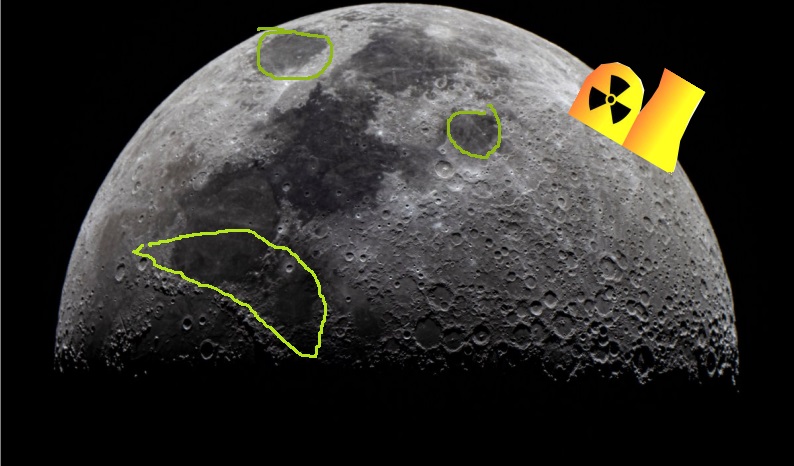
22 April 2026 Dr Binoy Kampmark, https://theaimn.net/space-loos-lunar-exploitation-and-colonial-escapism-the-artemis-ii-mission/
The Earth is in a fine mess, but human beings sealed in laboratories full of energy and vigour, attached to screens, and running tests about conditions in space, have another reason to cheer. Between April 1 and April 11, the Artemis II undertook a flyby of the Moon and returned safely. News bulletins, life stream feeds and podcasts afforded it saturating room and coverage. This was the first Moon mission with a crew in over five decades. Cue, then, for the grand claims, the exaggerated hopes, the silliness of it all.
Absurdly, the effort is being heralded as a collective push by humanity despite its distinct NASA credentials, yet another instance of coarse patriotism yoking itself to scientific endeavour. This is an American gig, and it will be assessed along with every other expensively patriotic mission launched by any number of States believing that the dark side of the moon is the next big thing in competition and exploitation. President Donald Trump’s Executive Order of December 2025 promises “American space superiority,” with the Artemis Program intended to return “Americans to the Moon by 2028,” “assert American leadership in space, lay the foundations for lunar development, prepare for the journey to Mars, and inspire the next generation of American explorers”.
It is also worth considering the statement by NASA Administrator Jared Isaacman made in March: “NASA is committed to achieving the near-impossible once again, to return to the Moon before the end of President Trump’s term, build a Moon base, establish an enduring presence, and do the other things needed to ensure American leadership.” Nothing about humanity here so much as a bald MAGA admission that, “The clock is running in this great-power competition, and success and failure will be measured in months, not years.”
Just to complete the trio of examples, Sean Duffy, when he was acting NASA Administrator, did not shy away from the messianic zeal of the American space program. In an internal staff briefing held last year, he was unambiguous that the US had to get to the Moon before China before venturing on to Mars. This was only natural, as his country had a “manifest destiny to the stars.”
Colonial pursuits are often preceded by the spirit of discovery, economic reconnaissance, inquiry. Then comes the appropriation, the brazen theft, the seizure wrapped in the jolly packaging of blood, civilisation and empire. Thankfully, in this case, there are no indigenous populations to exterminate, no extant human cultures to extinguish. That extermination will take the form of great powers vying over rare mineral real estate as an exercise in colonial escapism.
Much of the mission, because the lay audience could have no sense or truck in the finer details of the travel, was reduced to soap opera banalities and focal points of sheer triviality. In some instances, it was even worse than soap opera, crying out for some definitive, asteroid finish. Prosaic details were offered about lavatory failures, which only matter because people relate to them with faecal and urinary familiarity. “The Artemis II crew, working closely with mission control in Houston,” NASA revealed on April 2, “were able to restore the Orion spacecraft’s toilet to normal operations following the proximity operations demonstration.” That lavatory, at the cost of $23 million, was also said to be the second dearest toilet system ever built. We were also told with quotidian certainty that all lavatories in space tend to end up having failings of some sort, which will no doubt launch a thousand theses on faeces in due, and easy comfort. University examination boards can look forward to the excessive discharge.
Moving items in the spacecraft were also the source of various bromide observations. Nutella, with its hazelnut spread, got what was regarded by the press as the “greatest free advert in history,” floating about fairly unnoticed by the crew – though noticed on the live feed. “When Artemis II broke Apollo 13’s distance record of 248,655 miles from Earth on Monday [April 6],” declared PRWeek, “it was one small step for man … and a giant leap for Nutella’s marketing team.” How wonderful to also note that Nutella was founded in 1964, the same year NASA successfully completed its first lunar mission with Ranger 7.
As for global public interest, NASA and any of those in the business of filming their exploits in space need to be reminded of a rather disturbing truth. Dark, even slightly sadistic voyeurism is never far away from such missions. Impassive spectators are a callous sort, seeking jubilation in shock. An attempt to inject drama is made in media outlets, fluffed up by pundits, about what might have happened to the crew on losing communications for several hours. They must surely make it. Surely. Yet, sickening voyeurism is heavy in such messages, a thanatotic urge. “As the astronauts pass the Moon at about 23:47 BST (18:47 EDT) on Monday, the radio and laser signals that allow the back-and-forth communication between the spacecraft and Earth will be blocked by the Moon itself,” came the bland observation from the BBC. The retching platitude, however, could not be resisted: “For about 40 minutes, the four astronauts will be alone, each with their own thoughts and feelings, travelling through the darkness of space. A profound moment of solitude and silence.” A rather different reading of what being “alone” means, let alone solitude.
On their return to Earth, the press conference given by the crew was saccharine, charmless and unspeakable, suggesting that space travel may narrow the mind. There was the mandatory carpet crawling tribute act for NASA’s management. There were bucketful inanities on team enterprise, the insufferable jargon of organisation teamwork. With emetic conviction, Jeremy Hanson went so far as to call the crew a “joy team” and claim that humans “don’t always do great things. We’re not always in our integrity, but our default is to be good and to be good to one another.” Another crew member suggested that Earth was a “dream boat” (interestingly enough, China’s own spacecraft destined for lunar exploits is named Mengzhou, or Dream Vessel) while the Artemis team were but a mirror for humanity. (Some crew, some mirror.)
Reid Wiseman, along with the rest of the crew, seemed so dazzled as to mischaracterise this proto-colonial endeavour as an effort to unify the fractious human species. “We wanted to go out and try to do something that would bring the world together, to unite the world.” Christina Koch spoke of her husband’s assuring words that she had “made a difference” in transcending divisions. Other competing nation states are unlikely to agree, let alone care for such guff.
Logistically, mechanically, and in terms of engineering, the Artemis II mission can be seen as stunning, startling and impressive, humankind showing yet again an ability to reject nature’s limitations, to foil it, if you will, by going to areas where they have no natural right to be in. In that, we can be impressed. But in everything else, best return to the problems of the Earth, which remain in desperate need of resolution, whatever the wide-eyed space colonists claim.
Trump the God

Trump’s portrayal of himself as Jesus, or anointed by Jesus, is typical of cult leaders.
Chris Hedges ScheerPost, April 21, 2026 https://scheerpost.com/2026/04/21/trump-the-god/
During the two years I spent writing “American Fascists: The Christian Right and the War on America,” I encountered numerous mini-Trumps. These self-proclaimed pastors — very few had any formal religious training — preyed on the despair of their congregants. They were surrounded by sycophants and could not be questioned. They merged fact with fiction, peddled magical thinking and enriched themselves at the expense of their followers. They claimed their wealth and ostentatious lifestyle, including mansions and private jets, was a sign of being blessed. They insisted they were divinely inspired and anointed by God. They were, within their hermetic circles of their megachurches, omnipotent.
These cult pastors promised to use their omnipotence to crush the demonic forces that had created misery in the lives of their followers — unemployment and underemployment, evictions, bankruptcies, poverty, addiction, sexual and domestic abuse, and crippling despair. The more power the cult leaders possess — according to their followers — the more certain is a promised paradise. Cult leaders stand above the law. Those who desperately place their faith in them want them to be above the law.
Cult leaders are narcissists. They demand obsequious adulation and total obedience. Health and Human Services Secretary Robert F. Kennedy Jr.’s claim that Donald Trump is able to draw a “perfect map” of the Middle East, or White House Press Secretary Karoline Leavitt’s statement that Trump is always the “most well-read person in the room,” are two of innumerable examples of the abject fawning required by those in a cult leader’s inner circle. Blind loyalty matters more than competence.
Cult leaders are immune from rational and fact-based critiques amongst those who invest hope in them. This is why Trump’s hardcore followers have not abandoned him and will not abandon him. All the chatter about fissures in the MAGA universe misreads Trump cultists.
All cults are personality cults. They are extensions of the prejudices, worldview, personal style and ideas of the cult leader. Trump, with his faux “Trump crest,” revels in Louis XVI-inspired tasteless kitsch awash in gold Rococo and glittering chandeliers. The women in Trump’s court have “Mar-a-Lago Faces” – overinflated lips, taut, wrinkle-free skin, silicone gel-filled breast implants and chiseled cheekbones, capped off by gobs of make-up. They wear stiletto heels and garish outfits that Trump finds appealing. Trump’s men, who in his eyes must be telegenic and from “Central casting,” dress like 1950s advertising executives. They sport Trump-gifted Florsheim black shoes, specifically $145 Lexington Cap Toe Oxfords.
Cults impose dress codes that mirror the style and taste of the cult leader.
The followers of the Indian guru Bhagwan Shree Rajneesh, also known as Osho, dressed in red and orange robes, often combined with a turtleneck and beads. Heaven’s Gate members wore Nike Decade trainers and black jogging bottoms. Men in the Unification Church, known as Moonies, wore crisp white shirts and pressed slacks. Women wore dresses. They looked as if they were on their way to Sunday School.
Like Jim Jones, who convinced or forced over 900 of his followers — including 304 children aged 17 and younger — to die by ingesting a cyanide-laced drink, Trump is aggressively courting our collective suicide.
Trump dismisses the climate crisis as a hoax. He unilaterally withdraws from nuclear arms agreements and treaties. He antagonizes nuclear powers, such as Russia and China. He impetuously launches wars. He alienates and insults U.S. allies. He dreams of annexing Greenland and Cuba. He embraces holy crusade against Muslims. He attacks his political opponents as enemies and traitors, belittling them with crude insults. He slashes social programs designed to sustain the vulnerable. He expands an internal security apparatus — masked Immigration and Customs Enforcement (ICE) goons — to terrorize the public. Cults do not nurture and protect. They subjugate, annihilate and destroy.
Trump employs the U.S. military without oversight or constraint. He presides, for this reason, over what the psychiatrist Robert Jay Lifton called a “world-destroying cult.” Lifton lists eight characteristics of “world-destroying cults” that implant what he calls “totalistic environments.”
These eight characteristics are:
1. Milieu control. The total control of communication within the group.
2. Loading the language. Using “groupspeak” to censor, edit and shut down criticism or opposing ideas. Followers must mouth the mindless Trump-approved clichés and cult jargon.
3. Demand for purity. An us-versus-them view of the world. Those who oppose the group are wrong, unenlightened and evil. They are irredeemable. They are contaminants. They must be eradicated. Any action is justified to protect this purity. The goal of all cult leaders is to widen and make irreconcilable social divisions.
4. Confession: The public confession of past wrongs. In the case of Trump supporters, this includes the disavowal, as U.S. Vice President JD Vance and others have done, of past criticism of Trump, with public admission of their former wrong-thinking.
5. Mystical manipulation. The belief that those in the group are specially chosen with a higher purpose. Those in Trump’s orbit act as though they are divinely elected. They convince themselves that they are not coerced to embrace Trump’s lies and vulgarities — or repeat cult jargon — but do so voluntarily.
6. Doctrine over person. The rewriting and fabrication of personal history to conform to Trump’s interpretation of reality.
7. Sacred Science. Trump’s absurdities — global temperatures are declining rather than rising, the noise from wind turbines cause cancer and ingesting disinfectants such as Lysol is an effective treatment for the coronavirus — are presented as grounded in science. This scientific patina means Trump’s ideas apply to everyone. Those who disagree are unscientific.
8. Dispensing of existence. Nonmembers are “lesser or unworthy beings.” Meaningful existence means being part of the Trump cult. Those outside the cult are worthless. They do not deserve moral consideration.
Trump is no different from past cult leaders, including Marshall Herff Applewhite and Bonnie Lu Nettles — the founders of the Heaven’s Gate cult — the Rev. Sun Myung Moon — who led the Unification Church — Credonia Mwerinde — who led the Movement for the Restoration of the Ten Commandments of God in Uganda — Li Hongzhi — the founder of Falun Gong, and David Koresh, who led the Branch Davidian cult in Waco, Texas.
Cult leaders are deeply insecure, which is why they lash out with fury at the slightest criticism. They mask this insecurity with cruelty, hypermasculinity and bombastic grandiosity. They are paranoid, amoral, emotionally crippled and physically abusive. Those around them, including children, are objects to be manipulated for their enrichment, enjoyment and often sadistic entertainment.
Cults are characterized by pedophilia and sexual abuse. Those, including Trump, who were frequently in the orbit of pedophile Jeffrey Epstein, replicated the abuse endemic in cults.
“People’s Temple children were frequently sexually abused,” writes Margaret Singer in “Cults In Our Midst: The Continuing Fight Against Their Hidden Menace.” “While the group was still in California, teenage girls as young as fifteen had to provide sex for influential people courted by Jones. A supervisor of children at Jonestown had a history of child sexual abuse, and Jones himself assaulted some of the children. If husbands and wives were caught talking privately during a meeting, their daughters were forced to masturbate publicly or to have sex with someone the family didn’t like before the entire Jonestown population, children as well as adults.”
Cults, Singer writes, are “a mirror of what is inside the cult leader.”
“He has no restraints on him,” she writes of the cult leader:
He can make his fantasies and desires come alive in the world he creates around him. He can lead people to do his bidding. He can make the surrounding world really his world. What most cult leaders achieve is akin to the fantasies of a child at play, creating a world with toys and utensils. In that play world, the child feels omnipotent and creates a realm of his own for a few minutes or a few hours. He moves the toy dolls about. They do his bidding. They speak his words back to him. He punishes them any way he wants. He is all-powerful and makes his fantasy come alive. When I see the sand tables and the collections of toys some child therapists have in their offices, I think that a cult leader must look about and place people in his created world much as the child creates on the sand table a world that reflects his or her desires and fantasies. The difference is that the cult leader has actual humans doing his bidding as he makes a world around him that springs from inside his own head.
The language of the cult leader is rooted in verbal confusion. Lies, conspiracy theories, outlandish ideas and contradictory statements, often made in the same statement or only minutes apart, paralyzing those attempting to read the cult leader rationally. Absurdism is the point. The cult leader does not take his or her statements seriously. They often deny ever making them, although they are documented. Lies and truth are irrelevant. The cult leader is not seeking to impart information or truth. The cult leader is seeking to appeal to the emotional needs of cult members.
“Hitler kept his enemies in a state of constant confusion and diplomatic upheaval,” Joost A.M. Meerloo wrote in “The Rape of the Mind: The Psychology of Thought Control and Menticide.” “They never knew what this unpredictable madman was going to do next. Hitler was never logical, because he knew that that was what he was expected to be. Logic can be met with logic, while illogic cannot – it confuses those who think straight. The Big Lie and monotonously repeated nonsense have more emotional appeal in a cold war than logic and reason. While the enemy is still searching for a reasonable counterargument to the first lie, the totalitarians can assault him with another.”
It does not matter how many lies uttered by Trump are meticulously documented. It does not matter that Trump has used the presidency to enrich himself by an estimated $1.4 billion over the last year, according to Forbes. It does not matter that he is inept, lazy and ignorant. It does not matter that he stumbles from one disaster to the next, from tariffs, to the war on Iran.
The traditional establishment, whose credibility has been destroyed because of its betrayal of the working class and subservience to the billionaire class and corporations, has little power over Trump’s supporters. Their vitriol only increases his popularity. Political cults are the bastard children of a failed liberalism. Trump’s approval rating may be at around 40 percent, as of April 20 — according to an average of multiple polls collated by The New York Times — but his base remains unmovable.
The Democratic Party, rather than pivot to address the social inequality and abandonment of the working class — which it helped orchestrate — has hit upon tax cuts as a road to regaining power. It will, once again, reduce our social, economic and political crisis to the personality of Trump. It will offer no reforms to rectify our failed democracy. This is a gift to Trump and his followers. By refusing to acknowledge responsibility for inequality and proposing programs to ameliorate the suffering it has caused, Democrats engage in the same kind of magical thinking as Trump cultists.
There is no way out of this political dysfunction unless popular movements rise to cripple the machinery of government and commerce on behalf of a betrayed public. But time is running out. Trump and his goons are serious about invaliding or cancelling the midterm elections if they perceive defeat. If that happens, the cult of Trump will be unassailable.
No Peace, Only Escalation: The Push Toward Total War With Iran
April 22, 2026 , https://scheerpost.com/2026/04/22/no-peace-only-escalation-the-push-toward-total-war-with-iran/
As ceasefire talks collapse, retired Col. Douglas Macgregor warns that Washington is not negotiating—it’s preparing for a devastating, infrastructure-targeting war that could reshape the global order.
The language of peace still lingers in official statements—but on the ground, the machinery of war is accelerating.
In this stark and deeply unsettling conversation, retired U.S. Colonel Douglas Macgregor joins Glenn Diesen to dismantle the illusion of diplomacy surrounding the Iran conflict. What’s being sold as negotiation, he argues, is little more than theater—designed to calm markets, not stop bombs.
Behind the headlines, a far more dangerous reality is taking shape: a coordinated buildup for what Macgregor describes as a potential “total war” scenario, one that moves beyond military targets and toward the destruction of an entire state’s infrastructure.
If he’s right, the question is no longer whether the war will escalate—but how far it will go, and how much of the world it will drag with it.
A cause for major concern—one that cannot be repeated enough—is this warning from Macgregor:
“There was no real path to an agreeable solution—because there was no real negotiation. When the vice president steps out mid-meeting to take a call from Netanyahu, it tells you everything. These aren’t negotiations. It suggests that Netanyahu—not Trump—is effectively calling the shots on whether we go to war.”
Highlights
- “There were no real negotiations.”
Macgregor argues the so-called peace talks were never genuine, describing them as political theater meant to project stability while preparing escalation. - Power behind the scenes:
He suggests decision-making is not fully in Washington’s hands, pointing to Israeli influence shaping U.S. military direction. - From war to state destruction:
The next phase, he warns, targets not just military assets—but bridges, power plants, oil infrastructure, and civilian systems—a shift toward dismantling Iran as a functioning state. - A global economic shockwave:
Disruptions in the Persian Gulf could trigger fuel shortages, fertilizer collapse, and famine risks across the Global South. - The limits of U.S. power:
Fighting thousands of miles from supply lines while Iran operates defensively at home creates what he calls a “home court advantage” that undermines U.S. strategy. - End of the old order:
Macgregor frames the conflict as part of a larger collapse of U.S. dominance—warning that the petrodollar system and global unipolarity may already be breaking down. - No clear path to victory:
Even with overwhelming force, he sees no realistic military outcome that delivers control—only deeper instability.
Did Iran ever Really Have a Nuclear Weapons Program?
Fariba Amini, 04/21/2026, https://www.juancole.com/2026/04/nuclear-weapons-program.html
Interview of Dr. Mehran Mostafavi by Fariba Amini
In a resolution against nuclear war initiated by philosopher Bertrand Russell and endorsed by Albert Einstein just a week before his death, they wrote: “We appeal, as human beings, to human beings, remember your humanity and forget the rest. If you do so, the way lies open to a new paradise; if you cannot, there lies before you the risk of universal death.” — July 1955, letter addressed to President Roosevelt, the Russel-Einstein Manifesto
Dr. Mehran Mostafavi* is a nuclear expert who teaches at some of the most prestigious institutions in France. Throughout the years, he has also been on various French and Iranian media outlets speaking about Iran’s nuclear energy while a vocal critic of the Islamic Republic for its repressive rule. He is also the son-in-law of a very famous Iranian, the late Abolhassan Bani-Sadr, the first President of Iran (1980-1981) who left Iran clandestinely and passed away in a suburb of Paris.
He is the 2026 recipient of Medal of Honor from CNRS (Centre National de la Recherche Scientifique).
FA: What is your field of expertise?
MM: I am a physical chemist and a professor at Université Paris‑Saclay. I have been following Iran’s nuclear policy for 20 years, and I have written several dozen articles and given hundreds of interviews about it.
FA: As an expert on nuclear energy who has done extensive research on the subject, how do you evaluate Iran’s nuclear energy program?
MM: Iran’s nuclear policy began in the late 1980s. At that time, Iran was in a difficult position in its war with Iraq, and Iraq was using chemical bombs provided by the West against Iran. In Iran, the idea gradually took shape that to deter and confront Israel, it would be better for Iran to have an atomic bomb. On the other hand, the Islamic Republic decided to complete the Bushehr reactor,
much of the work on which had been done by the Germans before the revolution, with Russian help, and various projects were launched in this field. However, Iran was forced to abandon the military program in 1992. In the civilian sphere, Iran has only the Bushehr power plant, which generates less than 2 percent of Iran’s electricity, and its fuel is supplied by the Russians.
FA: Did the Islamic Republic intend to make the bomb as Israelis have claimed? We know that Netanyahu has been declaring that Iran would have the bomb in six months since 1984. It is now 2026.
MM: Yes, Israel, even though it knows that since 1992 Iran has not been active in building a bomb and had only carried out rudimentary work before then, regularly claims that Iran will build an atomic bomb any day now—a big lie that has been repeated countless times without evidence. All Western intelligence agencies, including the U.S. one, have reported that Iran does not have a bomb-building program.
FA: The nuclear power plants were built under the Shah in the 1970’s initially in Bushehr with the help of the German company Siemens KVU. But the project was abandoned after the 1979 Revolution, damaged during the Iran-Iraq, and later completed by Russia. At that time, did anyone object to this project?
MM: At the beginning of the revolution, it was decided that Iran did not need a nuclear power plant and that it was not cost-effective to complete the Bushehr plant. This position was particularly championed by Mehdi Bazargan and Abolhassan Bani-Sadr and was eventually approved. However, in the 1990s the Islamic Republic once again resumed construction of the plant with Russian assistance.
FA: To build a nuclear bomb, you need to enrich to more than 60 percent uranium. In your opinion, was this ever done?
MM: Yes, you need to enrich it up to 90%
FA: Why did the Islamic Republic of Iran (IRI) build its nuclear facilities in Natanz and Bushehr or near cities which ultimately could be dangerous for the people?
MM: It is not particularly significant that these facilities are located a few dozen kilometers from towns. There is no risk of a nuclear explosion, but there is a risk of radioactive contamination or chemical pollution. In this respect, the facilities in Iran, even following very intense bombing by the Americans and Israelis, have not caused any serious problems.
FA: According to several U.S. intelligence services Iran was no imminent threat to the U.S. Why then did Trump push for war?
MM: Trump is a compulsive liar! Let me remind you that, following the attacks in June, he claimed that the US had destroyed Iran’s nuclear facilities, and then in March he attacked Iran on the grounds that it posed an imminent threat. We know full well that this is not true. He started the war in response to demands from Israel, which does not want any regional powers other than itself in the Middle East.
FA: We know that upon coming into office in 2016, Trump tore up the JCPOA [the 2015 nuclear deal], at the advice of the man in Tel Aviv. Today, if an agreement is made, it will probably be little different from the one that the Obama administration agreed to. Do you think there will be any significant differences?
MM: I do not believe that they will do a similar agreement.
FA: Do you believe that the IRI ever had the intention to use nuclear weapons against Israel as they claim? We know that the Israelis, even if they have never been open about it, have at least 300 nukes. So, isn’t all a sham?
MM: No, because Iran has never had the full technical capability to build a bomb. Iran is still a long way from having a bomb. Even if Iran enriches uranium to 90%, it will still take a long time – perhaps a year – before it had the capability to use the bomb. Israel has never declared its facilities and has never complied with international law. Israel is in no position to lecture other countries
FA: Don’t you think that for the IRI, this whole idea was more defensive rather than offensive?
MM: I think that over the last 20 years, Iran has used its nuclear policy to bargain with the West, and in recent years its intention has been to demonstrate that it can become a nuclear-capable country.
FA: In a recent New Yorker article dated April 6, 2026, a former CIA operative says that he was involved in getting Iranian nuclear scientist defect or be killed. We know that Mossad has been involved in the assassination of several scientists in Iran, approximately eighteen of them. Do you know of any defections?
MM: I am fully aware that Israel has eliminated several Iranian scientists. It is very interesting to note that Iran and Israel worked together in a consortium to develop the only synchrotron in the Middle East, in Jordan. It was a peaceful project for a facility intended for physicists. One of the Iranian representatives was Prof. Massoud Ali Mohamadi. The Israelis met him in Jordan during the meetings and knew him well. He was assassinated by the Israelis. He was very intelligent but was not involved in the Iranian nuclear program. He was simply assassinated because he was a great physicist.
Is There a Way out of the Iran War? (w/ John Mearsheimer) | The Chris Hedges Report.
As ceasefire talks hang by a thread, rising tensions over the Strait of Hormuz reveal a stark reality: escalation could trigger a global economic catastrophe—and the United States may have far less control than it claims.
April 21, 2026, Joshua Scheer, https://scheerpost.com/2026/04/21/is-there-a-way-out-of-the-iran-war-w-john-mearsheimer-the-chris-hedges-report/
The illusion of control is collapsing.
The story being told to the public is one of control—measured escalation, strategic pressure, and a superpower shaping outcomes in a volatile region.
The reality is something else entirely.
As the ceasefire deadline approaches, the United States is not dictating terms—it is reacting to them. Iran, through its ability to constrict or reopen the Strait of Hormuz, holds a form of leverage that no amount of rhetoric can override. Oil flows, fertilizer supply chains, shipping routes, and global food systems all run through this narrow corridor. And right now, that corridor is unstable.
What makes this moment especially dangerous is not just the risk of war—but the structure of it.
This is not a chaotic breakdown. It is a system under strain: competing pressures from Israel pushing for continued escalation, economic realities demanding de-escalation, and a U.S. leadership apparatus that appears, at times, unable or unwilling to reconcile the two. The result is a policy environment defined less by strategy than by contradiction.
In this conversation, Professor John Mearsheimer offers a blunt assessment: the United States cannot win an escalatory confrontation with Iran under these conditions. The longer the conflict continues, the more leverage shifts away from Washington and toward Tehran. Meanwhile, the global economy—already weakened—absorbs the shock in real time: energy disruptions, fertilizer shortages, rising food costs, and the creeping threat of systemic breakdown.
The war’s original objectives—eliminating Iran’s nuclear capacity, weakening its regional alliances, asserting dominance—remain unmet. In some cases, they have been reversed.
What remains is a narrowing set of options. Escalation risks triggering an economic crisis that could reverberate worldwide. De-escalation requires concessions that Washington—and its allies—have long resisted.
Between those two paths lies a fragile, temporary possibility: a ceasefire that holds just long enough to delay collapse.
Whether that window remains open is now the central question—not just for the region, but for the global system itself.
FULL TRANSCRIPT (CLEANED FOR PUBLICATION)
Iran, after initially balking, will send negotiators to Islamabad for a new round of talks with the United States less than 48 hours before the ceasefire is set to expire. Iran, however, has criticized the U.S. for violating the ceasefire from the beginning of its implementation, citing the U.S. naval blockade of the Strait of Hormuz since April 13 and the seizure of an Iranian container ship……………………………………………………………………………………………………………………………………………………………………………………………………………………………………. https://scheerpost.com/2026/04/21/is-there-a-way-out-of-the-iran-war-w-john-mearsheimer-the-chris-hedges-report/
Biden Official: Biden Was Preparing To Bomb Iran If Re-Elected
Caitlin Johnstone, Apr 21, 2026, https://www.caitlinjohnst.one/p/biden-official-biden-was-preparing?utm_source=post-email-title&publication_id=82124&post_id=194907653&utm_campaign=email-post-title&isFreemail=true&r=1ise1&triedRedirect=true&utm_medium=email
Former senior Biden advisor Amos Hochstein said during an interview on Sunday that the Biden administration had been preparing to bomb Iran if they had won re-election in 2024.
Hochstein was asked by Face the Nation’s Margaret Brennan, “In July 2024 Secretary Blinken claimed Iran was one or two weeks away from having enough fissile material breakout capacity to eventually make a weapon if Iran had decided to do so. There were indirect negotiations that the Biden administration did, but it went nowhere. So when President Trump argues that he did what no other president would, is it just simply that the bill was coming due and it fell on his watch?”
“I do think there’s a certain element to that, and that’s why I was supportive of President Trump joining in in June to take the strikes that we had thought internally in the Biden administration, we may have to take if there was a second term,” Hochstein replied. “We thought that the spring, summer of 2025 was probably, we may have to be there in the same place. And we did, we did war games. We did some practice runs on what it would look like to look into it, because that may have had to happen under our watch as well.”
Hochstein, for the record, is an Israel-born IDF veteran who reportedly played a major role in the Biden administration encouraging Israel’s horrific bombardment of Lebanon in September 2024. And his narrative that an attack on Iranian nuclear facilities “may have had to happen” under a theoretical second Biden term is false.
In March of last year, US intelligence chief Tulsi Gabbard testified before Congress that the intelligence community “continues to assess that Iran is not building a nuclear weapon and supreme leader Khomeini [sic] has not authorized the nuclear weapons program that he suspended in 2003,” contradicting both the claims of President Trump and of Antony Blinken the year before.
But even if you accept that Iran was a nuclear risk, there was nothing stopping the Biden administration from simply restarting the nuclear deal that the Obama administration secured with Tehran in 2015. The JCPOA was working fine while it was in place; anyone who says otherwise is a lying warmonger. Trump and his handlers torched the JCPOA in 2018 because it was the primary obstacle preventing them from getting to war with Iran, and the Biden administration refused to reverse this move because they wanted war too.
The Democrats were beating the drums of war for Iran well ahead of the 2024 election. Here’s an excerpt from the official 2024 Democratic Party platform explicitly attacking Trump for not going to war with Iran in his first term:
“All of this stands in sharp contrast to Trump’s fecklessness and weakness in the face of Iranian aggression during his presidency. In 2018, when Iranian-backed militias repeatedly attacked the U.S. consulate in Basra, Iraq Trump’s only response was to close our diplomatic facility. In June 2019, when Iran shot down a U.S. surveillance aircraft operating in international airspace above the Straits of Hormuz, Trump responded by tweet and then abruptly called off any actual retaliation, causing confusion and concern among his own national security team. In September 2019, when Iranian-backed groups threatened global energy markets by attacking Saudi oil infrastructure, Trump failed to respond against Iran or its proxies. In January 2020, when Iran, for the first and only time in its history, directly launched ballistic missiles against U.S. troops in western Iraq, Trump mocked the resulting Traumatic Brain Injuries suffered by dozens of American servicemembers as mere ‘headaches’ — and again, took no action.”
Kamala Harris, who controversially replaced the dementia-addled Biden as the Democratic candidate late in the race, labeled Iran the number one enemy of the United States. In their 2024 debate, Harris repeatedly slammed Trump for being too soft on America’s enemies and announced that she “will always give Israel the ability to defend itself, in particular as it relates to Iran and any threat that Iran and its proxies pose to Israel.”
I’ve seen a lot of people trying to argue that Trump’s depravity in Iran proves everyone should support Democrats, but it’s clear the Democratic Party is just the more polite-looking face on the same evil power structure.
The war with Iran was always planned. Analysts like Brian Berletic and Richard Medhurst have been laying out solid arguments that this American war is more about attacking the economic and energy interests of Russia and China in a last-ditch effort to retain planetary hegemony than it is about assisting Israel. This places the United States on a dangerous trajectory toward increasingly hostile escalations between nuclear-armed powers.
These moves were planned years in advance, and would have been rolled out regardless of what impotent meat puppet happened to be wheeled into office in January 2025.
You don’t get to vote out an empire. Whether or not the US will continue working to dominate the planet will never be on the ballot. We will continue seeing reckless US wars of immense human consequence until the empire falls, or until the American people bring the revolutionary change to their country that the world so desperately needs.
A Modern Perspective on Nuclear Power Technology – Dr. Gordon Edwards.
24 Apr 2026Hosted by Tanya Novikova of Belarus, this presentation by Dr. Gordon Edwards o April 14, 2026, gives an overview of the nuclear power industry’s efforts to reverse the industry’s steep decline in market share during the last 30 years. The slides can be downloaded at https://www.ccnr.org/GE_Transatlantic… .
Heatwaves, floods and wildfires pose rising threat to democracy, report finds

Democracy is under mounting threat from the climate crisis, with new
analysis documenting how elections are increasingly shaped not only by
political forces but also by floods, wildfires and extreme weather.
At least 94 elections and referendums across 52 countries have been disrupted
by climate-related impacts over the last two decades, researchers found. As
risks intensify, the pressure on already fragile democratic systems –
particularly in Africa and Asia – is forecast to grow.
The findings, from
the International Institute for Democracy and Electoral Assistance, an
intergovernmental organisation that aims to support democracy around the
world, is the first global analysis of how natural hazards are affecting
elections.
Guardian 22nd April 2026, https://www.theguardian.com/global-development/2026/apr/22/climate-change-extreme-weather-heatwaves-floods-wildfires-threat-democracy-elections
Electricity: Solar and wind power will overtake nuclear power this year
While some thirty countries are in the race to build their first reactor or
renew their fleet, from the United States to Poland, Egypt and Kenya, the
long term of nuclear power is finding it increasingly difficult to compete
with renewable energies. “Solar and wind are each expected to surpass
nuclear power in 2026″ in terms of electricity produced, the Ember think
tank predicts in its Global Electricity Review 2026, published on Tuesday.
Les Echos 21st April 2026, https://www.lesechos.fr/industrie-services/energie-environnement/electricite-le-solaire-et-leolien-depasseront-le-nucleaire-cette-annee-2227589
Forty years after Chornobyl, more nuclear disasters are inevitable — plan for them
Civil nuclear technology comes with unlikely but dangerous risks that shouldn’t be overlooked.
Nature 21st April 2026, https://www.nature.com/articles/d41586-026-01255-8
A test of reactor 4 at the Chornobyl Nuclear Power Plant in Ukraine went awry, setting one such event into motion. A cascade of calamities led to the worst nuclear meltdown in history. I still remember the spotty accounts of the disaster on the nightly news, and my mother on tenterhooks, frantically calling our family in Finland as the world watched a radioactive cloud creep northward. The nuclear-power nightmare that so many feared had manifested.
The literal and figurative fall-out from Chornobyl was unprecedented. Thousands of people were displaced, many developed cancers, and farmland and water sources were contaminated far beyond Ukraine’s borders. Areas around the plant remain uninhabitable to this day.Alexandra Bell
Almost 25 years after Chornobyl, another low-probability, high-impact nuclear catastrophe unfolded at the Fukushima Daiichi Power Plant in Japan, when an earthquake-induced tsunami led to the destruction of all the reactors on site. Beyond the horrific human costs and the environmental damage, which is ongoing, estimates of the total clean-up costs are nearing a trillion dollars.
The two incidents soured the public perception of nuclear power. But time goes on, memories fade and technologies advance. With rising energy demands, exacerbated by the development of artificial-intelligence tools by tech companies in Silicon Valley and elsewhere and supply disruptions amid conflicts in the Middle East, the world is at the dawn of a much-vaunted nuclear-energy renaissance.
Many think that civil nuclear technology is key to helping humanity manage and mitigate the effects of climate change — at least until the costs of renewable energy technologies come down and their efficiencies improve. Still, as the world hurries to build a new generation of nuclear reactors, the Chornobyl disaster casts a long shadow, and rightly so.
To avoid future calamities, the public must pressure policymakers to maintain rigorous standards required for building, operating and maintaining nuclear facilities worldwide.
Nuclear Power No Thanks

Mike Small, 20th April 2026, https://bellacaledonia.org.uk/2026/04/20/nuclear-power-no-thanks/
A new Survation poll has shown a “miserable” level of support for nuclear power in Scotland while more than half believe the main focus should be on renewables. The polling makes grim reading for Scottish Labour and the LibDems who are both promoting new nuclear. The study carried out by Survation showed just 14% thought Scotland should rely on uranium used in nuclear reactors for its long-term energy security needs.
Only Reform UK and Conservative voters appear to prefer a focus on nuclear power. People who voted SNP and Green in 2024 appear overwhelmingly (over two thirds) in support of renewables.
In regions where nuclear facilities exist around Hunterston, Torness and Dounreay, a preference for renewables was in the clear majority over nuclear. When asked which energy sector could be trusted most to ‘tell the truth’ about their costs, pollutants and safety record, nuclear scored last at 12%, just behind the oil and gas industry at 13%.
This despite the fact that, as we exposed here the nuclear lobby group Britain Remade are run by PR/lobbying firm Stonehaven who donated £7,200 to the Scottish Labour Party.
Read our previous investigation here: Who are Britain Remade? – Bella Caledonia
Read The Ferret investigation here: This pro-nuclear group claims to be ‘grassroots’. So why are its directors industry lobbyists?
George Baxter, from Green Power said:
“New nuclear power is a costly distraction for Scotland. Between eye-watering costs, huge public subsidies, decades-long delivery timelines and leaving a toxic legacy for future generations, it cannot compete with the immediate, affordable potential of our renewable resources. With the technology already available, a 100% renewables-led system is the only logical path to a secure and sustainable economy.”
“A renewables-based energy system needs flexible power, a modern upgraded grid and energy storage, these should be the priority. That is what will provide lower cost energy, power industry and keep the lights on. Moreover, because nuclear is so inflexible it blocks renewables off the grid, forcing green energy generators to be turned off. Nuclear is no friend of sustainable energy
Nuclear Free Scotland
This is a major blow to the dark money, the front-groups, and the media campaigns that have been desperately promoting new nuclear for the past year.
Commonweal has covered this with a handy briefing note on the nuclear lobby [How to debunk the nuclear lies — Common Weal]. They ask you to Google search:
“How many former Labour politicians have been lobbyists for the nuclear industry, and who is the current CEO of the Nuclear Industry Association, which is behind all of this lobbying?”
The answer is:
Tom Greatrex, a former Labour MP and energy spokesperson, is the current CEO of the Nuclear Industry Association (NIA), representing the industry. While the specific number of former Labour politicians acting as nuclear lobbyists varies over time, key figures like Brian Wilson and Tom Greatrex have bridged the Labour Party and the nuclear industry.
Brian Wilson is of course is a devout nuclear enthusiast. In 2013 he decried Scotland’s energy policy as “Salmond’s nuclear fatwa”. In October 2005, he was appointed non-executive director of AMEC Nuclear Holdings Ltd, the nuclear services arm of AMEC plc. The announcement boasted that the firm is the UK’s largest private nuclear services business. In 2021 it was announced that he would lead a commission into new nuclear power [see Labour Go Nuclear – Bella Caledonia].
The extent to which new nuclear is a major focus for Scottish Labour is demonstrated in their manifesto, in which their ‘top priorities’ are listed as ‘Improve the NHS’, Top up tax-free childcare’ and ‘Back nuclear energy.’ In their Economy section the first two actions listed are ‘Create a Scottish Treasury’ and second ‘Remove the Scottish government’s block on nuclear energy.’ See:
Scottish Labour’s 2026 election manifesto at-a-glance – BBC News
This is a major blow to the Labour Party and the nuclear lobby, showing once again that the Scottish people are resolutely opposed to nuclear power.
Pull the plug over nuclear reactors
Sir, – I refer to the letter from Dr Steven Welsh (April 11) headed “We have been failed on energy and jobs” in which he states that “Dounreay is crying out to be developed as a site for a small modular nuclear reactor”.
He argues that by ignoring our crying need for nuclear Scotland continues to miss out on investment, jobs and a long-term future for Scotland’s civil nuclear sector.
I presume he knows that Dounreay currently employs 1,300 people with 700 in the supply chain and that the clean up will continue into the 2070s at a cost of £8.7 billion.
Highlands Against Nuclear Power (HANP) will be crying out to prevent any
nuclear in Scotland as it is not carbon free nor safe, does nothing to
reach netzero, is the most expensive form of energy production and the UK
has no solution for dealing with highly radioactive nuclear waste.
Press & Journal 20th April 2026, https://www.pressreader.com/uk/the-press-and-journal-aberdeen-and-aberdeenshire/20260420/282041923714019
Will Netanyahu demolish second consecutive US administration in ’28?

22 April 2026 AIMN Editorial, Walt Zlotow, West Suburban Peace Coalition Glen Ellyn IL, https://theaimn.net/will-netanyahu-demolish-second-consecutive-us-administration-in-28/
In the ’24 election Kamala Harris got a lot of votes, 75,017,613. But astonishingly, she got 6,268,841 less votes than when she ran with victorious Joe Biden in 2020, a massive 7.7% drop. Some of those missing voters selected third party. Some voted for Donald Trump. Many simply stayed home.
While there were several reasons, the one most cited was Biden and Harris’ complete support and enabling of Israel’s genocide in Gaza. Prime Minister Benjamin Netanyahu had near total control over the Biden administration, causing revulsion in peace advocates and many sensible 2020 Biden voters horrified their presidential choice would engage in such an abomination.
Harris made a mistake not breaking with Biden on genocide. By a more than three-to-one margin, Biden 2020 voters who did not vote for Harris, say they would more likely have voted for Harris if she pledged to break from President Biden’s policy toward Gaza by promising to withhold additional weapons to Israel.
There was precedent for Harris doing so. In 1968 Democratic nominee Vice President Hubert Humphrey was losing badly to Richard Nixon due to massive defections from anti-Vietnam War Democrats. Humphrey, like Harris was a good soldier VP supporting his boss’s self-destructive war policies. A month before the election, Humphrey pivoted to peace in a prime time address. It closed the double digit gap but was too little too late. Had he broken from LBJ from the get go…likely no Nixon and no 5 year prolonged bloodbath under Nixon.
A little over a year into Trump’s second term, Netanyahu is at it again, sabotaging a US administration from winning in ’28. At his February 11 meeting with Trump, Netanyahu implored Trump to launch his now failed war on Iran by guaranteeing him victory in a couple of days after Israel assassinated Iranian leader Ali Khamenei.
Not only has the war failed to achieve every stated goal, it has thrown the world into economic chaos. Now every one of Trump’s 77,302,580 voters are paying over $4 a gallon to fill their gas guzzlers and soon will be paying higher prices for just about everything.
And Just like Vice President Harris who self-destructed in ’24 by staying loyal to her genocide enabling president, JD Vance is self-destructing staying loyal to his senseless, war mongering president, all due to the interference in American foreign policy of Benjamin Netanyahu.
As loyal as he is, Vance knew the war was a terrible idea. He told Trump so but once Trump decided to follow Netanyahu down the rabbit hole of lost war, Vance followed right behind. Apparently, Vance has learned nothing from Harris’ fealty to Benjamin Netanyahu in ’24.
Much can happen before the next election. But history tells that as Vice President of a lame duck President, Vance in a near certainty to be anointed Trump’s successor at the GOP Convention in 2 years.
Another near certainty? Unless Vance breaks with Trump and comes out strongly against the lost war in Iran upending the world economy, Benjamin Netanyahu will sabotage his second consecutive US administration in the ’28 election.
1 This Month





PLEASE OPPOSE HR 8255 AND S.3639 – bills would accelerate satellite deployment, with no environmental review or safeguards – https://ncstd5li.quorum.us/campaign/169331/
To see nuclear-related stories in greater depth and intensity – go to https://nuclearinformation.wordpress.com
-
Archives
- October 2026 (10)
- September 2026 (339)
- August 2026 (330)
- July 2026 (355)
- June 2026 (287)
- May 2026 (306)
- April 2026 (356)
- March 2026 (251)
- February 2026 (267)
- January 2026 (308)
- December 2025 (358)
- November 2025 (359)
-
Categories
- 1
- 1 NUCLEAR ISSUES
- business and costs
- climate change
- culture and arts
- ENERGY
- environment
- health
- history
- indigenous issues
- Legal
- marketing of nuclear
- media
- opposition to nuclear
- PERSONAL STORIES
- politics
- politics international
- Religion and ethics
- safety
- secrets,lies and civil liberties
- spinbuster
- technology
- Uranium
- wastes
- weapons and war
- Women
- 2 WORLD
- ACTION
- AFRICA
- Atrocities
- AUSTRALIA
- Christina's notes
- Christina's themes
- culture and arts
- Events
- Fuk 2022
- Fuk 2023
- Fukushima 2017
- Fukushima 2018
- fukushima 2019
- Fukushima 2020
- Fukushima 2021
- general
- global warming
- Humour (God we need it)
- Nuclear
- RARE EARTHS
- Reference
- resources – print
- Resources -audiovicual
- Weekly Newsletter
- World
- World Nuclear
- YouTube
-
RSS
Entries RSS
Comments RSS

