Growing the economy – but growth of what?

Michael Jacobs: Liz Truss dreams of growth – but even if she pulls it off, it won’t help Britain. Fifty years ago, the landmark report The Limits to Growth warned that, unless the composition of growth was
radically changed, its environmental impacts would lead to ecological and social collapse within 100 years.
Many of the projections made by The Limits to Growth have proved prescient. Yet it is also true that developed economies have been able to “uncouple” growth from some environmental
impacts. Over the past 20 years, the UK and others have notably seen rising GDP accompanied by falling greenhouse gas emissions.
Economists have described this as “green growth”, and many have argued that this, rather than growth per se, should be governments’ goal. Some environmentalists argue that environmental sustainability does not allow for any economic growth. Only the “degrowth” of western economies, they claim, is compatible with ecological salvation (and indeed, wellbeing). Others claim that GDP could still grow in a radically greener form. But in present circumstances this is a rather arcane dispute.
Both sides agree that some parts of the economy must degrow, notably the fossil fuel sector and fossil-intensive industries, while growth is clearly needed in others, such as renewable energy and the “care economy” of health, education, social care and childcare. The real question is therefore not “growth or
not?”, but “growth of what?”
Guardian 10th Oct 2022
https://www.theguardian.com/commentisfree/2022/oct/10/liz-truss-dreams-growth-income-stall-gdp
“Pure-play” clean-energy” Brookfield Renewable Partners goes dirty as it partners with Cameco and the nuclear industry

Brookfield Renewable operates one of the world’s largest publicly traded, pure-play renewable power platforms.
Westinghouse Electric, a US nuclear power company, is being bought by a
private equity-backed consortium in a $7.9bn deal four years after it
emerged from bankruptcy, as the war in Ukraine spurs fresh interest in an
industry that had fallen out of investor favour.
Brookfield Renewable Partners, one of the world’s largest clean energy investors, and Cameco,
a supplier of uranium fuel, are buying the company in a bet that climate
and energy security concerns will revive the nuclear sector’s fortunes.
They will purchase the group, which makes technology used in about half the
world’s roughly 440 nuclear reactors, from a separate division of
Brookfield Asset Management that runs its private equity investments. The
sale of Westinghouse represents a large windfall for Brookfield’s private
equity business. It invested $1bn in equity to acquire Westinghouse after
Toshiba, its former owner, put it into bankruptcy in 2017 amid large cost
overruns at projects in Georgia and South Carolina. It will receive roughly
$5.5bn through the sale and dividends.
FT 11th Oct 2022
https://www.ft.com/content/46df2aa9-0963-47a6-881c-f715a18a8527
Even a small nuclear test by North Korea would be a big US worry
Mint, 13 Oct 22,
s North Korea moves closer to its first nuclear test in five years, one of the biggest worries for the US and its allies might be a relatively small blast.
Kim Jong Un has made clear he wants to build an arsenal of “tactical” nuclear weapons, meaning lower-yield bombs that could be used on the battlefield rather than on whole cities. First it must produce miniaturized warheads to fit on the expanding array of short-ranged ballistic missiles it has designed to threaten US troops and their allies in Asia.
This week, Kim said a barrage of missiles launched in recent days were intended for tactical nuclear strikes, while warning Washington that any attempted attack could be met by strikes at American forces in South Korea and Japan. The comments were a fresh sign that North Korea could be preparing for its first nuclear test since September 2017, something the US has been ringing alarm bells about for months………..
While there were more than 2,000 tests of nuclear devices in the decades after the US bombed Japan in 1945, North Korea remains the only country that has conducted physical detonations of atomic bombs this century, according to data from the Arms Control Association. Nuclear powers such as the US now rely on supercomputers to simulate tests of their weapons to predict performance and reliability. …..
Kim has embarked on a two-pronged nuclear strategy of developing tactical weapons for the Asian region and far more powerful thermonuclear devices for longer-range missiles that can hit the US mainland. The US, Japan and South Korea have all said North Korea is ready to conduct a test at its mountainous Punggye-ri test site, where it has held all of its previous six tests……………
“Tactical” is an inexact term for a nuclear weapon that could be used within a theater of war, which to North Korea probably includes South Korea, Japan and US assets in places such as Guam. A tactical weapon has a less powerful warhead and is delivered at a shorter range. The explosive yields can be of less than 1 kiloton, but many are in the tens of kilotons……..
Tactical nuclear weapons can still cause massive destruction and non-proliferation advocates argue their use could quickly spin out of control. Such concerns were evident in US President Joe Biden’s warning last week that any use of such weapons by President Vladimir Putin in Ukraine could lead to “Armageddon.”………………
Kim laid out a nuclear weapons plan just before Biden’s inauguration in January 2021 that called for smaller and lighter weapons. He also urged the development of a solid-fuel intercontinental ballistic missile that would be quick to deploy and strike strategic targets within 15,000 kilometers (9,320 miles) — a thinly veiled reference to the US.
The North Korean leader oversaw the launch of two long-range cruise missiles that flew in figure-8 loops over the country for a total of about 2,000 kms, the official Korean Central News Agency reported Thursday. Cruise missiles, which can carry nuclear warheads, are designed to fly below radar and there are no United Nations resolutions barring Pyongyang from tests……….
Kim has shown that he has mastered tactical delivery systems by testing almost 70 short-range missiles since 2019. These are quick to deploy, designed to evade US-operated interceptors in the region and capable to hitting American military bases in South Korea in less than five minutes after launch………….https://www.livemint.com/news/world/even-a-small-nuclear-test-by-north-korea-would-be-a-big-us-worry-11665618154062.html
‘Technology geriatrics’ will not ensure survival of nuclear power, says analyst
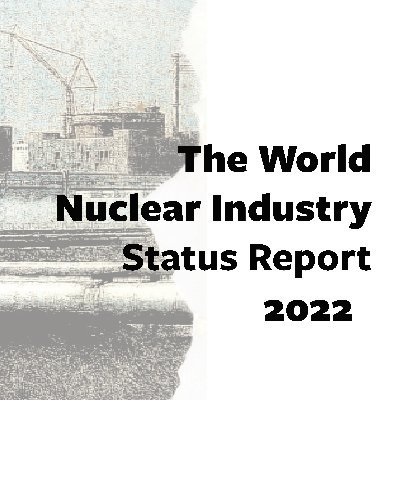
Comparing the 2021 trajectory of nuclear power with that of renewable energy, the authors of the report noted that investments in non-hydro renewables totaled $366 billion, which is 15 times more than the investments made for the construction of nuclear power plants, which reached 8.8 GW last year.
The latest World Nuclear Industry Status Report shows that nominal net nuclear generating capacity fell by 0.4 GW between 2020 and 2021, even though six new reactors were switched on throughout the world last year. This brought the share of nuclear power in the global electricity mix to below 10% for the first time in four decades.
https://www.pv-magazine.com/2022/10/07/technology-geriatrics-will-not-ensure-survival-of-nuclear-power-says-analyst/— OCTOBER 7, 2022 EMILIANO BELLINI
The current energy crisis, triggered by the pandemic and the war in Ukraine, seems to have given some oxygen to the global nuclear energy industry, with six new reactors going online last year. That compares to none in 2020 and six in 2019.
According to the latest annual edition of the World Nuclear Industry Status Report, published by French nuclear consultant Mycle Schneider, three of the six reactors are located in China and the other three are located in India, Pakistan and the United Arab Emirates.
“Last year was a bit better in terms of power generation and construction starts,” Schneider told pv magazine. “Six reactors came online in 2021 but the closure decision was taken for ten, two of which did not generate any power since 2018, so in our statistics, they are closed retroactively in 2018.”
He said this slight upward trend cannot be described as a global rebound.
“There were 10 construction starts in 2021, including six in China, and four built by Russia,which is double the five in 2020, including four in China and one by Russia. In the first half of 2022, there were three construction starts in the world, all in China,” he said. “So it looks as if China is increasing construction again. But it is much too early to call this a trend. And outside China, absolutely nothing is happening, except for the few Russian projects – and who knows what impact sanctions will have, even if the nuclear sector is so far excluded.”
Schneider acknowledged that there is huge pressure to extend lifetimes due to the current energy crisis. And there have been some results, like in Belgium and California, for example. But he also said this may not be enough to help the industry recover, with nominal net nuclear electricity generating capacity declining by more than 0.4 GW in the year leading up to 2021.
“Technology geriatrics cannot ensure nuclear power species’ survival,” he said.
In the report, Schneider and his team of experts revealed that there have been 98 startups and 105 closures of nuclear power plants over the past two decades.
“Of these, 50 startups were in China which did not close any reactors,” the team said. “Thus, outside China, there was a net decline by 57 units over the same period; net capacity dropped by 25 GW.”
Currently, there are 411 reactors operating across 33 countries. That’s four units less than last year, seven less than in 1989, and 27 less than the 2002 peak of 438.
“Nuclear production increased by 3.9% in 2021, but remained just below the 2019 level,” the report said. “China produced more nuclear electricity than France for the second year in a row and remains in second place – behind the United States – for the top nuclear power generators.”
Comparing the 2021 trajectory of nuclear power with that of renewable energy, the authors of the report noted that investments in non-hydro renewables totaled $366 billion, which is 15 times more than the investments made for the construction of nuclear power plants, which reached 8.8 GW last year.
The analysts cited recent figures from US-based Lazard showing that between 2009 and 2021, the levelized cost of energy of large-scale solar and wind fell by 90% and 72%, respectively, while that of nuclear power rose by 36%.
“In 2021, wind and solar alone reached a 10.2% share of power generation, the first time, they provided more than 10% of global power and surpassed the contribution of nuclear energy that fell to 9.8%,” they said. “The nuclear share is below 10% for the first time in four decades.”
The report also presents data on individual countries, potential emerging countries, the decommissioning of existing plants, and the current status of the small modular reactor technology. It also includes a chapter on the difficult decommissioning of the Fukushima reactor in Japan and a new section on the vulnerabilities of nuclear reactors during wars.
France won’t retaliate with nuclear weapons if Russia uses them in Ukraine
French President Emmanuel Macron says he intends to avoid ‘global war’
https://www.thenationalnews.com/world/europe/2022/10/13/france-wont-retaliate-with-nuclear-weapons-if-russia-uses-them-in-ukraine/ Soraya Ebrahimi, Oct 13, 2022,
France will not respond with nuclear weapons should Russia use them against Ukraine, French President Emmanuel Macron has said.
“Our doctrine rests on the fundamental interests of the nation,” Mr Macron told public broadcaster France 2 on Wednesday.
“They are defined clearly and wouldn’t be directly affected at all if, for example, there was a ballistic nuclear attack in Ukraine, in the region.”
It was the first time he has discussed France’s nuclear deterrence doctrine regarding Ukraine in detail.
Mr Macron said it was not good to talk about it too much.
So far, despite his threats, there is no sense that Russian President Vladimir Putin is moving nuclear assets.
Mr Macron said Mr Putin must “return to the table” to discuss peace in Ukraine and that he thought Kyiv would have to negotiate with him at some point.
“Today, first of all, Vladimir Putin must stop this war, respect Ukraine’s territorial integrity and come back to the table for talks,” he said.
Asked if he would back a Ukrainian offensive to recapture Crimea, which was annexed by Russia in 2014 in a move not recognised internationally, Mr Macron said that “at some point as the conflict develops”, Russia and Ukraine “will have to come back to the table”.
“The question is whether the objectives of the war will only be reached by military means,” he said, although “it’s up to the Ukrainians to decide” what those aims should be.
When reminded that Ukraine no longer wanted to negotiate with Mr Putin, Mr Macron replied: “I tell you that at some point … it will be necessary. That’s why I have always refused maximalist positions.”
He said France would supply air defence systems to Ukraine after Russia’s wave of air strikes this week, which was aimed at “breaking Ukrainian resistance”.
“We’re going to deliver … radars, systems and missiles to protect them from these attacks,” Mr Macron said.
He said France was also negotiating to send another six Caesar mobile artillery units.
Putin vows continued ‘tough’ attacks against Ukraine – video
He said the war had entered “an unprecedented stage” since the weekend because “for the first time all over Ukraine civilians have been killed … and electricity and heating facilities have been destroyed”.
“The aim of the Russians these last few days has been to break, to shatter Ukrainian resistance,” Mr Macron said.
He acknowledged that France was “unable to deliver as much as the Ukrainians ask for. I’m obliged to keep some for us to protect ourselves and our eastern flank (of Nato)”. The extra Caesar guns were made for Denmark, but talks are under way to redirect them to Ukraine.
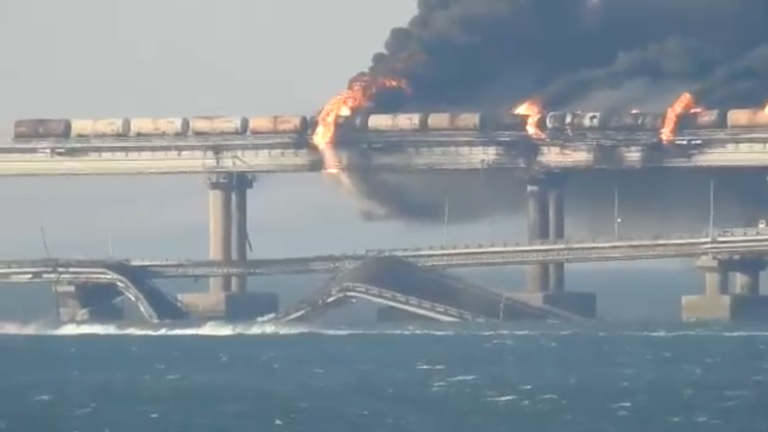
Ukraine held talks with Britain for destruction of Crimean bridge
https://apa.az/en/europe/ukraine-held-talks-with-britain-for-destruction-of-crimean-bridge-382809—15 August 2022,
Deputy of the Rada Goncharenko announced negotiations with Wallace on the destruction of the Crimean bridge, APA reports.
Ukraine held talks with British Defense Secretary Ben Wallace on a plan to destroy the Crimean Bridge at the NATO summit in June, Verkhovna Rada deputy Oleksiy Goncharenko said.
The parliamentarian drew attention to the statement of expert Igor Korotchenko, who said on the air of the Rossiya 1 TV channel that, according to some information, the plan for striking the bridge was allegedly being developed under the personal supervision of the head of the British military department.
“Ben Wallace and I discussed the plan to destroy the Crimean bridge back in June,” Goncharenko wrote, posting a photo from the talks, which, in addition to him and the head of the British Ministry of Defense, shows British Prime Minister Boris Johnson.
In July, Aleksey Arestovich, an adviser to the head of Vladimir Zelensky’s office, said that Ukraine could attack the Crimean Bridge as soon as the first technical opportunity appeared.
Maintenance on eight French nuclear reactors delayed by strike
https://www.reuters.com/markets/europe/maintenance-five-french-nuclear-reactors-delayed-over-strike-2022-10-12/ By Forrest Crellin, 12 Oct 22,
PARIS, (Reuters) – France’s FNME trade union said on Wednesday that some workers at EDF’s (EDF.PA) nuclear plants resumed their strike over salaries, delaying maintenance work on eight reactors as the union sent a message of support to striking refinery workers.
Reporting by Forrest Crellin; Editing by Tomasz Janowski and Elaine Hardcastle
Three of the Cruas nuclear plant’s reactors are affected by the strike, while two reactors at the Cattenom and Tricastin plants and one Bugey reactor have had their maintenance delayed by the strike, FNME said.
EDF nears cut-price deal for GE nuclear turbine unit with Russian contracts
French energy group renegotiates terms for business that also supplies Rosatom
Sarah White in Paris YESTERDAY 6 Print this page French power operator EDF has renegotiated a deal to buy a nuclear turbine maker from General Electric, cutting its offer price for a business seen as strategic for France’s atomic industry but that is exposed to the risk of sanctions because of orders from Russia’s Rosatom. State-controlled EDF, which is on the cusp of being fully renationalised, was encouraged into making a move on the turbine company by the French government in a deal announced by President Emmanuel Macron at the start of the year.
The acquisition was touted as a way of recovering French control of the technology as EDF gears up to build new reactors, while also securing the future of a large factory in eastern France at a time when GE was exploring asset sales and looking to cut jobs. But the business has since been caught up in the fallout from Russia’s invasion of Ukraine, even though its dealings with state-owned Rosatom, one of the world’s biggest nuclear plant developers, have not faced sanctions so far………………………. more https://www.ft.com/content/4e3f8a9e-e89c-47c9-9caa-b84825db1e70—

World-Wide Backing as Parliament Encircled for Assange
Protests around the world supported the human chain that formed around the British parliament in support of an imprisoned publisher, reports Mohamed Elmaazi
By Mohamed Elmaazi, in London, Consortium News, 10 Oct 22,
Thousands of supporters of Julian Assange descended upon London’s Palace of Westminster to form a human chain around the Houses of Parliament in support of the embattled WikiLeaks publisher on Saturday.
Meanwhile, the London action was backed up by rallies in Melbourne, Australia, Washington D.C., San Francisco and other locales.
In the British capital, men and women from a myriad of backgrounds attended the demonstration from across the U..K, and beyond, including from France, Germany and the United States. It was the first known human chain to surround the Houses of Parliament.
Stella Assange, wife of the imprisoned publisher, said around 5,000 people showed up to form the chain despite a nation-wide strike announced by the National Union of Rail, Maritime and Transportation Workers (RMT). Other estimates put the crowd as high as 7,000.
The chain extended over Westminster Bridge to Lambeth on the other side of the River Thames and then along the south bank and over Lambeth Bridge, through Victoria Tower Gardens to the front of Parliament, a distance of about 2.5 kilometers. Hundreds of other supporters also attended the demonstration, albeit without joining the human chain.
“The Human chain is self-proving” Stella Assange said. “Julian has enormous support and much more. He has millions of people around the world who are disgusted by the injustice that is unfolding.”
Jeremy Corbyn, the former Labour Party leader, British actor Russell Brand, Iraqi-British hip hop artist Lowkey, former counsel to the Ecuadorian Embassy Fidel Narvaez, Craig Murray, the former British diplomat and WikiLeaks Editor-in-Chief Kristinn Hrafnnson were among those who formed part of the chain. Members of France’s Yellow Vest movement also took part.
Corbyn said:
“Julian Assange is a journalist who told the uncomfortable truth all around the world of what happened in Iraq, what happened in Afghanistan, what happened in Syria, Libya, environmental destruction, the power and interface of big business and arms companies with governments. That truth made a lot of very powerful people very uncomfortable so the U.S. has tried to charge him under the Espionage Act.
If we believe in free speech, if we believe in independent, democratic journalism, then Julian Assange should be freed from Belmarsh and not removed to the United States. Today we’ve shown the levels of public support for Julian by having this huge human chain all around Parliament despite the obvious transport difficulties today because of the rail strike. Internationally there is huge support for Julian Assange. … So my message to journalists around the world is, take up your chosen profession to take on a responsibility to tell the truth without fear nor favor. Tell the truth about Julian and say to the British government, refuse the extradition.”
…………………………………………………………………………………. Radio Silence
The mainstream British media ignored or underreported the extraordinary event. The Independent said only “hundreds” of people showed up, as did The Daily Mail. The Guardian, The Times, The Sunday Times had no report at all. The BBC hasn’t had a story about Assange since July 1.
Overcoming the Strike
The event was organized by WikiLeaks’ official Don’t Extradite Assange (DEA) campaign with the support of the NUJ as well as the European Federation of Journalists (EFJ) and the International Federation of Journalists (IFJ). The IFJ, along with the EFJ and NUJ, represents “600,000 media professionals from 187 trade unions and associations in more than 140 countries”, its website says……………
The cancellation of trains across England likely reduced the overall attendance figures in the end, with people noting their desire to attend on social media but also the difficulty of getting there and back.
The event was publicized via social media, adverts in widely read newspapers like The Guardian, Evening Standard and Camden News Journal and as well as via volunteers leafleting across the U.K.
Actions Around the World
There were at least 21 other solidarity events held in cities across the world including in Washington D.C.; Ontario, Canada; Rio de Janero, Brazil; Hamburg, Germany; Paris, France; Pretoria, South Africa; Melbourne, Australia and Wellington New Zealand.
In solidarity with the London events, about 5,000 people crowded across Prince’s Bridge in the central business district of Melbourne, where they heard Assange’s father and brother, John and Gabriel Shipton, address supporters. In San Francisco Assange defenders crowded Harry Bridges Plaza to hear speakers support Assange.
In Washington about 300 protestors with a 240-foot yellow ribbon walked around the Department of Justice building, inside of which the prosecution of Assange is being managed.
Speaking at the ensuing rally in front of the DOJ’s doors on Pennsylvania Avenue, former Green Party presidential candidate Jill Stein, said:
“The more you look at this case, the more you become traumatized. This is an assault not only on freedom of the press, it makes a complete mockery of our judicial system, it’s an attack on human rights, it is absolutely unacceptable.”
Ben Cohen, a founder of Ben & Jerry’s ice cream, said: “According to the U.S. government, publishing the truth has become a crime. They are literally killing the messenger.”
Scott Ritter, military analyst, asked: “What has Julian Assange given us?” He has “defined the facts, reported the facts, turned them over to the people so they can judge the facts and hold people accountable for the facts.”
Comic, activist and radio host Randy Credico said, “This is going to be a very tough road to hoe going forward, because there is a lot of apathy and a lot of antipathy towards Julian Assange here in D.C. We are up against a mammoth force. People gotta know how important this is.”
C.I.A. whistleblower John Kiriakou called on the crowd to be outside the courtroom in Alexandria, Virginia every day, should Assange be extradited there.
Where the Case Stands
On Aug. 26 Assange’s lawyers filed Perfected Grounds of Appeal with the High Court and are currently waiting to hear whether they will be permitted to present their arguments that District Judge Vanessa Baraitser erred when ruling against all but one of his grounds opposing extradition to the U.S.
Among the grounds for appeal argued is that Assange is being prosecuted for speech protected under Article 10 of the European Convention of Human Rights, that he is being punished for his political views and opinions, that the US government has “misrepresented the core facts” of the case to the UK courts and that the request itself is an “abuse of process.”
The appeal also challenges then-Home Secretary Priti Patel’s decision to grant extradition on the basis that it violates Article 4 of the U.S.-U.K. Extradition Treaty which prohibits extradition where the prosecution is “politically motivated” or where the alleged crime in question is a “political offense.”
If extradited to the U.S., Assange faces up to 175 years in prison for his role in receiving and publishing government documents without authorization, an act which journalists and publishers around the world engage in on a daily basis.
Joe Lauria in Washington and Cathy Vogan in London contributed to this report. https://consortiumnews.com/2022/10/09/world-wide-backing-as-parliament-encircled-for-assange/
We Survived The Last Nuclear Standoff Through Compromise And De-Escalation

You and I are alive today because Kennedy backed down from the brink and struck a compromise
as history tells us, it’s not caveman chest-thumping that has allowed us to remain alive on a planet full of stockpiled armageddon weapons. It’s the sensibility to know when to compromise and relent rather than pushing continuously toward the edge.
https://caitlinjohnstone.substack.com/p/we-survived-the-last-nuclear-standoff Caitlin Johnstone, Oct 6 2022,
Vladimir Putin has signed documents finalizing the Russian annexation of four regions in eastern Ukraine, meaning there’s now a western-backed Ukrainian counteroffensive underway to recapture what Russia officially considers parts of its homeland.
Moscow has made it clear that it will use all weapons systems at its disposal to defend against attacks on territories it claims as its own, which could include nuclear weapons. Depending on if and how that happens and what kind of day all the relevant decision makers are having when it does, there is a distinct possibility that a chain of events could follow which leads to the end of the world.
This happens as Ukraine’s President Zelensky signs a decree officially ruling out the possibility of any peace talks with Putin, who recently publicly requested such talks. The US empire, which has been driving this proxy war from the beginning, is also not currently engaged in peace talks with Moscow. Things are accelerating faster and faster toward the absolute worst thing that could possibly happen, and as far as we know nobody’s got a foot anywhere near the brake pedal.
Meanwhile, everyone has gone insane. The propaganda blanket has been laid on so thick since this war started that it has become the mainstream position that only continual escalation is acceptable. Public calls for de-escalation and detente are met with accusations of Kremlin loyalty, as we just saw with the vitriolic responses to Elon Musk’s online proposal of possible terms to end the war.
There’s a popular post going around Twitter right now by a pro-Kyiv pundit named Thomas Theiner which sums up the delusional sentiments we’ve been seeing on this front.
“I grew up during the Cold War. I studied the Cold War,” Theiner writes. “When the russians/Soviets say: ‘We will use nuclear weapons!’, the only answer must be: ‘Try and die.’ All else is seen as weakness by the kremlin and will lead to the russians using nukes.”
Theiner is wrong, and has made no serious study of the cold war (or to be more precise the last cold war, since we’re in another one now). The only reason we survived the most dangerous part of that era was because of compromise and a sincere commitment to de-escalation, not because anyone was yelling “Try and die” at Moscow.
Back in 2013 The Atlantic published a solid article titled “The Real Cuban Missile Crisis,” subtitled “Everything you think you know about those 13 days is wrong.” Its author Benjamin Schwartz details how the crisis was peacefully resolved not because JFK was on the phone yelling “Try and die” at Nikita Khrushchev, but because he secretly cut a deal to remove the Jupiter missiles the US had stationed in Italy and Turkey which provoked the 1962 incident in the first place.
Back in 2013 The Atlantic published a solid article titled “The Real Cuban Missile Crisis,” subtitled “Everything you think you know about those 13 days is wrong.” Its author Benjamin Schwartz details how the crisis was peacefully resolved not because JFK was on the phone yelling “Try and die” at Nikita Khrushchev, but because he secretly cut a deal to remove the Jupiter missiles the US had stationed in Italy and Turkey which provoked the 1962 incident in the first place.
Moscow perceived that the only reason why that type of midrange weapon would be placed in such a way would be if the US was planning a nuclear first strike to disarm Russia, and Schwartz writes that that suspicion was entirely well-founded: the Kennedy administration had indeed strongly contemplated such a strike during the Berlin crisis of 1961. In response to this threat, as well as the 1961 Bay of Pigs invasion, Khrushchev moved ballistic missiles to Cuba, whose discovery led to the tense standoff which brought us far closer to nuclear annihilation than most of us care to contemplate. A secret deal was struck whose nature wouldn’t become public knowledge until decades later, resulting in both sides removing their offending missile placements.
You and I are alive today because Kennedy backed down from the brink and struck a compromise (as well as our sheer dumb luck at having one cool-headed Soviet officer on a nuclear-armed submarine refuse to deploy the weapon while being bombarded by the US navy during the standoff between JFK and Khrushchev). Kennedy conditioned his acquiescence to Moscow’s demands on assurances that his doing so would be kept secret, because then, as now, there were tremendous political pressures not to be seen as “backing down” and “looking weak” before the enemy.
But as history tells us, it’s not caveman chest-thumping that has allowed us to remain alive on a planet full of stockpiled armageddon weapons. It’s the sensibility to know when to compromise and relent rather than pushing continuously toward the edge.
Detente used to be a household term. It was a routine subject of mainstream political discourse; mainstream politicians were expected to have a clear and articulate position on the diplomatic easing of tensions with the USSR. Now people don’t even know detente is a thing. I say that word to people and it’s clearly the first time they’ve ever encountered it, and the concept itself is completely alien to them. People I talk to tend to believe the only options on the table are either (A) continuing to escalate this insane game of nuclear chicken with Russia, or (B) giving Putin everything he wants. They’re completely unaware that a third option of negotiation, compromise and de-escalation exists, much less that it has historically been viable and successful.
This is entirely by design. People don’t know that detente is an option because the political/media class virtually never mentions it anymore. The news media are supposedly responsible for helping to create an informed populace, but because their real job is propaganda they generally end up doing the exact opposite. If the public were permitted to become widely aware that these games of nuclear brinkmanship are not a necessity but a choice that is being made on their behalf, and that their leaders are rolling the dice on their lives and the lives of everyone they know and love for no other reason than to work toward securing unipolar planetary hegemony, they would no longer consent to this madness.
If people really understood how much is being risked here, and how little it benefits them, Washington DC would be on fire right now. That’s why their understanding is continually manipulated and obscured by the managers of empire.
Julian Assange tests positive for COVID-19
WSWS, Thomas Scripps 10 Oct 22,
Julian Assange has contracted COVID-19. He received the test result Saturday, on the day several thousand people formed a human chain around Parliament in London to protest his persecution.
His wife, Stella, told the press, “I am obviously worried about him and the next few days will be crucial for his general health. He is now locked in his cell for 24 hours a day.” She said Assange had been feeling ill throughout the week and developed a fever and cough on Friday.
Assange’s infection confirms the repeated warnings of medical professionals and his legal team that his health and life are endangered by his wrongful imprisonment. It must lend renewed urgency to the demand for his immediate release.
Just months before the pandemic, over 100 doctors signed an open letter to the British government warning that Assange’s life was at risk while he was kept in HMP Belmarsh—the UK’s top-security prison. When COVID-19 began to spread rapidly throughout Britain, one of the lead signatories, Dr Stephen Frost, told the World Socialist Web Site, “Given what we know about this case, Mrs Assange is right to be concerned. Julian Assange, because he is immuno-compromised, following years of arbitrary detention first in the Ecuadorian Embassy and latterly in Belmarsh prison, is necessarily at higher risk of contracting any viral or bacterial infection, including infection by coronavirus.
“He should be released on bail immediately, so that he can access the health care which he urgently requires. The UK government is effectively playing Russian roulette with Julian Assange’s life.”
Another doctor, Lissa Johnson, explained, “As long ago as 2015 medical and human rights experts warned that anything more than a trivial illness could prove fatal for Julian Assange. His health is even more fragile now, and the coronavirus only renders those warnings more urgent and more dire.”
She added, “If Julian Assange does succumb to coronavirus or any other catastrophic illness in prison, it will not be an accident. It will be a foreseeable result of prolonged psychological torture and wilful medical neglect.”
…………………………. By the end of October 2020, Ministry of Justice figures showed that 1,529 inmates had been infected, 600 in the previous month alone. At least 32 prisoners had been killed by the virus.
In November, a wave of infections hit Belmarsh prison. Stella Assange revealed, “I’ve been told the number of people infected with COVID on Julian’s house block is 56, including staff.” This was on a block with fewer than 200 inmates.
Assange and the other inmates were placed under an indefinite lockdown, kept in their cells 24 hours a day. His lawyer Edward Fitzgerald had warned at his bail application of the “risk to his mental health and his human contact” posed by lockdown procedures. At Assange’s extradition hearing that autumn, his defence team presented extensive medical evidence of the damage done to his mental health and of the risk of suicide.
……………………………. Nils Melzer, UN Special Rapporteur on Torture, examined Assange with a medical team inside Belmarsh Prison in May 2019 and concluded that he showed symptoms of psychological torture. He commented on his illness, “Assange’s stroke is no surprise. As we warned after examining him, unless relieved of the constant pressure of isolation, arbitrariness and persecution, his health would enter a downward spiral endangering his life. [The] UK is literally torturing him to death
Melzer added, “As Assange clearly was not medically fit to attend his own trial through videolink, how can they even discuss whether he is fit to be exposed to a show trial in the US, a country that refuses to prosecute its torturers and war criminals but persecutes whistleblowers and journalists?”
Saturday’s protest was the largest yet organised in defence of Assange, attracting a broader range of ages and social backgrounds. It indicated the potential that exists for a mass, global campaign to secure the WikiLeaks founder’s freedom and safety. ………… https://www.wsws.org/en/articles/2022/10/10/picp-o10.html
NYT: Senior Ukrainian official confirms Ukraine orchestrated truck bomb attack on Crimean Bridge
Chris Menahan, InformationLiberation, Oct. 09, 2022,
The New York Times reported Saturday evening that a “senior Ukrainian official” corroborated Russian reports that Ukraine was behind the truck bomb attack on the Crimean bridge which killed at least three civilians.
From The New York Times, “Blast on Crimean Bridge Deals Blow to Russian War Effort in Ukraine”:
The blast and fire sent part of the 12-mile Kerch Strait Bridge tumbling into the sea and killed at least three people, according to the Russian authorities. A senior Ukrainian official corroborated Russian reports that Ukraine was behind the attack. The official, speaking on the condition of anonymity because of a government ban on discussing the blast, added that Ukraine’s intelligence services had orchestrated the explosion, using a bomb loaded onto a truck being driven across the bridge.
[…] It was unclear if the driver of the truck, who died in the blast, was aware there were explosives inside. In video captured by a surveillance camera on the bridge, a huge fireball is seen, seeming to consume several vehicles. A small sedan and a tractor-trailer truck driving side by side appear at the epicenter of the blast. The explosion caused two sections of the bridge to partly collapse.
The truck driver was identified by Russian media as 51-year-old Mahir Yusubov of Azerbaijan.
Yusubov reportedly received an order to transport fertilizer through the internet and may have had his truck wired with explosives by Ukrainian special-ops units who used him as an unwitting suicide bomber.…………………………… more http://www.informationliberation.com/?id=63391
Austria Sues EU Executive Over Green Label for Gas, Nuclear
https://www.voanews.com/a/austria-sues-eu-executive-over-green-label-for-gas-nuclear-/6784510.html BERLIN — 10 Oct 22,
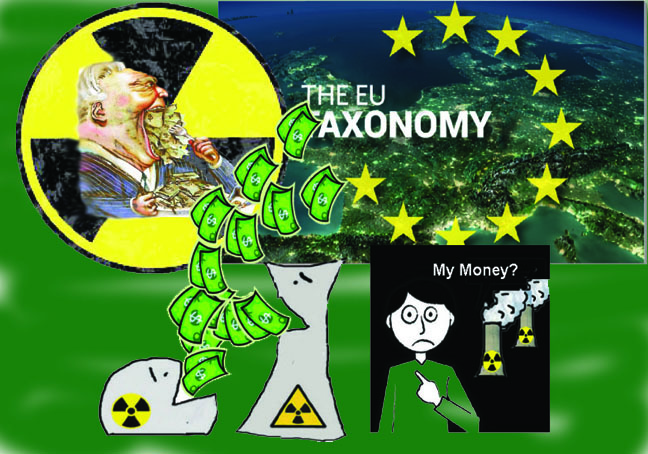
The Austrian government said Monday it has filed a legal complaint with the European Union’s top court over plans by the bloc’s executive branch to label natural gas and nuclear power generation as sustainable energies.
Austria’s environment minister, Leonore Gewessler, warned that the measure could “greenwash” nuclear power and gas despite the environmental damage they cause.
Another EU member, Luxembourg, announced later that it would stand by Austria in the legal case, adding more political weight to the move.
The EU’s executive Commission plans to add certain nuclear and gas plants next year to a list that helps investors determine which projects are sustainable.
Gewessler said the disasters in Chernobyl in Ukraine and Fukushima in Japan have showed that nuclear power plants come with “incalculable risks.” Meanwhile, the burning of natural gas, a fossil fuel, adds greenhouse gas emissions to the atmosphere, stoking climate change.
A dozen environmental groups have already launched legal challenges to the Commission’s plans, backed by the bloc’s lawmakers in July.
Austria’s environment minister, Leonore Gewessler, warned that the measure could “greenwash” nuclear power and gas despite the environmental damage they cause.
Another EU member, Luxembourg, announced later that it would stand by Austria in the legal case, adding more political weight to the move.
Ukraine is preparing a law on full control over the media, as the last vestiges of press freedom disappear in Kiev
Rt.com By Olga Sukharevskaya, ex-Ukrainian diplomat, 8 Oct 22,
A bill approved by the Verkhovna Rada will finally finish off freedom of speech in Ukraine.
While fierce battles continue to rage between the Ukrainian and Russian armies in Donbass, Kherson Region, and Zaporozhye, the Kiev regime is busy eradicating the last vestiges of freedom of speech in the country.
On August 30, Ukraine’s rubber-stamp parliament, the Verkhovna Rada, passed a bill on the media at the first reading. Despite the numerous changes that the 300-page document has undergone since President Vladimir Zelensky’s team developed and submitted it a few years ago, its essence remains unchanged. If it becomes law, the authorities’ power over virtually all outlets will be essentially limitless.
The main danger this bill presents is that it grants government agencies the authority to block internet resources without any court proceedings, and revoke licenses from broadcast and print media solely on the basis of complaints. This huge power would be vested in the National Council for Television and Radio Broadcasting.
No room in the EU
Ukrainian journalists have been criticizing this bill since the first version appeared in 2018, asserting that it abolishes both freedom of speech and freedom of the press. OSCE Representative on Freedom of the Media Harlem Desir called that version of the law “a blatant violation of freedom of speech,” stating that its adoption “could jeopardize pluralism in the media market, impose additional costs on the media, and negatively affect the reflection of a diversity of ideas and opinions.”
Criticism of the bill from both the OSCE and Ukrainian journalists had an effect. In 2020, it was sent for revision, but the changes only include some clarifications concerning gender equality and coverage of sexual orientations.
At the same time, it still contains a ban on publishing any messages contradicting the official government line on military issues. It is likewise forbidden to cover speeches made by officials of the ‘aggressor country’ [meaning Russia] or cast former USSR party functionaries in a positive light. For example, including Ukraine’s own Leonid Brezhnev.
The law would also hold foreign media responsible for any of its audiovisual content available in Ukraine. Moreover, social networks, including foreign ones, will be obliged to remove any material the National Council deems undesirable. The deadlines for removing ‘incorrect’ content or replacing it with ‘correct’ material have also been tightened. Among the ‘offenses’ that can get a media outlet banned is distributing programs in which any participant is on the ‘list of persons who pose a threat to the national media space of Ukraine.’ This is compiled by the National Council itself and does not require anyone’s consent.
Otherwise, the essence and spirit of the bill is preserved, including severe censorship of “objectionable” media. The American Committee for the Protection of Journalists (CPJ) didn’t call on the Verkhovna Rada to reject Bill No. 2693-D ‘On Media’ for nothing.
Maya Sever, president of the European Federation of Journalists, has bluntly stated that it means compulsory media regulation “fully controlled by the government worthy of the worst authoritarian regimes.” She is convinced that “a state that would apply such provisions simply has no place in the European Union.
From Gongadze to Shariy
Kiev’s war on journalists did not begin today. In 2000, there was the abduction and death of Georgiy Gongadze, the creator of the ‘Ukrainian Truth’ website, who harshly criticized corruption in the country’s highest echelons of power. A number of high-ranking officials were accused of being involved in the murder of the journalist, who then-President Leonid Kuchma viewed as objectionable, but the investigation revealed the involvement of only four perpetrators. One of these was the head of the Ukrainian Ministry of Internal Affairs’ main Criminal Investigation Department, General Pukach, who allegedly gave the order to liquidate Gongadze.
Nevertheless, there are many grey areas in the case. It was highly politicized and used as one of the pretenses for demanding a change of power during the days of the Orange Revolution.
Anatoly Shariy, who was engaged in high-profile investigative journalism for a number of Ukrainian publications from 2008 to 2011, almost shared Gongadze’s fate……………………………..
It is noteworthy that Shariy’s name has also been brought up in current discussions of the scandalous media bill. In justifying her support for the legislation, the head of the Board of the National Association of Ukrainian Media, Tatiana Kotyuzhinskaya, mentioned the authorities’ desire to limit the influence of Shariy and other bloggers in Ukraine’s infosphere.
It’s possible that, among other things, the reason the blogger’s activities have met with such disapproval was his publication of screenshots from messages sent by the Consul of Ukraine in Hamburg, Vasily Marushchinets, which contained calls for “death to anti-fascists,” comments like “it’s honorable to be a fascist,” and statements in the spirit of “Jews declared war on Germany back in March of 1934.” It was only after this that Nazi views in Ukraine’s Foreign Ministry became widely known to the public.
Threats, sanctions, arrests, attacks, and murders
Although the Ukrainian media has always had to fight the authorities’ attempts to restrict its activities, it was the Western-backed 2014 Euromaidan that triggered systematic persecution of press freedom in general, and individual journalists in particular.
Less than a month after the coup the new government tried to close down one of the two most widely read Ukrainian weeklies specializing in news analysis, ‘2000’, which took a negative view of the political forces that had violently seized power. The newspaper’s editorial offices were ransacked, and many left-wing outlets were shuttered. In particular, these included Borotba, as well as Rabochaya Gazeta, whose editor-in-chief ended up in the dungeons of Ukraine’s secret police, the SBU.
In the same year, Konstantin Dolgov, the editor-in-chief of ‘Glagol’, an online publication based in Kharkov, and Andrey Borodavka, a journalist, were arrested and persecuted by the new authorities. Olga Kievskaya, editor-in-chief of the ‘Anti-Orange’ website, was forced to emigrate due to threats ………………….
The vast majority of these cases were not covered in the Ukrainian media because these people were immediately declared “subversive elements” based on the so-called “moratorium on criticism of the authorities,” which the authorities announced themselves back in March of 2014, long before the start of hostilities in Donbass.
In 2018, Igor Guzhva, the head of the ‘strana.ua’ website, was forced to flee to Austria, where he received political asylum. The authorities’ efforts to prosecute him began after his investigations into Pyotr Poroshenko’s scandalous commercial activities. Later, under Zelensky, Ukraine imposed personal sanctions on Guzhva, and his website was blocked extrajudicially, while he himself, along with one of his journalists, Svetlana Kryukova, were entered into the ‘Register of State Traitors’. According to the head of Ukraine’s Union of Journalists, Sergey Tomilenko, these sanctions are political, and the European Federation of Journalists issued a statement condemning these actions as “a threat to the press, freedom, and media pluralism in the country.”
But not all Ukrainian journalists managed to emigrate, even after surviving prison. In April of 2015, the famous Ukrainian writer-historian and journalist Oles Buzina died at the hands of ‘Patriots of Ukraine’ after receiving threats and attacks due to his views. Despite appeals from the UN, the authorities have hampered the investigation in every possible way, and the murder suspects are still at large, evidence notwithstanding. In July of 2016, another journalist, Pavel Sheremet, was killed by participants in Kiev’s ‘Anti-Terrorist Operation’ (ATO) and supporters of the “purity of the white race.”
“Government critics, journalists, and non-profit organizations have come under increasing pressure from the authorities and far-right groups, which have embarked on the path of infringing freedom of speech and freedom of association under the pretext of countering Russian aggression,” Amnesty International said in a 2017 report.
No room for foreigners
Since the first half of 2014, even calling for a peaceful settlement of the conflict in the east of the country has been considered a crime in Ukraine. In particular, Ruslan Kotsaba, a journalist who refused to be drafted due to the consequences of a stroke, was imprisoned for this reason. In fairness, it should be noted that he was acquitted by an Appeals Court after a year and a half of imprisonment.
A few years before the start of Russia’s military operation, journalists whose material was published in the Russian media were subject to criminal prosecution…………………………………………….
The OSCE is aware, but Ukraine’s authorities don’t care
In 2018, a report was published by OSCE Representative on Freedom of the Media Harlem Desir in which he asserts that he had handed the Ukrainian authorities more than 20 statements and appeals collected from July 6 to November 21, 2018, concerning freedom of speech and the rights of journalists in Ukraine. ………………………………………
No room for freedom of speech in Ukraine
We have specifically chosen the report of the OSCE Representative on Freedom of the Media, which was published quite some time ago, to demonstrate that the attitude of the Ukrainian authorities towards freedom of speech and the right of journalists to freely express their own opinions have long-standing roots, and their persecution is systemic. Any similar report covering any period from 2014 to the present would contain no fewer instances of violations of these rights and freedoms. The whole list would require a decent-sized book to document………………………………………………………………………….
The fact that the Verkhovna Rada of Ukraine supported the bill ‘On Media’ gives reason to fear that the situation for the country’s journalists will become even worse. Once again, the Zelensky regime has confirmed that it’s not building a democratic, but an authoritarian or even totalitarian state, which has no room for such concepts as freedom of speech and the press. https://www.rt.com/russia/564217-ukraine-vs-freedom-of-speech/
1 This Month
19 November – Webinar – The Reality of Reprocessing
Time: 11:00 AM Pacific Time (US & Canada) / 2:00 PM Eastern / 7:00 PM UK / 8:00 PM CET
Register for the Zoom Event Here

Tell Congress: Prevent Nuclear Catastrophe in Iran

Tell Congress: Prevent Nuclear Catastrophe in Iran

Read the Public Inquiry Report, the Commissioners’ report, Surrendering Australia: The AUKUS Deception is available to download for free at aukuspublicinquiry.com. Or just watch the replay of the National Press Club Luncheon.


Shut down the radiation-damaged Heysham nuclear reactors now
To see nuclear-related stories in greater depth and intensity – go to https://nuclearinformation.wordpress.com

Say No to NASA’s Reckless Nuclear Reactor on the Moon
Say No to NASA’s Reckless Nuclear Reactor on the Moon
-
Archives
- November 2026 (156)
- October 2026 (302)
- September 2026 (339)
- August 2026 (330)
- July 2026 (355)
- June 2026 (287)
- May 2026 (306)
- April 2026 (356)
- March 2026 (251)
- February 2026 (267)
- January 2026 (308)
- December 2025 (358)
-
Categories
- 1
- 1 NUCLEAR ISSUES
- business and costs
- climate change
- culture and arts
- ENERGY
- environment
- health
- history
- indigenous issues
- Legal
- marketing of nuclear
- media
- opposition to nuclear
- PERSONAL STORIES
- politics
- politics international
- Religion and ethics
- safety
- secrets,lies and civil liberties
- spinbuster
- technology
- Uranium
- wastes
- weapons and war
- Women
- 2 WORLD
- ACTION
- AFRICA
- Atrocities
- AUSTRALIA
- Christina's notes
- Christina's themes
- culture and arts
- Events
- Fuk 2022
- Fuk 2023
- Fukushima 2017
- Fukushima 2018
- fukushima 2019
- Fukushima 2020
- Fukushima 2021
- general
- global warming
- Humour (God we need it)
- Nuclear
- RARE EARTHS
- Reference
- resources – print
- Resources -audiovicual
- Weekly Newsletter
- World
- World Nuclear
- YouTube
-
RSS
Entries RSS
Comments RSS

