The Biggest Single Contributor to the UN Budget is also the Biggest Single Defaulter
By Thalif Deen, https://www.ipsnews.net/2025/10/the-biggest-single-contributor-to-the-un-budget-is-also-the-biggest-single-defaulter/?utm_source=email_marketing&utm_admin=146128&utm_medium=email&utm_campaign=The_Biggest_Single_Contributor_to_the_UN_Budget_is_also_the_Biggest_Single_Defaulter_As_Civil_Societ
UNITED NATIONS, Oct 31 2025 (IPS) – The United States, the largest single contributor to the UN budget, is using its financial clout to threaten the United Nations by cutting off funds and withdrawing from several UN agencies.
In an interview with Breitbart News U.S. Representative to the United Nations, Ambassador Mike Waltz said last week “a quarter of everything the UN does, the United States pays for”.
“Is there money being well spent? I’d say right now, no, because it’s being spent on all of these other woke projects, rather than what it was originally intended to do, what President Trump wants it to do, and what I want it to do, which is focus on peace.”
Historically, the United States has been the largest financial contributor, typically covering around 22% of the UN’s regular budget and up to 28% of the peacekeeping budget.
Still, ironically, the US is also the biggest defaulter. According to the UN’s Administrative and Budgetar Committee, member states currently owe $1.87 billion of the $3.5 billion in mandatory contributions for the current budget cycle.
And the US accounts for $1.5 billion of the outstanding balance.
Speaking to reporters in Kuala Lumpur last week, Secretary-General Antonio Guterres said: “We are not reforming the UN because of the liquidity crisis that is largely due to the reduction of payments from one main contributor, the United States”.
“What we are doing is recognizing that we can improve, that we can be more efficient, more cost-effective, more able to provide in full respect of our mandates to the people we care for in a more efficient way”.
“We are doing a number of reforms, making the Organization leaner but more effective. And that is the reason why there will be a number of reductions of positions in the Secretariat, but not the same everywhere.”
“And in particular, everything that relates to support to developing countries on the field in order for them to be able to overcome the present difficulties will not be reduced, on the contrary, will be increased,” he pointed out.
Mandeep S. Tiwana, Secretary General CIVICUS, a global civil society alliance, told IPS funding modalities for the UN need to be made simpler and also brought into the 21st century.
The present process, he pointed out, is too complicated and not easy to comprehend. Formulations for assessed and voluntary contributions are confusing and bureaucratic with some countries paying too much and others too little.
A simpler and fairer way would be assessed contributions be based on small percentage of a country’s Gross National Income. This would also allow formulations to be transparent and understandable by people around the world for whom the UN is exists,” declared Tiwana.
The five biggest funders of the UN, based on mandatory assessed contributions for the regular and peacekeeping budgets, are the United States, China, Japan, Germany, and the United Kingdom. These countries are responsible for a majority of the UN’s funding and are among the largest economies in the world.
United States: Pays the largest share, at around 22% for the regular budget and over 26% for peacekeeping.
China: The second-largest contributor, responsible for about 20% of the regular budget and nearly 19% of peacekeeping contributions.
Japan: Contributes approximately 7% to the regular budget and over 8% to peacekeeping.
Germany: Pays about 6% of the regular budget and 6% of the peacekeeping budget.
United Kingdom: Accounts for roughly 5% of both the regular and peacekeeping budgets.
Referring to the latest financial contribution, UN Deputy Spokesperson Farhan Haq told reporters October 30, “We thank our friends in Beijing for their full payment to the Regular Budget. China’s payment brings the number of fully paid-up Member States to 142,” (out of 193)
Asked how that money would help UN navigate through these difficult times, Haq said: “To be honest, any payments are helpful, but this is a very large payment– of more than $685 million– so it’s well appreciated.”
“And certainly, we thank the government in Beijing. But of course, we also stress that all governments need to pay their dues in full. You’ve seen the sort of financial pressures we’ve been under, and we do need full payments from all Member States,” he declared.
Kul Gautam, a former UN assistant secretary-general (ASG) and deputy director of UNICEF, pointed out that in 1985, Swedish Prime Minister Olof Palme proposed a simple remedy: no single country should pay—or be allowed to pay—more than 10% of the UN’s budget.
That, he said, would reduce dependence on any one donor while requiring modest increases from others. Ironically, Washington opposed it, fearing it might lose influence.
Asked for a clarification, he told IPS “it is my understanding that the assessed contributions to the UN regular budget are negotiated and approved by the UN General Assembly based on the recommendations of the GA’s Committee on Contributions, which determines a scale of assessments every three years based on a country’s “capacity to pay.”
The Committee on Contributions recommends assessment levels based on gross national income and other economic data, with a minimum assessment of 0.001% and a maximum assessment of 22%.
The scale of assessment of the UN regular budget does not need the approval of the Security Council, nor is it subject to veto by the P-5.
In the case of the UN’s peacekeeping budget, he said, the scale of assessment is based on a modification of the UN regular budget scale, with the P-5 countries assessed at a higher level than for the regular budget due to their role in authorizing and renewing peacekeeping missions.
Historically, the Security Council has authorized the UN General Assembly to create a separate assessed account for each peacekeeping operation. Thus, the Security Council definitely has a say in determining the peacekeeping budget.
In his interview with Breitbart News US Ambassador Mike Waltz also said: “And I would say to those who say, why don’t we just shut this thing down and walk away?”
“Well, I think we need it to be reformed in line with its potential that President Trump sees. And I think my answer would be: we need one place in the world where everybody can talk”.
President Trump is a president of peace, he said. He wants to keep us out of war. He wants to put diplomacy first. He wants to create deals.
“Well, there’s one place in the world, and that’s right here at the UN that the Chinese, the Russians, the Europeans, developing countries all over the world can come and do their best to hash things out,” declared.
In an October 17 statement, Guterres said: “My proposed programme budget for 2026 of 3.715 billion US dollars is slightly below the 2025 approved budget – excluding post re-costing and major construction projects in Nairobi and under the Strategic Heritage Plan.
This figure includes funding for 37 Special Political Missions – reflecting a net decrease due to the liquidation of the United Nations Assistance Mission for Iraq and the planned drawdown of the United Nations Transitional Assistance Mission in Somalia.
The proposed budget provides for 14,275 posts – and reflects our commitment to advance the three pillars of our work – peace and security, development, and human rights – in a balanced manner.
“We propose to continue supporting the Resident Coordinator System with a 53 million US dollars commitment authority for 2026 – identical to 2025.”
The 50 million US dollars grant for the Peacebuilding Fund is also maintained, he said..
IPS UN Bureau Report
5 animal species that became radioactive after being exposed to nuclear fallout zones

Scientists believe that the long-term effects of radiation in the macaque population may have contributed to smaller heads, smaller brains, delayed growth, and anemia.
Business Insider Elias Chavez , Oct 7, 2023, #nuclear #antinuclear #nuclear-free #NoNukes
- The impact of nuclear disasters throughout history can still be seen in the environment today.
- Animals in areas near nuclear disasters are being found with radiation still in their bodies.
- Nuclear fallout spreads and impacts communities and environments near and far.
Long after the events of Chernobyl and Fukushima, their impacts are still being felt.
The animals near major nuclear events and nuclear testing sites, like Enewetak Atoll, were discovered to have radioactive elements in their bodies immediately after. But even decades later, animals near and far are still being found to have radioactive elements in their body due to the contamination of food sources.
Enewetak Atoll was the site of intense nuclear testing by the US military.
Between 1948 and 1958, the US conducted 43 nuclear tests at Enewetak Atoll, including the first test of the hydrogen bomb. Because of the nuclear testing, the lagoon surrounding the chain of islands became irradiated, as well as the sand and soil on the islands.
In 1972, the US spent $100 million in an effort to clean up the area. Clean-up crews mixed 80,000 cubic meters of contaminated soil and debris with cement that they poured into a blast crater that was 30 feet deep and 360 feet wide.
Afterward, the clean-up team constructed a dome made of 358 concrete panels to cover the radioactive material.
Sea turtles in the area by Enewetak Atoll have been found to have traces of radiation in their shells.

After the cleanup at Enewetak Atoll, turtles were found with radiation in the layers of their shells. The leading theory is that the clean-up efforts disrupted radioactive sediment in the lagoon near Enewetak Atoll and the turtles swallowed the sediment.
Chernobyl was a nuclear meltdown event in 1986, and its impacts are still being felt today.
On April 26, 1986, one of the reactors at the Chernobyl Nuclear Power Plant went out of control during a test at low power. The result was an explosion and a fire that released over 100 radioactive elements into the atmosphere.
Additionally, the uranium fuel melted through protective barriers and the absence of a protective concrete dome led to the release of radioactive elements like plutonium, iodine, strontium, and cesium……………………
Wild boars in Bavaria, Germany, are still being found with radioactive elements in their bodies.

Boars forage for mushrooms and truffles which feed off nutrients in the soil.
When nuclear tests are done, nuclear elements swell into the sky, get carried by the wind, and settle onto the ground. As mushrooms grow, they absorb radiation from that nuclear fallout from the ground.
Wild boars in Bavaria have been found to have 15,000 becquerels of radiation for every kilogram of meat. The European safety limit is 600 becquerels per kilogram.
The packs of wild dogs surrounding Chernobyl have also been impacted by the meltdown.
Over 700 dogs living near Chernobyl are believed to be descendants of the dogs left behind by people who evacuated the area after the meltdown.
Researchers have been studying mutations in the dog’s genomes and DNA as well as measuring the radiation in their bones. The dogs in Chernobyl live much shorter lives than the average dog with a lifespan of three to four years, compared to the average 10 to 12.
Reindeer as far away as Norway have also been impacted by the meltdown at Chernobyl.
Nuclear sediment from Chernobyl was carried by the wind up to Norway where it fell into the soil in rain droplets. The radiated elements were absorbed from the soil by moss and fungus.
Reindeer in the area would feed on the moss and fungus. Immediately after the fallout, they could be found with levels of more than 100,000 becquerels per kilogram.
Current radiation levels in reindeer are now below safety standards, but every now and then spikes are seen in reindeer meat that exceed 2,000 becquerels.
The 2011 Fukushima Daiichi Nuclear Power Plant disaster resulted in the evacuation of thousands and is the second-worst nuclear disaster in history……………………………………..
The Japanese macaques, also known as snow monkeys, were found to have increased levels of radiation after the Fukushima disaster.
Immediately after the Fukushima disaster, macaques were found with levels of concentrated cesium up to 13,500 becquerels per kilogram.
Because of their diet of mushrooms, tree bark, and bamboo — all food sources that absorb radioactive cesium from the ground — the macaques were more likely to be found with radioactive elements in them.
Scientists believe that the long-term effects of radiation in the macaque population may have contributed to smaller heads, smaller brains, delayed growth, and anemia.
Tragic Nuclear Submarine Accident in China Sparks Global Concern

The incident raises serious concerns about the safety of submarine missions and the readiness of governments to seek international assistance in times of such crises. It also raises questions about the effectiveness of defense systems and their potential to backfire
By Ravichandran Devendran, 5 Oct 23, https://bnn.network/breaking-news/accidents/tragic-submarine-accident-in-china-sparks-global-concern/ #nuclear #anti-nuclear #nuclear-free #NoNukes
Details of the Submarine Disaster
55 Chinese sailors are feared dead in a tragic incident involving a nuclear submarine in the Yellow Sea. According to a confidential UK report, the submarine became entangled in a trap set up for Western sub-surface vessels, leading to a catastrophic system failure and the poisoning of the crew. Despite the severity of the situation, the Chinese government has officially denied the incident’s occurrence, and it appears that international assistance for the stranded submarine was declined.
The fatal accident occurred on August 21st, during a mission in the Yellow Sea. The submarine collided with a chain and anchor obstacle, resulting in system failures that took six hours to repair and bring the vessel to the surface. As a result of these system failures, the onboard oxygen system malfunctioned catastrophically, leading to the poisoning of the crew and the subsequent loss of life.
The Echoes of Past Submarine Catastrophes
This incident brings to mind the Kursk catastrophe, where over 100 Russian sailors died in an explosion aboard their nuclear submarine in August 2000. Initially, the Kremlin denied reports of the incident and declined assistance from Britain and Norway until it was too late to save those trapped inside the vessel. The Kursk disaster remains the biggest in submarine history with 118 lives lost.
Similarly, the Chinese government has refuted speculations about the incident as completely false, and Taiwan has also denied internet reports. The UK report on the incident is highly classified and based on defense intelligence. Despite official denials, it is believed that the incident did occur and that China declined international support.
Implications of the Submarine Disaster
The incident raises serious concerns about the safety of submarine missions and the readiness of governments to seek international assistance in times of such crises. It also raises questions about the effectiveness of defense systems and their potential to backfire, as in this case where the Chinese submarine was ensnared by its own trap intended for foreign vessels. The incident also highlights the importance of transparency in reporting such catastrophic events, as the refusal to acknowledge the incident only fuels speculation and mistrust.
The Human Cost of the Tragedy
Among the deceased are the captain of the Chinese PLA Navy Submarine 093-417 and 21 other officers. The loss of such a large number of naval personnel in a single incident is a devastating blow to the Chinese Navy and a stark reminder of the dangers that submarine crews face. As investigations continue, the world waits for definitive confirmation of the incident and its implications for international submarine operations.
Why Russia, China, and the U.S. Are Suddenly Expanding Their Nuclear Weapons Test Sites

No one wants to be the first to test a nuclear weapon, but everyone wants to be second
Popular Mechanics BY KYLE MIZOKAMI OCT 4, 2023 #nuclear #anti-nuclear #nuclear-free #NoNukes
Recent satellite photos of nuclear test sites in the United States, Russia, and China indicate that all three countries are taking steps to refurbish their nuclear weapons testing sites. None have conducted tests since the 1990s, but all three have viable reasons for resuming testing. One major obstacle to the resumption is the diplomatic and political fallout that would accompany such a test, as the rest of the world would condemn it.
A Three-Way Standoff
CNN asked experts to review images of U.S., Russian, and Chinese nuclear test sites taken from commercial Planet satellites. The experts concluded that there was increased activity at all three sites, including “new tunnels under mountains, new roads and storage facilities, as well as increased vehicle traffic coming in and out of the sites.”
Nuclear tests are typically conducted underground in order to contain the blast and radioactivity, which can be carried by winds and endanger nearby populations. Mountains are particularly useful as testers can dig horizontally, not vertically, to create a space to contain the explosion.
The United States conducted its last nuclear test in 1992, the Soviet Union in 1990, and China in 1996. (Russia inherited the Soviet Union’s nuclear stockpile.) The three countries, which together account for more than 92 percent of all nuclear weapons worldwide, have for decades refrained from testing nukes in what amounts to an unofficial ban. A Comprehensive Nuclear Test Ban Treaty banning all nuclear weapons explosions exists but has not entered into force because eight countries, including the United States, have not ratified it.
In other words, there is no legal reason why a country can’t test a nuclear weapon. Still, although each of the “big three” countries has reasons why it would want to resume testing, none have so far done so—nobody wants the international condemnation that would accompany the resumption of testing.
United States’ Nuclear Weapons
The United States has 5,244 nuclear warheads divided into eight types, equipping land-based missiles, bombers, and submarines. The U.S. is fairly confident in the reliability of its nuclear arsenal, but there always could be an unseen flaw that would prevent a nuclear weapon from achieving its designated yield—its full explosive power. More nuclear testing could also help fully unlock the secrets of how nukes work.
The U.S. Department of Energy and Department of Defense have developed two new weapon types, the B61-12 nuclear gravity bomb and the W76-2 submarine-launched missile warhead, without actually setting one off. Both warheads are derivatives of existing designs: the B61-12 is just the latest in the long line of B61 bombs dating back to the 1960s, while the W76-2 is a derivative of the W76 warhead featuring a much smaller explosive yield.
Russia’s Nuclear Weapons
Russia fields 5,589 nuclear warheads divided into ten or more types, ranging from strategic weapons mounted on long-range missiles, bombers, and submarines to low-yield tactical nuclear weapons delivered by rocket and cruise missile. The current Russian government has never tested a nuclear weapon, but Russia inherited nuclear weapons, facilities, and experts when the Soviet Union dissolved in 1991……………………………
China’s Nuclear Weapons
China is likely the country that has the most to gain from the resumption of nuclear weapon tests. China has a standing arsenal of 410 nuclear weapons, with as few as four to six different warhead types. China ceased testing in 1996, and at the time had the most primitive arsenal of the three powers. Unlike the U.S. and Russia, China mainly sought high-yield, reliable bombs to offset the poor accuracy of its missiles.
China is in the midst of a nuclear arms buildup, having added about 100 to 150 warheads in the past decade. It has also added several new types of delivery systems, including the DF-41 intercontinental ballistic missile, the JL-3 submarine-launched missile, and the highly anticipated H-20 stealth bomber. Beijing will likely want new, smaller warheads for these systems, particularly if it wants a single missile capable of nuking multiple targets.
While computer modeling and prediction could give China a degree of confidence that a new warhead design works, nobody will know for sure until it is tested.
The Takeaway
The current nuclear testing situation is in a standoff, with the three biggest nuclear powers waiting to see who, if anyone, tests first. Each has their own reasons to resume nuclear testing, but none want the stigma of being the first to break the informal ban. The second country to test would attract much less attention, and the third country even less. While we don’t know when the first new test will take place, the second test by another country will likely follow very quickly afterward.
Japan’s nuclear-contaminated water discharge should consider hazard accountability and compensation mechanisms

International legal mechanisms, such as the United Nations Convention on the Law of the Sea, grant countries the right to assert their interests, and Japan’s discharge of nuclear-contaminated water has direct and indirect impacts on the global marine environment. Therefore, countries can seek compensation from Japan through international legal mechanisms for environmental restoration and economic compensation.
Chunding Li, Zelei Xing, https://news.cgtn.com/news/2023-09-06/Japan-s-nuclear-wastewater-discharge-should-have-hazard-accountability-1mSm5S2bJsY/index.html
The plan over nuclear-contaminated water discharge from the Fukushima Daiichi nuclear power plant in Japan was launched on August 24, 2023, attracting widespread attention, controversy and condemnation from the international community.
Currently, the Fukushima nuclear power plant generates, per day, approximately 140 tonnes of nuclear-contaminated water, with over 1 million tonnes of accumulated stored radioactive water. According to the plan, the nuclear-contaminated water will undergo treatment before discharge to reduce the concentration of radioactive substances.
However, even after treatment, this nuclear-contaminated water still contains a certain amount of radioactive materials. It is estimated that around 1 million tonnes of nuclear-contaminated water will be released into the sea, being discharged over a period of 30 years, and seeing a daily discharge of approximately 460 tonnes of nuclear-contaminated water.
This poses huge risks to the environment and human health of neighboring countries, not discounting the threat to the development of industries such as agriculture and fisheries. Given the risks involved, countries have the right to demand that Japan assume corresponding compensation responsibilities.
Japan’s nuclear-contaminated water discharge poses potential hazards to human health. The nuclear-contaminated water contains radioactive isotopes, such as cesium, tritium, and strontium, which can enter the food chain of marine ecosystems, affecting the marine ecosystems of surrounding countries directly. When contaminated seafood is consumed, there is a potential risk to human health.
Furthermore, these radioactive substances can spread to distant regions through the influences of climate and oceanic currents, causing long-term impacts on marine ecosystems globally. This can result in the death or migration of marine organisms, biodiversity disruption, and the potential negative impact on the sustainable utilization of fishery resources.
Japan’s nuclear-contaminated water discharge has a negative impact on the development and trade of agriculture and fisheries. Firstly, when contaminated seafood is banned from import or faces consumer scrutiny, it will have a significant impact on the fishing industry of exporting countries. Many countries rely on seafood exports to increase trade revenue and promote economic development. The impacts caused by nuclear-contaminated water will directly threaten the economic interests of these nations, leading to reduced income for fishermen and potentially, even job losses.
Moreover, the discharge of nuclear-contaminated water could also contaminate freshwater resources in neighboring countries, negatively affecting irrigation in farmland and the growth of crops. This poses a threat to the sustainable development of a nation’s agriculture, subsequently impacting the income of farmers and food supplies.
Countries have the right to demand that Japan assumes corresponding compensation responsibilities. Firstly, as the source country of nuclear contamination, Japan should take responsibility for the environmental and human health risks caused by its discharge of nuclear-contaminated water and take measures to mitigate and restore potential damages.
International legal mechanisms, such as the United Nations Convention on the Law of the Sea, grant countries the right to assert their interests, and Japan’s discharge of nuclear-contaminated water has direct and indirect impacts on the global marine environment. Therefore, countries can seek compensation from Japan through international legal mechanisms for environmental restoration and economic compensation.
Secondly, existing international laws should promptly regulate Japan’s actions to ensure that the discharge of nuclear-contaminated water meets international standards and requirements, avoiding irreversible harm to global marine ecosystems and human health.
International cooperation is necessary to seek sustainable development solutions. The international community should enhance supervision and collaboration to collectively address the global challenges posed by the discharge of nuclear-contaminated water and safeguard the sustainable development of human health and the environment.
The discharge of nuclear-contaminated water not only poses significant environmental and health risks within Japan, but also has potential long-term impacts on marine ecosystems of neighboring countries, not excluding the wider global community. Therefore, the international community should strengthen cooperation to jointly formulate and implement relevant policies and standards, to dissuade against nuclear-contaminated water discharge.
In addressing this issue, advancements in science and technology, as well as the principles of equality and cooperation among different countries, should be fully considered. Resolving the global challenges posed by the discharge of nuclear-contaminated water requires joint efforts from all countries, including cooperation in areas such as technological collaboration, information sharing, and exchange of experiences.
Additionally, the international community should also strengthen regulatory oversight and safety controls over nuclear energy, in order to prevent the recurrence of nuclear accidents and pollution.
SpaceX’s Starlink satellites are leaking electromagnetic radiation that’s ‘photobombing’ our attempts to study the cosmos
Live Science , By Harry Baker 2 Jul 23
New research finds that SpaceX’s Starlink satellites are leaking radiation that could interfere with radio astronomy.
But in the new study, published July 3 in the journal Astronomy & Astrophysics, researchers have shown that Starlink satellites also emit unintended and previously unrecognized radio signals that are separate from the signals they send to and receive from our planet. Some of these signals overlap with those detected by the dishes of radio telescopes — which represents a new problem in this scientific field………………………………………………
SpaceX likely isn’t the only culprit; the researchers expect to detect similar emissions from many other satellites in low Earth orbit (LEO). The problem also could worsen as the number of private satellites in LEO continues to increase dramatically. For example, there were only 2,000 Starlink satellites in LEO when the data was collected, but there are now more than 4,000.
“Our simulations show that the larger the constellation, the more important this effect becomes as the radiation from all satellites adds up,” study co-author Gyula Józsa, an astronomer at the Max Planck Institute for Radio Astronomy in Germany, said in the statement. “This makes us not only worried about the existing constellations, but even more about the planned ones.”…………………
Emitting radio signals is not the only way that satellites can interfere with astronomy. The shiny spacecraft can also reflect light back toward the planet’s surface, which can leave white streaks across time-lapse images. In December 2022, the International Astronomical Union warned that the world’s largest communication satellite, known as BlueWalker 3, is creating interference that could “severely hamper progress in our understanding of the cosmos.” https://www.livescience.com/space/space-exploration/spacexs-starlink-satellites-are-leaking-radiation-thats-photobombing-our-attempts-to-study-the-cosmos
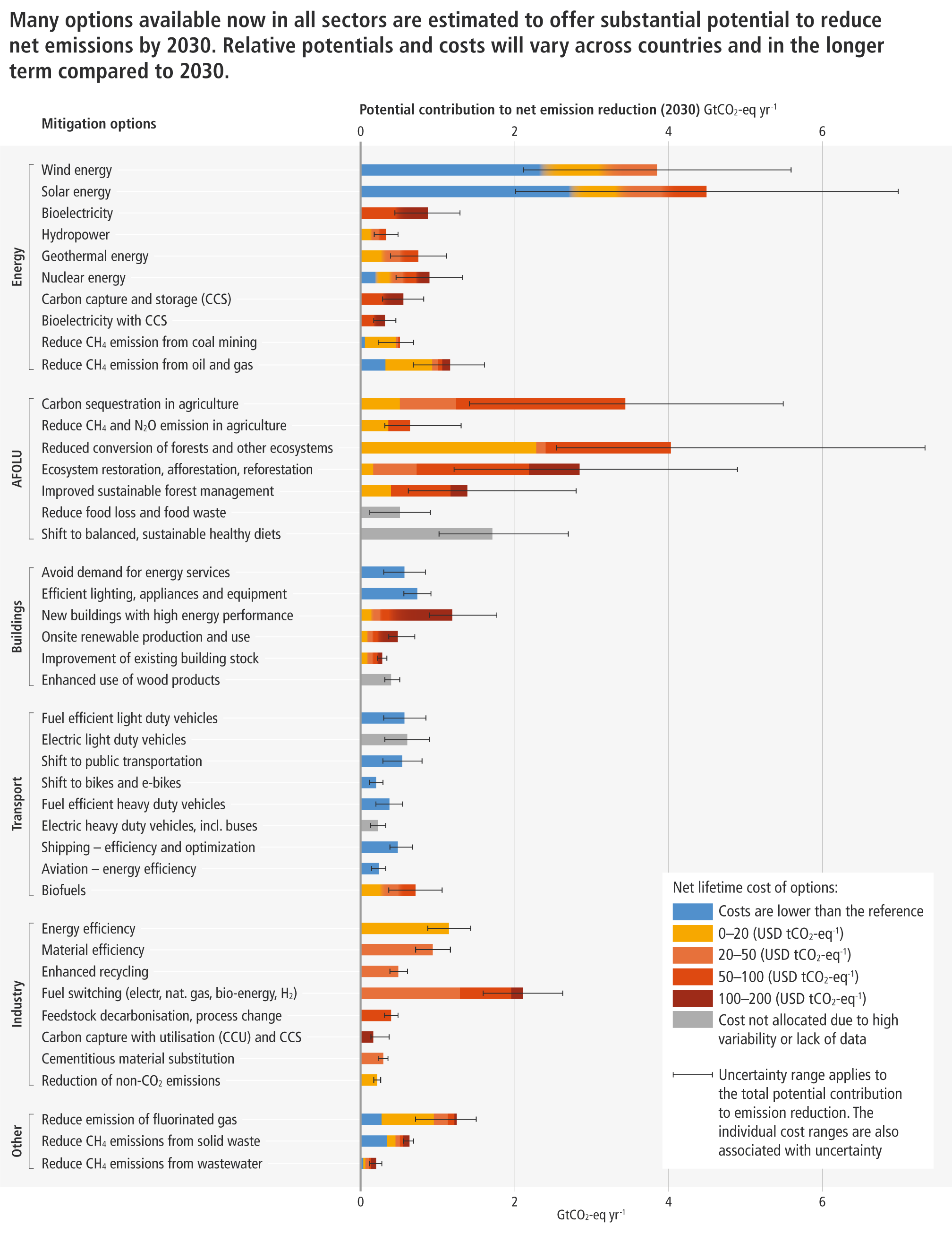
IPCC report shows the winners in energy transition – wind and solar, and the losers – nuclear power and carbon capture.
Guardian Down to Earth newsletter. Tucked away in the recent (and
devastating) landmark report from the Intergovernmental Panel on Climate
Change (IPCC) is a chart that provides the road map for an escape from
catastrophe.
It assesses with extraordinary clarity the potential for
emissions cuts of more than 40 options. You can view it here. The
simplicity of the chart is deceptive. It was compiled by a team of the
world’s best scientists, based on 175 studies. Its power is amplified by
the fact that it was signed off by all of the world’s governments, from
the cleanest and greenest to the darkest petrostates.
So what does it show?
First, solar and wind power are by far the best option, with the potential
to cut a staggering 8bn tonnes from annual CO2 emissions by 2030. That is
equivalent to the combined emissions of the US and European Union today.
Even more startling is that most of that potential can be achieved at lower
cost than just continuing with today’s electricity systems.
Just as important as the winners in this analysis are the losers. Nuclear power and
carbon capture and storage (CCS) each have just 10% of the potential of
wind and solar, and at far higher cost. The same applies to bioenergy –
burning wood or crops for electricity. It’s no wonder that the UK’s
energy strategy, published last week, received significant criticism: it
goes heavy on nuclear and CCS, while ignoring onshore wind.
IPCC (accessed) 7th April 2023
Calling nuclear fusion a potential ‘climate solution’ may undermine actual solutions
The latest fusion breakthrough is scientifically important, but the technology’s timeline just doesn’t match up with the urgency of climate change.
Grid Dave Levitan 28 Dec 22 Climate Reporter
When scientists at Lawrence Livermore National Laboratory announced a “breakthrough” in nuclear fusion research this month, many eyes quickly turned to climate change. Stories from the BBC, CNN and other major outlets mentioned the potential for “limitless” clean energy and discussed fusion’s place as a global warming fix within their opening paragraphs. Even Secretary of Energy Jennifer Granholm, in announcing the new result, touted its potential to provide “clean power to combat climate change.”
From a purely theoretical standpoint, this makes some sense. Fusion power, in an idealized, storybook form, turns the world’s energy system on its head, offering an emissions-free way to keep the lights on. And the latest advance sounds truly impressive: Using enormously powerful lasers, scientists at Livermore’s National Ignition Facility (NIF) managed to create a split-second fusion reaction — mimicking that which takes place on a massive scale inside the sun — that produced more energy than it consumed.
But the world doesn’t live in that storybook. On a practical, near-term level, nuclear fusion and climate change have almost nothing to do with each other. One remains in more-or-less scientific infancy, many years away from even a hint of usable form; the other gets more urgent by the day, requires immediate intervention and has some readily available tech being deployed as we speak.
“A lot of people are desperate for some sort of silver bullet climate solution that will help to bypass the hard work of actually getting political agreements and policymaking and sacrifice to eliminate fossil fuels,” said Edwin Lyman, a physicist and director of nuclear power safety for the Union of Concerned Scientists. “It would just be easier if there were this panacea out there that would transform everything, but of course that’s totally unrealistic.”
Celebrating scientific advances is important. But linking that science with an urgent global need that it cannot on relevant time scales address may offer false hope and potentially undermine the more banal climate progress — dramatic renewable energy expansion, efficiency improvements, vehicle electrification and so on — that is possible today.
Ignition achieved
The old joke about nuclear fusion is that it is always 20 — or 30 or 50 — years away. Taking hydrogen atoms and fusing them into helium, in the process releasing energy that theoretically can be used to power the electric grid, is so technically challenging that despite well over a half-century of advances, the joke still more or less holds true…………………. more https://www.grid.news/story/climate/2022/12/26/calling-nuclear-fusion-a-potential-climate-solution-may-undermine-actual-solutions/
‘Big guns’ keep the world on nuclear high alert – Helen Caldicott

With Russia and the U.S. currently on the warpath during the escalating conflict in Ukraine, the world is again at serious risk of nuclear disaster, writes Dr Helen Caldicott.
By Helen Caldicott | 17 July 2022,
JOHN F. KENNEDY’s Secretary of Defense Robert McNamara and I got to know each other during the last years of his life.
One day, as we were having lunch in the Metropolitan Club, he said to me:
“Helen, I was in the Oval Office during the Cuban Missile Crisis and we came so close – within three minutes – to nuclear war.”
Now, we are at another turning point in history — although most commentators seem not to understand the gravity of the situation. For the first time since then, the two nuclear superpowers armed as they are with thousands of nuclear weapons – many on hair-trigger alert – are facing each other during an escalating war in Ukraine.
As the genius, Albert Einstein said:
‘The unleashed power of the atom has changed everything save our modes of thinking and we thus drift toward unparalleled catastrophe.’
So true.
Here we are with Vladimir Putin who decided to invade Ukraine killing innocent civilians and destroying property at random, while the U.S. military-industrial complex rejoices at the opportunity to make and sell as many weapons as it can, as its shares bound sky high.
The neo-cons that Joe Biden has appointed to his Cabinet are thrilled that for the first time since the Cold War ended, they can take on the “evil” Russia — although Russia seems no longer to be a communist country, but in fact a raging capitalist institution, with many of its state riches stolen by outrageous oligarchs living high on the hog.
During the Clinton Administration, Putin requested that Russia become a member of the North Atlantic Treaty Organization (NATO), but it never eventuated as Russia was too big and too authoritarian.
NATO was created to defend western Europe from the perils of the “aggressive” Soviet Union and, as is well-known when the Cold War ended, U.S. Secretary of State James Baker promised Mikhail Gorbachev that NATO would not move one inch to the East.
This posture however was antithetical to aerospace corporation Lockheed Martin whose president, Norman Augustine took it upon himself to visit these newly liberated countries convincing them to become democracies – that is, part of NATO – which required them to arm themselves to the tune of millions of dollars, enormously benefiting the U.S. military-industrial complex.
America then introduced military and missile equipment in all these NATO countries, targeting, of course, Russia, while NATO expanded from 12 to 30 countries.
Putin originally had two requests:
- that the missiles targeting Russia be removed; and
- that Ukraine not be admitted to the NATO block.
He was refused.
The present precarious situation is heightened by the testosterone imperative that has dominated and guided wars throughout history, superimposed by the tenuous control of nuclear arsenals, the launching of which has too often been triggered by false alarms, a rising moon, a flock of geese triggering radar alerts, human fallibility, war games, tapes plugged into the Pentagon system and many more.
Superimposed upon this fragile system is the age-old necessity to “win”.
I wake up each morning, look out the window to see the roses and wonder how much longer they will exist — more frightened now than I have ever been even during the Cuban Missile Crisis.
Elon Musk and Bill Gates: beware of gurus toting solutions to climate change.
https://www.onlineopinion.com.au/view.asp?article=21339–4 March 21, Elon Musk has grand plans to save the world. Bill Gates has just published his book How To Avoid a Climate Disaster. They both envisage tax-payer funding for their solutions. But beware of gurus toting the 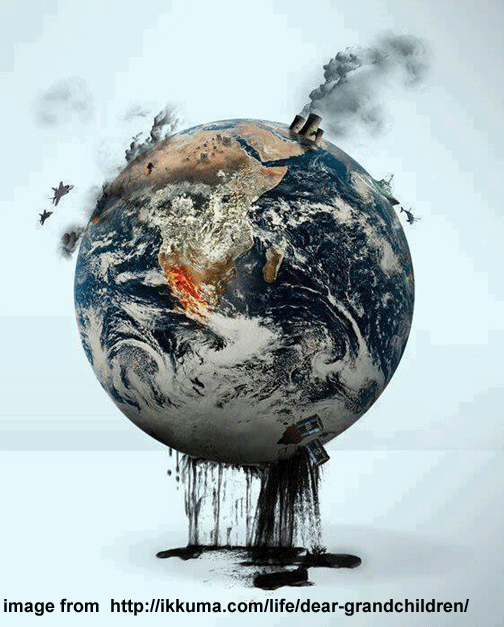 solution to the planet’s crisis.
If you don’t think that our home planet is in an ecocidal crisis, then you’ve been blissfully unaware of global heating, over-population, biodiversity loss, waste crises, plastic pollution, overconsumption of energy, water shortages, deforestation, nuclear danger, space junk danger, perpetual nuclear war risk…….
Visionaries like Bill Gates and Elon Musk have brought extraordinary, and beneficial advances to our human society. On the way, they have become billionaires. And good luck to them. But their wealth and fame has made them all too ready to be seen as world leaders, and to see themselves as having the solutions to world problems. This can be problematic, as in effect, some of their solutions exacerbate the problems.
The future envisioned by both Bill Gates and Elon Musk has one huge blind spot. They both foresee ever-expanding energy use, and they plan for that – problems can be fixed with technology.
On a finite planet, endless energy use just cannot work. But the concept of enough is just not in their plans. If the human species does not take up the concept of enough, we could just become an extinct species. Technology could be used to reduce energy use, but that idea fades away as Gates, Musk, and other technocratic leaders see progress as being to have ever more exciting and energy-guzzling gimmicks and activities.
The digital revolution. It should be a benefit, enhancing our lives, and in many ways, it IS. But an energy price is paid in our unbridled use of digital technology. Every email, emoji, Facebook post, tweet, blogpost, Youtube, uses electricity. It’s not as if these actions just disappear ”into the cloud”. What a dishonest term that is! There is no such cloud. What there actually IS – is a host of vast areas of dirty great data” farms”. There’s another dishonest term. They’re not farms. They are soulless collections of great metal servers, using ever growing amounts of electricity, and of water, to keep them cool.
Then there’s the price at the end. It’s very hard to find out the details and the extent of toxic materials from digital technology, that are dumped in poor countries.
And, to be fair, companies like Apple, have made some efforts to reduce their ewaste.
However, planned obsolescence is rampant in the high tech world, resulting in the utter tragedy of ewaste pollution, – from discarded smartphones, laptops, computers, printers, TVs, fidbits, smart fridges, robots etc, the tragedy of the thousands of children working as waste-pickers in India and Africa, in slum conditions. E-waste includes many toxic materials such as lead, arsenic, cadmium, and mercury, that release dioxins. . ”With no health or environmental protections in the slum, the toxins contaminate the air, water, and the food consumed in the slum…….. The area is constantly covered in thick, toxic smoke from the burning of electrical cables that goes on all day and night,” – High-tech hell: new documentary brings Africa’s e-waste slum to life

Both Gates and Musk are enthusiasts for renewable energy, and in the climate crisis, they are to be applauded for their work in this direction. Yet, as with all kinds of digital technology, renewables should not be unlimited, and do have their downsides, both in the production (pollution from rare earths mining/processing), and in the final disposal, with toxic wastes, and components that are difficult to recycle. . The International Renewable Energy Agency (IRENA) estimates that solar panels produced 250,000 metric tonnes of waste in 2018 alone.
Bill Gates and Elon Musk do show their awareness of the planet’s grave environmental problems, but we don’t hear from them about energy conservation, or about moving away from the consumer society. Both talk quite enthusiastically about the great increase in energy use that we can expect. They complacently predict endless energy use, just as the nuclear lobby did in its glossy advertising film ”Pandora’s Promise”
Elon Musk now plans to put 24,000 satellites into space, and is well known for his dream of colonising Mars, and This idea has, of course, been taken up by many others, and there’s a sort of general public delight in space travel and interstellar rocketry. People seem oblivious to the fact that this will require huge amounts of energy, and that the space scientists already are turning away from clean solar power, to the far more dangerous source of nuclear fission. They’re also oblivious of the state of affairs in near space, where the trillions of bits of space debris pose dangers, floating about just like the plastic pollution in the oceans. Meanwhile the military planners in USA, Russia, China are already planning for nuclear weapons and war in space.
No surprise then that Elon Musk sees nuclear power as necessary – not just for his predicted need for much more electricity on Earth, but for this obsession with satellites and rockets.
Less well understood than his push for electric cars and Tesla technologies, is Elon Musk’s investment in the cryptocurrency, Bitcoin. Running Bitcoin demands enormous amounts of 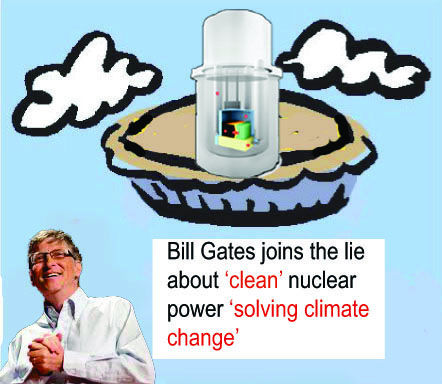 electricity, as Timothy Rooks explained recently.
Bill Gates, while motivated to help fight climate change, has also long been trying to make a success of his nuclear technology company Terra Power. The climate emergency presents him with the perfect opportunity to promote this, and especially, to get tax–payer funding to do it, as he suggests in his new book.
Wake up people! These two gurus have done some good stuff. But don’t let them manipulate us into dangerous territory – with nuclear technology, so connected with weaponry, and with its dangers, and the unsolved problem of radioactive trash. Sure, technology has got to be part of solving the planet’s crises. But we need much more imaginative leadership to steer our species away from infinite consumption and infinite energy use.
Nearly 90% of young people want real action on climate change

Young people send strong climate message, Pro Bono Maggie Coggan | 24 August 20,
Nearly 90 per cent of young people say they feel unprepared for future climate disasters and want politicians to give them a bigger voice on climate change, a new report finds.
Conducted in the wake of the catastrophic summer bushfire season, the new Australian Institute for Disaster Resilience and World Vision Australia research found that despite hazards such as bushfires, floods, drought and tropical cyclones posing a greater threat, young people said they were more likely to learn about earthquakes at school.
This left 88 per cent of survey respondents feeling unprepared and unable to protect themselves and their communities, even though nearly two-thirds (64 per cent) had experienced at least three events such as bushfires, heatwaves and drought in the past three years.
“We anticipate that we will experience personal impacts from natural hazards in the future, whether we are living in capital cities, regional centres, or rural areas,” respondents said.
“The 2020 bushfires demonstrated that you need not live in the bush to be affected by a bushfire. We are experiencing these persistent worries while having to contend with life, school, growing up and everything else that comes with being a young person in Australia.”
It is the most comprehensive consultation of children and young people on climate change, disasters, and disaster-resilience in the country, with 1,500 people participating in the online survey, supported by UNICEF Australia, Plan International, Save the Children, Oaktree and Australian Red Cross.
Young people concerned, but not heard ………… A full copy of the report can be found here. https://probonoaustralia.com.au/news/2020/08/young-people-send-strong-climate-message/
2020 Is Proving Another Disastrous Year For Our Earth’s Climate
 2020 Is Proving Another Disastrous Year For Our Earth’s Climate 2020 Is Proving Another Disastrous Year For Our Earth’s ClimateThe year already has been marked by rising global temperatures, Arctic ice melts and intensifying wildfires and storms. Huff Post, 22 Aug 20, By Nina Golgowski Record-breaking heat, melting ice caps, raging wildfires and a particularly grim hurricane forecast may have taken a backseat in news cycles dominated by politics and a health pandemic, but that doesn’t mean these climate phenomena have gone away. The year still has more than four months to go, but 2020 already has proven itself to be another eventful one in terms of natural disasters, rising global temperatures and threatening environmental outlooks.
Here’s a look at just some of the anomalies we’ve faced so far in 2020. Record-Breaking Heat The year is expected to rank among the five warmest on record for the planet, according to a July report by a National Oceanic Atmospheric Administration office, which said a 75% chance exists it ends up being the hottest or second hottest. During the first seven months of the year, the Earth’s global land and ocean surface temperature set its second-highest heat record. The temperature of 58.79 degrees Fahrenheit (14.88 Celsius) was only .007 of a degree less than the record set in 2016. July also saw the global temperature rise 1.66 degrees Fahrenheit (0.92 of a degree Celcius) above the 20th-century average, tying it with 2016 as the second-hottest July on record. It was just .02-degree short of 2019′s record rise in July of 1.71-degree Fahrenheit (0.95 of a degree Celcius).
The Northern Hemisphere, meanwhile, saw the highest ever recorded combined land and ocean surface average temperature in July, with the mercury rising 2.12 degrees Fahrenheit (1.18 degree Celcius) above average. This combined temperature surpassed July 2019 by 0.14 of a degree Fahrenheit (0.08 of a degree Celcius)……… https://www.huffingtonpost.com.au/entry/2020-another-disastrous-year-for-our-earth_n_5f3d8b59c5b66346157fd6e2?ri18n=true |
|
To tackle the climate crisis, the world cannot return to normal after Covid-19.
 New Statesman 16th April 2020, To tackle the climate crisis, the world cannot return to normal after
Covid-19. This moment must be used to build a new economic consensus founded on justice, care and sustainability. The same fractures exposed by this pandemic are the fault lines along which the battle for climate justice is fought.
Many of the people most vulnerable in the current crisis will be worst affected by environmental breakdown, while those who are enriched by this pandemic are likely to benefit in the future. Reports this week that UK hedge funds are cashing in on Covid-19 ring eerily similar to now regular stories of investors betting on climate collapse, water
scarcity and crop failure, and investing in the infrastructures and technologies of disaster.
And just as many nations and communities have been abandoned in our response to this pandemic, it is all too easy to imagine a future in which communities from Jakarta to east Yorkshire are left to fend for themselves amid accelerating climate breakdown. Indeed, to imagine it one has only to look at the present.
Post-crisis stimulus should be directed towards green infrastructure and innately low carbon forms of work like health and social care, proven so vital and so undervalued by this crisis. Debts must be written off to allow those countries most vulnerable to climate crisis to build resilience against it. And having exposed austerity as an ideological choice, rather than a necessity, we must ensure these mistakes are never repeated, and social safety nets are both valued and strengthened.
Rapid Transition Alliance 16th April 2020, Andrew Simms: In the debate over the global response to Covid19 a battle of hashtags has broken out between those urging a quick return to ‘normal’, and those saying that ‘normal’ had many problems and the crisis has revealed both the need and an opportunity for changing direction, and a shift of economic purpose.
Climate change taking its toll on mental health
 Feeling Anxious About Climate Change? Therapists Say You’re Not Alone
There’s no official clinical diagnosis, but the psychiatric and psychological communities have names for the phenomenon of worrying about the Earth’s fate: “climate distress,” “climate grief,” “climate anxiety” or “eco-anxiety”, People, By Victoria Knight , July 15, 2019
“Energy for Humanity”, “Nuclear Pride” – the greenwashing of Fukushima, Chernobyl, and the global nuclear industry
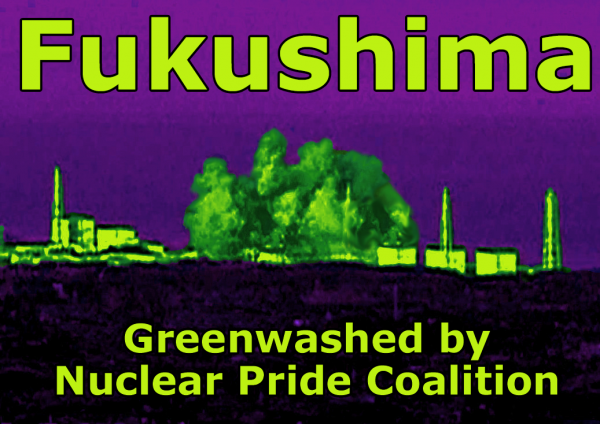
Energy for Humanity: Nuclear Power – Propaganda and Greenwash, Energy for Humanity, Nuclear Pride, new NPPs & Propaganda https://www.mitwelt.org/energy-for-humanity-greenwash-propaganda.html
A few years after the devastating nuclear accidents of Fukushima and Tschernobyl, which both resulted in extremely high numbers of casualties, the international nuclear lobby decided to shun the limelight for a little while. But apparently it takes more than just two global disasters to bring them down for good. The global nuclear society, the old and powerful networks between enterprises, lobbyists and nuclear parties are still very much in tact. Even though renewable energies are on the rise in the western world, and many outdated nuclear power plants are going offline, dictatorships and economically weak countries continue to establish new nuclear power plants. That is one of the reasons why new NPP’s are promoted so massively in 2018. The nuclear power plant operators make a big effort to try and win over the wary public after Fukushima and Tschernobyl. Consequently cunning campaigns are run and used to cover up facts, to spread half-truths and to boast.
The only thing that has changed over the years are the propaganda and enforcement strategies that are being utilized. In former times, conflicts revolving around nuclear energy, protection of the environment and climate were argued out between environmentalists and opposing enterprises. Unfortunately the environmentalist movement today still thinks and acts upon outdated ways of thinking and conflict patterns. Nowadays those conflicts are being ‘outsourced’. It is alarming how all over Germany organisations of the nuclear and coal corporate groups, foundations and faked citizen initiatives like ‘Nuclear pride’ and “Mothers for Nuclear” are supporting the usage of nuclear power plants and coal power stations while fighting environmentally friendly renewable energies.
The usage of nuclear energy in old swiss NPP’s is a danger to human life and environment. Uranium mining, uranium enrichment and the production of fuel elements have devastating effects on the environment, cause illnesses and even lead to death. Furthermore Nuclear Power Plants emit cancerous nuclear radiation while in standart operation. Disasters like a nuclear accident or terror attack are possible at any time and therefore the life and health of hundreds of thousands of people is under constant threat. Huge areas of landmass would be inhabitable for several human generations. Powerful Swiss nuclear groups have a big undemocratic influence on politics and their attempts at greenwashing and propaganda are very effective. Groups like “Falken am Kühlturm des AKW Leibstadt” and “Energy for Humanity” are being used to distract from the danger a NPP poses. Fact is that the nuclear waste we produce and bury today will continue to emit dangerous levels of radiation for millions of years and could potentially threaten the lives of future generations.
1 This Month

of the week – Shut Down Drone Warfare!


Tell the Ukrainian Government to Drop Prosecution of Peace Activist Yurii Sheliazhenko

Petition to revoke the licensing of the Near Surface Nuclear Disposal Facility (NSDF) at Chalk River. https://www.ourcommons.ca/petitions/en/Petition/Details?Petition=e-7247
To see nuclear-related stories in greater depth and intensity – go to https://nuclearinformation.wordpress.com
-
Archives
- March 2026 (237)
- February 2026 (268)
- January 2026 (308)
- December 2025 (358)
- November 2025 (359)
- October 2025 (376)
- September 2025 (257)
- August 2025 (319)
- July 2025 (230)
- June 2025 (348)
- May 2025 (261)
- April 2025 (305)
-
Categories
- 1
- 1 NUCLEAR ISSUES
- business and costs
- climate change
- culture and arts
- ENERGY
- environment
- health
- history
- indigenous issues
- Legal
- marketing of nuclear
- media
- opposition to nuclear
- PERSONAL STORIES
- politics
- politics international
- Religion and ethics
- safety
- secrets,lies and civil liberties
- spinbuster
- technology
- Uranium
- wastes
- weapons and war
- Women
- 2 WORLD
- ACTION
- AFRICA
- Atrocities
- AUSTRALIA
- Christina's notes
- Christina's themes
- culture and arts
- Events
- Fuk 2022
- Fuk 2023
- Fukushima 2017
- Fukushima 2018
- fukushima 2019
- Fukushima 2020
- Fukushima 2021
- general
- global warming
- Humour (God we need it)
- Nuclear
- RARE EARTHS
- Reference
- resources – print
- Resources -audiovicual
- Weekly Newsletter
- World
- World Nuclear
- YouTube
-
RSS
Entries RSS
Comments RSS
 nuclear-news