UNPRECEDENTED – new book exposes climate denialism, and shows way to act on climate change
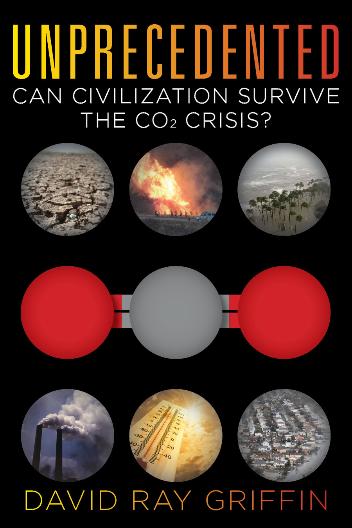 Everything you need to know about climate change and what can be done about it Clarity Press UNPRECEDENTED
Can Civilization Survive the CO2 Crisis?
By David Ray Griffin
ANNOTATED TABLE OF CONTENTS PART I: UNPRECEDENTED THREATS
Introduction: The basic issue is whether global warming, besides
leading to a hellish existence for our children and grandchildren,
will destroy civilization. Each chapter in Part I addresses 3
possible responses: Plan B (mobilization), Plan A (business as
usual), and Plan C (wait and see)……..
PART II: UNPRECEDENTED CHALLENGES AND FAILURES
11 Climate Change Denial: Worst in America, climate-change
denialism has resulted from a concentrated campaign by the
fossil-fuel industry to repudiate the scientific consensus and
promote public uncertainty. This chapter examines techniques
previously used by big business to impact public opinion in
relation to smoking, acid rain, CFCs, and the ozone layer,
showing how they are now being used by the fossil-fuel industry
to dispute the conclusion of virtually all climate scientists that
fossil fuels – coal, oil, and natural gas – are imperiling our planet.
The fossil-fuel industry, which knows its claims to be false, has
deceived many citizens into accepting its propaganda over the
evidence provided by climate scientists. This chapter debunks a
large number of the claims against climate science,
12 Media Failure: The fossil-fuel industry’s denialist strategy has
been forced upon, if not willingly embraced by, the major
American corporate media, leading to their failure to adequately
address either the science or the urgency of climate disruption.
Examined here are various media techniques geared to produce
public uncertainty on the issue: reduced coverage, inadequate
contextualization of extreme weather events, and false balance
(giving the opinions of propagandists paid by Big Oil as much
attention as the views of renowned climate scientists), and going
even beyond that to explicit denialism.
13 Political Failure: This chapter documents the historical record
of global failures to successfully address climate change and
explains reasons why. It demonstrates the extent to which
politicians have overruled the findings of science and analyzes
their motives. The record of US Presidents on climate change is
examined. Charting the Republican stampede toward absolute
climate change denial since 2011, it names specific malefactors
pursuing their selfish private interests to shed light on what
British journalist George Monbiot terms “the greatest political
failure the world has ever seen.” Continue reading
Time for an independent criminal investigation of radiation tragedies – Fukushima, Hanford and beyond
 Fukushima victims speak. Will anyone listen? Four years later, Japanese police and prosecutors have yet to conduct a thorough investigation March 11, 2015 Aljazeera by Trisha Pritikin @TrishaPritikin“…………..a public accounting of the tragedy is just as urgent not only to Fukushima victims but also to the disenfranchised victims of radiation exposure around the world.
Seeking accountability
I feel a personal connection to the downwind victims of Fukushima. I, too, have felt disempowered and invisible, longing to see those responsible for my radiation-induced health damage to finally be brought to justice. Just as Fukushima’s children could have been protected from thyroid cancer, thousands of people, including me, were exposed to radiation discharged decades ago from the (still leaking) Hanford nuclear weapon production facility near my childhood home in Richland, Washington. As in Richland, the children of Fukushima were not given potassium iodide tablets to block the uptake by our developing thyroid glands of radioiodine in contaminated milk and food — a simple protective measure understood since the dawn of the atomic age. Both Hanford and Fukushima communities put their trust in authorities who violated that trust and put their lives in danger.
I don’t want to see anyone else’s lives destroyed by radiation and nuclear catastrophes. A criminal investigation of Fukushima sets a precedent for governments and corporations around the world, declaring, “You are responsible for nuclear safety.”
Any nuclear disaster can have global health implications. This was demonstrated in reports of health damage across Europe after the Chernobyl nuclear disaster in Ukraine in 1986 and now in suspected damage to the marine ecosystem after Fukushima Daiichi, where 300 tons of radiation-contaminated water pours into the Pacific Ocean daily………
Victims speak
To bring global attention to their cause, in April 2015, Fukushima victims will publish an English translation of select statements from their complaint as a book, available to the English-speaking world, “Will You Still Say No Crime Was Committed?” Their goal, according to Ruiko Muto, the chairwoman of the Complainants for Criminal Prosecution of the Fukushima Nuclear Disaster, is to let the world “know that the Fukushima nuclear disaster has not been brought under control, that it continues to spread harm and that the nation of Japan is choosing to abandon the victims.”
The book’s personal stories are compelling. Their statements offer a rare glimpse into their deep sense of betrayal. They tell of mortgages still being paid on contaminated homes that they can never inhabit. Livelihoods have been lost, families torn apart. They are under constant stress, uncertain whether the food they are eating or the air that they breathe is poisoned, unable to trust the authorities to tell them the truth.
“With no one taking responsibility for the nuclear accident, what we have is a situation of paradise for the perpetrators, hell for the victims. I cannot go to my grave like this,” says complainant No. 48, age 68.
Through the English-language publication of their stories, grief-stricken Fukushima victims are now asking the English-speaking world to join in their battle for justice. These innocent victims of Fukushima Daiichi have reached across the Pacific to raise awareness and obtain our help.
Let’s add our voices to theirs.
Trisha Pritikin is a Hanford Downwinder, an attorney and an internationally recognized advocate on behalf of populations exposed to Hanford’s radiation releases. She blogs at www.trishapritikin.com. http://america.aljazeera.com/opinions/2015/3/fukushima-victims-speak-will-anyone-listen.html
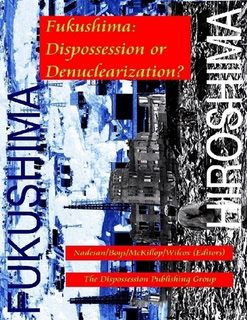
New book: “FUKUSHIMA: Dispossession or Denuclearization?
 The Fukushima Syndrome – Diagnosing Nuclear Madness PlanetarianPerspectives.net March 6, 2015
The Nuclear Energy Paradigm “Has No Clothes.”
An important new book strips it bare.
By James Heddle
A Review of “FUKUSHIMA: Dispossession or Denuclearization?”
The Dispossession Publishing Group, 2014
Edited by Majia Nadesan, Antony Boys, Andrew McKillop and Richard Wilcox
Contributors – Harvey Wasserman, Christopher Busby, Paul Langley, Adam Broinowski, Christian Lystback, The Fukushima Five.
Reviewer’s note:
As Fukushima continues to pour its genotoxic effluent into the planetary biosphere four years on and counting, a recent BBC article tells us that the global proliferation of nuclear reactors is now at an all-time historic high with 70 reactors under construction and 500 on order in countries around the world. We have the spectacle of Nobel laureate and Nuclear-Salesman-in-Chief Obama sealing a new nukes deal with nuclear-armed India, sanctioning non-nuclear Iran for even thinking about developing nuclear energy, risking nuclear war with Russia over Ukraine, and ordering a $30 billion upgrade in the US nuclear arsenal (even as he lays flowers on Gandhi’s grave). Are decision-makers madmen and morons? How to explain this lemming rush to oblivion…or worse: a malformed genetic future distorted by massive global radioactive pollution. This review and the book it treats look at some of the forces and factors shaping the delusional worldview driving this societal madness……http://www.planetarianperspectives.net/?p=1925#comment-50051
Book: THE GREAT TRANSITION: SHIFTING FROM FOSSIL FUELS TO SOLAR AND WIND ENERGY
 http://globalenergysecurity.blogspot.com.au/
by Lester R. Brown with Janet Larsen, J. Matthew Roney,
and Emily E. Adams “The energy transition will change not only how we view the world but also how we view ourselves,” say the authors of The Great Transition. “With rooftop solar panels to both power homes and recharge car batteries, there will be a personal degree of energy independence not known for generations.”
As fossil fuel reserves shrink, as air pollution worsens, and as concerns about climate instability cast a shadow over the future of coal, oil, and natural gas, a new world energy economy is emerging. The old economy, fueled largely by coal and oil, is being replaced with one powered by solar and wind energy.
We can see the transition unfolding. In the U.S. Midwest, Iowa and South Dakota are generating 26 percent of their electricity from wind farms. Denmark generates 34 percent of its electricity from wind. Portugal and Spain are above 20 percent. In China, electricity from wind farms now exceeds that from nuclear power plants. And in Australia, 15 percent of homes draw energy from the sun. With solar and wind costs falling fast, their spread is accelerating.
In The Great Transition, Lester R. Brown and his colleagues explain the environmental and economic wisdom of moving to solar and wind energy and shows how fast change is coming.
Book “The Globalization of War” by Michel Chossudovsky
 “The Globalization of War” by Michel Chossudovsky http://tv.globalresearch.ca/2015/02/globalization-war-michel-chossudovsky
Michel Chossudovsky
James Corbett
Buy the book here: https://store.globalresearch.ca/
From the outset of the post World War II period to the present, America’s s global military design has been one of world conquest. War and globalization are intricately related. Militarization supports powerful economic interests. America’s “Long War” is geared towards worldwide corporate expansion and the conquest of new economic frontiers.
The concept of the “Long War” is an integral part of U.S. military doctrine. Its ideological underpinnings are intended to camouflage the hegemonic project of World conquest. Its implementation relies on a global alliance of 28 NATO member states.
In turn, the U.S. as well as NATO have established beyond the “Atlantic Region” a network of bilateral military alliances with “partner” countries directed against Russia, China, Iran and North Korea. What we are dealing with is a formidable military force, deployed in all major regions of the World.
“Blind Faith” – book reveals the toxic nuclear legacy in Port Hope
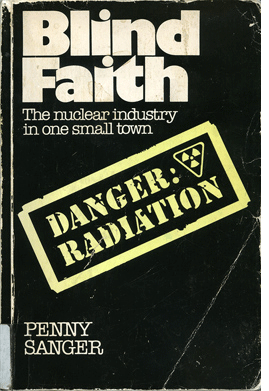
 Blind Faith: The Nuclear History of Port Hope, Ontario http://www.mintpressnews.com/MyMPN/author/driches/ January 15, 2015 By Dennis Riches
Radiation is invisible, and it has always been imbued with a diverse range of magical powers in science fiction. Ironically, in a very real sense, radiation does make people invisible. Once groups of people have become victims of a radiological contamination, they are, in addition to being poisoned (or being traumatized by the possibility that they have been poisoned), marginalized and forgotten. Their traditions and communities are fragmented, and they are shamed into concealing their trauma. When contamination occurs, there is a strong impulse even among many victims to not admit that they have been harmed, for they know the fate that awaits them if they do.
Thus it is that hibakusha (the Japanese word for radiation victims) become invisible. When a new group of people become victims, such as in Fukushima in 2011, they feel that they have experienced a unique new kind of horror. For them, for their generation, it is new, but for those who know the historical record, it is a familiar replay of an old story. The people of Fukushima should know by now that they are bit players who have been handed down a tattered script from the past.
A case in point is “Blind Faith,” the superb 1981 book by journalist Penny Sanger, about the small irradiated Canadian town of Port Hope on the shores of Lake Ontario. In the 1970s, it faced (and more often failed to face) the toxic legacy of processing first radium, then uranium for nuclear weapons and nuclear power plants.
New book – Towards a World War III Scenario
 The Dangers of Nuclear War http://www.globalresearch.ca/the-dangers-of-nuclear-war/5422597 By Prof Michel Chossudovsky Global Research, January 02, 2015 While one can conceptualize the loss of life and destruction resulting from present-day wars including Iraq and Afghanistan, it is impossible to fully comprehend the devastation which might result from a Third World War, using “new technologies” and advanced weapons, until it occurs and becomes a reality.
The international community has endorsed nuclear war in the name of world peace.
“Making the world safer” is the justification for launching a military operation which could potentially result in a nuclear holocaust.
Nuclear war has become a multibillion dollar undertaking, which fills the pockets of US defense contractors. What is at stake is the outright “privatization of nuclear war”.
The Pentagon’s global military design is one of world conquest. The military deployment of US-NATO forces is occurring in several regions of the world simultaneously.
Breaking the “big lie”, which upholds war as a humanitarian undertaking, means breaking a criminal project of global destruction, in which the quest for profit is the overriding force. This profit-driven military agenda destroys human values and transforms people into unconscious zombies.
Book NEW: Towards a World War III Scenario: The Dangers of Nuclear War https://store.globalresearch.ca/store/towards-a-world-war-iii-scenario-the-dangers-of-nuclear-war/
Naomi Klein on nuclear power
“It isn’t just nuclear, this is the same argument the fracking industry in now using – that it’s a bridge, that it’s lower carbon, etc. This is a line that was developed by the fossil fuel industry in the late 1980’s that was then adopted by some parts of the environmental movement. It’s an argument that is still around, even though the bridge is burning.”
“The thing to stress is that there is really good research out there that shows that we can switch to 100 per cent renewables by 2030 or 2050. There is a great team out of Stanford lead by Mark Jacobson I look at in my book. It is not technology that is holding us back any more. So if we can do it with renewables, why are we doubling down on gas, why are we talking about nuclear – which is way more expensive and obviously massively higher risk.”
“I think it is happening because this is a very profitable model for our elites, and it’s a lot easier for them to wrap their heads around switching from oil to gas, or switching from fossil fuels to nuclear. I mean these are often the same companies. It’s a highly centralized, corporatist industry that also consolidates wealth and power.”

“I think we should be viewing the climate crisis as a message that our economic system is deeply, deeply flawed. We are facing not just a climate crisis but a crisis on so many levels. And it comes back to that extractivist mindset that it’s always required that somebody else eat the risk. That’s one of the biggest issues I have with nuclear – who is going to eat the risk on this? I understand how people like George Monbiot, who I have a huge amount of respect for, are coming to this desperate conclusion. In the absence of the kind of social movement that I’m talking about, that is true. It is only a social movement on a huge scale that can achieve the just kind of transition that we want.”
“I think we can do this without nuclear, it’s just that it’s less challenging to our current political structures to do it that way. This is the society that we’ve created and we’ve got a lot of transformation work to get off that path.”
(From a Guardian webcast from October 2014 discussing her new book This Changes Everything with Owen Jones)
Book: Analysis of Europe’s nuclear power industry, and alternatives
 Expanded nuclear power capacity in Europe, impact of uranium mining and alternatives http://www.ejolt.org/2014/10/expanded-nuclear-power-capacity-in-europe-impact-of-uranium-mining-and-alternatives/ October 31st, 2014
Ejolt report 12: Expanded nuclear power capacity in Europe, impact of uranium mining and alternatives
The report can be downloaded here.
The policy briefing is here.
Abstract
The nuclear industry has recently undergone what the nuclear lobby called a ‘nuclear renaissance’, with several countries planning to construct or constructing new plants or prolonging the life of existing reactors. However, this ‘nuclear renaissance’ has encountered difficulties in Europe: new reactors currently under construction in Finland and France have been delayed and are running over-budget, while in Germany, Belgium, Switzerland and Italy nuclear energy expansion has been put on hold in the aftermath of the Fukushima accident. In the present report we explore the situation in Bulgaria and Slovenia. For both countries nuclear energy is an important part of the national energy mix and both have plans for new nuclear power plants (NPPs).
We closely analyse the history and present situation of nuclear energy in these countries and the internal debate that has evolved in relation to the construction of new plants. Despite many particularities, there are common traits that are also shared in the rest of Europe, notably, the debate over whether to maintain and/or increase a powerful and relatively autonomous source of energy in the face of the high costs of construction and environmental and health risks nuclear energy and radiation entail. The report describes the expansion of nuclear energy – two new planned power plants in Bulgaria and the prolongation of one plant and the construction of a second one in Slovenia. First an overview of the energy mix in both countries is offered. Then a chronology of the nuclear projects is outlined, highlighting the main risks and problems, including social and environmental issues. This overview concludes with an analysis of the cost and benefits of the planned power plants. We also look at the often forgotten first stage of nuclear energy production: uranium mining. We describe the current status and main problems of the closed mines of Bulgaria and Slovenia. Then we analyse alternatives to nuclear projects by focusing on different energy scenarios. With the objective of envisioning a sustainable energy future, we analyse the costs and benefits, and thus the potential for Renewable Energy Sources (RES) as an alternative to NPP expansion.
Keywords: Bulgaria, energy mix scenarios, nuclear power, nuclear renaissance, Public participation, Slovenia, uranium mining
Authors: Dragomira Raeva, Todor Slavov, Desislava Stoyanova, Marta Conde, Lidija Živčič, Tomislav Tkalec, Špela Rode
New book: Uranium mining, unveiling the impacts of the nuclear industry
 Uranium mining, unveiling the impacts of the nuclear industry http://www.ejolt.org/2014/11/uranium-mining-unveiling-impacts-nuclear-industry/ November 18th, 2014 Ejolt report 15: Uranium mining, unveiling the impacts of the nuclear industry
The report can be downloaded here.
The policy briefing is here.
Abstract
Uranium mining and milling comprise the first phase of the nuclear fuel cycle, and is one of the most polluting ones. The aim of this report is to give workers and communities basic information about radioprotection. The document deals with the radiological characteristics of materials and waste from the mines, principles of radiation protection, and methods of dose evaluation.
The report draws from on-site studies performed in Bulgaria, Brazil, Namibia and Malawi in the course of the EJOLT project and from previous studies performed by CRIIRAD in France and Africa over the last twenty years. It gives examples of the various impacts of uranium mining and milling activities on the environment (air, soil, water) and provides recommendations for limiting these impacts.
This report aims to contribute towards the development of the critical capacities of communities, so that they might have more information with which to face conflicts with states or companies in relation to uranium mining projects.
Keywords: radiological impact, uranium mining, uranium milling, nuclear power, environmental impact, uranium daughter products, health impact, radioprotection
Authors: Bruno Chareyron, Lidija Živčič, Tomislav Tkalec, Marta Conde
Humanity must choose between denuclearization or dispossession.
 Fukushima: Dispossession or Denuclearization? by Majia Nadesen http://stop-u238.blogspot.com.au/2014/11/multigenerational-effects-of-exposure.html
We pose the question starkly: Humanity must choose between denuclearization or dispossession.
We document that nuclear power and weapons are connected and their complex fundamentally dispossesses citizens of liberal guarantees, including rights to property, free speech, and the pursuit of happiness.
We explore crisis management of the Fukushima disaster to demonstrate dispossession of rights of property, free speech, and the pursuit of happiness, through examples that include lost livelihoods and Fukushima children’s rising rates of thyroid cancer, among other topics: See Oiwa, Yuri (2014, August 24), Thyroid cancer diagnosed in 104 young people in Fukushima. The Asahi Shimbun,
We examine the history of radiation health effects to demonstrate historical conflicts between nuclear industry safety-guidelines and scientific studies of the biological effects of “internal emitters,” which are ingested and/or inhaled radionuclides.
We describe distortions in nuclear industry safety models deriving from invalid modeling techniques.
We demonstrate that nuclear power is market distorting because it externalizes its true costs and relies extensively on generous government subsidies.
We show that governments too often prioritize nuclear interests over democratic principles and practices: For example, we investigate media and popular resistance within Japan to the newly passed “state secrets” law, which is seen by many as directly threatening free speech and public health: See Toshihiro Okuyama and Hiroo Sunaoshi (2013, December 17) State secrets law raises concern about safety of nuclear power plants. The Asahi Shimbun,
We disclose strong public support in Japan and elsewhere for decentralized alternative energy production and we describe oligarchic energy industries’ efforts to maintain centralized control when challenged by the decentralizing production tendencies of alternative energy, such as solar: See Ex-Japanese PM on How Fukushima Meltdown was Worse than Chernobyl and Why He Now Opposes Nuclear Power. (2014, March 11). Democracy Now.
We are concerned that in the absence of public activism the choices made by governments and industry will prioritize short term profits and vested interests. “Dispossession” is the cumulative effect of these decision criteria in action.
Nuclear remains seductive in our Hobbesian world of vying nation-states, despite myriad acknowledged hazards, including aging and decaying infrastructures, recurrent nuclear “accidents,” unceasing contamination, and terrorism. Nuclear seduces even when its effluents threaten the ecosystem and, perhaps, even the human genome.
Vested nuclear interests reign, but democracy is not yet vanquished. We see public demand for systematic denuclearization as critical for long-term human sustainability. The time for political action wanes as scientists predict nuclear power plant accidents will occur with regular frequency: See Severe nuclear reactor accidents likely every 10 to 20 years, European study suggests (2012, May 22). Max-Planck-Gesellschaft
Mikhail Gorbachev noted in his Memoirs that prior to the Chernobyl disaster there had been 151 significant radiation leaks at nuclear power plants around the world.[i] He warned that one or two more accidents would produce contamination far worse than after a nuclear war.[ii] With Fukushima we are living in a highly contaminated age as research subjects with no options to discontinue the experiment.
Change in energy policy is necessary for human sustainability. If we do not denuclearize, we are going to be dispossessed.
Are you ready for the Solar Revolution?
 The Solar Revolution: Why bottled sunshine is the fuel of the future http://guardianshorts.co.uk/the-solar-revolution-why-bottled-sunshine-is-the-fuel-of-the-future/
Steve McKevitt & Tony Ryan £1.99/$2.99
The sunshine that hits the Earth in a single hour could meet the world’s food and energy demands for an entire year. If only we could make use of it that is. Solar power is not just about turning sunlight into electricity – we also need a way of capturing and storing it, of moving it around to where it’s needed. Of providing power during the night. In short, we need a way of bottling sunshine so that we can have as much of it as we want, wherever and whenever we like. Solve this, and we will welcome the solar revolution.
Our current coal, oil and gas energy supplies rely on sunshine captured long ago by plants and animals long since fossilised. Harnessing the sun directly would open the way to a future free from the side effects of burning carbon. But that’s not the only reason to look to the sun. By 2050, the world’s population is predicted to rise to some 10 billion individuals. Our energy requirements will nearly double over the same period. Today we are burning through 20 million years of fossil record every year. We use this energy to stock our supermarkets, light our homes and run our businesses. In the long run, we’re going to need to find a new way of powering our lifestyles.
In ‘The Solar Revolution’, Steve McKevitt and Tony Ryan explore this energy problem and the solutions on offer. From nuclear to wind, fossil fuels to sunshine, they look at where our energy comes from and what the issues are with producing it this way or that. They delve into the science that underpins it all as well, explaining exactly how the sun’s rays might be turned into a new liquid fuel to power the world.
This Guardian Short is a companion to a longer work by the authors, The Solar Revolution: One world. One solution. Providing the energy and food for 10 billion people., published by Icon Books. Expanding on some of the issues and science covered in the Guardian Short and delving into new areas, it is available in paperback from the Guardian Bookshop
Nuclear power defeats democracy – Book on UK “The Prostitute State “

 Nuclear power trumps democracy http://www.theecologist.org/blogs_and_comments/commentators/2587477/nuclear_power_trumps_democracy.html Donnachadh McCarthy 9th October 2014
The UK’s political mainstream has performed a complete U-Turn in policy on nuclear power, culminating yesterday in the European Commission’s approval of a £15-20 billion subsidy package for the Hinckley C project. Donnachadh McCarthy delves into the nuclear industry’s deep and far-reaching political links.
Why is our democracy failing to tackle the horrific urgency of the climate crisis and the decimation of our eco-systems?
And why are all the main political parties betting the farm on nuclear power in spite of its madhouse economics – and against all their promises to either oppose nuclear power altogether, or to refuse subsidies for it?
 In my new book, The Prostitute State – How Britain’s Democracy Has Been Bought, I set out my view that there is a single problem at the root of our nation’s difficulties.
A corporate elite have hijacked the pillars of Britain’s democracy. The production of thought, the dissemination of thought, the implementation of thought and the wealth arising from those thoughts, are now controlled by a tiny, staggeringly rich elite.
As a result the UK is no longer a functioning democracy but has become a ‘Prostitute State’ built on four pillars: a corrupted political system, a prostituted media, a perverted academia and a thieving tax-haven system.
This has disastrously resulted in a flood of wealth from the poor and middle classes to the top 1%. This stolen wealth is built on the destruction of the planet’s ecosystems, which are essential for humanity’s survival.
Nuclear power defeats democracy
The reversal of government policy on nuclear power is a classic example of how the Prostitute State trumps democracy. Betrayed environmental activists must understand that – notwithstanding the noble form of democratic structures – what they are really up against is a corrupt corporate state.
The concept of lobbying is reasonably well known, but few of us understand how far lobbying has penetrated and hijacked the political parties themselves.
For example, most people are perplexed at how the nuclear industry managed to persuade the UK’s previous Labour government to build a fleet of hugely expensive experimental nuclear power stations on land prone to flooding from rising sea levels.
They also struggle to comprehend and why Labour’s shadow energy and climate change minister, Caroline Flint MP, having stated that she would only support nuclear power if built without public subsidies, now supports the £15-20 billion subsidy package for Hinkley C nuclear power station
Labour managed managed this policy U-Turn despite the Three Mile Island, Chernobyl and Fukushima nuclear catastrophes; the failure to find safe waste-disposal sites capable of protecting radioactive waste for over 100,000 years; and insurance companies’ point blank refusal to provide nuclear accident insurance.
It’s the money, stupid
My simple answer is that the nuclear industry has poured millions of pounds year after year into a massive political lobbying campaign.
They bought a whole swathe of senior ex-politicians to work as nuclear lobbyists, spent a fortune on trying to manipulate public opinion through media and advertising, and even funded school trips to their nuclear plants.
As they managed to persuade a Labour government to abandon their 1997 election manifesto commitment to oppose new nuclear power stations, it is crucial to understand how deeply the nuclear lobby is embedded in the Labour party.
My personal belief is that a complex web of financial interests ensured that the Labour government served the nuclear industry – no matter what Labour party members or the British public wanted.
Just consider for example the following list of Labour Party politicians: Continue reading
New Book “Crisis Without End” -reports from New York Nuclear Symposium
 “Crisis Without End: The Medical and Ecological Consequences of the Fukushima Nuclear Catastrophe,” edited by Helen Caldicott (The New Press, October 2014), is full of those nuclear secrets.Caldicott, founder of Physicians for Social Responsibility, gathered several outstanding nuclear power experts at the New York Academy of Sciences for a discussion of the effects of the horrendous 2011 nuclear disaster in Japan. The result is “Crisis Without End,” an insightful and very timely story of the incompatibility of man with a technology that can literally wipe out or vaporize humans and poison their future for millennia.
Abolish the Nukes Before they Abolish Us, Huffington Post, 27 Sept 14“………Since 1945, the nuclear bombs are a secret-guarded calamity. They are in the hands of the military. The civilian nukes are in the hands of companies. In the 1950s, President Dwight Eisenhower sold “nuclear electricity” to the world under atoms for peace!
Some seventy years after Hiroshima, there are four-hundred-and-forty nuclear power plants in the world. One hundred of these nukes are in the United States. And just like the atomic and hydrogen bombs, no one knows how to protect us from the deleterious substances created in the process of using uranium, a bomb material, to boil water for the production of electricity.
Experts speak of radiation or radioactive elements or radionuclides to describe the poisons of both civilian and military nukes. These include tritium, cesium-137, strontium-90, and plutonium. These radioactive elements are exceptionally toxic for a very long time.
Cesium-137, for example, has a half-life of thirty years, remaining toxic for more than three hundred years. It causes cancer to the brain, ovaries and testes. It is also responsible for malignant muscle tumors and genetic disease.
Plutonium is even more dangerous. It has a half-life of 24,400 years. This makes it deleterious for about 250,000 years. About 2 pounds of plutonium dust has the potential of global holocaust, killing billions of people. Put 10 pounds of plutonium in an atomic weapon and you can vaporize a city. Despite this horrible, nay, murderous fact, private companies “operate” nuclear power plants, each of which produces 500 pounds of plutonium per year.
Governments and company “owners” of electricity nukes know that no radiation is safe: radiation causes cancer. But governments and nuclear power companies keep secrets, until accidents reap apart more than those secrets. Continue reading
America’s secret medical experiments – The Plutonium Files
 Do Governments Really Conduct Secret Research on their Own People? BNTVA http://bntvachair.blogspot.com.au/2014/09/do-governments-really-conduct-secret.html by Nige Heaps
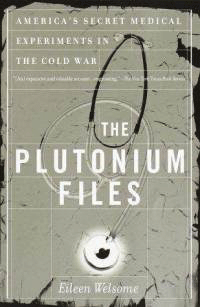 conducted on unwitting Americans, based on the Pulitzer Prize–winning series Welsome wrote for The Albuquerque Tribune.
From 1945 to 1947, 18 people were injected with plutonium by Manhattan project doctors. This experiment was under the supervision of Harold Hodge.[4] Other experiments directed by the United States Atomic Energy Commission and the Manhattan Project continued into the 1970s. The Plutonium Files chronicles the lives of the subjects of the secret program by naming each person involved and discussing the ethical and medical research conducted in secret by the scientists and doctors. Albert Stevens, the man who survived the highest known accumulated radiation dose in any human, 4-year-old Simeon Shaw sent from Australia to the U.S. for treatment, and Elmer Allen are some of the notable subjects of the Manhattan Project program led by Dr. Joseph Gilbert Hamilton.
In Nashville, pregnant women were given radioactive mixtures. In Cincinnati, some 200 patients were irradiated over a period of 15 years. In Chicago, 102 people received injections of strontium and caesium solutions. In Massachusetts, 57 developmentally disabled children were fed radioactive oatmeal in an experiment sponsored by MIT and the Quaker Oats Company. In none of these cases were the subjects informed about the nature of the procedures, and thus could not have provided informed consent.
In the book these stories are interwoven with details of more well-known radiation experiments and accidents. These include: U.S. soldiers deliberately exposed to nuclear bomb blasts; families who lived downwind from atomic tests; radiation exposure in the Marshall Islands; and the Japanese Lucky Dragon trawler caught in the fallout from a massive hydrogen bomb blast in 1954. The government covered up most of these radiation mishaps until 1993, when President Bill Clinton ordered a change of policy and federal agencies then made available records dealing with human radiation experiments. The resulting investigation was undertaken by the president’s Advisory Committee on Human Radiation Experiments, and it uncovered much of the material included in Welsome’s book. The committee issued a controversial 1995 report which said that “wrongs were committed” but it did not condemn those who perpetrated them. The final report came out on October 3, 1995, the same day as the verdict in the O.J. Simpson case, when much of the media’s attention was directed elsewhere.
Jonathan D. Moreno was a senior staff member of the committee. He wrote the 1999 book Undue Risk: Secret State Experiments on Humans, which covers some of the same ground as The Plutonium Files.
1 This Month
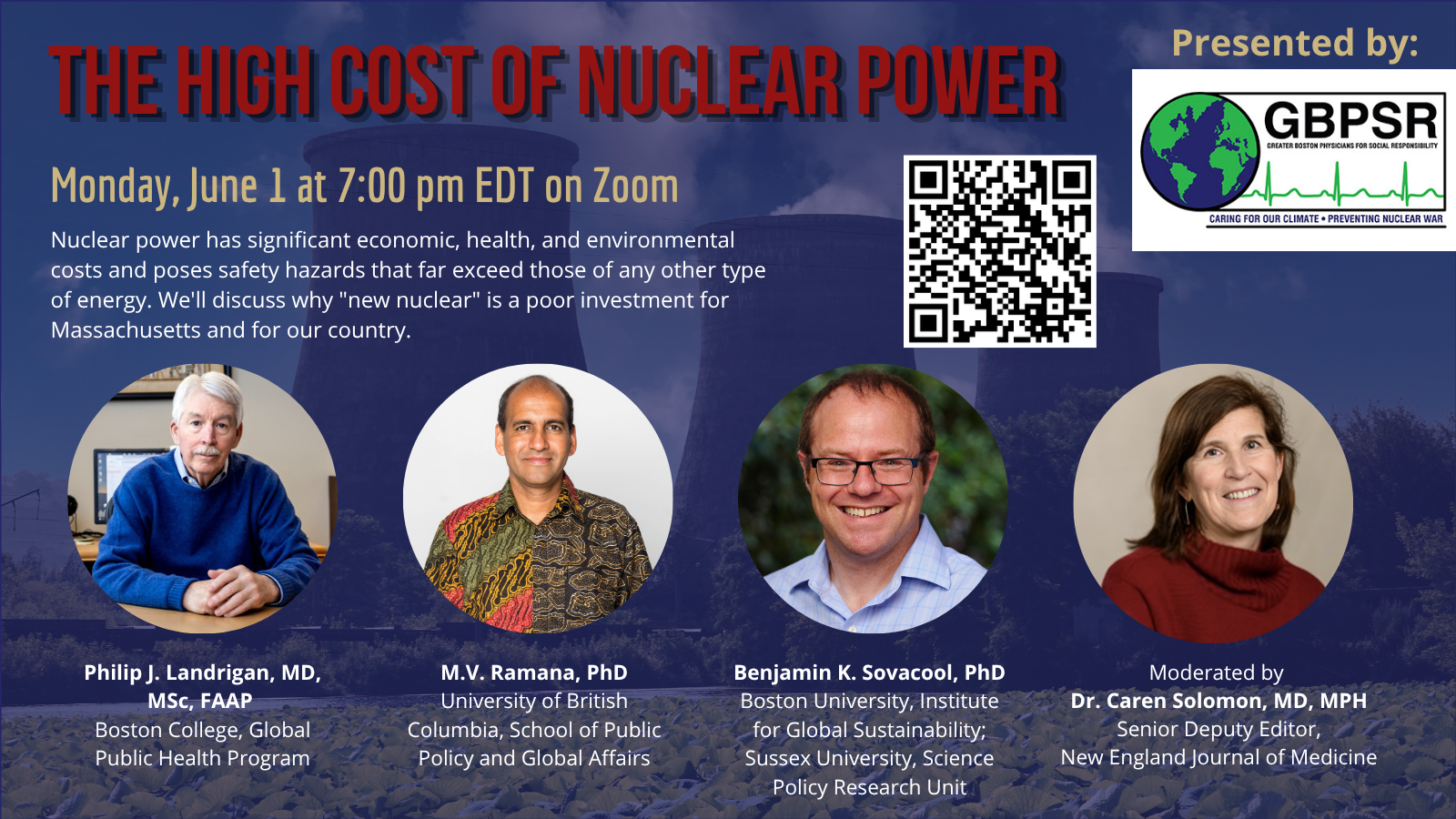
1 June Webinar – The High Cost of Nuclear Power – Register
6 June – WEBINAR- Get Inspired by Protests Against Military Bases!


Cuba Is Not a Failed State – It Is a Besieged State
PETITION: “Global Appeal to Endorse Palestinian Right of Return of Refugees”

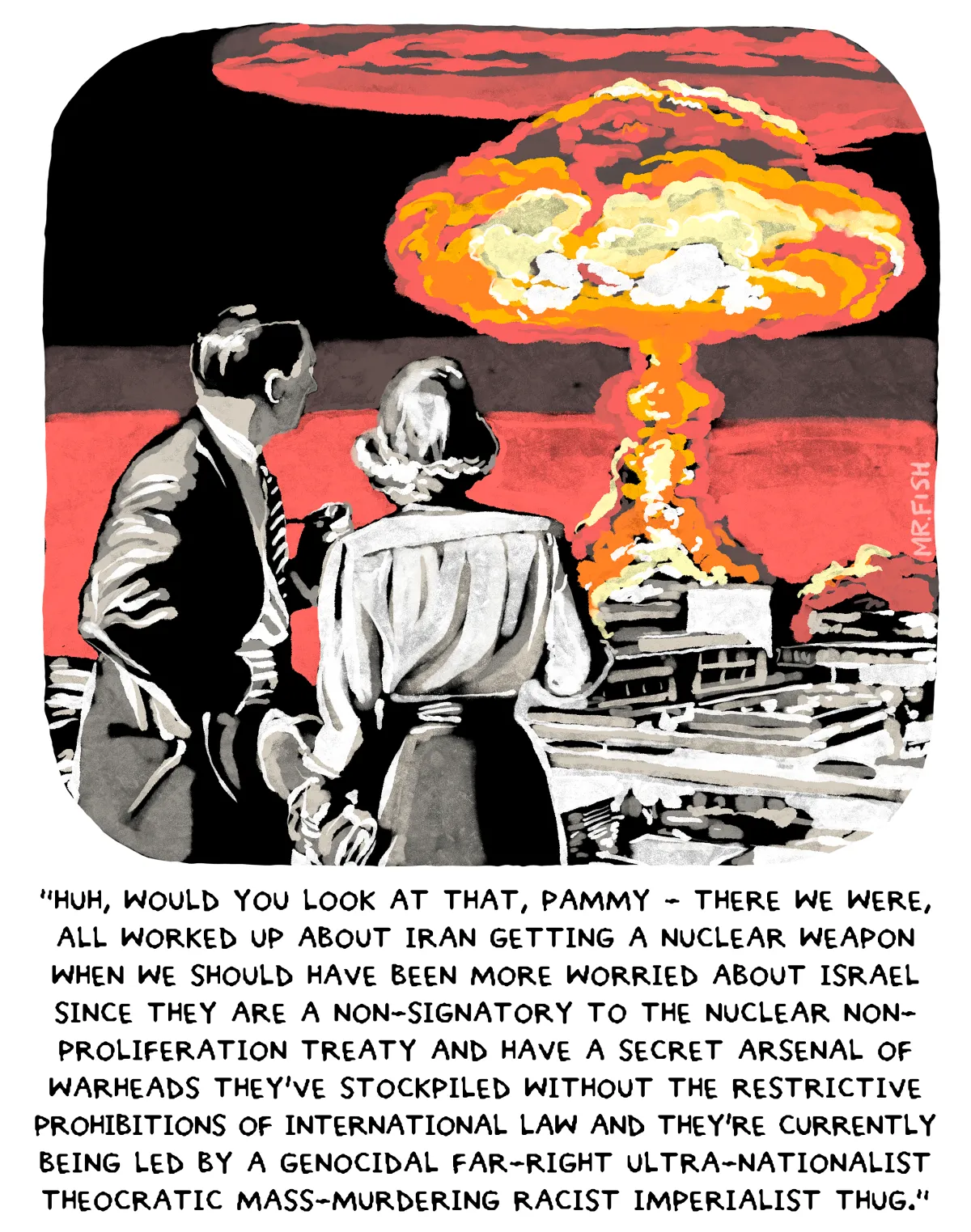

of the week– Nuclear Reactor Information Task Force
To see nuclear-related stories in greater depth and intensity – go to https://nuclearinformation.wordpress.com
-
Archives
- June 2026 (27)
- May 2026 (306)
- April 2026 (356)
- March 2026 (251)
- February 2026 (268)
- January 2026 (308)
- December 2025 (358)
- November 2025 (359)
- October 2025 (376)
- September 2025 (257)
- August 2025 (319)
- July 2025 (230)
-
Categories
- 1
- 1 NUCLEAR ISSUES
- business and costs
- climate change
- culture and arts
- ENERGY
- environment
- health
- history
- indigenous issues
- Legal
- marketing of nuclear
- media
- opposition to nuclear
- PERSONAL STORIES
- politics
- politics international
- Religion and ethics
- safety
- secrets,lies and civil liberties
- spinbuster
- technology
- Uranium
- wastes
- weapons and war
- Women
- 2 WORLD
- ACTION
- AFRICA
- Atrocities
- AUSTRALIA
- Christina's notes
- Christina's themes
- culture and arts
- Events
- Fuk 2022
- Fuk 2023
- Fukushima 2017
- Fukushima 2018
- fukushima 2019
- Fukushima 2020
- Fukushima 2021
- general
- global warming
- Humour (God we need it)
- Nuclear
- RARE EARTHS
- Reference
- resources – print
- Resources -audiovicual
- Weekly Newsletter
- World
- World Nuclear
- YouTube
-
RSS
Entries RSS
Comments RSS
 nuclear-news