A major update to the International Nuclear Workers Study (INWORKS) was undertaken to strengthen understanding of associations between low-dose exposure to penetrating forms of ionising radiation and mortality. Here, we report on associations between radiation dose and mortality due to haematological malignancies.
Methods
We assembled a cohort of 309 932 radiation-monitored workers (269 487 [87%] males and 40 445 [13%] females) employed for at least 1 year by a nuclear facility in France (60 697 workers), the UK (147 872 workers), and the USA (101 363 workers). Workers were individually monitored for external radiation exposure and followed-up from Jan 1, 1944, to Dec 31, 2016, accruing 10·72 million person-years of follow-up. Radiation-mortality associations were quantified in terms of the excess relative rate (ERR) per Gy of radiation dose to red bone marrow for leukaemia excluding chronic lymphocytic leukaemia (CLL), as well as subtypes of leukaemia, myelodysplastic syndromes, non-Hodgkin and Hodgkin lymphomas, and multiple myeloma. Estimates of association were obtained using Poisson regression methods.
Findings
The association between cumulative dose to red bone marrow, lagged 2 years, and leukaemia (excluding CLL) mortality was well described by a linear model (ERR per Gy 2·68, 90% CI 1·13 to 4·55, n=771) and was not modified by neutron exposure, internal contamination monitoring status, or period of hire. Positive associations were also observed for chronic myeloid leukaemia (9·57, 4·00 to 17·91, n=122) and myelodysplastic syndromes alone (3·19, 0·35 to 7·33, n=163) or combined with acute myeloid leukaemia (1·55, 0·05 to 3·42, n=598). No significant association was observed for acute lymphoblastic leukaemia (4·25, –4·19 to 19·32, n=49) or CLL (0·20, –1·81 to 2·21, n=242). A positive association was observed between radiation dose and multiple myeloma (1·62, 0·06 to 3·64, n=527) whereas minimal evidence of association was observed between radiation dose and non-Hodgkin lymphoma (0·27, –0·61 to 1·39, n=1146) or Hodgkin lymphoma (0·60, –3·64 to 4·83, n=122) mortality.
Interpretation
This study reports a positive association between protracted low dose exposure to ionising radiation and mortality due to some haematological malignancies. Given the relatively low doses typically accrued by workers in this study (16 mGy average cumulative red bone marrow dose) the radiation attributable absolute risk of leukaemia mortality in this population is low (one excess death in 10 000 workers over a 35-year period). These results can inform radiation protection standards and will provide input for discussions on the radiation protection system.
Funding
National Cancer Institute, Centers for Disease Control and Prevention, National Institute for Occupational Safety and Health, Institut de Radioprotection et de Sûreté Nucléaire, Orano, Electricité de France, UK Health Security Agency.
Translation
For the French translation of the abstract see Supplementary Materials section.
Although any technically accurate assessment of the physical consequences of the large-scale use of nuclear weapons instantly shows that “winning” a nuclear war has no meaning, the United States has strenuously emphasized the development of nuclear weapons technologies that could only make sense if their intended purpose is for fighting and winning nuclear wars.
The super-fuze is exactly that kind of technology.
The military is already upgrading warheads capable of fighting a war with both China and Russia simultaneously
The New York Timesreported last week that President Biden has approved a secret nuclear strategy refocusing on Chinese and Russian nuclear forces.
According to the paper, the new nuclear guidance “reorients America’s deterrent strategy” to meet “the need to deter Russia, the PRC (China) and North Korea simultaneously.”
However, Biden’s approval of this strategy is no more than a tacit acknowledgment of a two-decade-long U.S. technical program that has been more than just a “slight modernization” of weapons components, but a dramatic step towards the capability to fight and win nuclear wars with both China and Russia. In other words, there is nothing really “new” here at all, save the very public nature of the strategy’s acknowledgement.
In the face of all of this, Chinese and Russian leaders will have no choice but to implement countermeasures that further increase the already dangerously high readiness of their nuclear forces. This includes intensified worst-case planning that will increase the chances of nuclear responses to false warnings of attack.
The technical source of this vast improvement in U.S. nuclear firepower is a relatively new super fuse or “super fuze” that is already being fitted onto all U.S. strategic ballistic missiles. This fuse more than doubles the ability of the Trident II Submarine Launched Ballistic Missiles (SLBMs) carrying W-76 100kt warheads to destroy Chinese and Russian nuclear-tipped Intercontinental Ballistic Missiles (ICBMs) in hardened silos.
So, with the fuse upgrade of W-76s, the W-88 warheads are no longer needed for this job. Numerous upgraded W-76 warheads can instead be used for planned missions against silo-based missiles in Russia and China.
Although 890 W-76s are currently on Trident II submarines, the U.S. has 1600 in total, making the W-76 the most numerous warhead in the American arsenal today. In the eventuality that arms control limitations no longer constrain the size of U.S. nuclear forces, these warheads could readily be added to and carried by the already available at-sea Trident II ballistic missiles, each of which can carry up to 12 W-76 warheads.
With such an “uploading,” there would still be more than enough remaining Trident II ballistic missiles on submarines to carry all of the 400 available 475kt W-88 “heavy” warheads as well.
But let’s talk more about the secret super-fuze or Burst Height Compensating Fuse.
Figure 1 [above on original] illustrates how the super-fuze drastically increases the “killing power” of a ballistic missile delivered warhead…………………………………………………………………………..
The super-fuze achieves its fantastic increase in killing efficiency by measuring its altitude at a chosen time while it is still outside the atmosphere but relatively close to its target. …………………………………………………………………………….
The military implications of this “technically sweet” added capability to U.S. ballistic missile warheads has major implications for the war-fighting capabilities of the United States.
Although any technically accurate assessment of the physical consequences of the large-scale use of nuclear weapons instantly shows that “winning” a nuclear war has no meaning, the United States has strenuously emphasized the development of nuclear weapons technologies that could only make sense if their intended purpose is for fighting and winning nuclear wars.
The super-fuze is exactly that kind of technology.
………………………………….Couching the development and deployment of these kinds of preemptive strike technologies in misleading terms like “enhancing deterrence,” does not fool the military and political leadership of Russia and China. It instead leaves them no choice but to consider ways of deterring a dangerous U.S. preemption-oriented nuclear-weaponized nation that is constantly striving for better ways to “disarm” large parts of their nuclear forces.
It is no accident that Russian President Vladimir Putin himself approved the development and revealed the existence of the ultimate doomsday weapon — the Poseidon robot submarine, which can carry a 100Mt warhead into the harbors of U.S., European, and east Asian cities — capable of destroying urban areas to ranges beyond 50 miles (80 km) from its underwater detonation point.
The deployment of the Poseidon system by Russia serves as a warning to those who think they can fight and win nuclear wars by preemptively destroying significant parts of China and Russia’s nuclear retaliation forces. No matter how successful a planned preemptive nuclear attack might look like on paper, the reality of a nuclear war initiated with the delusional belief it could be won will be global destruction so great in scale that the very end of human civilization cannot be ruled out.
ASTANA – Semipalatinsk nuclear test site survivors recall the devastating human cost of the Soviet-run nuclear tests that they still bear in a documentary called “I Want to Live On: the Untold Stories of the Polygon” during the public screening in Astana on Aug. 28.
Directed by Alimzhan Akhmetov and Assel Akhmetova, the documentary is a compelling account of the aftermath of over 450 nuclear explosions at the former Semipalatinsk nuclear test site, based on the testimony of those present, most of whom have suffered various forms of genetic diseases.
The film also sheds light on the lesser-known consequences of nuclear testing, such as the high number of suicides, contaminated land and lakes where people raise livestock, inadequate government support, and personal decisions to forgo having children to avoid passing on genetic disorders.
According to Akhmetov, the personal reckonings of real people are more powerful in conveying the devastating consequences of the Semipalatinsk tragedy that persists generations later.
“The inspiration for this film came from the Japanese experience. When I was on a trip to New York in 2019, attending the [UN] First Committee, there was a civil society forum. One of the Japanese NGOs made a presentation that in the last ten years, they have brought in a thousand hibakusha [surviving victims of the atomic bombs]. Those people have spoken at UN venues and major American universities. Then, I realized that this is actually a strength. Often, when people work with documents and numbers, they tend to forget that there are individuals behind all of that,” said Akhmetov in a comment for this story.
“The purpose of this movie is to make you truly look into the eyes of those people so that it resonates with you on a personal level, not as something abstract. We created subtitles for this film so that not only Kazakhs but people around the world can connect with it,” he added.
Akhmetov said he was proud of this film because it made a small but meaningful impact on concrete people’s lives. One of the interviewed people, Dmitriy Vesselov, who has a genetic disorder known as Scheuthauer-Marie-Sainton syndrome, which results in the complete absence of collarbones, had not been granted disability status. After the film was released and brought to the attention of the relevant ministries, his condition was officially recognized.
“After eight long years of struggle, Dmitriy was finally recognized as a disabled person. So, I think we should continue raising awareness. Many people I met, even young people in Kazakhstan, I was very surprised and shocked to learn that the young generation thinks it was many years ago, and now it has no consequences,” said Akhmetov.
He also revealed plans to extend the film into a 40-minute documentary.
“Overall, the idea is to delve deeper into these stories and these heroes. We don’t plan to introduce new heroes, because we have already filmed a lot of material. In general, it is more of an amateur movie. Nevertheless, there is more to unfold in the stories of the heroes already in the film. So that viewers who watched the 20-minute version can watch the 40-minute version and gain a deeper understanding of their stories,” said Akhmetov.
Many molten salt reactor developers and proponents seem to have decided that the Molten Salt Reactor Experiment experience was so successful that all that remains is for it to be scaled up and deployed across the world. But is this really the case? A careful look suggests otherwise.
A few years after the Molten Salt Reactor Experiment was shut down, the Atomic Energy Commission terminated the entire molten salt reactor program, although it continued to fund the molten salt breeder reactor program until the end of fiscal year 1976.
Unlike other nuclear reactor designs that can claim multiple roots, the technology underlying molten salt reactors has a fairly clear origin: the Oak Ridge National Laboratory in Tennessee. All molten salt reactors are based, in one way or another, on the Molten Salt Reactor Experiment that operated at Oak Ridge from 1965 to 1969. That experimental reactor, in turn, was based on another experimental reactor, the Aircraft Reactor Experiment, that had operated a decade earlier at the same facility.
Among developers, the Molten Salt Reactor Experiment has a legendary status. For example, in 2015, an official from Terrapower, the nuclear venture funded in part by Bill Gates, noted that his company was “excited to celebrate and build upon” the experiment by designing a molten chloride fast reactor. His accompanying slide show reinforced the message with pictures of the Molten Salt Reactor Experiment assembly, the red hot heat exchanger, and Alvin Weinberg, the leader of Oak Ridge at that time, noting that the experiment had operated for 6,000 hours. Also in 2015, Terrestrial Energy’s David LeBlanc made “a kind of pilgrimage to Oak Ridge” to celebrate the 50th anniversary of the Molten Salt Reactor Experiment becoming critical.
Many molten salt reactor developers and proponents seem to have decided that the Molten Salt Reactor Experiment experience was so successful that all that remains is for it to be scaled up and deployed across the world. But is this really the case? A careful look suggests otherwise.
Molten salt reactors’ early history. Molten salt reactors go back to the US Air Force’s failed effort to build a nuclear-powered, long-range bomber aircraft. The Air Force spent more than $1 billion (over $7 billion in today’s dollars) between 1946 and 1961 on its Aircraft Nuclear Propulsion program. President John F. Kennedy, seeing how little had been achieved, told Congress on March 28, 1961 that the possibility of success in the foreseeable future was “still very remote” and recommended terminating the program.
As part of this effort, the Air Force made Oak Ridge National Laboratory responsible for building the Aircraft Reactor Experiment as part of its effort to fly a bomber on nuclear power. The 2.5 megawatt reactor operated for a mere nine days in November 1954. Some Oak Ridge officials considered running the reactor longer, but others grew concerned about overheating of one of the reactor components. That concern was legitimate; five days later, this component failed and “released radioactive gas into the reactor compartment.” But Oak Ridge National Lab officials were undeterred. For them, the experience showed “the feasibility of molten-salt fuel” and they “persuaded the Atomic Energy Commission to fund a study of molten-salt power reactors.” In 1958, the commission did just that, and thus began the Molten Salt Reactor Experiment.
To understand the interest in molten salt reactors, start by adopting a 1950s mindset. At the time, nuclear power was expected to expand rapidly, and some energy planners were worried that there would be insufficient uranium to fuel all the reactors to be built over upcoming decades. Alvin Weinberg, the head of Oak Ridge, expressed this eloquently when he prophesized that humanity would need to “burn the rocks” in what are called breeder reactors in order to live a “passably abundant life.” While the dominant types of reactors around the world (light water reactors and heavy water reactors) use only a small fraction of the uranium and thorium found in the Earth’s crust, breeder reactors can exploit a much larger fraction of these minerals.
The concern among nuclear power advocates about running out of uranium was also at the heart of another major nuclear development during this period: the liquid metal (sodium) cooled fast breeder reactor. These reactors were an effort to tap the energy present in the uranium-238 isotope that is not used in standard light and heavy water reactors by converting it into plutonium. Glenn Seaborg, who discovered the element and rose to become Chairman of the US Atomic Energy Commission from 1961 to 1971, predicted in 1970 that, by the year 2000, plutonium “can be expected to be a predominant energy source in our lives.” By contrast, the molten salt reactors were mostly intended as a pathway to use thorium, which was more plentiful than uranium, by converting it into uranium-233.
In retrospect, these expectations proved mistaken in three ways. First, energy demand has risen much more slowly, both in the United States and globally, than predicted. For example, in 1959, Weinberg assumed that the global population would stabilize at 7 billion and that it would need at least 1.9 billion, billion BTU per year. In comparison, in 2020, the world used a little over a quarter of this level of energy for nearly 8 billion people.
Second, nuclear energy proved much more expensive than envisioned in the heady “too cheap to meter” era. As nuclear power’s poor economics became apparent, reactor construction declined dramatically and has never achieved anywhere near the levels seen in the 1970s and 1980s………………………………………………………
Third, uranium proved to be more ubiquitous than anticipated, and global uranium resource estimates have continuously increased. ………………………………………..
…..the Molten Salt Reactor Experiment, Oak Ridge’s proposal for the next step in the molten salt reactor research process, was designed and constructed. As one of the Oak Ridge team leaders described it, “Design of the [Molten Salt Reactor Experiment] started in the summer of 1960, and construction started 18 months later, at the beginning of 1962. The reactor went critical in June 1965.”
In 1965, when the reactor started operating, it was fueled by a mixture of 150 kilograms of depleted uranium and 90 kilograms of weapons-grade, highly-enriched uranium (93 percent of uranium-235). After March 1968, the fuel was changed to one involving another weapons-usable material, uranium-233, which was derived from thorium. After this switch, the Molten Salt Reactor Experiment went critical in October 1968 and reached full power in January 1969. But at the end of that year, the experiment shut down. No more molten salt reactors have been built since.
The Molten Salt Reactor Experiment operation. Proponents of molten salt reactors have claimed for decades that the Molten Salt Reactor Experiment operated successfully. Indeed, they started making this claim even when it had barely started operating. In May 1966, for example, Paul Haubenreich, Oak Ridge National Laboratory associate director, cockily announced that the experiment “will live up to the name which we think goes with the initials M.S.R.E.—Mighty Smooth Running Experiment.” This, after listing many problems, including a basic one that was never resolved.
That basic problem was the reactor’s power level. The Molten Salt Reactor Experiment was designed to produce 10 megawatts (MW) of heat. The power level is given only in terms of heat production because its designers did not even try to generate electricity from the power produced in the reactor. Instead, the experiment just dissipated the heat produced to the surrounding air.
But this design power level was never reached. As Haubenreich described while pronouncing that the experiment was running “mighty smooth,” the operators “ran into some difficulties” and could only operate “at powers up to 5 MW.” …………………It turned out that the designers of the reactor had “miscalculated the heat transfer characteristics” of the system used for dissipating the heat produced into the atmosphere, and the reactor could not operate at its intended power level.
During its operational lifetime, the Molten Salt Reactor Experiment was shut down 225 times. Of these 225 interruptions, only 58 were planned………………….
One persistent problem was with the electrical system, which experienced “eleven important failures.”…………………………………….. unexpected failures and shutdowns ended only in December 1969, when the Molten Salt Reactor Experiment was shut down.
The patchy experience of the experiment was by no means unique. Many other reactor designs have been plagued by unreliable operations and frequent shutdowns, that in many cases only became worse when scaled up. Consider, for example, sodium cooled fast breeder reactors. France, the country most reliant on nuclear power, tried to commercialize this technology after operating pilot-scale and demonstration reactors. This “commercial” version was the Superphénix, which started operating in 1986, experienced a series of accidents, and was shut down in 1997. During this period, it generated less than 8 percent of the electrical energy of what it would have generated running at full power round-the-clock. In the United States, the first and only commercial sodium cooled breeder reactor, Fermi-1, suffered a disastrous meltdown in 1966 as a result of a series of failures that had been dismissed as not credible by reactor engineers. Likewise, high-temperature, gas-cooled reactors have historically performed poorly.
The Molten Salt Reactor Experiment aftermath.For Oak Ridge officials and other molten salt reactor proponents, these problems with the Molten Salt Reactor Experiment were not worthy of significant concern. They moved forward with plans to build a larger molten salt breeder reactor. (Remember that the ultimate goal was to use thorium to breed nuclear fuel.) But the experiment did identify major hurdles in the path of building reliable molten salt reactors.
Here’s a key concern: Materials used to manufacture molten-salt-reactor components must maintain their integrity in highly radioactive and corrosive environments at elevated temperatures. The corrosion is a result of the reactor’s nature, which involves the use of a fuel consisting of uranium mixed with the hot salts for which the reactor is named. As anyone living near a seashore knows, chemically corrosive salt water eats most metallic objects.
To deal with this problem, Oak Ridge developed a new alloy known as IN0R-8 or Hastelloy-N in the late 1950s. While Hastelloy-N did not get significantly corroded—at least during the four years of intermittent operations—it had two significant problems. First, the material had trouble managing stresses. It became brittle, for example. Second the material developed cracks on surfaces exposed to the fuel salt. Both of these could lead to the component failing.
These problems remain relevant. Even today, no material can perform satisfactorily in the high-radiation, high-temperature, and corrosive environment inside a molten salt reactor. In 2018, scientists at the Idaho National Laboratory conducted an extensive review of different materials and, in the end, could only recommend that “a systematic development program be initiated.” In other words, fifty years after the molten salt reactor was shut down, technical experts still have questions about materials development for a new molten salt reactor design.
A few years after the Molten Salt Reactor Experiment was shut down, the Atomic Energy Commission terminated the entire molten salt reactor program, although it continued to fund the molten salt breeder reactor program until the end of fiscal year 1976…………………………………………………………………………………………………………………………
The Atomic Energy Commission, for its part, justified its decision in a devastating report that listed a number of problems with the large molten salt reactor that Oak Ridge scientists had conceptualized. The list included problems with materials, some of which have been earlier described; the challenge of controlling the radioactive tritium gas that is produced in molten salt reactors; the many large components, such as steam generators, that woud have to be developed from scratch (as researchers had no experience with such components for a molten salt reactor); the difficulties associated with molten-salt-reactor maintenance because radioactive fission products would be dispersed throughout the reactor; some safety disadvantages (though these are balanced by pointing out some of the safety advantages); and problems with graphite, which is used in molten-salt-reactor designs to slow down neutrons, because it swells when subjected to the nuclear reactor’s high radiation doses.
Other institutions too questioned the idea. A 1975 Office of Technology Assessment report listed the pros and cons of maintaining support for the molten salt breeder reactor program. An important set of arguments listed there proved prescient: “the [molten salt breeder reactor] may never work, its economics would be doubtful even if it did, and the chances of needing it are small.” As a result, in the years after the Molten Salt Reactor Experiment was shut down, many arguments were advanced to abandon the molten salt route, including not throwing good money after bad.
The Molten Salt Reactor Experiment’s long difficult tail.………………………………………………………. The distribution of the numbers of papers indicates the challenge of dealing with the waste resulting from a small molten salt reactor.
Dealing with radioactive salt wastes involves at least two separate concerns. The first, ongoing problem is that managing the radioactive salts that contain the uranium isotopes and the fission products is difficult. In the 1990s, researchers discovered that uranium had migrated and settled in other parts of the facility, leading to the possibility of an accidental criticality.
The second challenge is that of securely storing the uranium-233 from the Molten Salt Reactor Experiment. Although the uranium-233 used in the Molten Salt Reactor Experiment is but a small part of the larger US stockpile of the substance, it occurs in chemical forms that are difficult to manage. Further, urarnium-233 is usable in nuclear weapons, and any loss of this material might lead to security concerns.
In all, the costs incurred so far have run into the hundreds of millions of dollars—dozens of times the cost of constructing the reactor itself. …………………………………………………………………………………
Molten salt reactors are a bad idea. The Molten Salt Reactor Experiment’s history is riddled with extensive problems, both during its operational lifetime and the half century thereafter. These problems were not accidental but a result of the many material challenges faced by the reactor itself………………………………………………………………..
Should molten salt reactors ever be constructed, they are unlikely to operate reliably. And if they are deployed, they would likely result in various safety and security risks. And they would produce several different waste streams, all of which would require extensive processing and would face disposal related challenges. Investing in molten salt reactors is not worth the cost or the effort.
they were facing a life-or-death decision – stay or go. The Russians had told them they could leave – but what would happen if there was no one to monitor the radiation and ensure its safety?
the choices they made saved the world from another Chernobyl disaster.
Even though he had one of the most challenging jobs in the world as the man in charge of the night-shift at the Chernobyl nuclear power station, nothing fazed Valentyn Heiko. Three-and-a-half decades after the disastrous meltdown in 1986, round-the-clock monitoring of the site in Ukraine continued for deadly radioactive fallout from its defunct reactors and facilities.
On March 1, 2022, Heiko wished staff via loudspeaker ‘peace of the spirit’. It was a brave and apt message in the circumstances – and a defiant one. Because the corridors around the control rooms of the closed – but still lethally contaminated – nuclear compound were being patrolled by machine-gun toting, trigger-happy Russian soldiers.
Following Vladimir Putin’s invasion of Ukraine six days previously, they had burst their way in and taken over the plant.
Back in 1986, a massive explosion in one of Chernobyl’s reactors had blasted about 300 tons of radioactive graphite into the air, sparking a worldwide emergency.
With the collapse of the Soviet Union five years later, the area became part of an independent Ukraine, whose nuclear specialists have since been undertaking the monumental task of containing all possible contamination.
The danger was far from over. Indeed, just a year before, engineers had detected worrying signs that fission had restarted in one of the supposedly defunct reactors, threatening another accident.
After Putin’s decision to invade, the quickest route to the capital, Kyiv, was to go through the wasteland of the Chernobyl exclusion zone. One of the Russian leader’s excuses for invading was his claim that Ukraine was secretly building a nuclear bomb there and enriching irradiated materials to turn into weapons of mass destruction.
On February 24, 2022 – the first day of the invasion – a column of armoured vehicles broke through the security perimeter and hauled down the Ukrainian flag.
Inside the administrative building, soldiers of the Ukrainian National Guard unit took up positions, ready to fight. Two Russian officers, general Sergei Burakov and colonel Andrei Frolenkov, announced that they were assuming control of the plant.
Hopelessly outnumbered, the 170 Ukrainian guards put down their weapons and became prisoners of war, while the plant’s 50 engineers and operators and 80 firefighters found themselves under occupation.
Suddenly, they were facing a life-or-death decision – stay or go. The Russians had told them they could leave – but what would happen if there was no one to monitor the radiation and ensure its safety?
They knew they had to stay. So, for weeks, they worked at gunpoint with no change of clothing, medication or hygienic supplies.
In effect, these men and women were hostages, stuck on an endless shift, uncertain if they would ever see their loved ones or their homes again. But the choices they made saved the world from another Chernobyl disaster.
Their foreman, Heiko, had to cooperate with the Russians but was determined to do so on his own terms. He came up with a daring plan – he would use his technical know-how to frighten them.
Calmly, he introduced himself to his captors: ‘I am the shift supervisor and represent the state of Ukraine.’ After Heiko had confirmed the identity of his Russian ‘guests’, Burakov and Frolenkov declared that the Chernobyl plant was now behind Russian lines.
Though a captive, Heiko laid down his ground rules. He told them that no matter how powerful the Russian military, at the nuclear plant they were not in charge.
They didn’t understand how the plant worked and, as such, any interference would risk nuclear disaster – and all their lives.
As one observer noted: ‘He made it clear to the occupiers that either they would behave decently or be up s**t creek. That is why they did not touch any workers.’
They agreed his terms. Operational control would remain in the hands of the staff, who would be free to move around as necessary and without interference.
The Russian soldiers were allowed in the administration building but would stay away from the obsolete reactor and spent nuclear fuel facilities, and arms would be prohibited in operational areas.
The Russians accepted that they had captured a dangerous site and, to survive, they would have to follow Heiko’s recommendations.
He even bamboozled them into believing that three reactors were still operational when, in fact, the last one had shut in 2000.
As the days of occupation continued, Heiko turned the screws even more, particularly after Putin hinted at the use of nuclear weapons. He told his captors that if the Kremlin used nuclear weapons against Ukraine, he would sabotage the plant and unleash Chernobyl radiation to kill the Russians.
‘I promise you,’ he spelt out, ‘that you will slowly and certainly die here, together with me. I have enough knowledge and skill to ensure that you will remain here with us forever.’
Despite Heiko’s master manipulation, his fellow Ukrainian staff were totally unprepared for the situation they found themselves in. They lived and worked in appalling conditions, jammed into tiny spaces, four to a room
The work was unrelenting. Under normal circumstances, they were to take a 24-hour rest after a 12-hour shift, but now a new shift began immediately after the previous one. ‘We worked almost round the clock, resting for just a few hours,’ remembered engineer Liudmyla Kozak. ‘We were walking around like ghosts.’
Exhausted and homesick, they felt hunted as they were continuously under surveillance. Some succumbed to depression or panic, feeling ‘trapped, stressed and desperate for relief’ in the words of an article in the Wall Street Journal.
………………………………………..Troops started searching for those ‘nuclear bomb’ laboratories imagined by Putin. All the plant’s buildings were checked, with no result. Then, Russian officers considered opening up the mounds of earth erected over the sites where radioactive debris had been buried after the meltdown in 1986.
Valerii Semenov, a senior engineer, told them they were mad as exposing radioactive debris would put everyone in danger of contamination. Faced with the prospect of digging their own radioactive graves, the Russians desisted. Instead, they fortified their military position by digging trenches.
When Semenov discovered sandbags used to protect firing positions had been sourced from contaminated earth, he exploded: ‘You’re bringing in radioactive dirt from outside. Are you out of your mind?’ He also found trenches dug in some of the most contaminated areas – including one where, in 1986, radiation had discoloured the pine trees ginger brown.
The fact was that morale among the 1,000 Russian troops occupying the plant was very low. They drank heavily, with up to half of their rubbish consisting of empty bottles. Fights were frequent. So was looting as they combed the offices for alcohol.
Semenov recalled that many of the Russians were not prepared for a long war. They had expected it to be over within days.
What happened next was arguably the most heroic episode of the whole Chernobyl saga. It was increasingly obvious that staff at the plant had had enough. Even the Russian commanders agreed, realising the exhaustion and resentment of the Ukrainian personnel might lead to an accident that would jeopardise the lives of the occupiers.
They proposed a change of shift, allowing those on duty ever since the occupation to go home, to be replaced by a crew from the nearby town of Slavutych. But this depended on finding experienced staff prepared to risk their freedom – and perhaps their lives – by going into Russian captivity.
Amazingly, there was no lack of volunteers. Forty-six men and women came forward, with two senior men, Volodymyr Falshovnyk and Serhii Makliuk, offering to lead the new shift. Makliuk recalled: ‘We were worried because we were going into the unknown. But our anxiety was less about how we would work at the plant and more what would happen to the families we were leaving behind.’
It was a complicated process getting the original shift out and the new one in, not least because it had to be done in stages so there would always be some staff left to monitor the place. On the 26th day of what had begun as a 12-hour shift, 50 workers were on their way home – 16 engineers and mechanics stayed, including Semenov.
The two shifts met on the side of a river and the exchange took place. ‘We had just seconds to embrace and shed tears,’ recalled a woman from Heiko’s shift.
Heiko considered the volunteers true heroes. ‘They were going into the unknown,’ he said later. ‘No one knew how it would end or how long they would be there.’
Heiko and his crew had spent 600 hours on duty at the occupied nuclear power plant. It was anyone’s guess how long the replacement shift would be there………………………………………………………….
the Russians locked Falshovnyk in his office and presented him with a document.
It was titled ‘Act of Acceptance and Transfer of Protection of the Chernobyl Atomic Station’ and stated the troops of the Russian Guard had provided ‘reliable protection and defence’ of the Chernobyl nuclear station, which they were now transferring back to the Ukrainians. Men carrying automatic rifles demanded that he and Makliuk sign the document or they would be arrested.
They were being asked to confirm that the Russians had behaved well but, faced with the threat of arrest, they signed.
And then, the Russians were gone. A security camera captured an image of one soldier leaving with a Russian flag trailing behind him like the low-hanging tail of a defeated dog.
The next day, April 3, those inside the plant were astonished to hear a voice on a loudspeaker coming from beyond the perimeter. ‘Good morning,’ it said. ‘We are the armed forces of Ukraine. Please let us in.’
And then a Ukrainian armoured personnel carrier and two trucks rolled into Chernobyl.
It really was over.
The Chernobyl staff got to work cleaning up. The extent of the Russian troops’ damage and looting was astounding.
Missing were some 1,500 meters for checking radiation levels, 698 computers and 344 vehicles, amounting to a total value of $135million (£102million).
The only thing the retreating Russian soldiers left behind was an increased level of radiation – up more than 40 times, almost certainly the result of digging trenches in the highly contaminated Red Forest.
There were unverified reports from inside Russia that one soldier had died, 26 had been admitted to hospital and 73 sent for treatment after exposure to radiation in the Chernobyl zone.
The Ukrainians believed that one reason they departed in such a hurry was in panic that so many of them were falling sick.
The Russian troops may have left Chernobyl, but there was every chance that Chernobyl would never leave them. And the threat of nuclear disaster remains very real elsewhere in Ukraine.
Zaporizhia, a nuclear plant in southern Ukraine and the largest power facility in Europe, remains under Russian control.
And last Saturday, following a drone strike nearby, the UN’s nuclear watchdog warned that the safety situation at the plant was ‘deteriorating’.
At Chernobyl, the brave actions of the plant workers prevented nuclear disaster, but we cannot always count on individual heroism to produce such endings in the future.
Unless the world acts to protect nuclear reactors from attack during wartime, instead of being a solution to the problem of climate change, nuclear power will solidify its reputation as the destroyer of worlds.
“Bread and games”(Panem et circenses) were the enforcement strategies in the Roman Empire to maintain power. “Cheap petrol, cheap electricity and football” are popular campaign strategies under a democracy, says Axel Mayer, Vice-President of the Trinational Nuclear Protection Association (TRAS).
In France, the nuclear industry is in decline and the nuclear company EDF is heavily in debt. At the same time, President Macron is once again promising cheap nuclear power and wants to have new small nuclear power plants built. A small part of the French nuclear industry’s financial problems is to be solved with EU money.
In this context, the fairy tale of cheap French nuclear power is happily spread in France and also in Germany and the use of nuclear energy is praised as the miracle weapon in the losing war against nature and the environment. However, the price of electricity in France is only apparently cheap.
According to a report of the supreme audit court in France, the research and development, as well as the construction of the French nuclear power plants, cost a total of 188 billion euros. Since in France the “civilian” and the military use of nuclear power cannot be separated, the sum is probably much higher. Retrofitting France’s outdated reactors will cost over 55 billion euros. Liberation magazinereports retrofitting costs of nearly 100 billion euros by 2030.
People of France are paying for expensive nuclear power with their taxes
According to a report by the French Ministry of Economy, the semi-state-owned EDF had debts of about 41 billion euros at the end of 2019, an amount that is expected to be nearly 57 billion euros by 2028. To avoid domestic political problems, EDF is not allowed to raise the price of electricity for political reasons. EDF liabilities are driving up France’s national debt massively. The people of France (and especially their grandchildren) are paying for the seemingly cheap, but in reality expensive nuclear power with their taxes.
This cost does not include the dismantling of the nuclear power plants or any costs of a severe accident. A serious nuclear accident would have devastating consequences in France. A government study estimates the cost at 430 billion euros.
Demolition costs of over 100 billion euros
In France, EDF operates 56 outdated reactors that are now becoming old and decrepit almost simultaneously, but the company has built up almost no reserves for decommissioning. In Germany, the government is very optimistic about a 47 billion euros cost for decommissioning and final storage. The decommissioning of the large number of French nuclear power plants could cost well over 100 billion euros as costs rise, if no savings are made on safety. There is a distinct possibility that the nuclear industry could bankrupt the French state even without a nuclear accident that could happen at any time.
A “European Pressurized Water Reactor” (EPR) has been under construction on France’s Atlantic coast in Flamanville since 2007. The flagship project was originally scheduled for completion in 2012 at a fixed price of 3.2 billion euros. Since then, the start of operation has been postponed again and again, and the Court of Auditors now puts the cost at over 19 billion euros. Whether the EPR can go online in 2024 is questionable. The model reactor will never work economically.
In countries with a functioning market, no new nuclear power plants are building
Swiss nuclear lobbyist and Axpo CEO Christoph Brand puts the kibosh on dreams of cheap nuclear power from new, small nuclear plants. “The production costs for the electricity supplied by new nuclear power plants are currently about twice as high as those of larger wind and solar plants,” Brand said. “No matter how one assesses the risks of nuclear power, it is simply not economical to rely on new nuclear plants,” he said in the pro-nuclear NZZ on Oct. 21, 2021.
In countries with a functioning market, no new nuclear power plants are being built. When in doubt, it always helps to look at EDF’s share price, which has fallen massively over the long term, to assess the market chances of the nuclear renaissance announced by President Macron.
“Bread and games” with artificially low nuclear electricity prices can work in election campaigns. Low-cost, risk-free electricity is generated today with photovoltaics and wind energy. (AM/hcn)
Many Climate ‘Solutions’ Are Dead Ends Or Niches & Should Be Ignored
Michael Barnard, Climate futurist advising multi-billion dollar funds and firms.
Money, power and influence. The low-carbon transformation that we have started is the path to immense amounts of money, power and influence. Non-solutions and even major problems are being pitched hard as climate wins. Nuclear energy, carbon capture, hydrogen for energy and synthetic fuels should be ignored by most policy makers and serious investors.
Let’s start with nuclear power. Up front, there are a lot of things to like about the technology. It’s low-carbon, low-pollution and safe. Personally, I’m pleased with every nuclear reactor that actually gets attached to the grid. If there weren’t alternatives and serious downsides, I would be all in on the power generation technology.
But there are serious problems for nuclear in the vast majority of countries in the world, and we have to power every country. Wind, solar, transmission and storage are viable in every country, hence their dominance in the short list of climate actions that will work.
Countries have to have some very specific conditions for success for nuclear generation build out, and almost none do in the 21st Century. They have to be at heightened risk of major conflict. They have to have a nuclear weapons strategic requirement, whether a program to build them as with the USA and France historically, or the ability to build them quickly should they become needed as with South Korea. They have to be a big, rich country.
Commercial nuclear generation has to be a national strategy. Federal purse strings have to open wide, and federal governments must have the ability to override local opposition and regulatory hurdles. The federal government has to satisfy 28 major requirements with the International Atomic Energy Agency and establish overlapping circles of physical and cyber defense on the full length of the nuclear fuel supply, use and waste chain.
A single technology and design has to be selected and required for every reactor to enable regulatory, technical and human processes to gain learning experience and more quickly deploy the technology. The nuclear design has to be large, typically gigawatt scale. And the deployment must run its course in 20 to 30 years so that the experienced teams don’t retire, losing their hard-won knowledge.
Every successful deployment of nuclear generation historically has had those characteristics. Without them, nuclear cost and schedule overruns are massive, and the time to approve and build a nuclear power plant is a decade or longer. As global megaproject expert Bent Flyvbjerg’s data set of over 16,000 projects greater than a billion dollars in cost shows, nuclear energy is close to the worst type for cost and schedule overruns, 23rd of 25 categories, with only the Olympics and nuclear waste repositories being worse.
Even then, nuclear power plants are inflexible and so only suitable for 40% or less of annual demand without running into significant challenges. France’s fleet is actually 13% of Europe’s electrical generation and the country trades terawatt hours in all directions annually. Without massive transmission in and out of the country, their cost of electricity and challenges with operations would multiply.
Jurisdictions that can’t commit to dozens of nuclear reactors at the national level and can’t enforce a single reactor design should ignore nuclear entirely.
China is a good natural experiment to consider regarding scaling of nuclear energy versus renewables. It’s had a national strategic nuclear generation program since the 1990s, and wind and solar programs since the mid-2000s. Despite its more centralized planning and authority, renewables have scaled vastly more quickly and are increasing exponentially, while the nuclear program peaked in 2018 and has been slower since.
If China can’t scale nuclear energy as rapidly as wind, solar, transmission and storage, no country can. Equivalent wind and solar generation can be built in a fifth the time for a third the cost with much greater budget and schedule certainty.
Small modular reactors are even worse. They lose the economies of physical size and won’t be able to build enough to achieve economies of manufacturing scale. They are unproven, and first of a kind projects are the highest risk. They require all of the same conditions for success as large scale nuclear. There is no reason to believe claims related to them.
Mechanical carbon capture and sequestration is mostly another subsidy for the fossil fuel industry. Globally, only oil and gas heavy countries are considering it as a reasonable carbon drawdown strategy, and that’s not because it is one. Looking around the world, the majority of countries are sensibly leaning into nature-based drawdown strategies because they scale and work……………………………………………………………….
Hydrogen for energy is another dead end. At present we manufacture about 120 million tons of it, and the process creates as much greenhouse gasses as the entire aviation industry globally. That must be cleaned up. ……………………………… any process which manufactures hydrogen requires a lot of energy
………………………………………. There are powerful and well-funded organizations and individuals attempting to bend our decarbonization journey to their ineffective technologies. They are slowing progress. They are working to create profits for themself at the expense of the planet. Many individuals are well meaning, but simply deluded about the benefits of their favored technology.
Ignore them. The climate crisis and the opportunity are both too great to waste time on clearly poor solutions.
This paper examines the effect of long-run exposure to low-dose radiation on cognitive performance. We focus on the fallout from the Chernobyl accident, which increased the level of ground radiation in large parts of Europe. To identify a causal effect, we exploit unexpected rainfall patterns in a critical time window after the disaster as well as the trajectory of the radioactive plume, which determine local fallout but have no plausible direct effect on test scores. Based on geo-coded survey data from Germany, we show that people exposed to higher radiation perform significantly worse in standardized cognitive tests 25 years later. An increase in initial exposure by one standard deviation reduces cognitive test scores by around 5% of a standard deviation.
1. Introduction
The last 40 years have seen a drastic increase in radiation exposure. Today, the average person in Europe and America receives about twice the annual dose of radiation compared with in 1980 (NCRP, 2009). This increase is almost entirely due to man-made sources of radiation, such as medical procedures, nuclear power and nuclear weapons. Procedures such as CT scans, X-rays, mammograms or radiotherapy expose patients to low doses of radiation, and their use has been steadily increasing over the past decades. Moreover, the fallout from nuclear disasters such as Chernobyl and Fukushima or a nuclear bomb can expose people thousands of miles from the epicenter.
Medical research shows that subclinical radiation can damage human cells, which has potential knock-on effects on health and cognition and that these effects may occur at all ages. The existing literature has mostly focused on the effect of in-utero exposure, documenting significant adverse effects of radiation exposure during pregnancy on education and labor market outcomes many years later (Almond et al., 2009, Heiervang et al., 2010, Black et al., 2019). However, there is little evidence on the long-term effects of exposure to low-dose radiation after birth. Documenting such effects is important, not least because of the number of potentially affected people: the number of people alive at any one point is substantially greater than the number of fetuses in the womb.
In this paper, we exploit plausibly exogenous variation of the Chernobyl fallout to study the impact of exposure to low-dose radiation on cognitive test scores 25 years after the disaster. We focus on Germany, which received a significant amount of fallout due to weather conditions in the aftermath of the disaster in 1986. Because of the long half-life of the radioactive matter, people who continuously lived in areas with higher initial fallout have been exposed to higher radiation levels for over 30 years. For people exposed after birth, there are two plausible biological channels through which radiation can affect cognitive test scores: a direct effect on the brain because radiation can damage brain cells, and an indirect effect through general health, which may lead to fatigue, thus reducing test performance.
Our dataset – the National Educational Panel Study (NEPS), a representative geo-coded survey – allows us to link fine-grained data on fallout levels in a person’s municipality of residence since 1986 to a battery of standardized cognitive tests done 25 years after the disaster. At the time of the disaster, over half of our sample were adolescents or adults, allowing us to estimate the long-run effect of exposure at these ages.
The central identification challenge is a potential correlation between the local amount of radiation and residential sorting. The local amount of radiation is driven by a combination of several factors, for example wind speed, rainfall, altitude or soil composition. Some of these factors may have also influenced residential sorting prior to 1986, thus potentially leading to omitted variable bias. ………………………………………………………………………
Our central finding is that people exposed to higher levels of radiation from 1986 onward performed significantly worse in cognitive tests 25 years later. A one-standard-deviation higher initial exposure in 1986 reduces test scores by around 5% of standard deviation. Over the course of 25 years, the additional radiation dose of a one-standard-deviation higher initial exposure is roughly equivalent to the dose from 6 chest X-rays or 1.65 mammograms, which indicates that the long-term effects of low-dose radiation can be non-trivial. An additional analysis shows that these effects are not driven by selective migration after the Chernobyl disaster.
This result feeds into two domains of the public debate on radiation. One is about the costs and benefits of nuclear power in many countries. While nuclear power offers the advantage of supplying vast amounts of energy at zero carbon emissions, it comes with the cost of potential disasters. In the last 35 years we have seen two major disasters. Given the proliferation of nuclear power along with the emergence of conflicts like the current war in Ukraine, it is possible that more nuclear disasters may follow. Our results, along with those in other studies, point to significant external costs of nuclear power generation and document an important effect of nuclear disasters on the population. Another public debate, more broadly, deals with exposure to man-made radiation. For example, today the average American receives twice the annual radiation dose compared to in 1980, which is mainly due to medical procedures such as X-rays, mammograms or CT scans (NCRP, 2009). Our results can inform the debate about the long-term consequences of this increase in radiation exposure. The radiation dose from medical procedures is similar to the additional radiation dose Germans in highly affected areas received after Chernobyl. And although these procedures offer high benefits for patients, our findings suggest that they come with a health cost due to a higher radiation exposure.
With this paper, we contribute to three strands of literature. First, our findings contribute to the literature on the effect of pollution on human capital. This literature has produced compelling results for two types of effects. One strand focuses on exposure during pregnancy or early childhood and documents adverse long-term effects of pollution. Another strand focuses on adults and estimates the short-run effect of fluctuations in pollution on outcomes such as productivity, test scores and well-being.1 Our study, in contrast, examines the long-run effects among people exposed after early childhood. These effects are important, not least because of the number of people affected. The cohorts in our sample represent around 24 million people, compared to 200,000 children who were in the womb at the time of Chernobyl. Even if the individual effect is smaller for people exposed after early childhood, our study shows that the environment can have adverse consequences for large parts of the population and, therefore, exposure after early childhood deserves more attention in the literature.
Second, this paper adds new evidence to the emerging literature on pollution and cognitive functioning……………………………………………………….
……………………., this paper contributes to the broader literature on the effects of low-dose radiation. Two recent reviews of the epidemiological literature by Pasqual et al. (2020) and Collett et al. (2020) conclude that there is significant evidence that exposure to low-dose radiation early in life has negative effects on health and cognitive performance.
……………………………….. our results point to even wider-reaching adverse effects of nuclear disasters. Germany is over 1200 km from Chernobyl, and our study shows that large parts of the population have been adversely affected.
2. Historical background and review of the medical literature
2.1. The Chernobyl disaster and its impact in Germany
2.1. The Chernobyl disaster and its impact in Germany
The Chernobyl nuclear disaster in 1986 is one of the two largest nuclear accidents in history. It occurred after a failed simulation of a power cut at a nuclear power plant in Chernobyl/Ukraine on April 26, 1986, which triggered an uncontrolled chain reaction and led to the explosion of the reactor. In the two weeks following the accident, several trillion Becquerel of radioactive matter were emitted from the reactor, stirred up into the atmosphere, and – through strong east winds – carried all over Europe.2 The most affected countries were Belarus, Ukraine as well as the European part of Russia, although other regions, such as Scandinavia, the Balkans, Austria and Germany also received considerable amounts of fallout. The only other accident with comparable levels of fallout was the Fukushima disaster in Japan in 2011 (Yasunari et al., 2011).
Post-Chernobyl radiation in Germany.
………………………………….From 1986 to 1989, the governments of West and East Germany rolled out a comprehensive program to measure radiation across the country. At over 3,000 temporary measuring points, gamma spectrometers measured the radiation of Cs137. Based on the decay of the isotopes, all measurements were backdated to May 1986.
………………………………………….Radiation exposure of the German population.
Humans can be exposed to radiation in three ways, namely through inhaling radioactive particles, ingesting contaminated foods, as well as external exposure, whereby radiation affects the body if a person is present in a place with a given level of radioactivity in the environment. Exposure to radiation through air and ground can be directly assigned to – and therefore be strongly correlated with – a person’s place of residence ……………………………………………………………………………………………………………………………..
Information about the nuclear disaster and reactions of the German public
……………………………………………………………………………………. 2.2. Effects of radiation on the human body
The effect of radiation on the human body is by no means limited to high-dose radiation, such as the one experienced by survivors of nuclear bombs or clean-up workers at the site of the Chernobyl reactor. The medical literature has shown that exposure to subclinical radiation – at doses most people are exposed to, for example due to background radiation, medical procedures, or the fallout from Chernobyl in large parts of Europe – can negatively affect cognition, physical health and well-being. Moreover, while the effects of subclinical radiation may be strongest during pregnancy and early childhood, radiation exposure can have adverse effects throughout a person’s life.
Plausible channels.
Radiation exposure can affect cognitive test scores through four types of channels:
1.A direct effect on cognition, as radiation can impair the functioning of brain cells.
2.An indirect effect through physical health; radiation can impair the functioning of organs and lead to greater fatigue, which in turn may negatively affect test scores.
3.An indirect effect through mental health; a review by Bromet et al. (2011) suggests that people’s worry about the long-term consequences of radiation for physical health may lower their well-being and lead to poor mental health.
4.Indirect effects through behavioral responses, such as internal migration or changes in life style. To the extent that these effects reflect avoidance behavior, they will dampen the negative biological effects.5
In the following, we summarize the evidence from two types of study: one based on observational studies with humans, the other based on experimental studies with mice and rats. While both arguably have their weaknesses – one is non-experimental, the other has limited external validity – together they show that an effect of radiation on cognitive test scores is biologically plausible.
Observational studies.
The effect of radiation on cognitive performance is an active field of research in radiobiology and medicine. Radiation affects the human body through ionization, a process that damages the DNA and can lead to the dysfunction or death of cells (Brenner et al., 2003). Until the 1970s the human brain was considered radio-resistant, that is, brain cells were assumed to be unaffected by radiation. This view changed when lasting cognitive impairments were found in cancer patients who underwent radiotherapy. Studies find cognitive impairments among 50%–90% of adult brain cancer patients who survive more than six months after radiotherapy. The cognitive impairment can manifest itself in decreased verbal and spatial memory, lower problem-solving ability and decreased attention, and is often accompanied by fatigue and changes in mood ……………………………………………….
Laboratory evidence on rats and mice.
The experimental evidence with rodents confirms the evidence found among human cancer patients. Rats who were treated with brain irradiation experience a reduction in cognitive ability, although the biological processes differ between young and old rats………………………………………
While these studies confirm that radiation can plausibly affect cognitive functioning across the life cycle, they are mostly based on once-off radiation treatments. In contrast, after Chernobyl, the German population was constantly exposed to higher ground radiation for many years. A recent experiment on mice by Kempf et al. (2016) is informative about the effect of regular exposure to low-dose radiation. Among mice who were exposed for 300 days, the researchers detected a decrease in cognitive functioning and a higher incidence of Alzheimer’s disease.
Impact on overall health……………………………………….
3. Data and descriptive statistics…………………………………………………..
3.1. The NEPS data
Our main data source is the NEPS, a rich representative dataset on educational trajectories in Germany. ………………………………………………………………………………………………….
3.2. Estimation sample
Our sample includes all survey participants who were born before Chernobyl. We exclude participants born after Chernobyl because the survey only sampled birth cohorts up to December 1986, leaving us with few participants who were born after Chernobyl. Moreover, because we are interested in the effect of post-natal exposure, excluding them ensures that our estimates are not confounded by exposure in utero, which operates through a different biological channel. ……………………………………………………………………………………………………………………………………..
In this paper, we have shown that radiation – even at subclinical doses – has negative long-term effects on cognitive performance………………………………………………………………………………………..
Declaration of Competing Interest
The authors declare that they have no known competing financial interests or personal relationships that could have appeared to influence the work reported in this paper.
It is estimated that more than 38,000 children were killed in the atomic bombings of Hiroshima and Nagasaki.
According to surveys by the city of Hiroshima, 73,622 children under 10 years of age were exposed to the bombing, of whom 7,907 had died by the end of 1945. Among older children and adolescents, the death toll was thought to be 15,543.
In Nagasaki, authorities estimated that 49,684 children under 10 were exposed to the bombing, of whom 6,349 had died by the end of 1945, with 8,724 older children and adolescents also counted among the dead.
These official estimates, however, do not include the many children who died years after the attacks from cancers and other radiation-related illnesses.
Hiroshima:
Prior to the atomic bombing of Hiroshima, around 23,500 babies and children were evacuated from the city due to fears of possible US air raids. Many went to live with relatives in the countryside, which was deemed safer.
But tens of thousands of children remained in the city on the morning of 6 August 1945, including 26,800 students mobilised to perform various tasks, such as creating firebreaks in the city’s centre – a measure aimed at limiting destruction in the event of an air raid.
Of the 8,400 students performing this particular task, around 6,300 were killed. Most were 12 to 14 years old, in junior high school. Hundreds of students who had been mobilised to perform other tasks across the city were also killed. The total death toll for mobilised students was around 7,200.
In the aftermath of the attack, school officials in Hiroshima made earnest efforts to determine which of their students had died and which had survived. The schools closest to the bomb’s hypocentre (ground zero) generally had the highest death tolls.
In 1951, the US government published a multi-volume report on the medical effects of atomic bombs, which included detailed casualty figures for schoolchildren in Hiroshima as of the end of October 1945.
The report grouped the students according to their distance from the hypocentre. For the first group – those less than one kilometre away – 2,579 of the 3,440 students, or roughly three in four, were confirmed dead. A few hundred more were missing but presumed dead.
“In the centre of [Hiroshima] were some 8,400 students from grades seven and eight who had been mobilised from all the high schools in the city to help clear fire lanes … nearly all of them were incinerated and were vaporised without a trace, and more died within days. In this way, my age group in the city was almost wiped out.”
– Setsuko Thurlow, atomic bomb survivor and disarmament advocate
Many of the students close to the hypocentre were outside at the time of the attack, completely unshielded from the bomb’s effects. They stood little chance of survival.
Of the “unshielded” schoolchildren within one kilometre of the hypocentre, 94 per cent were killed, according to the casualty figures published by the US government. For those between one and two kilometres, around 85 per cent were killed. Relatively few students were indoors at the time of the attack.
At some schools close to the hypocentre, there were no known survivors. For example, of the 174 students attending the First Prefectural Girls’ School on the morning of the attack, all 174 were killed.
Around 400 students from the Honkawa Elementary School, a three-storey concrete building just 410 metres from the hypocentre, were killed. One student, 11-year-old Imori Kiyoko, miraculously survived.
At the First Hiroshima Prefectural Junior High School, hundreds of severely burnt students dived into the school’s swimming pool to escape the unbearable heat of the fires engulfing the city and to ease their pain. They died in the water.
While detailed records were made of children attending school on the day of the bombing or those mobilised to perform various tasks across Hiroshima, less is known about the fate of the city’s many children who had not yet attained school age, including babies.
In total, around 340,000 to 350,000 people were in Hiroshima at the time of the bombing, of whom an estimated 140,000 were killed instantly or had died from their injuries by the end of 1945. In addition, thousands succumbed to radiation-related illnesses years later, adding to the complexity of calculating the overall death toll.
Suffice it to say, the number of children killed in Hiroshima – with a single atomic bomb that US officials code-named “Little Boy” – was staggering.
Nagasaki:
For Nagasaki, the population on the day of the atomic bombing (9 August 1945) was around 240,000 people, of whom an estimated 74,000 were killed instantly or had died from their injuries by the end of 1945.
Prior to the attack, approximately 17,000 children and elderly persons had been evacuated from the city. It is thought that a large proportion of these evacuees were children, but there is no official record. Despite the evacuations, tens of thousands of children were still in Nagasaki on the day of the bombing.
The bomb devastated the Urakami district, where Nagasaki’s main residential communities and schools were concentrated.
“A mother cradled her headless infant and wailed … Tiny, barefoot children squatted in the ruins or wandered past corpses, calling out for their mothers and fathers. One woman whose husband had died, and who would soon lose her four daughters and four-year-old son, came to understand that when one of her children stopped asking for water, it meant that she or he had died.”
From the Shiroyama Elementary School, close to the bomb’s hypocentre, over 1,400 students were killed in the attack; from Yamazato Elementary School, 1,300 students perished. Several other schools near ground zero also suffered high death tolls. In total, an estimated 5,500 students and teachers were killed.
As in Hiroshima, thousands of Nagasaki’s students had been mobilised to perform various tasks across the city, but a smaller proportion of them were outdoors at the time of the bombing. Still, many were killed, including 580 at one of the Mitsubishi factories close to the hypocentre.
Workers there expressed great distress that “many persons who were recognised as only very slightly injured at first gradually deteriorated in health and died” from acute radiation illness, and the “victims include many teenage students”.
Even among the mobilised students who were beyond the main zone of destruction – more than 1.5 kilometres from the hypocentre – approximately 680 were killed.
Several years after the attack, when US researchers began studying the impact of the Nagasaki bombing on children, they were able to identify just 134 surviving children who had been within one kilometre of the hypocentre. So many others had perished.
Dead bodies scattered over a playground
Fujio Tsujimoto, five years old, was at a school playground with his grandmother when they heard an aeroplane in the distance over Nagasaki.
I grabbed my grandmother by the hand and ran towards the shelter. “Enemy plane!” yelled the watchman on the roof of the school building as he struck the bell. “Look out!” People on the playground came running straight for the shelter. I was the first to plunge into the deepest part of the shelter. But at that moment – flash! – I was blown against the wall by the force of the explosion.
After a while, I peered out of the shelter. I found people scattered all over the playground. The ground was covered almost entirely with bodies. Most of them looked dead and lay still. Here and there, however, some were thrashing their legs or raising their arms. Those who were able to move came crawling into the shelter. Soon the shelter was crowded with the wounded. Around the school, all the town was on fire.
My brother and sisters were late coming into the shelter, so they were burnt and crying. Half an hour later my mother appeared at last. She was covered with blood. I will never forget how happy I was as I clung to my mother. We waited and waited for Father, but he never appeared.
Even those who had survived died in agony one after another. My younger sister died the next day. My mother, she also died the next day. And then my older brother. I thought I would die, too, because the people around me, lying beside each other in the shelter, were dying one by one. Yet, because my grandmother and I had been in the deepest part of the shelter, we apparently had not been exposed to [as much] radiation and in the end we were saved.
Among the victims of the nuclear attacks were people from outside Japan, including many who were brought to Japan from its colonised areas. This included as many as 70,000 Koreans – many of whom were forced labourers – and people from China and Taiwan. Some were children.
Lee Su-yong, from Korea, survived the attack on Hiroshima as a 15-year-old girl but sustained a permanent foot injury and developed uterine cancer and other illnesses later in life due to her exposure to radiation.
As we mourn the loss of all those killed at Hiroshima and Nagasaki by US atomic bombs, in August 1945, we cannot avoid the fact that we are closer than ever to nuclear war. The war on Ukraine is greatly increasing the risk. So too is NATO’s location of upgraded nuclear weapons across Europe — including Britain — and Russia’s siting of similar weapons in Belarus. Irresponsible talk suggesting that “tactical” nuclear weapons could be deployed on the battlefield — as if radiation can be constrained in a small area — makes nuclear use more likely.
And our own government is leading the charge on greater militarisation and is in denial about the dangers it is unleashing. This is a bad time for humanity — and for all forms of life on Earth. It’s time for us to stand up and say No: we refuse to be taken into nuclear Armageddon.
Help in raising awareness of the existential peril of nuclear weapons is coming from an unusual quarter — Hollywood. Many of us have seen the blockbuster, Oppenheimer. Many in the movement have their criticisms but my own feeling is that you cannot leave the film without being aware of the terror of nuclear weapons, and their world-destroying capacity.
I attended a screening hosted by London Region CND; it was sold out within hours, and followed by a dynamic audience discussion that lasted till 11pm. I recognised only two people in the audience. That’s the crowd we need to engage with — none of us just want to preach to the converted. But there is a particular flaw in the film I must raise, as we remember Hiroshima Day.
It was repeatedly suggested that dropping the bomb was necessary to end the second world war. Although there was eventually a quick aside that countered this, it could easily have been missed. So for the record, this is the reality of what happened.
Conventional wisdom, especially in the US, is that it was necessary to drop the bomb to bring about a speedy conclusion to the war and save lives. Even today many people believe that the bomb was necessary to bring about a Japanese surrender and to avoid the need for an invasion of Japan by the US, which might have cost hundreds of thousands of lives.
But extensive scholarly research in the US, using primary sources from the time, shows that this just wasn’t true. By the time the bomb was ready for use, Japan was ready to surrender. As General Dwight Eisenhower said, Japan was at that very moment seeking some way to surrender with minimum loss of face, and “it wasn’t necessary to hit them with that awful thing.”
Here’s what was said at the time by some of the key players:
It is my opinion that the use of this barbarous weapon at Hiroshima and Nagasaki was of no material assistance in our war against Japan. The Japanese were already defeated and ready to surrender because of the effective blockade and successful bombing with conventional weapons … In being the first to use it we had adopted an ethical standard common to the barbarians of the Dark Ages. I was not taught to make war in that fashion and wars cannot be won by destroying women and children. – Admiral William Leahy, President Truman’s chief of staff
Nor were the atomic bombs decisive. It has long been held in justification that they made unnecessary an invasion of the Japanese mainland and thus saved the resultant fighting and thousands and possibly hundreds of thousands of casualties on both sides. On few matters is the adverse evidence so strong. The bombs fell after the decision had been taken by the Japanese government to surrender. That the war had to be ended was agreed at a meeting of key members of the supreme war direction council with the emperor on 20 June 1945, a full six weeks before the devastation of Hiroshima. – Professor JK Galbraith, official US investigator, Japan 1945
It would be a mistake to suppose that the fate of Japan was settled by the atomic bomb. Her defeat was certain before the first bomb fell and was brought about by overwhelming maritime power. – Winston S Churchill, British wartime leader
So if Japan was ready to surrender, why were atomic bombs dropped on Hiroshima and Nagasaki? A significant factor in the decision to bomb was the US’s desire to establish its dominance in the region after the war. Those planning for the post-war situation believed that this required US occupation of Japan, enabling it to establish a permanent military presence, shape its political and economic system and dominate the Pacific region. But the US’s key strategic concern, above all, was the position of the Soviet Union in the post-war world.
Evidence suggests that the US wanted to demonstrate its unique military power — its possession of the atomic bomb — in order to gain political and diplomatic advantage over the Soviet Union in the post-war settlement in both Asia and Europe. So nothing to do with ending the war with Japan.
I leave the final word to Joseph Rotblat — the true hero of the Manhattan Project. Whatever qualms Oppenheimer may have felt after the event, as shown in the film, the fact is he pursued the bomb to the bitter end. Rotblat was a nuclear physicist from a Polish-Jewish family. He had seen the development of the atomic bomb as a necessary evil in the arms race to defeat Hitler, and went to work on the Manhattan Project. At the end of 1944, it was clear that Germany was not going to succeed in making an atom bomb. In these circumstances, Rotblat left the Manhattan Project. Others tried to alert politicians to the dangers ahead. But top politicians pressed for the rapid completion of the bomb.
As Rotblat himself later pointed out: “There is good reason to believe that the destruction of Hiroshima and Nagasaki was not so much the end of the second world war as the beginning of the cold war, the first step in a fateful chain of events, the start of an insane arms race that brought us very close to a nuclear holocaust and the destruction of civilisation.”
In memory of all those who died at Hiroshima and Nagasaki, and those who have suffered the consequences since, let us do our utmost to prevent the same catastrophe happening again; let us take action to prevent our politicians catapulting us into nuclear war — and the destruction of all life on this planet.
Kate Hudson has been General Secretary of Campaign for Nuclear Disarmament (CND) since September 2010. Prior to this she served as the organisation’s Chair from 2003. She is a leading anti-nuclear and anti-war campaigner nationally and internationally. This article was originally published by CND in August 2023.
During a research trip to Puerto Rico, ecologist James Porter took samples from underwater nuclear bomb target USS Killen, expecting to find evidence of radioactive matter – instead he found a link to cancer. Data revealed that the closer corals and marine life were to unexploded bombs from the World War II vessel and the surrounding target range, the higher the rates of carcinogenic materials.
“Unexploded bombs are in the ocean for a variety of reasons – some were duds that did not explode, others were dumped in the ocean as a means of disposal,” said Porter. “And we now know that these munitions are leaking cancer-causing materials and endangering sea life.”
Data has been gathered since 1999 on the eastern end of the Isla de Vieques, Puerto Rico – a land and sea area that was used as a naval gunnery and bombing range from 1943-2003. Research revealed that marine life including reef-building corals, feather duster worms and sea urchins closest to the bomb and bomb fragments had the highest levels of toxicity. In fact, carcinogenic materials were found in concentrations up to 100,000 times over established safe limits. This danger zone covered a span of up to two meters from the bomb and its fragments.
According to research conducted in Vieques, residents here have a 23% higher cancer rate than do Puerto Rican mainlanders. Porter said a future step will be “to determine the link from unexploded munitions to marine life to the dinner plate.”….. https://phys.org/news/2009-02-link-unexploded-munitions-oceans-cancer-causing.html
“Why Are We Worried? – about decommissioning The San Onofre nuclear power plant ?
Dr. EDWARDS RESPONSE
Good question. If nuclear power were just generating electricity and nothing else, it would be safe. But it also mass-produces deadly radioactive poisons that were never found in nature before the nuclear age began, just 85 years ago.
For instance, nuclear fuel can be safely handled before it goes into the reactor, but after it comes out, it is millions of times more radioactive — and it will kill any nearby human being in a matter of seconds by means of an enormous blast of gamma radiation.
What makes the used fuel suddenly so dangerous? Well, inside the fuel, there are literally hundreds of brand new varieties of radioactive elements that are created by the splitting of uranium atoms – for example, iodine-131, cesium-137, strontium-90. These are radioactive varieties of non-radioactive elements that exist in nature all around us. They are human made radioactive poisons They’re like evil twins.
For example, ordinary table salt has a little bit of iodine added to it. It’s not radioactive. The iodine goes to the thyroid gland and helps to prevent a terrible disfiguring disease called goiter. Well, nuclear plants produce radioactive iodine. It also goes to the thyroid gland and causes cancer. 6000 children in Belarus had to have their thyroid glands surgically removed because of radioactive iodine from the Chernobyl nuclear accident of 1986, in Ukraine.
Meanwhile, in northern England and Wales, for 30 years after the Chernobyl disaster, sheep farmers could not sell their meat for human consumption when it was contaminated with radioactive cesium. To this day, hunters in Germany and Austria who kill a wild boar cannot eat the meat because of radioactive cesium contamination from Chernobyl. It’s in the soil.
You know, everything is made up of atoms. The only difference is that a radioactive atom will explode. It’s called an “atomic disintegration”. Radioactive atoms are like little time bombs. If they explode inside you, they damage living cells, especially DNA molecules. When DNA is damaged, it may make things grow in an unnatural way. Radiation-damaged cells can and do develop into cancers of all kinds.
Meanwhile, in northern England and Wales, for 30 years after the Chernobyl disaster, sheep farmers could not sell their meat for human consumption when it was contaminated with radioactive cesium. To this day, hunters in Germany and Austria who kill a wild boar cannot eat the meat because of radioactive cesium contamination from Chernobyl. It’s in the soil.
You know, everything is made up of atoms. The only difference is that a radioactive atom will explode. It’s called an “atomic disintegration”. Radioactive atoms are like little time bombs. If they explode inside you, they damage living cells, especially DNA molecules. When DNA is damaged, it may make things grow in an unnatural way. Radiation-damaged cells can and do develop into cancers of all kinds.
So radioactive wastes remain dangerous for millions of years. They are the most toxic wastes ever produced by any industry, ever. These poisons are essentially indestructible. Countless billions of dollars are planned to be spent to keep these materials out of the food we eat, the water we drink, and the air we breathe. At Hanford, in Washington State, the radioactive clean-up is estimated to cost more than $300 billion according to the US General Accounting Office. By building more reactors, we are just adding to the burden.
In reality, the ultimate products of a nuclear reactor are radioactive wastes and plutonium which remain dangerous for millions of year. The electricity is just a little blip on the screen, a short-term benefit for just a few decades. The radioactive legacy lasts forever………………………………………………………………………………. ———–
It was early in the day, but already hot. As she wiped sweat from her brow, Chieko Kiriake searched for some shade. As she did so, there was a blinding light – it was like nothing the 15-year-old had ever experienced. It was 08:15 on 6 August 1945.
“It felt like the sun had fallen – and I grew dizzy,” she recalls.
The United States had just dropped an atomic bomb on Chieko’s home city of Hiroshima – the first time a nuclear weapon had ever been used in warfare. While Germany had surrendered in Europe, allied forces fighting in World War Two were still at war with Japan.
Chieko was a student, but like many older pupils, had been sent out to work in the factories during the war. She staggered to her school, carrying an injured friend on her back. Many of the students had been badly burnt. She rubbed old oil, found in the home economics classroom, onto their wounds.
“That was the only treatment we could give them. They died one after the next,” says Chieko.
“Us older students who survived were instructed by our teachers to dig a hole in the playground and I cremated [my classmates] with my own hands. I felt so awful for them.”
Chieko is now 94 years old. It is almost 80 years since the atomic bombs were dropped on Hiroshima and Nagasaki and time is running out for the surviving victims – known as hibakusha in Japan – to tell their stories.
Many have lived with health problems, lost loved ones and been discriminated against because of the atomic attack. Now, they are sharing their experiences for a BBC Two film, documenting the past so it can act as a warning for the future
After the sorrow, new life started to return to her city, says Chieko.
“People said the grass wouldn’t grow for 75 years,” she says, “but by the spring of the next year, the sparrows returned.”
In her lifetime, Chieko says she has been close to death many times but has come to believe she has been kept alive by the power of something great.
The majority of hibakusha alive today were children at the time of the bombings. As the hibakusha – which translates literally as “bomb-affected-people” – have grown older, global conflicts have intensified. To them, the risk of a nuclear escalation feels more real than ever.
“My body trembles and tears overflow,” says 86-year-old Michiko Kodama when she thinks about conflicts around the world today – such as the Russian invasion of Ukraine and the Israel-Gaza war.
“We must not allow the hell of the atomic bombing to be recreated. I feel a sense of crisis.”
Michiko is a vocal campaigner for nuclear disarmament and says she speaks out so the voices of those who have died can be heard – and the testimonies passed on to the next generations.
“I think it is important to hear first-hand accounts of hibakusha who experienced the direct bombing,” she says.
Michiko had been at school – aged seven – when the bomb was dropped on Hiroshima.
“Through the windows of my classroom, there was an intense light speeding towards us. It was yellow, orange, silver.”
She describes how the windows shattered and splintered across the classroom – the debris spraying everywhere “impaling the walls, desk, chairs”.
“The ceiling came crashing down. So I hid my body under the desk.”
After the blast, Michiko looked around the devastated room. In every direction she could see hands and legs trapped.
“I crawled from the classroom to the corridor and my friends were saying, ‘Help me’.”
When her father came to collect her, he carried her home on his back.
Black rain, “like mud”, fell from the sky, says Michiko. It was a mixture of radioactive material and residue from the explosion.
She has never been able to forget the journey home.
“It was a scene from hell,” says Michiko. “The people who were escaping towards us, most of their clothes had completely burned away and their flesh was melting.”
She recalls seeing one girl – all alone – about the same age as her. She was badly burnt.
“But her eyes were wide open,” says Michiko. “That girl’s eyes, they pierce me still. I can’t forget her. Even though 78 years have passed, she is seared into my mind and soul.”
Michiko wouldn’t be alive today if her family had remained in their old home. It was only 350m (0.21 miles) from the spot where the bomb exploded. About 20 days before, her family had moved house, just a few kilometres away – but that saved her life.
Estimates put the number of lost lives in Hiroshima, by the end of 1945, at about 140,000.
In Nagasaki, which was bombed by the US three days later, at least 74,000 were killed.
Sueichi Kido lived just 2km (1.24 miles) from the epicentre of the Nagasaki blast. Aged five at the time, he suffered burns to part of his face. His mother, who received more serious injuries, had protected him from the full impact of the blast.
“We hibakusha have never given up on our mission of preventing the creation of any more hibakusha,” says Sueichi, who is now 83 and recently travelled to New York to give a speech at the United Nations to warn of the dangers of nuclear weapons.
When he woke up after fainting from the impact of the blast, the first thing he remembers seeing was a red oil can. For years he thought it was that oil can that had caused the explosion and surrounding devastation.
His parents didn’t correct him, choosing to shield him from the fact it had been a nuclear attack – but whenever he mentioned it, they would cry. Not all injuries were instantly visible. In the weeks and months after the blast, many people in both cities began to show symptoms of radiation poisoning – and there were increased levels of leukaemia and cancer.
For years, survivors have faced discrimination in society, particularly when it came to finding a partner.
“‘We do not want hibakusha blood to enter our family line,’ I was told,” says Michiko.
But later, she did marry and had two children.
She lost her mother, father and brothers to cancer. Her daughter died from the disease in 2011.
“I feel lonely, angry and scared, and I wonder if it may be my turn next,” she says.
Another bomb survivor, Kiyomi Iguro, was 19 when the bomb struck Nagasaki. She describes marrying into a distant relative’s family and having a miscarriage – which her mother-in-law attributed to the atomic bomb.
“‘Your future is scary.’ That’s what she told me.”
Kiyomi says she was instructed not to tell her neighbours that she had experienced the atomic bomb.
Since being interviewed for the documentary, Kiyomi has sadly died.
But, until she was 98, she would visit the Peace Park in Nagasaki and ring the bell at 11:02 – the time the bomb hit the city – to wish for peace.
Sueichi went on to teach Japanese history at university. Knowing he was a hibakusha cast a shadow on his identity, he says. But then he realised he was not a normal human being and felt a duty to speak out to save humankind.
“A sense that I was a special person was born in me,” says Sueichi.
It is something the hibakusha all feel that they share – an enduring determination to ensure the past never becomes the present.
Atomic People will be broadcast on Wednesday 31 July on BBC Two and BBC iPlaye
U.S. support for Israel’s genocide against Palestine is rooted not only in campaign financing but other factors, including a rigid ideology stuck in the shadow of World War II, writes Joe Lauria.
America as ‘Savior,’ Israel as ‘Victim’
Updated to include quote from Jared Kushner and mention of U.S. defense contractors.
The world-historical crisis in Gaza might in the long-term bring about radical change in both the U.S. and Israel, but in the interim the greatest crimes the two nations have jointly taken part in has stiffened their defenses against unprecedented criticism.
The fear of blasting Israel has been breached. The taboo broken. Tel Aviv and Washington have never faced this before. As both are settler nations, having wiped out natives across the land, they are circling their wagons on a new frontier. They can only respond with the most profound denial and viciousness.
Israeli Prime Minister Benjamin Netanyahu, who addressed a joint-session of Congress on Wednesday as the subject of a requested arrest warrant at the International Criminal Court, has demanded the United States shield Israel from criticism while continuing to arm and support its genocide — and the U.S. has answered his call.
When the Biden administration withheld a symbolic shipment of weapons to Israel, Netanyahu counted on Congress to draft a law that would withhold funding for the State Dept. and the Pentagon if President Joe Biden did not give Netanyahu the weapons he needs to “finish the job” in Gaza.
Biden’s withholding of the shipment was designed to fool U.S. voters critical of his Gaza policy. But the assault on Rafah — despite Biden’s supposed red line — continues, and so will unconditional U.S. support for Israel. The question is why.
Why will U.S. politicians risk losing elections to continue supporting the most unimaginable crimes? The answer lies beyond elections and individual politicians.
Continued support for Israel in the midst of genocide threatens the very legitimacy of U.S. post-war rule as the world turns increasingly against the U.S. and Israel.
Despite this, what makes U.S. leaders so enthralled to a foreign nation and leader who has angered several U.S. presidents?
For instance, why did U.S. leaders, essentially on the say-so of that foreign leader, turn against their own university students on U.S. soil peacefully protesting both Israel’s genocide and Washington’s complicity in it?
In a video address to America delivered April 24 in his American-accented English, Netanyahu ordered that anti-genocide protests on U.S. campuses be stopped. And they have been. It is worth quoting his entire remarks. He said:
“What’s happening on American college campuses is horrific. Anti-semitic mobs have taken over leading universities. They call for the annihilation of Israel. They attack Jewish students. They attack Jewish faculty.
This is reminiscent of what happened in German universities in the 1930s. It is unconscionable. It has to be stopped. It has to be condemned and condemned unequivocally.
But that’s not what happened. The response of several university presidents was shameful. Now fortunately, state, local, federal officials, many of them have responded differently but there has to be more. More has to be done.
It has to be done not only because they attack Israel, that’s bad enough. Not only because they want to kill Jews wherever they are. That’s bad enough. It’s also, when you listen to them, it’s also because they say, not only death to Israel, death to the Jews, but death to America.
And this tells us that there is an anti-semitic surge here that has terrible consequences. We see this exponential rise of anti-semitism throughout America and throughout Western societies as Israel tries to defend itself against genocidal terrorists who hide behind civilians.
Yet it is Israel that is falsely accused of genocide. Israel that is falsely accused of starvation and all sundry war crimes. It’s all one big libel. But that’s not new.
We have seen in history that anti-Semitic attacks were always preceded by vilification and slander. Lies that were cast against the Jewish people that are unbelievable, yet people believe them.
And what is important now, is for all of us, all of us who are interested and cherish our values and our civilization to stand up together and to say: enough is enough.
We have to stop anti-Semitism because anti-Semitism is the canary in the coal mine. It always precedes larger conflagrations that engulf the entire world.
So I ask all of you, Jews and non-Jews alike, who concerned with our common future and our common values, to do one thing: Stand up, speak up, be counted. Stop anti-Semitism now.”
Brazen
Netanyahu uttered a dozen lies in that 339-word message, which got 18.4 million views on X. There are five lies in the first five sentences alone:
1). the students are not “anti-semitic mobs” but protestors, many Jews, against genocide; 2.) they are calling for a free and independent Palestine, not the “annihilation” of Israel; 3.) they are not attacking Jewish students, but Israel’s war; 4). they are not attacking Jewish faculty, unless calling out Israel’s crimes is considered an attack on Jews; and 5). Jews were banned from German universities in the 1930s, making such a comparison to the U.S. today a ludicrous lie.
And what exactly does Netanyahu mean by the “annihilation” of Israel, a phrase he repeatedly utters?
If Israel granted full citizenship rights to Palestinians in Israel, Gaza and the West Bank, would that mean the “annihilation” of Israel, or the annihilation of apartheid in Israel? The real annihilation going on is that of Gaza by Israel.
More outrageous was Netanyahu’s lie that American student protestors “want to kill Jews wherever they are” and want “death” to Israel and America. He lies about a “surge” of anti-Semitism. In a clinical case of projection, Netanyahu said Israel is “falsely accused of genocide” of “starvation” and of “all sundry war crimes.”
In Lock-Step
Instead of outrage at this litany of obvious falsehoods, U.S. officials and media echoed Netanyahu’s words. The White House, Congress, newspapers, universities and police responded in lock-step, criminalizing students in their own their country for opposing an active genocide.
At the Capitol for Holocaust Remembrance Day on May 7, Biden framed the Oct. 7 attack as purely motivated by hatred of Jews, whitewashing the entire 80-year history of ethnic cleansing and occupation of Palestinians by Israel. ………………………………………………………………
……………………………………………….Obedient Media
The U.S. media has long told the story almost exclusively from Israel’s point of view. That has conditioned the U.S. public, and its political leaders, to give unconditional support for Israel and expect ostracization for criticizing it.
CNN’s chief political correspondent, Dana Bash, for instance, editorialized on a news show a week after Netanyahu spoke about U.S. campus protests that the students had “lost the plot.” …………………………………………………..
as Chicago University professor John Mearsheimer asks, was there an anti-Semitism problem on American campuses before Israel’s attack on Gaza?
Could Have Stopped It
Biden could have stopped the genocide immediately by withholding all weapons, military aid and diplomatic cover — which any decent man with such power would have done. Instead Biden engaged in public relations while the Gazan public was decimated, pretending to oppose Netanyahu and caring for Palestinian civilians.
Likewise Biden’s State Department tried to play it both ways: feinting to the American public that it was ready to criticize Israel for its mistreatment of civilians, while taking no action. The State Department even said it had evidence Israel may have broken international humanitarian law, but not enough to cut off arms shipments.
“The Biden administration believes that Israel has most likely violated international standards in failing to protect civilians in Gaza but has not found specific instances that would justify the withholding of military aid, the State Department told Congress … the report — which seemed at odds with itself in places — said the U.S. had no hard proof of Israeli violations.”
For Netanyahu’s and members of his cabinet who have expressed genocidal intent, this is the chance they have been waiting for, to fulfill Israeli Founding Father David Ben Gurion’s promise of a Greater Israel. The war to wipe out Hamas is a cover for wiping out the Palestinians from Gaza.
Whatever Biden or the State Department says, Israel will continue with its genocidal urban renewal plan in Gaza by bombing buildings with people still living in them with a view to replacing them with Israeli and Western-owned beachfront property (with an Israeli gas pipeline through it). It is evidently a plan Biden and Blinken, and presumably Kamala Harris and Donald Trump, agree with. (Trump’s son-in-law, Jared Kushner, whose family are close Netanyahu friends, said, ““Gaza’s waterfront property could be very valuable … It’s a little bit of an unfortunate situation there, but from Israel’s perspective I would do my best to move the people out and then clean it up.”)
According to the Jewish News Syndicate:
“Israeli National Security Minister Itamar Ben-Gvir declared at the event [on May 14] that the government should encourage voluntary emigration of Palestinians from the Strip.
‘Two things must be done: One, return to Gaza now, return home, return to our holy land. And two: encouraging emigration. To encourage the voluntary departure of the residents of Gaza. It’s moral, it’s rational, it’s right, it’s the truth. This is the Torah and this is the only way—yes, it is also humanitarian,’ the minister told attendees.”
In response to Biden’s “pause” in shipments, Netanyahu said Israel would fight with its “fingernails” if it needed to in Rafah.
Angered US Presidents
Several American presidents have in rare instances stood up to Israel. President Dwight D. Eisenhower threatened sanctions against Israel over the 1956 Suez Crisis to get Tel Aviv, Paris and London to end its military operation against Egypt and for Israel to withdraw from the Sinai Peninsula.
Ronald Reagan in 1983 withheld F16s to Israel until it withdrew from Lebanon. “While these forces are in the position of occupying another country that now has asked them to leave, we are forbidden by law to release those planes,’ he said.
And in 1992, George H.W. Bush threatened to withhold a $10 billion loan guarantee if Israel continued building settlements in the occupied West Bank and Gaza, according to The Washington Post. And yet Israel always seems to get its way.
In his review of Netanyahu’s memoir Bibi: My Story, As’ad AbuKhalil wrote last year in Consortium News:
“Netanyahu’s analysis of U.S.-Israeli relations is simple: no matter what Israel does, and no matter how many wars and invasions it launches, the ‘alliance with the U.S. will take care of itself.’ He correctly believes that U.S. presidents will stand by Israel no matter what … ” (p. 84).
Despite this, we learn from the book that a succession of U.S. presidents disliked Netanyahu but would not stand up to him as previous presidents had to earlier prime ministers………………………………………………………….
‘America Can Be Easily Moved’
Ultimate obedience to Netanyahu in the U.S. brings to mind a video of him speaking to an Israeli settler family in Hebrew in 2001 about how easy it is to manipulate the Americans.
He says, “With the U.S., I know how they are. America is a thing you can easily maneuver and move in the right direction. Even if they say something, so what? Eighty percent of Americans support us.”
About the Palestinians, Netanyahu says: “The main thing is, first of all, to strike them, not once but several times, so painfully, that the price they pay will be unbearable. So far the price-tag is not unbearable.”……………………………..
Why?
Why then do American politicians, universities and media slavishly follow whatever Israel demands? There is more than one answer:
1. Money: AIPAC’s campaign financing and defense contracts;
2. Lingering guilt over the holocaust and fear of being labeled an anti-semite;
3. A natural, historical connection between settler, colonial nations founded on ethnic cleansing and genocide;
4. Power-sharing in the Middle East with overlapping regional and international empires;
5. Israeli intelligence possessing kompromat on U.S. politicians.
6. Keeping a World War II ideology alive to justify global and local supremacy.
Money
The answer most often given to the question is campaign contributions for politicians, who want to avoid being “primaried” by Israel Lobby money. The American–Israel Public Affairs Committee (AIPAC) raises more than $100 million a year, which it spends on lobbying and campaign contributions to U.S. political candidates.
Universities are also dependent on wealthy donors, many who demand total loyalty to Israel, which goes a long way to explaining why U.S. universities asked police to break up peaceful, anti-genocide protests on their campus.
And of course American defense contractors stand to gain mightily by continued Israeli bombardment of Gaza.
But it isn’t only about money.
Holocaust
Western governments retain inherited guilt for their deplorable behavior during the Second World War regarding the Holocaust. Germany, naturally, is at the top of the list of the still guilty parties, and is the second largest arms supplier to Israel after the United States.
This residual guilt has created a condition in which the descendants of the victims are still immune to criticism 80 years later in an almost inexhaustible supply of sympathy that Israeli leaders clearly exploit. ……………………………………………………………………..
There is deep ignorance in America about the foundation of Israel, exploded by some Israeli historians, especially by Ilan Pappé, whose book, The Ethnic Cleansing of Palestine, documented the intent of Israel’s founders to drive more than 700,000 of the indigenous population off their land into neighboring countries, and killing hundreds of thousands more in an unbroken process now playing out in Gaza. ………………………………………..
“As early as 1937, Ben-Gurion wrote that the ‘boundaries of the Zionist aspirations are the concern of the Jewish people and no external factor will be able to limit them.’
Ben-Gurion also hoped for the expansion of ‘Zionist aspirations’ to Israel’s ‘biblical borders’ (which stretch all the way to Iraq). There is no mention of or reference to the Indigenous population in this vision.”………………………………………….
The launch of Israel and the Greater Israel project coincided with the beginning of the post-war U.S. global empire, which overlapped in the Middle East with Israel’s burgeoning regional empire. Israel and its regional ambitions became a natural footprint for U.S. dominance in the region: namely the subjugation of Arab peoples and rulers.
Thus for the continuance of U.S. empire and all the benefits it accrues to U.S. rulers in the face of growing worldwide opposition, it is natural for Washington to continue supporting Israeli expansionism — no matter the horrendous human cost.
Blackmail
One cannot easily dismiss talk of Israeli intelligence gathering blackmail dirt on American politicians to keep them in line beyond campaign bribes. According to Ari Ben-Menashe, a former Israeli military intelligence official, such blackmail is a part of Israeli tactics. For instance, he told Consortium News‘ CN Live! in 2020 that the child sex trafficker Jeffrey Epstein was collecting such kompromat on powerful Americans.
Mired in WWII
Part of the ideology driving the America-Israel dominance regionally and globally is mired in the shadow of the Second World War: the delusion that the U.S. is still the world’s savior and that Jews are still active victims of history. It’s as if 80 years have not passed.
Jews were certainly among the war’s greatest victims, but America was not the sole or even the chief savior, given the outsized role of the Soviet Union in destroying the Nazis.
After the war, the United States was left with troops around the globe, in areas of great natural resources in a devastated world, whose devastation didn’t touch the American mainland.
A worldwide empire was the result. U.S. leaders have been dedicated to expanding and maintaining it ever since by installing and propping up governments that serve U.S. economic and strategic interests and removing those that don’t. This is done through electoral interference, coups and invasions that have killed millions of innocent lives in Southeast Asia, the Middle East, Latin America and elsewhere.
To maintain a kind of moral veneer to justify America’s global marauding as “spreading democracy” a connection to the moral war against fascism needs to be maintained. So World War II is invoked constantly by American leaders when embarking on new overseas adventures. ……………………………………………
How cynical is it for descendants of survivors of the Second World War genocide to invoke the Holocaust to perpetrate a genocide of their own?
This confusion still clearly pervades Germany today. In their guilt over their genocide of the Jews and their determination never to let it happen again they are stuck in the World War II past and cannot accept that Israel can possibly be the perpetrators of genocide 80 years later.
So protests against Israeli actions in Germany are seen as protests against Jews and have to be stopped, as the police did in May at Humboldt University in Berlin in the very plaza where Josef Goebbels led the Nazi burning of books.
German police shut down an academic conference about Gaza that month in Berlin. In their misguided fervor to stop another genocide the Germans are supporting one, sending more arms to perpetrate the massacres in Gaza than any nation but the United States. …………………………………….. more https://consortiumnews.com/2024/07/24/netanyahu-commands-us-obeys/
From Hiroshima to Fukushima to You, Dale Dewar, 4 July 2024
“……………………………………………………………………………………………………. Humans have lived with natural radiation for thousands of years – has it caused damage?
There are two distinct examples of natural radiation causing cancer: radon, largely in basements, and skin cancers from cosmic rays.
Cosmic rays were discovered in 1912 by an Austrian physicist, Victor Hess. He went up in a balloon and measured the ionizing radiation as he ascended and found that it was three times higher at 5300 meters elevation than at ground. Others discovered that cosmic rays were largely made up of protons (89%) and alpha particles (10%).
Alpha particles are stopped by skin, beta particles pass just through the skin and x-rays and gamma rays pass completely through a human body. This would make x-ray and gamma rays seem to be the most dangerous as they leave a trail of ions in their passage but if the particles become internal (by eating or breathing) they are up to 20 times more dangerous.
When any of these particles or rays interact with anything including biological matter, they cause ions. Sometimes the damage can be repaired, sometimes it cannot, and the cell dies or replicates the damage. Sometimes the damage affects the very process of replication itself.
This is what happens when a tumour is formed. A cell “goes wild” and doesn’t know when to turn off its growth.
If radioactive dust is inspired or eaten, the release of radioactivity occurs in the body. If it is radium dust, for example, the release of radioactivity continues for as long as the tiny bit of radium is present or 16,400 years (the half-life of radium x 10). The skeletal remains of the “radium girls” will still be radioactive for 16 millennia!
In 1927, an American, Hermann Muller was able to show the effect of radiation (he used x-rays) on genetic material. He had no doubt that it produced mutations in succeeding generations and remained a staunch defender of radiation protection measures and was opposed to atmospheric nuclear tests[iv].
To answer the question, how dangerous is the radiation that we call “background” radiation, the radiation that we cannot avoid? Some European researchers compared the incidence of cancers in children who lived in areas with low background radiation (0.70 mSv) to those who lived in areas with higher background radiation (2.3 mSv). Every tumour marker studied was higher in the children with the higher background radiation.[v]
Why do we know so little about radiation’s danger to health?
The nuclear industry has a singular interest in keeping populations ignorant. It continues to market nuclear energy as “safe” when no nuclear power plant can be operated without release of radiation in the form of tritiated hydrogen gas. By the time that Japan has released all its tritiated water (from Fukushima) into the Pacific Ocean, there will be no “unexposed” population with which to compare cancer rates.
In 1962 Dr. John Gofman was recruited by the US Atomic Energy Commission to head a biomedical unit. He was told that “the AEC was on the hot seat because a series [of atmospheric atomic bomb tests] had clobbered the Utah milkshed[vi]with radioiodine. And they have been getting a lot of flak. They think that maybe if we had a biology group working with the weaponeers at Livermore[vii], such things could be averted.”
The recruitment came with a very generous budget – 3 million dollars (almost three trillion dollars in 2020 dollars). John surrounded himself with scientists and technicians along with an outstanding colleague and Nobel laureate, Arthur Tamplin.
His first task as the chair of the biomedical unit was to squash a research paper[viii] by Dr. Harold Knapp that concluded a one hundred fold increase in the amount of radiation received from fallout by the people who lived in the downwind areas. Gofman and five other experts reviewed the data, asked technical questions and concluded that the research was scientifically sound and ought to be published.
The Atomic Energy Commission (AEC) balked,” We’ve told these people [in the fallout zone] all along that it’s safe and we can’t change our story now.”
Gofman’s committee remained firm.
It was clear that Gofman was not a lapdog hireling. When his department could not support the “Plowshares Project”[ix], the use of atomic bombs for “good”, they became known as the “enemy within”. Gofman thought that they were being teased and it was all in fun but this was the beginning of his demise as a go-to person for the AEC.
In 1969, Dr. Ernest Sternglass published research papers claiming that up to three hundred thousand children might have died from radioactive fallout from atmospheric bomb testing. It received popular coverage in Esquire under the title “The Death of all Children”. John’s colleague Arthur Tamplin re-calculated the data, and his result was an estimation of four thousand. Unfortunately, the AEC was still deeply displeased. The only answer they wanted was zero, that is, no children affected.
The Atomic Energy Commission had been promoting a “safe threshold” of radiation below which no health effects could be detected. A safe threshold made it possible to expose servicemen to atomic bomb tests, for workers in nuclear power plants to receive yearly doses of radiation and for people living near nuclear power plants to receive regular discharges of radiation. Drs Gofman and Tamplin estimated that the cancer risk from radiation was twenty times as bad as the most pessimistic estimate previously made.[x] Not only did they conclude that the risk was high, they also concluded that there was no safe amount of radiation and that it could be assumed that there was some risk all the way down to zero.” They presented their research at the Institute for Electrical Electronic Engineers (IEEE) meeting in October, 1969. A month later, John was invited to give the same paper to hearings convened by Senator Muskie.
Their research was picked up by the Washington Press. Their bosses in the AEC made a decision and started rumors. John heard that he “didn’t care about cancer at all and that he was trying to undermine national defense”[xi]. (He had already resigned his directorship of the laboratory but remained as a research associate.) Dr. Tamplin’s research staff was fired.
When John was called before the Joint Committee on Atomic Energy, a Congressional committee, he and Arthur reviewed all the data they could find. They concluded that “as a matter of fact, we’d underestimated the hazard of radiation when we’d given the Muskie testimony”. They wrote fourteen more research papers. John’s main research was now into chromosomes and their response to radiation. He applied elsewhere for funding to continue, including the Cancer Society but research funding had dried up. The AEC restructured its biomedical unit; it had discovered that doctors and health researchers were hard to control.
At the same time, two scientists with the Union of Concerned Scientists revealed that AEC didn’t know if the cooling system for a type of reactor worked. The credibility held by the AEC became questioable.
The government abolished it and created two new agencies: ERDA (Energy Research and Development Agency) and NRC (Nuclear Regulatory Commission), the former to oversee research and the latter to regulate the industry.
Drs John Gofman, Arthur Tamblin, and Harold Knapp were harassed, ridiculed, and sidelined because their research showed that radiation affected health. The industry didn’t stop there. Drs. Linus Pauling, Alice Stewart, Ernest Sternglass and Hermann Muller suffered similar fates. The US desire for nuclear arms required nuclear power plants. Nuclear radiation had to be safe………………………………………………………………………………………………………………………… https://ionizingradiationandyou.blogspot.com/

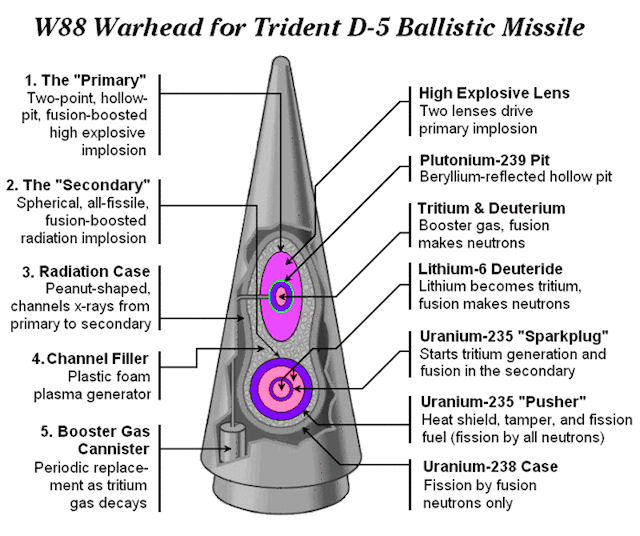





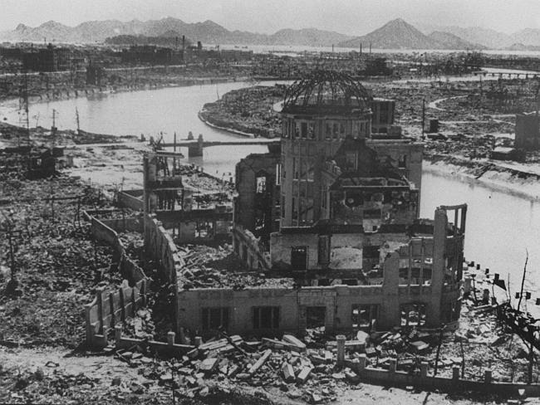
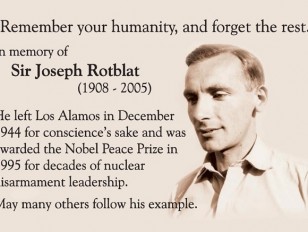


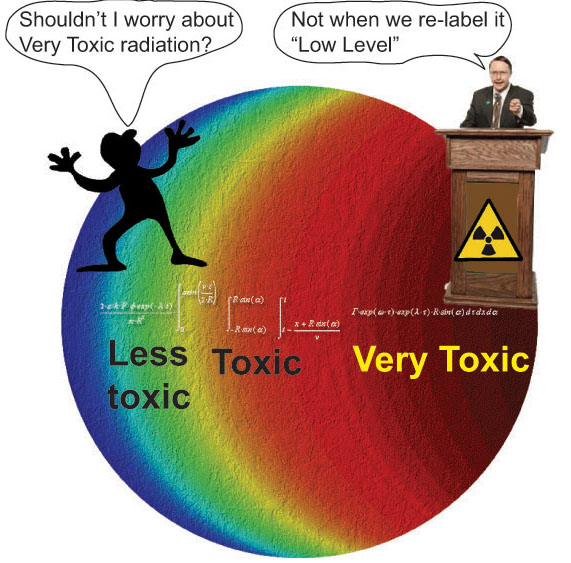





 nuclear-news