Relationship Between Urinary Uranium and Cardiac Geometry and Left Ventricular Function: The Strong Heart Study
Uranium is a potentially cardiotoxic, nonessential element commonly found
in drinking water throughout the United States. The purpose of this study
was to evaluate if urinary uranium concentrations were associated with
measures of cardiac geometry and function among American Indian young
adults from the Strong Heart Family Study.
Urinary uranium levels were
adversely associated with measures of cardiac geometry and LV function
among American Indian adults, including increases in pulse pressure and LV
hypertrophy.
These findings support the need to determine the potential
long-term subclinical and clinical cardiovascular effects of chronic
uranium exposure, and the need for future strategies to reduce exposure.
JACC Journals 3rd Dec 2024 https://www.jacc.org/doi/10.1016/j.jacadv.2024.101408
Cancer mortality in the USA and atmospheric nuclear weapons test fallout ratio. Identifying the principal origin of the global cancer epidemic

European Society of Medicine, Christopher Busby, Green Audit, Bideford, Devon, UK, Nov 29, 2024, https://esmed.org/MRA/mra/article/view/5859
Abstract
Recent advances in epidemiological analysis of the effects of radioactive contamination have raised questions over the security of current radiation risk models. One outstanding question relates to the effects of atmospheric nuclear weapons tests and the fallout which peaked in 1959-63.
Effects on cancer, a late genetic disease, are investigated here by employing a metric R which divides the rate in high fallout and low fallout States of the USA. An allocation of the two groups is based on rainfall and supported by measurements of Strontium-90 in baby teeth.
Results from comparing cancer mortality in Whites for High fallout States AR/KY/LA/MS and TN with low fallout States AZ/CA/ NM reveals a highly significant fallout cohort effect peaking in those born in 1955-1964 in all 10-year birth cohort age groups. The ratio was calculated for 10-year groups for deaths in 1969, 1979, 1989, 1999, 2009 and 2019.
Cancer mortality ratio effects increased with age. In the oldest 10-year group studied, 55-64, in 2019 the Excess Risk for those born in 1955-64 was 52% greater in the high fallout regions ERR =1.52; 95% CI 1.48, 1.57; p <0.00000000. For the 45-54 group in 2019 ERR = 1.42; 95% CI 1.35, 1.50; p < 0.00000000. For the 34-45 ERR = 1.27; 95% CI 1.15, 1.40; p<0.000001. Arguably the results identify the main cause of the cancer epidemic which began in the 1980s.
Decommissioning old nuclear sites to cost £130bn in blow to Miliband

The figures mean the cost of the UK’s nuclear clean-up alone is close to the total value of electricity produced by atomic power stations since the 1950s.
If the cost of building Britain’s 20-odd past and present nuclear power stations were included – around £30bn each in today’s money – the total cost of several hundred billion pounds would far exceed the value of the power produced, say experts.
Expense to taxpayer of cleaning up former power plants is higher than previously estimated, say auditors
Jonathan Leake, Telegraph, 29 Nov 24
Ed Miliband faces a bill of almost £130bn to clean up Britain’s old nuclear sites after estimated costs jumped.
It will cost £128.8bn to safely wind down old facilities, according to an investigation by the National Audit Office (NAO) – £23.5bn more than previously expected, after factoring in the cost of shutting eight power stations that are currently operational.
Seven nuclear stations are due to shut down in 2028 at which point operator EDF, France’s state-owned energy firm, will hand them back to the British Government for decommissioning.
Another station, Sizewell B, is expected to keep operating into the 2030s when it too will be decommissioned at taxpayer expense.
The NAO report, which looked at the overall operation of Mr Miliband’s Department for Energy Security and Net Zero (Desnz), said: “The current best estimate is that the eight existing sites will each cost £23.5bn to defuel and decommission.”
This is in addition to £105.3bn already set aside for dealing with other legacy projects, chiefly waste stockpiled at Sellafield in Cumbria.
Desnz oversees a Nuclear Liabilities Fund set up to save the money needed for decommissioning the eight stations, but the NAO said this had proven woefully inadequate.
It also warned that the final costs and taxpayer contributions could rise even higher.
The NAO said: “Costs could rise further, particularly if defuelling takes longer than planned … There is a risk that further taxpayer contributions may be required.”
However, the cost of decommissioning the UK’s remaining working nuclear stations is dwarfed by the amount which the NAO found was needed for dealing with legacy waste since the 1950s.
About 70pc of the costs relate to the Sellafield site in Cumbria, where thousands of tonnes of highly radioactive waste are stored in buildings and cooling ponds that are up to 70 years old – many considered extremely hazardous.
The figures mean the cost of the UK’s nuclear clean-up alone is close to the total value of electricity produced by atomic power stations since the 1950s.
Figures released by the Department of Energy and Climate Change show that since Britain’s first nuclear power station opened in 1956, they have generated 2.6bn megawatt hours (MWh) of electricity with a wholesale value of about £200bn at today’s prices.
If the cost of building Britain’s 20-odd past and present nuclear power stations were included – around £30bn each in today’s money – the total cost of several hundred billion pounds would far exceed the value of the power produced, say experts.
The NAO report also looked at the system of Contracts for Difference (CfD) – a financing method created by the UK to guarantee investors in wind farms, solar farms and nuclear power stations sufficient income.
Such schemes, it warned, were already set to cost consumers £89bn by the 2030s – but the final sums could be far higher because of unreliable estimates for the amount of power likely to be produced……………………… https://www.telegraph.co.uk/business/2024/11/29/decommissioning-old-nuclear-sites-to-cost-130bn-in-blow/
Donald Trump’s quick trip to absolute dictatorship

November 27, 2024: The AIM Network. Noel Wauchope, https://theaimn.com/donald-trumps-quick-trip-to-absolute-dictatorship/
Comparisons are odious, particularly between Donald Trump and Adolf Hitler. I must be plain from the start, that these individuals have had completely different aims and ideology.
The comparisons I’m making here are just about methods of gaining absolute power. And here, I think, there are parallels. And we can learn, from Hitler, how Trump could well go about attaining dictatorship status – way faster than people realise.
Trump and Hitler do have this in common – a reckless ruthlessness about destroying institutions and crossing boundaries. And both had earlier associations with street violence – Hitler with his Brown Shirts, and the Beer Hall Putsch, and Trump, less obviously, with the Proud Boys and the Capitol attack on January 6th 2021.
Hitler became dictator by very quickly using legitimate political mechanisms, and Trump will be able to do the same.
Hitler, moving towards purging his movement of the Brown Shirts, gained much public support, and business interests saw him as a force to stop street violence, and a protector and support of property and business. Meanwhile, largely thanks to the genius of Joseph Goebbels, Hitler’s propaganda machine flourished, exploiting the latest technology, – radio, and aircraft – “Hitler over Germany”. By 1933 the German economy was recovering, and Hitler’s success in elections did in fact drop, but his National Socialist Party still held a third of the seats in the Reichstag.
Here’s where it got interesting, and it all took just 7 and a half weeks.
30 January 1933 – Hitler was appointed Chancellor. The role of the Chancellor, while being symbolically like the role of the British Prime Minister, was in fact, quite limited. The real power was in the President. President von Hindenburg, bowing to pressure, was persuaded that Hitler could indeed be controlled, by giving him the status of Chancellor.
-Advertisement-
27 February 1933 – the German parliament (Reichstag) building burned down. Without going into the discussion on who caused the fire – it was the trigger for Hitler to persuade von Hindenburg to issue the Reichstag Fire Decree – Emergency Decree for the Protection of the German People, on 28 February, declaring a state of emergency, and abolishing most civil liberties, including the rights to speak, assemble, protest, and due process.
23 March 1933, Hitler proposed the Enabling Law to the Reichstag. This new law, passed on 24 March, gave Chancellor Hitler the power to rule by decree rather than passing laws through the Reichstag and the President. He was now effectively the dictator.
We could go on from there – listing Hitler’s dictatorial actions – National Socialists the only party permitted, trade unions disbanded. Any autonomous states lost those powers – officials appointed as state governors – and much, much more.
July 1934 – Hitler becomes “Fuehrer” – the finishing touch. With the death of President von Hindenburg, Hitler abolishes the now powerless position of “President”.
What has all this got to do with Trump?
Admittedly, the burning down of the Reichstag was a key factor, and we’re not expecting Capitol Hill to burn down. But the thing is that Hitler was at least a super-opportunist, even if the Nazis did not purposely cause this event. If it hadn’t been this event, probably something else could be triggered for a “state of emergency”. So, it would also be very beneficial to Trump- and save a lot of time, if some suitable “event” were to justify Trump, (also a super-opportunist) to declare emergency powers.
In the meantime, Trump is already working on removing the powers of the Department of Justice, and has various avenues open for him to take quick executive action. The President can issue executive orders. There are checks and balances, but these rely on the Supreme Court, and the Congress. So, Trump, with a majority in Congress has freedom – ‘I have an Article 2 where I have the right to do whatever I want as president’.
Trump’s plan for a radical reorganization of the executive branch starts with ending “the post-Watergate norm of Justice Department independence from White House political control.”
Trump will be very careful about which officials he appoints – due to constitutional “checks and balances”. He’d need to pick a compliant Acting Attorney General. The obstacles to be eliminated include an independent Justice Department, independent leadership in administrative agencies and an independent civil service. Trump’s plan would substitute loyalty to him for loyalty to the Constitution.” In 2020 Trump called for the “termination of … the Constitution.”
In the USA, theoretically, there are constraints on the President’s power. But, as in Germany in the 1930s, the leader has already arranged for the administration and every government department to be run by his sycophants.
Also, as in Hitler’s Germany, Trump has extraordinary influence over media, especially social media. Hitler had the brilliance of Goebbels to swamp the public with his lies and spin. Trump is almost one better – he does it all himself.
So – there are similarities between Hitler and Trump in the way to gain absolute power. There’s the opportunism, the clique of dedicated sycophants, the inspired exploitation of new technology, of new media, the reckless crossing of normal boundaries, and the background of violence, (with the potential for violence again).
The differences between them are striking. Hitler had a coherent almost mystical theory – involving war – to gain world domination for the master “Aryan” race, and to eliminate the Jews and other “Untermenschen”. To a large extent, Hitler’s close associates shared that dream, even if jostling for power between each other– Goebbels, Hess, Himmler, Goering, Speer, von Ribbentrop, Heydrich, Bormann. They more or less held to Hitler’s philosophy, and feared Hitler if they stepped out of line. Quite a few, though not all, stayed with Hitler until the very bitter end.
I can’t see Trump’s associates having that kind of dedication. From his previous presidency, there is a long list of former allies who turned against him.
Donald Trump seems to have no coherent theory or aim – other than to be super-powerful and rich, and take revenge on his opponents. He admires dictators, hates China, doesn’t like war, and fears nuclear bombs. If Trump has any philosophy at all, apart from him being at the top, it would be for a world economy dominated by American business. War is not Trump’s chosen method to win, but building up weaponry, and the threat of war – a sort of global bullying is his favoured method.
Trump’s top associates are currently dedicated to him – but are closely connected to billionaires, and not necessarily sharing philosophies. There’s Elon Musk, obsessed with the control of space, and the colonisation of Mars, John Bauer who devised the case for presidential absolute immunity from prosecution, Stephen Miller determinedly anti-immigrant, Fox News employee Pete Hegseth, Robert F. Kennedy Jr. sceptic of public health, Dave Weldon, anti-abortion doctor. What they do seem to have in common is big egos, and rather questionable qualifications for the jobs that they’ll be getting.
So, unlike Hitler, Trump doesn’t seem to have a team dedicated to a single-minded cause. In the short run, things might look good for the new Republican administration, and even for the American public. Dictatorships can do that, for a bit – as the workers found, in the early years of the Hitler administration, and of the Mussolini one in Italy. But it’s anybody’s guess how the new Trump dictatorship will finally work out.
Why iodine pills are not a silver bullet to protect against nuclear radiation

Sweden, Finland and Norway have advised citizens to keep iodine tablets at home in preparation for the worst-case scenario
By Isabella Bengoechea, November 21, 2024, https://inews.co.uk/news/world/iodine-pills-nuclear-radiation-3393119
As Russia continues to raise the spectre of nuclear war in its threats against the West over Ukraine, European countries are updating their guidelines for what citizens should do if the unthinkable happens.
Russia this week officially updated its nuclear doctrine to declare that any aggression against Russia supported by a nuclear state would be considered a joint attack, lowering the bar for use of nuclear weapons. Since Russia’s 2022 invasion of Ukraine there have also been fears of a nuclear accident, particularly regarding the Zaporizhzhia power plant in the south of the country, which is under Russian occupation.
Western politicians and intelligence chiefs have been at pains to emphasise that there is no evidence Vladimir Putin is preparing to use nuclear weapons and that Russia’s habitual threats are merely a bluff aimed at deterring the West from providing further military support to Ukraine.
However, countries near the Russian border are taking no chances, and some recently updated their advice to citizens in the event of a crisis – nuclear or otherwise.
Sweden, Norway, Denmark and Finland updated guidance telling citizens to ensure they have enough long-life food, water and medicine as well as a back-up power supply.
Iodine tablets are also among emergency supplies that citizens are advised to have at home in preparation for a crisis.
Last month Finland recommended that households buy a single dose in case of a nuclear emergency amid fears that the war in Ukraine could spiral, pharmacies began to run low on the pills.
How do iodine tablets work?
In the event of a nuclear catastrophe, taking iodine can help to protect against some types of radiation exposure.
During a such an event, radioactive iodine can be released into the environment. If absorbed into the body – whether through inhalation or through consuming contaminated food or water – radioactive iodine can accumulate in the thyroid gland in the neck and can cause thyroid cancer to develop. Children, young people and breastfeeding women are particularly at risk.
Taking iodine tablets can help to protect against this through iodine thyroid blocking. Potassium iodide (KI) tablets – a specific type of iodine – must be taken before or at the start of exposure to radioactive iodine. This works by saturating the thyroid with stable (non-radioactive) iodine, preventing the thyroid taking in any radioactive iodine.
Iodine tablets, which are commonly taken for iodine deficiency, and are fairly cheap and accessible. However, the pills are not recommended for people aged over 40 and they should not be taken ahead of time as a preventative measure, according to the World Health Organisation.
What are the limitations of iodine?
It should be noted that iodine is not a silver bullet and cannot protect against all kinds of radiation, only the risk of internal exposure to radioactive iodine.
Radioactive iodine can be released into the air in a nuclear event and come into contact with a person’s skin, which iodine tablets would do nothing to prevent. External radioactive iodine must be removed by washing the skin with warm water and soap.
Furthermore, in the event of a nuclear explosion, many different kinds of radiation and radioactive material that can harm humans would be released, such as electromagnetic rays and other particles.
These types of radiation in the environment are more difficult to protect against, and the best advice is for people to find shelter inside, preferably in a basement or in the middle of the building, away from closed doors and windows to reduce exposure to radiation.
Beyond one million years: The intrinsic radiation hazard of high-level nuclear wastes

This paper highlights the absence of quantitative estimates
regarding the intrinsic radiation hazard of high-level nuclear wastes,
namely, spent fuel (SF) and vitrified high-level wastes (VHLW), for periods
exceeding one million years.
Using available data, conducting scoping
calculations of radiation doses, and comparing the results to radiation
protection guidelines and natural background radiation, this paper shows
that high-level wastes cannot be safely handled or left unprotected
essentially indefinitely.
By quantitatively evaluating the dose rates of
unshielded SF and VHLW, this study identifies critical new insights, such
as the roles of the Np-237 decay chain; the eventual, long-term dominance
of the U-238 decay chain; and the interplay of three actinide decay chains,
including the significant role of Bi-214.
These findings fill a gap in the literature and emphasize the need for more detailed investigations in this as-yet-unexplored research area, which has a direct bearing on technical and societal decision-making for both waste disposal safety and the choice
of the back end of the nuclear fuel cycle.
Nukleonik 24th Sept 2024 http://www.nukleonika.pl/www/back/full/vol69_2024/v69n4p215f.pdf
Occupational exposure to radiation among health workers: Genome integrity and predictors of exposure

Mutation Research/Genetic Toxicology and Environmental Mutagenesis
Volume 893, January 2024, Hayal Çobanoğlu, Akın Çayır
Highlights
- •Significant increase of genomic instability biomarkers reflecting long term disease risk
- •Significant association between radiation exposure and NPB, and NBUD frequencies
- •Work-related parameters have the potential to explain increase of genomic instability
- •Higher risk of exposure in plain radiography field
Abstract
The current study aimed to investigate genomic instabilities in healthcare workers who may experience varying levels of radiation exposure through various radiological procedures. It also sought to determine if factors related to the work environment and dosimeter reading could effectively explain the observed genomic instabilities. Utilizing the cytokinesis-block micronucleus assay (CBMN) on peripheral blood lymphocytes, we assessed a spectrum of genomic aberrations, including nucleoplasmic bridge (NPB), nuclear budding (NBUD), micronucleus (MN) formation, and total DNA damage (TDD). The study uncovered a statistically significant increase in the occurrence of distinct DNA anomalies among radiology workers (with a significance level of P < 0.0001 for all measurements). Notably, parameters such as total working hours, average work duration, and time spent in projection radiography exhibited significant correlations with MN and TDD levels in these workers. The dosimeter readings demonstrated a positive correlation with the frequency of NPB and NBUD, indicating a substantial association between radiation exposure and these two genomic anomalies. Our multivariable models identified the time spent in projection radiography as a promising parameter for explaining the overall genomic instability observed in these professionals. Thus, while dosimeters alone may not fully explain elevated total DNA damage, intrinsic work environment factors hold potential in indicating exposure levels for these individuals, providing a complementary approach to monitoring.
Introduction
Ionizing and non-ionizing radiation constitute inevitable forms of environmental exposure, to which a substantial portion of the global population remains consistently subjected. Among those at heightened risk are individuals employed in radiology, who utilize radiation sources for both diagnostic and therapeutic procedures. More than 30 million medical radiology workers are exposed to low level of radiation worldwide [1], [2], which provides the opportunity to understand the health risks of chronic exposure to low-dose ionizing radiation (IR) [3].
It has been observed that there are increased risks for many cancer types, including skin, leukemia, breast, and thyroid, in medical radiology workers who started working before the 1950 s [4], [5], [6], [7], [8]. These results probably reflect higher occupational radiation exposure of medical radiology workers [5], [9]. Today, even if radiation exposure is less than in the past owing to technological advances and radiation safety measures [9], recent studies show that long-term exposure to low-dose IR may still be a significant health risk [10], [11], [12].
Introduction
Ionizing and non-ionizing radiation constitute inevitable forms of environmental exposure, to which a substantial portion of the global population remains consistently subjected. Among those at heightened risk are individuals employed in radiology, who utilize radiation sources for both diagnostic and therapeutic procedures. More than 30 million medical radiology workers are exposed to low level of radiation worldwide [1], [2], which provides the opportunity to understand the health risks of chronic exposure to low-dose ionizing radiation (IR) [3]. It has been observed that there are increased risks for many cancer types, including skin, leukemia, breast, and thyroid, in medical radiology workers who started working before the 1950 s [4], [5], [6], [7], [8]. These results probably reflect higher occupational radiation exposure of medical radiology workers [5], [9]. Today, even if radiation exposure is less than in the past owing to technological advances and radiation safety measures [9], recent studies show that long-term exposure to low-dose IR may still be a significant health risk [10], [11], [12].
Despite the efforts to minimize radiation exposure, radiation-exposed health workers may frequently encounter low levels of ionizing radiation due to various occupational factors, including excessive work hours, inadequate shielding in their work environment, a high volume of daily imaging procedures, and failure to employ personal protective equipment during imaging activities. Although traditional methods such as physical dosimeters and blood-based clinical assessments are routinely used to monitor worker health, these approaches possess limitations when it comes to assessing the long-term effects of low-dose radiation exposure. Consequently, it is imperative to implement more robust biomarkers to routinely monitor radiology workers………………………………………………………………………………………………………………………………… more Link: https://www.sciencedirect.com/science/article/abs/pii/S1383571824000020
Israeli Scholar Lays Out ‘True Brutality’ of Ethnic Cleansing Now Underway in Gaza
“Such dehumanization cannot help but trigger our associations with scenes depicting the Nazis loading Jews into cattle cars.”
Jake Johnson, Nov 01, 2024, https://www.commondreams.org/news/israeli-scholar-northern-gaza
Much alarm has been raised over the so-called “Generals’ Plan,” an ethnic cleansing proposal for northern Gaza that has reportedly garnered attention in the highest reaches of the Israeli government.
But Israeli scholar Idan Landau argued in a column published in English by +972 Magazine on Friday that what the Israeli military is actually doing in northern Gaza “is even more appalling” than the plan outlined by a group of retired generals. Landau argued that focus on the details of the Generals’ Plan has served to obscure the “true brutality” of Israel’s deadly operations in northern Gaza, which has been rendered a hellscape of death and destruction by the military assault and siege.
Landau, a professor of linguistics at Tel Aviv University, opened his column—first published in Hebrew on his blog—by pointing to two photos: one showing a celebratory event at a camp built by an Israeli settler organization just outside of the Gaza Strip, and the other showing displaced Palestinians lined up at gunpoint amid the ruins of northern Gaza.
“These photos tell a story that is unfolding so rapidly that its harrowing details are already on the brink of being forgotten,” wrote Landau. “Yet this story could start from any point during the past 76 years: the Nakba of 1948, the ‘Siyag Plan‘ that followed it, the Naksa of 1967. On one side, displaced Palestinians with all the belongings they can carry, hungry, wounded, and exhausted; on the other, joyful Jewish settlers, sanctifying the new land that the army has cleared for them.”
The Israeli military’s dehumanization of the people of Gaza, Landau wrote, “cannot help but trigger our associations with scenes depicting the Nazis loading Jews into cattle cars.”
Landau wrote that what the Israeli army has been implementing in northern Gaza in recent weeks is “not quite” the Generals’ Plan, which entails giving Palestinians still in the region a week to leave before declaring the area a closed military zone—and designating everyone who remains a militant who can be denied humanitarian assistance and killed.
The actual strategy Israeli soldiers have been deploying in northern Gaza is “an even more sinister and brutal version” of the Generals’ Plan “within a more concentrated area.”
“The first, most immediate distinction is the abandoning of provisions for reducing harm to civilians, i.e. giving residents of northern Gaza a week to evacuate southward,” Landau wrote. “The second departure concerns the real purpose of emptying the area: while portraying the military operation as a security necessity, it was, in fact, an embodiment of the spirit of ethnic cleansing and resettlement from day one.”
“As opposed to the picture painted by the army, implying that residents in the northern areas were free to move south and get out of the danger zone, local testimonies presented a frightening reality: Anyone who so much as stepped out of their home risked being shot by Israeli snipers or drones, including young children and those holding white flags,” Landau noted. “Rescue crews trying to help the wounded also came under attack, as well as journalists trying to document the events.”
The scholar cites one “particularly harrowing video” in which a Palestinian child is seen “on the ground pleading for help after being wounded by an airstrike; when a crowd gathers to help him, they are suddenly hit by another airstrike, killing one and wounding more than 20 others.”
“This is the reality amid which the people of northern Gaza were supposed to walk, starved and exhausted, into the ‘humanitarian zone,” Landau wrote. “Since the Israeli army began its operation in northern Gaza, it has killed over 1,000 Palestinians. The Israeli Air Force usually bombs at night while the victims are sleeping, slaughtering entire families in their homes and making it more difficult to evacuate the wounded. And on October 24, rescue services announced that the intensity of the bombardment left them with no choice but to cease all operations in the besieged areas.”
The deadly military assault, Landau stressed, has been accompanied by a “starvation policy” that has severely hindered the flow of humanitarian assistance to northern Gaza.
The heads of prominent United Nations agencies and human rights organizations warned Friday that conditions on the ground in the region are “apocalyptic” and that “the entire Palestinian population in North Gaza is at imminent risk of dying from disease, famine, and violence.”
Landau noted that on October 16, following pressure from the Biden administration, the Israeli government reportedly allowed 100 aid trucks to enter northern Gaza.
“But journalists in the north were quick to correct the record: Nothing at all had entered the besieged areas,” Landau wrote. “On October 20, Israel denied a further request by U.N. agencies to bring in food, fuel, blood, [and] medicines. Three days later, in response to a request for an interim order by the Israeli human rights group Gisha, the state admitted to the High Court that no humanitarian aid had been allowed into northern Gaza up to that point. By this time, we are already talking about a three-week-long food siege.”
Addressing the question of “what is left for us to do” in the face of such a catastrophe, Landau wrote that “the consensus concerning the war of extermination poisons Israeli society and blackens its future so profoundly that even small pockets of resistance can proliferate stamina and hope to those who have not yet been carried away by the currents of madness.”
“We can also look for partners in this fight abroad, where the critical lever of pressure is the pipeline of American weapons,” he added. “The struggle to end this intensifying war of extermination and transfer in Gaza, particularly in the north, is first and foremost a human fight. It is a fight for life, both in Gaza and Israel: for the very chance that life can continue to exist in this blood-soaked land. Nothing could be more patriotic.”
+972 Magazine published Landau’s column a day after Francesca Albanese, the U.N. special rapporteur on the occupied Palestinian territories, warned in a statement that “time is running out” to stop the far-right Israeli government’s attempt to “erase the Palestinians from their own land and allow Israel to fully annex Palestinian territory.”
“Genocide and a man-made humanitarian catastrophe are unfolding in front of us and in Gaza,” said Albanese. “I regret to see so many member states are avoiding acknowledging the suffering of the Palestinian people and instead look away.”
Secrets and Lies: This is how the West doomed Ukraine

Glenn Diesen, By Glenn Diesen, professor at the University of South-Eastern Norway Wed, 16 Oct 2024, https://www.sott.net/article/495541-Secrets-and-Lies-This-is-how-the-West-doomed-Ukraine
The desire of the US and UK to conduct a proxy war destroyed the Istanbul+ process.
In February 2022, Russia started its military operation against Ukraine to impose a settlement after a group of NATO countries had undermined the Minsk II peace agreement for seven years. On the first day after the start of hostilities, Vladimir Zelenskyconfirmedthat Moscow had contacted him to discuss negotiations based on restoring Ukrainian neutrality.On the third day, Russia and Ukraineagreedto start peace negotiations based on a Russian military withdrawal in return for this. Zelensky responded favorably to this condition, and he even called for a “collective security agreement” to include Russia to mitigate the security competition that had sparked the war.
The talks that followed are referred to as the Istanbul negotiations, in which Russia and Ukraine were close to an agreement before the US and UK sabotaged it, according to numerous claims by people close to the process.
Washington rejects negotiations without preconditions
For Washington, there were great incentives to use the large proxy army it had built in Ukraine to weaken Russia as a strategic rival, rather than accepting a neutral Kiev. On the first day after the start of the military operation, when Zelensky responded favorably to starting negotiations without preconditions,US State Department spokesperson Ned Pricerejectedthis stance – saying Russia would first have to withdraw all its forces.
This was a demand for capitulation as the Russian military presence in Ukraine was Moscow’s bargaining chip to achieve the objective of restoring Kiev’s neutrality. Less than a month later, Price was asked if Washington would support peace talks, to which he replied negatively as the conflict was part of a larger struggle:
“This is a war that is in many ways bigger than Russia, it’s bigger than Ukraine… The key point is that there are principles that are at stake here that have universal applicability everywhere, whether in Europe, whether in the Indo-Pacific, anywhere in between.”
The US and UK demand a long war: Fighting Russia with Ukrainians
In late March 2022, Zelensky revealed in an interview with The Economist:
“There are those in the West who don’t mind a long war because it would mean exhausting Russia, even if this means the demise of Ukraine and comes at the cost of Ukrainian lives.”
Israeli and Turkish mediators have since confirmed that Ukraine and Russia were both eager to make a compromise to end the war before the US and UK intervened to prevent peace from breaking out.
Zelensky had contacted former Israeli Prime Minister Naftali Bennett to help with the talks. Bennett noted that Putin was willing to make “huge concessions” if Ukraine would restore its neutrality to end NATO expansion. Zelensky accepted this condition and “both sides very much wanted a ceasefire.”
However, Bennett argued that the US and UK intervened and blocked the peace agreement as they favored a long war. With a powerful Ukrainian military at its disposal, the West rejected the Istanbul peace agreement and there was a “decision by the West to keep striking Putin” instead of pursuing peace.
The Turkish negotiators reached the same conclusion: Russia and Ukraine agreed to resolve the conflict by restoring Ukraine’s neutrality, but NATO decided to fight Russia with Ukrainians as a proxy. Turkish Foreign Minister Mevlut Cavusogluarguedthat some NATO states wanted to extend the war to bleed Russia:
“After the talks in Istanbul, we did not think that the war would take this long… But following the NATO foreign ministers’ meeting, I had the impression that there are those within the NATO member states that want the war to continue – let the war continue and Russia gets weaker. They don’t care much about the situation in Ukraine.”
Numan Kurtulmus, the deputy chairman of Turkish President Recep Tayyip Erdogan’s political party, confirmed that Zelensky was ready to sign the peace agreement before the US intervened:
“This war is not between Russia and Ukraine, it is a war between Russia and the West. By supporting Ukraine, the United States and some countries in Europe are beginning a process of prolonging this war. What we want is an end to this war. Someone is trying not to end the war. The US sees the prolongation of the war as its interest.”
Ukrainian Ambassador Aleksandr Chalyi, who participated in peace talks with Russia, confirms that Putin “tried everything” to reach a peace agreement and they were able “to find a very real compromise”. David Arakhamia, a Ukrainian parliamentary representative and head of Zelensky’s political party, said Russia’s key demand was Ukrainian neutrality.
“They were ready to end the war if we, like Finland once did, would accept neutrality and pledge not to join NATO. In fact, that was the main point. All the rest are cosmetic and political ‘additions.'”
Aleksey Arestovich, the former adviser of Zelensky, also confirmed that Russia was mainly preoccupied with restoring Ukraine’s neutrality.
The main obstacle to peace was thus overcome as Zelenskyofferedneutrality in the negotiations. The tentative peace agreement was confirmed by Fiona Hill, a former official at the US National Security Council, and Angela Stent, a former National Intelligence Officer for Russia and Eurasia. Hill and Stent penned an article inForeign Affairsin which theyoutlinedthe main terms of the agreement:
“Russian and Ukrainian negotiators appeared to have tentatively agreed on the outlines of a negotiated interim settlement: Russia would withdraw to its position on February 23, when it controlled part of the Donbas region and all of Crimea, and in exchange, Ukraine would promise not to seek NATO membership and instead receive security guarantees from a number of countries.”
Boris Johnson goes to Kiev
What happened to the Istanbul peace agreement? On April 9, 2022, UK Prime Minister Boris Johnson went to Kiev in a rush to sabotage the agreement and cited the killings in Bucha as the excuse. Ukrainian media reported that Johnson went to Kiev with two messages:
“The first is that Putin is a war criminal, he should be pressured, not negotiated with. And the second is that even if Ukraine is ready to sign some agreements on guarantees with Putin, they [the UK and US] are not.”
In June 2022, Johnson told the G7 and NATO:
“The solution to the war was ‘strategic endurance’ and now is not the time to settle and encourage the Ukrainians to settle for a bad peace.”
Johnson also published an op-ed in the Wall Street Journalarguing against any negotiations:
“The war in Ukraine can end only with Vladimir Putin’s defeat.”
Before Johnson’s trip to Kiev, historian Niall Ferguson interviewed several American and British leaders who confirmed:
“A decision had been made for the conflict to be extended and thereby bleed Putin,” as “the only end game now is the end of Putin regime.“
Retired German General Harald Kujat, the former head of the German Bundeswehr and former chairman of the NATO Military Committee, confirmed that Johnson had sabotaged the peace negotiations. Kujat said:
“Ukraine had pledged to renounce NATO membership and not to allow any foreign troops or military installations to be stationed,” while “Russia had apparently agreed to withdraw its forces to the level of February 23.” However, “Boris Johnson intervened in Kiev on the 9th of April and prevented a signing. His reasoning was that the West was not ready for an end to the war.”
According to Kujat, the West demanded a Russian capitulation. He explained that this position was due to the US war plans against Russia:
“Now the complete withdrawal is repeatedly demanded as a prerequisite for negotiations. Perhaps one day the question will be asked who did not want to prevent this war… Their declared goal is to weaken Russia politically, economically, and militarily to such a degree that they can then turn to their geopolitical rival, the only one capable of endangering their supremacy as a world power: China… No, this war is not about our freedom… Russia wants to prevent its geopolitical rival USA from gaining a strategic superiority that threatens Russia’s security.”
What was Ukraine told by the US and UK?Why did Zelensky make a deal given that he was aware some Western states wanted to use Ukraine to exhaust Russia in a long war – even if it would destroy Ukraine? Zelensky likely received an offer he could not refuse:
If Zelensky would pursue peace with Russia, then he would not receive any support from the West and he would predictably face an uprising by the far-right/fascist groups that the US had armed and trained. In contrast, if Zelensky would choose war, then NATO would send all the weapons needed to defeat Russia, NATO would impose crippling sanctions on Russia, and NATO would pressure the international community to isolate Russia.
Zelensky could thus achieve what both Napoleon and Hitler had failed to achieve – to defeat Russia.
Arestovich explained in 2019 that a major war with Russia was the price of joining NATO. He predicted that the threat of Ukraine’s accession to NATO would “provoke Russia to launch a large-scale military operation against Ukraine,” and Ukraine could join NATO after defeating Russia.
Victory over Russia was assumed to be a certainty as Ukraine would merely be the spearhead of a wider NATO proxy war.
“In this conflict, we will be very actively supported by the West – with weapons, equipment, assistance, new sanctions against Russia and the quite possible introduction of a NATO contingent, a no-fly zone etc. We won’t lose, and that’s good.”
NATO turned on the propaganda machine to convince the public that a war against Russia was the only path to peace.
The Russian ‘invasion’ was “unprovoked”; Moscow’s objective was to conquer all of Ukraine to restore the Soviet Union; Russia’s withdrawal from Kiev was not a sign of good will to be reciprocated but a sign of weakness; it was impossible to negotiate with Putin; and NATO Secretary-General Jens Stoltenberg subsequently asserted that “weapons are the way to peace.”
The Western public, indoctrinated with anti-Russian propaganda over decades, believed that NATO was merely a passive third party seeking to protect Ukraine from the most recent reincarnation of Hitler. Zelensky was assigned the role as new Churchill – bravely fighting to the last Ukrainian rather than accepting a bad peace.
The inevitable Istanbul+ agreement to end the war
The war did not go as expected. Russia built a powerful army and defeated the NATO-built Ukrainian army. Sanctions were overcome by reorienting the economy to the East, and instead of being isolated, Russia took a leading role in constructing a multipolar world order.
How can the war be brought to an end? The suggestions of a land-for-NATO membership agreement ignores that Russia’s leading objective is not territory but ending NATO expansion, as it is deemed to be an existential threat. NATO expansion is the source of the conflict and territorial dispute is the consequence, thus Ukrainian territorial concessions in return for NATO membership is a non-starter.
The foundation for any peace agreement must be the Istanbul+ formula. An agreement to restore Ukraine’s neutrality, plus territorial concessions as a consequence of almost three years of war. Threatening to expand NATO after the end of the war will merely incentivize Russia to capture strategic territory from Kharkov to Odessa, and to ensure that only a dysfunctional Ukrainian rump state will remain that is not capable of being used against Russia.
This is a cruel fate for the Ukrainian nation and the millions of Ukrainians who have suffered so greatly. It was also a predictable outcome, as Zelensky cautioned in March 2022.
“There are those in the West who don’t mind a long war because it would mean exhausting Russia, even if this means the demise of Ukraine and comes at the cost of Ukrainian lives.”
Israel attacks the United Nations
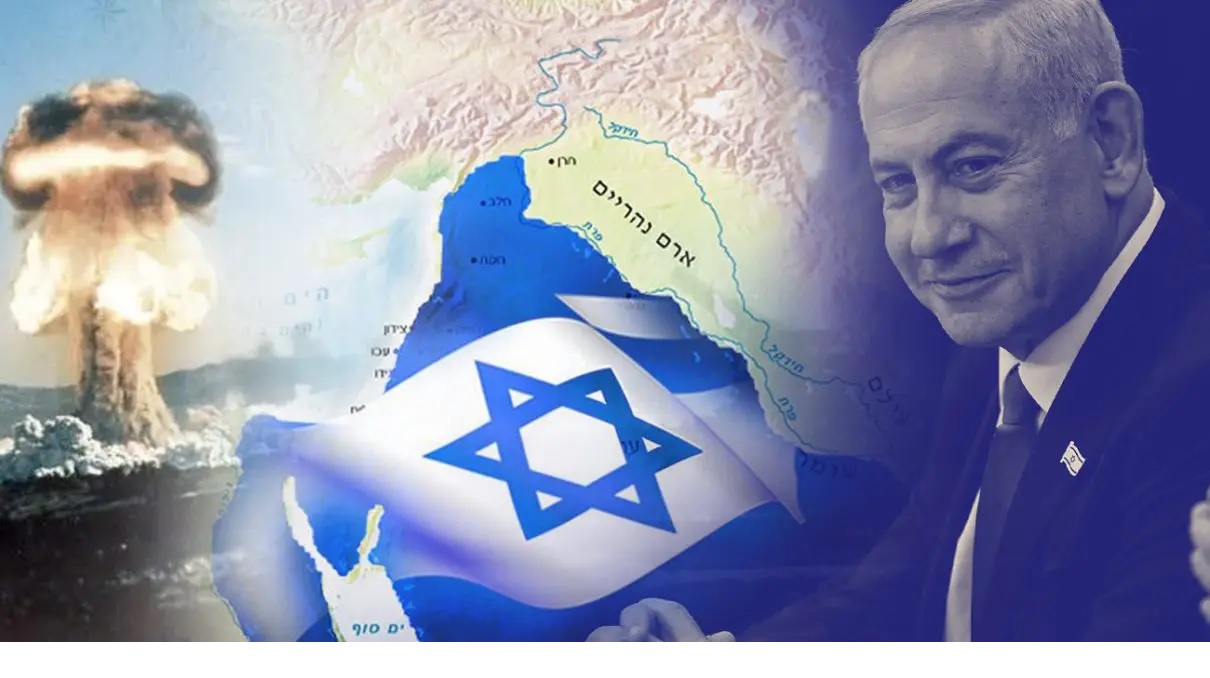
Contrary to popular belief, the United Nations General Assembly has only accepted Israel’s membership conditionally (resolution 273). However, Tel Aviv has never respected its commitments. It refuses to implement 229 resolutions of the Security Council and the General Assembly. It has just declared a UN agency a “terrorist organization,” called for its headquarters in New York to be razed, designated its Secretary General António Guterres persona non grata, and has just attacked four times UN peacekeepers in Lebanon (UNIFIL), wounding two blue helmets.
Voltaire Network | Paris (France) | 15 October 2024 by Thierry Meyssan, https://www.voltairenet.org/article221376.html
Israel has just attacked a position of the UN peacekeepers in Lebanon. When the British withdrew from Mandatory Palestine (i.e. Palestine placed by the League of Nations under the provisional administration of the United Kingdom) on May 14, 1948, the Zionist General Council, an offshoot of the Haganah (i.e. the main militia of the immigrant Jewish community), unilaterally proclaimed the independence of the State of Israel. It was announced by the chairman of the Jewish Agency (i.e. the executive of the World Zionist Organization).
It is important to note here that the British occupier withdrew from only about a quarter of Mandatory Palestine. It had already officially left the other three quarters, constituting Mandatory Transjordan, the future Jordan.
After a few days of reflection, the United Nations General Assembly decided to recognize the new state, not without having emphasized that in principle, it was not up to a militia, the Haganah, to proclaim a state, even if this proclamation came to fill the void left by the departure of the mandatory authority, that is to say the British. The General Assembly had noted that the proclamation of independence said nothing about the regime of this state (theocracy or republic), nor about its borders. It intended to pursue its plan for the creation of a binational state, both Arab and Jewish, without territorial continuity between the two entities (Jerusalem and Bethlehem having an international status). It had been reassured by the new state’s reference to “complete equality of social and political rights for all citizens without distinction of belief, race and sex.”
The day after independence, Egypt, Iraq, Transjordan, Lebanon, Syria and Yemen sent their armies to Palestine. Official history today assures that these six countries (the “Arabs”, understand the “Muslims”) did not accept a Jewish state, while five of them opposed Jewish colonization after British colonization and the sixth supported Israel. Religion was a problem only for Izz al-Din al-Qassam, the Muslim Brotherhood and the Nazi mufti Mohammed Amin al-Husseini.
Identicaly, propaganda assures that these armies were defeated by the valiant Israeli army, implying “from the first day, the Jews are morally superior to the Arabs”. The reality was quite different. The world war had just ended and none of these countries, except Transjordan, had an army worthy of the name.
Their troops were exclusively formed of volunteers. In addition, the Transjordanian army, which ended the conflict, fought on the side of Israel against the other Arabs. Indeed, Transjordan, still under British influence, hoped to prevent the creation of a Palestinian state and annex its territory. Its army was none other than that of the British (the “Arab Legion”) and was still placed under the command of General John Bagot Glubb (alias “Glubb Pasha”). It was the Transjordanians (in fact the British) and not the Israelis who defeated the other Arab armies.
During the conflict, its sovereign, King Abdullah I was also proclaimed “King of Palestine.” During this conflict, the Israeli forces let the British of Transjordan fight against the Arabs and applied Plan D (in Hebrew: Plan “Dalet”). The Haganh intended to share as little territory as possible with Transjordan. Israeli forces illegally imported weapons from Czechoslovakia (already ruled by the communists), probably with the agreement of the USSR, supposedly to fight against British colonization, in reality to expel the Palestinians. This is the Nakhba (catastrophe). 750,000 Palestinians (between 50 and 80% of the population) were forcibly displaced.
Israel requested and obtained, the following year, its membership in the United Nations. At that time, no decolonized state was part of it. The countries under Anglo-Saxon influence were in the majority. However, they only accepted Israel under conditions. In its resolution 273, the UN General Assembly referred to a written commitment by the Minister of Foreign Affairs of the provisional government of Israel, Moshe Shertok, by which he “accepts without any reservation the obligations arising from the Charter of the United Nations and undertakes to observe them from the day it becomes a Member of the United Nations” [1].
To date, Israel has failed to uphold this commitment and has failed to comply with 229 Security Council and General Assembly resolutions. Its membership could therefore be suspended at any time.
In recent months,
• Israeli Foreign Minister Israel Katz said on March 23 that the UN had become “an anti-Semitic and anti-Israeli organization that harbors and encourages terrorism.”
• Israel has campaigned against a UN agency, the United Nations Relief and Works Agency for Palestine Refugees in the Near East (UNRWA), accusing it of serving Hamas. Last July, the Knesset passed three laws (1) banning UNRWA from operating on Israeli territory (2) stripping its staff of diplomatic immunities (3) declaring it a terrorist organization.
• Israel’s permanent representative to the United Nations, Gilad Erdan, declared at the end of his term last August, speaking from the UN headquarters in New York, that “this edifice must be razed from the face of the Earth.”
• Israeli Foreign Minister Israel Katz declared UN Secretary-General António Guterres persona non grata.
• The Israel Defense Forces (IDF) deliberately targeted French, Italian and Irish soldiers of the United Nations Interim Force in Lebanon (UNIFIL).
The bottom line:
• Israel was not created by its people, but by its army.
• The first Arab-Israeli war was not won by the Israelis, but by the Arabs of Transjordan under British command.
• By joining the United Nations, Israel committed itself to respecting all its resolutions, which it has violated 229 times.
• After Palestine, Lebanon, Syria, Iraq, Yemen and Iran, the Netanyahu government has opened an eighth front against the United Nations.
Nuclear weapons and children
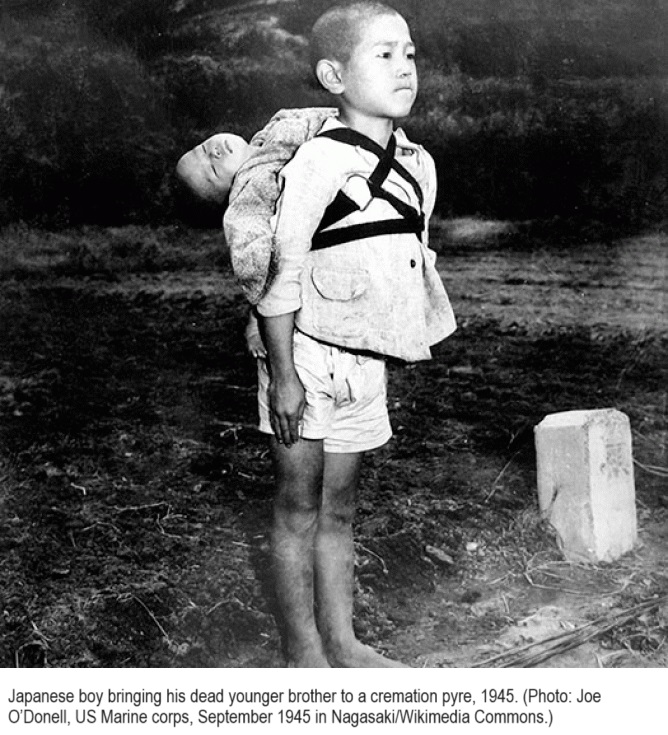
The main perpetrators of violence against children are states armed with nuclear weapons, writes Tim Wright.
Nuclear weapons are designed to destroy cities; to kill and maim whole populations, children among them.
In a nuclear attack, children are more likely than adults to die or suffer severe injuries, given their greater vulnerability to the effects of nuclear weapons: heat, blast and radiation. The fact that children depend on adults for their survival also places them at higher risk of death and hardship in the aftermath of a nuclear attack, with support systems destroyed.
Tens of thousands of children were killed when the United States detonated two relatively small nuclear weapons (by today’s standard) over the Japanese cities of Hiroshima and Nagasaki in 1945.
Many were instantly reduced to ash and vapour. Others died in agony minutes, hours, days or weeks after the attacks from burn and blast injuries or acute radiation sickness. Countless more died years or even decades later from radiation-related cancers and other illnesses. Leukaemia – cancer of the blood – was especially prevalent among the young.
In Hiroshima and Nagasaki, the scenes of devastation were apocalyptic: Playgrounds scattered with the dead bodies of young girls and boys. Mothers cradling their lifeless babies. Children with their intestines hanging out of their bellies and strips of skin dangling from their limbs.
At some of the schools close to ground zero, the entire student population of several hundred perished in an instant. At others, there were but a few survivors. In Hiroshima, thousands of school students were working outside to create firebreaks on the morning of the attack. Approximately 6,300 of them were killed.
Those children who, by chance, escaped death carried with them severe physical and psychological scars throughout their lifetimes. What they witnessed and experienced on 6 August and 9 August 1945 and in the days that followed was permanently seared into their memories.
Thousands of children lost one or both parents, as well as siblings. Some “A-bomb orphans” were left to roam the streets, with orphanages exceeding capacity.
Many of the babies who were in their mothers’ wombs at the time of the atomic bombings were also harmed as a result of their exposure to ionising radiation. They had a greater risk of dying soon after birth or suffering from congenital abnormalities such as brain damage and microcephaly, as well as cancers and other illnesses later in life.
Pregnant women in Hiroshima and Nagasaki also experienced higher rates of spontaneous abortions and stillbirths.
In communities around the world exposed to fallout from nuclear testing, children have experienced similar harm from radiation.
Since 1945, nuclear-armed states have conducted more than two thousand nuclear test explosions at dozens of locations, dispersing radioactive material far and wide
Among the general population, children and infants have been the most severely affected, due to their higher vulnerability to the effects of ionising radiation. Young children are three to five times more susceptible to cancer in the long term than adults from a given dose of radiation, and girls are particularly vulnerable.
In the Marshall Islands, where the United States conducted 67 nuclear tests, children played in the radioactive ash that fell from the sky, unaware of the danger. They called it “Bikini snow” – a reference to the atoll where many of the explosions took place. It burned their skin and eyes, and they quickly developed symptoms of acute radiation sickness.
For decades after the tests, women in the Marshall Islands gave birth to severely deformed babies at unusually high rates. Those born alive rarely survived more than a few days. Some had translucent skin and no discernible bones. They would refer to them as “jellyfish babies”, for they could scarcely be recognised as human beings.
Similar stories have been told by people living downwind or downstream of nuclear test sites in the United States, Kazakhstan, Ma’ohi Nui, Algeria, Kiribati, China, Australia and elsewhere.
We have a collective moral duty to honour the memories of the thousands of children killed in Hiroshima and Nagasaki, as well as those harmed by the development and testing of nuclear weapons globally. And we must pursue the goal of a nuclear-weapon-free world with determination and urgency, lest there be any more victims, young or old.
Under international humanitarian law and the Convention on the Rights of the Child, governments have a legal obligation to protect children against harm in armed conflict. To fulfil this obligation, it is imperative that they work together now to eliminate the scourge of nuclear weapons from the world.
In this report, we describe how nuclear weapons are uniquely harmful to children, based on the experiences of children in Hiroshima and Nagasaki and those living near nuclear test sites. We share their first-hand testimonies and depictions of the toll of nuclear weapons on their lives. And we explain how the ever-present fear of nuclear war – the possibility that entire cities might be destroyed at any given moment – causes psychological harm to children everywhere.
Finally, we make an urgent appeal to all governments to protect current and future generations of children by eliminating nuclear weapons, via the landmark UN Treaty on the Prohibition of Nuclear Weapons, which entered into force in 2021.
Key Findings
So long as nuclear weapons exist in the world, there is a very real risk that they will be used again, and that risk at present appears to be increasing.
In the event of their use, it is all but certain that many thousands of children – perhaps hundreds of thousands or more – would be counted among the dead and injured, and they would suffer in unique ways and out of proportion to the rest of the population.
In a nuclear attack, children would be more likely than adults:
To die from burn injuries, as their skin is thinner and more delicate and burns deeper, more quickly and at a lower temperature;- To die from blast injuries, given the relative frailty of their smaller bodies;
- To die from acute radiation sickness, as they have more cells that are growing and dividing rapidly and are significantly more vulnerable to radiation effects;
- To be unable to free themselves from collapsed and burning buildings or take other steps in the aftermath that would increase their chances of survival;
- To suffer from leukaemia, solid cancers, strokes, heart attacks and other illnesses years later as a result of the delayed effects of radiation damage to their cells; and
- To suffer privation in the aftermath of the attacks, as well as psychological trauma leading to mental disorders and suicide.
Furthermore, babies who were in their mothers’ wombs at the time of the attack would be at greater risk of:
Death soon after birth or in early childhood;- Microcephaly, accompanied by intellectual disability, given the higher vulnerability of the developing brain to radiation damage;
- Other developmental abnormalities;
- Growth impairment due to the reduced functioning of the thyroid; and
- Cancers and other radiation-related illnesses during childhood or later in life.
These horrifying realities should have profound implications for policy-making in countries that currently possess nuclear weapons or those that support their retention as part of military alliances.
They should also prompt organisations dedicated to the protection of children and the promotion of their rights to work to address the grave global threat posed by nuclear weapons.
While children played no part in developing these doomsday devices, it is children who would suffer the most in the event of their future use – one of the myriad reasons why such weapons must be urgently eliminated.
Tim Wright is Treaty Coordinator of the International Campaign to Abolish Nuclear Weapons.
This is the Executive Summary from the longer report, The Impact of Nuclear Weapons on Children, by Tim Wright and published by ICAN, which can be found in full on the ICAN website. It is republished with permission of the author.
Michael Hudson and Richard Wolff: Middle East Exploding, Ukraine Crumbling, US to Take Action?
Mr Zelenskyy in the Ukraine, and Mr. Netanyahu in Israel have no hope of prevailing, given the odds against them – the sheer numbers.
Israel can’t fight five wars at the same time…………….Their only hope is to bring the United States in……………………………….fighting to the last Ukrainian is now being superseded by fighting to the last Israeli.
that visceral hatred of Islam that the Zionists had, or also the visceral hatred of Russia, specifically for anti-Semitism of past centuries,
there’s no solution to the black hole that Israel’s painted itself into………And yet, there’s no willingness to have a single state
marriage of convenience here between the Zionists …and…it’s in the evangelical community…..The biggest festivals every year of Israeli films are held in mega-churches of the Protestant faith in this country, not in synagogues.
the opponents of all this are the U.S. military……who say that if you really want to extend the war, it’s not going to work
I think that the State Department and the National Security Agency and the Democratic Party leadership, with its basis in the military-industrial complex, is absolutely committed to “if we can’t have our way, then who wants to live in such a world.” …………. what Putin said was, “well, who wants to live in a world without Russia after all?”……………………………..That’s the mentality we’re dealing with
By Dialogue Works, October 8, 2024, https://scheerpost.com/2024/10/08/michael-hudson-and-richard-wolff-middle-east-exploding-ukraine-crumbling-us-take-action/
Transcript
NIMA: So nice to have you back, Richard and Michael. And let me just manage this. And let’s get started with the main question here that would be: Why is the United States not interested in putting an end to the conflict in the Middle East and in Ukraine? Which we know in both of these cases, they’re capable of doing this.
And before going to the answer of this question, I’m going to play a clip that the foreign minister of Lebanon is talking with Christiane Amanpour about his point of view and why they couldn’t reach a ceasefire.
CHRISTIANE AMANPOUR: … I spoke with Lebanon’s Foreign Minister, Abdallah Bou Habib, who’s in Washington to meet with American officials and he joined us for his first interview since the latest escalations. Foreign minister, welcome back to the program.
ABDALLAH BOU HABIB: Thank you. Thank you.
CHRISTIANE: Things have reached a major crisis in your country since we last spoke. And I want to ask you, you are in the United States right now. You know that several of the administration officials agree with Israel’s ground incursion into your country. What do you make of that as you’re in Washington trying to get support for a ceasefire?
ABDALLAH: Well, they also agreed on the Biden-Macron statement that calls for a ceasefire and that calls also for the implementation of a 21 days ceasefire. And then Mr. Hochstein would go to Lebanon and negotiate a ceasefire. And they told us that Mr. Netanyahu agreed on this. And so we also got the agreement of Hezbollah on that. And you know what happened since then. That was the day we saw you in New York.
CHRISTIANE: I know. And you were talking about going into the Security Council for this ceasefire. And barely 24 hours later, the head of Hezbollah was assassinated. Are you saying Hassan Nasrallah had agreed to a ceasefire just moments before he was assassinated?
ADBALLAH: He agreed, he agreed. Yes, yes. We agreed completely; Lebanon agreed to a ceasefire by consulting with Hezbollah. The Speaker, Mr. Berri, consulted with Hezbollah and we informed the Americans and the French that [that is] what happened. And they told us that Mr. Netanyahu also agreed on the statement that was issued by both presidents.
NIMA: Yeah. Here is the question here, because if you remember, with the assassination of Ismail Haniyeh while they were talking with Ismail Haniyeh, negotiating with Ismail Haniyeh in Qatar, they assassinated him.
And right after they reached some sort of agreement with the government in Lebanon and just Hezbollah said, okay, we’re going to go with that plan, they assassinated him.
And the question right now is here, why is this with the United States, Michael? Go ahead.
MICHAEL HUDSON: Well, the United States doesn’t want a ceasefire because it wants to take over the entire Near East. It wants to use Israel as the cat’s paw. Everything that’s happened today was planned out just 50 years ago back in 1973 and 1974. I sat in on meetings with Uzi Arad, who became Netanyahu’s chief military advisor after heading Mossad.
And the whole strategy was worked out essentially by the Defense Department, by neoliberals, and almost in a series of stages that I’ll explain.
[Henry Martin] “Scoop” Jackson is the main name to remember. Scoop Jackson was the ultra right wing neo-con was sponsored them all. And he was the head of the Democratic National Committee in 1960 and then worked with military advisors.
I was with Herman Kahn, the model for Dr. Strange Love, at the Hudson Institute during these years, and I sat in on meetings and I’ll describe them, but I want to describe how the whole strategy that led to the United States today, not wanting peace, wanting to take over the whole Near East, took shape gradually.
And this was all spelled out. I wrote a book about the meetings that I had at War College and the White House and various Air Force and Army think tanks back in the 1970s.
The starting point for all the U.S. strategy here was that democracies no longer can field a domestic army with a military draft. America is not in a position to really field enough of an army to invade a country, and without invading a country you can’t really take it over. You can bomb it but that just is going to incite resistance. But you can’t take it over.
The Vietnam War showed that any attempted draft would be met by so much anti-draft resistance taking the form of an anti-war [sentiment] that no country whose leaders have to be elected can ever take that role again.
Now it’s true that America sent a small army into Iraq, and there are 800 U.S. military bases around the world, but this wasn’t a fighting army – it was an army of occupation without really much resistance of the kind that Ukraine is experiencing with Russia for instance, as we’re seeing there. That situation in the Near East is very different.
The anti-war students showed that Lyndon Johnson in 1968 had to withdraw from running for election because everywhere he’d go there would be demonstrations against him to stop the war. No such demonstrations are occurring today, needless to say.
So I won’t call the U.S. or the European Union democracies, but there is no government that has to be elected that is able to send their own soldiers into a big war.
And what that means is that today’s tactics are limited to bombing, not occupying, countries. They are limited to what the Israeli forces can drop the bombs on Gaza and Hezbollah and try to knock out things, but neither the Israeli army, nor any other army, would really be able to invade and try to take over a country in the way that armies did in World War II.
Everything has changed now and there can’t be another occupation by the United States of foreign countries, given today’s alliances with Russia and Iran and China.
So, this was recognized 50 years ago and it seemed at that time that the U.S.-backed wars were going to have to be scaled down . But that hasn’t happened. And the reason is the United States had a fallback position: it was going to rely on foreign troops to do the fighting as proxies instead of itself. That was a solution to get a force.
“The first example was the creation of Wahhabi jihadists in Afghanistan, who later became al-Qaeda. Jimmy Carter mobilized them against secular Afghan interests and justified it by saying, ‘Well, yes, they’re Muslims, but after all, we all believe in God.’”
So the answer to the secular state of Afghanistan was Wahhabi fanaticism and jihads, and the United States realized that in order to have an army that’s willing to fight to the last member of its country — the last Afghan, the last Israeli, the last Ukrainian — you really need a country whose spirit is one of hatred towards the other, a spirit very different from the American and European spirit.
Well, Brzezinski was the grand planner who did all that. The Sunni Jihad fighters became America’s foreign legion in the Middle East and that includes Iraq, Syria and Iran and also Muslim states going up to Russia’s border.
And the aim of the United States was, oil was the center of this policy. That meant the United States had to secure the Near East and there were two proxy armies for it. And these two armies fought together as allies down to today. On the one hand, the al-Qaeda jihadis, on the other hand, their managers, the Israelis, hand in hand.
And they’ve done the fighting so that the United States doesn’t have to do it.
The foreign policy has backed Israel and Ukraine, providing them with arms, bribing their leaders with enormous sums of money, and electronic satellite guidance for everything they’re doing.
President Biden keeps telling Netanyahu, “Well, we’ve just given you a brand new bunker, cluster bombs and huge bombs – please drop them on your enemies, but do it gently. We don’t want you to hurt anybody when you drop these bombs.”
Well, that’s the hypocrisy – it’s a good cop bad cop. Biden and the United States for the last 50 years has posed as a good cop criticizing the bad cops that it’s been backing. Bad cop ISIS and al-Qaeda, bad cop Netanyahu.
But when all of this strategy was being put together, Herman Kahn’s great achievement was to convince the U.S. Empire builders that the key to achieving their control in the Middle East was to rely on Israel as its foreign legion.
And that arms-length arrangement enabled the United States to play the role, as I said, of the good cop, designating Israel to play its role, and Israel has organized and supplied al-Nusra, al-Qaeda while the United States pretends to denounce them. And it’s all part of a plan that’s been backed by the military, the State Department, and the National Security Operation.
And that’s why the State Department has turned over management of U.S. diplomacy to Zionists, seemingly distinguishing Israeli behavior from U.S. empire building. But in a nutshell, the Israelis have joined al-Qaeda and ISIS as troops, as America’s foreign legion.
NIMA: Yeah. As you were talking about, the question was: why is the United States not interested in putting an end to the conflicts in the Middle East and in Ukraine? And Michael was pointing out the endgame of the United States in this type of behavior. And what’s your take right now?
RICHARD WOLFF: Well, I think in the case of Ukraine, at this point, it is merely a kind of vague, left-over desire to weaken Russia. It isn’t working very well, so my guess is it’ll be over pretty soon. And in the case of Israel, I think, Michael is right, that this is a deal: the Israelis, hopefully, will give the Americans some kind of leverage over what happens in the Middle East, that they wouldn’t have if they didn’t have Israel. Otherwise I do not understand why the United States allows its policies to be made by Mr. Netanyahu. We have the strange situation that the people holding back Mr. Netanyahu are Israelis, not Americans, which given that it’s two different countries is rather strange, Americans feel more difficulty in opposing Netanyahu than Israelis do. But I don’t want to take away from the fact that there is a mutuality of interest in shaping the Middle East and hoping to be able to do it.
But I don’t think this is working very well. And I think my suspicion is that they are going, particularly after the election, to do a lot of rethinking about all of this, because this is not going well.
NIMA: Yeah. And Michael?
MICHAEL: Yeah, I think we can use more of the context. Because after I mentioned that the U.S. realized it needs foreign troops, it also realized that the only kind of full-scale war that democracy could afford is atomic war. And the problem is that that only works against adversaries that can’t retaliate.
But in recent years, U.S. military policy has been so aggressive that it’s driven other countries to band together and back their allies with nuclear powers. So all of the countries of the world now are associated with nuclear backups. And we’ve discussed that before.
The result is that today’s military alliances mean that any attempt to use nuclear weapons is going to risk a full-scale nuclear war that’s going to destroy all the participants and the rest of the world as well. So what is left for the United States? Well, I think there’s only one form of non-atomic war that democracies can afford, and that’s terrorism. And I think you should look at Ukraine and Israel as the terrorist alternative to atomic war. I think Andrei Martyanov recently has explained that that’s the alternative to atomic war. And this, unless NATO-West is willing to risk atomic war, which it doesn’t seem to be willing to, then terrorism is the only alternative left to it. And that is the basis of the regime change plans that the United States has in countries bordering Russia, China, and other countries that it views as adversaries. That’s what we’re seeing in Ukraine and above all in Israel, as it fights against the Palestinian population in Gaza.
The whole idea of the Ukrainians and Israelis is to bomb civilians, not military targets, but civilians. It’s a fight literally to destroy the population under an ideology of genocide. And that is absolutely central. It’s not an accident – it’s built in, built into the program. And Lebanon, even though it’s largely Christian, is part of that.
So the other weapon that the United States has is economic. And that’s oil and grain – it was decided way back in 1973-74. That was right the time of the oil war, when oil prices were quadrupled in response to the United States quadrupling its grain prices. So the United States said, well, “the way to avoid a war, terrorism, regime change, is just to starve countries into submission – either by cutting off their food supply or cutting off their oil supply. Because without oil, how can they run their industry, heat their homes and produce electricity?”
And oil is the largest private sector monopoly in the country. The seven sisters controlled the oil trade ever since World War I, and England have been their coordinator.
And after the oil war, Saudi Arabia promised – sort of was told, “you can raise your oil prices as much as you want, but you have to keep all of your export earnings in the United States. You can buy treasury bills, you can buy corporate bonds, you can buy stocks, but you cannot use more than a portion of it for your own development; you have to turn it over to the U.S. financial sector. So Saudi Arabia became the key and the result was the petrodollar that was put into U.S. banks and just increased the liquidity, the whole growth of third world debt that exploded in the 1970s, leading to the debt crisis of the ‘80s was all of that. And basically the United States realized, “okay, we want to extend control to conquer the Near East, conquer countries that have vital raw materials; we want to use the World Bank to make sure that global South countries don’t feed themselves – we’ll give money for plantation export crops, not for food.”
The condition of foreign Latin America and Africa being an ally of the United States was not to grow their own grain and food, but to depend on U.S. grain export. You know, that’s the sort of economic plan that goes together with the military plan to be the organizing force of the American empire.
RICHARD WOLFF: Let me introduce a couple of other considerations, just to add to the stew here. It is my understanding that many forces in the American political establishment interpret the collapse of the Soviet Union in 1989, ‘90 and ’91 as the fruit of a long-term U.S. policy that included the arms race and other mechanisms where the Soviet Union could not afford the level of military activity that the United States could afford, but for political and military reasons could not afford not to do it.
And so the Soviet Union tried to ride that either-or and collapsed between the demands of the nuclear arms race, the cost of their occupation of Afghanistan. They couldn’t do it. And they scrimped here and there and they didn’t quite fulfill the consumer growth plan that they had promised their people and they couldn’t do it.
If you believe that that’s what went on, then you might try to understand that what they’re doing with Russia now is the same policy. In other words, it’s again the arms race, but this time not to fight in Afghanistan, but to fight in Ukraine. Fight them there, draw them out, cost them a fortune and assume that they cannot manage all that they’re doing and that it’s much easier for you, being a richer – much, much richer – country to do this than it is for them.
And the big mistake here was not to understand that the Russians were acutely aware of what their shortcomings were and have worked very hard in the last 25 years not to be in that position again. There’s an aphorism in military thinking: “Everybody fights the last war.” That you got to fight this one, not the last one. The winner of the last one thinks they found the magic bullet. The loser of the last one realizes they have to do something different. Russia is surprising everybody by the extent of its military capability and its military preparation. They’re winning the war in Ukraine because of it. That’s a miscalculation here.
Okay, that’s the first thing. And I suspect that not only is Ukraine re-running the old strategy, but that they hope that by imposing a kind of arms race on the Middle East, partly an arms race between Israel and the Arabs and the Islamists, but also arms races where they could between Shiite and Sunni.
Remember, the war in Iraq and Iran, by splitting them up, by buying off Abu Dhabi or Dubai, or all of the machinations that are going on – they hope that they can fund their ally -Israel- and exhaust all the enemies of Israel, forcing them eventually into some sort of deal with Israel. And Israel has to be very, very careful: it needs to appease the United States to make these deals, but it also has to try to make sure these deals don’t work out, because it wants to be the American agent in that part of the world.
And so my last point. Here’s another similarity between Israel and Ukraine: Mr Zelenskyy in the Ukraine, and Mr. Netanyahu in Israel have no hope of prevailing, given the odds against them – the sheer numbers. And let’s remember, Americans are not understanding: it’s not just now that Israel is at war with Hamas – whom they have not yet defeated in the Gaza – and they are at war with Hezbollah on the West Bank and in Lebanon, bu they are at war with the Houthis in Yemen and they are at war with the Iranians behind all of that, and they are at war, more or less, with the Lebanese.
And then there are the Shiite militias, which are very close to Iran, and are very powerful in both Iraq and Syria. Well, I got news for you: that’s too many enemies. The Houthis recently showed they can send missiles into Israel. My guess is all of the others I’ve just named either can also do that already or will soon be able to do that.
Israel can’t fight five wars at the same time. It’s a small country. God knows what has happened to its economy, which has effectively shut down in order to fight a war. Their only hope is to bring the United States in; it’s the only hope for Ukraine. Otherwise, Ukraine will lose quickly and Israel will lose slowly.
That’s how it looks to me and that’s for me what governs the hysteria around trying to figure out what to do. But it leaves me also with a question: Why is Israel unable or unwilling to cut deals? My sense is, the Egyptians would cut them. And my sense is, many of its neighbors would at least in principle be willing to sit down and at least try to reach some. And then Israel, instead of expanding geographically would go up, build high rises. What are you doing? Stealing land from Palestinian peasants. What are you doing? Is your future agricultural? Don’t be silly – it isn’t; it doesn’t need to be.
It’s as if we were suddenly confronted with Luxembourg demanding pieces of Belgium or Netherlands or France or something because they had to expand. They’ve been perfectly happy building vertical rather than horizontal. For many, many, many decades longer than Israel has been concerned. So what is this?
Anyway, I thought these would be, you know, I’m trying to learn how to think about this in ways that are not constricted by the way the mainstream media analysts do, which is useless.
MICHAEL: Well Richard, you’ve described exactly what’s going on and you’ve shown how fighting to the last Ukrainian is now being superseded by fighting to the last Israeli. Why are they doing this? Well, the answer is: If they were peace – if Egypt and the other countries that you mentioned were to make a peaceful arrangement with Israel – then there’d be no war. And with no war, how could the United States take over the other countries in the region? The U.S. policy, as I said, 50 years ago, and I’ll go into that more now, was based on the U.S. actually taking over all of these countries, again using Israel as the battering ram, as what the army called “America’s landed aircraft carrier” there. Well, all this began to take place in the 1960s with Henry “Scoop” Jackson.
It initially, Israel didn’t really play a role in the U.S. plan. Jackson simply hated communism, he hated the Russians, and he had got a lot of support within the Democratic Party. He was a senator from Washington State, and that was the center of military-industrial complex.
He was called, nicknamed, “The Senator from Boeing,” for his support for the military-industrial complex. And the military-industrial complex backed him for becoming chair of the Democratic National Committee. Well, he was backed by Herman Kahn – as I said, the model for Dr. Strangelove – who became the key strategist for U.S. military hegemony and the Hudson Institute – no relation to me, an ancestor discovered the river we were both named after. They used the Hudson Institute and its predecessor, the Rand Corporation, where Herman came from, as its major long-term planner.
And I was brought in to discuss the dollar exchange rate and the balance of payments. My field was international finance. Well, Herman set up the institute to be a training ground for Mossad and other Israeli agencies. There were numerous Mossad people there, and I made two trips to Asia, as I mentioned, with Uzi Arad, who became, as I said, the head of Mossad.
So we had discussions about just what was going to happen for the long term, and they were about just what’s happening today. Herman told me over dinner one night that the most important thing in his life was Israel. And that’s why he couldn’t get military information even from U.S. allies, like Canada, because he said he wouldn’t pledge allegiance to their country or even the United States, were he to swear loyalty to any other country. And he described the virtue of Jackson for Zionists was precisely that he was not Jewish, but a defender of the dominant U.S. military complex and an opponent of the arms control system that was underway. Jackson was fighting all the arms control – “we’ve got to have war.” And he proceeded to stuff the State Department and other U.S. agencies, with neo-cons, who were planned from the beginning for a permanent worldwide war, and this takeover of government policy was led by Jackson’s former senate aids.
These senate aides were Paul Wolfowitz, Richard Pearl, Douglas Fife, and others who were catapulted into the commanding heights of the State Department and more recently the National Security Council. The Jackson-Vanik amendment to the U.S. Trade Act of 1974 became the model for subsequent sanctions against the Soviet Union.
The claim was it limited Jewish immigration and other human rights. So right then, the State Department realized: here is a group of people who we can use as the theoreticians and the executors of the U.S. policy that we want – they both want to take over all of the Arab countries.
On one occasion, I’d brought my mentor, Terrence McCarthy, to the Hudson Institute, to talk about the Islamic worldview, and every two sentences, Uzi would interrupt: “No, no, we’ve got to kill them all.” And other people, members of the Institute, were also just talking continually about killing Arabs.
I don’t think there were any non-Jewish Americans that had that visceral hatred of Islam that the Zionists had, or also the visceral hatred of Russia, specifically for anti-Semitism of past centuries, most of which was in Ukraine and Kiev, by the way.
Well, that was 50 years ago, and these sanctions that Jackson introduced, the U.S. Trade, became the prototypes for today’s sanctions against all the countries that the neo-cons viewed as adversaries. Joe Lieberman was in the tradition of the Jackson Democrats – the word for them – the pro-Zionist Cold War hawks with this hatred of Russia, and that made Israel the cat’s paw for these Cold Warriors.
They were completely different from most of my Jewish friends, who I grew up with in the 1950s. The Jewish population that I know were all assimilated – they were successful middle-class people. That was not true of the people Jackson brought in. They did not want to be assimilated, and they said just what Netanyahu said earlier this year, that “the enemy of Zionism are the secular Jews who want to assimilate – you can’t have both.” This policy of the 1970s has split Judaism into these two camps: assimilationists, who are for peace and the Cold Warriors, who were for war. And the Cold Warriors were nurtured and financed by the United States – the Defense Department gave a big grant of over $100 million to the Jackson Institute to help work out essentially race-hatred military policies to use to spur this anti-Islamic hatred throughout the Near East. It’s not a pretty sight.
There are not many people around today that were there then, and to remember how all of this was occurring, but what we’re seeing is, as I said, a charade that somehow what Israel is doing is “all Netanyahu’s fault, all the fault of the neo-cons there,” and yet from the very beginning they were promoted, supported with huge amounts of money, all of the bombs they needed, all the armaments they needed, all the funding they needed, and Israel is a country whose economy needs foreign exchange in order to keep its currency solvent. All of that was given to them precisely to do exactly what they’re doing today. So when Biden pretended to say, “can’t there be two-state solution?” No, there can’t be a two-state solution because Netanyahu said, “we hate the Gazans, we hate the Palestinians, we hate the Arabs – there cannot be a two-state solution and here’s my map,” before the United Nations, “here’s Israel: there’s no one who’s not Jewish in Israel – we’re a Jewish state” – he comes right out and says it.

This could not have been said explicitly 50 years ago. That would have been shocking, but it was being said by the neo-cons who were brought in from the beginning to do exactly what they’re doing today. To act as America’s proxy, to conquer the oil-producing countries and make it part of greater Israel as much of a satellite of the United States that England or Germany or Japan have become. The idea that they will continue the U.S. policy to receive all the support they need has become a precondition for their own solvency that, as Richard has just said, looks like it’s not working anymore. It isn’t solvent – there’s no solution to the black hole that Israel’s painted itself into.
And yet, there’s no willingness to have a single state because Biden and the entire national security council – Congress, and the military, and especially the military industrial complex, says there cannot be any common living between Palestinians and Israelis anymore than there can be in Ukraine, Ukrainians speakers and Russian speakers in the same country. It’s exactly the same, it’s following exactly the same policy and all of this is planned and sponsored by the United States and funded with enormous amounts of money.
RICHARD WOLFF: Yeah, let’s take a look at this from the Israeli Zionist perspective because it takes two to tango: whatever the American goals were, they also have to somehow mesh with what the Israelis -at least those in power- are trying to do or else it doesn’t work.
Put yourself in the position of a Zionist: you’ve left the European Asian origins. You’ve left and you’ve resettled thanks to the Balfour Declaration and the British Imperialists. They gave you other people’s land there in the Middle East in Palestine. Fundamental recognition: the independent existence of a state of Israel is fragile.
It is logical to understand, if you’re a Zionist, that given the disagreement of large numbers of Jews around the world with the whole idea of a country and the fact that the majority of Jews of the world didn’t go to Israel even when they could have. They know that their support from the rest of the Jewish community is mixed.
They also know that the only country that could sustain them, that they could rely on after the war in Europe – the Second World War – was the United States. It was certainly the one they would want to rely on, because it came out of the war basically richer than it went in with no competitor. Why would you choose England or France, even if it were possible, if you could have the United States? Okay, now they have to worry – and I believe they do, deeply – that sooner or later, the United States, for its own reasons, will realize that the better bet for the future is on the Arabs, not the Israelis, because the Arabs are many and the Israelis are few, and the wealth gap between them is not working in Israel’s favor. It’s going the other way.
A few weeks ago I learned about a meeting that was held not so long ago. In Beijing, the Chinese government invited all of the factions involved in the Palestinian movement to send representatives for a meeting to unite them all – that included Hamas, Hezbollah, and a whole bunch of others. And they had those meetings in the sponsorship of China. That’s got to worry Mr. Netanyahu, that’s got to worry him a lot.
Why? Not because of some fanciful motion that the Chinese would enter. They’re not going to do that. But that the Chinese, in their complicated negotiation with the United States, will eventually come to agreements by sacrificing somebody else and getting along with each other that way.
How do I know it? Because it’s the subtext of half of Europe’s anxiety – that Europe will be the fall guy, that Europe will be carved up in the interests of the United States and China, much as Europe carved up Africa in the interests of its conflicts. So now the Israelis desperately need… what?
They need an ongoing economic, political, and military support from the United States. And they will be willing to do anything and everything to secure it. If you remember, not that many years ago, there were heavy rumors that the Iran-Contra scandal was brokered by Israelis; that secret support for the apartheid regime in South Africa was coming from Israel. Recently there was a claim – I don’t know if it’s true – that the Russians discovered a Israeli mercenary operation within the Ukrainian army. Okay, I’m not surprised at any of that. That’s what a country like Israel offers: it will be the bad guy; it will say the unsayable; it will advocate for the United States; it will take the heat, including the rage of the Arab world and the rage of the Islamic world. Because if it weren’t focused on Israel, where the hell do you think it would be focused? Here. 9/11 happened here. It was celebrated around the Islamic world for that reason. So there’s what the French would call “un mariage de convenance.”
There’s a marriage of convenience here between the Zionists who feel that they are dependent on the United States – and they are. That’s why their major push diplomatically in the United States of their personnel is not in the Jewish community – they don’t get the support they want – it’s in the evangelical community. They found that scriptural arrangement in which when Jesus returns, he has to find the Jews in charge of the Holy Land. Oh good, the Jews discovered that in that New Testament story they could build an alliance. The biggest festivals every year of Israeli films are held in mega-churches of the Protestant faith in this country, not in synagogues. What the hell is going on? The Israelis are desperate to have support here. And they’re constantly frightened – the very evangelicals who they counted on are going more towards Trump , and they’re worried about that. Right?
It’s the irony: the Jews go more the other way, the Jews seem more interested in helping Ukraine, the secular, the non-Zionists. So this is a constantly shifting scenario. But my guess is, and Michael, maybe you know about this, my guess is that there are voices – no matter how strong Henry Jackson was or his progeny had become – that there are also voices pretty high up that keep wondering out loud whether the United States isn’t betting on the wrong horse in the Middle East. And whether maybe there’s someone you can find to do the job better than the Israelis Zionists.
The minute that happens, Mr. Netanyahu disappears. And the person who worries a lot about that is Mr. and Mrs. Netanyahu.
MICHAEL: Well, you’ve described exactly the dynamics that are as work.
And for the last few weeks, Nima has had numerous guests on who have been explaining that the opponents of all this are the U.S. military, because every war game, according to his guests, that has been done, the U.S. loses in the Near East. Every war game that it does in Ukraine against Russia, the U.S. loses.
So obviously there is an opposition right now between the army – we’ll call them the realists – who say that if you really want to extend the war, it’s not going to work. But against them are, as you point out, not only a logic of the American Empire, but a virtual religion, a religion of hatred. Zionism has been Christianized – it’s accepted all of the hatred of the other that has taken place. And U.S. military strategists don’t want to put an end to the war in Asia and Ukraine, because if there was an end, as I said, then the status quo remains. And the United States couldn’t take over these countries as satellites. Peace would mean dependent country – Iraq would regain independence; Syria would; Iran would be left alone to be independent – that would not give the United States personal direct ownership of the oil.
And if you look at the neo-cons, they had a virtual religion. I met many at the Hudson Institute; some of them, or their fathers, were Trotskyists. And they picked up Trotsky’s idea of permanent revolution. That is, an unfolding revolution – what Trotsky said began in Soviet Russia was going to spread to other countries, Germany and the others. But the neo-cons adopted this and said, “No, the permanent revolution is the American Empire – it’s going to expand and expand and nothing can stop us for the entire world.”
So what you have is a more or less realistic military -if not at the top, which is sort of a political appointee, at least the generals who have actually done the war games – is realism against a religious fanaticism that has been back because fanatics are more willing to die to the last Israeli or the last Ukrainian than realists who look at the situation and try to do what, let’s say, President Xi and China talks about: the win-win situation. Well already, when this split began to occur in the 1970s, I actually heard discussions of the idea that: let’s rethink World War II, that it was really fought over was “what kind of socialism is going to be after the war? Is it going to be national socialism -Nazism- or democratic socialism emerging out of the dynamics and self-interest of industrial capitalism?” Well, much of the government was backing from 1945, the minute of peace, the American government began supporting Nazism. We talked before about this.
The government recruited Nazi leaders and put them, if not in America, throughout Latin America, to fight the communists. As soon as the United States decided, “we’ve got to destroy the Soviet Union,” they found the Nazis to be the fighters who were willing to die for their belief. Not sit and think, “is what I’m doing rational? Is it going to work?” So one of the problems with Israel is, just as Richard has discussed, that it’s not taking a path that is going to lead to the survival of Israel as an economic state. It’s already been put on rations by the United States economically, financially and militarily, just as England was put on rations after World War II and all of Europe was put on rations after World War I. Trotsky wrote an article -America and Europe- and said, “America has put Europe on rations.” Right around 1921, he wrote that.
So again, you could say that the Nazi spirit has won -the spirit of trying to extend an empire by “it’s us or them” – it’s a spirit of hatred and a spirit of terrorism, personally by assassination and anti-war crimes, is the alternative to well-to-atomic war. The Americans realize “well, we really don’t want atomic war, but we can come as close as we can to it by terrorism.” And that’s why the United States today is backing an openly Nazi regime in Ukraine and similar terrorists in Israel to make essentially West Asia part of greater Israel over time. That is a mentality and almost a religious war that we’re in.
RICHARD WOLFF: Again, let me extend it a little bit, and let me pick up on something you said, Michael, earlier at the beginning, which I agree with: that the anxiety in the United States is a long drawn-out land war for fear that the American population will not tolerate it beyond a few months or something like that.
Well, the Israelis can’t survive where they are without these military explosions. We’ve had the Yom Kippur war, the ’67 war, the ’73 war – I mean, we keep having wars, every one of which is justified -at least on the Israelis side- by the need for peace and security, which clearly these wars do not secure.
And so they have another one. And now they have the biggest and the worst one ever. And why is there any reason to believe it’s not going to continue? And what are they doing about it? Well, they’re widening the war, they’re doing much more terrible destruction in Gaza, and now they’re widening it to Hezbollah and to Yemen, they’re bombing and all of that. Okay.
The only way they can not be producing their own demise – literally organizing the cooperation, first among all the Shiite communities, and then eventually beyond that with the Sunni and the broader Islamic communities – their only hope in that eventuality to bring the United States in. As I’ve said, just like Mr. Zelensky has no hope unless he brings… Even this latest business with getting the authority to send missiles deep into Russia, that’s not going to work either – the Russians have hidden those, their missiles, or moved them further away so they can’t be reached. So there’s nothing left.
There is nothing left, but to bring the United States in. And yet your argument is: the United States looks at that situation and says, “We can’t do that. It’s not that we don’t have missiles – we do. It’s not that we can’t do much damage – we can.” Well, we can’t make a quick winning of this war.
Lord knows we couldn’t do it in the poorest countries on Earth, like Afghanistan and Vietnam. Be sure as hell are not going to do it in Europe or for that matter in the Middle East, which means that the only success of the Israelis is to bring the U.S. in and the U.S. can’t go in because of the constraints it feels.
And that means that at some point something’s got to give here, and wouldn’t the logical thing be to expect that the United States will have an epiphany moment in which it decides that Arabs are better allies for us than Israelis. And that if that requires purging the highest levels of government of neo-cons, well, we know after World War II, they know how to purge if they want to purge – they can do that and go after them as Jews, if that’s there, or as Zionists, or as mistaken advisors. There’s lots of ways of doing it. It’s just that a decision has to be made.
And maybe, I think if that’s what I heard you say, the obvious hesitancy of Lloyd Austin to authorize anything – to almost openly now be a voice saying, “don’t go there, don’t do that” to his fellow advisors of Mr. Biden, suggested maybe we have a point in what we’re saying here.
MICHAEL: Well, you’ve said it wonderfully, Richard – that’s exactly the point.
What does it mean to bring the United States in? It’s not going to send troops, because you can just imagine how the American troops, either in Ukraine or in Israel, where many of them would die. You can imagine what that would do to the Democratic administration that would be sending it there. So they can’t do that.
They’ve tried terrorism and the result of terrorism is to align the whole rest of the world against us. But still, we’re in a pre-revolutionary situation. The rest of the world is appalled by the terrorism that it sees, by the breaking of all of the rules of war and rules of civilization that the United Nations wrote into its original articles of agreement and is not following. So what you’re seeing is a whole breakdown of the ability of the rest of the world to enforce civilization. And of course, the hope of you and me is that somehow there would be right-thinking people in the U.S. government.
I don’t see many people in Congress supporting the candidacy of Jill Stein, who’s against the war. I don’t see Congress being reasonable. I think that the State Department and the National Security Agency and the Democratic Party leadership, with its basis in the military-industrial complex, is absolutely committed to “if we can’t have our way, then who wants to live in such a world.” Well, you remember how President Putin, when threatened with American atomic war and people were saying, well, would Russia really retaliate atomically? And what Putin said was, “well, who wants to live in a world without Russia after all?”
Well, the neo-cons and the Senate and the House of Representatives and the President and the Press and the campaign donors to both parties say, “well, who wants to live in a world where we can’t control? Who wants to live in a world where other countries are independent, where they have their own policy? Who wants to live in a world where we can’t siphon off their economic surplus for us? If we can’t take everything and dominate the world, well, who wants to live in that kind of a world?”
That’s the mentality we’re dealing with. And I’m watching what China is doing and Iran is doing: they kept hoping, for instance two days ago, when Iran sent missiles to the United States missiles against one of the airfields in Israel that had the F-16s and other airplanes, it let the United States know -and warned Israel- that Iran’s going to blow up your airfield. You better get all the airplanes in the air.
Well, Iran said, “oh, we don’t want to upset anybody. Can we just show them that a war doesn’t make sense?” Well, and then now there’s an argument in Israel saying, “wait a minute, these airplanes that you didn’t blow up are now going to be flying over Iran and dropping bombs on us.”
The country that does the first strike is going to get an advantage – we had a chance to wipe out the air force so they could stop bombing Lebanon, stop bombing Gaza Strip and other countries and stop bombing us and we didn’t do it because we wanted to keep showing the world that we’re the good guys.
Well, it’s like you’re a good guy naked walking right up against the Nazi tanks that are coming right at you in World War II, or today in the Ukraine – that’s really the problem.
RICHARD WOLFF: If we’re right, then why isn’t… or are we missing it? Where’s the evidence that the United States understands it’s being pulled in a direction it really doesn’t want to go. Just to pick up on your last point, Michael, hear me out for a minute.
The United States understands… let’s suppose they understand it the way you do, that they got the notification -and I picked up on that too- that the Iranians told the United States beforehand that they were going to do it, giving them the time to let the Israelis know.
Okay, where are the Americans who are saying “they did us a service,” because had they not, had they not, had they wrecked the Israeli Air Force or whatever, then the Israelis would have come to us requiring us to give them even more immediate massive support – and this isn’t good; this is dangerous.
The next step will be for the Iranians to target us. Look, the Houthis who are, if I understand correctly, supported by Iran, have been rocket-missiling American warships. Okay, it’s getting close, it’s getting close that you’re drawn in and then your own internal politics will make you respond and then you’re in, and then the Israelis have won, they’ve got you in there. And now it has its own logic, its own escalatory mechanisms and you’ve got what everybody thought you were committed never to do: a land war in Asia that cost you your own troops. Every president after Vietnam said they would never do that again.
There were some who even said it after Korea, because they understood. So I would be more comfortable that we’re onto something, if I could see some sign that there are American voices that sense one or another version of this that we could point to.
MICHAEL: Well, I think there has been a change of consciousness, but it’s been mainly on the Arab and Persian side. I think now that they didn’t shoot down the airplanes. Now, I think the Iranians are saying “no more Mr. Nice Guy.” They made it clear exactly what they can do to retaliate; they’ve said that if Israel tries to attack them or if the United States tries to attack them, they’re going to wipe out the American military bases in Iraq and Syria, which they’ve already shown they can pinpoint and do very well. I think in Iran’s mind, what they’ve achieved is showing the rest of the world, saying “the United States has been trying to goad to the war for the last half year, just as the United States has been trying to goad to Russia in the war in Ukraine,” and Putin has been able to resist that because he’s the longer he takes – he’s winning the war; Europe is being pulled apart.
Well, similarly, the Iranians can say: “the United States would have attacked us and said we’re only defending the poor little Israel because of the Iranian attack. But now that the Iranians did the attack -without killing civilians, first of all only bombing the military sites- whereas the Israeli wants to kill people; they want to kill Arabs, because they hate them. The Iranians only hit military sites, not the population. So now there’s no question, I think, that the whole rest of the world -China, Russia, the global South, the global majority- is not going to fall. It has deprived the United States military and state department from the ability to claim that they are responding to Iran’s unprovoked attack on Israel and to the Gaza, unprovoked attack on Israel that after 100,000 Gazans were killed, a few Israelis were killed. And Russia’s unprovoked attack on the Ukrainians, who were killing the civilians in Luhansk and Donetsk.
They’ve deprived the United States of any pretense of having any ideology or foreign policy besides terrorism and destruction and violating every civilized rule of war that is under land international law for the last few few centuries.
So the United States is in a war against civilization, and the rest of the world is realizing that. And so you’re right, where is the voice in the United States saying what you and I are saying, why somebody like us in a position of authority? Well, we’re on a Nima’s show, not in the New York Times or the Wall Street Journal; we don’t have any money coming to us from the military-industrial complex, from the non-government organizations that the State Department and the National Endowment for Democracy fund; we’re by ourselves and people who think like that find themselves obliged to resign from the State Department, resign from the CIA like McGovern, resign from the army like the guests that Nima’s had – Colonel MacGregor and Scott Ritter – they’ve been excluded from the discussion. That’s the tension that the world’s in today and that’s what makes it so violent.
Are these people really… will the Americans really force atomic war by saying, “oh, we’re only using tactical weapons?” That’s really the question – the Americans are taking a position against the most basic principles of civilization. What are other countries going to do about it? Are they going to realize the threat? Or are they going to say, “let’s explain to you what your self-interest is America: your self-interest is doing what Richard suggests – work with the Arab countries, work with us, it’s a win-win situation.”
Who are the Americans, who, with their donors backing them, who are going to say, “yes, we prefer saving civilization to making money this week and next week for living in the short term.” The American point of view is short term; the rest of the world is taking a longer term position – who’s going to win?
RICHARD WOLFF: Well, the irony is if the history is any guide, they will make a war and then it will drag on and then all of these arguments that we’re making now will find their voices and will have it, you know, will have the argument and then the hard decisions will be made.
The problem is that there are many dimensions of the United States, waltzing itself into a dead end and that has its own dangers and dynamics when there is no way out. If it is correct that after Netanyahu bombed Beirut, his polling numbers in Israel improved dramatically, which I read they did.
That is a very serious fact because it means that one cannot see this as just a right-wing government doing X, Y, and Z. One has to see a right-wing government that has been able to bring its people along with it at least so far, which is what we have to say about the Democrats and Republicans in this country who have done that too.
And that’s frightening because that suggests there are some more steps that they’re going to be able to take, and they probably will, and we will be left as I have been in the last two weeks, I don’t mind telling you, genuinely frightened about where this is going and how close we are coming to something to unspeakably stupid and unspeakably destructive.
The only thing that I can say is that the glib disinterest in all these questions, evidenced by what comes out of Trump’s mouth or Harris’ mouth or Vance’s or Wolz’s… these people are all pretending that the Pax Americana is alive and well and that we can talk endlessly about border incursions and the ingestion of cats and dogs and other minor matters because the big ones aren’t a problem and you and I and all three of us have just spent a long time dealing with all the other problems that they don’t feel the need to talk about ever… it’s remarkable.
MICHAEL: We’re sitting right here in New York, underneath the bomb, you know, whoever wants to live in the world once it’s fallen.
You used the word right wing, and it’s very humorous that the anti-war candidates in Europe are all called right wing – it used to be left wing. Austria has just had an election where the right winger won opposing the war in Ukraine. We’ve had three German elections, the right wing is one basically all three for opposing the war in Ukraine – the German government has found, you know, their true Naziism and said “we’re going to ban the AFG for opposing the war,” they’re calling it a right wing government. So you’re having the Nazis in Europe banning the anti-war parties and yet the anti-war is called “right wing” and the Nazis are called “Democrats and the social Democrats”. That’s what’s so amazing – the whole language is part of this – the world being turned inside out.
RICHARD WOLFF: Not only that, everybody is saving democracy from everybody else. You know, it’s the deterioration… anyway, yes, yes.
MICHAEL: Well, I know you and I like the word “oligarchy.”
RICHARD WOLFF: Yes. But unlike you, I reserve it for only in Russia – they have oligarchs; we have captains of industry.
MICHAEL: Yes.
NIMA: So nice to come to this and then thank you so much for being with us today, Richard and Michael. That was so great to talk with you.
RICHARD WOLFF: Okay. Thank you also. And it’s a pleasure to be part of this ongoing three-way conversation.
MICHAEL: You’ve got to have 200,000 views of this Nima.
NIMA: By the way, I don’t interfere because I do find that you two talk to each other, it’s just perfect, it doesn’t need me to be there. Yeah, it’s just going well. Thank you so much.
RICHARD: Okay. Bye bye.
“Escalation dominance” and the new nuclear threat: We face more than 1,000 Holocausts
Nuclear arsenals are vastly more powerful today than during the Cold War — and the risk of apocalypse keeps growing
By Norman Solomon, 6 Oct 24, https://www.salon.com/2024/10/06/escalation-dominance-and-the-new-nuclear-threat-we-face-more-than-1000-holocausts/?fbclid=IwY2xjawFxjVhleHRuA2FlbQIxMQABHYLvOjzWp_vKRXdaiTZlKovXxdlnIxjKp_6EBAU3dN7rFD8OsR-o1Kd2eQ_aem_pgdCaz3-fGi_NP8MdUsIfw
Everything is at stake. Everything is at stake with nuclear weapons.
While working as a nuclear war planner for the Kennedy administration, Daniel Ellsberg was shown a document calculating that a U.S. nuclear attack on Communist countries would result in 600 million dead. As he put it later: “A hundred Holocausts.”
That was in 1961.
Today, with nuclear arsenals vastly larger and more powerful, scientists know that a nuclear exchange would cause “nuclear winter.” And the nearly complete end of agriculture on the planet. Some estimates put the survival rate of humans on Earth at 1 or 2 percent.
No longer 100 Holocausts.
More than 1,000 Holocausts.
If such a nuclear war happens, of course we won’t be around for any retrospective analysis. Or regrets. So candid introspection is in a category of now or never.
What if we did have the opportunity for hindsight? What if we could somehow hover over this planet? And see what had become a global crematorium and an unspeakable ordeal of human agony? Where, in words attributed to both Nikita Khrushchev and Winston Churchill, “the living would envy the dead.”
What might we Americans say about the actions and inaction of our leaders?
In 2023, the nine nuclear-armed countries spent $91 billion on their nuclear weapons. Most of that amount, $51 billion, was the U.S. share. And our country accounted for 80 percent of the increase in nuclear weapons spending.
The United States is leading the way in the nuclear arms race. And we’re encouraged to see that as a good thing: “escalation dominance.”
But escalation doesn’t remain unipolar. As time goes on, “Do as we say, not as we do” isn’t convincing to other nations.
China is now expanding its nuclear arsenal. That escalation does not exist in a vacuum. Official Washington pretends that Chinese policies are shifting without regard to the U.S. pursuit of “escalation dominance.” But that’s a disingenuous pretense. What the great critic of Vietnam War escalation during the 1960s, Sen. William Fulbright, called “the arrogance of power.”
Of course there’s plenty to deplore about Russia’s approach to nuclear weapons. Irresponsible threats about using “tactical” nukes in Ukraine have come from Moscow. There’s now public discussion — by Russian military and political elites — of putting nuclear weapons in space.
We should face the realities of the U.S. government’s role in fueling such ominous trends, in part by dismantling key arms control agreements. Among crucial steps, it’s long past time to restore three treaties that the United States abrogated — ABM, Intermediate-Range Nuclear Forces and Open Skies.
On the non-proliferation front, opportunities are being spurned by Washington. For instance, as former CIA analyst Melvin Goodman wrote in September: “Iran’s Ayatollah has indicated a readiness to open discussions with the United States on nuclear matters, but the Biden administration has turned a deaf ear to such a possibility.”
That deaf ear greatly pleases Israel, the only nuclear-weapons state in the Middle East. On Sept. 22, former Defense Secretary Leon Panetta said unequivocally that Israel’s pager attack in Lebanon was “a form of terrorism.” The U.S. keeps arming Israel, but won’t negotiate with Iran.
The U.S. government has a responsibility to follow up on every lead, and respond to every overture. Without communication, we vastly increase the risk of devastation.
We can too easily forget what’s truly at stake.
Despite diametrical differences in ideologies, in values, in ideals and systems, programs for extermination are in place at a magnitude dwarfing what occurred during the first half of the 1940s.
Today, Congress and the White House are in the grip of what Martin Luther King Jr. called “the madness of militarism.” In a toxic mix with the arrogance of power. Propelling a new and more dangerous Cold War.
And so, at the State Department, the leadership talks about a “rules-based order,” which all too often actually means: “We make the rules, we break the rules.”
Meanwhile, the Doomsday Clock set by the Bulletin of the Atomic Scientists is now just 90 seconds away from apocalyptic midnight.
Six decades ago, the Doomsday Clock was a full 12 minutes away. And President Lyndon Johnson was willing to approach Moscow with the kind of wisdom that is now absent at both ends of Pennsylvania Avenue.
Here’s what Johnson said at the end of his extensive summit meeting with Soviet Premier Alexei Kosygin in June 1967 in Glassboro, New Jersey: “We have made further progress in an effort to improve our understanding of each other’s thinking on a number of questions.”
Two decades later, President Ronald Reagan — formerly a supreme Cold Warrior — stood next to Soviet leader Mikhail Gorbachev and said: “We decided to talk to each other instead of about each other.”
But such attitudes would be heresy today.
As each day brings escalation toward a global nuclear inferno, standard-issue legislators on both sides of the aisle keep boosting the Pentagon budget. Huge new appropriations for nuclear weapons are voted under the euphemism of “modernization.”
And here’s a sad irony: The few members of Congress willing to issue urgent warnings about the danger of nuclear war often stoke that danger with calls for “victory” in the Ukraine war. Instead, what’s urgently needed is a sober push for actual diplomacy to end it.
The U.S. should not use the Ukraine war as a rationale for pursuing a mutually destructive set of policies toward Russia. It’s an approach that maintains and worsens the daily reality on the knife-edge of nuclear war.
We don’t know how far negotiations with Russia could get on an array of pivotal issues. But refusing to negotiate is a catastrophic path.
Continuation of the war in Ukraine markedly increases the likelihood of spinning out from a regional to a Europe-wide to a nuclear war. Yet calls for vigorously pursuing diplomacy to end the Ukraine war are dismissed out of hand as serving Vladimir Putin’s interests.
That’s a zero-sum view of the world. A one-way ticket to omnicide.
The world has gotten even closer to the precipice of a military clash between the nuclear superpowers, with a push to green-light NATO-backed Ukrainian attacks heading deeper into Russia.
Consider what John F. Kennedy had to say, eight months after the Cuban missile crisis, in his historic speech at American University: “Above all, while defending our own vital interests, nuclear powers must avert those confrontations which bring an adversary to a choice of either a humiliating retreat or a nuclear war. To adopt that kind of course in the nuclear age would be evidence only of the bankruptcy of our policy, or of a collective death wish for the world.”
That crucial insight from Kennedy is currently in the dumpsters at the White House and on Capitol Hill.
And where is this all headed?
Daniel Ellsberg tried to alert members of Congress. Five years ago, in a letter that was hand-delivered to the offices of every senator and House member, he wrote: “I am concerned that the public, most members of Congress, and possibly even high members of the Executive branch have remained in the dark, or in a state of denial, about the implications of rigorous studies by environmental scientists over the last dozen years.” Those studies “confirm that using even a large fraction of the existing U.S. or Russian nuclear weapons that are on high alert would bring about nuclear winter, leading to global famine and near extinction of humanity.”
In the quest for sanity and survival, isn’t it time for reconstruction of the nuclear arms control infrastructure? Yes, the Russian war against Ukraine violates international law and “norms,” as did U.S. wars in Iraq and Afghanistan. But real diplomacy with Russia is in the interests of global security.
And some great options don’t depend on what happens at the negotiation table.
Many experts say that the most important initial step our country could take to reduce the chances of nuclear war would be a shutdown of all ICBMs.
The word “deterrence” is often heard. But the land-based part of the triad is actually the opposite of deterrence — it’s an invitation to be attacked. That’s the reality of the 400 intercontinental ballistic missiles that are on hair-trigger alert in five Western states.
Uniquely, ICBMs invite a counterforce attack. And they allow a president just minutes to determine whether what’s incoming is actually a set of missiles — or, as in the past, a flock of geese or a drill message that’s mistaken for the real thing.
Former Secretary of Defense William Perry wrote that ICBMs are “some of the most dangerous weapons in the world” and “they could even trigger an accidental nuclear war.”
And yet, so far, we can’t get anywhere with Congress in order to shut down ICBMs. “Oh no,” we’re told, “that would be unilateral disarmament.”
Imagine that you’re standing in a pool of gasoline, with your adversary. You’re lighting matches, and your adversary is lighting matches. If you stop lighting matches, that could be condemned as “unilateral disarmament.” It would also be a sane step to reduce the danger — whether or not the other side follows suit.
Mistaking a false alarm for a nuclear-missile attack becomes more likely amid the stresses, fatigue and paranoia that come with the protracted war in Ukraine and extending war into Russia.
The ongoing refusal to shut down the ICBMs is akin to insisting that our side must keep lighting matches while standing in gasoline.
The chances of ICBMs starting a nuclear conflagration have increased with sky-high tensions between the world’s two nuclear superpowers. Mistaking a false alarm for a nuclear-missile attack becomes more likely amid the stresses, fatigue and paranoia that come with the protracted war in Ukraine and extending war into Russia.
Their unique vulnerability as land-based strategic weapons puts ICBMs in the unique category of “use them or lose them.” So, as Secretary Perry explained, “If our sensors indicate that enemy missiles are en route to the United States, the president would have to consider launching ICBMs before the enemy missiles could destroy them. Once they are launched, they cannot be recalled. The president would have less than 30 minutes to make that terrible decision.”
The U.S. should dismantle its entire ICBM force. Former ICBM launch officer Bruce Blair and Gen. James Cartwright, former vice chair of the Joint Chiefs of Staff, wrote: “By scrapping the vulnerable land-based missile force, any need for launching on warning disappears.”
In July, the Union of Concerned Scientists released a letter signed by more than 700 scientists. They not only called for cancellation of the Sentinel program for a new version of ICBMs, they also called for getting rid of the entire land-based leg of the triad.
Meanwhile, the current dispute in Congress about ICBMs has focused on whether it would be cheaper to build the cost-overrunning Sentinel system or upgrade the existing Minuteman III missiles. But either way, the matches keep being lit for a global holocaust.
During his Nobel Peace Prize speech, Martin Luther King Jr. declared: “I refuse to accept the cynical notion that nation after nation must spiral down a militaristic stairway into the hell of thermonuclear destruction.”
I want to close with some words from Daniel Ellsberg’s book “The Doomsday Machine: Confessions of a Nuclear War Planner,” summing up the preparations for nuclear war. He wrote:
No policies in human history have more deserved to be recognized as immoral, or insane. The story of how this calamitous predicament came about, and how and why it has persisted for over half a century is a chronicle of human madness. Whether Americans, Russians and other humans can rise to the challenge of reversing these policies and eliminating the danger of near-term extinction caused by their own inventions and proclivities remains to be seen. I choose to join with others in acting as if that is still possible.
Unrealisable Justice: Julian Assange in Strasbourg
October 2, 2024, by: Dr Binoy Kampmark, https://theaimn.com/unrealisable-justice-julian-assange-in-strasbourg/
It was good to hear that voice again. A voice of provoking interest that pitter patters, feline across a parquet, followed by the usual devastating conclusion. Julian Assange’s last public address was made in the Ecuadorian Embassy in London. There, he was a guest vulnerable to the capricious wishes of changing governments. At Belmarsh Prison in London, he was rendered silent, his views conveyed through visitors, legal emissaries and his family.
The hearing in Strasbourg on October 1, organised by the Committee on Legal Affairs and Human Rights of the Parliamentary Assembly of the Council of Europe (PACE), arose from concerns raised in a report by Iceland’s Thórhildur Sunna Ævarsdóttir, in which she expressed the view that Assange’s case was “a classic example of ‘shooting the messenger’.” She found it “appalling that Mr Assange’s prosecution was portrayed as if it was supposed to bring justice to some unnamed victims the existence of whom has never been proven, whereas perpetrators of torture or arbitrary detention enjoy absolute impunity.”
His prosecution, Ævarsdóttir went onto explain, had been designed to obscure and deflect the revelations found in WikiLeaks’ disclosures, among them abundant evidence of war crimes committed by US and coalition forces in Iraq and Afghanistan, instances of torture and arbitrary detention in the infamous Guantánamo Bay camp facility, illegal rendition programs implicating member states of the Council of Europe and unlawful mass surveillance, among others.
A draft resolution was accordingly formulated, expressing, among other things, alarm at Assange’s treatment and disproportionate punishment “for engaging in activities that journalists perform on a daily basis” which made him, effectively, a political prisoner; the importance of holding state security and intelligence services accountable; the need to “urgently reform the 1917 Espionage Act” to include conditional maliciousness to cause harm to the security of the US or aid a foreign power and exclude its application to publishers, journalists and whistleblowers.
Assange’s full testimony began with reflection and foreboding: the stripping away of his self in incarceration, the search, as yet, for words to convey that experience, and the fate of various prisoners who died through hanging, murder and medical neglect. While filled with gratitude by the efforts made by PACE and the Legal Affairs and Human Rights Committee, not to mention innumerable parliamentarians, presidents, prime ministers, even the Pope, none of their interventions “should have been necessary.” But they proved invaluable, as “the legal protections that did exist, many existed only on paper or were not effective in any remotely reasonable time frame.”
The legal system facing Assange was described as encouraging an “unrealisable justice”. Choosing freedom instead of purgatorial process, he could not seek it, the plea deal with the US government effectively barring his filing of a case at the European Court of Human Rights or a freedom of information request. “I am not free today because the system worked,” he insisted. “I am free today because after years of incarceration because I plead guilty to journalism. I plead guilty to seeking information from a source. I plead guilty to informing the public what that information was. I did not plead guilty to anything else.”
When founded, WikiLeaks was intended to enlighten people about the workings of the world. “Having a map of where we are lets us understand where we might go.” Power can be held to account by those informed, justice sought where there is none. The organisation did not just expose assassinations, torture, rendition and mass surveillance, but “the policies, the agreements and the structures behind them.”
Since leaving Belmarsh prison, Assange rued the abstracting of truth. It seemed “less discernible”. Much ground had been “lost” in the interim; truth had been battered, “undermined, attacked, weakened and diminished. I see more impunity, more secrecy, more retaliation for telling the truth and more self–censorship
Much of the critique offered by Assange focused on the source of power behind any legal actions. Laws, in themselves, “are just pieces of paper and they can be reinterpreted for political expedience.” The ruling class dictates them and reinterprets or changes them depending on circumstances.
In his case, the security state “was powerful enough to push for a reinterpretation of the US constitution,” thereby denuding the expansive, “black and white” effect of the First Amendment. Mike Pompeo, when director of the Central Intelligence Agency, simply lent on Attorney General William Barr, himself a former CIA officer, to seek the publisher’s extradition and re-arrest of Chelsea Manning. Along the way, Pompeo directed the agency to draw up plans of abduction and assassination while targeting Assange’s European colleagues and his family.
The US Department of Justice, Assange could only reflect, cared little for moderating tonic of legalities – that was something to be postponed to a later date. “In the meantime, the deterrent effect that it seeks, the retributive actions that it seeks, have had their effect.” A “dangerous new global legal position” had been established as a result: “Only US citizens have free speech rights. Europeans and other nationalities do not have free speech rights.”
PACE had, before it, an opportunity to set norms, that “the freedom to speak and the freedom to publish the truth are not privileges enjoyed by a few but rights guaranteed to all”. “The criminalisation of newsgathering activities is a threat to investigative journalism everywhere. I was formally convicted, by a foreign power, for asking for, receiving, and publishing truthful information about that power while I was in Europe.”
A spectator, reader or listener might leave such an address deflated. But it is fitting that a man subjected to the labyrinthine, life-draining nature of several legal systems should be the one to exhort to a commitment: that all do their part to keep the light bright, “that the pursuit of truth will live on, and the voices of the many are not silenced by the interests of the few.”
Despite vastly different social and political contexts, Finland, Germany and France are all grappling with the question of safe nuclear waste disposal.
“At first, there was strong opposition to the reactors, but it eventually disappeared”,……… One explanation lies in the massive financial support provided by the nuclear power plant operator, TVO, to the municipality of Eurajoki. ……………………………..[Opponents] all share a common trait: they feel that they have been silenced, either by unspoken ostracisation or by more explicit confrontations.
The waste to be stored in Cigéo amounts to only 3 per cent of France’s waste, but 99 per cent of its radioactivity.
in a leaked document produced by a Land Operations Engineer of Andra, consulted by Equal Times, farmers of the region are listed and labelled according to whether they have been or can be “managed”.
By Guillaume Amouret, Michalina Kowol, Maxime Riché, 24 September 2024 https://www.equaltimes.org/despite-vastly-different-social?lang=en
“It looks just like wallpaper,” Jean-Pierre Simon says, pointing at the dark green line of trees that separate the fields, now glimmering in the setting sun. It is a landscape that he has admired for decades. “But soon, there will be a railway, and a train carrying nuclear waste on the horizon,” laments the farmer, his voice becoming bitter. His family has been living here, near Bure in the Meuse department of north-eastern France, for three generations. The question is, how many more generations will stay here to cultivate these fields in the future.
“Our goal is to reconcile the economy with our planet,” promised Ursula von der Leyen when she presented the adoption of the European Green Deal in 2019, shortly after she first assumed the presidency of the European Commission. Two years later, the European Parliament adopted the European Climate Law, which promised to turn the European Union climate-neutral by 2050. Another year later, in 2022, the European Parliament agreed to label both natural gas and nuclear power investments as climate-friendly sources of energy. In the latest European elections, held in June 2024, the centre-right European People’s Party, led by von der Leyen, again secured the majority of the seats.
But EU member states remain divided when it comes to investing in – and relying on – nuclear energy. On one hand, there’s France, which currently produces around 70 per cent of its electricity using nuclear power, and which recently passed a law to facilitate the construction of six (and up to 14) new reactors. In 2023, Finland’s first European Pressurised Water Reactor (EPR) in the country’s second nuclear power plant, Olkiluoto, started regular production; the country’s first nuclear power plant, Loviisa, began operating in 1977. And while some EU countries, like Poland, are planning to start building their first nuclear power plants in the coming years, others – like Germany – have opted out of nuclear energy production. The country’s last remaining nuclear power plants were closed in April 2023.
But it is not only the process of producing nuclear energy that sparks controversy, especially after the devastation caused by the accidents in Chernobyl (in Ukraine in 1986) and Fukushima (in Japan in 2011). Countries that have produced and relied on nuclear energy, like France, Germany and Finland, all face the same question: how to safely dispose of nuclear waste?
Finland: silenced detractors amid widespread support
Finland is considered one of the forerunners when it comes to nuclear energy. Roughly 20 years ago, the municipality of Eurajoki in western Finland not only accepted the erection of an EPR nuclear power generator but also the digging of Onkalo. Finnish for ‘cave’, it is a repository for spent nuclear fuel. It will become the first of its kind in the world at its opening, planned for 2025, after €900 million of construction costs. The overall cost is expected to reach €5 billion.
Finland: silenced detractors amid widespread support
Finland is considered one of the forerunners when it comes to nuclear energy. Roughly 20 years ago, the municipality of Eurajoki in western Finland not only accepted the erection of an EPR nuclear power generator but also the digging of Onkalo. Finnish for ‘cave’, it is a repository for spent nuclear fuel. It will become the first of its kind in the world at its opening, planned for 2025, after €900 million of construction costs. The overall cost is expected to reach €5 billion.
Run by the Finnish energy company Posiva Oy about 240 kilometres from Helsinki and situated 400 metres under the surface of the Earth, dug into the Finnish granite bedrock, Onkalo will become the final resting place for used nuclear fuel rods originating from the country’s five reactors: three on the island of Olkiluoto, right next door, and two in Loviisa in the south-east of the country.
The Onkalo project works according to the KBS-3 model, first developed in Sweden: spent fuel rods are inserted in copper cylinders, which offer the first barrier against the propagation of radioactive materials. The cylinders are then put in slots dug into granite. Finally, bentonite clay seals the copper capsules in their slots and fills in the deposition tunnels, and acts as a buffer between the copper and the granite.
One explanation lies in the massive financial support provided by the nuclear power plant operator, TVO, to the municipality of Eurajoki. In 2022, over a total of €57 million in tax revenues for the town, TVO would have paid €20 million in property taxes, according to Eurajoki’s mayor.
Sirkka supports the presence of TVO and the Onkalo, like most of the inhabitants of Eurajoki that Equal Times spoke to. Their trust could be considered as representative of the Finnish population nowadays. If acceptance of nuclear power was under 25 per cent back in 1983, it jumped to 61 per cent in 2024, according to a recent poll. And negative views decreased from 40 per cent to 9 per cent during the same time period.
But this does not mean that everyone agrees to the project.
We spoke to several residents – either historical opposition figures involved for decades in the protests against the construction of Onkalo or younger people, active until recently – who asked to remain anonymous. They all share a common trait: they feel that they have been silenced, either by unspoken ostracisation or by more explicit confrontations.
Some went as far as intimidating those against the plan, “sometimes walking under their windows with rifle guns”, as one person recalls. Another person we met had the feeling that because her opposition to the project was publicly known, she slowly lost her friends and had to search for work in other cities, further and further away from her hometown. She felt local employers would not want to hire her because of her opinions – although none explicitly gave this reason. Another opponent, after being involved in one of the marches organised against nuclear energy a few years ago, suffered from violent police repression and also decided to drop the fight, seeking refuge in a secluded property, far away from those painful memories.
On the other side of the Bothnia Gulf, work by researchers at the KTH Royal Institute of Technology in Stockholm, Sweden, questions the durability of copper containers in the long term. To offer protection from any radiation, the capsules would have to hold the nuclear waste safely for 100,000 years. But in a study published in January 2023, the corrosion scientist Jinshan Pan and his team point out the risks regarding embrittlements, cracks and corrosion due to sulphides in groundwater and called for “a comprehensive understanding of the corrosion mechanism […] to provide a solid scientific basis for the risk assessment of copper canisters in the final disposal of nuclear waste”. In a nutshell, he called for more studies on copper corrosion. The operator of Onkalo, Posiva, opposed these findings, arguing that sulphide levels are low enough to ignore this particular type of corrosion. It has not conducted any new research on the topic so far.
Germany’s nuclear phase-out
While Finland races ahead to be the first country to have a fully functioning spent nuclear fuel deposit, other countries like Germany seem to be far from even designing a location.
It all started on shaky ground in 1977, as a salt dome near Gorleben, right between Hamburg and Berlin, was designated to be the last resting place for spent nuclear fuel.
This decision sparked a massive opposition movement, which contributed to forming the ‘Anti-Atom-Bewegung’, the anti-nuclear-movement in Germany. Wolfgang Ehmke, spokesperson of the Bürgerinitiative Lüchow-Dannenberg, the anti-nuclear movement near Gorleben, is an activist of the first hour. To him, the nuclear phase-out in Germany is “not only due to our action, but also a series of lucky and unlucky events”.
The first phase of the new search terminated in 2020 and stated de facto that Gorleben is not suited for such an infrastructure. Its geological characteristics did not meet the conditions which the future disposal site should respond to.
The location analysis is currently making slow but steady progress. In a recent interview with the local newspaper Braunschweiger Zeitung, the president of the federal agency for nuclear wastes disposal (BGE), Iris Graffunder, explained that ten potential locations should be set for 2027. However, a final decision on the location will not be announced before 2046.
As for Gorleben, the federal agency for nuclear waste disposal announced its dismantlement last year. The salt that was dug out from the site for the construction and stored in a heap ever since, should be returned to the dome later this year. Observing every action and gesture of the agency, Bürgerinitiative Lüchow-Dannenberg remains critical concerning the date: “We are still waiting for the announced test run, before the final dismantlement,” explains Ehmke. Until then, its maintenance will have cost €20 million per year.
High tension over new waste repositories in France
Swallows fly in and out of Jean-Pierre’s barn, which provides shelter and shade on a hot June evening. JP, as everybody in Bure knows him, now armed with a rake, has been working since the early morning – like he does every day. A row of white and brown cows chew lazily on their hay. Only every now and then a low-pitched moo breaks the silence.
But Bure, in north-eastern France, about 300 km east of Paris, is far from quiet. The village, home to about 80 people, is the main stage of a political fight between the French state and anti-nuclear activists. Here, demonstrators have clashed with police on numerous occasions. In 2018, about 500 policemen were mobilised to evacuate protesters occupying a nearby forest. Even today, tensions are still palpable in Bure and the neighbouring villages. Police cars patrol the streets frequently, inhabitants denounce house searches and living under constant police supervision.
The reason? Bure’s underground is a construction site. France’s nuclear waste repository – named Cigéo for “industrial centre for geological deposit” – is supposed to store a total of 83,000m³ of high-level, long-life and medium-level nuclear waste. France produces around 70 per cent of its electricity from nuclear power.
Some of the demonstrators who came to Bure to support the local protest decided to stay and revive the countryside with sustainable farming. Like Mila and Jan, who hoped to start a new chapter in their lives here, far from the clamour of the city. Their dream is to raise goats: “We would like to produce our own goat cheese, to have just enough for ourselves and perhaps sell or exchange with others,” says the young couple who until recently, lived in an old house in a village next to Bure. However, this summer, they were forced out by the prefecture. While local authorities invoked the apparently ‘unsanitary conditions’ of the habitation, Jan and Mila’s landlord is convinced that the mayor of the village simply doesn’t want anyone who opposes Andra, the French national agency for nuclear waste management, to settle in the municipality. Since last year, Andra embarked on an unprecedented large-scale appropriation programme to acquire the land needed to construct the deposit.
Despite the nuclear waste’s high radioactivity levels, Andra has offered assurances that the location in Bure is safe: Cigéo is being constructed within a layer of Callovo-Oxfordian clay, deposited on-site about 160 million years ago. The conditioning of the waste and the protective layer of clay rock will help to avoid radioactive dispersion, the agency says. The storage is designed to remain safe during its operation for 100 years, as well as after its closure, for another 100,000 years. The deep storage project should enter its pilot phase in 2035.
But whether generations-old farmers like JP, or newcomers like Jan and Mila, will be able to continue their lives here is a different question. Andra plans to acquire an additional 550 plots to continue with the construction of its mega-project. Cigéo was declared of public interest in 2022, so the company now has the right to expropriate landowners. “I am 64, it is time for me to retire,” says JP. “My son applied to take over the farm, but Cigéo also covets some of my land parcels,” he laments. The agency recently asked for an extra strip of land alongside the former railway that will become the transportation channel for incoming spent nuclear fuel, and this further threatens the viability of JP’s plots, which would become much harder to work – or sell – if Andra’s request is granted.
In January 2023, Andra submitted an application to the national nuclear security agency, IRSN (Institute for Radiation Protection and Nuclear Safety), to authorise the construction of the final disposal in place of the current underground laboratory. After a reform of the nuclear security agency last year, and the termination of its previous president’s mandate, its new head was nominated in May 2024. And it is no less than the current president of Andra, Pierre-Marie Abadie, designated by President Emmanuel Macron. This choice raised doubts regarding the integrity of the entire project’s authorisation process, as critics pointed out conflict of interests.
“For now, we don’t see the bulldozers smashing the ground,” says JP. But he still remains sceptical: “I have doubts about my ability to stay here, should my farm be taken over. But I don’t have much time to reflect and think,” he says.
For now, JP must go back to work.
This article was developed with the support of Journalismfund.eu.
1 This Month
23-25 October – on Zoom – World BEYOND War’s annual global conferenc


Shut down the radiation-damaged Heysham nuclear reactors now
To see nuclear-related stories in greater depth and intensity – go to https://nuclearinformation.wordpress.com

Say No to NASA’s Reckless Nuclear Reactor on the Moon
Say No to NASA’s Reckless Nuclear Reactor on the Moon

-
Archives
- October 2026 (247)
- September 2026 (339)
- August 2026 (330)
- July 2026 (355)
- June 2026 (287)
- May 2026 (306)
- April 2026 (356)
- March 2026 (251)
- February 2026 (267)
- January 2026 (308)
- December 2025 (358)
- November 2025 (359)
-
Categories
- 1
- 1 NUCLEAR ISSUES
- business and costs
- climate change
- culture and arts
- ENERGY
- environment
- health
- history
- indigenous issues
- Legal
- marketing of nuclear
- media
- opposition to nuclear
- PERSONAL STORIES
- politics
- politics international
- Religion and ethics
- safety
- secrets,lies and civil liberties
- spinbuster
- technology
- Uranium
- wastes
- weapons and war
- Women
- 2 WORLD
- ACTION
- AFRICA
- Atrocities
- AUSTRALIA
- Christina's notes
- Christina's themes
- culture and arts
- Events
- Fuk 2022
- Fuk 2023
- Fukushima 2017
- Fukushima 2018
- fukushima 2019
- Fukushima 2020
- Fukushima 2021
- general
- global warming
- Humour (God we need it)
- Nuclear
- RARE EARTHS
- Reference
- resources – print
- Resources -audiovicual
- Weekly Newsletter
- World
- World Nuclear
- YouTube
-
RSS
Entries RSS
Comments RSS

