Why small modular reactors do not exist – history gives the answer.
David Toke, Jan 15, 2025, https://davidtoke.substack.com/p/why-small-modular-reactors-do-not
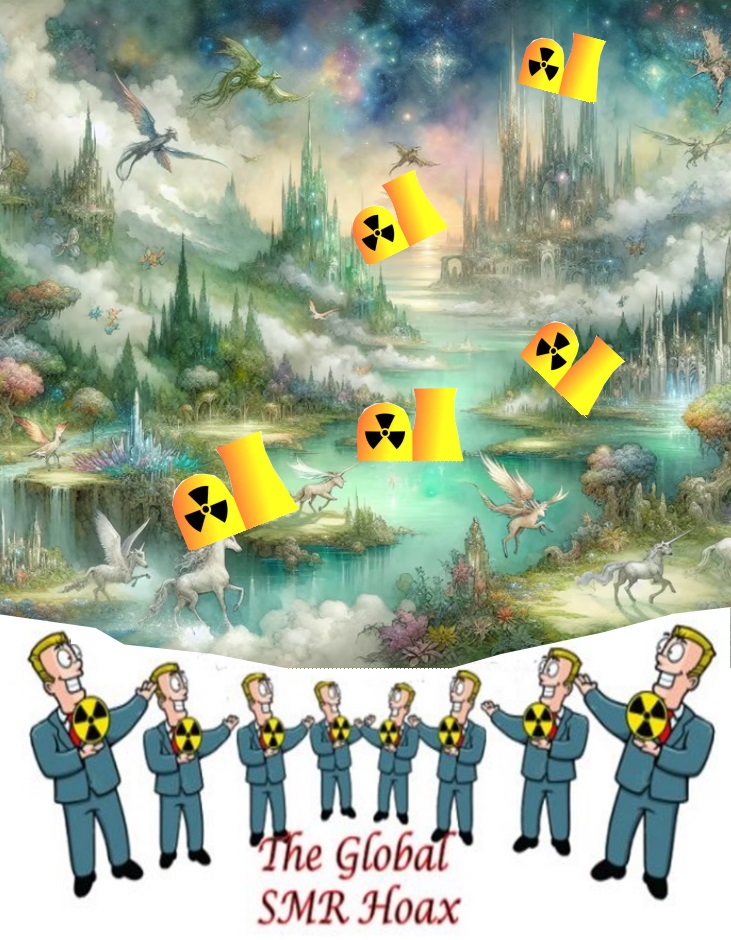
In recent years we have seen many stories with an upbeat message about small modular reactors (SMRs) and ‘races’ to develop them. But in fact, the concept of SMR is a bogus term that tries to give the impression that something new in nuclear power is afoot. It most certainly is not. In fact what are called SMRs cannot easily be distinguished from nuclear power plants that were built in the 1940s to 1960s, long before the SMR notion was invented. The term SMR does not exist as a useful definable concept.
Even examples of new so-called SMRs are practically non-existent around the world when it comes to operating projects. But there has been a tremendous amount of hype. Indeed the hype seems to grow in inverse proportion to the lack of any projects being completed. First, a definition:
According to the International Atomic Energy Agency:
‘Small modular reactors (SMRs) are advanced nuclear reactors that have a power capacity of up to 300 MW(e) per unit, which is about one-third of the generating capacity of traditional nuclear power reactors. SMRs, which can produce a large amount of low-carbon electricity, are:
- Small – physically a fraction of the size of a conventional nuclear power reactor.
- Modular – making it possible for systems and components to be factory-assembled and transported as a unit to a location for installation.
- Reactors – harnessing nuclear fission to generate heat to produce energy.’ (Ref: see HERE
Yet the problem with this definition is that none of this represents anything new i.e. something that has not been done long ago. The term ‘advanced’ is vague and does not seem to exclude approaches that have been tried before. The notion of modular is even more misleading in practice. That is because having smaller reactors reduces the scope for factory production of components.
There are fewer economies of scale for small reactors compared to making parts for larger-scale reactors (which require more parts of a particular type). The word ‘reactor’ is not new. So what’s new? Certainly nothing, in my view, to warrant the ascription of ‘fourth generation’ nuclear designs that these so-called SMR proposals have often been given.
In practice, even projects that are called SMRs are very, very few in operation around the world. There are very few even under construction, and the ones that are seem to be taking a long time to build. That is, according to the International Atomic Energy Agency. So how can we explain this apparent contrast between, as the media stories put it ‘races’ to develop SMRs, and reality?
The problems with the concept of SMRs can be explained by reference to the historical development of nuclear power. In the 1950s and 1960s, the nuclear industry found that the (then) existing designs of small(er) reactors, what is now called SMRs, were uneconomic compared to larger reactors. As a result, the industry developed larger reactor types. The larger reactors, of course, have had very big construction problems and costs. However, this should not obscure the fact that in comparison the smaller reactors were even worse. Let us look at some of the reactor history in terms of size.
Originally, after WW2, the first electricity-generating nuclear reactors were designed for nuclear submarines. These pressurised water reactors (PWRs) range from a few MWe to over 100MWe for the largest submarines today. I would say that they are the original small nuclear reactors. Indeed here it gets a bit confusing. Why aren’t these submarine reactors called small modular reactors? Essentially, I think, because they do not fit into the current narrative which tries to give the impression that there is a new type of advanced reactor called an SMR.
Small reactors were then designed, starting in the 1950s, for land-based operations to supply mainstream electricity grids. Then design sizes increased and PWRs became the dominant technology throughout the world. Chart 1 shows how nuclear reactor sizes have increased over the decades in the case of the UK. You can see how the average design size for reactors increased from around 100 MW in the 1950s, to 400 MW in the 1960s, over 500 MW in the 1970s, and then to over 1000MW since the 1980s.
There is a very good reason that design sizes increased from the 1950s onwards. Indeed this reason seems to have been mostly overlooked in the blizzard of press releases about small modular reactors. It is all to do with the economies of scale.
There was a (at the time, well-regarded) book published in 1978 by Bupp and Derian (see later reference). This summed up the reason why the rush of ordering nuclear reactors in the USA came to an end in the 1970s. It has great relevance to the issue of small reactors today. It is all to do with the size and cost and also the safety requirements of reactors. They said:
‘In 1955 a 180 MW light water reactor design called for more than 30 tons of structural steel and about one-third of a cubic yard of concrete per MW. By 1965 a much larger plant of about 550MW required less than half as much of these materials per megawatt of capacity. These efficiencies reflect classic ‘economies of scale’. Then, in the late 1960s, the trend reversed. Larger light water plants began to require more, not less, structural materials per unit of capacity; by 1975, the steel and concrete needed per megawatt for 1,200 MW plant approximately equaled the 1960 requirement for a 200-300 MW design. This reversal was a direct consequence of stricter safety and environmental protection requirements laid down during this period. More stringent safety requirements meant thicker concrete walls.’1
So, essentially, nuclear power plants became bigger because of the drive for economies of scale. A big reason why nuclear power did not continue to become cheaper was because, by the 1970s, demands for stricter safety precautions were being translated into regulations. This meant that the progress in reduced costs had been reversed. More recent (so-called Generation 3) nuclear designs have been based on the hope that ever-bigger reactors with better safety designs would once again pave the way to cheaper nuclear reactors. It has not, of course, happened.
In other words, small modular reactors will not produce cheaper outcomes. Arguing for such a proposition flies in the face of history, not to mention basic engineering economic theory. That is, of course, if we assume that small reactors have to deliver the same safety levels as big reactors. Yet it is difficult to see the regulators scrapping the main safety requirements accumulated since the 1960s just for small nuclear reactors. Why would they? Having a much larger number of smaller reactors would increase the risk of there being a serious accident at one of them.
Progress in constructing new small reactors
This is extremely thin. Only two operating so-called SMRs were identified by the International Atomic Energy Agency in 2024, and there are very few others (three in fact) listed as under construction (see HERE page 13). So far as I can see all are very well supported by direct state or research demonstration funds. That is they are nowhere near becoming commercial propositions able to survive on the promise of privately funded bank loans and equity investment.
Of the two so-called SMR plants in operation, one is a 200 MWe reactor built in China (See HERE) – which as you can see in Chart 1 is actually rather bigger than the average reactor size in the UK designed in the 1950s. Not only that, but it took a total of 12 years to construct (see HERE). The other operational project is based on a ship in Russia. This could be described as a variation on a submarine reactor built to support a very niche market, with financing details not available.
One of the three of the three so-called SMRs under construction is being built in Argentina (and whose funding stream is threatened by Government cutbacks). This has a 32MWe reactor and is a variant of a PWR. Construction began in 2014. This is oriented mainly not to electricity production but to an extremely limited market in radioactive products.
The second is a 300 MWe ‘fast’ reactor being built in Russia. Fast reactors are certainly not new. They have been tried in various countries before (including the UK) and have not been commercially successful.
A third, much publicised, development is the 150 MWe Kairos reactor in the USA. This power plant is sited at East Tennessee Technology Park. The US Government’s Department of Energy is supporting the construction of the project. It is a ‘pebble’ bed high temperature, gas cooled reactor. Although called ‘Advanced’ pebble bed reactors were first mooted in the 1940s and have been tried and discontinued before.
Indeed, as Steve Thomas has said about the notion of ‘Advanced’ reactors (see HERE) ‘The advanced designs are not new. For example, sodium cooled fast reactors and high temperature reactors were built as prototypes in the 1950s and 1960s but successive attempts to build demonstration plants have been short-lived failures. It is hard to see why these technologies should now succeed given their poor record. Other designs have been talked about for decades but have not even been built as prototype power reactors – so again it is hard to see why the problems that prevented their deployment to date will be overcome.’
Other variants, including thorium-based plants are proposed (most recently in China). On the one hand, all of these ideas have been tried before, but are being presented as ‘new’ developments. They have failed before. These warmed-up versions of previously tried technical nuclear fission variants do not solve nuclear power’s basic cost problems. These problems involve too much steel, and concrete and the need for unique, very expensive, types of parts and techniques that are too specialist to be sourced from standard industrial supply chains.
This (Kairos) project was made famous by an announcement from Google to buy power from it. However, beyond that, I have no information about how much money Google has actually spent on the project or indeed how much it has agreed to pay for the power the reactor will produce.
Indeed the Autumn of 2024 saw a flurry of announcements of support for so-called SMRs from ‘Tech Giants’. However, the terms of the financial support were generally vague. The announcements were made just prior to the General Election and seemed to respond to the rising hype about powerful AI. In a different blog post I analyse this AI over-hype, (see HERE).
Of course, we can all agree to buy power from people for a specified price by agreeing to PPAs. No commitment to part with money is necessarily required. Whether banks and equity investors are willing to lend money to the energy project in question on the basis of such PPAs is an entirely separate matter.
SMRs in the UK
There are no projects called SMRs operating in the UK. None are under construction and none are in the process of getting anywhere near construction starts. The UK Government for its part, amongst a fanfare of publicity about support for SMRs, promises an aim of ‘deploying a First-of-a-Kind SMR by the early 2030s’ (See HERE). Of course, as Chart 1 above implies, there used to be reactors that are small enough to fit the definition of ‘SMR’. They just weren’t called SMRs at the time.
Indeed, Rolls Royce, has, for several years been promoting their so-called small modular reactor (SMR) design. This is rather larger than a lot of past British nuclear power plants, albeit none still in operation. Their proposed (so-called) SMR design has gone up to 470MWe (See HERE). It uses PWR technology.
This proposed project is rather larger, for example than the 235 MW units which comprised Hinkley A nuclear power station. This power plant began construction in 1957, started generation in 1966, and stopped generating electricity to the grid in 1999. When construction of this project began such a nuclear power plant would have been called large, not small!
I do not understand the claims made by Rolls Royce for their ‘SMR’ to be called modular. The power plant has to be constructed on-site. As I have already stated I do not understand why there is more, or even as much, scope for mass production of parts compared to a conventional reactor such as that being built at Hinkley C.
I could say much the same about Holtec, a US nuclear services company who are promoting a 300 MW reactor – again not really that small. Like Rolls Royce, it has been exciting local people in places in Yorkshire with talk of building factories. This seems unlikely to happen without, essentially the UK Government paying for all or at least much of the project.
My prize for the most ingenious piece of SMR promotion are the claims made by ‘Last Energy’, who are promoting what they describe as a 20 MW PWR reactor. A headline appeared on the Data Centre Dynamics website saying ‘Last Energy claims to have sold 24 nuclear reactors in the UK for £2.4 billion’ (see HERE). Associated with this was another story in Power Magazine saying (see HERE) that the company had secured PPAs for 34 power plants in the UK and Poland, something that was described as ‘extraordinary progress’.
I cannot see any evidence that these power plants are being constructed, ie ‘concrete poured’ at any site. However, it is claimed that the first project will be finished by 2027. There are reports that the company has been conducting site surveys in Wales (see HERE).
What I find especially puzzling about the Last Energy promotion is the lack of a mention on a specific page on the website of the Office of Nuclear Regulation (ONR). In order for a new design of a nuclear power plant to be licensed to generate in the UK, it has to be approved for what is a very lengthy (several years) and very expensive (many £millions) Generic Design Assessment (GDA). However, there is no mention of Last Energy on the ONR information page giving the current and completed GDAs (see HERE).
Why is all this so-called ‘SMR’ activity happening now?
There are two interrelated factors in operation here; material rewards and political-psychological pressures. Material factors include the designation of governmental programmes to fund demonstrations of so-called SMRs. The second is the possibility of raising share capital to fund projects labeled as ‘SMR’.
Of course this in itself does not explain why this has happened in recent years. An excerpt from an opinion piece published in the Guardian in September 2015 can give us an important clue to the political psychology involved. In an article entitled ‘We are pro-nuclear, but Hinkley C must be scrapped’, written by George Monbiot, Mark Lynas and Chris Goodall, there was a subtitle: ‘Overpriced, overcomplicated and overdue, the Hinkley project needs to be killed off and the money invested into other low-carbon technologies’. The authors’ recommendations for alternative funding went on to say: ‘We would like to see the government produce a comparative study of nuclear technologies, including the many proposed designs for small modular reactor, and make decisions according to viability and price’ (See HERE)
What this looks like to me is a face-saving device. It tries to deal with the (recently re-discovered) fact that new nuclear power stations are much too expensive. I interpret this as a piece of cognitive dissonance to deal with the very apparent limitations of environmentalists trying to promote nuclear power as a response to climate change.
This is a form of cognitive denial of the obvious; that nuclear power is extremely expensive and difficult and very longwinded to deliver. SMRs have been at least partly invented to serve the purpose of shifting mental attention from this fact, a form of denial. The denial is sugar-coated with the notion that we can escape reality by embracing so-called SMRs.
This cognitive dissonance allows people to carry on believing in and promoting nuclear power in spite of reality. A new SMR alternative reality is created. This fills the void created by dull reality.
This, in practice, diverts attention from the central cost problems of nuclear power. These are the quantities of steel and concrete needed to build nuclear power stations, the need for unique types of very expensive parts, and the need for exacting, highly specialised processes of building the reactors. Making smaller nuclear plants will not solve these problems. Indeed it makes them worse insofar as this reduces the possibilities for economies of scale.
Now I am not trying to heap the blame for the SMR fantasies on Monbiot, Lynas, and Goodall – at least not entirely! There is a large well of public wishful thinking attached to things with the word ‘nuclear’ in them and this well can be tapped by concerted, if flimsily-based efforts. The promoters of the so-called SMR technologies are the ones who have ignored history to produce what is, in essence, a warmed-up version of a long-discarded set of nuclear technological ideas and practices. Indeed I would class this stream of historical re-interpretation as an example of the use of postmodernism in the nuclear industry.
SMRs as nuclear postmodernism
Postmodernism emerged originally in architecture. It was, put simply, about reviving ancient, or at least old, building designs and using them in contemporary building design (See HERE). The old is presented therefore as the new. For buildings, that’s a pretty harmless, indeed often pleasing, pathway to adopt. However, to present old (smaller) sizes of nuclear power stations (often mixed in with long discarded design ideas) as new and call them ‘Advanced’ nuclear technologies is, in my view, doing a great disservice to us all. It skews public debate relatively against real green energy options by presenting an option (so-called SMRs) that does not exist.
Social scientists are often derided for talking about postmodernism. Yet here we see the apparent apotheosis of natural science, the nuclear sector, engaging in precisely this sort of approach. They are presenting the technologies of the 1940s to 1960s as ‘new’. We should not have to take it seriously. Many people in the nuclear industry are either living in their own alternative postmodern reality or at least are tolerating this non-existent vision.
There may be a small number of demonstration projects constructed that are called SMRs. They are, and will be, expensive and take a long to build. But they are really just warmed-up old-style versions of the 1950s-1960s-sized reactors, mixed in sometimes with tried and failed techniques. They certainly do not represent an ‘advanced’ path for a nuclear-powered future. As a concept, Small Modular Reactors have no existence outside of a postmodernist nuclear industry fantasy.
I invite people to listen to Bonzo Dog’s old hit ‘Urban Spaceman’ (see HERE). The general spirit and especially the last couple of lines of the song seem especially apposite to a discussion of so-called SMRs.
After I wrote this post came the news that the Ontario Government has given the go-ahead to the so-called SMR project at Darlington. Acclaimed as a breakthrough, it may only be a breakthrough as being the most expensive nuclear power scheme in history. Its starting price, as around $21 billion (Canadian dollars, see HERE) for 1.2 GW is almost exactly the same as the final price of the Flamanville EPR reactor in France built by EDF. This came in at €13 billion, roughly 4 times its original price tag (see HERE). Yet Flamanville has a generating capacity of 1.63 GW, that is around a third larger than the sum of the capacities of the four new Ontario reactors! So the Darlington scheme is already a third more expensive than Flamanville!

The crucial difference between the new Ontario scheme and the French power plant at Flamanville is that construction is only about to start at the Canadian scheme. So, let's repeat this. The (spuriously) acclaimed Ontario SMR scheme is already around a third more expensive than the widely panned super-expensive French Flamanville EPR even before the inevitable construction cost increases start piling up!

Given that all nuclear power plant built in the West this century have all come in a great deal more expensive than projected before construction, the cost will spiral even farther upwards. It is likely that the Ontario SMR project will win the prize of the most expensive nuclear project (per GW) this century! Even at its projected price the Ontario SMR scheme is calculated by the Ontario Clean Air Alliance to be up to 8xs more expensive than wind power (See HERE) This puts my arguments in this post in perspective, SMRs are going to be a lot more expensive than conventional nuclear power!
pages 156-157, Bupp, I, and Derian, J-C. 1978. Light Water: How the Nuclear Dream Dissolved. New York: Basic Books
Tracing radiation through the Marshall Islands: Reflections from a Greenpeace nuclear specialist
Greenpeace, Shaun Burnie, 30 April 2025
We’ve visited ground zero. Not once, but three times. But for generations, before these locations were designated as such, they were the ancestral home to the people of the Marshall Islands.
As part of a team of Greenpeace scientists and specialists from the Radiation Protection Advisors team, we have embarked on a six-week tour on-board the Rainbow Warrior, sailing through one of the most disturbing chapters in human history: between 1946 and 1958, the United States detonated 67 nuclear bombs across the Marshall Islands — equivalent to 7,200 Hiroshima explosions.
During this period, testing nuclear weapons at the expense of wonderful ocean nations like the Marshall Islands was considered an acceptable practice, or as the US put it, “for the good of mankind”. Instead, the radioactive fallout left a deep and complex legacy—one that is both scientific and profoundly human, with communities displaced for generations.
Between March and April, we traveled on the Greenpeace flagship vessel, the Rainbow Warrior, throughout the Marshall Islands, including to three northern atolls that bear the most severe scars of Cold War nuclear weapons testing:
- Enewetak atoll, where, on Runit Island, stands a massive leaking concrete dome beneath which lies plutonium-contaminated waste, a result of from a partial “clean-up” of some of the islands after the nuclear tests
- Bikini atoll, a place so beautiful, yet rendered uninhabitable by some of the most powerful nuclear detonations ever conducted;
- And Rongelap atoll, where residents were exposed to radiation fallout and later convinced to return to contaminated land, part of what is now known as Project 4.1, a U.S. medical experiment to test humans’ exposure to radiation.
This isn’t fiction, nor distant past. It’s a chapter of history still alive through the environment, the health of communities, and the data we’re collecting today. Each location we visit, each sample we take, adds to a clearer picture of some of the long-term impacts of nuclear testing—and highlights the importance of continuing to document, investigate, and attempt to understand and share these findings.
These are our field notes from a journey through places that hold important lessons for science, justice, and global accountability……………………………………………………………………………………………………
Stop 1: Enewetak Atoll – the dome that shouldn’t exist
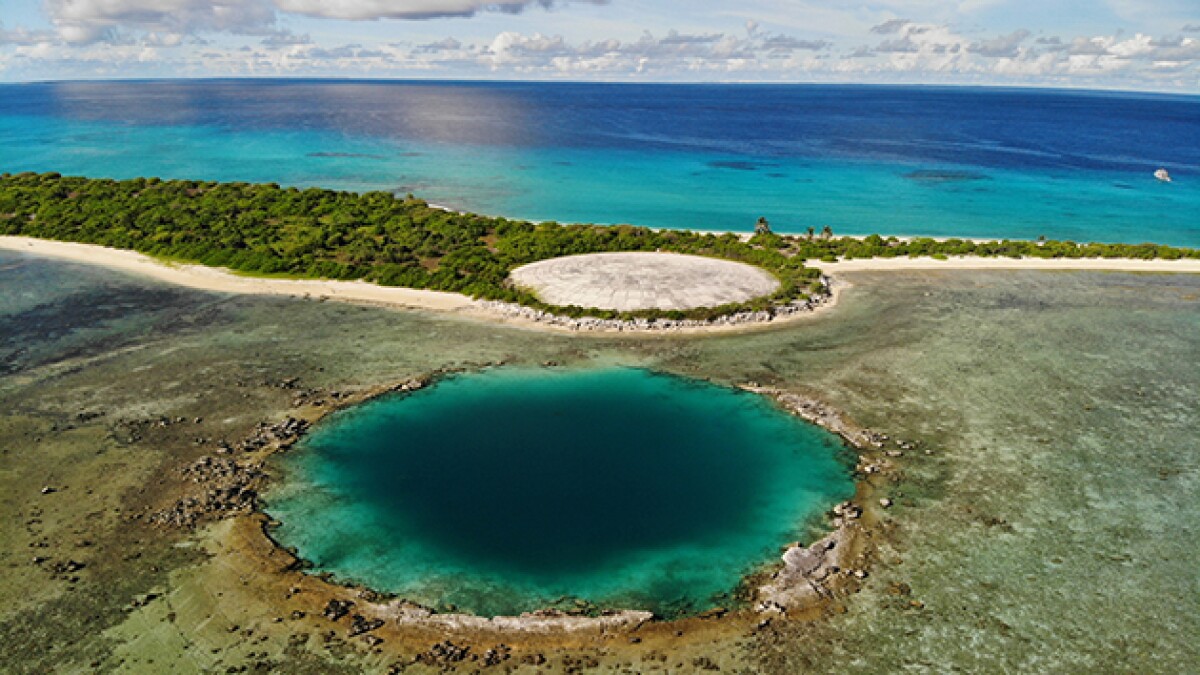
At the far western edge of the Marshall Islands is Enewetak. The name might not ring a bell for many, but this atoll was the site of 43 U.S. nuclear detonations. Today, it houses what may be one of the most radioactive places in the world: the Runit Dome
Once a tropical paradise thick with coconut palms, now Runit Island is capped by a massive concrete structure the size of a football field. Under this dome—cracked, weather-worn, and only 46 centimeters thick in some places—lies 85,000 cubic meters of radioactive waste. These substances are not only confined to the crater—they are also found across the island’s soil, rendering Runit Island uninhabitable for all time. The contrast between what it once was and what it has become is staggering. We took samples near the dome’s base, where rising sea levels now routinely flood the area.
We collected coconut from the island which will be processed and prepared in the Rainbow Warrior’s onboard laboratory. Crops such as coconut are a known vector for radioactive isotope transfer, and tracking levels in food sources is essential for understanding long-term environmental and health risks. The local consequences of this simple fact are deeply unjust. While some atolls in the Marshall Islands can harvest and sell coconut products, the people of Enewetak are prohibited from doing so because of radioactive contamination. They have lost not only their land and safety but also their ability to sustain themselves economically. The radioactive legacy has robbed them of income and opportunity.
One of the most alarming details about this dome is that there is no lining beneath the structure – it is in direct contact with the environment – while containing some of the most hazardous long lived substances ever to exist on planet earth. It was never built to withstand flooding, sea level rise, and climate change. The scientific questions are urgent: how much of this material is already leaking into the lagoon? What are the exposure risks to marine ecosystems and local communities?
We are here to help answer questions with new, independent data, but still, being in the craters and walking on this ground where nuclear Armageddon was unleashed, is an emotional and surreal journey.
Stop 2: Bikini – a nuclear catastrophe, labeled “for the good of mankind”
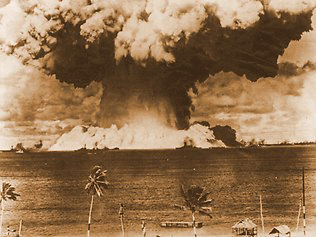
Unlike Chernobyl or Fukushima, where communities were devastated by catastrophic accidents, Bikini tells a different story. This was not an accident. The nuclear destruction of Bikini was deliberate, calculated, and executed with full knowledge that entire ways of life were going to be destroyed.
Bikini atoll is incredibly beautiful and would look idyllic on any postcard. But we know what lies beneath: the site of 23 nuclear detonations, including Castle Bravo, the largest ever nuclear weapons test conducted by the United States.
Castle Bravo alone released more than 1,000 times the explosive yield of the Hiroshima bomb. The radioactive fallout massively contaminated nearby islands and their populations together with thousands of U.S. military personnel. Bikini’s former residents were forcibly relocated in 1946 before nuclear testing began, and with promises of a safe return. But the atoll is still uninhabited and most of the new generations of Bikinians have never seen their home island. As we stood deep in the forest next to a massive concrete blast bunker, reality hit hard – behind its narrow lead-glass viewing window, U.S. military personnel once watched the evaporation of Bikini lagoon.
On our visit we notice there’s a spectral quality to Bikini. The homes of the Bikini islanders are long gone. In its place now stand a scattering of buildings left by the U.S. Department of Energy: rusting canteens, rotting offices, sleeping quarters with peeling walls, and traces of the scientific experiments conducted here after the bombs fell.
On dusty desks we found radiation reports, notes detailing crop trials, and a notebook meticulously tracking the application of potassium to test plots of corn, alfalfa, lime, and native foods like coconut, pandanus, and banana. The potassium was intended to block the uptake of caesium-137, a radioactive isotope, by plant roots. The logic was simple: if these crops could be decontaminated, perhaps one day Bikini could be repopulated.
We collected samples of coconuts and soil—key indicators of internal exposure risk if humans were to return. Bikini raises a stark question: what does “safe” mean, and who gets to decide? The U.S. declared parts of Bikini habitable in 1970, only to evacuate people again eight years later after resettled families suffered from radiation exposure. The science is not abstract here. It is personal. It is human. It has real consequences.
Stop 3: Rongelap – setting for Project 4.1

The Rainbow Warrior arrived at the eastern side of Rongelap atoll anchoring one mile from the center of Rongelap Island, the church spire and roofs of “new” buildings reflecting the bright sun. In 1954, fallout from the Castle Bravo nuclear detonation on Bikini blanketed this atoll in radioactive ash—fine, white powder that children played in, thinking it was snow. The U.S. government waited three days to evacuate residents, despite knowing the risks. The U.S. government declared it safe to return to Rongelap in 1957 – but it was a severely contaminated environment. The very significant radiation exposure to the Rongelap population caused severe health impacts: thyroid cancers, birth defects such as “jellyfish babies”, miscarriages, and much more.
In 1985, after a request to the US government to evacuate was dismissed, the Rongelap community asked Greenpeace to help relocate them from their ancestral lands. Using the first Rainbow Warrior, and over a period of 10 days and three trips, 350 residents collectively dismantled their homes bringing everything with them – including livestock, and 100 metric tons of building material – where they resettled on the islands of Mejatto and Ebeye on Kwajalein atoll. It is a part of history that lives on in the minds of the Marshallese people we meet in this ship voyage – in the gratitude they still express, the pride in keeping the fight for justice, and in the pain of still not having a permanent, safe home.
Now, once again, we are standing on their island of Rongelap, walking past abandoned buildings and rusting equipment, some of it dating from the 1980s and 1990s – a period when the U.S. Department of Energy launched a push to encourage resettlement declaring that the island was safe – a declaration that this time, the population welcomed with mistrust, not having access to independent scientific data and remembering the deceitful relocation of some decades before.
Here, once again we sample soil and fruits that could become food if people came back. It is essential to understand ongoing risks—especially for communities considering whether and how to return.
This is not the end. It is just the beginning
Our scientific mission is to take measurements, collect samples, and document contamination. But that’s not all we’re bringing back.
We carry with us the voices of the Marshallese who survived these tests and are still living their consequences. We carry images of graves swallowed by tides near Runit Dome, stories of entire cultures displaced from their homelands, and measurements of radiation showing contamination still persists after many decades. There are 9,700 nuclear warheads still held by military powers around the world – mostly in the United States and Russian arsenals. The Marshall Islands was one of the first nations to suffer the consequences of nuclear weapons – and the legacy persists today.
We didn’t come to speak for the Marshallese. We came to listen, to bear witness, and to support their demand for justice. We plan to return next year, to follow up on our research and to make results available to the people of the Marshall Islands. And we will keep telling these stories—until justice is more than just a word…….. https://www.greenpeace.org/international/story/74328/tracing-radiation-through-the-marshall-islands-reflections-from-a-greenpeace-nuclear-specialist/
Kingston Fossil Plant and Oakridge Nuclear Facility – an unholy alliance of radioactive pollution,
While no one was killed by the 2008 coal ash spill itself, dozens of workers have died from illnesses that emerged during or after the cleanup. Hundreds of other workers are sick from respiratory, cardiac, neurological, and blood disorders, as well as cancers.
The apparent mixing of fossil fuel and nuclear waste streams underscores the long relationship between the Kingston and Oak Ridge facilities.
Between the 1950s and 1980s, so much cesium-137 and mercury was released into the Clinch from Oak Ridge that the Department of Energy, or DOE, said that the river and its feeder stream “served as pipelines for contaminants.” Yet TVA and its contractors, with the blessing of both state and federal regulators, classified all 4 million tons of material they recovered from the Emory as “non-hazardous.”
A U.S. Environmental Protection Agency analysis confirms that the ash that was left in the river was “found to be commingled with contamination from the Department of Energy (DOE) Oak Ridge Reservation site.
For nearly a century, both Oak Ridge and TVA treated their waste with less care than most families treat household garbage. It was often dumped into unlined, and sometimes unmarked, pits that continue to leak into waterways. For decades, Oak Ridge served as the Southeast’s burial ground for nuclear waste. It was stored within watersheds and floodplains that fed the Clinch River. But exactly where and how this waste was buried has been notoriously hard to track.
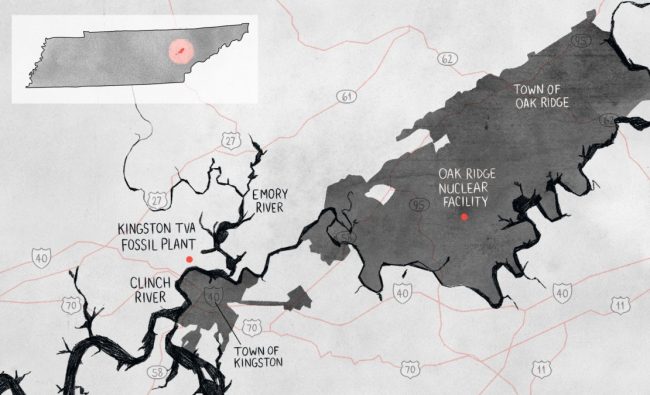
A Legacy of Contamination, How the Kingston coal ash spill unearthed a nuclear nightmare, Grist By Austyn Gaffney on Dec  15, 2020 This story was published in partnership with the Daily Yonder.
In 2009, App Thacker was hired to run a dredge along the Emory River in eastern Tennessee. Picture an industrialized fleet modeled after Huck Finn’s raft: Nicknamed Adelyn, Kylee, and Shirley, the blue, flat-bottomed boats used mechanical arms called cutterheads to dig up riverbeds and siphon the excavated sediment into shoreline canals. The largest dredge, a two-story behemoth called the Sandpiper, had pipes wide enough to swallow a push lawnmower. Smaller dredges like Thacker’s scuttled behind it, scooping up excess muck like fish skimming a whale’s corpse. They all had the same directive: Remove the thick grey sludge that clogged the Emory.
The sludge was coal ash, the waste leftover when coal is burned to generate electricity. Twelve years ago this month, more than a billion gallons of wet ash burst from a holding pond monitored by the region’s major utility, the Tennessee Valley Authority, or TVA. Thacker, a heavy machinery operator with Knoxville’s 917 union, became one of hundreds of people that TVA contractors hired to clean up the spill. For about four years, Thacker spent every afternoon driving 35 miles from his home to arrive in time for his 5 p.m. shift, just as the makeshift overhead lights illuminating the canals of ash flicked on.
Dredging at night was hard work. The pump inside the dredge clogged repeatedly, so Thacker took off his shirt and entered water up to his armpits to remove rocks, tree limbs, tires, and other debris, sometimes in below-freezing temperatures. Soon, ringworm-like sores crested along his arms, interwoven with his fading red and blue tattoos. Thacker’s supervisors gave him a cream for the skin lesions, and he began wearing long black cow-birthing gloves while he unclogged pumps. While Thacker knew that the water was contaminated — that was the point of the dredging — he felt relatively safe. After all, TVA was one of the oldest and most respected employers in the state, with a sterling reputation for worker safety.
Then, one night, the dredging stopped.
Sometime between December 2009 and January 2010, roughly halfway through the final, 500-foot-wide section of the Emory designated for cleanup, operators turned off the pumps that sucked the ash from the river. For a multi-billion dollar remediation project, this order was unprecedented. The dredges had been operating 24/7 in an effort to clean up the disaster area as quickly as possible, removing roughly 3,000 cubic yards of material — almost enough to fill an Olympic-sized swimming pool — each day. But official reports from TVA show that the dredging of the Emory encountered unusually high levels of contamination: Sediment samples showed that mercury levels were three times higher in the river than they were in coal ash from the holding pond that caused the disaster.
Then there was the nuclear waste. Continue reading
The Conservative Argument Against Nuclear Power in Japan

It has been said that nuclear power stations are like nuclear weapons directed at your own country. I couldn’t agree more.
Getting rid of these “nuclear weapons directed at our own country” will not require huge defense spending or difficult diplomatic negotiations. All that is required is the ability to look square at the facts, and a conservative mindset determined to protect our rich and productive land and pass it on to the next generation.
Higuchi Hideak, Apr 15, 2025, https://www.nippon.com/en/in-depth/d01111/
A Devastating Loss of Territory
“Conservatism is essentially realism. A conservatism that refuses to confront reality is as worthless as a progressivism without ideals.”
This is how I opened my Hoshu no tame no genpatsu nyūmon (Nuclear Power: An Introduction for Conservatives), which came out last summer. In the book, I tried to bring attention to the contradictions inherent in the policies of the Liberal Democratic Party: a party that claims to support conservative values and uphold the ideals of patriotism but nevertheless advocates that Japan should continue or increase its reliance on nuclear power, even in the aftermath of the Fukushima disaster.
In the book, I made three main points. First, nuclear power is fundamentally incompatible with conservatism and patriotism. Second, nuclear power stations are inherently vulnerable to earthquakes, for structural reasons. And third, nuclear power stations are also vulnerable from a national security perspective.
The disaster at the Tokyo Electric Power Company’s Fukushima Daiichi Nuclear Power Station in March 2011 led to the evacuation of more than 150,000 people. More than 20,000 are still not able to return to their homes even today. And the state of emergency declared shortly after the disaster has still not been lifted, 14 years later.
In Fukushima Prefecture, evacuation orders are still in effect across more than 300 square kilometers, in what the government has designated as “closed to inhabitation indefinitely.” This is in spite of the fact that the annual safety limits for radiation exposure among the general population were lifted from 1 millisievert to 20 millisieverts. An area of more than 300 square kilometers—equivalent to the size of Nagoya, one of Japan’s key economic centers—is still effectively under evacuation orders. The country has effectively lost territory 50 times larger than the Senkaku Islands in Okinawa Prefecture, controversially claimed by China and the frequent focus of national security anxiety. As if this weren’t bad enough, more than 300 young people have been diagnosed with childhood thyroid cancer, a condition that would normally be expected to affect only around one in a million. Many of these have been serious cases requiring invasive surgery.
When I sat as presiding judge in the case brought before the Fukui District Court to stop the planned reactivation of the Ōi Nuclear Power Station, operated by the Kansai Electric Power Company, the argument put forward by the Liberal Democratic Party (then newly returned to power) and the business lobby was that shutting down nuclear plants would force Japan to import vast amounts of oil and natural gas to fuel thermal power stations. This would result in a massive outflow of the nation’s wealth and lead to national impoverishment.
On May 21, 2014, the court handed down its verdict. Even if shutting down the plant did lead to a trade deficit, the court rejected the idea that this would represent a loss of national wealth. True national wealth, the court held, consists of rich and productive land—a place where people can put down roots and make a living. The risk of losing this, and being unable to recover it, would represent a more serious loss of national wealth. Compare the arguments of the LDP and economic business lobby with the decision of the Fukui District Court. Which represents true conservatism, unafraid to look squarely at the facts about nuclear disasters? Which best represents the true spirit of patriotism?
Disaster Caused by a Power Failure
Let’s consider a few of the characteristics of nuclear power stations. First, they must be continuously monitored and supplied with a constant flow of water to cool the reactor. Second, if the supply of electricity or water is interrupted, there is the risk of an immediate meltdown. A serious accident could potentially mean the end of Japan as a nation.
The accident at Fukushima Daiichi came perilously close to rendering much of the eastern part of Japan uninhabitable. Yoshida Masao, the director in charge at the time, feared that radioactive fallout would contaminate all of eastern Japan when it looked as though the containment building at the Unit 2 reactor would rupture after venting became impossible. The chair of the Japan Atomic Energy Commission also expected it would be necessary to evacuate the population from a 250-kilometer radius of the plant, including Tokyo.
The accident at Fukushima did not happen because the reactor was damaged directly by the earthquake or tsunami. The initial earthquake interrupted the external supply of electricity, and the tsunami that followed cut off the emergency supply as well. Essentially, a power failure made it impossible to cool the reactor, and this was enough to trigger a catastrophe.
These characteristics mean that the resilience of nuclear power stations depends not on how physically robust the reactors and containment buildings are, but on the dependability of the electricity supplied to them. Nuclear power plants in Japan are designed to be able to withstand seismic activity between 600 to 1,000 gals (a gal being a unit of acceleration used in gravimetry to measure the local impact of an earthquake). But earthquakes over 1,000 gals are not unusual in Japan, and some have exceeded 4,000 gals. For this reason, some construction companies build housing that is designed to withstand seismic shocks up to 5,000 gals.
There are only 17 fully constructed nuclear power stations across the country. Six earthquakes exceeding the safety standards have already occurred at four of these: Onagawa, Shika, Kashiwazaki-Kariwa, and Fukushima Daiichi (twice each at Onagawa and Shika). Japan experiences more earthquakes than any other country on earth. Although the country accounts for just 0.3% of the world’s landmass, more than 10% of all the world’s earthquakes happen here. Despite the inherent dangers, there are 54 nuclear reactors along the coasts, around 10% of the world’s total.
Since it is impossible to forecast what scale of earthquake might hit a given site in an earthquake-prone country like Japan, construction companies operate on the principle that houses should be able to withstand seismic events equivalent to the strongest earthquake on record in the past.
The government ratified the Seventh Strategic Energy Plan at a cabinet meeting in February this year. This latest iteration of the plan removed references to an ambition to reduce the country’s dependence on nuclear power as much as possible, and signaled a clear intention to restore nuclear power to a more prominent position in the country’s energy strategy. Despite this, the seismic planning standards for nuclear power stations still assume that it is possible to accurately predict the maximum size of any earthquake that will hit in the future by analyzing past seismic data and running a site assessment of local geotechnical conditions. Whose position demonstrates better scientific judgement and a more realistic assessment of the facts—the government’s or the construction companies’?
Why Europe’s Biggest Nuclear Power Plant Fell into the Hands of the Enemy
TEPCO was a huge company, with annual revenue of around ¥5 trillion and a profit margin of 5%, meaning the company was making ¥250 billion every year. But the economic damages from the Fukushima accident came to at least ¥25 trillion, equivalent to 100 years in revenue for the company. What can we say about an approach to electricity generation in which a single accident can wipe out a century’s worth of revenue and essentially bankrupt a huge company like TEPCO? It is an energy source that is not just cost-ineffective but unsustainable.
For example, it is estimated that if an accident on a similar scale happened at the Tōkai Daini Nuclear Power Station in Ibaraki Prefecture, it would cause damage worth ¥660 trillion (compared to the national government budget of ¥110 trillion). As head of the Fukushima plant, Yoshida was resigned to losing the containment building of the unit 2 reactor to an explosion. He was saved by a “miracle” when a weakness somewhere in the structure of the building allowed pressure to escape and a rupture was avoided. Without this lucky intervention, it is estimated that the economic damages might have reached ¥2.4 quadrillion.
These figures make clear that the problem of nuclear power is not merely an energy issue. It has profound implications for national survival, and should be regarded as a national security priority. Russia’s war in Ukraine has provided a stark reminder of the seriousness of this threat. The Zaporizhzhia station on the Dnieper River is the largest nuclear power plant in Europe. A threat from Russia to attack it was enough to persuade Ukraine to hand over the plant to Russian control. If the plant really had been attacked, it might have caused a crisis with the potential to lay waste to large parts of Eastern Europe.
It has been said that nuclear power stations are like nuclear weapons directed at your own country. I couldn’t agree more. And in Japan we have 54 of these reactors bristling our shores, all but unprotected against earthquakes, potential enemies, and terrorist attacks. The LDP government mocks those who oppose Japan’s holding the offensive capability to attack enemy bases and argue for an exclusively defense-oriented posture as indulging in “flower garden” thinking. At the same time, the party is blind to the fact that nuclear power stations represent this country’s biggest national defense vulnerability.
Getting rid of these “nuclear weapons directed at our own country” will not require huge defense spending or difficult diplomatic negotiations. All that is required is the ability to look square at the facts, and a conservative mindset determined to protect our rich and productive land and pass it on to the next generation.
In my previous books and articles, I addressed the legal issues involved in nuclear power. In my Nuclear Power: An Introduction for Conservatives, I made clear that my own political stance is conservative. I was prepared for a backlash from progressives, who make up the bulk of the antinuclear movement, but in fact I received no pushback from that quarter all. In fact, I was taken aback by the resounding support I received.
Most of the criticism came from supposed conservatives who were apparently determined to discredit my sincere intentions and grumbled that it was unseemly for a former judge to be sticking his nose into politics. On Amazon, my reviews were flooded with apparently coordinated personal attacks and slander. But I am still convinced that true and fair-minded conservatives will understand my true intentions.
Geologists acknowledge that it is simply not possible to accurately predict earthquakes with today’s science. A huge earthquake could strike tomorrow, causing a catastrophe at one of the nation’s nuclear power stations that could wipe out or render inhabitable large parts of the country. My aim is simply to make as many people as possible aware of this terrifying fact.
(Originally written in Japanese. )
How and where is nuclear waste stored in the US?

Gerald Frankel , Distinguished Professor of Materials Science and Engineering, The Ohio State University, April 14, 2025, https://theconversation.com/how-and-where-is-nuclear-waste-stored-in-the-us-252475
Around the U.S., about 90,000 tons of nuclear waste is stored at over 100 sites in 39 states, in a range of different structures and containers.
For decades, the nation has been trying to send it all to one secure location.
A 1987 federal law named Yucca Mountain, in Nevada, as a permanent disposal site for nuclear waste – but political and legal challenges led to construction delays. Work on the site had barely started before Congress ended the project’s funding altogether in 2011.
The 94 nuclear reactors currently operating at 54 power plants continue to generate more radioactive waste. Public and commercial interest in nuclear power is rising because of concerns regarding emissions from fossil fuel power plants and the possibility of new applications for smaller-scale nuclear plants to power data centers and manufacturing. This renewed interest gives new urgency to the effort to find a place to put the waste.
In March 2025, the U.S. Supreme Court heard arguments related to the effort to find a temporary storage location for the nation’s nuclear waste – a ruling is expected by late June. No matter the outcome, the decades-long struggle to find a permanent place to dispose of nuclear waste will probably continue for many years to come.
I am a scholar who specializes in corrosion; one focus of my work has been containing nuclear waste during temporary storage and permanent disposal. There are generally two forms of significantly radioactive waste in the U.S.: waste from making nuclear weapons during the Cold War, and waste from generating electricity at nuclear power plants. There are also small amounts of other radioactive waste, such as that associated with medical treatments.
Waste from weapons manufacturing
Remnants of the chemical processing of radioactive material needed to manufacture nuclear weapons, often called “defense waste,” will eventually be melted along with glass, with the resulting material poured into stainless steel containers. These canisters are 10 feet tall and 2 feet in diameter, weighing approximately 5,000 pounds when filled.
For now, though, most of it is stored in underground steel tanks, primarily at Hanford, Washington, and Savannah River, South Carolina, key sites in U.S. nuclear weapons development. At Savannah River, some of the waste has already been processed with glass, but much of it remains untreated.
At both of those locations, some of the radioactive waste has already leaked into the soil beneath the tanks, though officials have said there is no danger to human health. Most of the current efforts to contain the waste focus on protecting the tanks from corrosion and cracking to prevent further leakage.
Waste from electricity generation
The vast majority of nuclear waste in the U.S. is spent nuclear fuel from commercial nuclear power plants.
Before it is used, nuclear fuel exists as uranium oxide pellets that are sealed within zirconium tubes, which are themselves bundled together. These bundles of fuel rods are about 12 to 16 feet long and about 5 to 8 inches in diameter. In a nuclear reactor, the fission reactions fueled by the uranium in those rods emit heat that is used to create hot water or steam to drive turbines and generate electricity.
After about three to five years, the fission reactions in a given bundle of fuel slow down significantly, even though the material remains highly radioactive. The spent fuel bundles are removed from the reactor and moved elsewhere on the power plant’s property, where they are placed into a massive pool of water to cool them down.
After about five years, the fuel bundles are removed, dried and sealed in welded stainless steel canisters. These canisters are still radioactive and thermally hot, so they are stored outdoors in concrete vaults that sit on concrete pads, also on the power plant’s property. These vaults have vents to ensure air flows past the canisters to continue cooling them.
As of December 2024, there were over 315,000 bundles of spent nuclear fuel rods in the U.S., and over 3,800 dry storage casks in concrete vaults above ground, located at current and former power plants across the country.
Even reactors that have been decommissioned and demolished still have concrete vaults storing radioactive waste, which must be secured and maintained by the power company that owned the nuclear plant.
The threat of water
One threat to these storage methods is corrosion.
Because they need water to both transfer nuclear energy into electricity and to cool the reactor, nuclear power plants are always located alongside sources of water.
In the U.S., nine are within two miles of the ocean, which poses a particular threat to the waste containers. As waves break on the coastline, saltwater is sprayed into the air as particles. When those salt and water particles settle on metal surfaces, they can cause corrosion, which is why it’s common to see heavily corroded structures near the ocean.
At nuclear waste storage locations near the ocean, that salt spray can settle on the steel canisters. Generally, stainless steel is resistant to corrosion, which you can see in the shiny pots and pans in many Americans’ kitchens. But in certain circumstances, localized pits and cracks can form on stainless steel surfaces.
In recent years, the U.S. Department of Energy has funded research, including my own, into the potential dangers of this type of corrosion. The general findings are that stainless steel canisters could pit or crack when stored near a seashore. But a radioactive leak would require not only corrosion of the container but also of the zirconium rods and of the fuel inside them. So it is unlikely that this type of corrosion would result in the release of radioactivity.
A long way off
A more permanent solution is likely years, or decades, away.
Not only must a long-term site be geologically suitable to store nuclear waste for thousands of years, but it must also be politically palatable to the American people. In addition, there will be many challenges associated with transporting the waste, in its containers, by road or rail, from reactors across the country to wherever that permanent site ultimately is.
Perhaps there will be a temporary site whose location passes muster with the Supreme Court. But in the meantime, the waste will stay where it is.
‘We thought it was the end of the world’: How the US dropped four nuclear bombs on Spain in 1966
Myles Burke https://www.bbc.com/culture/article/20250404-how-the-us-dropped-nuclear-bombs-on-spain-in-1966 7 Apr 25
In 1966, the remote Spanish village of Palomares found that the “nuclear age had fallen on them from a clear blue sky”. Two years after the terrifying accident, BBC reporter Chris Brasher went to find what happened when the US lost a hydrogen bomb.
On 7 April 1966, almost 60 years ago this week, a missing nuclear weapon for which the US military had been desperately searching for 80 days was finally found. The warhead, with an explosive power 100 times that of the bomb dropped on Hiroshima, was carefully winched from a depth of 2,850ft (869m) out of the Mediterranean Sea and delicately lowered onto the USS Petrel. Once it was on board, officers painstakingly cut into the thermonuclear device’s casing to disarm it. It was only then that everyone could breathe a sigh of relief – the last of the four hydrogen bombs that the US had accidentally dropped on Spain had been recovered.
“This was not the first accident involving nuclear weapons,” said BBC reporter Chris Brasher when he reported from the scene in 1968. “The Pentagon lists at least nine previous accidents to aircraft carrying hydrogen bombs. But this was the first accident on foreign soil, the first to involve civilians and the first to excite the attention of the world.”
This terrifying situation had come about because of a US operation code-named Chrome Dome. At the beginning of the 1960s, the US had developed a project to deter its Cold War rival, the Soviet Union, from launching a pre-emptive strike. A patrol of nuclear-armed B-52 bombers would continuously criss-cross the skies, primed to attack Moscow at a moment’s notice. But to stay airborne on these long looping routes, the planes needed to refuel while in flight.
On 17 January 1966, one such bomber was flying at a height of 31,000ft (9.5km) over the Almería region of southern Spain, and attempted a routine air-to-air refuelling with a KC-135 tanker plane. “I believe what happened was the bomber was closing at a too-high rate of closure speed and he didn’t stabilise his position,” US Maj Gen Delmar Wilson, the man in charge of dealing with the catastrophic accident, told Brasher, “with the result that they got too close and collided.”
The B-52 bomber’s impact with the refuelling plane tore it open, igniting the jet fuel the KC-135 was carrying and killing all four of the crew onboard. The ensuing explosion also killed two men in the B-52’s tail section. A third managed to eject, but died when his parachute did not open. The other four members of the bomber’s crew successfully bailed out of their burning plane before it broke apart and fell to earth, raining down both flaming aircraft fragments and its lethal thermonuclear cargo onto the remote Spanish village of Palomares.
Everyone kept talking about a ‘broken arrow’. I learnt then that ‘broken arrow’ was the code word for a nuclear accident – Capt Joe Ramirez
The huge fireball was seen a mile away. Thankfully, it did not trigger a nuclear explosion. The bomber’s warheads were not armed and had built-in safeguards to prevent an unintended atomic chain reaction. But the thermonuclear devices did have explosives surrounding their plutonium cores as part of the triggering mechanism. In the event of an accident, the bombs had parachutes attached to them designed to cushion the impact on landing and prevent radioactive contamination. And indeed, one undetonated bomb did land safely in a riverbed and was recovered intact the following day. Unfortunately, two of the plummeting nuclear bombs’ parachutes failed to open.
That morning, Spanish farmer Pedro Alarcón was walking to his house with his grandchildren when one of the nuclear bombs landed in his tomato field and blew apart on impact. “We were blown flat. The children started to cry. I was paralysed with fear. A stone hit me in the stomach, I thought I’d been killed. I lay there feeling like death with the children crying,” he told the BBC in 1968.
Devastation and chaos
The other hydrogen bomb also exploded when it hit the ground near a cemetery. These dual blasts created vast craters and scattered highly toxic, radioactive plutonium dust across several hundred acres. Burning aircraft debris also showered the Spanish village. “I was crying and running about,” a villager called Señora Flores told the BBC in 1968. “My little girl was crying, ‘Mama, Mama, look at our house, it is burning.’ Because of all the smoke I thought what she said must be true. There were a lot of stones and debris falling around us. I thought it would hit us. It was this terrific explosion. We thought it was the end of the world.”
Once the news that the bomber had come down with nuclear weapons aboard reached US military command, a huge operation was launched. At the time of the disaster, Capt Joe Ramirez was an US Air Force lawyer stationed in Madrid. “There were a lot of people talking, there was a lot of excitement in the conference room. Everyone kept talking about a ‘broken arrow’. I learnt then that ‘broken arrow’ was the code word for a nuclear accident,” he told BBC’s Witness History in 2011.
US military personnel were scrambled to the area by helicopter. When Capt Ramirez arrived in Palomares, he immediately saw the devastation and chaos wrought by the accident. Huge pieces of smoking wreckage were strewn all over the area – a large part of the burning B-52 bomber had landed in the school’s yard. “It’s a small village but there were people scrambling in different directions. I could see smouldering debris, I could see some fires.”
Despite the carnage, miraculously no one in the village was killed. “Nearly 100 tonnes of flaming debris had fallen on the village but not even a chicken had died,” said Brasher. A local school teacher and doctor climbed up to the fire-scarred hillside to retrieve the remains of the US airmen who had been killed. “Later still, they sorted the pieces and the limbs into five coffins, an act that was to cause a certain amount of bureaucratic difficulty when the Americans came to claim only four bodies from that hillside,” said Brasher.
Three of the B-52 crew who managed to eject landed in the Mediterranean several miles off the coast and were rescued by local fishing boats within an hour of the accident. The fourth, the B-52 radar-navigator, ejected through the plane’s explosion, which left him badly burned, and was unable to separate himself from his ejection seat. Despite this, he managed to open his parachute and was found alive near the village and taken to hospital.
However, this still left the problem of locating the plane’s deadly nuclear payload. “My main concern was to recover those bombs, that was number-one priority,” Gen Wilson told the BBC in 1968.
One of our nuclear bombs is missing
“The first night, the Guardia Civil [the Spanish national police force] had come to the little bar in Palomares, and that was about the only place that had electricity. And they had reported what they considered to be a bomb, so we immediately despatched some of our people to this riverbed which is not far from the centre of town, and, in fact, it was a bomb, so we placed a guard on that. And then the next morning, at first daylight, we started conducting our search, and I believe it was something in the order of 10am or 11am the following morning, we located two other bombs.”
This accounted for three of the nuclear bombs, but there was still one missing. By the next day, trucks filled with US troops had been sent from nearby bases, with the beach in Palomares becoming a base for some 700 US airmen and scientists urgently trying to contain any radioactive contamination and locate the fourth warhead.
“The first thing that you could see as the search really got underway in earnest was Air Force personnel linking up hand-by-hand and 40 or 50 people in a line. They would have designated search areas. There were some people with Geiger counters who started arriving, and so they started marking off the areas which were contaminated,” said Capt Ramirez in 2011. When US personnel registered an area contaminated with radiation, they would scrape up the first three inches of topsoil and seal it in barrels to be shipped back to the US. Some 1,400 tonnes of irradiated soil ended up being sent to a storage facility in South Carolina.
Both the US and Spain, which at the time was under the brutal rule of Francisco Franco’s military dictatorship, were keen to downplay the devastating accident. Franco was especially worried that radiation fears would hurt Spain’s tourism industry, a major source of revenue for his regime. In an effort to reassure the local population and the wider world that there was no danger, the US Ambassador to Spain, Angier Biddle Duke, would end up taking a swim in the sea off Palomares coast in front of the international press just weeks after the accident.
But despite hundreds of US personnel conducting an intensive and meticulous search of the surrounding area for a week, they still couldn’t find the fourth bomb. Then Capt Ramirez spoke to a local fisherman who had helped rescue some of the surviving airmen who had splashed down in the sea. The fisherman kept apologising to Capt Ramirez for not being able to save one of the US flyers, whom he thought he had witnessed drifting down into the depths.
Capt Ramirez realised that the fisherman could have actually seen the missing nuclear bomb. “All the bodies had been accounted for, I knew that,” he said. The search then quickly shifted to the Mediterranean Sea, with the US Navy mobilising a flotilla of more than 30 ships, including mine-sweepers and submersibles, to scour the seabed. The exploration of miles of ocean floor was both technically complicated and a very slow process, but after weeks of exhaustive searching, a newly developed deep-diving vessel, Alvin, finally located the missing bomb in an underwater trench.
Nearly four months after it was first lost, the warhead was finally made safe and back in US hands. The next day, despite the secrecy with which the US military had surrounding its nuclear arsenal, it took the unusual step of showing the bomb to the world’s press. Ambassador Duke reasoned that unless people saw the bomb for themselves, they would never feel certain that it had actually been recovered.
How Many Nuclear Bombs Has The US Air Force Lost?
https://simpleflying.com/nuclear-bombs-us-air-force-lost/ 3 Aug 24 [excellent tables on original]
Summary
- 3 US nuclear bombs lost, never found
- Possible unknown lost nuclear bombs worldwide
- The Soviets lost nuclear torpedoes and missiles
According to a 2022 BBC article, the United States has lost at least three nuclear bombs that have never been found – they are out there somewhere, and the military has given up looking for them. In total, there have been at least 32 so-called US Force ‘broken arrow’ accidents since 1950. The United States is not just one of the foremost nuclear powers; it operates the unique Boeing E-4B Nightwatch (aka Doomsday) planes to serve as emergency flying command centers for the President and Joint Chiefs in case Washington comes under nuclear attack.
32 Broken Arrow accidents
These broken arrow incidents occur when an aircraft has jettisoned a nuclear bomb in an emergency or by mistake, or the aircraft carrying them crashes. A bad time for nukes was at the height of the Cold War between 1960 and 1968 when Operation Chrome Dome kept nuclear-armed airplanes in the air at all times.
“But three US bombs have gone missing altogether – they’re still out there to this day, lurking in swamps, fields and oceans across the planet.” – BBC
In January 1966, a B-52G bomber carrying four B28 thermonuclear bombs collided midair with a KC-135 tanker over Palomares, Spain. The three bombs that fell on the land were swiftly recovered, but one fell into the Mediterranean Sea. However, this 1.1-megaton warhead bomb was eventually retrieved by a robotic submersible. However, the Air Force was not always so fortunate, and bombs were not always found.
Sometimes, it is only by sheer luck that nuclear bombs haven’t exploded in accidents. In 1961, a B-52 broke up over Goldsboro, North Carolina, and dropped two nuclear bombs. While one was largely undamaged, investigations found that three of the four safeguards on the other bomb had failed.
Incidentally, the B-52H bomber remains one of the three strategic nuclear bombers of the US Air Force, and Congress wants to restore more of them to carry nukes again
The three American nuclear bombs lost
Tybee Island mid-air collision
On February 5, 1958, an F-86 fighter plane collided with a B-47 bomber carrying a 7,600-pound Mark 15 nuclear bomb. The bomb was then jettisoned to help prevent the B-47 from crashing and the bomb exploding. The bomb fell around Tybee Island near Savannah, Georgia. After a number of unsuccessful searches, the bomb was eventually declared lost in Wassaw Sound, and to everyone’s understanding, it remains there to this day.
Philippine Sea A-4 crash
In 1965, a US Navy Douglas A-4E Skyhawk attack aircraft was armed with a nuclear weapon when it fell off the Essex-class aircraft carrier, the USS Ticonderoga. This occurred around 68 miles from Japan’s Kikai Island near Okinawa. The aircraft, pilot, and the B43 thermonuclear bomb were never recovered (despite 10 weeks of searching) and remain in the ocean depths today. The pilot was Lieutenant Douglas M. Webster and the ocean depth is around 16,000 feet.
Thule Air Base crash
The third known nuclear loss came in January 1968 when a US B-52 bomber carrying four B28FI thermonuclear bombs crashed. A cabin fire forced the aircraft’s crew to abandon it before they could make an emergency landing at the Thule Air Base. Six of the seven crew ejected safely, while the seventh perished while attempting to bail out.
Pilotless, the zombie bomber crashed into sea ice in North Star Bar, Greenland; the crash triggered a conventional explosion that caused the nuclear payload to rupture and disperse (the area was left radioactively contaminated). After extensive Danish-American clean-up efforts, one secondary stage of one of the warheads was never found.
Unknown nukes lost from other powers
If it is unsettling to know there are three known American nuclear bombs out there, take a pause to think the ones known to the public are all American. The British, French, Pakistanis, Indian, Chinese, and likely the North Koreans and Israelis all have nuclear weapons – these countries could have lost nuclear bombs and never disclosed them.
But most terrifying were the Soviets and, later, the Russians. The Soviets and Russians have had many nuclear accidents, from the Chornobyl nuclear power plant disaster to the early K-9 number submarine meltdown to the later Kursk explosion. All that’s known of lost Soviet/Russian nukes are the ones lost on at least three submarines (the K-8. K-129, and K-278).
No one knows how many nukes were lost on Soviet aircraft (but it’s more likely a question of how many and not if they lost any). The Soviet Union amassed the world’s largest stockpile of nuclear weapons, reaching a mind-boggling 45,000 in 1986

Walt Zlotow – Why do so many leaders remain stupid about Ukraine war?
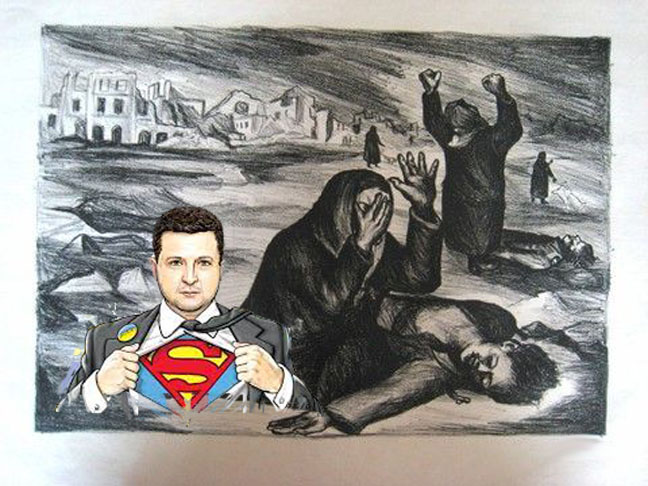
Walt Zlotow, West Suburban Peace Coalition, Glen Ellyn IL , 31 Mar 2.
The 3 year long destruction of Ukraine should never have occurred.
Had leaders in the US, NATO and Ukraine simply used common sense, Ukraine would not be a shell of its former self before the February 24, 2022 Russian invasion that has largely destroyed it. Ukraine economy shattered. Hundreds of thousands of dead and wounded. Over 10 million fled. Over 45,000 square miles lost to Russia forever.
This occurred from massive stupidity by all the leaders in the countries involved.
The stupidity starts with US presidents going back to Bill Clinton. In 1999 he broke the deal with USSR/Russia that he would not expand NATO eastward to their borders. From 1999 thru 2023 US relentlessly doubled NATO from 16 to 32 members.
Reasons likely many but all stupid. Smart diplomats, historians and political scientists were aghast, declaring this would inevitably lead to a US Russian confrontation. It took 23 years but stupid presidents Clinton, Bush, Obama, Biden all stupidly succeeded into provoking Russia to attack.
Odd, but only Trump was not stupid enough to add to NATO during his first term. He was however incredibly stupid to begin arming the Kyiv neofascists to wipe out the Russian leaning Ukrainian separatists in Donbas. That, along with NATO expansion, ensured Russia would intervene.
Western European NATO giants England, France and Germany also took their stupidity cue from Uncle Sam. They were getting cheap energy from Russia but stupidly bowed to US demands to weaken, isolate Russia thru NATO expansion and Kyiv warfare on Donbas Ukrainians. They were cool with replacing cheap Russian gas with exorbitant US LNG. Now they’re economies are crumbing, allowing inroads from MAGA like political opponents. Incredibly, instead of recognizing their stupidly, they’re stupidly planning to squander hundreds of billions of their vanishing treasure to keep the war going till they wreck their economies
If we were awarding a Stupid Prize, it must go to Ukraine President Volodymyr Zelensky. The comedian turned politician campaigned for the Ukraine presidency on a platform of peace with the Donbas Ukrainians being brutalized by the Kyiv government. It got him elected with big majority of Donbas voters. Alas, Zelensky was too stupid to realize the Kyiv neofascists would never allow him to make peace with Donbas separatists they sought to destroy. To save his presidency, possibly even his life, Zelensky abandoned his voting base.
Zelensky even stupidly amassed 60,000 elite troops on the Donbas border in early 2022 to finish off his constituents there. All that achieved, along with stupidly begging NATO for membership, was to provoke the Russian invasion.
Once started, Zelensky became stupider and stupider. He wisely prepared to sign a peace deal with Russia in the first 2 months which would have ended the war without Ukraine losing a single square mile of territory. But Zelensky stupidly caved to stupid US and UK leaders who told him he could win with US/NATO weapons…but no troops. That stupidity sent Ukraine into failed state status.
Ukraine is now on the cusp of peace being negotiated 2 leaders, Trump and Putin, employing common sense instead of stupidity. But the US Democratic Party, Ukraine, UK, French, German and other NATO leadership remain mired in stupidity that this senseless war must continue till the last Ukrainian soldier is dead.
They all forget the first rule of sane, peaceful governance: Don’t do stupid.
The US hypocrisy about Israel’s nuclear weapons must stop

What stands out from the television series is the grip Israel has had over US policy regarding Israel’s nuclear weapons.
a secret federal bulletin that threatens disciplinary actions for any US official who publicly acknowledges Israel’s nuclear weapons.
The existence of these weapons may have started as a deterrent against another Holocaust but has now morphed into an instrument of an aggressive and expansionist Israel.
By Victor Gilinsky, Leonard Weiss | March 21, 2025, https://thebulletin.org/2025/03/the-us-hypocrisy-about-israels-nuclear-weapons-must-stop/?utm_source=ActiveCampaign&utm_medium=email&utm_content=Israel%20s%20nuclear%20weapons&utm_campaign=20250324%20Monday%20Newsletter
An extraordinary three-part series on Israeli television, The Atom and Me, lays out how the country got its nuclear weapons. It takes for granted what anyone who pays attention has known for years. But the series goes well beyond a general discussion about Israel’s nuclear weapons. It shows the country’s single-minded determination to get the bomb no matter what it took, including stealing nuclear explosives and bomb components from the United States and violating a major nuclear arms control treaty to which Israel is a party—and lying about it.
As the Trump administration is in serious discussion about joining Israel in attacks on Iran to stop it from getting nuclear weapons, it is useful to shed illusions about Israel’s modus operandi.
US officials stay mute. A thread running through the three episodes is a continuing conversation, before he died in 2018, with Benjamin Blumberg, the head of Lakam, the Israeli scientific intelligence agency responsible for the nuclear missions that led to the Israeli bomb, some so secret they were kept from the Mossad. (Mossad is the Israeli agency that handles foreign intelligence collection and covert action.) Blumberg was in failing health and agreed to talk so long as the interview was not aired until after his death.
That conversation is mixed with archival material and recent interviews. The significance of the series lies not in showing what was not previously known—although there are details in that category—but in the admissions on Israeli public television, with the approval of the Israeli censors, about events that have been denied by Israel’s supporters in the United States, including the US government.
Several events discussed in the television series deal directly with the United States: the theft in the 1960s of bomb quantities of uranium 235 from the NUMEC facility in Pennsylvania, where the leaders of the Israeli team that spirited Eichmann out of Argentina appeared inexplicably in 1968 with false identities; the illicit purchase of hundreds of high-speed switches (krytrons) for triggering nuclear weapons, and spiriting them out of the country in the 1980s by Israeli spy and arms dealer, and by then Hollywood producer, Arnon Milchan; and, most significantly at this point, Israel’s 1979 nuclear test in the seas off South Africa of what appears to be the initial fission stage for a thermonuclear weapon. The nuclear test violated the 1963 Limited Test Ban Treaty to which Israel is a party.
What stands out from the television series is the grip Israel has had over US policy regarding Israel’s nuclear weapons.
Not since John Kennedy has any US president tried to rein in Israel’s nuclear program. His successor, Lyndon Johnson, did not challenge the Israelis on nuclear issues (and covered up Israel’s attempt during the 1967 six-day war to sink the US spy ship Liberty). Such has been Israel’s political clout in the United States.
No one was ever charged in the disappearance of nuclear material from NUMEC. When the issue of Israel’s involvement arose again in 1976, President Gerald Ford’s attorney general suggested to the president the possibility of charging US officials, presumably in the Atomic Energy Commission, with failing to report a felony. But it was too late. Ford lost the election to Jimmy Carter, who let the matter drop. Milchan was never charged for the filching of krytrons even though he later bragged about his arms dealing and spying for Israel. And Carter—and every US president after him—took no enforcement action in response to the illegal 1979 nuclear test.
The United States’ indulgence of Israeli nuclear weapons has not escaped international attention, and the evident hypocrisy has undermined US nonproliferation policy. The US government’s public position continues to be that it does not know anything about Israeli nuclear weapons, and this will apparently continue until Israel releases the United States’ gag. This policy is allegedly enforced by a secret federal bulletin that threatens disciplinary actions for any US official who publicly acknowledges Israel’s nuclear weapons.
Meanwhile, Israel brags about its nukes. Ironically, the Israelis feel free to allude to their nuclear weapons whenever they find it useful. The best example is Prime Minister Benjamin Netanyahu’s 2016 speech on receipt of the Rahav, the latest submarine supplied by Germany. The Times of Israel, using the standard “according to foreign reports,” described the submarine as “capable of delivering a nuclear payload.” In his speech, Netanyahu said, “Above all else, our submarine fleet acts as a deterrent to our enemies … They need to know that Israel can attack, with great might, anyone who tries to harm it.” How else, other than with nuclear weapons, can a submarine be a deterrent? The submarines’ long-range cruise missiles could not only hit Iran’s capital, Tehran, Israel’s main security concern, they could also hit any European capital.
Those submarine-based cruise missiles—if they exist—might be tipped with thermonuclear warheads, which are also carried on planes and ground-based rockets. Light-weight thermonuclear weapons allow flexibility in delivery, but the two-stage designs are highly sophisticated. The Israelis logically decided that they had to conduct at least one low-yield fission test—even though they had promised not to do this—to be sure their first stage produced the radiation that would initiate the thermonuclear fuel in the second stage.
In the last episode of the Israeli television series, journalist Meir Doron, who has written on Israel’s security secrets, says: “After the nuclear test, for the first time, the heads of the Israeli nuclear program, Blumberg, Shimon Peres, and all the people from the reactor, could sleep soundly at night. They knew that what they’re building works.”

While Israel did not sign the 1970 Nuclear Non-Proliferation Treaty (NPT), it signed and ratified the 1963 Limited Nuclear Test Ban Treaty, which obligates parties not to explode a nuclear device in the atmosphere or oceans. Such a test also triggers a nonproliferation provision of US law, the 1977 Glenn Amendment (Sec.102 (B) to the Arms Export Control Act), that imposes severe sanctions on any country (other than the five approved in the NPT) that explodes a nuclear device after 1977. Upon learning of such an explosion, the president is supposed to impose the wide-ranging sanctions “forthwith.” That, of course, did not happen.
The nuclear explosion’s characteristic two-hump signal was detected by a US satellite on September 22, 1979, and US intelligence agencies were convinced Israel was the culprit. President Carter did not want to risk his ongoing Middle East policy efforts by blaming Israel. The White House asked a group of scientists whether the detected light flash could somehow have been unconnected with a nuclear explosion. The scientists came up with some ideas that gave the president a public out. At the same time, the White House kept classified Navy reports on ocean sound waves from the explosion that supported the satellite data. And Carter wrote in his diary: “We have a growing belief among our scientists that the Israelis did indeed conduct a nuclear test explosion in the ocean near the southern end of Africa.” All this was essentially a cover-up.
The Glenn Amendment allows the president to delay sanctions on national security grounds or waive them entirely with the help of congressional action. The law does not allow the president to ignore it. But that is exactly what all of them have done.
The price of silence. The US government’s silence on Israel’s nuclear weapons has meant silence about them in discussions on Iran’s nuclear program. Public debate is an essential part of US policy development and, in the case of Iran, is hobbled by an inability to have an honest appraisal of the nature and purpose of Israeli nuclear weapons.
The existence of these weapons may have started as a deterrent against another Holocaust but has now morphed into an instrument of an aggressive and expansionist Israel.
The inability to have honest public discussion allows for the pretense by Israel and its supporters that it faces an existential threat from Iran, which is ready to drop a nuclear bomb on Tel Aviv as soon as it gets one. Various aspects of the Iran issue are hidden by an inability to weigh all the elements of policy needed to arrive at an intelligent US policy.
The US government’s silence has also taught the press to avoid the issue. The last time a White House correspondent asked about Israeli nuclear weapons, even then indirectly, was when Helen Thomas asked President Obama in 2009 whether he knew of any nuclear weapons in the Middle East. She got a chilly non-response—Obama said he was not going to speculate.
An exception to the general lack of press interest in the issue is a 2018 New Yorker report by Adam Entous, revealing how US presidents have signed secret letters to the Israelis promising to do nothing to interfere with Israel’s nuclear weapons or acknowledge their existence.
Israel claims this US obligation flows from a “deal” made by Nixon and Golda Meir in their 1969 meeting during the 15 minutes when they were alone. William Quandt, Kissinger’s aide at the time, says in the third episode, “There is no documentary record on the American side to this day. No one else was in the room.” Nor has any Israeli record appeared. Without any record, there can be no enduring obligation.
So why did US presidents go along with the Israeli version of the US obligation, including denying any knowledge about Israeli nuclear weapons, long after it ceased to be in the United States’s interest to do so? Entous reported that when Trump first entered office in 2017 his staff was confronted by Israeli ambassador Ron Dermer (a former American who switched allegiance to Israel). He is said to have acted “like he owned the place,” but it worked. He got his way.
The single-mindedness of the Israeli establishment—that what it thinks is best for Israel overrides all other considerations—is caught at the end of the third television episode. The conversation with Benjamin Blumberg turns to Israel’s more-than-amicable relations with apartheid-era South Africa, from which it got uranium to fuel the Dimona reactor and later permission to conduct the 1979 nuclear test, and to which Israel provided tritium to upgrade South Africa’s nuclear weapons. He is asked, was not South Africa an oppressive racist regime? “All true,” said Blumberg, “but what do I care. I wanted what was best for Israel.” It’s time to realize that what is “best for Israel” is not necessarily good for the United States.
Editor’s note: Victor Gilinsky was a commissioner of the Nuclear Regulatory Commission at the time of the events in question. Leonard Weiss was a long-term aide to Senator Glenn and the author of the first version of the Glenn Amendment. They both appear in the mentioned Israeli TV series.
Zelensky’s hostility to peace triggers White House meltdown.

Those who insist that Zelensky was ambushed are overlooking the cordial, lengthy exchange that occurred before the meeting turned testy. In a room full of aides and news cameras, Trump, Vance, and Zelensky held court for more than 40 minutes. It was Zelensky who became confrontational each time the two US leaders spoke favorably about negotiations with Russia.
because Trump stressed that his goal is to end the war through diplomacy, Zelensky grew agitated.
While Zelensky now claims that Russia cannot be negotiated with, his own representatives in Istanbul hold a much different view.
Aaron Maté, aaronmate.net, Sun, 02 Mar 2025 https://www.aaronmate.net/p/zelenskys-hostility-to-peace-triggers?utm_source=post-email-title&publication_id=100118&post_id=158233237&utm_campaign=email-post-title&isFreemail=true&r=1b65ob&triedRedirect=true&utm_medium=email
Long rewarded by Washington and NATO for undermining diplomacy with Russia, Zelensky grew confrontational — and told outright falsehoods — when Donald Trump and JD Vance told him to make peace.
A contentious White House meeting between President Donald Trump, Vice President JD Vance, and Ukrainian president Volodymyr Zelensky has thrown US-Ukrainian relations into disarray. The meeting resulted in Zelensky’s ejection from the White House, the cancellation of a planned minerals agreement, and, according to one report, a review of continued US military assistance to Ukraine.
For panicked cheerleaders of the proxy war against Russia, the consensus view is that Trump has betrayed a stalwart US ally, sided with an enemy in Moscow, and may have even deliberately triggered the clash to serve his treacherous agenda.
Those who insist that Zelensky was ambushed are overlooking the cordial, lengthy exchange that occurred before the meeting turned testy. In a room full of aides and news cameras, Trump, Vance, and Zelensky held court for more than 40 minutes. It was Zelensky who became confrontational each time the two US leaders spoke favorably about negotiations with Russia.
In his opening remarks, Trump criticized his predecessor Joe Biden for refusing to “speak to Russia whatsoever” and expressed his hope to bring the war “to a close.” Zelensky responded by calling Vladimir Putin a “a killer and terrorist” and vowing that there would be “of course no compromises with the killer about our territories.” In a paranoid threat, he also declared that unless Trump helps him “stop Putin,” then the Russian leader will invade the Baltic states “to bring them back to his empire”, which would draw the US into the war, despite the “big nice ocean” shielding the US from Europe: “Your soldiers will fight.”
Trump did not interrupt or object to these initial, belligerent comments. The closest he came to a direct criticism occurred when a reporter asked about Zelensky’s avowed refusal to compromise. Trump replied that “certainly he’s going to have to make some compromises, but hopefully they won’t be as big as some people think you’re going to have to make.” Trump even promised that “we’re going to be continuing” US military support to Ukraine.
Yet because Trump also stressed that his goal is to end the war through diplomacy, Zelensky grew agitated. The tipping point came when, after 40 minutes, a reporter asked whether Trump has chosen to “align yourself too much with Putin.” Vance responded that, in his view, “the path to peace and the path to prosperity” entails “engaging in diplomacy.” It was here that Zelensky lost his composure and directly challenged Vance: “What kind of diplomacy, J.D., you are speaking about? What do you mean?”.
This drew a sharp reaction. Vance reminded Zelensky that his military is brutally nabbing Ukrainian men off the street to send them to the front lines, and that the US seeks “the kind of diplomacy that’s going to end the destruction of your country.” Zelensky then doubled down by challenging Vance to visit Ukraine and reviving his attempted fearmongering. “You have a nice ocean and don’t feel it now,” he said, referring to the Atlantic, “but you will feel it in the future.” That veiled threat angered Trump, who proceeded to call out Zelensky for, among other things, “gambling with the lives of millions of people,” and “with World War III.”
In opting to confront Vance, Zelensky showed that he is so reflexively hostile to the notion of negotiating with Russia that he is willing to berate his chief sponsor, in public no less, for daring to suggest it. And to serve his agenda, Zelensky also showed that he is willing to engage in distortion and even outright falsification.
To make his case that Putin cannot be negotiated with, Zelensky invoked an agreement, brokered by France and Germany, that he signed with Putin in Paris on December 9, 2019. The pact called for a prisoner exchange, which, Zelensky asserted, Putin ignored. “He [Putin] didn’t exchange prisoners. We signed the exchange of prisoners, but he didn’t do it,” Zelensky said.
Zelensky was not being truthful. He himself attended a December 29, 2019 ceremony welcoming the return of Ukrainian prisoners freed under his agreement with Putin. Then in April 2020, his office hailed the release of a third round of prisoners.
omitted his own record in undermining diplomacy with Moscow.
The December 2019 Paris agreement recommitted Ukraine and Russia to the Minsk peace process, the UN Security Council-endorsed framework for ending the war that broke out in 2014 between the post-coup Ukrainian government and Russian-backed eastern Ukrainian rebels.
After initially taking some positive steps toward implementation, Zelensky ultimately refused to comply, a stance that he previewed in Putin’s company. During a joint news conference in Paris, Zelensky visibly smirked as Putin discussed the importance of following through with Minsk. The following March, Zelensky, under pressure from Ukraine’s ultra-nationalists and US-funded NGOs, abandoned a pledge to hold direct talks with representatives of the breakaway Donbas republics, which would be granted limited autonomy under Minsk.
By that point, the Kremlin had begun raising concerns that Zelensky was not following through. A Kremlin readout of a call between Putin and Zelensky the previous month noted that Putin had “stressed the importance of the full and unconditional fulfillment of all measures and decisions made in Minsk and adopted at the Normandy summits, including the one held in Paris on December 9, 2019… Vladimir Putin directly asked if Kyiv intends to really implement the Minsk agreements.”
Zelensky kept signaling that he had no such intention. In mid-July 2020, Zelensky’s party proposed a measure that would hold local elections throughout Ukraine – yet in a deliberate omission, the plan excluded Donbas, which was supposed to have new elections under Minsk. By that point, Zelensky was openly contemptuous of Donbas residents. “The people of the Donbas have been brainwashed,” Zelensky complained. “They live in the Russian information space… I can’t reach them.”
The entry of the Biden team to the Oval Office in January 2021 encouraged Zelensky’s confrontational path. In February 2021 – one year before Russia invaded – Zelensky shut down three television networks tied to his main political opposition, which advocated better ties with Russia. A Zelensky aide later disclosed that this crackdown was “conceived as a welcome gift to the Biden administration,” which offered its enthusiastic endorsement of Zelensky’s effort to “counter Russia’s malign influence.”
The following month, the Biden administration returned the favor by approving its first military package for Ukraine, valued at $125 million. That encouraged even more bellicosity from Zelensky’s government. Ukraine’s National Security and Defense Council approved a strategy to recover all of Crimea from Russian control, including by force. Ukrainian military leaders also announced that they were “ready” to retake Donbas by force, with the help of NATO allies.
By this point, Zelensky was openly disdainful of the diplomatic path that he had signed onto in Paris. “I have no intention of talking to terrorists, and it is just impossible for me in my position,” he declared in April 2021. Zelensky also demanded changes to Minsk. “I’m now participating in the process that was designed before my time,” he said. “The Minsk process should be more flexible in this situation. It should serve the purposes of today not of the past.”
Zelensky and his aides maintained this stance in the weeks before Russia’s February 2022 invasion. “The position of Ukraine, which has been expressed many times at different levels, is unchanged,” top Zelensky advisor Andrii Yermak said. “There have not been and will not be any direct negotiations with the separatists.” Added Ukrainian security chief Oleksiy Danilov: “The fulfillment of the Minsk agreement means the country’s destruction.” Perhaps to underscore the point, Zelensky’s government escalated attacks on rebel-controlled areas.
The Russian invasion forced Zelensky to abandon his hostility to negotiations, resulting in the Istanbul talks of March-April 2022. While Zelensky now claims that Russia cannot be negotiated with, his own representatives in Istanbul hold a much different view.
“We managed to find a very real compromise,” Oleksandr Chalyi, a senior member of the Ukrainian negotiating team, recalled in December 2023. “We were very close in the middle of April, in the end of April, to finalize our war with some peaceful settlement.” Putin, he added, “tried to do everything possible to conclude [an] agreement with Ukraine.”
According to former Zelensky advisor Oleksiy Arestovich, who also took part in the talks, “the Istanbul peace initiatives were very good.” While Ukraine “made concessions,” he said, “the amount of their [Russia’s] concessions was greater. This will never happen again.” The Ukraine war, Arestovich concluded, “could have ended with the Istanbul agreements, and several hundreds of thousands of people would still be alive.”
The US and UK sabotaged the Istanbul talks by refusing to provide Ukraine with security guarantees and encouraging Zelensky to keep fighting instead. Zelensky’s decision to obey their dictates helps explain why he is so desperate to obtain a security guarantee from Trump. Having walked away from a peace deal that would have saved hundreds of thousands of lives, Zelensky needs a tangible Western security commitment to show for it.
In Zelensky’s defense, he has also faced, from the start of his presidency, the threat of violence from Ukrainian ultra-nationalists staunchly opposed to any peace deal with Russia and allied eastern Ukrainians. And rather than help him overcome this domestic obstacle to peace, Washington has enabled it. As the late scholar Stephen F. Cohen prophetically warned in October 2019, Zelensky would not be able to “go forward with full peace negotiations unless America has his back” against “a quasi-fascist movement” that was literally threatening his life.
For this reason, it was disrespectful of Vance to insist that Zelensky thank the US for its military support, when that assistance has in fact fueled Ukraine’s decimation. Yet Zelensky is also responsible for putting himself in this position. Because he dutifully served the US goal of using Ukraine to bleed Russia, Zelensky was rewarded with political and media adulation, along with tens of billions of dollars in NATO funding.
The unprecedented dispute at the White House shows that Zelensky’s disingenuous hostility to negotiations is no longer welcome in Washington. While this may prove fatal to Zelensky’s political career and US proxy warfare against Russia, it is a tangible step toward ending his country’s destruction.
Charles Freeman -USA fighting Russia ‘to the last Ukrainian’. Interview with full transcript
UNMISSABLE – and in my opinion, the very best commentary on the Ukraine situation
23 Mar. 2022, Transcribed by Noel Wauchope, This is Aaron Mate. joining me is Charles Freeman. He is a retired veteran U.S diplomat who has served in a number of senior positions including as the Assistant Secretary of Defense and U.S. ambassador to Saudi Arabia.
Question, What is your assessment of the russian invasion so far and how the biden administration has responded to it?
FREEMAN A huge question. I thought in the run-up to this that Mr Putin was following a classic form of coercive diplomacy massing troops on Ukraine’s border issuing very clear offers to negotiate threatening indirectly to escalate beyond the border not in Ukraine which the Russians repeatedly said they did not intend to invade but perhaps through putting pressure on the United States similar to the one the pressure that the Russians feel from us namely missiles within no warning distance at all of the capital.
Of course Washington doesn’t have quite the significance in our case that Moscow does for the Russians but still I thought that was what was in store. I don’t think his troops were prepared for it. There’s no evidence that they had the logistics in place or that the troops were briefed about where they were going and why and so it looks like an impetuous decision and if so it ranks with the decision of Tsar Nicholas ii the last tsar to go to war with japan in 1904. That had disastrous consequences for political order in Russia and I think this is a comparable blunder.
There are lots of things being said about the course of the war which is now about a months old and many of them are I think frankly tendentious nonsense for example it’s alleged that the Russians are deliberately targeting civilians but I think in most wars the ratio of military to civilian deaths is roughly one to one and in this case the recorded civilian deaths are about one-tenth of that which strongly suggests that the Russians have been holding back. We may now see the end of that with the ultimatum that has been issued in connection with Mario Paul where if I understood correctly what the Russians are saying, they were saying surrender or face the consequences and the consequences would be a terrible leveling of the city
We don’t know where this war is going to end . whether there will be a Ukraine or how much of a Ukraine there will be , what the effects inside Russia will be. There’s clearly a lot of dissent in Russia although i’m sure it’s being exaggerated by our media .
The war is a fog of lies on all sides. It is virtually impossible to tell what is actually happening because every side is staging the show the champion of that is mrZielensky who is brilliant as a communicator. It turns out he’s a an actor who has found his role and probably helps Ukraine a great deal to have a president who is an accomplished actor who came equipped with his own studio staff, who is um using that brilliantly and I would say Mr Zielinski was elected to head a state called Ukraine and he has created a nation called Ukraine he is he is somebody who’s perceived heroism has rallied Ukrainians to a degree that no one ever expected .
But we don’t know where this is going and more to the point the United states is not part of any effort to negotiate an end to the fighting. To the extent that there is mediation going on it seems to be by Turkey possibly Israel, maybe China that’s about it and the United States is not in the room.
Everything we are doing rather than accelerating an end to the fighting and some compromise seems to be aimed at prolonging the fighting assisting the Ukrainian resistance, which is a noble cause I suppose but that will result in a lot of dead Ukrainians as well as dead Russians.
And also, the sanctions have no goals attached to them there’s no conditions which we’ve stated which would result in their end. And finally we have people now calling, including the President of the United states and the Prime Minister of Great Britain calling Putin a war criminal and professing that they will intend to bring it to trial somehow.
Now this gives Mr Putin absolutely no incentive to compromise or reach an accommodation with the Ukrainians and it probably guarantees a long war and there seemed to be a lot of people in the United States who think that’s just dandy. It’s good for the military-industrial complex. It reaffirms our negative views of Russia it reinvigorates NATO. it puts China on the spot.
You know what’s so terrible about a long war – you know if you’re not Ukrainian you probably see some merit in a long war so this has not gone as anybody predicted, not Mr Putin not the intelligence community of the United States which extrapolated war plans from the disposition of forces on the ukrainian border. Not the way the Germans who are now rearming anticipated
It’s got a lot of shock value to it and it’s changing the world in ways we still don’t understand. I wonder if U.S intelligence extrapolated that Russia would invade based on the certainty that the U.S would reject Russia’s core security demands – namely neutrality for Ukraine and Ukraine not joining NATO and I’m wondering if their assurance that Biden would reject those demands – if that’s what made them all the more confident that Russia would then invade.
Question, And on that point about NATO, I wanted to get your response to some comments that Zeilinski recently made. He was speaking to Farid Zakaria of CNN and he made what that was a really telling admission about what he was told to say publicly about NATO before the war.
I requested them personally to take to say directly that we are going to accept or not NATO in a year or two, or just say it five and clearly or just say no. And the response was very clear you are not going to be a member but publicly the doors will remain open but if you are not ready if you just want to see us straddle two worlds if you want to see us in this dubious position where we do not understand whether you can accept us or not you cannot place us in this situation you cannot force us to be in this limbo.
So that’s Zielinski saying that he was told by NATO original members presumably the U.S. that we’re not going to let you in but publicly we’re going to leave the door open. I’m wondering Ambassador Freeman your response to that?
FREEMAN. Well those are two questions. First in my experience the intelligence community does not start from estimates of U.S. policy and I think what we saw was an order of battle analysis with the judgment as expressed at one point by Secretary of State Lincoln – that you know if we masked 150 000 troops on somebody’s border that would mean we were about to invade in other words mirror imaging. You know that’s what we would do therefore that’s what the Russians will do.
I think Mr Putin was surprised by being stiff-armed on the after all 28 year old demands that NATO stop enlarging in the direction of Russia that at root this is a contest over whether Ukraine will be in the U.S sphere of influence, the Russian sphere of influence or neither’s, and neutrality, which is what mr putin had started out saying he wanted .
What’s compatible with neither side having ukraine within its sphere? Whether that’s now possible or not I don’t know. I think one of the mistakes Mr Putin made in upping the ante was to make it very difficult for Ukraine to become neutral but on the question of what mr Zielinski was told Ithink this is remarkably cynical or perhaps it was not even unrealistic on the part of leaders in the West.
Zielensky is obviously a very intelligent man and he saw what the consequences of being put in what he called limbo would be – namely Ukraine would be hung out to dry and the west was basically saying we will fight to the last Ukrainian for Ukrainian independence, which essentially remains our stand . It’s pretty cynical despite all the patriotic fervor and I’d add .
I have heard , I know people who have been attempting to hold an inquiry in the West. It’s very depressing. really we should rise to this occasion we should be concerned about achieving a balance in Europe that sustains peace. That requires incorporating Russia into a governing Council for Europe of some sort. Europe historically has been at peace only when all the great powers who could overthrow the peace have been co-opted into it. A perfect example is the Congress of Vienna which followed the Napoleonic wars where Kissinger’s great hero met in it and others had the good sense to to reincorporate France into the governing Councils of Europe.
That gave Europe a hundred years of peace. Of course there were a few minor conflicts but nothing major. After World War One when the victors, the United States and Britain and France insisted on excluding Germany from a role in the affairs of Europe as well as this newly formed Soviet Union, the result was World War Two, and the cold war.
It’s really depressing that instead of trying to figure out how to give Russia reasons not to invade countries and to violate international laws, instead of trying to give Russia reasons for being well behaved, – with the use of force you take us back.
Question. In the 1990s you served in the Clinton administration at a time when there was a big discussion, big debate in washington over the future of European security architecture. This is after the soviet union had collapsed. Russia was never weaker. There were people, including inside the George H.W. Bush administration, who talked about pledging support for neutrality not trying to bring the former Soviet states into one camp or the other.
Ultimately President Clinton went with NATO expansion, went with violating the pledges that accompanied the end of the Soviet Union to expand NATO to Russia’s borders. can you take us back to that time and the debates that were taking place and how that’s fueled the crisis we’re in today?
FREEMAN. Well I actually had a good deal to do with the formulation of what became known as the Partnership for Peace and this was two things. It was a pathway to responsible application for NATO membership but it was and it was also a cooperative security system. Rather than a collective security system for Europe it left the members to decide whether they defined themselves as European or not so Tajikistan joined the partnership, but it made no effort to civilianize ts defense establishment or subject its military to parliamentary oversight. And it didn’t learn the 3 000 standardization agreements that are the operating doctrine of NATO that allow Portuguese soldier to die for Poland or vice versa so that process was the the question of what countries would have what relationship with NATO was left to those countries,which is what happened in 1994 and which was a midterm election year.
In 1996, which was a presidential election year was interesting. In 1994 Mr Clinton was talking out of both sides of his mouth he was telling the Russians that we were in no rush to add members to NATO and then our preferred path was the Partnership for Peace. At the same time he was hinting to the ethnic diasporas of Russophobic countries in Eastern Europe , (and by the way it’s easy to understand their russophobia given their history), that no no we were going to get these countries into NATO as fast as possible and in 1996 he made that pledge explicit.
1994 he got an outburst from Yeltsin who was then the President of the Russian Federation. In 1996 he got another one and as time went on when Mr Putin came in he regularly protested the enlargement of NATO in ways that disregarded Russia’s self-defense interests. So there should have been no surprise about this in 2018, For 28 years Russia has been warning that at some point it would snap and it has. And it has done it in a very destructive way both in terms of its own interests and in terms of the broader prospects for peace in Europe.
There really is no excuse for what Mr Putin has done to understand it is not to condone it
It’s hard for people to be objective about this and and they’re immediately accused of being Russian agents or let us just say the price of speaking on this subject is to join the pom-pom girls in a frenzy of support for our position and if you’re not part of the chorus you’re not allowed to say anything. SoI think that this has very injurious effects on Western liberties and it has enforced and almost Iwon’t say it’s totalitarian but it’s certainly a similar kind of control on freedom of expression.
So I think that what happened here was a combination of forces. There were those people in the United States w ho were triumphalist about the end of the cold war. There were those who felt that what they perceived as victory – think it was a default by the Russians but anyway the game was over. This allowed the United States to incorporate all the countries right up to Russia’s borders and beyond them. Beyond those borders in the Baltics – into an american sphere of influence and essentially they posited a global sphere of influence for the United States modeled on the Monroe Doctrine and that’s pretty much what we have. Ukraine entered that sphere of influence it was not neutral after 2014.
That was the purpose of the coup – to prevent neutrality or a pro-Russian government in Cuba and to replace it with a pro-American government that would bring Ukraine into our sphere since about 2015 after this is of course Russia reacted by annexing Crimea
Since 2015 we have – let me say about Crimea – of course Russia reacted because it’s major naval base on the Black Sea is in Crimea . And the prospect that Ukraine was going to be incorporating into NATO and an American sphere of influence would have negated the value of that base . So i don’t think it had anything to do with the wishes of the people of Crimea who however were quite happy to be part of Russia rather than Ukraine. So since about 2015 the United States has been arming training Ukrainians against Russia.
A major step up in in 2017 in that ironically because of Mr Trump , who was actually impeached for trying to leverage arms sales to Ukraine for political dirt on dividends. But at any rate it isn’t as though Ukraine was not treated as an extension of NATO. It was, and this had a good deal to do with the Russian decision to invade.
I understand that the Ukrainian forces, although they’ve lost their command and control , there are major units that are surrounded and in danger of being annihilated by he Russians. There are cities that are in danger of being pulverized. None of this has happened yet but the ukrainians do not lack weaponry. They have more than enough to deal with the Russian forces on a dispersed basis in there and they have shown themselves to be very courageous in defending their country with those weapons. A lot of them are dying for their country one can admire that and but one must also lament it
Question, I quote you. Elliott Cohen served as a counselor to Condoleezza Rice when she was the Secretary of State , and he writes this in the Atlantic magazine: he says the United States and ts NATO allies are engaged in a proxy war with Russia they are supplying thousands of munitions and hopefully doing much else. sharing intelligence. For example with the intent of killing Russian soldiers and because fighting is as the military theorist Carl von Clausewitz said –
” a trial of moral and physical forces through the medium of the latter we must face a fact to break the will of Russia and free Ukraine from conquest and subjugation many Russian soldiers have to flee surrender or die, and the more and faster the better.”
That’s Elliot Cohen, former state department advisor in the Atlantic. I’m wondering what your response is to that, especially him calling just openly declaring that the U.S. is using Ukraine for what he calls a proxy war against Russia?
FREEMAN. Well Professor Cohen is a very honest man, which is to his credit, and therefore his adherence to neoconservative objectives is entirely transparent, and what he just said what you quoted him as saying, is consistent with the neoconservative objective of regime change in Russia and it’s also consistent with fighting to the last ukrainian to achieve it
I find it deplorable but I have to say it’s probably representative of a very large body of opinion in Washington. Why why does this view of Ukraine as essentially a cannon fighter against Russia why is it so prevalent in Washington. This is essentially cost free from the united states as long as we don’t cross some Russian red line that leads to escalation against us we are engaged as Professor Cohen said, in a proxy war, and we’re selling a lot of weapons that makes arms manufacturers happy . We’re supporting a valiant resistance which makes gives politicians something to crow about. We’re going against an officially designated enemy Russia which makes us feel vindicated.
Question, So from the point of view of those with these self-interested views of the issue this is a freebie and as someone with extensive experience in China you serve as President Nixon’s translator interpreter when he did his historic visit to China, I’m wondering what you make of China’s response to Russia’s invasion so far? And these warnings that they’ve been receiving in recent days from the Biden administration trying to basically tell them not to help out Russia or else there will be consequences?
FREEMAN, Well this has been fascinating to watch. The Chinese clearly agree with Mr Putin and Russian nationalists in objecting to NATO enlargement um having been subjected to foreign spheres of influence in the 19th and 20th century they don’t like them. They don’t believe Ukraine should be part of either the Russian or the U.S. sphere of influence they are the last citadel of Westphalianism in the world. They really do believe strongly in sovereignty and territorial integrity. Mr Putin went to Beijing for the winter olympics and had a long discussion with Xi Jinping the Chinese President and they agreed that NATO should not enlarge . There should not be spheres of influence and that the security architecture in Europe needed to be adjusted to relieve Russia of the sense of menace that it experiences. I don’t believe for a minute that mr mr putin told mr c that he planned to invade Ukraine. In fact he may have said he had no intention of doing it. I don’t know.
He may indeed have had no intention of doing it at that point, assuming that his coercive diplomacy was going to get a response. ut of course it got no response. It got an evasive set of counter proposals about arms control which didn’t address the main question he was raising which was how Russia could feel secure when a hostile alliance was advancing to its very borders. Anyway poor Mr Xi Jinping – he now has to straddle something he probably almost certainly had no idea was in prospect. On the one hand he can oppose spheres of influence and demand consideration for the security concerns of great powers as he does with regard to Russia and with regard to his own country. But on the other hand Ukraine is being violated .
So the Chinese have had an awkward straddle. The irony is Idon’t think this was intended, but inadvertently this has put them in a position where they’re one of the few countries that might conceivably mediate an end to the fighting. I noticed that recently the Chinese have played , emphasized heavily, the need for there to be negotiations to bring that fighting to an end at the earliest possible moment. That doesn’t mean that they’re going to end up mediating. Mediation is a very difficult thing, and often the mediation with two friends can end up with two enemies.
So this is not something you take on lightly. At this point however, I would just say nobody knows what’s going on. At least if anybody does know they’re not saying what’s going on between Russians and Ukrainians in the meetings that they are having. The Turks claim that the two sides are close to an agreement on various points. Lavrov and Cabela. the Ukrainian foreign minister. have both said something similar. But there is no agreement and it’s not clear at this point whether there can be an agreement by taking the land corridor from Donetsk to Crimea
Mr Putin has taken something that he probably will be very unwilling to give up and as I said you ask Ukrainians to accept neutrality when they’ve been battered around the way they have been and lost all the people lives and property that they have. It’s not at all easy for them so even though from the very beginning the solution has been obvious, which is some variant of the Austrian State tree of 1955 meaning a guaranteed independence in return for two things.
One – decent treatment of minorities inside the guaranteed state and
Second – neutralityfor the guaranteed state.
Question. This should have there from the beginning. This is still the objective as far as we can tell but it’s been made more difficult rather than less by the outbreak of war what’s your sense of the agency and the free reign that zelinski actually has to make decisions and the extent of u.s influence over him?
FREEMAN. One of the things that the late Professor Stephen F Cohen warned about it to me in 2019, was that unless the U.S steps up and supports Zielinski in his mandate of making peace with the rebels in the East then he has no chance because otherwise he’ll have to submit to the far right inside Ukraine who are very influential. Since then i’ve seen no indication there has been any sort of support from Washington for making peace with Russia. Trump of course was impeached when he paused those weapons sales. There’s that famous incident where Lindsey Graham and John m\McCain and Amy Klobuchar go to the front lines in late 2016 of the uUrainian military’s fight against the rebels in the donbas and Lindsey Graham says:
‘‘this is 2017 it is going to be the year of offense and Russia has to pay a heavier price. Your fight is our fight” ”All of us will go back to Washington and we will push the case against Russia. Enough of Russian aggression. It is time for them to pay a heavier price. I believe you will win. I am convinced you will win and we will do everything we can to provide you with what you need to win.”
Question. fast forward to when Biden came in. Time magazine reported that when Zielinski shut down the three leading opposition TV networks in Ukraine that was conceived as a welcome gift to the Biden administration to fit withtheir agenda so what do you think is the extent of U.S’s influence over Zielensky’s decisions?
FREEMAN. Zielenski was selected by a landslide not because of anything except – he wasn’t all the other candidates so his political capital very quickly evaporated and he really had no power to make decisions Whether there were other people behind him making decisions or that he mouthed or whether he was taking instructions from the Biden administration or the Trump administration or whoever is unclear.
But what it what is clear to me is that Mr Zielensky’s performance as the leader of wartime Ukraine has gained him enormous political capital. He has the ability now to make a compromise. It will not be easy as you indicated. There are elements in the coalition that supports him who are very right-wing and anti-Russian perhaps even neo-Nazi. And by the way anti-semitism is a disastrous aspect of Nazism but it’s not the definition of Nazism, and apparently you can be a Nazi and have and have a Jewish President and not feel uncomfortable about it. So I think this is a simplistic argument – well because Ukraine has a secular Jewish president who apparently doesn’t really identify as Jewish but is identified as Jewish this means somehow that there can’t be any Nazis backing him. It’s ridiculous.
Anyway it’s clear that Ukraine has been very divided in multiple directions ever since its independence and I’m sure those fissures continue to exist. Mr Zielinski however -has he really has empowered himself? I think if he gets backing from the United States and others here we have a problem
Not only do we have the statements that Putin is a war criminal and must be brought to trial -statements coming out of leaders in the West including President Biden but we also have people like Boris Johnson saying the sanctions have to stay on, whatever Russia does, because Russia has to be punished. Well this means russia has absolutely no incentive to accommodate, and it also means that Mr Zielinski has no freedom to accommodate
So this is the opposite of an effort to resolve the issue. It’s an effort in effect, whatever its intent, to perpetuate the fighting. And and that is going to be disastrous for the Ukrainians, for the Russians and and for Europe and ultimately from the United States
Question. You mentioned the neo-Nazi issue in Ukraine let me quote you from a new article in the washington post by Rita Katz. She’s the executive director of the site Intelligence Group. Her article is called ”Neo-Nazis are exploiting Russia’s war in Ukraine for their own purposes” . Not since Isis have we seen such a flurry of recruitment activity, and she writes this – in many ways the Ukraine situation reminds me of Syria in the early and middle years of the last decade. Just as the Syrian conflict served as the perfect breeding ground for for groups like Al Qaeda and the Islamic State, similar conditions may be brewing in Ukraine for the far right. I’m wondering your response is to that as well?
FREEMAN. I think she’s got logic on her side. I frankly don’t know Ukraine personally well enough to know exactly what the definition of a member of the Azov brigade or other neo-Nazi groups is.
I think right-wing populism is ugly enough in our own country, to imagine that it’s even uglier in a country as divide as Ukraine and you know –
I don’t dismiss the whole thing at all because Ukraine has a horrible history of running pogroms uh first against Jews and then frankly against Russians , and so to dismiss the argument that there are people with violent tendencies and great prejudice, ethnic prejudices involved in this fight, seems to me to be wrong. So I hadn’t read the article you cited. I don’t know the the author but she makes sense to me.
Question. I’m curious what you make now of the allegations we’re getting from both the U.S and Russia against the other that the other side is plotting false flag chemical attacks. This has only surfaced in recent days
In the case of the U.S, it strikes me that they’re recycling a playbook that they employed under the Obama administration, which was there were people inside the Obama white house who wanted to put out the option of military intervention, and the red line was a good way to pursue that. I’m wondering if you think the Biden administration, especially the remnants of the Obama administration, Blinken, Sullivan and Biden himself , are recycling that playbook. I certainly hope not but it does have a resemblance to the probably false flag use of chemical weapons in Syria and it it almost worked in Syria?
FREEMAN. This isn’t the slam dunk there are real questions. There are the questions about whether this was the Turkish or Turkish and Saudi or whoever, was afalse flag intended to force an American escalation over Syria. It was only when that happened that it almost worked in Syria and this could well be a replay. From a military point of view, I can’t see any reason that the Russians would want to use chemical weapons. Usually they are a defensive device against a mass attack, but there’s no such thing going on in Ukraine. They don’t need chemical weapons. They have enough rightful weapons of other types without having to do that, so this does strike me as on its surface it’s suspicious.
Question. As the former U.S Ambassador to Saudi Arabia what do you make of their positioning so far ?There’s a lot of talk of them essentially moving closer with Russia. A lot was made that MBS (Mohammed bin Salman) refused to take Joe Biden’s call when he phoned him recently, and Saudi Arabia considering accepting payments for oil in the Chinese currency and the implications of that. yYur thoughts there when it comes to Saudi Arabia’s apparent shifting stance here?
FREEMAN. Saudi Arabia has been very ill at ease with its U.S. relationship for a long time. The affection that the Saudis once enjoyed in the United States from a limited number of people to be sure, has been replaced by mass Islamophobia. Saudi Arabia has been successfully vilified in U.S politics. Saudi Arabia’s assumption that the United States would back the monarchy against the tax on it from at home or abroad, was thrown into doubt when the United States rather gleefully saw Mubarak overthrown in Egypt. The United States is now the competitor for oil production and exports, no longer a consumer. The murder of Jamal Khashoggi and its attribution to Mohammed bin Salman, the crown prince, obviously does not endear him to us or us to him and so mr biden has refused to speak with him.
So at this point the Saudis have gone full bore, looking for alternative partners to rely upon and there is no single partner that they can rely upon. But they have every interest in exploring alternative relationships not just with Russia or China but with India and others and they are doing the same thing with the United Arab Emirates. Even if bound to the United States in the so-called Abraham Accords it has a reputation well deserved for real politique.
It too is crafting its own future and it is not prepared to mortgage that future to American policy especially when the common view in the Gulf is that the United States is retreating. So this brings us all to back to the Chinese the Indians the Brazilians, others who have not got onto the bandwagon hurling invective at Russia. I think the Chinese ambassador the other day it was – onto someone of the Sunday talk shows and to the extent they let him get a word in, he he said very clearly and I agree with him, that you know condemnation does not accomplish anything very much at all, and what is required is serious diplomacy, and what has been missing has been serious diplomacy.
There have been condemnations, there have been sanctions, there have been armed shipments to the Ukrainians from a remarkable range of sources by the way.
I mean it illustrates the extent of Mr Putin’s mistake that even Austria and Switzerland, two neutral countries have provided aid to the Ukrainian resistance, as has Finland.
So Mr Putin has paid a huge price in terms of arousing animosity against this country. India and Brazil are in the same situation as as China. They’re in the same straddle. They see no benefit in alienating a partner, namely Russia, and while they both may care about the independence of Ukraine. I think taking sides with the United States against Russia, which is what they’re being asked to do, is a step too far. You know, let’s face it, this is in large measure as I said at the outset. a struggle between the United states and Russia for a sphere of influence that will include Ukraine. It’s U.S. Russia.
It’s not Russia versus Europe so in this context, why would a great power that values its cooperation with Russia want to alienate Russia?
Question. We’re going to wrap any final words for us. At the beginning of this interview you said that the you know that long-term geopolitical implications of this crisis are unknown. The world is changing in ways we don’t know, but I wonder if there’s any speculation that you are comfortable engaging in about what the geopolitical implications are. A lot of people are are speculating that this could mean the weakening of us dollar supremacy, as a result of China and Russia drawing closer together. Any thoughts on that and anything else you want to leave us with?
FREEMAN. No, I think the reliance on our sovereignty over the dollar, to our abuse of that sovereignty if you will, to impose sanctions that are illegal under the U.N Charter, which are unilateral, ultimately risks the status of the dollar, and we may in fact be in a moment when the dollar is taken down a notch or two
Well, I should just say that the dollar serves two purposes. One is as a store of value. If you have dollars you’re fairly confident that they’re going to have a significant value 10 years from now as well as today so that is why countries keep reserves in dollars and it’s why people stash dollars in mattresses all over the world.
The other use of the dollar is to settle trade transactions. It’s the most convenient currency in which to do that and in many cases when other currencies are used they are used with reference to the dollar and the dollar exchange rates.
Both these things are now in jeopardy. The oil trade commodities being priced in dollars is the basis for the dollar’s international value.
Iif you look at the united states trade and development’s balance of payments patent you will see that we are in chronic deficit that says the dollar is overvalued [ and that means it’s vulnerable to devaluation
The communications system in Belgium, that handles most of the world’s transactions was established to ensure that the trade could be conducted unencumbered by politics. And now it’s being encumbered by U.S. imposed unilateral sanctions on a huge array of countries – Iran Russia China , even threatened against India . So if the use of the dollar is now encumbered. It’s less desirable and people will want to make workarounds around it .
Will the dollar hold its value now we have a Congress that repeatedly goes to the brink of defaulting on our national debt?
This is not something that inspires confidence, and I’ll add a final factor which I think is very injurious potentially and that is bankers get deposits because they are fiduciaries they are meant to hold the deposits for the benefit of those who deposit the money and not to rip it off themselves.
But we’ve just confiscated the entire national treasury of Afghanistan. We’ve confiscated the Venezuelan reserves. We hav eour allies – the British have confiscated Venezuela’s gold reserves. And we’ve confiscated half of Russian reserves. The Anglo-American reputation as bankers. as fiduciaries, is in trouble, and so the question is, if you’re a country that thinks well maybe you might have some serious policy difference with the United States someday why would you put your money in dollars
The answer has been – there’s no alternative. But there are now major efforts being made to create alternatives so we we we’re not there yet. I don’t want to make a prediction, but I think this is a major question that we need to monitor carefully. because if the dollar loses its value, the American influence on the global level decreases enormously.
Aaron. Yes Freeman. Thank you as always for your time and insight. I say this on behalf of many people in my audience who have come to rely on your expertise. It’s really really appreciated.
Restless radioactive remains are still stirring in Chernobyl’s nuclear tomb.

‘It’s like the embers in a barbecue pit.’ Nuclear reactions are smoldering again at Chernobyl https://www.sciencemag.org/news/2021/05/nuclear-reactions-reawaken-chernobyl-reactor
By Richard Stone, May. 5, 2021 , Thirty-five years after the Chernobyl Nuclear Power Plant in Ukraine exploded in the world’s worst nuclear accident, fission reactions are smoldering again in uranium fuel masses buried deep inside a mangled reactor hall. “It’s like the embers in a barbecue pit,” says Neil Hyatt, a nuclear materials chemist at the University of Sheffield. Now, Ukrainian scientists are scrambling to determine whether the reactions will wink out on their own—or require extraordinary interventions to avert another accident.
Sensors are tracking a rising number of neutrons, a signal of fission, streaming from one inaccessible room, Anatolii Doroshenko of the Institute for Safety Problems of Nuclear Power Plants (ISPNPP) in Kyiv, Ukraine, reported last week during discussions about dismantling the reactor. “There are many uncertainties,” says ISPNPP’s Maxim Saveliev. “But we can’t rule out the possibility of [an] accident.”
The neutron counts are rising slowly, Saveliev says, suggesting managers still have a few years to figure out how to stifle the threat. Any remedy he and his colleagues come up with will be of keen interest to Japan, which is coping with the aftermath of its own nuclear disaster 10 years ago at Fukushima, Hyatt notes. “It’s a similar magnitude of hazard.”
The specter of self-sustaining fission, or criticality, in the nuclear ruins has long haunted Chernobyl. When part of the Unit Four reactor’s core melted down on 26 April 1986, uranium fuel rods, their zirconium cladding, graphite control rods, and sand dumped on the core to try to extinguish the fire melted together into a lava. It flowed into the reactor hall’s basement rooms and hardened into formations called fuel-containing materials (FCMs), which are laden with about 170 tons of irradiated uranium—95% of the original fuel.
The concrete-and-steel sarcophagus called the Shelter, erected 1 year after the accident to house Unit Four’s remains, allowed rainwater to seep in. Because water slows, or moderates, neutrons and thus enhances their odds of striking and splitting uranium nuclei, heavy rains would sometimes send neutron counts soaring. After a downpour in June 1990, a “stalker”—a scientist at Chernobyl who risks radiation exposure to venture into the damaged reactor hall—dashed in and sprayed gadolinium nitrate solution, which absorbs neutrons, on an FCM that he and his colleagues feared might go critical. Several years later, the plant installed gadolinium nitrate sprinklers in the Shelter’s roof. But the spray can’t effectively penetrate some basement rooms.
Chernobyl officials presumed any criticality risk would fade when the massive New Safe Confinement (NSC) was slid over the Shelter in November 2016. The €1.5 billion structure was meant to seal off the Shelter so it could be stabilized and eventually dismantled. The NSC also keeps out the rain, and ever since its emplacement, neutron counts in most areas in the Shelter have been stable or are declining.
But they began to edge up in a few spots, nearly doubling over 4 years in room 305/2, which contains tons of FCMs buried under debris. ISPNPP modeling suggests the drying of the fuel is somehow making neutrons ricocheting through it more, rather than less, effective at splitting uranium nuclei. “It’s believable and plausible data,” Hyatt says. “It’s just not clear what the mechanism might be.”
The threat can’t be ignored. As water continues to recede, the fear is that “the fission reaction accelerates exponentially,” Hyatt says, leading to “an uncontrolled release of nuclear energy.” There’s no chance of a repeat of 1986, when the explosion and fire sent a radioactive cloud over Europe. A runaway fission reaction in an FCM could sputter out after heat from fission boils off the remaining water. Still, Saveliev notes, although any explosive reaction would be contained, it could threaten to bring down unstable parts of the rickety Shelter, filling the NSC with radioactive dust.
Addressing the newly unmasked threat is a daunting challenge. Radiation levels in 305/2 preclude getting close enough to install sensors. And spraying gadolinium nitrate on the nuclear debris there is not an option, as it’s entombed under concrete. One idea is to develop a robot that can withstand the intense radiation for long enough to drill holes in the FCMs and insert boron cylinders, which would function like control rods and sop up neutrons. In the meantime, ISPNPP intends to step up monitoring of two other areas where FCMs have the potential to go critical.
The resurgent fission reactions are not the only challenge facing Chernobyl’s keepers. Besieged by intense radiation and high humidity, the FCMs are disintegrating—spawning even more radioactive dust that complicates plans to dismantle the Shelter. Early on, an FCM formation called the Elephant’s Foot was so hard scientists had to use a Kalashnikov rifle to shear off a chunk for analysis. “Now it more or less has the consistency of sand,” Saveliev says.
Ukraine has long intended to remove the FCMs and store them in a geological repository. By September, with help from European Bank for Reconstruction and Development, it aims to have a comprehensive plan for doing so. But with life still flickering within the Shelter, it may be harder than ever to bury the reactor’s restless remains.
The Pentagon Is Recruiting Elon Musk To Help Them Win a Nuclear War

By Alan MacLeod / MintPress News 10 Feb 25
Donald Trump has announced his intention to build a gigantic anti-ballistic missile system to counter Chinese and Russian nuclear weapons, and he is recruiting Elon Musk to help him. The Pentagon has long dreamed of constructing an American “Iron Dome.” The technology is couched in the defense language – i.e., to make America safe again. But like its Israeli counterpart, it would function as an offensive weapon, giving the United States the ability to launch nuclear attacks anywhere in the world without having to worry about the consequences of a similar response. This power could upend the fragile peace maintained by decades of mutually assured destruction, a doctrine that has underpinned global stability since the 1940s.
A New Global Arms Race
Washington’s war planners have long salivated at the thought of winning a nuclear confrontation and have sought the ability to do so for decades. Some believe that they have found a solution and a savior in the South African-born billionaire and his technology.
Neoconservative think tank the Heritage Foundation published a video last year stating that Musk might have “solved the nuclear threat coming from China.” It claimed that Starlink satellites from his SpaceX company could be easily modified to carry weapons that could shoot down incoming rockets. As they explain:
Elon Musk has proven that you can put microsatellites into orbit, for $1 million apiece. Using that same technology, we can put 1,000 microsatellites in continuous orbit around the Earth, that can track, engage and shoot down, using tungsten slugs, missiles that are launched from North Korea, Iran, Russia, and China.”
Although the Heritage Foundation advises using tungsten slugs (i.e., bullets) as interceptors, hypersonic missiles have been opted for instead. To this end, a new organization, the Castelion Company, was established in 2023.
Castelion is a SpaceX cutout; six of the seven members of its leadership team and two of its four senior advisors are ex-senior SpaceX employees. The other two advisors are former high officials from the Central Intelligence Agency, including Mike Griffin, Musk’s longtime friend, mentor, and partner.
Castelion’s mission, in its own words, is to be at the cutting edge of a new global arms race. As the company explains:
Despite the U.S. annual defense budget exceeding those of the next ten biggest spenders combined, there’s irrefutable evidence that authoritarian regimes are taking the lead in key military technologies like hypersonic weapons. Simply put – this cannot be allowed to happen.”
The company has already secured gigantic contracts with the U.S. military, and reports suggest that it has made significant strides toward its hypersonic missile goals.
War and Peace
Castelion’s slogan is “Peace Through Deterrence.” But in reality, the U.S. achieving a breakthrough in hypersonic missile technology would rupture the fragile nuclear peace that has existed for over 70 years and usher in a new era where Washington would have the ability to use whatever weapons it wished, anywhere in the world at any time, safe in the knowledge that it would be impervious to a nuclear response from any other nation.
In short, the fear of a nuclear retaliation from Russia or China has been one of the few forces moderating U.S. aggression throughout the world. If this is lost, the United States would have free rein to turn entire countries – or even regions of the planet – into vapor. This would, in turn, hand it the power to terrorize the world and impose whatever economic and political system anywhere it wishes.
If this sounds fanciful, this “Nuclear Blackmail” was a more-or-less official policy of successive American administrations in the 1940s and 1950s. The United States remains the only country ever to drop an atomic bomb in anger, doing so twice in 1945 against a Japanese foe that was already defeated and was attempting to surrender.
President Truman ordered the destruction of Hiroshima and Nagasaki as a show of force, primarily to the Soviet Union. Many in the U.S. government wished to use the atomic bomb on the U.S.S.R. President Truman immediately, however, reasoned that if America nuked Moscow, the Red Army would invade Europe as a response.
As such, he decided to wait until the U.S. had enough warheads to completely destroy the Soviet Union and its military. War planners calculated this figure at around 400, and to that end—totaling a nation representing one-sixth of the world’s landmass—the president ordered the immediate ramping up of production.
This decision was met with stiff opposition among the American scientific community, and it is widely believed that Manhattan Project scientists, including Robert J. Oppenheimer himself, passed nuclear secrets to Moscow in an effort to speed up their nuclear project and develop a deterrent to halt this doomsday scenario.
In the end, the Soviet Union was able to successfully develop a nuclear weapon before the U.S. was able to produce hundreds. Thus, the idea of wiping the U.S.S.R. from the face of the Earth was shelved. Incidentally, it is now understood that the effects of dropping hundreds of nuclear weapons simultaneously would likely have sparked vast firestorms across Russia, resulting in the emission of enough smoke to choke the Earth’s atmosphere, block out the sun’s rays for a decade, and end organized human life on the planet.
With the Russian nuclear window closing by 1949, the U.S. turned its nuclear arsenal on the nascent People’s Republic of China.
The U.S. invaded China in 1945, occupying parts of it for four years until Communist forces under Mao Zedong forced both them and their Nationalist KMT allies from the country. During the Korean War, some of the most powerful voices in Washington advocated dropping nuclear weapons on the 12 largest Chinese cities in response to China entering the fray. Indeed, both Truman and his successor, Dwight D. Eisenhower, publicly used the threat of the atomic bomb as a negotiating tactic.
Routed on the mainland, the U.S.-backed KMT fled to Taiwan, establishing a one-party state. In 1958, the U.S. also came close to dropping the bomb on China to protect its ally’s new regime over control of the disputed island – an episode of history that resonates with the present-day conflict over Taiwan.
However, by 1964, China had developed its own nuclear warhead, effectively ending U.S. pretensions and helping to usher in the détente era of good relations between the two powers—an epoch that lasted well into the 21st century.
In short, then, it is only the existence of a credible deterrent that tempers Washington’s actions around the world. Since the end of the Second World War, the United States has only attacked relatively defenseless countries. The reason the North Korean government remains in place, but those of Libya, Iraq, Syria, and others do not, is the existence of the former’s large-scale conventional and nuclear forces. Developing an American Iron Dome could upset this delicate balance and usher in a new age of U.S. military dominance.
Nuking Japan? OK. Nuking Mars? Even Better!
Musk, however, has downplayed both the probability and the consequences of nuclear war.
According to the International Campaign to Abolish Nuclear Weapons, there are over 12,000 warheads in the world, the vast majority of them owned by Russia and the United States. While many consider them a blight on humanity and favor their complete eradication, Musk advocates building thousands more, sending them into space, and firing them at Mars.
Musk’s quixotic plan is to terraform the Red Planet by firing at least 10,000 nuclear missiles at it. The heat generated by the bombs would melt its polar ice caps, releasing carbon dioxide into the atmosphere. The rapid greenhouse effect triggered, the theory goes, would raise Mars’ temperatures (and air pressure) to the point of supporting human life.
Few scientists have endorsed this idea…………………………………………………..
Elon and the Military-Industrial-Complex
Until he entered the Trump White House, many still perceived Musk as a radical tech industry outsider. Yet this was never the case. From virtually the beginning of his career, Musk’s path has been shaped by his exceptionally close relationship with the U.S. national security state, particularly with Mike Griffin of the CIA……………………………………….
Griffin became the chief administrator of NASA. In 2018, President Trump appointed him the Under Secretary of Defense for Research and Engineering. While at NASA, Griffin brought Musk in for meetings and secured SpaceX’s big break. In 2006, NASA awarded the company a $396 million rocket development contract – a remarkable “gamble,” in Griffin’s words, especially as it had never launched a rocket. National Geographic wrote that SpaceX “never would have gotten to where it is today without NASA.”…………………………………………………….
Today, the pair remain extremely close, with Griffin serving as an official advisor to Castelion. A sign of just how strong this relationship is that, in 2004, Musk named his son “Griffin” after his CIA handler.
Today, SpaceX is a powerhouse, with yearly revenues in the tens of billions and a valuation of $350 billion. But that wealth comes largely from orders from Washington. Indeed, there are few customers for rockets other than the military or the various three-letter spying agencies.
In 2018, SpaceX won a contract to blast a $500 million Lockheed Martin GPS into orbit. While military spokespersons played up the civilian benefits of the launch, the primary reason for the project was to improve America’s surveillance and targeting capabilities. SpaceX has also won contracts with the Air Force to deliver its command satellite into orbit, with the Space Development Agency to send tracking devices into space, and with the National Reconnaissance Office to launch its spy satellites. All the “big five” surveillance agencies, including the CIA and the NSA, use these satellites.
Therefore, in today’s world, where so much intelligence gathering and target acquisition is done via satellite technology, SpaceX has become every bit as important to the American empire as Boeing, Raytheon, and General Dynamics. Simply put, without Musk and SpaceX, the U.S. would not be able to carry out such an invasive program of spying or drone warfare around the world.
Global Power
An example of how crucial Musk and his tech empire are to the continuation of U.S. global ambitions can be found in Ukraine. Today, around 47,000 Starlinks operate inside the country. These portable satellite dishes, manufactured by SpaceX, have kept both Ukraine’s civilian and military online. Many of these were directly purchased by the U.S. government via USAID or the Pentagon and shipped to Kiev.
In its hi-tech war against Russia, Starlink has become the keystone of the Ukrainian military. It allows for satellite-based target acquisition and drone attacks on Russian forces. Indeed, on today’s battlefield, many weapons require an internet connection. One Ukrainian official told The Times of London that he “must” use Starlink to target enemy forces via thermal imaging.
The controversial mogul has also involved himself in South American politics……………………………………………….
At Trump’s inauguration, Musk garnered international headlines after he gave two Sieg Heil salutes – gestures that his daughter felt were unambiguously Nazi. Musk – who comes from a historically Nazi-supporting family – took time out from criticizing the reaction to his salute to appear at a rally for the Alternative für Deutschland Party. There, he said that Germans place “too much focus on past guilt” (i.e., the Holocaust) and that “we need to move beyond that.” “Children should not feel guilty for the sins of their parents – their great-grandparents even,” he added to raucous applause.
The tech tycoon’s recent actions have provoked outrage among many Americans, claiming that fascists and Nazis do not belong anywhere near the U.S. space and defense programs. In reality, however, these projects, from the very beginning, were overseen by top German scientists brought over after the fall of Nazi Germany. Operation Paperclip transported more than 1,600 German scientists to America, including the father of the American lunar project, Wernher von Braun. Von Braun was a member of both the Nazi Party and the infamous elite SS paramilitary, whose members oversaw Hitler’s extermination camps.
Thus, Nazism and the American empire have, for a long time, gone hand in hand. Far more disturbing than a man with fascist sympathies being in a position of power in the U.S. military or space industry, however, is the ability the United States is seeking for itself to be impervious to intercontinental missile attacks from its competitors.
On the surface, Washington’s Iron Dome plan may sound defensive in nature. But in reality, it would give it a free hand to attack any country or entity around the world in any way it wishes – including with nuclear weapons. This would upend the fragile nuclear peace that has reigned since the early days of the Cold War. Elon Musk’s help in this endeavor is much more worrying and dangerous than any salutes or comments he could ever make. more https://www.mintpressnews.com/pentagon-recruiting-elon-musk-nuclear-war/289055/
St Louis radioactively contaminated sites visited by Dr Helen Caldicott.
Anti-nuclear activist tours north St. Louis County sites contaminated with radioactive waste, St Louis Public Radio, By STEPHANIE LECCI • FEB 19, 2016 An internationally recognized anti-nuclear activist and Australian physician said the radioactive contamination in north St. Louis County is “worse than most places” she’s investigated.
Dr. Helen Caldicott toured several local sites Friday afternoon, including: the recently remediated St. Cin Park in Hazelwood; West Lake Landfill Superfund site, which contains radioactive nuclear waste dating back to 1940s and ’50s; and the Bridgeton Landfill, whose underground smoldering has caused concern due its proximity to the waste in West Lake.
Byron DeLear, an executive for a clean-energy company, helped take Caldicott on the tour.
“This is truly an historic opportunity for this community to have the expertise of Helen to show up and really start to investigate what’s going on here,” he said.
Caldicott, founding president of Physicians for Social Responsibility, whose umbrella parent organization International Physicians for the Prevention of Nuclear War won the Nobel Peace Prize, called the situation “obscene.”
“When you inhale radon, it decays into lead 210 and stays there in the bronchus irradiating just a small volume of cells with alpha radiation, very carcinogenic,” she said. “Radon is one of the most potent causes of lung cancer.”
Caldicott said she will discuss other elements along the decay chain of uranium and “where they go in the body and how they cause cancer” during a symposium at St. Louis Community College-Wildwood Saturday at 7 p.m. Caldicott will be the keynote speaker on the impacts of nuclear weapons development, and will be joined by a panel of other experts. The presentation will also be live-streamed………
California wildfires: a warning to Nuclear Regulatory Commission on climate change

January 16, 2025, https://beyondnuclear.org/ca-wildfires-are-a-warning-to-nrc-on-climate-change/
US Government Accountability Office warnings to Nuclear Regulatory Commission go unheeded
For nuclear power plants, fire is considered a very significant contributor to the overall reactor core damage frequency (CDF), or the risk of a meltdown. Fire at a nuclear power station can be initiated by both external and/or internal events. It can start with the most vulnerable external link to the safe operation of nuclear power plants; the Loss Of Offsite Power (LOOP) from the electric grid. It is considered a serious initiating event to nuclear accident frequency. Because of that risk, US reactors won’t operate without external offsite power from the electric grid.
The still largely uncontained wildfires burning in and around Los Angeles and Ventura Counties in southern California “are sure to rank among America’s most expensive.” The ongoing firestorms have now extended into a fourth period of “extremely critical fire weather” conditions and burned for more than a week an area the size of Washington, D.C., nearly 63 square miles. The estimated number is still being tallied for the thousands of homes and structures destroyed, the loss of life, the evacuation of communities indefinitely dislocated and the threats to and impacts on critical infrastructure including electrical power .
There is no scientific doubt that global warming is primarily caused by the unquenchable burning of fossil fuels though politically motivated denial is entrenched in the US Congress. The increased frequency and severity of these wildfires—leading to suburban and even urban firestorms— are but one consequence of a climate crisis along with a range of other global natural disasters including sea level rise, hurricanes, more severe storms generally, extreme precipitation events, floods and droughts. This more broadly adversely impacts natural resources and critical infrastructures to include inherently dangerous nuclear power stations.
At this particular time, it is important to reflect upon the April 2, 2024, report to Congress issued by its investigative arm, the United States Government Accountability Office (GAO), “Nuclear Power Plants: NRC Should Take Actions to Fully Consider the Potential Effects of Climate Change,” (GAO 24-106326).
The GAO warns that the US Nuclear Regulatory Commission (NRC) needs to start taking actions to address the increased risk of severe nuclear power plant accidents attributable to human caused climate change.
The NRC’s actions to address the risks from natural hazards do not fully consider potential climate change effects on severe nuclear accident risks. “For example, NRC primarily uses historical data in its licensing and oversight processes rather than climate projections data,” the GAO report said.
Beyond Nuclear has uncovered similar findings during our challenges to the NRC’s extreme relicensing process for extending reactor operating licenses, now out to the extreme of 60 to 80 years and talk of 100 years. We found that the agency’s staff believes and stubbornly insists that an environmental review for climate change impacts (sea level rise, increasingly severe hurricanes, extreme flooding, etc.) on reactor safety and reliability is “out of scope” for the license extensions hearing process.
The GAO report points out to the NRC that wildfires, specifically, can dangerously impact US nuclear power stations operations and public safety with potential consequences that extend far beyond the initiating natural disaster. These consequences can include loss of life, large scale and indefinite population dislocation and uninsurable economic damage from the radiological
consequences:
“Wildfire. According to the NCA (National Climate Assessment), increased heat and drought contribute to increases in wildfire frequency, and climate change has contributed to unprecedented wildfire events in the Southwest. The NCA projects increased heatwaves, drought risk, and more frequent and larger wildfires. Wildfires pose several risks to nuclear power plants, including increasing the potential for onsite fires that could damage plant infrastructure, damaging transmission lines that deliver electricity to plants, and causing a loss of power that could require plants to shut down. Wildfires and the smoke they produce could also hinder or prevent nuclear power plant personnel and supplies from getting to a plant.”
Loss of offsite electrical power (LOOP) to nuclear power stations is a leading contributor to increasing the risk of a severe nuclear power accident. The availability of alternating current (AC) power is essential for safe operation and accident recovery at commercial nuclear power plants. Offsite fires destroying electrical power transmission lines to commercial reactors therefore increase the probability and severity of nuclear accidents.
For US nuclear power plants, 100% of the electrical power supply to all reactor safety systems is initially provided through the offsite power grid. If the offsite electrical grid is disturbed or destroyed, the reactors are designed to automatically shut down or “SCRAM”. Onsite emergency backup power generators are then expected to automatically or manually start up to provide
power to designated high priority reactor safety systems needed to safely shut the reactors down and provide continuous reactor cooling, pressure monitoring, but to a diminished number of the reactors’ credited safety systems. Reliable offsite power is therefore a key factor to minimizing the probability of severe nuclear accidents.
The GAO identifies a number of US nuclear power plant sites that are vulnerable to the possible outbreak of wildfires where they are located. “According to our analysis of U.S. Forest Service and NRC data, about 20 percent of nuclear power plants (16 of 75) are located in areas with a high or very high potential for wildfire,” the GAO report states. “More specifically, more than
one-third of nuclear power plants in the South (nine of 25) and West (three of eight) are located in areas with a high or very high potential for wildfire.” The GAO goes on to identify “Of the 16 plants with high or very high potential for wildfire, 12 are operating and four are shutdown.”
To analyze exposure to the wildfire hazard potential, the GAO used 2023 data from the U.S. Forest Service’s Wildfire Hazard Potential Map. “High/very high” refers to plants in areas with high or very high wildfire hazard potential. Those nuclear power stations described by GAO as “high / very high” exposure to wildfires and their locations are excerpted from GAO Appendix III: Nuclear Power Plant Exposure to Selected Natural Hazards.
Table 1: Potential High Exposure to “Wildfires” at Operating Nuclear Power Plants
–AZ / SAFER, one of two mobile nuclear emergency equipment supply units in the nation, “HIGH / VERY HIGH”
–CA / Diablo Canyon Units 1 & 2 nuclear power station, “HIGH / VERY HIGH”
–FL / Turkey Point Units 3 & 4 nuclear power station, “HIGH / VERY HIGH”
–GA / Edwin I. Hatch Units 1 & 2 nuclear power station, “HIGH / VERY HIGH”
–GA / Vogtle Units Units 1, 2, 3 & 4, nuclear power station, “HIGH / VERY HIGH”
–NC / Brunswick Units 1 & 2 nuclear power station, “HIGH / VERY HIGH”
–NC / McGuire Units 1 & 2 nuclear power station, “HIGH / VERY HIGH”
–NC / Shearon Harris Units 1 & 2 nuclear power station, “HIGH /VERY HIGH”
–NB / Cooper nuclear power station, “HIGH / VERY HIGH”
–SC / Catawba Units 1 & 2 nuclear power station, “HIGH / VERY HIGH”
–SC / H. B. Robinson Units 1 & 2 nuclear power station, “HIGH / VERY HIGH”
–WA / Columbia nuclear power station, “HIGH / VERY HIGH”
Table 2: Potential High Exposure to “Wildfires” at Shutdown Nuclear Power Plants
–CA / San Onofre Units 1 & 2, “HIGH / VERY HIGH”
–FL / Crystal River, “HIGH / VERY HIGH”
–NJ / Oyster Creek, “HIGH / VERY HIGH”
–NY / Indian Point Units 1, 2 & 3, “HIGH / VERY HIGH”
Wildfires can transport radioactive contamination from nuclear facilities
A historical review of wildfires that occur around nuclear facilities (research, military and commercial power) identifies that these events are also a very effective transport mechanism of radioactivity previously generated at these sites and subsequently released into the environment by accident, spills and leaks, and careless dumping. The radioactivity is resuspended by wildfires that occur years, even decades later. The fires carry the radioactivity on smoke particles downwind, thus expanding the zone of contamination further and further with each succeeding fire. The dispersed radionuclides can have very long half-lives meaning they remain biologically hazardous in the environment for decades, centuries and longer.
Here are a few examples of how wildfires increasing in frequency and intensity are also threatening to spread radioactive contamination farther away the original source of generation.
The Chornobyl nuclear catastrophe and recurring wildfires
The Chornobyl nuclear disaster that originally occurred on April 26,1986, initially spread harmful levels of radioactive fallout concentrated around the destroyed Chornobyl Unit 4 in northern Ukraine. The radioactive fallout was transported high into the atmosphere by the accidental reactor explosion. The days long fire and smoke transported extreme radioactivity from the expelled
burning nuclear fuel and its graphite moderator. Radioactive fallout then spread far afield in shifting winds, precipitated with rainfall and was terrestrially deposited in its highest concentrations largely in northern Ukraine, Belarus and Southern Russia.
Additional atmospheric distributions of radioactive contamination fell across much of Europe, persisting in numerous hot spots, including in Scandinavia, and the United Kingdom, where it remains as a persistent toxin.
The Chornobyl ‘Exclusion Zone’ to restrict long term human habitation was established in the immediate aftermath in 1986 as an arbitrary 1,ooo square miles within an 18 mile radius around the exploded reactor in Ukraine and remains in place today nearly 39 years later. The Bulletin of Atomic Scientists reports that seasonal wildfires continue to occur within the Chornobyl Exclusion Zone, routinely burning across already contaminated land and resuspending radioactivity via the smoke into the atmosphere. The radioactive smoke is borne on the wind, carrying the radioactive fallout farther out and increasing the size of what can be measured as potentially an expanding Exclusion Zone.
Contrary to claims, wildfires can threaten US nuclear facilities
The Los Angeles Times headlined in May 2024 “Sites with radioactive material more vulnerable as climate change increases wildfire, flood risks.”
The LA Times did a look back at several wildfires surrounding the government radiological laboratories and government nuclear weapons manufacturing sites including the 2018 Woolsey wildfire at the old Santa Susana Field Laboratory (SSFL). This facility specifically housed 10 nuclear reactors and plutonium and uranium fuel fabrication facilities located in the Los Angeles suburbs. SSFL was used for early testing of rockets and nuclear reactors for energy. But decades of carelessness during experiments resulted in one of the first nuclear reactor meltdowns in 1959, leaving acres of soil, burn pits and water radioactively and chemically contaminated. Boeing is the current operator of SSFL now obligated to conduct the cleanup of the SSFL site.
“A 2018 fire in California started at the Santa Susana Field Laboratory, a former nuclear research and rocket-engine testing site, and burned within several hundred feet of contaminated buildings and soil, and near where a nuclear reactor core partially melted down 65 years ago,” reported the LA Times.
Over the years, NBC news has broadcast continuing coverage of the massive 2018 Woolsey fire at SSFL and the radioactive contamination from this event, found in several Los Angeles suburbs miles away.
Despite these events, federal authorities continue to issue vapid safety assurances that climate changes, including more frequent wildfires, will not increase the risks to public health and safety from contaminated commercial, military and national laboratory facilities and that there is no need to include environmental reviews that account for the impacts of climate change in the
regulatory environmental review process.
A recent example of the NRC resistance to factor in reasonable assurance for protecting the public’s health and safety from climate change risk and its potential impacts that increase the risk of a severe nuclear accident, including wildfire, into its oversight and environmental reviews for licensing and relicensing is Chairman Christopher Hanson’s September 27, 2024 response to the GAO report:
“…the NRC does not agree with the [GAO] conclusion that the agency does not address the impacts of climate change. In effect, the layers of conservatism, safety margins, and defense in depth incorporated into the NRC’s regulations and processes provide reasonable assurance of adequate protection of public health and safety, to promote the common defense and security, and to protect the environment.”
Commission Chairman Hanson’s outright dismissal of the GAO report and its finding that the agency needs to take action runs contrary to one of agency’s own, Atomic Safety Licensing Board Judge Michael Gibson’s dissenting opinion to the similar blanket dismissal by the NRC to take a “hard look” climate change impacts under the National Environmental Policy Act (NEPA) on extreme reactor relicensing. In this case, the Judge Gibson supported Beyond Nuclear’s legal challenge to the Commission’s second 20 year license extension of its operating license of its commercially reactors and dissented from the licensing board’s majority denial of our hearing request on climate change’s contribution to the risk and consequences of severe nuclear accidents.
In Judge Gibson’s 23 page dissent of his colleagues’ decision to extend the nuclear plant’s operating license out to 2060 without a pubic hearing on climate change impacts on nuclear power plants, he went on the record,
“That is hardly the reception climate change should be given. As CEQ (the President’s Council on Environmental Quality), the federal government’s chief source for assessing the importance of climate change in environmental analyses under NEPA, has made clear, ‘The United States faces a profound climate crisis and there is little time left to avoid a dangerous—potentially catastrophic—climate trajectory. Climate change is a fundamental environmental issue, and its effects on the human environment fall squarely within NEPA’s purview.’ Sadly, the majority and the NRC Staff have failed to heed this warning.”
1 This Month
10 March A LIVE WEBINAR THE REAL EFFECTS OF NUCLEAR POWER
What the Industry Isn’t Telling Us
1:00 PM Mountain, 2 pm Central, 3 pm Eastern. Live on the Keepers of the Water Facebook page



18 March Webinar @ 1 PM EST: An Assessment of SMR Projects: The Case of Canada
register for the zoom:
https://us02web.zoom.us/webinar/register/WN_o8BIIOUvQ2ONJR1nta65DQ#/registration


of the week – STOP SMALL MODULAR REACTORS IN CANADA
To see nuclear-related stories in greater depth and intensity – go to https://nuclearinformation.wordpress.com
-
Archives
- March 2026 (99)
- February 2026 (268)
- January 2026 (308)
- December 2025 (358)
- November 2025 (359)
- October 2025 (376)
- September 2025 (258)
- August 2025 (319)
- July 2025 (230)
- June 2025 (348)
- May 2025 (261)
- April 2025 (305)
-
Categories
- 1
- 1 NUCLEAR ISSUES
- business and costs
- climate change
- culture and arts
- ENERGY
- environment
- health
- history
- indigenous issues
- Legal
- marketing of nuclear
- media
- opposition to nuclear
- PERSONAL STORIES
- politics
- politics international
- Religion and ethics
- safety
- secrets,lies and civil liberties
- spinbuster
- technology
- Uranium
- wastes
- weapons and war
- Women
- 2 WORLD
- ACTION
- AFRICA
- Atrocities
- AUSTRALIA
- Christina's notes
- Christina's themes
- culture and arts
- Events
- Fuk 2022
- Fuk 2023
- Fukushima 2017
- Fukushima 2018
- fukushima 2019
- Fukushima 2020
- Fukushima 2021
- general
- global warming
- Humour (God we need it)
- Nuclear
- RARE EARTHS
- Reference
- resources – print
- Resources -audiovicual
- Weekly Newsletter
- World
- World Nuclear
- YouTube
-
RSS
Entries RSS
Comments RSS
 nuclear-news
