The United States collaborates on nuclear pyroprocessing with South Korea.

Plutonium programs in East Asia and Idaho will challenge the Biden administration, Bulletin of the Atomic Scientists, By Frank N. von Hippel | April 12, 2021, ”…………………………………The United States collaborates on pyroprocessing with South Korea. The Idaho and Argonne National Laboratories also continue to promote the pyroprocessing of spent fuel. After the Clinton Administration shut down the Experimental Breeder Reactor II in 1994, the laboratory persuaded the Energy Department to continue to fund pyroprocessing as a way to process Experimental Breeder Reactor II spent fuel and blanket assemblies into stable waste forms for disposal in a deep underground repository. The proposal was to complete this effort in 2007. According to a review by Edwin Lyman of the Union of Concerned Scientists, however, as of the end of Fiscal Year 2016, only about 18 percent of the roughly 26 metric tons of assemblies had been processed at a cost of over $200 million into waste forms that are not stable. (Since then, an additional three percent has been processed.)
During the George W. Bush administration, Vice President Cheney accepted Argonne’s argument that pyroprocessing is “proliferation resistant” and the two US national laboratories were allowed to share the technology with the Korea Atomic Energy Research Institute.
At the beginning of the Obama administration, however, a group of safeguards experts from six Energy Department national laboratories, including Argonne and Idaho, concluded that pyroprocessing is not significantly more resistant to proliferation than PUREX, the standard reprocessing technology originally developed by the United States to extract plutonium for its weapons.

In 2014, the US-Republic of Korea Agreement for Cooperation on the Peaceful Uses of Atomic Energy was due to expire, but the negotiations on a successor agreement bogged down over Korea’s insistence that the new agreement include the same right to reprocess spent fuel as the 1988 US-Japan Agreement for Cooperation.
The compromise reached the following year was that the Korea Atomic Energy Research Institute and the Idaho National Laboratory would complete their Joint Fuel Cycle Study on “the technical, economic, and nonproliferation (including safeguards) aspects of spent fuel management and disposition technologies.” If the United States could be convinced that the proliferation risks of pyroprocessing were manageable, the secretary of energy would give consent for South Korea to use the technology on its territory. The final report from the joint study is due this year.
Meanwhile, in 2017, Moon Jae-in was elected president of the Republic of Korea on a platform that included not building any more nuclear power plants in South Korea. Fast-neutron reactors and pyroprocessing obviously do not fit with that policy. This gives the Biden administration an opportunity to end a cooperative nuclear-energy research and development program that is contrary to both US nuclear nonproliferation policy and South Korea’s energy policy. The United States could propose instead a joint collaborative program on safe spent fuel storage and deep underground disposal……………https://thebulletin.org/2021/04/plutonium-programs-in-east-asia-and-idaho-will-challenge-the-biden-administration/?utm_source=Newsletter&utm_medium=Email&utm_campaign=MondayNewsletter04122021&utm_content=NuclearRisk_EastAsia_04122021
Assessing types of Non-Light-Water Nuclear Reactors
|
Assessing the Safety, Security, and Environmental Impacts of Non-Light-Water Nuclear Reactors, Union of Concerned Scientists, Edwin Lyman, Mar 18, 2021 “Advanced” Isn’t Always Better”………………..Assessments of NLWR TypesUCS has reviewed hundreds of documents in the available literature to assess the comparative risks and benefits of the three major categories of NLWR with respect to the three evaluation criteria (Table 2).
|
|
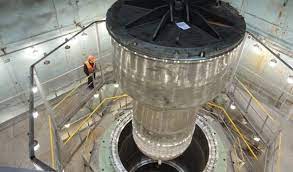
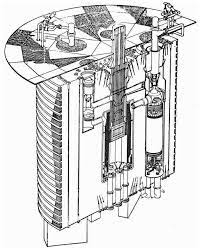

Conclusions and recommendations of safety assessment of advanced nuclear reactors – non-light-water ones
Assessing the Safety, Security, and Environmental Impacts of Non-Light-Water Nuclear Reactors,Union of Concerned Scientists, Edwin Lyman Mar 18, 2021 “Advanced” Isn’t Always Better ”
”……….Conclusions of the Assessment
The non-light-water nuclear reactor landscape is vast and complex, and it is beyond the scope of this report to survey the entire field in depth. Nevertheless, enough is clear even at this stage to draw some general conclusions regarding the safety and security of NLWRs and their prospects for rapid deployment.
Based on the available evidence, the NLWR designs currently under consideration (except possibly once-through, breed-and-burn reactors) do not offer obvious improvements over LWRs significant enough to justify their many risks. Regulators and other policymakers would be wise to look more closely at the nuclear power programs under way to make sure they prioritize safety and security. Future appropriations for NLWR technology research, development, and deployment should be guided by realistic assessments of the likely societal benefits that would result from the investment of billions of taxpayer dollars.
Little evidence supports claims that NLWRs will be significantly safer than today’s LWRs. While some NLWR designs offer some safety advantages, all have novel characteristics that could render them less safe.
All NLWR designs introduce new safety issues that will require substantial analysis and testing to fully understand and address—and it may not be possible to resolve them fully. To determine whether any NLWR concept will be significantly safer than LWRs, the reactor must achieve an advanced stage of technical maturity, undergo complete comprehensive safety testing and analysis, and acquire significant operating experience under realistic conditions.
The claim that any nuclear reactor system can “burn” or “consume” nuclear waste is a misleading oversimplification. Reactors can actually use only a fraction of spent nuclear fuel as new fuel, and separating that fraction increases the risks of nuclear proliferation and terrorism.
No nuclear reactor can use spent nuclear fuel directly as fresh fuel. Instead, spent fuel has to be “reprocessed”—chemically treated to extract plutonium and other TRU elements, which must then be refabricated into new fuel. This introduces a grave danger: plutonium and other TRU elements can be used in nuclear weapons. Reprocessing and recycling render these materials vulnerable to diversion or theft and increases the risks of nuclear proliferation and terrorism—risks that are costly to address and that technical and institutional measures cannot fully mitigate. Any fuel cycle that requires reprocessing poses inherently greater proliferation and terrorism risks than the “once-through” cycle with direct disposal of spent fuel in a geologic repository.
Some NLWRs have the potential for greater sustainability than LWRs, but the improvements appear to be too small to justify their proliferation and safety risks.
Although some NLWR systems could use uranium more efficiently and generate smaller quantities of long-lived TRU isotopes in nuclear waste, for most designs these benefits could be achieved only by repeatedly reprocessing spent fuel to separate out these isotopes and recycle them in new fuel—and that presents unacceptable proliferation and security risks. In addition, reprocessing plants and other associated fuel cycle facilities are costly to build and operate, and they increase the environmental and safety impacts compared with the LWR once-through cycle. Moreover, the sustainability increases in practice would not be significant in a reasonably foreseeable time frame.
Once-through, breed-and-burn reactors have the potential to use uranium more efficiently without reprocessing, but many technical challenges remain.
One type of NLWR system that could in principle be more sustainable than the LWR without increasing proliferation and terrorism risks is the once-through, breed-and-burn reactor. Concepts such as TerraPower’s traveling-wave reactor could enable the use of depleted uranium waste stockpiles as fuel, which would increase the efficiency of uranium use. Although there is no economic motivation to develop more uranium-efficient reactors at a time when uranium is cheap and abundant, reducing uranium mining may be beneficial for other reasons, and such reactors may be useful for the future. However, many technical challenges would have to be overcome to achieve breed-and-burn operation, including the development of very-high-burnup fuels. The fact that TerraPower suspended its project after more than a decade of development to pursue a more conventional and far less uranium-efficient SFR, the Natrium, suggests that these challenges have proven too great.
High-assay low enriched uranium (HALEU) fuel, which is needed for many NLWR designs, poses higher nuclear proliferation and nuclear terrorism risks than the lower-assay LEU used by the operating LWR fleet.
Many NLWR designs require uranium enriched to higher levels than the 5 percent U-235 typical of LWR fuel. Although uranium enriched to between 10 and 20 percent U-235 (defined here as HALEU) is considered impractical for direct use in nuclear weapons, it is more attractive for weapons use—and requires more stringent security—than the lower-assay enriched uranium in current LWRs.
The significant time and resources needed to safely commercialize any NLWR design should not be underestimated.
It will likely take decades and many billions of dollars to develop and commercially deploy any NLWR design, together with its associated fuel cycle facilities and other support activities. Such development programs would come with a significant risk of delay or failure and require long-term stewardship and funding commitments. And even if a commercially workable design were demonstrated, it would take many more years after that to deploy a large number of units and operate them safely and reliably.
Vendors that claim their NLWRs could be commercialized much more quickly typically assume that their designs will not require full-scale performance demonstrations and extensive safety testing, which could add well over a decade to the development timeline. However, current designs for sodium-cooled fast reactors and high-temperature gas-cooled reactors differ enough from past reactor demonstrations that they cannot afford to bypass additional full-scale prototype testing before licensing and commercial deployment. Molten salt–fueled reactors have only had small-scale demonstrations and thus are even less mature. NLWRs deployed commercially at premature stages of development run a high risk of poor performance and unexpected safety problems.
Recommendations
The DOE should suspend the advanced reactor demonstration program pending a finding by the NRC whether it will require full-scale prototype testing before licensing the two chosen designs as commercial power reactors.
The DOE has selected two NLWR designs, the Natrium SFR and the Xe-100 pebble-bed HTGR, for demonstration of full-scale commercial operation by 2027. However, the NRC has yet to evaluate whether these designs are mature enough that it can license them without first obtaining data from full-scale prototype plants to demonstrate novel safety features, validate computer codes, and qualify new types of fuel in representative environments. Without such an evaluation, the NRC will likely lack the information necessary to ensure safe, secure operation of these reactors. The DOE should suspend the Advanced Reactor Demonstration Program until the NRC—in consultation with the agency’s Advisory Committee on Reactor Safeguards and external experts—has determined whether prototypes will be needed first.
Congress should require that an independent, transparent, peer-review panel direct all DOE R&D on new nuclear concepts, including the construction of additional test or demonstration reactors.
Given the long time and high cost required to commercialize NLWR designs, the DOE should provide funding for NLWR R&D judiciously and only for reactor concepts that offer a strong possibility of significantly increasing safety and security—and do not increase proliferation risks. Moreover, unlike the process for selecting the two reactor designs for the Advanced Reactor Demonstration Program, decision-making should be transparent.6 Congress should require that the DOE convene an independent, public commission to thoroughly review the technical merits of all NLWR designs proposed for development and demonstration, including those already selected for the ARDP. The commission, whose members should represent a broad range of expertise and perspectives, would recommend funding only for designs that are highly likely to be commercialized successfully while achieving clearly greater safety and security than current-generation LWRs.
The DOE and other agencies should thoroughly assess the implications for proliferation and nuclear terrorism of the greatly expanded production, processing, and transport of the high-assay low-enriched uranium (HALEU) required to support the widespread deployment of NLWRs.
Large-scale deployment of NLWRs that use HALEU fuel will require establishing a new industrial infrastructure for producing and transporting the material. The DOE is actively promoting the development of HALEU-fueled reactor designs for export. Given that HALEU is a material of higher security concern than lower-assay LEU, Congress should require that the DOE immediately assess the proliferation and nuclear terrorism implications of transitioning to the widespread use of HALEU worldwide. This assessment should also address the resource requirements for the security and safeguards measures needed to ensure that such a transition can occur without an unacceptable increase in risk.
The United States should make all new reactors and associated fuel facilities eligible for IAEA safeguards and provide that agency with the necessary resources for carrying out verification activities.
The IAEA, which is responsible for verifying that civilian nuclear facilities around the world are not being misused to produce materials for nuclear weapons, has limited or no experience in safeguarding many types of NLWRs and their associated fuel cycle facilities. NLWR projects being considered for deployment in the United States, such as the Natrium SFR and the Xe-100 pebble-bed HTGR, would provide ideal test beds for the IAEA to develop safeguards approaches. However, as a nuclear-weapon state, the United States is not obligated to give the IAEA access to its nuclear facilities. To set a good example and advance the cause of nonproliferation, the United States should immediately provide the IAEA with permission and funding to apply safeguards on all new US nuclear facilities, beginning at the design phase. This would help to identify safeguard challenges early and give the IAEA experience in verifying similar facilities if they are deployed in other countries.
The DOE and Congress should consider focusing nuclear energy R&D on improving the safety and security of LWRs, rather than on commercializing immature NLWR designs.
LWR technology benefits from a vast trove of information resulting from many decades of acquiring experimental data, analysis, and operating experience—far more than that available for any NLWR. This gives the LWR a significant advantage over other nuclear technologies. The DOE and Congress should do a more thorough evaluation of the benefits of focusing R&D funding on addressing the outstanding safety, security, and cost issues of LWRs rather than attempting to commercialize less mature reactor concepts. If the objective is to expand nuclear power to help deal with the climate crisis over the next few decades, improving LWRs could be a less risky bet.
Endnotes………
This is a condensed, online version of the executive summary. For all figures, references, and the full text, please download the PDF. https://ucsusa.org/resources/advanced-isnt-always-better#read-online-content
Nuclear reactors – “Advanced” Isn’t Always Better” – Non-Light-Water Nuclear Reactors
|
Assessing the Safety, Security, and Environmental Impacts of Non-Light-Water Nuclear Reactors,Union of Concerned Scientists, Edwin Lyman Mar 18, 2021 “Advanced” Isn’t Always Better ”……………………….Key Questions for Assessing NLWR Technologies It is critical that policymakers, regulators, and private investors fully vet the claims that the developers of NLWRs are making and accurately assess the prospects for both successful development_ and_ safe, secure, and cost-effective deployment. Given the urgency of the climate crisis, rigorous evaluation of these technologies will help our nation and others avoid wasting time or resources in the pursuit of high-risk concepts that would be only slightly better— or perhaps worse—than LWRs. Key questions to consider are the following:
To help inform policy decisions on these questions, the Union of Concerned Scientists (UCS) has evaluated certain claims about the principal types of NLWRs. In particular, this report compares several classes of NLWRs to LWRs with regard to safety and security, the risks of nuclear proliferation and nuclear terrorism, and “sustainability”—a term that in this context includes the often-claimed ability of some NLWRs to “recycle” nuclear waste and use mined uranium more efficiently. The report also considers the potential for certain NLWRs to operate in a once-through, “breed-and-burn” mode that would, in theory, make them more uranium-efficient without the need to recycle nuclear waste—a dangerous process that has significant nuclear proliferation and terrorism risks.
Non-Light-Water Reactor TechnologiesUCS considered these principal classes of NLWRs: Sodium-cooled fast reactors (SFRs): These reactors are known as “fast reactors” because, unlike LWRs or other reactors that use lower-energy (or “thermal”) neutrons, the liquid sodium coolant does not moderate (slow down) the high-energy (or “fast”) neutrons produced when nuclear fuel undergoes fission. The characteristics and design features of these reactors differ significantly from those of LWRs, stemming from the properties of fast neutrons and the chemical nature of liquid sodium. High-temperature gas–cooled reactors (HTGRs): These reactors are cooled by a pressurized gas such as helium and operate at temperatures up to 800ºC, compared with around 300ºC for LWRs. HTGR designers developed a special fuel called TRISO (tristructural isotropic) to withstand this high operating temperature. HTGRs typically contain graphite as a moderator to slow down neutrons. There are two main variants of HTGR. A prismatic-block HTGR uses conventional nuclear fuel elements that are stationary; in a pebble-bed HTGR, moving fuel elements circulate continuously through the reactor core. Molten salt–fueled reactors (MSRs): In contrast to conventional reactors that use fuel in a solid form, these use liquid fuel dissolved in a molten salt at a temperature of at least 650ºC. The fuel, which is pumped through the reactor, also serves as the coolant. MSRs can be either thermal reactors that use a moderator such as graphite or fast reactors without a moderator. All MSRs chemically treat the fuel to varying extents while the reactor operates to remove radio-active isotopes that affect reactor performance. Therefore, unlike other reactors, MSRs generally require on-site chemical plants to process their fuel. MSRs also need elaborate systems to capture and treat large volumes of highly radioactive gaseous byproducts. The Fuels for Non-Light-Water ReactorsToday’s LWRs use uranium-based nuclear fuel containing less than 5 percent of the isotope uranium-235. This fuel is produced from natural (mined) uranium, which has a uranium-235 content of less than 1 percent, in a complex industrial process called uranium enrichment. Fuel enriched to less than 20 percent U-235 is called “low-enriched uranium” (LEU). Experts consider it a far less attractive material for nuclear weapons development than “highly enriched uranium” (HEU), with a U-235 content of at least 20 percent. The fuel for most NLWRs differs from that of LWRs. . Some proposed NLWRs would use LEU enriched to between 10 and 20 percent uranium-235; this is known as “high-assay low enriched uranium” (HALEU).2 While HALEU is considered impractical for direct use in a nuclear weapon, it is more attractive for nuclear weapons development than the LEU used in LWRs. Other types of NLWRs would use plutonium separated from spent nuclear fuel through a chemical process called reprocessing. Still others would utilize the isotope uranium-233 obtained by irradiating the element thorium. Both plutonium and uranium-233 are highly attractive for use in nuclear weapons. Typically, the chemical forms of NLWR fuels also differ from those of conventional LWR fuel, which is a ceramic material composed of uranium oxide. Fast reactors can use oxides, but they can also use fuels made of metal alloys or chemical compounds such as nitrides. The TRISO fuel in HTGRs consists of tiny kernels of uranium oxide (or other uranium compounds) surrounded by several layers of carbon-based materials. MSR fuels are complex mixtures of fluoride or chloride salt compounds. The deployment of NLWRs also would require new industrial facilities and other infrastructure to produce and transport their different types of fuel, as well as to manage spent fuel and other nuclear wastes. These facilities may use new technologies that themselves would require significant R&D. They also may present different risks related to safety, security, and nuclear proliferation than do LWR fuel cycle facilities—important considerations for evaluating the whole system. Non-Light-Water Reactors: Past and PresentIn the mid-20th century, the Atomic Energy Commission (AEC)—the predecessor of today’s Department of Energy (DOE) and the NRC—devoted considerable time and resources to developing a variety of NLWR technologies, supporting demonstration plants at various scales at sites around the United States. Owners of several of these reactors abandoned them after the reactors experienced operational problems (for example, the Fort St. Vrain HTGR in Colorado) or even serious accidents (the Fermi-1 SFR in Michigan). Despite these negative experiences, the DOE continued R&D on various types of NLWR and their fuel cycles. In the 1990s, the DOE initiated the Generation IV program, with the goal of “developing and demonstrating advanced nuclear energy systems that meet future needs for safe, sustainable, environmentally responsible, economical, proliferation-resistant, and physically secure energy.” Although Generation IV identified six families of advanced reactor technology, the DOE has given most of its subsequent support to SFRs and HTGRs. Today, a number of NLWR projects at various stages of development are under way, funded by both public and private sources (Table 1). With support from Congress, the DOE is pursuing several new NLWR test and demonstration reactors. It is proceeding with the design and construction of the Versatile Test Reactor (VTR), an SFR that it hopes to begin operating in the 2026–2031 timeframe. The VTR would not generate electricity but would be used to test fuels and materials for developing other reactors. In October 2020, the DOE selected two NLWR designs for demonstrating commercial power generation by 2027: the Xe-100, a small pebble-bed HTGR that would generate about 76 megawatts of electricity (MWe), and the 345 MWe Natrium, an SFR that is essentially a larger version of the VTR with a power production unit. The DOE is also providing funding for two smaller-scale projects to demonstrate molten salt technologies. In addition, the DOE, the Department of Defense (DOD), and a private company, Oklo, Inc., are pursuing demonstrations of so-called micro-reactors—very small NLWRs with capacities from 1 MWe to 20 MWe—and project that these will begin operating in the next few years. A number of universities also have expressed interest in building small NLWRs for research. Congress would need to provide sufficient and sustained funding for any of these projects to come to fruition. This is far from assured—for example, funding for the VTR to date has fallen far short of what the DOE has requested, all but guaranteeing the project will be delayed. The Goals of New Reactor DevelopmentIf nuclear power is to play an expanded global role to help mitigate climate change, new reactor designs should be demonstrably safer and more secure—and more economical—than the existing reactor fleet. Today’s LWRs remain far too vulnerable to Fukushima-like accidents, and the uranium enrichment plants that provide their LEU fuel can be misused to produce HEU for nuclear weapons. However, developing new designs that are clearly superior to LWRs overall is a formidable challenge, as improvements in one respect can create or exacerbate problems in others. For example, increasing the physical size of a reactor core while keeping its power generation rate constant could make the reactor easier to cool in an accident, but it could also increase cost.
Moreover, the problems of nuclear power cannot be fixed through better reactor design alone. Also critical is the regulatory framework governing the licensing, construction, and operation of nuclear plants and their associated fuel cycle infrastructure. Inadequate licensing standards and oversight activities can compromise the safety of improved designs. A key consideration is the extent to which regulators require extra levels of safety—known as “defense-in-depth”—to compensate for uncertainties in new reactor designs for which there is little or no operating experience………
This is a condensed, online version of the executive summary. For all figures, references, and the full text, please download the PDF. https://ucsusa.org/resources/advanced-isnt-always-better#read-online-content |
|
Tokyo’s ”Recovery Olympics”? But Japan has not recovered from the Fukushima meltdown
Japan Hasn’t Recovered 10 Years After Fukushima Meltdown, https://truthout.org/articles/japan-hasnt-recovered-10-years-after-fukushima-meltdown/, Arnie Gundersen, -March 11, 2021
On March 11, 2011, a devastating offshore earthquake and ensuing tsunami rocked Japan and resulted in nuclear meltdowns in three nuclear reactors at the Fukushima Daiichi nuclear site. Until the 2020 Tokyo Olympics were placed on a one-year hiatus because of concerns over  COVID-19, the Japanese government had portrayed these events as the “Recovery Olympics.” It had hoped to use the Olympics to showcase a claimed restoration of Japan since it was devastated in 2011. But has Japan really “recovered?”
1. Existing radiation maps ignore significant sources of radiological exposure.
Most of the radiation maps of northern Japan are based on external radiation detected in handheld instrument measurements by citizens and scientists, who then link the measurements to GPS coordinates while downloading that data into a massive database. This information about direct, external radiation is certainly important, but it has become the de facto criteria for decision makers in Japan to decide which cities and towns should be repopulated.
We found that this approach only provides limited policy alternatives and serves to minimize potential population exposure for two reasons. First, the Geiger counter data is for external radiation that was deposited on the ground external to human bodies and ignores radiation imbibed or inhaled as “hot particles” into the human body.
Secondly, the external radiation data frequently displayed for northern Japan is based on radiation emitted from only a single radioactive isotope, Cesium-137 (Cs-137), as measured externally. On the other hand, our papers show a wide variety of isotopes that are not detected by handheld Geiger counters or absorbed externally. We show that there is an extensive brew of various isotopes present in radioactive dust that is inhaled or imbibed. Our papers indicate that the radioactive concentration in these dust particles varies widely, by a factor of 1 million, with 5 percent (3 sigma) of these “hot particles” 10,000 times more radioactive than the mean. Our most radioactive dust particle was collected 300 miles from the site of the meltdown.
Furthermore, the data show that alpha, beta and gamma-emitting contaminants in radioactive fallout from the Daiichi meltdowns have not traveled together in lockstep. This means that measuring only beta-emitters like Cesium-137 or only total gamma (as you would with a Geiger counter) is not enough to map the full impact of the fallout. Alpha-emitters must also be measured to protect the public health. This is especially important because of the serious health impacts that can come from exposure to alpha radiation.
2. Northern Japan remains radiologically contaminated.
When a nuclear chain reaction stops, the hazardous remnants of the previously split uranium atoms, euphemistically called “fission products,” are left behind and remain radioactive for centuries. The triple meltdowns and explosions at Fukushima Daiichi Units 1, 2 and 3 in March 2011 released an enormous amount of these fission products into the environment. Wind currents pushed as much as 80 percent of this radiation over the Pacific Ocean, while 20 percent fell on northern Japan, forcing the evacuation of approximately 160,000 Japanese citizens from ancestral lands.
Absent any human intervention, short-lived fission products that originally accounted for more than half of this contamination have already decayed away during the last nine years, while even more has washed into the Pacific from storms and typhoons. Limited cleanup efforts by the Japanese government have further reduced the contamination in a fraction of the populated portion of the devastated Fukushima prefecture. Greater than 10 million tons of radioactive material have been collected and stored in 10 million individual large black bags at hundreds of locations. However, due to mountainous terrain, more than 70 percent of Fukushima prefecture will never be decontaminated.
Absent any human intervention, short-lived fission products that originally accounted for more than half of this contamination have already decayed away during the last nine years, while even more has washed into the Pacific from storms and typhoons. Limited cleanup efforts by the Japanese government have further reduced the contamination in a fraction of the populated portion of the devastated Fukushima prefecture. Greater than 10 million tons of radioactive material have been collected and stored in 10 million individual large black bags at hundreds of locations. However, due to mountainous terrain, more than 70 percent of Fukushima prefecture will never be decontaminated.
As the cost and effort to completely decontaminate the entire land mass of Fukushima prefecture would be prohibitive, the Japanese government has focused on cleaning only populated areas. It also increased the “allowable” radiation limit 20-fold, after an initial partial decontamination, from 1 milli-Sievert to 20 milli-Sieverts per year (100 millirem to 2 rem) to facilitate repopulation of abandoned villages. A 20-fold increase in radiation will create a 20-fold increase in radiation-induced cancers. A significant fraction of residents chose not to return, recognizing the increased risk that these higher approved limits present.
3. Previously “cleaned” areas are becoming radiologically contaminated yet again.
The city of Minamisoma was contaminated and evacuated at the height of the Fukushima disaster. After a period of several years, radiation in the city was remediated and citizens were allowed to return. Minamisoma City Hall was decontaminated, with a new epoxy roof applied after the meltdowns in 2011. The authors collected samples from this previously “clean” fourth-story roof in 2016 and again in 2017, finding high levels of alpha radiation in the relative absence of the normally ubiquitous Cesium isotopes. This can only imply that wind-borne contamination from uncleaned areas is recontaminating those areas determined habitable.
4. Olympic venues in Fukushima prefecture are more contaminated than in Tokyo Olympic venues.
Suburbs of Tokyo are approximately 120 miles from the reactors at Fukushima Daiichi. We found particulate radiation at Olympic venues in Tokyo to be normal compared to other cities worldwide. We found that areas in Japan beyond the Olympic venues were seven times more contaminated than the venues themselves. Contamination at the Olympic venues in Fukushima prefecture, planned to showcase the region’s recovery, were also more contaminated than the Tokyo venues. We found that on average, these northern Olympic venues were two to three times more contaminated with “hot particles” than venues in Tokyo.
We also detected small but statistically significant levels of plutonium at the J-Village national soccer camp in Fukushima prefecture. Even though the Japanese government claims to have thoroughly decontaminated these Fukushima locations, it is not surprising that these Olympic venues remain contaminated. As discussed previously, since the entirety of the prefecture’s area will never be decontaminated, these areas will continue to have wind-borne contamination for centuries.
Science on a Shoestring
As Fukushima was melting down, nuclear advocates in the U.S. were testifying to the Washington State legislature, saying that Japan’s nuclear plants would not be a problem, and that working in a nuclear plant is “safer than working in Toys R Us.” Not surprisingly, those same zealots are now claiming that there will be no increase in cancer fatalities as a result of the three Fukushima meltdowns. However, not including the hot particle contamination my colleagues and I have identified, the UN estimates that thousands of fatalities will occur. Others, including myself, believe the actual cancer increase could result in upwards of 100,000 increased deaths as a result of the radioactive microparticles strewn into the environment.
There is no doubt that radiological conditions in Japan have improved in the decade since the triple meltdowns at Fukushima Daiichi. However, our data show that Japan has not “recovered,” nor can it ever return to pre-meltdown norms. Public relations campaigns by interested parties cannot obscure the recontamination of populated areas in northern Japan that will continue to occur.
Hasegawa, the former head of Maeda Ward in Fukushima prefecture at the time of the Fukushima disaster, sums up the sentiment of most of Japanese citizens in northern Japan: “The nuclear plant took everything.… We are just in the way of the Olympics. In the end, the radiation-affected places like us are just in the way. They are going ahead just wanting to get rid of these places from Japan, to forget.”
There is an old laboratory adage that says, “The best way to clean up a spill is not to have a spill,” and this applies on a much larger scale to the entirety of northern Japan, where cleanup will remain economically unfeasible. Our future plans to further support our hypothesis that Japan remains contaminated will involve testing the shoestrings of Olympic athletes and visitors to northern Japan. Shoestrings are useful, as their woven fabric traps dust which may assist in determining the extent of contamination into populated areas in northern Japan compared to that in Tokyo.
Japan’s Nuclear Clean-Up Has No End in Sight
Climbing Without a Map: Japan’s Nuclear Clean-Up Has No End in Sight, U.S. News, By Reuters, Wire Service Content March 12, 2021, BY SAKURA MURAKAMI AND Aaron Sheldrick TOKYO (Reuters) – For one minute this week, workers at the Fukushima nuclear station fell silent to mark the 10-year anniversary of a natural disaster that triggered the worst nuclear accident since Chernobyl.
Then they went back to work tearing down the reactors melted down in the days after a tsunami on March 11, 2011.
The job ranks as the most expensive and dangerous nuclear clean-up ever attempted. A decade in, an army of engineers, scientists and 5,000 workers are still mapping out a project many expect will not be completed in their lifetime.
Naoaki Okuzumi, the head of research at Japan’s lead research institute on decommissioning, compares the work ahead to climbing a mountain range – without a map.
“The feeling we have is, you think the summit’s right there, but then you reach it and can see another summit, further beyond,” Okuzumi told Reuters.
Okuzumi and others need to find a way to remove and safely store 880 tonnes of highly radioactive uranium fuel along with a larger mass of concrete and metal into which fuel melted a decade ago during the accident.
The robotic tools to do the job don’t yet exist. There is no plan for where to put the radioactive material when it is removed.
Japan’s government says the job could run 40 years. Outside experts say it could take twice as long, pushing completion near the close of the century……..
It wasn’t until 2017 that engineers understood how complicated the clean-up would become. By that point, five specially designed robots had been dispatched through the dark, contaminated waters pumped in to cool the uranium. But radiation zapped their electronics.
One robot developed by Toshiba Corp, nicknamed the “little sunfish”, a device about the size of a loaf of bread, provided an early glimpse of the chaotic damage around the cores.
Kenji Matsuzaki, a robot technician at Toshiba who led development of the “sunfish”, had assumed that they would find melted fuel at the bottom of the reactors.
But the sunfish’s first video images showed a tumult of destruction, with overturned structures inside the reactor, clumps of unrecognizable brown debris and dangerously radioactive metal.
“I expected it to be broken, but I didn’t expect it would be this bad,” Matsuzaki said.
The delivery of a robotic arm to start removing fuel, developed in a $16 million programme with the UK’s Nuclear Decommissioning Authority, has been delayed until 2022. Tepco plans to use it to grab some debris from inside reactor 2 for testing and to help plan the main operation………….
But the cleanup has been delayed by the buildup of contaminated water in tanks that crowd the site. The melted cores are kept cool by pumping water into damaged reactor vessels.
But the cleanup has been delayed by the buildup of contaminated water in tanks that crowd the site. The melted cores are kept cool by pumping water into damaged reactor vessels. https://www.usnews.com/news/world/articles/2021-03-12/climbing-without-a-map-japans-nuclear-clean-up-has-no-end-in-sight
Harm done to people by the Fukushima evacuation, but radiation was still the root cause of all this
 The Lancet 6th March 2021, “The evacuation was the biggest risk factor in impacting health”, said Masaharu Tsubokura, an expert in radiation health management at Fukushima Medical University. “But [the evacuation] was inevitable, so I’m not saying that it was the wrong choice”, he added. He describes the tsunami-hit region of northeast Japan as a case study in the myriad health issues arising from natural disasters—an interplay between non-communicable diseases, the effect on mental and physical health of sudden upheaval, family separation, and the struggle to provide nursing care in ageing communities that hold little appeal for younger people, including health-care staff, who are worried about radiation and lack of job opportunities.
 concludes “the radiation contamination due to the Fukushima nuclear power plant accidents is positively associated with the thyroidcancer detection rate in children and adolescents. This corroborates previous studies providing evidence for a causal relation between nuclear
accidents and the subsequent occurrence of thyroid cancer”. Burnie said, “The extent to which the current thyroid rates are due to radiation exposure is not proven. However, given the uncertainties, including dose data, it is not credible to dismiss an association between iodine exposure and the higher incidence of thyroid cancer. The authorities need to continue screening and prioritise other physical and mental health issuesarising from displacement and evacuation, as well as monitor people who have returned”.
https://www.thelancet.com/journals/lancet/article/PIIS0140-6736(21)00560-2/fulltext
The truth about Fukushima today – and the cover-up – Thomas A Bass
 Fukushima today: “I’m glad that I realized my mistake before I died.” Bulletin of the Atomic Scientists, By Thomas A. Bass | March 10, 2021After the nuclear disaster at Fukushima, evacuees were put in what was supposed to be temporary housing built in parking lots and fields on the outskirts of inland towns. These metal structures were measured by the size of Japan’s traditional tatami sleeping mats, typically about 36 by 71 inches.
Takenori and Tomoko Kobayashi lived in an eight-tatami-mat house for the next five years—nuclear refugees inhabiting 132 square feet of living space.
In 2016, Mr. and Mrs. Kobayashi were allowed to return to their former home in Odaka, a village on the edge of Fukushima’s 20-kilometer exclusion zone, where Tomoko is a third-generation innkeeper. Owner of a small ryokan—a traditional Japanese hotel with common baths and a dining room holding a long table for family and guests—she invited volunteers to help her scrub down the inn, plant flowers along the roadside, open a gift shop, and rescue some of the area’s famous “samurai horses,” which are now branded with the white mark that labels radioactive livestock.
The operator of the plant, the Tokyo Electric Power Company, or TEPCO, evacuated its workers from F1 and ordered the site abandoned. The Japanese prime minister, in a dawn visit to TEPCO headquarters in Tokyo, effectively seized the company and demanded that they keep working. As a result, a suicide squad of older workers struggled to contain the disaster. Known as the “Fukushima Fifty” (which actually numbered 69) they tried to cool the reactors with fire trucks brought from Tokyo, 140 miles to the south. The command center for managing the disaster was moved to J-Village.
No one can say with 100-percent certainty the amount of radiation that came from Fukushima, since most of this radiation has been carried eastward into the ocean. At the high end, Fukushima may be worse than Chernobyl in terms of global contamination. At the low end, the Nuclear Energy Institute estimates that Fukushima’s release is one-tenth that of the accident at Chernobyl—which is estimated to have scattered between 50 and 200 million curies of radiation over Russia and Central Europe says Kate Brown, the MIT historian who published a book on Chernobyl in 2019. (One curie equals 37 billion becquerels, the standard unit of measurement for radioactive decays per second.) To give a sense of scale, this amount of radiation is the equivalent of what would have been emitted by at least 400 Hiroshima bombs, according to the International Atomic Energy Agency. As Nobel laureate Kenzaburō Ōe says of the Fukushima disaster, unlike Hiroshima and Nagasaki, this time Japan bombed itself.
Compounding the problem, most of Fukushima’s dosimeters were swept away in the flood or knocked offline. Readings from US military planes flying overhead and ships sailing offshore differed dramatically from those reported by TEPCO. The same is true for spot readings of air and soil samples around the plant………..
F1’s reactors are still radioactively hot. They are lethal to humans who approach them and even the robots sent to explore the melting cores are quickly fried; in 2017, TEPCO lost two robots in two weeks. But some of the nuclear exclusion zone has been re-opened—at least officially—to resettlement, and the Japanese government is paying two million yen (about $20,000) to people who move into the area.
Ouside the core but still in the zone. An army of about 100,000 workers has spent a decade scraping up and bagging radioactively contaminated soil. Consequently, what were once the emerald green rice paddies of Fukushima’s coastal plain are now filled with black plastic garbage bags holding mountains of radioactive dirt…………..
casual attitude toward radiation is widespread. “We found a disregard for global trends and a disregard for public safety,” said the parliamentary report on the Fukushima disaster, known as The Official Report of The Fukushima Nuclear Accident Independent Investigation Commission. “Across the board, the commission found ignorance and arrogance unforgivable for anyone or any organization that deals with nuclear power,” the report’s authors concluded.
They went on to note: “What must be admitted—very painfully—is this was a disaster ‘Made in Japan.’ ”
If Japan covered up the risks involved in building 54 nuclear reactors on its geologically unstable shores, it is now covering up the consequences. A government-sponsored study of radiation exposure in Fukushima prefecture undercounted people’s exposure by two-thirds. Australian physician Tilman Ruff, co-founder of the International Campaign to Abolish Nuclear Weapons (which won the 2017 Nobel Peace Prize), wrote me to say that doctors have left the area because the government refuses to reimburse them when they list radiation sickness as the cause for nose bleeds, spontaneous abortions, and other ailments resulting from ionizing radiation. (The only acceptable diagnoses are so-called “radiophobia,” nervousness, and stress.) The spike in thyroid cancer among children in Fukushima is dismissed as a survey error, produced by examining too many children.
The government has mounted no epidemiological study in Fukushima. It has established no baseline for comparing public health before and after the disaster. Instead, it has greenlighted the use of radioactive ash and soil from Fukushima in construction projects throughout the country, the Japan Times reported.
The generally accepted safety standard for radiation exposure is one milliSievert, or one-thousandth of a Sievert, per year. Different countries have different standards, but in the United States, the Nuclear Regulatory Commission requires that the operators of nuclear power plants limit the amount of their incidental radiation exposure to individual members of the public to 1 milliSievert (1,000 microSieverts) per year above the average annual background radiation, and this figure has become a sort of rough international average benchmark. (For comparison’s sake, the natural level of background radiation usually averages in the range of up to as much as 3 milliSieverts annually.)
But in its haste to deal with the Fukushima emergency in the months after the accident, the Japanese government simply raised the limit of what was considered an acceptable amount of incidental radiation coming from the now-defunct nuclear power plant.
The Japanese government now allows individuals in Fukushima prefecture to be exposed to 20 milliSieverts per year of incidental radiation, above and beyond what was emitted naturally, reported Scientific American. Figures like these are a far cry from that international average benchmark of 1 milliSievert annually.
To give a sense of scale, a figure in the 20 milliSieverts range means that a schoolchild in Fukushima can be exposed to the same amount of radiation as the average adult working full-time in a nuclear power plant.
The limit in the rest of Japan, outside of Fukushima’s environs, remains 1 milliSievert per year.
21st-century versions of hibakusha, or “bomb-affected people”? Anyone objecting to Fukushima’s 20-fold increase in allowable radiation exposure is criticized for promoting “harmful rumors.” After China and 50 other countries banned the importation of food from Fukushima on the grounds that it might be radioactive, the Japanese authorities reacted vehemently, and critics of the Japanese government’s response to the handling of anything related to Fukushima were treated like economic saboteurs. Similarly, refugees from Fukushima are scorned in other parts of Japan, and the Asahi Shimbun reported “widespread bullying and stigmatization of evacuees.” This finding was echoed by the UK newspaper The Independent, which said that “discrimination suffered by evacuee pupils [is] likened to that faced by those who lived through the atom bomb blasts of the Second World War.”
Women from Fukushima are shunned as marriage partners, and a new kind of Fukushima divorce has emerged, with men returning to the area in greater numbers than their wives, who want to keep their children as far away as possible.
“Japan has clamped down on scientific efforts to study the nuclear catastrophe,” said Alex Rosen, a pediatrician who co-chairs the German affiliate of International Physicians for the Prevention of Nuclear War. “There is hardly any literature, any publicized research, on the health effects on humans, and those that are published come from a small group of researchers at Fukushima Medical University, which are centered around the scientist Shunichi Yamashita, who in Japan is called ‘Mr. 100 milliSieverts.’ ” (Yamashita was the spokesman for the Japanese government in the early months of the catastrophe and led the Fukushima health survey for two years, before being forced to resign in 2013. Contradicting his earlier research and instructions to his own staff, Yamashita told the public that 100 milliSieverts of radiation was harmless. He recommended against administering iodine pills to prevent thyroid cancer, and told people that their best protection against radiation poisoning was literally to smile and be happy.)
Four thousand people continue to labor daily to contain the ongoing disaster at F1. They pump cooling water into reactor cores and fuel pools, while struggling to keep the damaged buildings from collapsing. More than a billion liters of contaminated water—the equivalent of 480 Olympic-sized swimming pools—are stored on-site in rusting tanks. Claiming that it has run out of storage room, TEPCO is planning to release this water directly into the ocean. For years, TEPCO maintained that the water stored at F1 had been scrubbed of radioactivity, save for tritium, a water-soluble isotope that is said to be relatively safe. In 2014, TEPCO was forced to admit that its cleaning process had failed, and Fukushima’s cooling water is actually contaminated with high levels of strontium-90 and other radioactive elements.
From the day it opened, Fukushima Daiichi struggled to contain the groundwater that rushed down from the nearby mountains and flowed through the plant. Fukushima today is a swamp of groundwater and cooling water contaminated with strontium, tritium, cesium, and other radioactive particles. Engineers have laced the site with ditches, dams, sump pumps, and drains. In 2014, TEPCO was given $292 million in public funds to ring Fukushima with an underground ice wall—a supposedly impermeable barrier of frozen soil. This, too, has failed, having “limited, if any effect,” Japan’s Nuclear Regulation Authority said.
In 2019, the Japan Institute for Economic Research estimated that the cost of cleaning up the Fukushima disaster could reach $747 billion. But there is actually no such thing as saying that a nuclear disaster has been cleaned up. Lumps of radioactive fuel, concrete, and cladding remain lethal for tens of thousands of years. At Chernobyl, this lava-like mass, called the “Elephant’s Foot,” has been buried under a mountain of concrete and covered again by a second, $1.5 billion shield financed by the European Union, which some have dubbed the “sarcophagus.” Sensitive about looking like a failed nuclear power, Japan has vetoed the building of a similar concrete sarcophagus over Fukushima. Instead, relying upon technology yet to be invented, TEPCO plans to scoop up the fuel in its failed reactors and store the waste in some undisclosed location. In the meantime, Fukushima sits like an open wound on Japan’s eastern shore.
The takeaway? Among the new buildings meant to lure settlers back to Fukushima are two museums. In Tamioka, directly to the south of the power plant, a former energy museum has been converted into something called the Decommissioning Archive Center. Films depict actors replaying scenes from the disaster on one floor of the museum and demonstrate TEPCO’s “Progress of the Work” on another floor.
In the village of Futaba, directly to the north of the reactors, the government has erected a three-story building called The Great East Japan Earthquake and Nuclear Disaster Memorial Museum. A former boomtown filled with workers from the plant, Futaba used to have an archway over its main street, declaring, in bold letters, “Atomic Power: Energy for a bright future.” Yuji Onuma created this slogan for a ninth-grade homework assignment. He received a prize from the mayor.
Now living far from Fukushima and running a business installing solar panels, Onuma returned to Futaba one day a few years after the disaster. A photo from that visit shows him wearing a white Tyvek suit, booties, hat, and facemask. Behind him is Futaba’s main street, filled with crumbling buildings and overgrown with weeds. Above him is the archway that TEPCO financed. Over his head, Onuma holds a placard with red-letter writing on it, so the sign instead reads, “Atomic Power: Energy for a destructive future.”
The archway has since been removed and stored in Futaba’s new museum. Onuma wants it reinstalled, where the irony of having his slogan floating over the ruins of a dead city will remind everyone of their original mistake. At the least, he wants the sign put on display in the museum. “I made the wrong slogan,” he recently told an American interviewer. “But I’m glad that I realized my mistake before I died.” https://thebulletin.org/2021/03/fukushima-today-im-glad-that-i-realized-my-mistake-before-i-died/?utm_source=Newsletter&utm_medium=Email&utm_campaign=ThursdayNewsletter032021&utm_content=NuclearRisk_Bass_03102021
United Nations Scientific Committee on Atomic Radiation (UNSCEAR) report on Fukushima health effects -rushed, inadequate, inconsistent
Dr Ian Fairlie, 12 Mar 21, more https://www.ianfairlie.org/news/latest-unscear-report-on-the-fukushima-nuclear-disaster-in-2011/ On March 9, the United Nations Scientific Committee on Atomic Radiation (UNSCEAR) published an advance copy of its latest (third) report on the health effects from the Fukushima Daichi nuclear accident which commenced on March 11, 2011. UNSCEAR 2020 Report – Annex B – Advance Copy
The report shows signs of having been rushed out as it is an advance copy and is unfinished. It states 23 electronic attachments with supplementary information on detailed analyses of doses to the public and their outcomes are currently in production and will be available soon on the UNSCEAR website.
I shall look at the Report in more detail when the additional information is published. However at the 10th anniversary of the nuclear catastrophe at Fukushima in 2011, it’s necessary to have an initial look at the Report’s comments on contentious issues arising from the accident – (a) the number of expected fatal cancers and (b) the continuing controversy over the cause(s) of the large observed increases in thyroid cancers (TCs) in Japan since 2011.
On (a), the 2020 Report concludes that there are no observed ill health effects from the accident but this conclusion is inconsistent with UNSCEAR’s own estimates of high collective doses from the accident. Table 13 (page 72) of UNSCEAR’s 2020 report shows that, in the first 10 years after the accident, the whole body collective dose from the accident was 32,000 man Gy. When we apply the widely-accepted fatal cancer risk estimate of 10% per Gy to this figure, we see that about 3,000 fatal cancers will have occurred due to the accident, correct to one significant figure. The report’s strange, unscientific conclusion to the contrary is inconsistent with these estimates. The only assumption used here is that radiation’s dose-response relationship follows the linear-no-threshold model, as recognised and used by all the world’s radiation protection authorities.
On (b), the 2020 Report (page 107, para q) concludes that the sharp increase in observed thyroid cancers post-Fukushima was not due to thyroid intakes of iodine isotopes from the accident but due to increased surveillance.
However large collective doses to the thyroid are also published in UNSCEAR’s new 2020 report. In the first 10 years after the accident, the 2020 report states the collective thyroid dose to the Japanese population from the accident was 44,000 man Gy. Again, this is a high number, but the absence of an authoritative risk factor for thyroid cancer – especially among young children aged 0 to 4 who were exposed to both internal intakes of radioactive iodine plus external exposures to ground-deposited Cs-134 and C-137 means that reliable estimates of the actual numbers of thyroid cancer cases due to the accident are unfortunately not possible. The supplementary information yet to be released may enable such calculations to be made. However the large collective dose to the thyroid from Fukushima casts doubt on UNSCEAR’s conclusion that the observed increases are not due to the accident.
I would not be surprised to learn that the negative conclusions in the UNSCEAR 2020 Report might be a reason why an advance copy was rushed out in unfinished form before the anniversary of the Fukushima accident.
I add the caveat that the above analysis is a (second) draft and has not yet been fully peer-reviewed. However many requests have been made for views on the UNSCEAR’s 2020 report, so I’m publishing this quickly. Any errors which are pointed out will be corrected in a later post.
Report: Cancer death rates rising near Fermi nuclear plant
 Report: Cancer death rates rising near Fermi nuclear plant https://www.13abc.com/2021/03/11/report-cancer-death-rates-rising-near-fermi-nuclear-plant/
A new study is looking to test baby teeth from children living near the plant. NEWPORT, Mich. (WTVG) – A new report from the Radiation and Public Health Project claims that the cancer death rate in Monroe County, Michigan is on the rise and it’s tying that growth to the Fermi 2 nuclear plant in Newport.
According to the report, which uses public health data from the Centers for Disease Control and Prevention, the rate of death due to cancer in Monroe County was roughly equal to that of the rest of the United States. Since 1988, that rate has risen steadily, reaching 11.3% higher than the national average in the most recent 10 years (2009-2018). From 2014-2018, that rate was 14.3% higher than the national average, amounting to 1,794 deaths. In the period between 1969 and 1978, outlines the report, that rate was 4.5% lower than the national average.
The Fermi 2 nuclear power plant went online in June of 1985, and while the report has no concrete evidence that the plant is the definitive cause of the rise in cancer deaths in the county, it does provide a correlative pattern. 13abc has reached out to DTE Energy, owners of the Fermi 2 plant, for comment.
“The trends in Monroe County cancer rates since the mid-1980s cannot overlook the startup of the Fermi reactor, and the potential role of radioactive emissions on health,” says Joseph Mangano MPH MBA, Executive Director of RPHP and study author.
“The report needs to be taken seriously, and follow-up measures are urgently needed,” adds Christie Brinkley, a long-time activist on nuclear issues, Board member of RPHP, and a native of Monroe County. “In particular our children must be protected, as they are most vulnerable.”
In an effort to further understand the role the reactor may have had in the rise in cancer rates in the area, the RPHP is conducting a “Tooth Fairy” study. They’re collecting baby teeth from children living near the power plant to test for levels of Strontium-90, a chemical created by nuclear reactors. They’re hoping to test up to 50 teeth and will compare the results to Sr-90 levels in Detroit-area residents from a 1950s-era study of atomic bomb test fallout. Information about the study, including how to participate, can be found at their website.
Every hour, Fukushima reactor 2 emits more than 10,000 times the yearly allowable dose for radiation workers

|
Fukushima today: “I’m glad that I realized my mistake before I died.” Bulletin of the Atomic Scientists, By Thomas A. Bass | March 10, 2021 ”………..What we know about nuclear disasters at Chernobyl, Fukushima, and elsewhere comes primarily from modelling what is known as the “source term”—the types and amounts of radioactive material that were in a reactor’s core and then released to the environment by an accident. These models are revised as we learn more about the prevailing winds and other factors but are still only models; ideally, one wants to examine the reactors’ cores themselves. Unfortunately, even 10 years later, no one can get close to Fukushima’s reactor cores, and we do not even know precisely where they are located. As recently as December 2020, Japan’s Nuclear Regulatory Authority (NRA) announced “extremely serious” developments at Fukushima that were far worse than previously thought, the Asahi Shimbun newspaper reported. TEPCO had discovered that the massive shield plugs covering the reactors were emitting 10 Sieverts of radiation per hour—a lethal dose for humans (though it should be noted that reactor cores are normally examined by robots, unless these, too, are destroyed by radiation). Because Fukushima now has more contaminated material at higher doses than previously estimated, “this will have a huge impact on the whole process of decommissioning work,” said NRA chairman Toyoshi Fuketa. The effective dose of radiation required to sicken or kill you is measured in Sieverts, a unit named after Rolf Sievert, the Swedish physicist who first calibrated the lethal effects of radioactive energy. A dose of 0.75 Sieverts will produce nausea and a weakened immune system. (Sieverts are used to measure the relative biological damage done to the human body, while becquerels and curies are units that describe the amount of radiation emitted by radioactive material.) A dose of 10 Sieverts will kill you, if absorbed all at once. A dose somewhere in-between 0.75 and 10 Sieverts gives you a fifty-fifty chance of dying within 30 days. Guidelines for workers in the nuclear industry limit the maximum yearly dose to 0.05 Sieverts, or 50 milliSieverts—the equivalent of five CT scans, says Harvard Health Publishing. (This is a high figure compared to the 1 milliSievert per year that is considered acceptable for the general public; a physicist familiar with the industry explained that the thinking is that workers in the nuclear energy industry are implicitly being paid to take on the risk.) So how many Sieverts are currently being produced by Fukushima’s melted reactors? The latest reading from reactor No. 2 is 530 Sieverts per hour. This means that every hour the heart of the reactor is emitting more than 10,000 times the yearly allowable dose for radiation workers…… https://thebulletin.org/2021/03/fukushima-today-im-glad-that-i-realized-my-mistake-before-i-died/?utm_source=Newsletter&utm_medium=Email&utm_campaign=ThursdayNewsletter032021&utm_content=NuclearRisk_Bass_03102021 |
|
Fukushima nuclear accident costs so far $188billion, projected final costs of $740 bn.
 David Lowry’s Blog 10th March 2021, Pediatrician Dr Alex Rosen, a leading figure in the German branch of the International Physicians for the Prevention of Nuclear War (IPPNW) said it was “luck and divine intervention” that wind from the west blew most of the radiological releases out over the Pacific Ocean, meaning the Fukushima accident released more radioactivity to the oceans than the Chernobyl accident and all the nuclear weapons tests together.
Buffett Institute for Global Affairs located in Evanston, Illinois, and the Bulletin for the Atomic Scientists, based in Chicago, to launch a new international interdisciplinary collaborative study on “Nuclear Disaster Compensation: Lessons from Fukushima: Interviews with Experts and
Intellectuals, edited by anthropology professor Hirokazu Miyazaki.
http://drdavidlowry.blogspot.com/2021/03/nuclear-fuk-ed.html
Need to establish compensation schemes for future nuclear accidents
 A Fukushima lesson: Victim compensation schemes need updating, Bulletin of the Atomic Scientists , By Hirokazu Miyazaki | March 10, 2021 At the 10th anniversary of the devastating earthquake and tsunami that set off a meltdown at Tokyo Electric Power Company’s Fukushima Daiichi nuclear power plant, it is time to revisit the laws that govern compensation for victims of such disasters. A Fukushima lesson: Victim compensation schemes need updating, Bulletin of the Atomic Scientists , By Hirokazu Miyazaki | March 10, 2021 At the 10th anniversary of the devastating earthquake and tsunami that set off a meltdown at Tokyo Electric Power Company’s Fukushima Daiichi nuclear power plant, it is time to revisit the laws that govern compensation for victims of such disasters.
Fortunately, major nuclear accidents are rare. To date, only Fukushima and the 1986 Chernobyl disaster in Russia are rated level 7 “major” accidents by the International Atomic Energy Agency. But given the potential for nuclear power generation to expand, accidents of various levels of severity could also increase in frequency. ……….. expanding protection for victims, including the amount and scope of compensation they can receive, should become an international priority for the industry, policymakers, and global nuclear organizations. As my colleagues and I who are part of the Meridian 180 Global Working Group on Nuclear Energy have found, domestic laws and international conventions around nuclear power and compensation for victims of accidents are insufficient and need to be revisited. These laws and protocols were designed, at least originally, to promote nuclear energy and protect the interests of the nuclear power industry. Given the infrequency of major accidents, the laws and protocols have not been tested very often. The laws limit the liability faced by nuclear power plant operators and manufacturers and the amount of compensation paid to victims. As a result, investors can pursue nuclear energy projects without fear of a potentially significant burden to compensate victims if a major accident were to occur. But the potential for accidents remains. Rather than assume they can be prevented, we must prepare for them—not only with emergency plans and safety protocols, but also with laws that protect and compensate the victims. Compensation claims remain unresolved. The Chernobyl disaster did lead to some reform of international and domestic laws to strengthen victim protections. But since Fukushima, few regulatory policy changes have been enacted, inside or outside Japan, and Fukushima damage compensation claims remain unresolved. Among the victims in Fukushima Prefecture are thousands of local residents who faced losses — of their homes, communities, ancestral homelands, and day-to-day life activities. Although not directly attributable, the deaths of more than 1,500 people have been linked to physical and mental stresses related to the evacuation after the nuclear reactor meltdowns. Tokyo Electric Power Company has paid more than 9.7 trillion yen (or approximately $92 billion) to nuclear accident victims, the largest damage payout ever made to such victims and among the highest (if not the highest) paid in any industrial disaster. But dissatisfaction and unsettled claims remain. Some have not been compensated for losses because their residences were outside mandatory evacuation zones. Nearly 30 collective lawsuits brought against Tokyo Electric Power Company and the Japanese government are pending. Three goals for deliberative conversation. Fair treatment and compensation for victims and those impacted by nuclear accidents can best be achieved through a deliberative conversation that is anticipatory, participatory, and transnational:
|
|
Time to clean up Bikini Atoll,to right the nuclear wrongs done to the Pacific islands people.
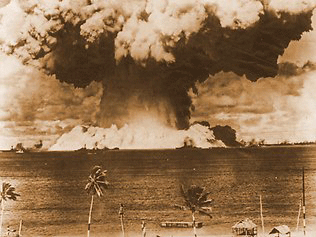 After 75 years, it’s time to clean Bikini https://thebulletin.org/2021/03/after-75-years-its-time-to-clean-bikini/?utm_source=Newsletter&utm_medium=Email&utm_campaign=ThursdayNewsletter03112021&utm_content=NuclearRisk_CleanBikini_03082021
By Hart Rapaport, Ivana Nikolić Hughes | March 9, 2021, Due to their remote location in the Northern Marshall Islands, the people of Bikini Atoll were spared the worst of the mid-Pacific fighting between the American and Japanese armies in the final years of World War II. Their millennia-old culture and sustainable way of life ended abruptly when, in early 1946, Commodore Ben Wyatt, a representative of the occupying United States Navy, informed King Juda and other Bikini residents that the US would begin to test nuclear weapons near their homes. Wyatt asked the Bikinians to move elsewhere, stating that the temporary move was for “the good of mankind and to end all wars.” Though Wyatt may have believed his words to be true, the show of might by the US that followed neither ended all conflict, nor was the exodus short-lived. Seventy-five years later, Bikinians have yet to return.
Nuclear testing in Bikini and other Marshall Islands, which lasted from 1946 to 1958, received international attention at the time. In those early Cold War days, America demonstrated its nuclear prowess through images of mushroom cloud blasts towering over the Pacific on the cover of Time magazine and other prominent publications. The word Bikini infiltrated popular culture via the name of a two-piece swimsuit (named by a French designer to be “explosive”) and SpongeBob’s home, without simultaneously suffusing our conscience with an awareness of the injustices and suffering those blasts caused the Marshallese people.
It is time, finally, to recognize and right the wrongs perpetrated by the US government in the Marshall Islands. The US forced a new and dangerous technology on the native lands and peoples, without fully comprehending the short- and long-term consequences. The Marshall Islands–and Bikini specifically–ended up the site of most of the tests of US hydrogen bombs, weapons up to a thousand times more powerful than atomic bombs used in attacks on Japan in 1945. Later, when the refugees were briefly returned to Bikini after testing ended, they were exposed to harmful radiation amounts with devastating health effects.
To be sure, the US government has taken steps to monitor and address the contamination that resulted from these nuclear detonations. However, the status quo—studies by the Energy Department for the sake of scientific publications and reports, while Bikinians continue to live on other islands—is not only inadequate, but morally repugnant. Bikini is a native land and water that, over thousands of years, was critical to the people’s sustenance and the bedrock of their culture. While some of those who survived the decades of relocations are still alive, their children and grandchildren, including the descendants of King Juda, have yet to resettle their ancestral home. Without an immediate US-government-funded plan to resettle the living refugees, the millennia-long culture and history tied to the atoll may be lost forever. Also, as one of the highest lying islands in the region, Bikini could be the solution to challenges the Marshallese face from global warming and corresponding rise of sea levels.
But it’s not as simple as saying: “Let’s move the Bikinians back.” A permanent return to the atoll by a multi-generational community would risk serious health effects unless sources of remaining radiological contamination in Bikini’s fruit, soil, and lagoon are addressed and removed, according to our research at Columbia University’s K=1 Project, Center for Nuclear Studies. We have found radioactive materials throughout Bikini Atoll, resulting in background gamma radiation above the limit agreed upon by the Republic of the Marshall Islands and US and levels of cesium-137 in various fruits that violate most relevant international and domestic safety standards. Even the waters surrounding Bikini, a formerly plentiful source of food, are riddled with radioisotopes from the detonations. The cleanup may require a novel scientific approach on par with that used after the Chernobyl and Fukushima nuclear accidents. That said, a modern nuclear testing cleanup protocol may prove useful in the event of future nuclear incidents in the United States or elsewhere.
The Biden administration has promised to lead in domestic and international spheres with morals and compassion. To do so, it must engage in a truthful, comprehensive accounting of past missteps in the Marshall Islands, regardless of whether the cost of reparations and resettlement exceeds its current pledge of roughly $110 million to Bikini. Commodore Wyatt’s allegedly “temporary” displacement of Bikinians from their native land has lasted 75 years and counting. Will the Biden administration act with morals to clean remaining radioactive material from US detonations? Will it act with compassion to help Bikinians find their way home?
French Nuclear tests: revelations about a cancer epidemic

|
Nuclear tests: revelations about a cancer epidemic https://www.mediapart.fr/journal/international/090321/essais-nucleaires-revelations-sur-une-epidemie-de-cancers MARCH 9, 2021 BY DISCLOSE
In a confidential report, the Polynesian government acknowledges the existence of a “cluster of thyroid cancers” directly linked to French nuclear tests.On July 2, 1966, in the greatest secrecy, France carried out its first nuclear test in the Polynesian sky. That day, at 5:34 am, Aldebaran, the name given to the bomb, was fired from a barge installed on an azure lagoon, near the Mururoa atoll. A few microseconds after the explosion, a fireball appears. This incandescent mass of several thousand degrees rises in the sky and forms, as it cools, a huge cloud of radioactive dust dispersed by the winds. No less than 46 “atmospheric” tests like this one have been carried out in the space of eight years. Each time, the explosion generated fallout contaminating everything in their path. Starting with the inhabitants of the islands. In total, they were exposed 297 times to intense levels of radioactivity. The general staff have always held to the same line of defense. The atmospheric tests, presented as “clean”, would not have had “consequences for the health” of the Polynesians. For years, the associations defending the victims of the trials have been convinced to the contrary. As for the scientific community, it has tried several times to verify this position through in-depth analyzes of official data, without success. Latest illustrations of this failure: the study published by the National Institute of Health and Medical Research (Inserm) on February 18. At the end of this work commissioned by the Ministry of Defense eight years ago, Inserm considered that the “links between the fallout from atmospheric tests and the occurrence of radiation-induced pathologies” were difficult to establish, due to a lack of data. reliable on the contamination of the archipelagos. Cluster of cancers ” However, a confidential report submitted to the Polynesian government a year earlier, in February 2020, argues the opposite. Disclose has obtained a copy of this never-before-released document. Soberly titled “Health consequences of French nuclear tests in the Pacific”, this eight-page report was written by a French military doctor at the request of the Monitoring Medical Center, an administration created in 2007 by the French and Polynesian governments and responsible for screening radiation-induced diseases. In other words, pathologies linked to repeated exposure to ionizing radiation. According to the author, some 10,000 Polynesians, including 600 children under the age of 15 living in the Gambier Islands, Tureia or even Tahiti have thus received a dose of radioactivity of 5 millisieverts (mSv), that is to say five times more than the minimum threshold (1 mSv) above which exposure is considered dangerous for human health. But the most embarrassing information is on page 5 of the document. For the first time, an official report establishes a direct link between nuclear tests and the extent of the number of cancers in the population. “The presence of a ‘cluster’ of thyroid cancers focused on the islands subjected to fallout during aerial shots, and in particular in the Gambier Islands, leaves little doubt about the role of ionizing radiation, and in particular of thyroid exposure to radioactive iodine, in the occurrence of this excess of cancers, ”says the author. The thyroid, an organ at the base of the neck, is particularly sensitive to ionizing radiation, especially in childhood, when the risk of developing thyroid cancer is greatest. The incidence of thyroid cancer and the link with the atmospheric gunfire campaign were precisely the subject of an Inserm analysis in 2010. According to this study, 153 thyroid cancers were diagnosed between 1985 and 1995 in the population born before 1976 and residing in French Polynesia. As a result, the number of people with thyroid cancer was two to three times higher than in New Zealand and Hawaii. Without being able to establish a direct link with nuclear tests, the college of experts already deplored the lack of available data. Based on data from the time, Disclose and Interprt, in partnership with the Science and Global Security program at Princeton University (United States), reassessed the doses of radioactivity received in the thyroid by the inhabitants of the Gambier, of Tureia and Tahiti during six of the most contaminating nuclear tests. Our estimates show that the doses received would be between two and ten times higher than the estimates established by the French Atomic Energy Commission (CEA) in 2006. How can we explain such a gap between our results and those of the CEA? The answer lies in the details of the calculation options chosen by the scientists at the Atomic Energy Commission. Take the example of Aldebaran, the first test in the open air. The CEA estimated that the population of the Gambier Islands, very exposed to toxic fallout, only drank river water, but no rainwater, which is much more loaded with radioactive particles. Many witnesses met in Polynesia question this assertion. This is the case with Julie Lequesme, 12 years old at the time of the events. “We had only that, rainwater,” says the resident of Taku, a village northeast of Mangareva, the main island of the Gambier archipelago. The same goes for Rikitea, the capital of the island, where “the running water network was not completed until the end of the 1970s”, specifies Jerry Gooding, the former president of the association. , the main organization supporting civilian victims of nuclear tests. Rainwater consumption is also confirmed by at least four official documents we obtained. A study by the Office for Scientific and Technical Research Overseas (Orstom) published in August 1966, one month after the start of the tests, thus notes that some of the islanders only consumed rainwater, in particular in because of their isolation. Same conclusion in a report from the Joint Biological Control Service (SMCB), an army service, dated April 24, 1968. By reintegrating the consumption of rainwater after Aldebaran, our estimates for the exposure of a child aged 1 to 2 at the time are 2.5 times higher than official calculations. Of the six tests we reconstructed, the consumption of rainwater was the main source of exposure to radioactivity for five of them. By choosing not to incorporate this data or by minimizing its importance, the state has therefore knowingly underestimated the extent of the contamination. In the Gambiers, cancer as a legacy According to the Ministry of the Armed Forces, the Gambier Islands have been affected by atmospheric fallout 31 times. In fact, the archipelago was struck by all the tests carried out between 1966 and 1974. Since then, cancer has spread everywhere. From Rikitea to Taku, to the shore of Taravai, the inhabitants are convinced: this plague is directly linked to atomic experiments. By investigating the field and meeting dozens of witnesses, Disclose was able to map the disease in Mangareva, the main Gambier island. Although we have not been able to establish a direct link between the trials and the number of cancers on site, the result is instructive. Yves Salmon developed carcinoma, a radiation-induced cancer of the blood, in 2010. His wife contracted breast cancer. She was recognized as a victim of French nuclear tests. The same goes for his sister. Utinio, Yves Salmon’s neighbor, contracted thyroid cancer in 2001. The man, who still lives near the village of Taku, spent his childhood in the Gambiers. In 2010, the French state finally recognized him as a victim of nuclear tests. Monique, 69, is Utinio’s cousin. She was a thyroid cancer survivor after two years in hospital and received state compensation in August 2011. Monique has six children, four of whom have thyroid cancer. Her two daughters have sought compensation from the Nuclear Test Victims Compensation Committee (Civen) without having received any answers yet. Sylvie (first name has been changed) and her older sister, born in 1972 and 1971, both suffered from breast cancer. “It was when our elders started dying that we really began to wonder,” said the eldest. Their mother died of the same disease in 2009. She was recognized as a victim of nuclear tests, just like Sylvie. This resident of Mangareva now fears for her daughter. Julie Lequesme’s father, an elder from Taku village, died of throat cancer in 1981 after working in Mururoa. “The island doctor told me that based on my father’s X-rays, he was a heavy smoker,” she says. However, my father never touched a cigarette. Her husband, a CEA alumnus, also died of cancer in 2010. In the family of Catherine Serda, a former resident of the small village of Taku, eight people suffered from cancer between the end of the 1970s and the beginning of the 1990s. Their common point: they all lived in Mangareva at the time. tests. If you have any information to give us, you can contact us at enquete@mediapart.fr. If you wish to send documents through a highly secure platform, you can connect to the frenchleaks.fr site |
|
1 This Month


PLEASE OPPOSE HR 8255 AND S.3639 – bills would accelerate satellite deployment, with no environmental review or safeguards – https://ncstd5li.quorum.us/campaign/169331/
To see nuclear-related stories in greater depth and intensity – go to https://nuclearinformation.wordpress.com
-
Archives
- September 2026 (194)
- August 2026 (330)
- July 2026 (355)
- June 2026 (287)
- May 2026 (306)
- April 2026 (356)
- March 2026 (251)
- February 2026 (267)
- January 2026 (308)
- December 2025 (358)
- November 2025 (359)
- October 2025 (375)
-
Categories
- 1
- 1 NUCLEAR ISSUES
- business and costs
- climate change
- culture and arts
- ENERGY
- environment
- health
- history
- indigenous issues
- Legal
- marketing of nuclear
- media
- opposition to nuclear
- PERSONAL STORIES
- politics
- politics international
- Religion and ethics
- safety
- secrets,lies and civil liberties
- spinbuster
- technology
- Uranium
- wastes
- weapons and war
- Women
- 2 WORLD
- ACTION
- AFRICA
- Atrocities
- AUSTRALIA
- Christina's notes
- Christina's themes
- culture and arts
- Events
- Fuk 2022
- Fuk 2023
- Fukushima 2017
- Fukushima 2018
- fukushima 2019
- Fukushima 2020
- Fukushima 2021
- general
- global warming
- Humour (God we need it)
- Nuclear
- RARE EARTHS
- Reference
- resources – print
- Resources -audiovicual
- Weekly Newsletter
- World
- World Nuclear
- YouTube
-
RSS
Entries RSS
Comments RSS
 nuclear-news