ELON MUSK IS NOT A RENEGADE OUTSIDER – HE’S A MASSIVE PENTAGON CONTRACTOR

while the 50-year-old businessman presents himself as a maverick science genius – an act that has garnered him legions of fans around the world – a closer inspection of his career shows he earned his fortune in a much more orthodox manner. First by being born rich, then by striking it big as a dot-com billionaire, and finally, like so many others, by feeding from the enormous government trough.
Perhaps more seriously though, SpaceX’s close proximity to both the military and the national security state marks it out as a key cog in the machine of U.S. empire, allowing Washington to spy, bomb or coup whoever it wants.
ALAN MACLEOD, Mint Press News, MAY 31ST, 2022 ”………………………………………….. Musk has deliberately cultivated this image of himself: a real life Tony Stark figure who thinks for himself and is not part of the established order. But behind this carefully constructed façade, Musk is intimately connected to the U.S. national security state, serving as one of its most important business partners. Elon, in short, is no threat to the powerful, entrenched elite: he is one of them.
TO UKRAINE, WITH LOVE
Musk, whose estimated $230 billion fortune is more than twice the gross domestic product of Ukraine, has garnered a great deal of positive publicity for donating thousands of Starlink terminals to the country, helping its people come back online after fighting downed the internet in much of the country. Starlink is an internet service allowing those with terminals to connect to one of over 2,400 small satellites in low Earth orbit. Many of these satellites were launched by Musk’s SpaceX technologies company.
However, it soon transpired that there is far more than meets the eye with Musk’s extraordinary “donation.” In fact, the U.S. government quietly paid SpaceX top dollar to send their inventory to the warzone. USAID – a government anti-insurgency agency that has regularly functioned as a regime-change organization – is known to have put up the cash to purchase and deliver at least 1,330 of the terminals.
Starlink is not a mass-market solution. Each terminal – which is, in effect, a tiny, portable satellite dish – has a markedly limited range, and is useful only in hyper-local situations. Mykhailo Fedorov, Ukraine’s Minister of Digital Transformation, estimated that the 10,000 Starlink terminals were allowing around 150,000 people to stay online.
Such a small number of people using the devices raises eyebrows. Who is important enough to be given such a device? Surely only high-value individuals such as spies or military operatives. That the Starlinks are serving a military purpose is now beyond clear. Indeed, in a matter of weeks, Starlink has become a cornerstone of the Ukrainian military, allowing it to continue to target Russian forces via drones and other high-tech machinery dependent on an internet connection. One official told The Times of London that he “must” use Starlink to target enemy forces via thermal imaging.
Starlink is what changed the war in Ukraine’s favor. Russia went out of its way to blow up all our comms. Now they can’t. Starlink works under Katyusha fire, under artillery fire. It even works in Mariupol,” one Ukrainian soldier told journalist David Patrikarakos.
The reference to Mariupol alludes to the infamous Nazi group, the Azov Battalion, who have also reportedly been using Musk’s technology. Even in a subterranean cavern beneath Mariupol’s steelworks, Azov fighters were able to access the internet and communicate with the outside world, even doing video interviews from underground. In 2015, Congress attempted to add a provision to U.S. military aid to Ukraine stipulating that no support could go to Azov owing to their political ideology. That amendment was later removed at the behest of the Pentagon.
Dave Tremper, Director of Electronic Warfare at the Pentagon, sang SpaceX’s praises. “How they did that [keeping Ukrainian forces online] was eye-watering to me,” he said, adding that in the future the U.S. military “needs to be able to have that agility.”
ROCKETMAN
Such a statement is bound to get the attention of SpaceX chiefs, who have long profited from their lucrative relationship with the U.S. military. SpaceX relies largely on government contracts, there being almost no civilian demand for many of its products, especially its rocket launches.
Musk’s company has been awarded billions of dollars in contracts to launch spy satellites for espionage, drone warfare and other military uses. For example, in 2018, SpaceX was chosen to blast a $500 million Lockheed Martin GPS system into orbit. While Air Force spokesmen played up the civilian benefits of the launch, such as increased accuracy for GPS devices, it is clear that these devices play a key role in global surveillance and ongoing drone wars. SpaceX has also won contracts with the Air Force to deliver its command satellite into orbit, with the Space Development Agency to send tracking devices into space, and with the National Reconnaissance Office (NRO) to launch its spy satellites. These satellites are used by all of the “big five” surveillance agencies, including the CIA and the NSA.
Thus, in today’s world, where so much intelligence gathering and target acquisition is done via satellite technology, SpaceX has become every bit as important to the U.S. war machine as more well-known companies like Lockheed Martin and Boeing. Without Musk’s company, the U.S. would not be able to carry out such an invasive program of spying and drone warfare around the world. Indeed, China is growing increasingly wary of this power, and is being advised to develop anti-satellite technologies to counter SpaceX’s all-seeing eye. Yet Musk himself continues to benefit from a general perception that he is not part of the system.
From its origins in 2002, SpaceX has always been extremely close to the national security state, particularly the CIA. Perhaps the most crucial link is Mike Griffin, who, at the time, was the president and COO of In-Q-Tel, a CIA-funded venture capital firm that seeks to nurture and sponsor new companies that will work with the CIA and other security services, equipping them with cutting edge technology. The “Q” in its name is a reference to “Q” from the James Bond series – a creative inventor who supplies the spy with the latest in futuristic tech………………………..
While at NASA, Griffin brought Musk in for meetings and secured SpaceX’s big break. In 2006, NASA awarded the company a $396 million rocket development contract – a remarkable “gamble” in Griffin’s words, especially as it had never launched a rocket before. As National Geographic put it, SpaceX, “never would have gotten to where it is today without NASA.” And Griffin was essential to this development. Still, by 2008, SpaceX was again in dire straits, with Musk unable to make payroll. The company was saved by an unexpected $1.6 billion NASA contract for commercial cargo services. Thus, from its earliest days, SpaceX was nurtured by government agencies that saw the company as a potentially important source of technology.
NUKING MARS & BACKING COUPS
Like Henry Ford, Musk went into the automobile business, purchasing Tesla Motors in 2004. And also like Henry Ford, he has shared some rather controversial opinions. In 2019, for instance, he suggested that vaporizing Mars’ ice caps via a series of nuclear explosions could warm the planet sufficiently to support human life. If this was done, it would arguably not even be his worst crime against space. During a 2018 publicity stunt, he blasted a Tesla into outer space using a SpaceX rocket. However, he did not sterilize the vehicle before doing so, meaning it was covered in earthly bacteria – microorganisms that will likely be fatal to any alien life they encounter. In essence, the car is a biological weapon that could end life on any planet it encounters.
NUKING MARS & BACKING COUPS
Like Henry Ford, Musk went into the automobile business, purchasing Tesla Motors in 2004. And also like Henry Ford, he has shared some rather controversial opinions. In 2019, for instance, he suggested that vaporizing Mars’ ice caps via a series of nuclear explosions could warm the planet sufficiently to support human life. If this was done, it would arguably not even be his worst crime against space. During a 2018 publicity stunt, he blasted a Tesla into outer space using a SpaceX rocket. However, he did not sterilize the vehicle before doing so, meaning it was covered in earthly bacteria – microorganisms that will likely be fatal to any alien life they encounter. In essence, the car is a biological weapon that could end life on any planet it encounters.
Musk also attracted attention when he appeared to admit that he worked with the U.S. government to overthrow Bolivian President Evo Morales in 2019………………….. The new government quickly invited Musk for talks. When asked on Twitter point blank whether he was involved in Morales’ ouster, Musk responded, “We will coup whoever we want! Deal with it.”………………………..
WORLD’S RICHEST MAN, FUNDED BY TAXPAYERS
In addition to the billions in government contracts Musk’s companies have secured, they also have received similar numbers in public subsidies and incentives. Chief among these is Tesla, which benefits greatly from complex international rules around electric vehicle production. In a push to reduce carbon emissions, governments around the world have introduced a system of credits for green vehicles, whereby a certain percentage of each manufacturer’s output must be zero-emission vehicles. Tesla only produces electric cars, so easily meets the mark.
However, the system also allows Tesla to sell their excess credits to manufacturers who cannot meet these quotas. In a competitive market where each manufacturer needs to hit certain targets, these credits are worth their weight in gold, and net Tesla billions in profit every year. For example, between 2019 and 2021 alone, Stellantis, which owns the Chrysler, Fiat, Citroen and Peugeot brands, forked out nearly $2.5 billion to acquire Tesla U.S. and European green credits.
This bizarre and self-defeating system goes some way to explaining why Tesla is worth more by market cap than Toyota, Volkswagen, Mercedes-Benz, BMW, GM, Ford, Honda, Hyundai, Kia, and Volvo put together, despite not being even a top-15 car manufacturer in terms of units sold.
Musk’s company also received significant government backing in its early stages, receiving a $465 million low-interest loan from the Department of Energy in 2010, at a time when Tesla was on the rocks and its future was in doubt.
Like many giant companies, Tesla is able to play states off against each other, each job-hungry location bidding against the others to give the corporation as much free cash and tax incentives as possible. In 2020, for example, Austin gave Tesla more than $60 million in tax breaks to build a truck plant there.
This, however, was small fry in comparison to some of the deals Musk has signed. The State of New York handed Musk over $750 million, including $350 million in cash, in exchange for building a solar plant outside of Buffalo – a plant that Musk was bound to build somewhere in the United States. Meanwhile, Nevada signed an agreement with Tesla to build its Gigafactory near Reno. The included incentives mean that the car manufacturer could rake in nearly $1.3 billion in tax relief and tax credits. Between 2015 and 2018, Musk himself paid less than $70,000 in federal income taxes.
Therefore, while the 50-year-old businessman presents himself as a maverick science genius – an act that has garnered him legions of fans around the world – a closer inspection of his career shows he earned his fortune in a much more orthodox manner. First by being born rich, then by striking it big as a dot-com billionaire, and finally, like so many others, by feeding from the enormous government trough.
Perhaps more seriously though, SpaceX’s close proximity to both the military and the national security state marks it out as a key cog in the machine of U.S. empire, allowing Washington to spy, bomb or coup whoever it wants.
It is for this reason that so much of the hysteria, both positive and negative, over Musk’s ongoing purchase of Twitter is misplaced. Elon Musk is neither going to save nor destroy Twitter because he is not a crusading rebel challenging the establishment: he is an integral part of it. https://www.mintpressnews.com/elon-musk-not-renegade-outsider-cia-pentagon-contractor/280972/
Canada’s nuclear waste liabilities total billions of dollars. Is a landfill site near the Ottawa River the best way to extinguish them?

Gordon Edwards, an activist and consultant with the Canadian Coalition for Nuclear Responsibility, accused CNL of obscuring the origin and hazardous nature of much of the waste. He said the worst of it includes cobalt-60 imported into Canada from other countries by private companies. He questioned why taxpayers should pay for its disposal. ‘‘They’re not being up front in telling people where these wastes are coming from,”
This is big business: Ottawa sends AECL more than half a billion dollars annually to pay for remediation efforts alone.

“It’s just piled right on top of a sloping hillside surrounded by wetlands, one kilometer from the Ottawa River,” “It would be hard to come up with a worse technology and site for permanent nuclear waste disposal.”
The Canadian Nuclear Laboratories’ proposed site for disposing radioactive waste has opponents watching with apprehension. Here’s what you need to know about the Near Surface Disposal Facility
GLOBE AND MAIL, MATTHEW MCCLEARN, 6 June 22, DEEP RIVER, ONT. One glance at Building 250 confirms that its demolition will be complicated.
Workers clad in protective gear are busy removing its asbestos cladding, which has been gridded off in orange ink into alphanumerically labelled boxes. The four-story wood structure cannot simply be knocked down with a wrecking ball. Before methodical dismantling can begin, virtually every plank, floor covering and panel must be studied and characterized.
Building 250 is one element of a multi-billion-dollar headache for the federal government. It’s among the oldest buildings at Chalk River Laboratories, 200 kilometers northwest of Ottawa, which long served as Canada’s premier nuclear research facility. Today the facility’s operator, Canadian Nuclear Laboratories (CNL), is addressing the resulting radioactive waste. It has already torn down 111 buildings, but Building 250 is among the most hazardous: it contained radioactive hot cells and suffered fires that spread contaminants throughout.

CNL needs a specially designated place to dispose of this hazardous detritus. This week, the Canadian Nuclear Safety Commission held final hearings for its environmental review of the Near Surface Disposal Facility (NSDF), CNL’s proposed landfill site for radioactive waste on what is now a thickly wooded hillside at Chalk River. Its decision is expected sometime around the end of this year, and no small number of opponents are watching with apprehension.
Continue readingNuclear Contaminated Water From Fukushima Should Never Be Out Of One’s Mind

Nuke Contaminated Water From Fukushima Should Never Be Out Of One’s Mind, https://nation.com.pk/2022/06/07/nuke-contaminated-water-from-fukushima-should-never-be-out-of-ones-mind/ By Zhou Dingxing. Jun 7, 2022, In 2011, the “3/11” earthquake in Japan caused the meltdown of the Fukushima Daiichi Nuclear Power Plant reactor core, unleashing enormous amounts of radioactive material. The operator of the plant, Tokyo Electric Power Company (TEPCO), decided to pour in seawater to cool the reactor and contain the leakage. And because the used seawater became highly contaminated with radioactive material, TEPCO had to put it in storage tanks. A decade on, the nuclear contaminated water generated by the Fukushima Daiichi Nuclear Power Plant are about 150 tons per day in 2021, and will reach the upper limit of the storage tank capacity of 1.37 million tons in the spring of 2023.
According to estimates by the Japan Centre for Economic Research, it will cost 50-70 trillion yen (about $400-550 billion) to scrap and decontaminate the reactor, the bulk of which goes to the treatment of contaminated water. So in April 2021, the Japanese government announced that the problem of increasing amounts of nuclear contaminated wastewater would be addressed by dumping it into the sea. On May 18, 2022, the Japan Atomic Energy Regulatory Commission granted initial approval for TEPCO’s ocean dumping plan.
After the Fukushima nuclear accident, the Japanese government set up the “Nuclear Damage Compensation and Decommissioning Facilitation Corporation” (NDF), which is an official agency with 50.1 percent of TEPCO’s voting rights, in order to prevent TEPCO from going bankrupt. In other words, TEPCO is now under direct jurisdiction and control of the Japanese government. It is not hard to see that both TEPCO and the Japanese government are the masterminds behind the nuclear contaminated water dumping plan, because for them, this is the most expedient, cost-effective and trouble-saving way. Japan would need to spend only 3.4 billion yen (about $27 million) according to this plan. But the threat to nature, the environment and human life as a result of such reckless actions was probably never on their minds.
NUCLEAR CONTAMINATED WATER IS NOT NUCLEAR TREATED WATER
Monitoring data collected in 2012 showed that the concentration of Cesium in the waters near Fukushima was 100,000 becquerels per cubic meter, which is 100 times higher than what was detected in the Black Sea after the Chernobyl nuclear leak. Ten years later in 2021, 500 becquerels of radioactive elements per kilogram of weight could still be detected in the flat scorpionfish caught by Japanese fishermen off the coast of Fukushima Prefecture, or five times higher than Japan’s own standards. In the 11 years since the nuclear disaster, one or two thyroid cancer cases have been reported for every 60,000 children in Fukushima Prefecture, much higher than the normal rate.
The Japanese government and TEPCO have repeatedly claimed that nuclear contaminated water is “safe” to be dumped into the ocean because it would go through the multi-nuclide removal system (Advanced Liquid Processing System, ALPS). But it is only the radioactive substance called “Tritium” that has reached this standard. And what Japan doesn’t say is that, even after treatment, the water still contains other radioactive substances such as Strontium 90 and Carbon 14 that cause genetic mutation in the ecosystem.
Since the release of the ALPS-related report, the Japanese government has not held any briefings or hearings for the public. And in order to justify the dumping plan, the Japanese government contacted citizen and groups to ask them to stop using the words “nuclear contaminated water”, and use “nuclear treated water” instead. Vigorous public relations (PR) efforts have also been carried out to whitewash the plan. In the 2021 budget of the Japanese Reconstruction Agency, PR expenses related to the Fukushima nuclear accident have increased to 2 billion yen (around $16 million), over four times than the previous year figure. The money has been used on professional teams to weaken and remove negative public opinion in Japan and abroad about the nuclear contaminated water through various propaganda programs.
Furthermore, TEPCO’s track records for handling the nuclear accident have been filled with deception and distortion. In 2007, TEPCO admitted that it had tampered with data and concealed potential safety hazards in a total of 199 regular inspections of 13 reactors in its nuclear power plants since 1977, including the cooling system failure in the Fukushima nuclear accident. One week after the 2011 nuclear accident when experts had already made the judgment that the cores of Units 1 to 3 of the Fukushima Daiichi Nuclear Power Plant had melted, the company still refused to announce the truth to the public, and instead chose to use “core damage,” a term that was significantly less alarming. With a past so bad it is hard to make one believe that TEPCO will dump “safe” nuclear contaminated water into the sea.
WAVES OF OPPOSITION AT HOME AND ABROAD
The Japanese government has so far failed to provide sufficient and credible explanations on the legitimacy of the nuclear contaminated water dumping plan, the reliability of nuclear contaminated water data, the effectiveness of the purification devices, and the uncertainty of the environmental impact. To promote the plan under such circumstances has only brought about wide criticism and questions by various communities in Japan and beyond.
Up to 70 percent of the people in Fukushima Prefecture have expressed opposition to the dumping plan. Konno Toshio, former president of Fukushima University, was opposed to advancing the ocean dumping plan without prior understanding at home and abroad, because this plan could affect future generations and must be treated with great caution. The fishery cooperatives and local councils in Miyagi Prefecture, which is adjacent to Fukushima Prefecture, believe that the dumping of nuclear contaminated water into the ocean may affect the safety of local aquatic products and cause significant economic losses to related industries. Already, 180,000 people in Japan have signed the petition to the Japanese government to adopt disposal options other than ocean dumping.
Vladimir Kuznetsov, academician at the Russian Academy of Natural Sciences, said that radioactive substances in the nuclear contaminated water can only be partially filtered, and the treated water still contains extremely dangerous radionuclides, which will pollute marine life and spread to the entire ocean through fish migration. This will gravely harm the global marine environment and cause serious harm to the health of people in the periphery. According to a research model established by GEOMAR Helmholtz Centre for Ocean Research Kiel, half of the Pacific Ocean will be polluted in less than 57 days if nuclear contaminated water is dumped at the speed announced by Japan.
Voices of justice
Japan’s ocean dumping plan of nuclear contaminated water is a serious threat to the marine environment, and it damages marine interests of the neighbors and other littoral countries. It also violates multiple international conventions such as the United Nations Convention on the Law of the Sea, the Convention on Assistance in Nuclear Accidents or Radiation Emergencies, and the Convention on Nuclear Safety as well as principles of the international law. Many countries, including China, have expressed concern over or opposition to it.
The Russian Foreign Ministry issued a statement criticizing the Japanese government for not consulting with or providing any related information to its neighbors when the decision was made, and expressing grave concern over Japan’s dumping of nuclear polluted water into the ocean. The South Korean Foreign Ministry summoned the Japanese ambassador to Seoul to make a serious protest against Japan’s unilateral decision while large crowds gathered in front of the Japanese embassy to protest. The International Atomic Energy Agency (IAEA) has launched an assessment of Japan’s plan.
The spokesperson of the Chinese Ministry of Foreign Affairs has repeatedly pointed out that Japan’s dumping of nuclear contaminated water into the ocean is extremely irresponsible, and demanded that Japan fully consult with neighbouring countries, other stakeholders, and relevant international institutions to find a proper way to dispose of the nuclear contaminated water, before which the dumping into the ocean shall not be initiated.
The ocean is a treasure for all mankind and our home for survival. It is essential for sustainable development and our future. To dump nuclear contaminated water from Fukushima into the ocean is a major issue that bears on the environment for human survival and health, it is not just Japan’s internal affairs. Although keenly aware of the grave harm to the global marine environment caused by the dumping of such water into the sea, Japan has attempted to push through the plan without exhausting all other safe methods. Such an opaque and irresponsible approach is unacceptable, let alone trusted by countries in the region and the larger international community.
–The author is a scholar on international studies
Much hyping for France’s NUWARD small modular reactor (SMR) design: construction to start in 2030 (but will it be a lemon?)

France’s NUWARD SMR Will Be Test Case for European Early Joint Nuclear Regulatory Review, Power, 5 June 22. The French Nuclear Safety Authority (ASN), the Czech State Office for Nuclear Safety (SUJB), and Finland’s Radiation and Nuclear Safety Authority (STUK) have picked France’s NUWARD small modular reactor (SMR) design as a test case for an early joint regulatory review for SMRs. The development marks a notable step by European regulators to align practices in a bid to harmonize licensing and regulation for SMRs in the region.
EDF, an entity that is majority held by the French government, on June 2 announced the reactor design will be the subject of the review, which “will be based on the current set of national regulations from each country, the highest international safety objectives and reference levels, and up-to-date knowledge and relevant good practice.”
The technical discussions and collaborative efforts associated with the review will both help ASN, STUK, and SUJB “increase their respective knowledge of each other’s regulatory practices at the European level,” as well as “improve NUWARD’s ability to anticipate the challenges of international licensing and meet future market needs,” it said.
A European Frontrunner
NUWARD, which is still currently in the conceptual design phase, may be a frontrunner in the deployment of SMRs in Europe. It was unveiled in 2019 by EDF, France’s Alternative Energies and Atomic Energy Commission (CEA), French defense contractor Naval Group, and TechnicAtome, a designer of naval propulsion nuclear reactors and an operator of nuclear defense facilities. The consortium in May tasked Belgian engineering firm Tractabel with completing—by October 2022—conceptual design studies for parts of the conventional island (turbine hall), the balance of plant (water intake and servicing system), and the 3D modeling of the buildings that will house those systems.
Launched as a design that derives from the “best-in-class French technologies” and “more than 50 years of experience in pressurized water reactor (PWR) design, development, construction, and operation,” the design proposes a 340-MWe power plant configured with twin 170-MWe modules. NUWARD is based on an integrated PWR design with full integration of the main components within the reactor pressure vessel, including the control rod drive mechanisms, compact steam generators, and pressurizer, CEA says.
As “the most compact reactor in the world,” the design is well-suited for power generation, including replacing coal and gas-fired generation, as well as for electrification of medium-sized cities and isolated industrial sites, CEA says. According to Tractabel, the next phase of the NUWARD project—the basic design completion—is slated to begin in 2023. Construction of a reference plant is expected to start in 2030.
Crucial to SMR Deployment: Harmonization of Regulations
On Thursday, EDF noted that while SMR technology innovation is important, deployment of SMRs, which will be integral to the energy transition toward carbon neutrality, will require “a serial production process and a clear regulatory framework.” Harmonization of regulations and requirements in Europe and elsewhere will be “an essential element to support aspirations of standardization of design, in-factory series production and limited design adaptations to country-specific requirements,” it said.
Several efforts to encourage collaboration on SMR licensing and regulatory alignment are already underway in Europe. These include the European SMR Partnership led by FORATOM, the Brussels-based trade association for the nuclear energy industry in Europe, and the Sustainable Nuclear Energy Technology Platform (SNETP), as well as the Nuclear Harmonisation and Standardisation Initiative (NHSI), which the International Atomic Energy Agency launched in March.
The European Union is separately spearheading the ELSMOR project, which aims to enhance the European capability to assess and develop the innovative light water reactor (LWR) SMR concepts and their safety features, as well as sharing that information with policymakers and regulators.
SMRs Part of Future Plans for France, Czech Republic, Finland
Participation of the three countries—France, the Czech Republic, and Finland—is noteworthy for their near-term plans to expand generation portfolios with new nuclear. French President Emmanuel Macron on Feb. 10 said France will build six new nuclear reactors and will consider building eight more. Macron also notably said $1.1 billion would be made available through the France 2030 re-industrialization plan for the NUWARD SMR project.
In the Czech Republic, which has six existing nuclear reactors that generate about a third of its power, energy giant ČEZ has designated a site at the Temelín Nuclear Power Plant as a potential site for an SMR. ČEZ has signed a memorandum of understanding on SMRs with NuScale, and it also has cooperation agreements with GE Hitachi, Rolls-Royce, EDF, Korea Hydro and Nuclear Power, and Holtec.
Finland has five operating reactors, and it is in the process of starting up Olkiluoto 3, a 1.6-GW EPR (EDF’s next-generation nuclear reactor), whose construction began in 2005. Two others were planned: Olkiluoto 4 and Hanhikivi 1. Early in May, however, Finnish-led consortium Fennovoima said it had scrapped an engineering, procurement, and construction contract for Russia’s state-owned Rosatom to build the 1.2-GW Hanhikivi 1, citing delays and increased risks due to the war in Ukraine. On May 24, Fennovoima withdrew the Hanhikivi 1 nuclear power plant construction license application.
The VTT Technical Research Centre of Finland is actively developing an SMR intended for district heating. While Finland now mostly relies on coal for district heat, it has pledged to phase out coal by 2029. VTT, notably, coordinates with the ELSMOR project for European SMR licensing practices. In addition, VTT says it is leading a work package related to the new McSAFER project, which is developing next-generation calculation tools for the modeling of SMR physics.
—Sonal Patel is a POWER senior associate editor (@sonalcpatel, @POWERmagazine).
Thin-walled nuclear waste containers – not really very secure

Greg Phillips, Nuclear Fuel Cycle Watch 4 June The biggest piece of BS that jumped out at me [in this pro nuclear article] is the bolded section:
“…Nuclear waste containers have been tested over the last 40 years by running them into concrete bunkers at 80 mph, being dropped onto huge steel spikes, burned in jet fuel fires at thousands of degrees, and sunk deep in water for weeks. These things are as strong as humans can make them.”
ONLY TRANSPORT CONTAINERS HAVE BEEN SUBJECTED TO THE ABOVE TESTS. THE THIN WELDED CONTAINERS PLACED INTO A PROTECTIVE OUTER SHELL OF CONCRETE. THE PRESSURISED THIN INNER CONTAINERS ARE VENTED TO OPEN AIR TO LET HEAT ESCAPE. ANY LEAK FROM A FAILED WELD WILL ESCAPE TO THE ENVIRONMENT.
Excuse the caps, but too many people have been fooled by such pro-nuclear propaganda. Pictured at top is a thin welded canister – a fully laden canister would not survive a drop of a few metres.
Those nuclear waste containers pictured above are like hermit crabs, a hard exterior shell with vulnerable internals. The thin welded canister is placed into the concrete outer shell, which has vents to keep the canister cool. So any weld failure, crack can lead to radioactive contamination into the atmosphere. If the vents of the outer shell get blocked, the temperature of the fuel will rise to 400C+. If the pressurised Helium leaks out the temperature will rise. https://www.facebook.com/groups/1021186047913052
Nuclear waste from small modular reactors

Lindsay M. Krall https://orcid.org/0000-0002-6962-7608 Lindsay.Krall@skb.se, Allison M. Macfarlane https://orcid.org/0000-0002-8359-9324, and Rodney C. Ewing https://orcid.org/0000-0001-9472-4031Authors Info & Affiliations
May 31, 2022 Small modular reactors (SMRs), proposed as the future of nuclear energy, have purported cost and safety advantages over existing gigawatt-scale light water reactors (LWRs). However, few studies have assessed the implications of SMRs for the back end of the nuclear fuel cycle. The low-, intermediate-, and high-level waste stream characterization presented here reveals that SMRs will produce more voluminous and chemically/physically reactive waste than LWRs, which will impact options for the management and disposal of this waste. Although the analysis focuses on only three of dozens of proposed SMR designs, the intrinsically higher neutron leakage associated with SMRs suggests that most designs are inferior to LWRs with respect to the generation, management, and final disposal of key radionuclides in nuclear waste.
Abstract
Small modular reactors (SMRs; i.e., nuclear reactors that produce <300 MWelec each) have garnered attention because of claims of inherent safety features and reduced cost. However, remarkably few studies have analyzed the management and disposal of their nuclear waste streams. Here, we compare three distinct SMR designs to an 1,100-MWelec pressurized water reactor in terms of the energy-equivalent volume, (radio-)chemistry, decay heat, and fissile isotope composition of (notional) high-, intermediate-, and low-level waste streams. Results reveal that water-, molten salt–, and sodium-cooled SMR designs will increase the volume of nuclear waste in need of management and disposal by factors of 2 to 30. The excess waste volume is attributed to the use of neutron reflectors and/or of chemically reactive fuels and coolants in SMR designs. That said, volume is not the most important evaluation metric; rather, geologic repository performance is driven by the decay heat power and the (radio-)chemistry of spent nuclear fuel, for which SMRs provide no benefit.
SMRs will not reduce the generation of geochemically mobile 129I, 99Tc, and 79Se fission products, which are important dose contributors for most repository designs. In addition, SMR spent fuel will contain relatively high concentrations of fissile nuclides, which will demand novel approaches to evaluating criticality during storage and disposal. Since waste stream properties are influenced by neutron leakage, a basic physical process that is enhanced in small reactor cores, SMRs will exacerbate the challenges of nuclear waste management and disposal.
In recent years, the number of vendors promoting small modular reactor (SMR) designs, each having an electric power capacity <300 MWelec, has multiplied dramatically (1, 2). Most recently constructed reactors have electric power capacities >1,000 MWelec and utilize water as a coolant. Approximately 30 of the 70 SMR designs listed in the International Atomic Energy Agency (IAEA) Advanced Reactors Information System are considered “advanced” reactors, which call for seldom-used, nonwater coolants (e.g., helium, liquid metal, or molten salt) (3). Developers promise that these technologies will reduce the financial, safety, security, and waste burdens associated with larger nuclear power plants that operate at the gigawatt scale (3). Here, we make a detailed assessment of the impact of SMRs on the management and disposal of nuclear waste relative to that generated by larger commercial reactors of traditional design.
Nuclear technology developers and advocates often employ simple metrics, such as mass or total radiotoxicity, to suggest that advanced reactors will generate “less” spent nuclear fuel (SNF) or high-level waste (HLW) than a gigawatt-scale pressurized water reactor (PWR), the prevalent type of commercial reactor today. For instance, Wigeland et al. (4) suggest that advanced reactors will reduce the mass and long-lived radioactivity of HLW by 94 and ∼80%, respectively. These bulk metrics, however, offer little insight into the resources that will be required to store, package, and dispose of HLW (5). Rather, the safety and the cost of managing a nuclear waste stream depend on its fissile, radiological, physical, and chemical properties (6). Reactor type, size, and fuel cycle each influence the properties of a nuclear waste stream, which in addition to HLW, can be in the form of low- and intermediate-level waste (LILW) (6–8). Although the costs and time line for SMR deployment are discussed in many reports, the impact that these fuel cycles will have on nuclear waste management and disposal is generally neglected (9–11).
Here, we estimate the amount and characterize the nature of SNF and LILW for three distinct SMR designs. From the specifications given in the NuScale integral pressurized water reactor (iPWR) certification application, we analyze basic principles of reactor physics relevant to estimating the volumes and composition of iPWR waste and then, apply a similar methodology to a back-end analysis of sodium- and molten salt–cooled SMRs. Through this bottom-up framework, we find that, compared with existing PWRs, SMRs will increase the volume and complexity of LILW and SNF. This increase of volume and chemical complexity will be an additional burden on waste storage, packaging, and geologic disposal. Also, SMRs offer no apparent benefit in the development of a safety case for a well-functioning geological repository.
1. SMR Neutronics and Design………………
2. Framework for Waste Comparison………….
3. SMR Waste Streams: Volumes and Characteristics………….
…………..
3.3.2. Corroded vessels from molten salt reactors.
Molten salt reactor vessel lifetimes will be limited by the corrosive, high-temperature, and radioactive in-core environment (23, 24). In particular, the chromium content of 316-type stainless steel that constitutes a PWR pressure vessel is susceptible to corrosion in halide salts (25). Nevertheless, some developers, such as ThorCon, plan to adopt this stainless steel rather than to qualify a more corrosion-resistant material for the reactor vessel (25).
Terrestrial Energy may construct their 400-MWth IMSR vessel from Hastelloy N, a nickel-based alloy that has not been code certified for commercial nuclear applications by the American Society of Mechanical Engineers (26, 27). Since this nickel-based alloy suffers from helium embrittlement (27), Terrestrial Energy envisions a 7-y lifetime for their reactor vessel (28). Molten salt reactor vessels will become contaminated by salt-insoluble fission products (28) and will also become neutron-activated through exposure to a thermal neutron flux greater than 1012 neutrons/cm2-s (29). Thus, it is unlikely that a commercially viable decontamination process will enable the recycling of their alloy constituents. Terrestrial Energy’s 400-MWth SMR might generate as much as 1.0 m3/GWth-y of steel or nickel alloy in need of management and disposal as long-lived LILW (Fig. 1, Table 1, and SI Appendix, Fig. S3 and section 2) [on original]…………
4. Management and Disposal of SMR Waste
The excess volume of SMR wastes will bear chemical and physical differences from PWR waste that will impact their management and final disposal. …………………….
5. Conclusions
This analysis of three distinct SMR designs shows that, relative to a gigawatt-scale PWR, these reactors will increase the energy-equivalent volumes of SNF, long-lived LILW, and short-lived LILW by factors of up to 5.5, 30, and 35, respectively. These findings stand in contrast to the waste reduction benefits that advocates have claimed for advanced nuclear technologies. More importantly, SMR waste streams will bear significant (radio-)chemical differences from those of existing reactors. Molten salt– and sodium-cooled SMRs will use highly corrosive and pyrophoric fuels and coolants that, following irradiation, will become highly radioactive. Relatively high concentrations of 239Pu and 235U in low–burnup SMR SNF will render recriticality a significant risk for these chemically unstable waste streams.
SMR waste streams that are susceptible to exothermic chemical reactions or nuclear criticality when in contact with water or other repository materials are unsuitable for direct geologic disposal. Hence, the large volumes of reactive SMR waste will need to be treated, conditioned, and appropriately packaged prior to geological disposal. These processes will introduce significant costs—and likely, radiation exposure and fissile material proliferation pathways—to the back end of the nuclear fuel cycle and entail no apparent benefit for long-term safety.
Although we have analyzed only three of the dozens of proposed SMR designs, these findings are driven by the basic physical reality that, relative to a larger reactor with a similar design and fuel cycle, neutron leakage will be enhanced in the SMR core. Therefore, most SMR designs entail a significant net disadvantage for nuclear waste disposal activities. Given that SMRs are incompatible with existing nuclear waste disposal technologies and concepts, future studies should address whether safe interim storage of reactive SMR waste streams is credible in the context of a continued delay in the development of a geologic repository in the United States.
Supporting Information
Appendix 01 (PDF)
Note
This article is a PNAS Direct Submission. E.J.S. is a guest editor invited by the Editorial Board.
References…………………………….. https://www.pnas.org/doi/10.1073/pnas.2111833119
A warning from France, about nuclear delusions of grandeur,
Nuclear: ” Industrialists are in denial, politicians know nothing about it “

France had the madness of grandeur in wanting to build more and more powerful reactors.
Gaspard d’Allens and Émilie Massemin (Reporterre) Reporterre 28th May 2022
Nuclear ” unacceptable “, ” industrial disaster ” of the EPR , France and its ” delusions of grandeur “… Pillar of the fight against the atom, the engineer Bernard Laponche warns of the dangers of this technology.
You are reading Bernard Laponche’s great interview. The first part is here .
Reporterre — How do you analyze the return to grace of the nuclear industry by Emmanuel Macron, with the construction of six EPR2s and the study of eight additional ones ?
Bernard Laponche — It’s communication ! This operation is part of the mythology that goes back to General de Gaulle, and that Emmanuel Macron has taken over, according to which civil and military nuclear power is the basis of France’s independence.
EDF ‘s nuclear fleet is going through its worst crisis since its birth. The stalemate of the Flamanville EPR site , the chain shutdowns of reactors due to problems of corrosion and cracks, the problems at the Orano reprocessing plants in La Hague and the manufacture of Mox [1] in Marcoule, EDF on the verge of bankruptcy … This is unheard of. Between 2010 and 2020, nearly a hundred incidents occurred throughout the park. Bernard Doroszczuk, president of the Nuclear Safety Authority ( ASN ), recognized this on April 7, 2021 during a hearing in the Senate : “ A nuclear accident is possible in France. »
In this situation, it seems very difficult to hold a triumphant speech on nuclear power. But the industrialists are in denial, the politicians who promote it know nothing about it. All are surfing on the argument of the fight against climate change to promote the sector.
Why nuclear won’t save the climate ?
Greenhouse gas emissions are far from negligible. Nuclear fissions in an operating reactor, the source of the energy produced, do not effectively emit CO₂ . But all nuclear activities in a plant in operation – 800 employees on average – or during shutdowns for maintenance work, yes. These activities also very often cause leaks of gases that are very active in global warming, such as refrigerants (1,000 times warmer than CO₂) and especially sulfur hexafluoride (23,500 times more warming). The extraction of uranium from the mines of Canada, Niger and Kazakhstan, the construction of nuclear plants and power stations, the manufacture of nuclear fuels, the transport and storage of radioactive materials and waste also emit considerable quantities of CO ₂ and other greenhouse gases. For example, the work for each fourth ten-year inspection of a 900 megawatt ( MW ) reactor — there are thirty-two of them — mobilizes 5,000 workers, between six months and a year.
………………………………….. Take the case of the Flamanville EPR : very high CO₂ emissions during construction — several thousand cubic meters of concrete, hundreds of tons of steel and thousands of workers since 2007 — and we do not know still not sure if it will start one day, or when.
Today, nuclear represents only 10 % of the world’s electricity production and only makes it possible to avoid 2.5 % of the world’s greenhouse gas emissions. For it to contribute significantly to the fight against climate change, its share in the global electricity mix would have to be multiplied by at least five. Which, given the duration of construction of a plant, is absolutely technically impossible, even in fifty years.
Finally, due to accelerating global warming, power stations on the banks of the river will increasingly be confronted with warming waters and the reduction of this resource, and those on the seashore with rising ocean waters, caused by melting ice.
But above all, the nuclear issue cannot be reduced to greenhouse gas emissions. Other factors must be taken into account when choosing the electricity mix: the risk of a serious or major accident , the radioactive waste which accumulates for thousands of years, the proliferation of nuclear weapons through the enrichment uranium and the production of plutonium, via the reprocessing of irradiated fuel. This technique is unacceptable for the threat it poses to humanity.
As you remember, the setbacks accumulate for the sector. Which do you think is the most serious ?
The management of radioactive waste is very problematic. In the other nuclear-powered countries, irradiated fuel is considered waste as soon as it leaves the reactors. France, on the other hand, reprocesses its irradiated fuel to produce plutonium, initially for the atomic bomb. Nearly 70 tons of this radioactive material are currently stored at La Hague. The plutonium produced is now used to manufacture Mox fuel. Used in about twenty 900 MW reactors , it is more radioactive and more dangerous than ordinary enriched uranium fuel and is not reprocessed once it is irradiated.
The La Hague plant is one of the most dangerous installations in the world. It stores in its pools, unprotected against external attacks, the equivalent of 100 reactor cores in irradiated fuel. And she is aging. Some evaporators are down, preventing the site from operating at full capacity. The risk of bottling the fuels to be reprocessed and saturation of the storage pools is increasing.

It is urgent to stop reprocessing. The Nuclear Safety Authority recently mentioned the difficulties that are accumulating in the management of irradiated fuels. But the sector is stubborn, and prefers to mitigate the risk of saturation by asking to build a new large storage pool .
Even if we stopped reprocessing, the question of waste would still arise. What do you think of the only seriously studied project in France to bury them 500 meters underground in Bure (Meuse) ?
………………….. There are many criticisms and questions about this project, in particular from the Environmental Authority , independent experts, environmental organizations and local populations: on the legacy to future generations of hazardous waste for hundreds of thousands of years, on the risks during the 150-year period of construction and operation, on the choice of clay, on the risks of fire, hydrogen production, water pollution, etc. Such experiences abroad of deep burial of chemical or nuclear waste have proven to be catastrophic: Stocamine in France , Asse in Germany , WIPP in the United States. In addition, the cost of Cigéo, not yet estimated [4] , would be considerable, not to mention the CO ₂ emissions of such a project………………………………..
The number of reactors currently shut down is historically high. How do you assess the state of the park ?
France had the madness of grandeur in wanting to build more and more powerful reactors.
After the French natural uranium graphite gas ( UNGG ) model was abandoned in 1969, France bought the American Westinghouse license for pressurized water reactors. Framatome [5] was tasked with implementing the 1974 Messmer plan and delivered the first 900 MW reactors under Westinghouse license. EDF has thus built 34 reactors in less than ten years, which is a performance.
Framatome then developed a 1,300 MW model , then achieved a further power jump of around 1,450 MW . This latest model presented design problems from the start. The Civaux and Chooz plants were delivered two years late.
The difficulties continued with the EPR , of 1,650 MW , a veritable industrial disaster. The Flamanville EPR began construction in 2007 and was due to start in 2012. It has accumulated failures: concrete of its platform, welds to be redone several times, refusal of control command, falsification of equipment certificates, delivery of a non-compliant tank… The cost of the EPR , initially established at 3 billion euros, is now estimated at 19 billion euros by the Court of Auditors . The two Taishan reactors in China, built faster and commissioned in 2018 and 2019, are shut downsince the discovery of radioactive leaks from damaged fuel sheaths – without the cause of this phenomenon being understood yet.
……….. Every time you increase the power of a reactor, you have to redesign everything. The calculations to be performed are extremely complex. But if these leaks turned out to be linked to a design problem, it would be catastrophic for EDF , because all the EPRs would be affected.
Finally, for several months, EDF has been faced with a problem of corrosion and cracks on the emergency cooling circuits connected to the primary circuit of several reactors in the fleet, primarily its most powerful reactors (1,450 megawatts) at Civaux and Chooz, but also those of 1,300 MW and probably those of 900 MW . The Civaux, Chooz and Penly reactors have been shut down for several months and will perhaps remain so for years, for inspections after cutting and examination of the parts concerned in the safety cooling circuits ( RIS ) and the cooling circuits at the stop ( RRA), for repair. All reactors must be checked by the end of 2023. The cause of these faults is still poorly explained [6] and would be multifactorial: quality of the steel of the parts, method of welding, layout of the circuits…
Currently, between a third and a half of EDF ‘s reactors are shut down due to these difficulties and almost daily incidents on such and such a reactor.
During the war in Ukraine, civilian nuclear power became a military target with the seizure of the Chernobyl and Zaporijia power plants. How do you view this new risk ?
In Ukraine, the Chernobyl power plant, located on the northern border with Belarus, was equipped with four Soviet RBMK reactors commissioned between 1974 and 1983. After the 1986 disaster on reactor 4, the other three were definitively stopped between 1991 and 2000. There now remains on the site the destroyed reactor containing the molten core protected by a sarcophagus, a new arch intended to confine the radioactivity, but not at all designed to withstand strikes ; three reactors to be dismantled ; as well as storage facilities for irradiated fuel and radioactive waste. Many workers remain on site. The entry of Russian tanks into the prohibited fenced area of 2,600 km 2produced significant resuspension of radioactive aerosols and air contamination. Russian soldiers who dug trenches were irradiated. On March 30, the Russian army began to evacuate the Chernobyl site.
( Zaporizhia)…………………………………..The reactors, even shut down, and the storage facilities for irradiated fuels, must be supplied with cooling water and therefore constantly supplied with electricity. They are therefore extremely fragile vis-à-vis any external aggression in a situation of armed conflict or terrorist attack. Even if the reactor itself is not targeted, any bombardment, missile or shell can lead to a loss of water, by the piercing of a pipe for example, or of electricity by loss of the network or lack of fuel for emergency diesels. With the key to a risk of serious accident as in Three Mile Island (United States), even major as in Fukushima and Chernobyl. This intrinsic fragility is a warning for all nuclear plants and power stations in the world.
Reporterre 28th May 2022 https://reporterre.net/Nucleaire-Les-industriels-sont-dans-le-deni-les-politiques-n-y-connaissent-rien
After the meltdown

Because many health impacts appear years or decades after the radiological catastrophe, this allows governments, media and nuclear power proponents to claim minimal health impacts, and thereby to misrepresent the true state of affairs. This downplays the significant long-term health impacts of accidents, including among those who were not alive when the initial radioactive fallout occurred.
The most effective, and precautionary, approach, is the prompt phaseout of nuclear power and its supporting industries, which would be beneficial for both health and the climate.
https://beyondnuclearinternational.org/2022/05/29/after-the-meltdown/ by beyondnuclearinternational, Reactors in a war zone and potential health consequences, By Cindy Folkers, Beyond Nuclear (US) and Dr Ian Fairlie, CND (UK)
Nuclear power plants are vulnerable to meltdown at any time, but they are especially vulnerable during wars, such as we are seeing in Ukraine, as evidenced by Russian attacks on the six-reactor Zaporizhizhia nuclear power facility and on the closed nuclear facility at Chornobyl in March 2022.
Media articles often dwell on the conditions that could spark a meltdown, but attention should also be paid to the possible human health consequences. We answer some questions about the short-term and long-term consequences for human health of a radiological disaster at a nuclear power plant.
What happens at a reactor during a major nuclear power disaster?
The main dangers would arise at the reactor and at its irradiated fuel pool. Loss of power can result in both of these draining down, as their water contents leaked or boiled away. This would expose highly radioactive fuel rods, resulting in meltdowns and explosions as occurred at Fukushima in Japan in 2011, where large amounts of radioactivity were released into the environment.
Explosions, as happened at both Chornobyl and Fukushima, eject radioactive nuclides high into the atmosphere, so that they travel long distances downwind via weather patterns, such as winds and rain. The result is radioactive fallout over large areas, as occurred at Chornobyl and Fukushima. The map below, from the European Environment Agency, shows that the dispersion and deposition of caesium-137 (Cs-137) from the Chornobyl catastrophe in Ukraine in 1986 was far-reaching — covering 40% of the land area of Europe, as it followed weather patterns over the 10-day period of the accident.
Contrary to what many people think, the radioactive fallout from Chornobyl reached the UK (2,500 km away) in 1986 as also shown in the above map [on original].
In Japan, radiation deposition from Fukushima in 2011 also fell in selective areas of Japan, with some radioactive particles traveling as far as 400 km. It is estimated that about 7% of Japan was seriously contaminated.
What is released during a major nuclear power accident?
In the first few days and weeks after the disaster, the first releases are generally short-lived radioactive gases and vapors including tritium (i.e. as tritiated water vapor), xenon, krypton, and iodine. These gases and vapors deliver harmful exposures to people living downwind of the nuclear plant when they are inhaled.
Later, hundreds of non-volatile nuclides can be released. These are non-gaseous, generally longer-lived radionuclides which can nevertheless travel long distances. They include strontium, caesium and plutonium. These pose dangers over longer time periods, contaminating the trees, farms, fields and urban areas where they settle and recirculate for decades afterwards.
Although media reports usually talk about the half-lives of radionuclides (defined as the time it takes for half of the substance to decay), this is misleading, as the hazardous longevity of these nuclides is often 10 to 20 times longer than their radiological half-life. For example, nuclear waste consultants routinely use 300 years (i.e. 10 x the 30-year half-life of Cs-137) as a benchmark for the required longevity of waste facilities.
What are the harmful health effects?
Both short-lived and long-lived nuclides are dangerous.
Although short-lived radionuclides, for example, iodine-131 (I-131) with a half-life of 8.3 days, decay relatively quickly, this means that their doses-rates are high. Therefore during their short times they still give high doses. These cause (a) immediate impacts (e.g. skin rashes, metallic taste, nausea, hair loss, etc.) and (b) diseases years later, such as thyroid cancer, long after the nuclide has decayed away. As they decay, they result in exposures both externally (e.g. to skin) and internally, by inhalation or ingestion.
Longer-lived nuclides in the environment, such as caesium-131 (Cs-137) with a half-life of 30 years, also pose dangers. These occur both initially during the first phases of a catastrophe when they are inhaled or ingested but also decades later when soils and leaf litter are disturbed by storms or forest fires. They can continually expose subsequent generations of people and animals, especially those unable to evacuate from contaminated areas or who lack access to clean food.
Can I protect myself and my family?
The main responses to a nuclear disaster are shelter, evacuation and stable iodine prophylaxis. The most important, in terms of preventing future cancer epidemics, is evacuation, in other words, reducing exposure time as much as possible.
However unless evacuations are properly planned and executed, they can add to the death toll. For an accurate account of what happened during the poorly planned evacuations after the Fukushima see Ian Fairlie’s article, Evacuations After Severe Nuclear Accidents.
Shelter means staying indoors and closing all doors and windows tightly, blocking any areas where air might enter.
Potassium iodide (KI) tablets are proven to be effective in protecting against the harmful effects of fast-traveling iodine-131, as radioactive gases are the first to arrive in the event of a nuclear disaster. This protection is particularly important for pregnant women and children. However KI ONLY protects the thyroid and does NOT provide protection against exposures to the other nuclides commonly released during nuclear accidents, such as caesium-137, strontium-90 and tritium.
Harm down the generations and continuing recontamination
The contamination released by nuclear reactors doesn’t stay in one place. Through forest fires, heavy rains, snowmelt, and human activities such as war, radioactivity in plants and soils can be resuspended later on, becoming available for yet more inhalation or ingestion, ensuring ongoing exposures.
Much of the impact in populations in radioactively contaminated areas could be avoided if people were assisted in moving away in order to stop breathing contaminated air and eating contaminated food. In addition, Korsakov et al., (2020) showed that babies in contaminated areas suffered raised levels of birth defects and congenital malformations.
Studies have also shown that animals living on contaminated lands show an increased sensitivity to radiation compared to their parents (Goncharova and Ryabokon, 1998) and accelerated mutation rates (Baker et al., 2017, Kesäniemi et al., 2017).
What we already know about health effects from nuclear accidents
The radioactive plumes from the Three Mile Island (TMI) nuclear catastrophe near Harrisburg, Pennsylvania US in 1979 resulted in local people complaining of skin rashes, metallic tastes in their mouths, hair loss (Wing, 1997) and the deaths of their pets. These are all deterministic (i.e. cell killing) effects due to exposures to the very high concentrations of the radioactive gases iodine, krypton, xenon and tritium vapor released during the TMI accident. Radiation levels were so high they overwhelmed radiation monitors, which then failed to measure levels, or erroneously registered them as zero.
At TMI, Chornobyl, and Fukushima, children exposed to radioactive iodine in the initial release experienced thyroid problems, including thyroid cancer. At Chornobyl, the link between this exposure and thyroid cancer was definitively made and even accepted by radiation authorities – see UNSCEAR (2008). After Fukushima, the incidence of thyroid cancer has increased to 20 times the expected number of thyroid cancers among those exposed as children. However the Japanese Government and its agencies have refrained from accepting these figures.
Because many health impacts appear years or decades after the radiological catastrophe, this allows governments, media and nuclear power proponents to claim minimal health impacts, and thereby to misrepresent the true state of affairs. This downplays the significant long-term health impacts of accidents, including among those who were not alive when the initial radioactive fallout occurred.
For example, the Torch 2 report in 2016 showed a long list of other health effects apart from thyroid cancer after the Chornobyl disaster.
Women, especially pregnant women and children are especially susceptible to damage from radiation exposure. This means that they suffer effects at lower doses. Resulting diseases include childhood cancers, impaired neural development, lower IQ rates, respiratory difficulties, cardiovascular diseases, perinatal mortality and birth defects — some appearing for the first time within a family in the population studied (Folkers, 2021).
Animals are also harmed: they have been found to suffer from genetic mutations, tumors, eye cataracts, sterility and neurological impairment, along with reductions in population sizes and biodiversity in areas of high contamination.
What needs to happen
During the confusion and upheaval of past nuclear catastrophes, authorities have invariably attempted to downplay the dangers, deny the risks, and even raise allowable levels of radiation exposures. In all cases, they have comprehensively failed to protect the public. This needs to change.
Officials need to acknowledge the connection between radiation exposures and negative health impacts, particularly among women and children, so that early diagnoses and treatments can be provided. Independent, rather than industry-funded, science is needed to fully understand the cross-generational impact of radiation exposures.
Ultimately, the best protection is the elimination of the risk of exposure, whether from routine radioactive releases or from a major disaster. The most effective, and precautionary, approach, is the prompt phaseout of nuclear power and its supporting industries, which would be beneficial for both health and the climate.
Read the report with full references — Possible health consequences of radioactive releases from stricken nuclear reactors — and a second report by Dr. Fairlie — A Primer on Radiation and Radioactivity—here.
Cindy Folkers is the radiation and health hazards specialist at Beyond Nuclear. Dr. Ian Fairlie is an independent consultant on radioactivity in the environment.
Caitlin Johnson, rogue journalist, on corporate control of the media

The report says that toward this end the US government has deliberately circulated false or poorly evidenced claims about impending chemical weapons attacks, about Russian plans to orchestrate a false flag attack in the Donbass…………………. So they lied. They may hold that they lied for a noble reason, but they lied. They knowingly circulated information they had no reason to believe was true, and that lie was amplified by all the most influential media outlets in the western world.
Nowadays the CIA collaboration happens right out in the open, and people are too propagandized to even recognize this as scandalous. Immensely influential outlets like The New York Times uncritically pass on CIA disinfo which is then spun as fact by cable news pundits. The Washington Post has consistently refused to disclose the fact that its sole owner has been a CIA contractor when reporting on US intelligence agencies as per standard journalistic protocol.
Ten Times Empire Managers Showed Us That They Want To Control Our Thoughts
https://caitlinjohnstone.com/2022/05/29/ten-times-empire-managers-showed-us-that-they-want-to-control-our-thoughts/ Caitlin Johnstone, 30 May 22,
The single most overlooked and under-appreciated aspect of our society is the fact that immensely powerful people are continuously working to manipulate the thoughts we think about the world. Whether you call it propaganda, psyops, perception management or public relations, it’s a real thing that happens constantly, and it happens to all of us.
And its consequences shape our entire world.
This should be at the forefront of our attention when examining news, trends and ideas, but it hardly ever gets mentioned. This is because the mass-scale psychological manipulation is succeeding. Propaganda only works if you don’t know it’s happening.
To be clear, I am not talking about some kind of wacky unsubstantiated conspiracy theory here. I am talking about a conspiracy fact. That we are propagandized by people with authority over us is not seriously in dispute by any well-informed good faith actor and has been extensively described and documented for many years.
More than this, the managers of the US-centralized empire which dominates the west and so much of the rest of the world have straightforwardly shown us that they propagandize us and want to propagandize us more. They have shown us with their actions, and they have at times come right out and told us with their words.
Here are just a few of those times.
1. Operation Mockingbird
Let’s start with maybe the best-known example. In 1977 Carl Bernstein published an article titled “The CIA and the Media” reporting that the CIA had covertly infiltrated America’s most influential news outlets and had over 400 reporters who it considered assets in a program known as Operation Mockingbird.
It was a major scandal, and rightly so. The news media are meant to report truthfully about what happens in the world, not manipulate public perception to suit the agendas of spooks and warmongers.
But it only got worse from there.
2. Intelligence operatives now just openly working in the media
Continue readingTritium isn’t harmless — Beyond Nuclear International

Dumping Fukushima’s radioactive water is one of many wrong options
Tritium isn’t harmless — Beyond Nuclear International Japan plan to dump tritiated water into the ocean comes with big risks https://wordpress.com/read/feeds/72759838/posts/4028994254
On May 18, Japan’s Nuclear Regulation Authority gave its initial approval for Tokyo Electric Power to release radioactive water from the destroyed Fukushima nuclear power plant into the Pacific Ocean, claiming that there are no safety concerns. But science disagrees with this conclusion. In a September 2019 blog entry, now updated by the author, Dr. Ian Fairlie looks at the implications of dumping largely tritiated water into the sea and whether there are any viable alternatives.
By Ian Fairlie
At the present time, over a million tonnes of tritium-contaminated water are being held in about a thousand tanks at the site of the Fukushima Daichi nuclear power station in Japan. This is being added to at the rate of ~300 tonnes a day from the water being pumped to keep cool the melted nuclear fuels from the three destroyed reactors at Fukushima. Therefore new tanks are having to be built each week to cope with the influx.
These problems constitute a sharp reminder to the world’s media that the nuclear disaster at Fukushima did not end in 2011 and is continuing with no end in sight.
Recently TEPCO / Japanese Government have been proposing to dilute, then dump, some or all of these tritium-contaminated waters from Fukushima into the sea off the coast of Japan. This has been opposed by Japanese fishermen and environment groups.
There has been quite a media debate, especially in Japan, about the merits and demerits of dumping tritium into the sea.
Many opinions have been voiced in the debate: most are either incorrect or uninformed or both. This post aims to rectify matters and put the discussion on a more sound technical basis.
- TEPCO / Japanese Government have argued that, as tritium is naturally-occurring, it is OK to discharge more of it. This argument is partly correct but misleading. It is true that tritium is created in the stratosphere by cosmic ray bombardment, but the argument that, because it exists naturally, it’s OK to dump more is false. For example, dioxins, furans and ozone are all highly toxic and occur naturally, but dumping more of them into the environment would be regarded as anti-social and to be avoided.
- TEPCO / Japanese Government have argued that it is safe to dump tritium because it already exists in the sea. Yes, tritium is there but at low concentrations of a few becquerels per litre (Bq/l). But the tritium concentrations in the holding tanks at Fukushima are typically about a megabecquerel per litre (MBq/l). In layman’s terms, that’s about a million times more concentrated.
- TEPCO / Japanese Government have argued coastal nuclear plants routinely dump water that contains tritium into the ocean. Yes, this does (regrettably) occur as their cooling waters become tritiated during their transits of reactor cooling circuits. But two wrongs do not make a right. Moreover, the annual amounts are small compared with what is being proposed at Fukushima. A one GW(e) BWR reactor typically releases about a terabecquerel (trillion Bq) of tritium to sea annually. But Fukushima’s tanks hold about one petabecquerel (PBq or a thousand trillion Bq) of tritium – that is, a thousand times more. A much bigger problem.
- Readers may well ask where is all this tritium coming from? Most (or maybe all) the tritium will come from the concrete structures of the ruined Fukushima reactor buildings. After ~40 years’ operation they are extremely contaminated with tritium. (Recall that tritium is both an activation product and a tertiary fission product of nuclear fission.) And, yes, this is the case for all decommissioned (and by corollary, existing) reactors: their concrete structures are all highly contaminated with tritium. The older the station, the more contaminated it is. In my view, this problem constitutes an argument for not building more nuclear power stations: at the end of their lives, all reactor hulks will remain radioactive for over 100 years.
- What about other radioactive contaminants? Reports are emerging that the tank waters also remain contaminated with other nuclides such as caesium-137 and especially strontium-90. This is due to the poor performance of Hitachi’s Advanced Liquid Processing System (ALPS). Their concentrations are much lower than the tritium concentrations but they are still unacceptably high.
For example, on 16 October 2018, the UK Daily Telegraph stated:
“Tokyo Electric Power Co (Tepco) which runs the plant, has until recently claimed that the only significant
contaminant in the water is safe levels of tritium, which can be found in small amounts in drinking water, but is dangerous in large amounts. The [Japanese] government has promised that all other radioactive material [apart from tritium] is being reduced to “non-detect” levels by the sophisticated (ALPS).
“However documents provided to The Telegraph by a source in the Japanese government suggest that the ALPS has consistently failed to eliminate a cocktail of other radioactive elements, including iodine, ruthenium, rhodium, antimony, tellurium, cobalt and strontium.
“That adds to reports of a study by the regional Kahoko Shinpo newspaper which it said confirmed that levels of iodine-129 and ruthenium-106 exceeded acceptable levels in 45 samples out of 84 in 2017. Iodine 129 has a half-life of 15.7 million years and can cause cancer of the thyroid; ruthenium 106 is produced by nuclear fission and high doses can be toxic and carcinogenic when ingested.
In late September 2017, TEPCO was forced to admit that around 80 per cent of the water stored at the Fukushima site still contains radioactive substances above legal levels after the Ministry of Economy, Trade and Industry held public hearings in Tokyo and Fukushima at which local residents and fishermen protested against the plans. It admitted that levels of strontium 90, for example, are more than 100 times above legally permitted levels in 65,000 tons of water that has been through the ALPS cleansing system and are 20,000 times above levels set by the government in several storage tanks at the site.”
So what is to be done?
First of all, the ALPS system has to be drastically improved. After that, some observers have argued that, ideally, the tritium should be separated out of the tank waters. Some isotopic tritium removal technologies have been proposed, for example by the International Atomic Energy Agency, but the picture is complicated. The only operating facility I’m aware of, is located at Darlington near Toronto in Canada, though secret military separation facilities may exist in the US or France.
However the Darlington facility was extremely difficult and expensive to construct (~12 years to build and to get working properly), and its operation consumes large amounts of electricity obtained from the Darlington nuclear power station nearby. Its raison d’ȇtre is to recover very expensive deuterium for Canadian heavy water reactors.
Other proposed remedies will probably be more expensive. One problem is basic physics. The tritium is in the form of tritiated water, which is effectively the same as water itself, so that chemical separation or filtration methods simply do not work.
Another problem is inefficiency: with isotope separation, one would have to put the source hydrogen through thousands of times to get even small amounts of separated non-radioactive hydrogen. A third problem is that hydrogen, as the smallest element, is notoriously difficult to contain, so that gaseous tritium emissions would be very large each year.
None of these technologies is recommended as a solution for Japan: any such facility would release large amounts of tritium gas and tritiated water vapor to air each year, as occurs at Darlington. Tritium gas is quickly converted to tritiated water vapor in the environment. The inhalation of tritiated water vapor from any mooted Japanese facility would likely result in higher collective doses than the ingestion of tritiated sea food, were the tritium to be dumped in the sea.
I recommend neither of these proposed solutions.
There are no easy answers here. Barring a miraculous technical discovery which is unlikely, I think TEPCO/Japanese Government will have to buy more land and keep on building more holding tanks to allow for tritium decay to take place. Ten half-lives for tritium is 123 years: that’s how long these tanks will have to last – at least.
This will allow time not only for tritium to decay, but also for politicians to reflect on the wisdom of their support for nuclear power.
Nuclear Bomb Blast Map Shows What Would Happen if One Detonated Near You
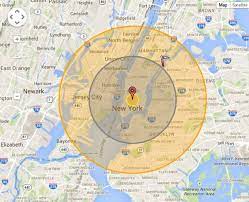
NEWSWEEK, BY ARISTOS GEORGIOU ON 5/16/22
Discussions around the threat of nuclear war have escalated in recent weeks, as Sweden and Finland look set to join NATO—and Russia saying it would not accept their membership.
Commentators have been divided on whether Russian president Vladimir Putin would ever go so far as to use these weapons, with some calling them “empty threats,” while others saying the risk is real if he feels backed into a corner.
But what would happen if a bomb detonated? What would be the immediate impact and how far would the radiation zone extend?
Alex Wellerstein, a historian of nuclear weapons, who is an associate professor at the Stevens Institute of Technology, in Hoboken, New Jersey, created a nuclear bomb simulator to show just that.
The NUKEMAP is designed to show the effect of a nuclear detonation in any given location across the globe. It consists of a map in which users can select a location and model the local impacts of a blast, while accounting for various factors, such as the power of the weapon and whether or not it detonates on (or near) the surface or up in the air.
The simulation estimates the potential number of deaths and injuries resulting from any given blast, as well as a rough model of where any nuclear fallout will spread and the dimensions of the mushroom cloud.
In the simulator description, Wellerstein said the aim of the educational tool was to help people visualize the impact of nuclear weapons in simple terms in order to help them gain an understanding of the scale of these blasts.
“We live in a world where nuclear weapons issues are on the front pages of our newspapers on a regular basis, yet most people still have a very bad sense of what an exploding nuclear weapon can actually do,” Wellerstein said in a statement on the simulator website.
“Some people think they destroy everything in the world all that once, some people think they are not very different from conventional bombs. The reality is somewhere in between: nuclear weapons can cause immense destruction
and huge losses of life, but the effects are still comprehendible on a human scale.”
The creator said enabling people to visualize the effects in arbitrarily picked geographical locations could help them understand what a nuclear weapon would do to places they are familiar with.
“I created NUKEMAP because it’s very hard for anyone—even me—to intuitively understand the sizes of nuclear explosions, much less the differences between different types of nuclear weapons,” Wellerstein told Newsweek. “NUKEMAP is made to make understanding nuclear explosions easy for anyone, since pretty much everyone knows how to use online mapping software these days.”
Modeling nuclear fallout accurately, in particular, is “very difficult,” according to Wellerstein given that there are so many relevant variables, including the type of terrain the explosion is detonated on or over and the weather conditions.
Nuclear fallout is the “short-term” radiation—defined here as the radioactive residues of the explosion that remain active for the next few weeks or months (as opposed to years)—that “fall out” of the mushroom cloud following the bomb’s detonation.
This is slightly different to the immediate radiation that it is produced when a nuclear weapon explodes.
As an example, you can use the model to estimate what would happen to the largest cities in the U.S. if a nuclear bomb as powerful as the infamous “Tsar Bomba” was detonated on them.
The Tsar Bomba, which was developed by the USSR in the mid-1950s and early 1960s, was the most powerful nuclear weapon ever created and tested, with a blast yield equivalent to roughly 50 megatons of TNT. As a comparison, “Little Boy”—the nuclear bomb that the United States dropped on Hiroshima during WWII—had a
blast yield of around 15 kilotons of TNT, which is around 3,300 times less powerful.
Below are some rough estimates for an airburst detonation of the Tsar Bomba at 13,000 feet above the following cities, according to the simulator:
- New York City, New York – 7.6 million fatalities and 4.2 million injuries
- Los Angeles, California – 3.9 million fatalities and 3.7 million injuries
- Chicago, Illinois – 2.7 million fatalities and 2 million injuries
- Houston, Texas – 1.7 million fatalities and 1.7 million injuries
- Phoenix, Arizona – 1.3 million fatalities and 1.2 million injuries
- Philadelphia, Pennsylvania – 2.3 million fatalities and 1.5 million injuries
| Wellerstein stresses that the NUKEMAP model can only provide estimates and is only is good as the data it relies on—which is to say, not perfect. Some factors that could make a difference in the real world when it comes to estimating casualty numbers and the size of a given blast, for example, may not be taken into account in the simulation.Wellerstein told Newsweek that NUKEMAP has experienced a “huge” uptick in traffic since Russia launched its full-scale invasion of Ukraine earlier this year, to the point where he has had to radically upgrade and improve the server that hosts the site in order to handle it…….. https://www.newsweek.com/nuclear-bomb-blast-map-shows-what-would-happen-one-detonated-near-you-nukemap-1706923 |
US nuclear power: Status, prospects, and climate implications

that final abdication can’t rescue nuclear power, which stumbles33 even in countries with impotent regulators and suppressed public participation. In the end, physics and human fallibility win. History teaches that lax regulation ultimately causes confidence-shattering mishaps, so gutting safety rules is simply a deferred-assisted-suicide pact.
Science Direct, Amory B.Lovins, Stanford University, USA The Electricity Journal, Volume 35, Issue 4, May 2022,
Abstract
Nuclear power is being intensively promoted and increasingly subsidized in both old and potential new forms. Yet it is simultaneously suffering a global slow-motion commercial collapse due to intrinsically poor economics. This summary in a US context documents both trends, emphasizing the absence of an operational need and of a business or climate case.
In 2020, the world added1 5.521 GW (billion watts) of nuclear generating capacity—just above the 5.491 GW2 of lithium-ion batteries added to power grids. The average reactor was then 29 years old—39 in the United States, whose fleet is the world’s largest—so it’s not surprising that in 2020, maintenance or upgrade costs, safety concerns, and often simple operational uncompetitiveness caused owners worldwide to close 5.165 GW. The net nuclear capacity addition was thus the difference, 0.356 GW. Yet in the same year, the world added3 278.3 GW of renewables (or 257 GW without hydropower)—782× as much. Adjusted for relative US 2020 average capacity factors4, renewables’ net additions in 2020 thus raised the world’s annual carbon-free electricity supply by ~232× as much as nuclear power’s net additions did. That is, nuclear net growth increased the world’s carbon-free power supply in all of 2020 only as much as renewable power growth did every ~38 hours. Renewables also receive5 ~10–20 times more financial capital—mostly voluntary private investments—while nuclear investments used mainly tax revenues or capital conscripted from customers. These ratios look set to continue or strengthen6. Indeed, in 2021, world nuclear capacity fell by 1.57 or 2.48 GW—the seventh annual drop in 13 years9—while renewables were expected to add ~290 GW10.
In a normal industry, such market performance, let alone dismal economics (below), might dampen enthusiasm. Yet the nuclear industry’s immense lobbying and marketing power continues to yield at least tens of billions of dollars in annual public subsidies, still rapidly rising.
This reflects broad bipartisan support among US and many overseas political leaders (strong nuclear advocates lead seven of the ten nations with the biggest economies)—often contrary to their citizens’ preferences and, as we’ll see, to the goal of stabilizing the Earth’s climate. To explore this seeming paradox, here is my frank personal impression of nuclear power’s status, competitive landscape, operational status, prospects, and climate implications in the United States.
1. Status
When nuclear power emerged, from the mid-1950s through the 1960s, US utilities—vertically integrated, three-fourths private, technically and culturally conservative—didn’t want it. Yet powerful Federal actors offered heavily subsidized fuel and let them own it, largely relieved them of accident liability, and ultimately tempted and coerced them into a vast nuclear building spree, under implicit threat of displacing them with Federal nuclear utilities11………………….
As construction costs and durations relentlessly rose12, regulators and customers were assured their initial pain would usher in decades of low-cost generation. This too proved false. Some plants failed early, others’ operating costs rose, and decades later, owners are demanding huge new subsidies to keep running. After these scarifying experiences, capital markets are disinclined to invest in nuclear newbuild in the US or elsewhere. Contrary to a widely cultivated myth, the successive accidents (Three Mile Island, Chernobyl, Fukushima Daiichi) widely blamed for this rejection all occurred after the business case and investor confidence had collapsed13……
………………….The US supply chain to sustain the 93 existing reactors persists, more or less, but of the four original US reactor vendors, all have merged (GE with Hitachi), exited, or failed, most recently Westinghouse19—bought by Toshiba, bankrupted20 by its new US projects, then restructured by a Canadian private-equity partnership (which recently considered selling it21) to maintain the plants it once built. Export markets have proven elusive: as Siemens’ power engineering CEO foresaw in 199122, “The countries that can still afford our nuclear plants won’t need the electricity, and the countries that will need the electricity won’t be able to afford the reactors.” Yet strong government promotion persists…………… Market appetite for big new reactors is anemic overseas and zero at home—and only for as many smaller units as taxpayers will largely or wholly pay for……………….
US public acceptance of nuclear power fluctuates, and depends strongly on how, by whom, and to whom the question is put. Nuclear advocates reported an even split in the 2019 Gallup Poll25 after long and intensive publicity campaigns, though renewables attract far larger and more consistent support…………………..
After decades of intense political pressure, industry capture26 of US nuclear safety and security regulation appears complete, with rules and processes arranged to the operators’ liking. The skill and integrity of some US Nuclear Regulatory Commission technical experts are commendable, but on major matters, their role is only to advise, not decide. ……………… new “reforms” are taking a singularly dangerous turn: as I summarized elsewhere29,
SMRs’ [Small Modular Reactors’] novel safety30 and proliferation31 issues threaten threadbare schedules and budgets, so promoters are attacking bedrock safety regulations. . NRC’s proposed Part 5332 would perfect long-evolving regulatory capture—shifting its expert staff’s end-to-end process from specific prescriptive standards, rigorous quality control, and verified technical performance to unsupported claims, proprietary data, and political appointees’ subjective risk estimates.
Continue readingNo ”military justification” for the nuclear bombing of Nagasaki. A negotiated ending is better than ”fight to the death”
Paul Richards. NAGASAKI BOMBING, Nuclear Fuel Cycle WAtch Australia https://www.facebook.com/groups/1021186047913052 8 May 22
MacArthur’s views about the decision to drop the atomic bomb on Hiroshima and Nagasaki were starkly different from what the general public supposed ….
When I asked General MacArthur about the decision to drop the bomb, I was surprised to learn he had not even been consulted.
What, I asked, would his advice have been?
General Douglas MacArthur replied that he saw no military justification for the dropping of the bomb.
The war might have ended weeks earlier, he said, if the United States had agreed, as it later did anyway, to the retention of the institution of the emperor.
____________ https://www.newsweek.com/november-11-1963-2608
War and some unusual developments regarding nuclear-related topics – Guam and the Northern Mariana Islands

The huge problem with the idea of having a nuclear reactor power plant on a military base is that it may cause catastrophic damage to all human life in and around the immediate area despite official comments from the U.S. Army that there are several safety prevention measures being taken to address this concern.
War and some unusual developments regarding nuclear-related topicsm By Rick Arriola Perez | May 09 2022 https://www.saipantribune.com/index.php/war-and-some-unusual-developments-regarding-nuclear-related-topics/
Guam and the Northern Mariana Islands are one island chain that is embedded in the minds of Chinese military personnel who are charged with selecting and figuring out what adversary targets are most important to knock out, should China and the United States ever go to hot war.
Guam’s Andersen Air Force Base is a huge military threat to the Chinese and to the North Koreans and Russians. Andersen is one of the most important American military bases in the world. Andersen has one of the world’s largest petroleum, oil, and lubricant storage facilities, training facilities, and areas that store, manage, maintain and load ordnance and other weapons of war.
Andersen is located atop stolen Chamorro family lands located in our Deep Blue Pacific Ocean Marianas Trench continent. The U.S. Air Force is not formally required to ask permission to fly over foreign national airspace because from the American military perspective, we are close yet far enough away from any nation that requires the United States to first seek diplomatic approvals and notifications. This is one of the many benefits afforded the Pentagon and the Air Force by residing in Guam and the Marianas.
Guam’s Andersen Air Force Base is also the perfect location to store, manage, hold, and/or stage live nuclear missiles and weapons into and out of fighters, unmanned systems, and strategic aircraft that are assigned America’s nuclear bombing missions. These activities go relatively unnoticed because of our unique location. Missions can simply be initiated any day or night throughout the year.
But bombs are not the only thing that is on the nuclear discussion table these days
These days the Department of Defense is also moving forward with design plan options to construct and operationalize nuclear-powered micro-reactors, transportable on Air Force cargo planes, to be used as power generation sources for military bases in remote locations.
These nuclear reactors are intended to generate the power equivalent of up to 1% of a large commercial nuclear power plant once assembled and turned on. The huge problem with the idea of having a nuclear reactor power plant on a military base is that it may cause catastrophic damage to all human life in and around the immediate area despite official comments from the U.S. Army that there are several safety prevention measures being taken to address this concern.
One rationale that is being proposed to support the construction and design of nuclear reactors is that it will save over time millions of gallons of fossil fuel from being consumed, which is in line with environmental sustainability up to a point. Opposing viewpoints argue that there is simply no need to place a nuclear reactor in a remote military base because the amount of power generation it provides is not really needed because existing diesel-powered generators are adequate for use on remote military bases.
Nuclear reactor controversies are nothing new to the Pentagon and the Army
The Army previously had a nuclear reactor program that started during the time of the Korean war era, lasting up through the Vietnam war era. The program had mixed results, one catastrophic outcome, and was quite expensive to maintain. The current program under consideration is supported by the idea that having a small and mobile nuclear power plant for use by base personnel will also mitigate military casualty rates associated with the transportation and security protection of fuel in land-based warfighting areas. Supporters also point to the need for a constant source of power generation required for radars and for high-energy weapons.
So why should our Chamorro Pacific Islander Deep Blue Continent civilization be concerned about these developments?
The Pentagon and the Army have identified Guam as one of approximately 10 sites that are slated to have a micro nuclear reactor. The Marshall Islands is also another site identified to receive a nuclear reactor.
But what our Chamorro people should be aware, as well as the people of Micronesia, especially the Marshallese, is that it is the U.S. Congress, not the Pentagon, that has been the genesis behind the push to get the Pentagon funding to move forward on this micro-nuclear reactor effort. Why is this the case?
What the Guam and NMI congressmen need to do
Michael San Nicolas and Kilili Sablan have not articulated why Congress has been pushing the Pentagon to look into the design, construction, and use of small nuclear reactors for the Army.
Both congressmen have not publicly addressed the need for a multi-Mariana Islands nuclear bomb shelter infrastructure study nor has there been any effort by these congressional leaders to introduce authorization language addressing this huge human health, readiness, and life or death safety issue tied to the increased militarization of our Mariana Island chain.
President Biden will be the final authority as to whether a small mobile nuclear reactor program will proceed or be cancelled. These congressmen have not talked to President Biden about this very important matter.
Diseconomics and other factors mean that small nuclear reactors are duds

Such awkward realities won’t stop determined lobbyists and legislators from showering tax funds on SMR developers, seen as the industry’s last hope of revival (at least for now). With little private capital at stake, taxpayers bearing most of the cost, and customers bearing the cost-overrun and performance risks190 (as they did in the similarly structured WPPSS nuclear fiasco four decades ago), some SMRs may get built. I expect they’ll fail for the same fundamental reasons as their predecessors, then be quickly forgotten as marketers substitute the next shiny object.
A lifetime of such disappointments has not yet induced sobriety. As long as the industry can fund potent lobbying that leverages orders of magnitude more federal funding, the party will carry on.
US nuclear power: Status, prospects, and climate implications, Science Direct, Amory B.Lovins, Stanford University, USA The Electricity Journal, Volume 35, Issue 4, May 2022,
”…………………………………………………….. Advanced” or “Small Modular Reactors,” SMRs174, seek to revive and improve concepts generally tried and rejected decades ago due to economic175, technical176, safety177, or proliferation178 flaws179. BNEF estimates that early SMRs might generate at ~10× current solar prices, falling by severalfold after tens of GW were built, but not by enough to come anywhere near competing. Despite strong Federal support, proposed projects are challenged to find enough customers180 and markets181. Developers and nations are also pursuing >50 diverse designs—a repeatedly reproven failure condition.
SMRs’ basic economics are worse than meets the eye, because their goalposts keep receding. Reactors are built big because, for physics reasons, they don’t scale down well. Small reactors, say their more thoughtful advocates, will produce electricity initially about twice as costly as today’s big ones, which in turn, as noted earlier, are ~3–13× costlier per MWh than modern renewables (let alone efficiency). But those renewables will get another ~2× cheaper (say BNEF and NREL) by the time SMRs could be tested and start to scale toward the mass production that’s supposed to cut their costs. High volume cannot possibly cut SMRs’ costs by 2 × (3 to 13) × 2-fold, or ~12× to ~52×.
Indeed, SMRs couldn’t compete even if the steam they produce to turn the turbine were free. Why not? In big light-water reactors, ~78–87% of the prohibitive capital cost buys non-nuclear components like the turbine, generator, heat sink, switchyard, and controls. Thus even if the nuclear island were free and a shared non-nuclear remainder were still at GW scale so it didn’t cost more per unit182, the whole SMR complex would still be manyfold out of the money.
SMRs are also too late. Despite streamlined (if not premature) licensing and many billions in Federal funding commitments, the first SMR module delivery isn’t expected until 2029. That’s in the same smaller-LWR project that just lost over half its subscribed sales as customers considered cost, timing, and risk183, and may lose the rest if they read a soberly scathing 2022 critique184. That analysis found that the vendor claims very low financial and performance risks but opaquely imposes them all on the customers. The first “advanced” reactors (a sodium-cooled fast reactor and a high-temperature gas reactor), ambitiously skipping over prototypes, are hoped by some advocates to start up in 2027–28. DOE in 2017 rosily assessed that if such initial projects succeeded, a first commercial demonstrator would then take another 6–8 years’ construction and 5 years’ operation before commercial orders, implying commercial generation at earliest in the late 2030s, more plausibly in the 2040s. But the US Administration plans to decarbonize the grid with renewables by 2035, preëmpting SMRs’ climate mission185.
An additional challenge would be siting new SMRs or clusters of them (which cuts cost but means that a problem with one SMR can affect, or block access to, others at the same site, as was predicted and experienced at Fukushima Daiichi). It looks harder to secure numerous sites and offtake agreements than a few. It would take roughly 50 SMR orders to justify building a factory to start capturing economies of production scale, and hundreds or thousands of SMRs to start seeing meaningful, though inadequate, cost reductions. A study assuming high electricity demand and cheap SMRs estimated a US need for just 350 SMRs by 2050186; some advocates expect far more. It’s hard to imagine how dozens of States and hundreds of localities could quickly approve those sites, especially given internal NRC dissension on basic SMR safety187 and the obvious financial risks188.
No credible path could deploy enough SMR capacity to replace inevitably retiring reactors timely and produce significant additional output by then—but efficiency and renewables could readily do that and more, based on their deployment rates and price behaviors observed in the US and global marketplace. For example189, through 2020, CAISO (wholesale power manager for a seventh of the US economy) reported 120 GW of renewables and storage in its interconnection queue, plus 158 GW in the non-ISO West; just solar-paired-with-storage projects in CAISO rose to over 71 GW by 5 Jan 2022, with the paired solar totaling nearly 64 GW—all three orders of magnitude more than the first 77-MW NuScale module hoped to enter service many years later.
Such awkward realities won’t stop determined lobbyists and legislators from showering tax funds on SMR developers, seen as the industry’s last hope of revival (at least for now). With little private capital at stake, taxpayers bearing most of the cost, and customers bearing the cost-overrun and performance risks190 (as they did in the similarly structured WPPSS nuclear fiasco four decades ago), some SMRs may get built. I expect they’ll fail for the same fundamental reasons as their predecessors, then be quickly forgotten as marketers substitute the next shiny object.
A lifetime of such disappointments has not yet induced sobriety. As long as the industry can fund potent lobbying that leverages orders of magnitude more federal funding, the party will carry on. But where does its seemingly perpetual disappointment leave the Earth’s imperiled climate?…………………………. https://www.sciencedirect.com/science/article/pii/S1040619022000483
1 This Month



Shut down the radiation-damaged Heysham nuclear reactors now
To see nuclear-related stories in greater depth and intensity – go to https://nuclearinformation.wordpress.com

Say No to NASA’s Reckless Nuclear Reactor on the Moon
Say No to NASA’s Reckless Nuclear Reactor on the Moon
-
Archives
- October 2026 (256)
- September 2026 (339)
- August 2026 (330)
- July 2026 (355)
- June 2026 (287)
- May 2026 (306)
- April 2026 (356)
- March 2026 (251)
- February 2026 (267)
- January 2026 (308)
- December 2025 (358)
- November 2025 (359)
-
Categories
- 1
- 1 NUCLEAR ISSUES
- business and costs
- climate change
- culture and arts
- ENERGY
- environment
- health
- history
- indigenous issues
- Legal
- marketing of nuclear
- media
- opposition to nuclear
- PERSONAL STORIES
- politics
- politics international
- Religion and ethics
- safety
- secrets,lies and civil liberties
- spinbuster
- technology
- Uranium
- wastes
- weapons and war
- Women
- 2 WORLD
- ACTION
- AFRICA
- Atrocities
- AUSTRALIA
- Christina's notes
- Christina's themes
- culture and arts
- Events
- Fuk 2022
- Fuk 2023
- Fukushima 2017
- Fukushima 2018
- fukushima 2019
- Fukushima 2020
- Fukushima 2021
- general
- global warming
- Humour (God we need it)
- Nuclear
- RARE EARTHS
- Reference
- resources – print
- Resources -audiovicual
- Weekly Newsletter
- World
- World Nuclear
- YouTube
-
RSS
Entries RSS
Comments RSS

