Who are the Ukrainian integral nationalists ?


Do Western enthusiasts for the Ukrainian government have any idea of the history behind this war?
Regretfully, I have mutilated this historical article below, because it’s long and complex.
So – I have just selected extracts – in my effort to outline this history of the Ukrainian nationalists
Voltaire Network Thierry Meyssa Translation Roger Lagassé 16 Nov 22
Who knows the history of the Ukrainian “integral nationalists”, “Nazis” according to the terminology of the Kremlin? It begins during the First World War, continues during the Second, the Cold War and continues today in modern Ukraine.
Many documents have been destroyed and modern Ukraine forbids under penalty of imprisonment to mention their crimes. The fact remains that these people massacred at least four million of their compatriots and conceived the architecture of the Final Solution, that is, the murder of millions of people because of their real or supposed membership in the Jewish or Gypsy communities of Europe.
Like most Western political analysts and commentators, I was unaware of the existence of Ukrainian neo-Nazis until 2014. When the president-elect was overthrown, I was living in Syria at the time and thought they were violent groupings that had burst onto the public scene to assist pro-European elements. However, since the Russian military intervention, I have gradually discovered a lot of documents and information on this political movement which, in 2021, represented one third of the Ukrainian armed forces. This article presents a synthesis of it.
At the very beginning of this story, that is to say before the First World War, Ukraine was a large plain which had always been tossed between German and Russian influences. At the time, it was not an independent state, but a province of the tsarist empire. It was populated by Germans, Bulgarians, Greeks, Poles, Rumanians, Russians, Czechs, Tatars and a very large Jewish minority supposedly descended from the ancient Khazar people.

A young poet, Dmytro Dontsov, was fascinated by the avant-garde artistic movements, believing that they would help his country to escape from its social backwardness. ……….. When the Great War broke out, he became an agent of the German secret service.

……….. In 1917, the Bolshevik revolution turned the tables. Dontsov’s friends supported the Russian revolution, but he remained pro-German. In the anarchy that followed, Ukraine was divided de facto by three different regimes: the nationalists of Symon Petliura (who imposed themselves in the area held today by the Zelensky administration), the anarchists of Nestor Makhno (who organized themselves in Novorosssia, the land that had been developed by Prince Potemkin and that had never known serfdom), and the Bolsheviks (especially in the Donbass). The war cry of Petliura’s followers was “Death to the Jews and Bolsheviks”. They perpetrated numerous murderous pogroms.
……………Dmytro Dontsov helped Petliura to ally with Poland to crush the anarchists and Bolsheviks. ……………………………………………..
Dmytro Dontsov published literary magazines that fascinated the youth. He continued to promote a Central Europe dominated by Germany and became closer to Nazism as it rose…………………………………………
The expression “integral nationalism” is still claimed today by Dontov’s followers, who, after the fall of the Third Reich, are careful to refute the term “Nazism” with which the Russians describe it, not without reason………………………………….
Dontsov became an unconditional admirer of the Führer, Adolf Hitler. . His followers had founded, in 1929, the Organization of Ukrainian Nationalists (OUN) around Colonel Yevhen Konovalets. Konovalets called Dontsov “the spiritual dictator of the youth of Galicia”. However, a quarrel arose between Dontsov and another intellectual about his extremism that led to war against all, when Konovalets was suddenly murdered. The OUN (financed by the German secret service) then split in two. The “integral nationalists” reserved for themselves the OUN-B, named after Dontsov’s favorite disciple, Stepan Bandera…………………………………………
In 1934, Bandera organized, as a member of the Nazi secret service and head of the OUN-B, the assassination of the Polish Minister of the Interior, Bronisław Pieracki………………………………………………..
From the beginning of the Second World War, under the guidance of Dmytro Dontsov, the OUN-B fought alongside the Nazi armies against the Jews and the Soviets.
The collaboration between the Ukrainian “integral nationalists” and the Nazis continued with constant massacres of the majority of the Ukrainian population, accused of being Jews or Communists, until the “liberation” of Ukraine by the Third Reich in the summer of 1941 to the cry of “Slava Ukraїni!” (Glory to Ukraine), the war cry used today by the Zelensky administration and the US Democrats. At that time, the “integral nationalists” proclaimed “independence” from the Soviet Union in the presence of Nazi representatives and Greek Orthodox clergy, not in Kiev, but in Lviv, on the model of the Hlinka Guard in Slovakia and the Ustasha in Croatia.
They formed a government under the leadership of Providnyk (guide) Stepan Bandera, whose friend Yaroslav Stetsko was Prime Minister. Their support in Ukraine is estimated at 1.5 million people. That is, the “integral nationalists” have always been in the minority.

…………………………………….in September 1941 The OUN-B was reorganized under German command.. all Ukrainian nationalists took the following oath:”……………….. I believe in Adolf Hitler as the leader and supreme commander …………”
The Nazis announced that many bodies had been discovered in the prisons, victims of “Bolshevik Jews. So the “integral nationalists” celebrated their “independence” by murdering more than 30,000 Jews and actively participating in the roundup of Jews from Kiev to Babi Yar, where 33,771 of them were shot in two days, on September 29 and 30, 1941, by the Einsatzgruppen of SS Reinhard Heydrich.
In this tumult, Dmytro Dontsov disappeared. In reality, he had gone to Prague and placed himself at the service of the architect of the Final Solution, Reinhard Heydrich, who had just been appointed vice-governor of Bohemia-Moravia. Heydrich organized the Wannsee Conference, which planned the “Final Solution of the Jewish and Gypsy Questions” [4]. He then created the Reinard Heydrich Institute in Prague to coordinate the systematic extermination of all these populations in Europe. The Ukrainian Dontsov, who now lived in Prague in great luxury, immediately became its administrator. He was one of the main architects of the largest massacre in history. Heydrich was assassinated in June 1942, but Dontsov retained his functions and privileges.
…………………… 1944, as the Reich army retreated ……… Bandera and Stetsko resumed the armed struggle, among the Nazis, against the Jews and the Bolsheviks.
But it was already too late. The Reich collapsed. The Anglo-Saxons got Dontsov, Bandera and Stetsko. The theorist of integral nationalism was transferred to Canada, while the two practitioners of mass murder were transferred to Germany. MI6 and the OSS (predecessor of the CIA) rewrote their biographies, making their Nazi involvement and responsibility for the “Final Solution” disappear.
[Ed not: from here, the story becomes very complex. with ,in the 1950s, the involvement of the CIA, the Muslim Brotherhood, Radio Free Europe, and prominent political and media leaders…….Chiang Kai-shek and the World Anti-Communist League , going on to Slava Stetsko in 1986]
………………………………………..Slava Stetsko, took over the leadership of these organizations. She too travelled the world to support any fight against the “communists”, or rather, if we refer to Dontsov’s writings, against the Russians and the Chinese. When the USSR was dissolved, Mrs. Stetsko simply changed the title of the League to the World League for Freedom and Democracy, a name it still has today. She then devoted herself to regaining a foothold in Ukraine.
………in 1994 she brought the Ukrainian president, Leonid Kuchma, to the CIA offices in Munich and dictated parts of the new constitution to him. Even today, Article 16 of the new constitution states: “Preserving the genetic heritage of the Ukrainian people is the responsibility of the state. Thus, Nazi racial discrimination is still proclaimed by modern Ukraine as in the worst moments of World War II.
………………………………….. On May 8, 2007, in Ternopol, on the initiative of the CIA, the “integral nationalists” of the Ukrainian People’s Self-Defense and Islamists created an anti-Russian “Anti-Imperialist Front”………………………………
The pro-US president, Viktor Yushchenko, created a Dmytro Dontsov Institute, following the “Orange Revolution”. Yushchenko is an example of Anglo-Saxon whitewashing. He has always claimed to have no connection with the mainstream nationalists, but his father, Andrei, was a guard in a Nazi extermination camp [8]. The Dmytro Dontsov Institute would be closed in 2010, and then reopened after the 2014 coup.
President Viktor Yushchenko, shortly before the end of his term of office, elevated the criminal against humanity Stepan Bandera to the title of “Hero of the Nation”.
In 2011, the mainstream nationalists succeeded in passing a law banning the commemoration of the end of World War II because it was won by the Soviets and lost by the Banderists……………………………
In 2014, Ukrainians in Crimea and Donbass refused to recognize the coup government. Crimea, which had declared itself independent before the rest of Ukraine, reaffirmed its independence a second time and joined the Russian Federation. The Donbass sought a compromise. The “Ukrainian nationalists,” led by President Petro Poroshenko, stopped providing public services there and bombed its population. In eight years, they murdered at least 16,000 of their fellow citizens in general indifference.
It was also from the 2014 coup that the full nationalist militias were incorporated into the Ukrainian Armed Forces. In their internal regulations, they enjoin each fighter to read the works of Dmytro Dontsov, including his master book, Націоналізм (Nationalism).
In April 2015, the Verkhovna Rada declared members of the Organization of Ukrainian Nationalists (OUN) “independence fighters.” The law was enacted, in December 2018, by President Poroshenko. Former Waffen SS were retrospectively entitled to a pension and all sorts of benefits. The same law criminalized any claim that OUN militants and UPA fighters collaborated with the Nazis and practiced ethnic cleansing of Jews and Poles. Published in Ukraine, this article would send me to jail for writing it and you for reading it.
On July 1, 2021, President Volodymyr Zelenski enacted the Law “On Indigenous Peoples of Ukraine” which places them under the protection of Human Rights. By default, citizens of Russian origin can no longer invoke them in court.
In February 2022, the “full nationalist” militias, which made up one-third of the country’s armed forces, planned a coordinated invasion of Crimea and the Donbass. They were stopped by the Russian military operation to implement UN Security Council Resolution 2202 to end the suffering of the people of Donbass.
In March 2022, Israeli Prime Minister Nafatali Bennett, breaking with the “revisionist Zionism” of Benjamin Netanyahu (the son of Jabotinsky’s secretary), suggested to President Volodymyr Zelensky that he should agree with Russian demands and denazify his country …………………………………
Main sources:
Ukrainian Nationalism in the age of extremes. An intllectual biography of Dmytro Dontsov, Trevor Erlacher, Harvard University Press (2021).
Stepan Bandera, The Life and Afterlife of a Ukrainian Nationalist. Fascism, Genocide, and Cult, Grzegorz Rossoliński-Liebe, Ibidem (2014). https://www.voltairenet.org/article218395.html
The entire article is below
Read more: Who are the Ukrainian integral nationalists ?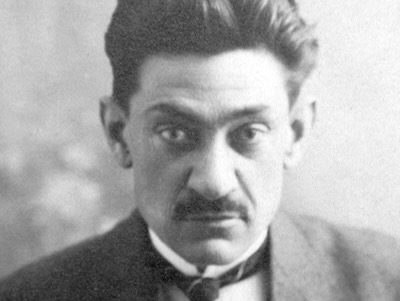
Like most Western political analysts and commentators, I was unaware of the existence of Ukrainian neo-Nazis until 2014. When the president-elect was overthrown, I was living in Syria at the time and thought they were violent groupings that had burst onto the public scene to assist pro-European elements. However, since the Russian military intervention, I have gradually discovered a lot of documents and information on this political movement which, in 2021, represented one third of the Ukrainian armed forces. This article presents a synthesis of it.
At the very beginning of this story, that is to say before the First World War, Ukraine was a large plain which had always been tossed between German and Russian influences. At the time, it was not an independent state, but a province of the tsarist empire. It was populated by Germans, Bulgarians, Greeks, Poles, Rumanians, Russians, Czechs, Tatars and a very large Jewish minority supposedly descended from the ancient Khazar people.
A young poet, Dmytro Dontsov, was fascinated by the avant-garde artistic movements, believing that they would help his country to escape from its social backwardness. Since the Tsarist Empire had been immobile since the death of Catherine the Great, while the German Empire was the scientific center of the West, Dontsov chose Berlin over Moscow.
When the Great War broke out, he became an agent of the German secret service. He emigrated to Switzerland, where he published, on behalf of his masters, the Bulletin of the Nationalities of Russia in several languages, calling for the uprising of the ethnic minorities of the Tsarist Empire in order to bring about its defeat. This model was chosen by the Western secret services to organize the “Forum of Free Peoples of Russia” this summer in Prague [1].
In 1917, the Bolshevik revolution turned the tables. Dontsov’s friends supported the Russian revolution, but he remained pro-German. In the anarchy that followed, Ukraine was divided de facto by three different regimes: the nationalists of Symon Petliura (who imposed themselves in the area held today by the Zelensky administration), the anarchists of Nestor Makhno (who organized themselves in Novorosssia, the land that had been developed by Prince Potemkin and that had never known serfdom), and the Bolsheviks (especially in the Donbass). The war cry of Petliura’s followers was “Death to the Jews and Bolsheviks”. They perpetrated numerous murderous pogroms.
Dmytro Dontsov returned to Ukraine before the German defeat and became the protégé of Symon Petliura. He participated briefly in the Paris peace conference but, for some unknown reason, did not remain in his delegation. In Ukraine, he helped Petliura to ally with Poland to crush the anarchists and Bolsheviks. After the capture of Kiev by the Bolsheviks, Petliura and Dontsov negotiated the Treaty of Warsaw (April 22, 1920): the Polish army undertook to push back the Bolsheviks and to liberate Ukraine in exchange for Galicia and Volhynia (exactly as the Zelensky administration is negotiating today the entry of Poland into the war against the same lands [2]). This new war was a fiasco.
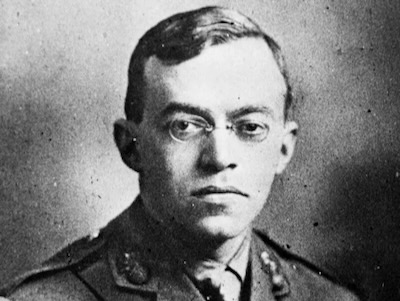
To strengthen his side, Petliura secretly negotiated with the founder of the Jewish battalions in the British army (the “Jewish Legion”) and now administrator of the World Zionist Organization (WZO), Vladimir Jabotinsky. In September 1921, the two men agreed to unite against the Bolsheviks in exchange for Petliura’s commitment to forbid his troops to continue their pogroms. The Jewish Legion was to become the “Jewish Gendarmerie. However, despite his efforts, Petliura did not succeed in pacifying his troops, especially as his close collaborator Dontsov was still encouraging the massacre of Jews. Finally, when the agreement was revealed, the World Zionist Organization rebelled against the Petliura regime. On January 17, 1923, the WZO set up a commission to investigate Jabotinsky’s activities. Jabotinsky refused to come and explain himself and resigned from his position.
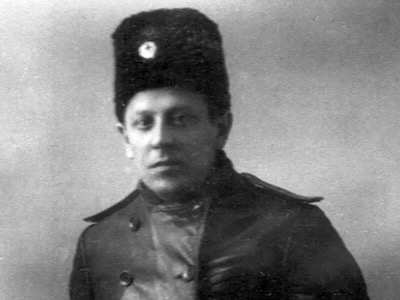
Petliura fled to Poland and then to France, where he was murdered by a Jewish anarchist from Bessarabia (now Transnistria). During the trial, the latter assumed his crime and pleaded to have avenged the hundreds of thousands of Jews murdered by the troops of Petliura and Dontsov. The trial had a great impact. The court acquitted the murderer. The League against Pogroms, later Licra (International League against Racism and Anti-Semitism), was founded on this occasion.
Not only were the nationalists defeated, but the anarchists as well. Everywhere the Bolsheviks triumphed and chose, not without debate, to join the Soviet Union.
Dmytro Dontsov published literary magazines that fascinated the youth. He continued to promote a Central Europe dominated by Germany and became closer to Nazism as it rose. He soon referred to his doctrine as Ukrainian “integral nationalism “. In doing so, he referred to the French poet, Charles Maurras. Indeed, the logic of both men was initially identical: they sought in their own culture the means to affirm a modern nationalism. However, Maurras was a Germanophobe, while Dontsov was a Germanophile. The expression “integral nationalism” is still claimed today by Dontov’s followers, who, after the fall of the Third Reich, are careful to refute the term “Nazism” with which the Russians describe it, not without reason.
According to him, “Ukrainian nationalism” is characterized by:
“the affirmation of the will to live, power, expansion” (it promotes “The right of strong races to organize peoples and nations to strengthen the existing culture and civilization”)
“the desire to fight and the awareness of its extremity” (he praises the “creative violence of the initiative minority”).
Its qualities are:
“fanaticism” ;
” immorality”.
Finally, turning his back on his past, Dontsov became an unconditional admirer of the Führer, Adolf Hitler. His followers had founded, in 1929, the Organization of Ukrainian Nationalists (OUN) around Colonel Yevhen Konovalets. Konovalets called Dontsov “the spiritual dictator of the youth of Galicia”. However, a quarrel arose between Dontsov and another intellectual about his extremism that led to war against all, when Konovalets was suddenly murdered. The OUN (financed by the German secret service) then split in two. The “integral nationalists” reserved for themselves the OUN-B, named after Dontsov’s favorite disciple, Stepan Bandera.
In 1932-33, the Bolshevik political commissars, who were mostly Jewish, levied a tax on crops, as in other regions of the Soviet Union. Combined with significant and unpredictable climatic hazards, this policy caused a huge famine in several regions of the USSR, including the Ukraine. It is known as “Holodomor”. Contrary to what the nationalist historian Lev Dobrianski says, it was not a plan for the extermination of Ukrainians by the Russians, since other Soviet regions suffered, but an inadequate management of public resources in times of climate change. Lev Dobrianski’s daughter, Paula Dobrianski, became one of President George W. Bush’s aides. She led a merciless struggle to have historians who did not adhere to her father’s propaganda excluded from Western universities [3].
In 1934, Bandera organized, as a member of the Nazi secret service and head of the OUN-B, the assassination of the Polish Minister of the Interior, Bronisław Pieracki.
From 1939, members of the OUN-B, forming a military organization, the UPA, were trained in Germany by the German army, and then still in Germany, but by their Japanese allies. Stepan Bandera offered Dmytro Dontsov to become the leader of their organization, but the intellectual refused, preferring to play the role of a leader rather than an operational commander.
The “integral nationalists” admired the invasion of Poland, in application of the German-Soviet pact. As Henry Kissinger, who could not be suspected of pro-Sovietism, demonstrated, it was not a question of the USSR annexing Poland, but of neutralizing part of it in order to prepare for the confrontation with the Reich. On the contrary, for Chancellor Hitler, it was a question of beginning the conquest of a “vital space” in Central Europe.
From the beginning of the Second World War, under the guidance of Dmytro Dontsov, the OUN-B fought alongside the Nazi armies against the Jews and the Soviets.
The collaboration between the Ukrainian “integral nationalists” and the Nazis continued with constant massacres of the majority of the Ukrainian population, accused of being Jews or Communists, until the “liberation” of Ukraine by the Third Reich in the summer of 1941 to the cry of “Slava Ukraїni!” (Glory to Ukraine), the war cry used today by the Zelensky administration and the US Democrats. At that time, the “integral nationalists” proclaimed “independence” from the Soviet Union in the presence of Nazi representatives and Greek Orthodox clergy, not in Kiev, but in Lviv, on the model of the Hlinka Guard in Slovakia and the Ustasha in Croatia. They formed a government under the leadership of Providnyk (guide) Stepan Bandera, whose friend Yaroslav Stetsko was Prime Minister. Their support in Ukraine is estimated at 1.5 million people. That is, the “integral nationalists” have always been in the minority.
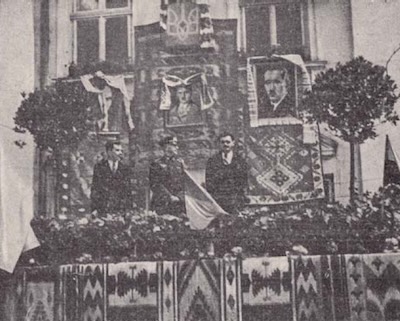
The Nazis were divided between the Reich Commissioner for the Ukraine, Erich Koch, for whom the Ukrainians were subhuman, and the Minister for the Occupied Eastern Territories, Alfred Rosenberg, for whom the “integral nationalists” were true allies. Finally, on July 5, 1941, Bandera was deported to Berlin and placed under Ehrenhaft (honorable captivity), i.e., under house arrest as a high-ranking official. However, after the members of OUN-B murdered the leaders of the rival faction, OUN-M, the Nazis sanctioned Stepan Bandera and his organization on September 13, 1941. 48 of their leaders were deported to a prison camp in Auschwitz (which was not yet an extermination camp, but only a prison). The OUN-B was reorganized under German command. At that time all Ukrainian nationalists took the following oath: “Faithful son of my Fatherland, I voluntarily join the ranks of the Ukrainian Liberation Army, and with joy I swear that I will faithfully fight Bolshevism for the honor of the people. This fight we are waging together with Germany and its allies against a common enemy. With loyalty and unconditional submission I believe in Adolf Hitler as the leader and supreme commander of the Liberation Army. At any time I am prepared to give my life for the truth.
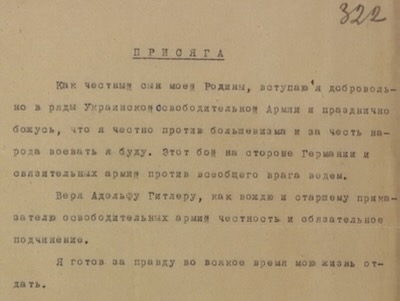
The Nazis announced that many bodies had been discovered in the prisons, victims of “Bolshevik Jews. So the “integral nationalists” celebrated their “independence” by murdering more than 30,000 Jews and actively participating in the roundup of Jews from Kiev to Babi Yar, where 33,771 of them were shot in two days, on September 29 and 30, 1941, by the Einsatzgruppen of SS Reinhard Heydrich.
In this tumult, Dmytro Dontsov disappeared. In reality, he had gone to Prague and placed himself at the service of the architect of the Final Solution, Reinhard Heydrich, who had just been appointed vice-governor of Bohemia-Moravia. Heydrich organized the Wannsee Conference, which planned the “Final Solution of the Jewish and Gypsy Questions” [4]. He then created the Reinard Heydrich Institute in Prague to coordinate the systematic extermination of all these populations in Europe. The Ukrainian Dontsov, who now lived in Prague in great luxury, immediately became its administrator. He was one of the main architects of the largest massacre in history. Heydrich was assassinated in June 1942, but Dontsov retained his functions and privileges.
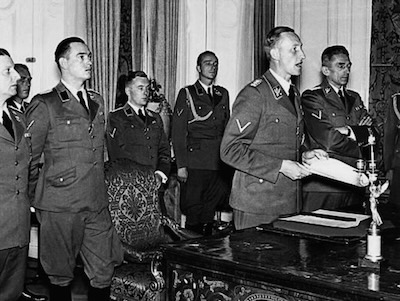
Stepan Bandera and his deputy Yaroslav Stetsko were placed under house arrest at the headquarters of the General Inspectorate of Concentration Camps in Oranienburg-Sachsenhausen (30 km from Berlin). They wrote letters to their supporters and to the Reich leadership in complete freedom and were not deprived of anything. In September 1944, as the Reich army retreated and Bandera’s followers began to rebel against it, the two leaders were released by the Nazis and reinstated in their previous positions. Bandera and Stetsko resumed the armed struggle, among the Nazis, against the Jews and the Bolsheviks.
Centuria Integral Nationalist Order Ceremony. According to George Washington University, by 2021 it had already penetrated the main NATO armies.
But it was already too late. The Reich collapsed. The Anglo-Saxons got Dontsov, Bandera and Stetsko. The theorist of integral nationalism was transferred to Canada, while the two practitioners of mass murder were transferred to Germany. MI6 and the OSS (predecessor of the CIA) rewrote their biographies, making their Nazi involvement and responsibility for the “Final Solution” disappear.
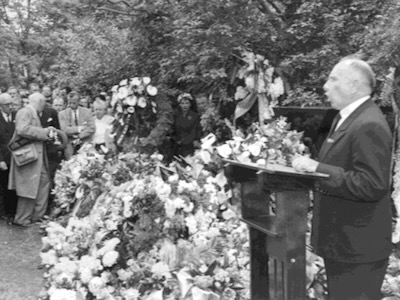
Bandera and Stetsko were installed in Munich to organize the Anglo-Saxon stay-behind networks in the Soviet Union. From 1950 onwards, they had an important radio station, Radio Free Europe, which they shared with the Muslim Brotherhood of Said Ramadan (the father of Tariq Ramadan). The radio station was sponsored by the National Committee for a Free Europe, a CIA offshoot of which its director Alan Dulles was a member, as well as future president Dwight Eisenhower, newspaper magnate Henry Luce and film director Cecil B. DeMilles. Psychological warfare specialist and future patron of the Straussians, Charles D. Jackson, was chairman.
Vladimir Jabotinsky, for his part, after living in Palestine, took refuge in New York. He was joined by Benzion Netanyahu (the father of the current Israeli Prime Minister). The two men wrote the doctrinal texts of “revisionist Zionism” and the Jewish Encyclopedia.
Bandera and Stetsko moved around a lot. They organized sabotage operations throughout the Soviet Union, particularly in the Ukraine, and parachuted leaflets. For this purpose, they created the Anti-Bolshevik Bloc of Nations (ABN), which brought together their Central European counterparts [5]. The British double agent, Kim Philby, informed the Soviets in advance about the actions of the Bandera. Bandera met with Dontsov in Canada and asked him to take the lead in the struggle. Once again, the intellectual refused, preferring to devote himself to his writing. He then drifted into a mystical delirium inspired by Viking myths. He announced the final battle of the Ukrainian knights against the Russian dragon. As for Bandera, he allied himself with the Chinese leader Chiang Kai-shek whom he met in 1958. But he was assassinated the following year by the KGB in Munich.
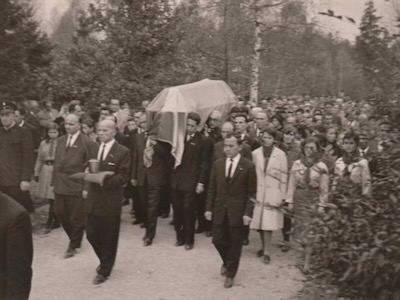
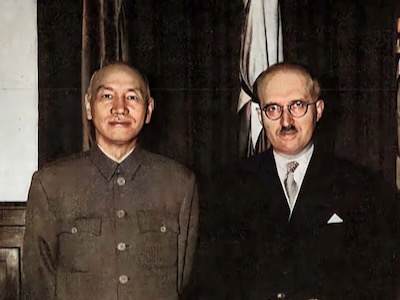
Yaroslav Stetsko continued the struggle through Radio Free Europe and the ABN. He went to the United States to testify before Senator Joseph MacCarthy’s Commission on Un-American Activities. In 1967, he and Chiang Kai-shek founded the World Anti-Communist League [6]. The League included many pro-US dictators from around the world and two schools of torture, in Panama and Taiwan. Klaus Barbie, who assassinated Jean Moulin in France and Che Guevara in Bolivia, was a member. In 1983, Stetsko was received at the White House by President Ronald Reagan and participated, along with Vice President George Bush Sr., in Lev Dobrianski’s “Captive Nations” (i.e., peoples occupied by the Soviets) ceremonies. He finally died in 1986.
But the story does not end there. His wife, Slava Stetsko, took over the leadership of these organizations. She too travelled the world to support any fight against the “communists”, or rather, if we refer to Dontsov’s writings, against the Russians and the Chinese. When the USSR was dissolved, Mrs. Stetsko simply changed the title of the League to the World League for Freedom and Democracy, a name it still has today. She then devoted herself to regaining a foothold in Ukraine.
Slava Stetsko ran in the first elections of the independent Ukraine in 1994. She was elected to the Verkhovna Rada, but having been stripped of her nationality by the Soviets, she could not sit. However, she brought the Ukrainian president, Leonid Kuchma, to the CIA offices in Munich and dictated parts of the new constitution to him. Even today, Article 16 of the new constitution states: “Preserving the genetic heritage of the Ukrainian people is the responsibility of the state. Thus, Nazi racial discrimination is still proclaimed by modern Ukraine as in the worst moments of World War II.
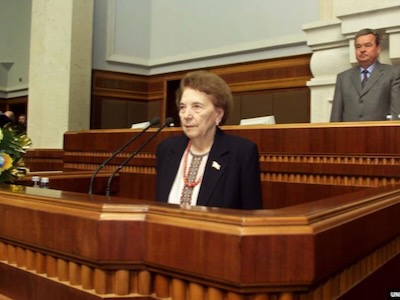
Slava Stetsko was re-elected at the next two sessions. She solemnly presided over the opening sessions on March 19, 1998 and on May 14, 2002.
In 2000, Lev Dobriansky organized a large symposium in Washington with many Ukrainian officials. He invited Straussian Paul Wolfowitz (a former collaborator of Charles D. Jackson). During this meeting, the “integral nationalists” put themselves at the service of the Straussians to destroy Russia [7].
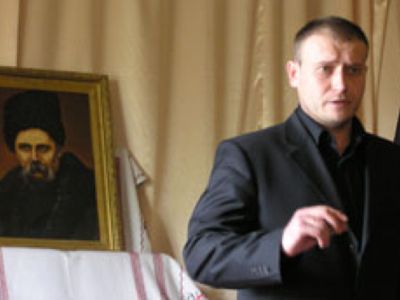
On May 8, 2007, in Ternopol, on the initiative of the CIA, the “integral nationalists” of the Ukrainian People’s Self-Defense and Islamists created an anti-Russian “Anti-Imperialist Front” under the joint chairmanship of the Emir of Itchkeria, Dokka Umarov, and Dmytro Yarosh (the current special adviser to the head of the Ukrainian army). The meeting was attended by organizations from Lithuania, Poland, Ukraine and Russia, including Islamist separatists from Crimea, Adygea, Dagestan, Ingushetia, Kabardino-Balkaria, Karachaevo-Cherkessia, Ossetia and Chechnya. Dokka Umarov, who was unable to go there due to international sanctions, had his contribution read out. In retrospect, the Crimean Tatars are unable to explain their presence at this meeting, if not their past service to the CIA against the Soviets.
The pro-US president, Viktor Yushchenko, created a Dmytro Dontsov Institute, following the “Orange Revolution”. Yushchenko is an example of Anglo-Saxon whitewashing. He has always claimed to have no connection with the mainstream nationalists, but his father, Andrei, was a guard in a Nazi extermination camp [8]. The Dmytro Dontsov Institute would be closed in 2010, and then reopened after the 2014 coup.
President Viktor Yushchenko, shortly before the end of his term of office, elevated the criminal against humanity Stepan Bandera to the title of “Hero of the Nation”.
In 2011, the mainstream nationalists succeeded in passing a law banning the commemoration of the end of World War II because it was won by the Soviets and lost by the Banderists. But President Viktor Yanukovych refused to enact it. Enraged, the “integral nationalists” attacked the procession of Red Army veterans, beating up old men. Two years later, the cities of Lviv and Ivano-Frankivsk abolished the Victory Day ceremonies and banned all manifestations of joy.
In 2014, Ukrainians in Crimea and Donbass refused to recognize the coup government. Crimea, which had declared itself independent before the rest of Ukraine, reaffirmed its independence a second time and joined the Russian Federation. The Donbass sought a compromise. The “Ukrainian nationalists,” led by President Petro Poroshenko, stopped providing public services there and bombed its population. In eight years, they murdered at least 16,000 of their fellow citizens in general indifference.
It was also from the 2014 coup that the full nationalist militias were incorporated into the Ukrainian Armed Forces. In their internal regulations, they enjoin each fighter to read the works of Dmytro Dontsov, including his master book, Націоналізм (Nationalism).
In April 2015, the Verkhovna Rada declared members of the Organization of Ukrainian Nationalists (OUN) “independence fighters.” The law was enacted, in December 2018, by President Poroshenko. Former Waffen SS were retrospectively entitled to a pension and all sorts of benefits. The same law criminalized any claim that OUN militants and UPA fighters collaborated with the Nazis and practiced ethnic cleansing of Jews and Poles. Published in Ukraine, this article would send me to jail for writing it and you for reading it.
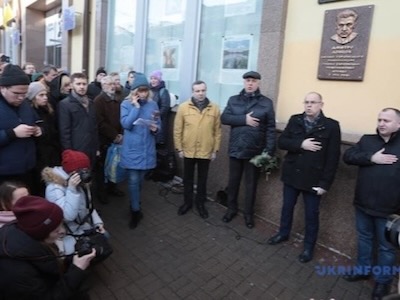
On July 1, 2021, President Volodymyr Zelenski enacted the Law “On Indigenous Peoples of Ukraine” which places them under the protection of Human Rights. By default, citizens of Russian origin can no longer invoke them in court.
In February 2022, the “full nationalist” militias, which made up one-third of the country’s armed forces, planned a coordinated invasion of Crimea and the Donbass. They were stopped by the Russian military operation to implement UN Security Council Resolution 2202 to end the suffering of the people of Donbass.
In March 2022, Israeli Prime Minister Nafatali Bennett, breaking with the “revisionist Zionism” of Benjamin Netanyahu (the son of Jabotinsky’s secretary), suggested to President Volodymyr Zelensky that he should agree with Russian demands and denazify his country [8]. Emboldened by this unexpected support, Russian Foreign Minister Sergei Lavrov dared to mention the case of the Jewish Ukrainian president, saying: “The Jewish people in their wisdom have said that the most ardent anti-Semites are usually Jews. Every family has its black sheep, as they say.” This was too much for the Israelis, who always worry when someone tries to divide them. His counterpart at the time, Yair Lapid, recalled that the Jews themselves never organized the Holocaust of which they were victims. Caught between its conscience and its alliances, the Hebrew state repeated its support for Ukraine, but refused to send it any weapons. In the end, the General Staff decided and the Minister of Defense, Benny Gantz, closed any possibility of support to the successors of the mass murderers of Jews.
Ukrainians are the only nationalists who are not fighting for their people or their land, but for one idea: to annihilate the Jews and the Russians.
Main sources:
Ukrainian Nationalism in the age of extremes. An intllectual biography of Dmytro Dontsov, Trevor Erlacher, Harvard University Press (2021).
Stepan Bandera, The Life and Afterlife of a Ukrainian Nationalist. Fascism, Genocide, and Cult, Grzegorz Rossoliński-Liebe, Ibidem (2014).
[1] “The Western strategy to dismantle the Russian Federation”, by Thierry Meyssan, Translation Roger Lagassé, Voltaire Network, 17 August 2022.
[2] “Poland and Ukraine”, by Thierry Meyssan, Translation Roger Lagassé, Voltaire Network, 14 June 2022.
[3] “The Holodomor, new avatar of “European” anti-communism” (excerpt from Le Choix of defeat), Annie Lacroix-Riz (2010).
[4] «The Wannsee Conference in 1942 and the National Socialist living space dystopia», Gerhard Wolf, Journal of Genocide Research, Vol 17 N°2 (2015). https://doi.org/10.1080/14623528.2015.1027074
[5] [Bulletins of the Anti-Bolshevik Nations Block are available in the Voltaire Network Library. ABN Korrespondenz (auf Deutsch), ABN Correspondence (in english).
[6] “The World Anti-Communist League: the Internationale of Crime”, by Thierry Meyssan, Translation Anoosha Boralessa, Voltaire Network, 12 May 2004.
[7] “Ukraine : the Second World War continues”, by Thierry Meyssan, Translation Roger Lagassé, Voltaire Network, 26 April 2022.
Why molten salt nuclear reactors really can’t succeed
Beyond Nuclear By M.V. Ramana and Cassandra Jeffery 14 Nov 22

………………………………………………………….Technical Problems
Let us start with the problems with the molten chloride fast reactor. As its name suggests, the reactor uses nuclear materials dissolved in molten chemical salts.
Salt is corrosive — just ask anyone who lives on the coast. So the inside of the reactor will be a chemically corrosive and highly radioactive environment.
No material can perform satisfactorily in such an environment. After reviewing the available studies, all that the U.S. Idaho National Laboratory — a nuclear power booster — could recommend was that “a systematic development program be initiated.”
TerraPower has three different nuclear reactor designs on the books: the Natrium reactor; the molten chloride fast reactor; and the traveling wave reactor.
Given his emphasis on novelty and innovation, one would expect Gates to put his money on reactor designs that are new and likely to succeed. None of these designs have that merit. All of these reactors are based on two old reactor designs vexed with major problems.
Other leading research laboratories like France’s Institut de radioprotection et de sûreté nucléaire (IRSN) and the U.K.’s Nuclear Innovation and Research Office, have concluded that molten salt reactors are problematic. As IRSN put it, “numerous technological challenges remain to be overcome before the construction of an MSR can be considered.”
The historical experience with molten salt reactors has been pretty bleak, to put it mildly. The last one to be built was the Molten Salt Reactor Experiment in Oakridge, Tennessee. It operated intermittently from 1965 to 1969, and operations were interrupted 225 times in those four years; of these interruptions, only 58 were planned.
But it’s not just a matter of molten salt reactors being unreliable or technologically challenged. As Edwin Lyman from the Union of Concerned Scientists has documented at length, the “use of liquid fuel instead of a solid fuel” in molten salt reactors “has significant safety implications for both normal operation and accidents.”
Specifically, the molten nature of the fuel makes it easier for radioactive materials to escape into the atmosphere and be dispersed.
Terrapower’s other two reactor designs are not much better. Both the Travelling Wave Reactor and the Natrium use molten sodium. Another problematic material, molten sodium is used to transport the intense heat produced by the nuclear fission reactions. Again, such reactors have been constructed since the dawn of the nuclear age and with similarly dismal results.
To start with, such reactors have had numerous accidents. The record starts on November 29, 1955 when the Experimental Breeder Reactor (EBR-1) in Idaho had a partial core meltdown.
A decade later, in October 1966, the Fermi-1 demonstration fast reactor in Michigan suffered a partial core meltdown. The shock made its way into the cultural mainstream in the form of a book called We Almost Lost Detroit and a song with the same name by Gil Scott Heron.
In Japan, the Monju reactor suffered a series of accidents and produced almost no electricity, after an expenditure of at least $8.5 billion
The use of molten sodium makes such reactors susceptible to serious fires, because the material burns if exposed to air. Almost all sodium-cooled reactors constructed around the world have experienced sodium leaks, likely because of chemical interactions between sodium and the stainless steel used in various components of the reactor.
Finally, the use of sodium also makes it difficult to maintain and carry out repairs on fast reactors, which then become susceptible to long shutdowns. Having to deal with all these volatile properties and safety concerns naturally drives up the construction costs of fast reactors, rendering them substantially more expensive than common thermal reactors.
Sodium-cooled reactors are also unreliable, operating at dismally low rates compared to standard reactors. The load factor (the ratio of the amount of electrical energy a power plant has produced to the amount of energy it would have produced had it operated at full capacity) for the Prototype Fast Reactor in the United Kingdom was 27%; France’s Superphenix reactor managed a mere 7.9%.
The typical U.S. reactor operates with a load factor of more than 90%. Sodium- cooled reactors would have to sell their power at higher prices to compensate for the fewer units of electrical energy generated.
“Without innovation, we will not solve climate change,” chanted Gates. But no amount of innovation will change the laws of chemistry or physics. How sodium behaves when it interacts with air or water won’t be affected, even if the sodium is inside a nuclear reactor backed by one of America’s oligarchs.
Innovation will not change the fact that the radioactive wastes produced by the Natrium reactor will remain hazardous for tens of thousands of years……………………………………………….. more https://beyondnuclearinternational.org/2022/11/13/bill-gates-and-techno-fix-delusions/
Bill Gates and techno-fix delusions

When elites try to change the world, it’s not usually for the better for the rest of us
Beyond Nuclear By M.V. Ramana and Cassandra Jeffery 14 Nov 22
Bill Gates, the businessman, made one of the world’s biggest fortunes by designing, selling and marketing computer technology. It shouldn’t come as a surprise that when it comes to climate change, he’s pushing more technology.
When wealthy people push something, the world pays attention. Practically all major media outlets covered his recent book, How to Avoid a Climate Disaster, and Gates has been interviewed dozens of times. All this pushing came with the pre-emptive caveat expressed in his book that the “world is not exactly lacking in rich men with big ideas about what other people should do, or who think technology can fix any problem.”
In his account of how elites try to “change the world,” journalist Anand Giridharadas explained: “All around us, the winners in our highly inequitable status quo declare themselves partisans of change. They know the problem, and they want to be part of the solution. Actually, they want to lead the search for solutions…the attempts naturally reflect their biases.
Gates is no exception to the rule; his bias favors maintaining the current economic and political system that has made him into one of the richest people in the world. The same bias also underpinned his stance on preserving intellectual property rights over Covid-19 vaccines, even at the cost of impeding access to these vaccines in much of the world.
Just as the pandemic was accentuated by insisting on the rights to continued profits for pharmaceutical companies, climate change is exacerbated by the current economic system that is predicated on unending growth.
A focus on technical solutions without fixing the underlying driver of climate change will not help. What is worse, some of the proposed technologies are positively dangerous.
Exhibit A: untested nuclear reactors like the ones that Gates is developing and endorsing.
Puzzling Choices
In an interview with CNBC following the publication of his book, Bill Gates announced: “There’s a new generation of nuclear power that solves the economics, which has been the big, big problem.”
To understand the economic problem, consider the only two nuclear reactors being built in the United States. These are in the state of Georgia, and the cost of constructing these has ballooned from an initial estimate of $14 billion to over $30 billion.
Even worse was the case of the V. C. Summer project in South Carolina, where over $9 billion was spent, only for the project to be abandoned because cost overruns led to Westinghouse, one of the leading nuclear reactor companies in the world, filing for bankruptcy protection.
These high construction costs naturally result in high electricity costs. In 2021, Lazard, the Wall Street firm, estimated the average cost of electricity from new nuclear plants to be between $131 and $204 per megawatt hour, whereas it estimated that newly constructed utility-scale solar and wind plants produce electricity at somewhere between $26 and $50 per megawatt-hour.
Likewise, in June 2022 NextEra, a large electricity utility, estimated that wind and solar energy, with four hours of electricity storage to allow for generation even when the sun is not shining or the wind is not blowing, ranged between $25 and $37 per megawatt-hour. Electricity from renewables is thus far cheaper than nuclear power, a difference only growing as solar and wind continue to become cheaper.
Many reactors have been shut down because they are unprofitable. In 2018, Bloomberg New Energy Finance concluded that more than a quarter of U.S. nuclear plants don’t make enough money to cover their operating costs.
That year, NextEra decided to shut down the Duane Arnold nuclear reactor in Iowa, because it was cheaper to take advantage of the lower costs of renewables, primarily wind power. The decision, NextEra estimated, will “save customers nearly $300 million in energy costs, on a net present value basis.”
It is this economic conundrum that Gates is claiming to address through new nuclear reactor designs. He is not alone. A number of other investors have backed “new” nuclear technology, and dozens of companies have received funding to design “advanced” or “small modular” reactors.
But these nuclear reactors of the future are no less problematic than traditional reactors. Besides unfavourable economics, there are at least three other well-known “unresolved problems” with nuclear power.
First, the acquisition of nuclear power technology increases the capacity of a country to make nuclear weapons, and thus increases the risk of nuclear weapons proliferation.
Second, despite assurances about safety, all nuclear reactors can undergo major accidents, albeit infrequently. Chernobyl and Fukushima are the best-known examples, but not the only ones.
Third, the multiple forms of radioactive waste produced during the nuclear energy generation process pose a seemingly intractable management problem. Exposure to these wastes will be harmful to people and other living organisms for hundreds of thousands of years.
Wastes must therefore be isolated for millennia from human contact. The storage and disposal of these wastes often take place in poor, disadvantaged communities, typically far away from the gated homes of people like Gates.
It is not possible to simultaneously address all of these four challenges — cost, safety, waste, and proliferation — facing nuclear power. To a greater or lesser extent, all these problems will afflict the reactors being developed by TerraPower, the nuclear power company backed by Gates………………………………………………………………………….more https://beyondnuclearinternational.org/2022/11/13/bill-gates-and-techno-fix-delusions/
How Bill Gates’ TerraPower rips off the American taxpayers

government support adds up to nearly as much as private investments and almost certainly more than Gates has personally invested. In other words, taxpayers have already paid tens of millions of dollars, and could pay far more in the future, for this technology
Beyond Nuclear By M.V. Ramana and Cassandra Jeffery 14 Nov 22…………………………………………………………………………. Bill Gates and TerraPower
TerraPower was founded in 2006 and Gates continues to serve as Chairman of the Board. The company has funded the development of three different nuclear reactor designs through a mix of venture capitalist investments from fellow billionaires, engineering and manufacturing corporations in the energy and defense sector, and government.
The company has research and development partnerships with several major institutions, including the Los Alamos National Laboratory and Y-12 National Security Complex, both of which design and test nuclear weapons.
TerraPower is well-funded. In 2010, the company received $35 million in seed money from venture capital firms to develop the first of its nuclear power plant designs, the “traveling wave” reactor. It has also received an undisclosed amount of funding from Breakthrough Energy Ventures, an investment firm co-founded and co-chaired by Gates.
According to a 2015 TerraPower promotional video, Gates pledged to invest $2 billion into emerging energy technologies, including nuclear technologies produced by TerraPower. And a few years back, Gates promised to invest $1 billion from his personal coffers and raise another $1 billion in private capital to fund TerraPower directly.
Despite these announcements, the exact financial figure Gates has personally invested into TerraPower is not known. In 2019, he declined interview requests by the Washington Post about his investment in the company. TerraPower’s financial records are not publicly available.
But investments by Gates and his friends are not the only source of funding for TerraPower. In 2016, TerraPower received a $40 million grant from the Department of Energy (DOE), followed by another $80 million in 2020, and $8.5 million in 2022.
In 2021, under the Bipartisan Infrastructure Act, the U.S. Department of Energy’s Office of Clean Energy Demonstrations has set aside $2.5 billion for nuclear projects and some of this funding will subsidize the TerraPower nuclear project slated for development in Wyoming.
As far as we can tell from publicly available data, government support adds up to nearly as much as private investments and almost certainly more than Gates has personally invested. In other words, taxpayers have already paid tens of millions of dollars, and could pay far more in the future, for this technology.

The U.S. taxpayer isn’t the only source of public funding that Bill Gates has tried to leverage. The 1.4 billion people of China came close to ponying up their tax dollars (or renminbis). After a series of visits by Gates to the Middle Kingdom, TerraPower reached an agreement with state-owned China National Nuclear Corporation in 2017 to build an experimental nuclear reactor south of Beijing.
That project would have likely gone forward but was stopped by America’s waning diplomatic and trade relationship with China…………………………….more https://beyondnuclearinternational.org/2022/11/13/bill-gates-and-techno-fix-delusions/
America’s Abandoned Nuclear Power Projects (includes Interactive Map)
THE BIG PICTURE: Abandoned Nuclear Power Projects (Interactive Map), Power, by Sonal Patel Increasing uncertainties concerning low forecasted load; construction financing constraints and reversals; state certification hurdles; and challenges to nuclear profitability posed by the growing share of coal plants beset the nuclear industry in the early 1970s. The nuclear suffered a renewed economic meltdown and fierce public pushback in the aftermath of the Three Mile Island accident in 1979. By 1983, these factors prompted the delay or cancellation of 100 nuclear units—nearly 45% of total commercial capacity previously ordered. An estimated $10 billion (in mid-1982 dollars) had been spent on the scrapped projects. Mounting public opposition from Chernobyl and new safety rules required after Fukushima also affected a number of later projects.
POWER in April 2020 published an infographic showing construction timeframes of completed nuclear reactors: THE BIG PICTURE (Infographic): U.S. Nuclear Lifetimes
A supplement to POWER‘s February 2018 THE BIG PICTURE print infographic, this interactive map offers a sampling of nuclear plant projects that have been abandoned. Double click on the map to activate the zoom function. Click on “Map Overview” to zoom out. Scroll down for an overview. Note: All dollar figures are from the corresponding year. Source: NRC
—Copy, artwork, and interactive feature by Sonal Patel, a POWER senior associate editor (@sonalcpatel, @POWERmagazine)
………………………… A Brief History of Abandoned U.S. Nuclear Projects
1974: Tyrone 2 (1.2 GW)—Wisconsin regulators denied certification of the project being built by Northern States Power (now Xcel Energy) owing to insufficient demand growth and public opposition. Abandonment cost the company $103 million. The Wisconsin Public Utility Commission ordered the company to study a substitute coal-fired plant.
1974: Vogtle 3 and 4 (each 1,113 MW)— While Georgia Power gave this project new life 2013 as AP1000s—and they remain the only two reactors under construction in the U.S.—the company canceled two reactors under construction at the Vogtle site in 1974, citing citizen opposition and regulatory changes, which contributed to rising costs and construction delays. Critics, however, pointed to management issues for the project’s failure.
1977: Surry 3 and 4 (each 882 MW)—Power demand fell dramatically from 1972, when Surry 3 and 4 were planned by Virginia Electric & Power Co. (VEPCO) northwest of Newport News, Virginia, through March 1977, when the units were canceled. VEPCO, which also cited construction delays caused by labor problems, intervention of environmentalists, and tighter NRC controls, said the company had invested $53 million in the projects and had contracts for another $93 million (1977 dollars).
1980: North Anna 4 (907 MW)—In the wake of Three Mile Island, VEPCO abandoned the project when it was only 4% complete. Abandonment of Unit 4 cost it $155 million (1980 dollars). The company had reportedly spent $485 million to build Unit 3 (abandoned two years later) and 4 at North Anna at the time. In 1982, when it scrapped Unit 3 because of a sharp increase in construction costs, VEPCO sought rate increases to cover an estimated $540 million write-off.
1980: Sterling (1.2 GW)—The New York Public Service Commission unequivocally allowed Rochester Gas & Electric Corp. full recovery of costs of the Sterling plant, which had just kicked off construction, estimated at about $129 million.
1980: Jamesport 1 and 2 (1.2 GW)—Long Island Lighting, which had also just entered construction, also recovered abandonment costs of about $120 million.
1980: Forked River 1 (1.1 GW)—Jersey Central Power & Light halted construction at this project in 1974 owing to financial cutbacks and protests, but it resumed construction only to abandon the project which was 5.6% complete owing to “financial difficulties” stemming from the Three Mile Island accidents, and also, uncertainty about whether the NRC would grant a license or put in place costly regulations.
1981: Callaway 2 (1.2 GW)—Construction had barely begun when Union Electric Co. halted the project, citing financial risks to investors posed by uncertainties afflicting the sector.
1981: Hope Creek 2 (1.1 GW)— Public Service Electric & Gas scrapped the unit when it was about 19% complete, but pressed on with Hope Creek 1. The $3.79 billion Hope Creek 1 was already plagued with soaring cost overruns, up from $600 million initially estimated for both units.
1981: Bailly 1 (645 MW)—The U.S. Supreme Court halted Northern Indiana Public Service’s $1.8 billion boiling water reactor (BWR) project owing to questions regarding pilings for the plant. Faced with longer delays for the project already seven years into construction, the company abandoned it.
1981: Shearon Harris 3 and 4 (900 MW each)—Costly safety upgrades and weakening power demand prompted Carolina Power & Light to abandon two of four planned Westinghouse 3 loop reactors under construction. The third 900-MW reactor, Shearon Harris 2, was abandoned in 1983.
1982: Washington Nuclear 4 and 5 (1.2 GW each)—Unit 4 was 25% complete and Unit 5 17% complete when Energy Northwest’s predecessor Washington Public Power Supply System halted construction at the two units after it failed to sell enough bonds to complete five reactors needed to meet projected power in the Pacific Northwest. Abandonment of the two units alone led to the company’s
defaulting on $2.2 billion in municipal bonds. Total costs for all five units planned at the site was estimated to exceed $24 billion.
1982: Phipps Bend 1 and 2 (1.2 GW each)—The Tennessee Valley Authority’s (TVA’s) board voted to stall construction of Unit 1, which was 29% complete, and Unit 2, 5% complete owing to slacker power demand as aluminum plants in the South closed down. Abandoning the project cost the TVA about $1.2 billion. The site in 2017 became home to a 1-MW solar farm.
1982: Hartsville B1 and B2 (1.2 GW each)—TVA also slowed work at Hartsville, B1 and B2, which were 17% and 7% complete, finally moving to scrap them. The decision cost $718 million.
1982: Cherokee 2 and 3 (1.3 GW)—Economic troubles also prompted Duke Power to abandon two of three reactors it was building in South Carolina. In 1983, Duke Power also scrapped the 1.3-GW Unit 1.
1984: Yellow Creek 1 and 2 (1.3 GW each)—About 30% of the two System 80 pressurized water reactors (PWRs) near Iuka, Mississippi, were complete when TVA moved to abandon them, citing lower power demand and dramatically higher construction costs. TVA estimated Yellow Creek would have cost $10 billion to build.
1984: Hartsville A1 and A2 (1.2 GW each)—On the same day it abandoned Yellow Creek, TVA also scrapped the two remaining Hartsville reactors near Nashville, Tennessee. Completing the Hartsville reactors would have cost $6.5 billion, it said.
1984: Zimmer 1 (810 MW)—When Cincinnati Gas & Electric Co. announced cancellation of the project to convert it to a coal plant, it was 97% complete and had so far cost $1.6 billion—up from a the $240 million originally estimated. The decision to scrap the project was rooted in estimates that completing the project would cost an additional $1.5 billion and two more years of construction to satisfy new requirements from the NRC. Just months before, the federal regulatory body repudiated its own probe into a pipe-weld problem at Zimmer, alleging “incompetence” after a whistleblower—29-year-old Thomas Applegate, a private investigator hired by the utility to check possible time-card padding at the plant—brought to light that the NRC’s regional office of inspection and enforcement had never inspected the defective welds in safety-related systems. While Applegate alleged a cover up by the NRC, the NRC rejected its own overall finding, deeming the investigation “unsatisfactory.” Ultimately, it halted construction on several parts of the plant after finding fault with project management and for safety violations. Fallout from the Zimmer project struck the nuclear industry widely—specifically for utilities looking to sell bonds to finance new nuclear—as no company had walked away from a costly nuclear project so close to completion.
1986: Midland 1 (818 MW) and 2 (492 MW)—After 17 years of sporadic construction, hearing and protests, and after project partner Dow Chemical pulled out of the project, Consumers Powers Co.’s board of directors voted to abandon the two reactors in Michigan—even though the project was 85% complete. At the time, the board cited changing safety rules, which it blamed for costly delays, and a refusal by some of Michigan’s major industrial consumers to agree to rate increases. Some critics also alleged project mismanagement. Consumers had spent $4 billion on the two reactors when it abandoned the project. In 1987, it began converting the plant to a natural gas–fired cogeneration facility, and in 2009, after years of high natural gas prices, the company sold its stake in the Midland Cogeneration Venture to New York–based Fortistar.
1988: Bellefonte 1 and 2 (1.2 GW each)—TVA’s board suspended the project when Unit 1 was 88% complete and Unit 2, 58% complete, after a combined $6 billion investment. TVA considered completing the project in 2010, but it ultimately sold the site in November 2016 to Nuclear Development LLC, a firm that has sought federal loan guarantees to complete the project.
1988: Seabrook 2 (1.2 GW)— Public Service Co. of New Hampshire canceled plans for the second of two reactors planned at Seabrook. Unit 2 was 25% complete and the utility had spent $800 million on the project. Unit 1 was completed in 1986.
1989: Shoreham (820 MW)—The Shoreham Long Island Lighting Co. (LILCO) fully completed this GE BWR in 1984, but considerable public opposition after Three Mile Island prompted Suffolk County officials in New York to determine that the county could not be safely evacuated in the event of a serious nuclear accident at the plant. Even though the company received federal permission for low power tests in 1985, the states declined a company-sponsored evacuation plan, effectively barring it from ever opening. In 1992, the Long Island Power Authority bough the plant from LILCO (for $1), and it was fully decommissioned in 1994. In 1965 when LILCO first announced plans for the plant, it said it could be completed by 1973 at a cost of $75 million; by the late 1970s, after LILCO decided to increase the size of Shoreham from 540 MW to 820 MW, costs soared to $2 billion; and by the 1990s, ratepayers were saddled with an enormous price tag of $6 billion for the project, which never produced commercial power.
1990: Grand Gulf 2 (1.3 GW)—Though planned in the 1970s when regional demand for power was rising sharply every year, in 1986, Middle South Utilities—Entergy’s predecessor— suspended construction of the project where work had begun in 1975 after state regulators denied the company’s request for rate increases to pay for the project. Citing a massive debt load and political imbroglio, and though the project was 66% complete and one unit at the plant had been placed in commercial operation in 1985, the company scrapped the project in 1990.
1995: Washington Nuclear 1 (1.3 GW) and Washington Nuclear 3 (1.2 GW)—Only one of five reactors planned by the Washington Public Power Supply System was completed (Columbia Generating Station, in 1984) but the remaining unfinished plants were mothballed against the possibility that construction would be resumed. In 1995, the projects were formally terminated. The company, renamed as Energy Northwest, asked the NRC to extend the construction permit for Unit 1 to 2001, but in 2005, it determined again that the construction permit was no longer needed.
2017: V.C. Summer 3 and 4 (each 1.1 GW)—SCANA Corp. and its partner Santee Cooper scrapped two AP1000 reactors that were 64% complete, claiming completion would cost $9.8 billion. The project, whose construction began in 2013, was dogged by costly delays stemming in part due to new safety rules implemented in the wake of the 2011 Fukushima disaster. In early 2017, delays at the project and two other AP1000s under construction in Georgia forced contractor Westinghouse to declare bankruptcy. The partners spent $9 billion on the project they estimated could cost up to $24 billion to complete. https://www.powermag.com/interactive-map-abandoned-nuclear-power-projects/#.Y2Sprx1KxHA.twitter
Carbon-14: Another underestimated danger from nuclear power reactors
https://beyondnuclear.org/carbon-14-another-underestimated-danger-from-nuclear-power-reactors/ 1 Nov 22,
There are a number of radionuclides released from nuclear energy facilities. This paper highlights carbon-14 for a number of reasons:
- Carbon-14 is radioactive and is released into air as methane and carbon dioxide.
- Before 2010, carbon-14 releases from nuclear reactors were virtually ignored in the United States. Today only estimates are required and only under certain restrictive circumstances.
- There is no good accounting of releases to date, so its impact on our health, our children’s health, and that of our environment remains unknown, yet environmental measurement is possible, but can be challenging under certain conditions.
- Carbon-14 has a half-life of over 5700 years and the element carbon is a basic building block for life on earth. Therefore, “it constitutes a potential health hazard, whose additional production by anthropogenic sources of today will result in an increased radiation exposure to many future generations.”
- Like tritium, it can collect in the tissues of the fetus at twice the concentration of the tissues in the mother, pointing to its disproportionate impact on the most vulnerable human lifecycle: the developing child.
Cities should increase role in effort to abolish nuclear weapons
Mayors for Peace comprises 8,213 cities from 166 countries and regions, including the United States, Russia and other nuclear weapon states.
https://www.asahi.com/ajw/articles/14750556, October 24, 2022
Foreign representatives to the general conference of Mayors for Peace pose for a photograph in Hiroshima on Oct. 20. (The Asahi Shimbun)
While disarmament by nuclear weapon states progresses only at a snail’s pace, Russia has invaded Ukraine and has repeatedly threatened to use nuclear weapons.
The developments have brought home a reality where nuclear arms could be used again in the manner of what was done to Hiroshima and Nagasaki.
In light of the situation, we are left to ask what role could be played by local governments, which are closer to citizens than central governments, in striving for the goal of abolishing nuclear weapons.
Mayors for Peace held its 10th General Conference in Hiroshima on Oct. 19-20.
The international nongovernmental organization was founded 40 years ago in the midst of the Cold War in response to a proposal made by Hiroshima’s mayor at a U.N. meeting.
The Hiroshima Appeal, adopted at the meeting last week, expressed alarm at the risk of nuclear war, which it said has been raised to “the highest level,” and emphasized that “the only absolute viable measure for humanity to take against repeated threats of nuclear weapons is their total elimination.”
The document called on nuclear weapon states to fulfill their disarmament obligations spelled out in the Nuclear Nonproliferation Treaty (NPT) and to ratify the Treaty on the Prohibition of Nuclear Weapons (TPNW), which took effect at the initiative of countries with no nuclear arsenals, in lockstep.
Mayors for Peace comprises 8,213 cities from 166 countries and regions, including the United States, Russia and other nuclear weapon states.
While nuclear weapon states and their allies continue to adhere to the nuclear deterrence theory, the organization has called on local governments to unite across national borders and return to the basic principle that nuclear arms should be abolished. It has played a significant role.
A number of cities, particularly in Europe, have moved to join Mayors for Peace since Russia invaded Ukraine.
In a resolution last year, the U.S. Conference of Mayors called on the U.S. government to welcome the TPNW and take immediate action toward nuclear abolition. Cities that are members of Mayors for Peace played a major part in that process.
Mayors for Peace should expand its activities by capitalizing on the current trend of the growing presence of local governments.
The essential thing is to work hand in hand with civil society in sending out messages.
Mayors for Peace has been supported by pleas from survivors of the atomic bombings of Hiroshima and Nagasaki that the error should never be repeated.
During the meeting in Hiroshima, cases of efforts being made in Japan and abroad were presented. They include how a group of 26 cities in western Tokyo have been working together to archive people’s accounts of their war experiences and to provide peace education.
We hope more local governments will draw on their networks to share and expand their diverse attempts.
Japan, as the only nation that has suffered atomic bombings in war, has a major role to play.
Of all municipalities in the nation and Tokyo’s wards, more than 99 percent, or 1,737, are members of Mayors for Peace.
At a general meeting of Japanese member cities held on the sidelines of the 10th general conference, a written request was approved calling on the government to participate as an observer in the second meeting of the state parties to the TPNW, which is scheduled for next year, and sign and ratify the treaty.
Hiroshima is expected to host the first meeting of a new international group of eminent persons to discuss nuclear disarmament by year-end and a Group of Seven summit next spring.
Prime Minister Fumio Kishida, who will be presiding over both meetings, should take the appeal of Mayors for Peace seriously and discard his stance of continuing to turn his back on the TPNW as soon as possible.
‘The nuclear bomb was so bright I could see the bones in my fingers’: The atomic veterans fighting for justice
https://inews.co.uk/inews-lifestyle/nuclear-bomb-bright-bones-fingers-atomic-veterans-2-1930293 24 Oct 22, Veterans of British nuclear testing in the Cold War say they – and their children and grandchildren – are still living with the health effects. And 70 years on, they want to see recognition of their part in the missions
RAF veteran John Lax is about to describe what it’s like seeing a nuclear bomb being detonated. “Even if I tell you what it was like,” he tells i, “you probably can’t really imagine it unless you’ve witnessed it yourself.”
Now 81, Lax was a 20-year-old air wireless mechanic when he was sent to take part in Britain’s nuclear testing programme in the Pacific in 1962.
Like many servicemen, he didn’t know there would be bomb tests when he arrived on Christmas Island, then a British territory, now a republic named Kiribati.
“We were told to put on long trousers and a long-sleeved shirt,” he says, “and we had these dark goggles which meant you couldn’t see your hand in front of you. Then we had to go and sit on the football pitch with our backs to the detonation, because if we’d faced it, the fireball would have burned our eyes.
“When the bomb went off, it was so bright that I could see the spine and ribs of the guy sitting a metre in front of me, like an X-ray. I put my hands over my eyes and could see the bones in my fingers, and could see the blood pumping around my hands. It was 4am but the sky turned blue, like it was daytime. The blast was like the sound of a pistol, except 1,000 times louder. After the fireball, a couple of minutes later, you feel the blast and a strong gust of very hot wind – if you had no shirt on it feels like it would burn through your back – then once the fireball starts to dissipate you get the mushroom cloud.”
This month it is 70 years since Britain first began developing and testing nuclear weapons, becoming the world’s third nuclear power (after the United States and the Soviet Union).
Between 1952 and 1965, detonations were carried out in Australia and the Pacific, in a series of operations involving the participation of more than 20,000 British service personnel, as well as some Fijian and New Zealand soldiers. Inhabitants of the test areas were moved offshore or to protected areas.
Read more: ‘The nuclear bomb was so bright I could see the bones in my fingers’: The atomic veterans fighting for justiceLax, who bore witness to 24 nuclear detonations over 75 days, was at the time given a “film badge”, containing photographic material that was intended to measure the levels of radiation the young men had been exposed to.
“They weren’t much good,” he says, “nobody kept a record of who had which badge, and you’d just put it in a box with all the other badges. These badges are pretty much useless in humid conditions, and Christmas Island was a tropical monsoon climate and very humid. So we had no record of radiation exposure.”
There were no long-term health studies of nuclear test veterans. Those who were there during the tests at Christmas Island were not given medical examinations when they left, and their health was not studied after they finished their service. Many servicemen – and many islanders – later reported severe health problems, which they believed where due to the radioactive fallout from nuclear bomb tests – from rare cancers to organ failure.
Some said they had fertility issues and difficulty conceiving, and many of those who did have children and grandchildren reported high incidences of birth defects, hip deformities, autoimmune diseases, skeletal abnormalities, spina bifida, scoliosis and limb abnormalities. Lax’s own health has been OK, but he does wonder about his children, who have both undergone surgery for a series of tumours, one at 14 years old.
Lax’s nuclear veteran friend has three types of cancer, which he says the specialist attributes “100 per cent to exposure to radiation”.
Another veteran, Doug Hern, who witnessed five thermonuclear explosions, says his skeleton is “crumbling” and has skin problems and bone spurs. His daughter died aged 13 from a cancer so rare that doctors didn’t have a name for it, and he believes all of this is due to the genetic effects of radiation exposure.
The Ministry of Defence (MoD) says it is grateful to Britain’s nuclear test veterans for their service, but maintains there is no valid evidence to link participation in these tests to ill health.
In 1983, the MoD did commission a study of more than 21,000 veterans, but – while the study found a slightly elevated risk of leukaemia – it concluded that the veterans had experienced no ill health as a result of their nuclear exposure. But nuclear veterans and their advocates have questioned the accuracy of the study.
For years, UK veterans have been campaigning with The British Nuclear Test Veterans Association, and Labrats – an organisation for nuclear test survivors – to be formally recognised, urging the Government to honour the nuclear test veterans’ service and sacrifice with an official recognition medal.
“I was a guinea pig,” says Lax, who believes he was placed there to see what would happen to people when the bomb went off.
The UK is the only nuclear power to deny special recognition and compensation to its bomb test veterans, of which there are estimated to be 1,500 surviving today.
In 2015, Fiji compensated all its veterans of British nuclear tests in the Pacific, with prime minister Frank Bainimarama announcing: “Fiji is not prepared to wait for Britain to do the right thing. We owe it to these men to help them now, not wait for the British politicians and bureaucrats.”
The United States Radiation Exposure Compensation Act has been providing compensation to its nuclear veterans since 1990.
Ed McGrath, 84, who was based at RAF Mildenhall in Suffolk, was 18 when he was sent to Australia and then flown to Maralinga to witness a test explosion.
At the Australian base camp we had good food and we had sunshine,” he tells i.
“As an 18 year-old, you’re travelling to places you can only imagine, but then when we were flown to witness the bombs, that’s where it went dark and nasty. They had the scientists and the engineers there, but I did nothing except stand there being told to put my hands over my eyes and turn my back to the blast. You were going up there to stand in the vicinity of a very powerful bomb 1,000 times more powerful than Hiroshima or Nagasaki.”
Despite persistent allegations by veterans that they had been used as guinea pigs in the tests, the Ministry of Defence denies this. McGrath is not convinced.
“There was no reason for us to be there, and I think the politicians who are responsible for sending us there must have come to the conclusion that, ‘Well, these lads are the price we’ve got to pay to find out what on earth is going on in the future.’
Veterans say that Boris Johnson recently at least gave them some hope of recognition, because as one of his last outings as Prime Minister, he met a group of veterans and campaigners and wrote in an open letter: “I’m determined that your achievements will never be forgotten. I have asked that we look again at the case for medallic recognition because it is my firm belief that you all deserve such an honour.”
Campaigners also showed the Prime Minister evidence that servicemen’s medical records from their time at the tests were missing from archives. Former prime minister Liz Truss, who promised to support their fight when she entered No 10, had not acted to put these promises into action. After she took office, she dismissed the veterans’ minister Johnny Mercer.
The Government’s Office for Veterans’ Affairs has this month announced it will launch a £250,000 oral history project to chronicle the voices and experiences of those who supported the UK’s effort to develop a nuclear deterrent. However, Lax says this is “too little, too late” and nowhere near what nuclear veterans should have.
McGrath has spent time worrying and feeling guilty that his family may face health problems because of his exposure to nuclear tests. His granddaughter had a brain tumour when she was a child but he says: “It’s very difficult to link the two directly and it’s not something you want to think about, to be honest.”
A Brunel University study found in 2021 that nuclear test veterans have double the normal levels of psychological stress for their age.
A survey and interviews by the Centre for Health Effects of Radiological and Chemical Agents found that most of the veterans report having become anxious in the mid-80s, when evidence first emerged of cancers, rare blood disorders, miscarriages in wives and birth defects in their children.
Yet this July, researchers at Brunel University published a study that showed “no significant increases in the frequency of newly arising genetic changes in the offspring of nuclear test veteran fathers. This result should reassure the study participants and the wider nuclear test veteran community.”
However, it seems that the legacy of nuclear testing has taken its toll in ways that we perhaps don’t yet fully understand, because there are communities of people across the world who feel their lives have been hugely affected by their nuclear veteran fathers and grandfathers.
Susan Musselwhite, 42, was eight when her father walked out on the family. When she saw him once again in her twenties, he said his leaving had all been down to the mental and physical anguish of being a test veteran on Christmas Island. Musslewhite lives with chronic migraines and Grave’s disease, sometimes barely being able to lift her head off the pillow, spending 90 per cent of her time indoors. “Sometimes I’m like an 80-year-old woman with dementia,” she says. She started to talk to other descendants and discovered that they were saying similar things about their mental and physical health. “I realised I wasn’t going through this alone. I truly believe that if my dad wasn’t at the test site, I wouldn’t be like this.”
Elin Doyle, an actress who has written a semi-autobiographical new play called Guinea Pigs about the tests’ generational effect, spent her early years witnessing her nuclear veteran father’s fight for justice. He had a rare form of cardiac sarcoidosis, an inflammatory condition that can result in heart rhythm abnormalities, in his forties. “Many years later,” says Doyle, “he was asked by a specialist whether he’d ever worked with radiation. So somebody else made the link and that was a bit of a shock for him. At that point I’d already had a sibling who was born with a birth defect.”
Doyle’s father died of heart failure in his sixties. “You can argue it’s because of radiation or not, but he didn’t have the sort of morbidities that would expose him to young heart disease, and we don’t have a history of it in the family, so the belief was that it was linked.”
Doyle also talks about the many of the veterans’ feelings of betrayal.
“Sending a bunch of 19-year-olds off in the 1950s to work on nuclear tests and assuring them that it’s perfectly safe, and then to find out actually, they probably weren’t safe and quite possibly, the powers that be knew that that was the case – that has an impact on the rest of a veteran’s life.”
Steve Purse, 47, from Denbighshire, Wales, remembers how his father David, an RAF flight lieutenant, was too scared to talk about his experience of being posted to test nuclear weapons in 1962 because of the Government secrecy around the nuclear mission.
He did, however, open up about it years later when he developed a skin condition over his arms and legs and the dermatologist asked whether he’d spent most of his life exposed to intense sunlight in the tropics. He said no, he had spent one year in Australia with nuclear tests. The dermatologist said that this was severe radiation damage to the skin.
Steve has a form of short stature, which doctors don’t know how to diagnose. “All they say is that I’m unique,” he says, “but my dad was exposed to alpha-radiation which causes mutation in DNA, so I believe it’s down to that. It feels like nuclear tests have left a legacy of genetic Russian roulette.”
For veteran McGrath, it feels as though the nuclear tests, and the men who were exposed to them, are a forgotten part of Cold War history. “It’s encouraging, though, that young people are beginning to take notice,” he says.
He did, however, open up about it years later when he developed a skin condition over his arms and legs and the dermatologist asked whether he’d spent most of his life exposed to intense sunlight in the tropics. He said no, he had spent one year in Australia with nuclear tests. The dermatologist said that this was severe radiation damage to the skin.
Steve has a form of short stature, which doctors don’t know how to diagnose. “All they say is that I’m unique,” he says, “but my dad was exposed to alpha-radiation which causes mutation in DNA, so I believe it’s down to that. It feels like nuclear tests have left a legacy of genetic Russian roulette.”
For veteran McGrath, it feels as though the nuclear tests, and the men who were exposed to them, are a forgotten part of Cold War history. “It’s encouraging, though, that young people are beginning to take notice,” he says.
How Iodine Tablets Block Some Nuclear Radiation

Associated Press, News 18, OCTOBER 18, 2022,
“……………………………………………….This radioactive material can increase the risk of thyroid cancer if it gets into the body, for example by breathing it in or eating contaminated food. It’s especially dangerous for children, and its health risks can last for many years after exposure, according to the World Health Organization.
Iodine tablets work by filling up the thyroid with a stable version of iodine so that the radioactive kind can’t get in. If the thyroid is already packed with potassium iodide, it won’t be able to pick up the harmful iodine that’s left after a nuclear accident.
what are iodine pills? And what can they do — and what can’t they do — in the case of a nuclear leak or attack?
Potassium iodide, or KI, offers specific protection against one kind exposure. It prevents the thyroid — a hormone-producing gland in the neck — from picking up radioactive iodine, which can be released into the atmosphere in a nuclear accident.
The pills are cheap and sold all over the world, and many countries, including the U.S., stockpile them.
But potassium iodide doesn’t protect against other kinds of radioactive threats. A nuclear bomb, for example, can release many different kinds of radiation and radioactive material that can harm many parts of the body.
Health authorities caution that potassium iodide should only be taken in certain nuclear emergencies, and works best if it’s taken close to the time of exposure. It shouldn’t be taken as a preventive measure ahead of time.
Potassium iodide doses can come with some side effects like rash, inflammation or an upset stomach. Those over 40 years old generally shouldn’t take iodine tablets unless their expected exposure is very high, according to guidelines from the U.S. Food and Drug Administration. https://www.news18.com/news/explainers/explained-how-iodine-tablets-block-some-nuclear-radiation-6187801.html
The misconception about Putin’s big red nuclear button
Spectator, Mark Galeotti, 16 Oct 22, There is a common misconception that the leaders of nuclear states have a ‘red button’ that can unleash Armageddon. As Vladimir Putin continues to hint at the use of non-strategic (‘tactical’) nuclear weapons in Ukraine, there is some comfort in the knowledge that it is not so easy.
Ironically, launching the kind of strategic nuclear missiles whose use would likely spiral into global destruction is somewhat easier than deploying the smaller weapons which – however vastly unlikely – could conceivably be used in Ukraine. These lower-yield warheads would need to be reconditioned in one of the 12 ‘Object S’ arsenals across Russia holding them, and then transported to one of 34 ‘base-level storage depots’. From there they would need to be loaded onto a bomber or mated onto a suitable other delivery system.
Given that Russia has not even used them since 1990, no one knows for sure what state they would be in, and likely no one still in service has any practical experience. There would presumably be a group of wary engineers gingerly thumbing their way through faded instruction manuals long before Putin could even give a fire order.
If he ever did, though, the process is mercifully much more complex that simply mashing a button in a moment of pique. Like his US counterpart, Putin is accompanied everywhere by an aide carrying the ‘nuclear briefcase’. Called the Cheget, this actually contains special communications gear that is used to issue and authenticate the president’s orders relating to a nuclear launch.
Chegets, which connect to the Kazbek nuclear command and control network. Were Putin so minded, his aide would activate his Cheget, and he would issue an encrypted launch command, which would be transmitted to them. Although there are protocols to deal with the theoretical possibility that both were out of action, such as if there had already been some decapitating strike against the High Command, generally at least one of the other two would need to validate the command.
Then, the approved order goes to the General Staff, which issues authorisation codes and targeting details. This would usually happen through the Strategic Rocket Forces’ command bunker at Kuntsevo, west of Moscow, or else the backup one at Kosvirsky in the Ural Mountains.
Again, in extremis, the command staff in the bunkers could launch without the command codes, had the General Staff also been eliminated……………………
This may all sound rather cumbersome. It is, and deliberately so, both to make absolutely sure that any commands really have come from the president, and to introduce some friction and delay into the process………………………..
What this also means is that were Putin somehow to go full Dr Strangelove, there are many other human beings in the chain of command. …………………
One of the secrets of command is never to give an order likely to be disobeyed. For Putin, it would be the beginning of the end, and he must know it.
However brutal Putin’s regime may be, this is not Stalinism. Although the Federal Security Service’s Military Counterintelligence Directorate is more concerned with watching the generals than hunting foreign spies, there are no hard-eyed political commissars waiting to put a bullet in the back of any officer’s head who disobeys an order. And that should be a comfort in these uncomfortable times. https://www.spectator.com.au/2022/10/the-misconception-about-putins-big-red-nuclear-button/
Nuclear Power Is a Dead End. We Must Abandon It Completely.
In fact, the knock-out arguments against the nuclear industry today are reactors’ cost and deployment time. The greatest barriers to this claimed renaissance—and it is primarily talk, not investment—is its inability to deliver affordable power on time and on budget.
Small nuclear reactors (SMRs) -both slower to deploy than conventional reactors and more expensive per kilowatt capacity. “overall, SMRs are inferior to conventional reactors with respect to radioactive waste generation, management requirements, and disposal options.”
Even given Europe’s energy crisis, the case against nuclear power has never been so conclusive—and so important.
The Nation, By Paul Hockenos 13 Oct 22,
BERLIN—Amid a confluence of crises—the Ukraine war, an energy crisis, and climate breakdown—nuclear energy is experiencing a renaissance, at least in the rhetoric of politicians and pundits across Europe, North America, and beyond. After all, it’s tempting to propose these generators of low-carbon energy as a panacea to this daunting phalanx of calamities.
But in fact, the case against nuclear power and for genuinely renewable energies has never been so conclusive—and so important. In early March, Russia captured the Zaporizhzhia nuclear power plant in Ukraine—the largest in Europe with six reactors, each the size of the one that melted down in the 1986 Chernobyl disaster—and transformed it into an army base from which it fires artillery at Ukrainian positions.
Although this weaponizing of nuclear reactors had long been recognized as a threat, the vulnerability of nuclear power plants in conflict zones is now center stage in Europe. The battlefield in this case is controlled by an unpredictable autocrat who has threatened that he’ll use every means at his disposal to destroy Ukraine. At the Zaporizhzhia station, the Russian military has taken the Ukrainian nuclear engineers hostage, and is working them at gunpoint. The International Atomic Energy Agency (IAEA) warned in August that there’s a “real risk of nuclear disaster” unless the fighting stops. Russia could sabotage a power plant like Zaporizhzhia and attempt to shift the blame onto Ukraine. A nuclear weapon strike would be a crime against humanity, but a disaster at nuclear plant could blur responsibility and complicate the international response. Nuclear plants, where military-scale security is nonexistent, are sitting ducks for acts of terrorism and wartime targeting.

At the same time, the world’s nuclear power champion, France, has punctured the myth that nuclear power is a round-the-clock energy source that can operate without back-up reserves—a favorite trope of wind and solar power skeptics. Nowhere in Europe today is the energy crisis more acute than in France, where for much of this year, between a third and over half of France’s 56 nuclear reactors have been shut down either because weather-warmed rivers cannot cool their systems or on account of corrosion damage, hairline cracks, staff shortages, and pending maintenance work on their geriatric hardware. The outages have forced France to rely on Germany for electricity imports—culled in large part from the wind and solar farms that supply almost half of Germany’s electricity. In August, France’s power prices hit €1,100 per megawatt-hour, more than 10 times the 2021 price, smashing records across the continent………………………………………
Critics’ original concern with nuclear power, namely its safety, remains paramount. The two most catastrophic meltdowns, in 1986 at the Chernobyl nuclear power plant in the Soviet Union and the Fukushima site in Japan, in 2011, had horrific repercussions that still haunt those regions. But these mega disasters are only the most well known. According to IAEA, there have been 33 serious incidents at nuclear power stations worldwide since 1952—two in France and six in the United States.
These accident numbers don’t include the toxic fallout from lax disposal and storage of nuclear waste.

Between 1945 and 1993, 13 countries, including the UK, the US, and the Soviet Union, heaved barrels of nuclear waste into their seas—a total of 200,000 tons—presuming the vast ocean waters would dissolve and dilute it. Those casks still lie there today.
This sad chapter belongs to the 80-year-old saga of nuclear waste. Currently, there’s over a quarter-million metric tons of spent fuel rods sitting above ground, usually in cooling pools at both closed-down and operative nuclear plants, waiting like Samuel Beckett’s protagonists Vladimir and Estragon for a definitive solution that will never come.
In northern Europe, the Finns claim that they’ve solved it by digging 100 tunnels 1,400 feet into the bedrock of an uninhabited island in the Gulf of Bothnia. Underway now for decades, this $3.4 billion undertaking, the first permanent repository in the world, will eventually hold all of Finland’s spent nuclear refuse—less than 1 percent of the world’s accumulated radioactive remnants—until about 2100. This highly radioactive mass will, its operators promise, remain catacombed for 100,000 years. (Since nuclear waste is lethal for up to 300,000 years, these sites are a time-bomb for whoever or whatever is inhabiting the planet then, assuming geological conditions allow it to lie peacefully for that long.) In light of Finland’s small volume of radioactive waste, the full lifetime price tag of nearly $8 billion dollars is significantly more per ton than the estimated $34.9 billion, $19.8 billion, and $96 billion that the France, Germany, and the United States respectively will shell out for nuclear waste management, according to the World Nuclear Waste Report 2019.
Most countries don’t have barren islands far from groundwater sources, so they have to make do, like Switzerland did in September when it announced that it intends to excavate a geological storage repository near the German border, closer to German towns in Baden Württemberg than Swiss ones. Germany’s borderland communities are vigorously contesting the choice, which will probably be abandoned by the Swiss. Nearly all proposed sites end up scratched for the obvious reason that nobody wants to live next to a nuclear waste dump.
“Nowhere in the world has anyone managed to create a place where we can bury extremely nasty nuclear waste forever,” Denis Florin of Lavoisier Conseil, an energy-focused management consultancy in Paris, told the Financial Times earlier this year. “We cannot go on using nuclear without being adult about the waste, without accepting we need to find a permanent solution.”
The inherent danger of nuclear power is often relativized by advocates as the bitter pill we must choke down in light of its other advantages. In fact, the knock-out arguments against the nuclear industry today are reactors’ cost and deployment time. The greatest barriers to this claimed renaissance—and it is primarily talk, not investment—is its inability to deliver affordable power on time and on budget.
Nuclear energy is such a colossal expense—into the tens of billions of dollars, like the $30 billion Vogtle units in Waynesboro, Ga.—that few private investors will touch them, even with prodigious government bankrolling.
The UK government finally found a taker for its Hinkley Point C station in 2016 when it offered lavish subsidies to the French energy firm EDF. But even that deal becomes less sweet the higher construction costs spiral and the longer EDF postpones its opening beyond 2025. So catastrophic are the cost overruns of EDF’s projects worldwide that the company could no longer service its €43 billion debt and this year agreed to full nationalization. But experts say this alone won’t solve any of the fundamental problems at Hinkley C or the Flamanville plant in Normandy, which is 10 years behind schedule, with costs fives times in excess of the original budget. Cost overruns are one reason that one in eight new reactor projects that start construction are abandoned.
While safety concerns drive up the cost of nuclear plant insurance, the price of renewables is predicted to sink by 50 percent or more by 2030. Study after study attests that wind and solar cost a fraction of the price of nuclear power: at least three to eight times the bang for the buck in terms of energy generation and climate protection, at a time when the exorbitant cost of energy is causing recessions and street protests across Europe. It is because solar photovoltaic and wind power are the cheapest bulk power source in most of the world that renewables, grids, and storage now account for more than 80 percent of power sector investment. In 2021, companies, governments, and households invested 15 times as much in renewable energy than in nuclear. They’re simply the better buy.
NUCLEAR IS MUCH TOO SLOW
Indeed, in the face of an ever more cataclysmic climate crisis that demands solutions now—like hitting the EU’s 2030 targets of reducing carbon dioxide emissions by 55 percent of 1990 levels by 2030—the build-out of nuclear is painfully, prohibitively slow. In Europe, just one nuclear reactor has been planned, commissioned, financed, constructed, and put online since 2000—that’s Finland’s Olkiluoto-3 reactors (March 2022). Europe’s flagship nuclear projects—called European Pressurized Reactors—have been dogged by delays from the start. The Olkiluoto-3 reactors in Finland, which had been scheduled to go online in 2009, still isn’t heating homes. Globally, the average construction time—which count the planning, licensing, site preparation, and arranging of finances—is about a decade.
Small-scale modular reactors (SMR), advanced with funding during the Obama administration, are supposedly the industry’s savior—the so-called next generation—although they’ve been around for decades. Purportedly quicker to build, with factory-made parts, they generate at most a 10th of the energy as a conventional reactor. Yet they are not significantly different in terms of their problems. The World Nuclear Industry Status Report 2022 claims that, so far, they have been both slower to deploy than conventional reactors and more expensive per kilowatt capacity. A recent study conducted by Stanford University and University of British Columbia came to the conclusion that “overall, SMRs are inferior to conventional reactors with respect to radioactive waste generation, management requirements, and disposal options.”
NUCLEAR AND RENEWABLES DON’T MIX
Finally, the last claim of nuclear supporters is that the massive baseload supply that reactors provide when they’re up and running is just what systems reliant on weather-based renewables need at down times. In fact, nuclear is the opposite of what decentralized clean energy systems require.
Renewables and nuclear energy don’t mix well in one system, explains Toby Couture of the Berlin-based think tank E3 Analytics. “What renewables need is not so-called baseload power,” he told me, “which is inflexible and unable to ramp up and down, but flexible, nimble supply provided by the likes of storage capacity, smart grids, demand management, and a growing toolbox of other mechanisms, not the large and inflexible supply of nuclear reactors.”
Couture added, “The inability of nuclear power to ramp down effectively to ‘make room’ for cheap wind and solar is one of the main reasons why France’s own domestic renewable energy development has lagged behind its peers.” According to Couture, France’s inability to flexibly accommodate wind and solar has exacerbated the continent-wide power supply crunch.
In light of the energy crisis, Germany may extend the lifetime of two of its three remaining nuclear plants for three months, in a reserve capacity beyond their scheduled end-of-year closure date. This emergency measure, a direct consequence of the previous governments’ failures, does not alter the logic against nuclear power, which even Germany’s own nuclear industry now accepts. Renewables, clean tech, and energy efficiency are easy to rollout, cost-effective, safe, and proven. Let’s concentrate on deploying these technologies at full speed to decarbonize our world before the impacts of climate change overwhelm us. https://www.thenation.com/article/world/nuclear-power-europe-energy/
Cuban Missile Crisis 60th anniversary: How world teetered on nuclear abyss
9News, By Richard Wood • Senior Journalist Oct 15, 2022
“……………………………………… Sixty years ago, the flashpoint was Cuba and the deployment of Russian nuclear missiles to the island – just 180km from the US mainland.
Here is a look at how the dramatic events unfolded over a tense 13 days.
………………………………………………………. On Friday, October 26, 1962, fears of a US invasion were so great that Cuban leader Fidel Castro ordered American reconnaissance planes to be shot down.
The end game came in the form of a public US promise the next day not to invade Cuba and a private – long denied – promise to remove US missiles from Turkey in return for a Soviet pledge to pull out their nuclear missiles from Cuba.
How the 1962 Cuban Missile Crisis unfolded
October 16: Photos taken by a US spy plane that show nuclear-armed missiles on Cuba are shown to President John F. Kennedy.
October 18: Kennedy receives an assurance from the Soviet government that his country is providing only defensive aid to Fidel Castro’s Cuba.
October 22: In a TV address, Kennedy says the weapons are a “clear and present danger” to the US and its allies.
October 23: US naval forces deploy around Cuba to enforce their blockade
October 25: Russian freighters bound for Cuba turn back.
October 26: Nikita Khrushchev writes to Kennedy offering to remove the missiles if the US lifts the blockade and pledges not to invade Cuba.
October 27: Kennedy receives a second letter from the Soviet government demanding much tougher terms. A US spy plane is shot down over Cuba and its pilot dies.
October 28: Russian state radio announces Khrushchev will withdraw the missiles in exchange for a non-invasion pledge by the US. https://www.9news.com.au/world/cuban-missile-crisis-sixty-years-on/e8c362a8-3971-4067-80b6-5b421ab94a9f
Plutonium and high-level nuclear waste
About plutonium and the “reprocessing” or “recycling” of used nuclear fuel. Gordon Edwards, 12 Oct 22
Plutonium is less than 1/2 of one percent of the used nuclear fuel, but it is a powerful source of energy that can be used for military or civilian purposes (nuclear bomb or nuclear reactors). To get the plutonium out of the used fuel is a very messy operation. The places where reprocessing has been done on a large scale are among the most radioactively contaminated sites in the world. Although NWMO says that plutonium use is not on their agenda, it is included, in writing, as one of their options. Today, in New Brunswick, government funding is going to Moltex Corp. to proceed with plans that require plutonium use. Chalk River is just beginning to build a billion-dollar brand new research facility that will be dealing with plutonium as a priority. A large nuclear industry mural painted on the walls of the Saskatoon Airport states that reprocessing used fuel to get the plutonium out is the last step in the “Nuclear Fuel Cycle”.
(1) Nuclear fuel can be handled with care before it goes into a nuclear reactor. But used nuclear fuel will never be handled by human hands again, at least for several centuries, because of the hundreds of newly-created radioactive materials inside each fuel bundle. These are (a) the broken pieces of uranium atoms that have been spit, (b) the newly-created “transuranic” (heavier than uranium) materials that are produced, and (c) the so-called “activation products” (non-radioactive materials that have been de-stabilized and so are now radioactive). See “Nuclear Waste 101” https://youtu.be/wD2ixadwXW8
(2) Radioactivity is not a thing, but a property of certain materials that have unstable atoms. Most atoms are stable and unchanging. Radioactive atoms are unstable. Each radioactive atom is like a tiny little time bomb, that will eventually “explode” (the industry uses the word “disintegrate”). When an atom disintegrates it gives off projectiles that can damage living cells, causing them to develop into cancers later on. These projectiles are of four kinds: alpha particles, beta particles, gamma rays, and neutrons. These damaging emissions are called “atomic radiation”. No one knows how to turn off radioactivity, so they remain dangerous while they exist.
(The danger lasts for tens of millions of years)
(3) Used nuclear fuel is so radioactive that it can give a lethal dose of gamma radiation and neutrons to any unshielded humans that are nearby. Even the “30-year old” used fuel that NWMO wants to transport to a “willing host community” is still far too dangerous to be handled without massive shielding and robotic equipment. The job of repackaging the used fuel bundles requires the use of shielded “hot cells” — which are specially constructed airtight rooms with thick windows (4 to 6 feet thick) and large robot arms like those used in outer space to protect the workers from being overexposed to radiation. Any damage to the outer metal coating on the fuel bundles will allow radioactive materials to escape from inside the fuel in the form of radioactive gasses, vapours, or dust. That’s why the hot cells have to be air-tight, and why these rooms themselves will eventually become radioactive waste.
See https://youtu.be/g8EPo8BntPQ (below)
(3) Nuclear proponents often point out that the used nuclear fuel – the stuff that NWMO wants to “bury” underground – still has a lot of energy potential and could be “recycled”. That’s because one of the radioactive materials in the waste, called “plutonium”, can be used to make atomic bombs or other kinds of nuclear weapons, and it can also be used as a fuel for more nuclear reactors. But to get plutonium out of the fuel bundles they have to be dissolved in some kind of acid or “molten salt”, turning the waste into a liquid form instead of a solid form. This allows radioactive gasses to escape from the fuel, and makes it much more difficult to keep all the other radioactive materials (now in liquid form) out of the environment of living things. Any plutonium extraction technology is called “reprocessing”.
4) Although NWMO says that reprocessing is not their intention, it has always been considered a possibility and has never been excluded. It is stated in all NWMO documentation that reprocessing remains an option. Once a willing host community has said “yes” to receive all of Canada’s used nuclear fuel, the government and industry can then decide that they want to get that plutonium out of the fuel before burying it. That means opening up the fuel bundles and spilling all the radioactive poisons into a gaseous or liquid medium so they can separate the plutonium (and maybe a few other things) from all the rest of the radioactive garbage. Canada has built and operated reprocessing plants in the 1940s and 1950s at Chalk River. AECL tried but failed to get the government to build a commercial-scale reprocessing plant in the late 1970s. Canada did some experimental reprocessing in Manitoba, when AECL built the “Underground Research Laboratory” to study the idea of a DGR for used nuclear fuel in the 1980s and 1990s. Read http://www.ccnr.org/AECL_plute.html .
(5) The big reprocessing centres in the world include Hanford, in Washington State; Sellafield, in Northern England; Mayak, in Russia; La Hague, in France; and Rokkasho, in Japan. There is also a shut-down commercial reprocessing plant at West Vallay, New York. These sites are all environmental foul-ups requiring extremely costly and dangerous cleanups.
HANFORD: over $100 billion needed to clean up the sitehttps://www.seattletimes.com/seattle-news/hanfords-soaring-cost-of-radioactive-waste-cleanup-is-targeted-as-nw-governors-seek-more-funding/
SELLAFIELD: over 200 billion pounds ($222 billion) for cleanuphttps://www.theguardian.com/environment/2022/sep/23/uk-nuclear-waste-cleanup-decommissioning-power-stations
MAYAK: severe environmental contamination but no cost estimateshttps://bellona.org/news/nuclear-issues/radwaste-storage-at-nuclear-fuel-cycle-plants-in-russia/2011-12-russias-infamous-reprocessing-plant-mayak-never-stopped-illegal-dumping-of-radioactive-waste-into-nearby-river-poisoning-residents-newly-disclosed-court-finding-says
LA HAGUE: widespread contamination, no detailed dollar figure providedhttps://ejatlas.org/conflict/la-hague-center-of-the-reprocessing-of-nuclear-waste-france
ROKKASHO: years of cost overruns and delays – $130 billion for starters
https://www.neimagazine.com/news/newsjapans-rokkasho-reprocessing-plant-postponed-again-8105722
WEST VALLEY: only operated for 6 years, about $5 billion in cleanup costhttps://www.ucsusa.org/resources/brief-history-reprocessing-and-cleanup-west-valley-ny
(6) Newer reprocessing technologies are smaller and use different approaches – but basically, any time you are going to open uo the fuel bundles, you are “playing with fire” and it is much harder to keep all the radioactive pioisons in check once they are out of the fuel bundle.
Read http://www.ccnr.org/paulson_legacy.html
(7) My feeling is that any “handling” or “repackaging” or “reprocessing” of used nuclear fuel should NOT be done in a remote community that does not have the economic or political “clout” to demand that things be done properly. If It is to be dine at all, this should be done back in the major population centres where the reactors are located and people living there can raise a fuss if things are not done safely.
(8) Also, my feeling is that the fuel should not be moved at all until the reactors are all shut down. The radioactive wastes can be very well packaged and carefully guarded where they are. Since NWMO will only move 30-year old used fuel, there will ALWAYS be 30 years worth of unburied waste right at the surface, right beside the reactors, ready to suffer a catastrophe of some sort, no matter HOW fast they bury the older fuel. In fact, the nuclear indusrtry does not really want to “get rid” of nuclear waste at all, but just move some of the older stuff out of the way so that they can keep on making more. The best place to take the waste is where there are no reporters or TV broadcasters or influential wealthy people to blow the whistle if things go badly. Maybe I’m a little over-suspicious, but given the history of waste management, you can’t be too careful.
9) In Germany, they buried radioactive waste in an old salt mine as a kind of DGR for a very long time. When radioactive contamination kept leaking into the ground water and the surface waters, the nuclear scientists in charge did not tell the government or the public for almost 10 years. Then, when it became clear that the environment was being severely affected, the German government decided to take all the waste OUT of the DGR – a difficult and dangerous operation that will take 15-30 years and cost over 3.7 billion euros ($5 billion Canadian equivalent.)
Read https://www.neimagazine.com/features/featureclearing-out-asse-2/
Any potential willing host community would be well advised to insist that all “handling” of individual fuel bundles, of any kind whatsoever, whether repackaging or reprocessing, should not be part of the plan for the willing host community to accept. But it would have to be in writing and legally enforceable.
Of course the decision is entirely up to the willing host community, not me – and hopefully, not the industry either.
Health Implications of re-licensing the Cameco nuclear fuel manufacturing plant .

“Health Implications of re-licensing the Cameco Fuel Manufacturing plant (CFM)” Gordon Edwards 12 Oct 22
my submission to the Canadian Nuclear Safety Commission, on behalf of the Port Hope Community Health Concerns Committee. Port Hope is in Ontario, on the north shore of Lake Ontario just east of Toronto. This town houses one of the largest uranium “conversion” plants in the world, turning refined uranium into (1) drums of uranium hexafluoride for export to enrichment plants in other countries, and (2) uranium dioxide powder to be turned into ceramic fuel pellets used in Canadian nuclear reactors.
The paper deals with the health implications of the low-level radioactive dust that escapes into the air of Port Hope from the Fuel Fabrication Plant – the plant that manufactures fuel pellets and assembles them into CANDU fuel bundles.
Before they are used, these fuel bundles are weakly radioactive but safe to handle (with gloves, for a short time). After they are used, the fuel bundles are millions of times more radioactive — when freshly discharged from the reactor, one fuel bundle will kill an unshielded human standing one metre away in less than 20 seconds. That’s a very HIGH level of radiation, caused by all the broken pieces of uranium atoms that are left Inside the used fuel bundle and are constantly disintegrating.
But that is not the case in Port Hope. Here we have only naturally occurring radioactive uranium that has been brought to the surface to make fuel for nuclear reactors. The problem is that the uranium dust specks are so tiny they are totally invisible, and when inhaled they “stick” in the lungs and stay there for a long time, damaging the tissue so that it might begin to grow in the wrong way, eventually becoming a lung cancer years later. It is a much slower kind of illness and death that may be caused by LOW level radiation exposure. It’s like a lottery with a negative “prize” – not everyone will be so affected, but the unlucky “winners” will suffer the consequences.
Gordon Edwards
Kerr McGee: Is the thorium danger over?

“These things have a half life of 14 million years,”
To Kerr McGee, “You need to pay up. We need reparations for all the people who are suffering from chronic illnesses that you caused,”
When will West Chicago finally be clear of thorium radiation?
https://wildcatchronicle.org/10131/news/kerr-mcgee-is-the-danger-over/ By Savannah Epperson, Reporter, October 5, 2022
As the recent piles of dirt indicate, Kerr-McGee clean-up is set to start this fall. The final stage of thorium removal along Ann St. and W. Blair St. in West Chicago involves remediating the groundwater using 36 million dollars in funds allocated for the clean-up.
On Aug. 24, the City of West Chicago published a press release concerning the site, indicating it was preparing for a “future park” at the location. That press release has since been removed. A member of the West Chicago City administration reached out, however. The city is planning on creating a park in the former Kerr-McGee lot in a few years.
“To get ready for this, the city will hire a park planning consultant. The planning will take a few months and include a significant amount of public input,” said Tom Dabareiner, Community Development Director for the city of West Chicago.
The most recent clean-up of the soil ended in 2015.
“However the sheet piling that was initially installed to protect workers excavating contaminated soil now traps residual contaminants preventing the ground water from naturally diluting over time,” wrote Liuan Huska for Borderless Magazine in July.
The damage of the company’s poor disposal practices continues to affect West Chicago and its residents, and may do so for generations to come.
Lindsay Light was a company that created gaslight mantles, which were small fabric bags infused with Thorium or other metal nitrates that fitted over a gas source. The company manufactured these mantles for 30 years, and then Kerr-McGee purchased the company. They manufactured for another decade before it was discovered that the company had been dumping radioactive waste into the groundwater and soil surrounding the plant and three other primary areas.
That is when it was brought to the attention of the Illinois Environmental Protection Agency through a group called TAG, Thorium Action Group that formed in West Chicago and began petitioning for a cleanup of the radiation. The Hispanic community was not informed of the radiation, and after the Campbell Soup company sold their rental housing, they were forced to find homes. Realtors took the opportunity to sell the thorium-contaminated homes. They gave new residents deals on the homes, but never told the people who were to live there that there was thorium radiation in their homes, sandboxes, and the lakes that their children played in. Clean-up began in 1984. There was a video created about the issue that shows the original cleanup.
“The residents started to notice men dressed in anti-contamination suits cleaning up and testing various residential areas,” according to a thesis titled, Thorium Shipped out and Dust of Deceit Left behind in West Chicago, written by Lindsey Stern in the spring of 2016.
The company was purchased by Anadarko Petroleum in 2006, which was later purchased by Occidental Petroleum in 2019. But have these companies turned over a new leaf?
Occidental Petroleum’s mission statement is: “To develop energy resources safely, profitably, and responsibly.”
“These things have a half life of 14 million years,” said Professor of Engineering and Technology at Northern Illinois University, and former West Chicago resident, Dr. Theodore Hogan in reference to radiation.
In other words, thorium exists in the human immune system for 28 million years.
The people who live in these communities have suffered adverse effects their entire lives. They have no way to remove the radiation they were exposed to, and they often have no means of healing themselves and their communities. Human beings are forced to live with debilitating conditions and deformities for their entire lives because these companies chose to dump their toxic chemicals into their groundwater or soil.
Hogan was a child when he was exposed to thorium in West Chicago, and has since spent his life learning about this radiation and the effects of it on the human body.
“I’m still angry now,” said Hogan when asked about his own experience with radiation.
The effects of the radiation that West Chicago has experienced can never truly be measured. That is clear with Hogan’s own reaction to questions about Thorium clean up. Even with the clean up going on, people will never be the same as before.
Hogan also noted that the only way that anyone can truly help these communities move forward is to recognize that contamination happened, and to talk about it. He suggested it was important to give people a place to air their anger, grief, and confusion after their lives are turned upside down.
To Kerr McGee, “You need to pay up. We need reparations for all the people who are suffering from chronic illnesses that you caused,” said Julieta Alcantar-Garcia, Founder of PODER, an organization that is built to stop environmental racism in the West Chicago community.
1 This Month


Website of the Week

New book – https://www.amazon.com/dp/1923372157?utm_source=substack&utm_medium=email
Now until to February 10, 2026 Radioactive waste storage in France: the debate is finally open! How to participate?
-
Archives
- January 2026 (127)
- December 2025 (358)
- November 2025 (359)
- October 2025 (377)
- September 2025 (258)
- August 2025 (319)
- July 2025 (230)
- June 2025 (348)
- May 2025 (261)
- April 2025 (305)
- March 2025 (319)
- February 2025 (234)
-
Categories
- 1
- 1 NUCLEAR ISSUES
- business and costs
- climate change
- culture and arts
- ENERGY
- environment
- health
- history
- indigenous issues
- Legal
- marketing of nuclear
- media
- opposition to nuclear
- PERSONAL STORIES
- politics
- politics international
- Religion and ethics
- safety
- secrets,lies and civil liberties
- spinbuster
- technology
- Uranium
- wastes
- weapons and war
- Women
- 2 WORLD
- ACTION
- AFRICA
- Atrocities
- AUSTRALIA
- Christina's notes
- Christina's themes
- culture and arts
- Events
- Fuk 2022
- Fuk 2023
- Fukushima 2017
- Fukushima 2018
- fukushima 2019
- Fukushima 2020
- Fukushima 2021
- general
- global warming
- Humour (God we need it)
- Nuclear
- RARE EARTHS
- Reference
- resources – print
- Resources -audiovicual
- Weekly Newsletter
- World
- World Nuclear
- YouTube
-
RSS
Entries RSS
Comments RSS
 nuclear-news