Public ignorance on what really IS ionising radiation
 Fukushima Update: Why We Should (Still) Be Worried Business Insider, Russ Baker, WhoWhatWhy | Jan. 20, 2012, “……..What Radiation Is A great help to nuclear proponents is the fact that nuclear physics is complicated, and most people don’t understand even its most basic concepts. The blanket term “radiation” is used to describe all manner of radioactive contamination—as if it’s just one thing—when, in fact, there are different kinds, some much more damaging than others. It also matters exactly what is being exposed to radiation—i.e., exposure outside the body or inside it—and how long the exposure goes on.
In a nutshell, radioactive elements, also known as radioisotopes or radionuclides, are unstable atoms. They seek stability by giving off particles and energy—ionizing radiation—until the radioisotope becomes stable. This process occurs within the nucleus of the radioisotope, and the shedding of these particles and energy is commonly referred to as ‘‘nuclear disintegration.’’ Nuclear radiation expert Rosalie Bertell describes the release of energy in each disintegration as ‘‘an explosion on the microscopic level.”
This process is known as the “decay chain,” and during their decay, most radioactive elements morph into yet other radioactive elements on their journey to becoming lighter, stable atoms at the end of the chain. Some of the morphed-into elements are much more dangerous than the original radioisotope, and the decay chain can take a very long time. This is the reason that radioactive contamination can last so long.
To further complicate the issue, different radioisotopes give off different kinds of radiation—alpha, beta, gamma, X ray, or neutron emissions—all of which behave differently. Alpha emitters, such as plutonium and radon, are intensely ionizing but don’t penetrate very far and generally can’t get through the dead layers of cells covering skin. But when they are inhaled from the air or ingested from radiation-contaminated food or water, they emit high-energy particles that can do serious damage to the cells of sensitive internal soft tissues and organs. The lighter, faster-moving beta particles can penetrate far more deeply than alpha particles, though sheets of metal and heavy clothing can block them. Beta particles are also very dangerous when inhaled or ingested. Strontium-90 and tritium, a radioactive form of hydrogen, are both beta emitters. Gamma radiation is a form of electromagnetic energy like X rays, and it passes through clothing and skin straight into the body. A one-inch shield of either lead or iron, or eight inches of concrete are needed to stop gamma rays, examples of which include cobalt-60 and cesium-137—one of the radionuclides of most concern in the Fukushima fallout. Aside from use in medical diagnostics, X rays are also produced in nuclear fission, and their effects are similar to gamma radiation. Neutron emissions are the most penetrating of all types of radiation and require a shield of several feet of water or concrete to contain them.
The behavior of radioisotopes out in the environment also varies depending on what they encounter. They can combine with one another or with stable chemicals to form molecules that may or may not dissolve in water. They can combine with solids, liquids, or gases at ordinary temperature and pressure. They may be able to enter into biochemical reactions, or they may be biologically inert.
In her book No Immediate Danger: Prognosis for a Radioactive Earth, Bertell notes that if they enter the body either through air, food, water, or an open wound, “They may remain near the place of entry into the body or travel in the bloodstream or lymph fluid. They can be incorporated into the tissue or bone. They may remain in the body for minutes or hours or a lifetime.” To illustrate how different radioisotopes behave, she points out that: “Plutonium is biologically and chemically attracted to bone as is the naturally occurring radioactive chemical radium. However, plutonium clumps on the surface of bone, delivering a concentrated dose of alpha radiation to surrounding cells, whereas radium diffuses homogeneously in bone and thus has a lesser localized cell damage effect. This makes plutonium, because of the concentration, much more biologically toxic than a comparable amount of radium.”
Specific health effects from internal radiation exposure correlate with where radioisotopes land in the body. Bertell explains: “For example, radionuclides lodged in the bones can damage bone marrow and cause bone cancers or leukemia, while radionuclides lodged in the lungs can cause respiratory diseases. Generalized whole body exposure to radiation can be expressed as a stress related to a person’s hereditary medical weakness. Individual breakdown usually occurs at our weakest point.” In other words, the impact of radiation exposure also depends very much on each individual’s level of health and genetic make-up…..
http://www.businessinsider.com/fukushima-update-why-we-should-still-be-worried-2012-1
Whistleblower on dangers at Hanford nuclear waste facility
 During her testimony to the board she gave different answers than top-
 level officials with the Department of Energy and contractors Bechtel National and URS. Afterward, she says her managers asked her to change her answers. Busche said “No.”
She says she was … “Raised by a very good mother, that said, ‘Just don’t lie. ‘Cause once you tell your first one it’s real hard to … they just continue to grow.’”…
 Audio http://www.npr.org/templates/story/story.php?storyId=145326474&ft=3&f=145326474 Hanford Nuclear Safety Manager Questions Waste Treatment Plant NPR by ANNA KING January 17, 2012 from N3 RICHLAND, Wash. – Waste in underground tanks at the Hanford Nuclear Reservation may have much more plutonium than previously thought. That’s according to a report by a Hanford contractor that’s just been leaked to public radio. It’s also according to the latest high profile whistleblower to raise serious concerns about a waste treatment plant being built at the Nuclear Reservation in southeast Washington. Continue reading
Pakistan’s A.Q. Khan’s treacherous nuclear deals with India

 The Secret Treachery of A.Q. Khan, PLAYBOY, January 12, JOSHUA POLLACK “…… By now Khan has made nearly every possible claim about who bears responsibility for selling Pakistan’s centrifuge technology. He did it at the behest of the military. He acted purely on his own. The military was solely responsible. It was all done by foreigners. Khan lost many things during his ordeal, including his freedom and his credibility. But throughout, he retained one crucial secret: the identity of a fourth country, after Iran, Libya and North Korea, to which he had provided the shortcut to a nuclear weapon. Continue reading
A historic video that exposes the crooked nuclear power industry
“We discovered that our theoretical calculations didn’t have a strong correlation with reality. But we just couldn’t admit to the public that all these safety systems we told you about might not do any good”
 http://www.bbc.co.uk/blogs/adamcurtis/2011/03/a_is_for_atom.html VIDEO A IS FOR ATOM Adam Curtis , 16 March 2011As a background to the ongoing crisis at the Fukushima Daiichi nuclear plant I am putting up a film I made a while ago called A is for Atom. It was part of a series about politics and science called Pandora’s Box.
The film shows that from very early on – as early as 1964 – US government officials knew that there were serious potential dangers with the design of the type of reactor that was used to build the Fukushima Daiichi plant. But that their warnings were repeatedly ignored.
The film tells the story of the rise of nuclear power in America, Britain and the Soviet Union. It shows how the way the technologies were developed was shaped by the political and business forces of the time. And how that led directly to inherent dangers in the design of the containment of many of the early plants. Continue reading
Infant deaths linked to Fukushima radiation – report ignored by govt and media
[In April 2011] the Environmental Protection Agency (EPA) reported increased levels of radiation in the air, water and milk right across the U.S. that were 100s of times above normal levels.
while deaths were reported across all age categories, infants under the age of one-year old were the demographic hardest hit. The increase in 2010-2011 deaths among infants in the spring was 1.8 percent, compared to a decrease of 8.37 percent in the preceding 14 weeks. Infant deaths were highest “because their tissues are rapidly multiplying, they have undeveloped immune systems, and the doses of radioisotopes are proportionally greater than for adults,”
 this study, which was released publicly on December 19, 2011, was not covered by mainstream media, but mostly watchdog groups and alternative, underground and fringe publications. There has been little reported about the after affects of Fukushima of late.
In an audio news conference, Mangano says the reaction of the nuclear industry and government will likely be a smear campaign to the report’s credibility
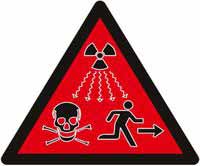 14,000 U.S. Deaths Linked to Fukushima Nuclear Meltdown: Infants Hardest Hit,The Province, Tess Zevenbergen January 9, 2012. The first study linking radioactive fallout to 14,000 U.S. deaths as a result of Fukushima’s nuclear meltdown following the 9.0 magnitude earthquake and tsunami that struck the coast of Japan on Friday, March 11th last year has been published in the International Journal of Health Services (IJHS). According to a news release issued over the PR Newswire, the study is the first peer-reviewed study to appear in a medical scientific journal that documents the health hazards associated with the Fukushima nuclear explosion and meltdown catastrophe.
The study, authored by epidemiologist Joseph Mangano MPH MBA and Executive Director of the Radiation and Public Health Project, and Janette Sherman, a toxicologist and adjunct professor at the University of Michigan, states the number of radiation-related deaths linked to the Fukushima disaster is comparable to the number of deaths following the Chernobyl meltdown of 1986. The results of the study were gleaned from looking at U.S. death rates during the period Fukushima occurred, as well as in previous months and years.
“This study of Fukushima health hazards is the first to be published in a scientific journal. It raises concerns, and strongly suggests that health studies continue, to understand the true impact of Fukushima in Japan and around the world. Findings are important to the current debate of whether to build new reactors, and how long to keep aging ones in operation,” stated Mangano. Continue reading
Direct current (DC) the way of the future, with renewable energy
 The main factor driving demand is the need to conserve energy and produce more of it from renewable sources. Alternating current is generated by rotating engines, but renewable sources such as wind and solar produce DC power.
DC can now be transmitted at high voltage over very long distances, longer than AC. It can be easily used in cables, over ground or under the sea.
“I’d put my money on the sun and solar energy,” – [Edison said]
Insight: How renewable energy may be Edison’s revenge, Reuters, By Sara Ledwith LONDON | Tue Dec 20, 2011 “……The American inventor, who made the incandescent light bulb viable for the mass market, also built the world’s first electrical distribution system, in New York, using “direct current” electricity. DC’s disadvantage was that it couldn’t carry power beyond a few blocks. His Serbian-born rival Tesla, who at one stage worked with Edison, figured out how to send “alternating current” through transformers to enable it to step up the voltage for transmission over longer distances……
from the late 1800s, AC became the accepted form to carry electricity in mains systems. For most of the last century, the power that has reached the sockets in our homes and businesses is alternating current.
Now DC is making a comeback, becoming a promising money-spinner in renewable or high-security energy projects. From data centers to long-distance power lines and backup power supplies, direct current is proving useful in thousands of projects worldwide… Continue reading
Steps for USA and Russia towards nuclear disarmament
 There is, however, some unfinished business concerning the 20 year-old Presidential Nuclear Initiatives (PNI’s) that both governments could take up now to help lay the foundation for future talks.
the United States and Russia have grown accustomed to sharing considerable information about their longer-range strategic nuclear forces. For years, they have routinely exchanged and updated information on the disposition of retiring nuclear-capable bombers and
missiles. Similar processes could be applied to the types and numbers of tactical nuclear systems affected by the P.N.I.’s.
The next logical step would be for both countries to disclose, on a reciprocal basis, the location, types and numbers of tactical nuclear weapons that remain.
Unfinished Business, NYT, FRANK KLOTZ, SUSAN KOCH and FRANKLIN MILLER December 13, 2011“……..the subject of reducing tactical nuclear weapons has again come to the fore. Signing the New Strategic Arms Reduction Treaty in April 2010, President Obama announced that the United States intended to pursue further reductions in all categories of nuclear weapons — including, for the first time, tactical and nondeployed warheads. Voting to approve the treaty, the U.S. Senate called for negotiations with Russia to address the
disparity in U.S. and Russian tactical nuclear weapons and to secure and reduce those weapons in a verifiable manner.
The specific size of that disparity is a matter of debate. Neither the United States nor Russia has publicly disclosed the number and locations of the tactical nuclear weapons they possess.
Unofficial estimates vary widely. Continue reading
Arnie Gundersen on the state of the Fukushima nuclear fuel cores
 Fukushima – Could it Have a China Syndrome? FAIREWINDS ASSOCIATES, Arnie Gundersen, 14 Dec 11 “…….the good news is I do not think a China Syndrome can happen. I do not think this core can keep melting into the bottom of the earth. And I do not think there will be a steam explosion either. That is the good news.
Here is the bad news.
That nuclear core is in direct contact with tons of water. And that containment, while not leaking down, is leaking out the sides. That contaminated water is going into every other building on site. And there is literally thousands and thousands of tons of water in other buildings. That water contains radioactive cesium, radioactive strontium, and it also contains nuclear fuel. There will be uranium in that water and plutonium in that water as well. We know for sure that that water is leaking into the ground water and into the Pacific Ocean. So while it is important to know that we are not going to release the nuclear core directly into the center of the earth, the problem is not over. And as a matter of fact, the problem will last for tens, perhaps even as long as 30 years because this contaminated water is in the basements of all the buildings on site. And not only does it contain cesium (that hangs around for 300 years), strontium (hangs around for 300 years), but it also contains plutonium and uranium and they have half lives of tens of thousands of years.
So the problem is, what do we do with all that water that is contaminated? It is already leaking into the groundwater. It is already leaking into the ocean. TEPCO is frantically catching it and putting it into tanks. But just today, TEPCO announced that they are running out of tank space on site, and eventually they are going to have to release those tanks into the Pacific Ocean. Now they will try to clean up some of the isotopes like cesium. But they have been unable to capture all the strontium. Strontium is a bone seeker that causes leukemia… http://fairewinds.com/content/fukushima-could-it-have-china-syndrome
Radioactive strontium one million times over limit into ocean from Fukushima
“The source of the beta radiation in the water is likely to include strontium 90, which if  absorbed in the body through eating tainted seaweed or fish, accumulates in bone and can cause cancer,”
 Fukushima floods into Pacific Ocean, Strontium becomes One Million Times over Limit, The Canadian, 07 DECEMBER 2011 The woes of Fukushima are far from over as the plant’s owner, the Tokyo Electric Power Company (TEPCO), announced recently that a purification mechanism has leaked at least 45 tons of highly radioactive water, some of which ended up flowing directly into the ocean. TEPCO officials are reportedly in the process of investigating the situation to determine the extent of the damage caused. Continue reading
The lingering nuclear disaster of Chernobyl
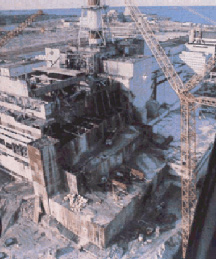 the global death toll by 2004 was closer to 1 million and said health effects included birth defects, pregnancy losses, accelerated aging, brain damage, heart, endocrine, kidney, gastrointestinal and lung diseases.
The physical and financial legacies of that disaster are obvious: a 30-km uninhabited ring around the Chernobyl plant, billions of dollars spent cleaning the region and a major new effort to drum up 600 million euros ($840 million) in fresh funds that Kiev says is needed to build a more durable casement over the stricken reactor. Continue reading
Silex laser uranium enrichment may open the door to nuclear weapons proliferation
many of the good things GE is using to make a case about Silex—less use of resources and electricity and increased efficiency—are actually negatives that make it easier for rogue states to hide clandestine plants…..methods for the production and use of nuclear materials that would be more difficult to detect,” the report states
New Uranium Enrichment Technology Alarms Aviation Week, By Kristin Majcher Washington 23 Nov 11 General Electric says it has successfully tested a faster, cheaper way to produce nuclear reactor fuel, and is planning to commercialize the technology by building a facility in Wilmington, N.C. While the prospect of saving resources to generate energy at a lower price sounds like a breakthrough, scientists are concerned that the top-secret method of enrichment that GE is using will indirectly elevate proliferation risks around the world, thus inspiring rogue states to develop their own laser enrichment facilities for nuclear weapons.
The enrichment technology is the Separation of Isotopes by Laser Excitation (Silex). It was developed by Silex of Australia in 1992. The technology company USEC funded early research on Silex, but abandoned it in favor of focusing on centrifuge enrichment. In 2006, GE signed an exclusive agreement to commercialize and license the technology and spearhead further research and development. Continue reading
Danger of AREVA’s nuclear waste convoy from France to Germany
 If the radioactivity from the transport was dispersed in an accident or an attack, Areva would be discharged from almost all liability.
 Last Minute information – high-risk transport from France to Germany leaving one day early, 21 Nov 11 Transport of highly radioactive nuclear waste will again cross France from west to east, and part of Germany, exposing people and the SNCF agents to nuclear risks. Originally scheduled this Thursday, 24 November, the train from Valognes railway terminal has been advanced one day by AREVA and SNCF to try to avoid the huge mobilisation that is being prepared. The convoy should leave Valognes on Wednesday 23 at 14:36.The two routes planned by the authorities from Amiens remain unchanged, the convoy could head north towards Arras or south to Reims. Eleven containers carrying 301 barrels of high activity waste “re-treated” at the Areva plant in La Hague (Manche).
A rolling Chernobyl : Europe again under the threat of a nuclear convoy at high risk The official inventory of radioactivity in the transport amounted to 3756.5 peta becquerel (PBq) or 3.75 billion billion Becquerel of Becquerel. For comparison, the convoy will transport many times the radioactivity released during the Chernobyl disaster [i]. Scattered in the environment, the radio-toxicity potential [ii] this convoy would be enough to poison the whole human race [iii]. Continue reading
Reprocessing not the answer to nuclear waste, say USA Government Accountability Office
“No currently available or reasonably foreseeable reactor and fuel cycle technology developments — including advances in reprocess and recycle technologies — have the potential to fundamentally alter the waste management challenge this nation confronts over at least the next several decades, if not longer,’’ the report said…..
 A Long, Long Road to Recycling Nuclear Fuel, NYT, By MATTHEW L. WALD, 15 Nov 11, The question of what to do with spent nuclear fuel from civilian power reactors has stirred renewed interest in reprocessing — that is, chopping up the fuel, retrieving materials that can power a reactor and possibly recovering the most troublesome waste products so they can be broken up in the reactor into easier-to-handle elements.
But the Energy Department, which is supposed to is evaluate different ways that the used fuel could be recycled, has a long way to go, according to the Government Accountability Office. Continue reading
Comparison of radiation levels before and after Fukushima nuclear catastrophe
when the accident struck, Konayashi and his colleagues were in a good position to measure exactly how things changed.
Japanese Physicist Publishes Fukushima Radiation Records, Technology Review, 14 Nov 11 The readings at the Fukushima Medical University, close to the damaged nuclear power plant, make for grim reading.
Today, an insight into the conditions in the region surrounding the Fukushima Nuclear Power plant soon after the magnitude 9 earthquake and resultant tsunami which caused the reactors to explode. Continue reading
U.S. army and depleted uranium
 Gulf War Syndrome and the Army’s Depleted Uranium Training Videos, Motherboard by DerekMead , Nov 12, 2011 Depleted uranium, a bi-product of enriched uranium that was used in American munitions, was the focus of military preparations before the war. We dug up some old Army videos for “Depleted Uranium General Awareness Training” that shows just how under-prepared soldiers may have been to the hazards of this potentially pretty nasty stuff. Continue reading
1 This Month
26 September – International Day for the Total Elimination of Nuclear Weapons





PLEASE OPPOSE HR 8255 AND S.3639 – bills would accelerate satellite deployment, with no environmental review or safeguards – https://ncstd5li.quorum.us/campaign/169331/
To see nuclear-related stories in greater depth and intensity – go to https://nuclearinformation.wordpress.com
-
Archives
- September 2026 (281)
- August 2026 (330)
- July 2026 (355)
- June 2026 (287)
- May 2026 (306)
- April 2026 (356)
- March 2026 (251)
- February 2026 (267)
- January 2026 (308)
- December 2025 (358)
- November 2025 (359)
- October 2025 (375)
-
Categories
- 1
- 1 NUCLEAR ISSUES
- business and costs
- climate change
- culture and arts
- ENERGY
- environment
- health
- history
- indigenous issues
- Legal
- marketing of nuclear
- media
- opposition to nuclear
- PERSONAL STORIES
- politics
- politics international
- Religion and ethics
- safety
- secrets,lies and civil liberties
- spinbuster
- technology
- Uranium
- wastes
- weapons and war
- Women
- 2 WORLD
- ACTION
- AFRICA
- Atrocities
- AUSTRALIA
- Christina's notes
- Christina's themes
- culture and arts
- Events
- Fuk 2022
- Fuk 2023
- Fukushima 2017
- Fukushima 2018
- fukushima 2019
- Fukushima 2020
- Fukushima 2021
- general
- global warming
- Humour (God we need it)
- Nuclear
- RARE EARTHS
- Reference
- resources – print
- Resources -audiovicual
- Weekly Newsletter
- World
- World Nuclear
- YouTube
-
RSS
Entries RSS
Comments RSS

