As one of my first tasks early in the first Clinton Administration as the newly appointed Deputy Assistant Secretary for Policy, I conducted the first (and only) asset inventory of the U.S. Department of Energy (DOE). In carrying it out, we departed from the usual reliance on DOE contractors, and established a team of federal employees throughout the DOE complex to scour the system for data. In doing this we saved a lot of money and time that would otherwise be consumed by DOE contractors that had perfected the art of cost maximization.
After six months we briefed Energy Secretary O’Leary on what we found. With real estate holdings of more than 2.4 million acres–an area larger than Rhode Island and Delaware combined–the DOE was the largest government-owned industrial energy supply and research enterprise in the country, responsible for:
More than 20,700 specialized facilities and buildings, including 5,000 warehouses, 7,000 administrative buildings, 1,600 laboratories, 89 nuclear reactors, 208 particle accelerators, and 665 production and manufacturing facilities.
More than 130,000 metric tons of chemicals, a quantity roughly equivalent to the annual output of a large chemical manufacturer.
More than 270,000 metric tons of scrap metal—equivalent to more than two modern aircraft carriers in weight. (The dismantlement of three gaseous diffusion plants will generate about 1.4 million metric tons of additional scrap.)
More than 17,000 pieces of large industrial equipment.
More than 40,000 metric tons of base metals and more than 10,000 pounds of precious metals, such as gold, silver, and platinum.
About 700,000 metric tons of nuclear materials, mostly depleted uranium but also including weapons-grade and fuel-grade plutonium, thorium, and natural and enriched uranium.
About 320,000 metric tons of stockpiled fuel oil and coal for 67 power plants.
About 600 million barrels of crude oil stored at the Strategic Petroleum Reserve.
Electrical distribution systems for the Bonneville, Western Area, Southwestern, Southeastern, and Alaska power administrations.
If the Energy Department were a private concern with more than 100,000 employees, it would be one of the nation’s largest and most powerful corporations. And, we determined, if it were privately held, it would be filing for bankruptcy.
Major elements of Energy’s complex were closing down, leaving a huge unfunded and dangerous mess. After more than a half century of making nuclear weapons, the DOE possessed one of the world’s largest inventories of dangerous nuclear materials and it has created several of the most contaminated areas in the Western hemisphere.
We discovered that a significant percentage of overhead expenses at several shuttered sites were from hoarding fungible assets that were no longer needed. The challenge was to empty these warehouses and to generate an income for the U.S. government by selling off valuable excess materials.
Our first effort was aimed at the large amount of uncontaminated precious metals contained in nuclear weapons that would generate millions-of-dollars in revenue from warheads scheduled for dismantlement under the 1991 Strategic Arms Reduction Treaty (START). For the first time, nuclear disarmament would actually make money for the taxpayer.
We were astounded to find that for decades intact weapons components containing large amounts of precious metals were being disposed at great expense in a classified landfill under heavy guard. It took a direct order from the Secretary for DOE’s PANTEX weapons assembly and dismantlement facility near Amarillo, TX to obtain an industrial scale hydraulic hammer to smash non-nuclear components into little pieces so that the gold and other metals can be recovered without revealing design secrets.
Further complicating the process for dismantling weapons, the DOE had failed to properly maintain its system for assessing and evaluating each nuclear weapon for reliability, aging problems, and safe dismantlement. Known as configuration management (CM), this system is a fundamental element in the control of the nuclear stockpile and is based on careful documentation of “as built” drawings and product definitions made during the design, manufacture, assembly, and deployment of a nuclear weapons.
My staff discovered that DOE could not find nearly 60 percent of the “as built” drawings that document all changes made to active weapons selected for dismantlement. I threw a fit and reported it to the front office, which promptly took action.
Over the ensuing decade, we wound up sending about $50 million from the sale of precious metals extracted from dismantled weapons back to the treasury. As a side benefit, we also set up the DOE’s first electronic recycling center to recover fungible materials from DOE’s huge inventory of excess computers.
After receiving a Secretarial Gold Medal for our asset management program, I became increasingly isolated from the DOE front office, and spent most of my time involved with environment, safety and health problems afflicting the DOE nuclear weapons complex. As soon as Secretary O’Leary departed in late 1996, our asset inventory was buried and barred from public disclosure.
However, I drew the line when it came to the disposition of radiologically contaminated materials, such as the vast amount of scrap metal resulting from the decommissioning of nuclear weapons facilities.
In 1994, I blocked a deal that would have allowed some 10,000 tons of radiation-contaminated nickel from nuclear weapons operations to be recycled into the civilian metal supply, where some percentage of it would inevitably wind up in stainless steel items such as intrauterine devices, surgical tools, children’s orthodontic braces, kitchen sinks, zippers, and flatware. However, that confrontation was not to be the end of the scrap metal gambit.
The pressures to recycle 1.7 million metric tons of contaminated metal scrap (equivalent to 17 U.S. aircraft carriers in weight) at nuclear weapons facilities in Tennessee, Kentucky and Ohio were enormous.
I dug in my heels and opposed an effort, supported by Vice President Gore’s office, to release tens of thousands of tons of radiologically contaminated metals into commerce. By claiming cost savings associated with foregoing landfill disposal, DOE contractors would be able to pocket the profits from the sale of scrap. Going forward however, I was seen as obstructionist and was effectively shunned from decision-making circles.
After Hazel O’Leary left as Energy Secretary in late 1996, I lost my political “air cover” and was perceived in the words of a colleague by the incoming leadership of the agency (Secretary Frederico Pena’s team) as “too radioactive.”
Even though I was being excluded from policy decisions, I still persisted. As a former environmental activist, I had no compunctions about going outside of the Department to convince an old friend at the Natural Defense Resource Council to file a lawsuit to block the free release of the contaminated metal.
I knew that if DOE and its contractors got their way, this practice would lead to a major public backlash. Not to mention the market impacts the contaminated material would create for the U.S. steel industry, which was almost totally dependent on recycled metal for its feedstock. Steel makers had been burned before by errant radiation sources and the last thing they wanted was for the public to realize that the stainless-steel fork on the dinner table had some plutonium in it from a nuclear weapons plant. But consideration of these consequences could easily get overlooked in the DOE, where decisions were made in isolation and secrecy.
The lawsuit stopped the train temporarily. Judge Gladys Kessler, in a strongly worded opinion, stated: “It is . . . startling and worrisome that from an early point on, there has been no opportunity at all for public scrutiny or input in a matter of such grave importance.” Calling the recycling effort “entirely experimental at this stage,” she concluded, “The potential for environmental harm is great, especially given the unprecedented amount of hazardous materials which the defendants seek to recycle.”
In the summer of 1998, I received a call from the White House indicating that I was being fired within the next 30 days. This was the third time my detractors sought to end my tenure as a senior political appointee in DOE’s Policy office. This time, it seemed to be final.
A week before my departure, I was summoned to meet with Bill Richarson – the newly installed Secretary of Energy. He was slouched on the sofa and disheveled after a long day. “I don’t know why you got on the list. You must have pissed-off quite a few people,” he said with a devilish smile. “But you have a lot of folks that want to keep you around. When I visited DOE sites, members of Congress, union officials, Indian tribes, and environmental activists, would ask me about this Alvarez guy.”
He then pulled out a news clipping from the Seattle Times about a walk-out staged by the members of a DOE advisory panel at the Hanford facility in protest to my sacking. “You must be a fighter, I like fighters,” he said approvingly. Richardson reversed the White House decision and appointed me as his Senior Policy Advisor, where I was tasked among other things to end the “hot scrap” recycling scam.
A senior scholar at the Institute for Policy Studies, Robert Alvarez served as senior policy adviser to the Energy Department’s secretary and deputy assistant secretary for national security and the environment from 1993 to 1999.
When it comes to love for the limelight and delusions of grandeur, Zelenskiy outstrips most politicians and not least of all Putin. Almost all politicians are egoistic, but Zelenskiy is narcissistic.
Zelenskiy’s inexperience and ego likely played pivotal roles in his disastrous decision-making.
Zelenskiy himself remained mired in personal corruption as the Pandora Papers demonstrated
Zelenskiy’s failures also have made him eminently expendable
Ukrainian President Volodomyr Zeleneksiy appears to be at the end of the line politically and perhaps biologically. Portraying himself as a fighter for peace, anti-corruption, and full democratization when he ran for and won the presidency in 2019, he proceeded to lead the country into war, further corruption, and de-republicanization (authoritarianization).
On both a personal and global level this is high tragedy. A superb comedian and actor stars in a television fictional series as the president of Ukraine, rises in popularity, wins the country’s presidency on a peace platform, and leads the country into a catastrophic, easily avoidable war that threatens the survival of his country and himself.
The unreality of Ukraine refracts in our century of simulacra and disinformation through this icon moved from the television screen to real life politics, and the tragedy of it all is sold as a heroic triumph on the road to universal democracy, peace, and brotherhood.
In the real world, however, there is a rub. The country is historically divided along every conceivable line (ethnic, linguistic, cultural, political, ideological, economic, and social), an almost accidental state cobbled together by communists but claimed by hapless republicans and determined ultra-nationalists. Thus, Zelenskiy becomes president of a fundamentally divided country further riven by schism as a result of two ‘revolutions’ – really revolts – and a civil war compounded by foreign (Russian) intervention.
****************************
Zelenskiy’s emergence and victory are as surreal as the Maidan regime of which he assumed leadership.
I too wish that the things that the nuclear industry says about itself were true—I wish it was green and renewable. I wish that there weren’t multiple uranium mining sites around the world with thousands of tons of uranium tailings abandoned and open to the elements, continuing to harm the health of generations born long after mining ceased.
I wish that it didn’t take immense, carbon-intensive mining projects to extract uranium from the Earth, and then again to “deposit” the spent nuclear fuel from reactors back half a kilometer underground.
BY ROBERT JACOBS 9 July 21, Bhaskar Sunkara’s recent opinion piece extoling the virtues of nuclear power and castigating its opponents as paranoid and ill-informed, is clearly motivated by his deep concerns over the dire impacts of global warming, which loom closer by the hour. Unfortunately, his arguments amount to little more than regurgitated industry talking points, in their traditional form of a Jeremiad.
First, Sunkara poses the decline of the nuclear industry in the West as an achievement of progressive political movements. Specifically, he cites the decline of nuclear power in Germany as attributable to a “Green party-spearheaded campaign.” This decline has been more reasonably ascribed to both market conditions and missteps by nuclear industry giants such as Westinghouse and AREVA. From its inception, nuclear power has been heavily dependent on government subsidies to appear economically viable (subsidies such as insurance and the disposal of waste largely configured as taxpayer burdens).
Rather than succumbing to its political opponents on the left, the industry has been sunk by its structural economic dysfunctions. In the US, this has sparked schemes to secure additional taxpayer subsidies in legislative fixes such as guaranteed returns for nuclear utilities, and outright bribery of legislators for taxpayer bailouts of failing companies.
The most simplistic recitation of nuclear industry talking points is when Sunkara dismisses concerns about nuclear waste, and extolls the mythic separation between “civilian” and “military” nuclear technologies. He asserts that most nuclear waste “can be recycled to generate more electricity,” an assertion that goes back more than half a century and has been ritualistically recited by an army of nuclear industry PR professionals before him…yet here we are 50 years later and very little spent nuclear fuel has actually been recycled. The most successful nuclear recycling nation is France which, nevertheless, is experiencing a “nuclear exit” and is unlikely to ever use this recycled fuel. AREVA, the French nuclear giant, has gone bankrupt. Reprocessing facilities like the Rokkasho plant here in Japan have never functioned properly, unless you consider their role enabling the stockpiling of plutonium by Japan to hedge against future weapon needs to be an elemental goal.
There is a difference between what can be done, and what actually happens. Rather than being recycled, hundreds of thousands of metric tons of spent nuclear fuel await “final disposal” in deep geological repositories. Some have been waiting for over 70 years. Just last week, a panel advising the EU on categorizing nuclear plant as “green” energy, and thus eligible to receive EU funding as a “sustainable investment,” concluded that the problems of nuclear waste preclude that designation.
I would point out that even though plastics manufacturers assure us that most plastic can be recycled, we still seem to be living a world with ever increasing amounts of plastic waste. Their greenwashing has not eventuated in a world full of plastics made from recycled materials. The market reality is that it is cheaper to manufacture new plastic than it is to manufacture plastic from recycled materials. Similarly, it is cheaper to discard spent nuclear fuel than it is to reprocess it.
Sunkara dismisses the irrevocable link between military and civilian nuclear technologies as imaginary. First, let’s consider the present imbrication. A 2019 Atlantic Council study places the value of the US civilian nuclear complex to the US national security apparatus at $26 billion annually simply in terms of the human capital assets: “In terms of nuclear technology innovation, export capacity, and geopolitics, a vibrant civilian nuclear energy sector is a critically important national security asset.”
However, the civilian operation of nuclear power plants also places future generations at military risk. I have written that, historically, nuclear reactors were “born violent.” That is to say, they were invented by the Manhattan Project in the early 1940s to manufacture plutonium for use in nuclear weapons, and were instrumental in killing almost 100,000 people in 1945. The “first” American commercial atomic plant in Shippingport, PA that went critical in 1958, was actually the 14th industrial nuclear reactor built in the United States, the other 13 only manufactured plutonium, which by then formed the fissile cores of thousands of nuclear weapons.
In nuclear reactors used to make electricity, this plutonium is not separated out for use in weapons. However, all nuclear power plants remain plutonium production factories. The fact that most of those tons of plutonium remain in the spent fuel rods does not mean they will stay there forever. Thousands of years from now, some government or military may dig up the spent fuel in our deep geological repositories and separate that plutonium out to build nuclear weaponry. All it would take is the technology (technology we currently possess) and the will. We continue to manufacture that plutonium—perhaps for them to weaponize. Every nuclear power plant that operates adds to that inventory; more than 99% of existing plutonium was manufactured in nuclear reactors. In 1962, the US successfully detonated a nuclear weapon assembled with just such “reactor-grade” plutonium. Our generation’s use of nuclear power silently stockpiles fissile material that will remain militarily viable for millennia.
I too wish that the things that the nuclear industry says about itself were true—I wish it was green and renewable. I wish that there weren’t multiple uranium mining sites around the world with thousands of tons of uranium tailings abandoned and open to the elements, continuing to harm the health of generations born long after mining ceased. I wish that it didn’t take immense, carbon-intensive mining projects to extract uranium from the Earth, and then again to “deposit” the spent nuclear fuel from reactors back half a kilometer underground. Estimates before construction began at Onkalo spent fuel repository in Finland were that the site would entail a “half-billion-euro construction project will generate some 2,500 person years of employment,” and would take 100 years to complete. That is just to contain the spent fuel from five nuclear power plants. The United States, by contrast, has 94 commercial nuclear power plants. There is still no actual plan for the astonishingly large and carbon-intensive site it will take to bury the more than 140,000 metric tons of spent nuclear fuel, with some hope of containing it for thousands of generations of future human beings. This doesn’t include the thousands of tons of spent nuclear fuel from the nuclear reactors operated by the US military to provide the fissile cores of more than 70,000 nuclear weapons during the Cold War.
The panic-inducing impacts of anthropic climate change spark a desperate need for immediate reassurance and calming: we want to fix it now. We long to turn some corner that will change the situation. It is unlikely that the same short-sighted military-industrial technophilia that brought us to this climate crisis will flip over and provide us the urgent path to its resolution. Technological evangelists have been auditioning for the part of Climate Change Savior to anyone who will listen. Some proffer a Reagan-era Star Wars pitch: they will fill the skies with material to block the enemy (in this case sunlight rather than Soviet ICBMs). These geoengineering quick-fix schemes are more likely to cause unplanned outcomes than to achieve their missions.
At one time nuclear weapon producers imagined they too could geoengineer the planet to shape it to human desires. They tested the use of nuclear weapons to sculpt harbors into coastlines, and to release natural gas trapped in rock formations. These experiments led to some of the most significant radiological distributions and contaminated sites in the wide panoply of nuclear testing. Still, hyper-capitalist techno utopians like Elon Musk envision the key to human habitation on Mars is the detonation of a massive arsenals of thermonuclear weapons to shape it to our needs.
The nuclear industry will ignore its market dilemmas as long as taxpayers continue to backstop its investors. However, to believe that this massive, for-profit, military-based industry has concern for the welfare of the Earth and its inhabitants is akin to believing the plastic industry is actually beavering away to make the plastic waste disappear. Repackaging their talking points out of a genuine concern for living creatures is a resource they will continue to tap so long as it flows freely. Sunkara would do better to advocate for the mass social movements that have shifted giant industries towards social welfare in the past rather than preaching that the industries themselves are saviors. Time is obviously short, wrong turns are catastrophic.
The humiliation of the U.S. government, which is actively complicit in providing the weaponry, funding, and UN vetoes backing the Israeli government’s attack on the civilian Palestinians/Arabs in tiny Gaza, is in plain view daily. All in the name of the unasked American people and taxpayers.
Earlier this week, at a House of Representatives’ hearing, Trump toady Rep. Elise Stefanik (R-NY) repeatedly assailed three University presidents with the question of would they discipline students calling for the genocide of Jews, without any evidence that this hateful speech is prevalent on campus.
Pursuing her fulminations, Stefanik was cruelly oblivious to the real ongoing genocide in Gaza with her support of unconditional shipment of American F-16s, 155mm. missiles and other weapons of mass destruction used to kill children, women and the elderly who had nothing to do with the preventable October 7th Hamas violence.
Meanwhile, a State Department spokesman continues to say that the Israeli government does not intentionally target civilians. With U.S. drones over Gaza daily, Secretary of State Antony Blinken has visual proof that the overwhelming bombing on civilian structures is killing innocent civilians.
The evidence is in the rubble of hospitals, health clinics, ambulances, schools, libraries, places of worship, marketplaces, water mains, homes, apartment buildings, and piles of unburied corpses being eaten by stray dogs. All this information is in the possession of bomber Biden’s regime.
The Bidenites and their bloodthirsty cohorts in Congress were forewarned when the Israeli Defense Minister Yoav Galant and other Israeli officials on October 8th shouted these chilling genocidal orders to their army: “No electricity, no food, no fuel, no water.… We are fighting human animals and will act accordingly.” (See, Convention on the Prevention and Punishment of the Crime of Genocide). Add an already illegal 16-year Israeli blockade of 2.3 Palestinians suffering from dire poverty, with 40% of their children down with anemia.
Now, about half of Gaza’s population are children, 85% of the entire population is homeless, wandering helplessly into nowhere, afflicted with pending starvation, sickened by spreading infectious diseases and dirty drinking water. There is little or no medicines for diabetics and cancer patients. No surgery, no anesthesia, no emergency transport, no shelter from cold weather, only American-made bombs and missiles blowing up Palestinians into bits with Israeli snipers everywhere.
The Palestinians cannot flee from their open-air prison. They cannot surrender – the Israeli government wants them gone. Bear in mind, the population that is not yet blown up is sick and dying, denied needed outside humanitarian aid. Defying feeble Biden’s wishes, Netanyahu only allows a trickle of aid trucks to enter Gaza, and those that do enter can scarcely reach their destinations.
All this raises the issue of the gross undercount of casualties. The Hamas Health Authority has restricted its count to the names of the deceased and injured supplied by hospitals and morgues. These locations are now largely rubble or inoperative. Bodies under the rubble, many of them children, can’t be counted. Thousands of missing people cannot be counted. The Ministry’s suspended count is over 17,000 fatalities, plus 45,000 injuries. With the far larger carnage unable to be tabulated, the actual fatality toll may reach 100,000 soon.
Nonetheless, about two weeks ago, the New York Times reported the death undercount of children in Gaza in two months was ten times greater than the deaths of Ukrainian children in nearly two years of Russian bombings. One of its headlines – “Smoldering Gaza Becomes a Graveyard for Children.”
There are about 50,000 pregnant women in Gaza and about 5,500 of them are due to give birth. Where are they going to do that? How can they be cared for and be nurtured? These mothers are sick and starving. Add the babies to the terrorists toll.
Gaza’s area is about the size of Philadelphia. How many dead, injured, and dying people would there be if 20,000 bombs were dropped on civilians and civilian structures in Philadelphia? Philadelphians trapped without food, water, medicine or any escape route. Imagine 85% of 1.5 million residents homeless, wandering in the streets and alleys. And with virtually no humanitarian aid coming from outside the city. There wouldn’t be any fire trucks or water to extinguish spreading fires.
There are courageous Jewish groups (e.g., Jewish Voice for Peace and If Not Now) and rabbis calling for an end to the slaughter, demanding a ceasefire. There are protestors at all of Biden’s public events/trips reminding him of next November.
Veterans for Peace and other veteran groups are engaged in non-violent civil disobedience in front of the Scranton, Pennsylvania factory producing 155mm missiles for Israel. (Scranton is Biden’s hometown.) Public opinion is turning against the Biden/Israel war without limits on the Palestinians.
Biden wouldn’t want to poll the American people about his $14.3 billion genocide tax, charging American taxpayers to further prosperous Israel’s war of extermination in Gaza. They’ll likely tell Biden that poor children, unaffordable health facilities and other necessities in America need that money first.
There are some 30 Democratic Senators demanding that this Biden bill contain conditions and safeguards so that the money is not used to blow up more Palestinian children and women. But what else are these funds for other than to expand Israel’s military budget? The Israeli extremist ruling coalition under Netanyahu has made no secret of wanting to take over all of remaining Palestine as part of their “Greater Israel” mission to include what they call Judea and Samaria. As Israel’s Founder, David Ben-Gurion, frankly declared referring to the Palestinians, “We have taken their country.” (As quoted in The Jewish Paradox(1978) by Nahum Goldmann.)
It is a cruel irony of history that Israeli state terrorism is producing a Palestinian Holocaust. Netanyahu’s regime has killed over 60 journalists—three of them Israelis—120 United Nations relief workers and instituted total blackouts to keep the grisly events in Gaza out of the news in real time. Netanyahu, to shield his colossal failure to defend Israel on October 7thand to keep his job, is making sure that his country joins the world community of savage, slaughtering regimes, exemplified by the Bush/Cheney unlawful criminal destruction of Iraq and Afghanistan, followed by Hillary Clinton toppling Libya into permanent violence and chaos since 2011. (Obama later called his conceding to Hillary’s demands as his worst foreign policy decision).
Capitol Hill and the White House don’t wait for any blood-guilt to be recognized. That will surely come later with the judgment of history and the nightmarish visions of innocents being vaporized because of Washington’s unconditional backing of the Israeli blitzkrieg against what the Israeli newspaper Haaretz has repeatedly called the “totally defenseless people” of Gaza.
Changing ambient temperatures are already posing serious risks to nuclear plants across the world. Nuclear regulators cannot wait until sea-level rise coupled with storm surges begin impacting operational safety of their plants—they must act now.
Note: This is part two of a two-part blog series on the impacts of climate change on nuclear power plants. Check out our first blog post on the impact of increasing ambient temperatures.
Climate action isn’t simply about reducing emissions—it’s also about addressing local environmental concerns and minimizing risks to human health and safety. With that in mind, if nuclear power is going to have a role in addressing climate change, stronger safety and environmental regulations will be needed.
Unfortunately, this approach is missing from the U.S. Nuclear Regulatory Commission (NRC), which in January voted in a 3-to-2 decision to water down recommendations from its own staff to reevaluate seismic and flooding hazards at nuclear sites. “This decision is nonsensical,” Commissioner Jeff Baran wrote in his dissent, “Instead of requiring nuclear power plants to be prepared for the actual flooding and earthquake hazards that could occur at their sites, NRC will allow them to be prepared only for the old, outdated hazards typically calculated decades ago when the science of seismology and hydrology was far less advanced than it is today.”
The January ruling came almost eight years after staff scientists released a list of recommendations in direct response to the 2011 Fukushima nuclear meltdown. With the approval (and pending approvals) this year to rollback multiple safety regulations , the U.S. nuclear fleet, the oldest in the world, cannot afford to wait another decade to strengthen safety and environmental regulations in preparation of climate change–in this case, rising sea levels.
What are the Risks?
Nuclear power plants require huge amounts of water to prevent fission products in the core and spent nuclear fuel from overheating (incidentally making nuclear the most water intensive energy source in terms of consumption and withdrawal per unit of energy delivered). That’s why over 40 percent of the world’s nuclear plants are built along the coasts, with that number rising to 66 percent for just plants under construction. Unable to run on the electricity it generates itself to power the pumps that provide cooling water to the core and to the spent nuclear fuel stored onsite, a nuclear plant must rely on the grid or backup generators to ensure cooling water circulation. Any hazard that cuts off access to those sources of power restricts access to cooling water, ultimately risking a nuclear meltdown and off-site release of radiation, as happened during the flooding of Fukushima.
Flooding evaluations conducted by the NRC concluded that 55 of the 61 evaluated U.S. nuclear sites experienced flooding hazards beyond what they were designed to handle. Even more alarming, in 2014, the flood barriers at Florida Power & Light’s St. Lucie Nuclear Plant–one of the few plants reported to be prepared for disaster but which had been missing proper seals for decades–gave way to 50,000 gallons of water after heavy rainfall.
Storm surges like the one at St. Lucie Nuclear plant and extreme weather events, as witnessed in Fukushima, pose very real risks to both operational and decommissioned plants, almost all of which (in the US) will continue to store nuclear waste onsite for decades until a permanent storage solution is found. Coupled with increasingly rising sea-levels, these risks will continue to grow. Even under a very low scenario of 1°C warming by midcentury, the 2018 U.S. National Climate Assessment reports that the “frequency, depth, and extent of both high tide and more severe, damaging coastal flooding will increase rapidly in the coming decades.” And the Intergovernmental Panel on Climate Change concluded that 1.5°C of warming could be reached in as little as 11 years.
While all energy technologies will be impacted in some way by the increasing severity of natural disasters and sea level rise, the failure of nuclear power plants can result in irreversible health and environmental consequences on top of social and economic damages, including worst of all the release of radiation that can remain lethal for thousands of years. Under government estimates, the Fukushima meltdown resulted in the displacement of 165,000 people, cleanup and compensation costs of up to $200 billion, and a timeline of 30 to 40 years. Experts say, however, that true costs could reach $500 billion and decontamination timelines could be underestimated by decades.
Nuclear in East Asia
Despite initial vocal opposition from the public in many East Asian countries that have slowed down nuclear buildout after Fukushima, the direction of government policies for nuclear development in East Asia remain mostly unchanged, and have simply resulted in rather a more conservative, moderate pace. In fact, this pace has sustained much of nuclear development in East Asia, home to many countries that have found nuclear power as an attractive solution to addressing the dilemma between achieving energy security for an increasing population and decarbonizing to mitigate global climate change.
Of the 56 nuclear power plants currently in construction around the world, 33 of them are in Asia; 16 in China alone. As observed in the graph below, [on original] if all nuclear units that are currently under construction reach completion, East Asia is slated to become the region with the largest number of operating nuclear power plants, 93 percent of which will reside along the coast.
What is alarming is that East Asia and the Pacific region is uniquely vulnerable to sea-level rise. A 2015 report by Climate Central found that of the top 10 countries most likely to be affected sea level rise for 4°C warming, seven are in Asia. Similarly, in a study by the World Bank, China and Indonesia will be the most vulnerable to permanent inundation. Given the heightened flooding risks in Asia, strengthening the authority of regulatory structures that oversee the safety of nuclear build out will be increasingly important.
What’s the Plan?
Fukushima was a lesson to the global community that even one of the world’s most technologically advanced and experienced countries can fail to prevent a nuclear meltdown. To prepare for the realities of rising sea levels that pose unique risks to different nuclear plants, regulators must require climate adaptation plans and heightened safety oversight. Nonetheless, at the international scale, not much work is being done to address these sea-level rise concerns.
The Nuclear Energy Agency (NEA), in recognizing that the “world is ill-prepared for the risks from a changing climate,” conducted a study on the vulnerability of nuclear power plants to climate change, which is not yet available to the public. Since 2014, the International Atomic Energy Agency (IAEA) has begun to include a section about the impacts of climate change on nuclear energy in its annual Climate and Nuclear Power Report. Yet even as these international organizations detail the many hazards changing climate poses to nuclear reactors, preventative and/or adaptation measures do not seem to be prioritized or encouraged, especially for existing nuclear plants.
“Outside of their Scope” at Home
Similar attitudes are held here in the U.S. Perched at the southern tip of Florida, the Turkey Point Nuclear Generating Station is seeking to be the first U.S. nuclear plant permitted to run for 80 years. Initially refusing to consider sea-level rise in the environmental review of the license extension, the Nuclear Regulatory Commission (NRC) released a revised draft this year, only to come to the following conclusion: It’s outside of the scope of the agency.
If new information about changing environmental conditions (such as rising sea levels that threaten safe operating conditions or challenge compliance with the plant’s technical specifications) becomes available, the NRC will evaluate the new information to determine if any safety-related changes are needed at licensed nuclear power plants,” the NRC report said.
The report arrives at this conclusion by utilizing lower-bound sea level rise estimates from the 2018 U.S. Climate Change assessment, rationalizing that the report “assigns very high confidence to the lower bounds of these projections and medium confidence to the upper bounds.” As highlighted by this Bloomberg analysis released this year, nuclear plant operators are not only allowed to perform their own flood risk estimates but are also able to decide what assumptions are made, with review from the NRC.
The uncertainty that comes with sea-level rise projections obviously exists. In securing the safety of such critical infrastructure, however, using the highest sea-level rise estimates is the only way to ensure that all actions that can be taken against a potential threat are taken. On the other hand, relying on the lowest storm surge estimates is akin to receiving a warning about a potential threat, and taking the bare minimum actions to prepare for it.
Changing ambient temperatures are already posing serious risks to nuclear plants across the world. Nuclear regulators cannot wait until sea-level rise coupled with storm surges begin impacting operational safety of their plants—they must act now. With the world’s scientists calling attention to the climate crisis ahead of us, action must be taken to ensure nuclear plants are part of the solution, not the problem.
In the early 1950s, a huge hole was dug into the Cumbrian coast and lined with concrete. Roughly the length of three Olympic swimming pools and known as B30, it was built to hold skip loads of spent nuclear fuel.
Those highly radioactive rods came from the 26 Magnox nuclear reactors that helped keep Britain’s lights on between 1956 and 2015. When B30 was first put to work, it was designed to keep the fuel rods submerged for only three months before reprocessing work was carried out.
But when 1970s miners’ strikes shut down coal power stations and forced greater reliance on nuclear plants, more spent fuel than could be quickly reprocessed was generated. The silos and ponds, built to prevent airborne contamination if the fuel or radioactive sludge dried out, rapidly filled up. Meanwhile, the fuel corroded in the water, breaking down into radioactive sludge.
Debris from elsewhere within Sellafield was later added and the pond was abandoned when new facilities were built in 1986, clouding over and leaving workers on site with little idea what lay beneath its murky waters.
‘A nightmare job with no blueprint’
In 2014, photos of B30 and nearby B29 leaked via an anonymous source to the Ecologist led to concerns over the radioactive risk associated with the poor repair of the ponds.
The two facilities were used until the mid-1970s for short-term storage of spent fuel until it could be reprocessed and used for producing plutonium for the military.
The Ecologist pictures showed hundreds of highly radioactive fuel rods in ponds housed within cracked concrete overgrown with weeds, with seagulls bathing in the water. The images, taken over a period of seven years, led the nuclear safety expert John Large to warn that any breach of the wall would “give rise to a very big radioactive release”.
At the time, the Office for Nuclear Regulation (ONR), the nuclear safety regulator, said that while the old ponds bring “significant challenges”, their appearance “does not mean that operations and activities on those facilities are unsafe”.
It took 15 years and £1.5bn to bring B30 to a point where decommissioning could begin several years ago, with builders limited to working only half an hour a day close to the pool to prevent them from exceeding radiation exposure limits. Remotely operated vehicles, normally used to help with submarine rescues, were originally deployed but quickly failed, often within hours, because of the overpowering radiation. Newer models have since been used to vacuum up nuclear sludge, which is then moved to alternative long-term storage.
Sellafield hopes to have drained the pond by the early 2030s, and demolished it by the 2050s.
A new facility, the sludge packaging plant, has been built to receive radioactive sludge from B30. The nuclear watchdog said there have been some “regulatory challenges along the way … including noncompliance with fire regulations”.
But one former longstanding employee says that, despite the cracks, the contents of the ponds are gradually improving: “I have seen it at its worst. The water quality was horrendous; you could stand on the roof and look down and not see a single thing in there.
“In the control room, there are a group of lads using PlayStation-like controls for robots to pick up bits the size of a 50p piece and hoover up the sludge. It’s cutting edge.”
He adds: “[Decommissioning Sellafield] is the biggest job in nuclear and there is no blueprint. It’s a dream and a nightmare job. There has been real progress – every skip that comes out makes it safer and reduces the hazard risk.”
Toxic neighbours
B30 sits in a “separation zone” that requires greater security checks, and carries a higher risk of radiation, than the rest of the town-sized site. Although B30 is the most notorious crumbling building on Sellafield’s sprawling estate, it is far from the only problem child.
Nearby is B38, used to store highly radioactive cladding from reactor fuel rods. It was also used heavily during the miners’ strike of 1972, when nuclear plants were relied on to produce extra power, and it proved impossible to process all the waste that was being generated. Two years later, the public’s view of the nuclear industry was sharpened by the launch of the Protect and Survive advice on surviving a nuclear attack.
In B29 lie the toxic remains of Britain’s attempt to become an atomic superpower during the cold war.
Windscale, a former munitions factory, was selected to host the first atomic reactors, known as Pile 1 and Pile 2, after the second world war. They produced plutonium for nuclear weapons, and efforts were rushed through to allow Britain to explode its own atomic bombs by 1952.
There are also grave concerns over leaks from the Magnox swarf storage silo (MSSS), described as “one of the highest-hazard nuclear facilities in the UK”. It was constructed as a radioactive waste store in four stages between 1964 and 1983 and has not been in active use since the 1990s. The waste is stored under water to prevent ignition and to maintain constant temperatures.
The silo was first found to be leaking radioactive water into the ground in the 1970s and there are concerns that work to retrieve the waste, planned over the next three decades, has the “potential to reopen historic leak paths” and introduce new ones, according to the ONR.
Earlier this year, the ONR warned that a leak from the MSSS was likely to continue to 2050, with “potentially significant consequences” if it gathered pace.
The government’s long-term plan is to bury Britain’s nuclear waste deep underground in a geological disposal facility. The project, estimated to cost between £20bn and £53bn, would receive intermediate-level waste from nuclear facilities by 2050 and high-level waste and spent fuel from 2075.
It will echo similar projects in Sweden, France and Finland, which is nearing completion of its storage cave. A government body, Nuclear Waste Services, which is running the project, is in the process of engaging with different communities – two near Sellafield, and another near Mablethorpe on the east coast – in an attempt to win local approval for the plans.
The sequence of COP meetings, ostensibly a United Nations forum to discuss dramatic climate change measures in the face of galloping emissions, has now been shown for what it is: a luxurious, pampered bazaar for the very industries that fear a dip in their profits and ultimate obsolescence. Call it a drugs summit for narcotics distributors promoting clean-living; a convention for casino moguls promising to aid problem gamblers. The list of wicked analogies is endless.
Reading the material from the gathering that is known in its longer form as the United Nations Climate Change Conference, one could be forgiven for falling for the sweetened agitprop. We find, on theUN website explaining the role of COP28, that the forum is “where the world comes together to agree on ways to address the climate crisis, such as limiting global temperature rise to 1.5 degrees Celsius, helping vulnerable communities adapt to the effects of climate change, and achieving net-zero emissions by 2050.”
Then comes the boggling figure: 70,000 delegates will be mingling and haggling, including the parties of the UN Framework Convention on Climate Change (UNFCCC). “Business leaders, young people, climate scientists, Indigenous Peoples, journalists, and various other experts and stakeholders are also among the participants.”
The view from outside the conference is a matter of night and day. Fernando Racimo, evolutionary biologist and member of the activist group Scientist Rebellion, sums up the progress of ever bloating summitry in this field since 1995: “Almost 30 years of promises, of pledges,” he toldNature, “and yet carbon emissions continue to go up to even higher levels. As scientists, we’re recognizing this failure.”
In Dubai, where COP28 is being held, representatives from the coal, oil and gas industries have come out in numbers to talk about climate change. They, it would seem, are the business leaders and stakeholders who matter. And such representatives have every reason to be encouraged by the rich mockery of it all: the United Arab Emirates is a top league oil producer and member of the Organisation of Petroleum Exporting Countries.
According to an analysisfrom the environmental Kick Big Polluters Out (KBPO) coalition, 2,456 fossil fuel lobbyists were granted access to the summit. “In a year when global temperatures and greenhouse gas emissions shattered records, there has been an explosion of fossil fuel lobbyists heading to UN talks, with nearly four times more than were granted last year.”
The breakdown of the attendee figures makes for grim reading. In the first place, fossil fuel lobbyists have outdone the number delegates from climate vulnerable nations: the number there comes to a mere 1,509. In terms of country delegations, the fossil fuel group of participants is only outdone by Brazil, with 3,081 people.
In contrast, the numbers of scientist presents are minimal to the point of being invisible. Climate change activists, the young, and journalists serve in decorative and performative roles, the moralising priests who give the last rites before the execution.
-ADVERTISEMENT-
The theme of the conference had already been set by COP president Sultan al-Jaber, who felt, in his vast wisdom, that he could simultaneously host the conference with high principle and still conduct his duties as CEO of the Abu Dhabi National Oil Company (Adnoc).
This, after all, presented a wonderful chance to gossip about climate goals in hazy terms while striking genuine fossil fuel deals with participating countries. This much was shown by leaked briefing documents to the BBC and the Centre for Climate Reporting (CCR).
The documents in question involve over 150 pages of briefings prepared by the COP28 team for meetings with Jaber and various interested parties held between July and October this year. They point to plans to raise matters of commercial interest with as many as 30 countries. The CCR confirms“that on at least one occasion a nation followed up on commercial discussions brought up in a meeting with Al Jaber; a source with knowledge of discussions also told CCR that Adnoc’s business interests were allegedly raised during a meeting with another country.”
The COP28 team did not deny using bilateral meetings related to the summit to discuss business matters. A spokesperson for the team was mightily indifferent in remarkingthat Jaber “holds a number of positions alongside his role as COP28 President-Designate. That is public knowledge. Private meetings are private, and we do not comment on them.”
The Sultan proved to be more direct, telling a news conferencethat such “allegations are false, not true, incorrect, are not accurate. And it’s an attempt to undermine the work of the COP28 presidency.” Jaber went on to promise that he had never seen “these talking points that they refer to or that I ever even used such talking points in my discussions.” No need for notes, then, when advancing the fossil fuel interests of country and industry.
Concerned parties are attempting to find various ways of protesting against a summit that has all the hallmarks of gross failure. Scientists and environmentalists are choosing to voice their disagreement in their respective countries, thereby avoiding any addition to the increasingly vast carbon footprint being left by COP28. As well they should: Dubai is, essentially, hosting an event that could be best described as a museum piece of human failings.
Currently, delegates are poring over a draft of the final agreementthat proposes “an orderly and just phase-out of fossil fuels.” What is just here is a fascinating question, given the lobbying by the fossil fuel advocates who have a rather eccentric notion of fairness. As Jean Paul Prates, CEO of Brazil’s state-run oil company Petrobras declared, “The energy transition will only be valid if it’s a fair transition.” The prospects for an even more grandiose, stage-managed failure, helped along by oil and gas, is in the offing.
With the figures of science essentially excluded from these hot air gatherings in favour of industries that see them as troubling nuisances best ignored, the prospect for local and domestic reform through informed activism becomes the only sensible approach. There are even heartening studiessuggesting that climate protest can warm frigid public opinion, the only measure that really interests the vote getting politician. Unfortunate that this seems a last throw for much of humanity and the earth’s ecosystem.
Triggered by dramatic floods across the entire Midwest, the disaster at Offutt Air Force Base, home to U.S. Strategic Command, destroyed 137 structures and covered a large portion of the runway. Although the flooding itself only lasted a short time, black mold quickly engulfed the base and surrounding housing, and inflicted serious hardship to residents, who were largely left to deal with it on their own.
One resident, whose husband worked at Offutt, told the Omaha World Herald that she began suffering from “joint pain, headaches, shortness of breath, muscle twitches, brain fog and panic attacks within a few weeks,” and that it “almost ruined my life and put my family in serious financial burden.”
Latest estimates predict that complete recovery of the base will cost over $1 billion and will take at least five years––and what’s worse, the Pentagon had apparently been made aware of the flood risks since 2011, but simply didn’t act in time.
It is increasingly evident that the U.S. nuclear enterprise is ill-equipped to deal with the inevitable onslaught of climate catastrophes that will devastate nuclear bases and their employees in the coming months and years.
And, by the Pentagon’s own admission, incidents like the flooding at Offutt are going to happen more frequently––and are going to get worse.
In 2019, the Department of Defense delivered a report to Congress listing the top military facilities vulnerable to climate catastrophe. Of the 79 installations listed, 23 of them are related to the nuclear mission, and seven actually store nuclear weapons onsite.
Those seven bases include both ballistic missile submarine bases at Kings Bay, Georgia, and Kitsap, Washington; the three ICBM bases in Montana, North Dakota, and Wyoming; Whiteman Air Force Base in Missouri, which houses 100 warheads for deployment aboard B-2 nuclear bombers; and the Kirtland Underground Munitions and Maintenance Storage Complex in Albuquerque––the largest nuclear weapons storage site within the United States. Collectively, these seven facilities are home to nearly 6,000 nuclear warheads––almost the entirety of the U.S. nuclear arsenal––and all are will be increasingly threatened by extreme weather events.
According to the Pentagon report, all of these facilities are currently affected by some combination of flooding, drought, desertification, and wildfires, and the devastation will only increase in the years to come. This is highly dangerous, as nuclear warheads and their delivery systems are relatively delicate: stored warheads need to be cooled, missile silos need to be kept clean and dry, runways can’t be underwater, and shipyards can’t be flooded.
In addition to those installations that actually store nukes onsite, other mission-critical facilities like strategic radar stations, nuclear command centers, missile test ranges, and ballistic missile defense sites are also at risk.
A 2018 study found that many Pacific atolls––including Kwajalein Atoll, home to the Ronald Reagan Ballistic Missile Defense Test Site and approximately 13,500 Marshall Islanders––will likely be uninhabitable by 2030, as rising tides will eventually ruin groundwater supplies and damage crops beyond recovery.
Despite the inevitable, the Air Force is still spending over a billion dollars to build a new radar installation on the island, amid reports that neither the Pentagon nor the primary contractor, Lockheed Martin, “gave serious consideration to that threat when designing the installation and choosing a site.”
In addition to its missile defense test range, both of the United States’ interceptor launch facilities at Fort Greely, Alaska, and Vandenberg Air Force Base, California are expected to experience an uptick in serious climate incidents. By the Pentagon’s own admission, Fort Greely is dealing with melting permafrost, and Vandenberg is subject to periodic wildfires. In 2017, a wildfire burned 380 acres of the Vandenberg base and triggered an evacuation, and in 2016, the Canyon Wildfire burned over 10,000 acres and “came very close to two Space Launch Complexes,” delaying a scheduled rocket launch. Other nuclear-related facilities like Clear Air Force Station, Barksdale Air Force Base, Andersen Air Force Base, and the White Sands Missile Range are also at risk of climate catastrophe.
There is little evidence that military leadership is taking the climate-nuclear threat seriously. Not only was the Pentagon’s first attempt at writing its 2019 report sent back for not meeting the legal requirements, but its revised report included no consideration of other types of extreme weather events like hurricanes and tornadoes; it also did not list a single overseas base. Meanwhile, the Navy quietly disbanded its climate change task force in March 2019, ridiculously claiming that it was “no longer needed.” The former commander of the task force subsequently remarked that he saw “little evidence” that the task force’s recommendations had been implemented by the Pentagon.
All the while, U.S. emissions are increasing: a recent study by the Costs of War Project revealed that the Pentagon is the single largest institutional carbon emitter on the planet. If it were a sovereign nation, its greenhouse gas emissions would be greater than the output of entire industrialized countries like Sweden or Denmark.
The United States is trending in the wrong direction. While barely acknowledging the climate risks, Congress has continuously voted in favor of needless nuclear initiatives, such as a like-for-like replacement of the entire ICBM arsenal. Not only will this cost anywhere between $85 and $150 billion to complete, but by the Air Force’s own admission, its Midwestern silos are highly vulnerable to flooding.
In 2009, the Air Force was forced to physically remove and inspect a nuclear-tipped intercontinental ballistic missile from its silo in North Dakota after a record snowfall caused water to penetrate the permanent berm surrounding the site and leak into the silo. According to the Air Force, 40 additional silos in North Dakota alone are located in similarly vulnerable locations that are prone to drainage problems.
Congress cannot continue blindly underwriting a nuclear force posture that is ill-suited to the inevitability of climate change. What is the point of re-capitalizing on outdated pieces of the nuclear arsenal that are likely to be rendered ineffective by flooding, when some of that money could be put towards more essential priorities––like offering free COVID-19 testing and treatment to all Americans?
It is expected that the Pentagon will revise its climate report sometime in early 2020. If its drafters are thinking proactively, they will include a blunt assessment of how the U.S. nuclear complex in particular will be affected by climate catastrophe. This will give Congress, policymakers, and the public a highly useful tool with which to assess the best direction for the future of U.S. nuclear force posture.
The following is a statement from Extinction Rebellion, UK, in light of misrepresentations of their movement by a former team member now working for a pro-nuclear front group.It alleges that Environmental Progress, its new employee, Zion Lights, its founder, Michael Shellenberger, and the group’s predecessor, Breakthrough Institute (still operating as well) have ties to big corporations and to climate denial.
There have been a number of stories in the press in the last few weeks with criticisms about Extinction Rebellion by Zion Lights, UK director of the pro-nuclear lobby group Environmental Progress. It appears that Lights is engaged in a deliberate PR campaign to discredit Extinction Rebellion.
For any editors who might be considering platforming Lights, we would like to make you aware of some information about the organisation she works for and her employer, Michael Shellenberger.
ENVIRONMENTAL PROGRESS & MICHAEL SHELLENBERGER
Environmental Progress is a pro-nuclear energy lobby group. While the group itself was only established in 2016, its backers and affiliates have a long and well-documented history of denying human-caused climate change and/or attempting to delay action on the climate crisis. A quick look at groups currently promoting Zion Lights through their social media channels include climate deniers and industry lobbyists such as The Global Warming Policy Foundation and the Genetic Literacy Project (formerly funded by Monsanto).*
The founder of Environmental Progress, Michael Shellenberger, has a record of spreading misinformation around climate change and using marketing techniques to distort the narrative around climate science. He has a reputation for downplaying the severity of the climate crisis and promoting aggressive economic growth and green technocapitalist solutions.
Shellenberger appeared on the Tucker Carlson Show on Fox News just last week to say that the forest fires currently raging in California are due to “more people and more electrical wires that they’ve failed to maintain because we’ve focused on other things like building renewables” and we’ve been “so focused on renewables, so focused on climate change.”
In his recent book Apocalypse Never: Why Environmental Alarmism Hurts us All, Shellenberger argues that there are no limits to growth and that environmental problems can be solved by everyone getting richer. The book has been widely criticised by many respected scientists both for its central premise and its misunderstanding, misinterpretation and misuse of the facts. (See here and here.)
His stance on fundamental and vitally important points of scientific consensus around the climate crisis is flat out wrong. In his essay promoting his book published in June of this year on the Environmental Progress website and The Australian – ‘On behalf of environmentalists, I apologise for the climate scare’ –he claims that “climate change is not making natural disasters worse” and that “Humans are not causing a ‘sixth mass extinction”. He also argues that “fires have declined 25% around the world since 2003,” and, “The build-up of wood fuel and more houses near forests, not climate change, explain why there are more, and more dangerous, fires in Australia and California.” These claims contradict reports from the IPCC and misrepresent the discussion taking place in the scientific community.
One science advisor with Environmental Progress, respected MIT climate expert Professor Kerry Emanuel, spoke publicly about being “very concerned” about the essay, and felt unsure whether he would remain involved with the organisation.
The article was published in Forbes, before being pulled offline the same day for violating its code of ethics around self-promotion.
A key tactic from the climate delayer playbook used in the essay is that of the repentant environmentalist, according to investigative journalist, Paul Thacker. After gaining credibility by aligning themselves with a section of the environmental movement, the repentant environmentalist then performs a volte face and attacks their former position.
This tactic has also been used by Zion Lights, who first overstated her role within Extinction Rebellion (she was a member of the media team, not ‘co-lead’ as stated on the Environmental Progress website) and then denounced the movement following an apparent change of heart.
BREAKTHROUGH INSTITUTE
Shellenberger is co-founder of the Breakthrough Institute, a lobbying group masquerading as a “think tank”. The Breakthrough Institute has “a clear history as a contrarian outlet for information on climate change [which] regularly criticises environmental groups”, according to Paul Thacker. Breakthrough has also been described as a “program for hippie-punching your way to fame and fortune.”
Shellenberger co-founded the Breakthrough Institute with Ted Nordhaus, nephew of economist, William Nordhuas. William Nordhaus features in Merchants of Doubt – Naomi Oreskes and Erik Conway’s examination of the PR strategies used both by the tobacco and fossil fuel industries. His interventions in the 1990s helped set back essential action on climate change by decades.
Other figures associated with Shellenberger and the Breakthrough Institute include:
Owen Paterson, one of the UK’s most prominent climate deniers who helped with the UK launch of the group’s Ecomodernist manifesto in 2015.
Matt Ridley, coal mine owner, once hereditary Conservative Peer and famous climate delayer / ‘lukewarmist’ who spoke at the UK launch event. (more…)
Treaty banning nuclear weapons tests was signed in 1996
President Putin has revoked Russia’s ratification
Many Soviet-era nuclear tests were conducted in Kazakhstan
Radiation from the tests affected health of local people
SARYZHAL, Kazakhstan, Nov 30 (Reuters) – As Russia warns of the rising risk of nuclear war, and relations with the United States sink into a deep freeze, communities close to the vast Soviet-era nuclear testing site in northern Kazakhstan have a message for leaders: “Let us be a lesson.”
Hundreds of tests were carried out between 1949 and 1989 on the barren steppe near the city of Semey, formerly known as Semipalatinsk, close to the Kazakh-Russian border. The effect of radiation had a devastating impact on the environment and local people’s health, and continues to affect lives there today………………………..
“Let our suffering be a lesson to others,” said Serikbay Ybyrai, local leader in the village of Saryzhal, who saw tests being carried out some 20 km (12 miles) away when he was a boy. “If this (testing) resumes, humanity will disappear.”
When devices were detonated above ground – until 1963 when tests went underground – authorities would order local people out of homes and schools because of fears that ground tremors might cause buildings to collapse.
“I remember I was about five years old,” said Baglan Gabullin, a resident of Kaynar, another village that lived under the shadow of nuclear testing.
He recalled how adults would instruct him and his friends not to look in the direction of the blast.
“We were small, so on the contrary, out of curiosity we looked. The flash was yellow at first, and then the black mushroom grew,” he said.
Kazakh authorities estimate up to 1.5 million people were exposed to residual radioactive fallout from testing. Over 1 million received certificates confirming their status as victims of tests, making them eligible for an 18,000-tenge ($40) monthly payout.
‘EVERYONE STARTED DYING’
Maira Abenova, an activist from the Semey region who set up a non-governmental organisation protecting the rights of nuclear test victims after losing most family members to diseases she said were related, urged politicians not to allow nuclear escalation.
“As someone living with the consequences of what you could call 40 years of nuclear warfare, I think we can tell the world what we have gone through,” she said.
There is little reliable data on the specific health impact of testing in Kazakhstan.
But scientists say exposure to radioactive material on the ground, inhalation of radioactive particles in the air and ingestion of contaminated food including local livestock contributed to increased cancer risk and cases of congenital malformation.
In Saryzhal, a village of around 2,000 people living in small white-painted homes surrounded by blue wooden fences, Gulsum Mukanova recalls how she and other children would watch above-ground explosions, known as atmospheric tests.
“We were children, everything was interesting to us,” she said. “We would stare at those mushrooms.
“My father died at the age of 58; then my elder brother died, then my sister,” added Mukanova, who is in her mid-60s. “Everyone started dying.”
Gabullin, speaking near a small monument to victims of nuclear tests erected in Kaynar, also said losses were common.
“There were about 300 tractor drivers who worked with me … now only two or three are alive. All died of cancer and leukaemia,” he said. “Even the schoolchildren who worked for me then, now they are 50-53 years old, they are already dying.”……….
While villages such as Kaynar and Saryzhal were exposed to direct radiation, steppe winds carried nuclear fallout across an area the size of Italy.
Much of the territory, pockmarked with lakes resulting from blast craters, is still considered too contaminated to inhabit or cultivate.
CONTAMINATION LASTS FOR GENERATIONS
About 450 tests were carried out there, more than 100 of them atmospheric tests and the rest underground. The latter were used after a 1963 treaty went into force banning nuclear weapons tests in the atmosphere, in space or underwater, and are considered less harmful.
After the Soviet Union collapsed in 1991, Moscow no longer had access to the Kazakh site. Its main equivalent today is in Novaya Zemlya, an active military site on an Arctic archipelago in Russia’s far north.
Nuclear experts said that any testing today would likely be underground, which carries environmental and health risks.
“Underground testing can also have severe consequences,” said Alicia Sanders-Zakre of the International Campaign to Abolish Nuclear Weapons.
“Radioactive particles can vent into the air, and there is also the potential for contamination of groundwater,” she told Reuters, adding that Russia’s position was that it did not intend to test at this time.
“What’s so dangerous about radioactive contamination is that it lasts for generations.”
Small modular reactors (SMRs) are defined as reactors with a capacity of 300 megawatts (MW) or less. The term ‘modular’ refers to serial factory production of reactor components, which could drive down costs.
By that definition, no SMRs have ever been built and none are being built now. In all likelihood none will ever be built because of the prohibitive cost of setting up factories for mass production of reactor components.
No SMRs have been built, but dozens of small (<300 MW) power reactors have been built in numerous countries, without factory production of reactor components. The history of small reactors is a history of failure.
The US Army built and operated eight small reactors beginning in the 1950s, but they proved unreliable and expensive and the program was shut down in 1977. In addition, 17 small civilian reactors were built in the US in the 1950s and 1960s, but all have since shut down.
Twenty-six small Magnox reactors were built in the UK but all have shut down and no more will be built. The only operating Magnox is a mini-Magnox in North Korea: the design was made public at an Atoms for Peace conference and North Korea uses its 5 MW Magnox to produce plutonium for nuclear weapons.
India’s operates 14 small pressurised heavy water reactors, each with a capacity of about 200 MW. Prof. M.V. Ramana noted in his 2012 book, ‘The Power of Promise: Examining Nuclear Energy in India’, that despite a standardised approach to designing, constructing, and operating these reactors, many suffered cost overruns and lengthy delays. There are no plans to build more of these small reactors in India.
Elsewhere, the history of small reactors is just as underwhelming. This includes three small reactors in Canada (all shut down), six in France (all shut down), and four in Japan (all shut down).
Prof. Ramana concludes his history of small reactors with this downbeat assessment: “Without exception, small reactors cost too much for the little electricity they produced, the result of both their low output and their poor performance.”
Recent history
Just two SMRs are said to be operating — neither meeting the ‘modular’ definition of serial factory production of reactor components. The two SMRs — one each in Russia and China — exhibit familiar problems of massive cost blowouts and multi-year delays.
The construction cost of Russia’s floating nuclear power plant increased six-fold and the OECD’s Nuclear Energy Agency estimates that the electricity it produces costs US$200 (A$306) / megawatt-hour (MWh). The reactor is used to power fossil fuel mining operations in the Arctic.
The other operating SMR (loosely defined) is China’s demonstration 210 MW high-temperature gas-cooled reactor (HTGR). The World Nuclear Association states that the cost of the demonstration HTGR was US$6,000 (A$9,200 billion) per kilowatt, three times higher than early cost estimates and 2-3 times higher than the cost of China’s larger Hualong reactors per kilowatt.
NucNetreported in 2020 that China dropped plans to manufacture 20 HTGRs after levelised cost estimates rose to levels higher than conventional large reactors. Likewise, the World Nuclear Association states that plans for 18 additional HTGRs at the same site as the demonstration HTGR have been “dropped”. China’s demonstration HTGR demonstrates yet again that the economics of small reactors doesn’t stack up. Three SMRs are under construction – again with the qualification that there’s nothing ‘modular’ about these projects.
Argentina’s CAREM reactor has been a disaster. Construction began in 2014 and the National Atomic Energy Commission now hopes to complete the reactor in 2027 — nearly 50 years after the project was conceived. The cost estimate in 2021 was US$750 million (A$1.1 billion) for a reactor with a capacity of just 32 MW. That’s over one billion Australian dollars for a plant with the capacity of a handful of large wind turbines.
In 2021, China began construction of a 125 MW pressurised water reactor. According to China National Nuclear Corporation, construction costs per kilowatt will be twice the cost of large reactors, and levelised costs will be 50 percent higher than large reactors.
Also in 2021, construction of the 300 MW demonstration lead-cooled BREST fast neutron reactor began in Russia. The cost estimate has more than doubled to 100 billion rubles (A$1.7 billion) and no doubt it will continue to climb.
NuScale and mPower
In 2012, the US Department of Energy (DOE) offered up to US$452 million to cover “the engineering, design, certification and licensing costs for up to two US SMR designs.” The two SMR designs that were selected by the DOE for funding were NuScale Power and Generation mPower.
Taking its cues from the US government, in 2015 the South Australian Nuclear Fuel Cycle Royal Commission commissioned research by WSP Parsons Brinckerhoff (now WSP) on the economic potential of the same two designs.
However NuScale recently abandoned its flagship project in Idaho as RenewEconomy recently reported. NuScale secured subsidies amounting to around US$4 billion (A$6.1 billion) from the US government comprising a US$1.4 billion subsidy from the DOE and an estimated US$30 per megawatt-hour (MWh) subsidy in the Inflation Reduction Act. Despite that government largesse, NuScale didn’t come close to securing sufficient funding to get the project off the ground.
NuScale’s most recent cost estimates were through the roof: US$9.3 billion (A$14.2 billion) for a 462 MW plant comprising six 77 MW reactors. That equates to US$20,100 (A$30,700) per kilowatt and a levelised cost of US$89 (A$135) / MWh. Without the Inflation Reduction Act subsidy of US$30/MWh, the figure would be US$129 (A$196) / MWh. That’s close to WSP’s estimate of A$225 / MWh.
To put those estimates in perspective, the Minerals Council of Australia states that SMRs won’t find a market in Australia unless they can produce power at a cost of A$60-80 / MWh, 2-3 times lower than the WSP and NuScale estimates.
NuScale still hopes to build SMRs but the company is burning cash and, some analysts suggest, heading towards bankruptcy.
Generation mPower — a collaboration between Babcock & Wilcox and Bechtel — was the other SMR design prioritised by the US DOE and the South Australian Royal Commission. mPower was to be a 195 MW pressurised light water reactor.
In 2012, the DOE announced that it would subsidise mPower in a five-year cost-share agreement. The DOE’s contribution would be capped at US$226 million, of which US$111 million was subsequently paid. The following year, Babcock & Wilcox said it intended to sell a majority stake in the joint venture, but was unable to find a buyer.
In 2014, Babcock & Wilcox announced it was sharply reducing investment in mPower to US$15 million annually, citing the inability “to secure significant additional investors or customer engineering, procurement and construction contracts to provide the financial support necessary to develop and deploy mPower reactors”.
The mPower project was abandoned in 2017. The joint venture companies spent more than US$375 million on the project, in addition to the DOE’s US$111 million contribution.
Iceberg Research analysts predicted the collapse of NuScale’s Idaho project, drawing a furious response from NuScale, and later drew the connections between NuScale and mPower:
“[NuScale’s] trajectory bears striking similarities to the B&W mPower project, a joint venture formed in 2010 between Babcock & Wilcox and Bechtel. Like NuScale, mPower was developing a small modular reactor and enjoyed DOE backing. Babcock & Wilcox, mPower’s 90%-shareholder, attempted but failed to sell a majority stake in the project. In a similar vein, NuScale’s largest shareholder Fluor is actively trying to sell around 30% of its equity interest in NuScale.
“There was eventually a significant reduction in funding for mPower. In March 2017, Bechtel withdrew from the joint venture, pointing to the challenges of securing a site and an investor for the first reactor. This led to the termination of the mPower project and Babcock & Wilcox paid Bechtel $30m as settlement.”
“There was eventually a significant reduction in funding for mPower. In March 2017, Bechtel withdrew from the joint venture, pointing to the challenges of securing a site and an investor for the first reactor. This led to the termination of the mPower project and Babcock & Wilcox paid Bechtel $30m as settlement.”
NuScale and mPower had everything going for them: large, experienced companies; conventional light-water reactor designs; and generous government subsidies. But they struggled to secure funding other than government subsidies. Needless to say, non-government funding is even more difficult to secure for projects without the backing of large companies, and for projects that envisage construction of unconventional reactors (molten salt reactors, fast neutron reactors, etc.).
NuScale’s failure is particularly striking given the extent of the government subsidies and given that NuScale had progressed further through the licensing process than other SMR designs (which isn’t saying much). Australia’s energy minister Chris Bowen said: “The opposition’s only energy policy is small modular reactors. Today, the most advanced prototype in the US has been cancelled. The LNP’s plan for energy security is just more hot air from Peter Dutton.”
NuScale’s failure is particularly striking given the extent of the government subsidies and given that NuScale had progressed further through the licensing process than other SMR designs (which isn’t saying much). Australia’s energy minister Chris Bowen said: “The opposition’s only energy policy is small modular reactors. Today, the most advanced prototype in the US has been cancelled. The LNP’s plan for energy security is just more hot air from Peter Dutton.”
Other failures
Many other plans to build small reactors have been abandoned. In 2013, US company Transatomic Power was promising that its ‘Waste-Annihilating Molten-Salt Reactor‘ would deliver safer nuclear power at half the price of power from conventional, large reactors. By the end of 2018, the company had given up on its ‘waste-annihilating’ claims, run out of money, and gone bust.
MidAmerican Energy gave up on its plans for SMRs in Iowa in 2013 after failing to secure legislation that would require ratepayers to partially fund construction costs.
In 2018, TerraPower abandoned its plan for a prototype fast neutron reactor in China due to restrictions placed on nuclear trade with China by the Trump administration.
The US government abandoned consideration of ‘integral fast reactors‘ for plutonium disposition in 2015 and the UK government did the same in in 2019. (Plutonium disposition means destroying weapons-useable plutonium through irradiation, or treating plutonium in such a way as to render it useless in nuclear weapons.)
During the South Australian Royal Commission, nuclear lobbyists united behind a push for integral fast reactors and they would have expected some support from the stridently pro-nuclear Royal Commission.
However the Royal Commission rejected the proposal, noting in its May 2016 report that advanced fast reactors and other innovative reactor designs are unlikely to be feasible or viable in the foreseeable future; that the development of such a first-of-a-kind project would have high commercial and technical risk; that there is no licensed, commercially proven design and development to that point would require substantial capital investment; and that electricity generated from such reactors has not been demonstrated to be cost competitive with current light water reactor designs.
Dozens of SMR designs are being promoted — mostly by start-ups with a Powerpoint presentation. Precious few will reach the construction stage and the likelihood of SMRs being built in large numbers is negligible.
“It should never have happened,” an elderly Holocaust survivor of a Nazi death camp told the New York Times. He was referring to the colossal failure on October 7th, of Israel’s touted high-tech military and intelligence operations that opened the door to Hamas’ attack on Israeli soldiers and civilians. In many parliamentary countries, the government ministers who are responsible for this kind of failure would have immediately been forced to resign. Not so with Prime Minister Netanyahu’s ministers.
Instead, Netanyahu’s coalition of extremists, who know that the Israeli people are enraged about their government’s failure to defend the border, has unleashed a “unifying” genocidal war against every child, woman and man that comprise the 2.3 million population of Gaza. “No electricity, no food, no fuel, no water. … We are fighting human animals and will act accordingly” was the opening genocidal war cry from defense minister Yoav Gallant to defend the onslaught that massive military forces are implementing against the long-illegally blockaded Gazan population.
Israeli leaders declare that there are Hamas fighters possibly in and under every building in Gaza. Israel has long made computer models using their unprecedented surveillance technology (see Antony Loewenstein’s interview in the November/December 2023 issue of the Capitol Hill Citizen). Nothing and no one is off limits for the Israeli bombing.
Keep in mind that Israel is an ultra-modern military superpower, with hundreds of thousands of fighters on land, air and sea, going after the few thousand Hamas fighters who have limited supplies of rifles, grenade launchers and anti-tank weapons. Moreover, all of Israel’s supplies are being replenished daily from the U.S. stockpiles in Israel and new shipments arriving by sea, compliments of President Biden. The invasion is a “piece of cake” an experienced U.S. government official told reporter Sy Hersh.
Contradictions abound. First, Netanyahu has always referred to Hamas as a “terrorist organization.” Yet he told his own Likud party for years that his “strategy” to block a two-state solution was to “support and fund Hamas.” (See, the October 22, 2023 article by prominent journalist Roger Cohen in the New York Times).
If Netanyahu believes dropping over 20,000 bombs and missiles on the civilian infrastructure of this tiny crowded enclave and its people, nearly half of whom are children, is so restrained, why has he kept Western and Israeli journalists out of Gaza, other than a few recently embedded reporters restricted to their seats in Israeli armored vehicles? Why has he ordered four nightmarish total telecommunications and electricity blackouts, with excruciating consequences, over the whole Gaza Strip for as long as 30 hours at a time?
None of this or international laws matter to the prime minister whose top priority is to keep his job, with his coalition parties, as long as the invasion continues. And before an outraged majority in Israel ousts him from power for not defending their country on October 7th from some two thousand urban guerrilla fighters on a homicide/suicide mission.
As the slaughter of defenseless babies, children, mothers, fathers and grandparents in Gaza continues to drive the death, injury and disease toll to higher numbers each day, the observant world wonders what the Israeli government, which regularly blocks humanitarian aid, intends to do with Gaza and its destitute, homeless, starving, wounded, sick, dying and abandoned civilian Palestinians.
After all, Gaza has only so many hospitals, clinics, schools, apartment buildings, homes, water mains, ambulances, bakeries, markets, electricity networks, solar panels, shelters, refugee camps, mosques, churches, and the clearly marked remaining United Nations’ facilities left, to bomb to smithereens. Endless American tax dollars are funding the carnage. Israel has also killed over 50 journalists, including some of their families, in the past seven weeks – a record.
Why will it take months to clear out the tunnels? Not so, say military experts in urban warfare. Flooding the tunnels with water, gas, napalm and robotic explosives are quick and lethal and would be deployed were it not for the Israeli hostages.
In addition to the reality that all Gazans are now hostages, over 7,000 Palestinians are languishing in Israeli jails without charges. Many are youngsters and women who were abducted over the years to extort information and to control their extended families in Gaza and the West Bank. What’s holding up an exchange, as Israel did twice before in 2004 and 2011? Again, the Netanyahu coalition stays in power by postponing the pending official inquiries into their October 7th collapse, that Israelis are awaiting.
Meanwhile, the hapless Joe Biden dittoheaded the previously hapless presidential pleas for a two-state solution. The dominant politicians in Israel have always sought “a Greater Israel” using the phrase “from the river to the sea,” meaning all of Palestine. Year after year Israel has stolen more and more land and water from the twenty-two percent left of original Palestine, inhabited by five million Palestinians under oppressive military occupation.
With Congress overwhelmingly in Israel’s pocket, Israeli politicians laugh at proposals for a two-state solution by U.S. presidents. Recall when Obama was president, Netanyahu went around him and addressed a joint session of Congress whose members exhausted themselves with standing ovations – a brazen insult to a U.S. president, unheard of in U.S. diplomatic history!
Day after day, the surviving Palestinian families are trapped in what is widely called “an open-air prison” being pulverized by Israel and its aggressive co-belligerent, the Biden regime. A regime in Washington that urges Netanyahu to comply with “the laws of war,” while enabling Israel with more weapons and UN vetoes to violate daily “the laws of war” and the Genocide Convention. (See our October 24, 2023 Letter to President Joe Biden and the Declarations from genocide scholars William Schabas and other expert historians).
Consider the plight of these innocent civilians, caught in the deadly crossfire of F-16s, helicopter gunships, and thousands of precision 155mm artillery shells. Whether huddled in their homes and schools or fleeing to nowhere under Israeli orders, the IDF is still bombing them.
Palestinians cannot escape their blockaded prison. They cannot surrender because the Israeli army does not want to be responsible for prisoners of war. They cannot bury their dead, so their families’ corpses pile up, rotting in the sun being eaten by stray dogs.
They cannot even find water to drink, since Israel has destroyed the water infrastructure – another of its many war crimes.
For years under Israel’s occupation law, collection of rainwater with rainwater harvesting cisterns has not been permitted. Rain is considered the property of the Israeli authorities and Palestinians have been forbidden to gather rainwater!
The Israeli armed forces will soon control the entire Gaza Strip. Under international law, Israel would become responsible for the protection of the civilian population as well as the essential conditions for Palestinian safety and survival. Will they at last abide by just one international law? Or will they establish obstructive checkpoints to restrict humanitarian charities trying to save lives while Israel continues to push the Gazans into the desert or neighboring countries?
The Israeli operation precisely fits the Genocide Convention’s definition by “intentionally creating conditions of life calculated to physically destroy a racial, religious, ethnic, or national group in whole or in part.” Netanyahu’s regime further incriminates itself by defining the targets for annihilation as being between 21st-century progress and “the barbaric fanaticism of the Middle Ages” and a “struggle between the children of light and the children of darkness.”
SaskPower held a webinar on its proposal for a Hitachi Boiling Water Reactor (BWRX300), a small modular nuclear reactor in Southern Saskatchewan. Its otherwise informative webinar was marred by a statement that the BWRX300 would have no emissions.
No emissions! People may not know everything about nuclear power plants, but most of us know that tritium or “hydrogen” is created and released in planned or unplanned episodes. It could build up and cause an explosion.
Tritium is more dangerous than the nuclear industry admits. Tritium is radioactive hydrogen. When combined with oxygen, it forms radioactive water. Tritium has been described as a “weak beta emitter.” Its beta particle can be stopped by paper or skin.
Our bodies incorporate hydrogen into every cell and cellular structure in our bodies. Our bodies are unable to distinguish between a normal hydrogen atom and tritium. This means that every tritium atom that we ingest into our bodies could spontaneously decay into helium, a gas.
As the tritium decays, it emits energy that can oxidize cellular contents including RNA and DNA, genetic material. Many believe that tritium is the culprit for the increase in children developing leukemia close to nuclear power plants.
With a half-life of 12 years, the tritium that is released today will not be “gone” for 120 years.
But let’s not forget the small amounts of other radioactive elements emitted: krypton-85, carbon-14, strontium-90, iodine-131, and caesium-137, to name a few. Nuclear power plants also emit all the types of pollutants any other steam- or gas-powered electrical plant emits.
A cornered, nuclear-armed Benjamin Netanyahu would be the definition of a perilous situation in a war where nothing, not journalists, schools, or even hospitals, has proven off-limits.
Israel’s robust military, the fourth-strongest in the world, is ravaging Gaza and, along with armed settlers, terrorizing Palestinians in the West Bank following the brutal Hamas massacres of October 7th. Like so many other colonial projects, Israel was born of terror and has necessitated the use of violence to occupy Arab territory and segregate Palestinians ever since. The realization that its existence was dependent on a superior military in an unfriendly region also encouraged Israel to pursue a nuclear weapons program shortly after the state’s founding in 1948.
Even though Israel was a young nation, by the mid-1950s, with the aid of France, it had secretly begun the construction of a large nuclear reactor. That two allies had teamed up to launch a nuclear weapons program without the knowledge of the administration of President Dwight D. Eisenhower turned out to be a colossal (and embarrassing) American intelligence failure.
Not until June 1960, the final year of Eisenhower’s presidency, did U.S. officials catch wind of what was already known as the Dimona project. Daniel Kimhi, an Israeli oil magnate, having undoubtedly had one too many cocktails at a late-night party at the U.S. embassy in Tel Aviv, confessed to American diplomats that Israel was indeed constructing a large “power reactor” in the Negev desert — a startling revelation.
“This project has been described to [Kimhi] as a gas-cooled power reactor capable of producing approximately 60 megawatts of electric power,” read an embassy dispatch addressed to the State Department in August 1960. “[Kimhi] said he thought work had been underway for about two years and that a completion date was still about two years off.”
The Dimona reactor wasn’t, however, being built to deal with the country’s growing energy needs. As the U.S. would later discover, it was designed (with input from the French) to produce plutonium for a budding Israeli nuclear weapons program. In December 1960, as American officials grew more worried about the very idea of Israel’s nuclear aspirations, French Foreign Minister Maurice Couve de Murville admitted to U.S. Secretary of State Christian Herter that France had, in fact, helped Israel get the project off the ground and would also provide the raw materials like uranium the reactor needed. As a result, it would get a share of any plutonium Dimona produced.
Israeli and French officials assured Eisenhower that Dimona was being built solely for peaceful purposes. Trying to further deflect attention, Israeli officials put forward several cover stories to back up that claim, asserting Dimona would become anything from a textile plant to a meteorological installation — anything but a nuclear reactor capable of producing weapons-grade plutonium.
Atomic Denials
In December 1960, after being tipped off by a British nuclear scientist concerned that Israel was constructing a dirty (that is, extremely radioactive) nuke, reporter Chapman Pincher wrote in London’s Daily Express: “British and American intelligence authorities believe that the Israelis are well on the way to building their first experimental nuclear bomb.”
Israeli officials issued a terse dispatch from their London embassy: “Israel is not building an atom bomb and has no intention of doing so.”
With Arab countries increasingly worried that Washington was aiding Israel’s nuclear endeavors, chairman of the Atomic Energy Commission John McCone leaked a classified CIA document to John Finney of the New York Times, claiming that the U.S. had evidence Israel, with the help of France, was building a nuclear reactor — proof that Washington was none too pleased with that country’s nuclear aspirations.
President Eisenhower was stunned. Not only had his administration been left in the dark, but his officials feared a future nuclear-armed Israel would only further destabilize an already topsy-turvy region. “Reports from Arab countries confirm [the] gravity with which many view this possibility [of nuclear weapons in Israel],” read a State Department telegram sent to its Paris embassy in January 1961.
As that nuclear project began to make waves in the press, Israeli Prime Minister David Ben-Gurion moved quickly to downplay the disclosure. He gave a speech to the Knesset, the Israeli parliament, admitting the country was developing a nuclear program. “The reports in the media are false,” he added. “The research reactor we are now building in the Negev is being constructed under the direction of Israeli experts and is designed for peaceful purposes. When it’s complete, it will be open to scientists from other countries.”
He was, of course, lying and the Americans knew it. There was nothing peaceful about it. Worse yet, there was a growing consensus among America’s allies that Eisenhower had been in on the ruse and that his administration had provided the know-how to get the program off the ground. It hadn’t, but American officials were now eager to prevent United Nations inspections of Dimona, fearful of what they might uncover.
By May 1961, with John F. Kennedy in the White House, things were changing. JFK even dispatched two Atomic Energy Commission scientists to inspect the Dimona site. Though he came to believe much of the Israeli hype, the experts pointed out that the plant’s reactor could potentially produce plutonium “suitable for weapons.” The Central Intelligence Agency, less assured by Israel’s claims, wrote in a now-declassified National Intelligence Estimate that the reactor’s construction indicated “Israel may have decided to undertake a nuclear weapons program. At a minimum, we believe it has decided to develop its nuclear facilities in such a way as to put it into a position to develop nuclear weapons promptly should it decide to do so.”
And, of course, that’s precisely what happened. In January 1967, NBC News confirmed that Israel was on the verge of a nuclear capability. By then, American officials knew it was close to developing a nuke and that Dimona was producing bomb-worthy plutonium. Decades later, in a 2013 report citing U.S. Defense Intelligence Agency figures, the Bulletin of the Atomic Scientistsrevealed that Israel possessed a minimum of 80 atomic weapons and was the only nuclear power in the Middle East. Pakistan wouldn’t acquire nukes until 1976 and is, in any case, normally considered part of South Asia.
To this day, Israel has never openly admitted possessing such weaponry and yet has consistently refused to allow inspectors from the International Atomic Energy Agency to visit the secretive site. Nonetheless, evidence suggests that a “major project” at Dimona was underway in 2021 and that Israel was by then actively expanding its nuclear production facilities. The lack of U.N. or other inspections at Dimona has, however, meant that there has been no public Israeli acknowledgment of its nuclear warheads and no threat of accountability.
A Rogue Nuclear Power?
Following the Six-Day War in June 1967, Israel seized large tracts of Arab land, including the West Bank from Jordan, the Gaza Strip and Sinai Peninsula from Egypt, and the Golan Heights from Syria. Not coincidently, that year was also the moment Israel crossed the nuclear threshold. (In 2017, it was revealed that, on the verge of the Six-Day War, the Israelis had even contemplated exploding a nuclear bomb in Egypt’s Sinai Desert as the ultimate threat to its neighbors.)
At that time, as human rights attorney Noura Erakat explained to Daniel Denvir on The Dig, President Lyndon Johnson’s administration came to see in Israel “a significant Cold War asset and [pivoted] very quickly and [established] this new policy of ensuring Israel’s qualitative military edge in the region whereby it can defeat singularly or collectively any Middle Eastern powers.” And that, she added, was done in those Cold War years “to ensure its sphere of influence across the Middle East in competition with the Soviet Union.”
As Israel and the U.S. remained the closest of allies, the thinking in Washington went, it could act as Washington’s military proxy in the Middle East. “From 1966 through 1970, average aid per year increased to about $102 million, and military loans increased to about 47% of the total,” the Congressional Research Service reported in 2014. “Israel became the largest recipient of U.S. foreign assistance in 1974… From 1971 to the present, U.S. aid to Israel has averaged over $2.6 billion per year, two-thirds of which has been military assistance.”
Despite Washington’s wish for a symbiotic, mutually beneficial relationship, Israel wasn’t afraid to go rogue when its leaders believed it would serve their interests. In June 1981, for instance, with the assistance of France and Italy, Israel bombed the Osirak nuclear reactor, then under construction in Iraq.
Top officials in the administration of President Ronald Reagan weren’t pleased that the strike had been carried out with American F-16s, as Israel was legally required to utilize the fighter jets only in cases of “legitimate self-defense.” After some backroom wrangling, however, they decided to chalk the matter up as a diplomatic dispute, having come to believe that erasing Iraq’s nuclear program and maintaining Israel’s sole nuclear arsenal in the region justified the airstrike.
By the late 1980s, as the Soviets invaded Afghanistan, Israel joined the U.S., Pakistan, and Saudi Arabia in forming Operation Cyclone to supply arms to the anti-Soviet mujahideen resistance fighters. As the Cold War ended and the first Gulf War in Iraq began in 1990, Israel quietly assisted President George H.W. Bush’s administration from the sidelines, believing that directly entering the conflict would only embolden Arab countries to back Iraqi leader Saddam Hussein’s invasion of Kuwait. Despite the once-tenuous nature of the U.S.-Israeli bond, it’s long been understood that Israel can, at times, play an impactful role in the service of American operations in the region by providing intelligence and other covert support.
A Developing Dangerous Situation
Following the 9/11 attacks, Israel counseled the George W. Bush administration on how best to handle Osama bin Laden (and apparently later provided intelligence for the ambush that would kill him). As the planes struck the World Trade Center, Israel was experiencing a new Palestinian uprising known as the Second Intifada. Its leaders came to believe that they could benefit from the “Global War on Terror” President Bush had just announced. When Benjamin Netanyahu, then a former prime minister, was asked what it meant for the U.S.-Israel relationship, he replied, “It’s very good.” Then, lest he sound too optimistic about 9/11, he added, ”Well, not very good, but it will generate immediate sympathy… [it will] strengthen the bond between our two peoples because we’ve experienced terror over so many decades, but the United States has now experienced a massive hemorrhaging of terror.”
A year later, Israel became a booster of an American war on Iraq, helping spread the falsehood that Saddam Hussein possessed weapons of mass destruction and posed a threat not only to Israel and America but to the rest of the world as well.
“[Saddam] is a tyrant who is feverishly trying to acquire nuclear weapons,” Netanyahu declared to the U.S. House Committee on Government Reform in September 2002, six months before the invasion of Iraq. “And today, the United States must destroy [Saddam’s] regime because a nuclear-armed Saddam will place the security of our entire world at risk. And make no mistake about it: if and once Saddam has nuclear weapons, the terror network will have nuclear weapons. And once the terror network has nuclear weapons, it is only a matter of time before those weapons will be used.”
Israel would later use a similar line of reasoning to justify its 2007 strike on a suspected nuclear reactor under construction in Syria. Over the years, Israel has purportedly targeted Iran’s nuclear objectives in various ways as well, from cyberattacks to bombings. In 2010, Iran accused Israel of murdering physicist Masoud Ali Mohammadi and engineer Majid Shariariby in two separate incidents, as well as other scientists believed to be integral to Iran’s nuclear program. In 2021, Iran also claimed that Israel had struck a facility in the city of Karaj that its officials believed was being used to build nuclear centrifuges.
Many are concerned that Israel’s cruel war on Gaza, if it were to expand regionally to include Hezbollah in Lebanon, would drag Iran, a prominent Hezbollah supporter, into the fray. And that, in turn, might be all the justification Netanyahu would need to strike Iran’s supposed nuclear sites. In fact, in response to drone and rocket attacks on American personnel in Iraq and Syria by Iranian-backed militants, the U.S. recently destroyed a weapons facility in Syria.
As for the situation in Gaza, right-wing Heritage Minister Amihai Eliyahu, a member of Netanyahu’s coalition government, recently commented that “one way” to eliminate Hamas would be the nuclear option. “[T]here’s no such thing as innocents in Gaza,” he added. In response to those comments, Netanyahu suspended Eliyahu — a largely meaningless act — in an attempt to quiet criticisms at home and abroad that the war was harshly impacting innocent civilians. Or, perhaps, it had more to do with Eliyahu inadvertently admitting to Israel’s nuclear capabilities.
No doubt fearing a broader war in the Middle East, the Biden administration is committing itself heavily to Israel’s efforts to eliminate Hamas: not only by delivering interceptors for its Iron Dome missile defense system and upwards of 1,800 Boeing-made JDAMs (guidance kits for missiles) but also by replenishing stocks of weapons for Israel’s American-made F-35 fighter jets and CH-53 helicopters as well as KC046 aerial refueling tankers. In addition, two U.S. aircraft carrier task forces have been deployed to the Middle East, as has an Ohio-class nuclear submarine. To top it off, according to a New York Times investigation, the U.S. is providing commandos and drones to help locate Israeli (and American) hostages in Gaza.
While the Biden White House seems anything but eager for an expanded Middle Eastern war, it is nonetheless preparing for just such a scenario. Of course, any military escalation, especially one that leaves Israel fighting on multiple fronts, would only increase the chances that things could get much worse. A cornered, nuclear-armed Benjamin Netanyahu would be the definition of a perilous situation in a war where nothing, not journalists, schools, or even hospitals, has proven off-limits. Indeed, well over 25,000 tons of bombs had already been dropped on Gaza by early November, the equivalent of two Hiroshima-style nukes (without the radiation). Under such circumstances, a nuclear-capable Israel that blatantly flouts international law could prove a clear and present danger, not only to defenseless Palestinians but to a world already in ever more danger and disarray.
the United States’ first full-scale hydrogen bomb was, in fact, a fission explosion that initiated a fusion reaction.
since first tried out in that monstrous Marshall Islands explosion, fusion has been intended as a tool of war. And sadly, so it remains,
Buried deep in the Lawrence Livermore National Laboratory’s website, the government comes clean about what these fusion experiments at the $3.5 billion National Ignition Facility (NIF) are really all about.
above – Edward Teller – inventor of the thermonuclear fusion bomb – (a man consumed by his fear and hatred of Russia)
they require 100 times more energy to charge than the energy they ended up producing.
.”…………………. the New York Times and CNN alerted me that morning, at stake was a new technology that could potentially solve the worst dilemma humanity faces: climate change and the desperate overheating of our planet. Net-energy-gain fusion, a long-sought-after panacea for all that’s wrong with traditional nuclear-fission energy (read: accidents, radioactive waste), had finally been achieved at the Lawrence Livermore National Laboratory in California…………………..
…All in all, the reviews for fusion were positively glowing and it seemed to make instant sense. After all, what could possibly be wrong ……………..
The Big Catch
On a very basic level, fusion is the stuff of stars. Within the Earth’s sun, hydrogen combines with helium to create heat in the form of sunlight. Inside the walls of the Livermore Lab, this natural process was imitated by blasting 192 gigantic lasers into a tube the size of a baby’s toe. Inside that cylinder sat a “hydrogen-encased diamond.” When the laser shot through the small hole, it destroyed that diamond quicker than the blink of an eye. In doing so, it created a bunch of invisible x-rays that compressed a small pellet of deuterium and tritium, which scientists refer to as “heavy hydrogen.
“In a brief moment lasting less than 100 trillionths of a second, 2.05 megajoules of energy — roughly the equivalent of a pound of TNT — bombarded the hydrogen pellet,”explained New York Times reporter Kenneth Chang. “Out flowed a flood of neutron particles — the product of fusion — which carried about 3 megajoules of energy, a factor of 1.5 in energy gain.”
As with so many breakthroughs, there was a catch. First, 3 megajoules isn’t much energy. After all, it takes 360,000 megajoules to create 300 hours of light from a single 100-watt light bulb. So, Livermore’s fusion development isn’t going to electrify a single home, let alone a million homes, anytime soon. And there was another nagging issue with this little fusion creation as well: it took 300 megajoules to power up those 192 lasers. Simply put, at the moment, they require 100 times more energy to charge than the energy they ended up producing.
“The reality is that fusion energy will not be viable at scale anytime within the next decade, a time frame over which carbon emissions must be reduced by 50% to avoid catastrophic warming of more than 1.5°C,” – climate expert Michael Mann
Tritium Trials and Tribulations
The secretive and heavily secured National Ignition Facility where that test took place is the size of a sprawling sports arena. It could, in fact, hold three football fields. Which makes me wonder: how much space would be needed to do fusion on a commercial scale? No good answer is yet available. Then there’s the trouble with that isotope tritium needed to help along the fusion reaction. It’s not easy to come by and costs about as much as diamonds, around $30,000 per gram. Right now, even some of the bigwigs at the Department of Defense are worried that we’re running out of usable tritium.
…………”tritium, with a half-life of 12.3 years, exists naturally only in trace amounts in the upper atmosphere, the product of cosmic ray bombardment.” – writes Daniel Clery in Science.
…………………… the reactors themselves will have to be lined with a lot of lithium, itself an expensive chemical element at $71 a kilogram (copper, by contrast, is around $9.44 a kilogram), to allow the process to work correctly.
Then there’s also a commonly repeated misstatement that fusion doesn’t create significant radioactive waste, a haunting reality for the world’s current fleet of nuclear plants. True, plutonium, which can be used as fuel in atomic weapons, isn’t a natural byproduct of fusion, but tritium is the radioactive form of hydrogen. Its little isotopes are great at permeating metals and finding ways to escape tight enclosures. Obviously, this will pose a significant problem for those who want to continuously breed tritium in a fusion reactor. It also presents a concern for people worried about radioactivity making its way out of such facilities and into the environment.
“Cancer is the main risk from humans ingesting tritium. When tritium decays it spits out a low-energy electron (roughly 18,000 electron volts) that escapes and slams into DNA, a ribosome, or some other biologically important molecule,” David Biello explains in Scientific American. “And, unlike other radionuclides, tritium is usually part of water, so it ends up in all parts of the body and therefore can, in theory, promote any kind of cancer. But that also helps reduce the risk: any tritiated water is typically excreted in less than a month.”
If that sounds problematic, that’s because it is. This country’s above-ground atomic bomb testing in the 1950s and 1960s was responsible for most of the man-made tritium that’s lingering in the environment. And it will be at least 2046, 84 years after the last American atmospheric nuclear detonation in Nevada, before tritium there will no longer pose a problem for the area.
Of course, tritium also escapes from our existing nuclear reactors and is routinely found near such facilities where it occurs “naturally” during the fission process. In fact, after Illinois farmers discovered their wells had been contaminated by the nearby Braidwood nuclear plant, they successfully sued the site’s operator Exelon, which, in 2005, was caught discharging 6.2 million gallons of tritium-laden water into the soil.
In the United States, the Nuclear Regulatory Commission (NRC) allows the industry to monitor for tritium releases at nuclear sites; the industry is politely asked to alert the NRC in a “timely manner” if tritium is either intentionally or accidentally released. But a June 2011 report issued by the Government Accountability Office cast doubt on the NRC’s archaic system for assessing tritium discharges, suggesting that it’s anything but effective. (“Absent such an assessment, we continue to believe that NRC has no assurance that the Groundwater Protection Initiative will lead to prompt detection of underground piping system leaks as nuclear power plants age.”)
Consider all of this a way of saying that, if the NRC isn’t doing an adequate job of monitoring tritium leaks already occurring with regularity at the country’s nuclear plants, how the heck will it do a better job of tracking the stuff at fusion plants in the future? And as I suggest in my new book, Atomic Days: The Untold Story of the Most Toxic Place in America, the NRC is plain awful at just about everything it does.
Instruments of Death
All of that got me wondering: if tritium, vital for the fusion process, is radioactive, and if they aren’t going to be operating those lasers in time to put the brakes on climate change, what’s really going on here?
Maybe some clues lie (as is so often the case) in history. The initial idea for a fusion reaction was proposed by English physicist Arthur Eddington in 1920. More than 30 years later, on November 1, 1952, the first full-scale U.S. test of a thermonuclear device, “Operation Ivy,” took place in the Marshall Islands in the Pacific Ocean. It yielded a mushroom-cloud explosion from a fusion reaction equivalent in its power to 10.4 Megatons of TNT. That was 450 times more powerful than the atomic bomb the U.S. had dropped on the Japanese city of Nagasaki only seven years earlier to end World War II. It created an underwater crater 6,240 feet wide and 164 feet deep…………….
Nicknamed “Ivy Mike,” the bomb was a Teller-Ulam thermonuclear device, named after its creators Edward Teller and Stanislaw Ulam. It was also the United States’ first full-scale hydrogen bomb, an altogether different beast than the two awful nukes dropped on Japan in August 1945. Those bombs utilized fission in their cores to create massive explosions. But Ivy Mike gave a little insight into what was still possible for future weapons of annihilation.
The details of how the Teller-Ulam device works are still classified, but historian of science Alex Wellerstein explained the concept well in the New Yorker:
“The basic idea is, as far as we know, as follows. Take a fission weapon — call it the primary. Take a capsule of fusionable material, cover it with depleted uranium, and call it the secondary. Take both the primary and the secondary and put them inside a radiation case — a box made of very heavy materials. When the primary detonates, radiation flows out of it, filling the case with X rays. This process, which is known as radiation implosion, will, through one mechanism or another… compress the secondary to very high densities, inaugurating fusion reactions on a large scale. These fusion reactions will, in turn, let off neutrons of such a high energy that they can make the normally inert depleted uranium of the secondary’s casing undergo fission.”
Got it? Ivy Mike was, in fact, a fission explosion that initiated a fusion reaction. But ultimately, the science of how those instruments of death work isn’t all that important. The takeaway here is that, since first tried out in that monstrous Marshall Islands explosion, fusion has been intended as a tool of war. And sadly, so it remains, despite all the publicity about its possible use some distant day in relation to climate change. In truth, any fusion breakthroughs are potentially of critical importance not as a remedy for our warming climate but for a future apocalyptic world of war.
Despite all the fantastic media publicity, that’s how the U.S. government has always seen it and that’s why the latest fusion test to create “energy” was executed in the utmost secrecy at the Lawrence Livermore National Laboratory. One thing should be taken for granted: the American government is interested not in using fusion technology to power the energy grid, but in using it to further strengthen this country’s already massive arsenal of atomic weapons.
Consider it an irony, under the circumstances, but in its announcement about the success at Livermore — though this obviously wasn’t what made the headlines — the Department of Energy didn’t skirt around the issue of gains for future atomic weaponry. Jill Hruby, the department’s undersecretary for nuclear security, admitted that, in achieving a fusion ignition, researchers had “opened a new chapter in NNSA’s science-based Stockpile Stewardship Program.” (NNSA stands for the National Nuclear Security Administration.) That “chapter” Hruby was bragging about has a lot more to do with “modernizing” the country’s nuclear weapons capabilities than with using laser fusion to end our reliance on fossil fuels.
“Had we not pursued the hydrogen bomb,” Edward Teller once said, “there is a very real threat that we would now all be speaking Russian. I have no regrets.” Some attitudes die hard.
Buried deep in the Lawrence Livermore National Laboratory’s website, the government comes clean about what these fusion experiments at the $3.5 billion National Ignition Facility (NIF) are really all about:
NIF’s high energy density and inertial confinement fusion experiments, coupled with the increasingly sophisticated simulations available from some of the world’s most powerful supercomputers, increase our understanding of weapon physics, including the properties and survivability of weapons-relevant materials… The high rigor and multidisciplinary nature of NIF experiments play a key role in attracting, training, testing, and retaining new generations of skilled stockpile stewards who will continue the mission to protect America into the future.”
Yes, despite all the media attention to climate change, this is a rare yet intentional admission, surely meant to frighten officials in China and Russia. It leaves little doubt about what this fusion breakthrough means. It’s not about creating future clean energy and never has been. It’s about “protecting” the world’s greatest capitalist superpower. Competitors beware.
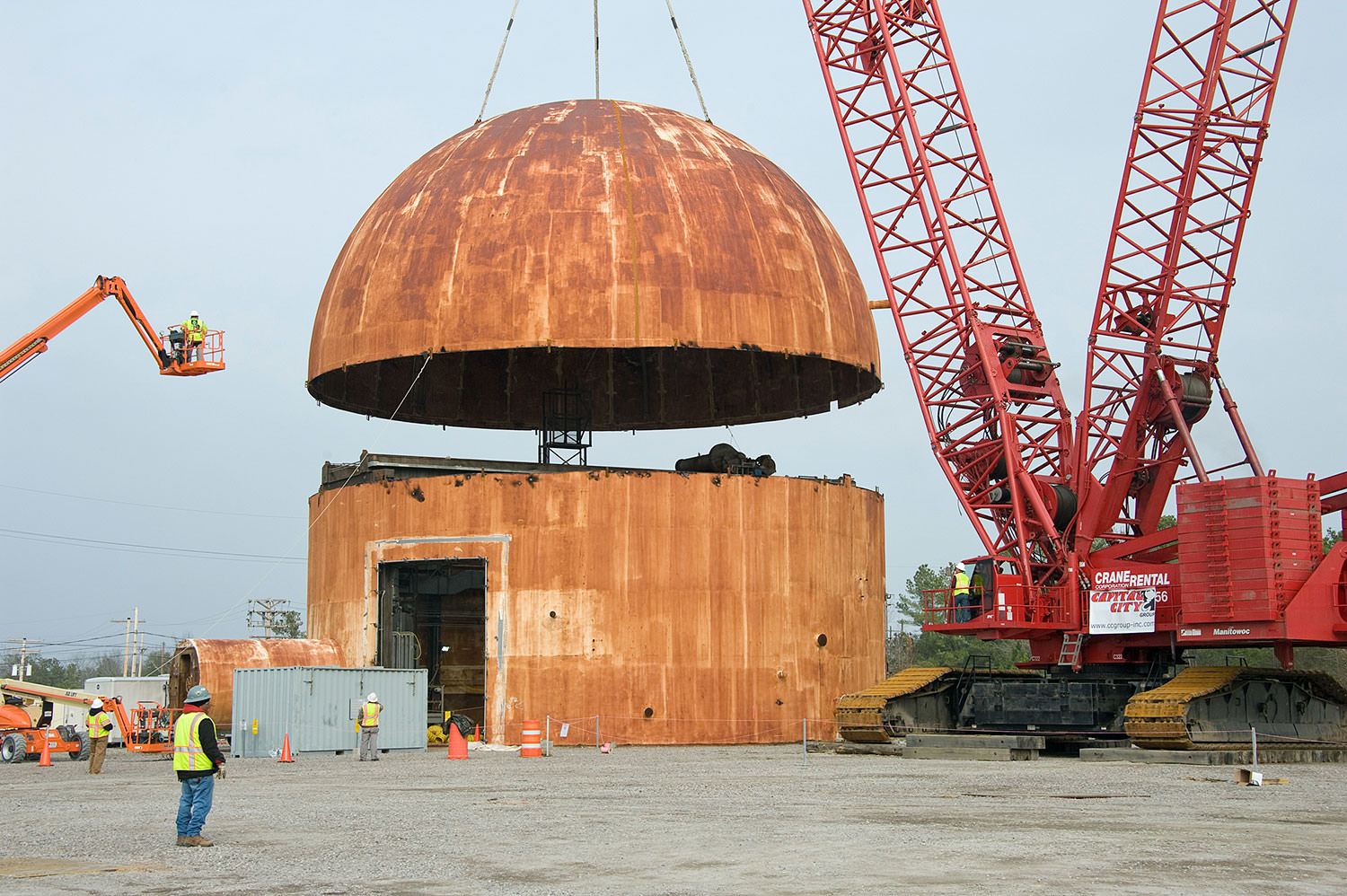




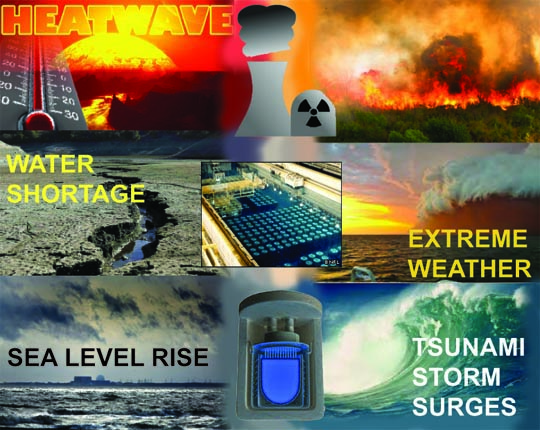

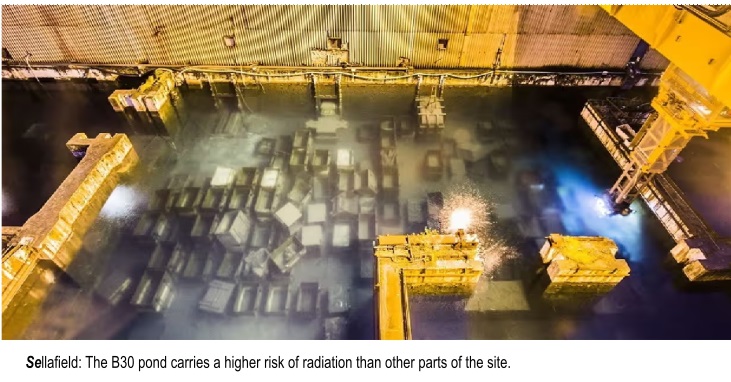


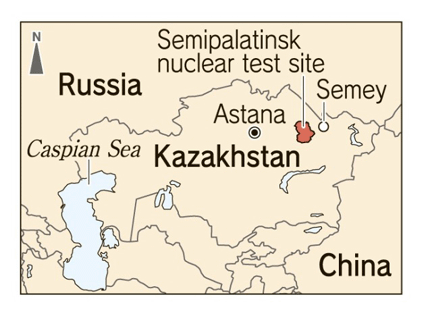
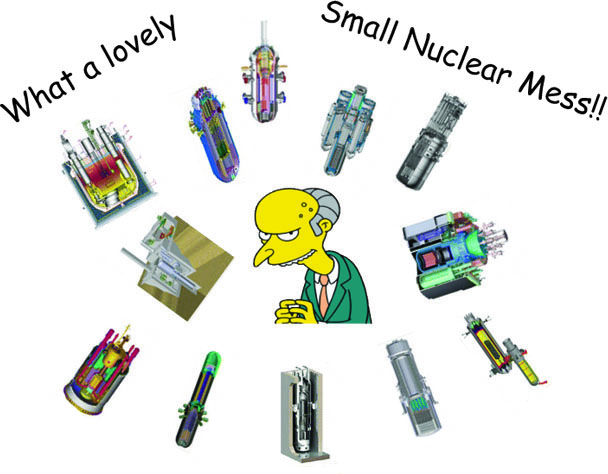






 nuclear-news