During a research trip to Puerto Rico, ecologist James Porter took samples from underwater nuclear bomb target USS Killen, expecting to find evidence of radioactive matter – instead he found a link to cancer. Data revealed that the closer corals and marine life were to unexploded bombs from the World War II vessel and the surrounding target range, the higher the rates of carcinogenic materials.
“Unexploded bombs are in the ocean for a variety of reasons – some were duds that did not explode, others were dumped in the ocean as a means of disposal,” said Porter. “And we now know that these munitions are leaking cancer-causing materials and endangering sea life.”
Data has been gathered since 1999 on the eastern end of the Isla de Vieques, Puerto Rico – a land and sea area that was used as a naval gunnery and bombing range from 1943-2003. Research revealed that marine life including reef-building corals, feather duster worms and sea urchins closest to the bomb and bomb fragments had the highest levels of toxicity. In fact, carcinogenic materials were found in concentrations up to 100,000 times over established safe limits. This danger zone covered a span of up to two meters from the bomb and its fragments.
According to research conducted in Vieques, residents here have a 23% higher cancer rate than do Puerto Rican mainlanders. Porter said a future step will be “to determine the link from unexploded munitions to marine life to the dinner plate.”….. https://phys.org/news/2009-02-link-unexploded-munitions-oceans-cancer-causing.html
“Why Are We Worried? – about decommissioning The San Onofre nuclear power plant ?
Dr. EDWARDS RESPONSE
Good question. If nuclear power were just generating electricity and nothing else, it would be safe. But it also mass-produces deadly radioactive poisons that were never found in nature before the nuclear age began, just 85 years ago.
For instance, nuclear fuel can be safely handled before it goes into the reactor, but after it comes out, it is millions of times more radioactive — and it will kill any nearby human being in a matter of seconds by means of an enormous blast of gamma radiation.
What makes the used fuel suddenly so dangerous? Well, inside the fuel, there are literally hundreds of brand new varieties of radioactive elements that are created by the splitting of uranium atoms – for example, iodine-131, cesium-137, strontium-90. These are radioactive varieties of non-radioactive elements that exist in nature all around us. They are human made radioactive poisons They’re like evil twins.
For example, ordinary table salt has a little bit of iodine added to it. It’s not radioactive. The iodine goes to the thyroid gland and helps to prevent a terrible disfiguring disease called goiter. Well, nuclear plants produce radioactive iodine. It also goes to the thyroid gland and causes cancer. 6000 children in Belarus had to have their thyroid glands surgically removed because of radioactive iodine from the Chernobyl nuclear accident of 1986, in Ukraine.
Meanwhile, in northern England and Wales, for 30 years after the Chernobyl disaster, sheep farmers could not sell their meat for human consumption when it was contaminated with radioactive cesium. To this day, hunters in Germany and Austria who kill a wild boar cannot eat the meat because of radioactive cesium contamination from Chernobyl. It’s in the soil.
You know, everything is made up of atoms. The only difference is that a radioactive atom will explode. It’s called an “atomic disintegration”. Radioactive atoms are like little time bombs. If they explode inside you, they damage living cells, especially DNA molecules. When DNA is damaged, it may make things grow in an unnatural way. Radiation-damaged cells can and do develop into cancers of all kinds.
Meanwhile, in northern England and Wales, for 30 years after the Chernobyl disaster, sheep farmers could not sell their meat for human consumption when it was contaminated with radioactive cesium. To this day, hunters in Germany and Austria who kill a wild boar cannot eat the meat because of radioactive cesium contamination from Chernobyl. It’s in the soil.
You know, everything is made up of atoms. The only difference is that a radioactive atom will explode. It’s called an “atomic disintegration”. Radioactive atoms are like little time bombs. If they explode inside you, they damage living cells, especially DNA molecules. When DNA is damaged, it may make things grow in an unnatural way. Radiation-damaged cells can and do develop into cancers of all kinds.
So radioactive wastes remain dangerous for millions of years. They are the most toxic wastes ever produced by any industry, ever. These poisons are essentially indestructible. Countless billions of dollars are planned to be spent to keep these materials out of the food we eat, the water we drink, and the air we breathe. At Hanford, in Washington State, the radioactive clean-up is estimated to cost more than $300 billion according to the US General Accounting Office. By building more reactors, we are just adding to the burden.
In reality, the ultimate products of a nuclear reactor are radioactive wastes and plutonium which remain dangerous for millions of year. The electricity is just a little blip on the screen, a short-term benefit for just a few decades. The radioactive legacy lasts forever………………………………………………………………………………. ———–
It was early in the day, but already hot. As she wiped sweat from her brow, Chieko Kiriake searched for some shade. As she did so, there was a blinding light – it was like nothing the 15-year-old had ever experienced. It was 08:15 on 6 August 1945.
“It felt like the sun had fallen – and I grew dizzy,” she recalls.
The United States had just dropped an atomic bomb on Chieko’s home city of Hiroshima – the first time a nuclear weapon had ever been used in warfare. While Germany had surrendered in Europe, allied forces fighting in World War Two were still at war with Japan.
Chieko was a student, but like many older pupils, had been sent out to work in the factories during the war. She staggered to her school, carrying an injured friend on her back. Many of the students had been badly burnt. She rubbed old oil, found in the home economics classroom, onto their wounds.
“That was the only treatment we could give them. They died one after the next,” says Chieko.
“Us older students who survived were instructed by our teachers to dig a hole in the playground and I cremated [my classmates] with my own hands. I felt so awful for them.”
Chieko is now 94 years old. It is almost 80 years since the atomic bombs were dropped on Hiroshima and Nagasaki and time is running out for the surviving victims – known as hibakusha in Japan – to tell their stories.
Many have lived with health problems, lost loved ones and been discriminated against because of the atomic attack. Now, they are sharing their experiences for a BBC Two film, documenting the past so it can act as a warning for the future
After the sorrow, new life started to return to her city, says Chieko.
“People said the grass wouldn’t grow for 75 years,” she says, “but by the spring of the next year, the sparrows returned.”
In her lifetime, Chieko says she has been close to death many times but has come to believe she has been kept alive by the power of something great.
The majority of hibakusha alive today were children at the time of the bombings. As the hibakusha – which translates literally as “bomb-affected-people” – have grown older, global conflicts have intensified. To them, the risk of a nuclear escalation feels more real than ever.
“My body trembles and tears overflow,” says 86-year-old Michiko Kodama when she thinks about conflicts around the world today – such as the Russian invasion of Ukraine and the Israel-Gaza war.
“We must not allow the hell of the atomic bombing to be recreated. I feel a sense of crisis.”
Michiko is a vocal campaigner for nuclear disarmament and says she speaks out so the voices of those who have died can be heard – and the testimonies passed on to the next generations.
“I think it is important to hear first-hand accounts of hibakusha who experienced the direct bombing,” she says.
Michiko had been at school – aged seven – when the bomb was dropped on Hiroshima.
“Through the windows of my classroom, there was an intense light speeding towards us. It was yellow, orange, silver.”
She describes how the windows shattered and splintered across the classroom – the debris spraying everywhere “impaling the walls, desk, chairs”.
“The ceiling came crashing down. So I hid my body under the desk.”
After the blast, Michiko looked around the devastated room. In every direction she could see hands and legs trapped.
“I crawled from the classroom to the corridor and my friends were saying, ‘Help me’.”
When her father came to collect her, he carried her home on his back.
Black rain, “like mud”, fell from the sky, says Michiko. It was a mixture of radioactive material and residue from the explosion.
She has never been able to forget the journey home.
“It was a scene from hell,” says Michiko. “The people who were escaping towards us, most of their clothes had completely burned away and their flesh was melting.”
She recalls seeing one girl – all alone – about the same age as her. She was badly burnt.
“But her eyes were wide open,” says Michiko. “That girl’s eyes, they pierce me still. I can’t forget her. Even though 78 years have passed, she is seared into my mind and soul.”
Michiko wouldn’t be alive today if her family had remained in their old home. It was only 350m (0.21 miles) from the spot where the bomb exploded. About 20 days before, her family had moved house, just a few kilometres away – but that saved her life.
Estimates put the number of lost lives in Hiroshima, by the end of 1945, at about 140,000.
In Nagasaki, which was bombed by the US three days later, at least 74,000 were killed.
Sueichi Kido lived just 2km (1.24 miles) from the epicentre of the Nagasaki blast. Aged five at the time, he suffered burns to part of his face. His mother, who received more serious injuries, had protected him from the full impact of the blast.
“We hibakusha have never given up on our mission of preventing the creation of any more hibakusha,” says Sueichi, who is now 83 and recently travelled to New York to give a speech at the United Nations to warn of the dangers of nuclear weapons.
When he woke up after fainting from the impact of the blast, the first thing he remembers seeing was a red oil can. For years he thought it was that oil can that had caused the explosion and surrounding devastation.
His parents didn’t correct him, choosing to shield him from the fact it had been a nuclear attack – but whenever he mentioned it, they would cry. Not all injuries were instantly visible. In the weeks and months after the blast, many people in both cities began to show symptoms of radiation poisoning – and there were increased levels of leukaemia and cancer.
For years, survivors have faced discrimination in society, particularly when it came to finding a partner.
“‘We do not want hibakusha blood to enter our family line,’ I was told,” says Michiko.
But later, she did marry and had two children.
She lost her mother, father and brothers to cancer. Her daughter died from the disease in 2011.
“I feel lonely, angry and scared, and I wonder if it may be my turn next,” she says.
Another bomb survivor, Kiyomi Iguro, was 19 when the bomb struck Nagasaki. She describes marrying into a distant relative’s family and having a miscarriage – which her mother-in-law attributed to the atomic bomb.
“‘Your future is scary.’ That’s what she told me.”
Kiyomi says she was instructed not to tell her neighbours that she had experienced the atomic bomb.
Since being interviewed for the documentary, Kiyomi has sadly died.
But, until she was 98, she would visit the Peace Park in Nagasaki and ring the bell at 11:02 – the time the bomb hit the city – to wish for peace.
Sueichi went on to teach Japanese history at university. Knowing he was a hibakusha cast a shadow on his identity, he says. But then he realised he was not a normal human being and felt a duty to speak out to save humankind.
“A sense that I was a special person was born in me,” says Sueichi.
It is something the hibakusha all feel that they share – an enduring determination to ensure the past never becomes the present.
Atomic People will be broadcast on Wednesday 31 July on BBC Two and BBC iPlaye
U.S. support for Israel’s genocide against Palestine is rooted not only in campaign financing but other factors, including a rigid ideology stuck in the shadow of World War II, writes Joe Lauria.
America as ‘Savior,’ Israel as ‘Victim’
Updated to include quote from Jared Kushner and mention of U.S. defense contractors.
The world-historical crisis in Gaza might in the long-term bring about radical change in both the U.S. and Israel, but in the interim the greatest crimes the two nations have jointly taken part in has stiffened their defenses against unprecedented criticism.
The fear of blasting Israel has been breached. The taboo broken. Tel Aviv and Washington have never faced this before. As both are settler nations, having wiped out natives across the land, they are circling their wagons on a new frontier. They can only respond with the most profound denial and viciousness.
Israeli Prime Minister Benjamin Netanyahu, who addressed a joint-session of Congress on Wednesday as the subject of a requested arrest warrant at the International Criminal Court, has demanded the United States shield Israel from criticism while continuing to arm and support its genocide — and the U.S. has answered his call.
When the Biden administration withheld a symbolic shipment of weapons to Israel, Netanyahu counted on Congress to draft a law that would withhold funding for the State Dept. and the Pentagon if President Joe Biden did not give Netanyahu the weapons he needs to “finish the job” in Gaza.
Biden’s withholding of the shipment was designed to fool U.S. voters critical of his Gaza policy. But the assault on Rafah — despite Biden’s supposed red line — continues, and so will unconditional U.S. support for Israel. The question is why.
Why will U.S. politicians risk losing elections to continue supporting the most unimaginable crimes? The answer lies beyond elections and individual politicians.
Continued support for Israel in the midst of genocide threatens the very legitimacy of U.S. post-war rule as the world turns increasingly against the U.S. and Israel.
Despite this, what makes U.S. leaders so enthralled to a foreign nation and leader who has angered several U.S. presidents?
For instance, why did U.S. leaders, essentially on the say-so of that foreign leader, turn against their own university students on U.S. soil peacefully protesting both Israel’s genocide and Washington’s complicity in it?
In a video address to America delivered April 24 in his American-accented English, Netanyahu ordered that anti-genocide protests on U.S. campuses be stopped. And they have been. It is worth quoting his entire remarks. He said:
“What’s happening on American college campuses is horrific. Anti-semitic mobs have taken over leading universities. They call for the annihilation of Israel. They attack Jewish students. They attack Jewish faculty.
This is reminiscent of what happened in German universities in the 1930s. It is unconscionable. It has to be stopped. It has to be condemned and condemned unequivocally.
But that’s not what happened. The response of several university presidents was shameful. Now fortunately, state, local, federal officials, many of them have responded differently but there has to be more. More has to be done.
It has to be done not only because they attack Israel, that’s bad enough. Not only because they want to kill Jews wherever they are. That’s bad enough. It’s also, when you listen to them, it’s also because they say, not only death to Israel, death to the Jews, but death to America.
And this tells us that there is an anti-semitic surge here that has terrible consequences. We see this exponential rise of anti-semitism throughout America and throughout Western societies as Israel tries to defend itself against genocidal terrorists who hide behind civilians.
Yet it is Israel that is falsely accused of genocide. Israel that is falsely accused of starvation and all sundry war crimes. It’s all one big libel. But that’s not new.
We have seen in history that anti-Semitic attacks were always preceded by vilification and slander. Lies that were cast against the Jewish people that are unbelievable, yet people believe them.
And what is important now, is for all of us, all of us who are interested and cherish our values and our civilization to stand up together and to say: enough is enough.
We have to stop anti-Semitism because anti-Semitism is the canary in the coal mine. It always precedes larger conflagrations that engulf the entire world.
So I ask all of you, Jews and non-Jews alike, who concerned with our common future and our common values, to do one thing: Stand up, speak up, be counted. Stop anti-Semitism now.”
Brazen
Netanyahu uttered a dozen lies in that 339-word message, which got 18.4 million views on X. There are five lies in the first five sentences alone:
1). the students are not “anti-semitic mobs” but protestors, many Jews, against genocide; 2.) they are calling for a free and independent Palestine, not the “annihilation” of Israel; 3.) they are not attacking Jewish students, but Israel’s war; 4). they are not attacking Jewish faculty, unless calling out Israel’s crimes is considered an attack on Jews; and 5). Jews were banned from German universities in the 1930s, making such a comparison to the U.S. today a ludicrous lie.
And what exactly does Netanyahu mean by the “annihilation” of Israel, a phrase he repeatedly utters?
If Israel granted full citizenship rights to Palestinians in Israel, Gaza and the West Bank, would that mean the “annihilation” of Israel, or the annihilation of apartheid in Israel? The real annihilation going on is that of Gaza by Israel.
More outrageous was Netanyahu’s lie that American student protestors “want to kill Jews wherever they are” and want “death” to Israel and America. He lies about a “surge” of anti-Semitism. In a clinical case of projection, Netanyahu said Israel is “falsely accused of genocide” of “starvation” and of “all sundry war crimes.”
In Lock-Step
Instead of outrage at this litany of obvious falsehoods, U.S. officials and media echoed Netanyahu’s words. The White House, Congress, newspapers, universities and police responded in lock-step, criminalizing students in their own their country for opposing an active genocide.
At the Capitol for Holocaust Remembrance Day on May 7, Biden framed the Oct. 7 attack as purely motivated by hatred of Jews, whitewashing the entire 80-year history of ethnic cleansing and occupation of Palestinians by Israel. ………………………………………………………………
……………………………………………….Obedient Media
The U.S. media has long told the story almost exclusively from Israel’s point of view. That has conditioned the U.S. public, and its political leaders, to give unconditional support for Israel and expect ostracization for criticizing it.
CNN’s chief political correspondent, Dana Bash, for instance, editorialized on a news show a week after Netanyahu spoke about U.S. campus protests that the students had “lost the plot.” …………………………………………………..
as Chicago University professor John Mearsheimer asks, was there an anti-Semitism problem on American campuses before Israel’s attack on Gaza?
Could Have Stopped It
Biden could have stopped the genocide immediately by withholding all weapons, military aid and diplomatic cover — which any decent man with such power would have done. Instead Biden engaged in public relations while the Gazan public was decimated, pretending to oppose Netanyahu and caring for Palestinian civilians.
Likewise Biden’s State Department tried to play it both ways: feinting to the American public that it was ready to criticize Israel for its mistreatment of civilians, while taking no action. The State Department even said it had evidence Israel may have broken international humanitarian law, but not enough to cut off arms shipments.
“The Biden administration believes that Israel has most likely violated international standards in failing to protect civilians in Gaza but has not found specific instances that would justify the withholding of military aid, the State Department told Congress … the report — which seemed at odds with itself in places — said the U.S. had no hard proof of Israeli violations.”
For Netanyahu’s and members of his cabinet who have expressed genocidal intent, this is the chance they have been waiting for, to fulfill Israeli Founding Father David Ben Gurion’s promise of a Greater Israel. The war to wipe out Hamas is a cover for wiping out the Palestinians from Gaza.
Whatever Biden or the State Department says, Israel will continue with its genocidal urban renewal plan in Gaza by bombing buildings with people still living in them with a view to replacing them with Israeli and Western-owned beachfront property (with an Israeli gas pipeline through it). It is evidently a plan Biden and Blinken, and presumably Kamala Harris and Donald Trump, agree with. (Trump’s son-in-law, Jared Kushner, whose family are close Netanyahu friends, said, ““Gaza’s waterfront property could be very valuable … It’s a little bit of an unfortunate situation there, but from Israel’s perspective I would do my best to move the people out and then clean it up.”)
According to the Jewish News Syndicate:
“Israeli National Security Minister Itamar Ben-Gvir declared at the event [on May 14] that the government should encourage voluntary emigration of Palestinians from the Strip.
‘Two things must be done: One, return to Gaza now, return home, return to our holy land. And two: encouraging emigration. To encourage the voluntary departure of the residents of Gaza. It’s moral, it’s rational, it’s right, it’s the truth. This is the Torah and this is the only way—yes, it is also humanitarian,’ the minister told attendees.”
In response to Biden’s “pause” in shipments, Netanyahu said Israel would fight with its “fingernails” if it needed to in Rafah.
Angered US Presidents
Several American presidents have in rare instances stood up to Israel. President Dwight D. Eisenhower threatened sanctions against Israel over the 1956 Suez Crisis to get Tel Aviv, Paris and London to end its military operation against Egypt and for Israel to withdraw from the Sinai Peninsula.
Ronald Reagan in 1983 withheld F16s to Israel until it withdrew from Lebanon. “While these forces are in the position of occupying another country that now has asked them to leave, we are forbidden by law to release those planes,’ he said.
And in 1992, George H.W. Bush threatened to withhold a $10 billion loan guarantee if Israel continued building settlements in the occupied West Bank and Gaza, according to The Washington Post. And yet Israel always seems to get its way.
In his review of Netanyahu’s memoir Bibi: My Story, As’ad AbuKhalil wrote last year in Consortium News:
“Netanyahu’s analysis of U.S.-Israeli relations is simple: no matter what Israel does, and no matter how many wars and invasions it launches, the ‘alliance with the U.S. will take care of itself.’ He correctly believes that U.S. presidents will stand by Israel no matter what … ” (p. 84).
Despite this, we learn from the book that a succession of U.S. presidents disliked Netanyahu but would not stand up to him as previous presidents had to earlier prime ministers………………………………………………………….
‘America Can Be Easily Moved’
Ultimate obedience to Netanyahu in the U.S. brings to mind a video of him speaking to an Israeli settler family in Hebrew in 2001 about how easy it is to manipulate the Americans.
He says, “With the U.S., I know how they are. America is a thing you can easily maneuver and move in the right direction. Even if they say something, so what? Eighty percent of Americans support us.”
About the Palestinians, Netanyahu says: “The main thing is, first of all, to strike them, not once but several times, so painfully, that the price they pay will be unbearable. So far the price-tag is not unbearable.”……………………………..
Why?
Why then do American politicians, universities and media slavishly follow whatever Israel demands? There is more than one answer:
1. Money: AIPAC’s campaign financing and defense contracts;
2. Lingering guilt over the holocaust and fear of being labeled an anti-semite;
3. A natural, historical connection between settler, colonial nations founded on ethnic cleansing and genocide;
4. Power-sharing in the Middle East with overlapping regional and international empires;
5. Israeli intelligence possessing kompromat on U.S. politicians.
6. Keeping a World War II ideology alive to justify global and local supremacy.
Money
The answer most often given to the question is campaign contributions for politicians, who want to avoid being “primaried” by Israel Lobby money. The American–Israel Public Affairs Committee (AIPAC) raises more than $100 million a year, which it spends on lobbying and campaign contributions to U.S. political candidates.
Universities are also dependent on wealthy donors, many who demand total loyalty to Israel, which goes a long way to explaining why U.S. universities asked police to break up peaceful, anti-genocide protests on their campus.
And of course American defense contractors stand to gain mightily by continued Israeli bombardment of Gaza.
But it isn’t only about money.
Holocaust
Western governments retain inherited guilt for their deplorable behavior during the Second World War regarding the Holocaust. Germany, naturally, is at the top of the list of the still guilty parties, and is the second largest arms supplier to Israel after the United States.
This residual guilt has created a condition in which the descendants of the victims are still immune to criticism 80 years later in an almost inexhaustible supply of sympathy that Israeli leaders clearly exploit. ……………………………………………………………………..
There is deep ignorance in America about the foundation of Israel, exploded by some Israeli historians, especially by Ilan Pappé, whose book, The Ethnic Cleansing of Palestine, documented the intent of Israel’s founders to drive more than 700,000 of the indigenous population off their land into neighboring countries, and killing hundreds of thousands more in an unbroken process now playing out in Gaza. ………………………………………..
“As early as 1937, Ben-Gurion wrote that the ‘boundaries of the Zionist aspirations are the concern of the Jewish people and no external factor will be able to limit them.’
Ben-Gurion also hoped for the expansion of ‘Zionist aspirations’ to Israel’s ‘biblical borders’ (which stretch all the way to Iraq). There is no mention of or reference to the Indigenous population in this vision.”………………………………………….
The launch of Israel and the Greater Israel project coincided with the beginning of the post-war U.S. global empire, which overlapped in the Middle East with Israel’s burgeoning regional empire. Israel and its regional ambitions became a natural footprint for U.S. dominance in the region: namely the subjugation of Arab peoples and rulers.
Thus for the continuance of U.S. empire and all the benefits it accrues to U.S. rulers in the face of growing worldwide opposition, it is natural for Washington to continue supporting Israeli expansionism — no matter the horrendous human cost.
Blackmail
One cannot easily dismiss talk of Israeli intelligence gathering blackmail dirt on American politicians to keep them in line beyond campaign bribes. According to Ari Ben-Menashe, a former Israeli military intelligence official, such blackmail is a part of Israeli tactics. For instance, he told Consortium News‘ CN Live! in 2020 that the child sex trafficker Jeffrey Epstein was collecting such kompromat on powerful Americans.
Mired in WWII
Part of the ideology driving the America-Israel dominance regionally and globally is mired in the shadow of the Second World War: the delusion that the U.S. is still the world’s savior and that Jews are still active victims of history. It’s as if 80 years have not passed.
Jews were certainly among the war’s greatest victims, but America was not the sole or even the chief savior, given the outsized role of the Soviet Union in destroying the Nazis.
After the war, the United States was left with troops around the globe, in areas of great natural resources in a devastated world, whose devastation didn’t touch the American mainland.
A worldwide empire was the result. U.S. leaders have been dedicated to expanding and maintaining it ever since by installing and propping up governments that serve U.S. economic and strategic interests and removing those that don’t. This is done through electoral interference, coups and invasions that have killed millions of innocent lives in Southeast Asia, the Middle East, Latin America and elsewhere.
To maintain a kind of moral veneer to justify America’s global marauding as “spreading democracy” a connection to the moral war against fascism needs to be maintained. So World War II is invoked constantly by American leaders when embarking on new overseas adventures. ……………………………………………
How cynical is it for descendants of survivors of the Second World War genocide to invoke the Holocaust to perpetrate a genocide of their own?
This confusion still clearly pervades Germany today. In their guilt over their genocide of the Jews and their determination never to let it happen again they are stuck in the World War II past and cannot accept that Israel can possibly be the perpetrators of genocide 80 years later.
So protests against Israeli actions in Germany are seen as protests against Jews and have to be stopped, as the police did in May at Humboldt University in Berlin in the very plaza where Josef Goebbels led the Nazi burning of books.
German police shut down an academic conference about Gaza that month in Berlin. In their misguided fervor to stop another genocide the Germans are supporting one, sending more arms to perpetrate the massacres in Gaza than any nation but the United States. …………………………………….. more https://consortiumnews.com/2024/07/24/netanyahu-commands-us-obeys/
From Hiroshima to Fukushima to You, Dale Dewar, 4 July 2024
“……………………………………………………………………………………………………. Humans have lived with natural radiation for thousands of years – has it caused damage?
There are two distinct examples of natural radiation causing cancer: radon, largely in basements, and skin cancers from cosmic rays.
Cosmic rays were discovered in 1912 by an Austrian physicist, Victor Hess. He went up in a balloon and measured the ionizing radiation as he ascended and found that it was three times higher at 5300 meters elevation than at ground. Others discovered that cosmic rays were largely made up of protons (89%) and alpha particles (10%).
Alpha particles are stopped by skin, beta particles pass just through the skin and x-rays and gamma rays pass completely through a human body. This would make x-ray and gamma rays seem to be the most dangerous as they leave a trail of ions in their passage but if the particles become internal (by eating or breathing) they are up to 20 times more dangerous.
When any of these particles or rays interact with anything including biological matter, they cause ions. Sometimes the damage can be repaired, sometimes it cannot, and the cell dies or replicates the damage. Sometimes the damage affects the very process of replication itself.
This is what happens when a tumour is formed. A cell “goes wild” and doesn’t know when to turn off its growth.
If radioactive dust is inspired or eaten, the release of radioactivity occurs in the body. If it is radium dust, for example, the release of radioactivity continues for as long as the tiny bit of radium is present or 16,400 years (the half-life of radium x 10). The skeletal remains of the “radium girls” will still be radioactive for 16 millennia!
In 1927, an American, Hermann Muller was able to show the effect of radiation (he used x-rays) on genetic material. He had no doubt that it produced mutations in succeeding generations and remained a staunch defender of radiation protection measures and was opposed to atmospheric nuclear tests[iv].
To answer the question, how dangerous is the radiation that we call “background” radiation, the radiation that we cannot avoid? Some European researchers compared the incidence of cancers in children who lived in areas with low background radiation (0.70 mSv) to those who lived in areas with higher background radiation (2.3 mSv). Every tumour marker studied was higher in the children with the higher background radiation.[v]
Why do we know so little about radiation’s danger to health?
The nuclear industry has a singular interest in keeping populations ignorant. It continues to market nuclear energy as “safe” when no nuclear power plant can be operated without release of radiation in the form of tritiated hydrogen gas. By the time that Japan has released all its tritiated water (from Fukushima) into the Pacific Ocean, there will be no “unexposed” population with which to compare cancer rates.
In 1962 Dr. John Gofman was recruited by the US Atomic Energy Commission to head a biomedical unit. He was told that “the AEC was on the hot seat because a series [of atmospheric atomic bomb tests] had clobbered the Utah milkshed[vi]with radioiodine. And they have been getting a lot of flak. They think that maybe if we had a biology group working with the weaponeers at Livermore[vii], such things could be averted.”
The recruitment came with a very generous budget – 3 million dollars (almost three trillion dollars in 2020 dollars). John surrounded himself with scientists and technicians along with an outstanding colleague and Nobel laureate, Arthur Tamplin.
His first task as the chair of the biomedical unit was to squash a research paper[viii] by Dr. Harold Knapp that concluded a one hundred fold increase in the amount of radiation received from fallout by the people who lived in the downwind areas. Gofman and five other experts reviewed the data, asked technical questions and concluded that the research was scientifically sound and ought to be published.
The Atomic Energy Commission (AEC) balked,” We’ve told these people [in the fallout zone] all along that it’s safe and we can’t change our story now.”
Gofman’s committee remained firm.
It was clear that Gofman was not a lapdog hireling. When his department could not support the “Plowshares Project”[ix], the use of atomic bombs for “good”, they became known as the “enemy within”. Gofman thought that they were being teased and it was all in fun but this was the beginning of his demise as a go-to person for the AEC.
In 1969, Dr. Ernest Sternglass published research papers claiming that up to three hundred thousand children might have died from radioactive fallout from atmospheric bomb testing. It received popular coverage in Esquire under the title “The Death of all Children”. John’s colleague Arthur Tamplin re-calculated the data, and his result was an estimation of four thousand. Unfortunately, the AEC was still deeply displeased. The only answer they wanted was zero, that is, no children affected.
The Atomic Energy Commission had been promoting a “safe threshold” of radiation below which no health effects could be detected. A safe threshold made it possible to expose servicemen to atomic bomb tests, for workers in nuclear power plants to receive yearly doses of radiation and for people living near nuclear power plants to receive regular discharges of radiation. Drs Gofman and Tamplin estimated that the cancer risk from radiation was twenty times as bad as the most pessimistic estimate previously made.[x] Not only did they conclude that the risk was high, they also concluded that there was no safe amount of radiation and that it could be assumed that there was some risk all the way down to zero.” They presented their research at the Institute for Electrical Electronic Engineers (IEEE) meeting in October, 1969. A month later, John was invited to give the same paper to hearings convened by Senator Muskie.
Their research was picked up by the Washington Press. Their bosses in the AEC made a decision and started rumors. John heard that he “didn’t care about cancer at all and that he was trying to undermine national defense”[xi]. (He had already resigned his directorship of the laboratory but remained as a research associate.) Dr. Tamplin’s research staff was fired.
When John was called before the Joint Committee on Atomic Energy, a Congressional committee, he and Arthur reviewed all the data they could find. They concluded that “as a matter of fact, we’d underestimated the hazard of radiation when we’d given the Muskie testimony”. They wrote fourteen more research papers. John’s main research was now into chromosomes and their response to radiation. He applied elsewhere for funding to continue, including the Cancer Society but research funding had dried up. The AEC restructured its biomedical unit; it had discovered that doctors and health researchers were hard to control.
At the same time, two scientists with the Union of Concerned Scientists revealed that AEC didn’t know if the cooling system for a type of reactor worked. The credibility held by the AEC became questioable.
The government abolished it and created two new agencies: ERDA (Energy Research and Development Agency) and NRC (Nuclear Regulatory Commission), the former to oversee research and the latter to regulate the industry.
Drs John Gofman, Arthur Tamblin, and Harold Knapp were harassed, ridiculed, and sidelined because their research showed that radiation affected health. The industry didn’t stop there. Drs. Linus Pauling, Alice Stewart, Ernest Sternglass and Hermann Muller suffered similar fates. The US desire for nuclear arms required nuclear power plants. Nuclear radiation had to be safe………………………………………………………………………………………………………………………… https://ionizingradiationandyou.blogspot.com/
From Hiroshima to Fukushima to You, Dale Dewar, 4 July 2024 “…………………………………………………………………………………………………………. Are we still questioning the safety of ionizing radiation? Nuclear industry leaders are delighted to remind me that physicians are the leading causes of the radioactive “burden” that most people carry.
Inadvertent research in medicine
What is less well known is that the medical profession has inadvertently conducted research on radioactivity and, after the fact of the exposures, discovered correlations of injury with radioactivity. Only a few are listed here:
1. Radiation-Induced Meningiomas:
In the early 1900’s until after the discovery of topical anti-fungals[2] in the late 1950’s, the treatment of choice for fungal or yeast infections of the scalp was irradiation, especially for Jewish children planning to immigrate to Isreal. The technique exposed the scalp to 5 – 8 Gy to the scalp, and 1.4 – 1.5 Gy to the surface of the brain. Initially it seemed like a safe thing to do.
But then reports of somnolence (sleepiness) lasting from 4 – 14 days in 30 of 1100 children occurred. By the 1930’s side effects included atrophic changes to the scalp, epilepsy, hemiparesis, emotional changes and dilatation of the brain’s ventricles.
The absolute death knell to the practice occurred in 1966 when University Medical Center (New York) published a study showing a dramatic increase in cancers among those irradiated. An increase rate of psychiatric hospitalizations was also noted.
Studies continue to roll in – the latent phase for meningioma is approximately 30 years but metastatic tumours may take over 40 years to develop. No one irradiates scalps for ringworm now.[xvii]
2. Treatment of tuberculosis using chest fluoroscopy:
Between 1925 and 1954, one of the therapies for tuberculosis was collapse of the lung followed by x-Ray fluoroscopy. More than 2500 of these patients were followed for 30 years. Increases in the rate of cancer of the breast was not seen until about 10 to 15 years after first exposure[3]. There were 147 breast cancers in the treated cohort compared to 113.6 in tuberculosis patients that were not treated with fluoroscopy. The researchers concluded that younger women were more likely to develop cancer and that the risk of developing cancer remained high for their entire lives.
The fluoroscopic and x-ray doses were known. Another finding from this study was that fractionated doses had the same risk of developing cancer as the single total dose.[xviii]
3. Irradiation of the thymus gland and subsequent breast cancer
Young children normally have large thymus glands. With the advent of chest x-rays in the 1920’s, this large thymus was viewed with suspicion. Pediatricians feared that a large thymus could lead to respiratory problems. Until 1953[xix]irradiation of the thymus was done to decrease its size.
The rate of breast cancer among woman who were so treated as children was three times that of those that were not treated. The cancers occurred when women were in their early 30’s, more than 25 years after irradiation.
Since the amount of radiation given to the thymus was quite low, researchers have become concerned about the rising tendency for CT scans of the chest either for diagnosis or treatment. Their results “underscored the importance of limiting radiation exposure in the youngest children as much as possible.”
4. CT scans of children’s heads following injuries.
Like many physicians wishing to comfort parents whose child had a concussion, I was pleased to be able to refer the child to a CT scanner when one became available in 1996. We all slept better at night thinking that a normal CT meant that the kid’s brain was ok.
Maybe we should not have.
A Canadian study of children receiving CTs to the head indicated that as few as four CT scans before the age of six could result in doubling the risk of leukemias, lymphomas and intracranial tumours starting about ten years later.[xx]
5, Secondary cancers resulting from radiation treatment for cancer
Until recently second primary cancers were neither given serious thought nor studied. Most patients receiving radiation did not live long enough, the 15 to 20 years after their treatment, to display the side effects of ionizing radiation.
One of the first studies on this population indicated that the number of second cancers caused by radiation was as high as one person in five.
There are many criticisms of this study not the least of which is that the size of their sample was small and, at ten years, the length of time for the development of solid cancers was short, but the researchers still concluded that “an effort toward a reduction in their incidence is mandatory. In parallel, radiation therapy philosophy must evolve, and the aim of treatment should be to deliver the minimal effective radiation therapy rather than the maximal tolerable dose.[xxi]
Arising from their work were estimations of dose associated with harm. They concluded that the incidence increased with the dose even though thyroid and breast cancers were observed following doses as low as 100 mGy and adults developed cancers following treatment doses as little 500 mGy. The risk of developing sarcoma (bone cancer) was 30.6 times higher for doses of more than 44 Gray than for doses of less than 15 Gray.
6. Side effects of ionizing radiation tracers and heart disease.
Research has shown that the lifetime risk of developing fatal cancer from the use of a radioactive tracer as in a PET or MIBI scan is 1 in 2000, in other words, it is lower than the lifetime risk of dying in a motor vehicle accident (1 in 108).[xxii]
However, when Canadian researchers focused on their 82,861 patients who had heart attacks, they found that 77% underwent at least one cardiac imaging or therapeutic procedure involving low-dose ionizing radiation. By comparing populations, they found that for every 10 mSv of radiation there was a 3% increase in the risk of age- and sex-adjusted cancer over a follow-up period of five years.
Because five year follow-up is very short for the development of cancers, this is an underestimate, probably by a large factor…………………………………………………………………….. https://ionizingradiationandyou.blogspot.com/
From Hiroshima to Fukushima to You, Dale Dewar, 4 July 2024 “…………………………………………………………………………………………………………….. That radioactive elements cause cancer is beyond doubt. Increasing their presence in our environment does increase the incidence of cancer. It seems that these elements may cause any number of other problems – auto-immune and cardiovascular diseases, ill-health and chronic tiredness, headaches and benign tumours all have suspicious links. Lowered resistance to bacterial and viral illnesses has been seen.
Funding to do the studies that extend over years is not available.
Even an accident as large as the Three Mile Nuclear Power plant accident received funding for only nine years. When studies done by Joseph Mancuso, Alice Stewart and Geoffry Knean on Hanford workers showed a health effect not only was their funding cut but demands were made that they release all their hard data to the National Research Council. (Mancuso lost his data but Stewart and Knean had taken most of the documentation home with them, to the UK.)
That radioactivity causes chromosomal defects in fruit flies is also not questioned. To show these effects, if they occur in humans, would require centuries.
The specific effects of some radioactive elements have been well studied:
Radon-222: Cancers caused by radon prompted the Canadian government to establish the Canadian National Radon Program using guidelines developed by the International Radiation Protection Association. Various public health offices believe that alpha radiation from radon causes up to 20% of Canadian lung cancers.
Radon is the main decay product of radium. It has a half-life of only 3.8 days so its decay chain is also of concern for health. One of its products is polonium-210, one of the most poisonous elements on earth. Are cancers blamed on radon really caused by polonium?
Radon has found some use as a tracer but, while found naturally, it is still considered part of uranium waste.
Uranium-238: This isotope of uranium is its most common. Forming 99.27% of natural uranium, it has a half-life of 4.5 billion years. It is the starting of a decay chain that includes radium, radon, polonium and ends with stable lead-210. This isotope, uranium-238, is popularly referred to as “depleted uranium” because its uranium-235 has been removed.
Uranium is a heavy metal and as such, its health effects resemble those of lead and mercury, kidney failure being the most common. It seems to have estrogen-mimicking properties and at least one chronic disease has found to be increased, systemic lupus erythematosus, among a cohort of uranium miners.
The Eldorado uranium miners study looked specifically for lung cancer and found a doubling effect – but was it due to powdered uranium or gaseous radon?
Uranium-235: This isotope is fissile, the isotope desired for nuclear bombs. “Enrichment” of uranium occurs to increase the percentage of U-235 and there are various percentages required for different tasks.
Most light water nuclear reactors require a concentration of 3 – 5% U-235 to operate, to reach criticality and produce the heat to boil water. It is anticipated that the proposed small modular reactors will require HALEU (High Assay Low Enriched) uranium which contains 19.5% uranium-235.
Aside from nuclear bombs and nuclear power plant fuel, uranium has no other functions. Uranium as an ore, refined to “yellow cake” is not very radioactive.
Radium-226: The most stable isotope of radium with a half-life of 1600 years is radium 226, itself a decay product of thorium-230 in the uranium-238 decay chain. Radium is considered the most radioactive element known. It emits alpha, beta and gamma radiation. Its glowing colour is the result of ionization of the air around it.
All 34 known isotopes are radioactive. It is found in nature.
Radium’s use has evolved from the dials of watches until the 1970’s and cancer treatments until the 1990’s when it was discarded in favour of less radioactive but still effective elements. It may have been the first element used in brachytherapy where the element is encapsulated and inserted inside a tumour. It is still used for prostate cancer that has spread to bones.
Radium is a relative of calcium and strontium. When it is in the blood, bones and muscles will absorb it and use it in place of calcium. In the bones and muscles, its radiation induces bone cancers, and cancers of the bone marrow (leukemias). Hence the dial workers and the industrialist developed bone cancers, osteosarcomas.
Strontium-90: Strontium (element 38) is found ubiquitously in radioactive fallout from nuclear bombs or nuclear power plants. It is a fission product of uranium.
Natural strontium is not radioactive, nor are its four isotopes. It belongs to the same family of elements as calcium and human biology treats them very similarly, strontium is scooped out of the blood to incorporate it into bones and muscles. It is believed to have a biophysical[4] half-life of 18 years. Because it is very close to blood-forming components in the bones, it is blamed for increases in leukemia, lymphomas and bone cancers. While in situ, it initially weakens bones.
Strontium-90 decays with a half-life of 29 years to yttrium-90 which also undergoes beta decay to zirconium-90 which is stable.
Strontium-90 has no commercial value and is considered entirely an environmental pollutant.
Iodine-131: Radioactive iodine therapy increases the risk of leukemia, stomach cancer and salivary gland cancer, according to the American Cancer Society[xxiii]. On March 27, 2011, Massachusetts Department of Public Health found I-131 in low concentration in rain water, likely originating from the Fukushima accident.
Iodine-127 is the only stable isotope of the element with 53 protons in its nucleus. Of the remaining 26 isotopes, iodine-131 is not only of greatest concern with respect to nuclear bomb testing fallout, nuclear power plant accidents and natural gas production, but of all fission-related radioisotopes, it has also found the greatest medical use. It has a half-life of about 8 days and emits an energetic electron, a beta particle. It is preferentially filtered out of the blood by the thyroid.
Because it is collected by the thyroid, it can be used in high doses to selectively kill hyperactive thyroid cells whether they are benign or malignant. Also, because it is collected by the thyroid, its action can be mitigated by taking normal oral iodine at the time of exposure.
Its short half-life means that it is an insignificant contributor to nuclear waste.
It decays to xenon-131 which is stable.
Tritium: All threehydrogen isotopes are gasses and can form water with oxygen. Hydrogen itself has one proton in its nucleus and one electron circling it. Deuterium is “heavy water” with one proton and one neutron in its nucleus. Tritium is radioactive with one proton and two neutrons in its nucleus.
While it is naturally formed by cosmic rays hitting hydrogen in the upper atmosphere, the bulk of today’s tritium is released from nuclear power plants. It is often characterized as a short-lived weakly radioactive radioisotope, but a half-life of 12.3 years is questionably “short” in human terms. The beta particle emitted by tritium is low energy but its presence inside human cells is a major concern.
Getting into human cells is pretty easy for a hydrogen isotope because, combined with oxygen, it forms tritiated water and water enters every cell of almost every biological being. It is very difficult to link specific exposures to cancers and chronic disease but using populations studies, researchers can link the health of populations around nuclear power plants with case-matched[5]populations that are not exposed to tritium releases from power plants.
Tritium has had commercial use as the energy source in radio luminescent lights for watches, gun sights, numerous instruments and tools, and even novelty items such as self-illuminating key chains[xxiv]. It is used in a medical and scientific setting as a radioactive tracer. The past use in exit signs was discontinued because of breakage.
Conclusion:
Does ionizing radiation cause cancer? Cancer seems to be at least one consequence of exposure. While it is difficult to determine whether a person has developed cancer because he/she worked in a uranium mine, had a high amount of radon in their home, got struck by cosmic rays, or had too much glyphosate or benzo(a)pyrene[6] in their diet, wherever the more difficult comparison of populations has been done, those affected by the higher ionizing radiation regardless of the element, show increased incidences of cancer.
We can say with certainty is that ionizing radiation causes ions. When It enters human cells, it can pass straight through or, like a cyclone, wreak havoc on the cell’s internal structure.
Ionizing radiation can break up chromosomes, the things in cells that tell the cell what it is. If it is a skin cell, the chromosome will tell the cell to make more skin cells. If the chromosome has been damaged, it may not be able to tell the cell how to make normal skin cells.
To say that ionizing radiation is safe is fraudulent.
What can you do to limit your exposure to ionizing radiation?
1. Whenever you or a child or someone under your care is asked to have an x-ray, ask the person ordering it how the x-ray result will change or otherwise affect treatment. Often the answer will be that they simply want to assess your progress. If you feel good (or better), you already know your progress.
2. Make sure that you are getting the right imaging for the problem you are facing. When a CT scan was suggested for one of my patients, I realized that he would be better served by an MRI which then revealed the small cyst in a tendon.
3. Don’t succumb to the doctor or other care provider’s “curiosity”. Ask questions.
My patient, call him “John”, told me this story. At 79 years of age, he had Chronic Myelogenous Lymphoma and was told by his specialist to have a biannual CT scan. He was feeling quite well.
He asked the doctor, “What are you looking for?” He was told that the physician was looking for “changes”. John already had one CT scan and hadn’t been told the results.
The specialist said that he hadn’t mentioned the previous CT scan because there wasn’t much to report. John thanked him and refused the new CT scan. He told the specialist he would return if his health changed.
4. There is almost no excuse for “routine x-rays”. At one time everyone who entered a hospital was submitted to chest x-rays.
To these choices that affect you personally, there is another action that we should be taking:
5. Oppose development of nuclear weapons and nuclear power. One will not exist without the other. While medical radioisotopes don’t need nuclear power reactors for their use and development nuclear bombs cannot be built or serviced without nuclear power. _…………………….. https://ionizingradiationandyou.blogspot.com/
From Hiroshima to Fukushima to You, Dale Dewar, 4 July 2024 “………………………………………………………………………………………………………………………………….. The ways in which scientists can be harassed might be subtle, for example, their research doesn’t get published or their funding is cut off. It can also be blatant as in public ridicule, not merely their research but also their person. A mighty industry highly subsidized by government and the fascination with big bombs not unsurprisingly had control of much of the media. Scientists could spend inordinate amounts of time defending their positions in industry or in colleges and universities but, in fact, many cannot afford to dissent or even publish critical material.
Dr. Ernest Sternglass defended his research before a US Senate hearing in favour of a ban on atmospheric nuclear bomb tests. The “400,000 dead babies’ theory” was simple mathematics. Every year starting well before atmospheric atomic testing counties had public health numbers for the numbers of babies born and the numbers of babies that reached their first birthday. As health care, vaccinations and antibiotics became widespread and better food became available, there were more children reaching their first birthday. Then suddenly when atmospheric testing started to occur, the number of one-year-olds decreases. It flat lines until the first limited voluntary Test Ban Treaty occurs in 1958 when the healthy trend is resumed. After a brief flurry – including the headlines in Esquire magazine – his work was mothballed.
Dr. Linus Pauling received a Nobel Prize for much of the same results. And then there is the little known exchange between Dr. Kathyrn Behnke who saw an increase in newborn deaths in August 1945 after the Trinity atomic bomb test and the project physician Dr. Warren Spafford who denied her findings, his assistant saying, “we can find no pertinent data concerning infant deaths”[xii]Furthermore, he “wanted to assure you that the safety and health of the people at large is not in any way endangered.”
Several other studies claiming the role of radiation in disease occurred in quick succession. Dr. Alice Stewart in the UK had uncovered a link between x-rays in the mothers and leukemia in the offspring. She found such a strong link that she says, “by the time we reached 32 pairs[xiii], it was there”.
In the USA, Dr. Rosalie Bertell, an epidemiologist working on the Tri-State Leukemia Survey – a project founded to determine why a rare disease in children was suddenly becoming more common. The researchers had found that the use of x-rays on the mothers in their pregnancies was associated with a two-fold increase in leukemias in the so-exposed offspring. What was surprising was that these children continued to show increased leukemias throughout their lives.
The medical profession and the nuclear industry desperately wanted to believe otherwise. A third study out of Harvard done by a male researcher, Dr. McMahon, found the same results
The nuclear industry, if it acknowledged Drs Pauling and Sternglass’s findings, did so dismissively stating that more research must be done. With respect to Drs Stewart, McMahon and Bertell, they strongly emphasized that x-rays are not gamma rays.
It was only a decade later, in my medical class in 1976 at the U of Saskatchewan, the obstetrics professor taught us how to do pelvimetry, the art of calculating the size of a pregnant woman’s pelvis with x-rays, but also said without explaining why, that the practice was “now frowned upon”.
In 1979, Dr. Bertell had become obsessed with radiation and the human body. She was invited to meet with workers at Erwin, Tennessee who were striking – not for higher wages but for the right to retire at age 55 and collect a pension. They didn’t believe that they would live to age 65. One man asked her what was meant by blood in his urine. At a show of hands, every single man present had the same complaint. Rosalie says, “Out of a hundred workers, a hundred had experienced gross blood in the urine.”[xiv]
She tried to get blood samples to do a limited survey of several workers but the union doctors failed to get the sample or deliver them promptly. After Rosalie contacted the doctors, the union leaders were jailed and the men forced back to work.
This small seemingly inconsequential Catholic nun was not to be deterred and kept trying to proceed with a health study of workers at Rocky Flats, Colorado and at Paducah, Kentucky. Officials who supported her were fired or departments “reorganized”. The industry was not about to risk real statistics.
Sometimes, however, they had to accept real statistics. In Canada, a study of uranium miners in Northern Saskatchewan established a connection between uranium mining and lung cancer. The original Eldorado study (named for the mining company) was published in 1986. It counted lung cancer deaths among miners from 1948 to 1980 who had been working at Beaverlodge and Port Radium mines[xv] concluding that there were almost double the cancer deaths among miners than among a cohort of non-miners. They also found, not surprisingly that the higher the exposure to radioactivity, the greater the risk of lung cancer.
Kikk Study
Although several English and French studies had shown a link between radioactive emissions and children’s leukemia (a cancer of the blood), there was huge resistance to accept their findings. The industry found fault, legitimate or otherwise, with all of them.
However, enough people in Germany were concerned about the increase in leukemia in children living close to nuclear power plants that they endeavoured to do the “definitive study”.
The research panel included people of every political bent and various backgrounds with respect to nuclear power – they tried to create a research board that could not be criticized as “biased”. They chose children living within different distances, 5, 10, up to 25 km from the plant and paired them with children outside of those areas.
They used the data from the nuclear power plants to calculate the average amount of radiation that each child likely received.
They concluded that there was a distinctive increase in leukemia that also increased the closer the child was to the nuclear power plant. The researchers said that they didn’t know why.[xvi]
Closer examination reveals what happens. Nuclear power plants average their releases of radioactive gasses over three months although they are actually released intermittently as “puffs” of gasses. What looks like a steady low dose release of tritium is actually a bunch of radioactive puffs of tritium.
In 1976, a professor in the College of Medicine, Dr. Sylvia Fedoruk tossed a well-protected glass vial at me, “Catch” she said. I caught it at which she announced that it contained radioactive iodine. I was hugely pregnant. As I returned the vial, she said, “See, it didn’t hurt you.”[1]
I knew that it was an alpha emitter and that I was well-protected by the glass, but my classmates may not have known. Dr. Fedoruk was deeply invested in developing nuclear medicine, but the incident whetted my interest as well. I wanted to know why there was such aggressive interest in promoting the safety of radioactivity.
The 1962 physics professor’s question had stayed with me, “What about the nuclear waste?”. I was unclear about health risks. I became a member of the International Physicians for Prevention of Nuclear War (IPPNW). Its early iteration did not oppose nuclear power.
Committing to activism in the 1970’s was hardly in the cards. I was in my final year of medical college, mother of two children, partner to someone who was already an activist.
But now it is 2023, and I no longer have babies but I do have a grandchild. I am appalled that we are still spewing ionizing radiation into their atmosphere. And pretending that it is ok. Maybe that generation will be fine but what of the next?
Standards don’t protect them and studies dismiss them
By Linda Pentz Gunter
In a peer reviewed article published in the British Medical Journal Pediatrics Open in October, my Beyond Nuclear colleague, Cindy Folkers and I, reviewed the studies currently available that look at the impact on children from radiation exposures caused by the nuclear power sector.
In particular, we looked at the disproportionately negative impact on children living in disadvantaged communities, primarily those of color. As we wrote in the article:
“From uranium mining and milling, to fuel manufacture, electricity generation and radioactive waste management, children in frontline and Indigenous communities can be disproportionately harmed due to often increased sensitivity of developing systems to toxic exposures, the lack of resources and racial and class discrimination.”
At about the same time, and as if to confirm our hypothesis, the story of the Jana elementary school in Missouri began to break.
The school is in a predominantly Black community in northern St. Louis and the US army corps of engineers had been called in to assess radioactivity found in classrooms, playgrounds and on sports fields at the school after findings of unacceptable levels of radioactivity on the premises were revealed in an independent report conducted by Dr. Marco Kaltofen, President of Boston Chemical Data Corporation.
The radioactive contamination found at the school was, as the report described it, “consistent with the radioactive legacy uranium processing wastes notoriously found in the heavily contaminated Coldwater Creek in North St. Louis County, MO, and in low-lying areas subject to flooding from the creek.”
The report concluded that “radiological contamination exists at unacceptable levels (greater than 5.0 net pCi/g as alpha radiation) at the Jana School property.”
Those wastes, dating back from the 1940s to 1960s, were produced by a company called Mallinckrodt, which processed uranium from the Belgian Congo as part of the Manhattan Project. The radioactive waste they produced was illegally dumped in what was then surrounding countryside and at the West Lake Landfill. It seeped into creeks and spread into parks and even homes.
A story we ran on Beyond Nuclear International in March 2018 relates the struggle of residents to get their community cleaned up. Atomic Homefront, a compelling documentary about this fight, brings home exactly the toll this environmental crime has taken on people living there, especially women.
Radioactive lead-210, thorium and radium-226 were among the isotopes found at Jana Elementary school, at levels far higher than those considered permissible (but not safe) at Superfund sites. The lead-210 was at levels 22 times what would be considered “expected” in such an environment.
Why had it taken so long to discover this immense and unacceptable risk to children?
Jana’s PTA president, Ashley Bernaugh, believes she knows the answer.
“Jana elementary’s radioactive past looks like a lot of other communities where hazardous waste has been allowed to exist in predominantly minority communities and in lower middle income communities, where it never would have been allowed in upper income level communities because of the public outrage,” she told The Guardian.
By November 9 the corps had declared that radiation levels at the school “showed no levels of radiation higher than ‘the level of radioactivity Mother Nature already provides.’”
“Mother Nature” is a euphemistic reference to “background radiation,” already problematic given the decades of atomic testing and major nuclear accidents that have added to what “background” radiation levels once were but are no longer. Of far greater concern is that these levels, while likely not even safe for adults, are certainly not safe for children.
This determination of what is “safe” is based on a standard that is not only outdated but was wrong from the start. Here is what we wrote about this in our BMJ article.
“Pregnancy, children and women are underprotected by current regulatory standards that are based on ‘allowable’ or ‘permissible’ doses for a ‘Reference Man’. Early in the nuclear weapons era, a ‘permissible dose’ was more aptly recognized as an ‘acceptable injury limit,’ but that language has since been sanitized.”
Reference Man is defined as a nuclear industry worker 20–30 years of age, who weighs around 154 pounds, is 67 inches tall and is a Caucasian Western European or North American in habitat and custom.
“Very early research conducted in the USA in 1945 and 1946 indicated higher susceptibility of pregnancy to radiation exposure. Pregnant dogs injected with radiostrontium had defects in their offspring and yet, complete results of these studies were not made public until 1969,” we wrote.
“By 1960 however, U.S. experts were clearly aware that research indicated higher susceptibility of children, when the Federal Radiation Council (established in 1959 by President Eisenhower) briefly considered a definition for ‘Standard Child’—which they subsequently abandoned in favor of maintaining a Standard Man definition, later renamed Reference Man.”
Reference Man still stands, although our organization, in partnership with the Gender + Radiation Impact Project, are working to get it changed to Reference Girl. (If you are interested in learning more about this, you can join our online classes.)
Why are children, and especially female children, as well as women and especially pregnant women, more susceptible to harm from radiation exposure? This is not fully understood and regulatory practices, particularly in the establishment of protective exposure standards, have failed to take this difference into account.
An examination of Navajo babies born between 1964 and 1981 showed that congenital anomalies, developmental disorders and other adverse birth outcomes were associated with the mother living near uranium mines and wastes.
Other studies — among Aboriginal communities in Australia and members of Indigenous tribes in India —showed similar outcomes. But so-called anecdotal evidence is invariably dismissed in favor of “statistical insignificance”.
Even perhaps the most famous study, in Germany, of children living near nuclear plants showing elevated rates of leukemia directly correlated to the proximity of their homes to the nuclear sites, was dismissed with claims that the doses were simply too low to have such an impact.
As we concluded in our BMJ article, which is fully accessible and can be read in its entirety here, “more independent studies are needed focused on children, especially those in vulnerable frontline and Indigenous communities. In conducting such studies, greater consideration must be applied to culturally significant traditions and habits in these communities.”
Linda Pentz Gunter is the international specialist at Beyond Nuclear and writes for and curates Beyond Nuclear International.
Most recently, NATO has performed its familiar war-mongering role in Ukraine, where it has trained Ukrainian troops, including members of the neo-Nazi-led Azov Battalion.
The latter began attacking the people of eastern Ukraine after the 2014 U.S.-backed coup that triggered the devastating ongoing conflict.
This conflict was provoked in part by U.S. efforts to extend NATO membership to Ukraine, which CIA Director William Burns had warned was a red line that should not be crossed.[14]
In late March 2022, thanks to peace talks mediated by Turkey, Russia was ready to withdraw from all the territory it had captured if Ukraine agreed to give up any commitment to join NATO or allow NATO military bases or missiles to be stationed on its territory.
The deal was scuttled when British Prime Minister Boris Johnson flew to Kyiv to tell Ukrainian Prime Minister Volodymyr Zelensky that the “collective West” would not support it.
Will a formidable peace movement ever emerge that can succeed in stopping it?
This past week, the North Atlantic Treaty Organization (NATO) celebrated its 75th anniversary by hosting a summit in Washington, D.C., where its founding treaty was signed.
A declaration issued at the summit made clear NATO’s intent to continuously confront Russia in Ukraine, and to further expand its operations in Southeast Asia and the Middle East.[1]
The Biden administration announced that: a) they are going to start stationing long-range nuclear and other missiles (including hypersonic missiles, that the U.S. doesn’t even have yet) in Germany, within easy striking-distance of Moscow; b) nuclear-capable F-16 fighter jets will be arriving in Ukraine any day now, and will go into service “during the summer”; and that c) Ukraine is on an “irreversible path” to join NATO.
A commemorative documentary featured now on NATO’s website celebrates NATO’s role in facilitating the Western victory in the Cold War and in allegedly ending ethnic cleansing and genocide in the Balkans in the 1990s, curtailing terrorism from Afghanistan after 9/11, and helping to protect the world from Russian aggression.
NATO’s formation in April 1949 is depicted as being vital in preventing the U.S. from having fallen into dreaded isolationism as it had after World War I, and in protecting European security in the face of the Soviet threat.
Colonel Richard Williams, Deputy Director of NATO’s Defense Investment Division, 1997-2011, states that “NATO is the only organization that offers hope that peace can become a real possibility.”
George Orwell would surely be proud of these latter comments in light of NATO’s long record of war-making. The true, venal history is exposed in a short book by peace activists Medea Benjamin and David Swanson, NATO: What You Need to Know, whose publication was timed to encourage protests at the 75th NATO anniversary summit.
Danger to World Peace
In the preface, Columbia University Professor Jeffrey Sachs wrote that “NATO is a clear and present danger to world peace, a war machine run amok that operates beyond the democratic control of the citizenry of the NATO countries.” Sachs continued: “The war machine lines the pockets of the arms contractors at the core of NATO, U.S. companies like Lockheed Martin and Northrop Grumman and Europe’s arms manufacturers…NATO also sucks one nation after another into the vortex of war, instability, displacement, and poverty. During the past 30 years, NATO has fomented a vast arc of violence stretching from Libya to Afghanistan and with many victims in between.”[2]
Benjamin and Swanson emphasize in their introduction that NATO has repeatedly violated the UN Charter outlawing military aggression and the UN’s 1970 Treaty on the Non-Proliferation of Nuclear Weapons and the Treaty on the Prohibition of Nuclear Weapons because of the placement of U.S. nuclear weapons in five European NATO nations.
NATO’s formation in 1949 as a military defense alliance against the Soviet Union was predicated on rampant propaganda that grossly exaggerated the Soviet threat, and on the ouster of peace-oriented politicians such as Henry Wallace, Franklin Roosevelt’s Vice President.
Wallace had proposed a continuation of Roosevelt’s policy of cooperation with the Soviets and was consequently removed in a coup d’état at the Democratic Party convention in Chicago in 1944 and then fired by Harry S. Truman as Commerce Secretary.
Under the direction of Truman’s advisers, including Joe Biden’s political mentor W. Averell Harriman, NATO established private clandestine armies among fascist elements throughout Western Europe who carried out black-flag terrorist activities as part of a strategy to inculcate fear in local populations and to discredit the political left.
In Italy, NATO operatives bombed a Bologna rail station and then planted evidence in the home of a left-wing journalist to make it look like he was the culprit.[3]
Rather than supporting democracy in Western Europe, NATO has a record of empowering reactionary forces. After World War II, it helped destroy popular movements of the left that had led the fight against fascism and were intent on redistributing wealth.
Greece was accepted as a NATO member only after its “ruthless Western-backed government killed or jailed the last of the partisans who had liberated it from the Nazis.”[4]
Turkey’s membership in NATO gave NATO military control of the Bosporus Strait—the only navigational waterway between the Mediterranean and Black Seas and a choke point for the Soviet ports of Odessa and Sevastapol.[5]
Within a decade of joining the Alliance, both Turkey and Greece were toppled in right-wing coups, which did not affect NATO membership. NATO further accepted Portugal as a member when it was ruled by a fascist dictator, Antonio Salazar, who provided the U.S. with a military base in the Azores.
NATO backed Portugal’s brutal suppression of anti-colonial movements in its African colonies (i.e., Angola and Mozambique), supported France’s colonial war in Algeria and the U.S. aggression in Korea, which resulted in the killing of 20% of North Korea’s population.
At an Asian-African conference in Bandung in 1955, Indian Prime Minister Jawaharlal Nehru called NATO “the most powerful protector of colonialism” and said that Morocco, Algeria and Tunisia “would probably have been independent if it had not been for NATO.”[6]
Upholding Unipolar U.S. Power
The U.S. has long been a driving force behind NATO because NATO “provides a vehicle for imposing U.S. leadership over Western nations,” according to Benjamin and Swanson. It has “tied Europe to U.S. military, geopolitical, and economic interests, made Europeans dependent on U.S. military power, and helped fortify U.S. global economic interests.”[7]
After the end of the Cold War, U.S. weapons companies helped lobby for NATO’s expansion. A lobby group called U.S. Committee to Expand NATO was run by the Vice President of Lockheed Martin.[8]
The father of the Cold War containment strategy, George F. Kennan, warned that NATO expansion in the 1990s would be a disastrous folly that would antagonize the Russians and trigger a new Cold War, but to no avail.
Beholden in part to the Polish-American and other Eastern European lobbies alongside the weapons lobbyists, the Clinton administration expanded NATO to three Eastern European countries (Poland, Hungary and Czech Republic)—in violation of a pledge made by the George H.W. Bush administration to the Russians that NATO would not be expanded “one inch to the East.”
George W. Bush followed Clinton by expanding NATO to seven additional countries—Bulgaria, Estonia, Latvia, Lithuania, Romania, Slovakia and Slovenia. Later, NATO was expanded to Montenegro and to Sweden and Finland.
Sowing Methodical Devastation
In 1994, NATO launched its first-ever combat operations in Bosnia, conducting hundreds of air strikes, which contributed to the dismemberment of the former Yugoslavia and transformed Bosnia into what Swanson and Benjamin call a “dysfunctional ward of NATO and the West.”[9]
In 1999, NATO carried out an illegal bombing campaign that dropped 23,000 bombs on Serbia, which killed thousands of civilians. This was followed by the U.S.-NATO invasion and occupation of the Serbian province of Kosovo, resulting in the empowerment of the terrorist Kosovo Liberation Army (KLA), which established Kosovo as a mafia state.
As a spoil of victory, the U.S. acquired the 955-acre Camp Bondsteel in southeastern Kosovo, which became a secret CIA black site for illegal detention and torture. (Europe’s Human Rights Commissioner Álvaro Gil-Robles called Camp Bondsteel a “smaller version of Guantanamo.”[10])
NATO caused more mayhem and bloodshed in the catastrophic 20-year military occupation of Afghanistan. During that time, U.S. and NATO forces dropped 85,000 bombs and missiles and conducted tens of thousands of “kill or capture” night raids, largely targeting innocent civilians, in a futile attempt to destroy the Taliban.
In Iraq, NATO soldiers from Canada, Hungary, Italy, Norway and the Netherlands trained senior military officers who carried out massive human rights crimes in sustaining the illegal U.S. military occupation.[11]
NATO played a further instrumental role in the 2011 regime-change operation targeting Libyan ruler Muammar Gaddafi who had given Libya the fifth-highest GDP per capita in Africa and the highest human development rating there.
Before the start of bombing operations, NATO secretly deployed CIA officers and British, French, Canadian and Qatari Special Forces to organize and lead Libyan jihadist forces intent on toppling the secular nationalist Qaddafi.[12]
NATO took full command of all aspects of the Libyan air war, with warships from 12 NATO countries sent to enforce a critical naval blockade.
Benjamin and Swanson wrote that, “after taking the capital, Tripoli, NATO and its allies cut off food, water, and electricity to the people of Sirte and Bani Walid as they bombarded them for weeks. The combination of aerial, naval, and artillery bombardment, starvation and rebel atrocities on these civilian populations made a final, savage mockery of the UN Security Council’s mandate to protect civilians.”[13]
Ukraine Breathes New Life into NATO
Most recently, NATO has performed its familiar war-mongering role in Ukraine, where it has trained Ukrainian troops, including members of the neo-Nazi-led Azov Battalion.
The latter began attacking the people of eastern Ukraine after the 2014 U.S.-backed coup that triggered the devastating ongoing conflict.
This conflict was provoked in part by U.S. efforts to extend NATO membership to Ukraine, which CIA Director William Burns had warned was a red line that should not be crossed.[14]
In late March 2022, thanks to peace talks mediated by Turkey, Russia was ready to withdraw from all the territory it had captured if Ukraine agreed to give up any commitment to join NATO or allow NATO military bases or missiles to be stationed on its territory. The deal was scuttled when British Prime Minister Boris Johnson flew to Kyiv to tell Ukrainian Prime Minister Volodymyr Zelensky that the “collective West” would not support it.
This ensured that the war would go on—at the cost of the flower of Ukraine’s youth who have been sacrificed in another unwinnable war.
Hope for the Future?
NATO’s dubious role in triggering the ongoing bloodbath in Ukraine is sadly characteristic of a 75-year history of provoking warfare and terrorizing civilians—in the service of U.S. and Western global hegemony.
At the end of their book, Swanson and Benjamin note that people around the world increasingly see the U.S. as the greatest threat to world peace.
Americans themselves remain divided about NATO: 47% want to see the U.S. keep its current commitment, and 28% want to either decrease it or withdraw entirely.
In a reflection of the rising hawkishness of the Democratic Party base and its susceptibility to government propaganda, only 14% of Democrats want no or less participation in NATO compared to 42% of Republicans.[15]
These data, while potentially discouraging, do reflect the fact that a significant percentage of Americans—including many living in the conservative heartland—are weary of foreign military intervention and NATO and represent a significant potential organizing base.
Given the high percentage of support for NATO among liberal Democrats, an urgent task should be for peace activists to embark on a vigorous campaign of public education targeting liberals that focuses on NATO’s horrifying history.
Benjamin and Swanson’s book is a perfect resource for that campaign and should be widely distributed to better inform the U.S. public about the evil ways their tax dollars are being spent.
To this day, WIPP only houses transuranic waste with medium radioactivity from nuclear defense projects — not, for example, waste from nuclear energy, or items with very high or low levels of radioactivity. There is no pilot plant for high-level materials in the U.S. at the moment or in the plans
Castoffs from U.S. nuclear weapons get buried at one site in New Mexico. But what happens when that facility fills up?
THE LAND around Carlsbad, New Mexico is spiked with oil and gas wells. Mines hoist up minerals. Hotel parking lots teem with twinning white work trucks, driven by employees who specialize in pulling material out of the Earth.
Amid these extractors, though, are others putting material into the planet: They work for a facility called the Waste Isolation Pilot Plant, located about 40 minutes from downtown Carlsbad. At first glance, WIPP resembles a normal industrial site: A road sign near the entrance sports its inscrutable name, pointing toward tan warehouse-like buildings, evaporation ponds, and headframes for hoisting material.
Superficially, it looks like any other mine in the area. But that sameness belies the strangeness of what lies below ground: A huge subterranean salt deposit that stores nuclear waste from the country’s defense projects.
Once the repository is full, the salt will naturally undo the miners’ work: Tunnels and rooms will collapse, entombing the radioactive material and protecting life aboveground. WIPP has buried more than 14,000 shipments of nuclear waste since its start in 1999.
Twenty-five years after that opening, on a chilly March morning, a charter bus carries a crowd of people — some wearing cowboy attire, others in insulated vests zipped over dress shirts — into the parking lot. They congregate next to a semitruck laden with cylindrical cargo containers that sport radioactive warning labels. The labels, it turns out, are just for show. These containers are empty — staged for a photograph as part of WIPP’s 25th anniversary, and these guests have come to mark the occasion.
When the event starts, in a building plunked just before the security gate, Mark Bollinger, head of the Department of Energy’s Environmental Management Carlsbad field office, heads to a lectern.
“This,” he proclaims, “is a celebration.”
Others beg to differ. According to WIPP’s founding documents, the site should be winding down soon: It is a pilot plant — an experiment, a proof-of-concept — these critics argue, not a permanent one. The goal is to show that it is possible to safely store nuclear waste underground, shut the plant down, and seal it off. Initially, the timeline estimated disposal would stop in the middle of this decade, letting earth close around the waste. Over the course of WIPP’s operating life, and drawing on lessons learned here, the United States would identify and open new repositories for America’s nuclear waste.
That’s not exactly what has happened though.
Today, there are no concrete plans for new deep geologic repositories in the U.S. There are no established future sites for the medium-level nuclear waste that WIPP handles, nor for more dangerous radioactive waste, nor for the tens of millions of pounds of spent nuclear fuel from power plants. Indeed, much of the radioactive trash the country has created since the 1940s still lives in temporary storage, spread across the U.S. And officials now expect WIPP could remain open until the 2080s — decades beyond its originally conceived chronology.
The lack of permanent nuclear waste storage in the U.S. isn’t an engineering problem. “It’s not technically difficult,” said Allison Macfarlane, director of the School of Public Policy and Global Affairs at the University of British Columbia, and former chair of the U.S. Nuclear Regulatory Commission.
The solution, she says, is to bury it. The more radioactive, the deeper it goes.
Politically and culturally, however, convincing communities to permanently host nuclear detritus remains difficult, and WIPP is the world’s only operational example of a deep geological repository for nuclear waste — and the only one on the horizon. If officials are to find a post-WIPP solution for the mid-level nuclear waste being stored here — and the other kinds of radioactive discards — they’ll need to study how WIPP came to be, and why Carlsbad residents haven’t put up much of a fuss.
“In any future repository program,” said Matt Bowen, a senior research scholar at the Center on Global Energy Policy at Columbia University and a former official with the National Nuclear Security Administration, “state and local officials are going to want to understand WIPP.”
THE IDEA that you could store nuclear waste in salt dates to the 1950s, when the National Academy of Sciences published a report about radioactive waste disposal, identifying places where nuclear waste could remain undisturbed. Subterranean salt deposits, the panel of experts concluded, were the best spots, geologically speaking.
“The great advantage here is that no water can pass through salt,” read the report. Cracks in the mineral would heal themselves, theoretically helping halt radioactivity’s flow up or down. Salt deposits are also typically in seismically inactive areas, so nothing should shake the dangerous drums. “Abandoned salt mines or cavities especially mined to hold waste are, in essence, long-enduring tanks,” it continued.
Other geologic options that have been floated include crystalline rock, shale or clay, shale over hard rock, and volcanic rock called tuff, all of which can isolate the waste from the outside environment.
More than a decade passed before officials implemented the academy’s suggestion, with the defense apparatus continuing to produce nuclear waste the whole time. But when they did move forward with preliminary work in the 1970s, they settled on a part of New Mexico underlain by a huge slab of salt from the long-gone Permian Sea. This salt is 2,000 feet thick, starting 850 feet underground. It seemed perfect.
But first they needed to convince the public.
Proponents and politicians navigated this in part by allowing independent oversight and research and giving the state of New Mexico some power over the process. In the 1970s, the state created a radioactive and hazardous waste committee in the legislature, to recommend legislation for WIPP and for the transportation of radioactive material. And in the 1980s Congress allocated money to mine two shafts through the salt and research the site and its safety, access that allowed the state of New Mexico to do its own, independent research.
That was part of a plan that politicians and policymakers in favor of WIPP had in this era, says former Rep. John Heaton, whose district housed the future site. Namely, that they wanted the public to “hang loose.”
“Let’s not go overboard,” Heaton said of the advice to the public at the time. It is no use thinking of only bad-case scenarios or scary what-ifs. Let’s instead, the advice went, wait for the facts to come in.
As those facts arrived, independent researchers learned about how waste containers corroded over time, and how the underground salt behaved at different temperatures. The research pointed to the long-term safety of the site, and waiting on the scientific results had worked: Carlsbad was on board, with opposition coming mostly from larger, more liberal cities like Santa Fe, where Heaton lives now. And while the project did face controversy and opposition from the state, by the time the project was getting started, more people were in favor of WIPP than against it.
By 1992, politicians had drawn up the Waste Isolation Pilot Plant Land Withdrawal Act, giving more than 10,000 acres to WIPP and laying out its parameters — including the total amount of waste the Department of Energy could “emplace” — a fancy word used to mean “put underground.” WIPP would house material dubbed “transuranic,” largely objects contaminated with radioactive elements heavier than uranium — in this case, mostly plutonium — soiled during nuclear defense work.
(To this day, WIPP only houses transuranic waste with medium radioactivity from nuclear defense projects — not, for example, waste from nuclear energy, or items with very high or low levels of radioactivity. There is no pilot plant for high-level materials in the U.S. at the moment or in the plans.)
TODAY, WIPP is not just a hole in the ground but a series of tunnels and rooms largely housing barrels filled with pieces of rebar, rags, clothing, empty containers of spray adhesive — remnants of the objects engineers and technicians used while working on nuclear weapons or defense research.
…………………………………………………………………………………………………………… “legacy waste” — radioactive trash created long ago when records were less detailed and methods less stringent than they are now. Some of it was simply put in containers and buried in shallow trenches, or even above-ground, on the nuclear labs’ property during the Cold War. Legacy material makes up much of WIPP’s contents, and much of what will be in its future deliveries.
…………………………….. CHECKS and balances have been fine-tuned since 2014, when WIPP experienced its greatest setback.
February that year was a bad month for the plant. First, a truck hauling salt caught fire underground, spreading soot on important equipment and smoke throughout the site — and endangering the 86 workers underground. Everyone made it the 2,000 feet to the surface, but several had to be treated for smoke inhalation.
Just over a week later, in a different part of WIPP, a drum of waste exploded, turning itself essentially into a dirty bomb, blasting out transuranic radioactive material in a fiery burst.
Twenty-two workers received doses of radiation, and a small amount of contamination escaped into the outside world — about 3 percent of the amount of radiation from a chest X-ray.
The dangerous drum had originally come from Los Alamos, where workers had mixed in the wrong kind of cat litter — a simple substance that typically helps stabilize nuclear waste. But in this case, instead of combining the hazardous substances with inorganic kitty litter, they had mixed it with “an organic kitty litter,” the instructions having gotten garbled. And organic material can react with nitrates, causing chemical reactions that release heat. The increasing heat bumped up the pressure inside the drum, until it burst.
………………………………………………… The 2014 accidents may have been the most significant in WIPP’s history, but yearly, smaller incidents also occur. “It’s difficult to operate this kind of facility,” said Hancock. “Nobody in the world has ever safely operated a deep geologic repository.”
And that is the difference between the real world and a report from a national academy about what kind of rock or mineral is safe: A place can be perfect in geological theory, but when operated by flawed humans, it will be subject to their mishaps and misjudgments.
………………………………………………………………………Critics, like proponents, want the legacy waste cleaned up, and safely. But they don’t trust WIPP with that last part. While the bigger cities in the region are unlikely to suffer ill effects from a disaster at the plant itself, trucks of nuclear waste pass through on their highways. And some residents are concerned about the safety of those trucks. Any vehicle traveling anywhere, carrying anything, can have an accident.
They are also worried about WIPP’s proximity to oil and gas activity…………………………………………………………………..
WIPP RECENTLY received its latest 10-year operating permit from the state of New Mexico. As part of the final agreement, the DOE agreed to look for a future waste-disposal site, in another state. “I think it will be a consent-based siting program,” said Bowen, of repositories to come. “I don’t think anybody wants to fight states.”
But it will be hard to find a new, permanent place — or other places for the other kinds of nuclear waste out there. “At some point in time, we’re going to have to start this effort of establishing another deep geologic repository,” said Bowen. WIPP, after all, took decades to open, so starting now could mean getting a new space in the 2040s or 2050s, with more waste piling up in the meantime. “We need to get going on that,” he continued. He’s hopeful things may get started in 2025.
And as with WIPP, the hardest part won’t be finding more salt spots, or deciding between volcanic rock and shale: It will be getting the people sitting in Washington and the people living atop those deposits to agree to something. “The affected public has to trust those who are implementing this process and those who are regulating this process,” said Macfarlane.
But the requirement goes the other way, she added: The implementers and regulators have to trust the public. That latter part often falls apart, she said………………………………………………………………
In the 1990s, Sandia National Laboratories convened linguists, scientists, and anthropologists, among others, to figure out how to separate WIPP from the people of the future. They came up with a plan involving signs and symbols: The site will be surrounded by huge earthen berms, metal objects and magnets buried within, meant to reflect radar beams and make this place register as magnetically anomalous. The perimeter will also host 25-foot-tall granite columns, engraved with warnings, and no-go markers will be buried up to six feet deep throughout the site. WIPP’s center, if someone gets that far, will host an information center that includes pictorial messages today’s humans hope will convey “leave this alone” to future ones.
Atlas has tended to function to create neoliberal conditions in America and across the globe: the purpose of this was to erase every obstacle to American corporations’ profit and growth.
The Atlas project, like that of its Mont Pelerin Society inner sanctum, has never been investedin democracy, which leading members saw as a threat to business interests. Democracy was a risk to be controlled or eliminated, not an aspirational form of government.
the movement that drives Atlas emerges out of the Cold War battle by business that asserts any social wage is a slippery slope to totalitarianism.
Twice in a fortnight, the president of the Heritage Foundation has declared that America is experiencing its second revolution. The revolution would remain bloodless(because their side is “winning”) “if the left allows it to be.” The two bodies whose acts provoked the announcements are leading Atlas Network partners; they are, furthermore, listed on the Council for National Policy (CNP) rolls. The two junktanks – and their partner organisations – are also spending millions of dollars in Europe to roll back rights for women and LGBTQIA people. The revolution is transnational. It is working to destroy rights and democratic projects around the world. The relentless pursuit of profit and the determination to impose virtue on an unruly world are united in authoritarian intent.
The Revolution
Both Heritage’s president Kevin Roberts’ announcements were made on Steve Bannon’s War Room broadcast, centralto the Trumpist movement and its efforts to remake America from every school boardandelectoral precinct upwards.
The first announcementof revolution was made on the 22nd June. It functioned as an advertisement for the MAGA audience to take part. Becoming a revolutionary involves undertaking Project 2025’s recruitmentand trainingof loyalists to staff the incoming Trump administration, but also at state and local government levels. Roberts declared they were building not just for 2025, but for the next century in the United States.
Project 2025 is the most recent iterationof Heritage’sMandate for Leadership. The first was written for Ronald Reagan, spelling out his massive reforms. He implementedtwo thirds in his first term. The last iteration for Donald Trump’s first term was similarly “business Republican” in tone, and Trump too implementedtwo thirds in his first year. The newest iteration is, as Roberts describes, revolutionary. It dictates the process for the dismantling most of the federal government as well as setting America on track to eliminate reproductive and Queer rights.
It also sets out the intention to dismantlethe vital energy transition work underway as a result of the Inflation Reduction Act, with plans to boost fossil fuel production instead. This is fitting as much of Heritage’s fundingcomes from fossil fuel sources. This is true for the Atlas Network generally, although it has tobacco and other unpopular corporate sectors as donors.
Project 2025 is a joint Atlas Network and CNP project.
The second announcementof revolution was made after the Supreme Court’s dramatic week of judgements. In particular, the one that granted the President of the United States immunity for the vaguely worded field of “official acts.” Naturally the partisan court will make the determination which acts are “official.”
The week also compounded the Trumpist Supreme Court’s norm-violating series of decisions that have rolled back reproductive healthcare access for women across Republican states, further damaged voters’ representation, and frozen programs that aim to address entrenched disadvantage.
As a footnote, the same week revealeda decision that said regions could make it illegal to be homeless. This can provide numbers for private prison operator profits. There prisoners are hiredout to businesses for near slave-labour wages.
No matter who wins the election in November, the radical right majority on the court can now prevent action their faction rejects: they have created an imperial juristocracy.
All these decisions have resulted from the years of work by the Federalist Society which handedTrump his literal list from which to choose judges. Republicans had stalledappointments to federal benches over the Obama era, granting Trump the giftof over one hundred appointments; some appointees were considered scandalous.
The years of surreptitious work by theFederalist Society and its Machiavellian leader, Leonard Leo, have been documentedby Pro Publica. The body made headlineswhen it was gifted $1.6 billion by a single donor. The corruption that pervades the Supreme Court features several Atlas and CNP junktanks. Heritage paidJustice Thomas’s insurrectionist wife a secret salary amounting to almost $700,000 between 2003 and 2007. The Federalist’s Leo paidGinni Thomas through her “consulting” firm. An Atlas Partner, the Islamophobic Center for Security Policy, paidher. Another Project 2025 Advisory Council and CNP member, Hillsdale College, also “employed” her. The coup being perpetrated by the court is funded by plutocrat donors to remove any constraints on their action. It is also used, by the filing of amicus briefs, to achieve goals such as restricting voting rights.
Why are fossil fuel magnates working with Christian extremists?
They are also Council for National Policy (CNP) members. The CNP is the Atlas-interlinked network that has been driving the Christian Nationalist takeover of America. In 2019, Columbia School of Journalism lecturer Ann Nelson documentedthat organisation, founded in 1981, in Shadow Network: Media, Money and the Secret Hub of the Radical Right. As with Atlas, Charles Koch is a major donor. The CNP has steered the evangelical television and radio media organisations that have helped turn (Heritage co-founder) Paul Weyrich’s Moral Majority from a marginal array of individual churches and groups into a more unified force with coherent policy platforms. The latest leaked CNP membership list from Documentedincludes several Atlas junktanks as integrated into that network as well as key players in American politics and media ranging from Mike Pence to Steve Bannon. Pence represents the Evangelical alliance that made Trump’s first term possible. Bannon represents both Rad Trad Catholicism and the esoteric “philosophy” of Traditionalism. This apocalyptic belief was exploredin 2021’s The War for Eternity: The Return of Traditionalism and the Rise of the Populist Right by University of Colorado ethnography professor Benjamin Teitelbaum. Bannon was a leading figure in the Rad Trad Catholicism that has been fightingas sedevacantists to say that the Catholic Church has no Pope but has been infiltrated by a socialist. They place Putin as a hero of Christians, with Moscow as the Third Rome. Another of its leaders, Archbishop Viganò, has just been excommunicated.
Charles Koch by contrast has been one of the drivers of the most extreme libertarianism in America. His brother, David, was placed at the forefront of their goals as their Libertarian Party vice-presidential candidate in 1980. It was a disastrousexperiment, with its brutal policies attracting a tiny percentage of the vote. The libertarian project needed a veil to win enough votes to enact it. Project 2025 is, likely, ultimately that veil. The Libertarian Party platform is expanded there, but so is the devastating statist authoritarianism of the Christian Nationalist movement. It appears that Charles Koch, unsurprisingly for anyone who has followed his career, will do anything to ensure his own freedom from constraint. Disdain for “woke” talking points might bolster that readiness.
Other key figures amongst the oligarch donors and their operatives appear much more committed to a statist agenda, whereby the government will enforce “Christian” virtue upon an immoral population. Their definition of virtue is distinctive. While the project to ensure women’s inability to engage in sexual activity outside inescapable marriage might not shock mainstream Christians, the concurrent oligarch campaign to prevent employers being compelled to ensure child labourers have a meal break should disturb them. The neofeudal truths at the core of the neoliberal branding are becoming clearer: to believe that employers will act responsibly without enforcement is to be their gull.
Both Heritage and the Federalist Society are run by Rad Trad Catholic extremists. Kevin Roberts has taken the Heritage Foundation from being the leading “business Republican” junktank in America to being at the tip of the spear of the Christian Nationalist attempt to turn the USA into a theocratic autocracy. Leonard Leo, who has orchestrated five radical Catholic appointments to the Supreme Court, is an extremist. The exact nature of the interactions between the two secretive networks is unclear.
The Atlas Network
Atlas has tended to function to create neoliberal conditions in America and across the globe: the purpose of this was to erase every obstacle to American corporations’ profit and growth. Local aspiring oligarchs are enlisted to fund the project within their own terrain for those same goals. While the intent was ostensibly free market, the impact has always been to promote the interests ofmonopolists and oligopolists at the expense of competitors and the society around them. Some of the junktanks in Atlas have promoted reactionary social messaging as their bailiwick. TheActon Institute for the Study of Religion and Liberty has been the highest profile example. It exists to educate business leaders and academics in “the connection that can exist between virtue and economic thinking.” Leonard Leo jokedto the Institute in 2017 about not yet managing to “launch a hostile takeover” of the Supreme Court.
There appear to be two main intents for this aspect of the Atlas information campaign. One is to conceal the immorality of the “free market” project stripped of any constraints on the actions of business no matter the harm done. To appeal to a sufficient electoral percentage to gain power, they deployed a social message that endorsed individual “virtue.” The strategy was called paleoconservativism.
Evangelicals had worked in cooperationwith the interests of fossil fuel (at the expense of First Peoples) for decades beforehand, but the movement that drives Atlas emerges out of the Cold War battle by business that asserts any social wage is a slippery slope to totalitarianism. During the Cold War, communism was depicted as deadly to business but also atheist and immoral: the Manichaean battle between good and evil made a Christian Libertarianism (or religious neoliberalism) the answer. It promoted both ultimate freedom for business and the enforcing of religion and virtue on the population.
This cynical project had the additional important role of ensuring that the damage done to society and family by the Fordist economic model was mitigated by pressure on individuals (mainly women) to fill the cracks in family and community created by ruthless market societies.
The Atlas project, like that of its Mont Pelerin Society inner sanctum, has never been investedin democracy, which leading members saw as a threat to business interests. Democracy was a risk to be controlled or eliminated, not an aspirational form of government.
Investigative journalist at the New Yorker Jane Mayer revealedAtlas’s American operations in Dark Money: How a Secretive Group of Billionaires is trying to buy Political Control in the US in 2016. She used the label “Kochtopus” after the networks’ biggest funders and strategists. In 2018, Duke University history Professor Nancy MacLean documentedits longer history in Democracy in Chains: the deep history of the radical right’s stealth plan for America. It was only after the book’s completion that MacLean became awareof the network’s secretive global ramifications as Atlas.
Also founded in 1981, the Network systematises propaganda for the Chicago School’s bunk economics, so ably disseminated by Milton Friedman. It now has around600 partner organisations in over 100 countries, but its global operations remain less obvious because the system is intentionally covert. Local transparency failures suppress information about its funding and impact.
The central “think” tanks fosterthe replication of more such bodies, providing seed funding if necessary and training in fundraising and public relations strategies to help the local offshoots become independent. They network. The primary function is to sell the donors’ messages by advertising them constantly: in 1985, Heritage Foundation co-founder Ed Feulner toldAustralian operatives to treat campaigns as if they were for a toothpaste brand that needed constant reinforcing. The messages: low tax, deregulation, small government, dismantling of social safety nets. Together the junktanks, as journalist George Monbiot has labelledthem, create a chorus of voices from university centres and civil society bodies reinforcing the wishlist.
Dr Jeremy Walker explainedthe process by which the Atlas Network architecture of influence operates in the lead-up to the Voice referendum in 2023. His “Freedom to Burn” essay details the intimate connections in Australia between mining goals and the the Atlas Network’s architecture of influence. The sideline in culture war battles promoted by the low-rent Atlas junktanks like the Institute of Public Affairs (IPA) and LibertyWorks, aided by allyAtlas-connected Rupert Murdoch, both divides voters from their economic interests and fosters the demonisation of rights culture. Without rights, women, LGBTQIA people, non-White and non-Christian people can be returned to their traditionalsubservience.
Quinn Slobodian is trackingthe interaction of (Atlas) junktanks and the European far-right. A French investigationhas detailed the way that corporate goals are being pursued by Atlas affiliates in Europe. An Italian investigationexplored corporate money and Atlas connections supporting far right politics there. Hungary’s Viktor Orbán is a leading figure in the transnational movement. Heritagehas connections with these far-right parties.
Hindsight reveals the way revolutionising political economy and the law to grant monopolist corporations their every goalhas failed to produce the economic paradise promised by the Chicago School’s plutocrat economics. This year, UC law professor Mehrsa Baradaran has detailedin The Quiet Coup: Neoliberalism and the Looting of America the role that Atlas and Chicago School economics played in rewriting the law to oblige plutocrats. Columbia Law School professor Katharina Pistor has documentedhow contract law is used to concentrate power in the hands of the wealthy in The Code of Capital: How the Law Creates Wealth and Inequality.
In Australia, the presence of these Atlas junktanks has been primarily deployed to reinforce “business propaganda,” but the social messages of disgust for modern, inclusive society are readily apparent too. The interlinked Ramsay Centre seems to be the strongest voice for outright Christian goals. That may relate to the close involvement ofAtlas-connected Tony Abbott who is a key figure in the global campaign to place Christianity both as a religion and as a cultural signifier for White Western “civilisation” to the forefront of politics. This is visible in his workwith Viktor Orbán and also on the Alliance for Responsible CitizenshipAdvisory Board./
Atlas’s extremist connections
The more toxic and bigoted “family values” groups tend to appear interconnected with Atlas rather than Atlas partners themselves. Trump appointeeBetsy DeVos, for example, links the two. She has been chairand on the boardof two Atlas partners: the American Federation for Childrenthat aims to replace the public school system with privatised charter schools and the Acton Institute Both her Prince and DeVos families are substantial donors to the anti-LGBTQIA group Focus on Family. Focus is part of the CNP, whose donors include Charles Koch and the Prince and DeVos families.
Both the extremist Christians and the libertarians are close to achieving their goals in America. Apart from the impact the implosion of the United States government and civil rights framework will have on the rest of the world, this is relevant because the very global nature of Atlas means that its outposts are trying to replicate its work outside the American homeland. These campaigns are reinforced by the fact that America’s homegrown Pentecostalform of Christianity has been an aggressively international missionary project from its earliest days.
The European Parliament conducted a studyaffirming reportingthat $280 million dollars have been funnelled into the EU over the last decade by Atlas and CNP partners as well as by Evangelical mission programs. Heritage and Federalist stand alongside the Cato Institute, the Leadership Institute and Acton as having donated roughly $20 million towards European groups fighting to repeal reproductive healthcare rights and LGBTQIA rights. Another American body, the CNP-connected American Society for the Defense of Tradition, Family and Property (TFP) has also been training European groups in strategy in cooperation with Bruce Eberle a “visiting professor” at the Leadership Institute. The Koch, DeVos and Prince families are named as major sources of the money. (These donations are overshadowed in scale by those from European and Russian sources.)
Atlas and CNP seem to be convening around the National Conservative (NatCon) project. This is a transnational exercise that manifests in various conferences. Some are NatCon, or PopCon or CPAC or Faith and Freedom. The Alliance for Responsible Citizenship (in large part funded by the Atlas-partner, the Legatum Institute) would fall within the parameters. NatCon is a network of religio-ethnonationalist operators. The Christian Nationalists are supported by, and supportive of, extremist nationalist projects focused on religion as an ethnic identifier. A Jewish nationalist is one of the founders of the movement, and Modi’s Hindutva nationalism is also befriended. The projects all denote Muslims as a chief enemy, with ethnic cleansing implied and even stated. Each dictates a “traditional” identity and social roles as key to their mission. Natalistpolicies supporting higher birth rates in the approved identity group accompany such goals, often linked to attacks on feminism and LGBTQIA rights. Race suicide is the result of these “evils.”
The message of “freedom” is endorsed for business and the individual. The individual must be free from public health measures of protective regulations by demonised bodies such as the UN or EU or WHO. The freedom of “woke” people, by contrast, is a threat rather than a consideration.
Rod Dreher’s accountof last October’s inaugural Alliance for Responsible Citizenship event focused on the extreme Christianity that underpinned it, not surprising since Dreher has converted twice in pursuit of a more rigorous faith. The (Atlas) Australian Institute for Progress reportsemphasised that feature too. The populist NatCon events such as CPAC unite conspiracists with libertarians and preachers. Australia saw such a conferencein Albury in March.
A key purpose of these events is shaping a communal identity in the face of a manufactured existential threat. The identity being forged stands in opposition to modern, inclusive and knowledge-based societies. The diagonalistideology visible there too – where left and right attributes are muddied – is drawing Christianity in as a key component for that identity. Russell Brand is not the only influencer to have ostentatiously converted to Christianity recently.
For many of the participants, the identity they are building together is connected to being White. The Atlas Network, like the Kochs, emerges out of the John Birch Society era of American conspiracist racism. Christianity is the code.
Christianity has the added advantage for an extreme libertarian project of demanding obedience and promising rewards for it in the Afterlife.
The NatCon project is often intertwined with fossil fuel money. It is, unsurprisingly, also deeply antagonistic to climate action.
Conclusion
Evangelical groupsin Australia are often transnational and importing ultraconservative goals here.
A separate presence of CNP groups is not yet obvious, but it is worth noting that Feulner, speaking to Atlas junktanks in Australia in 1985, would have been as much connected to the CNP as Atlas.
Australia’s Centre for Independent Studies (CIS) mostly leaves the culture war battles on gender and religious virtues to the IPA and their media ally, News Corp. This October’s CIS Consiliumevent where the Atlas pipelinersintermingle with localand internationaltalking heads is running adjacent to the inaugural conference of the Australian Chapter of the Alliance for Responsible Citizenship. The consecutive timing is convenient for international guests to attend both.
America’s second revolution is frightening. While Trump disavowsProject 2025, his current spokesperson is part of the project. It will be difficult for him to step away from a strategy designed by people he has worked with, setting out the steps his people need to take and providing him with the partisan leaders and employees he will need to enact his dreams of vengeance. He is too lazy not to accept the process.
The rest of us must remain focused on the fact that these networks operate transnationally. They share talking points, strategies, people and money. The revolution that Kevin Roberts has declared they are winning in the US is to be reenacted, piecemeal, for all of us.
The nation’s 85 interim storage sites hold more than 86,000 tons of waste, a situation that’s akin to leaving your trash behind the garage indefinitely. The situation could grow more dire as the nation invests in advanced small modular reactors.
Everybody talks about the shiny new reactors, but nobody ever talks about back-end management of the fuel that comes out of them.”
The world’s first permanent depository for nuclear fuel waste opens later this year on Olkiluoto, a sparsely populated and lushly forested island in the Baltic Sea three hours north of Helsinki.
Onkalo — the name means “cavity” or “cave” in Finnish — is among the most advanced facilities of its kind, designed for an unprecedented and urgent task: safely storing some of the most toxic material on Earth nearly 1,500 feet underground in what’s called a deep mined geologic repository.
The process requires remarkable feats of engineering. It begins in an encapsulation plant, where robots remove spent nuclear fuel rods from storage canisters and place them in copper and cast iron casks up to two stories tall. Once full, these hefty vessels, weighing around 24 metric tons, will descend more than a quarter-mile in an elevator to a cavern hollowed out of crystalline bedrock 2 billion years old. (The trip takes 50 minutes.) Each tomb will hold 30 to 40 of these enormous containers ensconced in bentonite clay and sealed behind concrete. As many as 3,250 canisters containing 6,500 metric tons of humanity’s most dangerous refuse will, the theory goes, lie undisturbed for hundreds of thousands of years.
Nothing assembled by human hands has stood for more than a fraction of that. The world’s oldest known structure, Gobekli Tepe in Turkey, is a bit more than 11,000 years old. Designing Onkalo to endure for so unfathomably long is necessary because the material left behind by nuclear fission remains radioactive for millennia. Safely disposing of it requires stashing it for, essentially, eternity. That way nothing — be it natural disasters, future ice ages, or even the end of humanity itself — would expose anyone, or anything, to its dangers.
The plan is that there will be no sign [of the facility],” said Pasi Tuohimaa, communications manager for Posiva, the agency that manages Finland’s nuclear waste. “Nobody would even know it’s there, whether we’re talking about future generations or future aliens or whatever.”
Building such a place, as technologically complex as it is, might be easier than convincing a community to host it. Gaining that approval can take decades and rests upon a simple premise.
“One of the principles of geologic disposal is the idea that the generations that enjoy the benefits of nuclear power should also pay for and participate in the solution,” said Rodney Ewing, a mineralogist and materials scientist at Stanford University and co-director of the university’s Center for International Security and Cooperation.
The long process of gaining such support is called consent-based siting, an undertaking many in the nuclear energy sector consider vital as the world abandons fossil fuels. Nuclear power accounts for almost a fifth of the United States’ electricity generation, and its expansion is among the few elements of the Biden administration’s energy agenda that enjoys strong bipartisan support. Over the last year, Energy Secretary Jennifer Granholm has touted the nation’s newest reactor, celebrated plans for an experimental small modular reactor, and unveiled a $1.5 billion loan to restart a defunct plant in Michigan.
These are hardly one-offs. The U.S. intends to triple its nuclear energy capacity by 2050. Yet experts say there isn’t enough public discussion of how to deal with the corresponding increase in radioactive trash, which will compound a problem the country has deferred since the start of the nuclear age. After botching plans for a deep mined geological repository a generation ago, the United States is scrambling to catch up to Finland and several other nations, including Canada, which could choose a site by year’s end.
As the U.S. races toward a post-carbon future in which nuclear energy could play a key role, policymakers, energy experts, and community leaders say dealing with the inevitable waste isn’t a technical problem, but a social one. Engineers know how to build a repository capable of safeguarding the public for millennia. The bigger challenge is convincing people that it’s safe to live next to it.
The United States knew, even before the world’s first commercial nuclear power plant began operating in Pennsylvania in 1957, how best to dispose of the effluvium generated by splitting atoms to generate electricity. Earlier that year, geologists and geophysicists wrote a National Academy of Sciences report that proposed burying it. Opinions haven’t changed much in the 67 years since.
“The only viable way to possibly deal with the issue of isolating radioactive waste that can remain hazardous for hundreds of thousands of years from the environment is a deep geologic repository,” said Edwin Lyman, director of nuclear power safety at the Union of Concerned Scientists. “There’s really no alternative.”
Yet this refuse, most of it from the nation’s 54 commercial reactors, remains in what amounts to cold storage. Depleted fuel rods are kept on-site in water tanks for about half a decade, then moved to steel and concrete canisters called dry casks and held for another 40 years in what’s known asinterim storage. Only then is the material cool enough to stash underground. That last step has never happened, however. The nation’s 85 interim storage sites hold more than 86,000 tons of waste, a situation that’s akin to leaving your trash behind the garage indefinitely. The situation could grow more dire as the nation invests in advanced small modular reactors.
“It’s a pet peeve of mine, to be honest,” said Paul Murray, who became the Department of Energy’s deputy assistant secretary for spent fuel and waste disposition in October. “Everybody talks about the shiny new reactors, but nobody ever talks about back-end management of the fuel that comes out of them.”
Congress attempted to rectify that in 1982 when it passed the Nuclear Waste Policy Act. President Ronald Reagan called the law “an important step in the pursuit of the peaceful uses of atomic energy.” It required that the federal government begin taking responsibility for the nation’s nuclear waste by 1998, and that the utilities generating it pay a fee of one-tenth of a cent per kilowatt-hour of nuclear-generated electricity to be rid of it. The plan stalled because the government never took possession of most of the waste. That failure has allowed the utilities to collect $500 million in fines from Washington each year since 1998. A report that the Government Accountability Office released in 2021 noted that federal liabilities could reach $60 billion by 2030.
The federal government’s missteps continued when plans for a deep geologic repository derailed about 15 years ago. The 1982 law directed the Department of Energy to provide the president, Congress, the Nuclear Regulatory Commission, and the Environmental Protection Agency with suggestions for several sites. Congress amended the law in 1987 to designate one: Yucca Mountain, about 100 miles northwest of Las Vegas on land the Western Shoshone Nation considers sacred.
This top-down process was the antithesis of consent-based siting, and it collapsed amid community opposition and the efforts of then-Senate Majority Leader Harry Reid. The Nevada Democrat convinced President Obama to scuttle the proposal, which by that point had cost $13 billion. The Obama administration convened a panel of scientists to devise a new plan; in 2012, it suggested creating an independent agency, giving it responsibility for the nuclear fund and directing it to revamp the effort through consent-based siting.
That recommendation mimicked what Finland had done, and Canada was doing, to build community consensus. Posiva spent four decades working toward the facility on Olkiluoto; the Canadian search started 24 years ago with the creation of the independent Nuclear Waste Management Organization. Yet more than 10 years after the Department of Energy made consent-based siting its official policy, there’s been little progress toward a deep mined geologic repository in the U.S. for commercial nuclear waste. (Radioactive refuse generated by the defense industry has, since 1999, been secured 2,150 feet underground at the Waste Isolation Pilot Plant in New Mexico.)
Instead of identifying possible sites for a deep geologic repository, the Energy Department directed Murray, who has a background in nuclear technology and environmental stewardship, to address a backlog of waste that could, by his estimate, take 55 years to clear out of interim storage. Much of this trash is languishing in dry casks that dot power plants in 37 states. Last year, he formed a 12-member Consent-Based Siting Consortia to start the search for a federally-managed site that would temporarily consolidate the nation’s waste until a permanent site is built.
The foremost reason is that as the project was being discussed with the public, SKB’s research was found to be incomplete and, in certain cases, inaccurate.
When, in 2011, Sweden’s SKB first applied for a license to build the Forsmark repository, the KBS-3 project documentation was published, which made it possible to give the project a review that would be independent from the nuclear industry’s own evaluation.
In February 2016, a special expert group appointed by the government, called the Swedish National Council for Nuclear Waste (Kärnavfallsrådet), published a 167-page report entitled “Nuclear Waste State-of-the-Art Report 2016: Risks, uncertainties and future challenges.” Among other things, it identifies the repository project’s risks and uncertainties having to do with earthquake impacts, with the long-term prospects of financing and monitoring the site’s condition, and with the health effects of low doses of radiation.
Finland has no such expert body. The concept of the repository, under construction in Euroajoki municipality, is criticized by many Finnish scientists, but the government is not taking notice and is likewise ignoring the scientific objections coming from its neighbor Sweden.
When haste makes risky waste: Public involvement in radioactive and nuclear waste management in Sweden and Finland – How did it happen that in Sweden, the country that developed the technology for deep geological disposal of radioactive waste, construction of a such a repository – a first of its kind in the world – has been suspended for recognized risks and uncertainties, whereas Finland, which has copied the Swedish approach, is moving full speed ahead with building one? Bellona has looked for the answer on a fact-finding visit of the two countries. Bellona August 9, 2016 by Andrei Ozharovsky, translated by Maria Kaminskaya
“……..Out of sight, out of mind?
The deep geological disposal concept was first suggested over 40 years ago to solve the problem of spent nuclear fuel, the nuclear industry’s most dangerous byproduct. To a certain degree, this was a continuation of the “bury and forget about it” principle, applied to the less radioactive and thus less dangerous waste – radioactive waste. But where radioactive waste could be placed in shallow trench-type reservoirs or semi-buried near-surface concrete vaults, for nuclear waste, disposal facilities – repositories or burial sites – were proposed for construction in rock formations at a depth of several hundred meters. To date, no such deep geological repository has been created anywhere in the world.
The engineering side of a project for such a repository has been most fully explored in Sweden, where the concept has been under development since the 1970s by the Swedish Nuclear Fuel and Waste Management Company (Svensk Kärnbränslehantering AB, SKB). In 1984, the concept of direct final disposal of spent fuel inside hermetically sealed copper canisters embedded in bentonite clay and placed in crystalline bedrock at a depth of 500 meters – the so-called KBS-3 method – was, by a political decision of the Swedish government, adopted as the “most acceptable from the point of view of ensuring safety and radiation protection.” Suggested over 30 years ago, this approach to a possibility of relatively safe disposal of radioactive waste and spent nuclear fuel is one that is still endorsed and promoted by the International Atomic Energy Agency (IAEA).
The KBS-3 method also served as the basis for the Onkalo Finnish repository, near Olkiluoto Nuclear Power Plant, and already construction has started there. But in Sweden, where the concept originated, the KBS-3 repository project ultimately sited for Forsmark, near Forsmark Nuclear Power Plant, has yet to receive government approval. SKB has for several years been attempting to obtain a license to start construction in Forsmark, but has been denied permission by a land and environmental court ruling.
The foremost reason is that as the project was being discussed with the public, SKB’s research was found to be incomplete and, in certain cases, inaccurate. It turned out, for instance, that there is significant disagreement over the estimated corrosion rate of the copper canisters – which are considered the main engineered barrier to prevent the escape of long-lived radionuclides into the surrounding environment. SKB asserts the canisters will remain intact for the next 100,000 years, while independent university research shows that copper’s corrosion rate in an oxygen-free environment but in the presence of salty seawater is considerably higher than expected and that the canisters may start to decay within the first thousand years………
Independent science steps in
An independent scientific assessment of a project is made possible, first and foremost, by complete transparency and access to information – and not to the abridged environmental impact assessment statement, but to project documentation detailing engineering solutions that are critical to safety. This access only is what gives substance and meaning to public control over the nuclear industry’s actions.
When, in 2011, Sweden’s SKB first applied for a license to build the Forsmark repository, the KBS-3 project documentation was published, which made it possible to give the project a review that would be independent from the nuclear industry’s own evaluation.
Researchers at a number of universities experimented with testing copper’s susceptibility to corrosion under various environments. It was thus established that copper’s corrosion rate observed during experiments was much higher than that cited in SKB’s calculations. In particular, corrosion was shown to be accelerated by heat and radiation emitted by the radioactive waste that was expected to be disposed of in copper canisters. These were the first tests of such kind since the issue of copper corrosion over hundreds of thousands of years had simply not been taken up by scientists before.
Other facts cast doubt over the KBS-3 project’s safety as well. In February 2016, a special expert group appointed by the government, called the Swedish National Council for Nuclear Waste (Kärnavfallsrådet), published a 167-page report entitled “Nuclear Waste State-of-the-Art Report 2016: Risks, uncertainties and future challenges.” Among other things, it identifies the repository project’s risks and uncertainties having to do with earthquake impacts, with the long-term prospects of financing and monitoring the site’s condition, and with the health effects of low doses of radiation. The same National Council had earlier published reports on copper corrosion and bentonite clay erosion – the project’s two main engineered safety barriers. The council’s reports as an independent scientific body and at the same time one acting on a mandate from the Swedish government played an important role in revealing the KBS-3 project’s flaws.
Finland has no such expert body. The concept of the repository, under construction in Euroajoki municipality, is criticized by many Finnish scientists, but the government is not taking notice and is likewise ignoring the scientific objections coming from its neighbor Sweden. Finnish Parliament member Satu Hassi told the June visit participants that, for instance, one such voice of criticism is the retired Finnish geologist Matti Saarnisto, who believes no suitable place in Finland exists at all for a repository since no safety guarantees can be provided during the next expected ice age………..
The precautionary principle is not being observed, either: There is no certainty that the copper corrosion rate, the ice conditions, and the seismic risks have been properly factored in.
“Under the worst possible scenario, dangerous radionuclides may escape into the surrounding environment already in a thousand years, the first of the 500 thousand years that the repository, according to SKB’s assertions, is designed for. Our data says radiation levels at the surface in such a case may exceed background radiation levels by 1,000 times. This is unacceptable,” Swahn said.
MKG, the Swedish NGO Office for Nuclear Waste Review has made an unofficial translation into English of the Swedish Environmental Court opinion on the power industry’s Nuclear Waste Company SKB’s license application for a final repository for spent nuclear fuel in Forsmark, Sweden.
The court said no to the application because it considered that there were problems with the copper canister that had to be resolved now and not later. The translation shows the courts judicial argumentation and why it decided not to accept the regulator SSM’s opinion that the problems with the integrity of the copper canister were not serious and could likely be solved at a later stage in the decision-making process.
The main difference between the court’s and the regulator’s decision-making was that the court decided to rely on a multitude of scientific sources and information and not only on the material provided by SKB. It had also been uncovered that the main corrosion expert at SSM did not want to say yes to the application at this time that may have influenced the court’s decision-making. In fact there appear to have been many dissenting voices in the regulator despite the regulator’s claim in the court that a united SSM stood behind its opinion.
The court underlines in its opinion that the Environmental Code requires that the repository should be shown to be safe at this stage in the decision-making process, i.e. before the government has its say. The court says that some uncertainties will always remain but it sees the possible copper canister problems as so serious that it is not clear that the regulator’s limits for release of radioactivity can be met. This is a reason to say no to the project unless it can be shown that the copper canister will work as intended. The copper canister has to provide isolation from the radioactivity in the spent nuclear fuel to humans and the environment for very long time-scales.
It is still unclear how the process will proceed. The community of Östhammar has cancelled the referendum on the repository, as there will be no question from the government in the near future. The government has set up a working group of civil servants to manage the government’s handling of the opinions delivered by the court and SSM. SSM has told the government that it is ok to say yes to the license application.
The court has stated that there are copper canister issues that need to be considered further. The nuclear waste company SKB has said that it is preparing documentation for the government to show that there are no problems with the canister. Whether the government thinks that this will be enough remains to be seen. This is likely not what the court had in mind. The government would be wise to make a much broader review of the issue. There is a need for a thorough judicial review on the governmental level in order to override the court’s opinion. Otherwise the government’ decision may not survive an appeal to the Supreme Administrative Court.
There are eminent corrosion experts that are of the opinion that copper is a bad choice as a canister material. There is also increasing experimental evidence that this is the case. One problem for the court was likely that SKB has hesitant to do the required corrosion studies that show that copper does not corrode in an anoxic repository environment. The 18-year FEBEX field test shows that copper corrodes relatively rapidly with pitting corrosion. SKB says that all corrosion is due to in-leaking oxygen but it is now clear that experimental systems containing copper and clay become anoxic within weeks or months so this explanation is not valid.
MKG has for long wanted SKB to retrieve the next experimental package in the LOT field test in the Äspö Hard Rock Laboratory. SKB had refused. The remaining packages have now been heated for 18 years. When a 5-year package was retrieved in 2006 it was discovered that there was “unexpectedly high corrosion”. There is clearly a need for more lab and field test results to decide whether copper is a good and safe choice for a canister material.
The court’s decision-making shows the importance of a democratic and open governance in environmental decision-making. It is important that the continued decision-making regarding the Swedish repository for spent nuclear is transparent and multi-faceted.


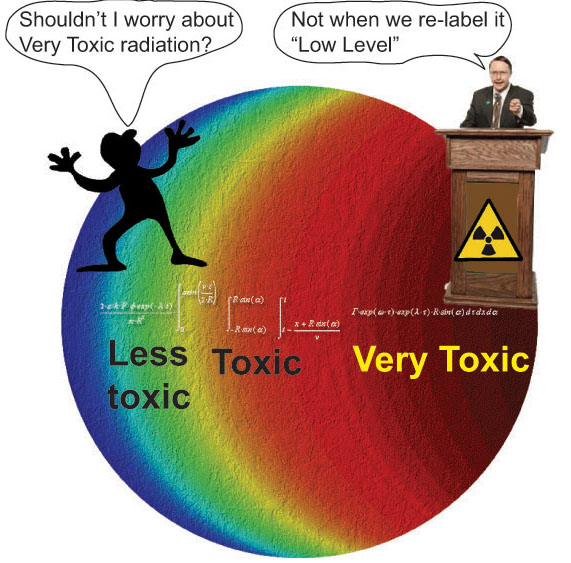


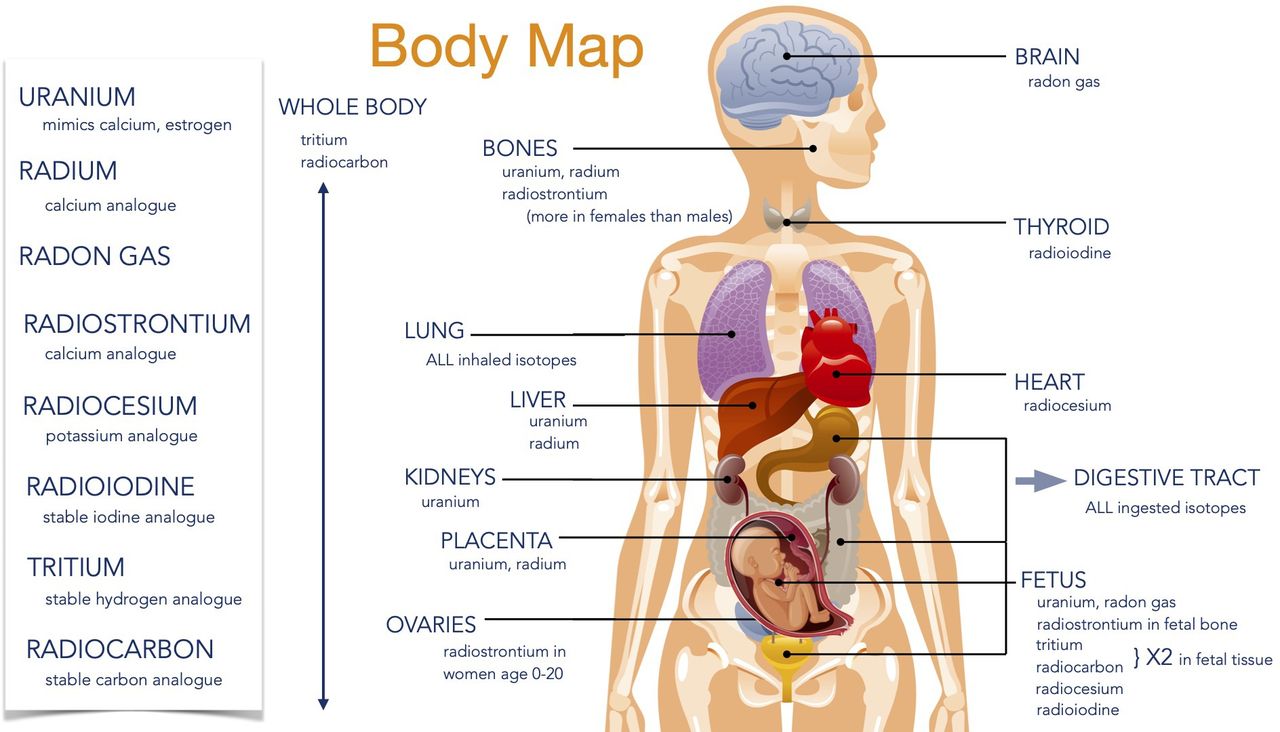






 There are eminent corrosion experts that are of the opinion that copper is a bad choice as a canister material. There is also increasing experimental evidence that this is the case. One problem for the court was likely that SKB has hesitant to do the required corrosion studies that show that copper does not corrode in an anoxic repository environment. The 18-year FEBEX field test shows that copper corrodes relatively rapidly with pitting corrosion. SKB says that all corrosion is due to in-leaking oxygen but it is now clear that experimental systems containing copper and clay become anoxic within weeks or months so this explanation is not valid.