nuclear-news

The News That Matters about the Nuclear Industry Fukushima Chernobyl Mayak Three Mile Island Atomic Testing Radiation Isotope

Campaigners threaten to blockade ships dumping Hinkley radioactive mud

Daily Mail 4th Oct 2018 . People’s flotilla’: Campaigners threaten to blockade ships set to dump
300,000 tons of ‘nuclear mud’ off the British coast claiming it could
contain radioactive particles that cause cancer
https://www.dailymail.co.uk/news/article-6237877/Campaigners-threaten-blockade-ships-set-dump-300-000-tons-nuclear-mud.html

October 5, 2018 Posted by | general | Leave a comment

UK Government has limited ‘scope’ to directly invest in nuclear

Utility Week 2nd Oct 2018, Government has limited ‘scope’ to directly invest in nuclear. The
government’s scope for directly investing in nuclear projects is limited by
the public finance rules, a government minister has said.
https://utilityweek.co.uk/government-limited-scope-directly-invest-nuclear/

October 5, 2018 Posted by | general | Leave a comment

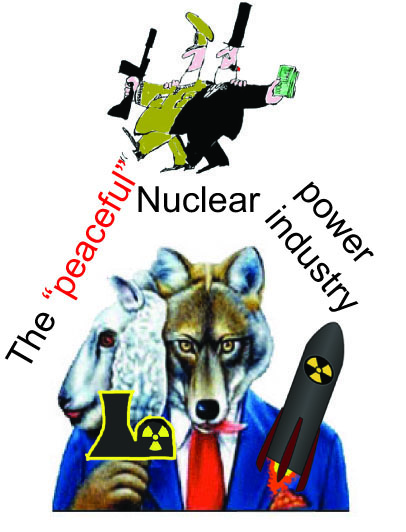
Nuclear power industry embraces its military connection— but wants us to pay

Nuclear power industry embraces its military roots — but wants us to pay  

Desperate to keep uncompetitive nuclear plants open, industry claims they are needed for ‘security’ By Victor Galinsky and Henry Sokolski

For years, the nuclear industry insisted that civilian nuclear power had nothing to do with weapons programs. That was then. Now, in a desperate attempt to keep no-longer-competitive nuclear plants from being shuttered, the industry claims there really has been a connection all along, and electricity customers should pay a premium to keep it going. It is one claim too many.

In its latest public effort, the nuclear industry got several dozen retired generals and admirals, former State, Defense and Energy Department officials, three former chairmen of the Nuclear Regulatory Commission, and a sprinkling of former senators, governors, industrialists and other worthies to sign a June 26, 2018, letter to Energy Secretary Rick Perry attesting to the connection between U.S. nuclear power plants and national security. The letter urged him to weigh in with federal and state rate-setting bodies to raise customers’ electricity bills to keep U.S. nuclear plants from shutting down, however much that will cost.

The letter didn’t, of course, put it in such crass terms. It talks about taking “concrete steps” to ensure electricity markets valued the nuclear plants’ “national security attributes”— a vague enough formulation to ease getting signatories. Most of them, as one of the signers (former Virginia Senator John Warner) himself put it , “are not intimately familiar with the ins and outs of the financial side of the power grid.” They do, however, apparently believe that they see the big picture—”the national security attributes of nuclear power”—more clearly than the parochial federal and state officials who set electric rates.

But are they any clearer on nuclear power’s national-security attributes than they are on the financial side of the industry?

The letter talks about “robust” nuclear power plants offering “a level of protection against natural and adversarial threats.” Leaving aside that “a level of protection” doesn’t mean much, the implied claim is dubious. It’s not well known but nuclear plant safety is critically dependenton the reliability of the electrical grid to which it is connected. In severe natural situations (ice storms, hurricanes, tornadoes, earthquakes), and even more so in adversarial ones, the transmission lines connecting nuclear plants to the electrical grid may fail or be destroyed. The earthquake that triggered the Fukushima accident first destroyed transmission towers and broke the link with the electrical grid. In these circumstances a nuclear plant must be shut down, as would any other electric generating plant. The difference, however, is that the nuclear plant becomes a serious liability because its safety cooling systems would have to operate indefinitely on its emergency diesel reserves—a highly undesirable state of affairs. There have been grid failures in the United States that have put several nuclear plants into emergency mode. In this context, it’s fair to ask whether nuclear plants increase the resilience of our electrical grid or burden it.

Another claim is that the Navy “benefits from a strong civil nuclear sector.” Maybe so. But in that event, as John Cochrane, an economist with the Hoover Institution, pointed out in connection with a similar appeal to subsidies, “If national security is at risk, let Defense ask for money.” The writers and signatories of the Perry letter know that nuclear power subsidies wouldn’t stand a chance set against the priorities of the Department of Defense. They know it would be an easier touch to stick the country’s ratepayers with the added bill. There is an element of insensitivity in this, as most of the ratepayers are in rather more difficult financial circumstances than the comfortably pensioned signatories. It has not occurred to them to ask that industry should earn less out of patriotism. But, of course, they didn’t write the letter.

“The nuclear industry is an important career destination for military veterans.” True, and retired Navy officers and seamen have had a useful effect on making plants run better and more safely. But should customers pay more on their bills to provide second careers to retired military and naval personnel at plants that are not needed?

The US is desperate to export nuclear technology such as the Westinghouse AP1000 to “retain ‘influence over nonproliferation.’ The worldwide spread of nuclear technology is, of course, what makes proliferation an urgent problem.” (Photo: Westinghouse)

The claim in the letter that deserves the most attention is the insidious argument that the United States needs to be a major exporter of nuclear technology in order to retain “influence over nonproliferation.” The worldwide spread of nuclear technology is, of course, what makes proliferation an urgent problem. The whole point of the body of the Perry letter is that there is a close connection between U.S. nuclear power and our nuclear weapons programs. Why should we think that this connection is not present in other countries? Wouldn’t that suggest sharing less, rather than more, of this technology?

Nuclear power has not succeeded in escaping its origin. It was born in the federal government, was suckled by the government, and has always relied on government support and protection. The industry preferred a system of federal regulation that gave the public essentially no say in the deployment of nuclear plants. It was an easy path for the industry to get its way, but only for a time. The crutch that seemed to make it unnecessary to react to public and market feedback also held back improvements. Now that nuclear plants are threatened with shutdowns, the industry can only think of more federal and state subsidies. In this latest effort, the industry wraps itself in the flag to urge Washington to find a way to stick ratepayers with the tab. It should be ignored.

Victor Gilinsky served on the U.S. Nuclear Regulatory Commission under Presidents Gerald Ford, Jimmy Carter, and Ronald Reagan. He is program adviser for the Nonproliferation Policy Education Center. Henry Sokolski is executive director of the Nonproliferation Policy Education Center and the author of Underestimated: Our Not So Peaceful Nuclear Future. He served as deputy for nonproliferation policy in the office of the U.S. secretary of defense from 1989 to 1993.

This article first appeared on August 8, 2018 in The National Interest and is republished with permission from the authors.

October 1, 2018 Posted by | general | 1 Comment

Progress as nations sign and ratify the Treaty on the Prohibition of Nuclear Weapons

Ekklesia 28th Sept 2018 , Once 50 states ratify the Treaty on the Prohibition of Nuclear Weapons, it
will enter into force and become international law. With these new
ratifications and signatories, the Treaty is nearly 40 per cent of the way
there, 12 months after being opened for signature.
http://www.ekklesia.co.uk/node/26868

September 29, 2018 Posted by | general | Leave a comment

Nuclear power is a risk we can’t afford

 https://www.registerguard.com/opinion/20180912/nuclear-power-is-risk-we-cant-afford,  Susan Cundiff, 13 Sept 18 I appreciated reading Frank Lawson’s update on EWEB’s performance (EWEB working to improve costs, more, Sept. 8). One item gave me pause: the $3.5 million increase from Bonneville Power Administration (BPA). Part of that bill pays for nuclear power. EWEB is the largest purchaser of nuclear power in Oregon, representing 7.5 percent of its energy portfolio. All of this power comes from the aging Columbia Generating Station (CGS) located near the leaking tanks and collapsing tunnels at Hanford Nuclear Reservation on the banks of the Columbia River.

Nuclear power is expensive and a threat to health and safety. When the cost of CGS power is compared to average market prices, EWEB is projected to overspend by $53 million between 2006-2028. The average household could save $25/year if CGS were closed. Visit www.oregonpsr.org/economic_issues for more info. The design of the plant is similar to the Fukushima Daiichi reactor that melted down in Japan. Recognizing this folly, the Board of Seattle City Light sent a letter to BPA indicating they must stop purchasing power from CGS. EWEB commissioners should do the same. Nuclear power is a risk we can’t afford. More than giving us pause, this should be full stop.


September 14, 2018 Posted by | general | Leave a comment

Nuclear industry “light years away” from getting costs down

Utility Week 7th Sept 2018 , The nuclear industry lags behind other industries in terms of technological
innovation over recent decades, the director general of the OECD’s
Nuclear Energy Agency said. The industry is light years away from getting
costs down to levels required to develop nuclear plants without support
from subsidy mechanisms like contract for difference or a dramatic increase
in carbon taxes,
https://utilityweek.co.uk/nuclear-industry-lags-behind-technological-innovation

September 12, 2018 Posted by | general | Leave a comment

Will France import and process 4 tons of radioactive waste from Australia?

Liberation 8th Sept 2018 , It is spent uranium and plutonium that has been used in a research reactor.
They will be treated at the Hague and returned to Australia.
http://www.liberation.fr/checknews/2018/09/08/la-france-va-t-elle-importer-et-traiter-4-tonnes-de-dechets-radioactifs-venant-d-australie_1676296

September 10, 2018 Posted by | general | Leave a comment

What of the nuclear industry’s future in France now?

Le Monde 8th Sept 2018 ,[Machine translation] It’s a low-noise battle that took place for a year
between Nicolas Hulot and EDF, a company he was in charge of. On the one
hand, a minister who has not always been antinuclear, but who has become
convinced in recent years that this energy has no future.

On the other hand, the management of EDF, Bercy and the entire French nuclear industry –
its 220,000 employees, its engineers and its weight in the heart of the
state -, convinced that nuclear power remains an opportunity for the La
France. Between the two,

Emmanuel Macron, long-time proponent of the
nuclear, but which maintains on this subject a policy of “at the same
time”, which for a long time allowed him to provide support to the
partisans and the opponents to the atom. Two questions are quickly at the
heart of this step of two: how to succeed in reducing the share of nuclear
energy in the production of electricity from 75% to 50%? And should we
start in France the construction of new reactors to eventually replace the
current fleet? The answer depends on one essential element: will
electricity consumption increase in the coming years, as EDF argues, or
will it continue to stagnate?
https://www.lemonde.fr/economie/article/2018/09/08/nucleaire-dans-les-coulisses-de-la-bataille-entre-hulot-et-edf_5352068_3234.html

September 10, 2018 Posted by | general | Leave a comment

Top Cancer Researcher Fails to Disclose Corporate Financial Ties in Major Research Journals

 NYT, By Charles Ornstein and Katie Thomas, Sept. 8, 20, This article was reported and written in a collaboration with ProPublica, the nonprofit investigative journalism organization.

One of the world’s top breast cancer doctors failed to disclose millions of dollars in payments from drug and health care companies in recent years, omitting his financial ties from dozens of research articles in prestigious publications like The New England Journal of Medicine and The Lancet.

The researcher, Dr. José Baselga, a towering figure in the cancer world, is the chief medical officer at Memorial Sloan Kettering Cancer Center in New York. He has held board memberships or advisory roles with Roche and Bristol-Myers Squibb, among other corporations, has had a stake in start-ups testing cancer therapies, and played a key role in the development of breakthrough drugs that have revolutionized treatments for breast cancer.

According to an analysis by The New York Times and ProPublica, Dr. Baselga did not follow financial disclosure rules set by the American Association for Cancer Research when he was president of the group. He also left out payments he received from companies connected to cancer research in his articles published in the group’s journal, Cancer Discovery. At the same time, he has been one of the journal’s two editors in chief……..

Dr. Baselga’s extensive corporate relationships — and his frequent failure to disclose them — illustrate how permeable the boundaries remain between academic research and industry, and how weakly reporting requirements are enforced by the medical journals and professional societies charged with policing them

……..The penalties for such ethical lapses are not severe. The cancer research group, the A.A.C.R., warns authors who fill out disclosure forms for its journals that they face a three-year ban on publishing if they are found to have financial relationships that they did not disclose. But the ban is not included in the conflict-of-interest policy posted on its website, and the group said no author had ever been barred.

Many journals and professional societies do not check conflicts and simply require authors to correct the record.

Officials at the A.A.C.R., the American Society of Clinical Oncology and The New England Journal of Medicine said they were looking into Dr. Baselga’s omissions after inquiries from The New York Times and ProPublica. The Lancet declined to say whether it would look into the matter……..https://www.nytimes.com/2018/09/08/health/jose-baselga-cancer-memorial-sloan-kettering.html?emc=edit_th_180909&nl=todaysheadlines&nlid=114249920909

.

September 10, 2018 Posted by | general | Leave a comment

Luxembourg supports Austria against Hinkley Point C in European Court challenge.

Luxembourg supports Austria against Hinkley Point C in European Court
challenge,  RTL 6th Sept 2018 
http://www.rtl.lu/letzebuerg/1234030.html

September 8, 2018 Posted by | general | Leave a comment

Spiralling costs make Hinkley C nuclear project a risky test case for the global industry

Montel 4th Sept 2018 UK plans to build a nuclear plant in Anglesey – an outline agreement has
been struck – and the under construction Hinkley Point C are test cases
in the nuclear industry’s ability to compete, said a report on Tuesday.

The biggest danger was spiralling costs, with the controversial Hinkley
Point in southwest England set to cost GBP 20bn, and given cheap and
plentiful gas and the rise of renewable power, many industry observers
wonder how nuclear power can compete, according to The Energy Transition
Report in the Financial Times. “We’ve seen a substantive decline in the
share of nuclear of total electricity generation worldwide,” said Paul
Dorfman, of the Energy Institute at University College London.
https://www.montelnews.com/en/story/costs-renewables-set-to-derail-nuclear-renaissance–report/931254

September 8, 2018 Posted by | general | Leave a comment

“Modest but detectable level(s)” of radioactive material found in Hanford workers’ cars

Tri City Herald 4th Sept 2018 , Hanford Challenge is calling for an independent study of the threat that
radioactive contamination might pose to the Tri-Cities from the Hanford
nuclear reservation. On Tuesday it released a research report by Marco
Kaltofen, an engineer with Boston Chemical Data Corp., who has been
collecting Hanford-area samples at times since at least 2008.

His latest report found “modest but detectable level(s)” of radioactive material
that had collected on the air filters of three vehicles belonging to
Hanford workers. The vehicles had been checked and cleared to leave the
Hanford nuclear reservation, where they had been at the Plutonium Finishing
Plant.
https://www.tri-cityherald.com/news/local/hanford/article217827665.html

September 6, 2018 Posted by | general | Leave a comment

Nuclear power- detrimental to UK now, and to future generations

Power technology 3rd Sept 2018 Nuclear power is high on the agenda for the UK Government, with a spate of projects planned in the coming years. But just how beneficial will it be to
the country?

Industry experts offer their views. Dr Ian Fairlie, member of
the Campaign for Nuclear Disarmament’s National Council “The reality is
that we don’t need new nuclear. As many studies indicate, renewables will
do the job. “The economics of nuclear are dire, with the cost of
renewables steadily falling whereas those of new nuclear are always rising.

Hinkley C would cost over £21bn if it were ever finished, while new
offshore wind turbines are already supplying electricity at less than half
the estimated cost of electricity of the mooted Hinkley C station if it
were ever built.

“Some nuclear proponents think that nuclear is the
answer to climate change. But nuclear lifecycle analyses prove the
contrary, as uranium mining and milling are highly carbon-intensive.

“Additionally, even after 50 years’ research, no government has found a
sure-fire way of keeping nuclear’s dangerous waste safe for hundreds of
thousands of years.

Finally, there is the incontrovertible evidence in over
40 studies of raised levels of childhood leukemia near nuclear reactors
worldwide. “We don’t need nuclear. It’s unsafe, uneconomic, and it
creates dangerous waste. Much better alternatives are already here. Nuclear
can hardly be said to be a benefit to the UK, more like a serious detriment
to us and to future generations.”
https://www.power-technology.com/features/67772/

September 4, 2018 Posted by | general | Leave a comment

Want clear information on nuclear issues? Go to Beyond Nuclear International

Beyond Nuclear 2nd Sept 2018 What is the difference between an open pit and an in-situ leach uranium mine? How does a nuclear power plant produce electricity? What happens to reactor fuel once it’s no longer usable? What is the difference between high-level and low-level radioactive waste and where is it stored? Why isn’t reprocessing really “recycling”?
We may know the answers to some or all of these questions. But can we deliver a succinct, clear, accessible answer to explain them to someone not already steeped in the issue?
As any activist engaged in anti-nuclear advocacy knows, nuclear power is a complex topic and describing each phase of the nuclear fuel chain can quickly bog us down in long, technical explanations. And once we go there, eyes glaze and we lose our audience.
Proponents of nuclear energy have taken full advantage of this, downplaying and minimizing the risks and using facile and superficially appealing sound bites, unsupported by facts, to convince people that nuclear power is benign and useful for climate change.
Facts are what we believe will change people’s minds. But the idea that bombarding someone with a deluge of irrefutable facts about the dangers of nuclear power will automatically win them to our cause has proved to be an illusion. It doesn’t necessarily work.
We do need facts, of course. And that is where our Handbook — The Case Against Nuclear Power: Facts and Arguments from A-Z — comes in. We must be able to accurately describe why nuclear power is dangerous, uneconomical and unjust.
But we must do so in succinct, simple lay language. And then, once
the basics are understood, we need to move people. And that is why the
Beyond Nuclear International website came to be born, providing a natural
home for the Handbook and expanding from facts to compelling narratives.
We have already compiled three Handbook chapters which you can find on the Beyond Nuclear International website under Handbook. So far, we have published: An Overview that offers simple explanations for every phase of
the nuclear fuel chain; Radiation and harm to human health, which lays out
the detriments to health of every phase of nuclear power operations; and
Climate change and why nuclear power can’t fix it. More chapters are in
the works.
https://beyondnuclearinternational.org/2018/09/02/an-a-z-against-nuclear-power/

September 4, 2018 Posted by | general | Leave a comment

Will we do anything to protect our children and grandchildren from uncontrolled climate change?

Uncontrolled climate change could result in disaster for our kids. Will we do something?

USA Today, Mike Hoffmann,    Aug. 31, 2018
 Would you put your child or grandchild on a plane that has a one chance in 20 of a disastrous crash?

It’s hard imagining anyone doing that, but it is essentially what we are doing to our kids and grandkids by not raising our voices about climate change and the 1-in-20 chance that disaster lies ahead for them. It is bad enough that we are likely on the path to exceed the 3.6 degree Fahrenheit goal stated in the Paris Agreement, which will result in dire consequences such as increasing droughts and wildfires and inundation of low lying coastal areas because of sea level rise.

If we continue on that path without taking the necessary actions to reduce greenhouse gas emissions, there is a 5 percent chance of catastrophic consequences — even an existential threat to humanity by mid-century, according to experts at the Scripps Institute.

We can see the change is happening

We all take chances, but few would board a plane with a 5 percent chance of crashing. In reality, air travel is incredibly safe because we trust those who design, build and test aircraft and manage the flow of thousands of flights a day.

A lot of engineering and science has made aircraft and air travel safe. The same holds for the science behind climate change — a lot of smart and dedicated people who have their own children and grandchildren, working hard to understand what is happening now and what the future holds, and find solutions.

Think of one person who is much younger than you whom you care deeply about — a son, daughter, grandchild, sibling, niece, nephew — and whisper their name and put them on that plane and watch them take off on their journey. Then consider what their future holds given what is happening all around us — it’s getting warmer, large wild fires are more frequent in California, it’s getting too hot to fly planes out of Phoenix, there are more downpours hitting New York City and Boston, and Alaska is melting. And then consider what that younger person’s life journey looks like in a changing climate: It’s not going to get better. By attaching the name of someone you care about, it becomes personal and for many, strikes home.

We care about our kids and grandkids. In the USA, there are an estimated 49 million children under the age of 12, and more than 70 million who are under 18. They can’t vote, and few contribute to political causes or participate in political debates. They don’t have a lot of power, although they are gaining ground on their own in the courts. They are depending on us to ensure a safe and prosperous future, like that air traffic controller who is keeping your loved one safe, but let’s take a look at what lies ahead for them. Ask yourself, what course, what flight plan, are we setting for their future?

Our kids face the consequences of our choices

Let’s fast-forward to the year 2048, when today’s under-12 crowd will be in their early 30s and 40s. Most of them will be settled into careers, with young families, and relatively secure — or maybe not. It all depends on the path we choose to take now…………

So today, those who won’t accept the truth about climate change are messing with our children and grandchildren — their life journey. For the vast majority who do believe we face a grand challenge, raise your voice, get involved, and whisper that name again. It’s personal, very personal. What will they say about us in 2048? Did we try?

Mike Hoffmann is executive director of the Cornell Institute for Climate Smart Solutions, faculty fellow at Cornell University’s Atkinson Center for a Sustainable Future, and a professor in the Department of Entomology. See also his TEDx Talk, Climate Change: It’s time to raise our voices

You can read diverse opinions from our Board of Contributors and other writers on the Opinion front page, on Twitter @usatodayopinion and in our daily Opinion newsletter. To respond to a column, submit a comment to letters@usatoday.com.  

September 3, 2018 Posted by | general | Leave a comment