Nevada still in danger of hosting unsafe Yucca nuclear waste dump
Let’s clear up a few things about the ‘nuclear option’ Las Vegas SunBy Brian Greenspun (contact)Sunday, July 14, 2013 “…..The new words are “nuclear option” and — even though it’s hard for me to understand why — they are being conjoined in reference to the future of Nevadans and Yucca Mountain.
Because, make no mistake, the desire by the nuclear power industry to dump tens of thousands of tons of the deadliest radioactive garbage known to man 90 miles from Las Vegas has grave implications for the future of every person living in Clark County and every business looking for a future here.
If you think the recession was bad, just imagine what a high-level nuclear waste accident will do to the tourist industry — and it will happen because that’s what accidents do!
Whatever your thoughts about President Barack Obama — obviously Nevadans think highly of him since they re-elected him by a wide margin — when it comes to Yucca Mountain, the man has kept his word. He closed Yucca Mountain just like he said he would.
Unfortunately, in the world of political realities, the overwhelmingly deep pockets of the nuclear power industry are paying big bucks to re-open Yucca. Nevadans are forced to live and re-live what amounts to an awful zombie movie. No matter how often we kill it, it keeps coming back.
How this story ends remains unclear because Nevada’s congressional delegation, which used to be united against Yucca Mountain, is no longer the shield we need to protect us. Some congressmen are either wavering or have gone to the other side.
The really good news is that Nevadans have Senate Majority Leader Harry Reid. That means we have a fighting chance to win this war…… http://www.lasvegassun.com/news/2013/jul/14/lets-clear-few-things-about-nuclear-option/#ixzz2ZLImsZAt
Trident nuclear weapons not necessary -UK public ahead of politicians
Trident: nuclear platitudes? No thanks, Guardian UK Editorial 16 July 13 “……. Credible nuclear and non-nuclear alternatives to continuous at-sea Trident nuclear submarines do exist. Most countries in the world do not have this form of defence. Many of them nevertheless remain leading global powers. So it is right to debate those alternatives here too. Even Mr Blair, in his 2010 memoir, concedes the point. And many of the options were set out in today’s 64-page government review of alternatives.
The most important of these, though not the only one, is that the UK genuinely has the option of scaling down its nuclear weapons capability from the present four submarines based on the Clyde to three or even two. This is a possibility that deserves a serious public debate, free from the old scaremongering……….
it is absurd that the Conservatives, plus some Labour ex-defence secretaries, should treat the possibility of Britain taking a small step down the nuclear ladder as taking a risk with national security. The public’s views on nuclear weapons are far more nuanced than this. They are ahead of the political class. The Tories and Labour should join the Lib Dems in treating the issues seriously, not wallowing in the lazy nonsense that the status quo is the only option. it is absurd that the Conservatives, plus some Labour ex-defence secretaries, should treat the possibility of Britain taking a small step down the nuclear ladder as taking a risk with national security. The public’s views on nuclear weapons are far more nuanced than this. They are ahead of the political class. The Tories and Labour should join the Lib Dems in treating the issues seriously, not wallowing in the lazy nonsense that the status quo is the only option.
Hypocrisy – the West and Israel hold nuclear weapons, but Iran should not?
Nuclear policy: hypocrisy and inevitability?, 4 News, 16 July 13
“…… the nuclear powers wrestle with their nuclear futures. As they do so, another nation, Iran, stands accused of seeking to join them. Stand in Tehran and consider that country’s security and it is an unenviable picture. Its neighbouring states of Afghanistan and Iraq deeply upheaved by western military intervention; nuclear Israel and her sophisticated military systems just two countries away; the entire Arab world destabilised by the Arab Spring – Saudi Arabia and Qatar just across the Persian Gulf.
Couple that with the Sunni/Shia tensions within Islam, and life for ostracised Iran might make even the UK generals and former defence secretaries think that a country in such a position might seek a nuclear deterrent. We still do not know for sure whether Iran seeks either the bomb itself, or the technology to build one. Indeed the supreme leader of Iran, Ayatollah Khamenei, recently repeated his belief that the possession of a nuclear bomb would be against the teachings of the Koran.
‘We can have a bomb, you can’t’
Threaded beneath these facts there lurks the whiff of international hypocrisy. “We can have a bomb – you can’t – because we say so,” doesn’t always wash, particularly when some of those who have the bomb refuse either to join or submit to the inspection of the NPT regime. Britain’s present bomb, indeed the US bomb, has never been subjected to the inspections to which Iran’s system has been subjected under the NPT. And no inspection of any kind has ever been permitted by Israel….. http://blogs.channel4.com/snowblog/nuclear-trident-policy-bomb-britain-military-defence/20769
New report: global nuclear industry’s future not looking good
A status report released Thursday by independent consultants makes no bones about – not only the health risks associated with nuclear energy, but the economic impracticality of this kind of energy production as a whole. You don’t have to get very far into the report to find that facilities peaked in their output a decade ago, and have been in decline ever since
an increasingly redundant and dangerous industry.
 The diminishing glow of nuclear energy Greenpeace International by Arin de Hoog – July 15, 2013 In France, Greenpeace activists got past security and climbed reactor structures at the Tricastin nuclear power plant. They unfurled a banner which read: ACCIDENT NUCLÉAIRE AU TRICASTIN FRANÇOIS HOLLANDE : PRÉSIDENT DE LA CATASTROPHE? (Nuclear Accident: François Hollande The President Of The Disaster?). Earlier this morning, other activists projected a crack onto the superstructure of the plant illustrating that French President, Hollande, needs to shut down 20 nuclear reactors in the country by 2020 in keeping with his promise to cut nuclear power from three-quarters to half by 2025.
The projection of the crack, by the way, is not foreshadowing an eminent condition. Cracks have been found in the reactor vessels of several plants in France, and throughout the world. Continue reading
“Santa Cruz and the Environment” predicted the nuclear nightmare
Gary Griggs, Our Ocean Backyard: A nuclear plant for Santa Cruz? By Gary Griggs Santa Cruz Sentinel 07/12/2013 The April 9, 1970 PG&E announcement that it planned to build a large nuclear power plant just north of Davenport set off a community debate that went on for years………..A local group soon formed called CEDAR, which stood for the Committee to Examine the Dangers of Atomic Reactors. This citizen’s group, as well as the first Environmental Studies class on the UCSC campus, both began to look carefully at these four claims.
The class produced a booklet, Santa Cruz and the Environment, which took a lot of local heat for publicizing the environmental issues affecting Santa Cruz at that time, including the proposed nuclear plant. Investigating the advertised efficient, economical, safe and clean nature of nuclear plants revealed that none of these claims were really true.
A closer look also revealed that nuclear plants were far more expensive to build than conventional plants. Much of the cost of the early plants was covered by subsidies, including about a third of the construction costs coming from the Atomic Energy Commission, which had the conflicting roles at that time of both promoting the use of nuclear energy but also regulating it. The federal government was also subsidizing the insurance, the fuel, as well as the removal and storage of radioactive waste.
Safety is a much more serious issue with a nuclear plant than a fossil fuel plant, simply because the accidental release of radiation can be carried over large distances by wind and water, stays around for a long time, and can produce both immediate and long-term impacts. While there had been a number of accidents in test and experimental reactors at that time, there were few commercial plants in operation such that their overall safety record was good.
The partial meltdown of the Three Mile Island plant in Pennsylvania in 1979, followed by the Chernobyl disaster in the former Soviet Union in 1986 with the release of radiation that spread over much of western Russia and Europe, and then the Fukishima Daiichi disaster in 2011, all contributed to a much greater public concern for the safety of nuclear plants. Ultimately, nuclear plants all depend upon error free construction and operation, and unfortunately humans are not quite perfect.
While nuclear plants don’t produce the visible emissions of fossil fuel plants, they do produce radioactive wastes. Of greatest concern has been the spent fuel, high-level radioactive waste that must be isolated from humans and the biological environment for thousands of years, which is still being stored in tanks in Washington, Idaho and South Carolina. No permanent solution has yet been agreed upon such that California banned any new nuclear plants decades ago until this waste storage/disposal problem had been resolved.
Ten nuclear power plants were proposed through the years along the California’s coastline. Only four were built and three of those have now been closed. Gary Griggs is director of the Institute of Marine Sciences and Long Marine Laboratory at UC Santa Cruz. He can be reached at griggs@ucsc.edu http://www.santacruzsentinel.com/localnews/ci_23650404/gary-griggs-our-ocean-backyard-nuclear-plant-santa
American Youth Voices call out for renewable energy
http://sampan.org/2013/07/youth-voices-alternative-energy-powers-cleaner-planet/
Youth Voices: Alternative energy powers cleaner planet Sampan , July 12, 2013 · Youth Voices: Featuring original work written by students By Eugine Szeto In a world with limited resources, the availability of energy is ever decreasing as demand for it increases. Therefore, it should be the priority of the United States to invest in alternative and renewable energy. . First, oil industries act as oligopolists and maintain high prices for oil. An alternative energy will lower these prices, easing the burden of many consumers and families. These families can be further assisted by this new investment to create jobs and help stimulate the economy. It has been proven technology is an essential factor of long-term economic growth. Not only will the economy continue to grow, but alternative renewable energy will reduce carbon emissions, a negative externality produced by the modern economy’s thirst for energy…..
alternative energy will solve many inherent problems of the current energy industry. Government spending on the research of alternative energy can help remove some of the barriers to entry to the energy industry. If alternative energy becomes readily available, it would be able to increase the supply of energy, which would in turn decrease the price of energy due to increased competition.
This increase in supply would benefit the overall economy. With the current unemployment rate still at an uncomfortable 7.6 percent, an investment in alternative energy will help create much- needed jobs. The economy would further benefit once alternative energy can successfully lower the price of energy. Because households would spend less the essential cost of daily energy use, they will have extra funds to invigorate the economy.
In addition to economic benefits, alternative energy can solve the problem of pollution. Even with government regulation such as the Environmental Protection Agency, pollution continues to threaten the safety of our planet. With alternative energy, however, oil industries will lose consumers to the new companies. Therefore, they would have less incentive to create energy and along with it, pollution. Because alternative energy will not produce significant amounts of pollution, a climate crisis can thus be averted.
Finally, alternative energy will be renewable, and thus less susceptible to the problem of scarce resources. Today, the majority of energy consumed is nonrenewable. Very soon, those resources will run out. Unlike fossil fuels, the sun will continue to shine, the wind will continue to blow and tides will continue to move.
Clearly, the benefits of investing and the costs of ignoring alternative energy are too great and should become a top priority for the United States.
Tepco’s huge underground dike
Fukushima Radiation Leaks Rise Sharply By William Boardman, Reader Supported News 11 July 13 “……..Nobody Knows if It Will Get Worse, Get Better, or Just Stay Bad The water flow through the Fukushima accident site is substantial and constant, both from groundwater and from water pumped into the reactors and fuel pools to prevent further meltdowns.
In an effort to prevent the water from reaching the ocean, TEPCO is building what amounts to a huge, underground dike, “a deeply sunken coastal containment wall.” The NRA is calling on TEPCO to finish the project before its scheduled 2015 completion date.
Meanwhile, radiation levels remain high and no one knows for sure how to bring them down, or even if they can be brought down by any means other than waiting for however long it takes. http://readersupportednews.org/opinion2/271-38/18354-focus-fukushima-radiation-leaks-rise-sharply
USA continues to plan for first strike with nuclear weapons
 US Still Preparing for Nuclear War Anti War.com by Lawrence Wittner, July 09, 2013 Nearly a quarter century after the disappearance of the Soviet Union and the end of the Cold War, the U.S. government is still getting ready for nuclear war.
This fact was underscored on June 19, 2013, when the Pentagon, on behalf of  President Barack Obama, released a report to Congress outlining what it called the U.S. government’s “Nuclear Employment Strategy.” Although the report indicated some minor alterations in U.S. policy, it exhibited far more continuity than change.
In 2010, the administration’s Nuclear Posture Review declared that it would work toward making deterrence of nuclear attack the “sole purpose” of U.S. nuclear weapons. The 2013 report, however, without any explanation, reported that “we cannot adopt such a policy today.” Thus, as in the past, the U.S. government considers itself free to initiate a nuclear attack on other nations. Continue reading
Death of the original Fukushima emergency cleanup leader
Masao Yoshida Dead: Former Chief Of Fukushima Nuclear Power Plant Dies At 58
HUFFINGTON POST, By MARI YAMAGUCHI 07/09/ 13, TOKYO — The nuclear power plant chief who led the life-risking battle to stabilize the cripple Fukushima reactors when they were spiraling into meltdowns two years ago has died of esophageal cancer. He was 58.
Masao Yoshida died Tuesday in a Tokyo hospital, Tokyo Electric Power Co. spokesman Yoshimi Hitosugi said. TEPCO officials said his illness was not related to radiation exposure.
Yoshida was in charge of the Fukushima Dai-ichi plant when the March 11, 2011, earthquake and tsunami knocked out its power and cooling systems, causing reactor meltdowns and massive radiation leaks.
Recalling the first few days when three reactors suffered meltdowns in succession, Yoshida later said: “There were several instances when I thought we were all going to die here. I feared the plant was getting out of control and we would be finished.”….http://www.huffingtonpost.com/2013/07/09/masao-yoshida-dead_n_3565387.html
Tobacco cancer link denied, Climate Change denied – it’s all the same tactics
 Climate Change Deniers Using Dirty Tricks from ‘Tobacco Wars’ http://www.sciencedaily.com/releases/2013/07/130704095132.htm July 4, 2013 — Fossil fuel companies have been funding smear campaigns that raise doubts about climate change, writes John Sauven in the latest issue of Index on Censorship magazine. Environmental campaigner Sauven argues: “Some of the characters involved have previously worked to deny the reality of the hole in the ozone layer, acid rain and the link between tobacco and lung cancer. And the tactics they are applying are largely the same as those they used in the tobacco wars. Doubt is still their product.”
Governments around the world have also attempted to silence scientists who have raised concerns about climate change. Tactics used have included: the UK government spending millions infiltrating peaceful environmental organisations; Canadian government scientists barred from communicating with journalists without media officers; and US federal scientists pressured to remove words ‘global warming’ and ‘climate change’ from reports under the Bush administration.
Writing about government corruption in the Indian mining industry, Sauven says: “It will be in these expanding economies that the battle over the Earth’s future will be won or lost. And as in the tobacco wars, the fight over clean energy is likely to be a dirty one.”
Why bother to struggle for a nuclear weapons free world?
Continuing the Struggle Against Nuclear Weapons Truth Out , 03 July 2013 By David Krieger, Waging Peace I have been working for a world free of nuclear weapons for over four decades. On occasion I am asked, “Why do you continue this struggle when change seems to come so slowly?” Here is my response.
Nuclear weapons threaten the existence of civilization and the human species. We humans cannot continue to be complacent in the face of the nuclear dangers that confront us. Too many people are complacent and too many are ignorant of the threat posed by these weapons……
Nuclear deterrence does not protect us. If it did, there would be no need for missile defenses. Nor would we object to other countries developing nuclear deterrent forces. And, of course, nuclear deterrence does not even apply to terrorist organizations, which have no territory to retaliate against and may be suicidal.
Nuclear weapons are actually suicidal weapons. Use them, and they will be used against you. Use them, and run the risk of nuclear famine or nuclear winter. They may also be omnicidal weapons, their use leading to the death of all.
If we want to end the insecurity of a world with nuclear weapons, we must continue the struggle for a world without them. And we must realize that the nature of the weapons require that the struggle be approached with a sense of urgency and boldness.
So, I continue the struggle – in the hope that you may join with me and many others to make the abolition of nuclear weapons an urgent – rather than distant – dream.http://truth-out.org/opinion/item/17362-continuing-the-struggle-against-nuclear-weapons
Scope Of French Polynesia Nuclear Fallout Revealed
 http://pidp.org/pireport/2013/July/07-03-10.htm
Pacific Islands Development Program, East-West Center
With Support From Center for Pacific Islands Studies, University of Hawai‘i
Scope Of French Polynesia Nuclear Fallout Revealed
Tests affected more area than atolls listed by military
WELLINGTON, New Zealand (Radio New Zealand International, July 2, 2013) – Declassified French documents show that the fallout from the nuclear weapons tests in French Polynesia was far greater than previously admitted by Paris.
Following the release of more than 2,000 documents about the atmospheric tests of 1966-1974, the test veterans group says the French authorities measured a plutonium concentration in Tahiti of 500 times the safety limit.
Tahiti is about 1,400 kilometers from Moruroa but under current French law it’s outside the zone where compensation claims for poor health can be lodged.
The documents, which include 114 blank pages, confirm that the fallout from the tests affected all areas and not only the 21 atolls, which the French military had listed so far.
The documents also reveal that a total of 26 navy vessels were contaminated.
The Moruroa e tatou test veterans group has called on France to let it know the full truth about the tests’ impact.
UK’s nuclear waste mess at Sellafield, like USA’s at Hanford?
 Nuclear waste: Clean-up Quandary.FT, By Sylvia Pfeifer, 1 July 13, More reactors are to be built but a permanent solution for high-level waste remains elusiveMore reactors are to be built but a permanent solution for high-level waste remains elusive
A hulking building faced with dirty yellow concrete, B30 sits at the heart of Sellafield, a sprawling nuclear site on the windswept coast of Cumbria in northwest England. Surrounded by a fence topped with razor wire, this is no ordinary building. But it’s only when the small device hooked to the pocket of my guide’s overalls begins to click as we draw closer to the building that my heart skips a beat.
The exterior tells you nothing but inside B30 lies some of the most radioactive waste in the world. It is one of four pond and silo facilities built in the 1950s and 1960s to store irradiated fuel from Britain’s first atomic reactors.
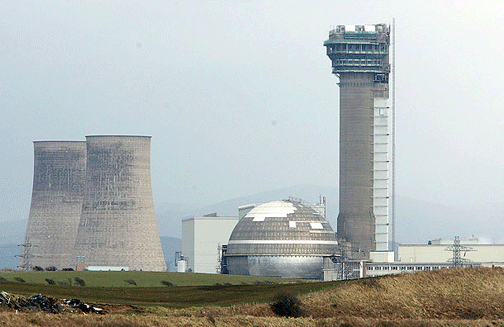
Over the years, it has accumulated large amounts of waste, sludge from corroded fuel casings and other debris that has blown in. B30 is as nasty as they come – hence the clicks from my guide’s pocket gadget, which measures the amount of radiation to which we are exposed. On the outside, we are safe but just a glimpse of B30 is an unsettling reminder of Britain’s nuclear legacy.
The site of a former munitions factory, Sellafield has seen it all. By the early 1950s, the site’s two Windscale reactors, as Sellafield was then known, were making plutonium for nuclear weapons. By the middle of the decade, Calder Hall, the world’s first commercial nuclear power station, was opened. More reactors followed, as did reprocessing activities. Today, the site’s main focus is on managing waste safely and cleaning up the legacy of the past. The estimated cost is £67.5bn and rising.
“Our aim is to put ourselves out of business, to tidy the toys away,” says John Clarke, chief executive of the Nuclear Decommissioning Authority, the government body set up in 2005 to oversee the job….. . http://www.ft.com/cms/s/0/77c177ba-dcba-11e2-b52b-00144feab7de.html#axzz2XvB1ouop
Ernest Moniz – the nuclear lobby’s man in government
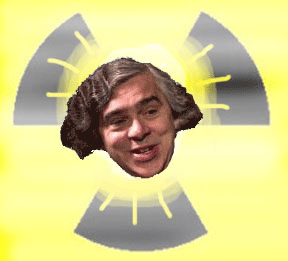
Platts reported (1 July 13) on USA’s Energy Secretary’s enthusiasm for nuclear power – “Energy Secretary Ernest Moniz on Monday reiterated the Obama administration’s commitment to promoting nuclear energy ”
Renewable energy the most economic choice for Tonga
 Tonga’s renewable energy push Petroleum Economist 01 July 2013 Following rising oil costs, the Kingdom is looking to alternative energy to reduce its reliance on imports, writes Helen Robertson TONGA is facing an energy crisis as soaring oil-import bills are crippling its economy. The Kingdom is now looking to renewable energy to alleviate its oil dependency.
Tonga is made up of an archipelago of 176 islands in the South Pacific, around 2,000 kilometres northeast of New Zealand. Tonga is highly susceptible to both climate change and energy-price volatility because of its high dependency on imported oil. All of Tonga’s grid-supplied power, which makes up 98% of its total electricity, is generated using imported diesel.
According to the US Energy Information Administration Tonga imported around 1,240 barrels of oil per day (b/d) last year. This is up from around 780 b/d in 2002.
Although the small Kingdom, of around 100,000 people, is no energy-consuming powerhouse its dependency on oil is a huge economic stranglehold. Between 2005 and 2008 Tonga’s electricity generation costs increased by 106%...( subscribers only) http://www.petroleum-economist.com/Article/3225512/Tongas-renewable-energy-push.html#ixzz2XvZJrWip
1 This Month

petition to oppose the rapid increase of space-military industry threatening Jeju Island and the region.
[Petition by April 19th (KST)] Stop the joint military-Hanwha Systems-Jeju Provincial Government Sea Launch!
World Nuclear Power. Reactors 1951-2026, 75 Years of Nuclear Power.
Interactive Map– https://dv.worldnuclearreport.org/

Chernobyl: The Lost Tapes – A good documentary on Chernobyl on SBS available On Demand for the next 3 weeks– https://www.sbs.com.au/ondemand/tv-program/chernobyl-the-lost-tapes/2352741955560

of the week–London Campaign for Nuclear Disarmament
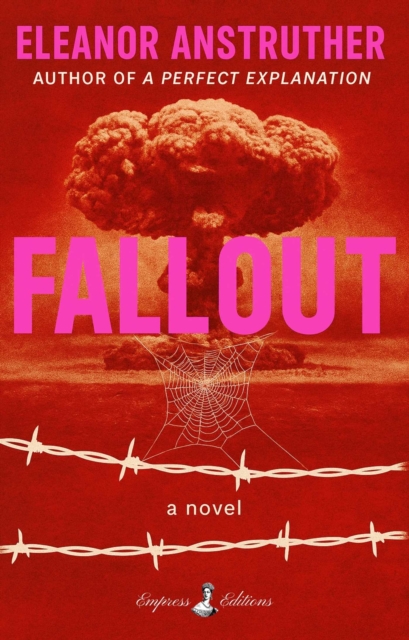

Tell the Ukrainian Government to Drop Prosecution of Peace Activist Yurii Sheliazhenko
To see nuclear-related stories in greater depth and intensity – go to https://nuclearinformation.wordpress.com
-
Archives
- April 2026 (205)
- March 2026 (251)
- February 2026 (268)
- January 2026 (308)
- December 2025 (358)
- November 2025 (359)
- October 2025 (376)
- September 2025 (257)
- August 2025 (319)
- July 2025 (230)
- June 2025 (348)
- May 2025 (261)
-
Categories
- 1
- 1 NUCLEAR ISSUES
- business and costs
- climate change
- culture and arts
- ENERGY
- environment
- health
- history
- indigenous issues
- Legal
- marketing of nuclear
- media
- opposition to nuclear
- PERSONAL STORIES
- politics
- politics international
- Religion and ethics
- safety
- secrets,lies and civil liberties
- spinbuster
- technology
- Uranium
- wastes
- weapons and war
- Women
- 2 WORLD
- ACTION
- AFRICA
- Atrocities
- AUSTRALIA
- Christina's notes
- Christina's themes
- culture and arts
- Events
- Fuk 2022
- Fuk 2023
- Fukushima 2017
- Fukushima 2018
- fukushima 2019
- Fukushima 2020
- Fukushima 2021
- general
- global warming
- Humour (God we need it)
- Nuclear
- RARE EARTHS
- Reference
- resources – print
- Resources -audiovicual
- Weekly Newsletter
- World
- World Nuclear
- YouTube
-
RSS
Entries RSS
Comments RSS
 nuclear-news