Australia’s reliance on Extended Nuclear Deterrence (END) is now out-dated
The revival of concern about the humanitarian impacts of these weapons is shifting old assumptions.
Australia’s reliance on END keeps us on the wrong side of history. And it has led previous governments and the current government to actively oppose the growing calls for a ban on nuclear weapons.
Instead of blindly following US nuclear policies into whatever a future president might envisage, Australia should carefully consider its non-nuclear defence and challenge all claims, surrogate or otherwise, to nuclear weapons.
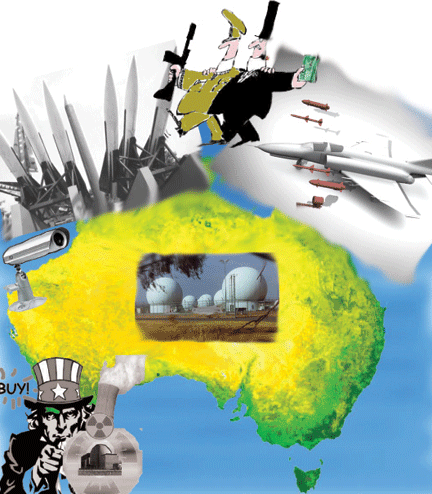 Australia’s stance on nuclear deterrence http://www.swinburne.edu.au/news/latest-news/2016/08/australias-stance-on-nuclear-deterrence-.php 26
  August 2016
IN SUMMARY Analysis for The Conversation by Swinburne PhD candidate
Dimity Hawkins and Swinburne senior lecturer Julie Kimber.CONTACT Lea Kivivali +61 3 9214 5428 lkivivali@swin.edu.au
For Australia, the US election should provide an opportunity to rethink defence relationships, especially as they relate to nuclear weapons.
There has been much hand-wringing at the thought of Donald Trump becoming US president. If, by some miracle, Trump succeeds in November, he will have his hand on the nuclear trigger.
But this concern, while great political fodder, is dangerously simplistic. It presupposes there are “safe hands” when it comes to nuclear weapons. There are not.
The US has around 7,000 nuclear weapons. Hundreds of these can be launched within minutes. While the global community has outlawed other indiscriminate weapons of mass destruction, nuclear weapons are yet to be banned.
The Cold War’s MAD (Mutually Assured Destruction) doctrine has morphed over the years into a framework of nuclear deterrence. Many governments globally have played a double game: supporting nuclear disarmament on the one hand, while relying on a nuclear defence on the other.
One such government is Australia’s. Despite consecutive governments insisting they support nuclear disarmament, Australia’s reliance on Extended Nuclear Deterrence (END) means it is frustrating attempts at a total ban.
- When defence conflicts with deterrence END is based on the assumption the US would offer a nuclear response to Australia as a select protégé ally in the event of a nuclear threat or attack. These arrangements are publicly documented between the US and NATO states, Japan and South Korea.
- The first official articulation of the position in Australia is in its 1994 Defence White Paper. This professes a reliance on, and support for, a US nuclear capability to “deter any nuclear threat or attack on Australia”.Importantly, the paper also noted that reliance on END was an “interim” measure until a total ban on nuclear weapons could be achieved. Each subsequent defence white paper has continued to assert this reliance on US nuclear weapons.The 2016 Defence White Paper created more ambiguity about the END arrangement. It claimed:
Only the nuclear and conventional military capabilities of the United States can offer effective deterrence against the possibility of nuclear threats against Australia.
- After 22 years of white paper reliance on END, it is no longer a temporary aberration. The risk is we normalise both the need for and use of nuclear weapons.Australian defence white papers offer no clarification on the conditions under which nuclear weapons would be used on our behalf. Given the known humanitarian, environmental and cultural devastation caused by their use, significant questions remain – including under what circumstances policymakers and defence experts would consider justifying the deployment of nuclear weapons in Australia’s name.The global trend of nuclear renewal Anyone watching US President Barack Obama’s speech in Hiroshima in March 2016 might be mistaken for thinking his pledges to end the nuclear weapon threat were sincere. He said:
Among those nations like my own that hold nuclear stockpiles, we must have the courage to escape the logic of fear and pursue a world without them.This would seem to undermine the utility of nuclear deterrence, but the reality is different.
- The US plans to spend US$348 billion during 2015–24 on maintaining and comprehensively updating its nuclear forces. Other estimates for the modernisation program are as high as $1 trillion over the next 30 years.Despite Trump’s assertion that countries under the US END umbrella should be developing their own nuclear capacity, neither Trump nor his Democratic presidential rival, Hillary Clinton, are likely to discontinue the nuclear renewal programs.For Australia, the change in the US presidency provides an opportunity to rethink defence relationships, especially those relating to nuclear weapons.
An opportunity to re-evaluate our stanceWith some arguing a Trump presidency would undermine alliance relationships, Australia has a chance to strike a new path. The uncomfortable presumption of END in our defence policies is one area we should be actively challenging.
While Australia is a highly militarised middle power in the region, it has few, if any, discernible nuclear threats of its own to counter. It has forsworn such weapons through international law agreements and has at times been a strong voice on efforts to eliminate nuclear weapons.
The revival of concern about the humanitarian impacts of these weapons is shifting old assumptions. Growing impatience with the slow pace of change and continual delays in meeting even the most basic of expectations in relation to nuclear disarmament have meant support for a ban on such weapons has grown internationally to include the majority of UN member countries.
Australia’s reliance on END keeps us on the wrong side of history. And it has led previous governments and the current government to actively oppose the growing calls for a ban on nuclear weapons.
Instead of blindly following US nuclear policies into whatever a future president might envisage, Australia should carefully consider its non-nuclear defence and challenge all claims, surrogate or otherwise, to nuclear weapons.
Positive international report for nuclear disarmament, despite disruption by Australia
Tim Wright, Asia-Pacific director of the International Campaign to Abolish Nuclear Weapons (Ican), said it was thought that Australia’s foreign minister, Julie Bishop, instructed her diplomats to disrupt the international gathering late on Friday afternoon by forcing a vote. While others then joined Australia to vote against the report, Australia was alone in forcing the vote to happen.
The acceptance of the report was seen as a major milestone by anti-nuclear campaigners.
“This is a significant moment in the seven-decade-long global struggle to rid the world of the worst weapons of mass destruction,” said Beatrice Fihn, executive director Ican. “The UN working group achieved a breakthrough today.”
 Australia attempts to derail UN plan to ban nuclear weapons Diplomats force a vote
on a report to begin negotiations on a ban in 2017 that had been expected to pass unanimously, Guardian, Michael Slezak, 21 Aug 16, Australia has attempted to derail a ban on nuclear weapons at a UN meeting on disarmament, by single-handedly forcing a vote on a report that had been expected to pass unanimously.
The report, which recommended negotiations begin in 2017 to ban nuclear weapons, was eventually passed by 68 votes to 22. An Austrian-led push for the treaty had reached a milestone on Friday, when the report was presented to representatives of 103 nations in Geneva.
Moves towards a ban have been pursued because many saw little progress under the existing non-proliferation treaty, which obliges the five declared nuclear states to “pursue negotiations in good faith” towards “cessation of the nuclear arms race … and nuclear disarmament”.
The proposal recommended a conference be held next year to negotiate “a legally binding instrument to prohibit nuclear weapons, leading towards their total elimination”.
The text was carefully negotiated, and compromise was attempted on contentious paragraphs.
Anti-nuclear campaigners involved in the process expected the report would pass without objection. But Australia surprised observers by objecting and forcing a vote.
The vote was accepted by an overwhelming majority, with 68 voting in favour, 22 against and 13 abstaining.
The next step will be for the proposal for negotiations to begin in 2017 will be tabled at the United Nations general assembly, after which it is likely formal negotiations will begin.
In an opening statement the Australian diplomat Ian McConville told the meeting: “A simple Ban Treaty would not facilitate the reduction in one nuclear weapon. It might even harden the resolve of those possessing nuclear weapons not to reduce their arsenals.”
The Department of Foreign Affairs and Trade said on its website that it opposed a ban on nuclear weapons because although it “might seem to be a straightforward and emotionally appealing way to de-legitimise and eradicate nuclear weapons,” it would actually “divert attention from the sustained, practical steps needed for effective disarmament”.
But in 2015, documents obtained under Freedom of Information revealed Australia opposed the ban on nuclear weapons, since it believed it relied on US nuclear weapons as a deterrent.
“As long as the threat of nuclear attack or coercion exists, and countries like the DPRK [North Korea] seek these weapons and threaten others, Australia and many other countries will continue to rely on US extended nuclear deterrence,” said one of the briefing notes for government ministers.
The documents revealed however that Australia and the US were worried about the momentum gathering behind the Austrian-led push for a ban nuclear weapons, which diplomats said was “fast becoming a galvanising focus for those pushing the ban treaty option”.
Japan’s ambassador to the UN conference on disarmament expressed disappointment that a vote was required.
“We are deeply concerned that the adoption by voting will further divide the international disarmament community and undermine the momentum of nuclear disarmament for the international community as a whole,” he said.
Tim Wright, Asia-Pacific director of the International Campaign to Abolish Nuclear Weapons (Ican), said it was thought that Australia’s foreign minister, Julie Bishop, instructed her diplomats to disrupt the international gathering late on Friday afternoon by forcing a vote. While others then joined Australia to vote against the report, Australia was alone in forcing the vote to happen.
“Australia is resisting the tide of history. A majority of nations believe that nuclear weapons are unacceptable and must be prohibited. And now they are ready to negotiate a ban,” Wright said.
“Australia’s attempt to derail these important disarmament talks was shameful and outrageous. It provoked strong criticism from some of our nearest neighbours in Asia and the Pacific, who believe that the world should be rid of all weapons of mass destruction,” he said.
The acceptance of the report was seen as a major milestone by anti-nuclear campaigners.
“This is a significant moment in the seven-decade-long global struggle to rid the world of the worst weapons of mass destruction,” said Beatrice Fihn, executive director Ican. “The UN working group achieved a breakthrough today.”
“There can be no doubt that a majority of UN members intend to pursue negotiations next year on a treaty banning nuclear weapons,” said Fihn.
“We expect that, based on the recommendations of the working group, the UN general assembly will adopt a resolution this autumn to establish the mandate for negotiations on a ban on nuclear weapons in 2017.”
A Department of Foreign Affairs spokesman said: “Australia called for a vote on the report as it was the most effective way to register our opposition to a recommendation to start negotiations on a ban treaty. A consensus report was not possible in the circumstances…..https://www.theguardian.com/world/2016/aug/21/australia-attempts-to-derail-un-plan-to-ban-nuclear-weapons
Foolish greed in South Australia’s unwise plan to import nuclear wastes
 Poison In The Heart: The Nuclear Wasting Of South Australia Counter Currents by Vincent Di Stefano — July 22, 2016
“Nuclear weapons and nuclear power are both leading instances of the irrationalities
Our planet is deeply burdened. It presently harbours 390,000 tons of high level nuclear waste produced by nuclear reactors and weapons programs over the past 70 years. Spent nuclear fuel is one of the most dangerous materials on earth. Most of it is stored underwater in numerous cooling ponds throughout the world. High level nuclear waste is dangerous to all life for unthinkable periods of time. Plutonium, which is produced in every nuclear fuel rod, has a toxic lifespan of 240,000 years. With each passing year, a further 10,000 tons of spent fuel is added to the world’s accumulated stores of deadly waste. In addition to the spent fuel from nuclear reactors, vast amounts of lower-level radioactive waste lie scattered in mining sites, tailings dams, undersea dumps and soil-borne contamination on every continent.
We have no idea what to do with the stuff. The Americans sank over $13 billion into the construction of a massive underground repository at Yucca Mountain in Nevada. It was closed down in 2010 without taking in a single gram of nuclear waste. The Soviets didn’t bother with such elaborate schemes and until recently, simply dumped much of their waste – including obsolete submarines complete with nuclear reactors – into the Kara Sea and elsewhere in the Arctic Circle where they slowly corrode, leaching their lethal contents into the cold waters of the Arctic Ocean.
In the meantime, a small cadre of aspirational Promethean technocrats in South Australia have somehow decided that Australia holds the solution to the global problem of nuclear waste. The recently releasedNuclear Fuel Cycle Royal Commission Report recommends that the South Australian government accepts over one third of the world’s high level waste for above-ground storage and eventual burial in yet-to-be-built underground repositories in the South Australian desert. The report proposes that South Australia imports 138,000 tons of high level radioactive waste in the form of spent fuel rods as well as an additional 390,000 cubic metres of intermediate level waste for storage and eventual disposal.
This has all been spruiked as a fail-safe commercial venture that will relieve the South Australian Government of its financial problems ever after and create a rosy economic future for generations that have yet to be born. Such madness blithely ignores the fact that the genetic and biological futures of those generations may thereafter be a different story……. ww.countercurrents.org/2016/07/22/poison-in-the-heart-the-nuclear-wasting-of-south-australia/
South Australia’s financially risky nuclear waste import scheme
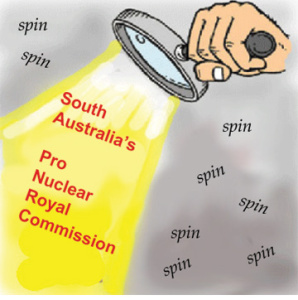 Shunning nuclear power but not its waste: Assessing the risks of Australia becoming the world’s nuclear wasteland http://www.sciencedirect.com/science/article/pii/S2214629616301323 Mark Diesendorf
Abstract
The South Australian Nuclear Fuel Cycle Royal Commission has undertaken ‘an independent and comprehensive investigation into the potential for increasing South Australia’s participation in the nuclear fuel cycle’. In its Final Report, issued 6 May 2016, it acknowledges that nuclear power would not be commercially viable in South Australia in the foreseeable future. However it recommends that ‘the South Australian Government establish used nuclear fuel and intermediate level waste storage and disposal facilities in South Australia’.
This is a business proposition to store a large fraction of global nuclear wastes, providing interim above-ground storage followed by permanent underground storage in South Australia.
The present critical evaluation of the scheme finds that the Royal Commission’s economic analysis is based on many unsubstantiated assumptions. Furthermore, the scheme is financially risky for both Australian taxpayers and customers and has a questionable ethical basis.
Antarctic is being polluted by uranium mining in Australia
Climate scientists: Australian uranium mining pollutes Antarctic http://phys.org/news/2016-06-climate- scientists-australian-
uranium-pollutes.html June 30, 2016 by Beth Staples Uranium mining in Australia is polluting the Antarctic, about 6,000 nautical miles away. University of Maine climate scientists made the discovery during the first high-resolution continuous examination of a northern Antarctic Peninsula ice core.
Ice core data reveal a significant increase in uranium concentration that coincides with open pit mining in the Southern Hemisphere, most notably Australia, says lead researcher Mariusz Potocki, a doctoral candidate and research assistant with the Climate Change Institute.
“The Southern Hemisphere is impacted by human activities more than we thought,” says Potocki.
Understanding airborne distribution of uranium is important because exposure to the radioactive element can result in kidney toxicity, genetic mutations, mental development challenges and cancer.
Uranium concentrations in the ice core increased by as much as 102 between the 1980s and 2000s, accompanied by increased variability in recent years, says Potocki, a glaciochemist.
Until World War II, most of the uranium input to the atmosphere was from natural sources, says the research team.
But since 1945, increases in Southern Hemisphere uranium levels have been attributed to industrial sources, including uranium mining in Australia, South Africa and Namibia. Since other land-source dust elements don’t show similar large increases in the ice core, and since the increased uranium concentrations are enriched above levels in the Earth’s crust, the source of uranium is attributed to human activities rather atmospheric circulation changes.
In 2007, a Brazilian-Chilean-U.S. team retrieved the ice core from the Detroit Plateau on the northern Antarctic Peninsula, which is one of the most rapidly changing regions on Earth.
More information: Mariusz Potocki et al. Recent increase in Antarctic Peninsula ice core uranium concentrations, Atmospheric Environment (2016). DOI: 10.1016/j.atmosenv.2016.06.010 Journal reference:Atmospheric Environment  Provided by: University of Maine
Australian government’s efforts to bully Aborigines into a nuclear waste dump on their land?
The plan to turn South Australia into the world’s nuclear waste dump has been met with near-unanimous opposition from Aboriginal people.
The Royal Commission acknowledged strong Aboriginal opposition to its nuclear waste proposal in its final report – but it treats that opposition not as a red light but as an obstacle to be circumvented.
Radioactive waste and the nuclear war on Australia’s Aboriginal people,Ecologist Jim Green 1st July 2016
Australia’s nuclear industry has a shameful history of ‘radioactive racism’ that dates from the British bomb tests in the 1950s, writes Jim Green. The same attitudes persist today with plans to dump over half a million tonnes of high and intermediate level nuclear waste on Aboriginal land, and open new uranium mines. But now Aboriginal peoples and traditional land owners are fighting back!
Then the government tried to impose a dump on Aboriginal land in the Northern Territory, but that also failed.
Now the government has embarked on its third attempt and once again it is trying to impose a dump on Aboriginal land despite clear opposition from Traditional Owners. The latest proposal is for a dump in the spectacular Flinders Ranges, 400 km north of Adelaide in South Australia, on the land of the Adnyamathanha Traditional Owners.
The government says that no group will have a right of veto, which is coded racism: it means that the dump may go ahead despite the government’s acknowledgement that “almost all Indigenous community members surveyed are strongly opposed to the site continuing.”
The proposed dump site was nominated by former Liberal Party politician Grant Chapman but he has precious little connection to the land. Conversely, the land has been precious to Adnyamathanha Traditional Owners for millennia.
It was like somebody ripped my heart out’
The site is adjacent to the Yappala Indigenous Protected Area (IPA). “The IPA is right on the fence – there’s a waterhole that is shared by both properties”, said Yappala Station resident and Adnyamathanha Traditional Owner Regina McKenzie.
The waterhole – a traditional women’s site and healing place – is one of many archeological and culturally significant sites in the area that Traditional Owners have registered with the South Australian government over the past six years. Two Adnyamathanha associations – Viliwarinha Aboriginal Corporation and the Anggumathanha Camp Law Mob – wrote in November 2015 statement:
“Adnyamathanha land in the Flinders Ranges has been short-listed for a national nuclear waste dump. The land was nominated by former Liberal Party Senator Grant Chapman. Adnyamathanha Traditional Owners weren’t consulted. Even Traditional Owners who live next to the proposed dump site at Yappala Station weren’t consulted. This is an insult.
“The whole area is Adnyamathanha land. It is Arngurla Yarta (spiritual land). The proposed dump site has springs. It also has ancient mound springs. It has countless thousands of Aboriginal artefects. Our ancestors are buried there.
“Hookina creek that runs along the nominated site is a significant women’s site. It is a registered heritage site and must be preserved and protected. We are responsible for this area, the land and animals.
“We don’t want a nuclear waste dump here on our country and worry that if the waste comes here it will harm our environment and muda (our lore, our creation, our everything). We call on the federal government to withdraw the nomination of the site and to show more respect in future.”
Regina McKenzie describes getting the news that the Flinders Ranges site had been chosen from a short-list of six sites across Australia: “We were devastated, it was like somebody had rang us up and told us somebody had passed away. My niece rang me crying … it was like somebody ripped my heart out.”
McKenzie said on ABC television: “Almost every waste dump is near an Aboriginal community. It’s like, yeah, they’re only a bunch of blacks, they’re only a bunch of Abos, so we’ll put it there. Don’t you think that’s a little bit confronting for us when it happens to us all the time? Can’t they just leave my people alone?”
Adnyamathanha Traditional Owner Dr Jillian Marsh said in an April 2016 statement:
“The First Nations people of Australia have been bullied and pushed around, forcibly removed from their families and their country, denied access and the right to care for their own land for over 200 years. Our health and wellbeing compares with third world countries, our people crowd the jails. Nobody wants toxic waste in their back yard, this is true the world over. We stand in solidarity with people across this country and across the globe who want sustainable futures for communities, we will not be moved.”
The battle over the proposed dump site in the Flinders Ranges will probably be resolved over the next 12 months. If the government fails in its third attempt to impose a dump against the wishes of Aboriginal Traditional Owners, we can only assume on past form that a fourth attempt will ensue……
Now Aboriginal people in South Australia face the imposition of a national nuclear waste dump as well as a plan to import 138,000 tonnes of high-level nuclear waste and 390,000 cubic metres of intermediate level waste for storage and disposal as a commercial venture.
The plan is being driven by the South Australian government, which last year established a Royal Commission to provide a fig-leaf of independent supporting advice. The Royal Commissioner is a nuclear advocate and the majority of the members of the Expert Advisory Committee are strident nuclear advocates.
Indeed it seems as if the Royal Commissioner sought out the dopiest nuclear advocates he could find to put on the Expert Advisory Committee: one thinks nuclear power is safer than solar, another thinks that nuclear power doesn’t pose a weapons proliferation risk, and a third was insisting that there was no credible risk of a serious accident at Fukushima even as nuclear meltdown was in full swing.
Announcing the establishment of the Royal Commission in March 2015, South Australian Premier Jay Weatherill said: “We have a specific mandate to consult with Aboriginal communities and there are great sensitivities here. I mean we’ve had the use and abuse of the lands of the Maralinga Tjarutja people by the British when they tested their atomic weapons.”
Yet the South Australian government’s handling of the Royal Commission process systematically disenfranchised Aboriginal people. The truncated timeline for providing feedback on draft Terms of Reference disadvantaged people in remote regions, people with little or no access to email and internet, and people for whom English is a second language. There was no translation of the draft Terms of Reference, and a regional communications and engagement strategy was not developed or implemented.
Aboriginal people repeatedly expressed frustration with the Royal Commission process. One example (of many) is the submission of the Anggumathanha Camp Law Mob (who are also fighting against the plan for a national nuclear waste dump on their land):
“Why we are not satisfied with the way this Royal Commission has been conducted:
Yaiinidlha Udnyu ngawarla wanggaanggu, wanhanga Yura Ngawarla wanggaanggu? – always in English, where’s the Yura Ngawarla (our first language)?
“The issues of engagement are many. To date we have found the process of engagement used by the Royal Commission to be very off putting as it’s been run in a real Udnyu (whitefella) way. Timelines are short, information is hard to access, there is no interpreter service available, and the meetings have been very poorly advertised. …
“A closed and secretive approach makes engagement difficult for the average person on the street, and near impossible for Aboriginal people to participate.”
The plan to turn South Australia into the world’s nuclear waste dump has been met with near-unanimous opposition from Aboriginal people. The Aboriginal Congress of South Australia, comprising people from many Aboriginal groups across the state, endorsed the following resolution at an August 2015 meeting:
“We, as native title representatives of lands and waters of South Australia, stand firmly in opposition to nuclear developments on our country, including all plans to expand uranium mining, and implement nuclear reactors and nuclear waste dumps on our land. … Many of us suffer to this day the devastating effects of the nuclear industry and continue to be subject to it through extensive uranium mining on our lands and country that has been contaminated.
“We view any further expansion of industry as an imposition on our country, our people, our environment, our culture and our history. We also view it as a blatant disregard for our rights under various legislative instruments, including the founding principles of this state.”
The Royal Commission acknowledged strong Aboriginal opposition to its nuclear waste proposal in its final report – but it treats that opposition not as a red light but as an obstacle to be circumvented.http://www.theecologist.org/News/news_analysis/2987853/radioactive_waste_and_the_nuclear_war_on_australias_aboriginal_people.html
Nuclear weapons risk could spread if laser uranium enrichment technology is adopted
Laser uranium enrichment technology may create new proliferation risks, Science Daily, June 27, 2016
- Source:
- Princeton University, Woodrow Wilson School of Public and International Affairs
- Summary:
- A new laser-based uranium enrichment technology may provide a hard-to-detect pathway to nuclear weapons production, according to a forthcoming paper.
- A new laser-based uranium enrichment technology may provide a hard-to-detect pathway to nuclear weapons production, according to a forthcoming paper in the journalScience & Global Security by Ryan Snyder, a physicist with Princeton University’s Program on Science and Global Security.
- One example of this new third-generation laser enrichment technique may be the separation of isotopes by laser excitation (SILEX) process which was originally developed in Australia and licensed in 2012 for commercial-scale deployment in the United States to the Global Laser Enrichment consortium led by General Electric-Hitachi. Research on the relevant laser systems is also currently ongoing in Russia, India and China.
The paper explains the basic physics of the new uranium separation concept, which relies on the selective laser excitation and condensation repression of uranium-235 in a gas. It also estimates the key laser performance requirements and possible operating parameters for a single enrichment unit and how a cascade of such units could be arranged into an enrichment plant able to produce weapon-grade highly enriched uranium.
Using plausible assumptions, the paper shows how a covert laser enrichment plant sized to make one bomb’s worth of weapon-grade material a year could use less space and energy than a similar scale plant based on almost all current centrifuge designs, the most efficient enrichment technology in use today. The results suggest a direct impact on detection methods that use size or energy use as plant footprints……..https://www.sciencedaily.com/releases/2016/06/160627160941.htm
Climate change: Australia covered up the truth on its damaged World Heritage sites
 Australia covered up UN climate change fears for Tasmania forests and Kakadu
Fears about damage to the Great Barrier Reef were removed from UN report along with concern about a threat to the environment in two other heritage sites, Guardian, Michael Slezak, 29 May 16, A draft UN report on climate change, which was scrubbed of all reference to Australia over fears it could deter visitors to the Great Barrier Reef, also outlined possible threats to the Tasmania wilderness and Kakadu.
 The draft report contained a chapter on the Great Barrier Reef, which described climate change as “the biggest long-term threat to the [reef] today, and to its ecosystems services, biodiversity, heritage values and tourism economy”.
It concluded that “without a comprehensive response more in keeping with the scale of the threat, the [reef]’s extraordinary biodiversity and natural beauty may lose its world heritage values”.
But before it was scrubbed, the report had two other key sections on Australian world heritage sites, and the threats they face from climate change.
One of those sections was on the Tasmanian wilderness…….the censored section of the Unesco report on Tasmania is clear about the “dire” nature of the threat.
It said: “A 2013 assessment of climate threats identified the same habitats as at high risk from greater fire frequency and drier conditions, with likely catastrophic implications for fauna. These dire predictions appeared to be playing out in January 2016, when tens of thousands of hectares of forest burned, sparked by lightning strikes that came in a month when temperatures were 2C above average and in the wake of the driest two-year period ever recorded for the region.”
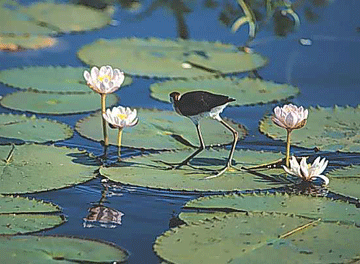 The deleted section on Kakadu national park contained similarly dire warnings.
It described the important natural and cultural values of Kakadu, which has been inhabited by Aboriginal people for 50,000 years.
“The thousands of rock art sites in the park are at risk from damage by more extreme rainfall events, while sea level rise is happening at twice the global average along the northern Australian coast,” the draft report said.
It warned that fresh-water wetlands were at risk from sea level rise, as they are likely to be inundated with salt water. “Climate change threatens Aboriginal traditional use by altering the ecosystems of the vast wetlands of Kakadu and raising temperatures to a level likely to lead to more intense fire regimes,” the report said.
The final version of the report entitled “World heritage and tourism in a changing climate” was published last week by Unesco, United Nationsenvironment programme and the Union of Concerned Scientists, with all references to Australia removed.
The lead author of the report, Adam Markham, told Guardian Australia: “I was shocked when I read in the Guardian the reasons the Australian government gave for why they had pressured Unesco to drop the Australian sites.” http://www.theguardian.com/environment/2016/may/29/australia-covered-up-un-climate-change-fears-for-tasmania-forests-and-kakadu
Australia got UN to remove climate topics from climate change report!
Australia scrubbed from UN climate change report after government intervention http://www.theguardian.com/environment/2016/may/27/australia-scrubbed-from-un-climate-change-report-after-government-intervention#comment-75076075
Exclusive: All mentions of Australia were removed from the final version of a Unesco report on climate change and world heritage sites after the Australian government objected on the grounds it could impact on tourism
Revealed: Guardian Australia has obtained the Unesco report Australia didn’t want the world to see. Read it now Guardian, Michael Slezak, 27 May 16
Every reference to Australia was scrubbed from the final version of a major UN report on climate change after the Australian government intervened, objecting that the information could harm tourism.
Guardian Australia can reveal the report “World Heritage and Tourism in a Changing Climate”, which Unesco jointly published with the United Nations environment program and the Union of Concerned Scientists on Friday, initially had a key chapter on the Great Barrier Reef, as well as small sections on Kakadu and the Tasmanian forests.
But when the Australian Department of Environment saw a draft of the report, it objected, and every mention of Australia was removed by Unesco. Will Steffen, one of the scientific reviewers of the axed section on the reef, said Australia’s move was reminiscent of “the old Soviet Union”.
No sections about any other country were removed from the report. The removals left Australia as the only inhabited continent on the planet with no mentions.
Explaining the decision to object to the report, a spokesperson for the environment department told Guardian Australia: “Recent experience in Australia had shown that negative commentary about the status of world heritage properties impacted on tourism.”
 As a result of climate change combined with weather phenomena, the Great Barrier Reef is in the midst of the worst crisis in recorded history. Unusually warm water has caused 93% of the reefs along the 2,300km site to experience bleaching. In the northern most pristine part, scientists think half the coral might have died.
The omission was “frankly astounding,” Steffen said. Steffen is an emeritus professor at the Australian National University and head of Australia’s Climate Council. He was previously executive director of the International Geosphere Biosphere Programme, where he worked with 50 countries on global change science.
“I’ve spent a lot of my career working internationally,” Steffen said. “And it’s very rare that I would see something like this happening. Perhaps in the old Soviet Union you would see this sort of thing happening, where governments would quash information because they didn’t like it. But not in western democracies. I haven’t seen it happen before.”
The news comes less than a year after the Australian governmentsuccessfully lobbied Unesco to not list the Great Barrier Reef in its list of “World Heritage Sites in Danger”.
The removals occurred in early 2016, during a period when there was significant pressure on the Australian government in relation to both climate change and world heritage sites.
At the time, news of the government’s science research agency CSIRO sacking 100 climate scientists due to government budget cuts had just emerged; parts of the Tasmanian world heritage forests were on fire for the first time in recorded history; and a global coral bleaching event was beginning to hit the Great Barrier Reef – another event driven by global warming.
The environment department spokesperson told Guardian Australia: “The department was concerned that the framing of the report confused two issues – the world heritage status of the sites and risks arising from climate change and tourism.” Continue reading
South Australia gets rid of coal power, runs over 50% on renewable energy
South Australia runs mainly on renewable energy following coal plant closure,The Independent, Gabriel Samuels 12 May 16 Majority of energy comes from solar and wind but the transition has been fraught with difficulties South Australia now gets the bulk of its electricity from wind and solar power, following the closure of its last coal-fired power station.
The state, which includes the city of Adelaide, exclusively has gas generators, solar panels and wind turbines serving a population of 1.7 million.
More than 50% of the region’s electricity stems from wind and solar with the remainder coming from energy efficient combined cycle gas plants.
The final coal station still in operation in Port Augusta closed down on May 9 after operating for 31 years. It generated 520 megawatts of power from coal but failed to compete with the falling price of clean renewable energy. Its closure produced a brief faltering in wholesale energy prices across the state.
The RenewablesSA transition initiative was established by the state govenment in late 2009 with a promise of $10 billion invested in low carbon generation by 2025…….
The state plans to become Australia’s wind and solar capital and is working towards complete reliance on natural sources
The state’s leading electricity provider, SA Power Networks, yesterday announced it will undertake Australia’s largest trial of storage batteries in solar homes in a bid to defer a $3 million network upgrade.
Meanwhile, last week Portugal ran entirely on renewable energy for four consecutive days between Saturday and Wednesday, in a bid to become completely reliant on natural resources.
The Independent has contacted RenewablesSA for comment. http://www.independent.co.uk/news/world/australasia/south-australia-runs-entirely-renewable-energy-following-coal-plant-closure-a7037646.html
Australian university team sets new world record set for converting sunlight to electricity
New world record set for converting sunlight to electricity http://www.gizmag.com/solar-cell-electricity-efficiency-world-record-unsw/43384/ Eric Mack May 17, 2016 An Australian team has set a new record for squeezing as much electricity as possible out of direct, unfocused sunlight via a new solar cell configuration. Engineers at the University of New South Wales (UNSW) achieved 34.5 percent sunlight-to-electricity conversion efficiency, a new mark that also comes closer than ever to the theoretical limits of such a system.
UNSW’s Dr. Mark Keevers and Professor Martin Green set the record with a 28 centimeter-square (4.3 sq in), four-junction mini-module embedded in a prism. This new configuration allows the sun’s rays to be split into four bands so that a higher amount of energy can be extracted from each beam.
The same team reached an even higher level of efficiency a few years back using mirrored concentrators that were able to convert 40 percent of incoming sunlight to electricity. However, this new record is the highest level achieved without the use of concentrators.
“What’s remarkable is that this level of efficiency had not been expected for many years,” said Green, citing a German study that set a goal of 35 percent efficiency to be reached by 2050.
The team does not expect that its record-breaking cell configuration will find its way on to home or office rooftops anytime soon, as they are more costly to manufacture. The group is working to reduce the complexity to make them cheaper to produce and sees a future for them on solar towers that make use of concentrating mirrors.
Meanwhile, efficiency gains are also being made in the development of organic solar cells that are cheaper and more flexible. There’s still a long way to go though, as the most recent record for organic photovoltaics set in February was 13.2 percent efficiency. Source: University of New South Wales
Cultural genocide – nuclear waste dumping in Australia: Take a stand!
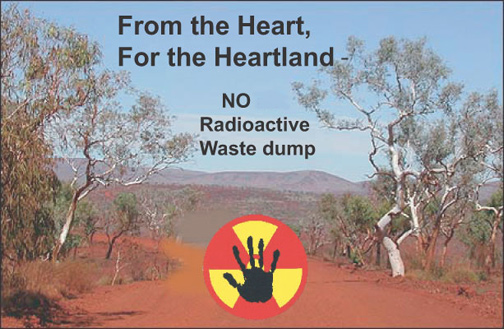 Stop Australia From Committing “Cultural Genocide” and Environmental Injustice http://www.truth-out.org/news/item/36006-stop-australia-from-committing-cultural-genocide-and-environmental-injustice, 14 May 2016 By Jessica Ramos, Care2 | Report Australia is about to make a horrible mistake. The country has (at least, tentatively) earmarked the location of its first nuclear dumping site next to an aboriginal cultural site. And the aboriginal community is speaking out — calling the proposed site “cultural genocide.” Australia is on the path to repeating the United States’ past mistakes and environmental injustices.
Can You Put a Price on Cultural Genocide and Death? Yes, Apparently
The traditional lands at the center of the controversy belong to the Adnyamathanha, also known as the “rock people,” from Flinders Ranges, South Australia. In 2009, the Federal Court of Australia recognized the Adnyamathanha’s native rights over 16,000 square miles of territory. But a nuclear dumping site of low- and intermediate-level nuclear waste (e.g. from medical procedures) endangers their territory and legal rights.
As reported in The Guardian, Wallerberdina Station (a cattle station) near Barndioota — less than 500km north of Adelaide in the Flinders Ranges — was originally one of six sites selected for the proposed nuclear dump last year, but now it’s the only location under consideration after a “four-month consultation process.” I’m not sure who was consulted, but it doesn’t appear to be the Adnyamathanha.
“This is our land, we have been here forever and we will always be here and we are totally opposed to this dump,” says Vince Coulthard, the Adnyamathanha Traditional Lands Association (ATLA) chief executive, to The Guardian. Apart from calling the move “cultural genocide,” Coulthard adds that the community has been mostly excluded from the decision-making process.
Important Adnyamathanha cultural sites near the proposed dumping site need to be taken into consideration. Hookina Creek, a women’s place and registered heritage site, is one of these sites. When Regina McKenzi, an Adnyamathanha woman, learned about the proposed dumping area coming to her ancestral lands, she told The Guardian that she felt like she was “getting news of a death.”
But, hey, the Adnyamathanha will be compensated for, so that’s something — right? As reported in The Guardian, Josh Frydenberg MP, the Minister for Resources, Energy and Northern Australia, explains that the Adnyamathanha community will receive $2m for local projects and $10m if the Wallerberdina Station is ultimately selected. Frydenberg adds that consulting the aboriginal community is the next wave of the process — even though it should’ve been a priority since the process’ inception, in my humble opinion.
National Treasures, Not Nuclear Dumping Sites
If you’re from the United States, then this whole ordeal should sound somewhat familiar. When I wrote about the massive mine spill caused by the EPA near the Navajo Nation last year, it was hard not to reflect on the ways indigenous communities experience environmental injustice. The Navajo Nation is probably the most infamous and prominent example with its long history of uranium mining that caused high rates of cancers and lung disease in the community.
But this form of injustice isn’t limited to one tribe. According to the Scientific American, “[n]ative tribes across the American West have been and continue to be subjected to significant amounts of radioactive and otherwise hazardous waste as a result of living near nuclear test sites, uranium mines, power plants and toxic waste dumps.”
Environmental injustice just doesn’t compromise the physical health of the locals. It also compromises the environment, and, ultimately, the cultural health. To this day, many indigenous identities are intricately tied to ancestral lands. By polluting sacred, ancestral and/or historical sites, these companies and governments are also polluting ancestral memories and robbing future generations of their ancestral identities. Millions of dollars can never compensate for these past and future losses.
Cultures, languages, traditions and stories that have survived centuries of colonization are national treasures — not nuclear dumping sites.
Take Action!
The final decision for the nuclear dumping site will occur in a year, please act now by signing and sharing this petition urging Australian leaders not to dump nuclear waste near Adnyamathanha territory.
Citizens’ Juries (IF FAIR AND TRANSPARENT) could help solve South Australia’s nuclear waste dilemma
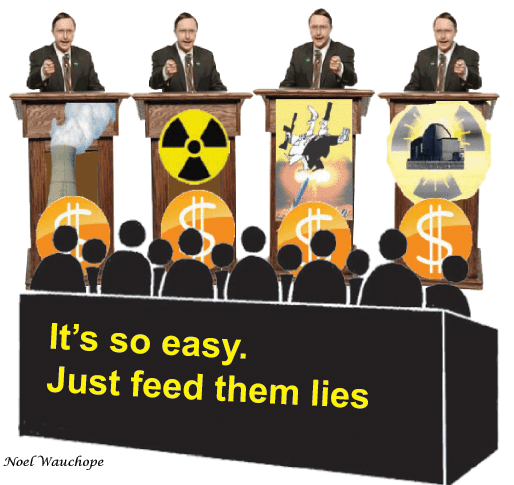 The role of Citizens’ Juries in decision-making on nuclear waste importation, Online opinion, By Noel Wauchope 13 May 2016 On May 10th South Australian Premier Jay Weatherill announced the process by which the state will decide whether or not to host a global nuclear waste import industry, as recommended by the Nuclear Fuel Cycle Royal Commission.
The first step will be to set up a “Citizens’ Jury” of 50 participants randomly selected from 25,000 invitees statewide, to be followed later by another one of 350 participants.
I think that Weatherill might have mistaken his terms here, as a Citizens’ Jury, by definition, means a group of 10 to 12 participants. The Weatherill plan sounds more like a “Deliberative Poll”, which involves a much larger group.
A properly constituted Citizens’ Jury can be a valuable process in participatory democracy. The group of 10 or 12 people serves as microcosm of the public. …… The process depends on having the oversight of a neutral but well informed advisory panel. Questions need to be framed in a way that does not risk influencing the response. Transparency is important, and complete audio or video recordings of all jury hearings should be publicly available, although the actual jury room deliberations should be private.
The citizen jury process can be an empowering one for the participants, and, as long as it is perceived to be fair and transparent, can be a valuable democratic option for assessing public opinion. It also has the advantage of being cost-effective.
The “Deliberative Poll” method is potentially another very useful form of participatory democracy. It is a lot more expensive, and more complicated. The biggest disadvantage of the Deliberative Poll method is probably its cost. Wikipedia notes:
“Imagine how much money is needed to pay for the trips, the hotel and the food for each participant, hiring the research crew and moderators, booking a venue, etc. Additional costs can include paying for participants’ compensation so that people that are randomly selected can put aside their duties to attend the events (i.e. hiring someone to milk a participant’s cow and providing child care”
Some critics insist that funding for either of these processes should not come from on single body.
“Multiple sources of funding help to ensure that the jury’s organisers are not seen as having a financial interest in producing a verdict that supports the interests of a single funding body. To maximise the scrutiny they provide, the two or more funders should have somewhat opposing interests regarding the subject likely to be under discussion.”……
In Japan, in 2012, a Deliberative Poll formed the guide to government decision-making. The Japanese government used the Center for Deliberative Democracy’s Deliberative Polling method to both inform participants and allow them to influence policymakers about the public’s will with regard to energy production issues. As a direct result of the deliberative polling process, Japan’s national government pledged to have zero percent dependency on nuclear energy after 2030. (This decision was overturned by a later government).
The South Australian government’s decision to start with a participatory democracy process is a welcome one, provided that it is done fairly and properly. Neither a Citizens Jury nor a Deliberative Poll can be a substitute for a fully democratic process like a referendum, but either could be a valuable contributor to a wider process of decision making. http://www.onlineopinion.com.au/view.asp?article=18230
Australia’s nuclear submarine boondoggle – a crippling waste of tax-payers’ money
4. BUT WAIT THERE’S MORE So we spend $2,000 each. That just gets us the big lumps of steel. If you actually want to use them, you’re paying more. It could be another $2,000 to $4,000 per Australian….
OPTIONS The great thing about the way the acquisition will work is there should be the opportunity to cut back from 12 when the inevitable delays and cost blowouts happen. From here we can’t save the whole $2000 but maybe we can save some, for better uses.
 Sub standard: why the $2,000 we are each spending on submarines will probably be a terrible waste http://www.news.com.au/technology/innovation/design/sub-standard-why-the-2000-we-are-each-spending-on-submarines-will-probably-be-a-terrible-waste/news-story/6922de6f6a72657c669fdc1a1248916f APRIL 30, 2016, Jason Murphy news.com.au@jasemurphy AUSTRALIA is spending $50 billion to buy submarines. The biggest whack of money we’ve ever spent on a Defence project. It comes out at $2000 per person. And it’s probably a shocking idea.
1. STRATEGY The strategic rationale for submarines is that an island needs trade lanes to stay open. Yep, we do. But the kind of war where a country lays siege to another whole country — think German U-Boats blockading Britain — is no longer likely at all.
Our non-nuclear submarines would have been handy in the past. And the generals are always “fighting the last war” strategically. Which is fine. But it would be better if we didn’t have to give them $2000 to do so.
2. AVAILABILITY We are buying 12 boats. Except — here’s the thing — you can’t use them all at once. Subs need a lot of maintenance. Take the Collins Class submarines, of which we have six. Best-case scenario — if things are going splendidly — is they spend half the time in the water, half in maintenance. But those subs have big problems. Some recent years we’ve managed to have basically just one in the water on average.
3. COST BLOWOUTS The Joint Strike Fighter aircraft program, which we bought into, is now many billions of dollars over Budget. Possibly hundreds of billions (reports vary). And it is hardly alone.
We consistently underestimate how complex defence equipment is because we, naturally, compare it to a vehicle. But not only is our new submarine custom-made (unlike my station wagon) it is also cutting edge technology.
It has to do many things perfectly. A submarine is a fortress, an IT hub, a weapons system, a vehicle and a temporary home all in one. Making all the things fit in together is hard. (Recently Spanish submarine builders had to send their sub back to the drawing board after they accidentally made it 75 tons too heavy and it was going to sink.)
When you face the inevitable problems you can either compromise or just spend that bit more to make it work. And if you cut corners on Defence equipment, you risk losing personnel and very expensive equipment… So of course you spend a bit more. And that’s how such laughably enormous cost blowouts happen.
4. BUT WAIT THERE’S MORE So we spend $2,000 each. That just gets us the big lumps of steel. If you actually want to use them, you’re paying more. It could be another $2,000 to $4,000 per Australian over the next 45 years. All that maintenance is expensive. And so are the crews.
The Navy has had enormous problems actually finding and training crew for submarines. A cook on a submarine can be paid an amazing $200,000 per year. Other personnel get more. Living in a big steel tube for 80 days with only other men for company is rubbish, apparently.
5. ENOUGH IS ENOUGH! Australia is the 52nd biggest country in the world by population, 13th by size of economy, and sixth by land area. We spend 13th most on defence. And we are ramping up by $26 billion per year over the next 10 years.
It is a lot, given we have no land borders, the natural advantage of being surrounded by a giant moat, and are strategically not on the way to anywhere much (sorry NZ).
The main reason anyone would attack us is in the context of a global or regional conflict is we have a large military they might fear.
Our spending has an effect on our neighbours. Indonesia is not a rich country, but they have indicated they are also thinking about expanding their submarine fleet. Would limiting our spending help forestall a local arms race?
OPTIONS The great thing about the way the acquisition will work is there should be the opportunity to cut back from 12 when the inevitable delays and cost blowouts happen. From here we can’t save the whole $2000 but maybe we can save some, for better uses.
Ukraine – insecure, corrupt, – on Chernobyl anniversary – the nuclear danger
For security reasons, Australia has suspended uranium sales to Russia. It seems extraordinary that Australia should now enter into a deal with even more unsafe and unstable Ukraine, in its present war and political crisis.
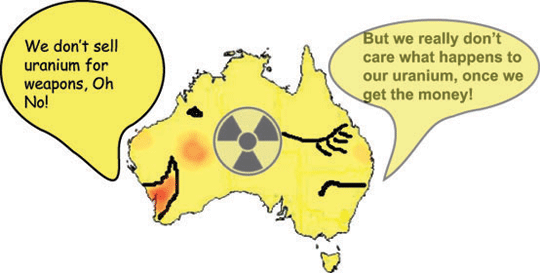
 Four big reasons not to sell uranium to Ukraine https://independentaustralia.net/environment/environment-display/fourbig-reasons-not-to-sell-uranium-to-ukraine,8895 Noel Wauchope 18 April 2016 As the 30th anniversary of the Chernobyl disaster approaches, Noel Wauchope outlines just a few compelling reasons why the Coalition Government’s uranium deal with Ukraine may have further disastrous consequences.
WHAT AMAZINGLY insensitive timing! As the anniversary of the Chernobyl nuclear catastrophe approaches, Australia makes a deal (at the Nuclear Security Summit) to sell uranium to Ukraine.
This is such a bad idea for so many reasons — it’s hard to know which to pick first!
Economics: simply because uranium exporting is not really economically worthwhile.
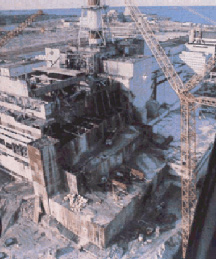 Chernobyl’s plight: because Ukraine’s Chernobyl radioactive disaster is continuing. (We supplied uranium for that other catastrophe — Fukushima.)
Insecurity: Ukraine’s dangerous nuclear industry due to civil war, ageing reactors, risks of smuggling and terrorism.
Political crisis: Ukraine’s notoriously corrupt and unstable political regime.
Let’s check those four reasons.
Economics
The global uranium industry is in a declining state. Price reporting companies describe repeated low and falling uranium prices. Australia’s uranium industry now accounts for 0.2 per cent of national export revenue — and that’s not counting profits that go overseas, due to the high degree of foreign ownership of companies mining uranium in Australia.
Chernobyl’s plight
The 30th anniversary of Ukraine’s Chernobyl nuclear accident is on 26 April 2016. Ukraine is still suffering from, and struggling with, the legacy of that radioactive catastrophe. The conservativeWorld Health Organisation (WHO) estimates the radiation caused deaths at 4,000 — based on itsreport ‘Health Effects of the Chernobyl Accident and Special Health Care Programmes’. The 2016 TORCH (The Other Report on Chernobyl) Report amplifies this discussion (summary here) but all sources agree that no conclusive figure can be given.
The legacy of the accident includes the struggle to contain the radioactivity of the shattered reactor.
Insecurity
This issue of nuclear security is another irony in this uranium sales deal. Julie Bishop and Ukraine President used the meeting of the Nuclear Security Summit in New York to discuss the sale. The focus of the Summit was the need to protect radioactive materials from dangerous zones, and from the risk of terrorists obtaining them.
You couldn’t pick a more dangerous zone than Ukraine
Ukraine’s Zaporizhia nuclear facility is Europe’s largest and is only 200 kilometres from the conflict zone in eastern Ukraine. Already there have been sabotage events that affected its nuclear programme.
All of these events have led to an additional emergency shutdown of the electrical network of two units at thermal power plants – the Dnieper and Uglegorskaya – and the emergency unloading by 500 MW of nuclear power plants in Ukraine. This includes Zaporozhskaya NPP and the South Ukrainian NPP. I want to stress that such emergency unloading of a nuclear plant – it is very dangerous. ~ Senior Ukrainian energy official Yuriy Katich.
Some commentators have described nuclear plants in the region as pre-deployed nuclear targets and there have already been armed incursions during the recent conflict period.
Bankwatch recently listed 10 reasons why Ukraine’s nuclear power stations are a security danger for Europe. These include Ukraine’s ageing reactors – some already having exceeded their planned lifespan – and restrictions on the nuclear regulator’s ability to inspect reactors. Bankwatch regards Ukraine as a huge financial risk to Europe:
The European Commission, the European Parliament, and EU governments – particularly in neighouring countries that could be affected by the Ukrainian government’s reckless nuclear adventure – need to demand Ukraine complies with its international obligations, especially when EU public money is involved.
Petro Poroshenko’s Government is responding to Bankwatch’s criticism with a lawsuit against Bankwatch’s member group National Ecological Centre of Ukraine (NECU), in an attempt to silence criticism and avoid public scrutiny. Organisations in five European countries have joined in a campaign for transparency about Ukraine’s nuclear programme.
Even Ukraine’s own Progress Report to the Nuclear Security Summit admits some safety problems, listing over 1400 sources of ionising radiation that are not under regulatory control.
Ukraine now has a messy and competitive nuclear power system, in which Western companiesAREVA and Westinghouse compete in marketing and upgrading nuclear reactors and lobby to sell nuclear fuel. But Russia actually controls the fuel supply, providing nuclear fuel to 13 out of Ukraine’s 15 reactors.
Ukraine is just next door to Moldova, the heart of a 2014 nuclear smuggling gang. With Ukraine’s secretive nuclear arrangements, and inadequate regulatory system, the possibility of theft of radioactive materials is a real one in Ukraine.
Political crisis
Oligarchs are reported to control 70 per cent of the state’s economy. The country has been described as a “cleptocracy” —with so much intrigue amongst corrupt politicians and oligarchs that it’s called “Ukraine’s Deep State”.
President Petro Poroshenko himself is a very successful businessman, whose business assets have increased over the past year. Before the last election, Poroshenko pledged to sell his company Roshen but now refuses to do so. He also owns a major TV channel. His private assets are larger than those of any other European leader. Poroshenko is currently involved in a real estate scandal.
Along with lawmaker and business partner Ihor Kononenko, Poroshenko is co-owner of the International Investment Bank. Kononenko is accused of being involved in a laundering scheme that moves money from Ukrprominvest (a group founded by Kononenko and Poroshenko) to the British Virgin Islands through offshore companies Intraco Management Ltd and Ernion. Economy Minister Aivaras Abromavicius, who worked to expose political corruption, resigned in disgust on 3 February, saying:
“Neither me nor my team have any desire to serve as a cover-up for the covert corruption, or become puppets for those who, very much like the “old” government, are trying to exercise control over the flow of public funds”.
Aivaras claimed that Prime Minister Mr Yatsenyuk and Mr Poroshenko were blocking reforms aimed at tackling corruption. Ukraine Prime Minister Arseniy Yatsenyuk resigned suddenly on 11 April, under pressure from Poroshenko, who has replaced him with close associate, Volodymyr Groysman. Several reformers from Ukraine’s previous government are departing after declining to serve under Mr Groysman.
The West is watching the Ukrainian regime carefully. The IMF has been providing a $17.5 billion support scheme to cash-strapped Ukraine but has put it on hold, due to the corruption and instability of the regime.
Early this month, the Netherlands held a referendum regarding a potential Ukraine-EU treaty on closer political and economic ties. A whopping 61 per cent (2.509 million people) voted against Ukraine’s association with the EU. European nations, as well as many Ukrainians share in loss of confidence in the government, following this referendum as well as revelations of scandals in the Prosecutor General’s Office.
All this concern came to a head with the revelations of the Panama Papers, in which President Poroshenko figures largely. Unlike Iceland’s President, Poroshenko has no intention of resigning. The West has been very quiet about the allegations against him — presumably they support anyone who is opposed to Russia’s Putin.
Poroshenko claims that his financial arrangements have all been legal. But not everyone agrees with that. Igor Lutsenko, a member of Verkhovna Rada, Supreme Council of Ukraine, outlines how Poroshenko violated Ukrainian law in setting up the British Virgin Islands firm.
For security reasons, Australia has suspended uranium sales to Russia. It seems extraordinary that Australia should now enter into a deal with even more unsafe and unstable Ukraine, in its present war and political crisis.
No doubt the federal parliament’s influential Joint Standing Committee on Treaties (JSCOT) will examine the planned deal, that Julie Bishop signed up to in New York with Ukrainian Energy and Coal Industry Minister Volodymyr Demchyshyn.
JSCOT recently warned against the agreement to sell uranium to India but its recommendations were ignored by the Coalition Government. Here’s hoping that there will be scrutiny on the Ukrainian agreement and that the government will pay attention.
1 This Month
To see nuclear-related stories in greater depth and intensity – go to https://nuclearinformation.wordpress.com/

29 Jan. Thursday 7-8 p.m. Webinar – World’s Largest Nuclear Station in Port Hope, ON?

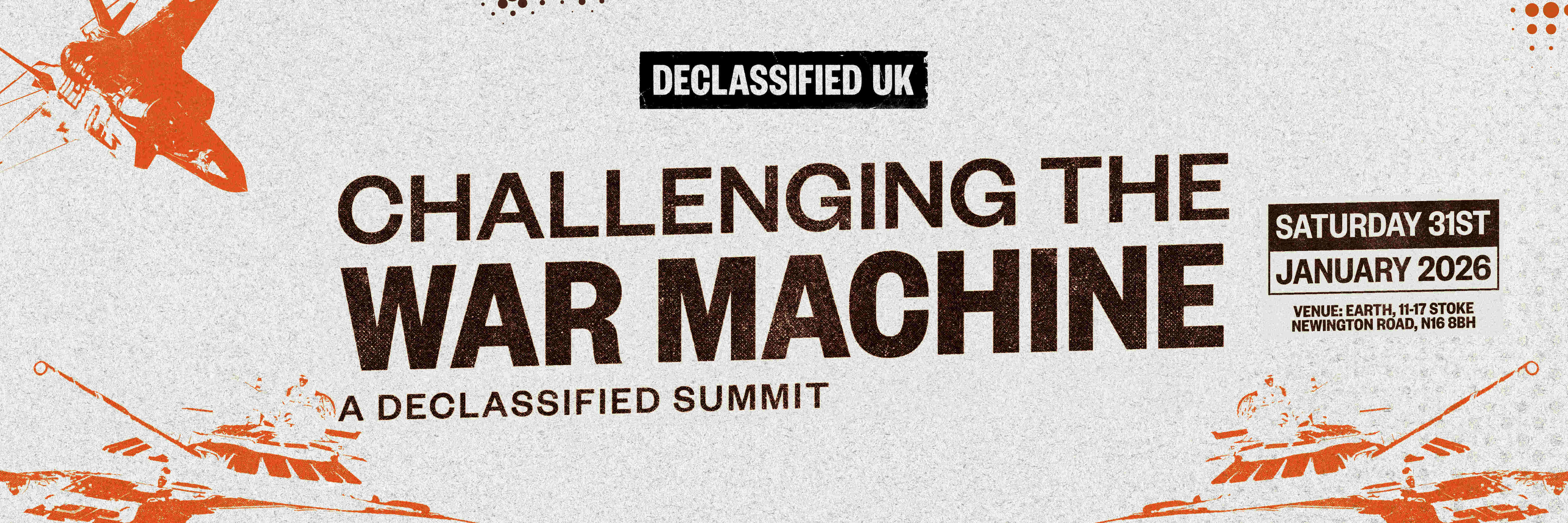
31st January – Challenging the War Machine – a DECLASSIFIED UK SUMMIT


Website of the Week
Now until to February 10, 2026 Radioactive waste storage in France: the debate is finally open! How to participate?
-
Archives
- January 2026 (271)
- December 2025 (358)
- November 2025 (359)
- October 2025 (376)
- September 2025 (258)
- August 2025 (319)
- July 2025 (230)
- June 2025 (348)
- May 2025 (261)
- April 2025 (305)
- March 2025 (319)
- February 2025 (234)
-
Categories
- 1
- 1 NUCLEAR ISSUES
- business and costs
- climate change
- culture and arts
- ENERGY
- environment
- health
- history
- indigenous issues
- Legal
- marketing of nuclear
- media
- opposition to nuclear
- PERSONAL STORIES
- politics
- politics international
- Religion and ethics
- safety
- secrets,lies and civil liberties
- spinbuster
- technology
- Uranium
- wastes
- weapons and war
- Women
- 2 WORLD
- ACTION
- AFRICA
- Atrocities
- AUSTRALIA
- Christina's notes
- Christina's themes
- culture and arts
- Events
- Fuk 2022
- Fuk 2023
- Fukushima 2017
- Fukushima 2018
- fukushima 2019
- Fukushima 2020
- Fukushima 2021
- general
- global warming
- Humour (God we need it)
- Nuclear
- RARE EARTHS
- Reference
- resources – print
- Resources -audiovicual
- Weekly Newsletter
- World
- World Nuclear
- YouTube
-
RSS
Entries RSS
Comments RSS
 nuclear-news