Australia’s nuclear waste policy shambles

In developing this plan, ANSTO had the option of choosing a different process.
They had the option of disposing of the wastes from O.P.A.L. to the USA, providing a cheaper alternative for ANSTO:
Australia’s nuclear waste policy shambles https://independentaustralia.net/politics/politics-display/australias-nuclear-waste-policy-shambles,15146B 2 June 2021 The Government is scrambling to figure out a solution to Australia’s nuclear waste problem with a new bill before the Senate, writes Noel Wauchope.
TO BE FAIR, Australia is not alone in having a shambolic policy on nuclear wastes. Russia, China, India and even France and the UK are secretive about all aspects of the nuclear fuel chain. But the USA, the first and biggest of the nuclear countries, has openly described its struggles with this problem.
I’ve always thought that America summed up its nuclear waste policy best in its Nuclear Waste Confidence Rule — first promulgated in 1984 and upgraded several times since. This rule, charmingly optimistic, stated that a permanent nuclear waste disposal solution would be found (no details, they didn’t know where, didn’t know when). But therefore, the nuclear industry could confidently continue to make radioactive trash.
It’s no surprise that Australia, too, is struggling with its relatively small amount of nuclear waste.
Indeed, as Griffith University Professor Ian Lowe has pointed out, Australia dodged a bullet in not having nuclear power:
“We were just lucky to avoid having nuclear power stations with mountains of accumulated waste, for which there is no effective permanent solution.”
Still, Australia’s one nuclear reactor, run by the Australian Nuclear Science and Technology Organisation (ANSTO) at Lucas Heights, Sydney, is now mired in problems about what to do with its nuclear waste.
Continue readingNew research highlights need for international standards to safeguard against plutonium ”hot” particles.

New study delves into issues relating to soils around Maralinga region, https://www.portlincolntimes.com.au/story/7262167/study-shows-radioactive-particles-from-nuclear-testing-persist-at-maralinga, Luca Cetta,
A new study has highlighted the first international standards needed to safeguard against contamination from nuclear testing, and a Kokatha Elder says the impact of nuclear testing at Maralinga cannot be forgotten.
More than 100 kilograms of highly toxic uranium and plutonium was dispersed in the form of tiny ‘hot’ radioactive particles after nuclear tests were conducted by the British in remote areas of South Australia, including Maralinga.
Scientists have new evidence these radioactive particles persist in soils to this day, more than 60 years after the detonations.
The British detonated nine nuclear bombs and conducted nuclear tests in South Australia between 1953 and 1963.
There had previously been limited understanding in how plutonium was released from the particles into the environment for uptake by wildlife around Maralinga.
The new study, published in Nature’s Scientific Reports, led by Monash University researchers, warns the hot particles are more complex and varied than previously thought.
Currently, there are no international best practice standards for the environmental impact or risk assessment of plutonium and uranium-rich hot particles released during nuclear testing.
This study provides the first mechanism for future modelling to predict the environmental life cycle of plutonium from hot particles, including how they are slowly broken down in the environment over a long period, and potentially exposed to animals and humans through inhalation, soil or ground water.
“The resulting radioactive contamination and cover-up continues to haunt us,” lead study author from Monash University’s School of Earth, Atmosphere and Environment Dr Megan Cook said.
“The results of our study profoundly changes our understanding of the nature of hot particles at Maralinga – despite the fact that those were some of the best studied particles anywhere in the world.”
Sue Haseldine, who grew up in the Koonibba district in the 1950s and 1960s, has long campaigned against nuclear testing and weapons.
She has been part of the International Campaign to Abolish Nuclear Weapons (ICAN), an organisation awarded the Nobel Peace Prize in 2017, and has spoken about her experience growing up in the shadow of nuclear testing at Maralinga.
Ms Haseldine said the people in the area had long-suspected there were health issues deriving from those tests.
“Experts would tell you that radiation will not last for 60 years, nor 60,000, but for a long, long time, and it is still causing troubles today,” she said.
“The old ladies told me these cancers and illnesses were not around before the bomb and over the years I have seen the rates go up.
“There are a lot more younger people with heart problems – it is known that radiation problems can cause heart diseases – and it is coming down through the generations.”
Ms Haseldine said the testing and fallout from Maralinga was not spoken about enough and that was why her campaigning with ICAN was so important.
“It is important to let people know what the government’s legacy is to us through their testing and we have to keep the past alive to protect the future, so they don’t do it to future generations,” she said.
“I grew up in the Koonibba district, but the radiation didn’t just stay in the Maralinga area.”
Study co-author professor Joël Brugger said the study invited a revisit of the implications of earlier results for the fate of plutonium at Maralinga.
“Understanding the fate of hot particles in the arid environment setting of the Australian outback is critical for securing Australia in case of nuclear incidents in the region, and returning all the native land affected by the British tests to the traditional Anangu owners of the Maralinga Tjarutja lands.”
The research team used synchrotron radiation at the Diamond Light Source near Oxford in the United Kingdom to decipher the physical and chemical make-up of the particles.
At Monash, they dissected some of the hot particles using a nano-sized ion beam, and further characterised the complex make-up of these particles down to the nano-size.
“It’s a major breakthrough,” study co-author associate professor Vanessa Wong said.
“Our observations of the hot particles from Maralinga provide a clear explanation for the complex and variable behaviour of different hot particles with respect to the chemical and physical weathering that has hindered predictive modelling to this day.
“This study provides a mechanistic foundation for predicting the future evolution of hot particles from high-temperature nuclear events and the likely exposure pathways.”
The researchers demonstrated the complexity of the hot particles arose from the cooling of polymetallic melts from thousands of degrees Celsius in the explosion cloud during their formation.
“We found that the particles contained low-valence plutonium-uranium-carbon compounds that are typically highly reactive – which is unexpected for particles that survived for over 30 years in the environment,” corresponding author Dr Barbara Etschmann said.
Particle accelerators likely to take over from nuclear reactors, for production of medical radioisotopes.

Greg Phillips , Nuclear Fuel Cycle Watch Australia, 14 May 21
Lest we forget. The majority of the radioactivity they want to send to South Australia/Kimba is from the production of medical isotopes using a method that should be replaced by much cleaner/safer/reliable accelerator/cyclotron methods:”Pallas’s original business case was mainly based on the production of technetium-99m, which is obtained from molybdenum-99 via a generator. Despite the initially favorable forecasts for this reactor isotope, the business case ultimately did not hold up. This is partly due to the rise of the cyclotron, the linear particle accelerator (linac), and the advent of new large-scale production techniques, based on systems or reactors driven by particle accelerators, such as SHINE.
In the current market, the major role of research reactors is mainly determined by the production of technetium-99m, a SPECT isotope and by far the most widely used medical isotope in radiodiagnostics. But new suppliers will soon be entering the market, including SHINE, producers with cyclotrons, and a series of suppliers with linacs.More important than the future production of technetium-99m is the amazing innovative power of the accelerator technology.
For example, the PET isotope rubidium-82 has been marketed fairly recently for measuring the blood flow in the heart muscle. However, this treatment will soon face competition from the even more efficient PET drug fluorine-18 Flurpiridaz.
Although these treatments are more expensive than traditional technetium-99 (SPECT) treatment, they can compete because the imaging is very accurate and takes place in “real time”. This means that one treatment suffices, saving costs.
Pallas’ latest business case focuses mainly on the production of therapeutic isotopes for the treatment of cancer and tumors, with beta-emitter isotopes such as lutetium-177 and yttrium-90 in particular determining the picture in this growing market. But here too the question applies: can Pallas really withstand the innovative power of accelerator technology? Then it is not so much about SHINE, which can certainly become a formidable competitor of reactor manufacturers for the production of lutetium-177 (and later also yttrium-90), but mainly about the advance of new generations of therapeutic accelerator isotopes. For example, alpha emitters, and a new class of beta emitters, will conquer an increasing part of the current beta emitter market. …” more https://www.technischweekblad.nl/opinie-analyse/pallas-versus-de-innovatiekracht-van-versnellertechnologie?fbclid=IwAR2T6Ns_xt27fPBsbTHP0BkNG6x0Xk3x-nbaSJshNSQrZ2W5Q21C4GdvwY0 https://www.facebook.com/groups/1021186047913052
Australia risks bringing on a nuclear war with China. Urgent need to change foreign policy.
Nuclear’: Grim prediction for what war with China would look like, Yahoo News. Brooke Rolfe· News Reporter, Sat, 8 May 2021
Australia’s escalating rift with China could see the hypothetical prospect of war swiftly become a reality if the government doesn’t urgently rethink its approach, according to Hugh White, a leading expert on Australia’s strategic defence………..
Now our government has begun, with disconcerting nonchalance, to talk of war,” he wrote in The Saturday Paper.
“And yet our government seems to have no idea how serious, and dangerous, our situation has become, and has no viable plan to fix it. This must count as one of the biggest failures of statecraft in Australia’s history.”………..
“It would be a war the US and its allies would have no clear chance of winning. Indeed, it is not even clear what winning a war with a country such as China means. And it would very likely become a nuclear war,” he wrote.
Recent reports from the government saying Australia’s troops should be ready for a military conflict suggest Prime Minister Scott Morrison and Defence Minister Peter Dutton are prepared to go to war with China, Prof White noted.
He urged against any notion of heated conflict and implored the Federal Government to rethink its relationship with China from the ground up.
China’s inevitable rise needs to be accepted, combined with “a new order in Asia” which includes the rise of India and Indonesia.
“Australia must conceive a new relationship with China, one that takes account of this reality and works to balance and protect the full range of our interests … this would require hard work, deep thought and subtle execution. It would mean a revolution in our foreign policy.”…….
He urged against any notion of heated conflict and implored the Federal Government to rethink its relationship with China from the ground up.
China’s inevitable rise needs to be accepted, combined with “a new order in Asia” which includes the rise of India and Indonesia.
“Australia must conceive a new relationship with China, one that takes account of this reality and works to balance and protect the full range of our interests … this would require hard work, deep thought and subtle execution. It would mean a revolution in our foreign policy.” https://au.news.yahoo.com/nuclear-grim-prediction-for-what-war-with-china-would-look-like-051637841.html
Nobel prize winner Beatrice Fihn urges Australia to join the Nuclear Weapons Ban Treaty, as public support for it grows

Australian government urged to heed public support for treaty banning nuclear weapons. Nobel prize-winning anti-nuclear campaigner Beatrice Fihn says ‘change is not only possible, it’s inevitable’ https://www.theguardian.com/australia-news/2021/may/06/australian-government-urged-to-heed-public-support-for-treaty-banning-nuclear-weaponsDaniel Hurst Foreign affairs and defence correspondent@danielhurstbne Thu 6 May 2021
The Australian government is being urged to rethink its opposition to a new international treaty banning nuclear weapons, with a leading campaigner warning of the “indiscriminate destructiveness” of such arms.
Beatrice Fihn, the head of the Nobel prize-winning International Campaign to Abolish Nuclear Weapons (Ican), will use a speech in Tasmania on Thursday to implore the government to heed strong public support for joining the treaty.
“Change is not only possible; it’s inevitable,” Fihn will say when she presents the annual Red Cross Oration at the University of Tasmania.
The Australian government has not joined the Treaty on the Prohibition of Nuclear Weapons, a relatively new agreement that requires parties not to develop, test, produce, acquire, possess, stockpile, use or threaten to use nuclear weapons.
So far, the treaty has been signed by 86 countries, of which 54 have formally ratified it – but it has been snubbed by the nuclear weapons states including the US, Russia and China.
“Australia does not support the Treaty on the Prohibition of Nuclear Weapons,” a spokesperson for the Department of Foreign Affairs and Trade said on Wednesday.
The Australian government argues the new treaty “would not eliminate a single nuclear weapon” because none of the nuclear weapons states have signed it and because it “ignores the realities of the global security environment”.
The government also says the treaty would be inconsistent with its US alliance obligations. However, campaigners point out that several US allies, such as New Zealand, Thailand and the Philippines, have already ratified the treaty.
Fihn, who is based in Geneva and will be addressing the University of Tasmania via video link, will call on the government to act on the “strong and growing support that exists in Australia for this crucial new piece of international law”.
According to prepared remarks provided to Guardian Australia in advance, she will describe the treaty as an “incredible step forward towards a world without nuclear weapons”.
Fihn will say the countries that have joined the treaty are “leading the way forward to a world without nuclear weapons”.
“Meanwhile, in countries that have not yet joined the treaty, including Australia, people are speaking up against nuclear weapons and calling on their countries to join,” she will say.
“Cities around the world, including Berlin, Paris and Washington DC are adopting resolutions calling on their governments to join. In fact, the very first city to sign our Cities Appeal was Melbourne, followed soon after by Sydney – and we’re delighted that the City of Hobart is also on board.”
Polling commissioned by Greenpeace in 2017 found 72.7% of 1,669 Australians surveyed said they supported a ban on nuclear weapons as a step towards the elimination of all nuclear weapons.
“From Australia to Canada, Germany, Japan and the United Kingdom, polls show that the majority of people want their government to join,” Fihn will say.
“Thousands of parliamentarians have pledged to work to bring their respective countries on board. In Australia, 88 of the current members of parliament have taken Ican’s pledge.”
The Ican pledge commits parliamentarians “to work for the signature and ratification of this landmark treaty by our respective countries”.
The federal MPs and senators who have signed up are mostly Labor politicians, including the opposition leader, Anthony Albanese, who has been campaigning against nuclear weapons since early in his political career.
The list also includes the Greens leader, Adam Bandt, and crossbenchers. The Liberal National party MP for Flynn in central Queensland, Ken O’Dowd, has also signed up.
In Thursday’s speech, Fihn will also emphasise the need to “amplify the voices of First Nations peoples in Australia and the Pacific who continue to suffer the horrendous impacts of nuclear tests carried out on their lands and in their waters by the United Kingdom, the United States and France”.
More than 75 years after the US bombing of the Japanese cities of Nagasaki and Hiroshima in 1945, she says, nuclear-armed states are spending billions of dollars each year to build new weapons and to keep the 13,000 existing weapons.
But Fihn says nuclear-armed states “do not prepare for what comes next, after the bombs are dropped”, citing reports that about 80% of hospitals were destroyed in Hiroshima. Out of 300 doctors in the city, 270 died or were injured; out of 1,780 nurses, 1,654 were killed or injured.
“They do not prepare for the hundreds of thousands of burn victims, for the blasted hospitals, for the injured and dying medical professionals left to heal an entire city,” Fihn says.
“The trauma of overwhelmed hospitals and overburdened doctors and nurses around the world who are struggling to meet the needs of patients during the Covid-19 pandemic shows just how impossible it would be for medical infrastructure to respond to even one nuclear weapon detonation.” The Australian government and other non-signatories are being encouraged to send officials to attend, as observers, the first meeting of parties in Vienna early next year.
Guardian Australia understands Australia will consider attendance closer to the event.
French nuclear giant EDF unveils first wind and battery project in Australia — RenewEconomy

French nuclear giant EDF buys 280MW wind project in central Queensland, the first of a major pipeline of wind, solar and storage projects in Australia. The post French nuclear giant EDF unveils first wind and battery project in Australia appeared first on RenewEconomy.
French nuclear giant EDF unveils first wind and battery project in Australia — RenewEconomy
Double standards on radioactive waste disposal in Australia

This is very interesting. They say it’s ”low leve” – presumably ”safe”. Yet for the residents of a posh Sydney suburb, its worth a century-long fight to get it removed – and sent to America !! Makes you see why the residents of Lucas Heights , – now called Bardon Ridge – might be keen to have their much higher-level radioactive trash foisted on distant rural Kimba, South Australia
Hunters Hill radioactive waste to be removed sent to United States https://www.abc.net.au/news/2021-04-30/hunters-hill-radioactive-waste-to-be-removed-sent-to-us/1001
By Rani Hayman 1 May 21,
Key points:
- The land was the former site of the Radium Hill refinery, which closed in 1915
- The removal will begin in the coming weeks and take 12 months
- Melinda Pavey said the issue had taken a long time to resolve because it was “complicated”
Several properties on Nelson Parade at Hunters Hill were built on land contaminated by a former uranium processing site, which closed in 1915.
The area was also occupied by a carbolic acid plant until the early 1900s and a tin smelter until the 1960s.
Residents have spent decades fighting for the state government to remove the affected soil.
Finally, their calls have been heard, with the waste due to be excavated and sent to the United States.
Philippa Clark from the Nelson Parade Action Group said she was pleased the issued had finally been resolved.
“This is the way you deal with this kind of contamination and the best way possible for us and the environment and future generations,” she said.
The NSW government said the process would begin in the next few weeks and was expected to take 12 months.
The Minister for Water, Property and Housing Melinda Pavey said the health and safety of the community would be the main priority during site remediation works and the transportation of the material.
“The Australian Nuclear Science and Technology Organisation (ANSTO) will supervise the excavation and packing of the contaminated material into sealed bags and containers prior to transport to the USA,” she said.
While there is a sense of relief within the community, the decades-long battle has put strain on the affected residents.
When asked why it has taken so long to find a solution, Ms Pavey said: “Because it was complicated.”
A parliamentary committee in 2008 called for a comprehensive remediation plan for the site and in 2014 the Environmental Protection Agency (EPA) issued a management order to Property NSW to commence the works — although it said the development consent still had not been issued.
A plan to move the contaminated material to Kemps Creek in Sydney’s west was also abandoned in 2014 following community backlash.
The Mayor of Hunters Hill, Ross Williams, said the residents were looking forward to the area being rehabilitated.
“It’s been a health issue and a legacy issue for all that time.
It’s low-level radioactive material and it came from an industry that was essential [really?] back in those days,” he said.
“In modern times the environmental consequences wouldn’t have been tolerated.
“Once it’s totally cleaned up it will be available for any use.”
Ms Clark is pleased with the outcome despite how long it has taken.
“The government has listened to what we all wanted and what the parliamentary inquiry recommendation had been,” she said.
“We overwhelmingly just want to see ordinary houses and [go] back to [living in] an ordinary street, but without the stigma and without the constant anxiety that we’ve had to live with.”
Australian government plan for a nuclear waste dump tears apart a small country community

Kimba: A town torn apart by nuclear waste proposal https://independentaustralia.net/environment/environment-display/kimba-a-town-torn-apart-by-nuclear-waste-proposal-,15027 By Noel Wauchope | 28 April 2021
Bogged down in the Australian Senate is a Bill that selects a farming area, Napandee, near Kimba, South Australia, as Australia’s national radioactive waste dump. If that Bill becomes law, that matter will be settled, and there will be no possibility of legal appeal against it.
From a small close-knit community, in a top Australian wheat-growing area, Kimba has become a place of tension. In 2016, a farmer, Jeff Baldock, offered part of his land, Napandee, for the radioactive waste facility, and the offer was accepted by the Federal Government. From then on, the debate has raged in the area, and beyond it. It’s not always a reasonable discussion, and social media has made this worse. Now, years later, there’s no sign of a resolution to this matter. Residents try to get on with their lives, in this uneasy situation. Some people have left town, some are not speaking to former acquaintances. Opinions are black and white, or the subject is avoided completely – there’s no middle ground.
The Federal government’s plan for a nuclear waste facility at Kimba hit the Aboriginal community of the Eyre Peninsula hardest. The Barngarla people, Native Title holders, were excluded from the government’s ”community ballot” held in 2019. Voting was restricted to those living within the Kimba local council area . The Barngarla held their own ballot, resulting in a unanimous ”No” to the dump. Nevertheless, some Aboriginal people supported the plan, and this dispute has divided families.
”As an ally and advocate for Indigenous peoples for more than 30 years, I was appalled at the terrible toll fighting the nuclear waste facility took upon my friends. I watched one of my closest friends visibly age as she surrendered her art practice and her enjoyment of life to dedicate herself to challenging it. ”
– Felicity Wright – Submission to Senate Committee on National Radioactive Waste Management Amendment (Site Specification, Community Fund and Other Measures) Bill 2020 [Provisions] Submission 98
The non indigenous community has been equally affected. There were two community ballots held, 2017 and 2019. While in both cases the result favoured the nuclear waste facility, it was far from overwhelming support. At the final ballot, 824 people were eligible to vote: of 735 votes accepted, 452 said “Yes”.
The plan for the facility was pitched to the community as a medical necessity for Australia. It was an attractive idea. On the one hand Kimba could proudly provide a service to the nation. On the other hand, it was bringing a new industry, and new jobs, to a sometimes drought-stricken agricultural area. More immediate benefits: the farmer who volunteered land would be paid at 4 times the market value. A Community Benefits scheme brings up to $11 million to the town, over the next 4 years, and $20 million when the dump is up and running.
The plan was greeted with enthusiasm from some residents. They relied on the copious information provided by the the Department of Industry Innovation and Science, and by the former Resources Minister, Matt Canavan. When it was pointed out to Mr Canavan that some residents close to the selected site were ineligiblt to vote, he promised that their views would be included. But then he left that Ministry.
The Industry Department has controlled the information reaching the community, and has provided the visiting experts. There has not been any debate provided, with opposing views. Still, there is strong opposition, led by farmers. The group No Radioactive Waste on Agricultural Land in Kimba or SA, is optimistic thar Kimba, despite the prevailing mood of anxiety, can survive and go ahead, without the waste facility.

The group, of 5 years’ standing has researched the issue, and sent submissions to Parliament. Radioactive waste is not recommended for agricultural land. There are concerns about possibile environmental pollution, damage to groundwater. Perception of the area is important, and the presence of a radioactive waste dump could be very damaging to its clean, green image .
Community understanding is at the heart of this problem. The current Resources Minister, Keith Pitt, enthused about the facility, describing it to the Nationals Federal Conference on 27 March 2021 as “a low-level nuclear waste facility to house the by-products from cancer treatment.”
That’s a misleading statement. The waste proposed to be taken to the nuclear dump is waste generated from the industrial production of these isotopes. – not their usage!
There is uncertainty about the toxicity of the nuclear wastes to be placed in “interim storage” at Napandee, with the classification of these wastes as “intermediate level”, but the same wastes classified in Fance as “high level”.
The Kimba community remains troubled, as this nuclear waste problem remains paralysed in the Senate. Freedom of Information documents revealed that the government is well aware of mental health problems likely to be caused by the issue.
Minister Pitt has the option of clearly designating Napandee as the site for the nuclear waste dump. That could solve the problem, and certainly bring clarity to the Kimba community. But, the hitch for the government is that if he does this, it will be possible for opponents of the plan to take legal action against it.
Australian-Chinese company Greenland Minerals to be thwarted in its bid for uranium and rare earth mining in Greenland.

Telegraph 17th April 2021, Overlooking the small fishing town of Narsaq, next to painted houses and slow-moving icebergs, lies one the last great untapped deposits of rare earth materials. About a quarter of the world’s rare earth minerals are thought to be found here, deep in the southern fjords of Greenland, providing key ingredients needed to build everything from wind turbines or electric vehicles. These deposits are crucial to Britain’s dream of developing the technologies required to become a green economy while reducing our rare-earth reliance on China.
But one man could be about to scupper the UK’s plans. Múte Bourup Egede, the 34-year-old leader of the Left-wing Inuit Ataqatigiit party, won a snap election in Greenland lastweek. At the heart of his election campaign was a pledge to halt the Kvanefjeld project by Greenland Minerals, an Australian company with Chinese ownership.
But for Greenlanders, strategic relevance was eclipsed by concerns surrounding the mine’s uranium contents. The territory’s anxieties around radioactive materials can be traced back to the 1968 Thule plane crash, when a US plane carrying nuclear bombs crashed into the sea ice in Greenland’s north. Even though the nuclear material did not
detonate, as part of clean up efforts the US Air Force collected 1.6m gallons of contaminated snow.
https://www.telegraph.co.uk/technology/2021/04/17/battle-rare-earth-minerals-turns-radioactive/
Unrelenting dishonest propaganda leading us to war against China
Not sleepwalking but marching with eyes wide open to war. Independent Australia, By William Briggs | 13 April 2021 While the USA moves towards war, anti-China rhetoric grows on a daily basis and the idea of war is being sold as the “right” thing, writes Dr William Briggs.
A LIE told often enough can become accepted, but it can never be the truth. China has been declared a threat to all that we hold dear, but it is just not so. China, for all its faults, is not a threat and nor is it practising genocide!
The Uyghur genocide claim gets bigger as each day dawns. Peter Hartcher, in The Age on the 10 April, writes of this genocide and of ‘the evil genius of the system of genocide with Chinese characteristics.’ The “genius” according to Hartcher is that the Chinese are allowing the Uyghurs to live. What a clever and cunning genocide that is!
The plight of the Uyghurs is but the latest lurid episode in a sustained and enormously successful push to demonise China in the eyes of the world. The motivations behind this are simple enough. China’s economic star is rising and America’s best days are behind it.
The world is certainly on the edge of a precipice. There is a broad acceptance, despite an embarrassing lack of evidence, that China is an enemy and, as an enemy, a threat. Nobody is ever eager for war, but people have often enough been persuaded that war is an acceptable option. This is particularly so when an existential threat exists, or in this case, is manufactured. The potential for war, justifications for it and warnings of how it might almost “accidentally” become a reality have come to dominate thought……..
If the USA goes to war with China, it will not be by chance. It has been meticulously planned, costed, budgeted for and the weapons, including “low-yield” nuclear weapons, have been manufactured and deployed by the USA. The world should be aghast at such blatant preparations, but it is not. Those who would take us to war need first to convince us that we have no option, that we are protecting freedom, that we are standing for justice and that a threat exists that the enemy is engaging in genocide.
In the space of just a decade, the people have come to accept this. China has gone from economic saviour of the world to arch enemy. Governments begin the process but could not be expected to convince the people alone. Television and print media: editorials, opinion pieces from leading journalists and international editors, columnists and experts, have all played a decisive role.
A recent poll by the Lowy Institute showed that in 2018, 52 per cent of Australians believed that China would act responsibly in the world. Two very short years later and that figure had dropped to just 23 per cent! The polls are then used by the same anti-China crusaders to prove that a problem exists. They are happy to ignore the effect that a daily barrage of anti-China campaigning can do and how it can shift people’s views…….
The most recent reporting of the treatment of the Uyghurs is that the Chinese are engaged in a campaign of genocide. Genocide was practised in Nazi Germany, in Kampuchea, in Rwanda, in Armenia, in Australia, but to suggest that the Chinese behaviour towards the Uyghurs, while quite possibly repressive, even reprehensible, is genocidal is ludicrous.
There has been discrimination and persecution. Life, for the Uyghurs, has never been easy. However, the West paid little or no attention to these people until about the time that the USA began to talk of “containing” China. It was, for the USA, a fortuitous discovery.
The Chinese, at the end of the 20th Century, waged a campaign against Islamist separatist groups that had become active within the Uyghur population. Violence met violence and conditions worsened for the Uyghurs. None of this concerned Washington. What happened to make things change so dramatically? The Chinese, in all likelihood, did step up repressions but the USA have manipulated events to suit a specific propaganda purpose.
Uyghur stories become more and more horrifying. The Western media was once content to rail against the existence of “re-education” camps. Then it was reports of campaigns of mass rape and then mass sterilisation programs. This morphed into claims of social genocide. Reports of forced labour emerged and evolved into stories of slave labour. The term “social” genocide came into use but has now been shortened to genocide.
This ramping up of rhetoric has one real purpose. China must, at every turn, be shown to be a malignant force. The editorialists, international editors, columnists and journalists have become a willing and shameless weapon in this campaign. If it all ends in war it will not be a chance thing. The world will not be “sleepwalking”.
Nobody wants war but we are being prepared for it. https://independentaustralia.net/politics/politics-display/not-sleepwalking-but-marching-with-eyes-wide-open-to-war,14982#.YHZ_2MRzAdY.twitter
There’s a long and devastating history behind the proposal for a nuclear waste dump in South Australia,

There’s a long and devastating history behind the proposal for a nuclear waste dump in South Australia, https://theconversation.com/theres-a-long-and-devastating-history-behind-the-proposal-for-a-nuclear-waste-dump-in-south-australia-158615,,,Katherine Aigner
PhD candidate Centre for Aboriginal Economic Policy, Australian National University On Saturday at the Adelaide Festival there will be a public showing of Australian Atomic Confessions, a documentary I co-directed about the tragic and long-lasting effects of the atomic weapons testing carried out by Britain in South Australia in the 1950s.
Amid works from 20 artists reflecting on nuclear trauma as experienced by Indigenous peoples, the discussion that follows will focus on the ways in which attempts at nuclear colonisation have continued in South Australia, and are continuing right now.
For the fourth time in 23 years South Australia is being targeted for a nuclear waste dump — this time at Napandee, a property near Kimba on the Eyre Peninsula.
The plan is likely to require the use of a port, most probably Whyalla, to receive reprocessed nuclear fuel waste by sea from France, the United Kingdom and the Lucas Heights reactor in NSW via Port Kembla.
The waste will be stored above ground in concrete vaults which will be filled for 100 years and monitored for a further 200-300 years.
Nuclear waste can remain hazardous for thousands of years.
The Barngarla people hold cultural rights and responsibilities for the region but were excluded from a government poll about the proposal because they were not deemed to be local residents.
The 734 locals who took part backed the proposal 61.6%
The Barngarla people are far from the first in South Australia to be excluded from a say about proposals to spread nuclear materials over their land.
It’s not the first such proposal
Australian Atomic Confessions explores the legacy of the nine British atomic bombs dropped on Maralinga and Emu Field in the 1950s, and the “minor trials” that continued into the 1960s.
After failed clean-ups by the British in the 1960s followed by a Royal Commission in the 1980s, the Australian Radiation Protection and Nuclear Safety Agency conducted a cleanup between 1995 and 2000 it assures us was successful to the point where most of the contaminated areas at Maralinga fall well within the clean-up standards applied for unrestricted land use.
But experts remain sceptical, given the near-surface burial of plutonium and contamination remaining across a wide area.
The Tjarutja people are allowed to move through and hunt at the Maralinga site with their radiation levels monitored but are not permitted to camp there permanently.
We are told that what happened in the 1950s wouldn’t happen today, in relation to the proposed nuclear waste dump. But it wasn’t our enemies who bombed us at Maralinga and Emu Field, it was an ally.
In exchange for allowing 12 British atomic bombs tests (including those at the Monte Bello Islands off the northern coast of Western Australia), the Australian government got access to nuclear technology which it used to build the Lucas Heights reactor.
It is primarily the nuclear waste produced from six decades of operations at Lucas Heights that would be dumped onto Barngarla country in South Australia, closing the links in this nuclear trauma chain.
Nuclear bombs and nuclear waste disproportionately impact Indigenous peoples, yet Australia still has not signed up to the United Nations Declaration on the Rights of Indigenous Peoples. The declaration requires states to ensure there is no storage or disposal of hazardous materials on the lands of Indigenous peoples without their free, prior and informed consent.
Nor has Australia shown any willingness to sign up to the Treaty on the Prohibition of Nuclear Weapons which came into force on January 22 this year after a lobbying campaign that began in Australia and was endorsed by Indigenous leaders worldwide.
Aboriginal people have long known the dangers of uranium on their country.
Water from the Great Artesian Basin has been extracted by the Olympic Dam copper-uranium mine for decades. Fragile mound springs of spiritual significance to the Arabunna People are disappearing, posing questions for the mining giant BHP to answer.
Australian uranium from BHP Olympic Dam and the now-closed Rio Tinto Ranger mine fuelled the 2011 Fukushima nuclear disaster.
Senior traditional custodian of the Mirrar people, Yvonne Margarula, wrote to the United Nations in 2013 saying her people feel responsible for what happened.
It is likely that the radiation problems at Fukushima are, at least in part, fuelled by uranium derived from our traditional lands. This makes us feel very sad.
The Irati Wanti (The Poison, Leave It!) campaign led by a council of senior Aboriginal women helped defeat earlier proposals for nuclear waste dumps between 1998 and 2004.
There remains strong Indigenous opposition to the current nuclear waste proposal.
Over the past five years, farmers have joined with the Barngarla People to protect their communities and the health of the land.
In 2020 the government introduced into the Senate a bill that would do away with traditional owners’ and farmers’ rights to judicial reviews and procedural fairness in regard to the use of land for the facility.
Resources Minister Keith Pitt is deciding how to proceed.
Australian uranium fuelled Fukushima

The Nuclear Accident Independent Investigation Commission ‒ established by the Japanese Parliament ‒ concluded in its 2012 report that the accident was “a profoundly man-made disaster that could and should have been foreseen and prevented” if not for “a multitude of errors and wilful negligence that left the Fukushima plant unprepared for the events of March 11”.
The accident was the result of “collusion between the government, the regulators and TEPCO”, the commission found.
Mining
But overseas suppliers who turned a blind eye to unacceptable nuclear risks in Japan have largely escaped scrutiny or blame. Australia’s uranium industry is a case in point.
Yuki Tanaka from the Hiroshima Peace Institute noted: “Japan is not the sole nation responsible for the current nuclear disaster. From the manufacture of the reactors by GE to provision of uranium by Canada, Australia and others, many nations are implicated.”
There is no dispute that Australian uranium was used in the Fukushima reactors. The mining companies won’t acknowledge that fact — instead they hide behind claims of “commercial confidentiality” and “security”.
But the Australian Safeguards and Non-Proliferation Office acknowledged in October 2011 that: “We can confirm that Australian obligated nuclear material was at the Fukushima Daiichi site and in each of the reactors — maybe five out of six, or it could have been all of them”.
BHP and Rio Tinto, two of the world’s largest mining companies, supplied Australian uranium to TEPCO and that uranium was used to fuel Fukushima. Continue reading
Australian federal and state governments keeping laws banning nuclear power, despite Murdoch pro nuc
 Renew Economy 25th Feb 2021, State parliaments in NSW and Victoria have completed nuclear inquiries over the past two years but the governments of both states have no intention of repealing laws banning nuclear power.
The Morrison government established an inquiry into nuclear power in 2019 but made it clear that the federal ban would be retained regardless of the findings of the inquiry.
Nevertheless, supporters continue to campaign for the repeal of federal and state laws banning nuclear power. The Murdoch papers and Murdoch’s Sky News have ramped up their campaign to have those laws repealed.
https://reneweconomy.com.au/legislation-banning-nuclear-power-in-australia-should-be-retained/
Australian government’s brazen duplicity concerning Julian Assange
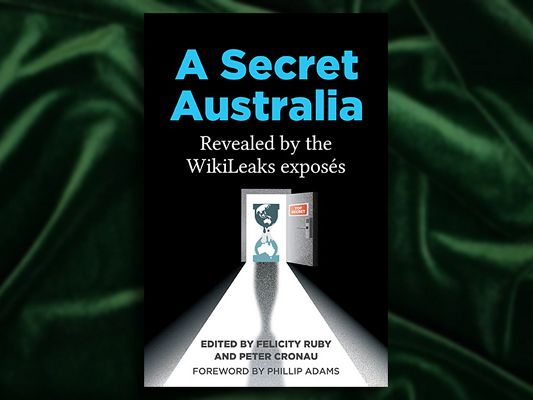
What Assange and WikiLeaks said about Australia, https://www.smh.com.au/culture/books/what-assange-and-wikileaks-said-about-australia-20210129-p56xyo.html, By Jessie Tu, February 4, 2021 He has been called “truth-telling hero”, “evil and perverted traitor”, “heroic, trickster, mythical – reviled”. Robert Manne called him the “most consequential Australian of the present time”. The new US President has called him a “high-tech terrorist”.
The protean narratives of Julian Assange, who will be 50 in July, have been brewing since 2010, when his website published “The Afghan War Diaries”, “Iraq War Logs” and “Collateral Murder”, a video showing the US military killing two Reuters employees in Iraq.
December marked 10 years since Assange has been “arbitrarily detained” in Britain, according to Felicity Ruby and Peter Cronau in their introduction to A Secret Australia – a collection of 18 essays that survey the impact WikiLeaks has had on Australia’s media landscape and the consequences of our government’s attraction towards America’s intelligence and military empire.
The potpourri of authors and thinkers includes Julian Burnside, Antony Loewenstein, Scott Ludlam and Helen Razer, who critique “the powers opposed to openness and transparency” and examine the evidence, “not the likelihoods, the probabilities, the suspicions, and assumptions” around the “subversive, technology-based publishing house”.
WikiLeaks invented a “pioneering model of journalism” – one that embodied the “contemporary spirit of resistance to imperial power”, says Richard Tanter, from the school of political and social sciences at the University of Melbourne. It brought renewed debates on free speech, digital encryption and questions around the management and protection of whistleblowers who risk their lives to expose covert, deceitful actions by governments.
The documents exposed the “brazen duplicity” of the Australian government towards its citizens and presented “off-stage alliance management conversations”, Tanter writes. They invited the layperson into the green room of the performance that is politics and international diplomacy.
WikiLeaks unmasked reports that showed governments recommending media strategies to deceive the public, demonstrating their unethically utilitarian approach to international diplomacy and governance and “enlightened the public on the dark corners of wars”, writes journalist and author Antony Loewenstein.
Assange is still in a cell at London’s Belmarsh Prison, facing an appeal by the United States in its bid to extradite him to face charges for the 2010 publications. He is continuing to be “denied adequate medical care” and “denied emergency bail in light of the COVID-19″, says Lissa Johnson, a clinical psychologist and writer for New Matilda – one of the few Australian publications that have paid genuine attention to the WikiLeaks saga.
In Australia, there’s been a “striking absence of a solid debate on WikiLeaks in the mainstream public discourse”, according to Benedetta Brevini, a journalist and media activist who insists that our concerning “lack of a thorough and sustained debate” is incomprehensible. Loewenstein calls Australia’s lack of journalistic solidarity with Assange “deeply shameful”. He says we have an “anodyne media environment” – perhaps not unsurprising, considering our highly concentrated media market, one of the most severe in the world.
The most useful essay is Rundle’s take on the historical basis for WikiLeaks. He surveys the swirling currents of Australian history that led to its founding, identifying WikiLeaks as a continuation of political activist Albert Langer’s resistance to capital.
“We need a whole new organisation of how recent Australian history is told,” Rundle concludes, seconding Lissa Johnson’s opinion that we demand citizens who “cut across the acquiescence and consent, remove the deadbolt on the torture chamber door, turn down the music and expose what is going on inside”. This collection of polemics, though at times repetitive, takes us closer to a future where these demands no longer seem beyond reality.
Eds., Felicity Ruby & Peter Cronau, Monash University Publishing, $29.95
Rupert Murdoch gets phoney Australia Day Award, thanks to fossil fuel and finance industries
Murdoch’s Australia Day award — brought to you by miners and bankers
Those who promote and profit from fossil fuels have appropriated the phoney awards handed out by the obscure Australia Day Foundation. https://www.crikey.com.au/2021/01/27/rupert-murdoch-australia-day-foundation/– DAVID HARDAKER, JAN 27, 2021
On the face of it it looks to be an extraordinary decision: a prestigious honour bestowed on the media mogul whose recent hits in the United States include helping fan an insurrection against democracy via Fox News and in Australia leading the way on climate change denialism in cahoots with the Morrison government it supports.
The foundation and its awards are backed by a group of international conglomerates including mining giants BHP, Rio Tinto, Woodside and Anglo-American. Australia’s big banks, the National Australia Bank and Westpac, are also in on the act. Another leading name is CQS, the wealthy London hedge fund founded by Australian business figure Sir Michael Hintze.
Hintze is not well known in Australia, but he is at the centre of a powerful network of business and conservative UK and Australian politicians. As we reported last year he has been a force behind the climate-sceptic Global Warming Policy Foundation which has given voice to the views of Tony Abbott and Cardinal George Pell.
Nominally a business outfit, the foundation also blurs the lines with government. It is sponsored by Austrade and uses Australia House, home to the Australian High Commission, in London to hand out its “Australia Day” awards to UK and Australian figures of its choosing.
This year it gave its honorary Australian of the Year in the UK award to Conservative British MP Liz Truss who promoted the cause of Abbott as a trade adviser to the UK government. Past recipients have included Prime Minister Boris Johnson.
Hintze is not well known in Australia, but he is at the centre of a powerful network of business and conservative UK and Australian politicians. As we reported last year he has been a force behind the climate-sceptic Global Warming Policy Foundation which has given voice to the views of Tony Abbott and Cardinal George Pell.
Nominally a business outfit, the foundation also blurs the lines with government. It is sponsored by Austrade and uses Australia House, home to the Australian High Commission, in London to hand out its “Australia Day” awards to UK and Australian figures of its choosing.
This year it gave its honorary Australian of the Year in the UK award to Conservative British MP Liz Truss who promoted the cause of Abbott as a trade adviser to the UK government. Past recipients have included Prime Minister Boris Johnson.
Hintze is not well known in Australia, but he is at the centre of a powerful network of business and conservative UK and Australian politicians. As we reported last year he has been a force behind the climate-sceptic Global Warming Policy Foundation which has given voice to the views of Tony Abbott and Cardinal George Pell.
Nominally a business outfit, the foundation also blurs the lines with government. It is sponsored by Austrade and uses Australia House, home to the Australian High Commission, in London to hand out its “Australia Day” awards to UK and Australian figures of its choosing.
This year it gave its honorary Australian of the Year in the UK award to Conservative British MP Liz Truss who promoted the cause of Abbott as a trade adviser to the UK government. Past recipients have included Prime Minister Boris Johnson.
1 This Month



26 September – International Day for the Total Elimination of Nuclear Weapons


PLEASE OPPOSE HR 8255 AND S.3639 – bills would accelerate satellite deployment, with no environmental review or safeguards – https://ncstd5li.quorum.us/campaign/169331/
To see nuclear-related stories in greater depth and intensity – go to https://nuclearinformation.wordpress.com
-
Archives
- September 2026 (219)
- August 2026 (330)
- July 2026 (355)
- June 2026 (287)
- May 2026 (306)
- April 2026 (356)
- March 2026 (251)
- February 2026 (267)
- January 2026 (308)
- December 2025 (358)
- November 2025 (359)
- October 2025 (375)
-
Categories
- 1
- 1 NUCLEAR ISSUES
- business and costs
- climate change
- culture and arts
- ENERGY
- environment
- health
- history
- indigenous issues
- Legal
- marketing of nuclear
- media
- opposition to nuclear
- PERSONAL STORIES
- politics
- politics international
- Religion and ethics
- safety
- secrets,lies and civil liberties
- spinbuster
- technology
- Uranium
- wastes
- weapons and war
- Women
- 2 WORLD
- ACTION
- AFRICA
- Atrocities
- AUSTRALIA
- Christina's notes
- Christina's themes
- culture and arts
- Events
- Fuk 2022
- Fuk 2023
- Fukushima 2017
- Fukushima 2018
- fukushima 2019
- Fukushima 2020
- Fukushima 2021
- general
- global warming
- Humour (God we need it)
- Nuclear
- RARE EARTHS
- Reference
- resources – print
- Resources -audiovicual
- Weekly Newsletter
- World
- World Nuclear
- YouTube
-
RSS
Entries RSS
Comments RSS
 nuclear-news