Funding the imperium: Australia subsidises U.S. nuclear submarines

The gem in this whole venture, at least from the perspective of the U.S. military-industrial complex, is the roping in of the Australian taxpayer as the funder of its own nuclear weapons program.
By Binoy Kampmark | 6 January 2024. https://independentaustralia.net/politics/politics-display/funding-the-imperium-australia-subsidises-us-nuclear-submarines,18217
AUKUS, the trilateral pact between the United States, the United Kingdom and Australia, was a steal for all except one of the partners.
Australia, given the illusion of protection even as its aggressive stance (acquiring nuclear-powered submarines, becoming a forward base for the U.S. military) aggravated other countries; the feeling of superiority, even as it was surrendering itself to a foreign power as never before, was the loser in the bargain.
Last month, Australians woke up to the sad reminder that their government’s capitulation to Washington has been so total as to render any further talk about independence an embarrassment. Defence Minister Richard Marles, along with his deputy, Minister for Defence Industry Pat Conroy, preferred a different story.
Canberra had gotten what it wanted: approval by the U.S. Congress through its 2024 National Defense Authorisation Act (NDAA) authorising the transfer of three Virginia class nuclear-powered submarines to the Royal Australian Navy, with one off the production line, and two in-service boats. Australia may also seek congressional approval for two further Virginia class boats.
The measures also authorised Australian contractors to train in U.S. shipyards to aid the development of Australia’s own non-existent nuclear-submarine base, and exemptions from U.S. export control licensing requirements permitting the ‘transfer of controlled goods and technology between Australia, the United Kingdom, and the United States without the need for an export license’.
For the simpleminded Marles, Congress had “provided unprecedented support to Australia in passing the National Defense Authorisation Act which will see the transfer of submarines and streamlined export control provisions, symbolising the strength of our Alliance, and our shared commitment to the AUKUS partnership”.
Either through ignorance or wilful blindness, the Australian Defence Minister chose to avoid elaborating on the less impressive aspects of the authorising statute. The exemption under the U.S. export licensing requirements, for instance, vests Washington with control and authority over Australian goods and technology while controlling the sharing of any U.S. equivalent with Australia. The exemption is nothing less than appropriation, even as it preserves the role of Washington as the drip feeder of nuclear technology.
An individual with more than a passing acquaintance with this is Bill Greenwalt, one of the drafters of the U.S. export control regime.
As he told the ABC last November:
“After years of U.S. State Department prodding, it appears that Australia signed up to the principles and specifics of the failed U.S. export control system.”
In cooperating with the U.S. on this point, Australia would “surrender any sovereign capability it develops to the United States control and bureaucracy”.
The gem in this whole venture, at least from the perspective of the U.S. military-industrial complex, is the roping in of the Australian taxpayer as the funder of its own nuclear weapons program. Whatever its non-proliferation credentials, Canberra finds itself a funder of the U.S. naval arm in an exercise of modernised nuclear proliferation.
Even the Marles-Conroy media release admits that the NDAA helped ‘establish a mechanism for the U.S. to accept funds from Australia to lift the capacity of the submarine industrial base’. Airily, the release goes on to mention that this “investment” (would “gift” not be a better word?) to the U.S. Navy would also ‘complement Australia’s significant investment in our domestic submarine industrial base’.
A few days after the farcical spectacle of surrender by Australian officials, the Congressional Research Service provided another one of its invaluable reports that shed further light on Australia’s contribution to the U.S. nuclear submarine program. Australian media outlets, as is their form on covering AUKUS, remained silent about it. One forum, Michael West Media, showed that its contributors – Rex Patrick and Philip Dorling – were wide awake.
The report is specific to the Navy Columbia (SSBN-826) Class Ballistic Missile Submarine Program, one that involves designing and building 12 new SSBNs to replace the current, aging fleet of 14 Ohio class SSBNs. The cost of the program, in terms of 2024 budget submission estimates for the 2024 financial year, is US$112.7 billion (AU$168.2 billion).
As is customary in these reports, the risks are neatly summarised. They include the usual delays in designing and building the lead boat, thereby threatening readiness for timely deployment; burgeoning costs; the risks posed by funding the Columbia class program to other Navy programs; and ‘potential industrial-base challenges of building both Columbia-class boats and Virginia-class attack submarines (SSNs) at the same time’.
Australian funding becomes important in the last concern. Because of AUKUS, the U.S. Navy “has testified” that it would require, not only an increase in the production rate of the Virginia class to 2.33 boats per year, but ‘a combined Columbia-plus-Virginia procurement rate’ of 1+2.33. Australian mandarins and lawmakers, accomplished in their ignorance, have mentioned little about this addition.
But U.S. lawmakers and military planners are more than aware that this increased procurement rate:
‘…will require investing several billion dollars for capital plant expansion and improvements and workforce development at both the two submarine-construction shipyards (GD/EB [General Dynamics’ Electric Boat in Groton, Connecticut] and HII/NSS [Huntington Ingalls Industries’ Newport News Shipbuilding]) and submarine supplier firms.’
The report acknowledges that funding towards the 1+2.33 goal is being drawn from several allocations over a few financial years, but expressly mentions Australian funding ‘under the AUKUS proposed Pillar 1 pathway’, which entails the transfer component of nuclear-powered submarines to Canberra.
The report helpfully reproduces the 25 October 2023 testimony from the Navy before the Seapower and Projection Forces Subcommittee of the House of Armed Services Committee. Officials are positively salivating at the prospect of nourishing the domestic industrial base through, for instance, ‘joining with an Australian company to mature and scale metallic additive manufacturing across the SIB [Submarine Industrial Base]’.
The testimony goes on to note that:
‘Australia’s investment into the U.S. SIB builds upon ongoing efforts to improve industrial base capability and capacity, create jobs, and utilise new technologies. This contribution is necessary to augment VACL [Virginia class] production from 2.0 to 2.33 submarines per year to support both U.S. Navy and AUKUS requirements.’
The implications from the perspective of the Australian taxpayer are significant.
‘Australian AUKUS funding will support construction of a key delivery component of the U.S. nuclear strike force, keeping that program on track while overall submarine production accelerates.’
The funding also aids the advancement of another country’s nuclear weapons capabilities, a breach, one would have thought, of Australia’s obligations under the Treaty of Non-Proliferation of Nuclear Weapons.
Defence spokesman for the Australian Greens, Senator David Shoebridge, makes that very point to Patrick and Dorling:
“Australia has clear international legal obligations to not support the nuclear weapons industry, yet this is precisely what these billions of dollars of AUKUS funding will do.”
The Senator also asks:
“When will the Albanese Government start telling the whole truth about AUKUS and how Australians will be paying to help build the next class of U.S. ballistic missile submarines?”
For an appropriate answer, Shoebridge would do well to consult the masterful, deathless British series Yes Minister, authored by Antony Jay and Jonathan Lynn.
In one episode, the relevant minister, Jim Hacker, offers this response to a query by the ever-suspicious civil service overlord Sir Humphrey Appleby on when he might receive a draft proposal:
“At the appropriate juncture. In the fullness of time. When the moment is ripe. When the necessary procedures have been completed. Nothing precipitate, of course.”
In one word: never.
US officials monitored pro-Assange protests in Australia for ‘anti-US sentiment’, documents reveal

Previously classified papers detail how the US embassy in Canberra responded to WikiLeaks’ release of embassy cables in 2010 and ‘sensationalist’ local media
Guardian Christopher Knaus, 20 Dec 23
American officials monitored pro-Assange protests in Australia for “anti-US sentiment”, warned of “increasing sympathy, particularly on the left” for the WikiLeaks founder in his home country and derided local media’s “sensationalist” reporting of the explosive 2010 cable leaks, previously classified records show.
Documents released by the US state department via freedom of information laws give new insight into how the US embassy in Canberra and its security team reacted to WikiLeaks’ release of 250,000 embassy cables in late 2010.
They show the embassy’s regional security office (RSO) monitoring and reporting on pro-WikiLeaks rallies held across Australian capital cities, feeding information to Washington via the embassy……………………………………………………………………………….
The embassy was particularly critical of Australian media’s reporting of cables that showed the US government was closely watching the rise of the then deputy prime minister, Julia Gillard……………………………………………………………………………………
The cable is the result of a lengthy, expensive FoI battle by Maurizi, supported by the Logan Foundation and her lawyers, Lauren Russell and Alia Smith. She said it provided “indisputable evidence that the U.S. diplomacy’s Regional Security Office (RSO) in Canberra was monitoring the peaceful protests in support of Julian Assange and WikiLeaks in December 2010, as WikiLeaks had just started publishing the most important cables on Australia”.
“We know that the Regional Security Office protects U.S. diplomatic facilities, personnel and information, which is a legitimate activity, at the same time, one wonders what kind of monitoring activities were devised against peaceful protesters: were they identified? Were they intercepted? Were their donations to WikiLeaks tracked?” she said. “These are important questions, considering that we now know that later on, in 2017, Julian Assange, his wife, Stella … the WikiLeaks journalists, lawyers, doctors, and even we media partners were subjected to unprecedented spying activities inside the Ecuadorian embassy.”
The Italian journalist first filed an FoI request in February 2018, but it was ignored for two years, prompting her to sue the US state department.
She has filed similar FoI requests across the world, including in Australia, which she described as “the worst jurisdiction on earth when it comes to FOIA [Freedom of Information Act]”………………………………………..
Assange’s lawyers are suing the Central Intelligence Agency over the alleged espionage at the Ecuadorian embassy in London, saying it violated their US constitutional protections for confidential discussions with Assange.
The US embassy in Australia was approached for comment. https://www.theguardian.com/media/2023/dec/20/us-officials-monitored-pro-assange-protests-in-australia-for-anti-us-sentiment-documents-reveal
CSIRO says wind and solar much cheaper than nuclear, even with added integration costs
The big mover – and one that is significant in the context of the Australian debate on the energy transition, and the federal Coalition’s insistence that nuclear is the answer to most questions – is the cost of nuclear and small modular reactors.

Giles Parkinson 21 December 2023 ReNewEconomy
The CSIRO has published the latest edition of its important GenCost report, and responded to critics by dialling in near term integration costs for wind, solar and storage. But the result is just the same – renewables are clearly Australia’s cheapest energy option, and the story for nuclear just got a whole ot worse.
The annual GenCost report, prepared in collaboration with the Australian Energy Market Operator since 2018, is an important guide to where Australia’s energy transition is at and where it should be heading, but over the past has become the target of attack from conservative naysayers and the pro-nuclear lobby.
CSIRO has defended its methodology, but to satisfy the critics has added in pre-2030 integration costs – including the new transmission lines being built to connect new generation – and finds that the story is much the same.
“While this change leads to higher cost estimates, variable renewables (wind and solar) were still found to have the lowest cost range of any new-build technology,” the CSIRO says, noting that this includes all integration costs up to and including 90 per cent renewables.
In the past year, cost of solar and offshore wind has fallen, the cost of battery storage has remained steady, but the cost of other technologies such as onshore wind and pumped hydro has increased.
The big mover – and one that is significant in the context of the Australian debate on the energy transition, and the federal Coalition’s insistence that nuclear is the answer to most questions – is the cost of nuclear and small modular reactors.
The CSIRO has been attacked by the pro-nuclear lobby, including conservative media and right wing think tanks, for what the lobby claims are inflated cost estimates, but the CSIRO says recent events have backed its numbers. In fact, they make clear that nuclear SMR costs are worse than thought.
CSIRO economist Paul Graham points to the collapse of a major deal this year involving the most advanced SMR projects in the US, the NucScale projects in Utah, which were withdrawn because of soaring costs.
Graham says it is significant because, as NuScale was listed and had to abide by strict regulatory disclosure rules, it had to be “honest” about the anticipated costs of SMRs.
And these were nearly double what was previously thought. In fact they ended up at the equivalent of $A31,000/MW, according to NuScale filings, and much higher than the $A19,000/MW estimated by the CSIRO in its previous report, and for which it was accused of inflating.
“The UAMPS (Utah utility) estimate implies nuclear SMR has been hit by a 70 per cent cost increase which is much larger than the average 20% observed in other technologies,” the CSIRO writes.
“The cancellation of this project is significant because it was the only SMR project in the US that had received design certification from the Nuclear Regulatory Commission which is an essential step before construction can commence.” Graham says that all other claims on nuclear SMR costs are just marketing and sales talk.
The reality, however, is that talk of nuclear SMRs as a solution for Australia’s energy transition and near term emissions targets are a distraction, given that the SMR technology is simply not available, and unlikely to be so for two decades.
The CSIRO report says some interesting things about the costs of wind and solar, technologies which are available and which do work. It says the costs of these technologies will continue to fall in coming years after the various price shocks that have affected the technologies over the last couple of years.
By including the costs of transmission and storage that is underway now and committed out to 2030 adds 40 to 60 per cent to the 2023 cost of deploying high shares of wind and solar, although that also ignores the technologies cost falls that will occur over time……………………………………………………………………………………….more https://reneweconomy.com.au/csiro-says-wind-and-solar-much-cheaper-than-nuclear-even-with-added-integration-costs/
Cost update blasts nuclear out of energy mix

Canberra Times, By Marion Rae, December 21 2023
A surge in the cost of small nuclear reactors has forced the national science agency to change its calculations for Australia.
The latest modelling of all energy sources, released by CSIRO on Thursday, includes data from a recently scrapped project in the United States that was showcasing nuclear small modular reactors (SMRs) as a way to fight climate change.
The draft GenCost 2023-24 report, out for consultation over summer, shows that while inflation pressures are easing there has been a recalculation on SMRs that puts them out of reach.
Real data on a high-profile six-reactor power plant in the United States has confirmed that the contentious technology costs more than any energy consumer wants to pay.
Project costs for the Utah project were estimated at $18,200 per kilowatt, but the company has since disclosed a whopping capital cost of $31,100/kW, prompting its cancellation in November.
In contrast, under existing policies the cost of new offshore wind in Australia in 2023 would be $5545/kW (fixed) and $6856/kW (floating), while rooftop solar panels are calculated at a modest $1505/kW………………………………………………………………………………………………………………..
A small but vocal group of industry backers have been calling for nuclear SMRs for some years, citing the emerging low-emission technology as being suitable for Australia’s vast and geologically stable landmass.
The coalition recently pledged to reopen the nuclear debate in Australia, where laws ban any research or use of nuclear energy despite the country having the world’s largest uranium reserves.
Regulators estimate it would be around 15 years to first production from a decision to build nuclear SMR in Australia, given the scale of legislative change required.
But even if a decision to pursue a nuclear SMR project in Australia were taken today, with political backing for new laws, it is “very unlikely” a project would be up and running as quickly as 2038, CSIRO said.
Further, CSIRO warned nuclear electricity costs put forward by proponents may be for technology that is not appropriate for Australia, or calculated from Russian and Chinese government-backed projects that don’t operate commercially. https://www.canberratimes.com.au/story/8467236/cost-update-blasts-nuclear-out-of-energy-mix/
Let’s Talk About Why Nuclear Won’t Work in Australia
Zachariah Kelly 21 Dec 23, Gizmodo
The CSIRO has just put out the latest draft of its GenCost report, a report that delves into the cost of electricity in Australia and what energy types would work in the Australian market. Over the past years, CSIRO has gotten behind onshore wind and solar as the cheapest energy generation methods, and stresses that these energy sources will be instrumental to the future of Australia’s grid, but nuclear energy is something that the science body has shunned for some time now, and this latest report draft seems pretty definite on why.
In tandem with the release of the draft report, the CSIRO has released a blog post directly addressing why nuclear won’t work down under. Put simply, the CSIRO references the collapse of a Small Modular Reactor (SMR) program in the U.S. in November, the Coal Free Power Project, where project costs were estimated at 70 per cent above what was initially projected. It’s a pretty good example of why we can’t just simply introduce nuclear in Australia.
“We don’t disagree with the principle of SMRs.They are an attempt to speed up the building process of nuclear plants using standardised components in a modular system, and it may well be possible to achieve cost reductions over time. However, for now, the technology is yet to be deployed commercially,” GenCost author Paul Graham said.
Put simply, it’s far too expensive and takes too long to set up, according to the CSIRO. With the timeline of projects shown above, the CSIRO is confident that nuclear just won’t work as well for Australia right now, or at least it won’t work as well as onshore wind or solar………………………………………………………………………………….
economist Professor John Quiggin told Gizmodo Australia in September that it’s a very hyped thing, like crypto or AI, and that arguments around nuclear in Australia have been formed from a political place.
“I think the obvious point that people are making is ‘why is Dutton talking about this now? the government was in office for nine years’, because if they started doing something about it in 2013, for example, repealed the ban on nuclear and started establishing an authority, by the time they went out 10 years later, nine years later, then the thing would have been an obvious goal,” Quiggin said.
“It always has to be kept at this stage of ‘why don’t we have the vote?’ because it is just a debating point.”
You can view the GenCost consultation draft here. https://gizmodo.com.au/2023/12/csiro-nuclear-australia/
Atlas Network strategies: how fossil fuel is using “think” tanks to delay action

December 21, 2023, by: Lucy Hamilton, https://theaimn.com/author/lucy-hamilton/
Australians should be wondering why the Centre for Independent Studies (CIS), one of the country’s proudest think tanks, has just established a body promoting nuclear energy that appears to have little to justify it. If the CIS truly believes in the project, surely it would have sought a leader with a stellar resumé?
Earlier this year, environmental journalist George Monbiot warned that the chance of simultaneous harvest failures in the world’s major breadbaskets was “much worse than we thought.” He poured his fury onto the old industries deploying as many Atlas Network-style “junktanks (‘thinktanks’), troll farms, marketing gurus, psychologists and micro-targeters as they need to drag our eyes away from what counts, and leave us talking about trivia and concocted bullshit instead.”
The 500+ global “partner” bodies of the Atlas Network have, for decades, been forming metastasising entities such as “think” tanks to create the sense of a chorus of academic or public support for the junk science and junk political economies that serve their funders. The primary goals have been to liberate plutocrats from any tax or regulation, and fossil fuel bodies have been amongst their most prolific donors.
By contrast with the billions spent to “stop collapse from being prevented,” the effort to prevent Earth systems collapse is led by people “working mostly in their own time with a fraction of the capacity.”
The Atlas strategy involves networking promising ultra-free market spruikers with the astonishing sums of money that fossil fuel and similar industries spend to promote their goals. The spruikers can be trained and cross-connected. Some are helped to create benign-named bodies that describe themselves as think tanks or academic institutes (beachheads) in universities. They found fake grass roots bodies (astroturfing) to pressure politicians into believing that there is public support for a policy. Youthful scholars or strategists co-opted and funded by the machine go on to export the work into politics and the media.
One Australian example is the founder of the Australian Taxpayer Alliance, Tim Andrews. He was a graduate of the Koch Associate Program, a year-long training program at the Charles Koch institute, and worked at the Atlas-partner Americans for Tax Reform for two years. Koch is one of the most significant figures in the Atlas Network’s spread. Andrews is now a member of the UK Atlas Partner, the Taxpayer Alliance Advisory Council.
High profile mining figures in particular unite many of these bodies. In Australia, Hugh Morgan’s name, for example, is present in many of their histories. He assisted Greg Lindsay in turning the CIS from a “part-time hobby” into the more serious institution that it became. Morgan was described in the Sydney Morning Herald in 1985 as “the most important conservative figure in Australia. He is not merely an outspoken captain of industry, he is at the centre of a large and growing network of activists who are seeking to reshape the political agenda in this country.”
In America there is an extensive web of such networks and bodies that interact together. The Atlas Network is important for its international forays into 100 countries, working to infect debate with this American ideology that overwhelmingly promotes the right of corporations to extract resources at any cost to the nation exploited.
Continue readingAustralia’s Opposition – Liberal Coalition’s strategy – support fossil fuels by delaying renewables and pushing for nuclear energy

they’ve come up with the perfect strategy to ensure no climate action is taken – advocate the bypassing of renewables in favour of small nuclear modular reactors.
It’s the old strategy of “why put off until tomorrow what you can put off forever”?
Or, as Malcolm Turnbull put it at the COP28 meeting: “Nuclear’s only utility is as … a means of supporting fossil fuels by delaying and distracting the rollout of renewables”.
Energy transition needs gas not nuclear, https://www.afr.com/policy/energy-and-climate/energy-transition-needs-gas-not-nuclear-20231203-p5eola 11 Dec 23, Craig Emerson, Former Labor minister and economist
A rational decarbonising energy policy offers a middle path between the absolutists and the denialists.
A civilisation is in decline when logical thinking and evidence-based policy are angrily dismissed in favour of tribal dogma. Western civilisation is lurching in this dangerous direction. Bravery is needed from those who remain capable of rational thought.
A prime contemporary example is the energy transition. Arguing about the energy transition are the absolutists and the denialists.
The absolutists demand that Australia open no new coal mines or gas fields. They require the governments of poor countries to shut their coal-fired power stations forthwith, despite no affordable alternative source of electricity being available.
In these countries, solar and wind power can play a role in electricity generation, but not totally and immediately. Renewable generation requires firming capacity in the nights and evenings, which can be provided by gas generators.
In fact, gas peaking and standby can hasten the closure of coal-fired power stations, which is desirable for the planet. But the neocolonial absolutists demand gas be excluded from the energy mix in poor countries.
The absolutists also oppose carbon capture and storage as a matter of dogma. The same goes for carbon offsets, regardless of their integrity.
Gas is also used to produce synthetic fibres; the kind Absolutists like to wear in preference to thirsty cotton and the wool of methane-emitting sheep.
Coking coal is used to produce steel. Absolutists oppose new coking coal mines. People in poor countries are not to have access to steel products, the type that rich-country absolutists use every day.
Denialists, on the other hand, such as former prime minister Tony Abbott, speak of the global warming hoax and describe believers in climate change as members of a cult. Denialists believe that not just absolutists are involved in this conspiracy against the western way of life, but so too are the United Nations, the NASA space agency and the world’s bureaus of meteorology.
Denialists have learned not to speak so loudly of these alleged hoaxes, cults and conspiracies, operating on the assumption that most voters under the age of 40 have been brainwashed into believing climate change is real and will cast their votes accordingly.
To address this electoral quandary, they’ve come up with the perfect strategy to ensure no climate action is taken – advocate the bypassing of renewables in favour of small nuclear modular reactors.
With cost blowouts precipitating the recent collapse of a flagship US project working on a small modular reactor, the prospects of this technology supplying electricity at competitive prices are highly questionable.
In any event, former NSW treasurer Matt Kean, though favourably disposed to small nuclear modular reactors, has pointed out that none would be ready for commercial deployment before 2040.
By that time, Australia’s fleet of ageing coal-fired power stations will be clapped out.
The Peter Dutton-led opposition voted against the Albanese government’s safeguard mechanism, the latest attempt to put a price on carbon for major emitters, despite the Business Council of Australia calling it “a very good policy”.
In an effort to continue the debilitating climate wars that have been raging for more than a decade, Dutton labelled the safeguard mechanism a “carbon tax 2.0”.
With no emissions-reduction strategy, plenty of hostility towards renewables and a promise of small modular reactors from 2040 at the earliest, the denialists have only one remaining option – to use taxpayers’ money to fund the construction of new coal-fired power stations. The private sector certainly won’t risk it.
It’s the old strategy of “why put off until tomorrow what you can put off forever”?
Or, as Malcolm Turnbull put it at the COP28 meeting: “Nuclear’s only utility is as … a means of supporting fossil fuels by delaying and distracting the rollout of renewables”.
There is a middle path between the absolutists and the denialists.
A rational decarbonising energy policy would include the legislated safeguard mechanism, solar and wind energy, and – for firming capacity – the use of gas, big batteries and, where economically viable, pumped hydro.
Where gas producers can make carbon capture and storage feasible, they should be encouraged to do so. Trading in high-integrity carbon offsets should be part of the solution, especially for countries that lack viable renewable energy resources.
In various combinations, these features of a rational climate policy have been adopted by the Rudd, Gillard, Turnbull and Albanese governments. They were opposed by the Abbott government and, largely, by the Dutton-led Coalition.
Between them, absolutists and denialists would oppose most – if not all – of these sensible features.
Finding a demilitarised zone between these warring tribes is as elusive as it was when the Senate voted down a carbon price 14 years ago. Yet, it seems that most of the voting public feels the policy approach now being taken by federal and state governments lies along that narrow path.
The lesson from this story is to let warring tribes slug it out and get on with sound policy in the national interest.
US reactor project fail heats up Australia’s nuclear power debate

ByMike Foley, November 10, 2023 — https://www.smh.com.au/politics/federal/us-reactor-project-fail-heats-up-australia-s-nuclear-power-debate-20231109-p5eisu.html
A nuclear energy developer championed by the Coalition has canned its most advanced project in the United States, raising questions over the viability of the technology in Australia.
NuScale Power, which was developing small modular reactors at a US government-owned site in Idaho with plans to sell electricity to suppliers across the regional network by 2029, on Thursday said it had abandoned the project due to a lack of customer sign-ups.
The federal opposition, which wants Australia to overturn its longstanding ban on nuclear energy, claims small modular reactors – the next generation of nuclear power plants – are the only viable backup for renewable energy as the country transitions away from fossil fuels.
But Climate Change and Energy Minister Chris Bowen said NuScale’s announcement was further proof that small modular reactors were not viable for Australia.
“The opposition’s only energy policy is small modular reactors,” Bowen said. “Today, the most advanced prototype in the US has been cancelled. The [opposition’s] plan for energy security is just more hot air from Peter Dutton.”
NuScale’s small modular reactor design was the first to be approved by the US Nuclear Regulatory Commission in January. It was awarded more than $US1 billion ($1.56 billion) in government funding to support its development.
The company said in 2021 it would supply power from its small modular reactor plant for $US58 a megawatt hour. Since then, that figure has more than doubled to $US89 a megawatt hour.
Mason Baker, the chief executive of NuScale’s government-owned partner, Utah Associated Municipal Power Systems, said it was working with the company and the US Department of Energy to wind down the project.
“This decision is very disappointing given the years of pioneering hard work put into the [project],” Baker said.
Opposition Leader Peter Dutton has said small modular reactors could easily replace Australia’s coal-fired power plants.
“Australians must consider new nuclear technologies as part of the energy mix,” he said in July. “New nuclear technologies can be plugged into existing grids and work immediately.”
Opposition climate change and energy spokesman Ted O’Brien said in May that NuScale’s designs offered “exceptional flexibility” and would allow a “simple expansion” for Australia’s energy grid.
“North America has done the maths. It has mapped its course to a net-zero future, and it’s one that sensibly includes next-generation, zero-emissions nuclear energy.”
But recent Energy Department modelling found more than 70 small modular reactors, which are forecast to generate 300 megawatts each, would be needed to replace all of Australia’s coal plants at an estimated cost of $387 billion.
O’Brien said on Thursday that Bowen had applied “faulty logic” to NuScale’s announcement and if he applied the same test to renewables, they too would be considered a failure.
“Is Bowen arguing that wind power is dead because the world’s leading supplier, Siemens, is seeking a €15 billion government bailout, or the days of solar are over because plans for the world’s largest solar plant, Sun Cable, have run into trouble,” O’Brien said.
“If Australia is serious about reaching net-zero emissions by 2050 while keeping the lights on and getting prices down, we cannot afford to take any option off the table.”
The USA cancellation of NuScale’s small nuclear reactor project is a blow to Australia’s Coalition opposition political party.
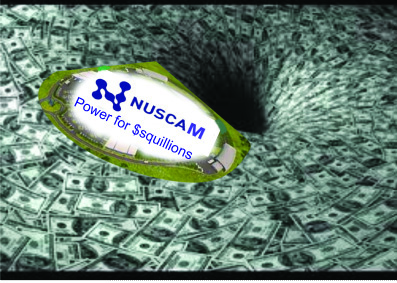
Coalition’s nuclear SMR poster boy cancels flagship project due to soaring costs
ReNeweconomy, Giles Parkinson 9 November 2023
NuScale, the controversial proponent of nuclear small modular reactor designs that has been championed by the federal Coalition and technology ideologues around the world, has had its flagship project cancelled because of rising costs.
NuScale is often cited as the company with the most advanced plans on nuclear SMRs – a technology that does not actually exist in the commercial market – and had planned to build six such 78 MW reactors in Utah under a much vaunted proposal.
But the contract has been cancelled because its proposed customers – mostly municipal based utilities – refused to pay the target price for nuclear power, which had already jumped earlier this year by 53 per cent to $US89 a megawatt hour ($A139/MWh), despite a $US30/MWh subsidy from the US government.
The US Department of Energy had bet heavily on the technology, and NuScale itself, giving it $US600 million since 2014, according to a Reuters report, and promising a further $US1.35 billion for the Utah project in 2020.
NuScale is the only developer of SMRs to have received a licence from US nuclear regulators, but had to go back to the drawing board and re-apply after deciding that the licenced SMR design was too small to be commercial successful. Now it seems that the bigger units don’t add up either.
Despite the fanciful nature of the technology, and an expected wait of at least 20 years for it to be commercially available in Australia, if at all, nuclear SMRs have been pushed heavily by the Coalition and conservative media, particularly the Murdoch press, Sky News, the AFR and various radio networks.
They have argued that Australia should halt the closure of coal fired power stations, stop the rollout of new transmission lines and new wind, solar and storage projects, and wait for SMRs to appear – despite the increased urgency of climate action and emission cuts urged by scientists.
Some nuclear proponents have said, absurdly, that SMRs could be brought to Australia within a decade, but most of the media have had to resort to interviewing emergency doctors, school children and sales people to find any support for that idea…………………………………….
NuScale’s share crashed on the news, falling more than 20 per cent according to Reuters, taking their losses since August last year to more than 80 per cent as the market reassessed the company’s claims.
NuScale still wants to pursue SMRs, and hopes to build up to 2GW of plants in Ohio and Pennsylvania for Standard Power, but it is now targeting markets where there is less regulatory oversight and more government support. Reuters says it is looking at Poland, Ukraine, Kazakhstan and Romania.
The New York Times reports that decision to cancel the project followed an update from NuScale this year regarding the cost of building the reactors, which had soared to $US9.3 billion from $US5.3 billion because of rising interest rates and inflation.
Mason Baker, the CEO of UAMPS, the group of municipal utilities in Utah that had signed up to the proposed SMRs, said the decision to cancel the contract was “the best course” and “what is best for member communities.”
In a statement, Baker said the utilities will look at alternative technologies for their low carbon energy needs. In an interview with a local newspaper, he cited wind and solar projects, geothermal and gas plants with a mix of green hydrogen as likely alternatives. https://reneweconomy.com.au/coalitions-nuclear-smr-poster-boy-cancels-flagship-project-due-to-soaring-costs/ #nuclear #antinuclear #nuclearfree #NoNukes
Targeting Gaza From US Spy Hub in Australia

Peter Cronau reports on Canberra’s secret support for Israel’s brutal assault on Palestinians in Gaza through NSA intelligence satellites in the U.S. Pine Gap base near Alice Springs.
Peter Cronau, Declassified Australia https://consortiumnews.com/2023/11/03/targeting-gaza-from-us-spy-hub-in-australia/
The Pine Gap U.S. surveillance base located outside of Alice Springs in Australia is collecting an enormous range of communications and electronic intelligence from the brutal Gaza-Israel battlefield — and this data is being provided to the Israel Defence Forces.
Two large Orion geosynchronous signals intelligence satellites, belonging to the U.S. and operated from Pine Gap, are located 36,000 kms above the equator over the Indian Ocean. Frosxxxdxxxxxm there, they look down on the Middle East, Europe and Africa, and gather huge amounts of intelligence data to beam back to the Pine Gap base.xxxxxc
After collecting and analysing the communications and intelligence data for the U.S. National Security Agency (NSA), Pine Gap is providing it to the Israel Defence Forces, as it steps up its brutal assault on Palestinians in the Gaza enclave.
Pine Gap facility is monitoring the Gaza Strip and surrounding areas with all its resources, and gathering intelligence assessed to be useful to Israel,” a former Pine Gap employee has told Declassified Australia.
David Rosenberg worked inside Pine Gap as “team leader of weapon signals analysis” for 18 years until 2008. He is a 23-year veteran of the NSA.
“Pine Gap has satellites overhead. Every one of those assets would be on those locations, looking for anything that could help them.”
“Pine Gap facility is monitoring the Gaza Strip and surrounding areas with all its resources, and gathering intelligence assessed to be useful to Israel.”
Rosenberg says the personnel at Pine Gap are tasked with collecting signals such as “command and control” centres in Gaza, with Hamas headquarters often located near hospitals, schools and other civilian structures. “The aim would be to minimise casualties to non-combatants in achieving their objective of destroying Hamas.”
Since the Oct. 7 Hamas attack on Israel that killed over 1,400 Israelis, both military and civilian, the Israel Defence Forces has bombed hundreds of targets inside Gaza, killing far more than Hamas militants. An estimated 9,000 people so far have been killed, including most shockingly 3,600 children.
United Nations agencies have deplored the nearly four-week Israeli bombing campaign saying,
“Gaza has become a ‘graveyard’ for children with thousands now killed under Israeli bombardment, while more than a million face dire shortages of essentials and a lifetime of trauma ahead.”
Pine Gap’s Global Role
The sprawling satellite ground station outside Alice Springs, officially titled Joint Defence Facility Pine Gap (JDFPG), has been described as the United States’ second most important surveillance base globally.
About half the 800 personnel working at the Central Australian base are American, with Australian government employees making up fewer than 100 of the increasingly privatised staff.
The base is no mere passive communication collector. Personnel at the Pine Gap base provide vital detailed analysis and reporting on SIGINT (signals intelligence) and ELINT (electronic intelligence) it collects.
As well as surveillance of civilian, commercial and military communications, it provides detailed geolocation intelligence to the U.S. military that can be used to locate with precision targets in the battlefield.
This was first conclusively documented in a secret NSA document, titled “Site Profile,” leaked from the Edward Snowden archive to this writer and first published by ABC Australia in 2017:
“RAINFALL [Pine Gap’s NSA codename] detects, collects, records, processes, analyses and reports on PROFORMA signals collected from tasked target entities.”
These PROFORMA signals are the communications data of radar and weapon systems collected in near real-time — they likely would include remote launch signals for Hamas rockets, as well as any threatened missile launches from Lebanon or Iran.
“Pine Gap detects, collects, records, processes, analyses and reports on PROFORMA signals collected from tasked target entities.
This present war in Gaza is not the first time the dishes of Pine Gap have assisted Israel’s military with intelligence, including the detecting of incoming missiles, according to this previous report.
“During the [1991] Gulf War, Israeli reports praised Australia for relaying Scud missile launch warnings from the Nurrungar joint U.S.-Australian facility in South Australia, a task now assigned to Pine Gap.”
During the early stages of the 2003 U.S. invasion of Iraq, the NSA installed a data link to send early warning of any Iraqi missile launches detected directly to Israel’s Air Force headquarters at Tel Nof airbase, south of Tel Aviv.
Israel’s Access to ‘Five Eye’ Jewels
The NSA “maintains a far-reaching technical and analytic relationship with the Israeli SIGINT National Unit (ISNU),” according to documents published by The Intercept in 2014. The documents show the NSA and ISNU are “sharing information on access, intercept, targeting, language, analysis and reporting.”
“This SIGINT relationship has increasingly been the catalyst for a broader intelligence relationship between the United States and Israel.
“The Israeli side enjoys the benefits of expanded geographic access to world-class NSA cryptanalytic and SIGINT engineering expertise.”
It’s thanks to the Pine Gap base, with its satellites so strategically positioned to monitor the Middle East region, along with its targeting and analysis capability, that Israel is able to make use of these benefits.
Another leaked document, a targeting exchange agreement from the U.K.’s surveillance agency, GCHQ, reveals one of the “specific intelligence topics” shared among the NSA, GCHQ and ISNU was “Palestinians.” The document states that “due to the sensitivities” of Israeli involvement that particular program does not include direct targeting of Palestinians themselves.
The NSA considers their intelligence-sharing arrangement as being “beneficial to both NSA’s and ISNU’s mission and intelligence requirements.”
This wide intelligence sharing arrangement potentially opens up to the Israelis the “jewels” of the Five Eye global surveillance system collected by the NSA global surveillance network, including by Australia’s Pine Gap base.
Declassified Australia asked a series of questions of the Australian Defence Department about the role of the Pine Gap base in the Israel-Gaza war, and about the legal protections that may be in place to defend personnel of the base should legal charges of war crimes be laid. No response was received by deadline.
Peter Cronau is an award-winning investigative journalist, writer, and film-maker. His documentaries have appeared on ABC TV’s Four Corners and Radio National’s Background Briefing. He is an editor and cofounder of DECLASSIFIED AUSTRALIA. He is co-editor of the recent book A Secret Australia – Revealed by the WikiLeaks Exposés.
This article is from Declassified Australia. #nuclear #antinuclear #nuclearfree #NoNukes #Israel #Palestine
Australia must lobby US for ‘no first use’ of nuclear weapons, says ex-minister Gareth Evans
Former foreign minister says it is ‘sheer dumb luck’ that arms have not been used in the past 78 years and urges leadership on control measures
Daniel Hurst, Guardian, 1 Nov 23
Labor luminary and former foreign minister, Gareth Evans has urged Australia to lobby the US to promise “no first use” of nuclear weapons, warning that global arms control agreements “are now either dead or on life support”.
Evans says that in the wake of sealing the Aukus nuclear-powered submarine deal, the Albanese government should give “some comfort to ALP members and voters that we are really serious about nuclear arms control”.
Evans told Guardian Australia it was “sheer dumb luck” that the world had avoided a nuclear attack in the 78 years since the bombing of Hiroshima and Nagasaki, and “it is utterly wishful thinking to believe that this luck can continue in perpetuity”.
Evans joined arms control experts and former senior diplomats in urging the prime minister, Anthony Albanese, to take “a leadership role in addressing the rising nuclear threats in our region”.
Australia should appoint “a high-level envoy to engage our regional partners on an agenda of nuclear confidence building and preventive diplomacy measures”, according to a letter from the Asia-Pacific Leadership Network for Nuclear Non-Proliferation and Disarmament (APLN).
While the group’s letter to Albanese is not specific about policy measures, Evans offered his own view that Australia’s status as a close US ally “gives us a particularly significant potential role” in pushing to reduce nuclear risks.
“The most immediately useful step we could take would be to support the growing international movement for the universal adoption of No First Use doctrine by the nuclear-armed states,” Evans told Guardian Australia…………………………………….
In a stark warning about the security environment, Evans said the risk of nuclear weapons being used through human error, miscalculation or system error was “greater than ever, not least given new developments in AI and cyber-offence capability”.
“Nearly 13,000 nuclear warheads are still in existence, with a combined destructive capability of close to 100,000 Hiroshima- or Nagasaki-sized bombs, and stockpiles, especially in our own Indo-Pacific region … are now growing again,” he said.
“The taboo against their deliberate use is weakening, with Russia’s president, Vladimir Putin, talking up this prospect in language not heard since the height of the cold war.”
In addition to seeking universal support for “no first use”, Evans said other potential risk-reduction measures include cutting the number of weapons ready for immediate use……………………………………………….
The APLN letter gained support from high-powered experts including John Carlson, the former head of the Australian Safeguards and Non-Proliferation Office, and Ramesh Thakur, a former UN assistant secretary general.
Other signatories included John Tilemann, a former diplomat and international civil servant with the International Atomic Energy Agency, and Gary Quinlan, a former Australian ambassador to the UN.
The leader of the Greens in the Senate, Larissa Waters, backed the letter with the former Australian Democrats leader Natasha Stott Despoja and the former Labor minister for international development Melissa Parke. https://www.theguardian.com/australia-news/2023/nov/01/australia-must-lobby-us-for-no-first-use-of-nuclear-weapons-says-ex-minister-gareth-evans #nuclear #antinuclear #nuclearfree #NoNukes
AUKUS nuclear submarine deal triggers accusations over cost and construction

SMH, By Daniel Keane 30 Oct 23
South Australia’s premier remains insistent that the nation’s future nuclear-powered submarines should be constructed in Adelaide, despite a prominent call for the vessels to instead be built by, and purchased from, another AUKUS nation in order to save taxpayers “billions and billions of dollars”.
Key points:
- Alexander Downer has called for all of the nation’s future nuclear subs to be built overseas
- But SA premier Peter Malinauskas says Australia should build them “for national security reasons”
- Mr Downer also said the question of storage of AUKUS nuclear waste needs to be addressed
Former foreign affairs minister Alexander Downer has described the AUKUS project’s $368 billion price tag as “eye-watering”, and said he expects a future federal government to abandon the local construction element of the deal.
“We’re just going to wreck Australia if we keep promising to spend money on any manner of projects and have no idea where the money is going to come from,” Mr Downer told the ABC on Sunday.
“I don’t think the existing federal parliament or the next one is going to make a decision on this, but I think down the years, in the end, the federal government will decide that this is just too expensive, and they will buy the submarines from overseas.
“I’d be almost certain of that.”
Responding to similar comments Mr Downer made in The Weekend Australian, SA premier Peter Malinauskas said it is vital that Australia develops the ability to build the vessels “for national security reasons”, but also because “neither the US nor the UK in the long term have the capacity” to construct Australia’s entire fleet.
“They are struggling to meet their own demand,” Mr Malinauskas said.
Under the current terms of the AUKUS pact, Australia will get three US-made Virginia-class submarines while it builds up to eight nuclear-powered submarines of its own.
Mr Malinauskas accused Mr Downer of “misunderstanding” the intentions and expected outcomes of AUKUS…………………………………………………………..
But Mr Downer has rejected the premier’s comments, and in turn accused Mr Malinauskas of failing to understand the economics of AUKUS.
“I have a challenge to the premier — to explain where all this money is going to come from, and why does the premier think it’s better we spend eye-watering amounts of money on building nuclear submarines in Adelaide rather than investing … in other parts of our economy?” Mr Downer said……………………
“Peter Malinauskas and [SA opposition leader] David Speirs will be well and truly retired by the time this project comes about.
“It’s easy for them to make any manner of promises about times in the future, which will be way beyond their political life span — we can all make promises about the Second Coming.”
Mr Downer also said the question of storage of nuclear waste from the subs had not been satisfactorily addressed.
“There’s some elements of the Labor Party who have reservations, or are opposed to, nuclear-powered submarines and any association with nuclear power, and so I part company with them on that,” he said.
“But you’re going to have to store the waste somewhere. I’m not sure where that will be stored.” https://www.abc.net.au/news/2023-10-29/sa-premier-defends-aukus-after-alexander-downer-questions-cost/103036822
The Independent and Peaceful Australia Network (IPAN) steps up drive to keep U.S. military expansion out of Australia

By Bevan Ramsden | 26 October 2023 https://independentaustralia.net/politics/politics-display/ipan-steps-up-drive-to-keep-us-military-expansion-out-of-australia,18020
The Independent and Peaceful Australia Network (IPAN) has produced a petition opposing the Force Posture Agreement (FPA) which is enabling U.S. militarisation of Australia in preparation for the U.S. to support/launch war from the Australian continent against China.
The e-petition to Parliament is an instrument for peace calling for the termination of the FPA.
It can be signed HERE.
The devastation of war, currently in Ukraine and in Palestine, confronts us on TV on a daily basis. All peace-loving people cry out for a ceasefire on both war fronts to enable, hopefully under United Nations auspices, conferences of all affected parties to find solutions that meet the security needs of all parties and free non-combatants from the horrors of war.
But concern about these wars should not blind us to the preparations for war occurring on our own continent under the auspices of the United States and with the enthusiastic complicity of successive Australian governments.
When defence matters are discussed, much is made of the U.S.-Australia alliance. But when the U.S. militarisation of Australia is considered, the alliance pales into insignificance compared to the U.S.-Australia FPA. It emerged as a concept from former President Barack Obama’s “Pivot to Asia” of the U.S. armed forces, in which he announced the stationing of U.S. marines in Darwin each year to train for war with our Defence Force.
The “Pivot” was a strategy designed to “contain” China and maintain U.S. hegemony in the Asia/Pacific area. President Obama’s concept was enthusiastically received by all politicians of both major parties.
Subsequently, the Gillard and Abbott Governments, in conjunction with their U.S. defence counterparts, produced a greatly expanded concept, the FPA, providing “an operational posture” for U.S. forces in Australia, a gateway for U.S. militarisation of Australia. It was signed by the Abbott Government and the United States Government in 2014.
The FPA:
- facilitates the stationing in Darwin, for six months each year, of up to 2,500 U.S. Marines; they are trained and equipped for immediate deployment and while in Australia, train for war in exercises with the Australian Defence Force. They are not under the control of the Australian Government. They are under the control of the U.S. Indo-Pacific Command;
- facilitates unimpeded access to Australia’s airfields and airport facilities for U.S. fighter planes and bombers including the stationing of up to six B-52 bombers at RAAF Base Tindall. B-52 bombers were used to devastate Vietnam in that war and some are capable of carrying nuclear weapons;
- facilitates unimpeded access to Australia’s seaports for U.S. naval vessels including their nuclear submarines at HMAS Stirling in WA;
- facilitates the establishment of storage facilities for aircraft fuel, spare parts and munitions under U.S. military control. This includes huge fuel storage facilities at East Arm, Darwin and logistics facilities for storage of equipment, munitions and spare parts at Bandiana in Victoria;
- opened the door for the embedding of U.S. military intelligence operatives within the Australian defence intelligence organisation now called the Combined Intelligence Centre — Australia; and
- under the FPA, a U.S. command centre has been established in Darwin to control U.S. aircraft operations and another command centre in Darwin to control U.S. marine operations.
In short, the U.S. could launch and control military operations from Australia.
I have stressed the words “unimpeded access” because they are the words used in the Agreement.
Article IV of the FPA states:
…United States Forces and United States Contractors shall have unimpeded access to and use of Agreed Facilities and Areas for activities undertaken in connection with this Agreement.
Australia hereby grants to the United States operational control of Agreed Facilities and Areas…
Part 4 of Article VII states:
‘As mutually determined by the Parties, aircraft, vehicles, and vessels operated by or for United States Forces shall have access to aerial ports and seaports of Australia and other locations, for the delivery to, storage and maintenance in, and removal from the territory of Australia of United States Forces’ prepositioned materiel.’
Activities under Article IV include:
‘…training, transit, support, and related activities; refuelling of aircraft; bunkering of vessels; temporary maintenance of vehicles, vessels, and aircraft; temporary accommodation of personnel; communications; prepositioning of equipment, supplies, and materiel; deploying forces and material; and such other activities as the Parties may agree.’
Summing up, the FPA, with the enthusiastic support of the Australian Government, is facilitating increased U.S. militarisation of Australia to support U.S. military operations in the Indo-Pacific from which it could launch or support a war against China. This has been done with the agreement of both major political parties.
The FPA lasts 25 years from the date of signing but has a clause facilitating termination if either party gives one year’s notice.
IPAN is campaigning to have this FPA terminated. This would be a strong step in the direction of keeping Australia out of another U.S. war. And this time, one which would have a catastrophic impact on the Australian people.
If you wish to join this campaign, IPAN has a parliamentary e-petition which is open until 15 November 2023 for signature and it can be accessed by using your mobile phone and this QR code. [on original] #nuclear #antinuclear #NoNukes
South Australia is leading the world on the integration of wind and solar.
There is little doubt that South Australia is leading the world on the
integration of wind and solar. Now, it’s about to take an even bolder
leap into a deep green energy future through its hydrogen jobs plan.
The state has sourced more than 70 per cent of its electricity demand from wind
and solar over the past year, and when RenewEconomy interviewed state
energy minister Tom Koutsantonis on Sunday afternoon for its Energy
Insiders podcast, it was nearing the end of a 60-hour period where it
average more than 100 per cent wind and solar. Earlier that day, the state
had reached a stunning new peak of 264 per cent “potential” wind and
solar, the combination of renewable energy actually produced, and the
renewable energy curtailed by the lack of a market.
South Australia response to the this excess of green energy is to encourage even more, with
another bold step that it hopes will make it a global leader in green
hydrogen, just as it has done with renewables.
Renew Economy 25th Oct 2023 #Australia #nuclear #antinuclear #nuclearfree #NoNukes
1 This Month
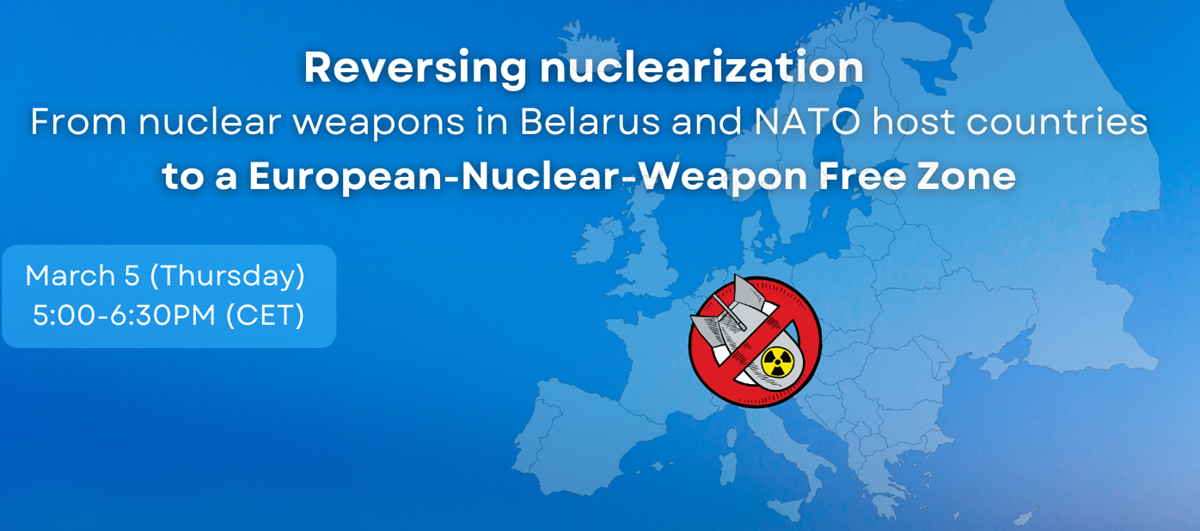
5 March -Online – Reversing nuclearization:
From nuclear weapons in Belarus and NATO host countries to a European-Nuclear-Weapon Free Zone
11am-12:30pm Eastern Time USA / 5pm-6:30pm CET

of the week – Advocating for a
nuclear free beach – https://www.samuellawrencefoundation.org/
The Samuel Lawrence Foundation advocates for a Nuclear Waste Free Beach at San Onofre, join us and take action!

10 March A LIVE WEBINAR THE REAL EFFECTS OF NUCLEAR POWER
What the Industry Isn’t Telling Us
1:00 PM Mountain, 2 pm Central, 3 pm Eastern. Live on the Keepers of the Water Facebook page

18 March Webinar @ 1 PM EST: An Assessment of SMR Projects: The Case of Canada
register for the zoom:
https://us02web.zoom.us/webinar/register/WN_o8BIIOUvQ2ONJR1nta65DQ#/registration

of the week – STOP SMALL MODULAR REACTORS IN CANADA
To see nuclear-related stories in greater depth and intensity – go to https://nuclearinformation.wordpress.com
-
Archives
- March 2026 (51)
- February 2026 (268)
- January 2026 (308)
- December 2025 (358)
- November 2025 (359)
- October 2025 (376)
- September 2025 (258)
- August 2025 (319)
- July 2025 (230)
- June 2025 (348)
- May 2025 (261)
- April 2025 (305)
-
Categories
- 1
- 1 NUCLEAR ISSUES
- business and costs
- climate change
- culture and arts
- ENERGY
- environment
- health
- history
- indigenous issues
- Legal
- marketing of nuclear
- media
- opposition to nuclear
- PERSONAL STORIES
- politics
- politics international
- Religion and ethics
- safety
- secrets,lies and civil liberties
- spinbuster
- technology
- Uranium
- wastes
- weapons and war
- Women
- 2 WORLD
- ACTION
- AFRICA
- Atrocities
- AUSTRALIA
- Christina's notes
- Christina's themes
- culture and arts
- Events
- Fuk 2022
- Fuk 2023
- Fukushima 2017
- Fukushima 2018
- fukushima 2019
- Fukushima 2020
- Fukushima 2021
- general
- global warming
- Humour (God we need it)
- Nuclear
- RARE EARTHS
- Reference
- resources – print
- Resources -audiovicual
- Weekly Newsletter
- World
- World Nuclear
- YouTube
-
RSS
Entries RSS
Comments RSS
 nuclear-news