Australian industry super funds are investing in companies involved in the Gaza genocide, and unions are not demanding they stop. Andrew Gardiner reports.
Protected by rules putting a member’s “best financial interests” over ethical, environmental or social considerations, the vast majority of Australia’s industry superfunds are all-systems-go on pouring money into projects connected to the decimation of Gaza, dispossession in the West Bank, and bombing Israel’s neighbours.
An MWM investigation has confirmed that just two of Australia’s 20 industry super funds are making modest changes to their investment portfolios. The other 18 remain invested in Israel’s war machine, with Australian Super alone funding corporations like Elbit Systems (drones), ICL Group (white phosphorus) and Palantir (AI/software for weapons systems).
This, even as the IDF is again using the banned white phosphorus in Lebanon, in which Australian super is invested.
The two funds which did divest – Vision Super and HESTA – still have some money tied up in Israeli projects in Gaza and the West Bank. “HESTA and Vision divested from Israeli banks (but) they still have money in companies listed on a UN database as operating from Israel’s illegal settlements”, Molly Coburn from the Australia Palestine Advocacy Network (APAN) told MWM.
Activist Jill Sparrow says even those modest changes could be quietly reversed “as soon as we look away”. “Divestment isn’t set and forget (and)
“there’s a lot of money to be made in dropping bombs,”
“so super funds could be sorely tempted”, she said.
If you’re in a union-partner industry super fund and have a problem with genocide, chances are you’re out of luck on the socially-conscious investments front. Unions routinely route members’ super into partner funds with little regard to the social or environmental impact when it’s invested.
Ethics ignored
Under 2005 rule changes, union members can transfer their super to retail super funds, Australian Ethical and Future Group, which shun companies whose work enables the carnage in Gaza. These funds show it can be done, so why have industry super funds not done it?
Instead, unions aligned with the Labor Party, under pressure from Zionist lobbyists, are content to send members’ money to super funds that aid the Israeli war effort, funding what the UN calls “a moral stain on us all”.
Like so many other ACTU affiliates, the United Workers Union (UWU), with 151,000 members, talks a good game on Israel’s actions in Gaza, but hasn’t put its members’ super where its mouth is. MWM’s efforts to ascertain how much the union had done to lobby its super funds – HostPlus, Australian Super and HESTA – yielded nothing.
What we learned from UWU members is that in early 2024, a rank-and-file motion including divestment was passed at the council level in various states before being “soft-blocked” by union officials, who reportedly sat on it. Later that year, a more formal “Boycott, Divestment and Sanctions” (BDS) motion, requiring real action compelling divestment by the super funds, was defeated.
“Social issues are bread and butter issues, and funding war is a dead end. Our leadership – who are on the boards of HESTA and Australian Super – (need) to stop hiding behind ‘fiduciary duties’ to fund death and destruction”, UWU delegate (early childhood education) Nicki Toupin told MWM.
Fidiciary duties
Fiduciary duty doesn’t just provide cover for unions putting the bottom line first. “In the interests of members”, it’s cited time and again by super funds whenever there’s pressure to divest.
Buttressing their argument is case law precedent, which will raise the hackles of Australian republicans: Cowan v Scargill, a UK decision dating back to the Thatcher years (1985), helped redefine a member’s “best interests” as “best financial interests” (emphasis added). 2021 changes to fiduciary duty here in Australia reflect that new emphasis.
How do you define “best financial interests”? Wouldn’t a stable Middle East be good for the world’s economy, providing investment opportunities for our super funds that don’t involve genocide?
“Egregious war crimes, crimes against humanity and devastating environmental impacts mean you can argue that the financial interests of super fund members are undermined by investments that support the Israeli military”, Claire Parfitt, Senior Lecturer in Political Economy at Sydney University, told MWM.
It seems our super funds, and their investment managers, are ignoring these arguments in the quest for a quick return, their investment in the Israeli war machine rendering Middle East instability something of a self-fulfilling prophecy.
There are, of course, equal and opposite rules against super funds investing in projects “maintaining the situation created by Israel’s illegal presence in the occupied Palestinian territory”. But some rules, it seems, are more equal than others; successive Australian governments barely lift a finger to enforce international court rulings, human rights obligations and social considerations (ESG), which might trouble the bottom line.
To quote a famous movie line, “a foul is not a foul unless the ref blows his whistle”. The failure to enforce international and ethical obligations means super funds can go on hiding behind “fiduciary duty”; at least 18 of our 20 industry funds are doing just that.
The “fiduciary duty” chestnut, and “soft blocking” tactics by union officials aligned with an ALP which quietly supports the Gaza carnage, have rendered meaningful “change from within” on divestment all but impossible. So groups like ASU for Palestine and UWU 4 Palestine are taking matters into their own hands.
Following a 1000-strong “community picket” of the Israeli-owned ZIM Ganges cargo ship at Port Melbourne, ASU for Palestine started looking at divestment as a way to hit Israel where it hurts. After ASU secretary (now Senator) Lisa Darmanin, then a board member at Vision Super, inevitably advised ASU for Palestine of its “fiduciary and statutory obligations” (adding it wasn’t legal for her to “act as (a) representative” of ASU members on divestment) it became clear something more compelling was called for.
What did ASU for Palestine do? It began a campaign to raise awareness on divestment, suggesting ASU members “switch their super fund” elsewhere, while lobbying to change the default super fund in enterprise agreements to none other than Australian Ethical.
It’s amazing how the threat of losing thousands of ASU members (and untold millions) can motivate a super fund to abandon “fiduciary” rhetoric and do the right thing. A couple of months later, amid much fanfare at the ASU conference, Vision Super announced its limited divestment, full details of which are expected by the end of this month.
These kinds of ‘direct action’ appear to actually work, although (per APAN) the extent of Vision’s divestment was limited. “If it’s not good enough, we’ll just have to go again”, Sparrow told MWM.
For their part, UWU 4 Palestine sees divestment as a major social cause that it and Members First, a grassroots change ticket at upcoming union elections, can get their teeth into. “Building a rank and file, fighting union that isn’t remote from members gives us the power to push for the kind of world we want, not just on workplace issues but in investing our money in something other than genocide”, Toupin told MWM, adding
The dreams of the U.S. President, that it would all be over in days – that the Iranian people would rise against their tyrannical regime – is now a nightmare that Trump has visited upon the world.
The global economy is on the brink of disaster as oil dries up. America and Israel have further isolated themselves from world public opinion and, apart from an ever- shrinking clique of semi-vassal states like Australia, Trump appears to be alone and increasingly dangerous.
The war offers a great many lessons, but while life and history can be great teachers, there seem to be precious few pupils ready to learn those lessons. This applies equally to apologists for U.S. power, to governments of all stripes and to many of those who inhabit the Left and lay claim to Marxist credentials.
The war was never about “liberating” the Iranian people from the right-wing theocracy. It was about securing a compliant regime that would ensure the flow of oil and to make sure that the USA, as a fading imperial power, maintained global hegemony — both politically and economically.
The slogan that accompanied the wars of aggression against Iraq, that tore Libya apart and which laid waste to so much of the Middle East was simply, No Blood for Oil! The years have slipped by, and yet the same foul motivation for despoiling the globe and destroying a people remains.
Our mainstream media know this to be true, even as the “story” turns its focus to the retaliation by Iran and to the oil pressure that the blocking of the Straits of Hormuz entails. The same media focuses on potential oil shortages, and rightly so, but seems less keen to link that invasion to the fact that people are paying stupid prices for petrol and diesel.
Fewer voices can be heard that would remind the people of how the war started and who is responsible. That has become largely the responsibility of the Left — the Marxists, the campaigners against war and imperialism.
This is as it should be, but something is very wrong. Marxism is quite clear that economics is the defining factor and that politics works with and responds to economic demands. The war, then, can only be understood from an economic perspective. But is it being understood in this way? Sadly, no.
Some see it as a political gamble by a beleaguered and dangerously unhinged U.S. President. Some portray it as a means, by Israel, of destroying any potential risk to its domination of the region. Some come a step closer by recognising the strategic desire to weaken China, as it is a principal customer for Iranian oil.
Any and all of these considerations are enough to allow blame to be sheeted home to the USA and Israel, but there is a deeper, more worrying aspect to this. The United States has been and remains the single biggest military force and greatest economic power that the world has seen. It is, as the Marxist Left will say, an imperialist power. It is also a declining power.
For decades, its main preoccupation has been how to hold back the rising tide of its one great rival. China’s rise, accompanied by a global capitalist economy that has run out of ideas and resilience, ensures that wars are either finishing, beginning, or in the planning stage. A failing economic structure is driving the world to the point of no return. The war against Iran is one battle in this endless spiral into decay. The USA, as the central power in the capitalist global economy, is more than willing to destroy entire nations in its quest to keep the sinking ship afloat.
No crime is too much. The U.S. bombing the girls’ school in Iran, the Israeli destruction of oil facilities on the edge of Tehran that have led to acid rain and an unimaginable civilian health disaster, sicken all reasonable people. But those who plan such actions are not among the reasonable.
These acts need to be condemned. Governments need to show at least a modicum of decency. Our Prime Minister needs to stop slinking in the shadows and act. He needs to denounce such actions. He needs to find the courage to say “No!” and to work to secure the natural resources needed to keep Australia functioning. This is unlikely. Our political structures are such that we remain totally subservient to the demands and interests of the USA..
Those whose anger compels them to take to the streets deserve better than the Babel that has become the protest movement. The most recent action in Melbourne, which was dominated by ever more shrill denunciations of Israel, while mention of the USA and its causal responsibility for the war was at best an afterthought. Protest has merit, it is necessary and has purpose. It also needs focus, if it is to have either merit or purpose.
Protest is also about winning the hearts and minds of people. Sound and fury might be a therapy for some, but numbers count and numbers must grow, people must be educated, encouraged to talk to others, to build a movement that can go beyond noise.
Part of that building process must include the raising of collective consciousness. It must be able to show and convince people that this or that crime of the USA, of Israel, of imperialism, is not isolated, or in any way an aberrant thing, but is a symptom of a deeper, structural crisis. It is not enough for the ideologues to make demands that cannot be achieved. The protest movement, the anti-war movement, should aim at providing a vehicle, a voice for those who want something better than news screens full of war stories and a Federal Government pathetically marching to the fifes and drums of a fading U.S. empire.
European Union leaders have been prepared to stand back a little; to say that the war is not their war. It is hard to imagine an Australian government being daring enough to question anything that comes from Washington. As the sun sinks on U.S. hegemony, Australia seems ready to go down with the American ship.
After all, this is a man with the capacity to blunder into World War 3 without having any idea what he’s doing.
The complete absence of any plan or exit strategy in the escalating conflict with Iran demonstrates that even the most apocalyptic of unforeseen consequences cannot be ruled out
Trump’s Iran war raises fears of global conflict — while allies stay silent and diplomacy collapses, writes Mark Beeson.
U.S. PRESIDENT DONALD TRUMP is the most dangerous man in the world. Why are we supporting him?
Many people were concerned about what a second Trump presidency might look like, but it’s uncontroversial to claim that it’s much worse than even the gloomiest pessimists feared.
It has been plain for a long time that Trump has little regard for the truth and is determined to silence independent media. But the one thing his supporters and the world in general might have hoped for was that he wouldn’t have gone back on his promise to not start unnecessary, ill-conceived wars, especially in the Middle East.
And yet, not only has Trump launched an illegal war with Iran, which has already resulted in the deaths of thousands, including innocent schoolgirls, but he is also displaying a psychopathic delight in using America’s overwhelming military might ‘just for fun’.
Given that the assault on Iran is being conducted with – or even on behalf of – Israel there is a breathtaking irony in the fact that Trump is displaying the same sort of indifference to human suffering that allowed individual Nazis to take part in the ‘final solution’ and the murder of six million Jews.
It is, of course, entirely possible that Trump doesn’t really know what’s going on given his increasingly obvious cognitive decline, but he has never exhibited much human empathy and is a compulsive liar and confabulator. These qualities arguably made him unfit to be a property developer, much less the most powerful man on Earth.
Given his famously child-like need for attention and adulation, which his courtiers and cronies are only too willing to provide, there is absolutely no chance of him changing. On the contrary, his belief that God is proud of him ought to alarm ought to alarm friend and foe alike.
After all, this is a man with the capacity to blunder into World War 3 without having any idea what he’s doing. The complete absence of any plan or exit strategy in the escalating conflict with Iran demonstrates that even the most apocalyptic of unforeseen consequences cannot be ruled out.
While an international economic crisis may not be the worst thing that could happen, for those of us fortunate enough to live in peaceful Australia it really ought to demonstrate that Trump is a threat to supposed friends and allies, as well as the innocent Iranians he promised to help.
If nothing else, Trump’s behaviour should make the danger and folly of relying on someone quite so delusional and self-obsessed clear to even our most unthinking policymakers. Trump will be satisfied with nothing less than the complete support and cooperation of allies, no matter how misguided or inhuman his policies may be.
Given the decades of uncritical fealty Australia’s leaders have displayed to the United States, it is no surprise that there has generally been an uncomfortable silence about ‘our’ response to the latest American-led fiasco.
‘We (sic) support the United States acting to prevent Iran from obtaining a nuclear weapon and to prevent Iran continuing to threaten international peace and security.’
It’s worth remembering that Iran was attacked while trying to negotiate a new agreement to replace the one Trump tore up, a tactic that may have allowed the U.S. to decapitate Iran’s leadership but won’t making resolving the conflict any easier. Truth, diplomacy and trustworthiness are clearly for losers. Might clearly does make right in Trump-world. This reality may help to explain why the Albanese government is keeping its collective head down.
Other leaders have not been quite so supine and gutless, however. German Chancellor Friedrich Merz, after fruitless attempts at ingratiating himself with Trump, unambiguously stated that the “government will not participate in this war”. Moreover, Merz pointed out that Trump’s war had nothing to do with NATO, which was a defensive alliance, not one designed for wars of aggression.
Trump responded in his usual fashion with threats and bluster, suggesting a failure to support his ill-conceived war would be ‘very bad’ for NATO. Although we have learned not expect truth or consistency when dealing with Trump, suggesting that the foundation of the Western alliance may be in jeopardy is hardly a minor threat. Trump’s great friend Vladimir Putin must be delighted.
If our leaders are too unimaginative and cowardly to speak up in defence of international law, or to criticise unilateralism and the intensification of great power politics, civil society must do what it can. The absence of the sort of activism and protests that characterised opposition to the equally ill-conceived and pointless Vietnam War is disappointing and revealing, however. Perhaps it takes 500 actual combat deaths and the prospect of being called-up to bring home the reality of war to Australians.
Or perhaps rising interest rates, the cost of filling up a monstrous SUV, or re-routing your European holiday might do the trick. Either way, it’s reassuring to know that President Trump thinks the war with Iran is going so well that he gives if 15 out of 10. Nothing for our leaders to worry about after all.
The head of Australia’s peak network group has called for regulatory change and more flexibility for homes and their power assets, to help local networks manage the consumer-driven push towards 100 per cent renewables across the country.
Andrew Bills is the chair of Energy Networks Australia, and finds himself at the cutting edge of this transition as CEO of SA Power Networks, where the output of rooftop solar alone exceeds grid demand about every second day of the year.
South Australia is expected – within 18 months – to become the first gigawatt-scale grid in the world to reach 100 per cent “net” renewables (the net refers to the fact that it imports and exports at times and is not an isolated grid), and is already running at a 75 per cent share of wind and solar.
Much of that solar comes from households, with nearly half (48 pct) of all homes supporting a total of 3.2 gigawatts of rooftop solar capacity, which is significant in a grid with average demand less than half of that.
That solar penetration is also world leading, and at a level that stuns network peers in other countries. It is rapidly being followed by a faster uptake of home batteries (double that of the country average), and a growing interest in electric vehicles.
This has required South Australia to be at the forefront of key technologies designed manage this home energy revolution, initially with the blunt and rarely used “solar switch-off”, required by the market operator as a last resort to help maintain grid security.
That has been followed, more successfully, by the rollout of innovative technologies that allow for flexible exports for solar households, and no longer limits the amount of rooftop solar that can be installed.
‘…every day Trump and Netanyahu’s demands of Australia keep growing.’
She accused Labor of having ‘no red lines’. Australia’s significant Iranian, Israeli, Lebanese, and broader Middle Eastern diaspora communities bring both personal grief and political intensity to the debate.
Operation Epic Fury is exposing the true cost of alliance dependence, energy fragility, and strategic distraction from the Indo-Pacific, writes Vince Hooper.
ON 28 FEBRUARY 2026, the United States and Israel launched Operation Epic Fury against Iran. As the war enters its third week, the scale is staggering: at least 1,348 Iranian civilians killed and over 17,000 injured, 3.2 million displaced, approximately 6,000 U.S. strikes, and a new supreme leader – Mojtaba Khamenei – vowing to keep the Strait of Hormuz closed.
The International Energy Agency warns of the ‘largest supply disruption in the history of the global oil market’. Oil has breached US$100 (AU$142.11) a barrel. More than 820,000 have been displaced in Lebanon as Israel–Hezbollah hostilities reignite.
For Australia, geographically distant but entangled through alliance commitments, intelligence infrastructure, energy dependence and a 115,000-strong diaspora in the Middle East, the ramifications are immediate. In financial economics, alliance membership functions like a call option — the right to draw on a protector’s military power, but at a price paid in sovereignty foregone, bases hosted, and conflicts joined.
The Iran crisis is Australia’s margin call. The price is suddenly, painfully visible.
The alliance reflex
The Albanese Government endorsed Operation Epic Fury with speed that surprised even American officials, while insisting Australia was “not participating” offensively.
By 10 March, that distinction had eroded: Albanese deployed an E-7A Wedgetail early warning aircraft, air-to-air missiles for the UAE, and 85 Australian Defence Force personnel to the Gulf. The Wedgetail’s capacity to map missile launch locations and coordinate battle management in real time makes it far more than a passive shield — the line between defensive and offensive enablement is, as one analyst observed, a blurry one at best.
It has since emerged that three Royal Australian Navy sailors were aboard the U.S. submarine that torpedoed the Iranian frigate IRIS Dena near Sri Lanka on 4 March — the first U.S. submarine torpedo attack since the Second World War.
Albanese confirmed their presence but insisted they did not take part in offensive action. Meanwhile, the Joint Defence Facility Pine Gap near Alice Springs – now hosting 45 satellite radomes and dishes – continues to provide real-time intelligence across the Middle East. A former NSA analyst confirmed in 2023 that Pine Gap was collecting data on the Gaza conflict and “surrounding areas”.
That intelligence flows to Washington and, in turn, to Israel. Having invested decades in this facility, Australia cannot credibly claim neutrality. It is infrastructure that commits the country irrevocably — a strategic investment with no exit clause.
The Indo-Pacific opportunity cost
Here is the dimension that should concern Australian strategists most. In what economists call “real options” theory, the value of an investment depends on keeping the opportunity alive until conditions are ripe. AUKUS is precisely such an option: a ticket to a credible submarine deterrent, but only if the U.S. industrial base and technology transfers remain available. The Iran conflict is degrading every one of those conditions.
The U.S. submarine industrial base produces around 1.2 Virginia-class boats per year against a combined requirement of 2.3.
An Iran war that diverts Navy priorities means no spare construction capacity for Australian boats. Congressional approvals, State Department licences, and Department of Energy support all stall when those agencies are managing Iran’s nuclear fragments. Australia’s planned 2030s submarine delivery could slip to the 2040s. We know the cost of American distraction: between 2001 and 2020, while Afghanistan and Iraq consumed U.S. bandwidth, China militarised the South China Sea, developed carrier-killing missiles, and built the world’s largest navy.
The U.S. has already spent over US$11 billion (AU$15 billion) in Epic Fury’s first week. As the Hudson Institute’s Zineb Riboua has argued, every dollar spent defending Red Sea shipping lanes is a dollar unavailable for Pacific basing or Taiwan contingency planning.
Fat tails at the fuel bowser
Australia imports roughly 90 per cent of its refined liquid fuel. The Strait of Hormuz, carrying a fifth of global petroleum, has been reduced to what the IEA calls ‘a trickle’ — global supplies down an estimated eight million barrels per day. IEA members have agreed to release 400 million barrels from emergency stockpiles, the largest coordinated release in history, but analysts warn this only partially offsets prolonged disruption.
For anyone who studies what statisticians call ‘fat-tailed’ distributions — events that are rare but devastating when they occur — this is a textbook case. Australia’s fuel supply architecture is built for normal times: 36 days of strategic reserves against an IEA benchmark of 90.
According to Westpac’s modelling, a one-month Hormuz disruption lifts the Australian CPI by approximately 1 percentage point; a three-month closure spikes it by 1.5 points and reduces GDP by 0.5 points. Petrol prices could rise 40 cents per litre. LNG prices have surged 12 per cent, and Qatari production remains halted. These pressures compound: higher oil costs flow through shipping, fertilisers, and manufacturing into broader inflation, landing on an economy where the RBA is already navigating delicate disinflation.
115,000 reasons to worry
An estimated 115,000 Australians were in the Middle East when the conflict erupted.
“This is a consular crisis that dwarfs any that Australia has had to deal with in terms of numbers of people.”
The closure of airspace across Bahrain, Iraq, Iran, Qatar, Kuwait, and Syria stranded thousands.
By 10 March, over 2,600 had returned on 18 flights from the UAE.
Tens of thousands remain, with Smartraveller now advising against all travel to the UAE, Qatar, Kuwait, Bahrain, Israel, and Lebanon. Bus convoys to Kuwait and Bahrain, overland routes to Oman, and limited commercial flights have been the improvised lifelines. Canberra also granted asylum to five members of Iran’s women’s football team who were in Queensland for the AFC Women’s Asian Cup — a gesture that only hints at the potential for larger refugee flows if the conflict deepens further.
The rules-based order — selectively applied
Operation Epic Fury was launched without UN Security Council authorisation. Ben Saul the UN Special Rapporteur on the promotion and protection of human rights and fundamental freedoms while countering terrorism, has stated that Iran had not enriched uranium to the point of building a nuclear device — the case for self-defence, in his words, “does not fall anywhere close”.
Australia’s refusal to address the strikes’ legality places it in what ANU’s Don Rothwell calls a “say nothing” posture — conspicuously at odds with its willingness to assert the illegality of Russia’s invasion of Ukraine.
In my own work on alliance behaviour, I model geopolitical commitments using the same frameworks that price financial options. International law functions as a hedge — an insurance policy limiting everyone’s downside. When a country lets that insurance lapse for allies while enforcing it against adversaries, it is strategically exposed.
For a middle power whose influence rests on normative authority rather than military mass, this shapes standing in ASEAN, the Pacific Islands Forum, and every multilateral setting where Western double standards are a live issue.
Domestically, the Greens’ Senator Larissa Waters captured the mood of many when she warned:
‘…every day Trump and Netanyahu’s demands of Australia keep growing.’
She accused Labor of having ‘no red lines’. Australia’s significant Iranian, Israeli, Lebanese, and broader Middle Eastern diaspora communities bring both personal grief and political intensity to the debate.
The energy transition as strategic hedge
If the conflict carries a silver lining, it may be in strengthening the case for energy transition. Renewables and storage now provide nearly 45 per cent of electricity on Australia’s main grid and contributed to halving wholesale power prices in late 2025. Renewable energy is a natural insurance policy against geopolitical oil shocks: its fuel cost is zero and its supply chain is overwhelmingly domestic.
Accelerating electrification of transport, homes, and industry reduces exposure to precisely the kind of extreme energy price events that the Strait of Hormuz crisis illustrates. But the transition is capital-intensive: a one-year delay in wind or transmission projects could increase residential power prices by up to 20 per cent. The conflict sharpens both the urgency and the stakes.
The margin call
The Iran conflict is a stress test for Australian strategic policy on every front: alliance dependence, energy fragility, consular capacity, and commitment to international law. Most importantly, it reveals the opportunity cost in the Indo-Pacific.
Every month of Middle Eastern entanglement is a month in which AUKUS – and a credible deterrent posture in the Western Pacific – loses value. The conflict is not just consuming Australian resources. It is consuming the strategic future those resources were meant to buy.
For policymakers, the lessons are uncomfortable but clear. Diversification – of energy sources, strategic relationships, and economic exposure – is not merely desirable but urgent. The capacity to make independent strategic judgements, rather than reflexively aligning with allied positions, must be cultivated alongside the alliance itself. International law must be applied consistently, not selectively invoked when adversaries breach it and quietly set aside when allies do the same. The margin call has arrived. The question is whether Australia can pay it without liquidating the portfolio.
Vince Hooper is a proud Australian-British citizen and professor of finance and discipline head at SP Jain School of Global Management with campuses in London, Dubai, Mumbai, Singapore and Sydney.
While Palantir refines its “kill chain” in Gaza, Australia is engaged in the largest military transfer of wealth in its history.
The submarines will not arrive until the early 2040s. In the meantime, Australia has established an export licence-free environment with the UK and US, allowing military and dual-use goods to be transferred between AUKUS partners without oversight. This includes AI and autonomy technologies
The line between Australian defence procurement and U.S. military-industrial interests has effectively dissolved
On December 10, 2025, Responsible Statecraft published a report that should have shaken capitals around the world. Buried in the details of President Trump’s 20-point “peace plan” for Gaza was a revelation: two American surveillance firms, Palantir and Dataminr, had embedded personnel inside the U.S.-run Civil-Military Coordination Center (CMCC) in southern Israel.
Their presence was not incidental. Palantir’s Project Maven – an “AI-powered battlefield platform” that collects surveillance data from satellites, drones, and intercepted communications to “optimize the kill chain” – was being positioned to shape Gaza’s post-war security architecture. Dataminr, which scans social media to provide “event, threat, and risk intelligence” to governments and law enforcement, was also inside the room.
This is not conspiracy. This is confluence – the quiet alignment of corporate interests, military objectives, and political capture. This article traces that confluence from the battlefields of Gaza to the boardrooms of Australia, and asks a simple question: Who benefits?
Part One: The Business Model – AI as Occupation
Palantir’s “Kill Chain” Optimisation
Palantir Technologies has been explicit about its ambitions. CEO Alex Karp has described the company’s technology as “optimising the kill chain.” Project Maven, for which Palantir recently secured a $10 billion Pentagon contract, sucks information from multiple sources and “packages it into a common, searchable app for commanders and support groups.” It has already been deployed to guide U.S. airstrikes across the Middle East, including in Yemen, Syria, and Iraq.
Since January 2024, Palantir has been in a “strategic partnership” with Israel’s military for “war-related missions”. The company has expanded its Tel Aviv office significantly over the last two years. Karp defended this collaboration amid international concerns over war crimes, saying Palantir was the first to be “completely anti-woke”.
The Gaza Laboratory
For the last two years, Gaza has functioned as an incubator for militarised AI. Israel’s Lavender system, an AI-assisted surveillance tool, used predictive analytics to rank Palestinians’ likelihood of being connected to militant groups, based on an opaque set of criteria. Public sector workers – healthcare workers, teachers, police officers – were included on kill lists because they had ties to Hamas by virtue of working in a territory the group governed.
The Gospel system functioned as a “mass assassination factory.” One source admitted spending only “20 seconds” per target before authorising bombing – just enough to confirm the Lavender-marked target was male.
Under Trump’s proposed “peace plan,” these technologies would be scaled up. The plan envisions “Alternative Safe Communities” – fenced, heavily monitored compounds where Palestinians would be relocated, their movements tracked by AI systems, their online activity scanned by Dataminr, their phones monitored by Palantir’s platforms. Entry would be contingent on approval by Israel’s Shin Bet, with criteria that could disqualify hundreds of thousands based on algorithmic “risk scores.”
For tech companies, war is opportunity. Access to vast datasets, real-world testing for new military systems, and long-term contracts for post-war surveillance infrastructure.
For Israel, the arrangement offers a way to outsource occupation while maintaining control.
For Palestinians, it promises more of what they have already endured: unremitting horror, dragnet surveillance, and death by algorithm.
Part Two: The Australian Connection – Wealth Transfer and Complicity
AUKUS: The $368 Billion Commitment
While Palantir refines its “kill chain” in Gaza, Australia is engaged in the largest military transfer of wealth in its history. The AUKUS nuclear submarine program is estimated to cost $368 billion over coming decades, with $53–63 billion allocated for the first decade alone.
The submarines will not arrive until the early 2040s. In the meantime, Australia has established an export licence-free environment with the UK and US, allowing military and dual-use goods to be transferred between AUKUS partners without oversight. This includes AI and autonomy technologies developed under Pillar 2 of the agreement, which focuses on “artificial intelligence and autonomy, quantum science, advanced cyber, and electronic warfare.”
The same technologies being tested on Palestinian populations in Gaza are, under AUKUS, being integrated into Australia’s defence infrastructure.
The Ghost Shark Precedent
In September 2025, the government announced a $1.7 billion investment in “Ghost Shark” autonomous submarines – underwater drones developed by Australian company Anduril, whose U.S. parent has close ties to the defence establishment. Assistant Minister Matt Thistlethwaite described the technology as so impressive that “the Americans have invested in the company.”
The line between Australian defence procurement and U.S. military-industrial interests has effectively dissolved.
The Cost of Living vs. The Cost of War
While this wealth transfers to the United States, Australians struggle with a cost-of-living crisis that the government refuses to adequately address. The Robodebt scheme – an automated system that raised unlawful debts against welfare recipients – offers a template for how algorithmic governance can devastate vulnerable populations .
The National Anti-Corruption Commission recently found two public servants engaged in “serious corrupt conduct” in relation to Robodebt. But as Economic Justice Australia noted:
“The system punishes only the vulnerable. The main sanction for damaging behaviour at the top levels of the Department has been naming and shaming.”
No one went to jail. No one lost their pension. The system protected itself.
The same pattern is now repeating at scale: algorithms making life-and-death decisions, with no one accountable when they fail.
Part Three: The Segal Nexus – Silencing Critics, Enabling the Agenda
The Envoy’s Role
Jillian Segal AO, Australia’s Special Envoy to Combat Antisemitism, occupies a unique position at the intersection of power. Her credentials are impeccable: former ASIC deputy chair, board member of the Sydney Opera House Trust, the Garvan Institute, and the Australia-Israel Chamber of Commerce. She is deeply embedded in the networks that connect Australian business to Israeli interests.
In December 2025, the Albanese Government formally adopted Segal’s Plan to Combat Antisemitism, accepting all 13 recommendations………………………………………………………………………………………..
The framework created by the antisemitism envoy – however well-intentioned – provides cover for those who would shut down debate. Critics are not engaged; they are managed. Those who persist are not answered; they are silenced.
The Business Connection
Segal’s husband’s company, Henroth Investments, donated $50,000 to Advance Australia, a right-wing lobby group that has shared anti-immigration content and claimed Palestinians in Australia were a “risk to security.” She has disclaimed knowledge of the donation, and government ministers have accepted her statement .
But the appearance matters. When the antisemitism envoy is married to a donor to an organisation that promotes anti-Palestinian rhetoric, it feeds a perception that her role serves a particular political agenda rather than a genuine anti-racism brief. When her networks connect Australian business to Israeli interests, and when those interests align with the very AI companies testing their technologies on Palestinian populations, the confluence becomes visible.
Part Four: The Alignment of Values
In a bizarre way, the values of Palantir’s leadership align with the values of Australia’s political class…………………………………………………………………………………
What if they were, instead, a mechanism to enable and facilitate Israel’s transition to an AI-driven economy independent of the United States?
Consider the logic:
Israel seeks economic independence. Netanyahu has announced plans to “taper off” U.S. military aid, pivoting toward AI sovereignty. A $200 million joint AI and quantum science center with the U.S. is in development.
A state reliant on a single product must ensure demand. If Israel’s future exports are AI-driven surveillance and warfare technologies, it needs customers. It needs a demonstrated market. It needs a proof of concept.
Gaza provides the laboratory. The technologies tested there—Lavender, Gospel, the Maven platform – are refined in real-world conditions, with a population that cannot resist, cannot refuse, cannot escape.
Critics must be silenced. This is where the antisemitism framework becomes essential. If criticism of Israel’s actions can be reframed as antisemitism, if legitimate concerns about algorithmic warfare can be dismissed as hatred, if the very people documenting war crimes can be delegitimised – then the business model is protected.
Australia plays its part. By adopting the antisemitism envoy’s recommendations, by embedding the IHRA definition into policy, by creating legal frameworks that can be used to silence critics, Australia becomes an enabler of this system. Not through conspiracy—through confluence. Through the quiet alignment of interests that requires no coordination, only opportunity
Part Six: The Accountability Vacuum
The Robodebt scheme offers a template for what comes next………………………………………………………………………………………………………………………..Conclusion: What We Have Discovered
This article has traced a network of connections that is not conspiracy but confluence:
Palantir and Dataminr embedded in Gaza, testing AI systems on a captive population, refining technologies that will be exported worldwide.
AUKUS transferring Australian wealth to the U.S. military-industrial complex, integrating the same AI and autonomy technologies into our defence infrastructure.
Jillian Segal positioned at the nexus of Australian business, government, and Israeli interests, her office providing the framework that silences critics.
The antisemitism claim deployed not against genuine hatred, but against legitimate criticism of Israeli policy – protecting the business model, enabling the silence. · The accountability vacuum ensuring that when things go wrong, no one is responsible.
The pattern is consistent. The players are visible. The evidence is documented.
Australian news analysis
What remains is for Australians to ask themselves: Is this who we want to be?
Do we want our wealth transferred to corporations that “optimize the kill chain“? Do we want our government to enable the testing of AI warfare on a captive population? Do we want our political class to silence critics while profiting from death?
The answer, for those with eyes to see, should be clear.
But the system is designed to keep those eyes closed. To cry “antisemitism” at anyone who questions. To ensure that the only voices heard are those that align with the business model.
It seems incongruous that with a fleet of nine nuclear powered submarines the United Kingdom has only one operational vessel from the fleet which has been sent to Garden Island in Western Australia instead of using it for protective deployment around the British Isles
That submarine being HMS Anson still requires some minor maintenance work for its continued operations which is being undertaken at Garden Island
It appears that the real reason for Anson being sent to Australia is for the United Kingdom to demonstrate some capacity in being able to be an active participant in the AUKUS agreement but this may be a rather hopeless exercise in view of the strained relationship with the United States over the Iran war
The lack of naval capacity of the United Kingdom is best demonstrated by the fact that the destroyer HMS Dragon proposed to be send to Cyprus for protection of its naval 1 of 2 base on the island cannot be put to sea due to the incapacity of undertaking the necessary dockyard work for it seagoing status
All of this should be borne in mind when planning for the future development of the AUKUS proposals
It is therefore beyond the wildest dreams to contemplate
the design and subsequent construction of the SSN- AUKUS submarine
How will the Australian government react to this situation when AUKUS is a major part of its defence strategy?
The era of British nuclear testing in Australia was exrraordinary, and its secrets are still being uncovered. Because of ongoing British secrecy, we may not discover them all. In her talk Professor Tynan will examine the complex circumstances taht led the British first to Monte Bello Islands off the coast of Western Australia, then Emu Field and Maralinga in South Australia, to test their atomic weapons. The decision to do so followed the United States’ exclusion of Britain from nuclear weapons and energy R&D after World War II, ostensibly because of the detection of Manhattan Project spies. Australia acquiesced to the atomic tests without asking hard questions, and as a result considerable damage and suffering was inflicted, particularly on Indigenous people and service personnel.
Those hard questions only came decades later, and there are still many to be asked. The British conducted their testing with a greater emphasis on speed than safety. The recklessness of some of the tests carried out in Australia is stunning. Tynan will share specific stories of these dangerous tests and their deadly ramifications for Australians. She will also cover what happened after the British terminated the test series and deliberately misinformed the Australian government about the extent of contamination they left behind. All three test sites were abandoned without proper remediation. The aftermath led to a judicial enquiry, known in Australia as a Royal Commission, in the mid-1980s. This enquiry makred a major shift in Australian attitudes to the tests, and was an important mileestone in an era of uncovering and truth-telling that continues.
Professor Elizabeth Tynan is Head of the Professional Development Program at James Cook University’s Graduate Research School, where she teaches academic writing, editing, and critical thinking skills to postgraduate researchers. She is a former science journalist in both print and broadcast media. Her PhD from the Australian National University examined aspects of the British nuclear tests in Australia in the 1950s and 1960s.
The Australian prime minister, Anthony Albanese, gave Donald Trump a gift of a model nuclear submarine with golden plates and finishes, internal documents reveal, during his visit to the White House last year which sealed the president’s support for the Aukus pact.
The prime minister also presented the US first lady, Melania Trump, with a A$3,000 Paspaley pearl pendant.
The information, obtained by Guardian Australia from the Department of Prime Minister and Cabinet after a four-month freedom of information process, revealed more about the delicate diplomatic planning and charm offensive that went into Albanese’s long-awaited first face-to-face meeting with Trump.
“Gift form” documents from the department reveal Albanese came to the White House bearing a two-foot-long model Virginia-class submarine, mounted on a base with gold plates, and a pearl necklace from one of Australia’s most famous jewellers.
Albanese had previously stated he’d given the Trumps a model submarine and jewellery, but at the time neither Albanese’s office nor his department would reveal any further information about the gifts.
It’s only Day Five of the war, but surely the epic stupidity of Australia so cravenly backing the US-Israeli invasion of Iran is evident by now. Michael West reports.
We are led by fools and sycophants. The illegal, unprovoked invasion of Iran is not just garden-variety stupidity. This is stupidity on a grandiose, stratospheric scale.
The Israeli propaganda narrative that Iranians would sprinkle rose petals at the feet of their invaders has not come to pass. It has already been demolished in fact.
Instead of bringing freedom and democracy – ‘regime change’ – we have brought chaos, possibly a world war, and definitely the destruction of the Middle East. The world economy is being hit hard as we write; oil prices spiralling, energy prices about to soar, and the inexorable spectre of inflation and recession.
“And it didn’t have to happen.“
This was a war of choice. Even without the “Epstein Coalition” – as the Iranian media so aptly dubs their invaders – murdering 168 Iranian school girls on day one, ‘peace through strength’ was never going to happen.
Quite the contrary. The illegal and unprovoked invasion of Iran has hardened the resolve of Iranians, who are massing in their hundreds of thousands across the country to mourn their dead and chant Death to America, to back their regime.
Where was the advice?
The Epstein Coalition killed the Ayatollah, who was actually against nuclear power; he was a moderate. Did Albo and Penny Wong not seek advice from Foreign Affairs that attacking Iran was folly, that the anti-regime protestors were a minority, that the pre-invasion protests were a Mossad and CIA psyop, that Iran might attack US proxy states in the region, that invasion would be a Brobigdadgian mistake?
Or did they ignore the advice in favour of a Washington regime compromised by the Epstein pedophile scandal?
And now, we see the feeble, hypocritical whining by Israel and its supporters about Iran attacking the Gulf states. Is that our only moral defence? Decades of supporting these regimes: Bahrain, Qatar, Kuwait, Saudi Arabia, and the United Arab Emirates – US proxy states all – regimes now unravelling, the oil price is soaring, inflation and recession are beckoning globally.
Images are emerging from Bahrain of locals cheering on the Iranian missiles. Were DFAT and our politicians unaware of popular angst in the Gulf states against American imperialism?
And what did they expect Iran to do in the face of this existential threat? Not blow up American bases and infrastructure while the US attacked them; after the US betrayed them at the very negotiating table when they were offering significant concessions on nuclear enrichment, all to avoid war? This war.
Australia, the US flunkies
Yet here was Australia, Saturday night, first out of the blocks worldwide to throw its support behind Donald Trump and his preposterous “Operation Epic Fury”, a probable pedophile being blackmailed and led around by the genocidal Benjamin Netanyahu like a pony at the fairground show.
“Operation Epstein Fury”, it was fast labelled. The soaring, craven stupidity is hard to grasp. Both major parties backing it. Albo first, then Angus Taylor rushing to tow the Donald’s line. Then, Pauline Hanson, too, who even congratulated and praised Netanyahu. We are led by fools and sycophants.
The flawed defence of atrocity
To address the empty rhetoric of the pro-war lobby, criticism of this war does not equate to support for the regime in Iran. Defenders of the US-Israel atrocity are busy with their swarms of social media bots peddling the argument that “you are an Islamist terror supporter” if you criticise the invasion.
This is the 2026 version of “You are a Hamas supporter” if you argue against genocide in Gaza.
The cold facts of this debacle are that regime change does not work, that Iran did not want this war, that Iran appears to be exceptionally well prepared – even winning the war – that the Epstein Coalition, which Australia supports, is daily backing war crimes: blowing up hospitals, schools and civilian infrastructure.
“This is a war which has already been lost.“
The obvious reality is that regime change wars are a demonstrable failure. Vietnam. Iraq. Afghanistan. Iraq – a million dead, irretrievable regional stability. In Afghanistan, 20 years, trillions of dollars spent, four US presidents, six Australian PMs – all to replace the Taliban with the Taliban.
And here we are, the world’s busybodies, doing it again.
Who would ever negotiate with the US in good faith again, or Israel for that matter? Iran did not want this war. Iran has not attacked another country in 300 years.
The US lured them to the negotiating table, then, without warning, murdered their leadership. This echoes last year’s 12-day war, where Israel and the US lured them in on the premise of good faith talks, then murdered them and now play the victim.
What did they expect Iran to do in the face of this existential threat?
The record speaks for itself. The US is the biggest invader of other countries in history. Israel has, last year alone, attacked Iran, Iraq, Lebanon, Yemen, Jordan, Palestine, Qatar, Tunisia, Malta, and Greece.
Six illegal attacks of sovereign nations, as well as three illegal attacks in international waters equals 9 all up. In one year. And now they are invading Lebanon again, seizing more territory as their puppets, America, fight their campaign against Iran.
Albo, what are you doing?
We know who the war mongers are. We are the war mongers. Yet, in his bizarre statement of support, Prime Minister Anthony Albanese was the fastest out of the blocks of all the allies on the weekend, issuing a false statement.
The claim, echoed by the usual warmongers of the Lib-Lab establishment, is that Iran is guilty of attacks on Australian soil, referencing alleged attacks on a deli in Bondi.
We know who the war mongers are. We are the war mongers. Yet, in his bizarre statement of support, Prime Minister Anthony Albanese was the fastest out of the blocks of all the allies on the weekend, issuing a false statement.
The claim, echoed by the usual warmongers of the Lib-Lab establishment, is that Iran is guilty of attacks on Australian soil, referencing alleged attacks on a deli in Bondi.
Then there is the age-old claim that Iran is about to produce nuclear weapons. The US and Israel’s nuclear risk claims have been so roundly discredited it’s a joke.
Benjamin Netanyahu has been trying to instigate a war against Iran for 30 years – claiming Iran is days away, weeks away, months away from nuclear missiles.
And they were at the negotiating table again when the Epstein forces murdered them.
The propaganda
We are now seeing mainstream media decry the ‘illegal attacks’ on Israel and the Gulf states. Yet the ‘victim card’ is tapped out. Around the world, outside the legacy media propaganda, there is little sympathy for Israel having razed Gaza and slaughtered between 72,000 and 700,000 Palestinians while stealing more land in the West Bank daily.
It will continue. The media and political classes have failed so majestically that they can only try to salvage their authority with more propaganda.
The deplorable coverage of the murdered schoolgirls in Iran is a case in point. The “40 beheaded babies” and the “mass rapes” of Hamas filled the headlines in the West on October 8, 2023. Yet real murders – 170 murdered schoolgirls – have hardly rated a mention. Yes, a mention perhaps, but a side story, buried, no headlines of outrage.
Can’t handle the truth?
Is the truth too hard to handle? Is it not evident to everybody except the most brainwashed advocate of the Epstein lobby that Israel – the government, the state – is the problem here?
Netanyahu has won his ambition to drag America into a war against Iran, and if you follow the money, while world stock markets teeter, the stock market in Tel Aviv is surging, replete with weapons companies as it is.
Meanwhile, the ASX is tanking, ergo our savings. Oil prices are surging, ergo higher energy prices and inflation. The Houthis, Iran’s allies, are shooting again in the Red Sea while, on the other side of the Arabian peninsula, Iran has blocked the Straits of Hormuz, choking off a large chunk of the world’s oil supply.
Higher prices in India and China will mean higher prices for imports and inflation around the world.
The lessons of history have not been learnt; in fact, they have been discarded in spectacular fashion.
Last night, US President Trump launched a new illegal bombing campaign against Iran. The Australian Government’s support for Trump’s latest illegal war is a clear breach of international law and the prohibition on wars of aggression.
The Iranian people deserve to be free from persecution and domination, both from the current regime and from foreign powers. History shows, and the world knows, that US military attacks and Donald Trump’s kidnappings and assassinations do not produce peace and do not produce justice.
While US bombs and missiles rain down on Iran, there is every likelihood that they are being targeted with the direct or indirect assistance of “joint” US-Australian military facilities at Pine Gap and North West Cape.
The Greens have consistently and clearly condemned the Iranian Regime’s violent response to recent protests and long history of oppression, and we have backed the Woman Life Freedom movement. We know that the people of Iran who have been the victims of the regime will be the same people who are right now being killed, injured and driven into further poverty and fear by US bombing.
Senator Waters, Leader of the Australian Greens, said:
Trump and Netanyahu’s illegal attacks last night have unleashed chaos across the Middle East.
“This war will not bring safety to the brave Iranian people who are fighting for liberation from the brutal regime. Innocent people have already been massacred, including at least 60 children in Southern Iran killed by US and Israeli strikes on an elementary school last night. Our hearts ache for their families. This war will see homes and cities razed to the ground and countless innocent lives lost.
“The Greens condemn these illegal, abhorrent and unilateral attacks. Australians do not want to be dragged into another US-Israeli war.
“Australia’s support of Trump and Netanyahu’s illegal attack last night was disgraceful. “We cannot bomb our way to peace.
“The Labor government must immediately rule out Australian support for Trump and Netanyahu’s illegal war. No resources. No intelligence. No more cover.
“The Labor government must also confirm to the Australian people that no intelligence from Pine Gap or other US bases in Australia was used last night, and rule out allowing these bases to be used in this illegal war going forward.
“End AUKUS. Australia must be a force for peace and diplomacy across the world.”
Senator Shoebridge, Greens spokesperson on Foreign Affairs, said:
“No one seriously believes that Donald Trump cares about the rights or lives of people in Iran. Just like other US wars that Australia has supported in Vietnam, Iraq and Afghanistan, the talk is about freedom and democracy but the reality is killing and destruction. Already, we are seeing reports of schools being destroyed and children killed in airstrikes.
“With barely a moment’s pause the Albanese Government has backed Trump and another US-led war in the Middle East. This proves without a shadow of a doubt that Labor has outsourced Australian foreign policy to Washington.
“Labor has made Australia a part of this war by allowing Pine Gap and other US military bases here to be used to gather intelligence and target US bombs and missiles. People see through Labor when it says it believes in international law and then repeatedly backs the US and its illegal wars.
“Time and time again the US has betrayed the people it was claiming to protect, leaving bloodshed in its wake while serving its own corporate and military interests. Trump is no different, even if he is more blatant.
“The Greens are the only anti-war party in the Federal Parliament and we will not shift from that stance, having seen the horrifying scale of killing and displacement that war has visited on the world.
“The world has been watching the bravery of the Iranian people pushing back against a brutal regime and calling for liberation and freedom. The Greens know that a Trump-led military assault on Iran is not a pathway to freedom or a pathway to a democratic regime that is supported by the Iranian people. This attack, like the last, is a pathway to chaos and more killing in Iran.
“There is more Australia can do for the people of Iran, starting with offering safety to those who have fled the regime, especially those already in Australia who are trapped in an unfair refugee process.”
Australia’s acquisition of nuclear-powered submarines is not in fact the most important part of the AUKUS deal – they are a distraction … AUKUS’s main game is the base that Australia intends to give to the US at HMAS Stirling in Western Australia
It is tempting to label the AUKUS project an exercise in self-delusion and self-denial. The number of commentators who believe the project’s core promise will actually be honoured – the transfer of Virginia-class nuclear-powered submarines from the United States to Australia – is astonishingly small and mainly limited to politicians and their hangers-on.
Even in the US, the likelihood of the transfer taking place is openly discounted, including by the chief of naval operations, Admiral Daryl Caudle. As if preparing for a let-down, a new report from the Congressional Research Service advances alternatives to the transfer of the promised submarines that will still allow the US to meet its strategic priorities.
In addition, it is hard to square the submarine promise with the reality that is Washington these days. US President Donald Trump’s willingness to pressure America’s allies and turn the US into a rogue superpower is well documented – just ask the Canadians and Danes. We have witnessed in real time his destruction of the global rules-based order as the US withdraws from dozens of international organisations and agreements.
That the US warship-building industry is in poor shape is also no secret. The odds of the nation being able to increase its submarine build rate to the required level for the transfer to go ahead without a loss of US operational capability is virtually nil, according to a December 2025 report from the Washington-based Center for Strategic and International Studies.
One must accept that Australia’s politicians are reasonably intelligent, yet with the myriad well-known problems facing the nuclear-powered submarine transfer it is hard to understand how they can still insist that the project is “full steam ahead”. Nor is this insistence without cost to the taxpayer, as evidenced in the recent promise to spend $30 billion on South Australia’s Osborne shipyard to make it AUKUS ready. How can our politicians sustain their faith in AUKUS and not be rightly labelled as delusional?
The answer to this contradiction lies in recognising what AUKUS is really about – what the parties actually expect to gain from the agreement. Australia’s acquisition of nuclear-powered submarines is not in fact the most important part of the AUKUS deal – they are a distraction. There are too many challenges to Australia’s acquisition, operation and maintenance of these boats for any rational person to believe they will arrive as promised. Hence AUKUS’s main game is the base that Australia intends to give to the US at HMAS Stirling in Western Australia.
This base may be on Australian soil but its primary beneficiary will be the US, just as it is the US that disproportionately gains from the seemingly “joint” military facilities at Pine Gap and North West Cape.
The forthcoming nuclear submarine base is part of a wider American preparation for a possible war between the US and China. From the base, American submarines will be able to operate against China’s southern flank and sever its lines of communication across the Indian Ocean. In addition, the base allows the US to complicate China’s security arrangements by allowing American forces to operate on multiple lines of attack – westwards across the Pacific Ocean and northwards from Australia.
For the US, the defence of Australia is a distant secondary goal for this base. Our politicians are not therefore being delusional; they are being actively deceptive to their voters, since they must know what it is that the US really wants.
Australia is making enormous improvements to Fleet Base West (Stirling). The base is being upgraded so it can sustain and maintain a fleet of foreign nuclear-powered submarines, principally the US Navy’s Virginia-class attack boats, Ohio-class nuclear-armed missile submarines and the occasional British submarine.
The Stirling upgrade is similar in intent to what is happening at RAAF Base Tindal in the Northern Territory, which is being improved to accept US heavy bombers, presumably including nuclear-armed ones.
As a second order effect, the US presence at Stirling will see a significant influx of American sailors, maintenance personnel and administrative staff to the area. So determined is our government to meet its AUKUS responsibilities and make the US submarine base a reality that it plans to build new homes for the 1200 mainly American military personnel and their families who will be calling Australia home.
In the midst of a national housing crisis, and in a region where home prices increased by 15 per cent in a single year, a similar urgent housing build for Australian citizens is apparently not on the cards.
If one examines AUKUS from the perspective of Australia’s longstanding security practice, what appears to be merely senseless starts to reveal a disturbing logic.
Since the end of World War II, Australian governments have gone to great lengths and expense to keep the US interested in our part of the world. Australia needs to get US attention because the south-west Pacific has never been – and still isn’t – an important part of the world in the eyes of our great power leader.
In order to keep our protector onside and interested in our fate, Australia has had to demonstrate repeated and enthusiastic support for American policy. The need to maintain relevance explains why Robert Menzies encouraged the US to fight in Vietnam, why Australia then invited itself to the war, and why this country went to such great lengths to be included in the 2003 invasion of Iraq, as well as other military missions. Of course, getting into such conflicts was easy. Getting out again can be a lot harder. Any early withdrawal risks offending the US, so Australians have fought to the end.
Generating relevance also explains the readiness with which successive governments have accepted the establishment of US military bases on Australian soil. The most important of these are the spy and signals establishment at Pine Gap and the Naval Communication Station Harold E. Holt.
Just how vital these facilities are to America should not be minimised – they are critical for the conduct of US military and CIA operations, as well as the interception of communications by individuals ranging from actual terrorists to ordinary people, including Australians. The submarine base at Stirling will join Pine Gap and Naval Station Holt as a third facility of great operational importance.
AUKUS has a grim rationale when it is seen as the latest initiative in Australia’s longstanding tradition of seeking American attention. What is different in this case is that Australia’s leaders have increased the nation’s exposure to risk in any future war to a potentially existential level.
In the past, our participation in Vietnam, Iraq and Afghanistan did not create any threat to Australia itself. Only those who served were placed in harm’s way. That is no longer the case.
China is a great power and, unlike Vietnam 60 years ago, has power projection capabilities that can hold Australian territory and population centres at real risk. The Australian government has placed a bullseye on Australia’s back and it isn’t clear if our leaders understand this.
Since the US bases are of great military importance, China would likely seek to destroy them in order to protect its own interests. Worse, China could safely employ nuclear weapons against Australia because the US would be unlikely to retaliate against such distant damage and risk the incineration of one of its own cities.
Without any commensurate benefit, the Australian government has embraced AUKUS and accepted the tremendous costs and risks it entails. It has done so with an appalling lack of honesty towards the Australian public, using the submarine promise like a set of shiny keys in front of a baby.
Our leaders must know that the US will not have submarines to spare when the time comes for the transfer. Instead, they employ deception to distract from the real game – a US submarine base and the unstated commitment of Australia to the American side in a war between great powers.
Of course, this need not be the outcome. Despite tradition and reluctance by our political leaders to embrace new ideas, policy can change. An independent defence policy that puts Australian sovereignty first is within reach, and the military technologies to enact it already exist.
The impediment is the Australian government’s inability to accept the reality of the present security situation. Instead, it opts for nostalgia. Australia needs a government that is willing to embrace the necessary changes in perspective and culture that will allow it to consider other security options.
Perhaps one day our politicians can rise to conceiving and implementing a different security policy, rather than falling back on the traditional default response of jumping up and down to get the attention of Washington. One can only hope.
Under secretly-concluded arrangements with our allies, Australia is now on track to have US nuclear weapons on Australian soil for lengthy periods, starting very soon.
A new report released today details this dangerous development and exposes how the Australian community is being kept in the dark about it.
The report by civil society group Australians for War Powers Reform (AWPR) examines efforts by the Albanese government to facilitate the increasing presence of nuclear weapons capable aircraft and submarines.
“Many Australians are completely unaware that under current agreements with the US Australian airfields and port facilities will be hosting US aircraft and subs that could be carrying nuclear weapons. And those visits will increase dramatically, possibly in breach of the South Pacific Nuclear Free Zone Treaty,” said AWPR spokesperson Peter Murphy.
“A massive 1.6 billion dollars is currently being spent to upgrade the Tindal RAAF base in the Northern Territory and media reports describe six B-52, long-range, nuclear-capable bombers being “housed” there. But so far there’s been no proper public debate about Australia’s increasing involvement in the US nuclear weapons system.”
The Albanese government currently has a “we don’t ask” policy when it comes to whether US aircraft and ships are carrying nuclear weapons while in Australia. At the same time the US has a “neither confirm nor deny” policy on nuclear weapons. These policies are unwarranted and unacceptable.
“It’s time to end the secrecy on nuclear weapons and let the public have an informed debate. Do we really want these weapons of mass destruction in Australia? Shouldn’t the parliament discuss and vote on these matters?”
Australians have consistently rejected any role for nuclear weapons in our defence policies. A national poll last year revealed that two-thirds of Australians want the government to sign and ratify the UN Treaty on the Prohibition of Nuclear Weapons (TPNW).
“In this new report we are also urging the government to initiate a full independent inquiry into the AUKUS pact, as repeatedly called for by civil society and former prime ministers and foreign ministers. It should include a comprehensive review of Australia’s policies on nuclear weapons,” Peter Murphy said.
The full report “Australia and US Nuclear Weapons: Time to End the Secrecy” is available here
Retired rear admiral Philip Mathias, a former director of nuclear policy with the UK Ministry of Defence, told this masthead last month he feared Australians were not adequately informed about how the troubles plaguing the British navy could scuttle the SSN-AUKUS plan.
“ there is a high probability that the UK element of AUKUS will fail,”
“Australia has shown a great deal of naivety and did not conduct sufficient due diligence on the parlous state of the UK’s nuclear submarine program before signing up to AUKUS – and parting with billions of dollars,”
A British nuclear-powered submarine has arrived in Australia for an unprecedented month-long visit despite the well-chronicled problems plaguing the British navy’s ability to send its vessels to sea.
The British and Australian governments are holding up the visit as a sign of the countries’ commitment to the AUKUS pact, even as the United Kingdom views Russia as its most pressing security threat.
HMS Anson, an Astute-class nuclear-powered submarine, arrived on Sunday at the HMAS Stirling naval base in Perth for a month-long maintenance visit.
described the first such visit by a UK nuclear‑powered submarine in Australia as a “historic step in our nation’s readiness to operate and maintain conventionally armed, nuclear‑powered submarines”.
HMS Anson, which was commissioned in 2022, is reportedly the only available submarine in the British navy’s fleet of five Astute-class boats, highlighting the significance of the extended deployment to Australia.
British defence publication Navy Lookout has written that the “timing of the deployment seems extraordinary” as the British navy does not have any other Astute-class submarines available.
“The UK must continue to play its part in AUKUS, but in the short term, perhaps more local concerns should be the priority,” the publication argued this month.
“Placing the sole attack submarine on the other side of the globe appears to be at odds with vigorous official warnings to Russia that ‘any threat will be met with strength and resolve’.”
Navy Lookout said the British navy’s other four Astute-class submarines were “all at low or very low readiness”…………………………………………………………………………………
The plan involves the US selling Australia at least three Virginia-class submarines while the UK and Australia partner on the development of a new class of submarine known as the SSN-AUKUS………….
Retired rear admiral Philip Mathias, a former director of nuclear policy with the UK Ministry of Defence, told this masthead last month he feared Australians were not adequately informed about how the troubles plaguing the British navy could scuttle the SSN-AUKUS plan.
“Whilst the United States may sell some [nuclear-powered submarines] to Australia, there is a high probability that the UK element of AUKUS will fail,” he said
Mathias, who led a 2010 review of the UK Trident nuclear-weapons system, said: “It is clear that Australia has shown a great deal of naivety and did not conduct sufficient due diligence on the parlous state of the UK’s nuclear submarine program before signing up to AUKUS – and parting with billions of dollars, which it has already started to do.”
The head of the British navy, First Sea Lord Gwyn Jenkins, ordered an urgent 100-day drive to tackle systemic delays in the UK submarine program in October.
A few comments about why China is like it is – first of all, in the last 45 years, there has been no invasions, despite what people like little Marco Rubio of the US and Richard Marles the Australian Defence Minister might say, China is not and does not pose a threat to any of these countries – Japan might think there is a threat, China does not agree, in fact the opposite is true, Japan poses a much larger threat to China than China has ever posed to Japan.
China is concerned about, and in fact does feel threatened by Japan’s military expansion because the last time it happened literally millions of Chinese were murdered by the Japanese. Australia’s defence minister, Marles, asks us to consider why China has the world’s largest military expansion but he’s wrong – we have to hope he’s wrong because he’s been misinformed and is too dim to check out for himself, but more likely he knows he’s lying about this as China spends considerably less money than the US, in terms of not only its population but its geographical size, it’s quite entitled to spend more cash, when on a per capita basis, the amount is tiny compared to the US, on a ratio to GDP, it’s smaller than the US, it’s one third or less than NATO has been required to spend in terms of percentage of GDP and there’s one more very important factor that the US with only two neighbouring countries doesn’t have – that is 14 neighbouring countries with a shared land border.
Here’s another thing. China was invaded when they were weak, the British did it, the Americans did it, the eight nations alliance did it, Britain carved up part of Burma and took away some of China, it carved up India and took away parts of China, the Russians carved up Mongolia and Heilongjiang, taking away parts of China, the Japanese invaded and occupied China for 14 years. The classic twists and mental gymnastics people like Marles make would have us believe that the hundreds of US bases around China are to prevent China from doing what they’ve NEVER done – going out to invade other countries.
He, and several pundits would like us all to believe is that the US is keeping the world safe from China by arming their neighbours, interfering in the Provinces, Regions and the SARs but the reality is, China is building a military that will defend Chinese people inside China and Chinese land that belongs to China now – it’s not looking to reclaim land back, except in disputed regions.
Those disputed regions include parts of Tibet that the British took away and gave to India, parts of the South China Seas that the Japanese took away and both the US and UK, at the end of the Second World War, agreed would come back to China. There’s one military base in Africa, which is in a region shared with many other countries, including the USA, Japan, France, Italy, Germany Spain and even Saudi Arabia. Taiwan is NOT one of these disputed regions – the entire world whether they recognise Beijing or Taipei as the capital, recognises that there is one China and Taiwan is part of it – anyone who suggests that Taiwan is a country is either a liar, deliberately misleading us, or is far too dim to read the Constitution of the Republic of China, which not only claims all of the Chinese Mainland, it also wants those disputed regions back too.
China has something else which its detractors hate to admit and will lie about – that’s a policy of non-interference in the affairs of a sovereign nation – when it invests in another nation, it doesn’t call for democracy or elections, it doesn’t even ask that Communism or Socialism are accepted, it doesn’t send military to protect its assets, it won’t send missionaries to convert their subjects and it won’t impose conditions that force countries to give up their national assets or utilities if they can’t make the payments – if that sounds familiar and if it’s because you’ve been hearing that China will do all of those things and, if you think they have, I’d implore you to find me an example of where it’s happened, outside of opinion pieces written by people who want you to believe they have, almost every incident where we can find any of these things alleged, will be speculative – they’ll tell us what China might do, what China could do, what China may be doing, is alleged to have done or suspected to be involved in.
We might find individual cases of rogue Chinese people, Chinese criminals even and they use these tiny individual examples to tell you that this is “what China does” when that person who has broken the law has usually already been punished by the time they report it in western media and, if they mention that at all, it’ll be after the third paragraph where most of us have stopped reading.
On the other hand, I can find literally hundreds of examples where the USA is doing these things, where the UK and France have done these things, where Germany, Belgium, even Spain and Portugal have done them.
So then some of the comments I have been getting relate to the Port in Darwin, the ports in Panama and the Pirelli saga in Italy. Just for some background here, Sinochem owns 37% of Pirelli, the big Italian tyre company which wants to expand into the USA, of course the US won’t allow that while China has such a controlling interest. The share of Sinochem hasn’t changed, the only change is that the board, and remember Sinochem had controlling interest being the largest single shareholder, has declared that Sinochem no longer has control, giving the board more autonomy, – Sinochem agreed to this, so this isn’t a situation where anything has been taken from China, merely an agreement that the board retains control which a Chinese corporation retains more shares.
Erich, one of my followers said this: “if China doesn’t protect its assets it will lose them like Pirelli in Italy, the Ports in Panama, etc. Maybe at some point China will start caring about these things.”
My response is that it’s not just Erich, it’s literally hundreds of people, probably thousands but many in my responses who are misunderstanding China. China cares very deeply about the assets its people and corporations invest in, particularly overseas, but it will not break international laws, or contractual Agreements in order to protect them from people or governments which do break laws.
China will react to this in the same way it reacts to every other illegal action against it, by negotiations, and where they fail, arbitration, it will, when all else fails, take the appropriate legal action, which might be appeals to the WTO and perhaps even the UN or more likely the local courts – it knows there will be no satisfaction from those appeals but they are the legal mechanisms open to Chinese corporation. China as a government participates in legal and lawful bodies and does not want to overthrow them, to do so, makes China another USA – so the actions China takes, which will definitely be retaliatory, will be legal, they can, and probably will reduce purchases from offending countries, and of course, they will be much more careful in the decisions when investing in those countries both of which are well within their legal rights.
What China will not do is: unilaterally sanction anyone, any country or even any organisation within the country, it will not militarily defend its assets, it will not interfere in the internal affairs of another country but there is no doubt in my mind that if any country persists and acts on threats to China’s investments, there will be repercussions, probably it’s best not to call them retaliations, they are simply normal responses to a situation of risk.
In Australia for example, if they persist with this challenge to the legal investments Landbridge has made, investments that are compliant in every way and even beneficial to the people of the Northern Territory in jobs and payroll taxes, as well as increased business going through it’s port and beneficial to the people of Australia in 4.5 million income tax paid last year, those are the people who will suffer – China will find other suppliers for the things Australia sends – so far, the only one which is not directly sourced elsewhere is iron ore and, if China stops buying that in any great quantity, it will kill Australia’s economy.
Just continuing to use Darwin Port as an example, it is a critical trade hub in Northern Australia, handling minerals, agriculture, and livestock, with 2,295 vessel visits recorded in 2024-25, marking a 31.07% increase on the previous year. Darwin serves as a key gateway to Asia, managing significant exports of manganese, titanium, iron ore, and livestock. Given that China is the major trading partner of Australia, a huge proportion, unfortunately, there’s no way I can find out, would be Chinese owned, flagged, operated or destined ships, they would be travelling between China and Darwin – that’s 44 ships a week, many of which will simply divert to other ports, or, if the asset has been seized they’re more likely to simply stop coming altogether – how can that possibly benefit the warehouses, the truckers, the waste management, the catering and hospitality venues that the sailors use, the customs brokers, the security and surveillance companies – there’s an entire eco-system of industries deriving their income from a well-operated port and Darwin, which is a small city will feel a very heavy impact from no Chinese ships arriving and departing there. There will also be a lot of farmers, miners and other suppliers using that port to ship to China – it will all stop.
So, to think China will just sit back and do nothing is wrong, they are very mindful that their investments are not just at risk but under threat – business leaders in China understand this and are already taking action – there’s an April 2024 KPMG report, that’s almost 2 years old now showing that China’s investments in Australia have declined from a peak in 2016, just after the Free Trade Agreement was signed to the lowest level since 2006. It’s well worth a read if you’re interested, the report defines all kinds of factors but fails to mention the obvious one – Australia simply doesn’t want Chinese investment, they feel threatened by perceptions given to them by media which are completely false.
In keeping with the maxim that one person’s loss is another’s gain, the vast majority of China’s Overseas Direct Investment is now going to One Belt One Road countries – these are safe destinations, they are countries that welcome trade with and investments from China. In the Western world, that’s not many countries. Leaders of Canada and the UK were recently in China seeking investment opportunities, in both cases, they returned to their home countries to media criticism. It remains to be seen how they will handle this but they, as leaders, and their business leaders all know the truth – the media is lying, a few politicians who are actually paid by Washington to further lie about China are losing influence. Some people will assume that I’m either exaggerating about this but the reality is there for all to see, if you don’t believe me, go look up who are the main funders of the Inter Parliamentary Alliance on China (IPAC). It states clearly on its website that it does not accept funds from governments. But then lists the Taiwan Foundation for Democracy, the National Endowment for Democracy, the International Republican movement, Hello Taiwan the National Democratic Institute and others, all of which are government funded and almost all of which can trace their funds back to Washington DC and congressionally approved expenditure.
The vast majority of the Non-US aligned world realises – there is no threat from China and, once again I reiterate something I’ve said many times, the people telling you China is a threat are more likely to damage your economy and your global standing than China ever will – China isn’t a threat, it’s those people telling you it is, who are.

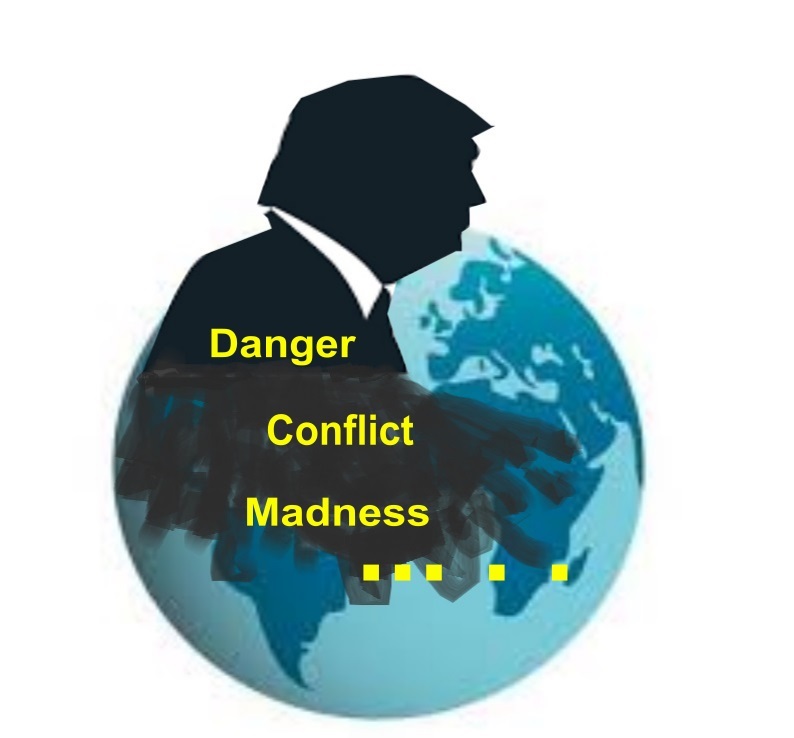



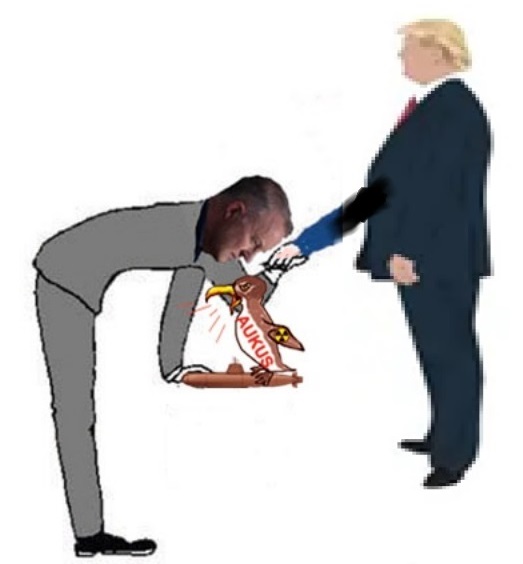






 nuclear-news