New proof that South Africa planned a binding nuclear deal with Russia


 SA planned binding nuclear deal with Russia, Business Day BY CAROL PATON, 31 MARCH 2016, NEW proof has emerged that SA intended to sign a binding deal with Russia to buy a fleet of nuclear reactors, bypassing public finance management rules along the way.
This is contained in court papers lodged on Wednesday by the Southern African Faith Communities Environmental Initiative and Earthlife Africa in the High Court in Cape Town.
The lobby groups, which are asking the court to declare the inter-governmental agreements on nuclear energy signed in 2014 unlawful, secured the new information through court processes that compelled the government to provide the record of decisions on the deal.
Among the records provided is an explanatory memorandum drafted by the state law adviser in November 2013 on the draft Russian deal, which makes clear — they say — that the deal was “intended” and was “understood as creating a firm commitment that Russia would construct the required nuclear plants in SA”.
The state law adviser’s memo has been long sought by the media and opponents of the forthcoming nuclear procurement as it was widely rumoured at the time that the office had given a strong warning that the proposed agreement was binding in nature, had budgetary implications and had to be debated publicly before it could be adopted.
Asked at the time to comment, chief state law adviser Enver Daniels refused, citing client confidentiality……..http://www.bdlive.co.za/business/energy/2016/03/31/sa-planned-binding-nuclear-deal-with-russia
South Africa and the madnessof its nuclear build programme
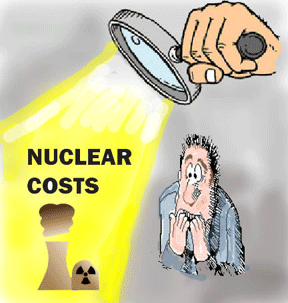 The madness of the nuclear build programme http://www.rdm.co.za/politics/2016/03/29/the-madness-of-the-nuclear-build-programme
Nuclear vendors are loathe to submit to a competitive tendering process based on a long-term, fixed-priced contract ANTON EBERHARD 29 MARCH 2016 IT IS time for the gloves to come off. The onus is on those who support the procurement of nuclear power stations to demonstrate that this initiative is not corrupt and will not be ruinous for the economy.
We face a possible credit rating downgrade to junk, which will make us all poorer: it will cost a lot more to service our debt, there will be less money for social programmes, the rand will fall even further, and inflation will rise.
Yet some still promote a huge nuclear programme that is not needed, that is more expensive and risky than alternative energy sources, that is hard to finance, and that will create contingent liabilities for the Treasury when we can least afford them.
SA does not need to procure large chunks of new power now. Electricity demand is not growing: it’s falling, and is lower than it was a decade ago. Depressed economic activity is partly the reason, but it’s not the most important one.
Electricity and economic growth data no longer track each other. The size of SA’s economy has continued to increase, albeit slowly, but electricity consumption has headed in the opposite direction. Countries such as Australia have seen a similar decoupling of energy and economic growth.
Could electricity demand in SA rebound if economic growth revives? Do we need to cater for depressed electricity demand as a result of Eskom supply constraints? Possibly. But we also need to recognise that there are profound changes to the energy-intensity of our economy, as smelters and mines close. The structure of our economy is changing. A fourfold increase in electricity prices in the past decade has accelerated energy-efficiency investments and energy conservation.
Official electricity demand forecasts and plans are obsolete. If demand for electricity were to reignite, it would fire off a lower base, and the rate of growth would be lower. When we project demand forward to 2030 or beyond, it’s obvious that we need a lot less power than was forecast in the Integrated Resource Plan of 2010 (the basis for the 9600MW nuclear commitment).
But we also need to replace old coal power plants, and compensate for the decline in the performance of Eskom’s existing power stations. I’ve taken all these arguments into account, and calculate that we need about 17GW of new electricity generating capacity by 2030. Some may calculate a slightly different number, but the required capacity will be close to this.
We have already ordered more power than we need by 2030. The new Eskom Medupi and Kusile coal power stations will add 9.6GW; its Ingula pumped storage scheme, 1.3GW. Two peaking power stations — Desisa and Avon, ordered by the Department of Energy — will add 1GW.
Contracted industrial co-generation and the department’s coal independent power producers (IPPs) will each add 1GW, with plans for more. In addition, 92 projects, totalling 6,347MW, have been contracted in the first four rounds of the department’s renewable energy IPP programme. Granted, this is intermittent power and will need to be complemented by gas power plants that the department plans to procure this year. More than 3GW are in the pipeline.
In the meantime, SA has negotiated 2.5GW of hydro power from the Inga 3 development in the Democratic Republic of Congo, and is considering further hydro imports from the region.
Together, these power procurements exceed what we need in the next 15 years.
Our cheapest sources of power are now wind and solar energy. The Department of Energy has awarded long-term, fixed-price contracts for wind energy as low as 57c/kWh, far below Eskom’s average cost of supply. Renewable energy combined with gas power can offer reliable base load supply at less than R1/kWh. Imported hydro and coal IPPs will also beat this.
I challenge any nuclear power vendor to sign a long-term power contract at less than R1/kWh. Whenever I ask them what nuclear power will cost in the country, they say “it depends”, and “it will need to be negotiated”.
This is the point: nuclear vendors are loathe to submit to a competitive tendering process based on a long-term, fixed-priced contract in which they take the risks of construction time and cost overruns. But all the other energy technology providers are prepared to do so. This has been the basis of the success of the IPP programme that has delivered such spectacular investment outcomes and price certainty for consumers. So why would we opt for a nuclear procurement programme that aims only to select a strategic partner, with subsequent price negotiations that have uncertain outcomes?
Nuclear power plants are also hard to finance. A couple of years ago in Davos, President Jacob Zuma was asked how 9,600MW of nuclear power would be financed. His answer, remarkably, was: “I’ll speak to my finance minister.”
He would have had that conversation by now and it will be clear that there is no fiscal space to finance a programme that will cost more than a half-a-trillion rand, when we raise just more than a trillion rand annually in taxes to fund all SA’s needs. Debt financing is now the fastest-growing component of the national budget and interest payments are more than twice the spend on higher education.
Our traditional mechanisms for funding power investments are also constrained. Eskom’s balance sheet is stressed, and it is struggling to raise sufficient debt on private capital markets to complete Medupi and Kusile. It has no possibility of raising finance for even one nuclear power station.
The private sector will not finance a nuclear plant in SA. The only possibility is funding from nuclear vendor countries. France will struggle: its nuclear company, Areva, is technically bankrupt and its latest UK nuclear contract — at £92.50/MWh (R2/kWh) — would be unaffordable for us.
Russia will not be able to finance all of its nuclear ambitions. China is a possibility, but financing will need to be backed by a long-term contract with an agreed electricity tariff, and the government will have to provide a sovereign guarantee and insurance cover, which will add contingent liabilities to the Treasury that will hasten a credit rating downgrade.
Eskom’s management recently expressed interest in further investments in large coal and nuclear projects. Its big coal, big nuclear, and big networks strategy is Neanderthal. Why would SA want to go down this route? It’s irrational. SA’s economic situation is precarious. The government now needs to act in concert and remove uncertainty about this nuclear folly. We don’t need it, it is too expensive, and we cannot afford it.
• Eberhard is a professor at the University of Cape Town’s Graduate School of Business
Once again, access to South Africa’s nuclear documents is denied
Access to nuclear documents denied once again http://www.bdlive.co.za/business/energy/2016/03/22/access-to-nuclear-documents-denied-once-again BY LINDA ENSOR, 22 MARCH 2016 ENERGY Minister Tina Joemat-Pettersson has turned down an appeal by the Open Democracy Advice Centre (Odac) against her department’s refusal to grant access to sensitive documents relating to government’s nuclear procurement plans.

The centre — acting on behalf of Business Day — used the Promotion of Access to Information Act (Paia) last year to request access to three reports relating to the estimated cost of building 9,600MW nuclear plants. The reports on nuclear-procurement models, the cost of nuclear plants and financing models were compiled for the department by three international consultancies — KPMG, Ingerop and Deloitte.
Former Business Day editor Songezo Zibi, speaking last year after the application was lodged, said the newspaper had “reason to believe that the cost studies the department does not want the public to see until it is too late in the process, show that 9,600MW of nuclear will be unaffordable”.
The affordability of the nuclear plans has become even more concerning given the financial straits government finds itself in. But the Treasury has insisted that it will approve only what is affordable.
The energy department rejected the original Paia request, saying the documents were classified as secret and would not be made available to the public. Its view was confirmed by the minister in a letter sent last week to Odac’s head of advocacy and special projects, Alison Tilley. Ms Joematt-Pettersson said “there is no evidence before me to suggest that the public interest in the disclosure of the record sought outweighs the harm contemplated by the release of the reports”.
She said the records sought included “information (which includes financial information) to be used in the procurement process and if released, in all likelihood, would be detrimental to the procurement process, most especially the competitive bidding process that is soon to be under way.
“Disclosure thereof would have the effect of materially jeopardising the economic interests or financial welfare of the republic.”
Similar reasons were given by the department to maintain the secrecy of the intergovernmental agreements on nuclear co-operation that were found to contain no proprietary or commercial information when they were tabled in Parliament last June.
When the department rejected Odac’s request, Right 2 Know Campaign spokesman Murray Hunter said the affordability study for SA’s strategic arms procurement in 1999 had been classified until last year. “When this was unclassified, it was clear that there had been enormous financial risks. Governments often overclassify documents to shield themselves from accountability and end up making the wrong decisions. The fact that these documents are being withheld, makes it impossible for SA to have the conversation about nuclear energy.”
Odac has three months within which to lodge an appeal against the minister’s decision.
Future for nuclear energy in South Africa is not looking good.
Future looks bleak for nuclear energy: expert, Times Live Matthew le Cordeur | 22 March, 2016 Nuclear power generation has turned into an expensive operation, even when the machines are amortised, said nuclear expert Mycle Schneider. Schneider, author of the World Nuclear Industry Status Report, told Fin24 on Monday that he questioned whether nuclear power can be seen as an alternative to a whole range of other energy options.
Schneider’s 2015 report, which was released in South Africa this month, concluded that “the promise that Generation III+ designs would be simpler and therefore easier to build appears not to have been fulfilled”.
“Real costs have increased significantly compared to their predecessors suggesting the attempt to reduce complexity was not a success.
“The ‘nuclear renaissance’ appears, in retrospect, to have been a last chance for light water reactor technology,” the report says. “Given the failure to reduce costs – and there are few who would forecast costs are going to go down at all, much less decline to the levels originally claimed – and the apparent failure to reduce the incidence of construction overruns, the future looks bleak for light water technology.”
South Africa is forging ahead to build 9.6 GW of nuclear energy, which critics believe will drain the country’s fiscus due to the large upfront infrastructure costs they say will experience time and budget overruns.
Request for proposals – which would focus on the Generation III+ designs – will be released before the end of the month, the Department of Energy said.
Nuclear for SA would only be ready by 2025
“Nuclear power has the longest lead time of any option to generate electricity,” Schneider told Fin24. “The average construction time of the 40 nuclear reactors that have been brought on line in the world in the past 10 years was about 9.5 years, to which one has to add several years of site preparation and licensing procedures.
“In other words, new nuclear would only be available in SA after 2025. Other options, especially efficiency and renewables, can be implemented within months,” he said.
Schneider said that nuclear energy’s high capital expenditure (capex), low operating expenditure (opex) paradigm is gone.
“Nuclear power generation has turned into an expensive operation, even when the machines are amortised,” he said. “As assessments by the French Energy Regulatory Commission (CRE) and the French Court of Accounts have shown, all of the cost items have increased significantly, to reach a 20.6% increase between 2010 and 2013 to reach about 60 €/MWh.
“The ‘base load’ concept is also rapidly outlived by reality in the market,” he said. “With increasing penetration of renewables, flexibility is the master word.”
Nuclear the least flexible power
“Nuclear power is the least flexible of all of the power generating technologies and is therefore hardly suitable for a future orientated power grid with high levels of decentralised renewables,” he said……..http://www.timeslive.co.za/local/2016/03/22/Future-looks-bleak-for-nuclear-energy-expert
Solar powered airport for South Africa
 Africa gets its first solar-powered airport By Milena Veselinovic, for CNN March 4, 2016 (CNN) South Africa has ramped up its green credentials by unveiling the continent’s first solar-powered airport.
Located halfway between Cape Town and Port Elizabeth, George Airport will meet 41% of its energy demand from a brand new 200 square meter solar power plant built on its grounds.
The facility, which was officially launched last week, has 3,000 photovoltaic modules, and will gradually increase capacity to deliver 750Kw power when it reaches full production…….
The airport serves the Western Cape town of George which lies in the heart of the scenic Garden Route, famous for its lush vegetation and lagoons which are dotted along the landscape.
It handles over 600,000 passengers a year, many of them tourists, but it’s also a national distribution hub for cargo such as flowers, fish, oysters, herbs and ferns.
The clean energy initiative follows in the footsteps of India’s Cochin International airport — the world’s first entirely solar powered airport, and Galapagos Ecological Airport, built in 2012 to run solely on Sun and wind power.
Around 635 million people, or 57% of the population, are estimated to live without power on the continent, with that number climbing to 68% in Sub-Saharan Africa.
Last year, a UK start-up collaborated with Shell to build a solar-powered soccer pitch in the Nigerian city of Lagos, but governments are also increasingly harnessing the Sun’s energy for major infrastructure projects.
Last month, Morocco switched on what will be the world’s largest concentrated solar plant when it’s completed. It is predicted to power one million homes by 2018. In Rwanda, a $23.7 million solar plant has increased the country’s generation capacity by 6% and lighting up 15,000 homes. http://edition.cnn.com/2016/03/04/africa/george-airport-solar-south-africa/index.html?utm_source=twitter&utm_medium=post&utm_term=africa,airport,solar,renewables&utm_campaign=greenpeace&__surl__=IgNX8&__ots__=1457298969501&__step__=
Trouble brewing in South Africa over nuclear energy programme
Storm brewing over nuclear energy programme, My Broadband, 23 Feb 16 A storm that has been brewing over the Department of Energy’s nuclear energy programme and PetroSA could erupt, reports News24. By News24 Wire – February 23, 2016 A storm that has been brewing over the Department of Energy’s (DoE) nuclear energy programme and PetroSA could erupt at its portfolio committee meeting on Tuesday, after Minister Tina Joemat-Pettersson snubbed the session last week.
“Tomorrow’s (Tuesday) committee meeting will present the minister with a real opportunity to deliver on her promise of transparency and provide the South African public much needed and vital information on South Africa’s proposed nuclear deal,” according to Democratic Alliance MP Gordon Mackay on Monday.
Last week, the committee asked Joemat-Pettersson to explain the implications of President Jacob Zuma’s State of the Nation (Sona) address in which he cautioned that the country would “only procure nuclear on a scale and pace that our country can afford”.
“The minister, who arrived an hour late, dodged addressing the issue by saying she is going to be part of a parliamentary debate on Wednesday and couldn’t pre-empt this in a portfolio committee meeting,” according Liz McDaid, spokesperson for environmentalist group Safcei.
“The chair then promised that the committee would hear what the minister planned to do given Sona and also for her to account for her own parliamentary comments,” she said. “This is all meant to take place on Tuesday 23rd”.
During her Sona debate on February 17, Joemat-Pettersson said the country had to go nuclear because of the water situation in the country.
“We simply have to go the nuclear route,” said Joemat-Pettersson, “because we don’t have enough freshwater. Koeberg recycles 22bn litres of seawater, while Medupi (coal-fired) power station uses 17bn litres of freshwater.”
Gordon, who heads up the DA’s energy portfolio, told Fin24 that the committee has been clear.
“We want all pertinent documentation relating to SA’s proposed nuclear new build programme,” he said. “Specifically, the Integrated Nuclear Infrastructure Programme (an assessment of SA’s readiness for civil nuclear expansion), all financing options and economic impact assessments.”
“Without these documents any decision to proceed with nuclear must be seen to be irrational,” he said.
McDaid said Parliament has failed to hold Joemat-Pettersson to account. “At one stage, the chair told the public that there would be a discussion on the nuclear deal, but it never happened,” she said. “Then last year, the minister arrived at the meeting with a classified document, which could not be discussed.”
Nuclear train steams ahead
“At the end of last year, during the budget review process, the DoE failed to account for Necsa (SA Nuclear Energy Corporation), which did not report and asked to be exempt from reporting to parliament.”
“Necsa has major liabilities for its failure to address nuclear contamination,” she said. “There is no information on the extent of the contamination, the amount of the liability and the timeline to fix this. Now Necsa is saying that the government must pay and that it is not liable.
“Despite the lack of the accountability, the nuclear train steams ahead.”…….. http://mybroadband.co.za/news/energy/156097-storm-brewing-over-nuclear-energy-programme.html
Economist warns that nuclear deal will downgrade South Africa’s economy to junk
 Nuclear deal might push SA into junk Things aren’t looking up for Africa’s second largest economy, with markets on edge awaiting the country’s budget speech, on February 24.
February 19, 2016 This is according to Busisiwe Radebe, an economist at Nedbank Limited, who addressed a group of local business people at the Ebotse Golf and Country Estate clubhouse recently.
She painted a slightly grim picture of the coming year for South Africa (SA) and its potential effects on local businesses.
Radebe spoke at the latest networking breakfast of the Ebotse Captains of Industry, which is organised by the Ekurhuleni Business Initiative (EBI).
The EBI was founded and is run by Chris van Biljon, who also resides in the Rynfield country estate and expressed his excitement at welcoming Radebe.
Among other concerns, Radebe raised the subjects of a looming credit ratings downgrade, the weaker-than-ever national currency and the repercussions of China’s slowing economic growth.…….Credit rating agencies measure and determine the credit reliability and, with it, the investment grade of companies and countries across the globe.
Standard and Poor’s (SnP), Moody’s Investors Service and Fitch Ratings are the three most influential, with the largest global market share.Currently, SA is rated by Fitch and SnP as only one level above junk status, which is essentially regarded as below investment grade.
“We have many investors who hold SA debt; if we’re downgraded to junk, they have to divest from us and sell our debt, which will weaken the Rand quite a bit and could have dire consequences for the economy,” said Radebe.
According to her, the big national budget deficit is another reason to be wary of the “big three”.
“We are at a scary point in the South African economy,” Radebe said.
“I think if the nuclear deal goes through, we will be downgraded to junk, because we can’t afford it at the moment…….. http://benonicitytimes.co.za/245690/nuclear-deal-might-push-sa-into-junk/
Russia will fund building of nuclear power, an attractive deal for South Africa?
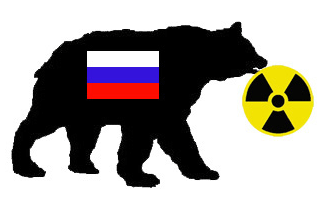 Russia, China front runners in South Africa’s nuclear project-source
* Other countries could be included in building plants
Reuters, By Peroshni Govender JOHANNESBURG, Feb 12 South Africa will finalise requirements for its 9,600 megawatt nuclear power plant by April, with Russia and China the front-runners to win the bid, a government official involved in the negotiations told Reuters.
Pretoria has earmarked billions of rand for much needed power generation but its nuclear build of 9,600 megawatts by 2030 at a price tag of up to 1 trillion rand ($63.46 billion) has raised concerns over whether it would be affordable.
Fears that what could be the most expensive procurement in the country’s history will be made behind closed doors, without the necessary public scrutiny have been raised by the opposition, claims the government has rejected.
“From what I have seen, the Russians do have a case and so do the Chinese. If we go with two countries, it could include the Chinese,” said the official, who did not want to be named because he is not authorised to speak to the media. “If we go for one country, it would be the Russians.”
Political alliances, Pretoria and Moscow’s membership of the BRICS association of five emerging economies and Russia’s ability to fund the project have put them as the favourites, the official said.
Russia’s willingness to build the plant at its own expense, operate it for 20 years and charge South Africa for the power and running costs had given that country an even better chance to clinch the deal, the official said.
Officials at the nuclear unit in the energy department were not available to comment…..http://uk.reuters.com/article/safrica-nuclear-idUKL8N15Q3MN
South African President’s very problematic nuclear deal with Russia
Five things you should know about Sona 2016, Mail & Guardian 12 FEB 2016 MG REPORTER From nuclear to belt-tightening: If you didn’t last through Jacob Zuma’s speech, we’ve got you covered with these five quick highlights………..3. Zuma may be pressurised into scaling back on his nuclear ambitions
The proposed deal to acquire 9 600MW nuclear power stations will dwarf the controversial arms deal and has already caused concerns with reports that Russia was allegedly the preferred bidder in what appears to be a very problematic deal. It also seemed to be one of many points of contention between Nene and Zuma, with treasury estimating a cost of R1.4-trillion and the pro-nuclear cabal putting it at just R600-billion.
A subdued Zuma, who has been chastised by business and his party for axing Nene, reaffirmed that the “nuclear energy expansion programme remains part of the future energy mix” but added that government would “test the market to ascertain the true cost of building modern nuclear plants”’ and emphasised that “we will only procure nuclear on a scale and pace that our country can afford”.
Current finance minister Pravin Gordhan was thought to have had a strong hand in this speech and may well have re-asserted Nene’s cautions around cost. ……..http://mg.co.za/article/2016-02-12-five-things-you-should-know-about-sona-2016
Nuclear “renaissance” to Nuclear Fascism
Nuclear energy does not ever exist in some neutral realm; it is always deeply enmeshed in political contexts, and (as South Africa’s own strange nuclear history shows) it is always linked intimately to state power.
Would the honourable member care to explain caesium, strontium and plutonium to the ancestors?
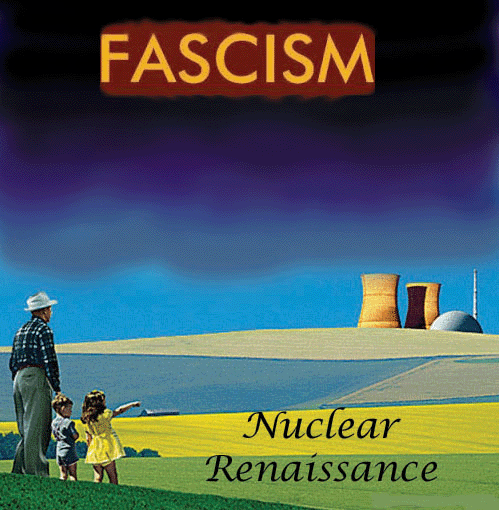
Power trip: where will Zuma’s nuclear dreams take us? SUNDAY TIMES OPINION BY HEDLEY TWIDLE, 2016-02-07 Hedley Twidle hiked from Cape Point to Koeberg power station. En route, while passing the traces of our ancient predecessors, he wondered what Zuma’s nuclear dreams might mean for our distant successors. Do we know what we are doing? And will they know what we did?…….
In secrecy and haste, the Zuma government is pushing a deal for a new fleet of reactors. It will be the biggest procurement in our history, with a projected starting price of more than R1-trillion – but nuclear builds are notorious for running over budget.
The reason for the firing of Nene, some analysts suggested, was that he was stalling on nuclear, trying to protect the fiscus from a “presidential legacy” project that threatens to contaminate our economy, and our whole national project, for the rest of our lives.
We all have things that keep us up at night, and the prospect of SA being locked into a “nuclear renaissance” with Vladimir Putin’s Russia (or Xi Jinping’s China, or François Hollande’s France) is mine.
One of the troubling things about the debate is the language in which it is conducted: the technocratic confidence and business-minded briskness that pretends it has everything figured out.
 Debates about energy policy happen in the language of developmental economics and financial modelling; in long and acronym-riddled policy documents; in boring technical reports. Decisions are taken amid the short-term cycles of party politics and cabinet reshuffles, not in mind of the long history of building and decommissioning nuclear plants, then disposing of their waste – a process that the world is only just beginning to grapple with. The massive expense and difficulty of it is only beginning to become apparent.
Journalistic expertise and coverage of these larger questions is thin; but beyond even this, do we have the imaginative capacity to understand what a nuclear future entails? I want to suggest that when it comes to nuclear power and its afterlives, we (in a deep sense) do not know what we are talking about.
what does it mean – culturally, philosophically – to produce isotopes that are invisible to our senses but lethal for thousands, hundreds of thousands, millions of years? What does it say about our civilisation, the geologic layer we will leave behind, the Anthropocene? What is the lifespan of a human “fact” when read across the expanse of deep time?……..
When Koeberg opened in 1984, the whole population of Cape Town was given iodine tablets, since any of the winter northwesterlies would carry the radioactive “plume” right towards the city. Iodine reduces the absorption of radionuclides by the thyroid gland: the first line of defence in a nuclear emergency. Looking at the evacuation plan, the city’s chief health officer accused Eskom of “absolute naivety” and moved out of the metro in protest………
Writing against India’s nuclear ambitions in her stinging 1998 essay The End of Imagination, Arundhati Roy registers a similar sense of rhetorical exhaustion. There can be nothing more humiliating for a writer, she says, than to restate a case that has, over the years, already been made by other people across the world, “and made passionately, eloquently and knowledgeably”. But she is prepared for this humiliation, she says, because silence would be indefensible.
“So those of you who are willing: let’s pick our parts, put on these discarded costumes and speak our second-hand lines in this sad second-hand play. But let’s not forget that the stakes are huge. Our fatigue and our shame could mean the end of us.”…….
Nuclear energy does not ever exist in some neutral realm; it is always deeply enmeshed in political contexts, and (as SA’s own strange nuclear history shows) it is always linked intimately to state power………
, it is an energy path that requires, that mandates, that fits perfectly with centralised state control and secrecy – hence its ongoing appeal to autocracies. It is the opposite of decentralised, small-scale technologies for renewable energy. Following the events at Fukushima Daiichi in 2011, most social democracies have turned away from nuclear. Russia, India, China and now SA are looking to major expansion in the sector, even as the rest of the world regards it as a dying, expensive industry – and one which has never solved the problem of the long-term toxicity it produces, or in its euphemism, its “legacy waste”.
The cleanness and bracing sea air of Koeberg are an illusion. Somewhere within that perimeter fence, the high-level waste of spent fuel rods is stored in cooling ponds. Low and medium level waste is driven up the N7 highway to be buried in an open pit at Vaalputs, in the dry landscape of Namaqualand.
But the most lethal waste – hundreds of tonnes of it – remains on the premises, too dangerous to move, or even to think about.
Outside the closed visitors centre, there were notices about the construction of a new “transient interim storage facility” within the grounds, using the dry casks in which the nuclear industry parks its most dangerous legacies.
The doubled-up adjective is telling: the strategy for this kind of waste is always temporary, transient, interim. It places an unasked-for burden not just on “future generations” (that bland and tired phrase), but even on future species of hominid that might evolve in the geographic space that is known (for now) by the bland name of South Africa………
The lethal time capsules being built deep underground are meant to reach as far into the future as human symbolic behaviour reaches back into the African past: 100,000 years.

To even begin to conceive of what the nuclear option means, you have to abandon opinion pieces, leave “rational” argument and enter the realms of speculative fiction. In 2116, 100 years from now, will the people required to take care of the waste of Koeberg (or Thyspunt, or Schulpfontein, or Duynefontein) understand what they are being asked to do, and why?
Will they have the technology to do it, and the money? Will they still be filing progress reports to a nuclear regulator? What language will be spoken here? Will those two grain silos still be there at the water’s edge, or will they be drowned by rising sea levels?
What about in 3016? Will “South Africa” still exist? Will there be any remnant of the national road system along which the dry casks will (supposedly) be transported to their final resting place at Vaalputs?
Will there be any trace of the companies that profited from the nuclear furnaces, after all the CEOs and the PAs and the PRs and the shareholders and their children’s children’s children, unto the 20th generation, are no more than ash on the wind?
Let’s go one further. What about 10,000 years from now?
Can any symbol or sign system speak across so many millennia of unstable above-ground conditions? And even if the hominids of 12016 AD do understand the warnings about a slow poison buried deep in the desert, will they heed them?
Could a question like this please be tabled among all the integrated resource plans and environmental impact assessments and risk assessments and costing exercises that go on for hundreds of pages but never get to the heart of the matter?
In those paper-thin arguments, language is used less to communicate than to disguise risk and evade the real questions posed by nuclear: questions of time, ethics, inter-generational responsibility. Questions about the kind of human experiment we want to be part of.
Would the honourable member care to explain caesium, strontium and plutonium to the ancestors?
What do you think? Write to letters@sundaytimes.co.za http://www.timeslive.co.za/sundaytimes/lifestyle/opinion/2016/02/07/Power-trip-where-will-Zumas-nuclear-dreams-take-us
South Africa: CORRUPTION GOES NUCLEAR – Jacob Zuma, the Guptas and the Russians

Zuma’s 9 600MW nuclear procurement programme and its accompanying contracts are tainted with alleged vested interests of the most deplorable kind.
If the country has any hope of having a rational, legal, and transparent evaluation of the need for nuclear energy, the procurement process has to start afresh.
This however can only occur under new leadership, which places the country’s interests ahead of its own.
If this does not occur, the future of South Africa will consist of a dark and discontented nuclear winter.
Zuma, the Guptas and the Russians — the inside story
Part 1: In pursuit of satisfying his insatiable greed — Jacob Zuma will liberate us from our constitutional democracy, and destroy the chance of a ‘better life for all’ Zuma, the Guptas and the Russians — the inside story RAND DAILY MAIL LILY GOSAM 02 FEBRUARY 2016
I wish to make it clear from the outset that this piece is not about arguing the merits or demerits of nuclear energy. It is whether Zuma’s decision for nuclear energy is based on sound economic principles for the good of the country, or for some other purpose.
Zuma’s (rabid) pet project
On 9 of December 2015 (and hours before Nene was fired), Zuma’s cabinet approved the 9 600 MW nuclear procurement programme (nuclear programme). This paves the way for nuclear vendors to present proposals in March 2016 to build 6 to 8 nuclear reactors, at an estimated cost of between R800-billion and R1.6-trillion ($50-billion to $100 billion)[5] [6] [7.
The nuclear programme, however, glows with controversy. According to Peter Attard Montalto (an emerging market economist at Nomura), the nuclear programme is Zuma’s “pet project”, and is highly interwoven with politics and the succession issue[8]. His analysis is supported by a Mail and Guardian [M&G] source who said that the programme was regarded as one of Zuma’s “presidential legacy projects” [9]. Professor William Gumede, of Democracy Works, added that the programme is being implemented essentially from a purely patronage point of view[10]. While Andrew Feinstein, executive director of Corruption Watch UK (and former ANC MP), said simply, “I fear that the corruption in this deal might dwarf the arms deal” (News24)[11].
A nuclear procurement process in a constitutional democracy should be transparent, logical, considered, legal, participatory, and unbiased.
Yet Zuma has assumed personal control of the nuclear programme, and it has been characterised by: secret meetings; undisclosed documents and classified financial reports; deceit; aggressive campaigning; damage control exercises; illegality; use of apartheid (‘national key-point’) legislation[12]; sidestepping of Eskom’s technical and financial oversight; destruction of oversight organs of state; disregarding of industry experts; refusal of public consultation; ignoring of the ANC’s national executive committee (NEC) and ANC resolutions; and the removal of any government opponents, the most notable of whom was Nene…………
Below exposes the reasons why Zuma is so hell bent on forcing the Russian 9 600 MW programme through, irrespective of: the evidence against it (from independent and government sources); the laws that stand in his way; the people that advise against it; and the grave concerns of his own party.
Radioactive plant-feed
Nuclear reactors require uranium to function, in particular low-enriched uranium (LEU). But first one must mine the uranium, and for South Africa’s 9 600MW nuclear programme, plus the existing Koeberg Nuclear Plant, the demand for uranium would steadily increase as the nuclear power plants come online. Luckily South Africa is said to have 6% of global identified resources of uranium (or 970 000 tons), the seventh highest share in the world [OECD-NEA, 2013][62].
With a 9 600MW nuclear deal, local uranium reactor demand would grow from the current 290 tons of Uranium (Ut) per year, to eventually 3300 Ut per year, once all the reactors are operational [OECD- Nuclear Energy Agency, 2014][63]. That’s a dramatic 11 times increase in local demand for uranium.
And as it just so happens, in 2010 the Guptas (a family well-known for their backing of Zuma), along with Zuma’s son, Duduzane, emerged as buyers of a South African uranium mine — the Dominion Rietkuil Uranium Project — amid claims that Zuma intervened to ease state funding for the project (according to amaBhungane – M&G’s investigative arm)[64].
[For summaries of the Guptas’ influence with Zuma and his family, read Verashni Pillay’s 2013 M&G article, or Franz Wild’s 2015 Bloomberg article. There are also excellent standalone articles on the Guptas dealings with the state, such as the Sunday Times piece by Sabelo Skiti on how Eskom allegedly went to extraordinary lengths to make sure the Gupta family landed a R4-billion coal deal, or M&G’s amaBhungane articles on a former Gupta associate allegedly involved in R835-million Transnet kickbacks]
All mine
Uranium One Incorporated (Uranium One) — a public company in Canada — owned a number of uranium mines around the world, including a uranium and gold mine in the North West province, South Africa[65] [66]. The local mine was called the Dominion Rietkuil Uranium project, which proved to be a disappointment to the company and so it was mothballed in late 2008.
Uranium One’s global uranium holdings attracted the attention of Rosatom, which from 2009 onwards began buying up the company’s shares through one of its many wholly-owned subsidiaries. (Rosatom would eventually indirectly secure 51% ownership of Uranium One in 2010, and 100% in 2013, after which it was delisted[67])[68].
As Rosatom (through its subsidiary) was buying into Uranium One, the company sold the South African Dominion Rietkuil Uranium project. Reporters picked up on Uranium One’s “low-key announcement” in April 2010 of the sale of the mine to an undisclosed party[69] [70]. The mine was sold for $37.3-million, at a loss to the company of $242-million (based on the company’s interim financial statements)[71]. Thus the mine was sold for about 14% of its reported value.
One month later, in May 2010, the media got wind that the mine — which would come to be known as Shiva Uranium — was bought by Oakbay Resources and Energy Limited (a Gupta-controlled company) together with minority shareholders, which consist of companies within companies (like a Russian nesting doll), including indirectly the ANC’s MK war veterans and its women’s group[72], and the black economic empowerment group Mabengela Investments (Mabengela).
Mabengela is headed by Zuma’s son Duduzane and Rajesh “Tony” Gupta (the youngest of three Gupta brothers). 45% of Mabengela is owned by Duduzane Zuma; 25% by Rajesh “Tony” Gupta (the youngest of the three Gupta brothers); 20% by an array of Gupta employees, former business partners and friends; and the last 10% is owned by an obscure offshore company, with its sole owner a Dubai resident with discernible traces in South Africa[73] [M&G]. The M&G wrote that Mabengela appears to be the vehicle for the Zuma family’s empowerment by the Gupta family[74].
(The North West province — where the mine is situated — is governed by Supra Mahumapelo, the province’s premier, and he is said to be a member of the so-called “premier league”, which consists of premiers loyal to Zuma. The other premier-league provinces are the Free State and Mpumalanga[75]. For the 2014/15 period, the auditor-general found the number of “clean audits” — that is, financial statements that present a fair and accurate picture and comply with accepted accounting principles — for the departments and public entities in Mpumalanga and the North West came to 24% and 4% respectively, while 32% of the Free State’s audits were deemed clean[76] [77]. This excludes financial statements by departments not submitted on time, or at all[78].
amaBhungane and the Sunday Times uncovered that the Guptas had expected the Public Investment Corporation (PIC) to facilitate funding for the Uranium mine purchase. (The state-owned PIC is the country’s largest institutional investor, with more than R750-billion — as at 2010 – in civil servants’ pensions under its management[79]).
……….At the time of the purchase of the Dominion Rietkuil Uranium mine, journalist Brendan Ryan [Fin24] pondered, “Who in their right mind would buy one of the most notorious dogs in the entire South African mining sector — the failed Dominion Uranium mine — and do it at a time when uranium prices are still depressed? That’s the $64 000 question following news that the Gupta family — the ultimate controlling shareholder in Shiva Uranium — has bought Dominion for $37.3-million. It’s either the steal of the century — given that developers Uranium One wrote off an investment of $1.8-billion when they shut Dominion down in October 2008 — or it’s a classic case of throwing good money after bad.”[93]
Unbeknownst to Ryan, at the time, was that Zuma and his benefactors had set the course for a large-scale nuclear programme.
Atomic timeline: 2000 to 2010
In the early 2000’s, Zuma — then South African deputy president — met the Guptas for the first time, as a guest at a business function held by a Gupta company, Sahara Computers[94].
In 2005, during the power struggle between Zuma and Thabo Mbeki for the presidency, the Guptas were said to have sided with Zuma, even after he had been fired as deputy president. The Guptas had tried to court Mbeki, but did not get far. (The Guptas claim that they were friends with Mbeki as much as they are friends with Zuma). The Guptas don’t mind telling whoever cares to listen that they were there for Zuma when his days were dark [Business Day][95].
Early in 2007, Eskom approved a plan to expand South Africa’s overall electricity capacity by the year 2025. The plan included the construction of 20 000 MW of new nuclear capacity, consisting of up to 12 nuclear reactors. France’s Areva and the United States’ Westinghouse were contenders[96].
In December 2007, Zuma was elected as ANC president[97].
Six month’s later, in June 2008, Duduzile and Duduzane, Zuma’s daughter and son joined the board of the Gupta-controlled company, Sahara Computers[98] [99]. (Duduzile resigned from the position in 2010[100]. Duduzane and Gupta family members are directors of at least 11 of the same companies, as at December 2015 [Timeslive][101].)
In September 2008, Mbeki resigned as South African president.
In December 2008, Eskom abandoned the 20 000MW nuclear plan for being unaffordable in the wake of the 2008 global financial crisis and the renewed appreciation for coal production[102] [103] [104][Professor J. van Wyk of Political Sciences]
Zuma was inaugurated as South African president in May 2009. In November 2009, the Guptas’ formed a new company, which would come to be known as Oakbay Resources and Energy Limited[105](Oakbay).
One month later, in December 2009, Zuma declared at the United Nations Climate Change Conference in Copenhagen that South Africa was going to reduce its carbon emissions by 34% by 2020[106]. His announcement took both local and international commentators by surprise, but it revealed Zuma’s nuclear ambitions.
Four months after that, in April 2010, the Guptas, Duduzane Zuma, and other investors bought the mine — soon to be called Shiva Uranium — with Zuma allegedly ensuring state assistance. The Guptas and Duduzane then jumped into action, refurbishing the uranium and gold plant “very aggressively”[107] to make the plant operational for production. They also possessed due diligence studies and a comprehensive bankable feasibility study (a document required to raise capital)[108] [109]……..
In August 2010, Zuma met with his Russian counterpart, Dmitry Medvedev, during his first official visit to Russia. Zuma was accompanied by 11 cabinet ministers and more than 100 South African business people[112].
During the trip, Zuma concluded a deal with Medvedev for Rosatom to supply 40% of Koeberg’s enriched uranium needs until 2017 to 2018[113] [114]. The Head of Rosatom told reporters that the company hoped to eventually control 45% of the low-enriched uranium (LEU) market in South Africa[115].”Our share of the market in South Africa will rise,” he said…………….
Gupta and Gupta-linked companies involved in mining – including Shiva Uranium – have several times run into trouble with regulatory requirements, as well as those on environmental compliance[226] [227][TimesLive]. Due to changes in environmental and mining legislation, Zwane is in charge of enforcing those regulations[228] [229]………..
South Africa has become one of the leading destinations for renewable energy investment, so said a 2015 research report by the Energy Research Centre UCT. The Renewable Energy Independent Power Producers Project (REIPPP) is a joint private-public initiative for renewable energy generation, mainly from wind, solar PV and concentrated solar power. Since its inception, the REIPPP has been hailed an unprecedented success. The programme is unique in that for projects to qualify, developers must contribute to the reduction of socio-economic inequity, through community ownership and economic development benefits[237].
As of October 2015, 92 projects had been selected as part of the REIPPP, mobilising private investment of R193-billion, and with a combined capacity of 6 327MW. In addition, 37 out of the 92 projects had been completed by then and they contributed 1 827MW of power to the national electricity grid (this is equivalent to one Koeberg nuclear power station), while also providing social upliftment[238] [239] [240][241]. In June 2015, the energy department issued a determination to procure a further 6 300 MW for the project[242]. The national treasury expected the REIPPP to eventually contribute 17 000 MW of electricity capacity to the grid by 2022[243].
Yet, in October 2015, just when bidding by renewable power producers was set to start for the additional capacity[244], Brian Molefe — now CEO of Eskom — halted the process, with the non-issuance of budget quotes for the programme. He said it was a temporary measure taken to protect the financial sustainability of Eskom. Effectively, he was saying Eskom could not afford to support new REIPPP connections as well as energy purchases. He added that, “very soon a lasting solution will be found to address this matter” [Fin24][245] [246] [247]. (As of writing, no reports on Eskom’s future commitment to the REIPPP could be located.)
On Wednesday, 9 of December 2015, Zuma held a cabinet meeting to discuss key government programmes and decisions. Amongst them was the nuclear procurement programme for 9 600 MW, which was then approved by cabinet (but excluded the then Cooperative Governance and Traditional Affairs minister Gordhan, who was off sick) [Carol Paton of Business Day uncovered cabinet’s decision][248].
Just hours after the meeting, and to the cabinet’s great consternation and surprise (according to Jeff Radebe, who is a cabinet member, an ANC NEC member, and minister of the presidency)[249], they heard along with the rest of the public that Zuma had fired Nene, and replaced him with a parliamentary backbencher, David van Rooyen. The move was met with shock and disbelief in all sectors at home and abroad[250].
Two days later, on Friday, 11 of December 2015, the post-cabinet media briefing by Radebe and accompanying press statement made no mention of the fact that the 9 600MW nuclear deal had been approved[251] [252] [253]. It was only on Monday, 14 December 2015, after Gordhan had taken the helm of treasury that cabinet’s decision was publically confirmed by him.
Uranium enrichment
“Global uranium demand is predominantly driven by its use in nuclear power generation plants,”[254]declared Oakbay, the majority shareholder in Shiva Uranium. But uranium cannot be used as fuel to run nuclear reactors until it has been converted into low enriched uranium (LEU)[255] [256].
The World Nuclear Organisation states that Eskom procures its conversion, enrichment and fuel fabrication services from world markets, and that nearly half of its enrichment is from Russia. However, historically, South Africa has sought self-sufficiency in its fuel cycle[257].
In the 1970s the Apartheid government established a uranium enrichment company, which later, in 1999, was restructured to become Necsa (currently under the management of Zuma’s “lynchpins” Seekoe and CEO Tshelane). But actual enrichment operations ceased in 1995, and the only two conversion plants were both demolished. Much of the high-enriched uranium (HEU) is still stored away. (Some say there’s a 250kg cache[258]).
With the prospect of 9 600MW of nuclear power, local enrichment operations are again a priority. ………
Uranium is not the only commodity with dubious links to the nuclear programme.
In July 2013, John Helmer (a provocative American journalist who focuses on the Russian business sector) flagged a strange deal with a company Nemascore which had links to Zuma’s associates ……….
Stacked deck
Overall, the tendering process for the 9 600MW nuclear build programme will include 80% South African sourced construction companies, engineers, waste management system suppliers, security systems providers, cabling, cement, steel, finance, transport, IT firms, mining, and more[286] [287].
Which on the face of it sounds wonderful, but not when one considers it is for a nuclear programme that has already been declared by government and independent studies to be unnecessary and unaffordable, will ultimately result in 10 to 50 times higher electricity costs than we are paying now, and already exhibits alarming signs of fixed tendering through devious means[288]……..
Zuma is the bomb
Besides LEU, enrichment plants can also produce high enriched uranium (HEU), which is used in nuclear weaponry.
In March 2012, at a Nuclear Security Summit in Seoul, Zuma stated on the subject of HEU, “…South Africa has adopted a policy on the benefication of our mineral resources, including uranium.”[293] What Zuma meant by “benefication” was that SA has a policy of enriching Uranium and does not want to limit its options by foreswearing the production or use of HEU [IOL]. Officials further explained that Zuma was not only keeping SA’s options open for producing HEU in the future, but also defended its decision to hold on to its existing stock of HEU from the nuclear weapons programme of the Apartheid government [IOL]………..
Conclusion
Zuma’s 9 600MW nuclear procurement programme and its accompanying contracts are tainted with alleged vested interests of the most deplorable kind.
If the country has any hope of having a rational, legal, and transparent evaluation of the need for nuclear energy, the procurement process has to start afresh.
This however can only occur under new leadership, which places the country’s interests ahead of its own.
If this does not occur, the future of South Africa will consist of a dark and discontented nuclear winter. http://www.rdm.co.za/politics/2016/02/02/zuma-the-guptas-and-the-russians–the-inside-story
South Africa’s Zuma and the get rich plan about uranium
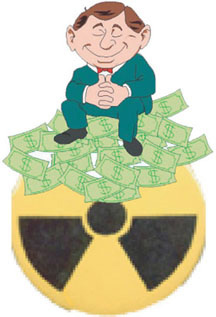 Zuma, the Guptas and the Russians — the inside story RAND DAILY MAIL LILY GOSAM 02 FEBRUARY 2016 “……..Below exposes the reasons why Zuma is so hell bent on forcing the Russian 9 600 MW programme through, irrespective of: the evidence against it (from independent and government sources); the laws that stand in his way; the people that advise against it; and the grave concerns of his own party.
Radioactive plant-feed Continue reading
South Afric a’s nuclear corporation in a mess
Step one: Sort out the mess at the nuclear corporation, Times Live The Times Editorial | 28 January, 2016
Power struggles, factionalism and claims of impropriety at state institutions have become so commonplace they are losing their shock value. “…….The latest public entity to be affected is the Nuclear Energy Corporation of SA, which is involved in two court actions over allegations of corporate governance breaches.
Phumzile Tshelane, the corporation’s chief executive and a supporter of the Zuma administration’s nuclear ambitions, is centrally involved in both cases.
The Nuclear Energy Corporation, meanwhile, is reportedly in disarray.
According to Business Day, it has yet to finalise its financial statements for the 2014-2015 financial year and is without a full board.
Several independent directors resigned, or left after their terms ended last year, after reportedly clashing with Energy Minister Tina Joemat-Pettersson. It would be tempting to dismiss the ructions at the corporation as just another public entity gone awry.
But the fact is that this is the institution that will play a key role in the government’s controversial plan to procure eight nuclear power reactors at a cost, experts warn, that could exceed R1-trillion.
Moreover, the government has decided to go ahead with the procurement and proceed to the next step, which is to invite tenders, even though the nuclear building programme has not been properly costed.
Surely the mess at the nuclear corporation needs to be sorted out before we take a single step further down the nuclear road.http://www.timeslive.co.za/thetimes/2016/01/28/Step-one-Sort-out-the-mess-at-the-nuclear-corporation
Karoo, South Africa, community unaware of hazards of uranium mining
 People should make their voices heard in the public consultations expected to take place over the course of the year 2016, before mining rights are granted.
To register as Interested and Affected Parties write to Ferret Mining at info@ferretmining.co.zaor call 012 753 1284/5.
To stay informed, join the Facebook page Stop Uranium Mining in the Karoo.
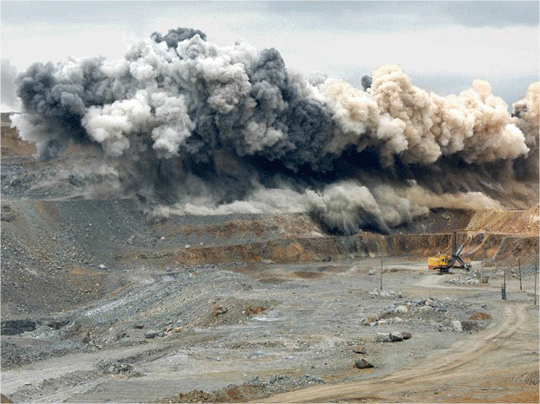 Uranium Mining Threatens the Karoo, Karoo Space, 18 Jan 16 By Dr Stefan Cramer Images sourced by Dr Stefan Cramer Just as the threat of fracking seemed to recede in the Karoo, the danger of uranium mining has arisen – and it is even more frightening and more likely than shale gas extraction.
The Karoo has long been known to harbour substantial sedimentary uranium deposits. Now an Australian company with Russian funding is planning to get the radioactive mineral out of the ground on a major scale.
The company has quietly accumulated over 750 000 hectares of Karoo properties and concessions around Beaufort West and plans to set up a large Central Processing Plant just outside that town.
While the nation is still debating the pros and cons of fracking, the Environmental Impact Assessment (EIA) as the precursor to mining licences is nearing finalisation. During 2016 the Department of Mineral Resources will make a decision on the industry’s application……….
extensive studies on the risks of uranium mining over many decades are available today.
We can draw on vast experiences on what huge impact the uranium mining industry has had in such diverse places as in Germany, USA, Australia or Niger. The death toll of a hugely dangerous industry is well known and firmly established.
Yet so far there is no public debate, no strategic assessment process in place in the Karoo.
No advocacy groups balance the glossy claims of the industry against sobering experiences on the ground. While global energy prices are depressed, the deepening economic and political crisis makes South Africa less and less attractive to the huge investments necessary to establish an upstream gas industry. Continue reading
Political connections in South Africa’s uranium energy drive
 Uranium Mining Threatens the Karoo, Karoo Space, 18 Jan 16 By Dr Stefan Cramer Images sourced by Dr Stefan Cramer “……..It is particularly interesting to see who the South African partners are in this joint venture. The Black Economic Empowerment partner in this case is Lukisa, which holds a total of 26% of Tasman RSA Mines, primarily in the form of exploration rights and nuclear licenses from the National Nuclear Regulator .
Perhaps more important are the excellent relations Lukisa has with Government and the ruling ANC.
Lukisa was founded by the controversial Andile Nkuhlu then a leading member of the ANC Youth League (ANCYL). He belonged to the faction co-opted by the then mining magnate Brett Kebble, whose assisted suicide made headlines in 2005 after he swindled government out of billions of Rand in shady mining deals.
Andile Nkuhlu was then made chief director in the Department of State Enterprises until his career stumbled in a corruption scandal. He pre-empted his dismissal from the ANC by founding the opposition party Congress of the People (COPE).
When this flopped he was readmitted to the ANC and continued to influence provincial polices in the Eastern Cape. A few years ago he relinquished his position at LUKISA because of deteriorating health, until he succumbed to diabetes complications in December 2015.
Now the company is run by Tefo Maloisane, who is said to have a long history of excellent political connections………http://karoospace.co.za/uranium-mining-threatens-the-karoo/
1 This Month
Chernobyl: The Lost Tapes – A good documentary on Chernobyl on SBS available On Demand for the next 3 weeks– https://www.sbs.com.au/ondemand/tv-program/chernobyl-the-lost-tapes/2352741955560

of the week–London Campaign for Nuclear Disarmament

Tell the Ukrainian Government to Drop Prosecution of Peace Activist Yurii Sheliazhenko
To see nuclear-related stories in greater depth and intensity – go to https://nuclearinformation.wordpress.com
-
Archives
- April 2026 (114)
- March 2026 (251)
- February 2026 (268)
- January 2026 (308)
- December 2025 (358)
- November 2025 (359)
- October 2025 (376)
- September 2025 (257)
- August 2025 (319)
- July 2025 (230)
- June 2025 (348)
- May 2025 (261)
-
Categories
- 1
- 1 NUCLEAR ISSUES
- business and costs
- climate change
- culture and arts
- ENERGY
- environment
- health
- history
- indigenous issues
- Legal
- marketing of nuclear
- media
- opposition to nuclear
- PERSONAL STORIES
- politics
- politics international
- Religion and ethics
- safety
- secrets,lies and civil liberties
- spinbuster
- technology
- Uranium
- wastes
- weapons and war
- Women
- 2 WORLD
- ACTION
- AFRICA
- Atrocities
- AUSTRALIA
- Christina's notes
- Christina's themes
- culture and arts
- Events
- Fuk 2022
- Fuk 2023
- Fukushima 2017
- Fukushima 2018
- fukushima 2019
- Fukushima 2020
- Fukushima 2021
- general
- global warming
- Humour (God we need it)
- Nuclear
- RARE EARTHS
- Reference
- resources – print
- Resources -audiovicual
- Weekly Newsletter
- World
- World Nuclear
- YouTube
-
RSS
Entries RSS
Comments RSS
 nuclear-news