French MPs urge Macron to provide data about nuclear waste buried in Algeria
French MPs urge Macron to provide data about nuclear waste buried in Algeria https://www.middleeastmonitor.com/20210415-french-mps-urge-macron-to-provide-data-about-nuclear-waste-buried-in-algeria/, April 15, 2021 Nine French MPs have called on President Emmanuel Macron to provide data and maps about nuclear waste sites in Algeria, agencies reported yesterday. The French conducted nuclear tests in the Algerian Sahara in the 1960s You now have the opportunity to take concrete action in favour of the civilians and the environment which continue to be affected by nuclear waste buried by France in the sands of the Algerian Sahara,” the MPs told Macron. “You must seize it.”They pointed out that the fifth session of the Algerian-French high level intergovernmental committee, which should have held on 11 April, has been postponed indefinitely. The committee works to resolve historical disputes between France and Algeria.
In February, the MPs said, the sky over a large part of France had an orange hue which was the result of sand carried by strong winds from Algeria. “This meteorological episode reminded us once again that France has left an indelible radioactive imprint in the heart of the Sahara… Seventeen nuclear explosions were carried out in [Algeria] between 1960 and 1966, both above ground and underground, to test the French atomic bomb.”Key information is still missing about the waste for the most part buried in the sand, added the MPs. “Providing the details requested,” they insisted, “will ensure the health and safety of the people living in the areas in question, protect future generations and take the necessary and appropriate measures for the restoration of the environment.”
South Africa’s history of ”state capture” by the nuclear industry
The battle for 2050 energy dominance: Nuclear industry makes its pitch Mail and Guardian, 14 Apr 21, Moscow The nuclear industry believes it should be able to account for more than 50% of South Africa’s vacant 24 gigawatts of power left behind by the demise of coal in a net-zero 2050 scenario. This was one of the outcomes of a government communications’ panel discussion on alternative future energy sources for South Africa hosted on Wednesday.”’
……………….before returning to instruct the then energy minister, Tina Joemat-Pettersson, to sign a deal with the Russians on the sidelines of the general conference of the International Atomic Energy Agency in Vienna, Austria.At the same time, Russia’s state-owned nuclear agency, Rosatom, released a statement that it had clinched a deal with South Africa. A legal battle ensued and in 2017, the Western Cape high court ruled that the secret tabling of the intergovernmental agreements with Russia, the US and Korean were unconstitutional and unlawful, and that they be set aside.
A legal battle ensued and in 2017, the Western Cape high court ruled that the secret tabling of the intergovernmental agreements with Russia, the US and Korean were unconstitutional and unlawful, and that they be set aside……….
In 2019 a report by the Carnegie Endowment for International Peace said that Russian engagement with South Africa during the Zuma era was deep rooted and relied on a web of relationships at the highest levels of both governments.
This included the promotion of multibillion-dollar projects involving state-owned companies particularly in the energy sector, and the leveraging of Cold War-era ties forged during South Africa’s period of national liberation.
The researchers linked the significance of the secret deal to a larger problem of state capture.
According to authors Andrew S Weiss and Eugene Rumer: “As early as the autumn of 2011, Zuma told then finance minister Pravin Gordhan that he wanted to award the entire construction deal to Russia. He brushed aside Gordhan’s insistence on following established procedures for state procurement, according to Gordhan’s written testimony to the state capture commission.
“Gordhan warned Zuma that failing to follow the established procedures could land the president in trouble similar to the fallout over the earlier arms-sales scandal that had nearly ended his political career,” the report noted……….
During the presidency of Thabo Mbeki, Eskom explored possibly expanding the Koeberg nuclear power facility but decided in 2008 that the project was unaffordable.
French Prime Minister visiting Algeria. The question of radioactive dust from nuclear tests will be on the agenda.
*Algeria – French Nuclear Testing**
French atomic tests in Algeria: so much brings the wind. The wind regularly
blows radioactive particles from the Sahara over Europe, a memory of the
atomic tests carried out in Algeria in the 1960s. Will the responsibility
of Paris be on the menu of Jean Castex’s visit to Algiers this weekend.
end?
Liberation 7th April 2021
On April 10 and 11, French Prime Minister Jean Castex will travel to
Algiers, accompanied by eight ministers – including the ministers of
foreign affairs and the armed forces to participate in the 5th session of
the France-Algeria High Level Intergovernmental Committee (CIHN). The
question of the health and environmental consequences of the 17 nuclear
tests carried out by France in the Sahara between 1960 and 1966, as well as
that of nuclear and non-nuclear waste left by France, will be on the menu
of discussions.
ICAN France 7th April 2021
http://icanfrance.org/alerte-presse-les-consequences-des-essais-nucleaires-francais-en-algerie/
French report on the unfairness of France’s nuclear history in Algeria

French report grapples with nuclear fallout from Algerian War https://thebulletin.org/2021/03/french-report-grapples-with-nuclear-fallout-from-algerian-war/?utm_source=Newsletter&utm_medium=Email&utm_campaign=ThursdayNewsletter03042021&utm_content=NuclearRisk_AlgerianWar_03042021&__cf_chl_captcha_tk__=32bfe924bf6171eab26d9deb08cd73459b5e69dc-1614896664-0-AWxxiguytXLkG_ERcOpFeDyCqmv7X1FYZmZBNGAnlwY6ZlI8PgWd2By Austin R. Cooper | March 4, 2021 n January, the French historian Benjamin Stora filed a report commissioned by the French President Emmanuel Macron aimed at “reconciliation of memories between France and Algeria,” which France ruled as the jewel of its colonial empire for more than 130 years.
The Stora Report addressed several scars from the Algerian War for Independence (1954–62), a bloody struggle for decolonization that met savage repression by French troops. One of these controversies stems from French use of the Algerian Sahara for nuclear weapons development.
France proved its bomb in the atmosphere above this desert, naming the inaugural blast , or Blue Jerboa, after the local rodent. Between 1960 and 1966, France detonated 17 nuclear devices in the Algerian Sahara: four atmospheric explosions during the Algerian War, and another 13 underground, most of these after Algerian Independence.
French nuclear ambitions became inextricable from the process of Algerian decolonization. The Saharan blasts drew international outrage, stalled ceasefire negotiations, and later threatened an uneasy peace across the Mediterranean.
The Stora Report signaled that radioactive fallout from the Algerian War has remained a thorn between the two nations. But the document comes up short of a clear path toward nuclear reconciliation.
A United Nations dispute. The French bomb collided with the Algerian War before the first mushroom cloud rose above the Sahara. In November 1959, Algerian allies representing independent states in Africa and Asia contested French plans for the desert in the First Committee on Disarmament at the United Nations.
Part of the French strategy at the United Nations was to drive a wedge between the nuclear issue and what French diplomats euphemistically termed the “Question of Algeria.” French obfuscation continued for decades.
France would not, until 1999, call the bloodshed a war, preferring the line that what happened in Algeria, as part of France, amounted to a domestic dispute, rather than UN business. Macron became, in 2018, the first French president to acknowledge “systemic torture” by French troops in Algeria.
The Afro-Asian challenge to Saharan explosions hurdled France’s diplomatic barricades at the United Nations. The French delegation tried to strike references to the Algerian War as irrelevant. But their African and Asian counterparts painted the desert blasts as a violation of African sovereignty.
The concern was not only for contested territory in Algeria, but also for independent states bordering the desert, whose leaders warned that nuclear fallout could cross their national borders. Radiation measurements taken in the wake of Gerboise bleue proved many of them right.
Nuclear weapons represented another piece of French imperialism on the continent.
Secret negotiations resumed in September 1961, with US Ambassador to Tunisia Walter N. Walmsley serving as France’s backchannel. The US State Department worried that French attachment to the test sites might thwart the decolonization process.
Lead Algerian negotiator Krim Belkacem asked Walmsley if prospects for a ceasefire still hinged on France retaining control of the test sites. Krim got his answer when Franco-Algerian talks resumed the following month, at the end of October 1961.
France did not abandon its goal to continue nuclear explosions in the Sahara. But the Algerian position appeared to have softened. So long as further blasts did not impinge on Algeria’s “eventual sovereignty” over the desert, as one archival document put it, a deal looked possible.
The Evian Accords marked a nuclear compromise. Finally signed in March 1962, the landmark treaty granted France a five-year lease to the Saharan test sites but did not specify terms of use.
Going underground. Advice from the French Foreign Ministry played a key role in pushing France’s weapons program beneath Saharan mountains. French diplomats suggested that underground explosions would present, according to one archival document, “significantly less serious” challenges than atmospheric ones for future relations with Algeria and its African neighbors.
This did not stop Algeria’s first president, Ahmed Ben Bella, from winning political capital with the nuclear issue. In public, Ben Bella cast Saharan blasts as an intolerable violation of Algerian sovereignty, as had his allies at the United Nations. In private, however, Ben Bella acquiesced to the Evian terms and reportedly tried to squeeze French financial aid out of the deal.
The Hoggar Massif shook 13 times before France handed over its two Saharan test sites to Algeria in 1967. An accident occurred during one of these underground blasts, dubbed Béryl, when containment measures failed. Several French soldiers and two high-ranking French officials suffered the highest radiation exposures, but roughly 240 members of “nomadic populations” in the region received lower doses.
Meanwhile, France began construction on its Pacific test range in French Polynesia, the site of nearly 200 nuclear explosions between 1966 and 1996. Most took place underground, but France also conducted atmospheric detonations in Polynesia, and these continued into the 1970s. Even though the Limited Test Ban Treaty had gone into effect in 1963—prohibiting nuclear blasts in the atmosphere, underwater, and in outer space—France refused to sign it.
Contamination and compensation. As part of its reconciliation proposal, the Stora Report encouraged Franco-Algerian cooperation on environmental remediation of the Saharan test sites. An expert report from the International Atomic Energy Agency, however, concluded in 2005 that environmental interventions were “not required” unless human traffic near the sites should increase.
The Stora Report briefly mentioned compensation linked to radiation exposure from French nuclear weapons development, but this deserves a closer look. In 2010, the French Parliament passed a law recognizing these victims and establishing funds and procedures to provide compensation for illness and injury. So far, France has earmarked 26 million euros for this purpose, but almost none of that has gone to Algerians.
Decades earlier, France’s nuclear allies turned to compensation programs in an attempt to reconcile with marginalized groups affected by weapons development without disclosure or consent. In 1993, for example, the United Kingdom settled with Australia as redress for indigenous people and personnel involved in UK explosions conducted in the former colony.
Facing similar lawsuits, the United States provided monetary compensation and health benefits to the indigenous people of the Marshall Islands, where US nuclear planners “offshored” their most powerful blasts during the Cold War arms race. Other US programs have made compensation available to communities “downwind” of the Nevada Test Site and surrounded by the uranium mines fueling the US nuclear arsenal, including Tribal Nations in the Four Corners region.
Compensation programs map a global history of colonial empire, racial discrimination, and dispossession of indigenous land, but postcolonial inequalities look particularly stark from the Sahara. Including appeals, France has granted 545 of 1,739 total requests filed by French soldiers and civilian participants in the nuclear detonations, as well as exposed populations in Algeria and Polynesia. Only 1 of 52 Algerian dossiers has proven successful.
French officials responsible for evaluating these files report that the ones from Algeria often arrive incomplete or in a shoddy state, and pin the blame on the Algerian government’s inability or unwillingness to provide the geographical, historical, and biomedical evidence that French assessment procedures demand. Claims must demonstrate that an individual worked or lived in a fixed area surrounding one of the two Saharan test sites, between February 1960 and December 1967, and suffered at least one of 21 types of cancer recognized as radiation-linked by French statute.
A step toward reconciliation. If Macron really wants to tackle France’s nuclear history in Algeria—and its aftermath—his government should start here. The French Parliament opened the door to Algerian compensation in 2010, and important revisions to the evaluation procedures took place in 2017, but there has never been a level playing field. Macron could, for example, require that French diplomats posted in Algeria help Algerians build their cases and locate supporting documents.
Another option: Macron could declassify archival materials documenting the intensity and scope of radioactive fallout generated by French nuclear blasts. Draconian interpretations of French statutes on the reach of military secrecy continue to block access to the vast majority of military, civil, and diplomatic collections on France’s nuclear weapons program—including radiation effects. Foreign archives have provided useful information, but official documentation from the French government would help exposed populations—like those in the Sahara—understand what happened, evaluate the risks, bolster their claims, and likely find these more successful.
The Stora Report did well to acknowledge nuclear fallout from the Algerian War. Giving Algerians a fair shot at compensation should mark France’s first step toward reconciliation.
South Africa, with no way to deal with radioactive waste, must not develop new nuclear power
|
How can we think about more nuclear power when state cannot manage what we have? https://www.businesslive.co.za/bd/opinion/letters/2021-03-01-letter-how-can-we-think-about-more-nuclear-power-when-state-cannot-manage-what-we-have/– Keith Gottschalk, Claremont 01 MARCH 2021
State must first demonstrate its ability to cope with the existing radioactive waste by building a depository Bernard Benson falsely claims that “nuclear energy is clean and efficient … small modular reactors are safe and clean” (“Energy lessons to be learnt,” February 28.) All of the CSIR modelling has concluded that nuclear power is never the most cost-effective option for SA. And, far from being “clean”, Koeberg now stores a total of 1,000 tonnes of high-level radioactive waste within Cape Town’s municipal boundaries, due to Eskom and the government’s failure for 40 years to build a high-level radioactive waste depositary. It is unthinkable to fantasise about more nuclear power stations until the state first demonstrates its ability to cope with the existing radioactive waste by building that depository. Eskom is supposed to be setting aside funds monthly to cover the costs of radioactive waste disposal and Koeberg’s decommissioning. It has failed to do that for 40 years. This ballooning cost will inevitably be dumped onto taxpayers when it cannot be kicked down the road any longer. “Small modular reactors” is the industry’s latest euphemism for pebble-bed modular reactors, which have unsolved intrinsic flaws, such as neutron embrittlement of the “pebbles”, causing failing structural integrity. The Chernobyl and Fukushima disasters prove the necessity of siting nuclear power stations as far away as possible from major population centres. |
|
Radioactive dust over Europe – from France’s nuclear bomb tests in the Sahara!
New nuclear build for South Africa would face legal stumbling blocks
Court is likely to regard decision to pursue a plant as irrational, regulator told at public hearing, 23 FEBRUARY 2021 –
Any decision to pursue a 2,500MW nuclear build will likely be seen as irrational and unreasonable if tested in court, the National Energy Regulator of SA (Nersa) heard on Tuesday. Should the regulator be given the green light for a nuclear build, it would lead to “severe legal complications”, Anton van Dalsen, legal counsellor for the Helen Suzman Foundation, warned Nersa… … (subscribers only) https://www.businesslive.co.za/bd/national/2021-02-23-nersa-warned-nod-for-nuclear-build-would-face-legal-stumbling-blocks/
South Africa: an example of how nuclear waste costs are passed on to later generations
Questions we should therefore all be asking of government, the Department of Energy, the nuclear regulator, Nersa, Nuclear Waste Disposal Institute, Necsa, Eskom and the South African nuclear sector are:
- Who should bear the cost of nuclear plant decommissioning and long-term storage and disposal of high-level nuclear waste – the polluter, the customer or the taxpayer?
- Where are the real asset-based funds set aside within Eskom and Necsa for future decommissioning and long-term storage and disposal of high-level nuclear waste?
- Does the “polluter pays” principle apply in practice, or will the customer and taxpayer end up paying twice through government bailouts?
One can only guess who may end up bearing the real decommissioning, high-level waste storage, disposal and final repository costs in due course – perhaps not the polluter at all, but our children’s children as taxpayers in the next generation.
 South African taxpayers exposed to high-level nuclear waste disposal and decommissioning liabilities, Daily Maverick, By Chris Yelland• 21 February 2021
Page 69 of the 8th National Report prepared by the Department of Energy and the SA National Nuclear Regulator, and presented to the International Atomic Energy Agency (IAEA) in August 2019 in terms of South Africa’s obligations to the Convention on Nuclear Safety, states in respect of Eskom’s Koeberg nuclear power station:
“Financial provision for decommissioning (as well as spent fuel management) continues to be accumulated on a monthly basis since commercial operation of the installation began in 1984. The financial provision is reflected in the annual financial statements of Eskom. These financial statements are audited in accordance with South African national legislation.
“In terms of decommissioning financial plans, the amount of decommissioning and spent fuel provision made each month is determined by the present value of future estimated cash flows. These financial plans are reviewed regularly and adjusted annually, and informed by the South African inflation rate.”
However, the problem with these fine words to the IAEA is that they are misleading, perhaps deliberately so, and that the so-called provision is actually something of a “Potemkin village” to placate and impress the IAEA and the public that all is well and under control.
In fact, no real money, securities or investments of any kind have actually been set aside monthly, annually or at stage and in any fund during operation of South Africa’s nuclear facilities as provision for decommissioning, long-term storage and final disposal of high-level nuclear waste, and/or the construction and operation of a high-level nuclear waste repository.
South Africa’s President Cyril Ramaphosa omits mention of nuclear in his State of the Nation Address
Experts speculate on meaning of Ramaphosa’s nuclear omission in SONA https://www.iol.co.za/capeargus/news/experts-speculate-on-meaning-of-ramaphosas-nuclear-omission-in-sona-fe6bd6f4-15da-496d-88b7-0009b080661c
By Mwangi 15 Feb 21, Githahu Cape Town – Energy experts and commentators are speculating on the the significance of the omission of any mention of nuclear energy by President Cyril Ramaphosa in his State of the Nation address, with one suggesting this might be a sign that the government may have dropped its commitment to the nuclear power option.
In his speech on Thursday night, Ramaphosa said: “The fourth priority intervention of the recovery plan is to rapidly expand energy-generation capacity.
“Over the last year, we have taken action to urgently and substantially increase generation capacity in addition to what Eskom generates. The Department of Mineral Resources and Energy (DMRE) will soon be announcing the successful bids for 2 000 megawatts of emergency power.
“Government will soon be initiating the procurement of an additional 11 800 megawatts of power from renewable energy, natural gas, battery storage and coal in line with the Integrated Resource Plan 2019.”
Mark Swilling, Distinguished Professor of sustainable development at the School of Public Leadership, Stellenbosch University, said: “It is significant that nuclear wasn’t mentioned. It’s not like government forgot about nuclear.
“The DMRE has after all been pushing nuclear power very hard. What is more likely is that the department failed to get its way, and that can only be a good thing, as nuclear is expensive and risky, especially when there are cheaper alternatives.
“What the president announced is a very good start, but not enough. Instead of the procurement of an additional 11 800 megawatts, what we need is at least 20 000MW if we are to be free of load shedding by 2025.
“There is a problem if the 11 800 includes coal because it’s not as though you can build a new coal mine. Nobody is funding them anymore. Around the world even new coal stations are shutting down. The 11 800MW should be strictly from renewables.”
Executive director of the Southern African Faith Communities’ Environment Institute (Safcei), Francesca de Gasparis, said: “The president’s speech was silent on nuclear power, yet we know from recent developments that the government has been pushing on with its nuclear plans, despite more nuclear not being needed and being one of the most costly electricity generation options.
“In terms of the Integrated Resource Plan (IRP), which lays out our energy choices, this risky and outdated technology is not even identified as a necessary part of the solution to the country’s ongoing energy crisis. Renewable energy is significantly quicker to install and a more cost-effective choice.”
The Climate Justice Charter Movement lobby group said in a statement: “The economic recovery plan calls for more off-shore extraction of oil and gas. If the president is serious about the climate crisis he would make it clear that nuclear energy plans are also off the national agenda. In this context, we would have taken his climate change commission more seriously.”
Radioactive poisoning of the environment: France’s nuclear legacy of wastes in Algeria
Impact of France’s nuclear tests persists: Algeria https://www.aa.com.tr/en/africa/impact-of-frances-nuclear-tests-persists-algeria/2143751
Algerian Foreign Minister said nuclear tests were three to four times the size of US bombing of Hiroshima in Japan, Abdul Razzaq Bin Abdullah |13.02.2021 ALGIERS
France’s nuclear experiments in the Algerian desert in the 1960s were three to four times equal to the Hiroshima bombing in Japan, Algerian Foreign Minister Sabri Boukadoum said on Saturday.
In a Twitter post on the occasion of the 61st anniversary of the first French nuclear explosion in the Algerian desert, on Feb. 13, 1960, Boukadoum described the impacts of the tests as “catastrophic”.
“On this day in 1960, imperialist France carried out the first nuclear explosion in the Reggane region in the Algerian desert, in a process code-named ‘Gerboise Bleue’ (Blue Desert Rat),” Boukadoum said.
He added that the French nuclear explosion yielded a force of 70 kilotons (kt) and its catastrophic radiological repercussions still persist.
The first atomic bomb dropped 75 years ago by the United States leveled Hiroshima on Aug. 6, 1945, and killed an estimated 140,000 people with many more dying in the following years from the effects of radiation. Three days later, Washington dropped another atomic bomb on Nagasaki, killing around 70,000 people and forced Japan to surrender six days later.
According to French officials, the colonial authorities carried out 17 nuclear experiments in the Algerian desert in the period between 1960 and 1966. Algerian historians, however, put the number at 57.
On Feb. 13 1960, France conducted its first nuclear test, code-named “Gerboise Bleue” (Blue Desert Rat) in the Sahara Desert, southwest of Algeria.
The French nuclear experiments have caused the death of around 42,000 Algerians and injured thousands due to nuclear radioactivity, in addition to the extensive damage to the environment.
France has rejected Algerian demands to reveal the location of the nuclear waste as well as compensating the victims and those suffering from permanent disabilities due to the harmful effects of nuclear radioactivity.
During the course of the struggle for independence, nearly five million Algerians were killed, while hundreds of thousands more injured. *Ibrahim Mukhtar in Ankara contributed to this report
South Africa’s Koeberg Nuclear Power Station has suffered severe corrosion
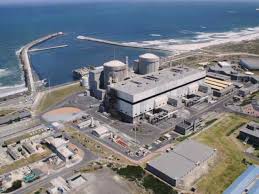
Koeberg has suffered substantial damage, according to Koeberg Alert Alliance. (with audio) https://www.capetalk.co.za/articles/408514/koeberg-nuclear-power-station-radioactivity-containment-building-is-severely-damaged?fbclid=IwAR1HSyt2Tw6lrsbwJxlEQW5m4i4YT18_Hl0MgVzEQV0f24h31btTVN150g4 Eskom says the containment building is ‘leak-tight’.
RELATED: We’ll extend Koeberg lifespan from 40 to 60 years. It’ll be safe – Eskom
Koeberg Nuclear Power Station has suffered substantial damage to its containment building, according to Koeberg Alert Alliance (KAA).
The containment building is designed to contain the escape of radioactive steam or gas in an emergency.
A nuclear accident at Koeberg will have devastating consequences for hundreds of thousands of people who live close nearby.
Eskom says it is aware of “deterioration” and that it is managing the issue by implementing a modification.
Like all other nuclear power plants around the world, we do get deterioration… We’re managing this issue… Recent tests show… It’s leak-tight. The building works…
Riedewaan Bakardien, Chief Nuclear Officer – Eskom
Sea air has severely damaged the concrete structure, highlighting the significant risk the facility poses to nearby residents, according to KAA.
A concerned insider at Koeberg brought the alarming structural problems to the attention of KAA.
The insider informed KAA of a crack so large it goes right around the entire 110-metre circumference of the containment dome.
The community group says it is struggling to access information from Eskom about the damaged containment dome.
KAA claims that a 31-page Eskom report (about the damage), has eleven pages entirely blacked out while various other sections, photos and tables were censored because, claims Eskom, it contained “sensitive technical information”.
Lester Kiewit interviewed Peter Becker, a spokesperson for KAA.
The salt in the sea air… has caused accelerated rust in the rebar in the concrete of the containment structures… which caused cracking… About 10% of the surface of the containment building has delaminated [split into layers] …
Peter Becker, spokesperson – Koeberg Alert Alliance
Eskom blacked out about half of the report before releasing it to us…
Peter Becker, spokesperson – Koeberg Alert Alliance
Eskom is surprised by the speed at which it’s deteriorating… Koeberg was not well constructed, and the effect of sea-air was not well understood.
Peter Becker, spokesperson – Koeberg Alert Alliance
Koeberg is far too close to densely populated areas. If they tried to get approval to build it in that location today, it would be refused…
Peter Becker, spokesperson – Koeberg Alert Alliance
Koeberg was designed to last for 40 years… We get to that in 2024… but Eskom wants to keep it going. It’s a really bad idea…
Peter Becker, spokesperson – Koeberg Alert AllianceThis problem will remain. We’re implementing a modification… which will retard the deterioration.
Riedewaan Bakardien, Chief Nuclear Officer – Eskom
It’s the building around the reactor. Yes, there is corrosion… We’re well aware of it…
Riedewaan Bakardien, Chief Nuclear Officer – Eskom
No apologies from France, over nuclear bomb tests’ pollution in Algeria
The New Arab 12th Feb 2021, President Emmanuel Macron’s recent statement that a “memories and truth” commission will be established to look into the history of the French colonisation of Algeria, has led to much public discussion over this bloody legacy.
And in this context, the absence of apologies or offers of reparations by the French state has not gone unnoticed. One area of particular contention in this process is the ongoing and detrimental effects of France’s nuclear testing in Algeria, conducted throughout the
1960s. France conducted its first nuclear test known as the “Gerboise Bleue” in February 1960 in the Sahara Desert – an atomic bomb that was four times the strength of Hiroshima. A total of 17 tests were carried out, four of them atmospheric detonations, and 13 underground.
https://english.alaraby.co.uk/english/comment/2021/2/12/frances-nuclear-colonial-legacy-in-algeria
Koeberg Nuclear Power Station containment buildings damaged by prolonged exposure to sea air
 Koeberg Nuclear Power Station containment buildings suffer damage, ESI Africa, Feb 12, 2021 A recently released Eskom document has revealed that 40 years of exposure to sea air at Koeberg Nuclear Power Station has damaged the concrete of the containment buildings, according to Koeberg Alert Alliance.
At one stage the concrete containment dome was found to have cracked around the entire 110-meter circumference, states the Koeberg Alert Alliance.
“The containment buildings are the outer shells of the reactor buildings, built as pressure vessels to withstand the pressure if the reactors inside them ever malfunction and therefore prevent harmful radiation being leaked into the environment,” says DR, a member of Koeberg Alert Alliance and a retired analytical chemist.
“Where the chloride salts have entered, they have caused corrosion of the reinforcing steel bars, resulting in spalling and delamination of the concrete – it is even more alarming than I thought,” he says. Spalling results from water entering concrete which forces the surface to peel, pop out, or flake off. ……..
According to the Koeberg Alert Alliance, the provided 31-page report which refers to repairs done up until 2018, has eleven pages entirely blacked out and various other sections, photos and tables redacted with the reason given as “sensitive technical information”.
“The interesting parts are clearly those that have been redacted,” says University of Johannesburg Physics Professor, Hartmut Winkler. “The first big redact is titled History/Background and presumably describes past failures and recent damage that Koeberg Alert Alliance’s PAIA was interrogating. Why should the ‘History’ be sensitive due to technical information when the less redacted sections are full of technical details.
“The most puzzling redact to me are the references which are supposed to be publicly available documents, so why are they all being hidden? Do they expose some entities that Eskom does not want anyone to know have been involved with Koeberg and why? I would also query why the financial information would be redacted. Surely the public has a right to know how much money certain components cost, and what Eskom paid for them?” says Winkler.
This is a developing story, ESI Africa will do a follow up to give Eskom an opportunity to respond to the claims. https://www.esi-africa.com/industry-sectors/generation/koeberg-nuclear-power-station-containment-buildings-suffer-damage/
South Africa’s new nuclear power plan would be a costly mistake
|
The National Energy Regulator of South Africa (Nersa), has issued a consultation paper and called for public input, comment and response to a determination by the Minister of Mineral Resources and Energy, in terms of Section 34(1) of the Electricity Regulation Act, 2006, to procure 2,500 MW of new nuclear power in South Africa. The ministerial determination was sent to Nersa for its consideration and concurrence, which is a necessary step before the Department of Mineral Resources and Energy (DMRE) can issue a request for proposals to nuclear vendors following an open, transparent and competitive procurement process. I am opposed to new nuclear power in South Africa, and this is definitely not because I am ideologically against nuclear energy or nuclear technology per se, but for sound, pragmatic reasons and the absence of a valid business case, including, amongst other factors:
This ministerial determination comes at a time when the world of energy and electricity is undergoing rapid change when the prices of renewable and flexible generation technologies are plummeting when new energy storage technologies are emerging, when the future of large-scale, centralised generation is changing and when the demand for electricity over long-distance transmission grids is decidedly uncertain and declining. The Integrated Resource Plan (IRP) 2019 indicates that a nuclear build programme “is a no-regret option in the long term”. I disagree and consider that a nuclear new-build programme is exactly the opposite – very high risk and high-regret option indeed. This is not the time to be making extremely expensive 100-year commitments. So, I urge thinking people to oppose new nuclear power in South Africa – because this is clearly not a national priority, and a new nuclear procurement cannot prevent the current electricity crisis from becoming a catastrophe in the course of the next decade. DM Written comments on the ministerial determination for 2,500 MW of new nuclear power in South Africa should be sent by email to Nersa at irp-procurement.newcap@nersa.org.za. The closing date is for written comments is Friday – 5 February 2021, but generally, Nersa does accept written comments after the closing date too. The dates for public hearings on the ministerial determination will be announced by Nersa shortly. Chris Yelland, energy advisor to OUTA, and managing director at EE Business Intelligence. |
|

All-Africa Conference of Churches welcomes Nuclear Weapons Prohibition Treaty
 All-Africa Conference of Churches welcomes Nuclear
  Prohibition Treaty https://www.vaticannews.va/en/church/news/2021-01/aacc-treaty-nuclear-weapon-proliferation-africa-church.htmlThe All-Africa Conference of Churches salutes the recent coming into force of the Treaty on Prohibition of Nuclear Weapons (TPNW), hailing it as further inspiration to work for a nuclear-weapons-free world.
Hailing this recent development, the All-Africa Conference of Churches (AACC), in a statement on Tuesday, expressed its support, together with the rest of the ecumenical community, for the Treaty which now becomes international law.
The ecumenical body said that the Treaty “ushers in the possibilities of heralding a new world free of the threats and tensions that have been characterized by the battle to develop and hold nuclear weapons.”
No safe hands for nuclear weapons
In the Tuesday statement, AACC stated its belief “that the very holding and potential threat of use of nuclear weapons is immoral,” adding that it looks forward to the day “when the world will be freed of these weapons permanently.”
“There are no safe hands for these weapons,” added AACC. “The accidental or deliberate detonation of a nuclear weapon would cause severe, long-lasting and far-reaching harm on all aspects of our lives and our environment throughout the world.”
At the same time, these technologies are “part of structures and systems that bring about great suffering and destruction” and have been the cause of “major tensions and threats of widespread devastation.”
TPNW: inspiration for a nuclear-weapon-free world
In the wake of the entry into force of the Treaty, AACC said that at a time when the world desperately needs fresh hope, the TPNW inspires us to work towards fully eliminating “the threat of nuclear weapons, and to create conditions for peace, justice and well-being.”
AACC also pointed out that the treaty addresses the disproportionate impact of nuclear weapons on women and indigenous peoples, as well as the “importance of victim assistance and healing environmental harms in a groundbreaking way.”
Citing the example of the hibakusha – survivors of the two nuclear attacks launched at Hiroshima and Nagasaki at the end of World War II – AACC noted that their courage and perseverance serve as “the inspiration, guidance and moral foundation” in the quest for a world without nuclear weapons.
Appeal to States
Highlighting that none of the nine nuclear global powers, and many countries with defense pacts with them have signed or ratified the Treaty, AACC pointed out that a lot of work still remains to be done. As at its entry into force, the TPNW was signed by 86 countries and ratified by 51.
n this regard, AACC appealed to the ecumenical global community to make its contribution, in whichever way possible, to participate in the global work for peace, justice and respect for life.
Concretely, the ecumenical body is urging all States to sign and ratify the TPNW, as well as join the first meeting of the State parties scheduled for next year. AACC further calls for decisive action “to strengthen the power of the TPNW upon its entry into force, and to work for peace, cooperation and common security.”
“We must not be discouraged at the slow pace, but become even more determined to push for a better world,” AACC said. “This is part of our mission and we know God is on our side.”
AACC
Founded in Kampala, Uganda, in 1963, the AAAC is an ecumenical association that today has 173 member churches present in 40 African countries, representing over 120 million Christians on the continent. Its headquarters is in Nairobi, Kenya.
1 This Month
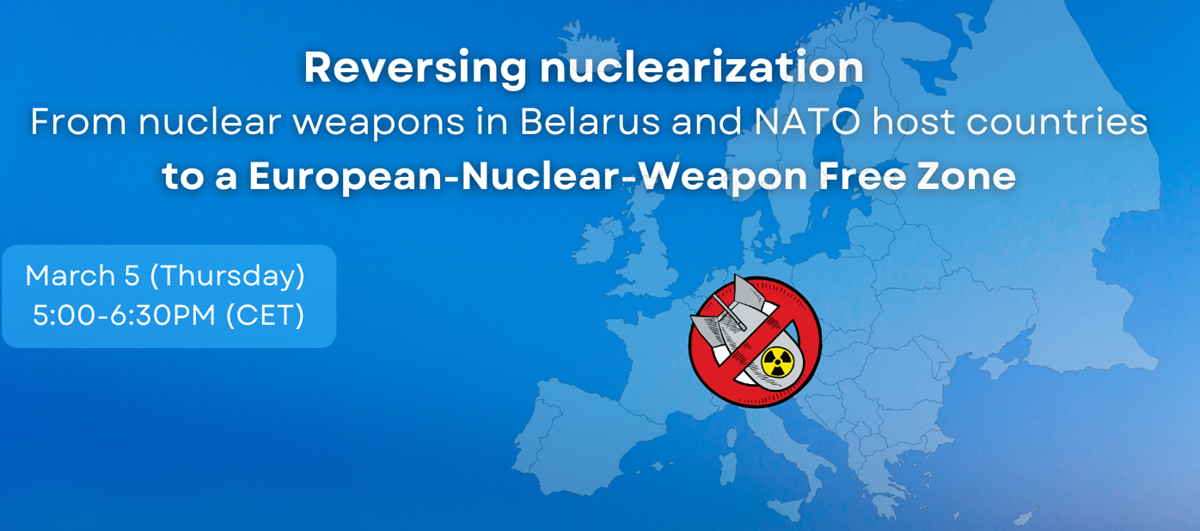
5 March -Online – Reversing nuclearization:
From nuclear weapons in Belarus and NATO host countries to a European-Nuclear-Weapon Free Zone
11am-12:30pm Eastern Time USA / 5pm-6:30pm CET

of the week – Advocating for a
nuclear free beach – https://www.samuellawrencefoundation.org/
The Samuel Lawrence Foundation advocates for a Nuclear Waste Free Beach at San Onofre, join us and take action!
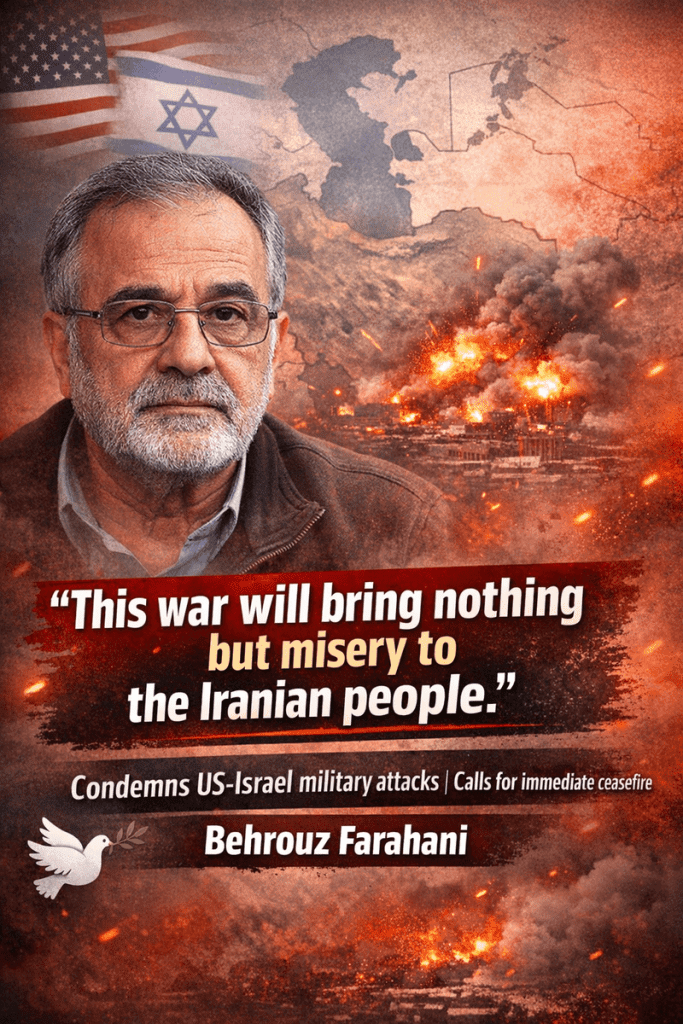
10 March A LIVE WEBINAR THE REAL EFFECTS OF NUCLEAR POWER
What the Industry Isn’t Telling Us
1:00 PM Mountain, 2 pm Central, 3 pm Eastern. Live on the Keepers of the Water Facebook page

18 March Webinar @ 1 PM EST: An Assessment of SMR Projects: The Case of Canada
register for the zoom:
https://us02web.zoom.us/webinar/register/WN_o8BIIOUvQ2ONJR1nta65DQ#/registration

of the week – STOP SMALL MODULAR REACTORS IN CANADA
To see nuclear-related stories in greater depth and intensity – go to https://nuclearinformation.wordpress.com
-
Archives
- March 2026 (38)
- February 2026 (268)
- January 2026 (308)
- December 2025 (358)
- November 2025 (359)
- October 2025 (376)
- September 2025 (258)
- August 2025 (319)
- July 2025 (230)
- June 2025 (348)
- May 2025 (261)
- April 2025 (305)
-
Categories
- 1
- 1 NUCLEAR ISSUES
- business and costs
- climate change
- culture and arts
- ENERGY
- environment
- health
- history
- indigenous issues
- Legal
- marketing of nuclear
- media
- opposition to nuclear
- PERSONAL STORIES
- politics
- politics international
- Religion and ethics
- safety
- secrets,lies and civil liberties
- spinbuster
- technology
- Uranium
- wastes
- weapons and war
- Women
- 2 WORLD
- ACTION
- AFRICA
- Atrocities
- AUSTRALIA
- Christina's notes
- Christina's themes
- culture and arts
- Events
- Fuk 2022
- Fuk 2023
- Fukushima 2017
- Fukushima 2018
- fukushima 2019
- Fukushima 2020
- Fukushima 2021
- general
- global warming
- Humour (God we need it)
- Nuclear
- RARE EARTHS
- Reference
- resources – print
- Resources -audiovicual
- Weekly Newsletter
- World
- World Nuclear
- YouTube
-
RSS
Entries RSS
Comments RSS
 nuclear-news